



Andrew Thares
-
Posts
653 -
Joined
-
Last visited
Content Type
Profiles
News
Minnesota Twins Videos
2026 Minnesota Twins Top Prospects Ranking
2022 Minnesota Twins Draft Picks
Minnesota Twins Free Agent & Trade Rumors, Notes, & Tidbits
Guides & Resources
2023 Minnesota Twins Draft Picks
The Minnesota Twins Players Project
2024 Minnesota Twins Draft Picks
2025 Minnesota Twins Draft Pick Tracker
2026 Minnesota Twins Draft Tracker: Picks & Bonuses
Forums
Blogs
Events
Store
Downloads
Gallery
Everything posted by Andrew Thares
-

My Experience As A Twins Fan In Washington State
Andrew Thares replied to Matt Braun's topic in Twins Daily Front Page News
Yeah its been a blast. I went to 7 or 8 LSU games this season, including the trip over to Austin for the UT game. As for pounds of crawfish, I don't think they have invented a number that is big enough. -
My Experience As A Twins Fan In Washington State
Andrew Thares replied to Matt Braun's topic in Twins Daily Front Page News
I have had a pretty similar experience to this in recent years. After living in Twins Territory my whole life, I moved out to the east coast for an internship during the 2017 season. After a couple months there, I started getting pretty homesick, so being able to watch the Twins every night made me feel like I was back home for at least a few hours a day. After moving back to Minnesota for about a year, I again decided to move away, this time to Louisiana for grad school. I absolutely love it down here, mostly because the people are very similar to everyone in the Midwest, so it feels like home, only with better weather and better food. However, it is still nice have the Twins to keep me connected back home. -
Opinion: Manfred Proposes a Playoff Restructure
Andrew Thares replied to Matthew Lenz's topic in Twins Daily Front Page News
I think the amount of competition the World Series is facing for ratings today, compared to the 70's, is a lot bigger factor for lower ratings than the quality of teams playing. -
Opinion: Manfred Proposes a Playoff Restructure
Andrew Thares replied to Matthew Lenz's topic in Twins Daily Front Page News
I personally hate the idea of teams choosing their potential opponents. That just puts the best teams in the league in a real awkward position, heading into the most important part of the season. I know there is big push-back on teams having to sit out about a week while the Wild Card round games are played, since it will "take them off their routine". I don't think this is that much of an issue, as there are plenty of ways to stay active during the down time, like simulated games. Additionally, the KBO does an even more extreme version of higher seeds having to sit out a lot of time before they get to play in the postseason, and it doesn't really hold the team getting rest back at all, as the team getting a bye is 16-9 versus teams coming off a playoff series over the past 10 seasons. If they were to expand, I would like to see them do it like the NFL playoffs. 6 teams in each league, and reward the top two division winners with a bye. There could be some push-back on the last division winner having to play with all the Wild Card teams, but more often than not, one of the Wild Card teams usually has a better record than the 3rd division winner anyway. -
The Mookie Betts trade will certainly go down as one of the more memorable trades in recent history. After nearly a five-day delay, the trade was finally completed late Sunday afternoon, with a few changes that were made to the originally agreed upon deal. Now that it is finally complete, we can break down exactly what each of the three teams involved in this trade received and give them a grade. Image courtesy of © Kim Klement-USA TODAY Sports The Mookie Betts trade will certainly go down as one of the more memorable trades in recent history. After nearly a five-day delay, the trade was finally completed late Sunday afternoon, with a few changes that were made to the originally agreed upon deal. Now that it is finally complete, we can break down exactly what each of the three teams involved in this trade received and give them a grade. These grades will take a few factors into account, all of which seem relevant to this specific trade. The first, and most important, is grading the actual assets received, minus the assets given. The next factor that plays into the grading is how this trade plays into each team’s overall strategic objective. Finally, other external factors, such as public perception, will play into these grades, as they can have a lasting effect on these organizations. Los Angeles Dodgers We will start with the team that is receiving the headline player of this trade, the Los Angeles Dodgers. This is an origination that clearly has a win now mentality, as they have one of the best rosters in baseball. They are also frustrated that their efforts to win the organization's first World Series since 1988 continue to come up just short year after year. A move to add one of the best players in the game, in Mookie Betts, for the 2020 season does just that. The Dodgers were also able to add lefty starter David Price in this deal as well. While Price certainly isn’t the pitcher he once was, he is still a quality MLB starting pitcher, and with the Red Sox paying half of his remaining salary, the Dodgers are getting him at a pretty good price. One of the big changes to the initial offer, is that the Dodgers will now also be sending middle infield prospect Jeter Downs (MLB Pipeline’s #44 ranked prospect) to the Red Sox, and Jair Camargo and $10M to the Twins. In return, they will now also be receiving Brusdar Graterol, Luke Raley and the Twins 2020 Competitive Balance Round B draft pick (#67 overall). Overall, that is a pretty good haul for the Dodgers, who should now be the clear favorites in the National League, if they weren’t already. Grade: A Boston Red Sox Next, we will take a look at the most controversial team in this trade, the Boston Red Sox. From an optics perspective, this trade could not have gone any worse for the Red Sox, and newly appointed GM Brian O'Halloran. After many failed attempts to extend Mookie Betts, the Red Sox brass decided the best move would be to trade Betts now and recoup whatever value they could for him, rather than just let him walk as a free agent at year’s end. This was a decision that went over terribly with their fanbase. Then after all the pushback from the fans and media, the Red Sox conveniently saw an issue with Brusdar Graterol’s medical records, which allowed them to get the deal restructured. It’s probably safe to assume this move will make MLB teams hesitant to do business with O'Halloran, at least in the short term. From a roster and strategic standpoint, I think the Red Sox made out pretty well in this trade. The received not one, but two top young players in Alex Verdugo and Jeter Downs, along with a decent catching prospect in Connor Wong. Not only that, but the Red Sox managed to achieve their goal of shedding payroll to get under the luxury tax threshold, by clearing out $43M in 2020 payroll and $16M in both 2021 and 2022, by sending David Price to the Dodgers, who agreed to take on half his remaining salary. From a strategic perspective, this trade made a lot of sense for the Red Sox. Sure they lost out on their final season of Mookie Betts, but the Red Sox had a tough hill to climb to make it back to the World Series in 2020 anyway, so why not take a smarter long-term approach, and make this team better in the years to come? From that viewpoint, this was a decent trade for the Red Sox, but with this trade being a PR nightmare for the Red Sox, I am going to have to knock their grade down a bit. Grade: B- Minnesota Twins Now that we got through the Dodgers and Red Sox, let’s talk about the team most of you probably care about, the Minnesota Twins. While they weren’t part of the headlining package, the Twins found themselves right in the middle of everything, especially after the Red Sox put this trade on hold with concerns over Brusdar Graterol’s medical records. When the dust settled, the Twins wound up trading Graterol to the Dodgers instead of the Red Sox. They also received young catching prospect Jair Camargo plus $10M in cash from the Dodgers in exchange for 25-year-old outfield prospect Luke Raley and their Competitive Balance Round B pick in the 2020 draft. From an on-field perspective, this trade was okay for the Twins. They did add a veteran starter in Kenta Maeda, who is on a very team-friendly contract. However, they did it at the expense of trading away Brusdar Graterol. Even if Graterol is condemned to the bullpen, it is a fair argument to make that Graterol, if he lives up to his potential, will be as, if not more, valuable than Maeda will be over the next few seasons. While Graterol certainly isn’t a guarantee, neither is Maeda, who will be entering his age 32 season in 2020 and has already exceeded 2,100 professional innings pitched. Giving away Luke Raley doesn’t hurt that much, as he was a bit of a redundancy for the Twins at this point. They also gave up the #67 overall pick in the draft. While 2020 slot values have not been released, the 2019 slot value for the 67th overall pick was $976,700. Expect that to raise slightly in 2020. While $10M is certainly higher than that, bear in mind that MLB draft dollars do not equate one to one with actual dollars, as the limitations on spending in the draft makes draft dollars more valuable than the actual number they represent. However, that $10M can see a more immediate impact than either Raley or the player taken with the 67th overall pick will have for the Twins, so that plays in well with their strategic objective. Grade: B Obviously as time progresses, the perception of these trade will begin to change, but for now it is pretty clear that the Los Angels Dodgers are the big winners of this trade, especially if they go on to win the 2020 World Series. Let us know how you would grade each team in this trade? If you want more insight into this trade, check out this video trade review Tom Froemming. Tom posts tons of great Minnesota Twins content on YouTube, so be sure to subscribe to his channel to see all the videos he posts. MORE FROM TWINS DAILY — Latest Twins coverage from our writers — Recent Twins discussion in our forums — Follow Twins Daily via Twitter, Facebook or email — Follow Andrew on Twitter here View full article
- 45 replies
-
- 1
-

-
- mookie betts trade
- mookie betts trade grade
- (and 3 more)
-
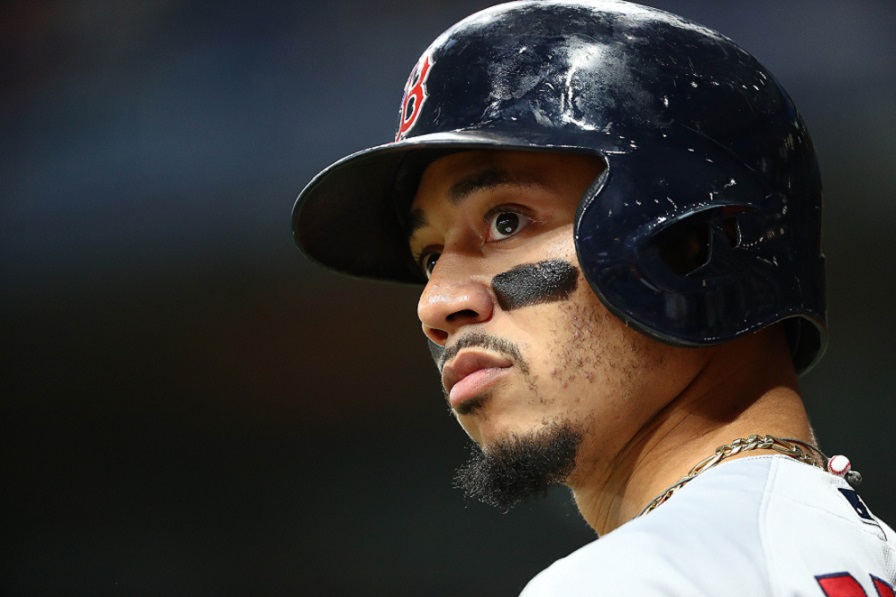 These grades will take a few factors into account, all of which seem relevant to this specific trade. The first, and most important, is grading the actual assets received, minus the assets given. The next factor that plays into the grading is how this trade plays into each team’s overall strategic objective. Finally, other external factors, such as public perception, will play into these grades, as they can have a lasting effect on these organizations. Los Angeles Dodgers We will start with the team that is receiving the headline player of this trade, the Los Angeles Dodgers. This is an origination that clearly has a win now mentality, as they have one of the best rosters in baseball. They are also frustrated that their efforts to win the organization's first World Series since 1988 continue to come up just short year after year. A move to add one of the best players in the game, in Mookie Betts, for the 2020 season does just that. The Dodgers were also able to add lefty starter David Price in this deal as well. While Price certainly isn’t the pitcher he once was, he is still a quality MLB starting pitcher, and with the Red Sox paying half of his remaining salary, the Dodgers are getting him at a pretty good price. One of the big changes to the initial offer, is that the Dodgers will now also be sending middle infield prospect Jeter Downs (MLB Pipeline’s #44 ranked prospect) to the Red Sox, and Jair Camargo and $10M to the Twins. In return, they will now also be receiving Brusdar Graterol, Luke Raley and the Twins 2020 Competitive Balance Round B draft pick (#67 overall). Overall, that is a pretty good haul for the Dodgers, who should now be the clear favorites in the National League, if they weren’t already. Grade: A Boston Red Sox Next, we will take a look at the most controversial team in this trade, the Boston Red Sox. From an optics perspective, this trade could not have gone any worse for the Red Sox, and newly appointed GM Brian O'Halloran. After many failed attempts to extend Mookie Betts, the Red Sox brass decided the best move would be to trade Betts now and recoup whatever value they could for him, rather than just let him walk as a free agent at year’s end. This was a decision that went over terribly with their fanbase. Then after all the pushback from the fans and media, the Red Sox conveniently saw an issue with Brusdar Graterol’s medical records, which allowed them to get the deal restructured. It’s probably safe to assume this move will make MLB teams hesitant to do business with O'Halloran, at least in the short term. From a roster and strategic standpoint, I think the Red Sox made out pretty well in this trade. The received not one, but two top young players in Alex Verdugo and Jeter Downs, along with a decent catching prospect in Connor Wong. Not only that, but the Red Sox managed to achieve their goal of shedding payroll to get under the luxury tax threshold, by clearing out $43M in 2020 payroll and $16M in both 2021 and 2022, by sending David Price to the Dodgers, who agreed to take on half his remaining salary. From a strategic perspective, this trade made a lot of sense for the Red Sox. Sure they lost out on their final season of Mookie Betts, but the Red Sox had a tough hill to climb to make it back to the World Series in 2020 anyway, so why not take a smarter long-term approach, and make this team better in the years to come? From that viewpoint, this was a decent trade for the Red Sox, but with this trade being a PR nightmare for the Red Sox, I am going to have to knock their grade down a bit. Grade: B- Minnesota Twins Now that we got through the Dodgers and Red Sox, let’s talk about the team most of you probably care about, the Minnesota Twins. While they weren’t part of the headlining package, the Twins found themselves right in the middle of everything, especially after the Red Sox put this trade on hold with concerns over Brusdar Graterol’s medical records. When the dust settled, the Twins wound up trading Graterol to the Dodgers instead of the Red Sox. They also received young catching prospect Jair Camargo plus $10M in cash from the Dodgers in exchange for 25-year-old outfield prospect Luke Raley and their Competitive Balance Round B pick in the 2020 draft. From an on-field perspective, this trade was okay for the Twins. They did add a veteran starter in Kenta Maeda, who is on a very team-friendly contract. However, they did it at the expense of trading away Brusdar Graterol. Even if Graterol is condemned to the bullpen, it is a fair argument to make that Graterol, if he lives up to his potential, will be as, if not more, valuable than Maeda will be over the next few seasons. While Graterol certainly isn’t a guarantee, neither is Maeda, who will be entering his age 32 season in 2020 and has already exceeded 2,100 professional innings pitched. Giving away Luke Raley doesn’t hurt that much, as he was a bit of a redundancy for the Twins at this point. They also gave up the #67 overall pick in the draft. While 2020 slot values have not been released, the 2019 slot value for the 67th overall pick was $976,700. Expect that to raise slightly in 2020. While $10M is certainly higher than that, bear in mind that MLB draft dollars do not equate one to one with actual dollars, as the limitations on spending in the draft makes draft dollars more valuable than the actual number they represent. However, that $10M can see a more immediate impact than either Raley or the player taken with the 67th overall pick will have for the Twins, so that plays in well with their strategic objective. Grade: B Obviously as time progresses, the perception of these trade will begin to change, but for now it is pretty clear that the Los Angels Dodgers are the big winners of this trade, especially if they go on to win the 2020 World Series. Let us know how you would grade each team in this trade? If you want more insight into this trade, check out this video trade review Tom Froemming. Tom posts tons of great Minnesota Twins content on YouTube, so be sure to subscribe to his channel to see all the videos he posts. MORE FROM TWINS DAILY — Latest Twins coverage from our writers — Recent Twins discussion in our forums — Follow Twins Daily via Twitter, Facebook or email — Follow Andrew on Twitter here
 -
Twins drafting strategy: Old And Busted already?
Andrew Thares replied to ashbury's topic in Minnesota Twins Talk
I don't understand what the problem is with the Twins drafting strategy of late? Position players like Alex Kiriloff, Royce Lewis, Trevor Larnach, Brent Rooker and Ryan Jeffers have been excellent draft picks, while on the flip side, Kohl Stewart and Tyler Jay were absolute busts, and both were pitchers taken inside the top 10. -
2019 was the year of the Bomba form the Minnesota Twins, as they set a Major League record with 307 home runs as a team. Assuming that Major League Baseball decides to go back to not using the “juiced” baseballs this season, it is fair to assume, that there will be a decent drop in home runs league wide in 2020. With that being the case, let’s take a look at the Twins 2020 roster, and project the number of home runs they will hit this year. Image courtesy of © Ben Ludeman-USA TODAY Sports 2019 was the year of the Bomba form the Minnesota Twins, as they set a Major League record with 307 home runs as a team. Assuming that Major League Baseball decides to go back to not using the “juiced” baseballs this season, it is fair to assume, that there will be a decent drop in home runs league wide in 2020. With that being the case, let’s take a look at the Twins 2020 roster, and project the number of home runs they will hit this year. Before we start tabulating home run totals, there are first a few things to know. One, this will be under the assumption that the ball will at least in some capacity will suppress home runs a little more than it did in 2019. Additionally, these projections are under the assumption that the Twins will stay relatively healthy in 2020, so expect this number to be on the higher end of what they should be able to accomplish, as total playing time for each player can be a hard thing to predict. To create these projections, we will look at the Twins roster, position by position, to project how many home runs each position group will hit this season. There was a decent amount of math done to get to these projections, but I will spare you the explanation of everything that went into calculating this number. With that being said, let’s start the break down. Catchers 2019 was a breakout season for Mitch Garver, who hit 31 home runs in just 93 games. Of those, 30 came during the 80 games where Garver was at catcher. Even if there is no change to the ball, it is hard to imagine Garver maintaining this pace in 2020. Additionally, Jason Castro added another 13 home runs in his 74 games at catcher, or one home run every 5.7 games. We can expect Alex Avila to replicate Castro’s home run total, as he wasn’t too far off Castro’s pace, averaging one home run every six games in 2019. Everyone’s favorite turtle, Willians Astudillo, added one home run from the catcher position himself. Depending on his playing time behind the plate in 2020, Astudillo probably won’t add too many home runs to the Twins catcher total this upcoming season. 2019 Total: 44 2020 Projection: 34 First Base The Twins will have a whole new look at first base this summer. With the addition on Josh Donaldson, Miguel Sano is slated to make the move across the diamond. Despite missing the first month and a half of 2019, Sano was still able to belt 34 home runs in 105 games. While many of his home runs are no doubts that need help of a “juiced” baseball, Sano certainly seemed to benefit from it on many of his lazy flyballs, as his HR/FB% was 36.6%, which far exceeded his previous career high of 27.5% in 2017. The combination of playing more games, and his HR/FB% regressing to his norms should balance each other out, leading to a similar home run output from Sano in 2020, provided he can stay healthy. 2019 Total: 27 2020 Projection: 42 Second Base Second Base will be the biggest drop off of any position, in the home run department, in 2020 for the Twins. Last season, Jonathan Schoop provided plenty of pop from second base, belting 22 home runs in 111 games played at second, and added another in one of his three starts at DH. With Luis Arraez scheduled to be the everyday second baseman for the Twins in 2020, home runs will be few and far between from Twins second basemen this season. However, that doesn’t mean there will be a drop in offensive production, as Arraez should still bring an overall offensive upgrade over Schoop given his elite contact ability and high on-base percentage. Ehire Adrianza should also expect to get some playing time at second, so expect him to impact the home run total as well. 2019 Total: 26 2020 Projection: 11 Third Base In 2019, at the age of 33, Josh Donaldson showed everyone that he was fully recovered from his injuries that sidelined him for much of the 2017 and 2018 seasons. In 155 games, Donaldson connected on 37 long balls for the Atlanta Braves. However, don’t be surprised if we see a slight decline in the home run totals for Donaldson this season. Not only is Donaldson getting to the age where most hitters start losing bat speed, but much like Miguel Sano, he too seemed to benefit from the baseballs last season, as his HR/FB% sat at 25.7%, which was a career high and well above his 19.0% career average. 2019 Total: 40 2020 Projection: 36 Shortstop Jorge Polanco had a breakout season offensively in 2019, earning himself a spot as the starting shortstop for the American League in the All-Star game. Now at the age of 26, Polanco seems to be developing into his power. Polanco’s 87.0 MPH average exit velocity, and 33% Hard Hit rate (via Baseball Savant) were both the highest of his career. Additionally, Polanco’s FB% of 44.4% was also the highest of his career. This combination aided Polanco in hitting a career high 22 home runs (2 came as a DH) in 2019. Look for him to continue to develop his power as he gets further into his prime. 2019 Total: 21 2020 Projection: 18 Left Field While his overall offensive numbers took a step back in 2019, Eddie Rosario did set a new career high with 32 home runs. At this point, we kind of know what we can expect from Rosario. Like Polanco, Rosario set career highs in average exit velocity at 89.1 MPH, and Hard Hit rate at 36.0%. Rosario home run total should be in the upper 20s or low 30s again this season. Additionally, Marwin Gonzalez should see some playing time in left this season, but his home runs will be split up among a few different positions. 2019 Total: 32 2020 Projection: 29 Center Field This is without a doubt the hardest position to project for the Twins, given the unpredictability of Byron Buxton’s health. With this being the case, we will do a combo of Buxton and Jake Cave at this position. Buxton had a breakout season in the doubles department, but despite his obvious power, Buxton still only hit 10 home runs in 87 games last season, due primarily to his inconsistent contact abilities. If he can stay healthy enough to play 120+ games this season, look for Buxton to hit in the 15-20 range of home runs. Jake Cave has been a pleasant surprise in his first two seasons in the big leagues and look for more of the same from him this year, as he should add roughly 10 to 15 home runs to the team total, which will be spread across all three outfield position. 2019 Total: 31 2020 Projection: 21 Right Field The long-awaited breakout of Max Kepler finally arrived in 2019, as he nearly doubled his career high with 36 home runs. However, just 21 of those home runs came while he was playing right-field. Much like many other players around baseball, Kepler did have a career high in HR/FB% at 18.0% in 2019. However, there are some other explanations for this, more than just the baseball. For one, he easily set a new career high, with a 41.7% Hard Hit rate. Kepler also started pulling the ball more, as he pulled 53.4% of balls in play, versus he career norm which hovered around 44%. These two factors go a long way in explaining the power serge Kepler experienced last season. 2019 Total: 32 2020 Projection: 37 Designated Hitter Nelson Cruz was pretty standard Nelson Cruz in 2019, belting 41 home runs to pace the Twins in that category, and he did so while only playing in 120 games. Cruz was yet another player that set a career high mark in HR/FB% at 31.3%, which is far ahead of his career average of 21.0%. Barring any complete fall off in his game, which is a slight possibility given his age, Cruz should be able to get close to the 40 home run mark again in 2020, if he can play at least 140 games this season, something he did in each his last five seasons preceding him joining the Twins. 2019 Total: 52 2020 Projection: 44 In total, the Twins combined to hit 305 home runs from each of these position groups, and added two more from Pinch Hitters, bringing their season total to 307. This season, the Twins will almost certainly fall short of that number, but could still pace Major League Baseball, as I have them projected to hit 272 Bombas in 2020. For reference, the 2018 Yankees held the all-time record for home runs in a season entering 2019 at 267, so this offense still has a strong chance to be an historic team from a home run perspective. Let us know in the comment section below how many Bombas you think the Twins will hit in 2020. MORE FROM TWINS DAILY — Latest Twins coverage from our writers — Recent Twins discussion in our forums — Follow Twins Daily via Twitter, Facebook or email View full article
- 20 replies
-
- 1
-
-
- minnesota twins
- bomba
- (and 2 more)
-
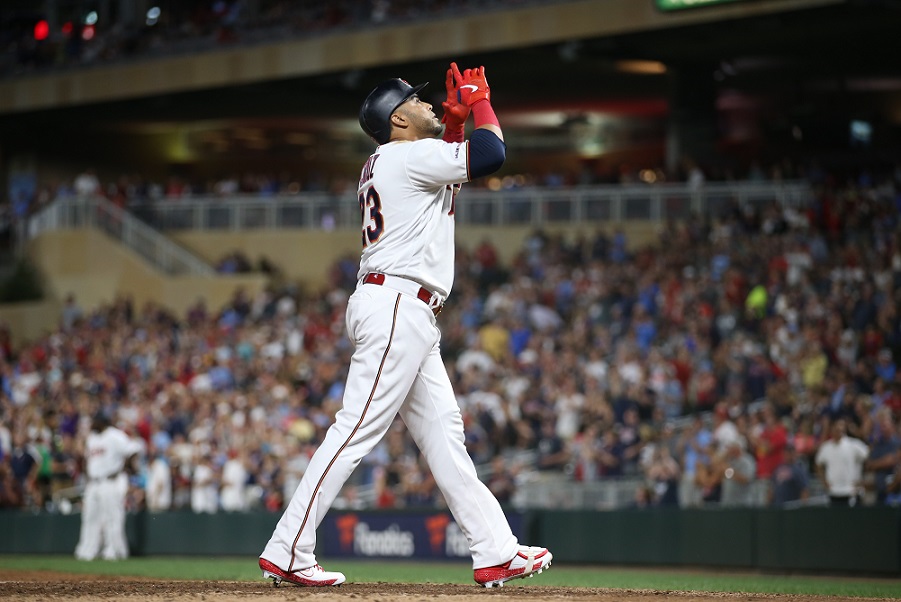 Before we start tabulating home run totals, there are first a few things to know. One, this will be under the assumption that the ball will at least in some capacity will suppress home runs a little more than it did in 2019. Additionally, these projections are under the assumption that the Twins will stay relatively healthy in 2020, so expect this number to be on the higher end of what they should be able to accomplish, as total playing time for each player can be a hard thing to predict. To create these projections, we will look at the Twins roster, position by position, to project how many home runs each position group will hit this season. There was a decent amount of math done to get to these projections, but I will spare you the explanation of everything that went into calculating this number. With that being said, let’s start the break down. Catchers 2019 was a breakout season for Mitch Garver, who hit 31 home runs in just 93 games. Of those, 30 came during the 80 games where Garver was at catcher. Even if there is no change to the ball, it is hard to imagine Garver maintaining this pace in 2020. Additionally, Jason Castro added another 13 home runs in his 74 games at catcher, or one home run every 5.7 games. We can expect Alex Avila to replicate Castro’s home run total, as he wasn’t too far off Castro’s pace, averaging one home run every six games in 2019. Everyone’s favorite turtle, Willians Astudillo, added one home run from the catcher position himself. Depending on his playing time behind the plate in 2020, Astudillo probably won’t add too many home runs to the Twins catcher total this upcoming season. 2019 Total: 44 2020 Projection: 34 First Base The Twins will have a whole new look at first base this summer. With the addition on Josh Donaldson, Miguel Sano is slated to make the move across the diamond. Despite missing the first month and a half of 2019, Sano was still able to belt 34 home runs in 105 games. While many of his home runs are no doubts that need help of a “juiced” baseball, Sano certainly seemed to benefit from it on many of his lazy flyballs, as his HR/FB% was 36.6%, which far exceeded his previous career high of 27.5% in 2017. The combination of playing more games, and his HR/FB% regressing to his norms should balance each other out, leading to a similar home run output from Sano in 2020, provided he can stay healthy. 2019 Total: 27 2020 Projection: 42 Second Base Second Base will be the biggest drop off of any position, in the home run department, in 2020 for the Twins. Last season, Jonathan Schoop provided plenty of pop from second base, belting 22 home runs in 111 games played at second, and added another in one of his three starts at DH. With Luis Arraez scheduled to be the everyday second baseman for the Twins in 2020, home runs will be few and far between from Twins second basemen this season. However, that doesn’t mean there will be a drop in offensive production, as Arraez should still bring an overall offensive upgrade over Schoop given his elite contact ability and high on-base percentage. Ehire Adrianza should also expect to get some playing time at second, so expect him to impact the home run total as well. 2019 Total: 26 2020 Projection: 11 Third Base In 2019, at the age of 33, Josh Donaldson showed everyone that he was fully recovered from his injuries that sidelined him for much of the 2017 and 2018 seasons. In 155 games, Donaldson connected on 37 long balls for the Atlanta Braves. However, don’t be surprised if we see a slight decline in the home run totals for Donaldson this season. Not only is Donaldson getting to the age where most hitters start losing bat speed, but much like Miguel Sano, he too seemed to benefit from the baseballs last season, as his HR/FB% sat at 25.7%, which was a career high and well above his 19.0% career average. 2019 Total: 40 2020 Projection: 36 Shortstop Jorge Polanco had a breakout season offensively in 2019, earning himself a spot as the starting shortstop for the American League in the All-Star game. Now at the age of 26, Polanco seems to be developing into his power. Polanco’s 87.0 MPH average exit velocity, and 33% Hard Hit rate (via Baseball Savant) were both the highest of his career. Additionally, Polanco’s FB% of 44.4% was also the highest of his career. This combination aided Polanco in hitting a career high 22 home runs (2 came as a DH) in 2019. Look for him to continue to develop his power as he gets further into his prime. 2019 Total: 21 2020 Projection: 18 Left Field While his overall offensive numbers took a step back in 2019, Eddie Rosario did set a new career high with 32 home runs. At this point, we kind of know what we can expect from Rosario. Like Polanco, Rosario set career highs in average exit velocity at 89.1 MPH, and Hard Hit rate at 36.0%. Rosario home run total should be in the upper 20s or low 30s again this season. Additionally, Marwin Gonzalez should see some playing time in left this season, but his home runs will be split up among a few different positions. 2019 Total: 32 2020 Projection: 29 Center Field This is without a doubt the hardest position to project for the Twins, given the unpredictability of Byron Buxton’s health. With this being the case, we will do a combo of Buxton and Jake Cave at this position. Buxton had a breakout season in the doubles department, but despite his obvious power, Buxton still only hit 10 home runs in 87 games last season, due primarily to his inconsistent contact abilities. If he can stay healthy enough to play 120+ games this season, look for Buxton to hit in the 15-20 range of home runs. Jake Cave has been a pleasant surprise in his first two seasons in the big leagues and look for more of the same from him this year, as he should add roughly 10 to 15 home runs to the team total, which will be spread across all three outfield position. 2019 Total: 31 2020 Projection: 21 Right Field The long-awaited breakout of Max Kepler finally arrived in 2019, as he nearly doubled his career high with 36 home runs. However, just 21 of those home runs came while he was playing right-field. Much like many other players around baseball, Kepler did have a career high in HR/FB% at 18.0% in 2019. However, there are some other explanations for this, more than just the baseball. For one, he easily set a new career high, with a 41.7% Hard Hit rate. Kepler also started pulling the ball more, as he pulled 53.4% of balls in play, versus he career norm which hovered around 44%. These two factors go a long way in explaining the power serge Kepler experienced last season. 2019 Total: 32 2020 Projection: 37 Designated Hitter Nelson Cruz was pretty standard Nelson Cruz in 2019, belting 41 home runs to pace the Twins in that category, and he did so while only playing in 120 games. Cruz was yet another player that set a career high mark in HR/FB% at 31.3%, which is far ahead of his career average of 21.0%. Barring any complete fall off in his game, which is a slight possibility given his age, Cruz should be able to get close to the 40 home run mark again in 2020, if he can play at least 140 games this season, something he did in each his last five seasons preceding him joining the Twins. 2019 Total: 52 2020 Projection: 44 In total, the Twins combined to hit 305 home runs from each of these position groups, and added two more from Pinch Hitters, bringing their season total to 307. This season, the Twins will almost certainly fall short of that number, but could still pace Major League Baseball, as I have them projected to hit 272 Bombas in 2020. For reference, the 2018 Yankees held the all-time record for home runs in a season entering 2019 at 267, so this offense still has a strong chance to be an historic team from a home run perspective. Let us know in the comment section below how many Bombas you think the Twins will hit in 2020. MORE FROM TWINS DAILY — Latest Twins coverage from our writers — Recent Twins discussion in our forums — Follow Twins Daily via Twitter, Facebook or email
 -
After missing on all of the big-name free agent starting pitchers this offseason, the Minnesota Twins have shifted their focus to former MVP third baseman Josh Donaldson, to try to make their big splash this winter. However, with reports coming out that the Twins are increasingly pessimistic about their chances of signing Donaldson, they may have to change their course yet again. One potential option that they could set their sights on is another former MVP third basemen, in Kris Bryant. Image courtesy of © Daniel Bartel-USA TODAY Sports After missing on all of the big-name free agent starting pitchers this offseason, the Minnesota Twins have shifted their focus to former MVP third baseman Josh Donaldson, to try to make their big splash this winter. However, with reports coming out that the Twins are increasingly pessimistic about their chances of signing Donaldson, they may have to change their course yet again. One potential option that they could set their sights on is another former MVP third basemen, in Kris Bryant. After years spent building up their core players, the Chicago Cubs appear to be stuck in no-mans land this offseason. They would like to add to their team (which greatly underperformed in 2019), but they do not have the payroll flexibility to do so. Additionally, their farm system is all but depleted of impactful prospects that can help the team in the short term. As a result, the Cubs have moved in the direction of potentially trading away some of their core pieces, with an aim at more long-term success. On such piece that has become available is Kris Bryant. The former second overall pick in the MLB Draft, has been an excellent player since he entered the league in 2015. His debut sparked some controversy, as the Cubs intentionally left him off their opening day roster. Instead, Bryant didn’t make his MLB debut until April 17th, 2015. As a result, the Cubs bought themselves an extra year of team control before Bryant becomes a free agent, which will be after the 2021 season instead of after the 2020 season. Early reports suggest that the Cubs are asking for a king’s ransom in exchange for Bryant, which could inevitably sway the Twins from making a move for him. However, if the Cubs do see moving Bryant as aligning with their plans for the future of their organization, they might have to come down on their asking price, just to get other teams to enter into the conversation. When you look around the rest of major league baseball, there aren’t many teams where trading for Kris Bryant makes more sense than it does for the Minnesota Twins. They have a clear need to upgrade at third base (hence their interest in Josh Donaldson), they have the the cap space to take on the expensive final two years of arbitration (Bryant is due $18.6 M in 2020), and they have the prospect capital to make this deal work. So, what kind of package could the Twins offer that would realistically get the Cubs to bite on a trade for Kris Bryant? I think the starter to this conversation would be around the Twins giving up one of either Royce Lewis or Alex Kirilloff. If the Cubs are insistent on both, then I don’t think this is a deal that makes much sense for the Twins, but one or the other is reasonable. The Twins might also need to include another prospect a tier down from Lewis and Kiriloff. This includes the likes of Brusdar Graterol, Trevor Larnach and Jordan Balazovic. Personally, I see Balazovic the least likely of these players to get dealt away to the Cubs, as they are still trying to compete, and of the group mentioned he is the furthest prospect away. Finally, the Twins might also have to include another prospect or two as kickers, someone like a Cole Sands or Travis Blankenhorn would make sense. Now, many of you might be thinking this is far too much to give up for two seasons of Kris Bryant, and if so, you are probably right, but the idea is to explore a trade package that could actually get the Cubs to trade away one of the faces of their franchise, while they are still clearly within a competitive window. The Cubs are also reportedly interested in acquiring MLB-ready talent, which could cause the Twins to pull back as they don’t really have much to offer in that regard (outside of Eddie Rosario who would make zero sense for the Cubs to acquire given their current outfield state). At the end of the day, this could be the deciding factor that keeps the Cubs from actually trading away Bryant, but when an opportunity to acquire a player of Kris Bryant’s ability is available, the Twins should at least consider taking a stab at it. What do you think? Should the Twins look to make a big move for Kris Bryant if they miss out on Josh Donaldson, or look for other alternatives to improve this team for 2020 and beyond? Let us know in the comment section down below. MORE FROM TWINS DAILY — Latest Twins coverage from our writers — Recent Twins discussion in our forums — Follow Twins Daily via Twitter, Facebook or email View full article
- 60 replies
-
- 1
-
-
- kris bryant
- minnesota twins
- (and 1 more)
-
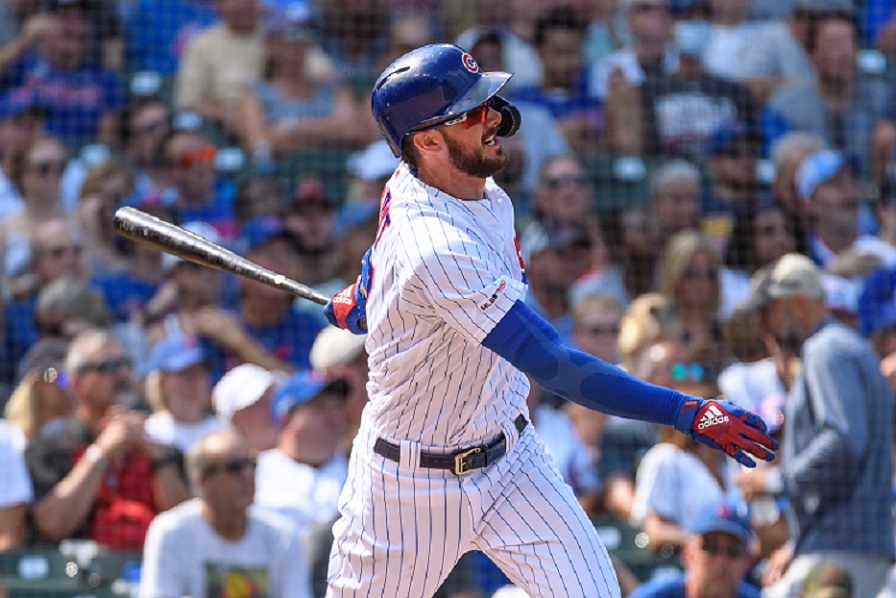 After years spent building up their core players, the Chicago Cubs appear to be stuck in no-mans land this offseason. They would like to add to their team (which greatly underperformed in 2019), but they do not have the payroll flexibility to do so. Additionally, their farm system is all but depleted of impactful prospects that can help the team in the short term. As a result, the Cubs have moved in the direction of potentially trading away some of their core pieces, with an aim at more long-term success. On such piece that has become available is Kris Bryant. The former second overall pick in the MLB Draft, has been an excellent player since he entered the league in 2015. His debut sparked some controversy, as the Cubs intentionally left him off their opening day roster. Instead, Bryant didn’t make his MLB debut until April 17th, 2015. As a result, the Cubs bought themselves an extra year of team control before Bryant becomes a free agent, which will be after the 2021 season instead of after the 2020 season. Early reports suggest that the Cubs are asking for a king’s ransom in exchange for Bryant, which could inevitably sway the Twins from making a move for him. However, if the Cubs do see moving Bryant as aligning with their plans for the future of their organization, they might have to come down on their asking price, just to get other teams to enter into the conversation. When you look around the rest of major league baseball, there aren’t many teams where trading for Kris Bryant makes more sense than it does for the Minnesota Twins. They have a clear need to upgrade at third base (hence their interest in Josh Donaldson), they have the the cap space to take on the expensive final two years of arbitration (Bryant is due $18.6 M in 2020), and they have the prospect capital to make this deal work. So, what kind of package could the Twins offer that would realistically get the Cubs to bite on a trade for Kris Bryant? I think the starter to this conversation would be around the Twins giving up one of either Royce Lewis or Alex Kirilloff. If the Cubs are insistent on both, then I don’t think this is a deal that makes much sense for the Twins, but one or the other is reasonable. The Twins might also need to include another prospect a tier down from Lewis and Kiriloff. This includes the likes of Brusdar Graterol, Trevor Larnach and Jordan Balazovic. Personally, I see Balazovic the least likely of these players to get dealt away to the Cubs, as they are still trying to compete, and of the group mentioned he is the furthest prospect away. Finally, the Twins might also have to include another prospect or two as kickers, someone like a Cole Sands or Travis Blankenhorn would make sense. Now, many of you might be thinking this is far too much to give up for two seasons of Kris Bryant, and if so, you are probably right, but the idea is to explore a trade package that could actually get the Cubs to trade away one of the faces of their franchise, while they are still clearly within a competitive window. The Cubs are also reportedly interested in acquiring MLB-ready talent, which could cause the Twins to pull back as they don’t really have much to offer in that regard (outside of Eddie Rosario who would make zero sense for the Cubs to acquire given their current outfield state). At the end of the day, this could be the deciding factor that keeps the Cubs from actually trading away Bryant, but when an opportunity to acquire a player of Kris Bryant’s ability is available, the Twins should at least consider taking a stab at it. What do you think? Should the Twins look to make a big move for Kris Bryant if they miss out on Josh Donaldson, or look for other alternatives to improve this team for 2020 and beyond? Let us know in the comment section down below. MORE FROM TWINS DAILY — Latest Twins coverage from our writers — Recent Twins discussion in our forums — Follow Twins Daily via Twitter, Facebook or email
 -
The 2019 MLB season has come and gone, and the Washington Nationals have been crowned World Series Champions. In the era of championship winning teams being built around young cores, the Nationals broke the mold, by winning it all with the oldest team in baseball. In fact, they were the only roster whose average age exceeded 30-years-old. So, let’s take a dive into how the Nationals built their roster, and see if there is anything the Minnesota Twins can draw from as they try to build their own World Series winning roster. Image courtesy of © Erik Williams-USA TODAY Sports The 2019 MLB season has come and gone, and the Washington Nationals have been crowned World Series Champions. In the era of championship winning teams being built around young cores, the Nationals broke the mold, by winning it all with the oldest team in baseball. In fact, they were the only roster whose average age exceeded 30-years-old. So, let’s take a dive into how the Nationals built their roster, and see if there is anything the Minnesota Twins can draw from as they try to build their own World Series winning roster. For the sake of simplicity, we will break down the Nationals roster by position group. One thing you will notice, is the Nationals are willing to explore any and all options in order to add someone that they think will add value to their team. Starting Pitchers Max Scherzer: After breaking onto the scene with the Detroit Tigers from 2010-2014, Max Scherzer signed a 7-year $210 million dollar contract with the Washington Nationals during the 2014-2015 MLB offseason. Stephen Strasburg: Stephen Strasburg was a product of the terrible Nationals teams in the late 2000’s. After finishing dead last in 2008, the Nationals had the first pick in the 2009 MLB draft, and they selected Strasburg with that pick. In May of 2016, the Nationals locked Strasburg up for the long term, signing him to a 7-year $175 million dollar contract extension. Patrick Corbin: During the 2018-2019 MLB offseason, while the Nationals were losing superstar Bryce Harper, they went out and made one of the biggest pitching acquisitions of the offseason, signing Patrick Corbin to a 6-year $140 million dollar contract. Anibal Sanchez: Anibal Sanchez had a strong bounce-back season with the Atlanta Braves in 2018. As a result, this motivated the Nationals to give him a 2-year ,$19 million dollar contract, with a third-year team option, last winter. Relief Pitchers Sean Doolittle: Before the 2017 MLB trade deadline, the Nationals traded for Sean Doolittle and Ryan Madson. In exchange, the Nationals traded away Blake Treinen and Jesus Luzardo. Daniel Hudson: Just hours before the 2019 MLB trade deadline, the Nationals acquired Daniel Hudson from the Toronto Blue Jays, in exchange for minor leaguer Kyle Johnson. Wander Suero: As part of the 2010 International free agent class, Wander Suero signed with the Nationals and has spent the past 10 seasons with the organization. Tanner Rainey: The Cincinnati Reds drafted Tanner Rainey 71st overall in the 2015 MLB draft. Last winter, the Reds sent Rainey sent to the Nationals, in exchange for Tanner Roark. Fernando Rodney: After getting released by the Oakland Athletics back in May, the Nationals signed him to a minor league deal a week later. Javy Guerra: The Nationals claimed Javy Guerra off waivers in May of 2019. They then designated him for assignment in July, before re-signing him again in August. Joe Ross: In December 2014, the Nationals traded away Steven Souza, as part of a three-team deal with the Tampa Bay Rays and San Diego Padres. Infielders Ryan Zimmerman: As the fourth overall pick in the 2005 MLB Draft, Ryan Zimmerman was the first ever draft pick by the Nationals organization after they moved away from Montreal. Asdrubal Cabrera: The day after the Texas Rangers released Asdrubal Cabrera in August of 2019, the Nationals signed him to a minor-league contract. Howie Kendrick: Yet another trade deadline acquisition for the Nationals, Howie Kendrick first came to Washington D.C. in July of 2017, as part of a trade that sent McKenzie Mills to the Philadelphia Phillies. After the 2017 season ended, Kendrick re-signed with the Nationals on a 2-year $7 million dollar contract. Brian Dozier: After becoming a free agent at the end of the 2018 season, Brian Dozier signed a 1-year, $9 million dollar deal with the Nationals. Trea Turner: In the same trade that the Nationals acquired Joe Ross, Trea Turner was the headlining piece returning to the Nationals after being selected with the 13th overall pick by the San Diego Padres just six months prior. Anthony Rendon: The top of the 2011 MLB Draft was absolutely loaded, giving the Nationals plenty of options with the sixth overall selection. They decided to go with Anthony Rendon and haven’t looked back since. At the time of his selection, draftees were allowed to sign MLB contracts right after being drafted. As a result, Rendon signed a 4-year, $7.2 million dollar deal. Kurt Suzuki: Once his time with the Twins had ended, Kurt Suzuki joined the Atlanta Braves organization, where he seemed to find his form from early in his career. This led Suzuki to signing a 2-year $10 million dollar contract with the Nationals last offseason. Yan Gomes: With the Cleveland Indians desperate to find ways to trim money from their 2019 payroll, they opted to trade Yan Gomes and the $7 million that was due to him to the Nationals in exchange for prospects Daniel Johnson and Jefry Rodriguez. Outfielders Juan Soto: Signing with the Nationals for $1.5 million dollars, Juan Soto was one of the highest paid players in the 2015 international free agent class. Adam Eaton: After the 2016 season, the Chicago White Sox went into full fire sale mode to try to stockpile their farm system with as much talent as possible. One of the trades they made was sending outfielder Adam Eaton to the Nationals in exchange for Lucas Giolito, Reynaldo Lopez and Dane Dunning. Victor Robles: In the loaded 2013 international free agent class that featured players like Eloy Jimenez, Gleyber Torres and Rafael Devers, Victor Robles flew under the radar, and might go down as the steal of the class. Gerardo Parra: The man who started the baby shark craze in Washington D.C. was signed by the Nationals in May of this year after the San Francisco Giants designated him for assignment. Michael A. Taylor: Stephen Strasburg wasn’t the only player on this roster that the Nationals picked up in the 2009 MLB draft, as they also took Michael A. Taylor in the sixth round, with the 172nd overall pick in that year’s draft. By looking back on their roster, it is clear that Mike Rizzo and company had a layered approach when it came to building this roster. They made it their main priority to spend the majority of their budget on building a dominant top of the starting rotation. They also did an excellent job in armateur scouting and acquired many of their top players from the MLB draft and International free agency. They then went out and made a few trades to acquire a few more pieces to the puzzle. Once they had their core in place, they went to the scrap heap to fill out any remaining holes on their roster and squeeze as much value out of these players as they could. It might not have always looked pretty, but at the end of the day, banners fly forever. View full article
- 6 replies
-
- 2
-
-
- washington nationals
- world series roster
- (and 1 more)
-
How the Washington Nationals Built Their World Series Roster
Andrew Thares posted an article in Twins
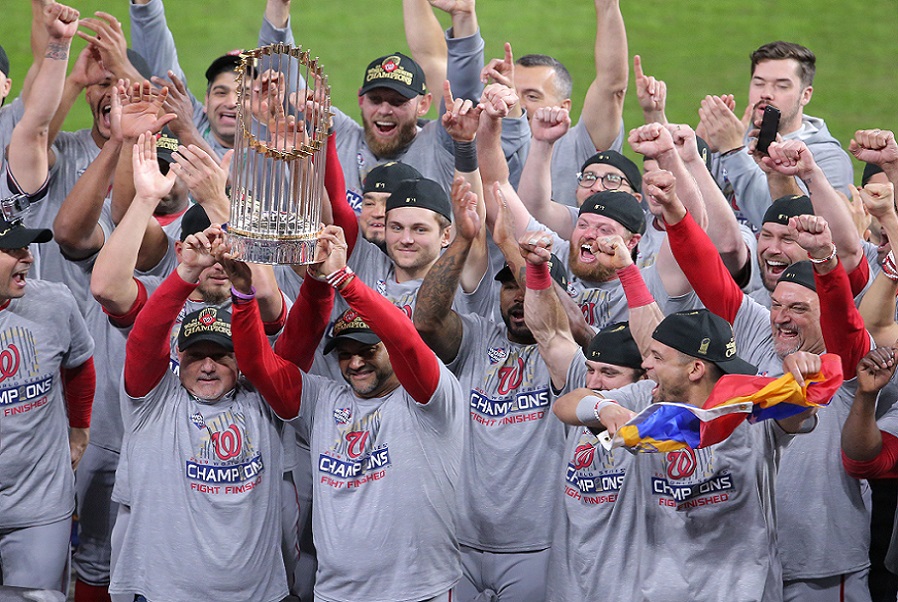 For the sake of simplicity, we will break down the Nationals roster by position group. One thing you will notice, is the Nationals are willing to explore any and all options in order to add someone that they think will add value to their team. Starting Pitchers Max Scherzer: After breaking onto the scene with the Detroit Tigers from 2010-2014, Max Scherzer signed a 7-year $210 million dollar contract with the Washington Nationals during the 2014-2015 MLB offseason. Stephen Strasburg: Stephen Strasburg was a product of the terrible Nationals teams in the late 2000’s. After finishing dead last in 2008, the Nationals had the first pick in the 2009 MLB draft, and they selected Strasburg with that pick. In May of 2016, the Nationals locked Strasburg up for the long term, signing him to a 7-year $175 million dollar contract extension. Patrick Corbin: During the 2018-2019 MLB offseason, while the Nationals were losing superstar Bryce Harper, they went out and made one of the biggest pitching acquisitions of the offseason, signing Patrick Corbin to a 6-year $140 million dollar contract. Anibal Sanchez: Anibal Sanchez had a strong bounce-back season with the Atlanta Braves in 2018. As a result, this motivated the Nationals to give him a 2-year ,$19 million dollar contract, with a third-year team option, last winter. Relief Pitchers Sean Doolittle: Before the 2017 MLB trade deadline, the Nationals traded for Sean Doolittle and Ryan Madson. In exchange, the Nationals traded away Blake Treinen and Jesus Luzardo. Daniel Hudson: Just hours before the 2019 MLB trade deadline, the Nationals acquired Daniel Hudson from the Toronto Blue Jays, in exchange for minor leaguer Kyle Johnson. Wander Suero: As part of the 2010 International free agent class, Wander Suero signed with the Nationals and has spent the past 10 seasons with the organization. Tanner Rainey: The Cincinnati Reds drafted Tanner Rainey 71st overall in the 2015 MLB draft. Last winter, the Reds sent Rainey sent to the Nationals, in exchange for Tanner Roark. Fernando Rodney: After getting released by the Oakland Athletics back in May, the Nationals signed him to a minor league deal a week later. Javy Guerra: The Nationals claimed Javy Guerra off waivers in May of 2019. They then designated him for assignment in July, before re-signing him again in August. Joe Ross: In December 2014, the Nationals traded away Steven Souza, as part of a three-team deal with the Tampa Bay Rays and San Diego Padres. Infielders Ryan Zimmerman: As the fourth overall pick in the 2005 MLB Draft, Ryan Zimmerman was the first ever draft pick by the Nationals organization after they moved away from Montreal. Asdrubal Cabrera: The day after the Texas Rangers released Asdrubal Cabrera in August of 2019, the Nationals signed him to a minor-league contract. Howie Kendrick: Yet another trade deadline acquisition for the Nationals, Howie Kendrick first came to Washington D.C. in July of 2017, as part of a trade that sent McKenzie Mills to the Philadelphia Phillies. After the 2017 season ended, Kendrick re-signed with the Nationals on a 2-year $7 million dollar contract. Brian Dozier: After becoming a free agent at the end of the 2018 season, Brian Dozier signed a 1-year, $9 million dollar deal with the Nationals. Trea Turner: In the same trade that the Nationals acquired Joe Ross, Trea Turner was the headlining piece returning to the Nationals after being selected with the 13th overall pick by the San Diego Padres just six months prior. Anthony Rendon: The top of the 2011 MLB Draft was absolutely loaded, giving the Nationals plenty of options with the sixth overall selection. They decided to go with Anthony Rendon and haven’t looked back since. At the time of his selection, draftees were allowed to sign MLB contracts right after being drafted. As a result, Rendon signed a 4-year, $7.2 million dollar deal. Kurt Suzuki: Once his time with the Twins had ended, Kurt Suzuki joined the Atlanta Braves organization, where he seemed to find his form from early in his career. This led Suzuki to signing a 2-year $10 million dollar contract with the Nationals last offseason. Yan Gomes: With the Cleveland Indians desperate to find ways to trim money from their 2019 payroll, they opted to trade Yan Gomes and the $7 million that was due to him to the Nationals in exchange for prospects Daniel Johnson and Jefry Rodriguez. Outfielders Juan Soto: Signing with the Nationals for $1.5 million dollars, Juan Soto was one of the highest paid players in the 2015 international free agent class. Adam Eaton: After the 2016 season, the Chicago White Sox went into full fire sale mode to try to stockpile their farm system with as much talent as possible. One of the trades they made was sending outfielder Adam Eaton to the Nationals in exchange for Lucas Giolito, Reynaldo Lopez and Dane Dunning. Victor Robles: In the loaded 2013 international free agent class that featured players like Eloy Jimenez, Gleyber Torres and Rafael Devers, Victor Robles flew under the radar, and might go down as the steal of the class. Gerardo Parra: The man who started the baby shark craze in Washington D.C. was signed by the Nationals in May of this year after the San Francisco Giants designated him for assignment. Michael A. Taylor: Stephen Strasburg wasn’t the only player on this roster that the Nationals picked up in the 2009 MLB draft, as they also took Michael A. Taylor in the sixth round, with the 172nd overall pick in that year’s draft. By looking back on their roster, it is clear that Mike Rizzo and company had a layered approach when it came to building this roster. They made it their main priority to spend the majority of their budget on building a dominant top of the starting rotation. They also did an excellent job in armateur scouting and acquired many of their top players from the MLB draft and International free agency. They then went out and made a few trades to acquire a few more pieces to the puzzle. Once they had their core in place, they went to the scrap heap to fill out any remaining holes on their roster and squeeze as much value out of these players as they could. It might not have always looked pretty, but at the end of the day, banners fly forever.
 -
I would too, but I left him off the list because I find it hard to believe that the Braves don't pick up the $6 million option for 2020. Especially when you consider the buyout is $2 million and they are already losing another catcher in Brain McCann to retirement.
-
One of the first moves the Twins front office made under the Derek Falvey and Thad Levine regime was signing former Houston Astros catcher Jason Castro to a three-year $24.5 million deal. That was a move that paid off well for the Twins over the past three seasons. In 2017, Castro was the Twins primary catcher, and he put up a respectable 2.1 fWAR in 110 games played that season. After missing nearly all of 2018 with a knee injury, Castro had another strong 2019 campaign in a catching role he split 50/50 with Mitch Garver. Image courtesy of © Denny Medley-USA TODAY Sports One of the first moves the Twins front office made under the Derek Falvey and Thad Levine regime was signing former Houston Astros catcher Jason Castro to a three-year $24.5 million deal. That was a move that paid off well for the Twins over the past three seasons. In 2017, Castro was the Twins primary catcher, and he put up a respectable 2.1 fWAR in 110 games played that season. After missing nearly all of 2018 with a knee injury, Castro had another strong 2019 campaign in a catching role he split 50/50 with Mitch Garver. Though Jason Castro wasn’t near the offensive threat that Mitch Garver has been behind the plate, he is no defensive-only catcher a la Drew Butera. In 2019, Castro posted a 103 wRC+, which ranked 15th out of the 36 catchers with at least 250 plate appearances. Factor that in with Castro’s above average pitch framing ability, and solid all-around defense behind the plate, and you have yourselves a pretty good catcher. Now, at the age of 32, Castro is entering free agency and the Twins suddenly find themselves in need of a catcher to back up Mitch Garver. Let’s take a look at some of the options the Twins have. Free Agency Perhaps the most obvious place the Twins could look to find the replacement for Jason Castro is on the free agent market. While there won’t be any big-time catchers available in free agency, that is perfectly fine with the Twins as all they need is someone who can be their number two behind Mitch Garver. Some of the names the Twins could be interested in are Robinson Chirinos, Travis d’Arnaud, Alex Avila and Jason Castro himself. Personally, Jason Castro makes the most sense to bring back among this group. The Twins will be looking to replicate the success they had at the catcher position this year, and what better way to do so than by using the same players? While this move would certainly make sense for the Twins, especially on a one- or two- year deal, it is hard to say if it would make a lot of sense for Castro. It is entirely possible that Castro is looking for an opportunity somewhere he could be the primary catching option, and who could blame him? He certainly has the ability to be the primary catcher for roughly half of the organizations in major league baseball, and if he were to return to the Twins, at best he will split time with Garver 50/50, barring an injury. Trade Market Another option the Twins could turn to in on the trade market. One team the Twins could reach out to is the Seattle Mariners, and their always-very-eager- to- make-a-trade GM Jerry Dipoto. The Mariners have two quality young catchers in Tom Murphy and Omar Narvaez. Murphy has one year remaining before he becomes arbitration eligible in 2021, while Narvaez is eligible for arbitration for the first time this winter. With a few years of team control remaining for each player, the Mariners could have one of two viewpoints. Either, A, hold onto them as part of the future of the organization, or B, cash them in while they can still return good value, and continue to build up their strong farm system. If the answer is B, I think the Twins could make an excellent trade partner for them, given the sheer depth of the Twins farm system, and value that either one of these two catchers would bring to the team. Internal Options If the Twins don’t find anything they like in either free agency or on the trading block, they could always turn internally. Perhaps the most likely option, if this were the case, would be to give Willians Astudillo extended playing time as a catcher. While this would certainly be a fan favorite choice, it is still a little dicey trusting Astudillo behind the plate that often, especially with his offensive struggles mitigating his ability to make up for his poor defense. After Astudillo, their top two catching prospects within the organization are Ryan Jeffers and Ben Rortvedt. While both are solid catching options, they each have only played partial seasons at AA with zero experience at the AAA level. Turning to one of these two to start the season would require a big jump that they might not be quite ready for. A fourth option would be Tomas Telis, who posted an impressive .330/.364/.490 slash line in 82 games for the Rochester Red Wings this season, albeit in the extreme offensive environment that was Triple-A this season. Telis does have brief MLB experience playing for the Texas Rangers and Miami Marlins before he came over to the Twins organization, so he should be ready if the Twins were to call his number. While the Twins main focus will certainly be around addressing the starting rotation, filling the hole left by Jason Castro cannot go overlooked. One thing that needs to be at the forefront of the Twins minds when making this decision is in case of an injury, is this a player we trust to step up as the primary Twins catcher in his absence? If that answer is no, they should probably look to an alternative option, to avoid a replay of the 2018 Twins catching situation. View full article
- 31 replies
-
- 3
-
-
- jason castro
- minnesota twins
- (and 3 more)
-
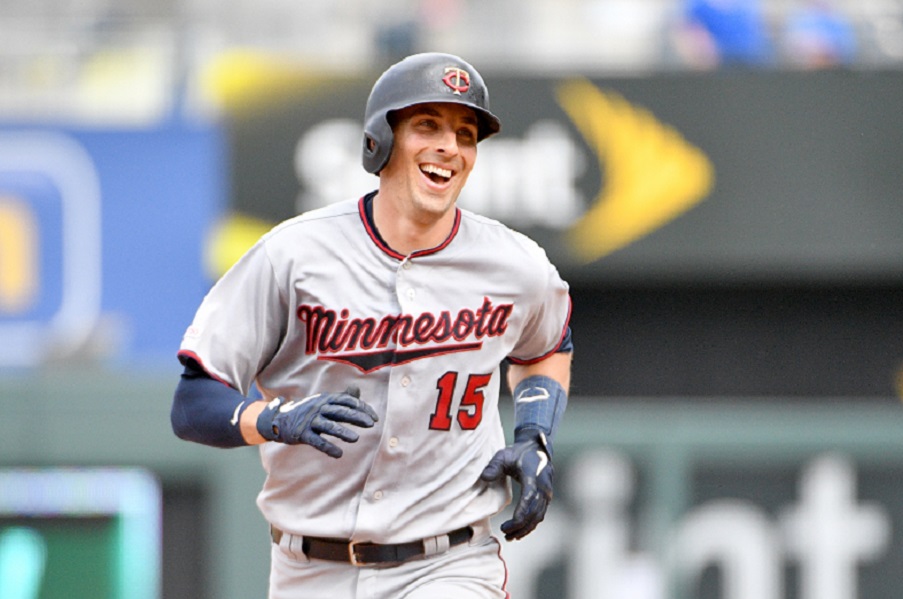 Though Jason Castro wasn’t near the offensive threat that Mitch Garver has been behind the plate, he is no defensive-only catcher a la Drew Butera. In 2019, Castro posted a 103 wRC+, which ranked 15th out of the 36 catchers with at least 250 plate appearances. Factor that in with Castro’s above average pitch framing ability, and solid all-around defense behind the plate, and you have yourselves a pretty good catcher. Now, at the age of 32, Castro is entering free agency and the Twins suddenly find themselves in need of a catcher to back up Mitch Garver. Let’s take a look at some of the options the Twins have. Free Agency Perhaps the most obvious place the Twins could look to find the replacement for Jason Castro is on the free agent market. While there won’t be any big-time catchers available in free agency, that is perfectly fine with the Twins as all they need is someone who can be their number two behind Mitch Garver. Some of the names the Twins could be interested in are Robinson Chirinos, Travis d’Arnaud, Alex Avila and Jason Castro himself. Personally, Jason Castro makes the most sense to bring back among this group. The Twins will be looking to replicate the success they had at the catcher position this year, and what better way to do so than by using the same players? While this move would certainly make sense for the Twins, especially on a one- or two- year deal, it is hard to say if it would make a lot of sense for Castro. It is entirely possible that Castro is looking for an opportunity somewhere he could be the primary catching option, and who could blame him? He certainly has the ability to be the primary catcher for roughly half of the organizations in major league baseball, and if he were to return to the Twins, at best he will split time with Garver 50/50, barring an injury. Trade Market Another option the Twins could turn to in on the trade market. One team the Twins could reach out to is the Seattle Mariners, and their always-very-eager- to- make-a-trade GM Jerry Dipoto. The Mariners have two quality young catchers in Tom Murphy and Omar Narvaez. Murphy has one year remaining before he becomes arbitration eligible in 2021, while Narvaez is eligible for arbitration for the first time this winter. With a few years of team control remaining for each player, the Mariners could have one of two viewpoints. Either, A, hold onto them as part of the future of the organization, or B, cash them in while they can still return good value, and continue to build up their strong farm system. If the answer is B, I think the Twins could make an excellent trade partner for them, given the sheer depth of the Twins farm system, and value that either one of these two catchers would bring to the team. Internal Options If the Twins don’t find anything they like in either free agency or on the trading block, they could always turn internally. Perhaps the most likely option, if this were the case, would be to give Willians Astudillo extended playing time as a catcher. While this would certainly be a fan favorite choice, it is still a little dicey trusting Astudillo behind the plate that often, especially with his offensive struggles mitigating his ability to make up for his poor defense. After Astudillo, their top two catching prospects within the organization are Ryan Jeffers and Ben Rortvedt. While both are solid catching options, they each have only played partial seasons at AA with zero experience at the AAA level. Turning to one of these two to start the season would require a big jump that they might not be quite ready for. A fourth option would be Tomas Telis, who posted an impressive .330/.364/.490 slash line in 82 games for the Rochester Red Wings this season, albeit in the extreme offensive environment that was Triple-A this season. Telis does have brief MLB experience playing for the Texas Rangers and Miami Marlins before he came over to the Twins organization, so he should be ready if the Twins were to call his number. While the Twins main focus will certainly be around addressing the starting rotation, filling the hole left by Jason Castro cannot go overlooked. One thing that needs to be at the forefront of the Twins minds when making this decision is in case of an injury, is this a player we trust to step up as the primary Twins catcher in his absence? If that answer is no, they should probably look to an alternative option, to avoid a replay of the 2018 Twins catching situation.
 -
The long awaited postseason return to Target Field was met with some mixed emotions, as the Twins brought a 2-0 series deficit back from New York, and were suddenly on the brink of elimination. The Twins gave themselves plenty of chances to give this crowd a reason to erupt, but time and time again they came up short in the clutch, going a dreadful 1-for-12 with runners in scoring position. In the end, the Twins dropped their 16th consecutive postseason game by a score of 5-1, ending the season for the Bomba Squad. Image courtesy of © David Berding-USA TODAY Sports The long awaited postseason return to Target Field was met with some mixed emotions, as the Twins brought a 2-0 series deficit back from New York, and were suddenly on the brink of elimination. The Twins gave themselves plenty of chances to give this crowd a reason to erupt, but time and time again they came up short in the clutch, going a dreadful 1-for-12 with runners in scoring position. In the end, the Twins dropped their 16th consecutive postseason game by a score of 5-1, ending the season for the Bomba Squad. Box Score Odorizzi: 5 IP, 5 H, 2 ER, 0 BB, 5 K, 65.9% strikes (54 of 82 pitches) Home Runs: Rosario (1) Multi-Hit Games: Rosario (3-for-4, 2B, HR), Arraez (2-for-4, 2B) WPA of +0.1: Rosario .110, Cron .104 WPA of -0.1: Sano -.165, Kepler -.139, Gonzalez -.118, Cruz -.112, Polanco -.108, Garver -.101 Here's A Look At Today's Win Probability Chart (Chart via Fangraphs) Despite being down in the series 2-0, Twins were amped at the start of the game, and Jake Odorizzi gave them something to cheer about in the top of the first. After striking out DJ LeMahieu to start the ballgame, Odorizzi appeared to get Aaron Judge to fly out to Eddie Rosario in right for two quick outs. However, Judge was awarded first base after catcher’s interference was called. That was no problem for Odorizzi, as he came back and got Brett Gardner to strike out and Edwin Encarnacion to fly out to end the inning. Odorizzi wasn’t able to keep the Yankees off the board for long, however, as Gleyber Torres hit a fly ball that just cleared the wall, and Jake Cave’s glove, in left. Rocco Baldelli went out and asked the umpires to review the home run for fan interference, and while a fan did reach over the railing and made contact with the ball, it was clearly already over the fence, along with Cave’s glove, before the fan touched it. Luckily for the Twins, the home run came with nobody on base, which feels like a rare occurrence for the Yankees against the Twins of late. The Twins gave themselves an excellent opportunity to get on the scoreboard themselves in the bottom of the second. Eddie Rosario drove a pitch about six inches above the zone deep off the top of the right-center field wall for a lead off double, narrowly missing a home run. After a Mitch Garver walk, and a Luis Arraez single, the Twins had the bases loaded and nobody out. However, as was the narrative all season long, the Twins failed to get the job done with the bases loaded, thanks to a Miguel Sano popup, and strikeouts from Marwin Gonzalez and Jake Cave. Gio Urshela led off the Yankee third with a blopper that dropped in front a Jake Cave, who inexplicably laid out for the baseball, coming up a few feet short, and allowing the ball to get past him, turning a routine single into a lead off double for Urshela. Urshela was able to advance to third on a DJ LeMahieu ground out, and looked like he might be stranded there after Aaron Judge struck out. However, Brett Gardner came through with a two-out single that went right past a shifted Miguel Sano, giving the Yankees a 2-0 lead. After singles from Jorge Polanco and Eddie Rosario, the Twins had another scoring chance with two on and two out, for Mitch Garver, in the bottom of the third. After getting ahead in the count 3-0, Garver took what was pretty clearly ball four high, however, umpire Gary Cederstrom didn’t see it that way, calling it a strike. After that, Luis Severino was able to battle back and strike out Garver to end the inning. Jake Odorizzi did his job in the fourth and fifth innings, by keeping the Yankees off the board and working two pretty clean innings. Overall, for the night, Odorizzi earned a tip of the cap for doing his job by limiting the Yankees to just two runs across five innings, keeping the Twins in the game into the later innings. Luis Arraez got yet another Twins rally attempt going in the bottom of the sixth, when he drilled a one-out double that split the gap in left-center field. Miguel Sano followed that up with good at-bat, working the count full before driving a ball that left the bat at 107.9 MPH, toward the wall in right, but Aaron Judge used all of his 6’8” frame to reach up and snare the ball out of midair. Marwin Gonzalez followed that up by driving a flyball high into the Minnesota sky, but that ball came up just shy of the fence, as Judge made the catch on the warning track to end the Twins sixth. The Yankees added to their lead in the top of the seventh after yet another clutch hit off the bat of Didi Gregorius. Gleyber Torres started the inning with a ringing double off of Taylor Rogers. Then with one out, Gregorius ripped a single down the first base line, bringing around Torres to extend the Yankee lead to three. It took a long, and I mean long, time but the Twins were finally able to get on the board thanks to this Eddie Rosario blast to lead off the bottom of the eighth. https://twitter.com/MLBONFOX/status/1181419646500519936 The Yankees tacked on a couple more runs in the ninth to extend their lead to four in the top of the ninth. Cameron Maybin took Sergio Romo deep, with what looked like a lazy fly ball that just cleared the wall in left. They tacked on their fifth, and final, run of the game, thanks to, you guessed it, yet another RBI off the bat of Didi Gregorius. Perhaps unsurprisingly, the Twins got themselves a little rally going in the bottom of the ninth, getting each of the first two hitters on to lead off the inning. However, the ninth ended in the same way as every other Twins rally of the ballgame. Max Kepler picked up the first out of the inning, by striking out three straight sliders from Aroldis Chapman. Jorge Polanco then lined a ball up the middle that appeared destined for a base hit until Didi Gregorius grabbed the ball, and with it the Twins hopes and dreams. The Twins season came to an end with Nelson Cruz at the plate looking at strike three right down the middle. The Twins ended the game going just 3-for-9 on balls put in play over 100 MPH. Those nine batted balls had an average expected batting average of .612. Instead, the Twins got just over half of that, and of course all the ones that didn’t drop for a hit were the ones hit in the highest leverage spots, but hey that’s baseball. Postgame with Baldelli: https://twitter.com/fsnorth/status/1181440075768291328 Bullpen Usage Here’s a quick look at the number of pitches thrown by the bullpen over the past five days: ALDS Game Recaps: Twins ALDS Game 2 Recap: Nothing Works, Twins Lose 12th Straight To Yankees Twins ALDS Game 1 Recap: Bad Defense, Questionable Management Leads to Loss View full article
- 109 replies
-
- 1
-
-
- twins vs yankees
- minnesota twins
- (and 1 more)
-
 Box Score Odorizzi: 5 IP, 5 H, 2 ER, 0 BB, 5 K, 65.9% strikes (54 of 82 pitches) Home Runs: Rosario (1) Multi-Hit Games: Rosario (3-for-4, 2B, HR), Arraez (2-for-4, 2B) WPA of +0.1: Rosario .110, Cron .104 WPA of -0.1: Sano -.165, Kepler -.139, Gonzalez -.118, Cruz -.112, Polanco -.108, Garver -.101 Here's A Look At Today's Win Probability Chart (Chart via Fangraphs) Despite being down in the series 2-0, Twins were amped at the start of the game, and Jake Odorizzi gave them something to cheer about in the top of the first. After striking out DJ LeMahieu to start the ballgame, Odorizzi appeared to get Aaron Judge to fly out to Eddie Rosario in right for two quick outs. However, Judge was awarded first base after catcher’s interference was called. That was no problem for Odorizzi, as he came back and got Brett Gardner to strike out and Edwin Encarnacion to fly out to end the inning. Odorizzi wasn’t able to keep the Yankees off the board for long, however, as Gleyber Torres hit a fly ball that just cleared the wall, and Jake Cave’s glove, in left. Rocco Baldelli went out and asked the umpires to review the home run for fan interference, and while a fan did reach over the railing and made contact with the ball, it was clearly already over the fence, along with Cave’s glove, before the fan touched it. Luckily for the Twins, the home run came with nobody on base, which feels like a rare occurrence for the Yankees against the Twins of late. The Twins gave themselves an excellent opportunity to get on the scoreboard themselves in the bottom of the second. Eddie Rosario drove a pitch about six inches above the zone deep off the top of the right-center field wall for a lead off double, narrowly missing a home run. After a Mitch Garver walk, and a Luis Arraez single, the Twins had the bases loaded and nobody out. However, as was the narrative all season long, the Twins failed to get the job done with the bases loaded, thanks to a Miguel Sano popup, and strikeouts from Marwin Gonzalez and Jake Cave. Gio Urshela led off the Yankee third with a blopper that dropped in front a Jake Cave, who inexplicably laid out for the baseball, coming up a few feet short, and allowing the ball to get past him, turning a routine single into a lead off double for Urshela. Urshela was able to advance to third on a DJ LeMahieu ground out, and looked like he might be stranded there after Aaron Judge struck out. However, Brett Gardner came through with a two-out single that went right past a shifted Miguel Sano, giving the Yankees a 2-0 lead. After singles from Jorge Polanco and Eddie Rosario, the Twins had another scoring chance with two on and two out, for Mitch Garver, in the bottom of the third. After getting ahead in the count 3-0, Garver took what was pretty clearly ball four high, however, umpire Gary Cederstrom didn’t see it that way, calling it a strike. After that, Luis Severino was able to battle back and strike out Garver to end the inning. Jake Odorizzi did his job in the fourth and fifth innings, by keeping the Yankees off the board and working two pretty clean innings. Overall, for the night, Odorizzi earned a tip of the cap for doing his job by limiting the Yankees to just two runs across five innings, keeping the Twins in the game into the later innings. Luis Arraez got yet another Twins rally attempt going in the bottom of the sixth, when he drilled a one-out double that split the gap in left-center field. Miguel Sano followed that up with good at-bat, working the count full before driving a ball that left the bat at 107.9 MPH, toward the wall in right, but Aaron Judge used all of his 6’8” frame to reach up and snare the ball out of midair. Marwin Gonzalez followed that up by driving a flyball high into the Minnesota sky, but that ball came up just shy of the fence, as Judge made the catch on the warning track to end the Twins sixth. The Yankees added to their lead in the top of the seventh after yet another clutch hit off the bat of Didi Gregorius. Gleyber Torres started the inning with a ringing double off of Taylor Rogers. Then with one out, Gregorius ripped a single down the first base line, bringing around Torres to extend the Yankee lead to three. It took a long, and I mean long, time but the Twins were finally able to get on the board thanks to this Eddie Rosario blast to lead off the bottom of the eighth. https://twitter.com/MLBONFOX/status/1181419646500519936 The Yankees tacked on a couple more runs in the ninth to extend their lead to four in the top of the ninth. Cameron Maybin took Sergio Romo deep, with what looked like a lazy fly ball that just cleared the wall in left. They tacked on their fifth, and final, run of the game, thanks to, you guessed it, yet another RBI off the bat of Didi Gregorius. Perhaps unsurprisingly, the Twins got themselves a little rally going in the bottom of the ninth, getting each of the first two hitters on to lead off the inning. However, the ninth ended in the same way as every other Twins rally of the ballgame. Max Kepler picked up the first out of the inning, by striking out three straight sliders from Aroldis Chapman. Jorge Polanco then lined a ball up the middle that appeared destined for a base hit until Didi Gregorius grabbed the ball, and with it the Twins hopes and dreams. The Twins season came to an end with Nelson Cruz at the plate looking at strike three right down the middle. The Twins ended the game going just 3-for-9 on balls put in play over 100 MPH. Those nine batted balls had an average expected batting average of .612. Instead, the Twins got just over half of that, and of course all the ones that didn’t drop for a hit were the ones hit in the highest leverage spots, but hey that’s baseball. Postgame with Baldelli: https://twitter.com/fsnorth/status/1181440075768291328 Bullpen Usage Here’s a quick look at the number of pitches thrown by the bullpen over the past five days: ALDS Game Recaps: Twins ALDS Game 2 Recap: Nothing Works, Twins Lose 12th Straight To Yankees Twins ALDS Game 1 Recap: Bad Defense, Questionable Management Leads to Loss
 -
It is safe to say game one did not go the way that many Twins fans would have hoped, but we have to find a way to put that behind us and gear up for game two of the series. It Twins can come away with a win in game two, they will suddenly find themselves in the driver's seat with the series tied and heading back to Minnesota. However, if they lose to the Yankees yet again, they will have dug themselves quite the hole to get out of. Image courtesy of © Jeffrey Becker-USA TODAY Sports and © Jerome Miron-USA TODAY Sports It is safe to say game one did not go the way that many Twins fans would have hoped, but we have to find a way to put that behind us and gear up for game two of the series. It Twins can come away with a win in game two, they will suddenly find themselves in the driver's seat with the series tied and heading back to Minnesota. However, if they lose to the Yankees yet again, they will have dug themselves quite the hole to get out of. ALDS Game 2 Minnesota Twins (101-61) @ New York Yankees (104-58) Series: 1-0 Yankees Start Time: 5:07 PM ET / 4:07 PM CT Forecast: Mid 50s and clear skies Pitching Matchup: Randy Dobnak, RHP vs. Masahiro Tanaka, RHP Lineups: What an amazing run Randy Dobnak as had up through the Twins minor league system this season. After starting the season at High-A Fort Myers, Dobnak quickly got the call up to AA Pensacola. He then rode the carousel up and down between Pensacola and AAA Rochester, before finally getting the call up to the major leagues in August. At the time of his call up, many probably just thought of Dobnak as yet another one of the Twins minor league relievers who was there to eat innings, and then get sent back down to Rochester. However, once rosters expanded in September, Dobnak finally got a chance at a continued stay with the MLB club, and he took full advantage of it. As a result of his success, it compelled me to make a case for Dobnak to start game two of the ALDS a couple of weeks ago. In nine appearances, including five starts, Dobnak posted a stellar 1.59 ERA with 23 strikeouts and just five walks in 28 1/3 innings. Yankees Starter On the mound for the New York Yankees in game two of the ALDS will be thirty-year-old Masahiro Tanaka. Tanaka got off to a good start to his 2019 campaign, earning himself a nod in the All-Star Game. However, Tanaka has been abysmal over the second half of the season. Since June 29th, Tanaka has a 5.89 ERA in 16 appearances (15 starts). Over that span, Tanaka has struck out just 6.86 and walked 2.03 batters per nine innings. If the Twins want to get back into this series, they will need to jump all over Tanaka early, and put up a number that can help keep this dreaded Yankee offense at bay. Twins Vs Tanaka Masahiro Tanaka is already in his sixth season in the Major Leagues, and in that time eight of the 13 hitters on the Twins postseason roster have faced Tanaka before. In the table below, we can see how each of those players have performed against Tanaka in their careers. From this chart, it looks like the Twins hitters haven’t had a lot of success facing Tanaka. Jonathan Schoop and C.J. Cron are the only two who have done anything against him. While, Nelson Cruz, Marwin Gonzales and Max Kepler have looked absolutely awful against Tanaka. However, it appears as though Kepler has run into a bit of bad luck, as he has hit the ball really well against Tanaka, though it has resulted in just one hit. Hopefully, Kepler can have a reversal of fortunes in Game 2 of the ALDS. One of the overlooked talking points of last night’s game was the bullpen usage, specifically among the back end of each team’s bullpen. Among the Twins top four relievers, only Tyler Duffey made an appearance in game one, throwing 25 pitches. However, each of the Yankees top four relievers, Aroldis Chapman, Adam Ottavino, Zack Britton and Tommy Kahnle all made an appearance in game one. Given the substantial drop off that pitchers have while pitching on zero days of rest, when compared to how they do when they are well rested, this should give the Twins a big advantage if the game is close down the stretch. View full article
- 9 replies
-
- 1
-
-
- twins vs yankees
- alds game 2
- (and 2 more)
-
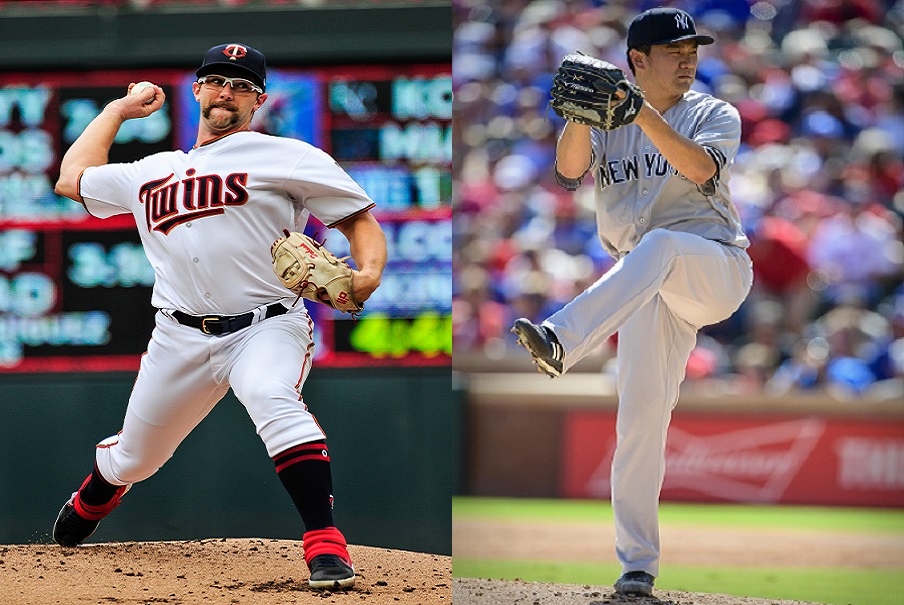 ALDS Game 2 Minnesota Twins (101-61) @ New York Yankees (104-58) Series: 1-0 Yankees Start Time: 5:07 PM ET / 4:07 PM CT Forecast: Mid 50s and clear skies Pitching Matchup: Randy Dobnak, RHP vs. Masahiro Tanaka, RHP Lineups: What an amazing run Randy Dobnak as had up through the Twins minor league system this season. After starting the season at High-A Fort Myers, Dobnak quickly got the call up to AA Pensacola. He then rode the carousel up and down between Pensacola and AAA Rochester, before finally getting the call up to the major leagues in August. At the time of his call up, many probably just thought of Dobnak as yet another one of the Twins minor league relievers who was there to eat innings, and then get sent back down to Rochester. However, once rosters expanded in September, Dobnak finally got a chance at a continued stay with the MLB club, and he took full advantage of it. As a result of his success, it compelled me to make a case for Dobnak to start game two of the ALDS a couple of weeks ago. In nine appearances, including five starts, Dobnak posted a stellar 1.59 ERA with 23 strikeouts and just five walks in 28 1/3 innings. Yankees Starter On the mound for the New York Yankees in game two of the ALDS will be thirty-year-old Masahiro Tanaka. Tanaka got off to a good start to his 2019 campaign, earning himself a nod in the All-Star Game. However, Tanaka has been abysmal over the second half of the season. Since June 29th, Tanaka has a 5.89 ERA in 16 appearances (15 starts). Over that span, Tanaka has struck out just 6.86 and walked 2.03 batters per nine innings. If the Twins want to get back into this series, they will need to jump all over Tanaka early, and put up a number that can help keep this dreaded Yankee offense at bay. Twins Vs Tanaka Masahiro Tanaka is already in his sixth season in the Major Leagues, and in that time eight of the 13 hitters on the Twins postseason roster have faced Tanaka before. In the table below, we can see how each of those players have performed against Tanaka in their careers. From this chart, it looks like the Twins hitters haven’t had a lot of success facing Tanaka. Jonathan Schoop and C.J. Cron are the only two who have done anything against him. While, Nelson Cruz, Marwin Gonzales and Max Kepler have looked absolutely awful against Tanaka. However, it appears as though Kepler has run into a bit of bad luck, as he has hit the ball really well against Tanaka, though it has resulted in just one hit. Hopefully, Kepler can have a reversal of fortunes in Game 2 of the ALDS. One of the overlooked talking points of last night’s game was the bullpen usage, specifically among the back end of each team’s bullpen. Among the Twins top four relievers, only Tyler Duffey made an appearance in game one, throwing 25 pitches. However, each of the Yankees top four relievers, Aroldis Chapman, Adam Ottavino, Zack Britton and Tommy Kahnle all made an appearance in game one. Given the substantial drop off that pitchers have while pitching on zero days of rest, when compared to how they do when they are well rested, this should give the Twins a big advantage if the game is close down the stretch.
 -
If you haven’t already read Part 1 of this series, I highly recommend that you go and do so. In that installment, I broke down the strengths and weakness of three Yankee hitters (DJ LeMahieu, Gary Sanchez and Giancarlo Stanton) to help devise an effective game plan for the Twins pitchers and fielders to have going into the ALDS. In this version, I will be doing much of the same, except now we will be looking at three new hitters in heart of the Yankees lineup. Image courtesy of © Vincent Carchietta-USA TODAY Sports If you haven’t already read Part 1 of this series, I highly recommend that you go and do so. In that installment, I broke down the strengths and weakness of three Yankee hitters (DJ LeMahieu, Gary Sanchez and Giancarlo Stanton) to help devise an effective game plan for the Twins pitchers and fielders to have going into the ALDS. In this version, I will be doing much of the same, except now we will be looking at three new hitters in heart of the Yankees lineup. The hitters that we will be breaking down in this installment are Aaron Judge, Edwin Encarnacion and Gleyber Torres. Just as the with the three previous hitters, each of these three is also right-handed. This sets up well for the Twins pitching staff that is stacked with right-handed pitchers. Let’s start this breakdown by looking at perhaps the best hitter in the Yankees lineup, Aaron Judge. Aaron Judge 2017 was a breakout rookie season for Aaron Judge, who hit what was then a rookie record 52 home runs. In the two seasons since, Judge has failed to reach the 30 home run mark, as a result of missing substantial amounts of time with injury in each season. However, when healthy, Judge is still one of the best power hitters in the game. When facing Aaron Judge, getting ahead in the count is vital. Judge has a patient approach, and when he gets ahead in the count, he doesn’t miss his pitch often. Since 2017, Judge ranks third in major league baseball with a .531 wOBA when ahead in the count. A big reason for this is his proficiency against fastballs, as Judge has a .449 wOBA against fastballs over that span. While Aaron Judge can be deadly when he gets his pitch, he can be susceptible against breaking balls and off-speed pitches. In 2019, Judge has a whiff rate of 52.9 percent against breaking balls, and a staggeringly high whiff rate of 61.9 percent against off-speed pitches. While Judge struggles to make contact with both breaking balls and off-speed pitches, the approach to get him to do so varies drastically. Against breaking balls thrown out of the zone, Judge has a whiff rate of 89.1 percent versus a whiff rate of just 30.4 percent on breaking pitches thrown in the zone. However, when swinging at off-speed pitches out of the zone, Judge has a whiff rate of 75 percent versus a whiff rate of 53.6 percent. As we can see, Judge’s whiff rate varies a lot more drastically on breaking balls than it does on off-speed pitches. Knowing this, the Twins pitchers should focus more on using off-speed pitches, rather than breaking balls when trying to get a pitch over the plate, without having to give in and throw him a fastball. Now that we have a plan of action for the pitchers against Aaron Judge, let’s take a look at how the fielders should line up against him. From the Aaron Judge spray chart pictured above, we can see two things. The first and most obvious is the large percentage of groundballs that he hits to the left-side of the infield. The other obvious thing is that Judge rarely hits fly balls to left field, and when he does, they usually go over the fence. To defend against him, the Twins should have their outfielders shade slightly to right-field so they will have a better chance at catching the larger portion of his fly balls that actually stay in the ballpark. Edwin Encarnacion There have been some concerns on the Yankees front about Edwin Encarnacion’s availability for the ALDS. However, reports have been promising, and it does indeed appear as though Encarnacion will be ready to go. With Encarnacion back in their lineup, it adds yet another power-hitting righty into the middle of the lineup that the Twins need to be ready for. While Encarnacion is a big power-hitting righty, like Aaron Judge, Encarnacion and Judge aren’t as similar as you might think. While Judge’s ability is built around excelling at certain aspects of the game, while having holes in other aspects of the game, Encarnacion is much more balanced in his skills. Despite being such a feared power hitter, Encarnacion has a modest 21.2 percent strikeout rate in 2019. This means, the Twins won’t be able to take advantage of his swing and miss tendencies like they can with other hitters in the Yankees lineup. Another thing Edwin Encarnacion does well, is hit against both right-handed and left-handed pitchers. In 2019, Encarnacion has a .244 average and a 121 wRC+ against righties, while he had a .245 average and a 152 wRC+ against lefties. Encarnacion is about as well-balanced as a player can be against all pitch types. In the chart below, we can see that his wOBAs against fastballs, breaking balls and off-speed pitches are nearly identical in 2019. This gives Twins pitchers flexibility to face Edwin Encarnacion with a much more balanced approach than they can with many of the other hitters in the Yankees lineup. One thing that does remain the same with Edwin Encarnacion, in comparison to the rest of the Yankees lineup, is his propensity to pull the ball on the ground, as we can see in the spray chart below. Additionally, much like Gary Sanchez, the Twins should be able to take advantage of Encarnacion’s extremely slow running ability by playing their infielders deeper to cut off more of the groundballs Encarnacion hits, while still having time to throw him out at first. Gleyber Torres The final Yankee hitter that we will be previewing in this series is Gleyber Torres. The thing that has become quite apparent with Torres in 2019, has been his inability to hit breaking balls. For Torres, it’s not so much that he swings and misses at a lot of them, but rather his ineptitude of putting breaking balls in play with any authority. The chart below features Gleyber’s barrel percent, and whiff rate against fastballs, breaking balls and off-speed pitches, in 2019. One thing that the Twins pitchers shouldn’t have much trouble doing is getting Gleyber Torres to swing at bad pitches out of the zone, as he had a chase rate of 35.1 percent in 2019. For reference, that is almost right in line with C.J. Cron’s 35.6 percent chase rate this season. Now let’s take a look at Gleyber’s spray chart. While Torres also hits a large number of groundballs to the left side of the infield, he does hit just enough balls in the vicinity of where a second basemen traditionally plays, to where I think it makes more sense to play Torres straight up. As we can see from these breakdowns, the Yankees will be sending power-hitting righty after power-hitting righty at the Twins pitchers all series long. This makes it imperative that they keep the ball in the yard at all costs, and not let this lineup slug their way to victory. To do so, they will need to avoid pitching into the Yankee hitters' strengths, and attack their weakness, as I have highlighted here. View full article
- 1 reply
-
- 1
-
-
- twins vs yankees
- minnesota twins
- (and 2 more)
-
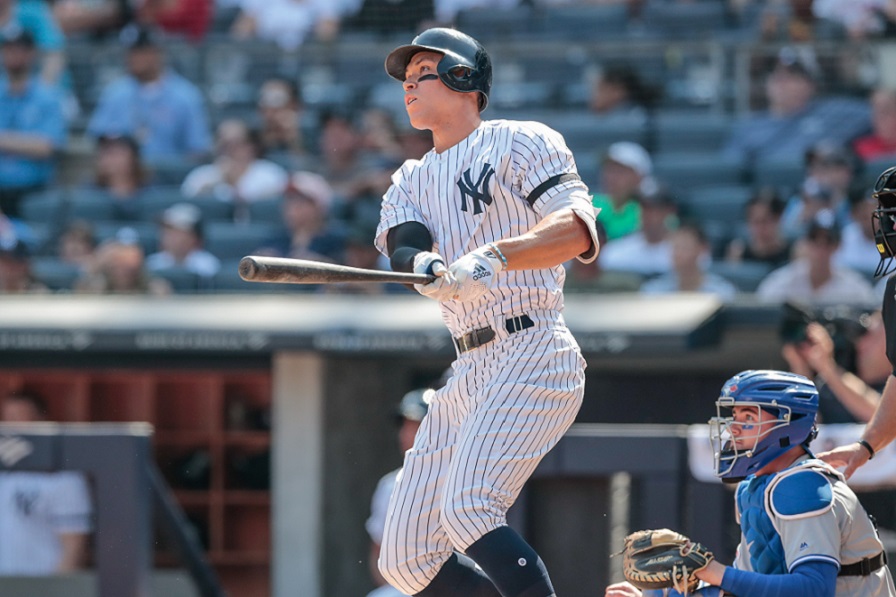 The hitters that we will be breaking down in this installment are Aaron Judge, Edwin Encarnacion and Gleyber Torres. Just as the with the three previous hitters, each of these three is also right-handed. This sets up well for the Twins pitching staff that is stacked with right-handed pitchers. Let’s start this breakdown by looking at perhaps the best hitter in the Yankees lineup, Aaron Judge. Aaron Judge 2017 was a breakout rookie season for Aaron Judge, who hit what was then a rookie record 52 home runs. In the two seasons since, Judge has failed to reach the 30 home run mark, as a result of missing substantial amounts of time with injury in each season. However, when healthy, Judge is still one of the best power hitters in the game. When facing Aaron Judge, getting ahead in the count is vital. Judge has a patient approach, and when he gets ahead in the count, he doesn’t miss his pitch often. Since 2017, Judge ranks third in major league baseball with a .531 wOBA when ahead in the count. A big reason for this is his proficiency against fastballs, as Judge has a .449 wOBA against fastballs over that span. While Aaron Judge can be deadly when he gets his pitch, he can be susceptible against breaking balls and off-speed pitches. In 2019, Judge has a whiff rate of 52.9 percent against breaking balls, and a staggeringly high whiff rate of 61.9 percent against off-speed pitches. While Judge struggles to make contact with both breaking balls and off-speed pitches, the approach to get him to do so varies drastically. Against breaking balls thrown out of the zone, Judge has a whiff rate of 89.1 percent versus a whiff rate of just 30.4 percent on breaking pitches thrown in the zone. However, when swinging at off-speed pitches out of the zone, Judge has a whiff rate of 75 percent versus a whiff rate of 53.6 percent. As we can see, Judge’s whiff rate varies a lot more drastically on breaking balls than it does on off-speed pitches. Knowing this, the Twins pitchers should focus more on using off-speed pitches, rather than breaking balls when trying to get a pitch over the plate, without having to give in and throw him a fastball. Now that we have a plan of action for the pitchers against Aaron Judge, let’s take a look at how the fielders should line up against him. From the Aaron Judge spray chart pictured above, we can see two things. The first and most obvious is the large percentage of groundballs that he hits to the left-side of the infield. The other obvious thing is that Judge rarely hits fly balls to left field, and when he does, they usually go over the fence. To defend against him, the Twins should have their outfielders shade slightly to right-field so they will have a better chance at catching the larger portion of his fly balls that actually stay in the ballpark. Edwin Encarnacion There have been some concerns on the Yankees front about Edwin Encarnacion’s availability for the ALDS. However, reports have been promising, and it does indeed appear as though Encarnacion will be ready to go. With Encarnacion back in their lineup, it adds yet another power-hitting righty into the middle of the lineup that the Twins need to be ready for. While Encarnacion is a big power-hitting righty, like Aaron Judge, Encarnacion and Judge aren’t as similar as you might think. While Judge’s ability is built around excelling at certain aspects of the game, while having holes in other aspects of the game, Encarnacion is much more balanced in his skills. Despite being such a feared power hitter, Encarnacion has a modest 21.2 percent strikeout rate in 2019. This means, the Twins won’t be able to take advantage of his swing and miss tendencies like they can with other hitters in the Yankees lineup. Another thing Edwin Encarnacion does well, is hit against both right-handed and left-handed pitchers. In 2019, Encarnacion has a .244 average and a 121 wRC+ against righties, while he had a .245 average and a 152 wRC+ against lefties. Encarnacion is about as well-balanced as a player can be against all pitch types. In the chart below, we can see that his wOBAs against fastballs, breaking balls and off-speed pitches are nearly identical in 2019. This gives Twins pitchers flexibility to face Edwin Encarnacion with a much more balanced approach than they can with many of the other hitters in the Yankees lineup. One thing that does remain the same with Edwin Encarnacion, in comparison to the rest of the Yankees lineup, is his propensity to pull the ball on the ground, as we can see in the spray chart below. Additionally, much like Gary Sanchez, the Twins should be able to take advantage of Encarnacion’s extremely slow running ability by playing their infielders deeper to cut off more of the groundballs Encarnacion hits, while still having time to throw him out at first. Gleyber Torres The final Yankee hitter that we will be previewing in this series is Gleyber Torres. The thing that has become quite apparent with Torres in 2019, has been his inability to hit breaking balls. For Torres, it’s not so much that he swings and misses at a lot of them, but rather his ineptitude of putting breaking balls in play with any authority. The chart below features Gleyber’s barrel percent, and whiff rate against fastballs, breaking balls and off-speed pitches, in 2019. One thing that the Twins pitchers shouldn’t have much trouble doing is getting Gleyber Torres to swing at bad pitches out of the zone, as he had a chase rate of 35.1 percent in 2019. For reference, that is almost right in line with C.J. Cron’s 35.6 percent chase rate this season. Now let’s take a look at Gleyber’s spray chart. While Torres also hits a large number of groundballs to the left side of the infield, he does hit just enough balls in the vicinity of where a second basemen traditionally plays, to where I think it makes more sense to play Torres straight up. As we can see from these breakdowns, the Yankees will be sending power-hitting righty after power-hitting righty at the Twins pitchers all series long. This makes it imperative that they keep the ball in the yard at all costs, and not let this lineup slug their way to victory. To do so, they will need to avoid pitching into the Yankee hitters' strengths, and attack their weakness, as I have highlighted here.
 -
The New York Yankees lineup is set up in a way to strike fear in the hearts of opposing pitchers. Their relentless barrage of slugger after slugger helped them score more runs this season (943) than any team since 2007. They also hit a staggering 306 home runs, a number topped only by this year’s Minnesota Twins. As many Twins fans saw in that Yankees series at Target Field in July, the Yankee lineup can pounce on a pitching staff at any moment, and practically carry their team to victory. This is why it is imperative that the Twins pitchers have a plan in place for attacking each hitter, if they want to “slay the dragon”. Image courtesy of © Gregory J. Fisher-USA TODAY Sports The New York Yankees lineup is set up in a way to strike fear in the hearts of opposing pitchers. Their relentless barrage of slugger after slugger helped them score more runs this season (943) than any team since 2007. They also hit a staggering 306 home runs, a number topped only by this year’s Minnesota Twins. As many Twins fans saw in that Yankees series at Target Field in July, the Yankee lineup can pounce on a pitching staff at any moment, and practically carry their team to victory. This is why it is imperative that the Twins pitchers have a plan in place for attacking each hitter, if they want to “slay the dragon”. In Part 1 of this two-part series, we will be breaking down the strengths and weakness of DJ LeMahieu, Gary Sanchez and Giancarlo Stanton, and finding the best approach for the Twins pitchers and fielders against each of them. DJ LeMahieu DJ LeMahieu has quietly been one of the best all-around players in the American League this season. Not only has he filled in well at three different positions in the infield, but his bat came to play, as his 136 wRC+ ranked 21st among all qualified MLB hitters in 2019. What makes LeMahieu so successful is that he doesn’t have many weaknesses. Here are LeMahieu’s wOBA versus each pitch type, and what percentile they rank in Major League Baseball this year. When breaking down LeMahieu’s splits versus lefties and righties, it comes as no surprise that he is a much better hitter versus lefties than he is against righties, given that LeMahieu is a right-handed hitter, as he has a 182 wRC+ against lefties vs a 119 wRC+ against righties. To get a better idea on how to approach LeMahieu, depending on the hand of the pitcher, lets take a look at the same chart as above, but this time broken down by opposing pitcher handedness. From these charts, it is clear that Twins pitchers should avoid throwing off-speed pitches, such as changeups and splitters to LeMahieu altogether. Their main approach should be to pepper LeMahieu with fastballs in and force him to hit his way on base. For right-handed Twins pitchers, they should be able to work in some breaking pitches against LeMahieu as well. Another part of DJ LeMahieu’s game that is quite apparent is his approach at the plate. Illustrated below is DJ LeMahieu’s spray chart from the 2019 season. From this spray chart, the part that is most clear is DJ LeMahieu rarely pulls the ball in the air. The Twins defenders should take advantage of this by having all their outfielders shade pretty significantly towards right field. Additionally, it would make sense to have Jorge Polanco shade a little more towards the third base bag to help cut off the large amount of ground balls LeMahieu hits in the hole between shortstop and third. Gary Sanchez When it comes to facing Gary Sanchez, the key is to avoid letting him make contact. Fortunately for the Twins, Sanchez makes this pretty easy, as his contact rate of 70.2 percent ranks 237th out of the 273 hitters with at least 300 plate appearances in 2019. Sanchez especially struggles to make contact with breaking balls, as his contact rate on them is just 59.2 percent this season. Another way to induce Sanchez to swing and miss is by getting him to chase fastballs up and in on his hands. While avoiding contact is an optimal strategy with any hitter at the plate, Gary Sanchez is one of those hitters where it seems especially important, as he barrels the ball up roughly one out of every five times he puts the ball in play. That’s the fourth highest among any hitter who put at least 200 balls in play this year. A big reason for this is the pull heavy approach that Sanchez has at the plate, as you can see in the spray chart down below. Gary Sanchez’s ground ball distribution is almost exclusively pulls down the third base line. The Twins shouldn’t have much trouble exploiting this with a three-man shift on the left side of the infield. Another thing the Twins should take advantage of is Sanchez’s speed, or lack thereof, as his sprint speed of 25.5 feet per second is down near the bottom of the league. This should allow the Twins infielders to play further back to cover more ground laterally, and still have enough time to make the throw over to first to get Sanchez in time. Giancarlo Stanton (Note: All statistics for Stanton are from 2018, due to limited sample in 2019) When it comes to facing Giancarlo Stanton the approach is simple: feed him breaking ball after breaking ball after breaking ball. Whether it is a righty or a lefty on the mound for the Twins, it doesn’t matter, just don’t throw anything straight to Stanton. In 2018, Stanton whiffed at 45.8 percent breaking balls that he swung at. Since he struggles mightily vs. breaking balls against lefties, it is probably their best option to try to get Stanton out, unless they possess an excellent changeup. To illustrate this point further, here are Stanton’s wOBA breakdowns by pitch type and pitcher handedness in 2018. Just as was the case with Gary Sanchez, the Twins should be able to employ an extreme pull shift to the left side of the infield when Giancarlo Stanton is up at the plate, as we can see from his spray chart down below. While Stanton isn’t the fastest of runners, at 26.8 feet per second, he still has enough speed where the Twins probably won’t be able to take advantage of it by playing deeper in the hole, like they can for Sanchez. In the outfield, the Twins should pretty much just play straight up, as Stanton's spray is pretty even on balls in the air. As we can see the Yankees order can provide quite the challenge, but that doesn’t mean there isn’t a way to attack them to keep their lineup in check. The key will be for the Twins to take each hitter one at a time and do what they can to get that hitter out. Stay tuned later in the week, as we will be featuring three more juggernauts in the Yankees order in Part 2. View full article
- 2 replies
-
- 1
-
-
- minnesota twins
- new york yankees
- (and 2 more)
-
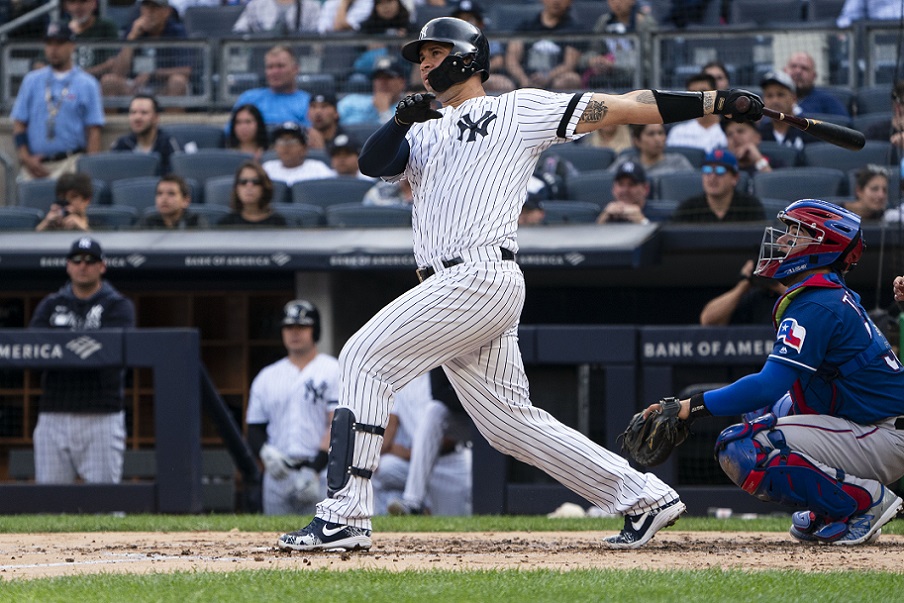 In Part 1 of this two-part series, we will be breaking down the strengths and weakness of DJ LeMahieu, Gary Sanchez and Giancarlo Stanton, and finding the best approach for the Twins pitchers and fielders against each of them. DJ LeMahieu DJ LeMahieu has quietly been one of the best all-around players in the American League this season. Not only has he filled in well at three different positions in the infield, but his bat came to play, as his 136 wRC+ ranked 21st among all qualified MLB hitters in 2019. What makes LeMahieu so successful is that he doesn’t have many weaknesses. Here are LeMahieu’s wOBA versus each pitch type, and what percentile they rank in Major League Baseball this year. When breaking down LeMahieu’s splits versus lefties and righties, it comes as no surprise that he is a much better hitter versus lefties than he is against righties, given that LeMahieu is a right-handed hitter, as he has a 182 wRC+ against lefties vs a 119 wRC+ against righties. To get a better idea on how to approach LeMahieu, depending on the hand of the pitcher, lets take a look at the same chart as above, but this time broken down by opposing pitcher handedness. From these charts, it is clear that Twins pitchers should avoid throwing off-speed pitches, such as changeups and splitters to LeMahieu altogether. Their main approach should be to pepper LeMahieu with fastballs in and force him to hit his way on base. For right-handed Twins pitchers, they should be able to work in some breaking pitches against LeMahieu as well. Another part of DJ LeMahieu’s game that is quite apparent is his approach at the plate. Illustrated below is DJ LeMahieu’s spray chart from the 2019 season. From this spray chart, the part that is most clear is DJ LeMahieu rarely pulls the ball in the air. The Twins defenders should take advantage of this by having all their outfielders shade pretty significantly towards right field. Additionally, it would make sense to have Jorge Polanco shade a little more towards the third base bag to help cut off the large amount of ground balls LeMahieu hits in the hole between shortstop and third. Gary Sanchez When it comes to facing Gary Sanchez, the key is to avoid letting him make contact. Fortunately for the Twins, Sanchez makes this pretty easy, as his contact rate of 70.2 percent ranks 237th out of the 273 hitters with at least 300 plate appearances in 2019. Sanchez especially struggles to make contact with breaking balls, as his contact rate on them is just 59.2 percent this season. Another way to induce Sanchez to swing and miss is by getting him to chase fastballs up and in on his hands. While avoiding contact is an optimal strategy with any hitter at the plate, Gary Sanchez is one of those hitters where it seems especially important, as he barrels the ball up roughly one out of every five times he puts the ball in play. That’s the fourth highest among any hitter who put at least 200 balls in play this year. A big reason for this is the pull heavy approach that Sanchez has at the plate, as you can see in the spray chart down below. Gary Sanchez’s ground ball distribution is almost exclusively pulls down the third base line. The Twins shouldn’t have much trouble exploiting this with a three-man shift on the left side of the infield. Another thing the Twins should take advantage of is Sanchez’s speed, or lack thereof, as his sprint speed of 25.5 feet per second is down near the bottom of the league. This should allow the Twins infielders to play further back to cover more ground laterally, and still have enough time to make the throw over to first to get Sanchez in time. Giancarlo Stanton (Note: All statistics for Stanton are from 2018, due to limited sample in 2019) When it comes to facing Giancarlo Stanton the approach is simple: feed him breaking ball after breaking ball after breaking ball. Whether it is a righty or a lefty on the mound for the Twins, it doesn’t matter, just don’t throw anything straight to Stanton. In 2018, Stanton whiffed at 45.8 percent breaking balls that he swung at. Since he struggles mightily vs. breaking balls against lefties, it is probably their best option to try to get Stanton out, unless they possess an excellent changeup. To illustrate this point further, here are Stanton’s wOBA breakdowns by pitch type and pitcher handedness in 2018. Just as was the case with Gary Sanchez, the Twins should be able to employ an extreme pull shift to the left side of the infield when Giancarlo Stanton is up at the plate, as we can see from his spray chart down below. While Stanton isn’t the fastest of runners, at 26.8 feet per second, he still has enough speed where the Twins probably won’t be able to take advantage of it by playing deeper in the hole, like they can for Sanchez. In the outfield, the Twins should pretty much just play straight up, as Stanton's spray is pretty even on balls in the air. As we can see the Yankees order can provide quite the challenge, but that doesn’t mean there isn’t a way to attack them to keep their lineup in check. The key will be for the Twins to take each hitter one at a time and do what they can to get that hitter out. Stay tuned later in the week, as we will be featuring three more juggernauts in the Yankees order in Part 2.
 -
No MLB Network? Then No Game for You!
Andrew Thares replied to John Bonnes's topic in Twins Daily Front Page News
From personal experience this is kind of fun. A couple of summer's ago, I had to learn how to read Korean box scores for my internship with TrackMan. After a while, I started to get the hang of it, and it became a lot of fun to learn baseball in a whole new language, as well as start to follow the KBO. Go LG Twins!

