


Twins Video
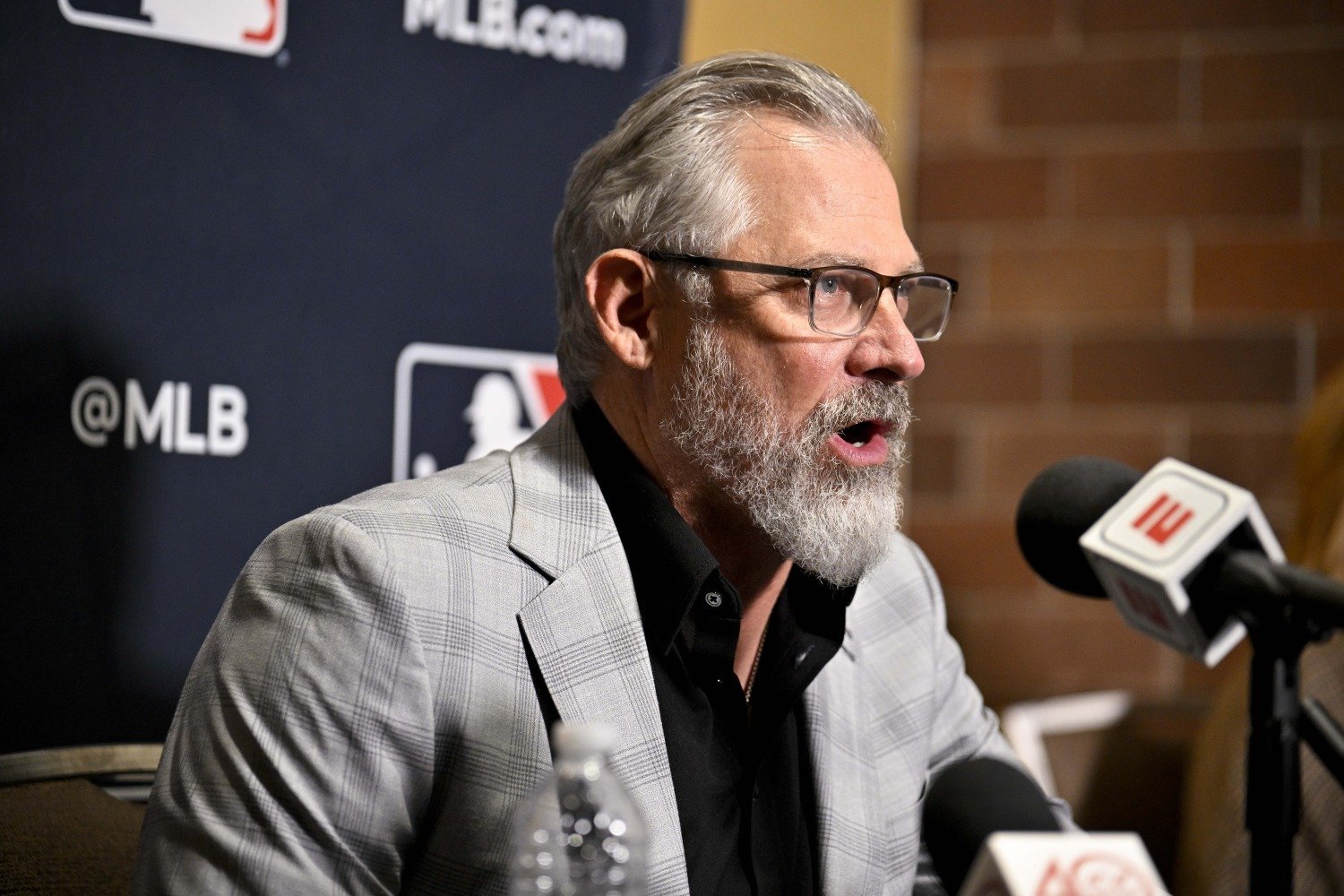
Derek Shelton arrived in Minnesota this winter with years of perspective, gleaned from guiding one of baseball’s youngest rosters. But when reporters asked him what he truly learned in Pittsburgh about developing young hitters, he didn’t hesitate. The biggest takeaway was startling and straightforward: Triple-A competition no longer prepares players for the major leagues.
Shelton’s blunt assessment sets the tone for a Twins organization preparing to lean heavily on its next wave of position-player talent. And if Minnesota wants its top prospects to hit the ground running, it will need to understand the widening gulf in today’s game—one Shelton witnessed firsthand.
Triple A is No Longer a Finishing School
When asked what he learned during his Pirates tenure, Shelton offered a candid answer.
“I learned that Triple A does not prepare you for the big leagues," he said. "I think that's the biggest thing I learned.”
That gap has continued to grow.
“It’s just the automated strike zone in Triple A, the quality of pitching, the velocity is just not the same,” Shelton said.
Shelton watched young players dominate Triple-A opponents, only to struggle immediately in the majors. It was not just a Pittsburgh problem. It was baseball-wide.
“It’s why we’re seeing, as an industry, so many young players come to the big leagues and struggle," Shelton explained. "They just don't hit. The pitching is just too good here. And the pitching they're facing in Triple A is not there.”
As the distinction sharpens, the hitting lines in Triple A have become increasingly misleading.
“As an industry, we’re seeing more young players fail and go back to the minor leagues, and you guys are able to write articles this guy has 1.100 OPS in Triple A, and he comes to the big leagues… it's throughout the industry that guys are struggling,” Shelton lamented.
Shelton acknowledged that he doesn’t have a magic fix. No one does.
“I wish I had a really good answer for you, but it’s just the fact that the distance between the talent in Triple A and the big leagues is probably the greatest it’s ever been,” said Shelton, who has been continuously employed in professional baseball for 30 years.
That widening distance forces clubs into difficult decisions when players hit their first wall. Reporters asked how sending players back to Triple A helps, when the competition level is part of the problem. Shelton said the benefits are not always physical.
“Sometimes it just helps them mentally. I mean, obviously," he replied. "You get your teeth kicked in enough times, sometimes you need a reset, you need a refresh.”
There are still real adjustments players can make, even in an imperfect environment.
“There are mechanical adjustments you can make. And I think, depending on the organization and where they’re at, they have to make that decision of, you know, does this individual stay in the big leagues and try to figure it out, or do you send him down, give him a little bit of confidence?”
Shelton’s perspective matters, because the Twins are about to rely heavily on young hitters making this exact transition. By mid-2026, Minnesota could have one of the most prospect-driven lineups in the American League.
Walker Jenkins and Emmanuel Rodriguez finished last season in St. Paul, where both showed flashes of elite upside. Jenkins finished the year with a 135 wRC+ as a 20-year-old. Rodriguez used the offseason to become one of the best hitters in the Dominican Winter League, posting a 1.063 OPS in 18 games. They will enter spring training just one rung away from Target Field. Each has the power, plate discipline, and athleticism to become a foundational piece. Still, Shelton’s experience is a reminder that dominating Triple-A pitching no longer guarantees early major-league success.
Kaelen Culpepper, the organization’s Minor League Player of the Year, rocketed to Double-A Wichita with strong bat-to-ball skills and athleticism. In 113 games, he posted a 138 wRC+ and answered many of the questions that surrounded him on draft day. His development curve has already accelerated faster than expected, making him a likely Triple-A candidate by early 2026. That move puts him on the doorstep of an even bigger leap—one that will challenge how the Twins choose to prepare their hitters before promotion.
Gabriel Gonzalez turned in a breakout season of his own, hitting his way to Triple A while showcasing improved swing decisions and run-producing ability (148 wRC+). Twins Daily named him the organization’s Minor League Hitter of the Year. His offensive skill set fits the modern Twins lineup, but like Jenkins and Rodriguez, his path runs straight through the talent gap Shelton described.
From now through late 2026, Shelton will play a central role in helping these young players navigate the steepest transition in professional baseball. He has already watched countless hitters sail through Triple A, only to get humbled in the big leagues. His challenge will be using that experience to soften the landing for a group expected to define the organization’s next era.
Shelton did not come to Minnesota with easy answers, but he did bring clarity about one of the sport’s most pressing development issues. The jump from Triple A to the majors has never been tougher, and the Twins will soon place some of their brightest stars on that tightrope. What Shelton learned in Pittsburgh may ultimately shape how ready Minnesota’s next wave truly is when their time arrives.
Can Shelton help the next group of stars transition to MLB? Leave a comment and start the discussion.








Recommended Comments
Create an account or sign in to comment
You need to be a member in order to leave a comment
Create an account
Sign up for a new account in our community. It's easy!
Register a new accountSign in
Already have an account? Sign in here.
Sign In Now