


Twins Video
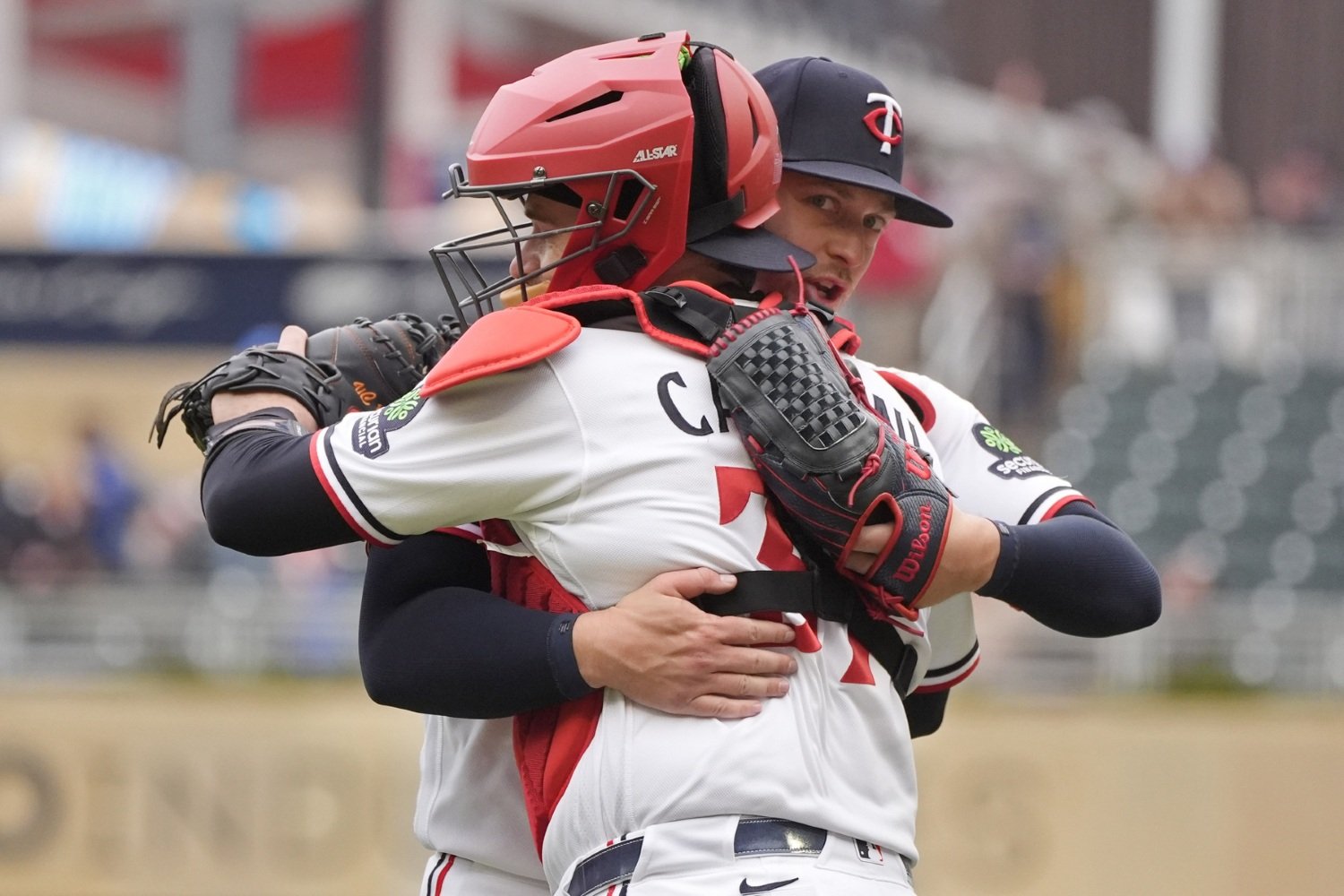
He's not going to make the All-Star team or anything. Victor Caratini has come back to Earth with a much less gentle splash than the Artemis II crew made earlier this spring. He batted a sturdy .271/.373/.354 through his first 14 games and 59 plate appearances of the season, and came up with a couple of big hits along the way. Since then, though, he's been awful: 3-for-24, with six strikeouts and a double-play grounder. Three times in the last seven games he's played, he's reduced the Twins' win probability by over 10% in his turns at bat. His OPS for the season is now .596.
Behind the plate, though, he's turned out to be a genius—or, he's playing pretty well and getting a little lucky, to boot. The choice is (partially) yours. Caratini has been the better of the two Twins catchers at pitch framing, worth 1 run already, according to Statcast. He's also been better in the ABS challenge aspect, though—not just better than Ryan Jeffers, or better than average, but better than all but one other catcher in the big leagues. Taken together, those two skills (or is it three? One? Two and a half?) have made up for most of Caratini's shortcomings as a hitter.
When the umpire calls a pitch Caratini catches a ball, he's very good at knowing whether or not to challenge. In 13 tries, he's won nine appeals, nudging his team toward the black by ensuring that the zone is the size it ought to be. Just as importantly, though, Caratini is still getting slightly more calls along the edges of the zone than most catchers do, and when opponents challenge those strikes, they lose. Batters are just 4-for-11 when challenging called strikes caught by Caratini this year.
Pitch framing, as we've discussed many times, is a many-layered skill. There's some politicking in it. There's a bit of pitch-calling in it—knowing when to test the edges of the zone, and which edges each umpire is most likely to accommodate. Mostly, it's a physical skill, but the mechanics of good framing have evolved over time. When this part of the game was first quantified (around 2010), the best framers were guys with big, strong bodies, who held very quiet positions and caught the ball with minimal movement after setting their targets. Now, in the era of one-knee-down catching, catchers have changed the way they hunt calls. They stick out their mitts to present a target (which might be the real one, or not), then drop it toward the ground and try to catch the ball with the mitt in motion. It's not about being quiet. It's about making it look like the ball was right in the fat of the zone, whether that's remotely true or not. It makes fans howl a bit more about calls than they should, at times, but when you're on the field, it makes sense. This is how catchers have come to avail themselves of the rising baseline of athleticism throughout the league, which reaches down even into their squats.
If you're Caratini, then, the goal is to catch the ball with a movement that anticipates the movement and location of the pitch and smoothly steer it toward the center of the zone, all in one movement. Umpires don't always fall for this, anymore. They've gotten steadily more accurate over the last two decades; the implementation of the ABS system is more about the technology finally being ready to boost the accuracy of the zone than about some pressing need to amend umpires failing at their jobs. They do fall for it sometimes, though, and they rarely punish catchers for being noisy when the pitch really is in the zone. After all, every catcher does this, now.
Caratini has succeeded at that very often this year. To get a good look at how, let's focus on one corner of the zone: his glove-hand side, down. These are pitches low and in to righties, low and away from lefties. They look like this.
That's a good, solid catch on a pitch from Taylor Rogers that nailed its spot. It was a strike, and it was probably going to be called one, anyway. Caratini was actually a hair late, here, jerking the ball upward—ah, but maybe that was a good thing, rather than a bad one. As you can see at the tail end of the clip, Reds hitter Dane Myers challenged this call. He wrong to do so, and the choice to challenge was a dubious one, given the count and the location of the pitch, but Caratini's slightly late move might have fooled him (even if Caratini didn't really mean to do so) into costing his team a challenge for later in the game.
Here's another instance of the same thing, only different.
This is a picture-perfect modern frame job by Caratini. The orientation of his body gives the umpire a good look at the pitch as it slants across the zone. His catch anticipates the ball trying to work its way off the corner, and he brings it up and holds it on the edge of the zone nicely. However, because the matchup here was left-on-left and the pitch was a slider, Juan Soto was fooled. Lefty batters make very bad decisions about challenging against lefty pitchers and on pitches along the outer edge; they do especially badly when both things are true. Soto's head turned slightly to follow the ball to the mitt, and maybe he saw the move from Caratini out of the corner of his eye. Maybe he just thought that pitch had to be a ball, given the angle of its movement away from him. Either way, he challenged this call, too, and was wrong again.
Caratini isn't always as clean when catching the ball in that spot, but unlike Soto and Myers, he sees the ball exceptionally well when it's thrown there. He knows, for instance, when he's let a Taj Bradley fastball beat him to its spot and lost a call on a pitch that really nipped the zone. In the past, there would have been nothing to do but rue that loss, but now, he has a recourse—and he takes it.
In fact, this exact thing has happened with Bradley's heater three times this year: the pitch zips in on the high side of 97 MPH; Caratini can't quite catch it with a good enough frame to earn the call; but he challenges the call and earns the strike, anyway. Something slightly different happened here, with Mick Abel throwing a changeup.
This pitch tailed a bit more than Caratini thought it would, and he stabbed out toward the edge of the plate more than he'd expected to need to. However, even as he did that (and then brought the ball back to the zone), he knew it had been a strike, so when the call didn't come, he had the confidence to challenge it—even though it was the first inning.
All told, relative to the expected challenges for and against him and the success rates of each, Caratini has earned the Twins 11.6 extra calls via the ABS system this year, according to Statcast. Only Cal Raleigh has earned more, mostly by fooling batters with his own noisy catching style: hitters are 2-for-18 when challenging Raleigh's calls. Put together framing and ABS-related value (which are distinct; Statcast's model grades framers based on the initial call to keep the two separate), and Caratini is one of the most valuable catchers in baseball. He often gets the calls on the edges, and when he doesn't, he's good at knowing whether he should have. In that low, mitt-hand corner of the zone, alone, he's earning a called strike rate of 38.3%, relative to the league's average of 30%—and he's added four more calls to that by challenging, while hurting the other team by prompting misbegotten challenges three times. That's a lot of value in a small amount of real estate.
Statcast estimates that Caratini has been worth 3.1 runs relative to an average catcher, combining these two skills. He's on pace to be worth over 15 runs in that department, despite playing less than half the time behind the dish. That pace probably won't hold, but Caratini is a genius of the modern art of catching—of both crafting the zone and enforcing it, and tricking some opponents into self-defeating behavior. To whatever extent this skill proves real, it's enormously useful, especially for a Twins pitching staff that won't miss many bats and needs to steal strikes to survive their poor defense.
Do you approve of Twins ownership?

Follow Twins Daily For Minnesota Twins News & Analysis



- Patzky and nclahammer
-
 2
2



Recommended Comments
Create an account or sign in to comment
You need to be a member in order to leave a comment
Create an account
Sign up for a new account in our community. It's easy!
Register a new accountSign in
Already have an account? Sign in here.
Sign In Now