In his latest article, Bobby Nightengale reported that the Twins had talks with the Mariners at the trade deadline, but a deal never came together because Seattle was unwilling to include two of their best prospects. Minnesota’s ask? Two top-100 prospects.
Nightengale also noted that the Twins actually preferred 18-year-old catcher Eduardo Tait over Phillies shortstop prospect Aidan Miller. The hesitation with Miller, ranked #17 in baseball by MLB Pipeline, came from concerns about his ability to stick at shortstop long-term. Miller, currently in Double A, has posted a .740 OPS this season. The Twins felt Tait carried more upside and made him their request from Philadelphia instead.
The Minnesota Twins are wasting little time challenging their top draft pick. Shortstop Marek Houston, the 16th overall selection in July’s draft, has been promoted to High-A Cedar Rapids after just 12 games with the Fort Myers Mighty Mussels.
Houston impressed immediately in Low-A, slashing .370/.424/.444 with 13 strikeouts, five walks, and plenty of highlight plays in the field. His advanced glove work, considered the best among shortstops in this year’s draft, was a major factor in the Twins selecting him in the first round.
He now joins a Kernels team that already has its ticket punched for the postseason after winning the Midwest League West Division’s first half. Houston will get a taste of playoff baseball right away, with 18 regular-season games left plus Cedar Rapids’ postseason run. His High-A debut could come as soon as tomorrow, August 19, when the Kernels visit the South Bend Cubs.
What do you think of Houston’s early showing in the Twins organization? Is he tracking even faster than expected? Share your thoughts in the comments below.
The Minnesota Twins have gotten off to an unsurprisingly slow start in the offseason. To this point, their most notable move is tendering a contract to Trevor Larnach, who many thought might be non-tendered. However, this morning, Jeff Passan of ESPN ignited the burner on the hot stove with an update on Byron Buxton.
In ranking the players who could be traded, Passan ranked Buxton as the fifth-best player behind Tarik Skubal, Ketel Marte, Freddy Peralta, and Hunter Green. Passan added, "Buxton is willing to waive his no-trade clause - and not just for Atlanta..." To this point, Buxton has not stated anything publicly to confirm or deny this report.
If it's true, this is a notable shift in Buxton's mindset, who, on multiple occasions, has said he wants to stay with the Twins. However, at the back end of his prime and with the state of the organization, it's hard to blame him for the change.
Buxton, coming off a career year, played in 126 games in 2025. He finished with 35 home runs, 97 runs scored, and 24 stolen bases. He posted an impressive .878 OPS, a .367 wOBA, and a 135 wRC+. Defensively, Buxton is starting to slow down in center field with -5 Defensive Runs Saved (DRS) and +3 Outs Above Average (OAA).
Do you think the Twins should trade Buxton? Let us know in the comments!
The Minnesota Twins entered the offseason navigating a unique organizational crossroads. After spending much of the past year evaluating a potential sale, the Pohlads abruptly pulled the franchise off the market in August. Instead of changing principal ownership, the club pivoted to bringing in two new minority partners. Reports said that one group would be based locally and the other led by an investor family from the East Coast. Now, the first half of that picture is finally coming into focus.
Charley Walters of the Pioneer Press reported the development earlier this week, writing, “Look for Minneapolis based Varde Partners, a worldwide multi billion dollar credit investment corporation, to be announced soon as a limited partner with the Minnesota Twins. The firm is one of at least two limited partners expected to assist in diminishing the team’s reported 500 million dollar debt.”
The addition of Varde Partners marks a notable shift in the composition of Twins leadership. Headquartered in Minneapolis, Varde is a global credit and investment firm overseeing an estimated $16 to 17 billion in assets with more than 300 employees across the world. The company is led by managing partners Brad Bauer, Francisco Milone, and Tim Mooney, all of whom bring deep experience in large scale financial strategy and corporate development.
Given their background, it is difficult to imagine that Varde Partners will be anything less than a stabilizing force for a franchise navigating a sizable debt load. Their presence alone signals that the Twins are looking for more structured, more sophisticated financial guidance than the current iteration of the Pohlad family has typically leaned on. For an organization supposedly carrying around $500 million in debt, a partner with extensive investment acumen is not a small addition.
What remains unclear is how much influence these new partners will wield when it comes to baseball decisions. Minority stakes rarely dictate roster construction, but their involvement does lighten the financial strain on the club. If that reduction in debt eventually leads to more flexibility in retaining talent or supplementing the roster, fans will welcome the impact. At a minimum, the presence of motivated and financially savvy investors should nudge the overall organizational direction toward a more modern and competitive mindset.
With one partner now identified, attention naturally turns to the second expected minority owner from the East Coast. If the timing of this first announcement is any indication, that reveal may not be far behind. As the Twins navigate a pivotal offseason, the business side of the franchise is reshaping itself in a way that could have long term implications for the organization’s stability and ambition.
In the latest update of the sale of the Minnesota Twins, Charley Walters is citing industry sources who say "the [Minnesota] Twins have an offer on the table."
He goes on to say that "Major League Baseball is expected to guarantee the Twins' debt reportedly more than $400 million."
So, why isn't this bigger news? Well, it's not been confirmed outside of an "industry source" and it's in the "Don't print that" section of the article linked in the tweet above. At this point, it's just a rumor.
What does it mean that MLB is "expected to guarantee the Twins' debt?" Well, that answer is also a bit unclear, but our own @Peter Labuza did some speculating and digging saying "If I had to guess, MLB would "buy" the debt and then have the team pay MLB rather than the Pohlad's...?" He goes on to cite the Debt Service Rule from the Atlanta Braves public filings:
"Each MLB Club is subject to certain MLB imposed restrictions on its ability to incur indebtedness in amounts that exceed specified thresholds. In particular, each MLB Club is generally required to keep outstanding indebtedness minus a certain amount of excludable indebtedness at or below 8.0x available cash flow (or in the case of MLB Clubs which have a new stadium, at or below 12.0x available cash flow), with the amount of excludable indebtedness for fiscal year 2023 set at $125 million and for each of fiscal years 2024 through 2026 set at $100 million. This is referred to as the Debt Service Rule. MLB Clubs must certify compliance with the Debt Service Rule annually and the failure of an MLB Club to comply during two consecutive fiscal years may lead to certain remedial measures being imposed by the Commissioner of Baseball, including, but not limited to, prohibitions on the incurrence of additional indebtedness and repayment of outstanding indebtedness."
Moreover, using the NFL as an example, Labuza says "[NFL] owners can "borrow" from the league at a cheaper interest rates than banks, etc."
On the other hand, @John Bonnes speculates at a more simple explanation, asking "rather than come up 1.5B cash, [maybe prospective owners] can come up with 1.1B cash and take on the $400M loan gradually?"
While it's our speculation and educated guesses on our end, it helps provide a little bit of clarity on a somewhat vague and unclear statement from Walters piece.
Do you have any insight on the matter? Please share in the comments!
Josh Donaldson has never been shy about sharing his opinion, and the former Minnesota Twins third baseman is making waves with some rather unflattering comments about his former team and the state of Minnesota.
On a recent episode of his Get It Done League podcast, Donaldson was discussing Jeff Hoffman being traded to the Twins at the deadline and his thoughts on Minnesota as a destination. Donaldson did not exactly give his former home a ringing endorsement.
"He's going to get to go to Minnesota, where it's 'Minnesota Nice'... people in Minnesota... I don't think they even care about baseball that much... Playing there for two years, I thought it was mediocre at best," Donaldson said.
Parker Hageman of Twins Daily shared a clip of Donaldson's comments on X, and it quickly generated plenty of engagement from Twins fans, many of whom remember Donaldson's own two-year run in Minnesota quite well.
Donaldson signed with the Twins as a free agent ahead of the 2020 season and spent two seasons with the club. While he was productive when on the field, posting a .829 OPS, many fans had a sour taste in their mouths over Donaldson's time in Minnesota. Injuries limited him to just 163 games over those two years, and he missed the Twins' 2020 postseason run because of injury.
Donaldson's tenure in Minnesota was also defined by his personality. He became a polarizing figure among Twins fans, with his attitude, controversial comments and perceived lack of leadership rubbing plenty of people the wrong way.
After spending the 2022 and 2023 seasons in New York and Milwaukee, Donaldson retired following the 2023 season. He now hosts Get It Done League alongside former teammate and All-Star Russell Martin and veteran broadcaster Arash Madani.
Now, his comments about Minnesota have given Twins fans another reason to revisit the Donaldson era.
What do you make of Josh Donaldson's comments? And what is your overall opinion of Donaldson's time with the Twins? Let us know in the comments.
On Friday afternoon, Major League Baseball announced that former Twins and Phillies outfielder Max Kepler has been suspended 80 games after testing positive for Epitrenbolone, a performance-enhancing substance. It is an item that violates MLB's Joint Drug Prevention and Treatment Program.
Max Kepler will turn 33 years old in a little more than a month. He is currently a free agent looking for his next home. After signing with the Twins in 2009 out of Germany, he spent parts of the 2015-2024 seasons in a Twins uniform. Over those 10 seasons, he was worth 20.5 bWAR. In 1,072 games, he hit .237/.318/.429 (.746) with 205 doubles, 161 homers and 508 RBI.
His best season came in 2019 when he hit .252/.336/.519 (.855) with 32 doubles and he led the Bomba Squad with 36 home runs. He was never able to replicate those numbers.
He became a free agent for the first time last offseason. He signed a one-year, $10 million deal with the Phillies. In 127 games, he hit .216/.300/.391 (.691) with 19 doubles and 18 home runs.
Free agency just became more difficult for Kepler. Some team will sign him and not have to pay him for the first half of the season. He can come back for the final 82 games of the season, but because of the suspension, he will be unable to play in the playoffs should the team make it.
Every year, MLB Trade Rumors releases a list of the most likely trade candidates for the offseason. In this season's edition, they named a total of 40 players, including three Minnesota Twins in the top nine.
Starting Pitchers Joe Ryan and Pablo Lopez, as well as Catcher Ryan Jeffers, were named the 2nd, 6th, and 9th most likely trade candidates, respectively.
Ryan, expected to make around $6 million in his second year of arbitration, is coming off a season highlighted by a Cy Young caliber 1st half. As has been the case throughout his career, Ryan cooled off in the second half of the season with a 4.59 FIP. In all, Ryan finished with a 3.74 FIP and a 22.5% K-BB rate across a career-high 171 innings pitched. He was the subject of trade talks at the deadline, with a late push from the Boston Red Sox, and will likely be a popular topic of trade conversations throughout the offseason.
Lopez, who is owed more than $43 million through 2027, only made 14 starts in 2025. In 75 2/3 innings, the righty sported a solid 3.19 FIP and mediocre 17% K-BB rate. While he had been one of the game's more durable pitchers before last season, his tenure with the Twins has been very up and down. While trading the 30-year-old at some point seems likely, Lopez's value right now is lower than it's ever been. While the Twins are more concerned with the bottom line than maximizing value, they would be remiss to deal the righty now instead of waiting until the 2026 trade deadline.
Jeffers, expected to earn more than $6 million in his final year of arbitration, represents the only MLB-caliber player on the roster. While he remained as one of the best-hitting catchers in baseball last season, his power output left more to be desired. He graded out as a below-average catcher, which is likely what he is, even after three years under the tutelage of Christian Vazquez, but that could be somewhat mitigated by the introduction of the ABS system. Unless the Twins plan to add a catcher via trade or free agency, I would be shocked to see them deal Jeffers, as there is nobody in the entire organization ready to take his job.
Do you think the Twins will trade any of these guys over the offseason? Let us know what you think in the comments!
Ryan Daniels, the Twins 11th round pick in 2025 out of UConn, has decided to retire from the game of baseball. As @Jamie Cameron wrote at Limestone Pipeline, Daniels has a history of hip injuries and surgeries.
Before joining the Huskies, Daniels was a four-year letterwinner in baseball at St. Paul Catholic in Bristol, Connecticut. He was twice named an All-State player. Upon graduation, he made a 44-mile drive from Bristol to Storrs.
He made 25 starts and played in 42 games as a freshman in 2023. He hit .273/.401/.409 (.810) with eight doubles, two triples and a home run. He also had 16 steals in 17 attempts.
In 2024, he was limited to just 20 games (18 starts) because he had season-ending hip surgery.
He came back at full strength in 2025 and had an incredible season. He started 53 of the 54 games he played. He hit .365/.476/.744 (1.220) with 15 doubles, four triples, 18 home runs and 75 RBI. He was named the BIG EAST Player of the Year, first-team all-conference, and was named second-team All American by a few outlets.
The Twins made him their 11th-round pick in July and signed him with a $150,000.
Unfortunately, he played in two games for the Fort Myers Mighty Mussels and went on the Injured List with a hip injury. In mid-December, he made the decision to retire from baseball.
Minnesota's roster makeover continued Saturday. Less than 24 hours after adding another starting pitcher before the trade deadline, the Twins announced another round of transactions ahead of their matchup with the Seattle Mariners. The headline move was expected: newly acquired left-handed reliever A.J. Minter was officially activated.
To make room on the 26-man roster, the Twins optioned right-hander Zebby Matthews to Triple-A St. Paul. The move isn't necessarily an indictment of Matthews' performance on Friday night. He gave Minnesota five innings, allowed three earned runs, and struck out an impressive 10 hitters against Seattle. However, his overall July results painted a different picture. Across 24 2/3 innings, Matthews posted a 7.66 ERA and 5.69 FIP while recording 23 strikeouts against 14 walks.
With Dean Kremer acquired to bolster the rotation, Matthews became the logical candidate to head back to Triple-A. The timing gives the Twins a fresh bullpen arm in Minter while creating what appears to be a clear opening for Kremer to slide into the starting rotation.
Minnesota also made a change to its 40-man roster, designating right-hander Cody Laweryson for assignment. Laweryson appeared in 15 games for the Twins this season, logging 16 2/3 innings with a 4.86 ERA and 5.08 FIP while striking out 18 and walking eight. Although he flashed intriguing stuff at times, injuries have impacted him this season. A right forearm strain sidelined Laweryson for much of April and May, and after he was optioned to Triple-A in early July, Laweryson has been on the St. Paul injured list since July 19.
His departure immediately created room for another pitcher. Right-hander Garrett Acton was reinstated from the 60-day injured list and optioned to Triple-A St. Paul. Minnesota acquired Acton from the Miami Marlins this spring in exchange for Logan Whitaker, but he has been limited to four appearances after suffering a right shoulder strain that landed him on the injured list at the end of April.
Acton's rehab assignment offered plenty of encouragement. In six innings for St. Paul, he surrendered just one earned run while striking out eight and walking only one. Opponents managed just a .053 batting average against him during that stretch. If the shoulder continues to respond well, Acton could quickly emerge as another bullpen option for a Twins club that has spent the past week aggressively reshaping its pitching staff.
With Minter now in the bullpen, Kremer expected to join the rotation, and additional depth returning from injury, Minnesota's pitching staff looks noticeably different than it did just a few days ago, and the Twins might not be done adding before Monday’s deadline.
Rocco Baldelli’s time in Minnesota officially came following the 2025 season, but his next chapter has already begun. After a difficult 92 loss season led to his dismissal, the former Twins manager is joining the Los Angeles Dodgers front office according to reporting from the Star Tribune’s Bobby Nightengale. The move brings Baldelli into the heart of baseball’s most dominant organization and reunites him with a familiar face.
The Twins chose to move on from Baldelli after missing the playoffs for the fourth time in five years. It was a decision driven more by frustration than by a clear indictment of his abilities. Baldelli was never the sole reason the team stumbled through 2025, and he certainly was not the source of the deep flaws that defined the club’s roster and performance. Instead he became the public face of accountability when those above him would not accept their share of the responsibility.
Even so it was never expected that Baldelli would remain unemployed for long. The real question was whether he wanted to jump back into the grind immediately. His answer came sooner than many anticipated. The Dodgers have brought him aboard in a front office role, a path he knows well from earlier in his career.
Before he ever filled out a lineup card Baldelli worked in the Tampa Bay Rays system after a mitochondrial disorder ended his playing career in 2010. He joined Andrew Friedman’s baseball operations group as a special assistant and quickly earned a reputation as a thoughtful evaluator with a strong grasp of player development. That experience helped launch his coaching and managerial trajectory, and now he returns to work alongside Friedman for an organization with unmatched resources and championship expectations.
Baldelli’s tenure in Minnesota ends with a 527-505 record across seven seasons, including three American League Central titles and the drought breaking playoff series win in 2023. He captured the American League Manager of the Year award in 2019 and helped guide several young players into key roles. With one year left on his contract the Twins dismissed him after their 70-92 finish, setting off broad changes across the staff. Many of his former coaches quickly landed on their feet in new roles around the league, a sign of how well respected that group had become.
While Baldelli is stepping out of the dugout for now, a front office role does not signal the end of his managerial aspirations. Minnesota even considered a similar transition with Scott Servais earlier this winter. If anything this move may serve as a launching pad. The Dodgers operate with a level of infrastructure and financial backing that could not be more different from what Baldelli experienced with the Twins. Working under Friedman again and within an ownership group that pushes relentlessly for championships may give him an even broader skill set.
For Baldelli this is a chance to reset and reemerge. For the Dodgers it is another savvy addition to a front office that rarely misses.
The Minnesota Twins continue to battle through injuries as the calendar pushes deeper into May. With the season past the quarter mark, staying healthy becomes even more important for a club trying to get closer to a .500 record.
Some updates offered optimism this weekend, while others created additional uncertainty. Byron Buxton appears close to returning after progressing through baseball activities, but Taj Bradley’s rehab outing at Triple-A St. Paul raised more questions about his timeline. Minnesota also provided updates on several pitchers working their way back from arm injuries.
Byron Buxton Progressing Toward Return
Buxton continues to trend in the right direction after dealing with right hip flexor soreness. The Twins consider him day to day, and the recent updates suggest a return may not be far away. Buxton reportedly came through a workout on May 16 without issues and returned to on-field work before the game again on May 17. That is an encouraging sign considering how important he has been to Minnesota’s lineup this season.
When healthy, Buxton changes the complexion of the roster. His defense in center field remains above-average, and his power production has helped stabilize the middle of the lineup. Minnesota has understandably taken a cautious approach because hip and lower body injuries can quickly become lingering concerns for a player whose game depends heavily on explosiveness. The fact that he continues to increase baseball activities is a positive development for the Twins moving forward.
Taj Bradley’s Rehab Outing Raises Concerns
Bradley remains on the 15-day injured list with right pectoralis muscle inflammation after being placed there retroactive to May 6. The Twins hoped Bradley would take a significant step forward during his rehab start with Triple-A St. Paul on Sunday. Instead, the outing ended much earlier than anticipated. Bradley failed to make it out of the second inning after throwing 31 pitches in the frame before being removed from the game.
On Sunday’s episode of Inside Twins, general manager Jeremy Zoll explained that the organization wanted Bradley to complete roughly four innings while staying near 65 pitches. Because he was unable to reach those benchmarks, his timetable for returning to Minnesota remains unclear.
That development is notable because the Twins have leaned heavily on their rotation early in the season. Bradley was expected to play a meaningful role for the pitching staff, but the club now appears likely to proceed carefully until he demonstrates he can handle a normal workload again.
Laweryson continues progressing in his recovery from a right forearm strain that landed him on the injured list back on April 9. Laweryson made a rehab appearance with Triple-A St. Paul on Saturday and delivered a clean inning. He allowed no hits, walked one batter, and did not record a strikeout.
For a pitcher returning from a forearm issue, simply getting through an outing healthy is often the biggest objective. The Twins will likely continue gradually increasing his workload before considering him for activation. According to Zoll, he is expected to make at least two more rehab appearances this week.
Minnesota’s bullpen depth has been tested throughout the season, so getting another healthy arm back into the mix would provide needed reinforcement.
Sands remains sidelined with a mild right forearm strain after going on the injured list retroactive to April 29. The good news is that Sands resumed playing catch on May 12 and May 13 as the Twins began building him back up. At this stage, the organization appears focused on making sure he progresses slowly over the next week before advancing to more intense throwing sessions.
Forearm injuries always create some level of concern for pitchers, which explains why Minnesota has emphasized patience with Sands. Before the injury, he had become an increasingly important option for the Twins in middle relief situations. If his throwing progression continues without setbacks, he could eventually begin mound work later this month.
One of the more encouraging updates involved Abel, who has been sidelined with right elbow inflammation since April 17. Abel was evaluated by noted orthopedic surgeon Dr. Keith Meister, who agreed with previous evaluations that the issue stems from posterior elbow impingement. Most importantly for the Twins, there were reportedly no concerns involving the forearm or the ulnar collateral ligament.
That distinction matters significantly because UCL damage often carries the possibility of Tommy John surgery. Instead, Abel has already resumed light throwing and started playing catch on Wednesday. Minnesota can now focus on rebuilding his arm strength rather than worrying about a more serious structural issue.
Injuries remain one of the defining storylines for the Twins during the opening months of the season. The organization received positive news regarding Byron Buxton and Mick Abel, while Taj Bradley’s shortened rehab outing introduced additional uncertainty to the pitching staff picture.
As Minnesota attempts to stay competitive through the middle months of the season, getting healthy contributors back on the field could be a major factor in whether the club can gain momentum in the standings.
There was a brief moment of concern surrounding Mick Abel this week, but the Minnesota Twins appear to have avoided a worst-case scenario. When Abel experienced soreness following a bullpen session, the organization opted for caution, and the MRI results delivered encouraging news.
“We felt like if we aggressively treat it, get him on some anti-inflammatories and play it safe on the front end, it’ll be something that will be relatively quick and short,” general manager Jeremy Zoll said. “We didn’t want to try to chase it and then make it potentially worse later by trying to prolong this.”
That measured approach reflects both the Twins' current pitching depth and the importance of Abel to the organization’s long-term plans.
Originally selected 15th overall by the Philadelphia Phillies in 2020, Abel arrived in Minnesota with plenty of intrigue. He was part of last summer’s headline-grabbing deal that sent Jhoan Duran to Philadelphia, with catching prospect Eduardo Tait also coming back in return. At the time, the move signaled a shift toward reshaping the Twins' pitching pipeline.
Now 24 years old, Abel’s development path has not been perfectly linear. Once a staple on top 100 prospect lists, his stock dipped entering 2025 before rebounding in a big way. He reached the majors with Philadelphia and pitched well enough to reestablish himself as a meaningful trade asset.
Abel did not enter spring training with a guaranteed role, but he forced the Twins’ hand with a dominant showing in the Grapefruit League. Across 22 innings, he posted a 2.05 ERA with a 32.9% strikeout rate and just a 4.9% walk rate, looking every bit like a pitcher ready to contribute at the major league level.
The regular season has brought some ups and downs, which is to be expected for a young arm finding his footing. After being hit hard in his first two outings, Abel responded with authority. He delivered 13 consecutive shutout innings across starts against Detroit and Boston, compiling a 16-to-3 strikeout-to-walk ratio in the process.
Through 20 1/3 innings, Abel owns a 3.98 ERA with a 24.7% strikeout rate and a 10% walk rate. Underlying metrics paint an even more encouraging picture. His 2.79 FIP suggests better days ahead, while a 3.93 SIERA reinforces the idea that he has been a steady contributor.
For the Twins, the decision to pause rather than push reflects both confidence and caution. Elbow inflammation is not something to ignore, especially for a pitcher with Abel’s workload trajectory, but it is far from a devastating diagnosis.
The focus now shifts to recovery and timing. If the inflammation responds well to treatment, Abel could return without missing significant time and continue building on what has been a promising start.
In a season where pitching depth is already being tested, keeping Abel healthy matters. The early signs suggest the Twins have navigated this situation correctly, giving themselves a chance to have one of their most intriguing young arms back on the mound sooner rather than later.
The Minnesota Twins have begun locking in their 2025 draft class, announcing the signings of three of their top selections, including their first-rounder, just days after the MLB Draft.
Marek Houston, the Twins' first-round pick at No. 16 overall, has officially signed for $4,497,500, slightly under the assigned slot value of $4,929,600. Houston, widely regarded as the best defensive shortstop in the class, brings elite glove work and advanced instincts to the organization. Though questions remain about the bat, his athleticism and polish make him a potential fast mover in the system.
Joining him is Riley Quick, the Twins' supplemental first-rounder out of Alabama, who signed for his full slot value of $2,692,000. A hard-throwing righty with a deep pitch mix, Quick profiles as a potential rotation mainstay with multiple plus offerings and a competitive SEC pedigree.
Second-round pick Quentin Young, the nephew of former Twin Delmon Young, also signed for full slot value at $1,761,600. One of the more intriguing upside plays in the class, Young brings raw but electric tools, boasting elite athleticism and massive power potential. If the Twins can refine his approach, he could become a high-ceiling force in the lineup down the line.
The Twins are expected to announce additional signings in the coming days as they work to finalize the rest of their 2025 class.
According to USA Today's Bob Nightengale, rival executives are increasingly expecting the Minnesota Twins to move catcher Ryan Jeffers before the trade deadline.
In his latest report, Nightengale wrote, "Rival teams now believe that the Minnesota Twins will trade catcher Ryan Jeffers, with the Yankees the leading candidate to sign him."
The report lines up with what has seemed like the most logical outcome for weeks. Jeffers is set to become a free agent after the season, meaning the Twins risk losing him for nothing this winter. Even if Minnesota decides to make a modest buy at the deadline instead of becoming outright sellers, dealing Jeffers could still make sense if it allows the organization to add long-term value while replacing his production internally.
The timing of the report is also notable because the catching market changed dramatically on Sunday morning. Athletics All-Star Shea Langeliers suffered a torn meniscus in his knee and could miss the remainder of the season. Langeliers was widely viewed as the premier catcher available at the deadline thanks to his offensive production and team control through the 2028 season. With him now likely off the market, Jeffers becomes the clear top catching option available to contenders.
That shift in the market only increases Jeffers' value and could make it even more difficult for the Twins to justify holding onto him through the end of the season. If multiple contenders are searching for catching help and the best alternative is no longer available, Minnesota could find itself in an excellent position to maximize Jeffers' trade value.
Do you think the Twins should capitalize on Jeffers' value and trade him before the deadline, or should they keep him for a postseason push? Leave a comment below and start the conversation!
According to Just Baseball and Aram Leighton, the San Diego Padres have signed Jose Miranda to a minor league contract that includes an invitation to spring training. For the Padres, it is a low-risk upside play on a hitter who not long ago looked like a reliable middle-of-the-order presence. For Miranda, it is another opportunity to prove that his best baseball is not already behind him at age 27.
For a moment, it felt like the Twins had uncovered yet another homegrown bat. Miranda arrived in 2022 as a former second-round pick and top-100 prospect and eventually settled in after a rocky introduction to the majors. He finished his rookie season hitting .268/.325/.426 (.751) with a 116 wRC+, popping 15 home runs and 25 doubles in 483 plate appearances.
A shoulder injury derailed Miranda’s 2023 season almost immediately. Installed as the Opening Day third baseman, he struggled badly before undergoing surgery, finishing the year with a .211/.263/.303 (.566) line. While the injury offered some explanation, it also introduced real questions about whether Miranda’s bat would ever fully bounce back.
In 2024, he appeared to answer some of those concerns. Miranda rebounded with a .284/.322/.441 (.763) slash line and a 112 OPS+ across 121 games. The production returned, but so did the physical issues. Repeated back injuries shortened his season and prevented him from building any real momentum heading into the following year.
Then came 2025, when everything unraveled. Miranda made the Opening Day roster but quickly looked overwhelmed. Through 12 games, he hit just .167 with 13 strikeouts in 36 plate appearances. His timing was off, the quality of contact evaporated, and the Twins sent him back to St. Paul. Things only worsened there. After a freak accident while carrying bottled water, Miranda struggled throughout the year, slashing .195/.272/.296 (.569) in 90 games with the Saints. His once reliable bat to ball skills disappeared as he chased pitches and failed to drive mistakes.
It was a shocking fall for a player who had looked like one of the Twins most dependable hitters just a year earlier. Miranda’s four year run in Minnesota ended with a .263 average, 28 home runs, and a 101 OPS+. He remains a bat first corner player with limited defensive value and pronounced reverse splits, but the talent has not vanished entirely.
For the Padres, this is a simple gamble. If Miranda can rediscover even a portion of his former self, the reward could be meaningful. If not, the cost is minimal.
With the 149th pick in the draft, the Twins selected their fifth pitcher in seven picks, keeping up with a pitcher-heavy draft. They selected Matt Barr, a JUCO product from Niagara County Community College. Barr was the highest-ranked JUCO prospect in MLB's draft rankings.
After spending his freshman year with Niagara, Barr committed to Tennessee for the 2026 season. Still, it became pretty clear he wasn't making it to campus as he continued to rise on draft boards throughout the cycle. In 57 innings across ten starts, Barr struck out 94 hitters while posting a 1.74 ERA.
Barr is an athletic 6'6" and 195 pounds, and is still very projectable at 19 years old. The feel to spin the ball stands out here as all three of his offerings come with high spin. He throws a mid-90s fastball with a lot of ride, and complements it with a sweeping slider and a more traditional curveball. The mix has the potential to be a nightmare for right-handed hitters, and he has also flashed a cutter as a more platoon-neutral offering. He has yet to develop another arm-side pitch, which should be in the cards for the Twins as he has the upside to be a big league starter. The command also requires further development, but his delivery and athleticism suggest his command could emerge as average to above-average.
The Twins entered Monday hoping for positive news regarding Bailey Ober's injured right elbow. While losing one of their most dependable starters is never ideal, the update from general manager Jeremy Zoll suggested the organization may have avoided a much more serious situation.
Ober was diagnosed with a mild right flexor strain after undergoing an MRI. The most encouraging aspect of the evaluation was that the ulnar collateral ligament graft from his previous Tommy John surgery remains fully intact.
According to Zoll, Ober will be shut down from throwing for 10 to 14 days while receiving anti-inflammatory treatment before being reevaluated. The Twins are also seeking a second opinion from renowned orthopedic surgeon Dr. Keith Meister, but early indications have been positive.
For a pitcher with a Tommy John history, any elbow discomfort immediately raises concerns about ligament damage. Instead, Minnesota appears to be dealing with a relatively minor flexor issue. While no timetable has been established for a return, Zoll's comments suggested the absence could be measured in weeks rather than months.
The news does not eliminate the challenge facing Minnesota's rotation. Ober had been a stabilizing presence, consistently providing innings while helping bridge the gap between the club's younger arms and veteran starters. However, considering the range of possible outcomes, the Twins have reason to feel relieved.
Another important pitching update involved Abel, who has been sidelined with right elbow inflammation. Abel is scheduled to throw live batting practice on Thursday, which represents a significant step forward in his recovery. If that session goes well, he could begin a rehabilitation assignment shortly afterward.
Even under an optimistic timeline, Abel still appears several weeks away from returning to the major league roster. He will likely need multiple rehab appearances before being considered game-ready. Still, after weeks of uncertainty, the fact that he is nearing competitive action is an encouraging development.
The Twins could soon receive reinforcements in the bullpen. Sands is set to begin a rehab assignment with Triple-A St. Paul on Tuesday after missing more than a month with a right forearm strain. His return would provide a welcome boost to a relief corps that has spent much of the season searching for consistency.
Although Sands posted a 4.63 ERA through his first 12 appearances this season, his value extends beyond the raw numbers. He has proven capable of handling leverage situations and was expected to play a prominent role in Minnesota's late-inning plans before the injury occurred.
The Twins have shuffled bullpen roles throughout the season, making Sands' eventual return one of the more significant developments on the injury front.
Jeffers continues to move forward after surgery to repair a fractured hamate bone in his left wrist. More than a week removed from the procedure, Jeffers had his stitches removed over the weekend and has been pleased with how his recovery is progressing. He has already resumed throwing activities, an important early milestone.
The next hurdle will be swinging a bat. Hamate injuries often pose challenges for hitters because regaining wrist strength and comfort can take time. Until Jeffers begins taking swings, it will remain difficult to project a realistic return date. For now, the early signs appear positive.
Festa remains the furthest away from returning, but he has officially started the next phase of his recovery. After receiving a stem-cell injection to address his shoulder issue, Festa spent three weeks completely shut down from throwing. On Monday, he began a structured throwing program that will include three weeks of flat-ground work before progressing back to mound sessions.
The timeline underscores how much work remains before Festa can return to game action. Nevertheless, beginning a throwing program is an important step after an extended shutdown period.
Injuries have tested the Twins' pitching depth throughout the season, but Monday's collection of updates offered more optimism than concern. Ober avoided a potentially devastating diagnosis, Sands is nearing a return, Abel is progressing toward rehab games, and both Jeffers and Festa continue moving through their recoveries.
The encouraging news is that several important pieces appear to be moving in the right direction, giving the Twins hope that help could be arriving over the next few weeks.
The calendar is inching closer to Opening Day for the Minnesota Twins. In just over two weeks, the club will begin the 2026 season on March 26 in Baltimore. Until then, the focus remains on getting through the final stretch of spring training in Fort Myers.
As the big league roster begins to take shape, the Twins have continued trimming their camp roster. Earlier this week, Minnesota made another round of roster moves, bringing the total number of players in camp down to 49. With minor league games beginning on the back fields, those teams need players as well, especially prospects who need regular at-bats and innings.
After Wednesday’s 2-1 Grapefruit League win over the Detroit Tigers, the Twins made another pair of cuts. Kaelen Culpepper and Aaron Sabato were both reassigned from big league camp, bringing the camp roster down to 47 players. Both players entered camp as non-roster invitees, but they arrived in very different spots in their development.
Culpepper, 23, was Minnesota’s first-round pick in the 2024 draft and has quickly become one of the organization’s most exciting prospects. The shortstop is already a consensus top 100 prospect across the industry, and his first experience in a major league camp offered an encouraging glimpse of what could be ahead.
He made the most of his opportunities this spring. Culpepper finished camp batting .316 with a .749 OPS across limited action, collecting six hits in 19 at-bats. He added a double, drove in two runs, walked once, and struck out five times. His final appearance was also his most productive. Culpepper went 2-for-2 on Wednesday with a walk-off hit. However, the Twins announced his reassignment shortly after the game.
The decision to send him down was never much of a surprise. Culpepper has not yet played at Triple-A, and the organization would prefer he get everyday reps rather than sporadic appearances late in Grapefruit League games.
Still, his performance reinforced the belief that he may not be far away. Last season, he played 113 games between High- and Double-A, producing an .844 OPS that came with a blend of contact ability, emerging power, and the defensive profile to remain in the middle of the infield.
He will open the 2026 season with Triple-A St. Paul, where the next step will be proving that his bat can handle upper-level pitching. If that happens, it would not be surprising to see Culpepper enter the conversation for a big league opportunity sometime this summer.
Sabato’s path has been much different. The first baseman was the 27th overall pick in the 2020 MLB Draft, selected largely for the offensive upside he showed in college. The Twins hoped his power bat could eventually anchor the middle of a lineup.
While there have been flashes, the production has not fully materialized. Sabato reached Triple- A last season and finished the year on a strong stretch, but his overall numbers still left questions. Across the season, he hit .245 with a .741 OPS.
This spring, he appeared in 12 games and hit .231 with a .718 OPS. The power potential remains intriguing, but he has yet to consistently show the type of offensive impact that would force the Twins to clear a spot for him at the big league level.
For Culpepper, the assignment to St. Paul feels more like a step along the path rather than a setback. The Twins wanted to see how one of their most promising young players handled his first big league camp. The answer was encouraging.
Now the next challenge begins in Triple A, where Culpepper will try to prove that his impressive spring was just a preview of what is still to come. If that happens, the conversation about when he reaches Minnesota could arrive sooner than later.
The revolving door in the Minnesota Twins bullpen kept spinning on Tuesday. Minnesota optioned right-hander Woo-Suk Go to Triple-A St. Paul and recalled Jack Anderson, the organization's newest bullpen addition. It's another move that highlights the reality of the Twins' season: they're still searching for anyone capable of providing consistent innings out of one of baseball's least reliable bullpens.
Go's latest opportunity came to an abrupt end after Monday's outing, when he surrendered three runs on four hits while recording just three outs. It was another reminder that, despite the intriguing upside that made him worth acquiring, the results simply weren't there.
When Minnesota initially acquired Go, the club was required to place him on the active roster because of a clause in his contract. That requirement never meant the Twins had to keep him in the majors indefinitely, and after four appearances, they decided it was time for him to continue working at Triple-A.
The numbers made that decision relatively straightforward. Over four innings with Minnesota, Go allowed four earned runs on eight hits while posting a 5-to-2 strikeout-to-walk ratio. The strike-throwing wasn't necessarily the issue. Instead, opposing hitters consistently squared him up.
A 53.5% hard-hit rate paired with a 94.9 mph average exit velocity tells the story. Big league hitters were making loud contact and that's a difficult formula for any reliever to survive, especially one trying to establish himself with a new organization.
The Twins clearly still believe there's something to work with. Otherwise, they wouldn't have targeted him in the first place. But for now, Triple-A offers a better environment to make adjustments without the pressure of protecting late leads in the American League playoff race.
His departure opens the door for another fresh arm. Minnesota claimed Anderson from the Boston Red Sox organization just over a week ago, and Tuesday marks his first opportunity with his new club.
The 27-year-old already checked one milestone off his list this season by making his major league debut with Boston. He also represented Great Britain during the World Baseball Classic, where he threw three innings, allowing one earned run while striking out three.
In limited major league action with the Red Sox, Anderson logged eight innings across three appearances, allowing three runs on eight hits with six strikeouts and only two walks. It's a small sample, but one that showed enough promise for Minnesota to take a chance. His Triple-A numbers were more modest, posting a 4.57 ERA while striking out 20.0% of opposing hitters and walking 8.1%.
Anderson isn't going to overpower hitters. His fastball sits just above 90 mph, but his arsenal relies more heavily on movement than velocity. He leans on an 81.4 mph sinker and an 80.9 mph slider, giving hitters a different look than many of the power arms found throughout today's game.
Whether that profile translates consistently at the major league level remains to be seen. For the Twins, though, this isn't about finding the next All-Star closer. It's about finding competent innings.
The bullpen has been one of the organization's biggest weaknesses throughout the season, forcing the front office to cycle through waiver claims, internal promotions, and role changes in hopes of uncovering a reliable contributor. Anderson becomes the latest pitcher to receive that opportunity.
Sometimes those moves produce unexpected success stories. Other times, they're simply placeholders until someone else earns the next chance. Minnesota hopes Anderson falls into the first category.
For now, the latest bullpen shuffle reflects where the organization is today: rebuilding relief depth one roster move at a time.
On Tuesday, the Minnesota Twins sent catcher Jhonny Pereda to the Seattle Mariners for cash considerations. Pereda was designated for assignment on Friday as the club managed a crowded catching situation from several offseason moves.
Pereda joined the Twins as experienced depth and did exactly what the organization asked of him when injuries and roster needs created an opening last season. The Venezuelan-born catcher appeared in 28 games with Minnesota and the Athletics in 2025, slashing .246/.325/.333 (.658 ) with an 84 OPS+. Across his major league career, he has appeared in 48 games, compiling a .241 average in 118 plate appearances.
While the offensive production at the major league level has been modest, Pereda has long been valued internally for his defensive reliability and work with pitching staffs. He owns a strong arm and a solid overall defensive reputation, traits that have helped him carve out a lengthy professional career. In the upper minors, he has been a consistently productive hitter, slashing .296/.392/.419 (.811) across nearly 1000 Triple-A plate appearances.
The reality for the Twins is that the catching picture changed significantly this winter. The signing of Victor Caratini to a two-year deal gave the club a veteran complement to Ryan Jeffers. New manager Derek Shelton expects Jeffers to handle close to 100 games behind the plate this season. Caratini provides flexibility with the ability to contribute at first base or designated hitter,
Earlier this winter, the Twins traded for Alex Jackson, another catcher, from the Orioles in exchange for minor league infielder Payton Eeles. Jackson doesn’t have any minor league options, so it might be a situation where the Twins carry three catchers. However, it's hard to imagine any team surrendering a valuable bench spot to a catcher who would be used sparingly.
With Pereda, the numbers simply did not work on the 40-man roster. Moving him now allows another organization to benefit from his depth and experience while giving the Twins additional roster clarity heading toward spring training.
Pereda’s career reflects perseverance. Signed internationally by the Cubs in 2013, he spent over a decade in the minors, passing through several organizations before reaching the majors in 2024. His journey has earned respect and trust in the clubhouse.
As camp nears, the Twins will keep evaluating roster fit, especially behind the plate. Moving Pereda reflects a logjam from offseason additions, not his ability. More adjustments may come as Minnesota fine-tunes the roster for Opening Day.
The Minnesota Twins called up the left-hander to make his MLB debut by starting Wednesday's game against the New York Mets. Outfielder Ryan Kreidler was sent back to Triple-A St. Paul.
For the 25-year-old Prielipp, Twins Daily's No. 5 prospect, the path to his debut has been a rocky road. The Tomah, Wis., native had Tommy John surgery in college at Alabama, but the Twins still took a chance on him with their second-round pick in the 2022 draft. Unfortunately, Prielipp needed an internal brace procedure on the same elbow after two appearances in 2023.
In 2024, Prielipp returned to make nine starts with a 2.70 ERA in 23⅓ innings, walking seven and striking out 41. He made 23 starts and one relief appearance in 2025 between Double-A Wichita and Triple-A St. Paul, with a combined 4.03 ERA, with 31 walks and 98 strikeouts in 82⅔ innings. At St. Paul this season, Prielipp appeared in four games, three starts, pitching 15⅔ innings and posting a 2.30 ERA with eight walks and 22 strikeouts.
Kreidler was called up from St. Paul on April 11 and appeared in five games, going 3-for-14 with two homers and four RBIs. His demotion puts an even split on the 26-man roster of 13 position players and 13 pitchers after a one-day imbalance.
In the hours before the trade deadline, rumors swirled around a trade that would send Angels shortstop Zack Neto to the Minnesota Twins. That didn't happen. Thanks to Bob Nightengale at the Star Tribune, we now know that price included top prospect Walker Jenkins among other names.
Neto was considered a highly valued piece at the trade deadline. Though Neto has had a relative down year, he has had three consecutive 20-home run seasons and will likely make 20 steals (also his third season in a row). While the defense grades below average, Neto could have likely had defensive versatility for the Twins.
But asking for Jenkins was almost certainly a bridge too far for the team. There was certainly a case for trading Kaelen Culpepper - using Neto as a bridge to quickly rising prospect Marek Houston - but the young outfielder Jenkins remains a centerpiece for Minnesota's future. As Nightengale reported, talks never got too far in part due to Jenkins' inclusion.
Jenkins is currently batting .297 / .388 / .493 and was likely due for a callup if Trevor Larnach had been traded. With Larnach staying put, it is unclear when to expect the Twins' top prospect to be roaming Target Field.
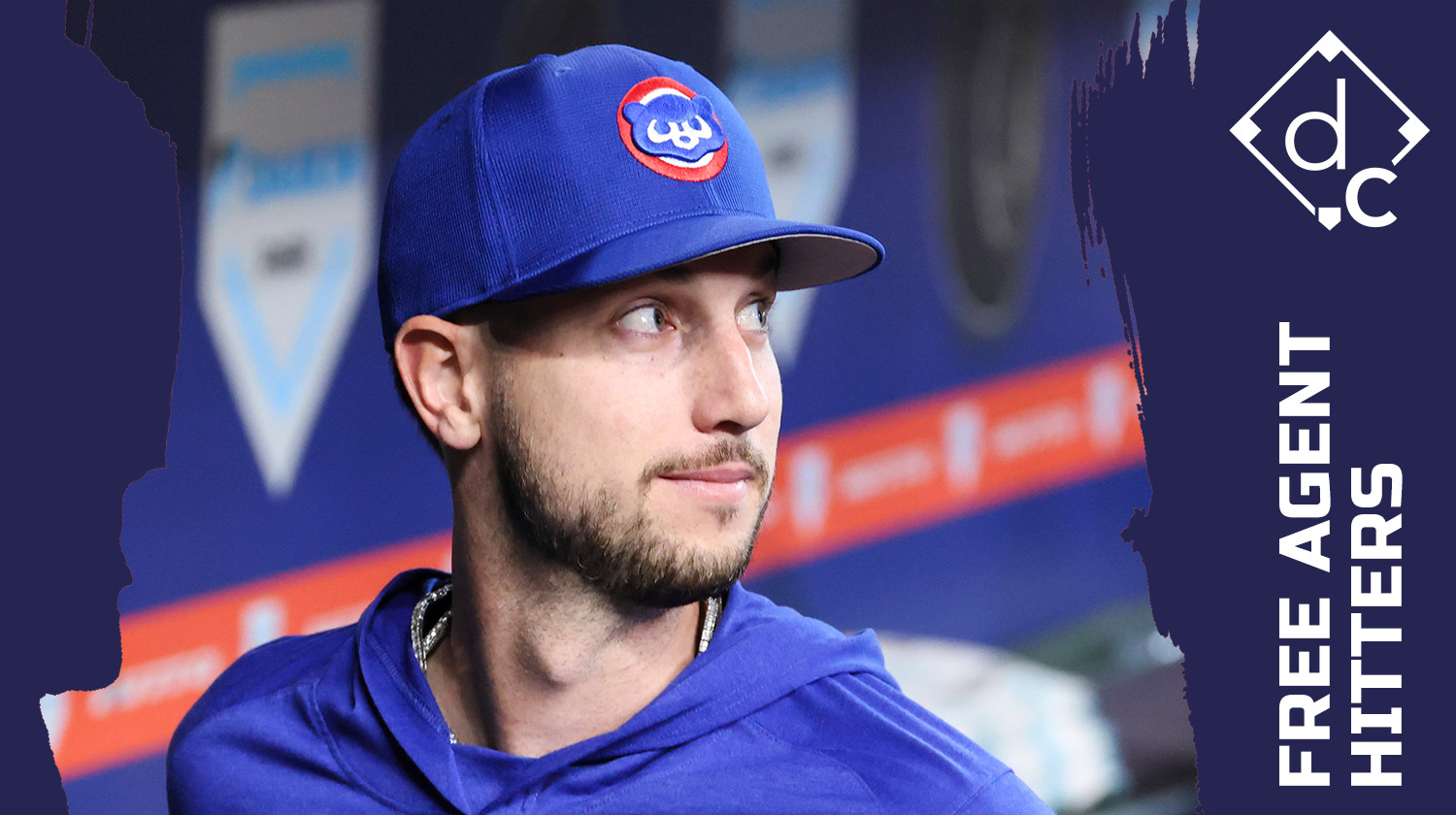
It's hard to predict how this offseason will unfold, as there is an increasing chance of (yet another) MLB lockout following the 2026 season. Will teams spend big this offseason, hoping to create surety in the face of an unknown collective bargaining agreement? Or will they be hesitant in hopes of a favorable outcome for ownership groups?
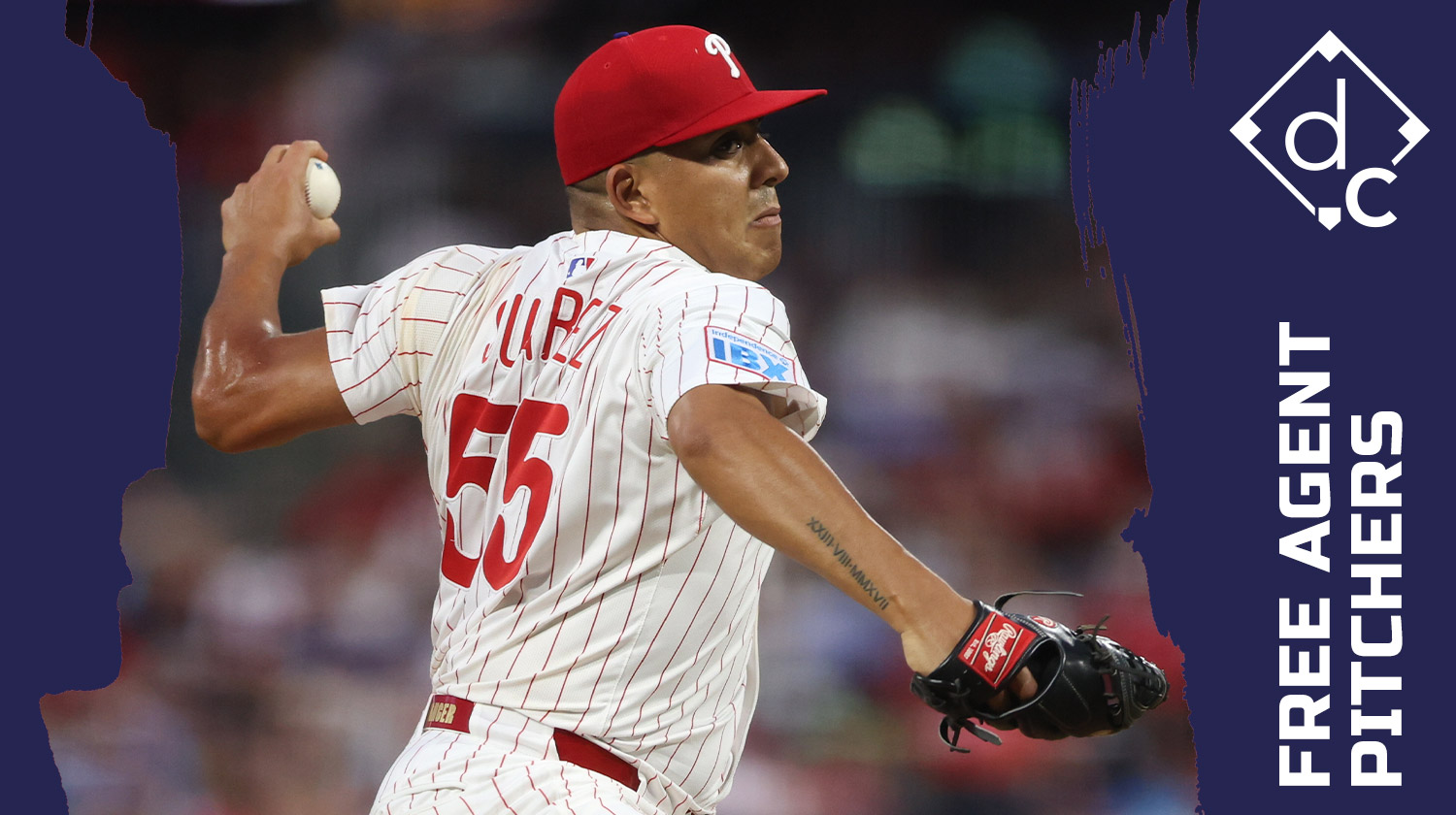
No matter how it shakes out, teams will need to compete in the 2026 season, and they'll need to sign free agents this winter. DiamondCentric has compiled a complete list of free agents, sortable and searchable by pretty much any metric you need. Looking for a first baseman? A catcher? We have you covered. We offer two pages for your reference: one for position players, the other for pitchers.
Byron Buxton, in the midst of an MVP caliber season, has also been having the healthiest year of his career.
While we don't know a lot of information at this time, the Twins.TV broadcast reported that Buxton exited Saturday's game in the top of the seventh inning with soreness in his left side. Trevor Larnach replaced Buxton, which in turn shifted Willi Castro to left field and Harrison Bader to center field. There didn't seem to be any specific play that led to Buxton being pulled from the game. One silver lining is that it doesn't sound like it's a lower body injury, which has plagued Buxton for a majority of his career.
Buxton has been on a tear this year with an OPS of .951, including 23 home runs. He's added 17 stolen bases and continues to contribute platinum glove level defense. If he were to miss time, it would almost certainly force the Twins hand to sell their expiring contracts - something that has been rumored but to this point there's been just one report indicating a team is interested in one of those players.
Stay tuned to Twins Daily for updates on Buxton's status.