



Thiéres Rabelo
-
Posts
569 -
Joined
-
Last visited
Content Type
Profiles
News
Minnesota Twins Videos
2026 Minnesota Twins Top Prospects Ranking
2022 Minnesota Twins Draft Picks
Minnesota Twins Free Agent & Trade Rumors, Notes, & Tidbits
Guides & Resources
2023 Minnesota Twins Draft Picks
The Minnesota Twins Players Project
2024 Minnesota Twins Draft Picks
2025 Minnesota Twins Draft Pick Tracker
2026 Minnesota Twins Draft Tracker: Picks & Bonuses
Forums
Blogs
Events
Store
Downloads
Gallery
Everything posted by Thiéres Rabelo
-
I have seen complaints about many Twins players so far across our comment sections and Twitter. Even Nelson Cruz, who’s been almost unanimously admired by the fanbase and may be the team’s most threatening bat. It happens. No one is to tell you how you should think, no matter how statistically unusual your opinion might be. But there’s one particular take that has spread quickly all over Twins Territory and it puzzles me. I don’t think there is any Twin who has been more complained about this season than Jason Castro has. Even though I don’t agree with the large number of fans (at least that I have seen so far) that have been vocal about wanting him gone from the Twins, it’s completely understandable. Afterall, Minnesota’s offense has been amazing, especially after this weekend’s series in Baltimore. Castro, very obviously, hasn’t been nearly as productive as his teammates. But ditching him might be too simple of a solution and, in my opinion, not the wisest of choices. Castro is in the last year of his three-year contract with the Twins, signed in late 2016. Per Baseball Reference, he is the third highest paid position player of the roster this season, in which he is owed $ 8 million. At 31 and with two very hot bats battling him for the position of catcher, it’s very unlikely that Minnesota will renew its commitment with Castro after the season is finished. But that doesn’t mean he serves the team no purpose this season. Since the start of the 2017 season, the Twins haven’t won more games while starting any other catcher than Castro. Here’s the team’s record with each starting catcher since then: Jason Castro: 69-62 (.526) Mitch Garver: 38-48 (.441) Chris Gimenez: 32-29 (.524) Bobby Wilson: 24-21 (.533) Willians Astudillo: 10-8 (.555) Juan Graterol: 2-0 (1.000) Whether you associate the team’s record with Castro’s presence or not, the numbers don’t lie. The Twins have been a winning team with him behind home plate. But, of course, this could be highly circumstantial and it’s too hard of a connection to make. But, wait. The list of perks from having Castro on board goes on. The biggest point used by the anti-Castro party so far is how bad he’s been on offense, not only this year, but ever since he came to Minnesota. And that becomes a much stronger point when you have Mitch Garver blossoming into one of the best offensive catchers in the game and the also the Willians Astudillo phenomenon captivating our hearts each day more. A lot of folks label Castro as dead weight on offense. But, is he? Well, he isn’t, for sure, as prolific as the remainder of the Twins lineup. But, to be fair, neither are two thirds of all MLB lineups. But that doesn’t mean Castro hasn’t done his part. Right now, he holds the team’s fourth highest OBP, with .360. Other than that, that’s tied for MLB’s 12th best OBP among catchers (min. 25 PA). I’m sorry, but one doesn’t just throw away a Joe Mauer-type occupation of bases just like that. Besides that, Castro’s .333 OBP as an 8th batter ranks 15th in MLB among all such hitters (min. 21 PA). This may sound like very little, but when you look at the fact that Minnesota has one of the league’s best bottom part of the lineup, you can tell how important Castro’s contribution really is. Currently, when taking into account the positions seven, eight and nine of the lineup, Minnesota has a .273 AVG (3rd best in the league), .346 OBP (4th), .487 SLG (3rd) and .833 OPS (3rd). Say what you want about how Byron Buxton is the biggest responsible for such productivity. You’re right. But you can’t realistically say that Castro hasn’t done his part. Then, one might point out that Garver and Astudillo have been incomparably more productive on offense and one would definitely be right. They both have been raking, especially my former UNM colleague. If offense was the only aspect on the table, there wouldn’t be a lot of reasons to start Castro over the other two much more than Ehire Adrianza over Jorge Polanco. It wouldn’t make any sense. Well, but it isn’t. At the same proportion that Castro’s offense is no match to his competition, his defense would similarly be no match to his competition. And I’m not just talking about widely explored pitch framing stats, Castro’s biggest advertisement tool throughout his career. Twins pitchers have performed much better while being caught by him than by any of the other two. Jason Castro (63.0 innings) - 3.57 ERA, .703 OPS, 65% strikes Mitch Garver (67.0 innings) - 5.78 ERA, .773 OPS, 61.8% strikes Willians Astudillo (39.0 innings) - 3.69 ERA, .677 OPS, 65.2% strikes Finally digging into the somewhat popular pitch framing stats, by using Baseball Prospectus’ Framing Runs metric, we can notice that Castro is the 11th best catcher at it in the MLB, with +0.6. Astudillo ranks 51st, with -0.2 and Garver ranks 60th, with -0.5. This is not a hit at Garver, whom I absolutely enjoy seeing play and am sure is going to be the team’s main catcher for years, but he is still not on the same defensive level as Castro is. But, hey, that’s not even a bad thing, because now we get to Castro’s biggest importance for the Twins. It’s obvious that Garver can hit. We’ve known this since he was a minor leaguer. But picture this: what if we could get Garver’s offense and combine it with Castro’s defense? That, ladies and gentlemen, could be Jason’s biggest contribution for Minnesota. I have been personally tracking each pitcher strike percentage with each catcher on this spreadsheet since the beginning of the season and I can tell you how much Garver has been evolving. By mentoring Garver, especially defense-wise, Castro could lead him into the Twins best catcher since… well, you know who. Once again, let me make it clear that I’m not trying to change anyone’s opinion here. But I do give a piece of advice. Instead of getting angry and vent over how bad Castro’s bat is, why not look at him as a source of improvement for one of the Twins biggest hopes for the future? I don’t believe it’s good to take his help for granted. Besides, like demonstrated in the beginning of this article, the Twins are a winning team with Castro on board. It has been like that in 2017, culminating in their first playoffs appearance in almost a decade. They were dreadful without him last year. Now, they are back, at least momentarily, at the top of the Central. This can’t be a coincidence.
-
 Miguel Sanó is nearing his return to full-time activity. After going through so much since being named an All-Star, I don’t think there’s anything that would make him happier right now. But, looking back at all the events in the past 18 months of his career, Twins fans should ask themselves a list of questions about his return to the team. Trying to anticipate every possible scenario could be a good way for Twins fans not to overreact if he doesn’t play very well at first and to have an opinion on how to assemble an even stronger lineup if he does.How is Sanó going to return? Nobody can know for sure which Sanó the Twins will get when he returns. In 2017, everybody believed he had had his breakout season and was bound to be the stud of the lineup. In early August of that year, though, shortly after an All-Star Game appearance, he was hit in the shin and was sidelined for the better part of the remainder of the season. He got back in late September, but Paul Molitor chose not to put him on the wild card roster. He had surgery in November of that year to insert a permanent titanium rod into the shinbone and was expected to be ready to play by spring training. Well, he barely was. Sanó could only start his spring participation in the last day of February. Plus, he reported to camp a bit out of shape, which caused some concern among some fans. In spite of all that, he was cleared to open the season with the team. Then, maybe because of his conditioning or perhaps because he wasn’t confident enough to be back at that point because of his procedure, he developed a new injury during the first full month of regular season. In early May he was placed on the 10-day disabled list with a left hamstring strain. At that point, it was clear that he was not even a little bit close to the All-Star he had been months earlier. Even though he posted a not terrible .739 OPS and hit five home runs, he was batting only .212 and struck out 36 times in 90 plate appearances, which represented a 40.0 K%, a league-worst among all major league hitters with that many PA. He got back from the DL and things only got worse. His first game out of the DL was on May 25th and he went on to play another 17 games. In that span, he had 73 PA, batted .191 and struck out even more than before, a 41.1 K%. Before the middle of June he was optioned to Single-A Fort Myers, where he spent the rest of June and almost the entire month of July. He returned to MLB in late July for a third stint, but it was basically all of the same. His K% dropped to 36% during the 34 remaining games of his season and he batted only .195 with six home runs. After by far his worst season as a major leaguer, Sanó was poised to turn things around. He started his path to redemption by playing for his hometown club Estrellas Orientales to claim its first national title of the Dominican Winter League since 1968. He made some Instagram posts in which he was much thinner than what he had been when he finished last season and raised a lot of questions. But when he showed up at camp this year all the suspicions were confirmed. It was reported that he had lost roughly 25 pounds, after finishing 2018 at 290 pounds, according to MLB.com. But apparently he couldn’t just catch a break. During the celebrations of his hometown team title, Sanó suffered a heel laceration. At first, he was expected to miss only the first week of spring training, but he ended up missing the whole thing. Since the healing of the wound didn’t go according to plan, he needed to undergo a procedure that would most likely have him sidelined until May. Which brings us to today and our first question: how will Sanó come back from all this? Will the Twins have the same 2018 version of him? After all, he did miss out on the entire spring training and hasn’t seen actual everyday activity for months. Some might be scared that he will have this year the same kind of year that Ervin Santana had last year. It would be terrible for us fans to witness that, but even worse for Sanó himself. On the other hand, what if none of those setbacks were able to break his spirits? What if he was hungry enough to prove himself that he dedicated himself twice as much? What if, instead of having an Ervin Santana’s 2018-like year he will destroy all the skepticism, like his teammate Byron Buxton is doing right now? That could turn the Twins lineup into an even scarier threat. If he struggles, what should be done? Let us work with all the scenarios now. Say he struggles when he comes back. What then? Do you trade him? Do you give him another chance? Each fan would have his own opinion here, so it would be difficult to predict a definite outcome. A number of fans are looking at this year as Sanó’s last chance in Minnesota and if he comes back in May and doesn’t play at the same level that the Twins hitters are playing right now, I don’t see a lot of those fans wanting him around. In his defense, you could say that Marwin Gonzalez, the Twins current everyday third baseman, is not hitting nearly as well as most of the lineup. But he is providing stellar defense. It would be a very tough decision. So, do you try to work out a trade involving him? I guess many people would try that, but it’s hard to imagine a lot of teams interested in Sanó if he doesn’t play well enough during the two months before the trade deadline. In that case, I believe that the preferred way to go for Derek Falvey and Thad Levine would be to keep him within the organization, especially because he has got one minor league option remaining. There’s no point in letting him go in exchange for nothing. I think it would be wise to take into consideration the fact that a lot that has happened to him earlier this year wasn’t really in his control. If he plays well, what should be done? Moving to a more optimistic scenario now. Let’s imagine he has a slow start, but then catches up with the slugfest Twins hitters have been having lately. Do you give him the everyday job? Do you have him share PA’s with Gonzalez and Willians Astudillo at third, or Nelson Cruz at DH? All those questions are impossible to answer, but let’s imagine La Tortuga’s batting average never drops. Let’s imagine Cruz keeps up the incredible season he’s having. Who do you have? If you make him the everyday 3B, what do you do with the loss on defense, since you won’t have Gonzalez there that much? I’m sure that if Cruz doesn’t slow down, it will be a rarity to see him have more than one or two days off every week. In the Astudillo end, things aren’t any easier. If Mitch Garver keeps feasting on opposing pitchers the way he is right now (even better than Astudillo, as of late), you won’t have the option to give him some PA at third, because now you have Sanó’s old self and Gonzalez’ defense. Rocco Baldelli and his staff would have to come up with a way in which they would provide all those hitters with regular PA, in order not to affect their productivity. That would be a pickle. If he does play well, who’s the odd man out? I believe that if the Twins had anything close to a 2017-like Sanó, no one would think twice about who would be the one to be dropped: Ehire Adrianza. Even nowadays, seeing very little playing time, it’s hard to imagine he will stick around long. But that’s not the hard question here. If you have a good, healthy Sanó and a four-man bench, who’s the odd man out if the club finds itself in need of a thirteenth arm during the season? A 13-man pitching staff has already become the normal around the league. Do the Twins dare to go with twelve, if all the bats are working? That, to me, is the hardest question so far. And it becomes even harder to think of an answer, if you imagine the Martín Pérez experience not panning out the way the front office planned. If he struggles as a starter, you risk overloading the pitching staff too much if they are carrying twelve arms. Assuming all of them are performing as well as they are right now in this hypothetical future, who do you let go of among Astudillo, Garver, Gonzalez and Jake Cave, the Twins only backup outfielder? Have your way on the comment section and give your opinion. What would you do? Click here to view the article
 -
 How is Sanó going to return? Nobody can know for sure which Sanó the Twins will get when he returns. In 2017, everybody believed he had had his breakout season and was bound to be the stud of the lineup. In early August of that year, though, shortly after an All-Star Game appearance, he was hit in the shin and was sidelined for the better part of the remainder of the season. He got back in late September, but Paul Molitor chose not to put him on the wild card roster. He had surgery in November of that year to insert a permanent titanium rod into the shinbone and was expected to be ready to play by spring training. Well, he barely was. Sanó could only start his spring participation in the last day of February. Plus, he reported to camp a bit out of shape, which caused some concern among some fans. In spite of all that, he was cleared to open the season with the team. Then, maybe because of his conditioning or perhaps because he wasn’t confident enough to be back at that point because of his procedure, he developed a new injury during the first full month of regular season. In early May he was placed on the 10-day disabled list with a left hamstring strain. At that point, it was clear that he was not even a little bit close to the All-Star he had been months earlier. Even though he posted a not terrible .739 OPS and hit five home runs, he was batting only .212 and struck out 36 times in 90 plate appearances, which represented a 40.0 K%, a league-worst among all major league hitters with that many PA. He got back from the DL and things only got worse. His first game out of the DL was on May 25th and he went on to play another 17 games. In that span, he had 73 PA, batted .191 and struck out even more than before, a 41.1 K%. Before the middle of June he was optioned to Single-A Fort Myers, where he spent the rest of June and almost the entire month of July. He returned to MLB in late July for a third stint, but it was basically all of the same. His K% dropped to 36% during the 34 remaining games of his season and he batted only .195 with six home runs. After by far his worst season as a major leaguer, Sanó was poised to turn things around. He started his path to redemption by playing for his hometown club Estrellas Orientales to claim its first national title of the Dominican Winter League since 1968. He made some Instagram posts in which he was much thinner than what he had been when he finished last season and raised a lot of questions. But when he showed up at camp this year all the suspicions were confirmed. It was reported that he had lost roughly 25 pounds, after finishing 2018 at 290 pounds, according to MLB.com. But apparently he couldn’t just catch a break. During the celebrations of his hometown team title, Sanó suffered a heel laceration. At first, he was expected to miss only the first week of spring training, but he ended up missing the whole thing. Since the healing of the wound didn’t go according to plan, he needed to undergo a procedure that would most likely have him sidelined until May. Which brings us to today and our first question: how will Sanó come back from all this? Will the Twins have the same 2018 version of him? After all, he did miss out on the entire spring training and hasn’t seen actual everyday activity for months. Some might be scared that he will have this year the same kind of year that Ervin Santana had last year. It would be terrible for us fans to witness that, but even worse for Sanó himself. On the other hand, what if none of those setbacks were able to break his spirits? What if he was hungry enough to prove himself that he dedicated himself twice as much? What if, instead of having an Ervin Santana’s 2018-like year he will destroy all the skepticism, like his teammate Byron Buxton is doing right now? That could turn the Twins lineup into an even scarier threat. If he struggles, what should be done? Let us work with all the scenarios now. Say he struggles when he comes back. What then? Do you trade him? Do you give him another chance? Each fan would have his own opinion here, so it would be difficult to predict a definite outcome. A number of fans are looking at this year as Sanó’s last chance in Minnesota and if he comes back in May and doesn’t play at the same level that the Twins hitters are playing right now, I don’t see a lot of those fans wanting him around. In his defense, you could say that Marwin Gonzalez, the Twins current everyday third baseman, is not hitting nearly as well as most of the lineup. But he is providing stellar defense. It would be a very tough decision. So, do you try to work out a trade involving him? I guess many people would try that, but it’s hard to imagine a lot of teams interested in Sanó if he doesn’t play well enough during the two months before the trade deadline. In that case, I believe that the preferred way to go for Derek Falvey and Thad Levine would be to keep him within the organization, especially because he has got one minor league option remaining. There’s no point in letting him go in exchange for nothing. I think it would be wise to take into consideration the fact that a lot that has happened to him earlier this year wasn’t really in his control. If he plays well, what should be done? Moving to a more optimistic scenario now. Let’s imagine he has a slow start, but then catches up with the slugfest Twins hitters have been having lately. Do you give him the everyday job? Do you have him share PA’s with Gonzalez and Willians Astudillo at third, or Nelson Cruz at DH? All those questions are impossible to answer, but let’s imagine La Tortuga’s batting average never drops. Let’s imagine Cruz keeps up the incredible season he’s having. Who do you have? If you make him the everyday 3B, what do you do with the loss on defense, since you won’t have Gonzalez there that much? I’m sure that if Cruz doesn’t slow down, it will be a rarity to see him have more than one or two days off every week. In the Astudillo end, things aren’t any easier. If Mitch Garver keeps feasting on opposing pitchers the way he is right now (even better than Astudillo, as of late), you won’t have the option to give him some PA at third, because now you have Sanó’s old self and Gonzalez’ defense. Rocco Baldelli and his staff would have to come up with a way in which they would provide all those hitters with regular PA, in order not to affect their productivity. That would be a pickle. If he does play well, who’s the odd man out? I believe that if the Twins had anything close to a 2017-like Sanó, no one would think twice about who would be the one to be dropped: Ehire Adrianza. Even nowadays, seeing very little playing time, it’s hard to imagine he will stick around long. But that’s not the hard question here. If you have a good, healthy Sanó and a four-man bench, who’s the odd man out if the club finds itself in need of a thirteenth arm during the season? A 13-man pitching staff has already become the normal around the league. Do the Twins dare to go with twelve, if all the bats are working? That, to me, is the hardest question so far. And it becomes even harder to think of an answer, if you imagine the Martín Pérez experience not panning out the way the front office planned. If he struggles as a starter, you risk overloading the pitching staff too much if they are carrying twelve arms. Assuming all of them are performing as well as they are right now in this hypothetical future, who do you let go of among Astudillo, Garver, Gonzalez and Jake Cave, the Twins only backup outfielder? Have your way on the comment section and give your opinion. What would you do?
 -
Miguel Sanó is nearing his return to full time activity. After going through so much since being named an All Star, I don’t think there’s anything that would make him happier right now. But, looking back at all the events in the past eighteen months of his career, Twins fans should ask themselves a list of questions about his return to the team. Trying to anticipate every possible scenario could be a good way for Twins fans not to overreact if he doesn’t play very well at first and to have an opinion on how to assemble an even stronger lineup if he does. How is Sanó going to return? Nobody can know for sure which Sanó the Twins will get when he returns. In 2017, everybody believed he had had his breakout season and was bound to be the stud of the lineup. In early August of that year, though, shortly after an All Star Game appearance, he was hit in the shin and was sidelined for the better part of the remainder of the season. He got back in late September, but Paul Molitor chose not to put him on the Wild Card roster. He had surgery in November of that year to insert a permanent titanium rod into the shinbone and was expected to be ready to play by Spring Training. Well, he barely was. Sanó could only start his spring participation in the last day of February. Plus, he reported to camp a bit out of shape, which caused some concern among some fans. In spite of all that, he was cleared to open the season with the team. Then, maybe because of his conditioning or perhaps because he wasn’t confident enough to be back at that point because of his procedure, he developed a new injury during the first full month of regular season. In early May he was placed on the 10-day disabled list with a left hamstring strain. At that point, it was clear that he was not even a little bit close to the All Star he had been months earlier. Even though he posted a not terrible .739 OPS and hit five home runs, he was batting only .212 and struck out 36 times in 90 PA, which represented a 40% K%, a league worst among all major league hitters with that many PA. He got back from the DL and things only got worse. His first game out of the DL was on May 25th and he went on to play another 17 games. In that span, he had 73 PA, batted .191 and struck out even more than before, with 41.1% of K%. Before the middle of June he was optioned to Single-A Fort Myers, where he spent the rest of June and almost the entire month of July. He returned to MLB in late July for a third stint, but it was basically all of the same. His K% dropped to 36% during the 34 remaining games of his season and he batted only .195, with six home runs. After by far his worst season as a major leaguer, Sanó was poised to turn things around. He started his path to redemption by playing for his hometown club Estrellas Orientales to claim its first national title of the Dominican Winter League since 1968. He made some Instagram posts in which he was much thinner than he finished last season and raised a lot of questions. But when he showed up at camp this year all the suspicions were confirmed. It was reported that he had lost roughly 25 pounds, after finishing 2018 at 290 pounds, according to MLB.com. But apparently he couldn’t just catch a break. During the celebrations of his hometown team title, Sanó suffered a cut on his foot and had a heel laceration. At first, he was expected to miss only the first week of Spring Training, but he ended up missing the whole thing. Since the healing of the wound didn’t go according to plan, he needed to undergo a procedure that would most likely have him be sidelined until May. Which brings us to today and our first question: how will Sanó come back from all this? Will the Twins have the same 2018 version of him? After all, he did miss out on the entire Spring Training and hasn’t seen actual everyday activity for months. Some might be scared that he will have this year the same kind of year that Ervin Santana had last year. It would be terrible for us fans to witness that, but even worse for Sanó himself. On the other hand, what if none of those setbacks were able to break his spirits? What if he was hungry enough to prove himself that he dedicated himself twice as much? What if, instead of having an Ervin Santana’s 2018-like year he will destroy all the skepticism, like his teammate Byron Buxton is doing right now? That could turn the Twins lineup into an even scarier threat. If he struggles, what should be done? Let us work with all the scenarios now. Say he struggles when he comes back. What then? Do you trade him? Do you give him another chance? Each fan would have their own opinion here, so it would be difficult to predict a definite outcome. A number of fans are looking at this year as Sanó’s last chance in Minnesota and if he comes back in May and doesn’t play at the same level that the Twins hitters are playing right now, I don’t see a lot of those fans wanting him around. In his defence, you could say that Marwin Gonzalez, the Twins current everyday 3B, is not hitting nearly as well as most of the lineup. But he is providing stellar defense. It would be a very tough decision. So, do you try to work out a trade involving him? I guess many people would try that, but it’s hard to imagine a lot of teams interested in Sanó if he doesn’t play well enough during the two months before the trade deadline. In that case, I believe that the preferred way to go for Derek Falvey and Thad Levine would be to keep him within the organization, especially because he has got one minor league option remaining. There’s no point in letting him go in exchange for nothing. I think it would be wise to take into consideration the fact that a lot that has happened to him earlier this year wasn’t really in his control. If he plays well, what should be done? Moving to a more optimistic scenario now. Let’s imagine he has a slow start, but then catches up with the slugfest Twins hitters have been having lately. Do you give him the everyday job? Do you have him share PA’s with Gonzalez and Willians Astudillo at third, or Nelson Cruz at DH? All those questions are impossible to answer, but let’s imagine La Tortuga’s AVG never drops. Let’s imagine Cruz keeps up the incredible season he’s having. Who do you have? If you make him the everyday 3B, what do you do with the loss on defense, since you won’t have Gonzalez there that much? I’m sure that if Cruz doesn’t slow down, it will be a rarity to see him have more than one or two days off every week. In the Astudillo end, things aren’t any easier. If Mitch Garver keeps feasting on opposing pitchers the way he is right now (even better than Astudillo, as of late), you won’t have the option to give him some PA at third, because now you have Sanó’s old self and Gonzalez’ defense. Rocco Baldelli and his staff would have to come up with a way in which they would provide all those hitters with regular PA, in order not to affect their productivity. That would be a pickle. If he does play well, who’s the odd man out? I believe that if the Twins had anything close to a 2017-like Sanó, no one would think twice about who would be the one to be dropped: Ehire Adrianza. Even nowadays, seeing very little playing time, it’s hard to imagine he will stick around long. But that’s not the hard question here. If you have a good, healthy Sanó and a four-man bench, who’s the odd man out if the club finds itself in need of a thirteenth arm during the season? A 13-man pitching staff has already become the normality around the league. Do the Twins dare to go with twelve, if all the bats are working? That, to me, is the hardest question so far. And it becomes even harder to think of an answer, if you imagine the Martín Pérez experience not paning out the way the front office planned. If he struggles as a starter, you risk overloading the pitching staff too much if they are carrying twelve arms nowadays. Assuming all of them are performing as well as they are right now in this hypothetical future, who do you let go of among Astudillo, Garver, Gonzalez and Jake Cave, the Twins only backup outfielder? Have your way on the comment section and give your opinion. What would you do?
-
Do Odorizzi and Pérez need an Opener?
Thiéres Rabelo posted a blog entry in Brazilian Twins Territory
I will be walking on eggshells here, but I think this issue is bound to be discussed each day more. It looks inevitable. I’m not campaigning for the spread of "The Opener" strategy, as if it is a groundbreaking improvement for the game. Honestly, all I can say is that I think there’s no harm in testing it. But that’s not the point of this article. For the sake of a further discussion on whether MLB teams should embrace The Opener or not, I urge you to read this Russell Carleton’s piece on Baseball Prospectus. Assuming that The Opener strategy is a tendency that can’t be avoided at this moment in the MLB, the real point of this text is to discuss how it could be deployed on this Twins team. I figure not many fans would oppose to making that adjustment a couple of times a week, if that would represent… well, a couple of more wins a week. Right? In other words, if The Opener can make a team go from a 80-85-win team to a 86-90-win team, one would have to be stubborn to still want that strategy to be banished from the game. With that in mind, I ask you this first question: which Twins’ starting pitchers would benefit the most from having an Opener pitching before them in some games? Well, I was looking into some numbers and I was able to come to a conclusion of my own, but I invite you all to join in the discussion and share your opinions about this. Here are my candidates. Jake Odorizzi had a fantastic debut on the Opening Week, going six innings and giving up only one earned run, while also striking out eleven Cleveland batters. But then, last Friday’s outing against the Phillies couldn’t have had a worse turn out for him. He couldn’t pitch past the first inning, retiring only two batters and giving up four earned runs, three of which came from walks given up by him. I started searching a little bit in his career and I found some evidence that, in my opinion, qualify him for having an Opener pitching before him. Odorizzi’s ERA per inning since 4/1/2018 1st: 4.13 2nd: 3.69 3rd: 2.61 4th: 5.90 5th: 5.26 6th: 9.49 As you can notice, his first inning numbers in roughly the last calendar year are considerably worse than the two following innings. In other words, it’s like he has been pitching much better to, say, opponents batting from #4 and lower. It’s acceptable to assume he would have a much better performance if he started the game pitching to the middle part of the lineup. Another compelling argument that shows Odorizzi could benefit a great deal from the Opener is how much worse his numbers are when pitching for the third time through the order. Here’s how he’s pitch in the same span as above: First Time Through the Order: 3.18 ERA Second Time Through the Order: 3.53 ERA Third Time Through the Order: 11.57 ERA In the last twelve months, Odorizzi has pitched almost four times worse in the third time he faced another team’s lineup than he has in the first time. So, he’s a perfect fit for The Opener. He hasn’t pitched well in the last year and he has run out of gas by the third time he has faced lineups. If you use an Opener with him, he would probably start pitching to the fourth or fifth batter in the opponent’s lineup. Plus, this could also improve his Third Time Through the Order numbers. In my opinion, there’s no harm in testing this. Another candidate that could really benefit from The Opener would be Martín Pérez. Maybe even more than Odorizzi. Throughout the offseason, we’ve tried to reason his signing and to think of many scenarios in which he could be a good fit for the Twins. But as of now, in his two relief appearances, he struggled, posting career high 24.3 P/IP and 9.25 BB/9, as well as second worst career S% (61%) and H/9 (11.37). As of next Friday (April 12th), the Twins will play 13 consecutive games, which would mean Pérez would be shifted to the rotation. He is deserving of an actual shot in the rotation, but if he struggles again, what should be the club’s course of action? It’s highly unlikely that he would be bought out of his contract, once he is guaranteed to receive his $ 4.25 million of salary. So, how could the Twins avoid having such weak point in their rotation? Keep him in the bullpen and shift Adalberto Mejía instead? Maybe. But you could also try The Opener. Here’s how Pérez has performed in the last calendar year. Pérez’ ERA per inning since 4/1/2018 1st: 6.60 2nd: 7.98 3rd: 4.80 4th: 5.79 5th: 7.11 6th: 9.35 ERA per time through the order FTTO: 4.57 STTO: 4.99 TTTO: 12.46 Just like Odorizzi, his first innings performance was quite bad and his TTTO numbers are more than two times worse than the first one. Using an Opener for one or two innings and having Pérez start pitching to the middle or bottom part of the lineup, could improve his numbers. Just as a comparison, here’s how José Berríos and Kyle Gibson, the two best starting pitchers of the team last year, have performed in each time through the order, in the last calendar year. Berríos ERA FTTO: 2.81 STTO: 4.15 TTTO: 4.31 Gibson ERA FTTO: 2.31 STTO: 4.86 TTTO: 4.96 The variation is not nearly as big as Odorizzi and Pérez. So, it would be a very valid move to try and use The Opener with them and see how it works. What do you have to lose? The best Opener options The Opener strategy is brand new, so it’s hard to trace the profile of the pitcher that would be best qualified for the job. After analyzing Twins pitchers’ performances in the first inning, I found this: Adalberto Mejía 1st inning: 2.88 ERA (25 IP) Tyler Duffey 1st inning: 3.89 ERA (37 IP) Mejía, in my opinion, should be a regular part of the rotation. I find him very talented. But, for some reason, the coaching staff decided to have him come out of the bullpen. So, with those first inning numbers, he could be a great fit to open games pitched by Odorizzi or Pérez. I really hope the goes back to being a fulltime starter as soon as possible. But, until then, I think using him as the Opener would be the best way to go. Duffey has also posted good numbers in first innings in his career. If you combine his second inning numbers, his ERA drops to 3.63. As of the third inning, his ERA increases to 5.94, which is probably one of the reasons why he has been shifted to the bullpen last year. But if he manages to start games well enough, he could be a great Opener option. Both could be used on that role or maybe just one. Bottom line is, the Twins’ rotation have that need (on Odorizzi and Pérez days) and the tools (Mejía and/or Duffey) to fix it. I say give it a shot. -
Last season, the Twins signed then 34-year-old starting pitcher Aníbal Sánchez to a one-year contract, a move that confused most of their fans. Afterall, the Venezuelan righty had pitched poorly in the three previous seasons and, in spite of his great track record, few people envisioned the bounce back he would ultimately achieve with Atlanta. This year, the Twins have made a very similar move by signing fellow Venezuelan Martín Pérez. It is possible that regret has led them to go after the one that got away?Let’s back up a little. Minnesota agreed to a one-year contract with Sánchez on Feb. 16 of last year, worth $2.5 million, with $500,000 guaranteed. Back then, that deal was a thinker. Why were the Twins chasing after a pitcher who appeared to be way past his prime? They weren’t getting the Cy Young candidate version of Sanchez who once led the AL in ERA and FIP (2.57 ERA and 2.39 FIP in 2013). They were getting a pitcher who had had an ERA of 5.67 in the three previous seasons combined and saw the velocity of his primary pitch, the Four Seamer, drop from 92.4 mph to 90.7 in the same span. The main explanation given at the time was the coaching staff and Sánchez were willing to reinvent his pitch selection and make adjustments to his mechanics, as stated by the player himself in this Rhett Bollinger report last year. The club believed if he relied more on his varied offerings, he would miss more bats. And that made a lot of sense. Even during 2017, perhaps his worst season, Sánchez's most effective pitches were extremely underused. His cutter, which struck out batters 33.3% of time and had a .235 BA, was used only 7.3% of time. During that same season, his sinker was used 23.4% of the time despite that pitch having a .311 batting average against and giving up a leading nine home runs. His first impression couldn’t have been better. Sánchez's first outing with the Twins came Feb. 27 against the Red Sox. He pitched two perfect innings and struck out one batter. Four days later disaster struck, as he gave up six earned runs on five hits, in two innings of work against the Pirates. Nothing out of the ordinary, especially because we’re talking about spring training. There would have been plenty of time to figure things out. But plans changed. On March 10, the Twins announced the signing of Lance Lynn to a one-year, $12 million contract. Two days later, Sánchez was released by Minnesota and four days after that, signed a minor league contract with the Braves. He went on to find redemption in Atlanta, by having his best season since 2013. He pitched 136 2/3 innings for the Braves, posting a fantastic 2.83 ERA and a 3.62 FIP. He struck out 8.9 batters per nine, which was slightly above his career average of 8.0 through 2017. Coming back to his pitch selection, here is a breakdown of how different his pitch usage was in 2018 in comparison with the year before, per Baseball Savant: 2017 pitch usage Four Seamer – 26.2% (.340 BA, 6 HR, 21 SO) Sinker – 23.4% (.311 BA, 9 HR, 24 SO) Split Finger – 18.1% (.239 BA, 4 HR, 34 SO) Slider – 12.4% (.471 BA, 4 HR, 3 SO) 2018 pitch usage Four Seamer – 33% (.262 BA, 5 HR, 22 SO) Cutter – 20.2% (.206 BA, 5 HR, 34 SO) Split Finger – 19% (.165 BA, 2 HR, 33 SO) Curve – 9.3% (.379 BA, 1 HR, 6 SO) So, Sánchez found success by relying more on pitches that had been proven effective previously, while also working on his mechanics. Can Pérez be the new Sánchez? Exactly like Sánchez last year, there’s absolutely no way to know for sure if Pérez is going to have a good season or not. It’s like the Twins are on the eve of a blind date right now. But one thing is certain: he has to make major changes. Thanks to this beautifully written story by Dan Hayes, of The Athletic, we can see a glimpse into how the coaching staff is approaching Pérez to achieve such changes. Hayes writes that “the Twins asked the left-hander to make a moderately significant mechanical change in which he incorporates his hips more into his delivery”. That has already had a huge impact. Not once in his career has Pérez had a pitch that averaged more than 93.4 mph in a season (four seamer, 2016). This spring, he's touched 97 mph multiple times and has maintained an average of 95 mph in his fastball. Hayes also writes that during his spring outings so far, Pérez abandoned the slider, by far his worst pitch last year (.467 batting average and .867 slugging against). In its place, he has adopted a cutter, which has been admired by everybody watching the games. Going back to his best season in the majors, 2013, it’s easy to notice how drastically Pérez's pitch selection changed in comparison with 2018, arguably his worst in the majors. 2013 pitch usage Four Seamer – 35.2% (.338 BA, 3 HR, 12 SO) Changeup – 23.7% (.174 BA, 4 HR, 45 SO) Sinker – 22.4% (.291 BA, 4 HR, 15 SO) 2018 pitch usage Sinker – 50.6% (.291 BA, 4 HR, 33 SO) Changeup – 17.5% (.348 BA, 3 HR, 12 SO) Four Seamer – 16.4% (.400 BA, 3 HR, 2 SO) Better quality fastballs with increased velocity could do the trick. If he could also manage to recover the changeup he had in 2013, things could get even better. That was his only season with a sub-4.00 ERA (3.62 in 124 1/3 innings of work). Per Twins beat reporter By Do-Hyoung Park, Pérez is getting advice on his changeup from fellow countryman and Twins Hall of Famer Johan Santana. Park writes that the soon-to-be 28 year-old “is trying to emphasize attacking hitters inside with his fastball and utilizing his changeup.” And you can tell how comfortable Pérez is feeling with all theses changes by looking at this quote from him on that same story: “Before, I just used my arms. Now, I’m using all my body, and you guys can see the results. I don’t miss inside anymore”. His most recent outing wasn’t nearly as good as the previous three, but that’s part of spring baseball. He gave up five earned runs in four innings of work Thursday against the Pirates. It’s wait and see time. Pérez being brought in meant valuable youngsters expecting their shot in the rotation were made to wait a bit longer. I’m talking about Adalberto Mejía and Fernando Romero, both moved up to the bullpen. So, there’s a lot at stake for Pérez here, and the front office appears to have foregone other free agents in order to give him an opportunity. If he manages to pull the Aníbal Sánchez this year and/or more, Minnesota will have hit jackpot. Click here to view the article
-
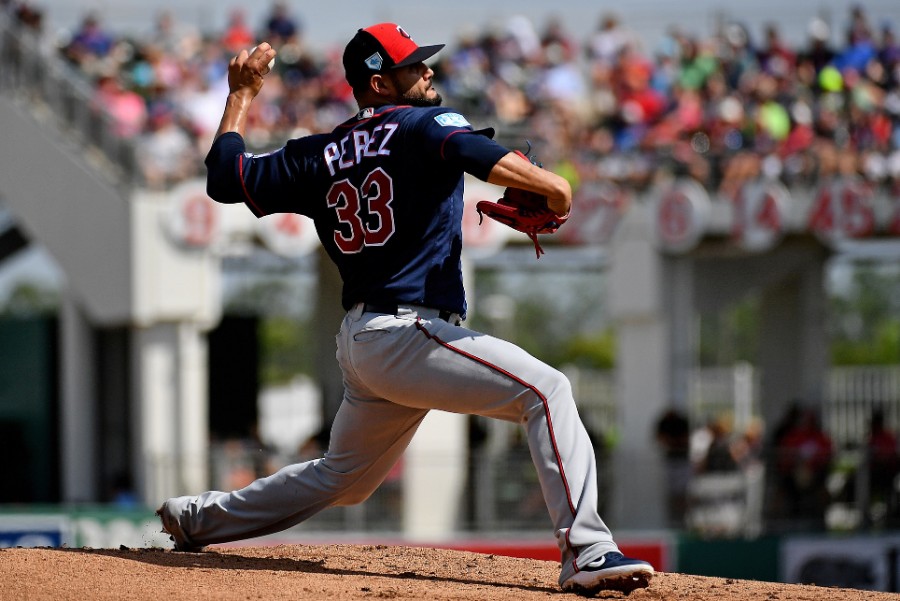 Let’s back up a little. Minnesota agreed to a one-year contract with Sánchez on Feb. 16 of last year, worth $2.5 million, with $500,000 guaranteed. Back then, that deal was a thinker. Why were the Twins chasing after a pitcher who appeared to be way past his prime? They weren’t getting the Cy Young candidate version of Sanchez who once led the AL in ERA and FIP (2.57 ERA and 2.39 FIP in 2013). They were getting a pitcher who had had an ERA of 5.67 in the three previous seasons combined and saw the velocity of his primary pitch, the Four Seamer, drop from 92.4 mph to 90.7 in the same span. The main explanation given at the time was the coaching staff and Sánchez were willing to reinvent his pitch selection and make adjustments to his mechanics, as stated by the player himself in this Rhett Bollinger report last year. The club believed if he relied more on his varied offerings, he would miss more bats. And that made a lot of sense. Even during 2017, perhaps his worst season, Sánchez's most effective pitches were extremely underused. His cutter, which struck out batters 33.3% of time and had a .235 BA, was used only 7.3% of time. During that same season, his sinker was used 23.4% of the time despite that pitch having a .311 batting average against and giving up a leading nine home runs. His first impression couldn’t have been better. Sánchez's first outing with the Twins came Feb. 27 against the Red Sox. He pitched two perfect innings and struck out one batter. Four days later disaster struck, as he gave up six earned runs on five hits, in two innings of work against the Pirates. Nothing out of the ordinary, especially because we’re talking about spring training. There would have been plenty of time to figure things out. But plans changed. On March 10, the Twins announced the signing of Lance Lynn to a one-year, $12 million contract. Two days later, Sánchez was released by Minnesota and four days after that, signed a minor league contract with the Braves. He went on to find redemption in Atlanta, by having his best season since 2013. He pitched 136 2/3 innings for the Braves, posting a fantastic 2.83 ERA and a 3.62 FIP. He struck out 8.9 batters per nine, which was slightly above his career average of 8.0 through 2017. Coming back to his pitch selection, here is a breakdown of how different his pitch usage was in 2018 in comparison with the year before, per Baseball Savant: 2017 pitch usage Four Seamer – 26.2% (.340 BA, 6 HR, 21 SO) Sinker – 23.4% (.311 BA, 9 HR, 24 SO) Split Finger – 18.1% (.239 BA, 4 HR, 34 SO) Slider – 12.4% (.471 BA, 4 HR, 3 SO) 2018 pitch usage Four Seamer – 33% (.262 BA, 5 HR, 22 SO) Cutter – 20.2% (.206 BA, 5 HR, 34 SO) Split Finger – 19% (.165 BA, 2 HR, 33 SO) Curve – 9.3% (.379 BA, 1 HR, 6 SO) So, Sánchez found success by relying more on pitches that had been proven effective previously, while also working on his mechanics. Can Pérez be the new Sánchez? Exactly like Sánchez last year, there’s absolutely no way to know for sure if Pérez is going to have a good season or not. It’s like the Twins are on the eve of a blind date right now. But one thing is certain: he has to make major changes. Thanks to this beautifully written story by Dan Hayes, of The Athletic, we can see a glimpse into how the coaching staff is approaching Pérez to achieve such changes. Hayes writes that “the Twins asked the left-hander to make a moderately significant mechanical change in which he incorporates his hips more into his delivery”. That has already had a huge impact. Not once in his career has Pérez had a pitch that averaged more than 93.4 mph in a season (four seamer, 2016). This spring, he's touched 97 mph multiple times and has maintained an average of 95 mph in his fastball. Hayes also writes that during his spring outings so far, Pérez abandoned the slider, by far his worst pitch last year (.467 batting average and .867 slugging against). In its place, he has adopted a cutter, which has been admired by everybody watching the games. Going back to his best season in the majors, 2013, it’s easy to notice how drastically Pérez's pitch selection changed in comparison with 2018, arguably his worst in the majors. 2013 pitch usage Four Seamer – 35.2% (.338 BA, 3 HR, 12 SO) Changeup – 23.7% (.174 BA, 4 HR, 45 SO) Sinker – 22.4% (.291 BA, 4 HR, 15 SO) 2018 pitch usage Sinker – 50.6% (.291 BA, 4 HR, 33 SO) Changeup – 17.5% (.348 BA, 3 HR, 12 SO) Four Seamer – 16.4% (.400 BA, 3 HR, 2 SO) Better quality fastballs with increased velocity could do the trick. If he could also manage to recover the changeup he had in 2013, things could get even better. That was his only season with a sub-4.00 ERA (3.62 in 124 1/3 innings of work). Per Twins beat reporter By Do-Hyoung Park, Pérez is getting advice on his changeup from fellow countryman and Twins Hall of Famer Johan Santana. Park writes that the soon-to-be 28 year-old “is trying to emphasize attacking hitters inside with his fastball and utilizing his changeup.” And you can tell how comfortable Pérez is feeling with all theses changes by looking at this quote from him on that same story: “Before, I just used my arms. Now, I’m using all my body, and you guys can see the results. I don’t miss inside anymore”. His most recent outing wasn’t nearly as good as the previous three, but that’s part of spring baseball. He gave up five earned runs in four innings of work Thursday against the Pirates. It’s wait and see time. Pérez being brought in meant valuable youngsters expecting their shot in the rotation were made to wait a bit longer. I’m talking about Adalberto Mejía and Fernando Romero, both moved up to the bullpen. So, there’s a lot at stake for Pérez here, and the front office appears to have foregone other free agents in order to give him an opportunity. If he manages to pull the Aníbal Sánchez this year and/or more, Minnesota will have hit jackpot.
 -
March Madness is upon us. I’m nothing close to a college basketball specialist, but it seems to me that not even the most optimistic Minnesotan believes the Golden Gophers will go far in the Big Ten Tournament -- but, who knows? Either way, with or without the presence of the Gophers, many people will hop on the Bracketology train and go crazy during the month of March. Motivated by the school spirit brought by this event, I decided to look at how some Minnesota Twins did while they were playing in college.I came across a lot of interesting facts and numbers from the time that these now major leaguers were just a bunch of hopeful kids attending classes everyday. Here’s a list that I’ve put together, with a personal experience shared at the end. Kyle Gibson was a vital part of the Twins rotation last year, after struggling for some years in the majors. That story is a bit similar to how his college career went down. He was off to a slow start, coming out of the bullpen during his freshman year for the Missouri Tigers, in 2007. But then, when he started being used as a starter in 2008, he turned the corner and pitched at a good level in the following two seasons. In his last year in college, when he posted a 3.21 ERA and 11.05 K/9. Gibby and the Tigers played the NCAA Regionals in all of the three years he was there. Kyle Gibson (Missouri, 2007-09) 3.66 ERA 63 games (29 starts) 259.0 IP 304 K (10.48 K/9) 0 HR 61 BB (2.10 BB/9) 1.16 WHIP 9 SV Tyler Duffey was drafted by the Twins in 2012 out of his hometown college, Rice University, in Houston. He spent three full seasons playing for the Owls between 2010 and 2012, helping the school claim its fourth conference championship in 2011. Curiously enough, do you know who was elected the conference MVP that year? That’s right...Duffey. He helped the Owls to finish the regular season in first place (16-8 conference record), with the highest number of wins (42-21 overall record) and to be the No. 24 program in the nation. He shared closing duties with former Twin J.T. Chargois. Tyler Duffey (Rice, 2010-2012) 3.06 ERA 92 games (1 start) 13 SV 152.1 IP 189 K (11.12 K/9) 14 HR (0.82 HR/9) 55 BB (3.24 BB/9) 1.21 WHIP Trevor Hildenberger also spent three seasons in college ball, but his overall numbers weren’t nearly as impressive as Duffey’s nor his stellar minor league totals. Coming out of high school, he pitched for the University of California, Berkeley starting in 2010, but he was redshirted during the 2011 season. His best season was his senior year, in which he posted a 2.83 ERA and tied the school record of 10 single-season saves. On May 10, 2014 he pitched three innings to earn a save, striking out six batters, his career high. Trevor Hildenberger (California, 2010-2014) 4.28 ERA 56 games (5 starts) 11 SV 106.0 IP 95 K (7.97 K/9) 3 HR (0.25 HR/9) 33 BB (2.77 BB/9) 1.34 WHIP Veteran relief pitcher Blake Parker wasn’t always a pitcher. During his three seasons playing for the Arkansas Razorbacks, from 2004 to 2006, Parker played third base. Drafted in 2006, forgoing his senior year, he had a very slow start as a position player on rookie and A-ball and started his transition to the mound in 2007, to never turn back. As a batter in college, his best season was during his sophomore year when he had an .865 OPS and was an extra-base maniac, with a 54.55 XBH%. After maintaining a 2.85 ERA in ten years pitching in the minors, he knew he made the right call for his career. Blake Parker (Arkansas, 2004-06) .266/.344/.417 (.761 OPS) 129 games 504 AB 15 HR 79 RBI 16 SB 51 BB (8.79 BB%) 118 K (20.34 K%) Taylor Rogers is a superstar in the making right now, but his college career was nowhere near an indication of that. After being drafted by the Baltimore Orioles out of high school in 2009, he decided not to sign with them and to attend the University of Kentucky. He was a starting pitcher for the Wildcats for three seasons and his performance comes as a shock for those of us who have been seeing him thriving at the major league level nowadays. Look at what his Wikipedia page has to say about his college career: “In 2010, he tied for the Southeastern Conference lead in losses (7) and runs allowed (68), as he went 4-7 with a 6.40 ERA. In 2011, he tied for second in the Southeastern Conference in losses (7), and was third-highest in runs allowed (56). In 2012, he was fourth in the Southeastern Conference in runs allowed (45)”. Can you believe this? Taylor Rogers (Kentucky, 2010-12) 5.34 ERA 45 games (42 starts) 249.0 IP 172 K (6.21 K/9) 25 HR (0.90 HR/9) 55 BB (1.99 BB/9) 1.46 WHIP Addison Reed's MLB career is pretty respectable. His college career? It was monstrous. In three seasons pitching for the Aztecs, Reed was one of the best pitchers in the country. During his sophomore year, in 2009, he led the nation with 20 saves in 20 save opportunities, striking out 38 batters in 27.2 IP (12.36 K/9) and finishing with a 0.65 ERA. He was named the 2009 National Stopper of the Year by the NCBWA. Addison Reed (San Diego State, 2008-10) 2.16 ERA 60 games (11 starts) 24 SV 132.0 IP 154 K (10.40 K/9) 10 HR (0.68 HR/9) 31 BB (2.09 BB/9) 1.05 WHIP Another player who had an astonishing college career was C.J. Cron. In three years playing for the Utah Utes, between 2009 and 2011, Cron was acknowledged as one of the best first basemen in the nation. Not only did he have extraordinary individual numbers, but he also helped the Utes reach the regional finals in 2009, his freshman year. During his junior year, he was named a first-team All-American by Baseball America, NCBWA, ABCA, Perfect Game, ESPN and the Collegiate Baseball newspaper (Louisville Slugger). He slashed .434/.517/.803 (1.320 OPS) that season. C.J. Cron (Utah, 2009-11) .396/.459/.713 (1.172 OPS) 157 games 641 AB 46 HR 198 RBI 62 BB (8.46 BB%) 75 K (10.23 K%) When the Twins signed Jason Castro to a three-year, $24,5 million contract in 2017, they did it for his defensive skills. As a major leaguer he hasn’t lived up to his minor league numbers and certainly not for his college numbers. Castro played very well offensively for Stanford, especially during his junior year. Not only did he lead the Cardinal in batting average (.376), hits (105), doubles (18) and RBI (73), he also earned first-team All-Pac-10 honors, second-team All-America accolades from Rivals.com and third-team All-America recognition by Baseball America, ABCA/Rawlings and Ping!Baseball. He was also a finalist for the Johnny Bench award honoring college baseball's top catcher. With Stanford reaching the College World Series that year, Castro was named to the All-College World Series team after hitting 6-for-18 (.333) during the event. Jason Castro (Stanford, 2006-08) .309/.381/.476 (.857 OPS) 162 games 540 AB 18 HR 106 RBI 62 BB (9.94 BB%) 83 K (13.30 K%) 11 SB Last, but not least (especially not for me, but I’ll get to that in a minute), there’s Mitch Garver, who played for four years for the University of New Mexico, in his hometown of Albuquerque. Garver was one of the best catchers in the nation. In his senior year, he slashed .390/.458/.589 (1.047 OPS) and led the team in multiple stats. But not only did he succeed individually, but he’s also led UNM to two of its three Mountain West Conference titles (2011 and 2012), including the very first in school history, making him one of the best Lobos of all time. Garver also takes much pride in his state’s roots. I don’t know if may of you will remember, but during Players Weekend last year, the catcher used a New Mexico flag bat. Mitch Garver (New Mexico, 2010-13) .351/.421/.527 (.948 OPS) 211 games 809 AB 18 HR 167 RBI 88 BB (9.51 BB%) 104 K (11.24 K%) 21 SB .384 BABIP What makes Garver’s college career so special to me? In 2013 I was granted a scholarship from my university in Brazil and I managed to spend six months in the U.S., studying at UNM. At the time, basketball was my main passion and I took every opportunity I had to go watch the Lobos basketball team, which was pretty good at that year (until a tragedy at March Madness…). But I took one chance to go to the Isotopes' park, home field of the Albuquerque Isotopes, the Triple-A affiliate of the Colorado Rockies, and attend the very first (and only) baseball game of my life. Download attachment: MitchGarverLobos.jpg Back then, I didn’t follow baseball nearly as much as I do today. So I had no idea who any of those players were. It only occurred to me last year, when Garver started to get his first Major League chances, that he was very likely there, behind the plate, during that particular game. I checked, and, yes. He was at that game (check the picture above, which I took on that day). The Lobos trailed 4-2 on that February evening, the ballpark was empty before the game was finished and the pitcher I actually went there to watch, because we took one class together, didn’t even play (I think). But, in retrospect, I can see how meaningful that day was to me, and Garver was a part of that. Click here to view the article
-
March Madness: A Look Back at the Collegiate Careers of Current Twins
Thiéres Rabelo posted an article in Twins
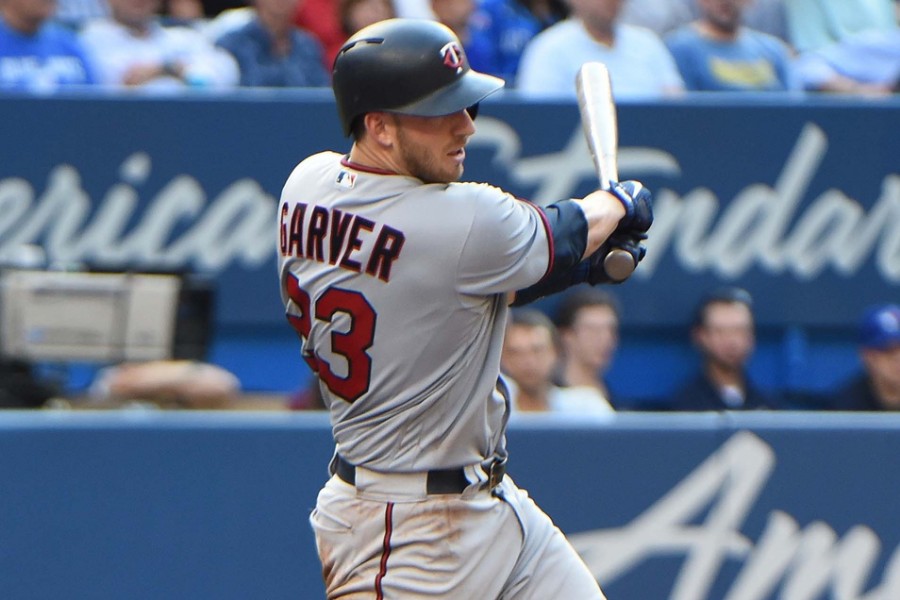 I came across a lot of interesting facts and numbers from the time that these now major leaguers were just a bunch of hopeful kids attending classes everyday. Here’s a list that I’ve put together, with a personal experience shared at the end. Kyle Gibson was a vital part of the Twins rotation last year, after struggling for some years in the majors. That story is a bit similar to how his college career went down. He was off to a slow start, coming out of the bullpen during his freshman year for the Missouri Tigers, in 2007. But then, when he started being used as a starter in 2008, he turned the corner and pitched at a good level in the following two seasons. In his last year in college, when he posted a 3.21 ERA and 11.05 K/9. Gibby and the Tigers played the NCAA Regionals in all of the three years he was there. Kyle Gibson (Missouri, 2007-09) 3.66 ERA 63 games (29 starts) 259.0 IP 304 K (10.48 K/9) 0 HR 61 BB (2.10 BB/9) 1.16 WHIP 9 SV Tyler Duffey was drafted by the Twins in 2012 out of his hometown college, Rice University, in Houston. He spent three full seasons playing for the Owls between 2010 and 2012, helping the school claim its fourth conference championship in 2011. Curiously enough, do you know who was elected the conference MVP that year? That’s right...Duffey. He helped the Owls to finish the regular season in first place (16-8 conference record), with the highest number of wins (42-21 overall record) and to be the No. 24 program in the nation. He shared closing duties with former Twin J.T. Chargois. Tyler Duffey (Rice, 2010-2012) 3.06 ERA 92 games (1 start) 13 SV 152.1 IP 189 K (11.12 K/9) 14 HR (0.82 HR/9) 55 BB (3.24 BB/9) 1.21 WHIP Trevor Hildenberger also spent three seasons in college ball, but his overall numbers weren’t nearly as impressive as Duffey’s nor his stellar minor league totals. Coming out of high school, he pitched for the University of California, Berkeley starting in 2010, but he was redshirted during the 2011 season. His best season was his senior year, in which he posted a 2.83 ERA and tied the school record of 10 single-season saves. On May 10, 2014 he pitched three innings to earn a save, striking out six batters, his career high. Trevor Hildenberger (California, 2010-2014) 4.28 ERA 56 games (5 starts) 11 SV 106.0 IP 95 K (7.97 K/9) 3 HR (0.25 HR/9) 33 BB (2.77 BB/9) 1.34 WHIP Veteran relief pitcher Blake Parker wasn’t always a pitcher. During his three seasons playing for the Arkansas Razorbacks, from 2004 to 2006, Parker played third base. Drafted in 2006, forgoing his senior year, he had a very slow start as a position player on rookie and A-ball and started his transition to the mound in 2007, to never turn back. As a batter in college, his best season was during his sophomore year when he had an .865 OPS and was an extra-base maniac, with a 54.55 XBH%. After maintaining a 2.85 ERA in ten years pitching in the minors, he knew he made the right call for his career. Blake Parker (Arkansas, 2004-06) .266/.344/.417 (.761 OPS) 129 games 504 AB 15 HR 79 RBI 16 SB 51 BB (8.79 BB%) 118 K (20.34 K%) Taylor Rogers is a superstar in the making right now, but his college career was nowhere near an indication of that. After being drafted by the Baltimore Orioles out of high school in 2009, he decided not to sign with them and to attend the University of Kentucky. He was a starting pitcher for the Wildcats for three seasons and his performance comes as a shock for those of us who have been seeing him thriving at the major league level nowadays. Look at what his Wikipedia page has to say about his college career: “In 2010, he tied for the Southeastern Conference lead in losses (7) and runs allowed (68), as he went 4-7 with a 6.40 ERA. In 2011, he tied for second in the Southeastern Conference in losses (7), and was third-highest in runs allowed (56). In 2012, he was fourth in the Southeastern Conference in runs allowed (45)”. Can you believe this? Taylor Rogers (Kentucky, 2010-12) 5.34 ERA 45 games (42 starts) 249.0 IP 172 K (6.21 K/9) 25 HR (0.90 HR/9) 55 BB (1.99 BB/9) 1.46 WHIP Addison Reed's MLB career is pretty respectable. His college career? It was monstrous. In three seasons pitching for the Aztecs, Reed was one of the best pitchers in the country. During his sophomore year, in 2009, he led the nation with 20 saves in 20 save opportunities, striking out 38 batters in 27.2 IP (12.36 K/9) and finishing with a 0.65 ERA. He was named the 2009 National Stopper of the Year by the NCBWA. Addison Reed (San Diego State, 2008-10) 2.16 ERA 60 games (11 starts) 24 SV 132.0 IP 154 K (10.40 K/9) 10 HR (0.68 HR/9) 31 BB (2.09 BB/9) 1.05 WHIP Another player who had an astonishing college career was C.J. Cron. In three years playing for the Utah Utes, between 2009 and 2011, Cron was acknowledged as one of the best first basemen in the nation. Not only did he have extraordinary individual numbers, but he also helped the Utes reach the regional finals in 2009, his freshman year. During his junior year, he was named a first-team All-American by Baseball America, NCBWA, ABCA, Perfect Game, ESPN and the Collegiate Baseball newspaper (Louisville Slugger). He slashed .434/.517/.803 (1.320 OPS) that season. C.J. Cron (Utah, 2009-11) .396/.459/.713 (1.172 OPS) 157 games 641 AB 46 HR 198 RBI 62 BB (8.46 BB%) 75 K (10.23 K%) When the Twins signed Jason Castro to a three-year, $24,5 million contract in 2017, they did it for his defensive skills. As a major leaguer he hasn’t lived up to his minor league numbers and certainly not for his college numbers. Castro played very well offensively for Stanford, especially during his junior year. Not only did he lead the Cardinal in batting average (.376), hits (105), doubles (18) and RBI (73), he also earned first-team All-Pac-10 honors, second-team All-America accolades from Rivals.com and third-team All-America recognition by Baseball America, ABCA/Rawlings and Ping!Baseball. He was also a finalist for the Johnny Bench award honoring college baseball's top catcher. With Stanford reaching the College World Series that year, Castro was named to the All-College World Series team after hitting 6-for-18 (.333) during the event. Jason Castro (Stanford, 2006-08) .309/.381/.476 (.857 OPS) 162 games 540 AB 18 HR 106 RBI 62 BB (9.94 BB%) 83 K (13.30 K%) 11 SB Last, but not least (especially not for me, but I’ll get to that in a minute), there’s Mitch Garver, who played for four years for the University of New Mexico, in his hometown of Albuquerque. Garver was one of the best catchers in the nation. In his senior year, he slashed .390/.458/.589 (1.047 OPS) and led the team in multiple stats. But not only did he succeed individually, but he’s also led UNM to two of its three Mountain West Conference titles (2011 and 2012), including the very first in school history, making him one of the best Lobos of all time. Garver also takes much pride in his state’s roots. I don’t know if may of you will remember, but during Players Weekend last year, the catcher used a New Mexico flag bat. Mitch Garver (New Mexico, 2010-13) .351/.421/.527 (.948 OPS) 211 games 809 AB 18 HR 167 RBI 88 BB (9.51 BB%) 104 K (11.24 K%) 21 SB .384 BABIP What makes Garver’s college career so special to me? In 2013 I was granted a scholarship from my university in Brazil and I managed to spend six months in the U.S., studying at UNM. At the time, basketball was my main passion and I took every opportunity I had to go watch the Lobos basketball team, which was pretty good at that year (until a tragedy at March Madness…). But I took one chance to go to the Isotopes' park, home field of the Albuquerque Isotopes, the Triple-A affiliate of the Colorado Rockies, and attend the very first (and only) baseball game of my life. Back then, I didn’t follow baseball nearly as much as I do today. So I had no idea who any of those players were. It only occurred to me last year, when Garver started to get his first Major League chances, that he was very likely there, behind the plate, during that particular game. I checked, and, yes. He was at that game (check the picture above, which I took on that day). The Lobos trailed 4-2 on that February evening, the ballpark was empty before the game was finished and the pitcher I actually went there to watch, because we took one class together, didn’t even play (I think). But, in retrospect, I can see how meaningful that day was to me, and Garver was a part of that.
 -
March Madness - how did current Twins did in college?
Thiéres Rabelo commented on Thiéres Rabelo's blog entry in Brazilian Twins Territory
Hey there! It does. My mother tongue is Portuguese, as I'm Brazilian. But I am both, a journalist and an English teacher, so I guess that explains a bit haha Thanks for reading and for the kind words. -
March Madness - how did current Twins did in college?
Thiéres Rabelo commented on Thiéres Rabelo's blog entry in Brazilian Twins Territory
Hi there! After my exchange semester was finished, I had to come back to Brazil and, unfortunately, I still haven't got the chance to go back to the US. So, yes, that's still the only one. -
March Madness - how did current Twins did in college?
Thiéres Rabelo posted a blog entry in Brazilian Twins Territory
March Madness is upon us. I’m nothing close to a college basketball specialist, but it seems to me that not even the most optimistic Minnesotan believes that the Golden Gophers will go far in the Big Ten Tournament -- but, who knows? Either way, with or without the presence of the UMN boys, a number of people will hop on the Bracketology train and have a lot of fun during the month of March. Motivated by the school spirit brought by this event, I decided to look at how some Minnesota Twins did while they were playing in college. I came across a lot of interesting facts and numbers from the time that these now Major Leaguers were just a bunch of hopeful kids attending classes everyday. Here’s a list that I’ve put together, with a personal experience shared at the end. Kyle Gibson was a vital part of the Twins rotation last year, after struggling in his first years in the Majors. And that's actually a bit similar to how his college career went down. He was off to a slow start, coming out of the bullpen during his freshman year for the Missouri Tigers, in 2007. But then, when he started being used as a starter in 2008, he turned the corner and pitched at a good level in the following two seasons. In his last year in college, he posted a 3.21 ERA and 11.05 K/9. Gibby and the Tigers played the NCAA Regionals in all of the three years he was there. Kyle Gibson (Missouri, NCAA-1, three seasons) 3.66 ERA 63 games (29 starts) 259.0 IP 304 K (10.48 K/9) 0 HR 61 BB (2.10 BB/9) 1.16 WHIP 9 SV Tyler Duffey was Drafted by the Twins in 2012 out of his hometown college, Rice University, in Houston. He spent three full seasons playing for the Owls, between 2010 and 2012, helping the school to claim its fourth conference championship, in 2011. Curiously enough, do you know who was elected the conference MVP that year? That’s right. Duffey. He helped the Owls to finish the regular season in first place (16-8 conference record), with the highest number of wins (42-21 overall record) and to be the #24 program in the nation. He shared closing duties with former Twin J.T. Chargois. Tyler Duffey (Rice, NCAA-1, three seasons) 3.06 ERA 92 games (1 start) 13 SV 152.1 IP 189 K (11.12 K/9) 14 HR (0.82 HR/9) 55 BB (3.24 BB/9) 1.21 WHIP Trevor Hildenberger also spent three seasons in college ball, but his overall numbers weren’t nearly as impressive as his stellar Minor League totals nor his first months in MLB. Coming out of high school, he pitched for the University of California, Berkeley starting in 2010, but he was redshirted during the 2011 season. His best season was during his senior year, in which he posted a 2.83 ERA and tied the school record of ten single-season saves. On May 10th, 2014 he pitched 3.0 innings to earn a save, striking out six batters, his career high. Trevor Hildenberger (California, NCAA-1, three seasons) 4.28 ERA 56 games (5 starts) 11 SV 106.0 IP 95 K (7.97 K/9) 3 HR (0.25 HR/9) 33 BB (2.77 BB/9) 1.34 WHIP Veteran relief pitcher Blake Parker wasn’t always a pitcher. During his three seasons playing for the Arkansas Razorbacks, from 2004 to 2006, Parker served as the team third baseman. Drafted in 2006, he had a very slow start as a position player on Rookie and A ball and started his transition to the mound in 2007, to never turn back. As a position player in college, his best season was during his sophomore year, when he had a .865 OPS and was an extra-base maniac, with a 54.55% XBH%. After maintaining a 2.85 ERA in ten years pitching in the Minors, he knew he made the right call for his career. Blake Parker (Arkansas, NCAA-1, three seasons) .266/.344/.417 (.761 OPS) 129 games 504 AB 15 HR 79 RBI 16 SB 51 BB (8.79% BB%) 118 K (20.34% k%) Taylor Rogers is a superstar in the making right now. But his college career was nowhere near an indication of that. After being drafted by the Baltimore Orioles out of high school in 2009, he decided not to sign with them and to attend the University of Kentucky. He was a starting pitcher for the Wildcats for three seasons and when we look back at his performance there, we get shocked. Look at what his Wikipedia page has to say about his college career: “In 2010, he tied for the Southeastern Conference lead in losses (7) and runs allowed (68), as he went 4-7 with a 6.40 ERA. In 2011, he tied for second in the Southeastern Conference in losses (7), and was third-highest in runs allowed (56). In 2012, he was fourth in the Southeastern Conference in runs allowed (45)”. Can you believe this? Taylor Rogers (Kentucky, NCAA-1, three seasons) 5.34 ERA 45 games (42 starts) 249.0 IP 172 K (6.21 K/9) 25 HR (0.90 HR/9) 55 BB (1.99 BB/9) 1.46 WHIP Addison Reed MLB career is pretty respectable. His college career? It was monstrous. In three seasons pitching for the San Diego State Aztecs, Reed was one of the best pitchers in the country. During his sophomore year, in 2009, he led the nation with 20 saves in 20 save opportunities, striking out 38 batters in 27.2 IP (12.36 K/9) and finishing with a 0.65 ERA. He was named the 2009 National Stopper of the Year by the NCBWA. Addison Reed (San Diego State, NCAA-1, three seasons) 2.16 ERA 60 games (11 starts) 24 SV 132.0 IP 154 K (10.40 K/9) 10 HR (0.68 HR/9) 31 BB (2.09 BB/9) 1.05 WHIP Another player who had an astonishing college career was C.J. Cron. In three years playing for the Utah Utes, between 2009 and 2011, Cron was acknowledged as one of the best first basemen in the nation. Not only did he have extraordinary individual numbers, but he also helped the Utes to reach the regional finals in 2009, his freshman year. During his junior year, the last one before being drafted, he was “named a first-team All-American at first base by Baseball America, NCBWA, ABCA, Perfect Game, ESPN, and the Collegiate Baseball newspaper (Louisville Slugger)”, after slashing .434/.517/.803 (1.320 OPS). C.J. Cron (Utah, NCAA-1, three seasons) .396/.459/.713 (1.172 OPS) 157 games 641 AB 46 HR 198 RBI 62 BB (8.46% BB%) 75 K (10.23% K%) When the Twins signed Jason Castro to a three-year, $24,5 million contract in 2017, they did it mostly because of his defensive skills. As a major leaguer he hasn’t lived up to his minor league offensive numbers and certainly hasn’t for his college numbers either. Castro played very well offensively for Stanford, especially during his junior year. Not only did he lead the Cardinal in batting average (.376), hits (105), doubles (18) and RBI (73), he also “earned first-team All-Pac-10 honors, second-team All-America accolades from Rivals.com and third-team All-America recognition by Baseball America, ABCA/Rawlings and Ping!Baseball, while he was a finalist for the Johnny Bench award honoring college baseball's top catcher”. With Stanford reaching the College World Series that year, Castro was named to the All-College World Series team, after hitting 6-for-18 (.333) on that series. Jason Castro (Stanford, NCAA-1, three seasons) .309/.381/.476 (.857 OPS) 162 games 540 AB 18 HR 106 RBI 62 BB (9.94% BB%) 83 K (13.30% k%) 11 SB Last, but not least (especially for me, but I’ll get to that in a minute), there’s Mitch Garver, who played for four years for the University of New Mexico, in his hometown of Albuquerque, between 2010 and 2013. Garver was one of the best catchers in the nation. In his senior year, he slashed .390/.458/.589 (1.047 OPS) and led the team in multiple stats. But not only did he succeed individually, but he’s also led UNM to two of its three Mountain West Conference titles (2011 and 2012), including the very first one in history, making him one of the best Lobos of all-time. Garver also takes much pride in his state’s roots. I don’t know if many of you will remember, but during Players Weekend last year, he used a New Mexico flag bat. Mitch Garver (New Mexico, NCAA-1, four seasons) .351/.421/.527 (.948 OPS) 211 games 809 AB 18 HR 167 RBI 88 BB (9.51% BB%) 104 K (11.24% k%) 21 SB .384 BAbip What makes Garver’s college career so special to me? In 2013 I was granted a scholarship from my university in Brazil and I managed to spend six months in the US, studying at UNM. At the time, basketball was my main passion and I took every opportunity I had to go watch the Lobos basketball team, which was pretty good at that year (until a tragedy at March Madness ruined everything…). But I took one chance to go to the Isotopes Park, home field of the Albuquerque Isotopes, the Triple-A affiliate of the Colorado Rockies, and attended the very first (and only) baseball game of my life, when the Lobos hosted Oklahoma State. Back then, I didn’t follow baseball nearly as much as I do today. So I had no idea who any of those players were. It only occured to me last year, when Garver started to get his first Major League chances, that he was much likely there, behind the plate, during that particular game. I checked, and, yes. He was at that game (look at the picture above, which I took on that day). The Lobos trailed 4-2 on that February evening, the ballpark was empty before the game was finished and the pitcher I actually went there to watch (because we took one class together) didn’t even play (I think). But, in retrospect, I can see how meaningful that day was to me and Garver was a part of that. -
We never expect players signings not to work - but some of them just don’t. Last year was a lesson for Twins fans in that sense, with big splashes like Lance Lynn, Logan Morrison and Addison Reed underperforming. A lot of people would include Jake Odorizzi in that category too, though he was acquired via a trade. So, in a way, sometimes it's wise to lower expectations about new players, in order to be pleasantly surprised down the road.Longtime club hero Joe Mauer officially announced his retirement from baseball on Nov. 9, at age 35. Mauer still was a vital part of the team’s lineup, having a .351 OBP, which ranked second on the team. He also slashed .407/.500/.617 with RISP and .333/.443/.468 with men on while playing Gold Glove level defense. And 2018 was, by far, one of the worst years of his career. So talk about big shoes to fill at first base. Less than two weeks after the retirement announcement, the Tampa Bay Rays designated C.J. Cron for assignment, even after his career year in which he hit 30 home runs, while also being a LHP’s nightmare. The Twins claimed him off waivers six days later, making him, at least in theory, the new everyday first baseman. But was his career year enough to give him such big job security? Let’s talk about possible backup plans the club may have, in case Cron doesn’t repeat his last year’s performance. It’s important to explain why my faith in Cron is shaky at this point. Playing for four years with the Angels before heading to the Rays, he had slashed .262/.307/.449 and not once had hit more than 16 home runs in a season. Granted, he had never had more than 445 PA in a season before 2018, so he did make the best when given a real shot. Still, it’s hard to believe that he won’t be back to his old self. Even having the best season of his career so far, Cron’s secondary numbers weren’t so different from the previous seasons. When talking about his plate discipline, there’s even a considerable drop. He had a career-low Contact% of 72.6, which was 2.1% lower than in 2017 and 3.7% lower than his career average. He also struck out more than any time before, having a career-worst 25.9 K%, 3.3% higher than his career average. Are all those numbers indicators that he is bound to fail as a Twin? Absolutely not. I just believe that they are evidence that going all in on Cron, parting ways with good possible replacement or platoon options, could turn out to be too costly later on. If the Twins actually choose to go all in on him, could this threaten Minnesota’s chance to contend? Not necessarily. But I don’t think it would hurt them to be extra cautious here. Before the Cron signing, Tyler Austin was seen as the natural replacement. Now, everything seems to point to the fact that Rocco Baldelli and his staff will have to choose between one or the other, since Austin doesn’t have any minor league options left in his contract. But one thing is absolutely clear as well: if Austin had no chance to at least fight for that position, he would already have been cut. So, why believe in Austin? For starters, we’re talking about a younger, not so much less productive than Cron alternative. Of course, his track record is much smaller, but his .758 career OPS is not too far from Cron’s .772. Last season, with both of them having their breakout seasons, their performance against lefties weren’t extremely different, with Cron having a .930 OPS facing southpaws and Austin .846. Plus, the former Yankee was able to hit 17 home runs in 2018 despite being given only 268 PA (a career high), while the 30 times Cron went yard came with 560 PA, more than twice as much. Like I said before, if the Twins thought Austin didn’t stand a chance against Cron, they would have gotten rid of him long ago. It all comes down to what the club has in mind. Cron is the obvious choice if you want an experienced, low risk bet, that might have turned the corner and should be able to help the team now (but it’s worth remembering that we thought the same about Logan Morrison a year ago). On the other hand, if you have a younger option, with similar production, who could help the team long-term, Austin should be your guy. He’s no kid, but he seems to have more potential. With only 404 career PA, he has produced eight more home runs, 12 more runs batted in and more than twice as many walks as Cron did when he had reached that many PA. One extra piece of information to the mixture. Minnesota’s current contract with Cron has him earning $4.8 million this season. But according to last week’s “Gleeman and the Geek” podcast, if the club were to decide to cut him before Opening Day, they would only owe him 25% of that amount ($1.2 million). Of course, they would not have claimed him off waivers if they didn’t believe he is their guy, but having that exit possibility sure makes things easier if they don’t like what they see from him in spring training. And just when we thought this decision couldn’t get any more complicated, the Twins proved us wrong. Less than ten days ago, the club signed a minor-league contract with LHH and former MVP-candidate Lucas Duda. Ted Schwerzler wrote this great piece analyzing how the 33-year old could help Minnesota. It would be tricky to try to fit him in this packed Twins roster, although the team wouldn’t need a fifth starter until mid-April, allowing the bench to have a fourth player. It’s hard to see him making the Opening Day roster and remaining there for the rest of the year. But if Duda were to accept a job at Rochester for most of the year, he could either become a good option in case of injury or even a trade asset eventually. Since all of their offensive numbers look rather similar, if you’re still undecided on which one is your favorite, you can also look at their defense. But bad news: none of them compares closely to what Joe Mauer was in that department. The future Hall of Famer has had impressive numbers overall in the five full years as a first baseman. Last year wasn’t the best example, but his numbers were still better than the Cron-Austin-Duda trio. Mauer had .996 FP, 3 DRS and 2.7 UZR in 2018, but was even better the year before, posting a.998 FP, 7 DRS and 6.9 UZR. He was shockingly snubbed from the Gold Glove award that year. But let’s steer clear of the Mauer nostalgia and see where do his successor candidates stand in comparison to his defense. Again, we have pretty similar metrics, when looking at their 2018 final numbers, so you will be the judge: C.J. Cron - .993 FP, -2 DRS, 1.3 UZR Tyler Austin - .997 FP, 1 DRS, -1 UZR Lucas Duda - .995 FP, 0 DRS, -0.1 UZR Numbers aren’t everything when talking about defense. You have to take into account experience and athleticism. Duda is obviously the most experienced and his defensive numbers aren’t the worst of the three, but he has the smallest odds of making the team, in theory. Austin, of the three, looks like the most athletic, but he’s by far the least experienced. Of the three, Cron has the worst fielding percentage and defensive runs saved. You make the call on which defender you like best. All we fans can do right now is wait for spring training action. There’s a lot at stake for those three guys. Follow @TwinsBrasil on Twitter. Click here to view the article
- 22 replies
-
- 1
-

-
- c.j. cron
- tyler austin
- (and 1 more)
-
 Longtime club hero Joe Mauer officially announced his retirement from baseball on Nov. 9, at age 35. Mauer still was a vital part of the team’s lineup, having a .351 OBP, which ranked second on the team. He also slashed .407/.500/.617 with RISP and .333/.443/.468 with men on while playing Gold Glove level defense. And 2018 was, by far, one of the worst years of his career. So talk about big shoes to fill at first base. Less than two weeks after the retirement announcement, the Tampa Bay Rays designated C.J. Cron for assignment, even after his career year in which he hit 30 home runs, while also being a LHP’s nightmare. The Twins claimed him off waivers six days later, making him, at least in theory, the new everyday first baseman. But was his career year enough to give him such big job security? Let’s talk about possible backup plans the club may have, in case Cron doesn’t repeat his last year’s performance. It’s important to explain why my faith in Cron is shaky at this point. Playing for four years with the Angels before heading to the Rays, he had slashed .262/.307/.449 and not once had hit more than 16 home runs in a season. Granted, he had never had more than 445 PA in a season before 2018, so he did make the best when given a real shot. Still, it’s hard to believe that he won’t be back to his old self. Even having the best season of his career so far, Cron’s secondary numbers weren’t so different from the previous seasons. When talking about his plate discipline, there’s even a considerable drop. He had a career-low Contact% of 72.6, which was 2.1% lower than in 2017 and 3.7% lower than his career average. He also struck out more than any time before, having a career-worst 25.9 K%, 3.3% higher than his career average. Are all those numbers indicators that he is bound to fail as a Twin? Absolutely not. I just believe that they are evidence that going all in on Cron, parting ways with good possible replacement or platoon options, could turn out to be too costly later on. If the Twins actually choose to go all in on him, could this threaten Minnesota’s chance to contend? Not necessarily. But I don’t think it would hurt them to be extra cautious here. Before the Cron signing, Tyler Austin was seen as the natural replacement. Now, everything seems to point to the fact that Rocco Baldelli and his staff will have to choose between one or the other, since Austin doesn’t have any minor league options left in his contract. But one thing is absolutely clear as well: if Austin had no chance to at least fight for that position, he would already have been cut. So, why believe in Austin? For starters, we’re talking about a younger, not so much less productive than Cron alternative. Of course, his track record is much smaller, but his .758 career OPS is not too far from Cron’s .772. Last season, with both of them having their breakout seasons, their performance against lefties weren’t extremely different, with Cron having a .930 OPS facing southpaws and Austin .846. Plus, the former Yankee was able to hit 17 home runs in 2018 despite being given only 268 PA (a career high), while the 30 times Cron went yard came with 560 PA, more than twice as much. Like I said before, if the Twins thought Austin didn’t stand a chance against Cron, they would have gotten rid of him long ago. It all comes down to what the club has in mind. Cron is the obvious choice if you want an experienced, low risk bet, that might have turned the corner and should be able to help the team now (but it’s worth remembering that we thought the same about Logan Morrison a year ago). On the other hand, if you have a younger option, with similar production, who could help the team long-term, Austin should be your guy. He’s no kid, but he seems to have more potential. With only 404 career PA, he has produced eight more home runs, 12 more runs batted in and more than twice as many walks as Cron did when he had reached that many PA. One extra piece of information to the mixture. Minnesota’s current contract with Cron has him earning $4.8 million this season. But according to last week’s “Gleeman and the Geek” podcast, if the club were to decide to cut him before Opening Day, they would only owe him 25% of that amount ($1.2 million). Of course, they would not have claimed him off waivers if they didn’t believe he is their guy, but having that exit possibility sure makes things easier if they don’t like what they see from him in spring training. And just when we thought this decision couldn’t get any more complicated, the Twins proved us wrong. Less than ten days ago, the club signed a minor-league contract with LHH and former MVP-candidate Lucas Duda. Ted Schwerzler wrote this great piece analyzing how the 33-year old could help Minnesota. It would be tricky to try to fit him in this packed Twins roster, although the team wouldn’t need a fifth starter until mid-April, allowing the bench to have a fourth player. It’s hard to see him making the Opening Day roster and remaining there for the rest of the year. But if Duda were to accept a job at Rochester for most of the year, he could either become a good option in case of injury or even a trade asset eventually. Since all of their offensive numbers look rather similar, if you’re still undecided on which one is your favorite, you can also look at their defense. But bad news: none of them compares closely to what Joe Mauer was in that department. The future Hall of Famer has had impressive numbers overall in the five full years as a first baseman. Last year wasn’t the best example, but his numbers were still better than the Cron-Austin-Duda trio. Mauer had .996 FP, 3 DRS and 2.7 UZR in 2018, but was even better the year before, posting a.998 FP, 7 DRS and 6.9 UZR. He was shockingly snubbed from the Gold Glove award that year. But let’s steer clear of the Mauer nostalgia and see where do his successor candidates stand in comparison to his defense. Again, we have pretty similar metrics, when looking at their 2018 final numbers, so you will be the judge: C.J. Cron - .993 FP, -2 DRS, 1.3 UZR Tyler Austin - .997 FP, 1 DRS, -1 UZR Lucas Duda - .995 FP, 0 DRS, -0.1 UZR Numbers aren’t everything when talking about defense. You have to take into account experience and athleticism. Duda is obviously the most experienced and his defensive numbers aren’t the worst of the three, but he has the smallest odds of making the team, in theory. Austin, of the three, looks like the most athletic, but he’s by far the least experienced. Of the three, Cron has the worst fielding percentage and defensive runs saved. You make the call on which defender you like best. All we fans can do right now is wait for spring training action. There’s a lot at stake for those three guys. Follow @TwinsBrasil on Twitter.
 -
The Twins first baseman decision is not a no-brainer
Thiéres Rabelo posted a blog entry in Brazilian Twins Territory
We never expect players signings not to work - but some of them just don’t. Last year was a lesson for Twins fans in that sense, with big splashes like Lance Lynn, Logan Morrison and Addison Reed underperforming. A lot of people would include Jake Odorizzi in that category too. So, in a way, sometimes is wise to lower expectations about new players, in order to be pleasantly surprised down the road. Long time club hero Joe Mauer officially announced his retirement from baseball on Nov. 9th, at age 35. Despite the age, Mauer still was a vital part of the team’s lineup, having a .351 OBP, which ranked 2nd on the team. He also slashed .407/.500/.617 with RISP and .333/.443/.468 with men on, while playing Gold Glove level defense. And 2018 was, by far, one of the worst years of his career. So talk about big shoes to fill at first base. Less than two weeks later, the Tampa Bay Rays designated C.J. Cron for assignment, even after his career year, in which he hit 30 home runs, while also being a LHP’s nightmare. Six days later the Twins claimed him off waivers, making him, at least in theory, the new everyday first baseman. But was his career year enough to give him such big job security? Let’s talk about possible backup plans the club may have, in case Cron doesn’t repeat his last year’s performance. It’s important to explain why my faith in Cron isn’t unshakeable at this point. Playing for four years in the Majors before heading to Florida - all of them with the Angels, he has slashed .262/.307/.449 and not once has hit more than 16 home runs in a season. Granted, he had never had more than 445 PA in a season before 2018, so he did make the best when given a real shot. Still, it’s hard to believe that he won’t be back to his old self. Even having the best season of his career so far, Cron’s secondary numbers weren’t so different from the previous seasons. When talking about his plate discipline, there’s even a considerable drop. He had a career-low Contact% of 72.6%, which was 2.1% lower than in 2017 and 3.7% lower than his career average. He also struck out more than any time before, having a career-worst 25.9% K%, 3.3% higher than his career average. Are all those numbers indicators that he is bound to fail as a Twin? Absolutely not. I just believe that they are evidence that going all in on Cron, parting ways with good possible replacement or platoon options, could turn out to be too costly later on. If the Twins actually choose to go all in on him, could this threaten Minnesota’s chance to contend? Not necessarily. But I don’t think it would hurt them to be extra cautious here. Before the Cron signing, Tyler Austin was seen as the natural replacement. Now, everything seems to point to the fact that Rocco Baldelli and his staff will have to choose between one or the other, since Austin doesn’t have any Minor League options left in his contract. But one thing is absolutely clear as well: if Austin had no chance to at least fight for that position, he would already have been cut. So, why to believe in Austin? For starters, we’re talking about a younger, not so much less productive than Cron alternative. Of course, his track records are much smaller, but his .758 career OPS aren’t too far from Cron’s .772. Last season, with both of them having their breakout seasons, their performance against lefties weren’t extremely different, with Cron having a .930 OPS facing southpaws and Austin, a rookie, .846. Plus, the former Yankee was able to hit 17 home runs in 2018, being given only 268 PA (career-high), while the 30 times Cron went yard came with 560 PA, more than twice as much. Like I said before, if the Twins thought Austin didn’t stand a chance against Cron, they would have gotten rid of him long ago. It all comes down to what the club has in mind. Cron is the obvious choice if you want an experienced, low risk bet, that might have turned the corner and should be able to help the team now (but it’s worth remembering that we thought the same about Logan Morrison a year ago). On the other hand, if you have a younger option, with similar production, who could help the team long-term, Austin should be your guy. He’s no kid, but he seems to have more potential. With only 404 career PA, he has produced eight more home runs, 12 more runs batted in and more than twice as many walks as Cron did when he reached that many PA. One extra piece of information to the mixture. Minnesota’s current contract with Cron has him earning $4.8 million this season. But according to last week’s “Gleeman and the Geek” podcast, if the club were to decide to cut him before Opening Day, they would only owe him 25% of that amount ($1.2 million). Of course, they would not have claimed him off waivers if they didn’t believe he is their guy. But having that exit possibility sure makes things easier if they don’t like what they see from him in Spring Training. And just when we thought this decision couldn’t get any more complicated, the Twins proved us wrong. Less than ten days ago, the club signed a minor-league contract with LHH and former MVP-candidate Lucas Duda, which was invited to Spring Training. Ted Schwerzler wrote this great piece analyzing how the 33-year old could help Minnesota. It would be tricky to try to fit him in this packed Twins roster, although it could be doable, since the team wouldn’t need a fifth starter until mid-April, allowing the bench to have a fourth player. It’s hard to see him making the Opening Day roster and remaining there for the rest of the year. But if Duda were to accept a job at Rochester for most of the year, he could either become a good option in case of injury or even a trade asset eventually. Since all of their offensive numbers look rather similar, if you’re still undecided on which one is your favorite, you can also look at their defense. But bad news: none of them even compares to what Joe Mauer was in that department. The future Hall of Famer has had impressive numbers overall in the five full years as a first baseman. Last year wasn’t the best example, but his numbers were still better than the Cron-Austin-Duda trio. The Saint Paul kid had .996 FP, 3 DRS and 2.7 UZR. However, a year earlier, he had a stellar defensive year, with .998 FP, 7 DRS and 6.9 UZR. He was shockingly snubbed from the Gold Glove award that year. But let’s steer clear of the Mauer nostalgia and see where do his successor candidates stand in comparison to his defense. Again, we have pretty similar metrics, when looking at their 2018 final numbers, so you will be the judge: C.J. Cron - .993 FP, -2 DRS, 1.3 UZR Tyler Austin - .997 FP, 1 DRS, -1 UZR Lucas Duda - .995 FP, 0 DRS, -0,1 UZR Numbers aren’t everything when talking about defense. You have to take into account experience and athleticism. Duda is obviously the most experienced and his defensive numbers aren’t the worst out of the three, but he has the smallest odds of making the team, in theory. Austin, out of the three, looks like the most athletic. You can also tell that by his registered weight, but he’s by far the least experienced. Out of the three, Cron has the worst fielding percentage and defensive runs saved. You make the call on which defender you like best. All we fans can do right now is wait for Spring Training action. If you didn’t find much to enjoy in the Florida games, you have this nice dispute now. There’s a lot at stake for those three guys. Let’s hope Joe Mauer’s heir is the best option possible. Follow @TwinsBrasil on Twitter. -
I think it’s safe to say that most Twins fans – if not all of them – expected a lot more from their club in 2018 after such exciting playoff run six months before. The signings of a number of free agents coming off a very decent previous season got a lot us over the moon. But one factor played a big role in Minnesota’s disappointing season: injuries. Is there even a way to dodge this problem or at least soften the blow? Yes, there is, and the Twins are doing a fine job on that front.First of all, in this stats oriented sports era you can find numbers to quantify virtually anything within the game. In 2017, Roster Resource came up with a very interesting metric to show which teams have been hit hardest by injuries, as explained here by Jason Martinez. It’s called Roster Effect Rating and its formula takes into account a player’s projected value to his team and the number of days that he has spent in the DL. It’s pretty neat. To exemplify, the Angels had the highest Roster Effect Rating in the majors last year, with 16.97. They weren’t the team with the most DL stints (they ranked third, with 32), but among the 23 players they’ve had going to the DL last year, three of them were extremely valuable: Mike Trout, Andrelton Simmons and Shohei Ohtani spent 54 days sidelined. The team that suffered the least with injuries during 2018 were the Astros, having the smallest Roster Effect Rating of the MLB with 3.44 and the second fewest trips to the DL, with 17. So, how much did injuries affect the Twins last year? More than twice as much in comparison with the year before. To be more exact, 2.3 times more. Two years ago, no more than 16 Twins players went to the DL. And the most important players to do so didn’t stay there for long, with the exception of Miguel Sanó. He practically missed the final month and a half of the season, totaling 40 days out of action. Joe Mauer, Byron Buxton, Jason Castro and Robbie Grossman didn’t spend more than 18 days on the DL. Overall, Minnesota had a Roster Effect Rating of only 3.93, which ranked as MLB’s ninth smallest. But that was about to change. It certainly is too shallow to say that injuries were the biggest reason for the drop off in 2018, but they absolutely took quite a toll. According to the DL Tracker, Minnesota’s most missed player was Byron Buxton, who spent 58 days recovering from a fractured toe and a sore wrist, not to mention the strong migraines. If by any chance some of us don’t remember, Buxton was the position player with the second highest fWAR of the Twins in 2017, with 3.5. Right after him in 2018 there’s Ervin Santana, who spent the second most amount of time on the DL with 286 days as he was recovering from finger surgery. Santana was one of the most important players of the 2017 campaign, tying with José Berríos for most fWAR among pitchers, with 2.9. Two of the additions that came to the Twins via free agency also were sidelined for quite a while last year. Logan Morrison was out of action for 184 days, whereas Addison Reed couldn’t play for 18 days. The 2017 Twins had only five players who spent 100 or more days on the DL, with none of them spending more than 183. In 2018 they had six such players, with four of them going over 200 days. Still comparing the last two seasons, Spotrac shows that last year Twins players spent a total of 1,099 days on the DL, with those players accounting for $33,774,552 in salary. The year before that, they had had 942 days and the club had spent $14,184,723 on those players. Needless to say, the Twins had a much worse record, going from 85-77 to 78-84. It’s hard to say how many of those extra seven losses came as a result of those injuries, but it’s impossible to deny they did contribute a lot. But it seems like this year the club is working on the best way to prevent injuries having such a big impact, which is investing in depth. Opening Day is very far away and the roster will (hopefully) still be improved. There are many ways to do so. But if we take a look at the roster they way it’s designed right now, we can tell that it is deep in most of its areas. Position players Of the nine positions, only three of them have only one player listed, which are 3B, RF and DH. But that shouldn’t be an issue, given the multitude of players who can fill in, especially in the OF, which is currently carrying seven players. All of the others have at least two players available. Catchers: Jason Castro, Mitch Garver, Willians Astudillo First basemen: C.J. Cron, Tyler Austin Second basemen: Jonathan Schoop, Ronald Torreyes, Luis Arraez Shortstops: Jorge Polanco, Ehire Adrianza, Nick Gordon Third basemen: Miguel Sanó Right fielders: Max Kepler Center fielders: Byron Buxton, Jake Cave, Zack Granite, Michael Reed Left fielders: Eddie Rosario, LaMonte Wade Designated hitters: Nelson Cruz We always hope that nothing bad happens, but using 2018 as an example, we would have gladly welcomed the Astudillo-Garver duo instead of Bobby Wilson for 47 games, after Castro had a season ending surgery. Buxton was deeply missed, but having Cave right out of the gate could have been much better in comparison with Ryan LaMarre for 34 games. Besides Cron, Austin and Astudillo have also given some nice indications that they could fill in decently in the event of a (God forbid!) Nelson Cruz injury. Last year, while Morrison suffered with injuries, Robbie Grossman was having a nothing-better-than-average first half of the season. So things look, at least in theory, a bit better this year. Pitchers Starting Pitchers: José Berríos, Kyle Gibson, Jake Odorizzi, Michael Pineda, Martín Pérez Starting depth: Adalberto Mejía, Fernando Romero, Stephen Gonsalves, Zack Littell, Kohl Stewart, Lewis Thorpe Relief pitchers: Trevor May, Taylor Rogers, Addison Reed, Blake Parker, Trevor Hildenberger, Tyler Duffey, Matt Magill, Gabriel Moya, Andrew Vasquez The fight for a spot in the Twins rotation probably hasn’t been this fierce in years. The Pérez signing was tricky, but we have tried to show how he could represent good backend of the rotation help. Really, it’s even confusing to try to work out the Twins pitching staff right now. There are literally too many options. Minnesota currently carries more than two rotation's worth of starting pitchers. Of course, Pineda and Pérez are question marks at this point, but Mejía (who doesn’t have minor league options left, so would have to start the year out of the bullpen, if not DFA’d) is hungry to prove he belongs in the rotation. The same works for Romero. The bullpen is also crowded, with the players I’ve listed as depth being all options as well. A lot of good arms will have to start the year in Triple-A Rochester. And that’s exciting, if you think about it. Rocco Baldelli can complain about many things, but slim pickings is not one of them. Most of Twins fans are mad because of the front office’s lack of bold moves that we believed they could’ve done. But let’s tip our hats to their construction of a better and deeper roster, as of now. Click here to view the article
-
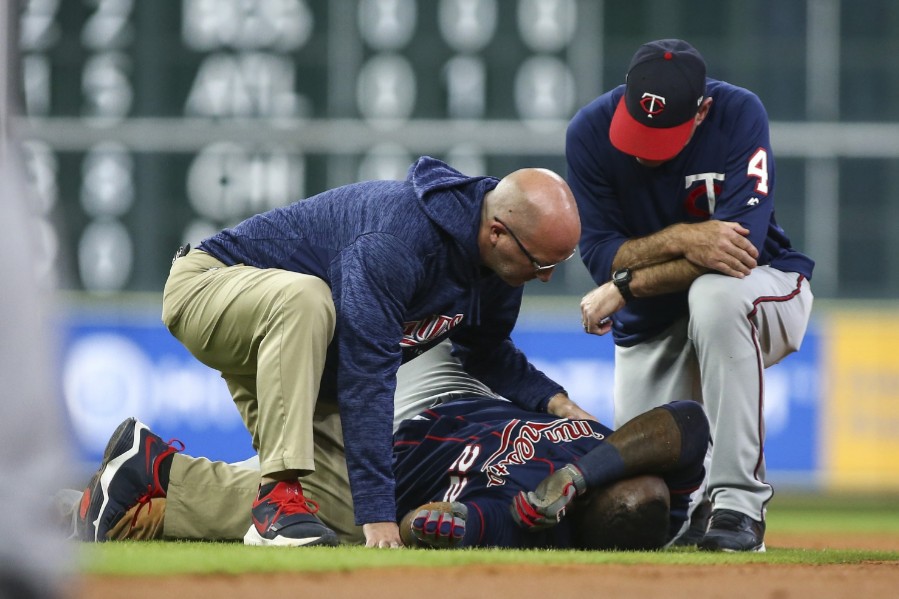 First of all, in this stats oriented sports era you can find numbers to quantify virtually anything within the game. In 2017, Roster Resource came up with a very interesting metric to show which teams have been hit hardest by injuries, as explained here by Jason Martinez. It’s called Roster Effect Rating and its formula takes into account a player’s projected value to his team and the number of days that he has spent in the DL. It’s pretty neat. To exemplify, the Angels had the highest Roster Effect Rating in the majors last year, with 16.97. They weren’t the team with the most DL stints (they ranked third, with 32), but among the 23 players they’ve had going to the DL last year, three of them were extremely valuable: Mike Trout, Andrelton Simmons and Shohei Ohtani spent 54 days sidelined. The team that suffered the least with injuries during 2018 were the Astros, having the smallest Roster Effect Rating of the MLB with 3.44 and the second fewest trips to the DL, with 17. So, how much did injuries affect the Twins last year? More than twice as much in comparison with the year before. To be more exact, 2.3 times more. Two years ago, no more than 16 Twins players went to the DL. And the most important players to do so didn’t stay there for long, with the exception of Miguel Sanó. He practically missed the final month and a half of the season, totaling 40 days out of action. Joe Mauer, Byron Buxton, Jason Castro and Robbie Grossman didn’t spend more than 18 days on the DL. Overall, Minnesota had a Roster Effect Rating of only 3.93, which ranked as MLB’s ninth smallest. But that was about to change. It certainly is too shallow to say that injuries were the biggest reason for the drop off in 2018, but they absolutely took quite a toll. According to the DL Tracker, Minnesota’s most missed player was Byron Buxton, who spent 58 days recovering from a fractured toe and a sore wrist, not to mention the strong migraines. If by any chance some of us don’t remember, Buxton was the position player with the second highest fWAR of the Twins in 2017, with 3.5. Right after him in 2018 there’s Ervin Santana, who spent the second most amount of time on the DL with 286 days as he was recovering from finger surgery. Santana was one of the most important players of the 2017 campaign, tying with José Berríos for most fWAR among pitchers, with 2.9. Two of the additions that came to the Twins via free agency also were sidelined for quite a while last year. Logan Morrison was out of action for 184 days, whereas Addison Reed couldn’t play for 18 days. The 2017 Twins had only five players who spent 100 or more days on the DL, with none of them spending more than 183. In 2018 they had six such players, with four of them going over 200 days. Still comparing the last two seasons, Spotrac shows that last year Twins players spent a total of 1,099 days on the DL, with those players accounting for $33,774,552 in salary. The year before that, they had had 942 days and the club had spent $14,184,723 on those players. Needless to say, the Twins had a much worse record, going from 85-77 to 78-84. It’s hard to say how many of those extra seven losses came as a result of those injuries, but it’s impossible to deny they did contribute a lot. But it seems like this year the club is working on the best way to prevent injuries having such a big impact, which is investing in depth. Opening Day is very far away and the roster will (hopefully) still be improved. There are many ways to do so. But if we take a look at the roster they way it’s designed right now, we can tell that it is deep in most of its areas. Position players Of the nine positions, only three of them have only one player listed, which are 3B, RF and DH. But that shouldn’t be an issue, given the multitude of players who can fill in, especially in the OF, which is currently carrying seven players. All of the others have at least two players available. Catchers: Jason Castro, Mitch Garver, Willians Astudillo First basemen: C.J. Cron, Tyler Austin Second basemen: Jonathan Schoop, Ronald Torreyes, Luis Arraez Shortstops: Jorge Polanco, Ehire Adrianza, Nick Gordon Third basemen: Miguel Sanó Right fielders: Max Kepler Center fielders: Byron Buxton, Jake Cave, Zack Granite, Michael Reed Left fielders: Eddie Rosario, LaMonte Wade Designated hitters: Nelson Cruz We always hope that nothing bad happens, but using 2018 as an example, we would have gladly welcomed the Astudillo-Garver duo instead of Bobby Wilson for 47 games, after Castro had a season ending surgery. Buxton was deeply missed, but having Cave right out of the gate could have been much better in comparison with Ryan LaMarre for 34 games. Besides Cron, Austin and Astudillo have also given some nice indications that they could fill in decently in the event of a (God forbid!) Nelson Cruz injury. Last year, while Morrison suffered with injuries, Robbie Grossman was having a nothing-better-than-average first half of the season. So things look, at least in theory, a bit better this year. Pitchers Starting Pitchers: José Berríos, Kyle Gibson, Jake Odorizzi, Michael Pineda, Martín Pérez Starting depth: Adalberto Mejía, Fernando Romero, Stephen Gonsalves, Zack Littell, Kohl Stewart, Lewis Thorpe Relief pitchers: Trevor May, Taylor Rogers, Addison Reed, Blake Parker, Trevor Hildenberger, Tyler Duffey, Matt Magill, Gabriel Moya, Andrew Vasquez The fight for a spot in the Twins rotation probably hasn’t been this fierce in years. The Pérez signing was tricky, but we have tried to show how he could represent good backend of the rotation help. Really, it’s even confusing to try to work out the Twins pitching staff right now. There are literally too many options. Minnesota currently carries more than two rotation's worth of starting pitchers. Of course, Pineda and Pérez are question marks at this point, but Mejía (who doesn’t have minor league options left, so would have to start the year out of the bullpen, if not DFA’d) is hungry to prove he belongs in the rotation. The same works for Romero. The bullpen is also crowded, with the players I’ve listed as depth being all options as well. A lot of good arms will have to start the year in Triple-A Rochester. And that’s exciting, if you think about it. Rocco Baldelli can complain about many things, but slim pickings is not one of them. Most of Twins fans are mad because of the front office’s lack of bold moves that we believed they could’ve done. But let’s tip our hats to their construction of a better and deeper roster, as of now.
 -
Just last week, in his article about Trevor Hildenberger’s role with the Twins this year, Tom Froemming mentioned how many Comeback Player of the Year Award candidates the Twins have for 2019. One of them is Jorge Polanco, who appears to be a bit under the radar in a lot of Twins fans discussions. But I think he is bound to surprise a lot of people that may have been taking him for granted.Last year’s 80-game suspension for testing positive for Stanozolol might have done a number on Polanco’s reputation in the eyes of many Twins fans. It wouldn’t be crazy to assume the same for part of the club ownership and front office. It’s not crazy to imagine he might be one of the main trade pieces Minnesota has, but that might also be true for a lot of guys, such as Max Kepler, Eddie Rosario, Byron Buxton and Miguel Sanó. Perhaps not giving “Chulo” a chance to prove he belongs in the Twin Cities could be too hasty. Even playing only a half season last year – by the way, he played 77 out of 82 possible games – Polanco managed to post some of the team’s best rate-based numbers. He slashed .288/.345/.427, which would have tied Rosario for best batting average, ranked third in on-base percentage and fourth in slugging. Back in 2017, Polanco had a terrible year for most of the season, but then he rose after the trade deadline and had an outstanding second half. He slashed .293/.359/.511 in his final 63 games of that year, including an astonishing .373/.413/.686 in 27 August games, with 10 of his 13 total home runs coming after Aug. 1. He also got on base twice in the Twins' only postseason game since 2010. When putting together Polanco’s numbers since Aug. 1, 2017, you find out that he has been one of Minnesota’s best bats. In 567 PA since then (132 games) he slashed .299/.358/.478, with 16 home runs, 84 RBIs and a 125 wRC+. Granted, his defense is still below average and his 7.8% BB% and 16.6% K% aren’t great either, but for comparison's sake, those last numbers are better than Rosie’s (5.1% BB%, 17.6 K%). Polanco is all but a lock to start at shortstop as of now. Ehire Adrianza and Ronald Torreyes are the only other two shortstops on the roster. Despite his somewhat weak defense, which did improve a bit with his UZR going from -4.7 to -3.9 over the last two years, Polanco still appears to be a good investment, especially when you notice he’s only 25. There’s a lot of room for improvement. Above all, there’s no one on this team who seems better qualified for a leadoff spot in the lineup. He’s a perfect fit. But What Could Stand in Polanco's Way? We all know Polanco is also a great asset, but with the shortstop position looking very healthy down on the farm (MLB ranked Royce Lewis as the second best shortstop prospect in the game), it’s hard to see Polanco staying in a Twins uniform for the remainder of his career... at least as a shortstop. Rocco Baldelli could well try to test Polanco as a second baseman, whenever Jonathan Schoop is hurt or resting, but that hasn’t been done by Paul Molitor since he came up to the majors. Not only are there long term alternatives at shortstop, such as Lewis and Wander Javier, a couple of other factors might affect his presence this year. For starters, one of the organization’s top prospects, Nick Gordon, could get a shot at the big leagues during this year. After thriving through all the minor league levels, Gordon had an uncharacteristic bad stint right after being promoted to Triple-A, slashing .212/.262/.283 in 99 games with the Red Wings. But he is using that as motivation. “I definitely feel like even with the struggles that I had, I learned a lot in Triple-A and it humbled me down to, ‘It’s about every game, it’s about every pitch, it’s about every play,'” Gordon said during an MLB Rookie Career Development Program, as posted by Twins beat writer By Do-Hyoung Park. “Ever since the season ended, there’s been that hunger and that drive. It feels like I have something to prove.” Similar to Polanco, Gordon too can play both shortstop and second base, but chances are when he is promoted, he might take at-bats away from Polanco more than Schoop. But that also depends on how each player performs. Another possibility, although there is only a remote chance of this happening, is that the Twins replace Polanco with an outside addition. ESPN has speculated that Minnesota could be one of the mystery teams in on Manny Machado. Having Machado with the Twins would be incredible, but not a simple fit. Who’s the odd man out for him to be in the team? Play him at third base, move Sanó to first and let go of Cron or Austin? Play him at shortstop, bench Polanco and cut Adrianza or Torreyes? There’s a lot of thinking involved. But again, not many people believe those Machado rumors. What do you think? Leave a comment and let us know. Click here to view the article
-
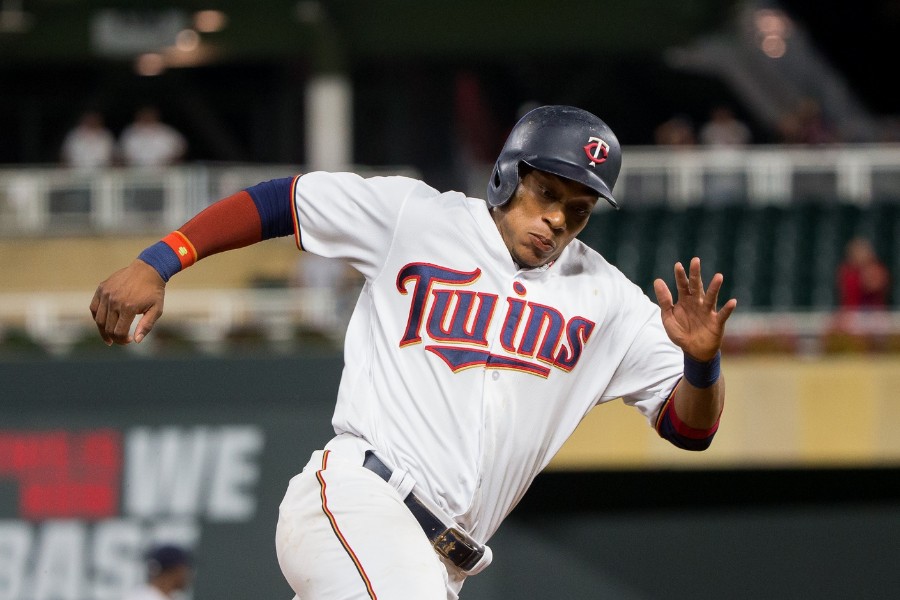 Last year’s 80-game suspension for testing positive for Stanozolol might have done a number on Polanco’s reputation in the eyes of many Twins fans. It wouldn’t be crazy to assume the same for part of the club ownership and front office. It’s not crazy to imagine he might be one of the main trade pieces Minnesota has, but that might also be true for a lot of guys, such as Max Kepler, Eddie Rosario, Byron Buxton and Miguel Sanó. Perhaps not giving “Chulo” a chance to prove he belongs in the Twin Cities could be too hasty. Even playing only a half season last year – by the way, he played 77 out of 82 possible games – Polanco managed to post some of the team’s best rate-based numbers. He slashed .288/.345/.427, which would have tied Rosario for best batting average, ranked third in on-base percentage and fourth in slugging. Back in 2017, Polanco had a terrible year for most of the season, but then he rose after the trade deadline and had an outstanding second half. He slashed .293/.359/.511 in his final 63 games of that year, including an astonishing .373/.413/.686 in 27 August games, with 10 of his 13 total home runs coming after Aug. 1. He also got on base twice in the Twins' only postseason game since 2010. When putting together Polanco’s numbers since Aug. 1, 2017, you find out that he has been one of Minnesota’s best bats. In 567 PA since then (132 games) he slashed .299/.358/.478, with 16 home runs, 84 RBIs and a 125 wRC+. Granted, his defense is still below average and his 7.8% BB% and 16.6% K% aren’t great either, but for comparison's sake, those last numbers are better than Rosie’s (5.1% BB%, 17.6 K%). Polanco is all but a lock to start at shortstop as of now. Ehire Adrianza and Ronald Torreyes are the only other two shortstops on the roster. Despite his somewhat weak defense, which did improve a bit with his UZR going from -4.7 to -3.9 over the last two years, Polanco still appears to be a good investment, especially when you notice he’s only 25. There’s a lot of room for improvement. Above all, there’s no one on this team who seems better qualified for a leadoff spot in the lineup. He’s a perfect fit. But What Could Stand in Polanco's Way? We all know Polanco is also a great asset, but with the shortstop position looking very healthy down on the farm (MLB ranked Royce Lewis as the second best shortstop prospect in the game), it’s hard to see Polanco staying in a Twins uniform for the remainder of his career... at least as a shortstop. Rocco Baldelli could well try to test Polanco as a second baseman, whenever Jonathan Schoop is hurt or resting, but that hasn’t been done by Paul Molitor since he came up to the majors. Not only are there long term alternatives at shortstop, such as Lewis and Wander Javier, a couple of other factors might affect his presence this year. For starters, one of the organization’s top prospects, Nick Gordon, could get a shot at the big leagues during this year. After thriving through all the minor league levels, Gordon had an uncharacteristic bad stint right after being promoted to Triple-A, slashing .212/.262/.283 in 99 games with the Red Wings. But he is using that as motivation. “I definitely feel like even with the struggles that I had, I learned a lot in Triple-A and it humbled me down to, ‘It’s about every game, it’s about every pitch, it’s about every play,'” Gordon said during an MLB Rookie Career Development Program, as posted by Twins beat writer By Do-Hyoung Park. “Ever since the season ended, there’s been that hunger and that drive. It feels like I have something to prove.” Similar to Polanco, Gordon too can play both shortstop and second base, but chances are when he is promoted, he might take at-bats away from Polanco more than Schoop. But that also depends on how each player performs. Another possibility, although there is only a remote chance of this happening, is that the Twins replace Polanco with an outside addition. ESPN has speculated that Minnesota could be one of the mystery teams in on Manny Machado. Having Machado with the Twins would be incredible, but not a simple fit. Who’s the odd man out for him to be in the team? Play him at third base, move Sanó to first and let go of Cron or Austin? Play him at shortstop, bench Polanco and cut Adrianza or Torreyes? There’s a lot of thinking involved. But again, not many people believe those Machado rumors. What do you think? Leave a comment and let us know.
 -
Congratulations Baby! I am proud for you Love you Ana Kelly Martins Rabelo
-
Agreed, but who would this guy be at this point? If they go after Kimbrel, nothing less than a fortune will be required, with the downside of his age being a risk. And would Cody Allen alone provide this adequacy to the pen? The FO chose Parker possibly because of the price, I have a hunch they're not willing to sign big contracts at this point, but I could be wrong...
-
Thank you very much for the time reading it, sir! Yes, also Pressly started to crumble down after an ASG worthy start because of overuse from Molitor. We can only hope that Rocco will change that.
-
You're absolutely right. Last year's rotation was mostly a mess, with the clear exceptions being Berríos and Gibby, so maybe that's one of the reasons a lot of good RP's had bad seasons. My only different thought here is that I would give Mejía the #5 spot of the rotation instead of Romero and use the latter as a RP, because I really think he could be extraordinary coming out of the pen.
-
Thank you so much, Ben! God bless you!
-
The MLB offseason is far from over. It’s possible the Twins could sign Adam Ottavino or Cody Allen in the coming days, I’d be glad if that happened, but for the purpose of this article let’s just assume the club is willing to head to spring training only with the current available arms. Is this group of relievers good enough to take Minnesota’s bullpen to the next level?Simply the arrival of new pitching coach Wes Johnson, who led the Arkansas Razorbacks to a 3.58 ERA in two seasons with the program, and the return of catcher Jason Castro to the team are surely going to make a huge difference for the Twins. Here are some other factors that could result in the bullpen becoming a solid unit in 2019. Players who can bounce back After an awful 2018 overall, there are at least two pitchers who could be expected to bounce back this year considering their track records. Both of them had quality numbers not long ago, but are coming off rather bad seasons in 2018. Addison Reed, who is in the last year of his two-year, $16.75 million contract, could be the greatest lift for this staff. He had a disappointing season last year, but even then he’s shown signs of the good pitcher he had been before. During his first 31 games of the season, Reed posted a 3.03 ERA with 8.6 K/9. But then, in the remaining 24 games he appeared on the mound, he had a 6.56 ERA. He had a 4.50 ERA on the year, his worst since 2012. There isn’t much statistical evidence that shows he would improve much in 2019. FanGraphs projects that he will have a worse ERA of 4.90 and fWAR of -0,1 (which would be an improvement in comparison with the -0,2 he had in 2018). But I think it’s safe to say that a pitcher with a career ERA of 3.53, who had had three consecutive solid seasons before last year, is not meant to have another terrible year. Reed's velocity has dropped considerably from 2017 (92.8 vFA) to 2018 (91.3 vFA), but possibly that’s due to the fact that he dealt with a triceps injury in late June, which had him go to the DL for most of July. When he came back, he posted a 3.60 ERA in the last 14 games of the year. Trevor Hildenberger is another player poised to have a good 2019. Most Twins fans are still patient with him because he had a stellar start of his career in 2017 and maintained that performance (or maybe improved it) during the first half of 2018. In the first 42 games of last year, Hildy posted a 2.80 ERA, held opponents to a .201 batting average and posted a 9.2 K/9. But just like Reed, his performance plummeted down after mid-July. In the remainder of the season, he had a 9.64 ERA, giving him a 5.42 ERA on the year. Unlike Reed, he is projected to improve a lot this year. FanGraphs estimates that in 2019 his ERA will improve to 4.04 and his fWAR will rise from 0.0 to 0.2. Those numbers aren’t great, but projections aren’t perfectly accurate. If the previous months of his career are an indicator, that rough finish to 2018 was nothing but an accident. Both Reed and Hildenberger were missed a lot in the second half of last year, but I think they aren’t done at all. If they manage to recover, the Twins bullpen will see a great improvement. But a lot also depends on the next category of players. Maintaining their performance Four of the Twins’ current relievers had very solid 2018 seasons: Taylor Rogers, Blake Parker, Trevor May and Matt Magill. If they manage to keep the same kind of numbers this year, Minnesota will be able to achieve consistency from its bullpen. Rogers is the stud of the relief group, having had an amazing season. He posted a team-best 2.63 ERA, 2.33 FIP and 1.9 fWAR. Such numbers are in consonance with his previous two seasons in the majors and his entire minor league career. Nothing ralistically indicates that he is about to have a bad season this upcoming year. Parker joins the Twins on a very cheap, basically no-risk contract. He signed with Minnesota for one year, with a salary of $3.2 million. If he manages to maintain the same level from the last couple of seasons, the Twins got themselves a pretty good deal. He arrives in Minnesota after two absolutely solid years with the Angels. In both he’s reached at least 66 1/3 innings, posting a 2.90 ERA and 3.55 FIP, with 10.5 K/9. Parker’s 2017 was stellar, whereas his 2018 was “just good”. But even that “just good” would work for the Twins. He turns 34 in June and since he has prior closing experience, he is possibly the main candidate to take over ninth inning duties. The 29-year-old Magill had his breakout with the Twins last year, having started his stint with the club in late April. He went on to appear in 40 games, striking out 56 batters in 56 2/3 innings. During his first 15 games in the majors, he managed to keep a below 2.00 ERA. In 17 of his 40 games he pitched more than an inning, making him one of the most dependable men out of the bullpen in 2018. It’s uncertain if he will remain with the club after Parker’s signing, but he certainly did a decent job last year. After spending 2017 recovering from Tommy John Surgery, May came back strong to the Twins. Even appearing in only 24 games in the year, he managed to get 0.5 fWAR, while also striking out 12.8 per nine. His velocity seemed virtually unchanged (94.4 vFA) in his return. It was a smaller sample, but 2018 was by far his best year in the majors. If he manages to repeat that this year, May could be another cornerstone from that bullpen. Converting starters into relievers Assuming the six aforementioned cases work out the way they could, the Twins would have one or two spots to fill. That’s exactly where most fans would like to see a big free agent signing. But, if they decide to work with one of their in-house options, what would be the best way to go? They could hand over the job to one of the young pitchers currently in the 40-man roster, such as Andrew Vasquez, Lewis Thorpe, Gabriel Moya or John Curtiss. But there might be another safer and more effective way. Two young starters could become relievers and provide a strong help out of the pen. Zack Littell hasn’t had very long to show his stuff in the majors, having pitched only eight games for the Twins last year. But one thing was clear: He’s done a much better out of the bullpen than as a starter/opener. In 13 1/3 innings out of the pen, he’s had a 4.05 ERA. He could get another shot in 2019 if the Twins decide to use a 13-man pitching staff. His ERA is projected to improve from 6.20 last year, to 4.62 this year. On the other hand, if the club decides to use 12 arms, then the most appealing option would be converting Fernando Romero to reliever. The young Dominican had an amazing first stint in the majors. He had 11 starts for the Twins and has finished the first year with a modest 4.69 ERA, but that’s mainly due to a couple of really bad starts. In his first five starts, Romero posted 1.88 ERA while striking out 9.2 per nine. It’s uncertain how well he would do pitching out of the bullpen in the majors, given the fact that he’s done that very little during his minor league career. But, when he did, he was superb. He’s pitched only 18 1/3 innings as a reliever in the minors, but posted a 0.49 ERA. That’s definitely worth experimenting in the Majors. Now it’s your turn. What do you think? Can the Twins be competitive with the bullpen as it’s currently constructed? This is Thiéres Rabelo's debut article at Twins Daily. You can follow him on Twitter @TwinsBrasil. Click here to view the article
