



Tom Froemming
-
Posts
5,260 -
Joined
-
Last visited
-
Days Won
22
Content Type
Profiles
News
Minnesota Twins Videos
2026 Minnesota Twins Top Prospects Ranking
2022 Minnesota Twins Draft Picks
Minnesota Twins Free Agent & Trade Rumors, Notes, & Tidbits
Guides & Resources
2023 Minnesota Twins Draft Picks
The Minnesota Twins Players Project
2024 Minnesota Twins Draft Picks
2025 Minnesota Twins Draft Pick Tracker
2026 Minnesota Twins Draft Tracker: Picks & Bonuses
Forums
Blogs
Events
Store
Downloads
Gallery
Everything posted by Tom Froemming
-
Hear ye, hear ye ... 'tis time to size up this year's candidates for Sire of Fort Myers.What is this? The whole idea behind Sire of Fort Myers is to inject some more fun into Spring Training by manufacturing another storyline to follow. That’s it, really. Have fun and don’t overthink it. This honor is bestowed upon the player who performs the best, not necessarily the one most likely to break camp with the big club. It just so happens that the previous two winners — Ryne Harper and Ryan LaMarre — did end up making the Opening Day roster. Download attachment: maxresdefault.jpg Who is eligible? 1. Anybody who’s not on the 40-man roster, regardless of prior MLB experience. OR 2. Anyone who hasn’t made their MLB debut. These rules are dictated by ancient scrolls discovered during the founding of Fort Myers back in 1885. Sorry if you have any complaints, it’s outta my hands. Edwar Colina, Travis Blankenhorn and Alex Kirilloff are all ineligible because they appeared in one game with the Twins last year. Kirilloff’s performance this spring might be the biggest spring storyline as is, so even though there was a possibility to use his postseason debut as a loophole, the committee (myself and five very agreeable Twins bobbleheads) has ruled him to be ineligible. Who are this year’s top contenders? A lot of guys who were mentioned in Nash Walker’s projected St. Paul Saints roster. So, if you’re excited about the Triple-A club being in St. Paul this year, that’s all the more reason to keep an eye on these guys. The player who sticks out to me as the top candidate is outfielder Keon Broxton, who has more than 1,000 MLB plate appearances to his credit. He put together one great season, it just happened to be between two actual seasons. From the second half of 2016 through the first half of 2017, Broxton hit .250/.338/.481 (113 wRC+) with 22 homers and 33 steals in 132 games for the Brewers. I could see Broxton stringing together a hot month in Florida, but it’s worth pointing out frontrunners have not impressed in years past. Last spring it was Jhoulys Chacin, who gave up six earned runs in eight innings pitched before camp was shut down. Utility man Tzu-Wei Lin and catcher Tomás Telis stick out to me as other minor league veteran hitters who could impress. They should both see plenty of playing time. With Royce Lewis out due to a torn ACL, Trevor Larnach is the highest-profile prospect eligible this year. He was building a strong case for the crown last spring, hitting .333/.467/.708 in 30 Grapefruit League plate appearances. I think there’s a lot of incentive to give Gilberto Celestino a lot of looks this spring, so he too could emerge as a candidate. If you’re looking for prospect info, check out our 2021 list. One of the most difficult things to project is who is going to get enough playing time to impress. I don’t suspect any of these guys will log enough innings to build a strong enough resume: Jordan Balazovic, Jhoan Duran, Bailey Ober, Charlie Barnes, Griffin Jax, Matt Canterino, Josh Winder. It’s quite possible I’m way off-base here, we’ll see, I just expect teams to be very careful with their starting pitching prospects this year. I'd love to see Nick Gordon build a strong case. After dealing with injuries and illness the past couple years it would be nice to see him gaining momentum again. MLB.com's Do-Hyoung Park reported the team will be easing Gordon back in, however, so it seems unlikely he'll be a top contender. Dakota Chalmers is another prospect who’s been through a lot. I could see the Twins converting him to the bullpen and giving him a lot of looks this spring. I guess another way to put it is I could see him being this year’s Jorge Alcala. Speaking of which, the bullpen probably represents the biggest area of opportunity for a player to build a Sire of Fort Myers resume. The Twins snuck Ian Hamilton, Ian Gibaut and Brandon Waddell all through waivers this winter. Fellow former major leaguers Glenn Sparkman, Derek Law, Danny Coulombe, Juan Minaya, Andrew Albers and Luke Farrell will also be in the mix (those names are ordered by the MLB innings they have to their credit, by the way). I’m going with Hamilton and Law as the two guys I find most intriguing in that bullpen group, but I wouldn’t bet against any one of them breaking out. This Twins regime has had a lot of success with these types. Chances are pretty good the eventual winner comes out of nowhere. Nobody saw LaMarre or Harper coming. Last year, Caleb Thielbar was shaping up to be a finalist prior to the shut down. For more info on all the non-roster invitees, check out Seth’s article on the Spring Training non-roster invitees. SEE ALSO Timeline for Top Prospects: 2021 Edition A Good Comp for Jhoan Duran and His Splinker Predicting Minnesota’s 4 Potential Breakout Players in 2021 Service Time: Fixing What Is Clearly Broken Click here to view the article
-
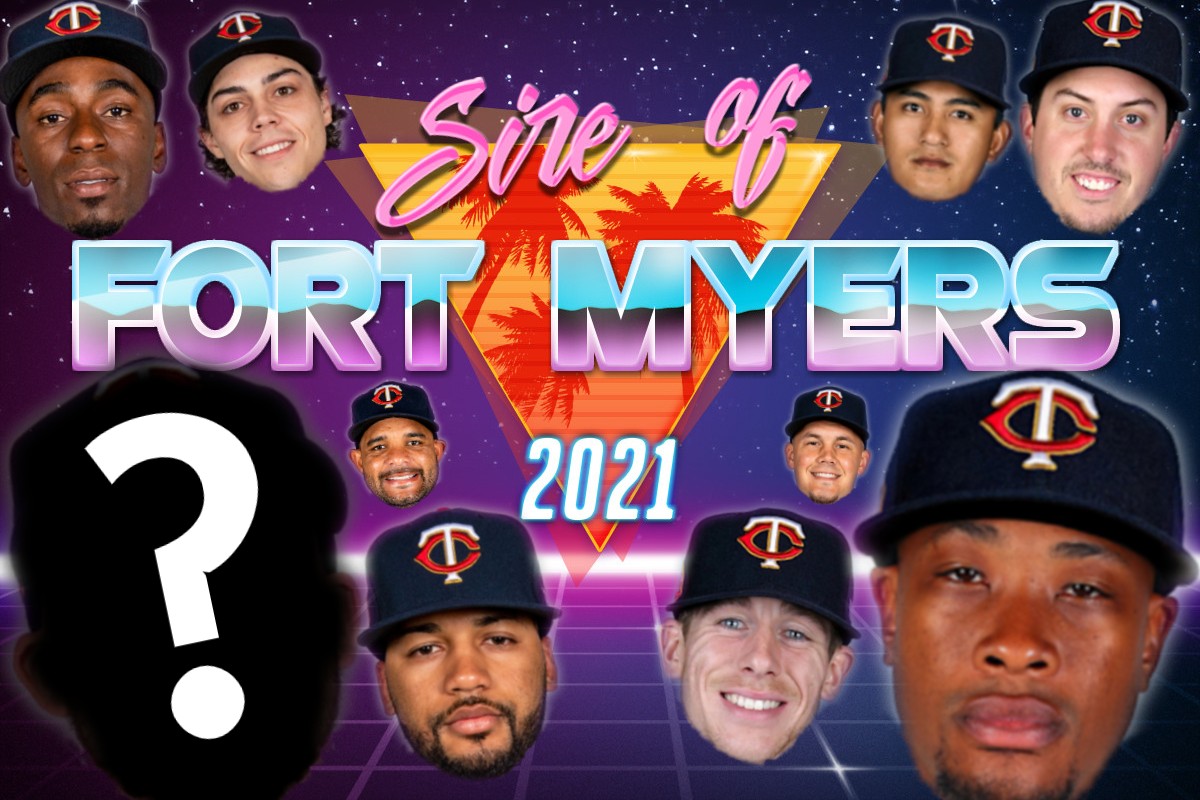 What is this? The whole idea behind Sire of Fort Myers is to inject some more fun into Spring Training by manufacturing another storyline to follow. That’s it, really. Have fun and don’t overthink it. This honor is bestowed upon the player who performs the best, not necessarily the one most likely to break camp with the big club. It just so happens that the previous two winners — Ryne Harper and Ryan LaMarre — did end up making the Opening Day roster. Who is eligible? 1. Anybody who’s not on the 40-man roster, regardless of prior MLB experience. OR 2. Anyone who hasn’t made their MLB debut. These rules are dictated by ancient scrolls discovered during the founding of Fort Myers back in 1885. Sorry if you have any complaints, it’s outta my hands. Edwar Colina, Travis Blankenhorn and Alex Kirilloff are all ineligible because they appeared in one game with the Twins last year. Kirilloff’s performance this spring might be the biggest spring storyline as is, so even though there was a possibility to use his postseason debut as a loophole, the committee (myself and five very agreeable Twins bobbleheads) has ruled him to be ineligible. Who are this year’s top contenders? A lot of guys who were mentioned in Nash Walker’s projected St. Paul Saints roster. So, if you’re excited about the Triple-A club being in St. Paul this year, that’s all the more reason to keep an eye on these guys. The player who sticks out to me as the top candidate is outfielder Keon Broxton, who has more than 1,000 MLB plate appearances to his credit. He put together one great season, it just happened to be between two actual seasons. From the second half of 2016 through the first half of 2017, Broxton hit .250/.338/.481 (113 wRC+) with 22 homers and 33 steals in 132 games for the Brewers. I could see Broxton stringing together a hot month in Florida, but it’s worth pointing out frontrunners have not impressed in years past. Last spring it was Jhoulys Chacin, who gave up six earned runs in eight innings pitched before camp was shut down. Utility man Tzu-Wei Lin and catcher Tomás Telis stick out to me as other minor league veteran hitters who could impress. They should both see plenty of playing time. With Royce Lewis out due to a torn ACL, Trevor Larnach is the highest-profile prospect eligible this year. He was building a strong case for the crown last spring, hitting .333/.467/.708 in 30 Grapefruit League plate appearances. I think there’s a lot of incentive to give Gilberto Celestino a lot of looks this spring, so he too could emerge as a candidate. If you’re looking for prospect info, check out our 2021 list. One of the most difficult things to project is who is going to get enough playing time to impress. I don’t suspect any of these guys will log enough innings to build a strong enough resume: Jordan Balazovic, Jhoan Duran, Bailey Ober, Charlie Barnes, Griffin Jax, Matt Canterino, Josh Winder. It’s quite possible I’m way off-base here, we’ll see, I just expect teams to be very careful with their starting pitching prospects this year. I'd love to see Nick Gordon build a strong case. After dealing with injuries and illness the past couple years it would be nice to see him gaining momentum again. MLB.com's Do-Hyoung Park reported the team will be easing Gordon back in, however, so it seems unlikely he'll be a top contender. Dakota Chalmers is another prospect who’s been through a lot. I could see the Twins converting him to the bullpen and giving him a lot of looks this spring. I guess another way to put it is I could see him being this year’s Jorge Alcala. Speaking of which, the bullpen probably represents the biggest area of opportunity for a player to build a Sire of Fort Myers resume. The Twins snuck Ian Hamilton, Ian Gibaut and Brandon Waddell all through waivers this winter. Fellow former major leaguers Glenn Sparkman, Derek Law, Danny Coulombe, Juan Minaya, Andrew Albers and Luke Farrell will also be in the mix (those names are ordered by the MLB innings they have to their credit, by the way). I’m going with Hamilton and Law as the two guys I find most intriguing in that bullpen group, but I wouldn’t bet against any one of them breaking out. This Twins regime has had a lot of success with these types. Chances are pretty good the eventual winner comes out of nowhere. Nobody saw LaMarre or Harper coming. Last year, Caleb Thielbar was shaping up to be a finalist prior to the shut down. For more info on all the non-roster invitees, check out Seth’s article on the Spring Training non-roster invitees. SEE ALSO Timeline for Top Prospects: 2021 Edition A Good Comp for Jhoan Duran and His Splinker Predicting Minnesota’s 4 Potential Breakout Players in 2021 Service Time: Fixing What Is Clearly Broken
 -
 The next prospect on our list is an advanced left-handed hitter on the verge of contributing to the Major League club in 2021. How much fun is it that description fits multiple players in this system right now?Position: RF Age: 23 (DOB: 2/26/1997) 2019 Stats (A+/AA): 542 PA, .309/.384/.458, 13 HR, 66 RBI ETA: 2021 2020 Ranking: 3 National Top 100 Rankings BA: 39 | MLB: 80 | ATH: NR | BP: 83 | ESPN: 37 | FG: 36 What’s To Like Plus strike-zone awareness, a barrel path to drool over and an impressive physical frame that produces easy power. Trevor Larnach is the real deal at the plate. Larnach appeared to be off to a blazing start last year, hitting .333/.467/.708 (1.175 OPS) in 13 games with the Twins before Spring Training was shut down. He likely would have opened the year in Double A and may have put himself in a position to make his MLB debut, depending on what opportunities opened up. Back in 2019, Larnach was the Twins Minor League Hitter of the Year after slashing .309/.384/.458 (.842 OPS) in 542 plate appearances, two-thirds of which came in the notoriously pitcher-friendly Florida State League. Here are some highlights from that season: Larnach is a big, strong guy, but his plate discipline tops anyone in the system, and may be as good as anybody in the entire org outside of Luis Arráez. Larnach would be the headline advanced bat in most systems, but he’s been overshadowed by Alex Kirilloff in that regard. Below is a video where I looked at the tale of the tape when it comes to these two stud Twins hitting prospects. What’s Left To Work On Let’s leave this one up to Keith Law of The Athletic, who did not include Larnach in his top 100 prospects list. From Law’s top 20 Twins list: “He’s hit for average in pro ball with moderate power, mostly going the other way, which was a concern some scouts had on him in college as well — that he couldn’t pull pitches inside, and that would be how pitchers would attack him.” This is not a new observation, but it’s one that persists. It’s entirely possible Larnach has made great strides over the past year in his ability to turn on a pitch, we just haven’t had the opportunity to see it. Given the choice, I’d always bet on a hitter who can use the entire field learning how to hunt some pitches inside than a pull-happy hitter learning to take pitches the other way. That’s not to dismiss Law’s concern about Larnach’s swing, I’m just less concerned about that being what caps Larnach’s overall offensive upside. Launch, who turns 24-years-old this Friday, has other deficiencies, but they mostly are what they are at this point. He’s never going to be a huge asset on the bases or in the field, though he does have a strong arm. Staying in shape and working on the finer things will keep him in the grass and prevent a move to first base becoming necessary in the future. What’s Next? Forcing the issue. Larnach will be MLB ready sometime this year, but the Twins have many other corner outfield options and little incentive to add him to the 40-man roster. He’s going to need to create his own opportunity in 2021. Eddie Rosario being non-tendered cleared some immediate space, but the Twins still have multi-year commitments to Max Kepler and Miguel Sanó. While Nelson Cruz is back for 2021, he’s not going to play forever (well … probably not), so there should be room for Larnach in the not-too-distant future even if Kirilloff takes off. Larnach may also be an attractive piece on the trade market later this summer if the Twins are looking for other upgrades. With the staggered start — Triple A is slated to start in April, then every other level in May — it’s difficult to project what level a player may open the season. Larnach is among the non-roster invitees at Spring Training, so he may have an inside track for a spot on the St. Paul Saints, but given his place on the depth chart it wouldn’t surprise me if he stays back in Fort Myers and opens his season in Wichita. Twins Daily 2021 Top 20 Prospects Honorable Mentions 20. Bailey Ober, RHP 19. Jose Miranda, INF 18. Alerick Soularie, OF 17. Ben Rortvedt, C 16. Edwar Colina, RHP 15. Cole Sands, RHP 14. Misael Urbina, OF 13. Matt Wallner, OF 12. Brent Rooker, OF/1B 11. Gilberto Celestino, OF 10. Blayne Enlow, RHP 9. Matt Canterino, RHP 8. Aaron Sabato, 1B 7. Keoni Cavaco, SS 6. Jordan Balazovic, RHP 5. Jhoan Duran, RHP 4. Ryan Jeffers, C 3. Trevor Larnach, RF Stop by tomorrow for prospect #2! MORE FROM TWINS DAILY — Latest Twins coverage from our writers — Recent Twins discussion in our forums — Follow Twins Daily via Twitter, Facebook or email Click here to view the article
 -
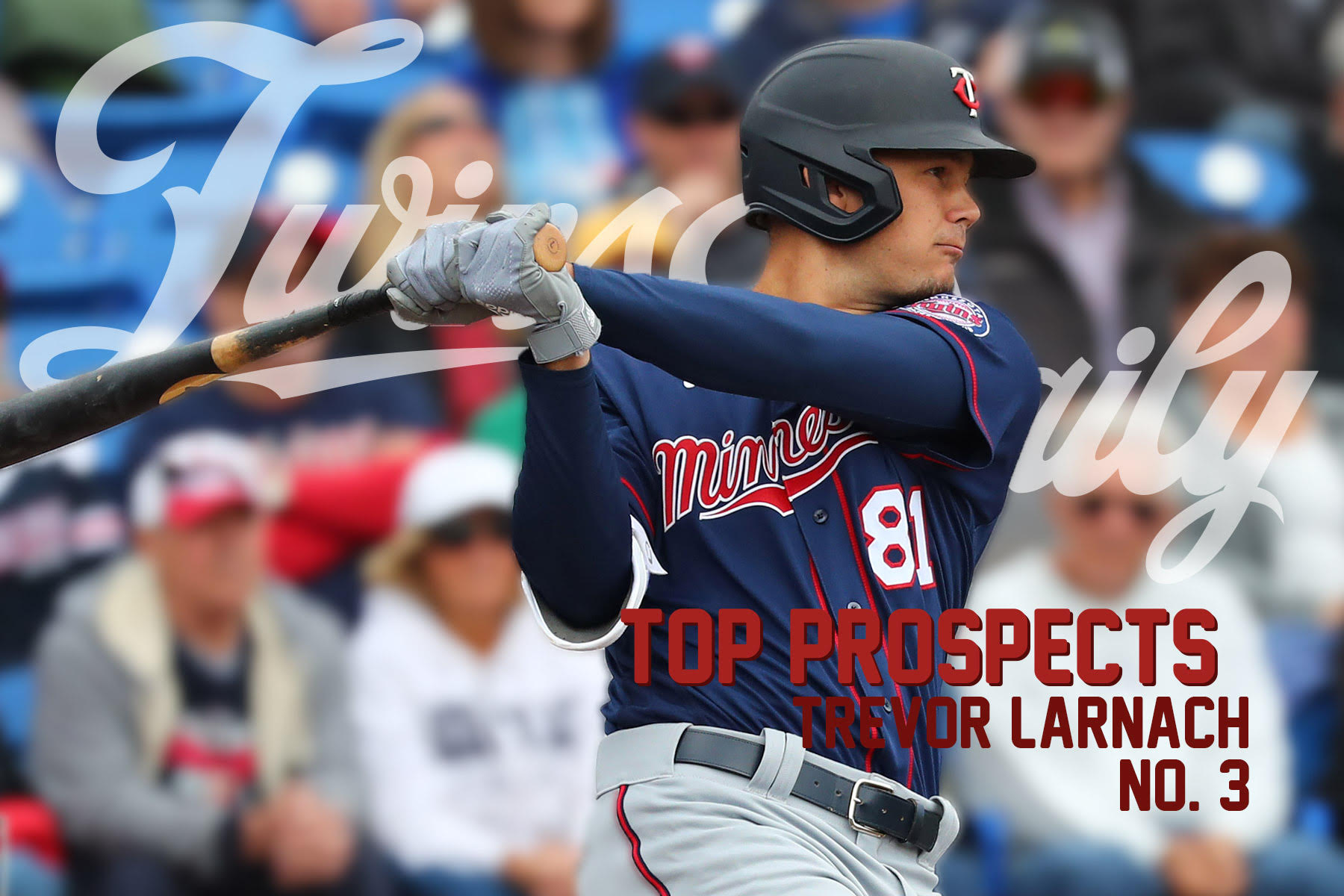 Position: RF Age: 23 (DOB: 2/26/1997) 2019 Stats (A+/AA): 542 PA, .309/.384/.458, 13 HR, 66 RBI ETA: 2021 2020 Ranking: 3 National Top 100 Rankings BA: 39 | MLB: 80 | ATH: NR | BP: 83 | ESPN: 37 | FG: 36 What’s To Like Plus strike-zone awareness, a barrel path to drool over and an impressive physical frame that produces easy power. Trevor Larnach is the real deal at the plate. Larnach appeared to be off to a blazing start last year, hitting .333/.467/.708 (1.175 OPS) in 13 games with the Twins before Spring Training was shut down. He likely would have opened the year in Double A and may have put himself in a position to make his MLB debut, depending on what opportunities opened up. Back in 2019, Larnach was the Twins Minor League Hitter of the Year after slashing .309/.384/.458 (.842 OPS) in 542 plate appearances, two-thirds of which came in the notoriously pitcher-friendly Florida State League. Here are some highlights from that season: Larnach is a big, strong guy, but his plate discipline tops anyone in the system, and may be as good as anybody in the entire org outside of Luis Arráez. Larnach would be the headline advanced bat in most systems, but he’s been overshadowed by Alex Kirilloff in that regard. Below is a video where I looked at the tale of the tape when it comes to these two stud Twins hitting prospects. What’s Left To Work On Let’s leave this one up to Keith Law of The Athletic, who did not include Larnach in his top 100 prospects list. From Law’s top 20 Twins list: “He’s hit for average in pro ball with moderate power, mostly going the other way, which was a concern some scouts had on him in college as well — that he couldn’t pull pitches inside, and that would be how pitchers would attack him.” This is not a new observation, but it’s one that persists. It’s entirely possible Larnach has made great strides over the past year in his ability to turn on a pitch, we just haven’t had the opportunity to see it. Given the choice, I’d always bet on a hitter who can use the entire field learning how to hunt some pitches inside than a pull-happy hitter learning to take pitches the other way. That’s not to dismiss Law’s concern about Larnach’s swing, I’m just less concerned about that being what caps Larnach’s overall offensive upside. Launch, who turns 24-years-old this Friday, has other deficiencies, but they mostly are what they are at this point. He’s never going to be a huge asset on the bases or in the field, though he does have a strong arm. Staying in shape and working on the finer things will keep him in the grass and prevent a move to first base becoming necessary in the future. What’s Next? Forcing the issue. Larnach will be MLB ready sometime this year, but the Twins have many other corner outfield options and little incentive to add him to the 40-man roster. He’s going to need to create his own opportunity in 2021. Eddie Rosario being non-tendered cleared some immediate space, but the Twins still have multi-year commitments to Max Kepler and Miguel Sanó. While Nelson Cruz is back for 2021, he’s not going to play forever (well … probably not), so there should be room for Larnach in the not-too-distant future even if Kirilloff takes off. Larnach may also be an attractive piece on the trade market later this summer if the Twins are looking for other upgrades. With the staggered start — Triple A is slated to start in April, then every other level in May — it’s difficult to project what level a player may open the season. Larnach is among the non-roster invitees at Spring Training, so he may have an inside track for a spot on the St. Paul Saints, but given his place on the depth chart it wouldn’t surprise me if he stays back in Fort Myers and opens his season in Wichita. Twins Daily 2021 Top 20 Prospects Honorable Mentions 20. Bailey Ober, RHP 19. Jose Miranda, INF 18. Alerick Soularie, OF 17. Ben Rortvedt, C 16. Edwar Colina, RHP 15. Cole Sands, RHP 14. Misael Urbina, OF 13. Matt Wallner, OF 12. Brent Rooker, OF/1B 11. Gilberto Celestino, OF 10. Blayne Enlow, RHP 9. Matt Canterino, RHP 8. Aaron Sabato, 1B 7. Keoni Cavaco, SS 6. Jordan Balazovic, RHP 5. Jhoan Duran, RHP 4. Ryan Jeffers, C 3. Trevor Larnach, RF Stop by tomorrow for prospect #2! MORE FROM TWINS DAILY — Latest Twins coverage from our writers — Recent Twins discussion in our forums — Follow Twins Daily via Twitter, Facebook or email
 -
Here are some visuals ...
-
Twins Daily 2021 Top Prospects: #7 SS Keoni Cavaco
Tom Froemming replied to Tom Froemming's topic in Twins Minor League Talk
For me, prospect lists are about forecasting the future, and if you're doing it well, you don't have guys bobbing all around your rankings year-to-year. Of course if things change, if you see something that causes your evaluation of the player to shift, you make the appropriate change in your rankings. Really from this spot on down through the 15 or so range, there is not a lot differentiates those guys. I'd still keep Cavaco over them maybe because I put more emphasis on future defensive home/profile. But, I want to stress again that he's nowhere even close to the top six for me. There's a big gap between these next guys on our list and Cavaco/etc. -
Yes, we are still high on Keoni Cavaco, our #7 Twins prospect for 2021. Let's take a look at what's to like (a lot), what's to work on (a lot) and what's next for the 19-year-old.Age: 19 (DOB: 6-2-2001) 2019 Stats (GCL): 92 PA, .172/.217/.253, 4 2B, 1 HR, 6 RBI ETA: 2025 2020 Ranking: 8 National Top 100 Rankings BA: NR | MLB: NR | ATH: NR | BP: NR What’s To Like If things go right, Cavaco will be the No. 1 prospect in this system before long. He has real five-tool potential. Keith Law of The Athletic noted that Cavaco has outstanding work ethic and said “the best bet is that he ends up a 20-25 homer guy at third (base) with above-average defense.” He’s a high-variance player, but there’s potential he beats even that optimistic projection. In June of 2019, the Twins selected Cavaco with the 13th-overall pick and gave him $4.05 million dollars. Not much has changed since in concern to his overall future outlook. Cavaco is fast, powerful and has a great arm. It is incredibly difficult to find players with the raw tools to play on the left side of the infield. The current state of the Twins org is a great example of that. Miguel Sanó and Jorge Polanco have been moved off their positions as the Twins have had to look outside the org for better, more athletic defenders at third base and shortstop. Yes, Cavaco had a very poor pro debut. That was discouraging, but it was also only 92 plate appearances. If you want a reason to look beyond that debut performance outside of it being a small sample, Cavaco was hampered by a minor injury, as mentioned in Keanan Lamb’s comments in Baseball Prospectus’ Twins list. A poor pro debut is not a death sentence. Torii Hunter hit .190/.283/.220 in his first 114 plate appearances as a professional back in 1993. Here’s hoping part of Hunter’s role as Special Assistant has been to provide guidance to Cavaco in how to overcome an initial obstacle. Cavaco just lost his age 19 season, which is unfortunate. Keep in mind, however, that Trevor Larnach hit .157/.271/.176 in 59 plate appearances during his age 19 season at Oregon State and Brent Rooker was redshirted his age 19 season at Mississippi State. The hit tool is Cavaco’s biggest question mark right now, but there’s no reason to abandon ship just yet. It’s much easier to get excited about prospects who are more advanced hitters that mash inferior competition, but again, so few players profile as shortstops or third basemen. Cavaco definitely gets a boost for his potential to deliver power at a premium position. What’s Left To Work On If things go wrong, Cavaco is going to struggle to stick in the top 10, even as this system begins to graduate some of its best prospects. There’s a lot going on here. Cavaco was always expected to be a project, so it wasn’t a shock that he didn’t hit the ground running. He never really had a long-term defensive home in high school, starting out at catcher, then moving to third base with some work at short and even a bit on the mound. Cavaco switched to exclusively playing shortstop with the GCL Twins. In addition to that adjustment, the Twins were also working with him to even out his swing and clean up the timing of his stride. It would have been great to see him get out on the field, but there was plenty Cavaco could work on without having to play in competitive games. A lot of progress could be made on these mechanical adjustments at home or at his local training complex. Sooner or later, however, it’s going to need to show up on the field. Even Cavaco’s biggest fans will have a difficult time digesting another performance as poor as his debut. Prospect lists are always about projecting the future but the tools need to show up on the diamond, at the very least in flashes. There’s a lot you can overlook in small sample sizes, but if Cavaco posts a strikeout rate around 38% again he’s not going to give his power and speed much of an opportunity to impress. The Twins are expected to provide Cavaco the opportunity to prove himself as a shortstop. He needs to iron out his footwork and improve his range to have a chance. As his body develops, he may just naturally trend toward third base no matter what. What’s Next? Play. Cavaco had a year to reset and focus on the mechanical adjustments necessary to take the next steps as both a hitter and a shortstop. It’s also been an opportunity to settle into his new frame, as he had a growth spurt late in high school. Now it’s time to put everything into practice. Cavaco participated in fall instructs, so that’s a plus. The nice thing about Cedar Rapids and Fort Myers flip-flopping levels is the first rung in the system is now right at the complex. I believe that will help most players transition, which could be especially difficult now that the lower levels of the minors have been eliminated. We should see Cavaco with the Mighty Mussels (formerly the Miracle) at some point this year, though the minor league schedule has yet to be finalized. A Final Note On Prospect Lists Putting players in order without additional context can lead to things being easy to misinterpret. There’s a gigantic gap between Cavaco and the #6 prospects in the system. Prospect rankings don’t properly illustrate these tiers. One spot difference can represent a razor-thin margin or a massive gap. Twins Daily 2021 Top 20 Prospects Honorable Mentions 20. Bailey Ober, RHP 19. Jose Miranda, INF 18. Alerick Soularie, OF 17. Ben Rortvedt, C 16. Edwar Colina, RHP 15. Cole Sands, RHP 14. Misael Urbina, OF 13. Matt Wallner, OF 12. Brent Rooker, OF/1B 11. Gilberto Celestino, OF 10. Blayne Enlow, RHP 9. Matt Canterino, RHP 8. Aaron Sabato, 1B 7. Keoni Cavaco, SS 6. Coming tomorrow! Click here to view the article
-
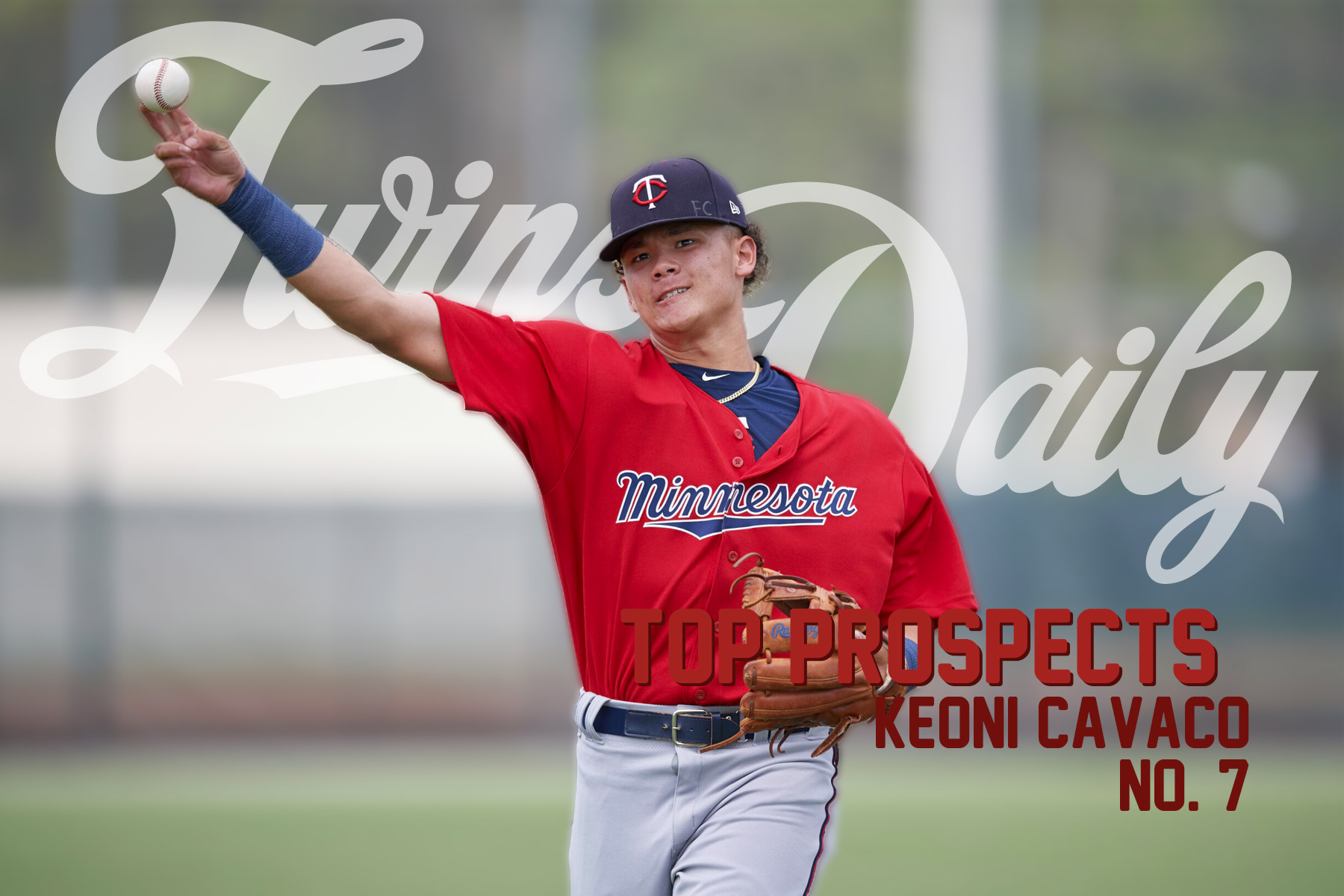 Age: 19 (DOB: 6-2-2001) 2019 Stats (GCL): 92 PA, .172/.217/.253, 4 2B, 1 HR, 6 RBI ETA: 2025 2020 Ranking: 8 National Top 100 Rankings BA: NR | MLB: NR | ATH: NR | BP: NR What’s To Like If things go right, Cavaco will be the No. 1 prospect in this system before long. He has real five-tool potential. Keith Law of The Athletic noted that Cavaco has outstanding work ethic and said “the best bet is that he ends up a 20-25 homer guy at third (base) with above-average defense.” He’s a high-variance player, but there’s potential he beats even that optimistic projection. In June of 2019, the Twins selected Cavaco with the 13th-overall pick and gave him $4.05 million dollars. Not much has changed since in concern to his overall future outlook. Cavaco is fast, powerful and has a great arm. It is incredibly difficult to find players with the raw tools to play on the left side of the infield. The current state of the Twins org is a great example of that. Miguel Sanó and Jorge Polanco have been moved off their positions as the Twins have had to look outside the org for better, more athletic defenders at third base and shortstop. Yes, Cavaco had a very poor pro debut. That was discouraging, but it was also only 92 plate appearances. If you want a reason to look beyond that debut performance outside of it being a small sample, Cavaco was hampered by a minor injury, as mentioned in Keanan Lamb’s comments in Baseball Prospectus’ Twins list. A poor pro debut is not a death sentence. Torii Hunter hit .190/.283/.220 in his first 114 plate appearances as a professional back in 1993. Here’s hoping part of Hunter’s role as Special Assistant has been to provide guidance to Cavaco in how to overcome an initial obstacle. Cavaco just lost his age 19 season, which is unfortunate. Keep in mind, however, that Trevor Larnach hit .157/.271/.176 in 59 plate appearances during his age 19 season at Oregon State and Brent Rooker was redshirted his age 19 season at Mississippi State. The hit tool is Cavaco’s biggest question mark right now, but there’s no reason to abandon ship just yet. It’s much easier to get excited about prospects who are more advanced hitters that mash inferior competition, but again, so few players profile as shortstops or third basemen. Cavaco definitely gets a boost for his potential to deliver power at a premium position. What’s Left To Work On If things go wrong, Cavaco is going to struggle to stick in the top 10, even as this system begins to graduate some of its best prospects. There’s a lot going on here. Cavaco was always expected to be a project, so it wasn’t a shock that he didn’t hit the ground running. He never really had a long-term defensive home in high school, starting out at catcher, then moving to third base with some work at short and even a bit on the mound. Cavaco switched to exclusively playing shortstop with the GCL Twins. In addition to that adjustment, the Twins were also working with him to even out his swing and clean up the timing of his stride. It would have been great to see him get out on the field, but there was plenty Cavaco could work on without having to play in competitive games. A lot of progress could be made on these mechanical adjustments at home or at his local training complex. Sooner or later, however, it’s going to need to show up on the field. Even Cavaco’s biggest fans will have a difficult time digesting another performance as poor as his debut. Prospect lists are always about projecting the future but the tools need to show up on the diamond, at the very least in flashes. There’s a lot you can overlook in small sample sizes, but if Cavaco posts a strikeout rate around 38% again he’s not going to give his power and speed much of an opportunity to impress. The Twins are expected to provide Cavaco the opportunity to prove himself as a shortstop. He needs to iron out his footwork and improve his range to have a chance. As his body develops, he may just naturally trend toward third base no matter what. What’s Next? Play. Cavaco had a year to reset and focus on the mechanical adjustments necessary to take the next steps as both a hitter and a shortstop. It’s also been an opportunity to settle into his new frame, as he had a growth spurt late in high school. Now it’s time to put everything into practice. Cavaco participated in fall instructs, so that’s a plus. The nice thing about Cedar Rapids and Fort Myers flip-flopping levels is the first rung in the system is now right at the complex. I believe that will help most players transition, which could be especially difficult now that the lower levels of the minors have been eliminated. We should see Cavaco with the Mighty Mussels (formerly the Miracle) at some point this year, though the minor league schedule has yet to be finalized. A Final Note On Prospect Lists Putting players in order without additional context can lead to things being easy to misinterpret. There’s a gigantic gap between Cavaco and the #6 prospects in the system. Prospect rankings don’t properly illustrate these tiers. One spot difference can represent a razor-thin margin or a massive gap. Twins Daily 2021 Top 20 Prospects Honorable Mentions 20. Bailey Ober, RHP 19. Jose Miranda, INF 18. Alerick Soularie, OF 17. Ben Rortvedt, C 16. Edwar Colina, RHP 15. Cole Sands, RHP 14. Misael Urbina, OF 13. Matt Wallner, OF 12. Brent Rooker, OF/1B 11. Gilberto Celestino, OF 10. Blayne Enlow, RHP 9. Matt Canterino, RHP 8. Aaron Sabato, 1B 7. Keoni Cavaco, SS 6. Coming tomorrow!
 -
Here are some highlights of an Enlow start in Cedar Rapids. Not his best outing, but one that shows a lot of his personality and character.
-
Our prospect list opens up with three guys who are already on the 40-man roster, a recent draftee and a player coming off a strong winter ball performance. Here are our Nos. 16-20 Twins prospects for 2021.20. Bailey Ober, RHP Age: 25 (DOB 7/12/1995) 2019 Stats: (Rk/A+/AA): 78.2 IP 0.69 ERA, 0.81 WHIP, 33.8 K%, 3.0 BB% 2020 Ranking: NR Ober was among the most impressive pitchers in the entire minor leagues in 2019. Over 78 2/3 innings, Ober allowed just six earned runs and nine walks while striking out 100 batters. He had the lowest ERA among all minor league pitchers with at least 50 innings, the best K:BB ratio among anyone with at least 70 innings and finished third in the voting for Twins Daily Minor League Starting Pitcher of the Year. Ober was selected by the Twins in the 12th round of the 2017 Draft out of the College of Charleston. He missed a year of college ball recovering from Tommy John surgery and made just 14 and 13 starts his first two full seasons in the minor leagues, respectively. I almost got through an entire blurb about Ober without mentioning it, but there’s no getting around the fact that this man’s sheer size is most definitely also noteworthy. He was added to the 40-man roster this offseason, and the Twins now officially list him at 6’9” and 260 pounds. To get to know Ober a little better, check out Seth’s interview with him from earlier this offseason. 19. José Miranda, 3B/2B Age: 22 (DOB 6/29/1998) 2019 Stats (A+/AA): 483 PA, .252/.302/.369 (.671 OPS), 8 HR, 11.2 K%, 5.0 BB% 2020 Ranking: 20 Miranda was one of the high school hitters taken early in the 2016 Draft, the final class under Terry Ryan. His 2019 stat line doesn’t jump off the page, but keep in mind he did post an above-average OPS for the Florida State League and was young for the level. He earned a promotion to Double A and went 3-for-5 in his lone regular season game with Pensacola before hitting .368/.429/.526 (.955 OPS) in five playoff games with the Blue Wahoos. Miranda’s 11.2 K% was the lowest in the system and 28th overall among all minor leaguers with at least 350 plate appearances in 2019. Strikeouts are bad, but so are weak ground balls and infield pop ups. He may benefit from being more selective earlier in counts, then adjusting back to his more natural contact-oriented approach with two strikes. Miranda helped Criollos de Caguas to a Puerto Rican Winter League title by posting .302/.377/.472 (.849 OPS) line and hit a three-run homer in the deciding game of the championship series. He then slumped in the Caribbean Series, but getting competitive games under his belt this winter will hopefully be the catalyst to a breakout 2021 season.
-
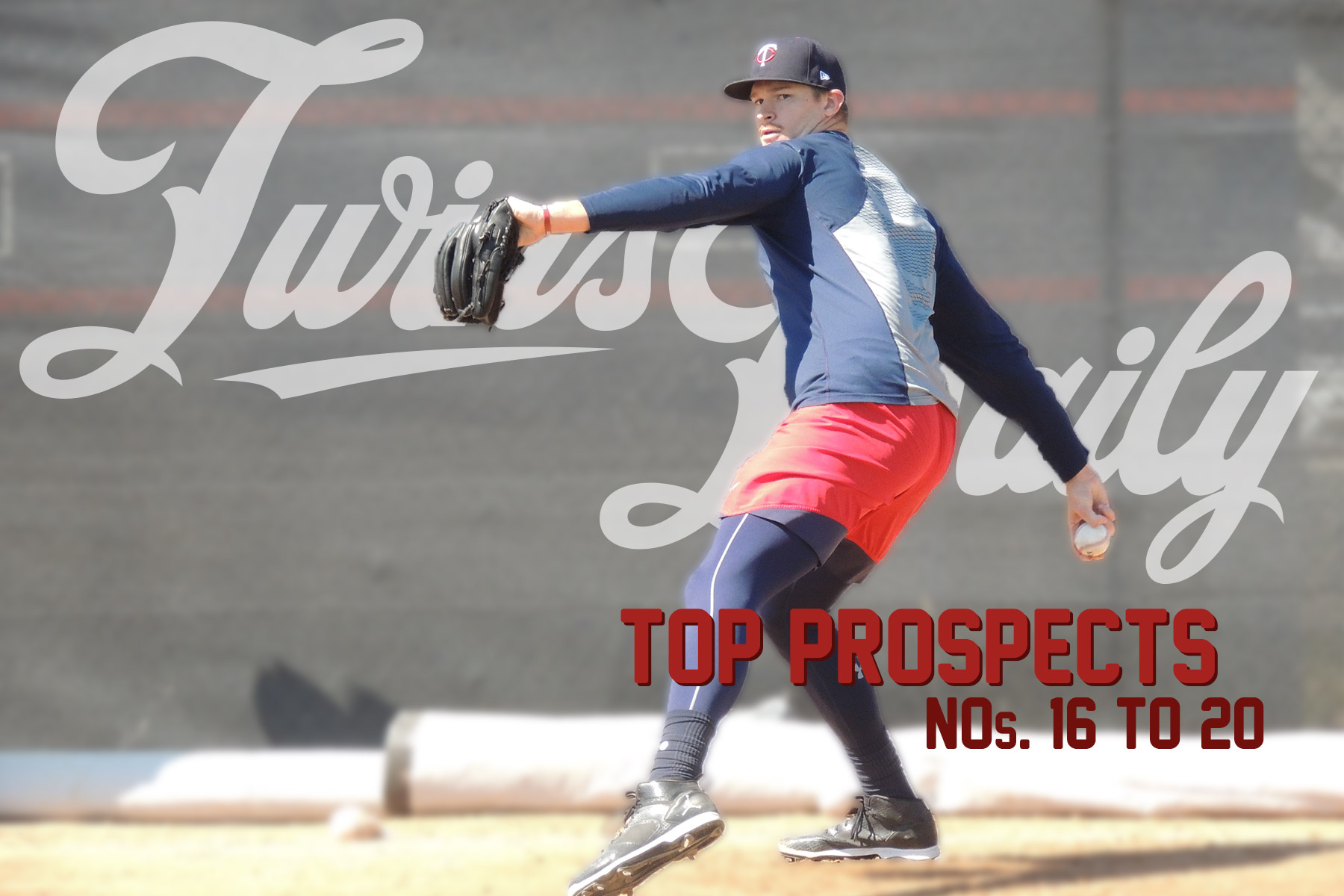 20. Bailey Ober, RHP Age: 25 (DOB 7/12/1995) 2019 Stats: (Rk/A+/AA): 78.2 IP 0.69 ERA, 0.81 WHIP, 33.8 K%, 3.0 BB% 2020 Ranking: NR Ober was among the most impressive pitchers in the entire minor leagues in 2019. Over 78 2/3 innings, Ober allowed just six earned runs and nine walks while striking out 100 batters. He had the lowest ERA among all minor league pitchers with at least 50 innings, the best K:BB ratio among anyone with at least 70 innings and finished third in the voting for Twins Daily Minor League Starting Pitcher of the Year. Ober was selected by the Twins in the 12th round of the 2017 Draft out of the College of Charleston. He missed a year of college ball recovering from Tommy John surgery and made just 14 and 13 starts his first two full seasons in the minor leagues, respectively. I almost got through an entire blurb about Ober without mentioning it, but there’s no getting around the fact that this man’s sheer size is most definitely also noteworthy. He was added to the 40-man roster this offseason, and the Twins now officially list him at 6’9” and 260 pounds. To get to know Ober a little better, check out Seth’s interview with him from earlier this offseason. 19. José Miranda, 3B/2B Age: 22 (DOB 6/29/1998) 2019 Stats (A+/AA): 483 PA, .252/.302/.369 (.671 OPS), 8 HR, 11.2 K%, 5.0 BB% 2020 Ranking: 20 Miranda was one of the high school hitters taken early in the 2016 Draft, the final class under Terry Ryan. His 2019 stat line doesn’t jump off the page, but keep in mind he did post an above-average OPS for the Florida State League and was young for the level. He earned a promotion to Double A and went 3-for-5 in his lone regular season game with Pensacola before hitting .368/.429/.526 (.955 OPS) in five playoff games with the Blue Wahoos. Miranda’s 11.2 K% was the lowest in the system and 28th overall among all minor leaguers with at least 350 plate appearances in 2019. Strikeouts are bad, but so are weak ground balls and infield pop ups. He may benefit from being more selective earlier in counts, then adjusting back to his more natural contact-oriented approach with two strikes. Miranda helped Criollos de Caguas to a Puerto Rican Winter League title by posting .302/.377/.472 (.849 OPS) line and hit a three-run homer in the deciding game of the championship series. He then slumped in the Caribbean Series, but getting competitive games under his belt this winter will hopefully be the catalyst to a breakout 2021 season. https://twitter.com/TFTwins/status/1358077116412276746 18. Alerick Soularie, UTIL Age: 21 (DOB 7/5/1999) 2019 Stats: NA 2020 Ranking: NR Even just a few years ago, Soularie’s lack of a true defensive position may have seriously hindered his draft stock. These days, teams value defensive versatility so much it could be viewed as a plus. He spent most of his time at Tennessee playing outfield but also saw some time at both second and first base. Soularie’s hit tool is what made him the Twins’ second-round pick in the 2020 Draft. In 76 games with the Vols, he posted a .336/.448/.586 (1.034 OPS) line with more walks (49) than strikeouts (47). He hit 16 home runs over that stretch and went 10-for-11 in stolen base attempts. His swing packs a lot of punch for a guy, listed at 6’0” and 175 pounds, he showed excellent awareness of the strike zone and great plate coverage. Taking a look back at his collegiate highlights, you can see him barreling up balls up or down in the zone, pulling pitches and taking others to the opposite field. 17. Ben Rortvedt, C Age: 23 (DOB 9/25/1997) 2019 Stats (A+/AA): 320 PA, .238/.334/.379 (.713 OPS), 7 HR, 20.9 K%, 10.9 BB% 2020 Ranking: NR Rortvedt has garnered praise for his leadership and ability to control the running game, but the past few years his framing ability really took a step in the right direction, as well. Much like Mitch Garver and Ryan Jeffers, he has taken to some unorthodox pre-pitch setups to improve the odds of stealing strikes for his pitchers. At the plate, the left-handed hitting Rortvedt has shown a knack for getting on base, posting an OBP above .330 in both 2018 and ‘19. His 10.9 BB% ranked 12th in the system among hitters with at least 250 plate appearances. The in-game power has yet to flourish but it’s not on the account of lack of strength. This guy is built like a tank. Seems likely a swing adjustment could unlock more of that pop, but that’s easier said than done. Back in 2019, Rortvedt went 30-for-58 in throwing out attempted base stealers (52%) and had a .763 OPS against right-handed pitchers. He was added to the 40-man roster this offseason, and while the Twins are fortunate enough to already have a pair of strong long-term options behind the plate, Rortvedt appears to be on his way to carving out a big league career of his own. 16. Edwar Colina, RHP Age: 23 (DOB 5/3/1997) 2019 Stats (A+/AA/AAA): 97 1/3 IP, 2.96 ERA, 1.17 WHIP, 25.4 K%, 8.0 BB% 2020 Ranking: 16 Speaking of guys built like tanks, at 5’11” and 240 pounds Colina is among the beefier pitchers you’ll see. Pitching out of the bullpen, his fastball sits in the high 90s and touches triple digits. He pairs that with a high-spin, mid-80s slider. Colina had a lot of success as a starting pitcher in the minors, so it’s possible the door to him returning to the rotation remains open. He posted a career 2.80 ERA over 324 2/3 innings pitched down on the farm prior to last year. We’ll see. Colina made his MLB debut last season. It did not go well, but it did create an opportunity for him to get some detailed instruction and inspiration from Rich Hil in the dugout. That debut outing was discussed during a Twins Spotlight Seth recorded with Colina, so make sure to check that out. Here are some highlights of Colina pitching for the Twins during Spring Training last year: Twins Daily 2021 Top 20 Prospects Honorable Mentions Stop by tomorrow for prospects 11-15
 -
Dan Hayes of The Athletic reported that the Twins and Nelson Cruz have revived contract discussions after a period of inactivity. Derek Falvey briefly commented on the situation during TwinsFest.The video below includes a key excerpt from Hayes’ article and video of Falvey addressing a question regarding Cruz during . From the outside looking in, it certainly seems like the Twins are trying to make sure they're not bidding against themselves and the Cruz camp is holding out hope additional suitors may emerge. There still hasn't been any reporting yet on the actual numbers that are being discussed, but as we prepare to turn the calendar to February, it seems likely this comes to a conclusion before too long. Now that Andrelton Simmons and J.A. Happ are officially Twins, the team should have even more cost certainty in regard to the rest of the roster. They have some good internal options at DH as is, but trying to replace both Eddie Rosario and Cruz would be a tall task. Do you anticipate Cruz re-signing with the Twins? SEE ALSO 2021 Winter Meltdown Pint Glasses On Sale Now Free Agent Faceoff: Marcell Ozuna vs. Nelson Cruz Why the Twins Shouldn't Re-Sign Nelson Cruz Click here to view the article
-
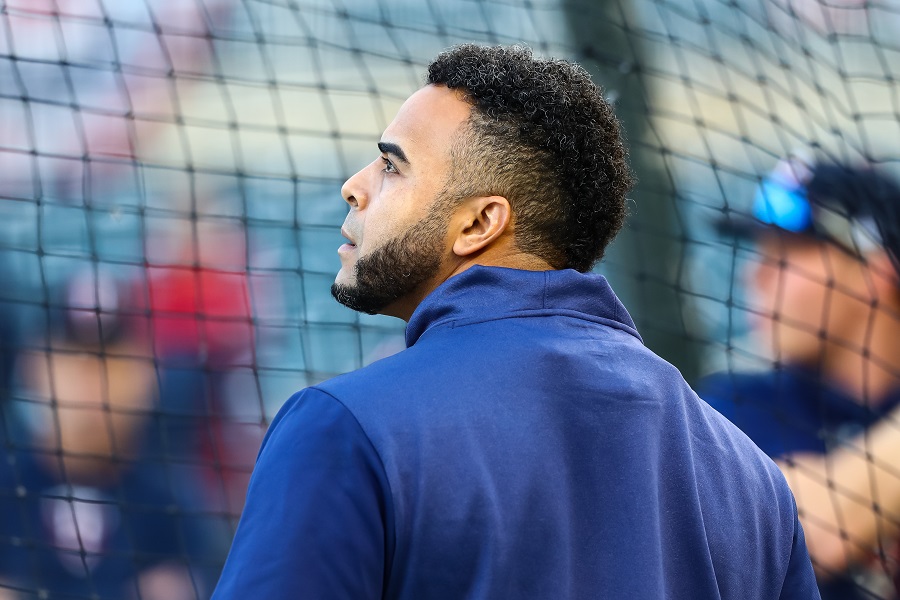 The video below includes a key excerpt from Hayes’ article and video of Falvey addressing a question regarding Cruz during . From the outside looking in, it certainly seems like the Twins are trying to make sure they're not bidding against themselves and the Cruz camp is holding out hope additional suitors may emerge. There still hasn't been any reporting yet on the actual numbers that are being discussed, but as we prepare to turn the calendar to February, it seems likely this comes to a conclusion before too long. Now that Andrelton Simmons and J.A. Happ are officially Twins, the team should have even more cost certainty in regard to the rest of the roster. They have some good internal options at DH as is, but trying to replace both Eddie Rosario and Cruz would be a tall task. Do you anticipate Cruz re-signing with the Twins? SEE ALSO 2021 Winter Meltdown Pint Glasses On Sale Now Free Agent Faceoff: Marcell Ozuna vs. Nelson Cruz Why the Twins Shouldn't Re-Sign Nelson Cruz
 -
Twins to Sign Andrelton Simmons
Tom Froemming replied to Tom Froemming's topic in Twins Daily Front Page News
LIVE STREAM with Twins Daily's Seth Stohs, Matthew Taylor and Nate Palmer. Twitter: YouTube: -
The Twins have found their new shortstop. Jeff Passan of ESPN reported that four-time Gold Glove Award winner Andrelton Simmons and the Twins are in agreement on a one-year, $10.5 million deal.Middle infield wasn't an obvious need for the Twins heading into the offseason, but this was a good winter to be shopping for a shortstop. After being primarily connected to Marcus Semien in rumors, the Twins landed defensive wizard Andrelton "Simba" Simmons. Speaking of Semien, he signed a one-year $18 million deal with the Blue Jays earlier today. Maybe it's just a coincidence, but the timing certainly suggests the Twins had Simmons lined up as a fall-back option leading into today. It will be interesting to hear more about how this came together after the deal becomes official. Along with four Gold Gloves, Simmons was also the recipient of the 2013 NL Platinum Glove Award. He’s been the best shortstop in baseball for many years now. Sticking with that four-year lookback window, Simmons’ 73 total runs saved according to The Fielding Bible is 18 more than any other player at the position. To put that into perspective, Semien has a grand total of 18 runs saved over that same timeframe. Polanco has -23. Though known more for his defense, Simmons has posted a batting line of .281/.329/.401 (.730 OPS) over the past four seasons. That’s short of Jorge Polanco’s .277/.335/.435 (.770 OPS) over the same time, but not by much. Over the 2018 and '19 seasons, Simmons was worth 10.3 WAR, according to FanGraphs. That was tied for 13th among all position players. He followed that up with 1.6 WAR in 103 games in 2019. He only played in 30 games for the Angels last season and hit .297/.346/.356 (.702 OPS). The Twins needed to add depth of some kind to their middle infield, specifically someone who could handle shortstop. Instead of taking a flyer on another Ehire Adrianza type, they just effectively eliminated any questions over that area of the field. Both Polanco and Luis Arraez are coming off surgeries, and Simmons hasn't been the picture of health himself, but being able to rotate the three of them between the two positions is a luxury not many other teams can boast. At this time it seems safe to assume at least one of the three will also become familiar with third base, just in case. In addition to being an upgrade defensively, Simmons also compliments his middle infield mates nicely offensively. In the past four seasons, Simmons has posted a .741 OPS against left-handed pitchers while Polanco posted a .698 mark and Arraez has a .665 OPS against southpaws. FanGraphs currently projects the Twins payroll to be $110 million. Visit TwinsPayroll.com to play around with how the rest of the budget might be used. If you think the Twins are done adding ...
-
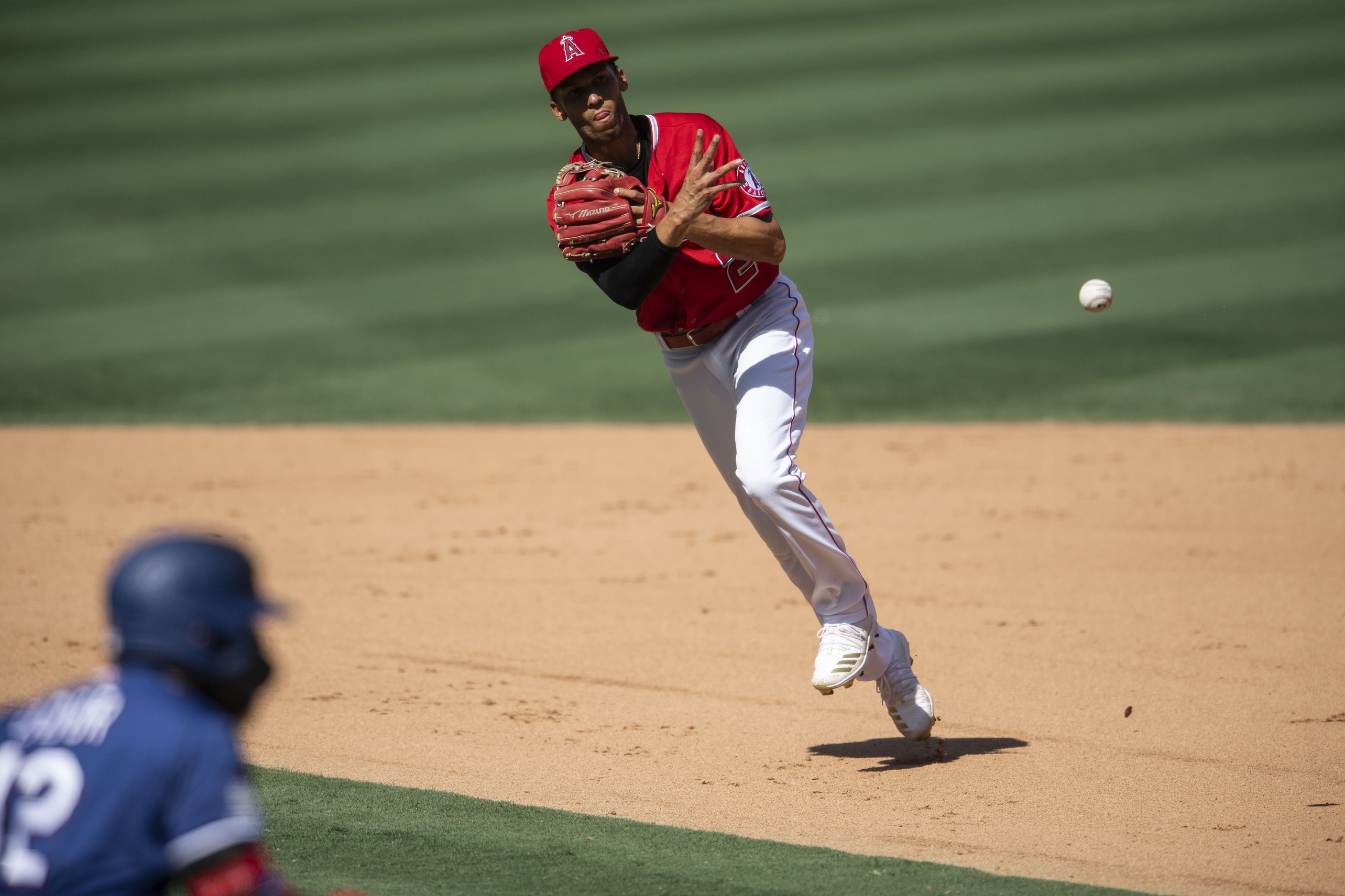 Middle infield wasn't an obvious need for the Twins heading into the offseason, but this was a good winter to be shopping for a shortstop. After being primarily connected to Marcus Semien in rumors, the Twins landed defensive wizard Andrelton "Simba" Simmons. https://twitter.com/JeffPassan/status/1354237965279625223 Speaking of Semien, he signed a one-year $18 million deal with the Blue Jays earlier today. Maybe it's just a coincidence, but the timing certainly suggests the Twins had Simmons lined up as a fall-back option leading into today. It will be interesting to hear more about how this came together after the deal becomes official. Along with four Gold Gloves, Simmons was also the recipient of the 2013 NL Platinum Glove Award. He’s been the best shortstop in baseball for many years now. Sticking with that four-year lookback window, Simmons’ 73 total runs saved according to The Fielding Bible is 18 more than any other player at the position. To put that into perspective, Semien has a grand total of 18 runs saved over that same timeframe. Polanco has -23. Though known more for his defense, Simmons has posted a batting line of .281/.329/.401 (.730 OPS) over the past four seasons. That’s short of Jorge Polanco’s .277/.335/.435 (.770 OPS) over the same time, but not by much. Over the 2018 and '19 seasons, Simmons was worth 10.3 WAR, according to FanGraphs. That was tied for 13th among all position players. He followed that up with 1.6 WAR in 103 games in 2019. He only played in 30 games for the Angels last season and hit .297/.346/.356 (.702 OPS). The Twins needed to add depth of some kind to their middle infield, specifically someone who could handle shortstop. Instead of taking a flyer on another Ehire Adrianza type, they just effectively eliminated any questions over that area of the field. Both Polanco and Luis Arraez are coming off surgeries, and Simmons hasn't been the picture of health himself, but being able to rotate the three of them between the two positions is a luxury not many other teams can boast. At this time it seems safe to assume at least one of the three will also become familiar with third base, just in case. In addition to being an upgrade defensively, Simmons also compliments his middle infield mates nicely offensively. In the past four seasons, Simmons has posted a .741 OPS against left-handed pitchers while Polanco posted a .698 mark and Arraez has a .665 OPS against southpaws. FanGraphs currently projects the Twins payroll to be $110 million. Visit TwinsPayroll.com to play around with how the rest of the budget might be used. If you think the Twins are done adding ... https://twitter.com/DanHayesMLB/status/1354254035126251525 Moments after the Simmons move was announced, Seth, Matthew Taylor and Nate Palmer discussed the signing and what remains for the Twins to do this offseason on a new Offseason Live. MORE FROM TWINS DAILY — Latest Twins coverage from our writers — Recent Twins discussion in our forums — Follow Twins Daily via Twitter, Facebook or email
 -
Fun fact: James Paxton has a better career ERA, FIP, xFIP and SIERA than Trevor Bauer, and it isn't even particularly close.
-
I did this same exercise a bit earlier in the offseason and landed on Semien, Paxton, Bauer, Walker, Rosenthal, Yates, Brantley, Profar in that order among the guys who are still available. More thoughts on how I arrived at that list here.
-
Here’s a tier list of every starting pitcher left on the free agent market from Trevor Bauer to Trevor Williams.Trevor Bauer is in a tier on his own, but things start to get interesting after that. It doesn’t take long before the lines are blurry enough to not feel particularly strong about one pitcher versus the next. I think that’s exactly why things have been so slow. I put every starting pitcher on MLB Trade Rumors’ free agent list into a tier in the video below, discussed my rationale behind the rankings and then circled back for a Twins-focused overview. This Twins front office has had success on the trade market, acquiring Kenta Maeda and Jake Odorizzi before that, so I fully expect them to explore that route. Regardless, it seems like a safe bet the Twins are going to sign at least one of these free agent starters. In case you missed any of the previous transactions, here are the contracts signed by free agent starting pitchers so far this offseason: Charlie Morton to Atlanta for one year, $15 million.Drew Smyly to Atlanta for one year, $11 million.Corey Kluber to the Yankees for one year, $11 million.Mike Minor to Kansas City for two years, $18 million.Robbie Ray to Toronto for one year, $8 million.Anthony DeSclafani to San Francisco for one year, $6 million.Martin Perez to Boston for one year, $5 million.Jose Urena to Detroit for one year, $3.25 million.Kohei Arihara to Texas for two years, $6.2 million.Alex Wood to San Francisco for one year, $3 million.Michael Wacha to Tampa Bay for one year, $3 million.Chris Flexen to Seattle for two years, $4.75 million.Let me know what you think. Who was too high? Too low? Anybody stand out to you as someone the Twins should target? SEE ALSO Pitch Movement and Spin Axis Data Suggest the Twins Should Acquire This Rocky Why You Shouldn't Be Mad About "Losing Out" On [insert Top Reliever Here] Free Agent Faceoff: Marcell Ozuna vs. Nelson Cruz Twins Should Sign This Under-the-Radar Free Agent Click here to view the article
-
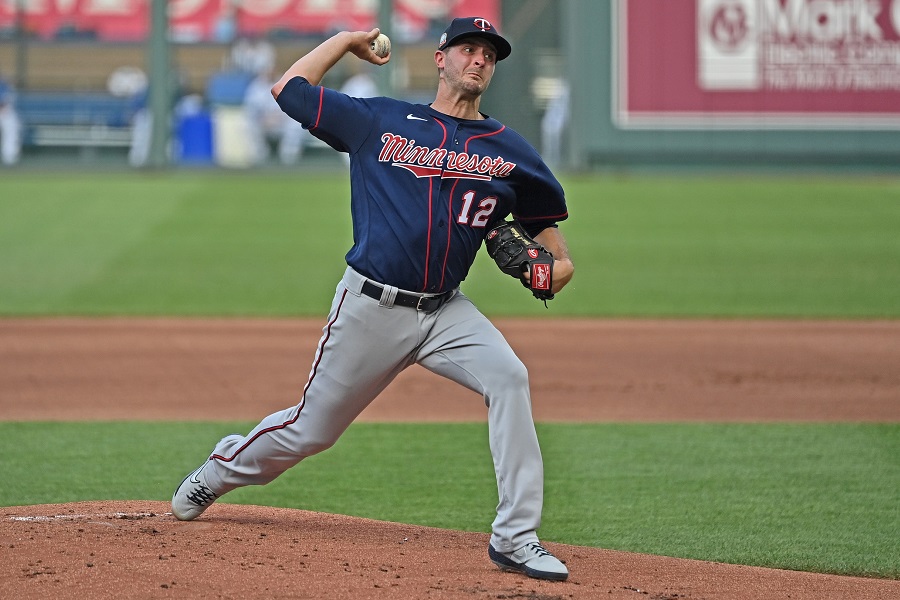 Trevor Bauer is in a tier on his own, but things start to get interesting after that. It doesn’t take long before the lines are blurry enough to not feel particularly strong about one pitcher versus the next. I think that’s exactly why things have been so slow. I put every starting pitcher on MLB Trade Rumors’ free agent list into a tier in the video below, discussed my rationale behind the rankings and then circled back for a Twins-focused overview. This Twins front office has had success on the trade market, acquiring Kenta Maeda and Jake Odorizzi before that, so I fully expect them to explore that route. Regardless, it seems like a safe bet the Twins are going to sign at least one of these free agent starters. In case you missed any of the previous transactions, here are the contracts signed by free agent starting pitchers so far this offseason: Charlie Morton to Atlanta for one year, $15 million. Drew Smyly to Atlanta for one year, $11 million. Corey Kluber to the Yankees for one year, $11 million. Mike Minor to Kansas City for two years, $18 million. Robbie Ray to Toronto for one year, $8 million. Anthony DeSclafani to San Francisco for one year, $6 million. Martin Perez to Boston for one year, $5 million. Jose Urena to Detroit for one year, $3.25 million. Kohei Arihara to Texas for two years, $6.2 million. Alex Wood to San Francisco for one year, $3 million. Michael Wacha to Tampa Bay for one year, $3 million. Chris Flexen to Seattle for two years, $4.75 million. Let me know what you think. Who was too high? Too low? Anybody stand out to you as someone the Twins should target? SEE ALSO Pitch Movement and Spin Axis Data Suggest the Twins Should Acquire This Rocky Why You Shouldn't Be Mad About "Losing Out" On [insert Top Reliever Here] Free Agent Faceoff: Marcell Ozuna vs. Nelson Cruz Twins Should Sign This Under-the-Radar Free Agent
 -
This front office has had a ton of success with building bullpens without making big investments. I think this approach makes sense, but they will need to extend themselves in other areas to have a good offseason. I'd much rather they make a big investment on a starting pitcher or everyday player than a reliever.
- 17 replies
-
- 11
-

-
Corey Kulber's showcase, Derek Falvey's most recent comments on Nelson Cruz, a Twins player's highlight catch from winter league action and more.Corey Kluber’s Showcase Jesse Rogers of ESPN reported Corey Kluber threw 25-30 pitches in a showcase for teams and was sitting between 87-89 mph. The Twins were among the 25 clubs in attendance to watch the two-time Cy Young Award winner throw. The showcase took place at Eric Cressey’s strength and conditioning facility, which is not far from the Twins’ complex in Fort Myers. Here’s a 2018 article from Mike Berardino that points out all the Twins connections at the time to Cressy, who is now the New York Yankees Director of Player Health and Performance. The other obvious Twins connection is that Derek Falvey was with Cleveland’s front office when they acquired Kluber from the San Diego Padres. Kluber was projected by MLB Trade Rumors to get a one-year, $12 million deal while Craig Edwards of FanGraphs had him down for a deal worth $9 million. The connections are there and the price is right, but should the Twins sign Kluber? Well, Kluber turns 35 in April and pitched just one inning for the Rangers before suffering a torn torn teres major muscle. He also missed most of the 2019 season due to a fractured right arm sustained on a come-backer. Twins Daily’s Cody Pirkl is not sold ... Another Bullpen Arm Signs Former Los Angeles Dodger Pedro Báez agreed to a two-year deal with the Houston Astros. The contract has $12.5 guaranteed, includes an an option year and some additional incentives. Full details here at MLB Trade Rumors. Báez was among the eight under-the-radar free agents I thought might make sense for the Twins. He has a career 3.03 ERA, 1.10 WHIP and 9.3 K/9 over 355 appearances. Twins Hot Stove Show Alex Kirilloff joined Kris Atteberry on tonight’s . There was a lot of discussion revolving around his debut in the playoffs and his approach to hitting. Cody Christie wrote about Kirilloff as an extension candidate earlier this offseason. SEE ALSO Why Did the Twins Let Liam Hendriks Go? White Sox Sign Hendriks; Twins Fans Wait (Patiently?) The Twins Worst Trades: Johan Santana Free Agent Faceoff: Marcell Ozuna vs. Nelson Cruz Why the Twins Shouldn't Re-Sign Nelson Cruz Click here to view the article
-
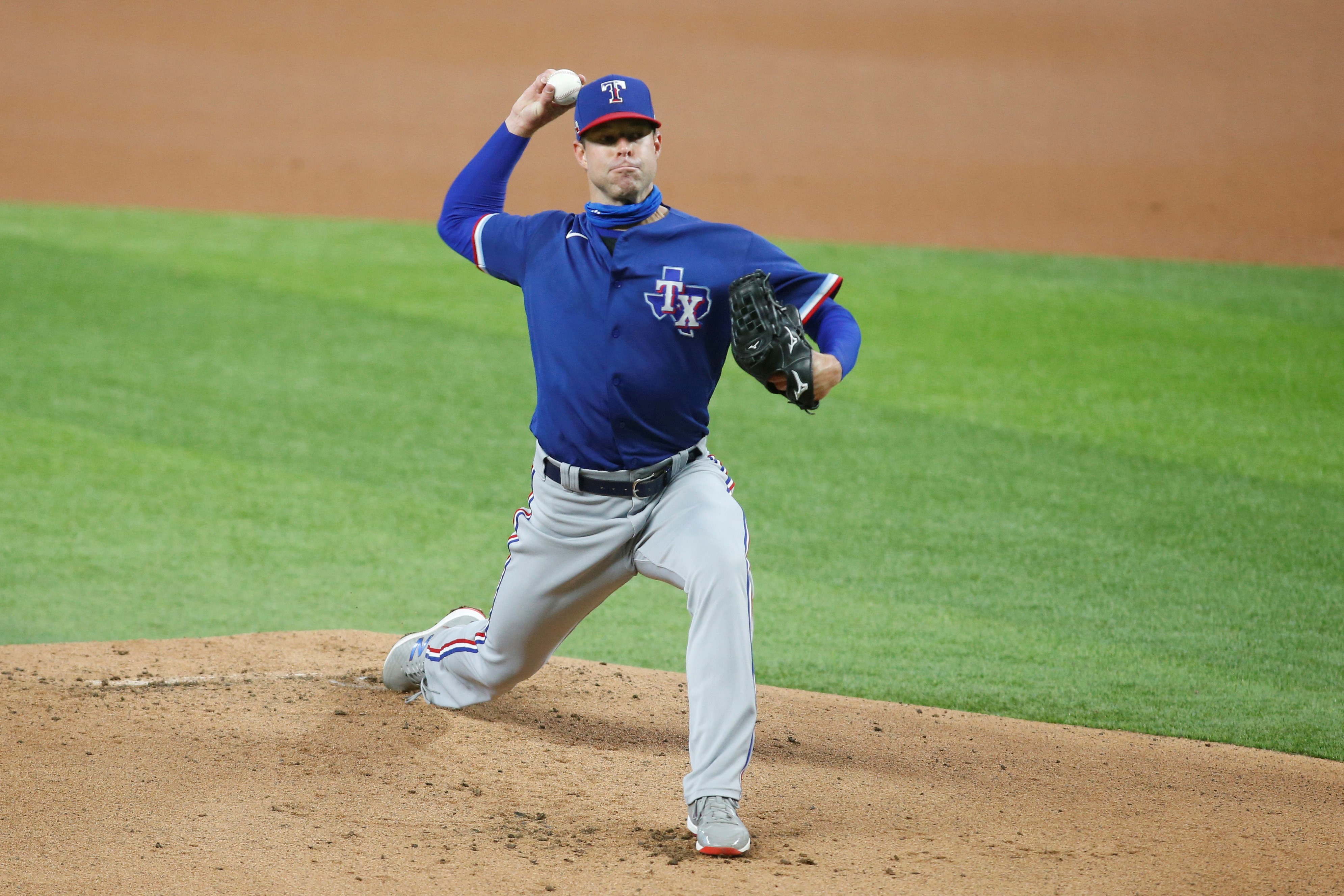 Corey Kluber’s Showcase Jesse Rogers of ESPN reported Corey Kluber threw 25-30 pitches in a showcase for teams and was sitting between 87-89 mph. The Twins were among the 25 clubs in attendance to watch the two-time Cy Young Award winner throw. The showcase took place at Eric Cressey’s strength and conditioning facility, which is not far from the Twins’ complex in Fort Myers. Here’s a 2018 article from Mike Berardino that points out all the Twins connections at the time to Cressy, who is now the New York Yankees Director of Player Health and Performance. The other obvious Twins connection is that Derek Falvey was with Cleveland’s front office when they acquired Kluber from the San Diego Padres. Kluber was projected by MLB Trade Rumors to get a one-year, $12 million deal while Craig Edwards of FanGraphs had him down for a deal worth $9 million. The connections are there and the price is right, but should the Twins sign Kluber? Well, Kluber turns 35 in April and pitched just one inning for the Rangers before suffering a torn torn teres major muscle. He also missed most of the 2019 season due to a fractured right arm sustained on a come-backer. Twins Daily’s Cody Pirkl is not sold ... https://twitter.com/CodyPirkl/status/1349404627448590336 … but fellow Twins Daily writer Matthew Taylor is on board. https://twitter.com/MatthewTaylorMN/status/1349399061900775425 Personally, I’m having a difficult time talking myself into Kluber, but the other starting pitching options on the free agent market don’t inspire a ton of confidence, either. If we assume the Twins aren’t a serious suitor for Trevor Bauer and Masahiro Tanaka isn’t interested in coming to Minnesota, the next best guys are James Paxton and Jake Odorizzi. I’d certainly prefer those two to Kluber, but it just shows how quickly things thin out. There’s always the trade market, of course. One of my predictions during Tuesday night’s Offseason Live episode was that the Twins would trade for a starting pitcher who would slot into the rotation above Michael Pineda. You can watch the entire show below: Kluber was previously mentioned in Matthew Taylor’s article that attempted to use history to decipher who the Twins may sign and was included in Cody Christie’s offseason blueprint. Marc Topkin reported that fellow Jet Sports Management clients Steve Cishek and Anthony Swarzak, a former Twin, also threw during the showcase. Falvey on High Heat A bearded Derek Falvey joined Chris Russo on MLB Network today and said he remains “very optimistic” about a reunion with Nelson Cruz. La Tortuga’s Dive Check out Willians Astudillo making a nice catch in left field down in the Venezuelan Winter League. https://twitter.com/ElExtrabase/status/1349484033563123715 Another Bullpen Arm Signs Former Los Angeles Dodger Pedro Báez agreed to a two-year deal with the Houston Astros. The contract has $12.5 guaranteed, includes an an option year and some additional incentives. Full details here at MLB Trade Rumors. Báez was among the eight under-the-radar free agents I thought might make sense for the Twins. He has a career 3.03 ERA, 1.10 WHIP and 9.3 K/9 over 355 appearances. Twins Hot Stove Show Alex Kirilloff joined Kris Atteberry on tonight’s . There was a lot of discussion revolving around his debut in the playoffs and his approach to hitting. Cody Christie wrote about Kirilloff as an extension candidate earlier this offseason.SEE ALSO Why Did the Twins Let Liam Hendriks Go? White Sox Sign Hendriks; Twins Fans Wait (Patiently?) The Twins Worst Trades: Johan Santana Free Agent Faceoff: Marcell Ozuna vs. Nelson Cruz Why the Twins Shouldn't Re-Sign Nelson Cruz
 -
How Do You Plan on Following the Twins in 2021?
Tom Froemming replied to Tom Froemming's topic in Twins Daily Front Page News
I seriously only need live TV for Twins games. That's it. Everything else I can find elsewhere or don't really care enough about to pay for at all. So not only is the cable package more expensive than a streaming service, I wouldn't be using it at all for a big chunk of the year. If a traditional cable provider would allow customers to go month-to-month, I'd go for that. In addition to simply not needing a cable package for much of the year, I'd be concerned Sinclair would pull FSN off the provider I have within the term of my contract. I believe that happened to Dish customers. Sounds like you're finding other value from your cable package, just trying to explain where I'm coming from. -
How Do You Plan on Following the Twins in 2021?
Tom Froemming replied to Tom Froemming's topic in Twins Daily Front Page News
(shhhhh)
