



Tom Froemming
-
Posts
5,260 -
Joined
-
Last visited
-
Days Won
22
Content Type
Profiles
News
Minnesota Twins Videos
2026 Minnesota Twins Top Prospects Ranking
2022 Minnesota Twins Draft Picks
Minnesota Twins Free Agent & Trade Rumors, Notes, & Tidbits
Guides & Resources
2023 Minnesota Twins Draft Picks
The Minnesota Twins Players Project
2024 Minnesota Twins Draft Picks
2025 Minnesota Twins Draft Pick Tracker
2026 Minnesota Twins Draft Tracker: Picks & Bonuses
Forums
Blogs
Events
Store
Downloads
Gallery
Everything posted by Tom Froemming
-
 Buster was also the one who reported that Machado's offer from the White Sox was 7/$175MM, which was instantly shot down as being false. Still, the conversation makes sense. Who could be a mystery team for Machado? Given their current opportunity and payroll space, it's easy to speculate it might be the Twins.
- 103 replies
-
- 4
-

-
- bryce harper
- manny machado
- (and 2 more)
-
Article: The Flip Side of Free Agency Frustration
Tom Froemming replied to Nick Nelson's topic in Twins Daily Front Page News
I don't think you can make a call on Yu Darvish one way or the other yet. He still has plenty of time to make the Cubs look good. It's sorta like how people immediately thought the Twins won the Jose De Leon-Brian Dozier non trade just because De Leon got hurt. We still don't know how that one's gonna turn out, but I'd rather have De Leon than Raley/Smeltzer right now. Speaking of trades, that's a thing teams do too. One thing I'll rain down praise upon this front office for is how they've beefed up the minor league system. The depth is incredible ... trade from it. Use that as your means to improve the 25-man roster if you're so put off by free agency. Do something to go for it. Now. Why are you going to wait until you're 100 games into the season? I don't like the notion that 2019 is a building year or an evaluation year. Not with the division as bad as it is. The door is wide open. At this point I could care less specifically about payroll, I just want to see this organization really invested in trying to win the division. That's not the message coming out of Target Field right now. -
I'd say he has a lot of guys to leapfrog, but then again, I'd have said the same thing about Vasquez last season. The big difference is Moran is much younger (21), but who knows how much a difference that makes? Again, I'm having a hard time trying to figure out how this front office decides to handle relief guys. But to your point, Moran is most definitely a guy to keep tabs on. I actually have him in my top 30. We've talked a lot about guys going from the rotation to the bullpen, but I'd actually be interested to see how Moran could do as a starter. I think he's got three legit pitches to work with. It might be a little late in the game to try that, though he did throw 76 innings last year and got nine or more outs in seven of his appearances, so it may be a little easier to stretch him out than the average reliever.
-
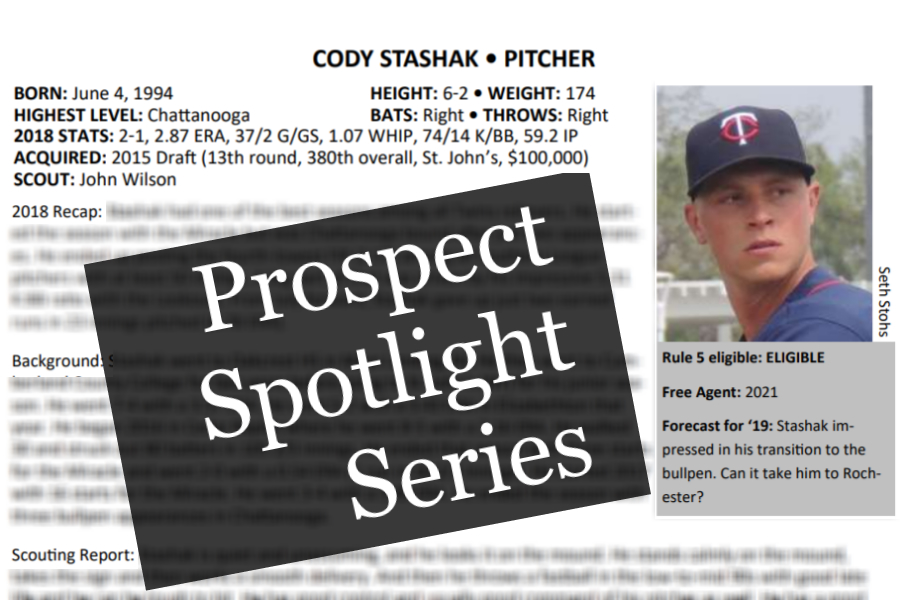
As a way to both look back at a great minor league season and celebrate the release of the 2019 Twins Prospect Handbook, I’m shining the spotlight on a few players in the system. Let’s talk about the guys who could help out the 2019 bullpen. The 2019 Minnesota Twins Prospect Handbook is available in paperback for $17.99 or as an eBook for $12.99.Before we get into it, here’s a look back at the players I’ve covered in this series so far: Jhoan Duran Alex Kirilloff Lewis Thorpe Royce Lewis Each of the previous installments of this series focuses on a specific aspect of a player's game or homes in on a particular performance. This will be more of an overview. We’re in the era of the 13-man pitching staff. Every team in baseball cycles through a great number of relievers each season, but there figure to be plenty of opportunities in the Twins’ bullpen this coming season. Relief Candidates on the 40-Man Roster The only relief pitcher who still has prospect status is Andrew Vasquez, but there are also all those starting pitchers who debuted last season who appear to be on the outside looking in. Might it make sense to give one of Chase De Jong, Stephen Gonsalves, Zack Littell, Kohl Stewart or Lewis Thorpe a shot in the bullpen? None of those guys have pitched much in relief, and some don’t fit a typical reliever profile, but it wasn’t long ago you could have said those same things about Taylor Rogers. There’s already been some talk of Fernando Romero (who is no longer technically a prospect) getting a look in the pen, maybe the Twins will consider a conversion for one of these prospects. Romero may have the most tantalizing arsenal of that group, but it's interesting to note that both Littell and Gonsalves had better strikeout rates in Triple A last season. Romero averaged 6.8 K/9 in 90 2/3 innings with Rochester while Gonsalves was at 8.5 K/9 in 100 1/3 innings and Littell had 8.3 K/9 in 106 innings. Back to Vasquez, in terms of true relievers, he ranks third on the lefty depth chart behind Rogers and Gabriel Moya. There's a great chance he'll see time in the majors again if that remains the case. The Vasquatch has dominated the minor leagues, pitching to a 1.52 ERA, 1.12 WHIP and 13.4 K/9. Who’s Next on the Farm? Before we get to the prospects, there are a few minor league veteran guys who have an outside chance at working their way up into a low-leverage role. Guys like Ryne Harper, Dario Alvarez, Mike Morin, Zack Weiss and Jeffery Ames. I’m sure the Twins will add a few other relievers on minor league deals. Some of those guys won’t even last through spring training, but others will get an opportunity to show what they’ve got in Rochester. This front office seems to be intrigued by fringy relief pitchers, though they’ve mostly acquired them through waivers (Matt Magill, Oliver Drake, David Hale, Dillon Gee, Nik Turley and Drew Rucinski among others). I assume they’ll continue to be active on that front as well. The guys this front office do not seem to like are all the relief pitchers drafted in the earlier rounds under Terry Ryan. Jake Reed is pretty much the last man standing among that group. He’s 26-years-old and has 61 Triple-A appearances under his belt, so what are they waiting for? Well, behind Reed’s sterling 1.92 ERA in the 89 innings he’s pitched for the Red Wings the past two seasons is a less impressive 8.4 K/9 and 3.4 BB/9. Still, production is production, and Reed should be the first man up if the front office is in the position where they need to add a relief arm to the 40-man roster. It’d be a shame if he doesn’t get a look at some point. Another name of note in Triple A is Ryan Eades. Drafted in the second round as a starter back in 2013, Eades has primarily worked out of the bullpen the past two seasons. After posting just a 6.9 K/9 in 2017, he hiked that all the way up to 10.4 K/9 last season. The really great part was that he also lowered his walk rate from 3.4 BB/9 to 2.6 BB/9 last year. Eades was outstanding in the six starts he made, posting a 0.45 ERA and 0.90 WHIP, but the longest he went was four innings. Could he be the perfect opener? Eades is 27-years-old, so there’s really no use in leaving him in the minors should an opportunity present itself. Behind Reed and Eades is another bunch of guys who’ve only reached Double A. Tyler Jay is certainly the highest-profile name among them. For me, the question is does the velocity come back? If it does, I could see Jay move up very quickly. If not, well, he didn’t exactly inspire confidence by posting a 4.22 ERA and 1.58 WHIP last season. So let’s forget about Jay for a minute. The name I really want you to come away from this article with is Cody Stashak. The Twins converted him to the bullpen last season and it was a roaring success. The 24-year-old right-hander was one of the best pitchers in all of Double A. It’s not like Stashak was a failed starter by any means. In 2017, Stashak had a 3.89 ERA, 1.10 WHIP over 16 starts. His strikeout rate was a fairly modest 7.8 K/9, but he was certainly getting the job done. Stashak was forced to the DL in late July, had a few rehab appearances out of the bullpen with the GCL Twins, then made his final three outings of the year in relief for Chattanooga. I’m not sure the reasoning behind why they decided to keep him in the bullpen, but it’s looking like a very wise decision. In 2018, Stashak had a 2.87 ERA, 1.07 WHIP and 11.2 K/9. He also continued to have very good control, posting a 2.3 BB/9, giving him a K:BB ratio of 4.93. There were 289 players who pitched 50 innings or more in Double A last season. Stashak ranked fifth in K-BB%, eighth in FIP, 12th in strikeout rate and 16th in swinging strike rate. It was basically your dream scenario when you move a guy to the pen. Here’s a quick look back at one of Stashak appearances from last year just to give you an idea of who he is. This is every single pitch of this particular outing, so there’s no sugar coating involved. I’d hoped to pull some more video on him, but MiLB.tv was malfunctioning, so this also wasn’t a cherry-picked outing. It just happened to be the one I was able to get. Stashak also ended the year particularly strong, allowing just two earned runs over his final 23 innings (0.78 ERA). If he carries that performance over to this season, he may be knocking at the door for his major league debut. This front office has made some eyebrow-raising decisions with relief prospects, but most of the guys they’ve passed over had some degree of wildness. That hasn’t been an issue for Stashak. Speaking of guys who moved from the rotation to the bullpen, there’s also Devin Smeltzer, a lefty who the Twins acquired from the Dodgers in the Brian Dozier trade. He didn’t have the same type of dynamite transition as Stashak, but his strikeout rate did see an incredible jump. After striking out just 53 batters in 70 1/3 innings as a starter (6.8 K/9), Smeltzer rung up 30 batters in just 25 1/3 innings out of the bullpen (10.7 K/9) in 2018. One guy who could be a huge x-factor is Jorge Alcala. The flame-throwing right-hander who the Twins got from Houston in the Ryan Pressly trade could really rocket up to the majors if he successfully transitioned to a relief role, not that I’ve heard that’s the plan for him. Alcala made 16 starts and another eight appearances in relief in 2018, performing about the same in either role. He struck out 104 batters in 99 1/3 innings last season. Anybody who hasn’t pitched in Double A is a longshot to make it all the way up to the majors in one year, but hey, Andrew Vasquez did it. Quite a few members of last year’s Miracle bullpen were college draftees who will now be entering their age 24 or even 25 seasons. Guys like Hector Lujan, Ryan Mason, Alex Robinson, Colton Davis, Adam Bray and Tom Hackimer. If one of them really takes off, there doesn’t seem to be much reason not to fast track them, though a Vasquez-type ascent would be surprising. More than 160 players are featured in the Prospect Handbook.We had a ton of fun putting the book together and we’re really excited for people to read it. Recognizing these minor league players for their efforts and ability is a big motivating factor in the project, so we would love for you to pick up a copy. Download attachment: Handbook.jpg Click here for more information on the 2019 Minnesota Twins Prospect Handbook Click here to view the article
-
 Before we get into it, here’s a look back at the players I’ve covered in this series so far: Jhoan Duran Alex Kirilloff Lewis Thorpe Royce Lewis Each of the previous installments of this series focuses on a specific aspect of a player's game or homes in on a particular performance. This will be more of an overview. We’re in the era of the 13-man pitching staff. Every team in baseball cycles through a great number of relievers each season, but there figure to be plenty of opportunities in the Twins’ bullpen this coming season. Relief Candidates on the 40-Man Roster The only relief pitcher who still has prospect status is Andrew Vasquez, but there are also all those starting pitchers who debuted last season who appear to be on the outside looking in. Might it make sense to give one of Chase De Jong, Stephen Gonsalves, Zack Littell, Kohl Stewart or Lewis Thorpe a shot in the bullpen? None of those guys have pitched much in relief, and some don’t fit a typical reliever profile, but it wasn’t long ago you could have said those same things about Taylor Rogers. There’s already been some talk of Fernando Romero (who is no longer technically a prospect) getting a look in the pen, maybe the Twins will consider a conversion for one of these prospects. Romero may have the most tantalizing arsenal of that group, but it's interesting to note that both Littell and Gonsalves had better strikeout rates in Triple A last season. Romero averaged 6.8 K/9 in 90 2/3 innings with Rochester while Gonsalves was at 8.5 K/9 in 100 1/3 innings and Littell had 8.3 K/9 in 106 innings. Back to Vasquez, in terms of true relievers, he ranks third on the lefty depth chart behind Rogers and Gabriel Moya. There's a great chance he'll see time in the majors again if that remains the case. The Vasquatch has dominated the minor leagues, pitching to a 1.52 ERA, 1.12 WHIP and 13.4 K/9. Who’s Next on the Farm? Before we get to the prospects, there are a few minor league veteran guys who have an outside chance at working their way up into a low-leverage role. Guys like Ryne Harper, Dario Alvarez, Mike Morin, Zack Weiss and Jeffery Ames. I’m sure the Twins will add a few other relievers on minor league deals. Some of those guys won’t even last through spring training, but others will get an opportunity to show what they’ve got in Rochester. This front office seems to be intrigued by fringy relief pitchers, though they’ve mostly acquired them through waivers (Matt Magill, Oliver Drake, David Hale, Dillon Gee, Nik Turley and Drew Rucinski among others). I assume they’ll continue to be active on that front as well. The guys this front office do not seem to like are all the relief pitchers drafted in the earlier rounds under Terry Ryan. Jake Reed is pretty much the last man standing among that group. He’s 26-years-old and has 61 Triple-A appearances under his belt, so what are they waiting for? Well, behind Reed’s sterling 1.92 ERA in the 89 innings he’s pitched for the Red Wings the past two seasons is a less impressive 8.4 K/9 and 3.4 BB/9. Still, production is production, and Reed should be the first man up if the front office is in the position where they need to add a relief arm to the 40-man roster. It’d be a shame if he doesn’t get a look at some point. Another name of note in Triple A is Ryan Eades. Drafted in the second round as a starter back in 2013, Eades has primarily worked out of the bullpen the past two seasons. After posting just a 6.9 K/9 in 2017, he hiked that all the way up to 10.4 K/9 last season. The really great part was that he also lowered his walk rate from 3.4 BB/9 to 2.6 BB/9 last year. Eades was outstanding in the six starts he made, posting a 0.45 ERA and 0.90 WHIP, but the longest he went was four innings. Could he be the perfect opener? Eades is 27-years-old, so there’s really no use in leaving him in the minors should an opportunity present itself. Behind Reed and Eades is another bunch of guys who’ve only reached Double A. Tyler Jay is certainly the highest-profile name among them. For me, the question is does the velocity come back? If it does, I could see Jay move up very quickly. If not, well, he didn’t exactly inspire confidence by posting a 4.22 ERA and 1.58 WHIP last season. So let’s forget about Jay for a minute. The name I really want you to come away from this article with is Cody Stashak. The Twins converted him to the bullpen last season and it was a roaring success. The 24-year-old right-hander was one of the best pitchers in all of Double A. It’s not like Stashak was a failed starter by any means. In 2017, Stashak had a 3.89 ERA, 1.10 WHIP over 16 starts. His strikeout rate was a fairly modest 7.8 K/9, but he was certainly getting the job done. Stashak was forced to the DL in late July, had a few rehab appearances out of the bullpen with the GCL Twins, then made his final three outings of the year in relief for Chattanooga. I’m not sure the reasoning behind why they decided to keep him in the bullpen, but it’s looking like a very wise decision. In 2018, Stashak had a 2.87 ERA, 1.07 WHIP and 11.2 K/9. He also continued to have very good control, posting a 2.3 BB/9, giving him a K:BB ratio of 4.93. There were 289 players who pitched 50 innings or more in Double A last season. Stashak ranked fifth in K-BB%, eighth in FIP, 12th in strikeout rate and 16th in swinging strike rate. It was basically your dream scenario when you move a guy to the pen. Here’s a quick look back at one of Stashak appearances from last year just to give you an idea of who he is. This is every single pitch of this particular outing, so there’s no sugar coating involved. I’d hoped to pull some more video on him, but MiLB.tv was malfunctioning, so this also wasn’t a cherry-picked outing. It just happened to be the one I was able to get. https://twitter.com/BaseballByTom/status/1087101499073839109 Stashak also ended the year particularly strong, allowing just two earned runs over his final 23 innings (0.78 ERA). If he carries that performance over to this season, he may be knocking at the door for his major league debut. This front office has made some eyebrow-raising decisions with relief prospects, but most of the guys they’ve passed over had some degree of wildness. That hasn’t been an issue for Stashak. Speaking of guys who moved from the rotation to the bullpen, there’s also Devin Smeltzer, a lefty who the Twins acquired from the Dodgers in the Brian Dozier trade. He didn’t have the same type of dynamite transition as Stashak, but his strikeout rate did see an incredible jump. After striking out just 53 batters in 70 1/3 innings as a starter (6.8 K/9), Smeltzer rung up 30 batters in just 25 1/3 innings out of the bullpen (10.7 K/9) in 2018. One guy who could be a huge x-factor is Jorge Alcala. The flame-throwing right-hander who the Twins got from Houston in the Ryan Pressly trade could really rocket up to the majors if he successfully transitioned to a relief role, not that I’ve heard that’s the plan for him. Alcala made 16 starts and another eight appearances in relief in 2018, performing about the same in either role. He struck out 104 batters in 99 1/3 innings last season. Anybody who hasn’t pitched in Double A is a longshot to make it all the way up to the majors in one year, but hey, Andrew Vasquez did it. Quite a few members of last year’s Miracle bullpen were college draftees who will now be entering their age 24 or even 25 seasons. Guys like Hector Lujan, Ryan Mason, Alex Robinson, Colton Davis, Adam Bray and Tom Hackimer. If one of them really takes off, there doesn’t seem to be much reason not to fast track them, though a Vasquez-type ascent would be surprising. More than 160 players are featured in the Prospect Handbook.We had a ton of fun putting the book together and we’re really excited for people to read it. Recognizing these minor league players for their efforts and ability is a big motivating factor in the project, so we would love for you to pick up a copy. Click here for more information on the 2019 Minnesota Twins Prospect Handbook
 -
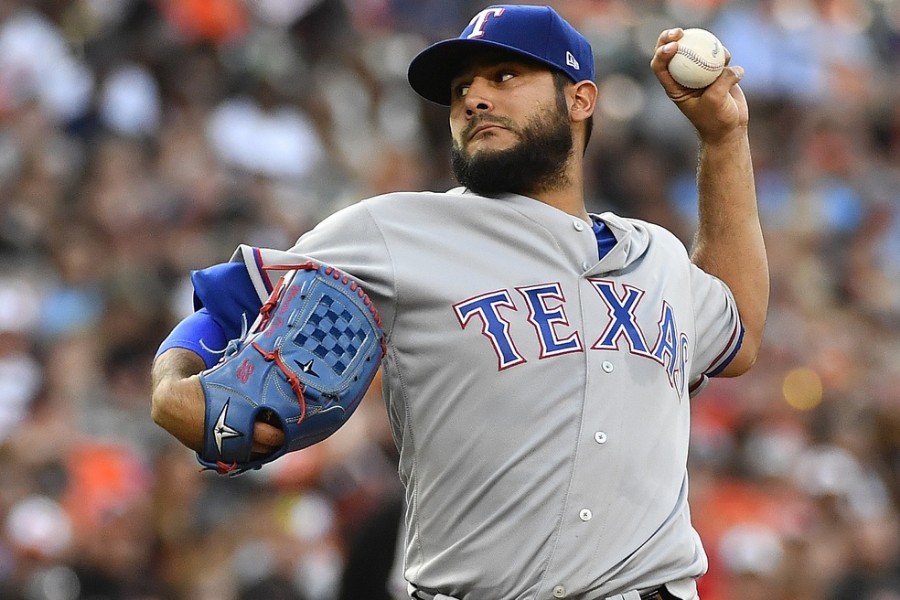
Ken Rosenthal of The Athletic reported that the Twins have come to an agreement with free agent left-handed starting pitcher Martin Perez. It's believed to be a one-year deal with a club option for 2020. Jon Heyman tweeted that the deal is for $3.5 million. Perez, 27, has spent his entire career with Texas and has a 4.63 ERA in 141 games. He's coming off a rough 2018 in which he was demoted to the Rangers' bullpen.In 15 starts last season, Perez had a 6.78 ERA and .186 WHIP over 74 1/3 innings. He was much more successful after he was moved to the bullpen, pitching to a 2.45 ERA and 1.27 WHIP, though that was just a sample of 11 innings. Perez was once among the top prospects in the game, topping out at No. 17 on Baseball America's Top 100 Prospect list. He made his major league debut as a 21-year-old, and his relative youth among free agents is one aspect that makes him unique. Perez has never been able to overpower hitters, as his career 5.5 K/9 indicates, but he's a groundball machine. His career groundball rate is an excellent 51.1 percent. There were only two qualified starting pitchers who topped that mark in 2018. Still, that low strikeout rate really limits his upside. That's always been curious to me, because it's not like Perez is a soft-tosser. His average fastball velocity was 92.7 mph last season, not far off from Jose Berrios and Kyle Gibson while being comfortably ahead of Jake Odorizzi. But, of course, there's more to getting strikeouts than just velocity. Perez had the eighth-lowest swinging strike rate among the 173 pitchers who logged at least 80 innings in 2018. The changeup is considered his best pitch. Here's a look: Despite the fact that he's pitched in a pretty hitter-friendly environment over his career, Perez actually has better numbers at home than on the road over his career. Still, maybe there's a case to be made that he's a good change of scenery candidate. Taking a look at Perez's pitch usages over his career, it doesn't appear anybody with the Rangers ever really pressed him to tinker around. The biggest difference you see is that he threw his sinker more last year. Download attachment: PerezPitches.jpeg Just looking at that, I wonder what things might look like if Perez threw fewer fastballs and increased the usage of his changeup and slider. Just a thought. So it seems the three main positives when it comes to Perez are his youth, the fact that he's left-handed and his ability to induce ground balls. It'll be interested to hear what the financial terms of the deal are and how the front office envisions him fitting into the big picture. The 40-man roster is full, so we'll also be keeping an eye out on who will be exposed to the waiver wire once the deal becomes official. UPDATE: Jon Heyman is reporting the deal is for "about" $3.5 million. We may not know how exactly that's structured until the deal becomes official. It's worth noting that what was originally reported as Blake Parker's deal ($3.2 million) ended up being quite different in the end ($1.8 million plus incentives). Click here to view the article
-
 In 15 starts last season, Perez had a 6.78 ERA and .186 WHIP over 74 1/3 innings. He was much more successful after he was moved to the bullpen, pitching to a 2.45 ERA and 1.27 WHIP, though that was just a sample of 11 innings. Perez was once among the top prospects in the game, topping out at No. 17 on Baseball America's Top 100 Prospect list. He made his major league debut as a 21-year-old, and his relative youth among free agents is one aspect that makes him unique. Perez has never been able to overpower hitters, as his career 5.5 K/9 indicates, but he's a groundball machine. His career groundball rate is an excellent 51.1 percent. There were only two qualified starting pitchers who topped that mark in 2018. Still, that low strikeout rate really limits his upside. That's always been curious to me, because it's not like Perez is a soft-tosser. His average fastball velocity was 92.7 mph last season, not far off from Jose Berrios and Kyle Gibson while being comfortably ahead of Jake Odorizzi. But, of course, there's more to getting strikeouts than just velocity. Perez had the eighth-lowest swinging strike rate among the 173 pitchers who logged at least 80 innings in 2018. The changeup is considered his best pitch. Here's a look: https://gfycat.com/shadowycheerfulflycatcher Despite the fact that he's pitched in a pretty hitter-friendly environment over his career, Perez actually has better numbers at home than on the road over his career. Still, maybe there's a case to be made that he's a good change of scenery candidate. Taking a look at Perez's pitch usages over his career, it doesn't appear anybody with the Rangers ever really pressed him to tinker around. The biggest difference you see is that he threw his sinker more last year. Just looking at that, I wonder what things might look like if Perez threw fewer fastballs and increased the usage of his changeup and slider. Just a thought. So it seems the three main positives when it comes to Perez are his youth, the fact that he's left-handed and his ability to induce ground balls. It'll be interested to hear what the financial terms of the deal are and how the front office envisions him fitting into the big picture. The 40-man roster is full, so we'll also be keeping an eye out on who will be exposed to the waiver wire once the deal becomes official. UPDATE: Jon Heyman is reporting the deal is for "about" $3.5 million. We may not know how exactly that's structured until the deal becomes official. It's worth noting that what was originally reported as Blake Parker's deal ($3.2 million) ended up being quite different in the end ($1.8 million plus incentives).
 -
Bud Norris has had a weird past couple of years. First Half (74.2 IP) 2.65 ERA, 1.00 WHIP, 25.8 K-BB% Second Half (45 IP) 6.00 ERA, 1.78 WHIP, 7.5 K-BB% An obvious takeaway would be that he simply wore down as the year progressed, but there's probably more to it than that. He's definitely a guy who has piqued my interest. If you can solve that issue and help him become more consistent you could have a great weapon on your hands.
- 43 replies
-
- 3
-
-
- nick vincent
- bud norris
- (and 2 more)
-
Article: Sizing Up Cody Allen
Tom Froemming replied to Nick Nelson's topic in Twins Daily Front Page News
Player A 2018 4.70 ERA, 1.36 WHIP, 4.56 FIP, .307 xwOBA ,89.3 avg. exit velo Player B 2018 4.71 ERA, 1.32 WHIP, 4.76 FP, .285 xwOBA, 88.4 avg. exit velo A is Cody Allen, B is Gabriel Moya. Just sayin' -
This new Twins coaching staff is talking a lot about rethinking the way things have been. I'd love to see them try to give relievers longer appearances and see how it goes. You don't see many relievers averaging under an inning per appearance in the minor leagues. In fact, Hildy himself averaged four ours per game in the minors. They can do it. Cranking up the length of appearances/pitches per outing would obviously mean there will be more days where certain guys will be unavailable. That means you need a deeper pen of guys you can trust. You need multiple guys you can trust to protect a lead. I think that may be the biggest obstacle in the Twins implementing that strategy.
-
Baseball America does such a great job at covering international signings. Here's what they wrote about Ozoria at the time of his signing: Dominican shortstop Daniel Ozoria turned 16 on Aug. 24, making him one of the youngest players in the 2016 class. Had he been born more than a week later, he would have had to wait until 2017 to be eligible to sign. The Angels added Ozoria shortly after his 16th birthday on a $125,000. His youth shows in his extremely thin, underdeveloped frame at around 5-foot-9, 135 pounds, but the actions and instincts are there for him to play shortstop. Ozoria has clean hands, a nose for the ball and can make throws on the run from different angles with an average arm. The biggest thing for Ozoria will be getting stronger, which should help his tools, including his arm and fringy speed, improve. That process could take time though, and might hold him back initially at the plate, but he does make contact against live pitching. Ozoria trained with Felito Cueto. The way I see it, this is basically a free lottery ticket. The Twins were going to lose Curtiss either way. Nice to see they got something for him, though it's not like Ozoria would crack my top-50 Twins prospects or anything like that.
- 38 replies
-
- 7
-
-
- daniel ozoria
- engelb vielma
- (and 2 more)
-
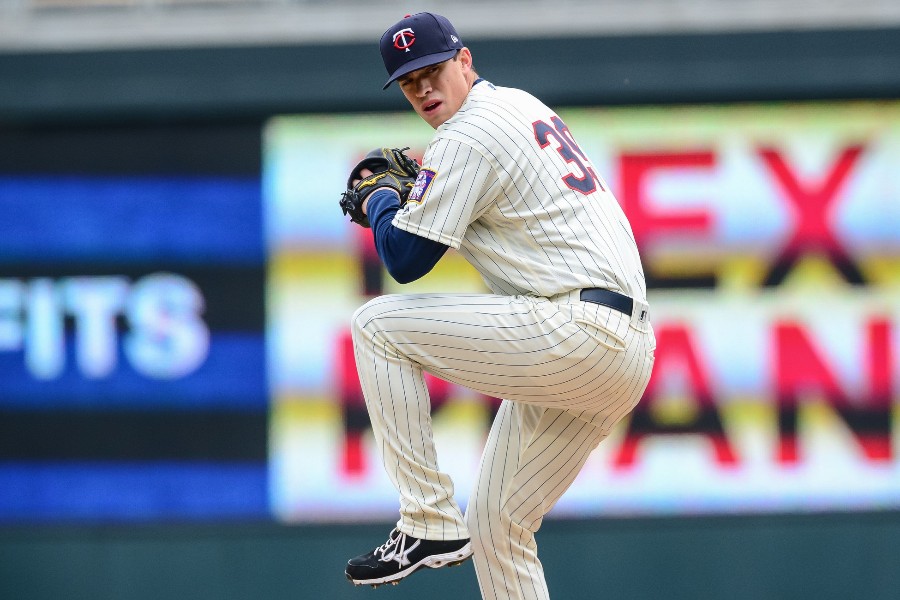
The Twins may lead the league in candidates for Comeback Player of the Year. Up and down the roster and all over the diamond you can find guys coming off disappointing seasons who you can pin high hopes on for 2019. That being the case, Trevor Hildenberger has gone somewhat overlooked. It’s easy to forget just how good he was for the Twins prior to his second-half struggles last year.Hildenberger pitched to a 2.66 ERA, 0.98 WHIP and 19.4 K-BB% in the first 81 1/3 innings of his big league career. He gave up multiple runs in just five of his 73 appearances over that stretch. Unfortunately, the memory of Hildy that lingers on through this offseason is his final 33 2/3 innings of last year. Trevor had a 9.36 ERA, 1.93 WHIP and 11.6 K-BB% and gave up multiple runs in 10 of his 37 games of that stretch. It was an unbelievable downswing. On the surface, it may not seem like Hildenberger’s workload went up all that much from 2017 to ‘18. He pitched nearly the same number of innings, but went from appearing in 58 games between the majors and minors two seasons ago to 73 in 2018. That may not seem like a big difference when stretched across a full season, but fewer off days means less rest, which means less recovery. That applies to both the physical and mental side of the game. There were only 10 pitchers who appeared in more games than Hildenberger in 2018. You have to go back to 2010 to find the last Twins pitcher who appeared in more than 73 games (Matt Guerrier, 74). Joe Nathan only appeared in 73 games once as a Twin, his first season with the club. Glen Perkins never reached that mark, topping out at 70. Even “Everyday” Eddie Guardado only topped 73 outings twice in his 17-year career. Hildenberger joined Kris Atteberry on this week’s edition of the Twins Hot Stove show, which you can find on the podcast page at the team’s official site. One of the topics they discussed was that heavier workload. “I think I can take a lot away from 2018,” Hildenberger said. “There were some ups and there were some downs, I think I was a little less consistent in the second half. You know, 73 appearances was a lot. I took a couple weeks off and then I got right back after it in October and I’ve been training to get my body ready for another long season and another heavy workload.” In addition to getting prepared for the long slog of the regular season, Hildy is also tinkering with the idea of giving hitters even more different looks. “In terms of specifics, I think fastball command is really big for me, I think everything starts off that,” Hildenberger said. “If I can locate my sinker down in the zone to both sides of the plate, working it in and out, and then maybe finding another offspeed pitch to throw from over the top so they don’t just sit dead red when I come over the top with a fastball.” Hildenberger threw from that over the top arm slot 6.1 percent of the time in 2018, a grand total of 71 pitches. Among those, 66 were four-seam fastballs and five were changeups, per the data available on Baseball Savant. On Jeremy Hefner’s Role The other guest on this week’s Twins Hot Stove Show was Jeremy Hefner, who is transitioning from advance scout to taking over for Eddie Guardado as the bullpen coach. Well, sort of. The Twins are updating things, and Hefner’s official title is actually assistant pitching coach. “The game is changing ... you don’t have one guy in charge of the bullpen and one guy in charge of the starters,” Hefner said. “Me and Wes (Johnson) are going to tag team. These are our guys and our group and we’re going to work together to get the most out of them.” Hefner had high praise for his new coaching collaborator. “Wes is great. His knowledge base on bio-mechanics, on pitch usage, on TrackMan stuff, on relations with a pitcher — he’s had a long track record of being able to execute on all of those things," Hefner said. “I’ve learned a ton from him. He’s going to be great for the Twins.” Click here to view the article
-
 Hildenberger pitched to a 2.66 ERA, 0.98 WHIP and 19.4 K-BB% in the first 81 1/3 innings of his big league career. He gave up multiple runs in just five of his 73 appearances over that stretch. Unfortunately, the memory of Hildy that lingers on through this offseason is his final 33 2/3 innings of last year. Trevor had a 9.36 ERA, 1.93 WHIP and 11.6 K-BB% and gave up multiple runs in 10 of his 37 games of that stretch. It was an unbelievable downswing. On the surface, it may not seem like Hildenberger’s workload went up all that much from 2017 to ‘18. He pitched nearly the same number of innings, but went from appearing in 58 games between the majors and minors two seasons ago to 73 in 2018. That may not seem like a big difference when stretched across a full season, but fewer off days means less rest, which means less recovery. That applies to both the physical and mental side of the game. There were only 10 pitchers who appeared in more games than Hildenberger in 2018. You have to go back to 2010 to find the last Twins pitcher who appeared in more than 73 games (Matt Guerrier, 74). Joe Nathan only appeared in 73 games once as a Twin, his first season with the club. Glen Perkins never reached that mark, topping out at 70. Even “Everyday” Eddie Guardado only topped 73 outings twice in his 17-year career. Hildenberger joined Kris Atteberry on this week’s edition of the Twins Hot Stove show, which you can find on the podcast page at the team’s official site. One of the topics they discussed was that heavier workload. “I think I can take a lot away from 2018,” Hildenberger said. “There were some ups and there were some downs, I think I was a little less consistent in the second half. You know, 73 appearances was a lot. I took a couple weeks off and then I got right back after it in October and I’ve been training to get my body ready for another long season and another heavy workload.” In addition to getting prepared for the long slog of the regular season, Hildy is also tinkering with the idea of giving hitters even more different looks. “In terms of specifics, I think fastball command is really big for me, I think everything starts off that,” Hildenberger said. “If I can locate my sinker down in the zone to both sides of the plate, working it in and out, and then maybe finding another offspeed pitch to throw from over the top so they don’t just sit dead red when I come over the top with a fastball.” Hildenberger threw from that over the top arm slot 6.1 percent of the time in 2018, a grand total of 71 pitches. Among those, 66 were four-seam fastballs and five were changeups, per the data available on Baseball Savant. On Jeremy Hefner’s Role The other guest on this week’s Twins Hot Stove Show was Jeremy Hefner, who is transitioning from advance scout to taking over for Eddie Guardado as the bullpen coach. Well, sort of. The Twins are updating things, and Hefner’s official title is actually assistant pitching coach. “The game is changing ... you don’t have one guy in charge of the bullpen and one guy in charge of the starters,” Hefner said. “Me and Wes (Johnson) are going to tag team. These are our guys and our group and we’re going to work together to get the most out of them.” Hefner had high praise for his new coaching collaborator. “Wes is great. His knowledge base on bio-mechanics, on pitch usage, on TrackMan stuff, on relations with a pitcher — he’s had a long track record of being able to execute on all of those things," Hefner said. “I’ve learned a ton from him. He’s going to be great for the Twins.”
 -
Article: Sizing Up Cody Allen
Tom Froemming replied to Nick Nelson's topic in Twins Daily Front Page News
Is there a point where you have too much variance? The Twins entered this offseason with a bunch of players coming off down seasons and added Schoop to that mix. Would it be better to try and get a low-floor guy for the bullpen? Or just keep doubling down on bounce back candidates? I'm not sure what the right answers are to those questions, but those are some things the front office should be considering with any other potential additions. -
It was so weird when they tried to work Cuddyer in as a second baseman while he was still also trying to learn how to hit major league pitching. Versatility is great, but I think you can definitely find yourself in a place where you're asking a guy to do too many things at once. Kinda like asking Miguel Sano to play outfield ... Anyway, it was very satisfying to see Cuddy breakout/establish himself in that great 2006 season for the Twins. There were so many amazing things going on that summer. Cuddyer did a lot of things well, fit into the big picture nicely between all the lefty hitters back then and seems like a great guy to be around.
-
And Rogers ranked ninth in reliever WPA, so I think we're on the same page about him either way
-
Disagree. Along with a number of things WPA doesn't account for, fWAR does factor in leverage index.
-
Bullpens are so weird. The San Diego Padres ranked 29th in reliever fWAR at 0.8 in 2017, then jumped all the way up to second in 2018 with 8.7 fWAR. How did they do it? Well, they traded away two of their best bullpen guys on July 19. Wait ... what!?!?!? No marquee additions, no changes to the pitching or bullpen coach and they traded away Brad Hand and Adam Cimber. Yet their bullpen ERA went from 4.49 to 3.53 and the FIP went from 4.69 to 3.31. How did that happen? Well, a lot of the kind of stuff that's mentioned in this article. Obviously, that's probably not the best business model to emulate, but bullpens are weird.
- 77 replies
-
- 17
-
-
It's pretty funny last year the Twins signed one of these type guys and it ended up being a critical mistake that they replaced him with a much higher profile signing. How different may have things gone if the Twins had kept Anibal Sanchez instead of signing Lance Lynn? Never would have guessed in a million years I'd be asking that question at the time of that signing. I literally laughed why they signed Anibal, who had been pretty much the worst pitcher in baseball for multiple seasons. Obviously those two guys are both at the extreme ends of potential outcomes, but it's an interesting thing to look back upon.
-
Ervin Santana on a no-risk, nothing promised deal sounds better and better to me all the time. Give him a modest deal, if the finger is still a problem and the velocity is still down, you just cut him loose. Lots of potential upside there. The big reason I could see the Twins not being interested is they seem to be motivated to turnover the leadership. Ervin had some not so professional things to say around the deadline, especially coming from a veteran guy who was hurt the majority of the season. They might not want to saddle Rocco & Co. with any more baggage from the previous year.
-
As a way to both look back at a great minor league season and celebrate the release of the 2019 Twins Prospect Handbook, I’m shining the spotlight on a few players in the system. Next up is Royce Lewis. The 2019 Minnesota Twins Prospect Handbook is available in paperback for $17.99 or as an eBook for $12.99.Before we get to Lewis, here's a quick look at the players we've featured so far in this series: Jhoan Duran Alex Kirilloff Lewis Thorpe Each of the highlight packages in this series focuses on a specific aspect of a player's game or homes in on a particular performance. When it comes to Lewis, there aren't many questions. He was the No. 1 overall pick and is a consensus top-10 prospect in all of baseball. If there's anything up for debate, however, it's his defense. Of course, you could say this about pretty much every shortstop ever. There is an incredibly high bar set for shortstop defense, and rightly so. It's very difficult to try to get a good read on a player's defense. Loads of advanced metrics have become available that have shined a light on fielding at the Major League level, but there's nothing available for minor leaguers. Well, at least publicly. So let's take a look at some video. The last Twins shortstop to earn at least three straight Opening Day starts was Cristian Guzman (1999-2004), so this is a team that could use some stability at the position. Will Lewis be the man to provide that steady presence? It's too early to tell, but I wouldn't bet against it at this point. So, now that you've seen a little of Royce's defense, let me know what you think. I can't quite put my finger on it, but there is something about his style that strikes me as somewhat unorthodox. Still, he's also showing all the raw skills you'd want in a shortstop, so I see no reason to move him off the position anytime soon. Lewis is just one of more than 160 players featured in the Prospect Handbook.We had a ton of fun putting the book together and we’re really excited for people to read it. Recognizing these minor league players for their efforts and ability is a big motivating factor in the project, so we would love for you to pick up a copy. Download attachment: Handbook.jpg Click here for more information on the 2019 Minnesota Twins Prospect Handbook Click here to view the article
-
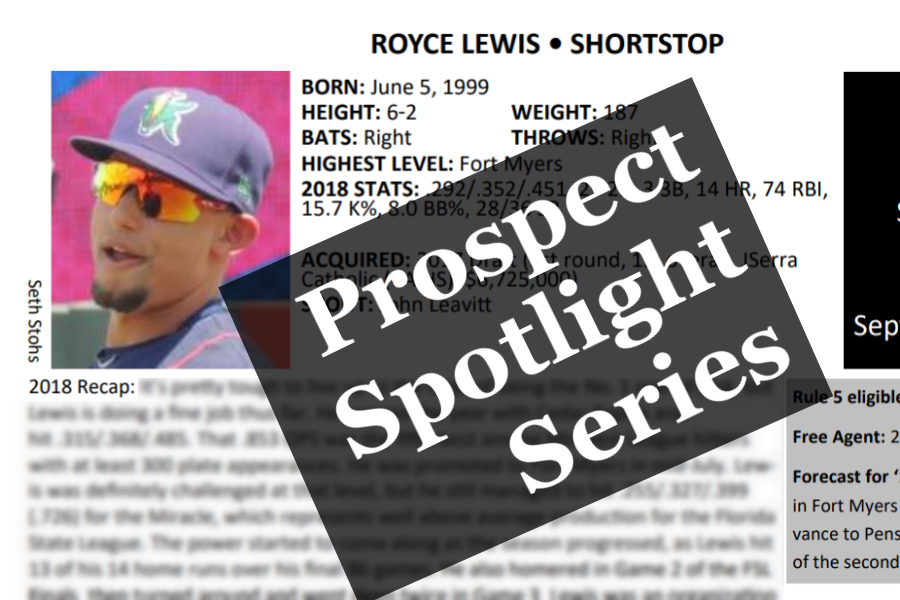 Before we get to Lewis, here's a quick look at the players we've featured so far in this series: Jhoan Duran Alex Kirilloff Lewis Thorpe Each of the highlight packages in this series focuses on a specific aspect of a player's game or homes in on a particular performance. When it comes to Lewis, there aren't many questions. He was the No. 1 overall pick and is a consensus top-10 prospect in all of baseball. If there's anything up for debate, however, it's his defense. Of course, you could say this about pretty much every shortstop ever. There is an incredibly high bar set for shortstop defense, and rightly so. It's very difficult to try to get a good read on a player's defense. Loads of advanced metrics have become available that have shined a light on fielding at the Major League level, but there's nothing available for minor leaguers. Well, at least publicly. So let's take a look at some video. The last Twins shortstop to earn at least three straight Opening Day starts was Cristian Guzman (1999-2004), so this is a team that could use some stability at the position. Will Lewis be the man to provide that steady presence? It's too early to tell, but I wouldn't bet against it at this point. So, now that you've seen a little of Royce's defense, let me know what you think. I can't quite put my finger on it, but there is something about his style that strikes me as somewhat unorthodox. Still, he's also showing all the raw skills you'd want in a shortstop, so I see no reason to move him off the position anytime soon. Lewis is just one of more than 160 players featured in the Prospect Handbook.We had a ton of fun putting the book together and we’re really excited for people to read it. Recognizing these minor league players for their efforts and ability is a big motivating factor in the project, so we would love for you to pick up a copy. Click here for more information on the 2019 Minnesota Twins Prospect Handbook
 -
What about Adam Ottavino? Even ignoring all the health problems he's had, the guy just posted a 5.06 ERA (5.16 FIP) in 2017. Brad Brach has never posted an ERA over 3.78 (which came is rookie season) and his FIP hasn't been over 3.90 in the five seasons since leaving San Diego. Brach is also a bit younger than Ottavino, yet Otto was projected to get 3$30MM and Brach 2/$12MM.
-
My main point is top dollar doesn't necessarily mean you're getting top results in the bullpen market. I agree that you do have to address the bullpen one way or another. I don't love the idea of crossing your fingers that Moya/Vasquez/Curtiss blossoms or you can successfully convert Romero or another starter. If that happens, great! But you shouldn't be banking on it. I do feel the Twins have enough depth in the system to trade some prospects for an established reliever who has multiple years of team control and there's no reason to think you couldn't pull off a trade over the offseason. I'm thinking maybe like a Mychal Givens or Archie Bradley type. As far as free agency goes, consider this: 2017-18 ERA 2.72 Adam Warren 3.03 Oliver Perez 3.21 Hunter Strickland 3.38 Brad Brach 3.43 Justin Wilson 3.50 Adam Ottavino 3.82 Cody Allen 2017-18 FIP 2.79 Oliver Perez 3.45 Adam Warren 3.51 Justin Wilson 3.63 Brad Brach 3.72 Adam Ottavino 3.87 Cody Allen 3.97 Hunter Strickland Despite those numbers, I think the Twins signing Ottavino and Allen to nice multi-year deals would garner a ton more excitement than if they nabbed say Warren and Perez or Brach and Wilson on modest one-year deals.
-
Article: Solving Stephen Gonsalves
Tom Froemming replied to Nick Nelson's topic in Twins Daily Front Page News
Great stuff here Nick. I think Gonsalves might be the guy who has the most to gain in working with a tech-savvy pitching instructor like Wes Johnson. It seems possible a mechanical adjustment or work on better pitch tunneling could go a long way for a pitcher like Stephen. As far has his velocity goes, most Twins fans would have been happy if they signed Patrick Corbin or went out and got Dallas Keuchel. In terms of average perceived velocity on their four-seam fastballs, Gonsalves (90.76 mph) actually ranks ahead of both Corbin (90.69) and Keuchel (89.46). So it's not like his lack of elite velocity disqualifies him from potentially becoming a very good MLB pitcher.
