



Ted Schwerzler
-
Posts
5,149 -
Joined
-
Last visited
Content Type
Profiles
News
Minnesota Twins Videos
2026 Minnesota Twins Top Prospects Ranking
2022 Minnesota Twins Draft Picks
Minnesota Twins Free Agent & Trade Rumors, Notes, & Tidbits
Guides & Resources
2023 Minnesota Twins Draft Picks
The Minnesota Twins Players Project
2024 Minnesota Twins Draft Picks
2025 Minnesota Twins Draft Pick Tracker
2026 Minnesota Twins Draft Tracker: Picks & Bonuses
Forums
Blogs
Events
Store
Downloads
Gallery
Everything posted by Ted Schwerzler
-
Get to Know Twins Draft Pick, RHP Paulshawn Pasqualotto
Ted Schwerzler posted an article in MLB Draft
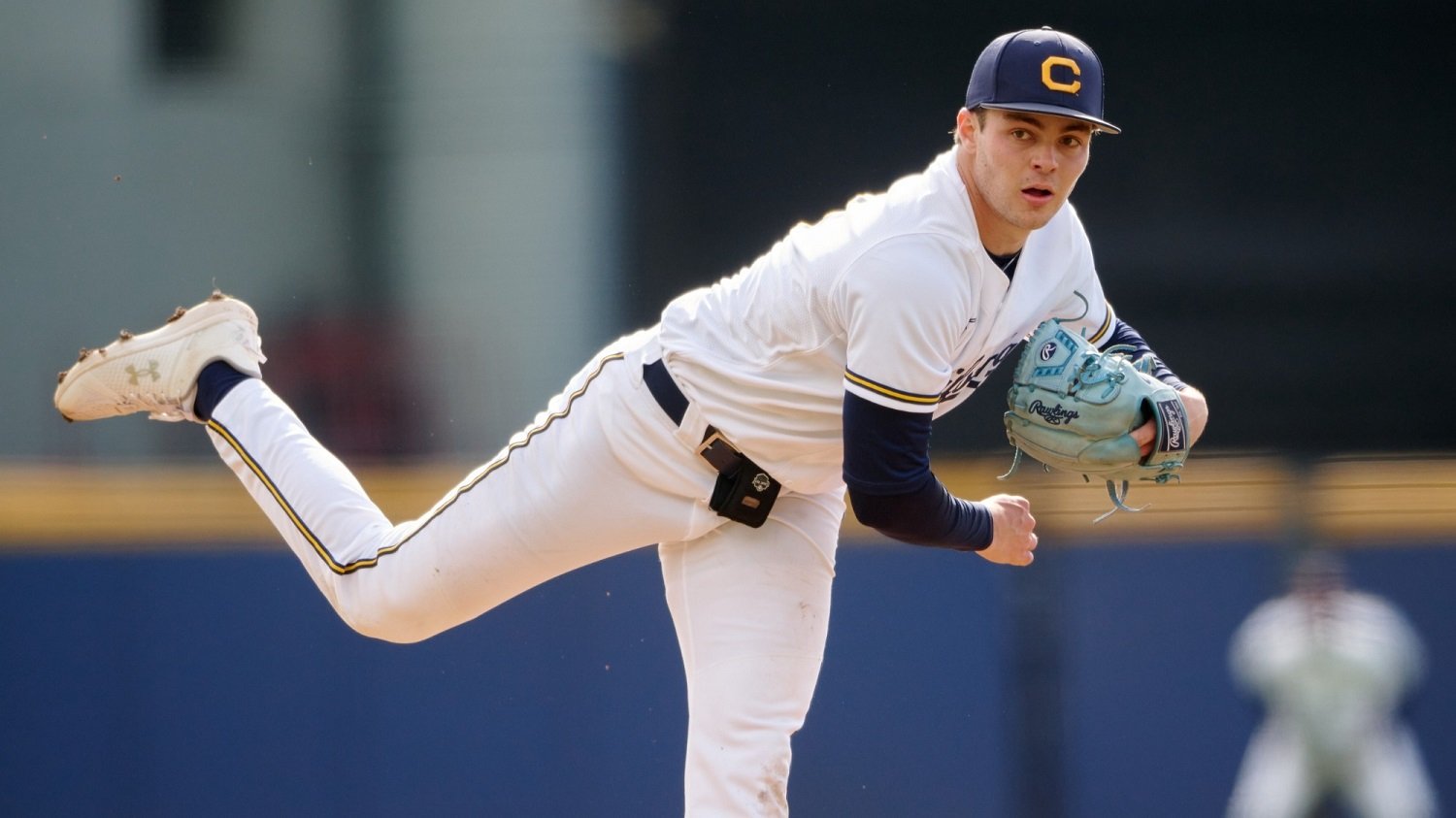 One of the best names in the 2023 Major League Baseball Draft, Paulshawn Pasqualotto joins the Minnesota Twins after blowing out his elbow during the 2021 season. Pitching for the University of California, Pasqualotto had hopes of going between the fourth and eighth rounds, but Minnesota found substantial value getting him just a bit later. Now recovered from the elbow surgery, Pasqualotto is looking to quickly ascend the ranks of Minnesota’s farm system, and has hopes of establishing himself as a legitimate weapon sooner rather than later. I caught up with him this week following his draft selection, and here’s what he had to say: Paulshawn Pasqualotto: It’s definitely a team I didn’t expect to go to as I had a few other teams that showed a bit more interest. Anything can happen on draft day though. I was honestly projected to go four-to-eight, and for whatever reason I dropped to the 12th, and I can’t really control that. I feel really good going to the Twins. I feel very welcomed. Twins Daily: You’ve had a journey in college that has been stunted by Tommy John surgery; how does dealing with the unexpected change or shape your maturity and the way you enter professional baseball? PP: It sucked because I feel like I did everything I could prior to blowing out for that not to happen, and I think it’s inevitable in some cases. Throwing is not necessarily a very healthy thing to do, especially if you throw at a decent velocity. I think it helped me maturity wise because I got to sit there for the last half of the season. I think I made the right decision sitting out and watching a year-and-a-half of baseball. Talking with pitchers such as Mitch White, and Aaron Shortridge, that’s something I have taken note of. Both have previously gotten TJ so understanding where they have come from is huge. I wanted to learn as much as I could sitting in the dugout rather than just wasting my time and going through the motions. I definitely realized that I can’t take baseball for granted because it can be taken from you at any moment. TD: So often Tommy John surgery is assumed to be just a routine thing at this point. How do you handle that journey mentally? PP: It’s definitely tough. You can do everything right and still have something go wrong. For example, Dustin May had to get flexor tendon surgery. I’m sure he took his rehab seriously, and yet he still had to go get a second surgery. Things happen and surgery doesn’t always go smoothly. I could have done everything right and come back throwing 85 mph and maybe I’m not in this position right now. Trusting you’re going to be back fine, and trying to be optimistic is all you can do. I was rehabbing three to five days at times. It’s tough mentally. Surrounding myself with my teammates and family, having that support system, was definitely the number one thing. It’s something I feel like I grew from, and I try to believe everything happens for a reason. TD: You played in the Cape Cod league this past summer. How do you feel like that set you up for professional baseball? PP: I feel ready to jump into pro ball. I think it prepared me well. Having Coach (Mike) Roberts as a resource was great. He taught me a lot of things, and being surrounded by the best of the best players. Being able to pick the brains of players around you is huge, everyone is going through it and your teammates are also trying to be the best. Being able to build relationships with players from schools all around the country was great. It was a really cool experience. I have never got to stay with a host family, and that was a really cool experience as well. Funny thing, my roommate for the Cape was Tucker Novotny who plays for the University of Minnesota. He was super hyped up for me getting drafted by the Twins. TD: What does your arsenal look like, and what do you typically utilize while on the mound? PP: My best pitch is my changeup. I had a plus curveball my freshman year, and working back towards that is something I’ve had to do post Tommy John. Command is the last thing that seems to come back from the surgery. It’s tough to be patient. My curveball is something that I think can give me a big boost when I get it all back. It was even with my changeup if not better. This year was about 50/50 between my fastball and changeup, so if I have that third pitch it’s a whole new ballgame. TD: What do you know about the Twins organization or Minnesota as a whole? PP: Honestly, not much. My friends saw a Twitter post about the player development and my agent mentioned how good it was as well. That made me really excited. I saw the organization really likes changeups and that fits me well. TD: When not on the mound, what do you like to do away from the game to stay loose and take your mind off of baseball? PP: I like to hang out with my teammates, friends, and family. I didn’t have an abundance of downtime at Cal with school, training, and practice. I don’t really play video games like I used to. I don’t really watch TV or anything, so spending time with people around me is pretty much it. Welcome to Twins Territory, Paulshawn!
 -
Minnesota has had their fair share of rehabbing pitchers in recent seasons, and with as prevalent as elbow surgeries have become, they haven’t shied away from that talent. Enter Cal Berkeley’s Paulshawn Pasqualotto. Image courtesy of Cal Baseball - Robert Edwards One of the best names in the 2023 Major League Baseball Draft, Paulshawn Pasqualotto joins the Minnesota Twins after blowing out his elbow during the 2021 season. Pitching for the University of California, Pasqualotto had hopes of going between the fourth and eighth rounds, but Minnesota found substantial value getting him just a bit later. Now recovered from the elbow surgery, Pasqualotto is looking to quickly ascend the ranks of Minnesota’s farm system, and has hopes of establishing himself as a legitimate weapon sooner rather than later. I caught up with him this week following his draft selection, and here’s what he had to say: Paulshawn Pasqualotto: It’s definitely a team I didn’t expect to go to as I had a few other teams that showed a bit more interest. Anything can happen on draft day though. I was honestly projected to go four-to-eight, and for whatever reason I dropped to the 12th, and I can’t really control that. I feel really good going to the Twins. I feel very welcomed. Twins Daily: You’ve had a journey in college that has been stunted by Tommy John surgery; how does dealing with the unexpected change or shape your maturity and the way you enter professional baseball? PP: It sucked because I feel like I did everything I could prior to blowing out for that not to happen, and I think it’s inevitable in some cases. Throwing is not necessarily a very healthy thing to do, especially if you throw at a decent velocity. I think it helped me maturity wise because I got to sit there for the last half of the season. I think I made the right decision sitting out and watching a year-and-a-half of baseball. Talking with pitchers such as Mitch White, and Aaron Shortridge, that’s something I have taken note of. Both have previously gotten TJ so understanding where they have come from is huge. I wanted to learn as much as I could sitting in the dugout rather than just wasting my time and going through the motions. I definitely realized that I can’t take baseball for granted because it can be taken from you at any moment. TD: So often Tommy John surgery is assumed to be just a routine thing at this point. How do you handle that journey mentally? PP: It’s definitely tough. You can do everything right and still have something go wrong. For example, Dustin May had to get flexor tendon surgery. I’m sure he took his rehab seriously, and yet he still had to go get a second surgery. Things happen and surgery doesn’t always go smoothly. I could have done everything right and come back throwing 85 mph and maybe I’m not in this position right now. Trusting you’re going to be back fine, and trying to be optimistic is all you can do. I was rehabbing three to five days at times. It’s tough mentally. Surrounding myself with my teammates and family, having that support system, was definitely the number one thing. It’s something I feel like I grew from, and I try to believe everything happens for a reason. TD: You played in the Cape Cod league this past summer. How do you feel like that set you up for professional baseball? PP: I feel ready to jump into pro ball. I think it prepared me well. Having Coach (Mike) Roberts as a resource was great. He taught me a lot of things, and being surrounded by the best of the best players. Being able to pick the brains of players around you is huge, everyone is going through it and your teammates are also trying to be the best. Being able to build relationships with players from schools all around the country was great. It was a really cool experience. I have never got to stay with a host family, and that was a really cool experience as well. Funny thing, my roommate for the Cape was Tucker Novotny who plays for the University of Minnesota. He was super hyped up for me getting drafted by the Twins. TD: What does your arsenal look like, and what do you typically utilize while on the mound? PP: My best pitch is my changeup. I had a plus curveball my freshman year, and working back towards that is something I’ve had to do post Tommy John. Command is the last thing that seems to come back from the surgery. It’s tough to be patient. My curveball is something that I think can give me a big boost when I get it all back. It was even with my changeup if not better. This year was about 50/50 between my fastball and changeup, so if I have that third pitch it’s a whole new ballgame. TD: What do you know about the Twins organization or Minnesota as a whole? PP: Honestly, not much. My friends saw a Twitter post about the player development and my agent mentioned how good it was as well. That made me really excited. I saw the organization really likes changeups and that fits me well. TD: When not on the mound, what do you like to do away from the game to stay loose and take your mind off of baseball? PP: I like to hang out with my teammates, friends, and family. I didn’t have an abundance of downtime at Cal with school, training, and practice. I don’t really play video games like I used to. I don’t really watch TV or anything, so spending time with people around me is pretty much it. Welcome to Twins Territory, Paulshawn! View full article
-
Despite typically targeting more college players, Minnesota selected four high school players within their first six picks of the 2023 MLB Draft. Among them was Wisconsin Gatorade Player of the Year Dylan Questad. Image courtesy of Mark J. Rebilas-USA TODAY Sports Keeping a Midwest kid home, the Minnesota Twins went with Dylan Questad from Milwaukee Brewers territory. He took home the Gatorade Player of the Year honors during his senior season, and his fastball has been clocked up to 97 mph. He had some very strong performances over the summer, and that was something he attributed to his rising draft stock. Taking in the excitement of entering professional baseball, I caught up with Questad in between holes during a round of golf. Here’s what he had to say about the next step in his journey: Twins Daily: Tell us a little bit about your background as a pitcher, through high school, winning Gatorade Player of the year, and how your senior season set you up to be in this spot? Dylan Questad: As a pitcher, I have always had a pretty good arm. I think that’s why my fastball has been one of my best pitches. In the past two years, I have really been working with my pitching coaches on becoming more of a pitcher instead of just a thrower where I try to dominate with my fastball. We had a really good team this year. I think we got caught on the wrong day during our sectional game. Last summer was the best I ever pitched. I threw pretty good on some of the biggest stages the summer had to offer. I felt like I showed all of my stuff week in and week out. TD: Besides the fastball, what else do you throw? What do you feel confident with? DQ: Outside of the fastball, my two best pitches are my changeup and then a curveball. I’m working on adding in a slider. Some days it can be my best pitch, but others it’s just too inconsistent. I’m also working on adding in a sinker. They are both a work in progress, and I’d like to develop them more throughout my professional career. TD: What are you most looking forward to gaining from a professional development standpoint now entering the Twins organization? DQ: I’m really looking forward to having coaches available to me 24/7 now. I didn’t have my pitching coach to watch me every day during high school ball. Having the best of the best coaches watch me every day and give me adjustments to work on will help me the most. TD: How does weighing your Arkansas commitment and deciding through the process of turning pro? DQ: The thing that made me choose pro ball over college is that the Twins liked me the most out of the teams I was talking to. They invested enough in me to have confidence in me to work with me. I was in touch with their area scout, he came to my house once or twice. That meant a lot to me and showed me they care about their players. TD: What’s next from here? DQ: I leave for Fort Myers on Sunday and am down there for four days. From there, I guess I’m just along for the ride. TD: Being in Wisconsin, you’re obviously familiar with the Twins organization. What do you know about Minnesota as a franchise? DQ: I definitely can see how well they develop their pitchers as they have two all-stars in Sonny Gray and Joe Ryan. Also, they have Duran as a closer, and he’s one of the most electric players in baseball. I think that they develop their players really well, and I’m looking forward to being a part of that. TD: Looking at the landscape of professional baseball, is there a guy or two you have emulated in your game? DQ: Recently, I have been studying a lot of Spencer Strider. I think mine and his game, and our body types are very similar. I have been watching a lot of him. (As an aside, when asked if he’s rocking the mustache, Questad mentioned he just dyed it, love it!) TD: Off of the baseball diamond, what do you like to get away from the game? DQ: I’m a pretty normal kid outside of baseball. I like being with my friends, and I really cherish those memories. I don’t need to do a lot of big things to make memories with them. I love to golf. I have been getting into it a lot recently. Welcome to Twins Territory, Dylan! View full article
-
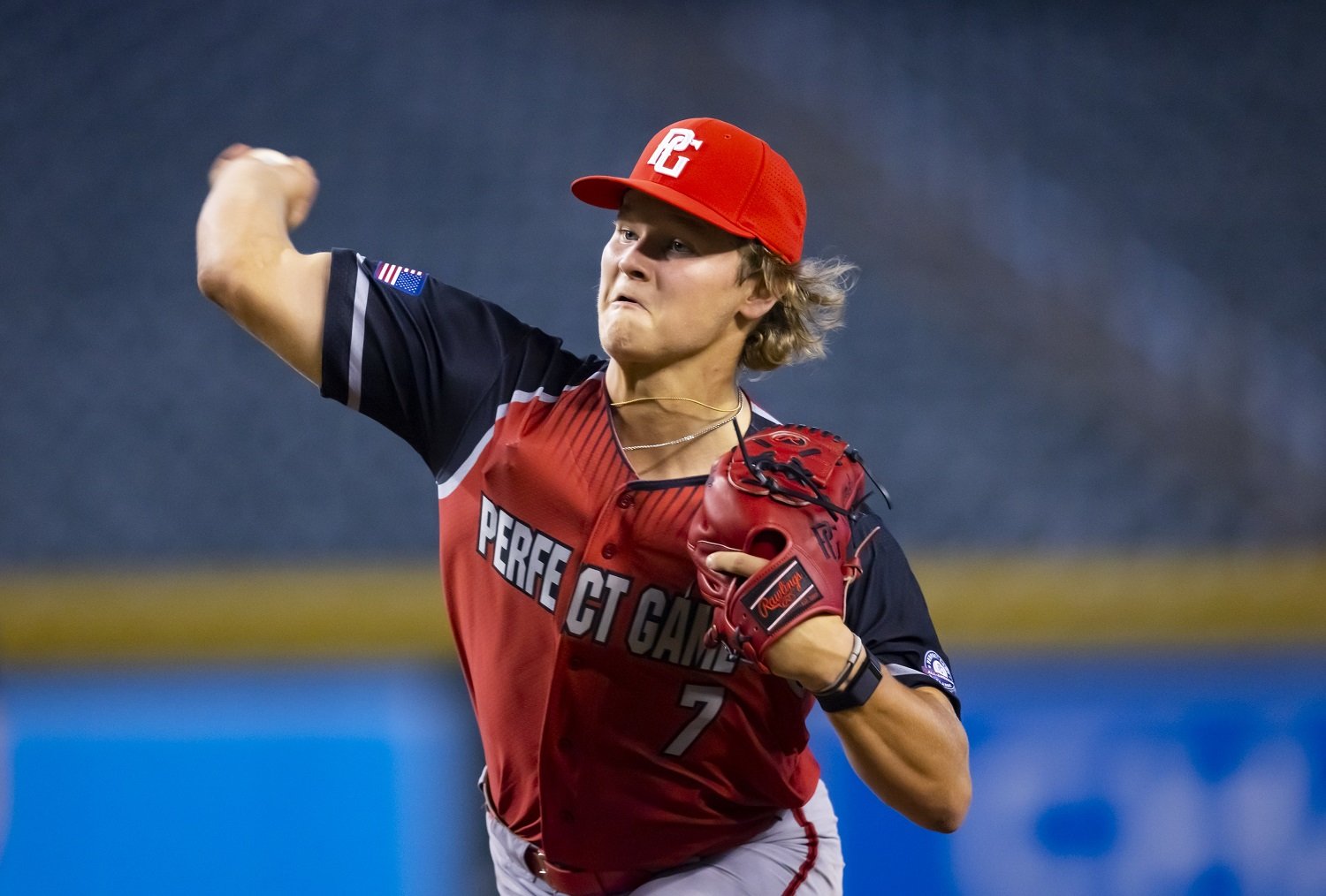 Keeping a Midwest kid home, the Minnesota Twins went with Dylan Questad from Milwaukee Brewers territory. He took home the Gatorade Player of the Year honors during his senior season, and his fastball has been clocked up to 97 mph. He had some very strong performances over the summer, and that was something he attributed to his rising draft stock. Taking in the excitement of entering professional baseball, I caught up with Questad in between holes during a round of golf. Here’s what he had to say about the next step in his journey: Twins Daily: Tell us a little bit about your background as a pitcher, through high school, winning Gatorade Player of the year, and how your senior season set you up to be in this spot? Dylan Questad: As a pitcher, I have always had a pretty good arm. I think that’s why my fastball has been one of my best pitches. In the past two years, I have really been working with my pitching coaches on becoming more of a pitcher instead of just a thrower where I try to dominate with my fastball. We had a really good team this year. I think we got caught on the wrong day during our sectional game. Last summer was the best I ever pitched. I threw pretty good on some of the biggest stages the summer had to offer. I felt like I showed all of my stuff week in and week out. TD: Besides the fastball, what else do you throw? What do you feel confident with? DQ: Outside of the fastball, my two best pitches are my changeup and then a curveball. I’m working on adding in a slider. Some days it can be my best pitch, but others it’s just too inconsistent. I’m also working on adding in a sinker. They are both a work in progress, and I’d like to develop them more throughout my professional career. TD: What are you most looking forward to gaining from a professional development standpoint now entering the Twins organization? DQ: I’m really looking forward to having coaches available to me 24/7 now. I didn’t have my pitching coach to watch me every day during high school ball. Having the best of the best coaches watch me every day and give me adjustments to work on will help me the most. TD: How does weighing your Arkansas commitment and deciding through the process of turning pro? DQ: The thing that made me choose pro ball over college is that the Twins liked me the most out of the teams I was talking to. They invested enough in me to have confidence in me to work with me. I was in touch with their area scout, he came to my house once or twice. That meant a lot to me and showed me they care about their players. TD: What’s next from here? DQ: I leave for Fort Myers on Sunday and am down there for four days. From there, I guess I’m just along for the ride. TD: Being in Wisconsin, you’re obviously familiar with the Twins organization. What do you know about Minnesota as a franchise? DQ: I definitely can see how well they develop their pitchers as they have two all-stars in Sonny Gray and Joe Ryan. Also, they have Duran as a closer, and he’s one of the most electric players in baseball. I think that they develop their players really well, and I’m looking forward to being a part of that. TD: Looking at the landscape of professional baseball, is there a guy or two you have emulated in your game? DQ: Recently, I have been studying a lot of Spencer Strider. I think mine and his game, and our body types are very similar. I have been watching a lot of him. (As an aside, when asked if he’s rocking the mustache, Questad mentioned he just dyed it, love it!) TD: Off of the baseball diamond, what do you like to get away from the game? DQ: I’m a pretty normal kid outside of baseball. I like being with my friends, and I really cherish those memories. I don’t need to do a lot of big things to make memories with them. I love to golf. I have been getting into it a lot recently. Welcome to Twins Territory, Dylan!
 -
The Minnesota Twins enter the second half trailing the Cleveland Guardians by a single game in the AL Central standings. They have led the division most of the way, and are still the favorite to finish on top. Doing so will require some reinforcements, and the sport should have plenty of sellers. Image courtesy of © Scott Galvin-USA TODAY Sports Adding additional wild card teams was something Rob Manfred chose to do in part with the hopes that competition would be enhanced. The trade deadline falls on August 1st, 2023, and as teams barrel towards that date, they’ll need to figure out what side of the fence they stand on. Rocco Baldelli’s Minnesota Twins should be buyers, and below you can find each assumed selling team with what they may have to offer. Detroit Tigers - Eduardo Rodriguez, Michael Lorenzen, Matthew Boyd, Jose Cisnero There’s not a lot to like despite the Tigers being a team slightly outperforming expectations. They aren’t moving on from young stars like Riley Greene or Tarik Skubal, and Spencer Torkelson isn’t being pieced out for nothing. A.J. Hinch doesn’t have a ton of productive veterans on his roster, and it seems that the trio of Rodriguez, Lorenzen, and Boyd could be the most likely. The former could command a good haul having pitched very well this season. He does have an opt-out after the year, and that could impact what the return is. Neither Lorenzen or Boyd have been very good, but could entice someone looking for a cheap piece to acquire and give them a shot with new scenery. Will Vest is a nice relief arm, but he’s under team control through 2027 and paying up for a reliever with a short track record doesn’t seem ideal. Cisnero could be an intriguing late inning arm for Detroit to move. Chicago White Sox - Yasmani Grandal, Yoan Moncada, Tim Anderson, Dylan Cease, Lucas Giolito, Lance Lynn, Joe Kelly, Kendall Graveman, Liam Hendriks, Keynan Middleton, Reynaldo Lopez Just how much the White Sox want to blow this thing up with Pedro Grifol having similar results to Tony La Russa remains to be seen. Grandal and Moncada are probably two of the easiest veteran bats to move, and while Anderson is someone they need to deal, his value has never been lower. The pitching side, however, presents plenty of options. Cease still is under team control and would command a haul, but that could help to spark a rebuild. Both Giolito and Lynn should be relatively straightforward coming to the end of their deals, and the former still is a reliable starter. Chicago paid handsomely for their bullpen and getting relief there could be big. Kelly has been fine, and although Graveman’s secondary numbers are scary, he has been a high-leverage pitcher for a while. Moving Hendriks this season, and considering he’s currently on the IL, may be tough but they could get some value before he walks at the end of the year. With Chicago being open for business, basically anyone in their pen could be had, so we see Middleton and Lopez show up here. Cleveland Guardians - Shane Bieber, Aaron Civale I struggle to believe the Guardians would sell as they lead the AL Central at the All-Star Break. Maybe they fall off by the end of the month, but it continues to look as though the division is a two-team race. Still, Bieber represents an interesting piece given the depth that the Guardians have. Terry Francona could see an influx of other talent in exchange for Bieber, and the rotation wouldn't necessarily miss a beat without him. Civale's inclusion is somewhat similar to Bieber. His numbers are better than he has actually pitched, but cashing in on him because of it isn't a bad idea. How the front office handles this will be fascinating. Kansas City Royals - Scott Barlow, Amir Garrett This is one of the worst teams in baseball for a reason, and they just don’t have much talent. The youth is still looking to catch on, and they aren’t trading Bobby Witt Jr. anyways. The Royals signed Aroldis Chapman for the sole reason of flipping him, and they accomplished that by sending him to the Texas Rangers. Scott Barlow or Amir Garrett could have value to competing clubs. The former has better underlying numbers than his ERA would suggest, and the latter is dealing with the exact opposite. Seattle Mariners - Eugenio Suarez, Teoscar Hernandez, Mike Ford, Paul Sewald, Justin Topa It’s not a guarantee that the Mariners sell, but they’re very clearly behind both the Rangers and Astros. Julio Rodriguez is staying put, and so too should Luis Castillo, but there are some options here. Suarez has seen the power production dip significantly, but he’s still been a valuable player and hits right-handed. Hernandez isn’t the 2021 version of himself, but he too is a right-handed power bat and can play the outfield. For has seen success in brief action during his first season with Seattle, so maybe they attempt to cash in there. Sewald is the gem of the bullpen there, and he isn’t a free agent until after next season. Topa has more team control, but much less of a track record. Los Angeles Angels - Shohei Ohtani, Brandon Drury, Hunter Renfroe, Gio Urshela, Chris Devenski, Matt Moore What the Angels should and will do couldn’t likely be further apart, but sitting on Ohtani as they miss the playoffs without Mike Trout only to benefit from a Qualifying Offer would be ugly. He’d command a ridiculous trade return, and it may be the only chance an organization unwilling to pay him $600 million gets a chance to roster him. Both Drury and Renfroe have been decent in their first season with the Angels. The former is on the books in 2024 while the latter is a free agent. Urshela came over from Minnesota and has been a consistent contact hitter with no power. Devenski isn’t the same arm he was during his early Astros days, but the stuff is usable. Los Angeles paid Moore almost $8 million this offseason, and although the results aren’t quite what he did for the Rangers in 2022, he’d still be a big boost to a bullpen. Oakland Athletics - Jace Peterson, Ramon Laureano, Brent Rooker, Paul Blackburn Similar to the Royals, there just is so little to like here. It’s a no-brainer for the Athletics to cash in on Rooker, but he’s cooled mightily since the hot start. Laureano has been dangled as a name they’d move for some time now, and it’s hard to imagine that stance has changed. Peterson is on a paltry two-year deal and is more a utility option than anything else, but Oakland is always in the business of clearing money. It’s too bad Trevor May, Sam Moll, and Austin Pruitt haven’t presented more reasons for a team to covet their services as relief help. Blackburn doesn't represent an exciting piece, but he's a solid veteran option that comes with team control. New York Mets - Tommy Pham, Mark Canha, Max Scherzer, David Robertson, Brooks Raley, Adam Ottavino The Mets being in this position is not something Steve Cohen wanted to see by any stretch. Unfortunately the money spent hasn’t translated to wins, and they already moved Eduardo Escobar to the Angels. Pham and Canha are having fine seasons and both represent a veteran presence that could be moved. I’m not sure they want to deal Scherzer, even with his opt-out after 2023, but he would command plenty even with the decreased numbers. Relief options are available in New York, and to what extent a team may be intrigued should come in across the board. Washington Nationals - Jeimer Candelario, Ildemaro Vargas, Patrick Corbin, Carl Edwards Jr., Kyle Finnegan The Nationals aren’t a very good team, and they’re relatively young, so the options they have to offer pieces aren’t aplenty. Candelario is a career utility type that is seeing somewhat of a power breakout, while Vargas remains a guy who can play all over the diamond operating at replacement level. You could do better than Corbin for a starting arm, but you could do worse as well. Both Edardwars Jr. and Finnegan have been fine out of the pen, but neither has inspiring secondary numbers or strikeout totals. Chicago Cubs - Cody Bellinger, Yan Gomes, Mike Tauchman, Patrick Wisdom, Marcus Stroman, Drew Smyly, Mark Leiter Jr., Michael Fulmer Taking a chance on Bellinger, the Cubs paid up for one year of his services and they should look to cash in. He could be flipped somewhere during his resurgence, and Chicago will get nice pieces back in return. They haven’t come to a long-term agreement with Stroman, and that makes it more than likely he is on the move. Gomes and Tauchman are veterans that are performing just fine and could be backup options for a competitor, while Wisdom has shown more than he has in 2023. Leiter Jr. is one of the few relief options Chicago could look to part with, and while Smyly shouldn’t take much to acquire, he could probably be had as well. A reunion with Fulmer could be in the cards as he did pitch for the Twins last year. The numbers aren't as good, but the familiarity is there. Pittsburgh Pirates - Andrew McCutchen, Connor Joe, Carlos Santana, David Bednar, Rich Hill For a while it looked as though David Shelton’s squad was going to compete but they have since come back to earth. McCutchen going home was a fun story this offseason, and he’s been great, but moving him to a competitor is something they need to do. He can re-sign and retire a Pirate down the line. Both Joe and Sanatana are veterans that are holding their own. Neither has been spectacular, but they could have value to a team looking for a slight bump. The Pirates didn’t trade Bednar last year, and doing so this year seems unlikely as well. However, he’s one of the better relief arms in baseball and under team control. If they don’t view him in the same development window as their next wave, he’d net them a nice return. Hill isn’t pitching great this season, and he’s at the end of his career, but he’d make a nice fifth arm for a team. St. Louis Cardinals - Paul Goldschmidt, Nolan Arenado, Paul DeJong, Jack Flaherty, Jordan Montgomery, Steven Matz, Jordan Hicks One of the most shocking teams to be sellers in that they were supposed to compete, the Cardinals have plenty of top tier talent to move. Both of their superstar talents on offense could be pieced out, and Goldschmidt would entire plenty of teams. Arenado is younger with more years left on his contract, but it would depend on how they view his career intersecting with their next wave. DeJong has been cast aside previously and is having a fine season, it could be time for St. Louis to flip him for something. It makes sense that Flaherty would be moved as an impending free agent, and he has pitched better of late. Montgomery is also a free agent in 2024, and while Matz was just recently signed to a four-year deal, it hasn’t worked and they could look to get out from the contract. It's been an up and down career for Hicks, but he's a free agent next year and striking out everyone. That type of flamethrower in the bullpen will entice someone. San Diego Padres - Blake Snell, Michael Wacha, Seth Lugo, Josh Hader, Tim Hill Another big spender this offseason, it makes more sense for the Padres to deal pitching than hitting. Maybe they don’t sign Juan Soto to an extension, but they should run it back with him next year. Their other bats are either young, or have recently been extended. Snell, Wacha, Lugo, and Hader will all be free agents this offseason, and flipping a couple of them could help to restock the farm system. Snell would be the biggest get and has looked good this year, but Lugo is right there, and Hader remains one of the game’s best closers. Hill has a shiny ERA but doesn’t have much room for error and the underlying numbers are ugly. Colorado Rockies - Randal Grichuk, Brent Suter, Brad Hand, Daniel Bard, C.J. Cron Rarely having a straightforward plan, it’s hard to guess what the Rockies may be up to. Grichuk is a veteran in the final year of his deal, and while he’s been fine, his power has been non-existent despite playing in elevation. Suter is having a nice year during his first in Colorado, and while Hand’s ERA is not good, some of his secondary numbers suggest he could be fine elsewhere. Bard is not pitching near as well as he did a season ago, but it seems certain he’ll be moved and an acquiring organization could look to get him back trending in that direction. Cron is in the final year of his deal, and while he's having a down year, sending him anywhere makes sense for Colorado. There will always be more names than those listed here, but this is a good outline of what team’s should be sellers at the deadline and some of what they’ll have to offer. For a Twins team needing more than a couple of pieces, they should be expected to be plenty active. View full article
-
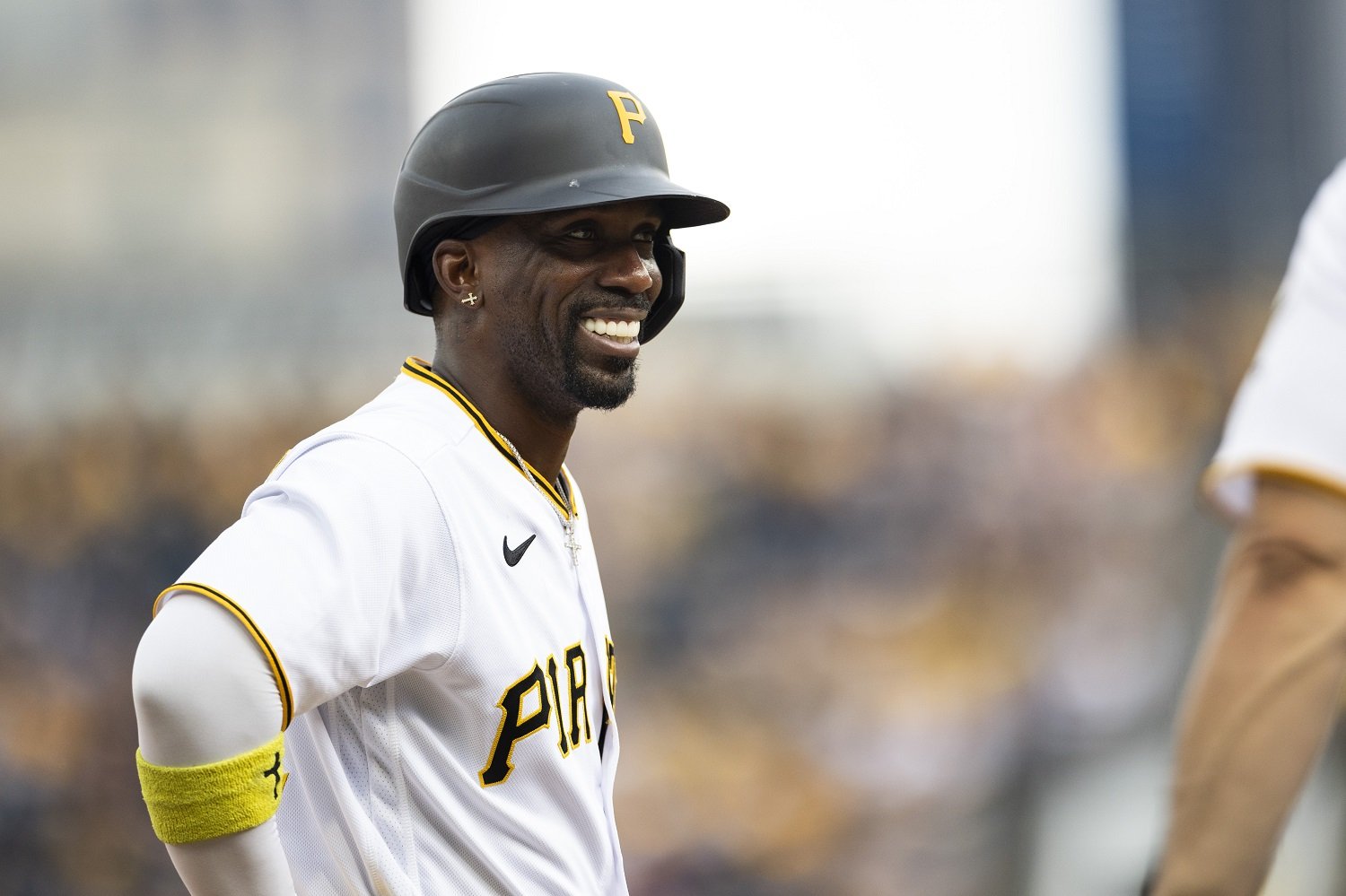 Adding additional wild card teams was something Rob Manfred chose to do in part with the hopes that competition would be enhanced. The trade deadline falls on August 1st, 2023, and as teams barrel towards that date, they’ll need to figure out what side of the fence they stand on. Rocco Baldelli’s Minnesota Twins should be buyers, and below you can find each assumed selling team with what they may have to offer. Detroit Tigers - Eduardo Rodriguez, Michael Lorenzen, Matthew Boyd, Jose Cisnero There’s not a lot to like despite the Tigers being a team slightly outperforming expectations. They aren’t moving on from young stars like Riley Greene or Tarik Skubal, and Spencer Torkelson isn’t being pieced out for nothing. A.J. Hinch doesn’t have a ton of productive veterans on his roster, and it seems that the trio of Rodriguez, Lorenzen, and Boyd could be the most likely. The former could command a good haul having pitched very well this season. He does have an opt-out after the year, and that could impact what the return is. Neither Lorenzen or Boyd have been very good, but could entice someone looking for a cheap piece to acquire and give them a shot with new scenery. Will Vest is a nice relief arm, but he’s under team control through 2027 and paying up for a reliever with a short track record doesn’t seem ideal. Cisnero could be an intriguing late inning arm for Detroit to move. Chicago White Sox - Yasmani Grandal, Yoan Moncada, Tim Anderson, Dylan Cease, Lucas Giolito, Lance Lynn, Joe Kelly, Kendall Graveman, Liam Hendriks, Keynan Middleton, Reynaldo Lopez Just how much the White Sox want to blow this thing up with Pedro Grifol having similar results to Tony La Russa remains to be seen. Grandal and Moncada are probably two of the easiest veteran bats to move, and while Anderson is someone they need to deal, his value has never been lower. The pitching side, however, presents plenty of options. Cease still is under team control and would command a haul, but that could help to spark a rebuild. Both Giolito and Lynn should be relatively straightforward coming to the end of their deals, and the former still is a reliable starter. Chicago paid handsomely for their bullpen and getting relief there could be big. Kelly has been fine, and although Graveman’s secondary numbers are scary, he has been a high-leverage pitcher for a while. Moving Hendriks this season, and considering he’s currently on the IL, may be tough but they could get some value before he walks at the end of the year. With Chicago being open for business, basically anyone in their pen could be had, so we see Middleton and Lopez show up here. Cleveland Guardians - Shane Bieber, Aaron Civale I struggle to believe the Guardians would sell as they lead the AL Central at the All-Star Break. Maybe they fall off by the end of the month, but it continues to look as though the division is a two-team race. Still, Bieber represents an interesting piece given the depth that the Guardians have. Terry Francona could see an influx of other talent in exchange for Bieber, and the rotation wouldn't necessarily miss a beat without him. Civale's inclusion is somewhat similar to Bieber. His numbers are better than he has actually pitched, but cashing in on him because of it isn't a bad idea. How the front office handles this will be fascinating. Kansas City Royals - Scott Barlow, Amir Garrett This is one of the worst teams in baseball for a reason, and they just don’t have much talent. The youth is still looking to catch on, and they aren’t trading Bobby Witt Jr. anyways. The Royals signed Aroldis Chapman for the sole reason of flipping him, and they accomplished that by sending him to the Texas Rangers. Scott Barlow or Amir Garrett could have value to competing clubs. The former has better underlying numbers than his ERA would suggest, and the latter is dealing with the exact opposite. Seattle Mariners - Eugenio Suarez, Teoscar Hernandez, Mike Ford, Paul Sewald, Justin Topa It’s not a guarantee that the Mariners sell, but they’re very clearly behind both the Rangers and Astros. Julio Rodriguez is staying put, and so too should Luis Castillo, but there are some options here. Suarez has seen the power production dip significantly, but he’s still been a valuable player and hits right-handed. Hernandez isn’t the 2021 version of himself, but he too is a right-handed power bat and can play the outfield. For has seen success in brief action during his first season with Seattle, so maybe they attempt to cash in there. Sewald is the gem of the bullpen there, and he isn’t a free agent until after next season. Topa has more team control, but much less of a track record. Los Angeles Angels - Shohei Ohtani, Brandon Drury, Hunter Renfroe, Gio Urshela, Chris Devenski, Matt Moore What the Angels should and will do couldn’t likely be further apart, but sitting on Ohtani as they miss the playoffs without Mike Trout only to benefit from a Qualifying Offer would be ugly. He’d command a ridiculous trade return, and it may be the only chance an organization unwilling to pay him $600 million gets a chance to roster him. Both Drury and Renfroe have been decent in their first season with the Angels. The former is on the books in 2024 while the latter is a free agent. Urshela came over from Minnesota and has been a consistent contact hitter with no power. Devenski isn’t the same arm he was during his early Astros days, but the stuff is usable. Los Angeles paid Moore almost $8 million this offseason, and although the results aren’t quite what he did for the Rangers in 2022, he’d still be a big boost to a bullpen. Oakland Athletics - Jace Peterson, Ramon Laureano, Brent Rooker, Paul Blackburn Similar to the Royals, there just is so little to like here. It’s a no-brainer for the Athletics to cash in on Rooker, but he’s cooled mightily since the hot start. Laureano has been dangled as a name they’d move for some time now, and it’s hard to imagine that stance has changed. Peterson is on a paltry two-year deal and is more a utility option than anything else, but Oakland is always in the business of clearing money. It’s too bad Trevor May, Sam Moll, and Austin Pruitt haven’t presented more reasons for a team to covet their services as relief help. Blackburn doesn't represent an exciting piece, but he's a solid veteran option that comes with team control. New York Mets - Tommy Pham, Mark Canha, Max Scherzer, David Robertson, Brooks Raley, Adam Ottavino The Mets being in this position is not something Steve Cohen wanted to see by any stretch. Unfortunately the money spent hasn’t translated to wins, and they already moved Eduardo Escobar to the Angels. Pham and Canha are having fine seasons and both represent a veteran presence that could be moved. I’m not sure they want to deal Scherzer, even with his opt-out after 2023, but he would command plenty even with the decreased numbers. Relief options are available in New York, and to what extent a team may be intrigued should come in across the board. Washington Nationals - Jeimer Candelario, Ildemaro Vargas, Patrick Corbin, Carl Edwards Jr., Kyle Finnegan The Nationals aren’t a very good team, and they’re relatively young, so the options they have to offer pieces aren’t aplenty. Candelario is a career utility type that is seeing somewhat of a power breakout, while Vargas remains a guy who can play all over the diamond operating at replacement level. You could do better than Corbin for a starting arm, but you could do worse as well. Both Edardwars Jr. and Finnegan have been fine out of the pen, but neither has inspiring secondary numbers or strikeout totals. Chicago Cubs - Cody Bellinger, Yan Gomes, Mike Tauchman, Patrick Wisdom, Marcus Stroman, Drew Smyly, Mark Leiter Jr., Michael Fulmer Taking a chance on Bellinger, the Cubs paid up for one year of his services and they should look to cash in. He could be flipped somewhere during his resurgence, and Chicago will get nice pieces back in return. They haven’t come to a long-term agreement with Stroman, and that makes it more than likely he is on the move. Gomes and Tauchman are veterans that are performing just fine and could be backup options for a competitor, while Wisdom has shown more than he has in 2023. Leiter Jr. is one of the few relief options Chicago could look to part with, and while Smyly shouldn’t take much to acquire, he could probably be had as well. A reunion with Fulmer could be in the cards as he did pitch for the Twins last year. The numbers aren't as good, but the familiarity is there. Pittsburgh Pirates - Andrew McCutchen, Connor Joe, Carlos Santana, David Bednar, Rich Hill For a while it looked as though David Shelton’s squad was going to compete but they have since come back to earth. McCutchen going home was a fun story this offseason, and he’s been great, but moving him to a competitor is something they need to do. He can re-sign and retire a Pirate down the line. Both Joe and Sanatana are veterans that are holding their own. Neither has been spectacular, but they could have value to a team looking for a slight bump. The Pirates didn’t trade Bednar last year, and doing so this year seems unlikely as well. However, he’s one of the better relief arms in baseball and under team control. If they don’t view him in the same development window as their next wave, he’d net them a nice return. Hill isn’t pitching great this season, and he’s at the end of his career, but he’d make a nice fifth arm for a team. St. Louis Cardinals - Paul Goldschmidt, Nolan Arenado, Paul DeJong, Jack Flaherty, Jordan Montgomery, Steven Matz, Jordan Hicks One of the most shocking teams to be sellers in that they were supposed to compete, the Cardinals have plenty of top tier talent to move. Both of their superstar talents on offense could be pieced out, and Goldschmidt would entire plenty of teams. Arenado is younger with more years left on his contract, but it would depend on how they view his career intersecting with their next wave. DeJong has been cast aside previously and is having a fine season, it could be time for St. Louis to flip him for something. It makes sense that Flaherty would be moved as an impending free agent, and he has pitched better of late. Montgomery is also a free agent in 2024, and while Matz was just recently signed to a four-year deal, it hasn’t worked and they could look to get out from the contract. It's been an up and down career for Hicks, but he's a free agent next year and striking out everyone. That type of flamethrower in the bullpen will entice someone. San Diego Padres - Blake Snell, Michael Wacha, Seth Lugo, Josh Hader, Tim Hill Another big spender this offseason, it makes more sense for the Padres to deal pitching than hitting. Maybe they don’t sign Juan Soto to an extension, but they should run it back with him next year. Their other bats are either young, or have recently been extended. Snell, Wacha, Lugo, and Hader will all be free agents this offseason, and flipping a couple of them could help to restock the farm system. Snell would be the biggest get and has looked good this year, but Lugo is right there, and Hader remains one of the game’s best closers. Hill has a shiny ERA but doesn’t have much room for error and the underlying numbers are ugly. Colorado Rockies - Randal Grichuk, Brent Suter, Brad Hand, Daniel Bard, C.J. Cron Rarely having a straightforward plan, it’s hard to guess what the Rockies may be up to. Grichuk is a veteran in the final year of his deal, and while he’s been fine, his power has been non-existent despite playing in elevation. Suter is having a nice year during his first in Colorado, and while Hand’s ERA is not good, some of his secondary numbers suggest he could be fine elsewhere. Bard is not pitching near as well as he did a season ago, but it seems certain he’ll be moved and an acquiring organization could look to get him back trending in that direction. Cron is in the final year of his deal, and while he's having a down year, sending him anywhere makes sense for Colorado. There will always be more names than those listed here, but this is a good outline of what team’s should be sellers at the deadline and some of what they’ll have to offer. For a Twins team needing more than a couple of pieces, they should be expected to be plenty active.
- 42 comments
-
- 2
-

-

-
- paul goldschmidt
- nolan arenado
- (and 3 more)
-
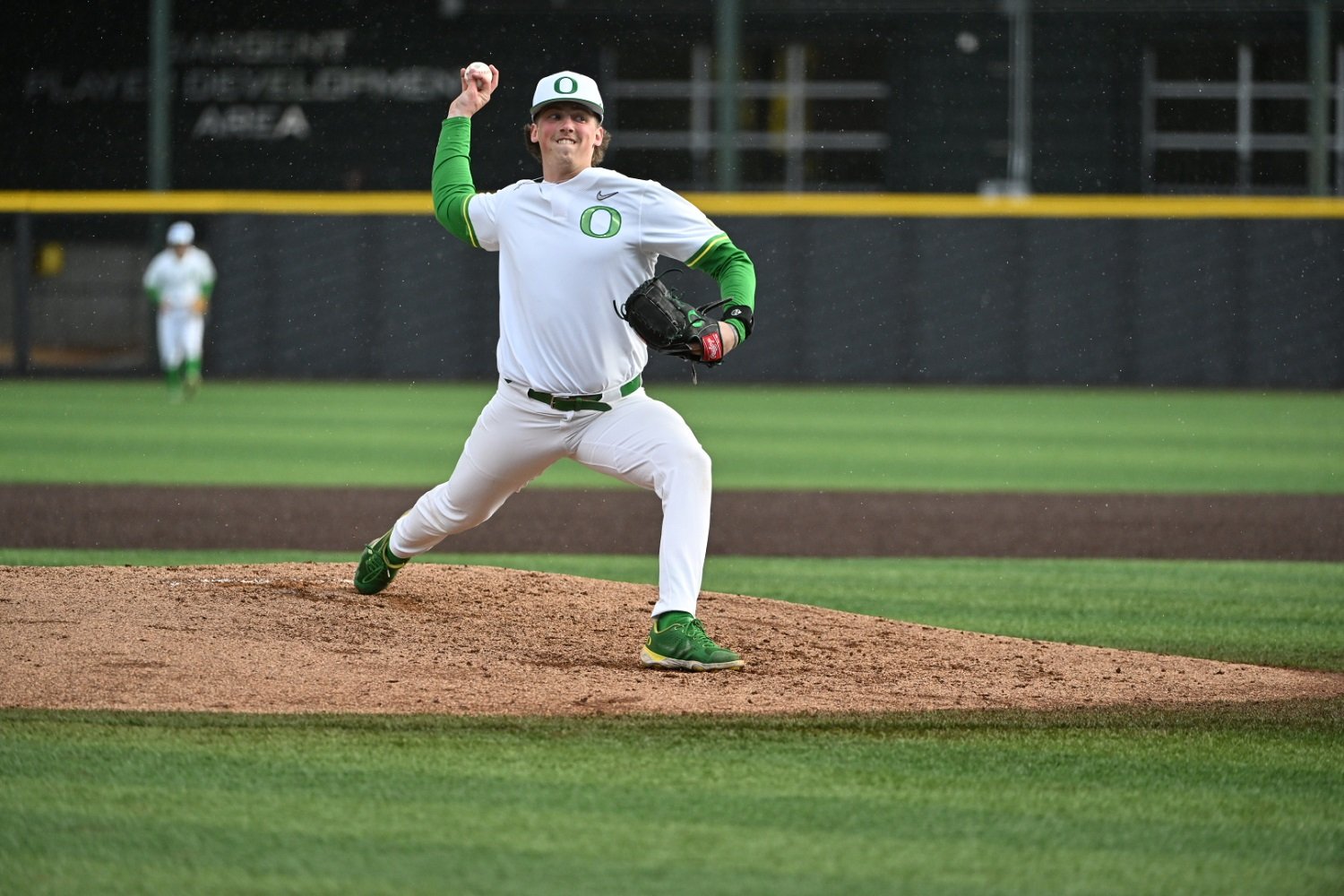 Jace Stoffal pitched for the Oregon Ducks each of the past two seasons. He made a considerable jump in 2023 after seeing the Pac-12 competition for a second time, and he positioned himself well to be selected within the first 10 rounds. Minnesota is not a stranger to Oregon having recently drafted players such as Jake Reed and Spencer Steer. Obviously the latter was eventually moved for Tyler Mahle, but Minnesota would love to see Stoffal develop into a top starter as the Reds pitcher was when they coveted him. I had a chance to talk with him following the selection, here’s what he had to say: Twins Daily: Obviously Oregon is a very good college baseball program. How have the last couple of years there set you up for pro ball and readied you to make this jump? Jace Stoffal: We are a very good program, and I was very blessed to be able to spend two years there. Coach Wosikowski is unbelievable at what he does. He gets you very mentally ready. I feel like a lot of college programs don’t run as tight of a ship as he does. He gets you prepared for every game, and we go over every single detail. I think that’s what allows us to be so good, and I think you see the same type of preparation and mentality from all of the other teams succeeding at this level while getting ready for pro ball life. TD: You saw a big jump in success over the past two seasons. Where did that come from? Did you make big development or physical changes? JS: All of the above honestly. It makes it a lot easier when you’ve done it for a year. I did gain about 10 pounds during the offseason that helped to give a velocity jump. I got stronger and that gives you confidence, and knowing I can play at that level and be very successful helps. TD: There have been a few players taken by the Twins out of Oregon over the years, what do you know about Minnesota and the organization? JS: To be completely honest, I don’t really have a lot of knowledge. I don’t follow a lot of baseball to be honest with you. Kyle Blackwell is the area scout, and I know him through one of my old coaches. I have known him for a couple of years now. TD: Tell us about your repertoire, how you look to attack on the mound, and some pitches you feel comfortable with. JS: I throw a four-seam fastball, a changeup, curveball, and a slider. I’m fastball heavy to get ahead in the count. I like to throw them early and pound the zone with all four of my pitches. I don’t like to dance around the zone, I like to move barrels. If strikeouts come, they come. I like to throw strikes and not waste a lot of pitches. TD: What are you looking most forward to at the next level with regards to working with professional development, trainers, nutritionists, etc.? JS: The development of me and my skills is going to be awesome to see, to see where I’m able to go. I feel like I have a lot more in the tank. I personally feel like I have a very high ceiling, so I’d love to see where they can take me. The nutritionist side of it, I’m not sure what that entails, but learning more about my body and what it needs to do to prepare and be at its best is super cool. TD: What was draft day like for you yesterday? Did you expect the Twins may be a team to call? JS: I knew Kyle Blackwell, and he’s been really heavily talking to me throughout the college season. I had an idea that the Twins would be one of the top teams. The whole process was super cool, talking to all the teams beforehand. Yesterday (Monday), I had my family come, and we just kind of sat and watched. To hear my name called was a dream come true. Super exciting, I couldn’t be more happy. TD: Away from the field and looking to de-stress, what hobbies do you have off the field? JS: I hunt. I’m always hunting. I’m always in the mountains. I’m from Oregon. I’m big into hunting and fishing. That’s all I do if I’m not playing baseball. I’m somewhere in the mountains. That’s something I do to decompress and get away from baseball a little bit. Welcome to Twins Territory, Jace!
- 3 comments
-
- 5
-
-

-
- jace stoffal
- jake reed
- (and 1 more)
-
The Minnesota Twins loaded up on pitching during this year’s Major League Baseball draft, and the eighth round arm they grabbed comes from a baseball pipeline in Oregon. Jace Stoffal is the latest Duck to join Twins Territory, and it sounds like he’ll fit in just fine here. Image courtesy of GoDucks.com Jace Stoffal pitched for the Oregon Ducks each of the past two seasons. He made a considerable jump in 2023 after seeing the Pac-12 competition for a second time, and he positioned himself well to be selected within the first 10 rounds. Minnesota is not a stranger to Oregon having recently drafted players such as Jake Reed and Spencer Steer. Obviously the latter was eventually moved for Tyler Mahle, but Minnesota would love to see Stoffal develop into a top starter as the Reds pitcher was when they coveted him. I had a chance to talk with him following the selection, here’s what he had to say: Twins Daily: Obviously Oregon is a very good college baseball program. How have the last couple of years there set you up for pro ball and readied you to make this jump? Jace Stoffal: We are a very good program, and I was very blessed to be able to spend two years there. Coach Wosikowski is unbelievable at what he does. He gets you very mentally ready. I feel like a lot of college programs don’t run as tight of a ship as he does. He gets you prepared for every game, and we go over every single detail. I think that’s what allows us to be so good, and I think you see the same type of preparation and mentality from all of the other teams succeeding at this level while getting ready for pro ball life. TD: You saw a big jump in success over the past two seasons. Where did that come from? Did you make big development or physical changes? JS: All of the above honestly. It makes it a lot easier when you’ve done it for a year. I did gain about 10 pounds during the offseason that helped to give a velocity jump. I got stronger and that gives you confidence, and knowing I can play at that level and be very successful helps. TD: There have been a few players taken by the Twins out of Oregon over the years, what do you know about Minnesota and the organization? JS: To be completely honest, I don’t really have a lot of knowledge. I don’t follow a lot of baseball to be honest with you. Kyle Blackwell is the area scout, and I know him through one of my old coaches. I have known him for a couple of years now. TD: Tell us about your repertoire, how you look to attack on the mound, and some pitches you feel comfortable with. JS: I throw a four-seam fastball, a changeup, curveball, and a slider. I’m fastball heavy to get ahead in the count. I like to throw them early and pound the zone with all four of my pitches. I don’t like to dance around the zone, I like to move barrels. If strikeouts come, they come. I like to throw strikes and not waste a lot of pitches. TD: What are you looking most forward to at the next level with regards to working with professional development, trainers, nutritionists, etc.? JS: The development of me and my skills is going to be awesome to see, to see where I’m able to go. I feel like I have a lot more in the tank. I personally feel like I have a very high ceiling, so I’d love to see where they can take me. The nutritionist side of it, I’m not sure what that entails, but learning more about my body and what it needs to do to prepare and be at its best is super cool. TD: What was draft day like for you yesterday? Did you expect the Twins may be a team to call? JS: I knew Kyle Blackwell, and he’s been really heavily talking to me throughout the college season. I had an idea that the Twins would be one of the top teams. The whole process was super cool, talking to all the teams beforehand. Yesterday (Monday), I had my family come, and we just kind of sat and watched. To hear my name called was a dream come true. Super exciting, I couldn’t be more happy. TD: Away from the field and looking to de-stress, what hobbies do you have off the field? JS: I hunt. I’m always hunting. I’m always in the mountains. I’m from Oregon. I’m big into hunting and fishing. That’s all I do if I’m not playing baseball. I’m somewhere in the mountains. That’s something I do to decompress and get away from baseball a little bit. Welcome to Twins Territory, Jace! View full article
-
Remember that he was walked in the vast majority of his ABs.
-
I have talked with more than a few prospects over the years. Brandon is toe for toe with Royce.
-
He's done already. Will have the number on Sunday
-
With the Minnesota Twins still off, and the full season leagues getting one more day of rest, it was the FCL Twins show today on the farm. TRANSACTIONS No transactions took place in the system. A couple more draft signings have rolled in, and the report day for many of them down in Fort Myers is Sunday. COMPLEX CHRONICLES FCL Orioles 4, FCL Twins 1 Box Score As the lone game on the farm today, the spotlight was all on the FCL Twins. Jacob Wosinski made the start and worked 1 1/3 innings. He gave up two runs on three hits while striking out two. He did avoid any walks. The Orioles got on board with two runs in the second inning, then plated another pair in the third. They attempted to mount a comeback, but a fifth-inning run was all they could push across. Yasser Mercedes reached on a fielder's choice to second base, and Byron Chourio scored on the play. Mercedes drove in the day's lone run and drew a walk. The Twins tallied just four hits in this one, but Chourio and Bryan Acuna also drew walks. Each of the four base hits were singles. Carlos Gutierrez was outstanding in relief, working three perfect innings and striking out three. DOMINICAN DAILY An already slow day on the farm got slower when the Twins DSL, set to play the DSL Reds this morning, had their contest postponed due to rain. TWINS DAILY MINOR LEAGUE PLAYERS OF THE DAY Pitcher of the Day – Carlos Gutierrez (FCL Twins) - 3.0 IP, 0 H, 0 R, 0 BB, 3 K Hitter of the Day – Byron Chourio (FCL Twins) - 1-3, R, BB PROSPECT SUMMARY We will again keep tabs on the Twins top prospects. You’ll probably read about them in the team sections, but if they aren’t there, you’ll see how they did here. Here’s a look at how the current Twins Daily Top 20 performed: #10 - Yasser Mercedes (FCL) - 0-3, RBI, BB, K #18 - Jose Rodriguez (FCL) - 0-4, 2 K FRIDAY’S PROBABLE STARTERS Durham @ St. Paul (7:07PM CST) - TBD Springfield @ Wichita (7:05PM CST) - RHP Marco Raya Cedar Rapids @ Beloit (6:35PM CST) - RHP Zebby Matthews Clearwater @ Fort Myers (6:00PM CST) - RHP Ben Ethridge Please feel free to ask questions and discuss Thursday’s games! View full article
-
Twins Minor League Report (7/13): FCL Runs the Show
Ted Schwerzler posted an article in Minor Leagues
.jpg.9cfdc55216650a1cf1443b8b7d762a3b.jpg.a36c16601676d7ddc6ceb78100e8f210.jpg) TRANSACTIONS No transactions took place in the system. A couple more draft signings have rolled in, and the report day for many of them down in Fort Myers is Sunday. COMPLEX CHRONICLES FCL Orioles 4, FCL Twins 1 Box Score As the lone game on the farm today, the spotlight was all on the FCL Twins. Jacob Wosinski made the start and worked 1 1/3 innings. He gave up two runs on three hits while striking out two. He did avoid any walks. The Orioles got on board with two runs in the second inning, then plated another pair in the third. They attempted to mount a comeback, but a fifth-inning run was all they could push across. Yasser Mercedes reached on a fielder's choice to second base, and Byron Chourio scored on the play. Mercedes drove in the day's lone run and drew a walk. The Twins tallied just four hits in this one, but Chourio and Bryan Acuna also drew walks. Each of the four base hits were singles. Carlos Gutierrez was outstanding in relief, working three perfect innings and striking out three. DOMINICAN DAILY An already slow day on the farm got slower when the Twins DSL, set to play the DSL Reds this morning, had their contest postponed due to rain. TWINS DAILY MINOR LEAGUE PLAYERS OF THE DAY Pitcher of the Day – Carlos Gutierrez (FCL Twins) - 3.0 IP, 0 H, 0 R, 0 BB, 3 K Hitter of the Day – Byron Chourio (FCL Twins) - 1-3, R, BB PROSPECT SUMMARY We will again keep tabs on the Twins top prospects. You’ll probably read about them in the team sections, but if they aren’t there, you’ll see how they did here. Here’s a look at how the current Twins Daily Top 20 performed: #10 - Yasser Mercedes (FCL) - 0-3, RBI, BB, K #18 - Jose Rodriguez (FCL) - 0-4, 2 K FRIDAY’S PROBABLE STARTERS Durham @ St. Paul (7:07PM CST) - TBD Springfield @ Wichita (7:05PM CST) - RHP Marco Raya Cedar Rapids @ Beloit (6:35PM CST) - RHP Zebby Matthews Clearwater @ Fort Myers (6:00PM CST) - RHP Ben Ethridge Please feel free to ask questions and discuss Thursday’s games!
TRANSACTIONS No transactions took place in the system. A couple more draft signings have rolled in, and the report day for many of them down in Fort Myers is Sunday. COMPLEX CHRONICLES FCL Orioles 4, FCL Twins 1 Box Score As the lone game on the farm today, the spotlight was all on the FCL Twins. Jacob Wosinski made the start and worked 1 1/3 innings. He gave up two runs on three hits while striking out two. He did avoid any walks. The Orioles got on board with two runs in the second inning, then plated another pair in the third. They attempted to mount a comeback, but a fifth-inning run was all they could push across. Yasser Mercedes reached on a fielder's choice to second base, and Byron Chourio scored on the play. Mercedes drove in the day's lone run and drew a walk. The Twins tallied just four hits in this one, but Chourio and Bryan Acuna also drew walks. Each of the four base hits were singles. Carlos Gutierrez was outstanding in relief, working three perfect innings and striking out three. DOMINICAN DAILY An already slow day on the farm got slower when the Twins DSL, set to play the DSL Reds this morning, had their contest postponed due to rain. TWINS DAILY MINOR LEAGUE PLAYERS OF THE DAY Pitcher of the Day – Carlos Gutierrez (FCL Twins) - 3.0 IP, 0 H, 0 R, 0 BB, 3 K Hitter of the Day – Byron Chourio (FCL Twins) - 1-3, R, BB PROSPECT SUMMARY We will again keep tabs on the Twins top prospects. You’ll probably read about them in the team sections, but if they aren’t there, you’ll see how they did here. Here’s a look at how the current Twins Daily Top 20 performed: #10 - Yasser Mercedes (FCL) - 0-3, RBI, BB, K #18 - Jose Rodriguez (FCL) - 0-4, 2 K FRIDAY’S PROBABLE STARTERS Durham @ St. Paul (7:07PM CST) - TBD Springfield @ Wichita (7:05PM CST) - RHP Marco Raya Cedar Rapids @ Beloit (6:35PM CST) - RHP Zebby Matthews Clearwater @ Fort Myers (6:00PM CST) - RHP Ben Ethridge Please feel free to ask questions and discuss Thursday’s games!- 2 comments
-
- 1
-
-
- byron chourio
- yasser mercedes
- (and 1 more)
-
It’s hard to narrow in on any one school when it comes to the Major League Baseball Draft, but the Minnesota Twins have certainly had some success in drafting Southern Miss players the past few years. They went back to the Golden Eagles with their fourth-round pick this year in grabbing Tanner Hall. Image courtesy of Barbara Gauntt/Clarion Ledger / USA TODAY NETWORK Not long after selecting Minnesota native Matt Wallner (2019), and then pitcher Ben Ethridge (2022), the Twins made Tanner Hall their fourth-round selection at 114th overall in the 2023 draft. Another arm that could win up being a strong contributor throughout the organization in years to come, Hall leaves school as decorated as they come. Southern Miss is no stranger to strong college baseball teams, and this year Hall led Division 1 baseball with 12 wins. He posted a career-best 2.48 ERA and earned himself Sun Belt Pitcher of the Year honors having just moved to the new conference. Looking forward to a new challenge at the pro level, it’s clear he’s ready to get going. Recently, I had the privilege of catching up with the Southern Miss star. Here’s what he had to say: Twins Daily: What about 2023 and the steps you took in what was a very impressive final season with the Golden Eagles set you up for professional baseball success? Tanner Hall: I had a pretty good year, and Southern Miss was a school I was passionate about. It meant a lot to me throughout the whole season. I knew I wanted to work hard and have wanted to play professional baseball my whole life. It wasn’t hard to convince myself to want to work for it. The level we played at, the competition we played, making regionals and hosting super regionals, it got me very prepared for that next level. TD: Do you feel like there was a change going from Conference USA to the Sun Belt? TH: I think the competition got a little bit better in the Sun Belt. I think there were a few better teams, but I didn’t treat it any different. I was excited because I was facing a bunch of lineups that had never seen me before. The Sun Belt did have more talent, and it was tougher to get wins out of that conference. We did end up dominating and showing who we were. TD: You’ve put up gaudy strikeout numbers and avoided walks. How do you attack hitters and what does your arsenal look like? TH: Whenever I’m on the mound, I think to myself if I’m going to get beat, I’m going to make them beat me with their bats. I throw a sinker, a changeup, a slider, and I want to develop a cutter here soon. I want to add that to my arsenal as well. My go-to pitches have been my sinker and changeup. I use the sinker to get ahead and the changeup to finish them off. TD: The changeup is a pitch the Twins have been notable in focusing on. Obviously Johan Santana was one of the best to ever use it. How do you feel like that pitch is such a strong out pitch for you in a game where velocity has been the focal point? TH: I try to simplify the game itself, I’m just trying to get each guy out. It doesn’t matter if you’re getting them out with a 99 mph pitch or a 90 mph pitch. The changeup is a pitch I’ve had to use my whole life because I’ve never really thrown that hard. It’s been a differentiator for me because I’ve been able to plus and minus. I always have that pitch in the back of a hitter’s mind. You have guys getting late on fastballs, and I’m not throwing it hard enough to make them late, but it’s because of the changeup that makes it tough on them. TD: Stepping up to the next level of professional baseball, what are you most excited about developing both as a pitcher and an individual? TH: I’m really excited to develop into a true professional and perfect my pitches. I want to gain a little velocity, and being with the Twins, that’s something that is easily possible as they have a track record of doing so. I’m excited to get it started. I want all of my pitches to be elite pitches, and I want to make a name for myself with the Twins. TD: Being from Louisiana, what do you know about the Twins, the organization, Minnesota, Target Field, that sort of thing? TH: Honestly, I don’t know that much. I didn’t know much about any teams except for a couple around here like the Marlins or the Braves. At the end of the day, this is a dream come true for me. This is everything I have been working for my whole life. With the Twins wanting to give me a call, I’m going to show there’s a reason they wanted me to go play. I feel like I’ve been kind of an underdog since I was young. It’s going to be fun to go out and play for a team I don’t know too much about. They have history of Southern Miss guys with Wallner and Ethridge. I’ll have support behind me while I’m there, and I’ll be supporting them as well. It’s going to be fun, and it’s going to be exciting to get to know what Minnesota is like and what the Twins are all about. TD: Outside of baseball, off the diamond, what are you doing to get away or keep loose? TH: I like to play golf. I like to watch movies, go to the mall, and play frisbee golf. Anything active outside I’ll go do. Golf is probably the number one thing for me, that’s something I really enjoy. Welcome to Twins Territory, Tanner! View full article
-
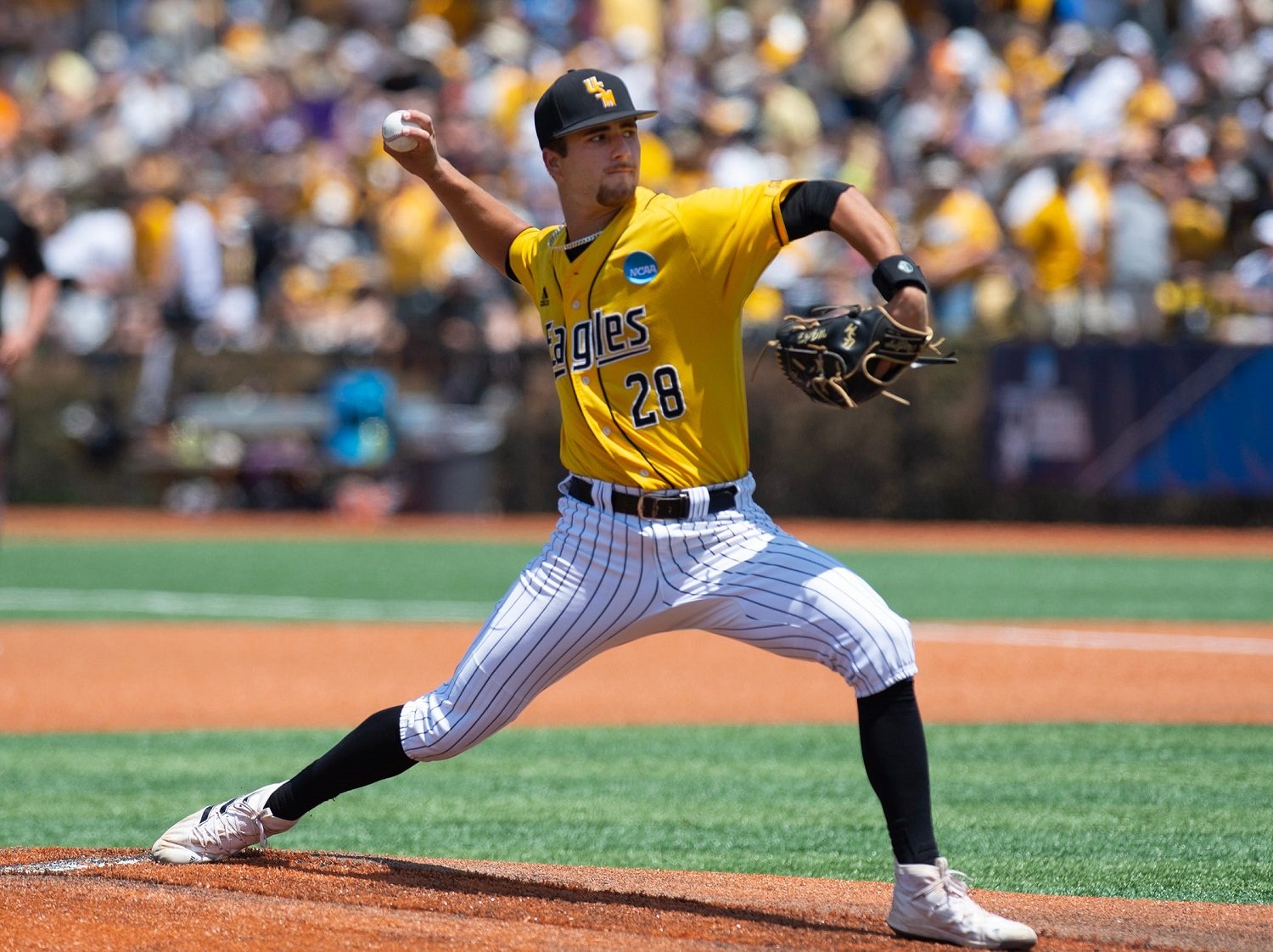 Not long after selecting Minnesota native Matt Wallner (2019), and then pitcher Ben Ethridge (2022), the Twins made Tanner Hall their fourth-round selection at 114th overall in the 2023 draft. Another arm that could win up being a strong contributor throughout the organization in years to come, Hall leaves school as decorated as they come. Southern Miss is no stranger to strong college baseball teams, and this year Hall led Division 1 baseball with 12 wins. He posted a career-best 2.48 ERA and earned himself Sun Belt Pitcher of the Year honors having just moved to the new conference. Looking forward to a new challenge at the pro level, it’s clear he’s ready to get going. Recently, I had the privilege of catching up with the Southern Miss star. Here’s what he had to say: Twins Daily: What about 2023 and the steps you took in what was a very impressive final season with the Golden Eagles set you up for professional baseball success? Tanner Hall: I had a pretty good year, and Southern Miss was a school I was passionate about. It meant a lot to me throughout the whole season. I knew I wanted to work hard and have wanted to play professional baseball my whole life. It wasn’t hard to convince myself to want to work for it. The level we played at, the competition we played, making regionals and hosting super regionals, it got me very prepared for that next level. TD: Do you feel like there was a change going from Conference USA to the Sun Belt? TH: I think the competition got a little bit better in the Sun Belt. I think there were a few better teams, but I didn’t treat it any different. I was excited because I was facing a bunch of lineups that had never seen me before. The Sun Belt did have more talent, and it was tougher to get wins out of that conference. We did end up dominating and showing who we were. TD: You’ve put up gaudy strikeout numbers and avoided walks. How do you attack hitters and what does your arsenal look like? TH: Whenever I’m on the mound, I think to myself if I’m going to get beat, I’m going to make them beat me with their bats. I throw a sinker, a changeup, a slider, and I want to develop a cutter here soon. I want to add that to my arsenal as well. My go-to pitches have been my sinker and changeup. I use the sinker to get ahead and the changeup to finish them off. TD: The changeup is a pitch the Twins have been notable in focusing on. Obviously Johan Santana was one of the best to ever use it. How do you feel like that pitch is such a strong out pitch for you in a game where velocity has been the focal point? TH: I try to simplify the game itself, I’m just trying to get each guy out. It doesn’t matter if you’re getting them out with a 99 mph pitch or a 90 mph pitch. The changeup is a pitch I’ve had to use my whole life because I’ve never really thrown that hard. It’s been a differentiator for me because I’ve been able to plus and minus. I always have that pitch in the back of a hitter’s mind. You have guys getting late on fastballs, and I’m not throwing it hard enough to make them late, but it’s because of the changeup that makes it tough on them. TD: Stepping up to the next level of professional baseball, what are you most excited about developing both as a pitcher and an individual? TH: I’m really excited to develop into a true professional and perfect my pitches. I want to gain a little velocity, and being with the Twins, that’s something that is easily possible as they have a track record of doing so. I’m excited to get it started. I want all of my pitches to be elite pitches, and I want to make a name for myself with the Twins. TD: Being from Louisiana, what do you know about the Twins, the organization, Minnesota, Target Field, that sort of thing? TH: Honestly, I don’t know that much. I didn’t know much about any teams except for a couple around here like the Marlins or the Braves. At the end of the day, this is a dream come true for me. This is everything I have been working for my whole life. With the Twins wanting to give me a call, I’m going to show there’s a reason they wanted me to go play. I feel like I’ve been kind of an underdog since I was young. It’s going to be fun to go out and play for a team I don’t know too much about. They have history of Southern Miss guys with Wallner and Ethridge. I’ll have support behind me while I’m there, and I’ll be supporting them as well. It’s going to be fun, and it’s going to be exciting to get to know what Minnesota is like and what the Twins are all about. TD: Outside of baseball, off the diamond, what are you doing to get away or keep loose? TH: I like to play golf. I like to watch movies, go to the mall, and play frisbee golf. Anything active outside I’ll go do. Golf is probably the number one thing for me, that’s something I really enjoy. Welcome to Twins Territory, Tanner!
- 9 comments
-
- 3
-
-
- tanner hall
- southern miss
- (and 2 more)
-
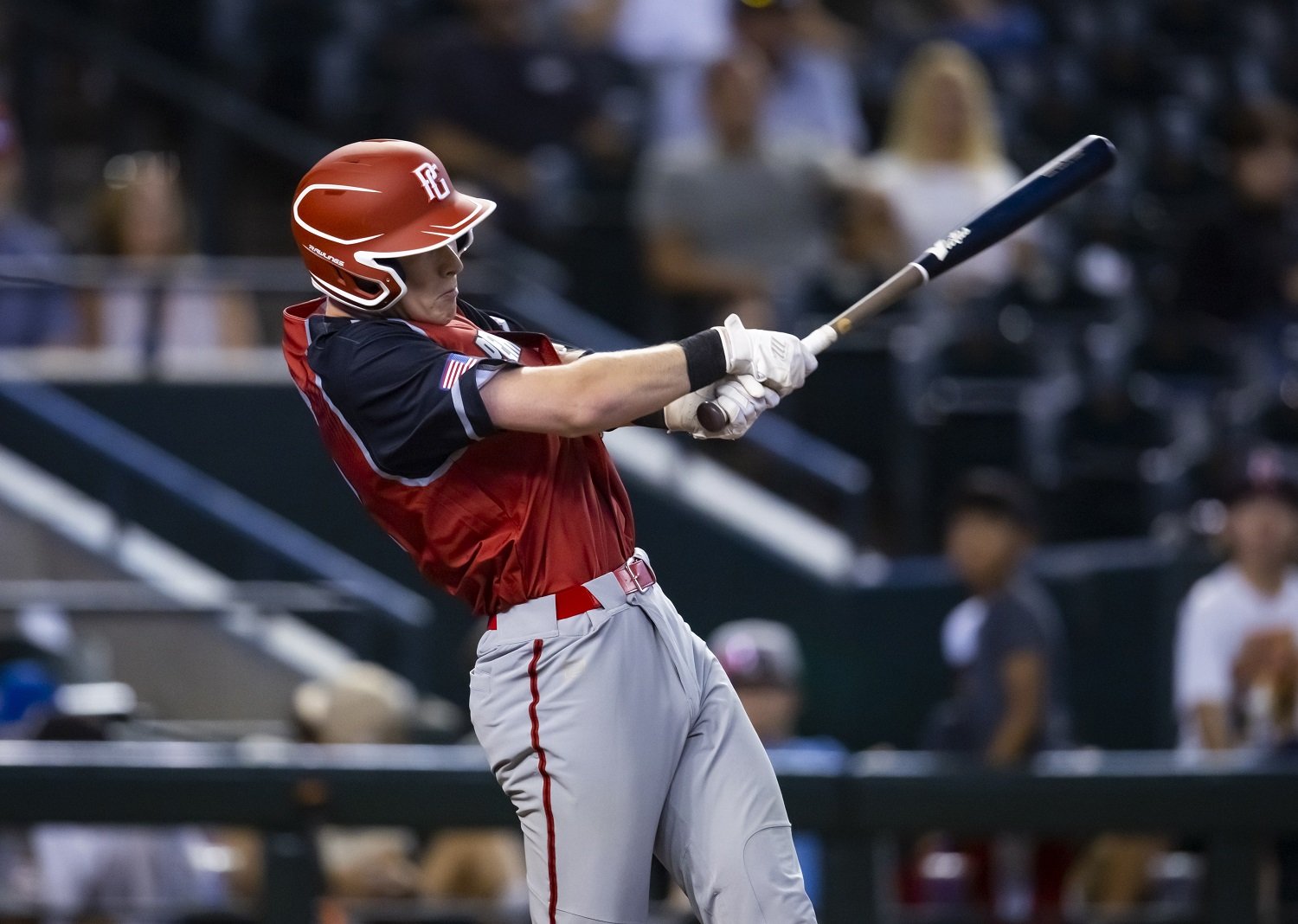 Despite the assumption that Minnesota would again lean towards college bats, they opted to take three prep players with their first four picks. Brandon Winokur was the second outfielder they grabbed, and despite playing plenty of shortstop in high school, the assumption is that he fits best in one of the corners at the next level. Finding five-tool talents isn’t necessarily the most difficult thing, but being able to refine and develop them is what separates the best players. Winokur absolutely falls into the category of a player that has it all, and his big 6’6” frame will be fun to watch grow through professional ball. I had the opportunity to talk with him prior to his celebratory Dairy Queen S’mores Blizzard, and here’s what he had to say: Twins Daily: Tell me a little bit about your game, takeaways from the senior year of high school, and how you’d describe yourself at the plate and in the field? Brandon Winokur: My senior season was pretty successful. I ended up with nine jacks, batted .365, a couple stolen bases, and defensive runs saved. It was a great year overall. I couldn’t have asked for anything better, and I’ve loved Edison High School for four years. I like to find balance in my game. I’m a really competitive guy, but I like to play loose and have a lot of fun when I play baseball. It stems from my love of the game from when I was little. I never take myself too seriously. I have tried to model my game after different players across MLB. Growing up watching Mike Trout, Angels Stadium is like a 20 minute drive, being a five-tool player made me want to hone in on all five skills. Once I got to 6’6” it’s been a little more difficult to keep my speed, but I’ve done a lot of hill runs and things like that to stay in that shape. TD: There were a lot of notes regarding you being a five-tool player with all of the raw tools. What would you say from a development standpoint are the things you’re most excited about honing your game as far as those tools? BW: You know what, I am looking forward to every single new day that I go out to the field, there will be a new challenge for me. I feel like that’s the beauty of baseball. There are always new challenges for me to adapt to and overcome. Now matter if I go 0-for-5 or 5-for-5, I’m up for the challenge. I’m excited to expand in all areas of my game. TD: The Twins took three high schoolers in the first four picks this year, which hasn’t been customary for them. All three of you exude maturity and come across as well put together individuals and ballplayers. Where does that come from for you? BW: I had the opportunity to play with Walker (Jenkins) and Charlee (Soto) in the PDP League last year and that was an absolute blast. Those were two of the guys that I felt like I connected with the most, which is funny since we all got drafted by the same team. I feel like my family has 99% to do with my maturity. I’ve grown up in a household where my dad is a fire captain at Newport Beach and my mom is a stay at home mom, they run a tight ship. That was the best thing for me. I told them what my dream was when I was little, and they kept me on this path. I’ve grown up with good morals that have come from my family My aunt and uncle, granny and papa, I feel like I’ve grown up in a great environment with a lot of role models at my side. I just want to be like them. My dad gets to go out and make a difference every day in his job, that’s a big deal to me. My mom has been great to me and my brother. It has everything to do with family. I’ve grown up in a great environment. TD: What do you know about the Twins organization. Have you been to Target Field or Minnesota? BW: I have not been to Minnesota, but I am looking forward to the first day I get to take batting practice out there. I have actually seen that stadium a lot because I usually put the HitTrax on Target Field because it’s absolutely beautiful. I don’t know much about Minnesota, Royce Lewis was a draft pick a couple of years ago around here. There’s a lot of history there. Kirby Puckett, Rod Carew, as of recently Byron Buxton, it’s a great organization. I’m absolutely blessed to have this opportunity to go play for a team like them. TD: What does it look like having been excited to play for UCLA and then shift into being excited for an opportunity to play professional ball? What does that thought process look like? BW: For me since day one, the dream has been to play professional baseball. UCLA has had an amazing history for everything. I love coach Savage, I love those assistant coaches. Since day one though, professional baseball was the goal. I want to go out and go win a championship. I don’t go into things without wanting to win. I’m ready to go prove myself and I’m ready to work. TD: Outside of baseball, or when you’re not at the field, how do you get away from the game? BW: I’ve always had a close circle of friends that I hang out with. Phil, Josh, Emerson, Ben, my brother, I usually like hanging out with them. Annelise too. I play a lot of basketball, the beach is five minutes from here, that’s a great outlet. We hang out playing video games, chopping it up at the field, it’s always a good time. Welcome to Twins Territory, Brandon!
- 21 comments
-
- 8
-
-
- brandon winokur
- royce lewis
- (and 1 more)
-
While the Minnesota Twins were excited to have the fifth selection in the 2023 Major League Baseball Draft, the system was going to see an influx of talent by adding four players within the first 82 selections. A five-tool-talent in the form of Brandon Winokur was their selection with the third round pick. Image courtesy of Mark J. Rebilas-USA TODAY Sports Despite the assumption that Minnesota would again lean towards college bats, they opted to take three prep players with their first four picks. Brandon Winokur was the second outfielder they grabbed, and despite playing plenty of shortstop in high school, the assumption is that he fits best in one of the corners at the next level. Finding five-tool talents isn’t necessarily the most difficult thing, but being able to refine and develop them is what separates the best players. Winokur absolutely falls into the category of a player that has it all, and his big 6’6” frame will be fun to watch grow through professional ball. I had the opportunity to talk with him prior to his celebratory Dairy Queen S’mores Blizzard, and here’s what he had to say: Twins Daily: Tell me a little bit about your game, takeaways from the senior year of high school, and how you’d describe yourself at the plate and in the field? Brandon Winokur: My senior season was pretty successful. I ended up with nine jacks, batted .365, a couple stolen bases, and defensive runs saved. It was a great year overall. I couldn’t have asked for anything better, and I’ve loved Edison High School for four years. I like to find balance in my game. I’m a really competitive guy, but I like to play loose and have a lot of fun when I play baseball. It stems from my love of the game from when I was little. I never take myself too seriously. I have tried to model my game after different players across MLB. Growing up watching Mike Trout, Angels Stadium is like a 20 minute drive, being a five-tool player made me want to hone in on all five skills. Once I got to 6’6” it’s been a little more difficult to keep my speed, but I’ve done a lot of hill runs and things like that to stay in that shape. TD: There were a lot of notes regarding you being a five-tool player with all of the raw tools. What would you say from a development standpoint are the things you’re most excited about honing your game as far as those tools? BW: You know what, I am looking forward to every single new day that I go out to the field, there will be a new challenge for me. I feel like that’s the beauty of baseball. There are always new challenges for me to adapt to and overcome. Now matter if I go 0-for-5 or 5-for-5, I’m up for the challenge. I’m excited to expand in all areas of my game. TD: The Twins took three high schoolers in the first four picks this year, which hasn’t been customary for them. All three of you exude maturity and come across as well put together individuals and ballplayers. Where does that come from for you? BW: I had the opportunity to play with Walker (Jenkins) and Charlee (Soto) in the PDP League last year and that was an absolute blast. Those were two of the guys that I felt like I connected with the most, which is funny since we all got drafted by the same team. I feel like my family has 99% to do with my maturity. I’ve grown up in a household where my dad is a fire captain at Newport Beach and my mom is a stay at home mom, they run a tight ship. That was the best thing for me. I told them what my dream was when I was little, and they kept me on this path. I’ve grown up with good morals that have come from my family My aunt and uncle, granny and papa, I feel like I’ve grown up in a great environment with a lot of role models at my side. I just want to be like them. My dad gets to go out and make a difference every day in his job, that’s a big deal to me. My mom has been great to me and my brother. It has everything to do with family. I’ve grown up in a great environment. TD: What do you know about the Twins organization. Have you been to Target Field or Minnesota? BW: I have not been to Minnesota, but I am looking forward to the first day I get to take batting practice out there. I have actually seen that stadium a lot because I usually put the HitTrax on Target Field because it’s absolutely beautiful. I don’t know much about Minnesota, Royce Lewis was a draft pick a couple of years ago around here. There’s a lot of history there. Kirby Puckett, Rod Carew, as of recently Byron Buxton, it’s a great organization. I’m absolutely blessed to have this opportunity to go play for a team like them. TD: What does it look like having been excited to play for UCLA and then shift into being excited for an opportunity to play professional ball? What does that thought process look like? BW: For me since day one, the dream has been to play professional baseball. UCLA has had an amazing history for everything. I love coach Savage, I love those assistant coaches. Since day one though, professional baseball was the goal. I want to go out and go win a championship. I don’t go into things without wanting to win. I’m ready to go prove myself and I’m ready to work. TD: Outside of baseball, or when you’re not at the field, how do you get away from the game? BW: I’ve always had a close circle of friends that I hang out with. Phil, Josh, Emerson, Ben, my brother, I usually like hanging out with them. Annelise too. I play a lot of basketball, the beach is five minutes from here, that’s a great outlet. We hang out playing video games, chopping it up at the field, it’s always a good time. Welcome to Twins Territory, Brandon! View full article
-
The Minnesota Twins wrapped up their first half of baseball with a sweep at the hands of the Baltimore Orioles. After taking two of three at Camden Yards a week ago, they fell a game below .500 heading into the All-Star Break. What can we make of the season thus far? Image courtesy of © Matt Blewett-USA TODAY Sports To say that Rocco Baldelli, Derek Falvey, and Thad Levine hoped this collection would be playing better is selling it short. There is no denying that a Byron Buxton and Carlos Correa-led offense should be better, and one of the game's best starting rotations is suffering for it. Although the Cleveland Guardians don't look like a juggernaut, they will begin the second half leading the division, and it's on the players in Minnesota's clubhouse to find a way to close the gap. What was remarkable, ugly, and everything in between at times? Here are some takeaways from the first half. 1. The AL Central is a Terrible Division Maybe this could have been expected with the Guardians doing so little over the offseason and the White Sox's most significant move being Andrew Benintendi, or the removal of Tony La Russa. At any rate, the latter has continued to be terrible, while the former has remained mediocre. Terry Francona took the division for Cleveland last year when the Twins threw it away. They are trying to do it again at the halfway point this season, but calling any of the contending teams' real playoff threats would be lying. 2. Pitching and Defense Aren't Enough Coming into the year, this Twins team looked like it was going to pitch, and there was hope they could field. Questions about the lineup were present, and additions such as Joey Gallo and Christian Vazquez didn't bring the warm fuzzies to consistent production. Seeing Buxton be limited to a hit-or-miss designated hitter and Correa a shell of himself, the lineup has been among the worst in the sport. 3. The Old Guard is Dug In Over the offseason, the front office had opportunities to move on from Max Kepler and chose not to. They are determined for him to show a shred of value, which continues to come at the expense of such youth as Trevor Larnach and Matt Wallner. The Twins roster is hampered enough by having a strict designated hitter, but their handedness in the outfield, and a right fielder producing little value, has drug things down further. 4. Bullpen Depth Wasn't Considered As has been the case for most of the tenure under this front office, the bullpen remains an afterthought. You don't have to spend big like the White Sox have, but not doing anything has continued to bite this group. Adding nothing more than minor league free agents left Brock Stewart and Jose De Leon as necessary developments rather than pleasant surprises. With Jorge Lopez regressing, Emilio Pagan unable to pitch in leverage, and Joah Duran only backed by Griffin Jax, Baldelli is hamstrung on a nightly basis. 5. A Big Deadline Looms, Again Last year the Twins found themselves floundering as they approached the trade deadline. With injuries crushing them all over the roster, they swung big, landing Tyler Mahle and Lopez. The former was an upside play, while the latter was a response to a poor unit. They have less prospect capital they want to trade this year, and the roster has fewer logical places to add. A bat has to come, and relief help must be on the way, but Minnesota can't get burned for the second year. 6. Belief in Better Only Goes So Far It's fair to assume that this Twins team should be much better. They lead the division in run differential by a substantial amount, and their Pythagorean record is far better than the mark in the standings. Expecting those things to correct themselves over 162 games is a logical ask, but at some point, time runs out. It's getting late early for this squad if they want to be better than what they have shown thus far. Thankfully the AL Central continues to leave the door wide open for Minnesota, but that will close as games go on, and this collection should only be given a pass if they capitalize on the opportunity. It will be a sprint to the finish, and anything but a division title following the regular season would be a failure. View full article
- 65 replies
-
- 1
-
-
- byron buxton
- carlos correa
- (and 2 more)
-
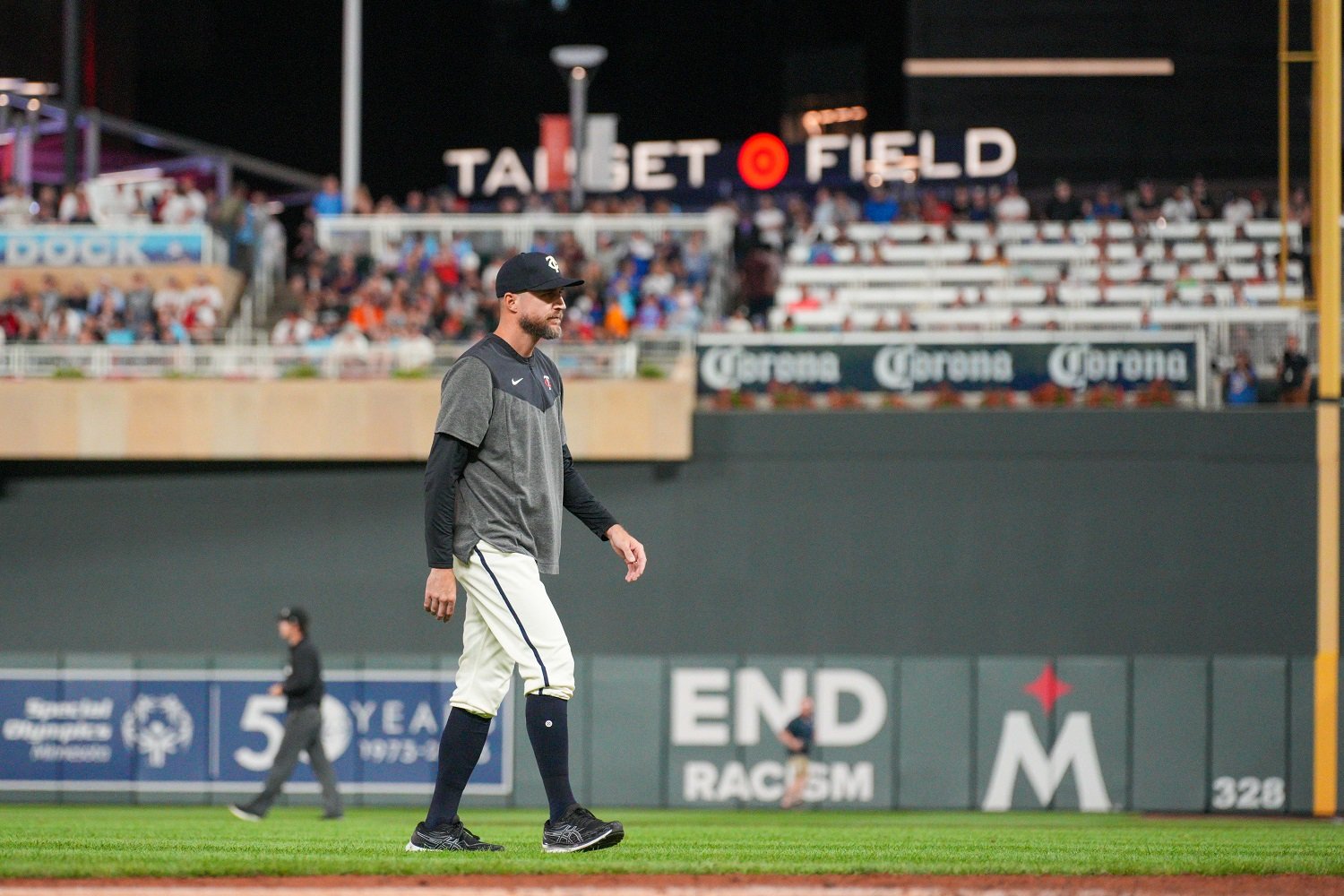 To say that Rocco Baldelli, Derek Falvey, and Thad Levine hoped this collection would be playing better is selling it short. There is no denying that a Byron Buxton and Carlos Correa-led offense should be better, and one of the game's best starting rotations is suffering for it. Although the Cleveland Guardians don't look like a juggernaut, they will begin the second half leading the division, and it's on the players in Minnesota's clubhouse to find a way to close the gap. What was remarkable, ugly, and everything in between at times? Here are some takeaways from the first half. 1. The AL Central is a Terrible Division Maybe this could have been expected with the Guardians doing so little over the offseason and the White Sox's most significant move being Andrew Benintendi, or the removal of Tony La Russa. At any rate, the latter has continued to be terrible, while the former has remained mediocre. Terry Francona took the division for Cleveland last year when the Twins threw it away. They are trying to do it again at the halfway point this season, but calling any of the contending teams' real playoff threats would be lying. 2. Pitching and Defense Aren't Enough Coming into the year, this Twins team looked like it was going to pitch, and there was hope they could field. Questions about the lineup were present, and additions such as Joey Gallo and Christian Vazquez didn't bring the warm fuzzies to consistent production. Seeing Buxton be limited to a hit-or-miss designated hitter and Correa a shell of himself, the lineup has been among the worst in the sport. 3. The Old Guard is Dug In Over the offseason, the front office had opportunities to move on from Max Kepler and chose not to. They are determined for him to show a shred of value, which continues to come at the expense of such youth as Trevor Larnach and Matt Wallner. The Twins roster is hampered enough by having a strict designated hitter, but their handedness in the outfield, and a right fielder producing little value, has drug things down further. 4. Bullpen Depth Wasn't Considered As has been the case for most of the tenure under this front office, the bullpen remains an afterthought. You don't have to spend big like the White Sox have, but not doing anything has continued to bite this group. Adding nothing more than minor league free agents left Brock Stewart and Jose De Leon as necessary developments rather than pleasant surprises. With Jorge Lopez regressing, Emilio Pagan unable to pitch in leverage, and Joah Duran only backed by Griffin Jax, Baldelli is hamstrung on a nightly basis. 5. A Big Deadline Looms, Again Last year the Twins found themselves floundering as they approached the trade deadline. With injuries crushing them all over the roster, they swung big, landing Tyler Mahle and Lopez. The former was an upside play, while the latter was a response to a poor unit. They have less prospect capital they want to trade this year, and the roster has fewer logical places to add. A bat has to come, and relief help must be on the way, but Minnesota can't get burned for the second year. 6. Belief in Better Only Goes So Far It's fair to assume that this Twins team should be much better. They lead the division in run differential by a substantial amount, and their Pythagorean record is far better than the mark in the standings. Expecting those things to correct themselves over 162 games is a logical ask, but at some point, time runs out. It's getting late early for this squad if they want to be better than what they have shown thus far. Thankfully the AL Central continues to leave the door wide open for Minnesota, but that will close as games go on, and this collection should only be given a pass if they capitalize on the opportunity. It will be a sprint to the finish, and anything but a division title following the regular season would be a failure.
- 65 comments
-
- 7
-
-
- byron buxton
- carlos correa
- (and 2 more)
-
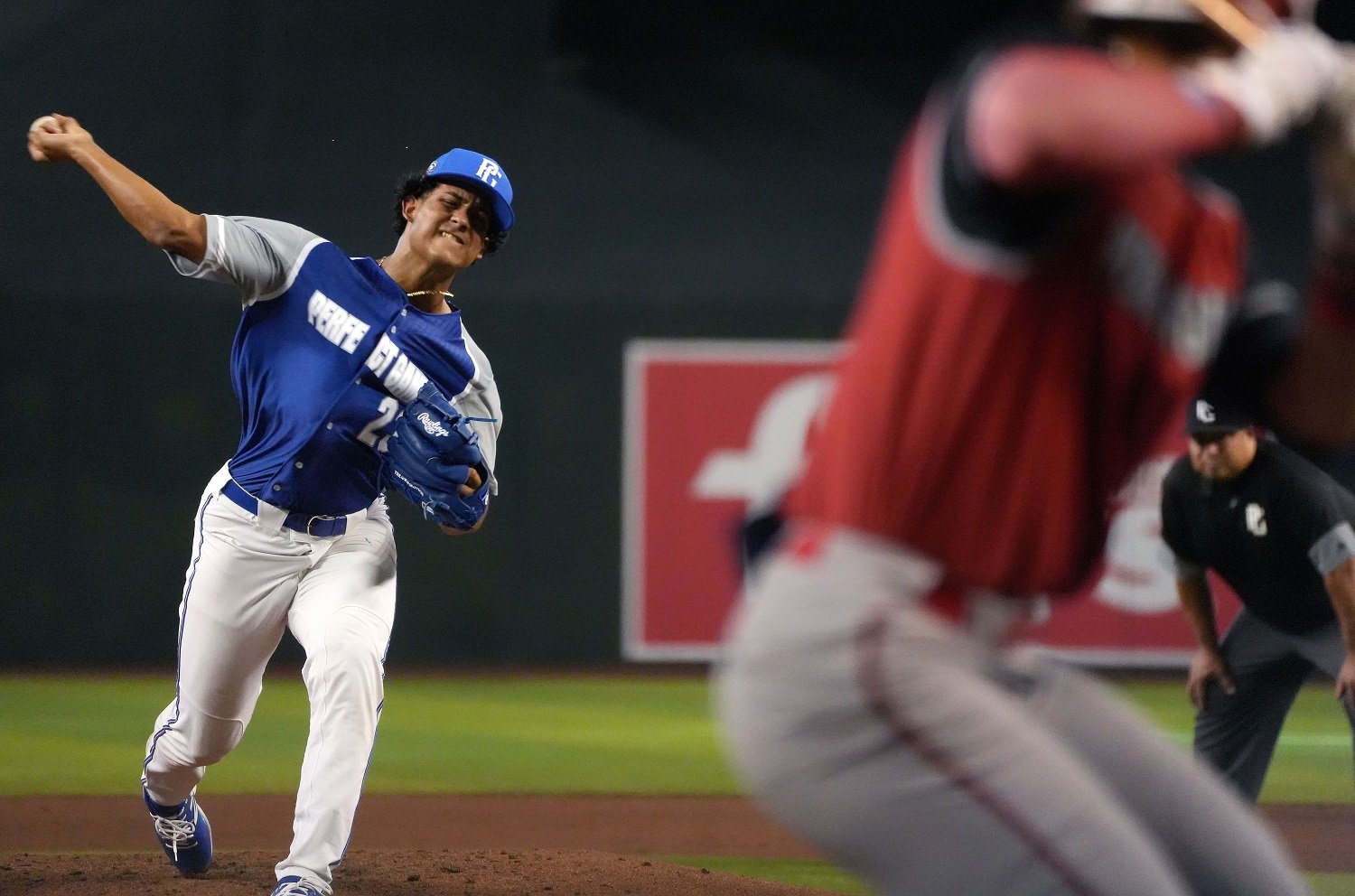 Charlee Soto is a right-handed pitcher from Florida who made his way to the Sunshine State after spending time in Philadelphia. He was a notable name through the PDP (Player Development Pipeline) Program. He consistently sat in the upper-90’s with his fastball and touched triple-digits. Somewhat familiar with the Twins, having been coached by LaTroy Hawkins and played at the Fort Myers complex, Soto is beamed on stage in Seattle when talking about the next step of his baseball journey. I caught up with Soto after he got a good night’s rest from draft night, and by that time, he had already checked in with Minnesota all-star Pablo Lopez. Here’s what he had to say: Twins Daily: You have one of the best fastballs in this draft. With arms like Paul Skenes and Rhett Lowder, that’s pretty impressive. What about your heater has made it such a reliable pitch beyond just the velocity? Charlee Soto: Aside from just the velocity of my fastball, the shape and the movement of the pitch set it apart. It’s not a flat, high-90. It has a lot of sink to it, and it’s heavy. I try to break bats and generate weak contact. I think it plays really, really well. TD: What does the rest of your arsenal look like outside of the fastball? What do you feel most comfortable throwing? CS: I throw a four-seam fastball, a circle-changeup, and a slider which has a little spike to it. Those three pitches I feel comfortable throwing equally, and can use them in any count to get ahead or if I’m behind and need a strike. I feel comfortable with each the whole way. TD: You’ve faced high-level competition against elite talent in the PDP program. What do you feel has most prepared you for pro ball? CS: The PDP program helped me a lot, not only in facing the best competition in the country which is what pro ball is going to look like, but just the way everything was run. We were at the field four hours before the game, we were up at 6:30 am. LaTroy Hawkins was one of my coaches, and having him there with so much professional experience it helped me get to learn what the pro side was like. TS: Getting into professional baseball, where do you see the greatest area for you to grow or develop as both a pitcher and an individual? CS: As a pitcher, I want to add one or two pitches to my arsenal. I think it would be good to have a fourth or fifth pitch. I want to go out there and dominate. As an individual, I want to grow. I want to meet new people and new coaches. I want to get better every day and be a leader. TD: You alluded to the high character of fellow Twins draft pick Walker Jenkins. It’s clear that you possess a very similar trait. How do you attribute your maturity and how you carry yourself on and off the field too? CS: I think the way I was raised helped a lot. My parents were hard on me, and being the younger sibling, my siblings guided my maturation at an early age. I’ve tried to think ahead of my years, and my brother going through the college experience has helped me to be an example. TD: Obviously, you’ve dealt with cold before having been in Philadelphia, and you’ve seen the Twins facilities in Fort Myers, but what do you know about the organization, and have you been to Target Field or Minnesota? CS: I have two buddies in the organization, Jose Salas and Omari Daniel. I talked to Pablo Lopez here at the hotel. They have all told me positive things and that the Twins do a very good job developing their players as both athletes and individuals. Pablo told me how quickly he fell in love with the organization. I’m just ready for it! TD: Last one, when you’re not playing baseball, what are some hobbies or things you like to do to stay loose and disconnect from the game? CS: I like doing a lot of community service work. I’m always around the game. My travel coach has a young team, and I always go support them. I feel like that’s huge because they always tell me I inspire them to be great so it’s great going out there and seeing a smile on their face. They have a special place in my heart. I like spending time with my family as well. We’re not always going to be together, so cherishing those special moments is important too. Welcome to Twins Territory, Charlee!
 -
Heading into the 2023 Major League Baseball Draft the Minnesota Twins were set to make a selection with the fifth overall pick. From there they also got another addition in Competitive Balance Round A and grabbed prep pitcher Charlee Soto 34th overall. He couldn’t be more excited to be joining the organization. Image courtesy of Joe Rondone/The Republic / USA TODAY NETWORK Charlee Soto is a right-handed pitcher from Florida who made his way to the Sunshine State after spending time in Philadelphia. He was a notable name through the PDP (Player Development Pipeline) Program. He consistently sat in the upper-90’s with his fastball and touched triple-digits. Somewhat familiar with the Twins, having been coached by LaTroy Hawkins and played at the Fort Myers complex, Soto is beamed on stage in Seattle when talking about the next step of his baseball journey. I caught up with Soto after he got a good night’s rest from draft night, and by that time, he had already checked in with Minnesota all-star Pablo Lopez. Here’s what he had to say: Twins Daily: You have one of the best fastballs in this draft. With arms like Paul Skenes and Rhett Lowder, that’s pretty impressive. What about your heater has made it such a reliable pitch beyond just the velocity? Charlee Soto: Aside from just the velocity of my fastball, the shape and the movement of the pitch set it apart. It’s not a flat, high-90. It has a lot of sink to it, and it’s heavy. I try to break bats and generate weak contact. I think it plays really, really well. TD: What does the rest of your arsenal look like outside of the fastball? What do you feel most comfortable throwing? CS: I throw a four-seam fastball, a circle-changeup, and a slider which has a little spike to it. Those three pitches I feel comfortable throwing equally, and can use them in any count to get ahead or if I’m behind and need a strike. I feel comfortable with each the whole way. TD: You’ve faced high-level competition against elite talent in the PDP program. What do you feel has most prepared you for pro ball? CS: The PDP program helped me a lot, not only in facing the best competition in the country which is what pro ball is going to look like, but just the way everything was run. We were at the field four hours before the game, we were up at 6:30 am. LaTroy Hawkins was one of my coaches, and having him there with so much professional experience it helped me get to learn what the pro side was like. TS: Getting into professional baseball, where do you see the greatest area for you to grow or develop as both a pitcher and an individual? CS: As a pitcher, I want to add one or two pitches to my arsenal. I think it would be good to have a fourth or fifth pitch. I want to go out there and dominate. As an individual, I want to grow. I want to meet new people and new coaches. I want to get better every day and be a leader. TD: You alluded to the high character of fellow Twins draft pick Walker Jenkins. It’s clear that you possess a very similar trait. How do you attribute your maturity and how you carry yourself on and off the field too? CS: I think the way I was raised helped a lot. My parents were hard on me, and being the younger sibling, my siblings guided my maturation at an early age. I’ve tried to think ahead of my years, and my brother going through the college experience has helped me to be an example. TD: Obviously, you’ve dealt with cold before having been in Philadelphia, and you’ve seen the Twins facilities in Fort Myers, but what do you know about the organization, and have you been to Target Field or Minnesota? CS: I have two buddies in the organization, Jose Salas and Omari Daniel. I talked to Pablo Lopez here at the hotel. They have all told me positive things and that the Twins do a very good job developing their players as both athletes and individuals. Pablo told me how quickly he fell in love with the organization. I’m just ready for it! TD: Last one, when you’re not playing baseball, what are some hobbies or things you like to do to stay loose and disconnect from the game? CS: I like doing a lot of community service work. I’m always around the game. My travel coach has a young team, and I always go support them. I feel like that’s huge because they always tell me I inspire them to be great so it’s great going out there and seeing a smile on their face. They have a special place in my heart. I like spending time with my family as well. We’re not always going to be together, so cherishing those special moments is important too. Welcome to Twins Territory, Charlee! View full article
-
The Minnesota Twins had the fifth overall pick during the 2023 Major League Baseball draft, and then had another two selections within the top two rounds. With the 49th overall pick, they selected Arizona State second baseman Luke Keaschall. Get to know him here. Image courtesy of Joe Rondone/The Republic / USA TODAY NETWORK Luke Keaschall joins the Twins organization as a 20-year-old from Arizona State. He played his first two collegiate seasons for San Francisco before transferring to the Sun Devils this past season. He is a second baseman with some power potential, and that's a profile Twins fans have seen in Brian Dozier, Jorge Polanco, and most recently Edouard Julien. Having played in the Cape Cod League, Keaschall joined the Pac-12, having experienced high competition. He has played shortstop and outfield but should be a bat-first second baseman in pro ball. I recently caught up with him following his selection, and here's what he had to say: Twins Daily: As a California kid that spent two seasons at San Francisco before transferring to the powerhouse that is Arizona State, what would you say has most changed, grown, and developed with your game through college? Luke Keaschall: I loved my time at San Francisco. It was my only Division I offer out of high school and a great experience. I was fortunate enough to have an amazing head coach that really helped shape me into the ball player and person I am today. I have nothing but great things to say about him, but when he was asked to leave, I decided I was going to transfer. ASU was an amazing place to go! I am very grateful for the opportunity Willie Bloomquist and Arizona State gave me. I'd say everything in my game has grown, changed, and improved from high school throughout college. The biggest thing for me was maturing and growing into my body. In my senior year of high school, I was five-ten, 160 pounds. I've put on around 30 pounds since then and grown two or three inches. College gave me an opportunity to grow my game in every way possible. TD: There have been a handful of great players to be drafted and come out of California. Who are some of the guys you grew up watching, and what about their game do you try to emulate? LK: California is a huge state with a ton of talent, but the players I watched the most growing up vary a lot depending on which state they're from. The three players I grew up watching the most were Derek Jeter, Mike Trout, and Dustin Pedroia. Derek Jeter was my favorite player growing up, Mike Trout is a special talent that is extremely fun to watch, and I've always loved the way Pedroia plays the game. TD: This past year at Arizona State, you really came on from a power perspective with the 18 homers. The contact skills and plate discipline have always been great, but how did you add the power without sacrificing that part of your game? LK: The power was just a part of the process. Putting together quality at-bats and consistently putting the ball in play with hard contact led to more home runs. Each year I've gotten a little bit stronger and more refined in my swing and approach. Every year, I am always striving to improve in every way, so the power showed a little more this year for a bunch of reasons. I think I've always been the type of guy to do damage. This year, the home run numbers showed up a little more. I've always hit a lot of extra-base hits. TD: Second base is sometimes an overlooked position from an offensive perspective, but guys that hit for power there really shine. What do you take pride in about your game, and what can you tell us about your glove in the field? LK: I take a lot of pride in my game defensively. I really make a strong effort to make all of the routine plays. The most important part of becoming the best defender possible is to make the routine plays as often as possible. I played second base at ASU, but I've mostly played shortstop my whole life. I've also played a little bit in the outfield and third base. I can really play whatever position my team needs and do whatever the game asks of me. TD: Moving to the Pac-12 was probably a step up in competition. How did you handle that change, and what do you think has most prepared you for pro ball? LK: The Pac-12 was a great experience! I played two summers in the Cape Cod Baseball Summer League, and the WCC was a decent conference. So when I made the switch to the Pac-12, I wasn't too alarmed. I was just excited for the challenge and ready to do whatever it took to be successful. What has most prepared me for pro ball is going through a lot of ups and downs through my collegiate career. Being able to understand that there are going to be times when you're on top of the world, and times when things aren't going your way is important. It's important to be the same guy everyday and never get too high or too low. TD: Your coach, Willie Bloomquist, played in the majors for 14 years. What about learning from him has helped set you up for success at the next level? LK: Willie Bloomquist is awesome! I am super grateful to have played for him at ASU. He's given me a ton of wisdom about the game and how to go about the game. Ever since I met Bloomquist, we got along great, and it's been great to learn from someone as professional and experienced as he is. The biggest thing he's helped instill into me that'll help me at the next level is to stay confident, and always play the game the right way. Each day is another opportunity, so play each game with a ton of energy and never lose sight of the big picture. TD: On the west coast, there is only a little exposure to Target Field or Minnesota. What do you know about the Twins? Have you been to the stadium before? LK: I haven't been to Target Field or Minnesota before. I know that the Twins are a fantastic organization with a bright future. The Twins are big on homegrown talent, meaning the players they draft and develop are the players they want performing for them in the show. This is awesome because they take pride in the people they pick. They see potential and want to build on it. I am super excited that I am a part of the Twins organization and cannot wait to get started. TD: End it on a fun one. What is something about you that Twins fans should know? What do you like to do off the field to keep things light? LK: Twins fans should know that I wrestled in high school and loved it! Off the field, I have a girlfriend that I enjoy spending time with, and I like to spend time with my family. Welcome to Twins Territory, Luke! View full article
-
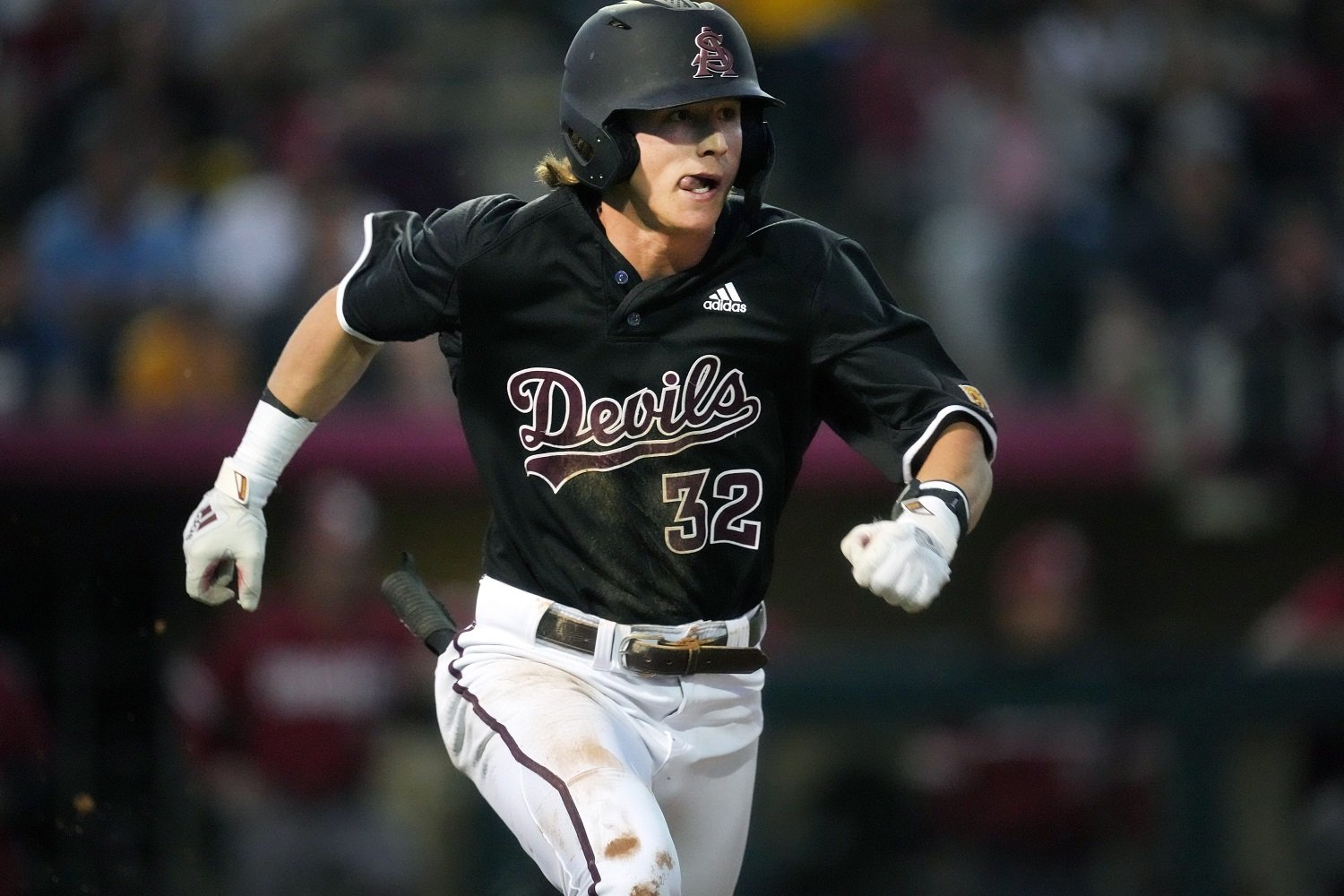 Luke Keaschall joins the Twins organization as a 20-year-old from Arizona State. He played his first two collegiate seasons for San Francisco before transferring to the Sun Devils this past season. He is a second baseman with some power potential, and that's a profile Twins fans have seen in Brian Dozier, Jorge Polanco, and most recently Edouard Julien. Having played in the Cape Cod League, Keaschall joined the Pac-12, having experienced high competition. He has played shortstop and outfield but should be a bat-first second baseman in pro ball. I recently caught up with him following his selection, and here's what he had to say: Twins Daily: As a California kid that spent two seasons at San Francisco before transferring to the powerhouse that is Arizona State, what would you say has most changed, grown, and developed with your game through college? Luke Keaschall: I loved my time at San Francisco. It was my only Division I offer out of high school and a great experience. I was fortunate enough to have an amazing head coach that really helped shape me into the ball player and person I am today. I have nothing but great things to say about him, but when he was asked to leave, I decided I was going to transfer. ASU was an amazing place to go! I am very grateful for the opportunity Willie Bloomquist and Arizona State gave me. I'd say everything in my game has grown, changed, and improved from high school throughout college. The biggest thing for me was maturing and growing into my body. In my senior year of high school, I was five-ten, 160 pounds. I've put on around 30 pounds since then and grown two or three inches. College gave me an opportunity to grow my game in every way possible. TD: There have been a handful of great players to be drafted and come out of California. Who are some of the guys you grew up watching, and what about their game do you try to emulate? LK: California is a huge state with a ton of talent, but the players I watched the most growing up vary a lot depending on which state they're from. The three players I grew up watching the most were Derek Jeter, Mike Trout, and Dustin Pedroia. Derek Jeter was my favorite player growing up, Mike Trout is a special talent that is extremely fun to watch, and I've always loved the way Pedroia plays the game. TD: This past year at Arizona State, you really came on from a power perspective with the 18 homers. The contact skills and plate discipline have always been great, but how did you add the power without sacrificing that part of your game? LK: The power was just a part of the process. Putting together quality at-bats and consistently putting the ball in play with hard contact led to more home runs. Each year I've gotten a little bit stronger and more refined in my swing and approach. Every year, I am always striving to improve in every way, so the power showed a little more this year for a bunch of reasons. I think I've always been the type of guy to do damage. This year, the home run numbers showed up a little more. I've always hit a lot of extra-base hits. TD: Second base is sometimes an overlooked position from an offensive perspective, but guys that hit for power there really shine. What do you take pride in about your game, and what can you tell us about your glove in the field? LK: I take a lot of pride in my game defensively. I really make a strong effort to make all of the routine plays. The most important part of becoming the best defender possible is to make the routine plays as often as possible. I played second base at ASU, but I've mostly played shortstop my whole life. I've also played a little bit in the outfield and third base. I can really play whatever position my team needs and do whatever the game asks of me. TD: Moving to the Pac-12 was probably a step up in competition. How did you handle that change, and what do you think has most prepared you for pro ball? LK: The Pac-12 was a great experience! I played two summers in the Cape Cod Baseball Summer League, and the WCC was a decent conference. So when I made the switch to the Pac-12, I wasn't too alarmed. I was just excited for the challenge and ready to do whatever it took to be successful. What has most prepared me for pro ball is going through a lot of ups and downs through my collegiate career. Being able to understand that there are going to be times when you're on top of the world, and times when things aren't going your way is important. It's important to be the same guy everyday and never get too high or too low. TD: Your coach, Willie Bloomquist, played in the majors for 14 years. What about learning from him has helped set you up for success at the next level? LK: Willie Bloomquist is awesome! I am super grateful to have played for him at ASU. He's given me a ton of wisdom about the game and how to go about the game. Ever since I met Bloomquist, we got along great, and it's been great to learn from someone as professional and experienced as he is. The biggest thing he's helped instill into me that'll help me at the next level is to stay confident, and always play the game the right way. Each day is another opportunity, so play each game with a ton of energy and never lose sight of the big picture. TD: On the west coast, there is only a little exposure to Target Field or Minnesota. What do you know about the Twins? Have you been to the stadium before? LK: I haven't been to Target Field or Minnesota before. I know that the Twins are a fantastic organization with a bright future. The Twins are big on homegrown talent, meaning the players they draft and develop are the players they want performing for them in the show. This is awesome because they take pride in the people they pick. They see potential and want to build on it. I am super excited that I am a part of the Twins organization and cannot wait to get started. TD: End it on a fun one. What is something about you that Twins fans should know? What do you like to do off the field to keep things light? LK: Twins fans should know that I wrestled in high school and loved it! Off the field, I have a girlfriend that I enjoy spending time with, and I like to spend time with my family. Welcome to Twins Territory, Luke!
- 5 comments
-
- 8
-
-
-
- luke keaschall
- willie bloomquist
- (and 3 more)
-
The Minnesota Twins have not been considered one of the most premier teams in baseball on a yearly basis for some time. However, the 2019 Bomba Squad holds the Major League Baseball record for most home runs by a team in a single season. With the Home Run Derby upon us, it’s worth looking back at some franchise performances. Image courtesy of Scott Rovak-USA TODAY Sports Despite the Minnesota Twins posting a Major League Baseball record 307 home runs, they did not have a single participant in the Home Run Derby that year. Nelson Cruz, Max Kepler, Miguel Sano, Eddie Rosario, and Mitch Garver all blasted more than 30 homers individually, but none of them competed in the longball event held at the Guardians Progressive Field. Over the years, Minnesota has had their fair share of Home Run Derby participants. With the next iteration of the event on tap, here are the top five performances in franchise history. 5. Brian Dozier 2014 Once a failed shortstop for Minnesota, Dozier turned himself into among the best offensive second basemen in all of baseball. He found a way to yank pitches out to left field, and his home run numbers went through the roof. Despite missing the All-Star Game in 2014, Dozier was invited to participate in the Home Run Derby. He was a hometown contestant with the event held at Target Field, and despite just hitting two dingers, his appearance fueled excitement. Yoenis Cespedes ultimately won the event, but Dozier would go on to blast 42 home runs just two seasons later. 4. Miguel Sano 2017 As a first-time all-star, Sano took his talents to South Beach and appeared in the Home Run Derby following a 25 dinger season the year prior. Hometown favorite Giancarlo Stanton was expected to win, but Sano drew a favorable bracket matchup with the Kansas City Royals Mike Moustakas opposing him. After knocking off the Royals third basemen, he also bested future teammate Gary Sanchez to find himself in the finals against Yankees star Aaron Judge. Sano came up one longball short, but his showing was beyond impressive and highlighted a story of player that had been clamored for since being a teenager. 3. Joe Mauer 2009 Through his first 561 career games Mauer had just 44 homers to his credit. Having won two batting titles already, the Minnesota-native began flipping baseballs into the Hubert H. Humphrey Metrodome seats. He finished 2009 with an MVP award and 28 homers. Invited to the derby that year in St. Louis, Mauer’s five first-round dingers forced a swing off with Albert Pujols and Carlos Pena. He wound up netting no more and went home quietly, but his season ended with some better hardware. 2. Tom Brunansky 1985 Competing in the first-ever iteration of the Home Run Derby, Brunansky represented the Twins with the event held at the Metrodome. He was a first-time all-star and his 32 dingers the season before was a career high. Parameters were obviously be shifted as the event drew popularity, but in its introduction, Dave Parker won, sending just six longballs into the seats. Brunansky finished second with four to his credit. He tied with all-time greats such as Carlton Fisk, Dale Murphy, Eddie Murray, and Jim Rice. 1. Justin Morneau 2008 Forever known as the Josh Hamilton derby, Morneau wound up winning in New York. Widely regarded as one of the best contests of all time, Morneau made it through the first round with eight homers to his credit. After Hamilton’s 28 blast barrage, he couldn’t keep things going in the final round. Morneau launched five homers in the final round to take the crown. The field was an interesting one with only Morneau, Hamilton, and Lance Berkman as true sluggers. More pure power hitters like Ryan Braun, Dan Uggla, and Chase Utley also filled out the competition. Which is your favorite Twins Home Run Derby performance of all time? View full article
-
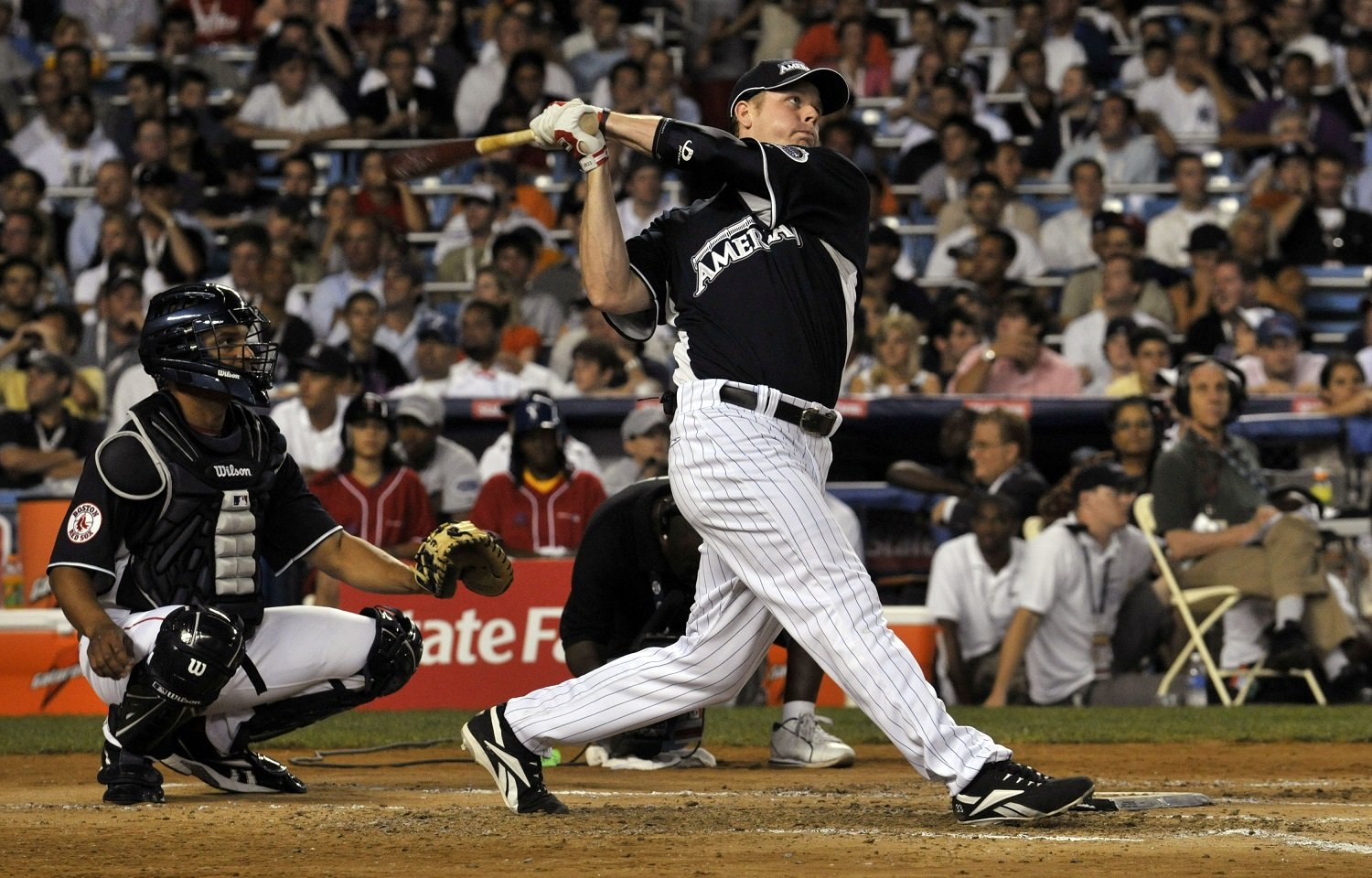 Despite the Minnesota Twins posting a Major League Baseball record 307 home runs, they did not have a single participant in the Home Run Derby that year. Nelson Cruz, Max Kepler, Miguel Sano, Eddie Rosario, and Mitch Garver all blasted more than 30 homers individually, but none of them competed in the longball event held at the Guardians Progressive Field. Over the years, Minnesota has had their fair share of Home Run Derby participants. With the next iteration of the event on tap, here are the top five performances in franchise history. 5. Brian Dozier 2014 Once a failed shortstop for Minnesota, Dozier turned himself into among the best offensive second basemen in all of baseball. He found a way to yank pitches out to left field, and his home run numbers went through the roof. Despite missing the All-Star Game in 2014, Dozier was invited to participate in the Home Run Derby. He was a hometown contestant with the event held at Target Field, and despite just hitting two dingers, his appearance fueled excitement. Yoenis Cespedes ultimately won the event, but Dozier would go on to blast 42 home runs just two seasons later. 4. Miguel Sano 2017 As a first-time all-star, Sano took his talents to South Beach and appeared in the Home Run Derby following a 25 dinger season the year prior. Hometown favorite Giancarlo Stanton was expected to win, but Sano drew a favorable bracket matchup with the Kansas City Royals Mike Moustakas opposing him. After knocking off the Royals third basemen, he also bested future teammate Gary Sanchez to find himself in the finals against Yankees star Aaron Judge. Sano came up one longball short, but his showing was beyond impressive and highlighted a story of player that had been clamored for since being a teenager. 3. Joe Mauer 2009 Through his first 561 career games Mauer had just 44 homers to his credit. Having won two batting titles already, the Minnesota-native began flipping baseballs into the Hubert H. Humphrey Metrodome seats. He finished 2009 with an MVP award and 28 homers. Invited to the derby that year in St. Louis, Mauer’s five first-round dingers forced a swing off with Albert Pujols and Carlos Pena. He wound up netting no more and went home quietly, but his season ended with some better hardware. 2. Tom Brunansky 1985 Competing in the first-ever iteration of the Home Run Derby, Brunansky represented the Twins with the event held at the Metrodome. He was a first-time all-star and his 32 dingers the season before was a career high. Parameters were obviously be shifted as the event drew popularity, but in its introduction, Dave Parker won, sending just six longballs into the seats. Brunansky finished second with four to his credit. He tied with all-time greats such as Carlton Fisk, Dale Murphy, Eddie Murray, and Jim Rice. 1. Justin Morneau 2008 Forever known as the Josh Hamilton derby, Morneau wound up winning in New York. Widely regarded as one of the best contests of all time, Morneau made it through the first round with eight homers to his credit. After Hamilton’s 28 blast barrage, he couldn’t keep things going in the final round. Morneau launched five homers in the final round to take the crown. The field was an interesting one with only Morneau, Hamilton, and Lance Berkman as true sluggers. More pure power hitters like Ryan Braun, Dan Uggla, and Chase Utley also filled out the competition. Which is your favorite Twins Home Run Derby performance of all time?
.jpg.9cfdc55216650a1cf1443b8b7d762a3b.jpg.a36c16601676d7ddc6ceb78100e8f210.jpg)
