



Ted Schwerzler
-
Posts
5,149 -
Joined
-
Last visited
Content Type
Profiles
News
Minnesota Twins Videos
2026 Minnesota Twins Top Prospects Ranking
2022 Minnesota Twins Draft Picks
Minnesota Twins Free Agent & Trade Rumors, Notes, & Tidbits
Guides & Resources
2023 Minnesota Twins Draft Picks
The Minnesota Twins Players Project
2024 Minnesota Twins Draft Picks
2025 Minnesota Twins Draft Pick Tracker
2026 Minnesota Twins Draft Tracker: Picks & Bonuses
Forums
Blogs
Events
Store
Downloads
Gallery
Everything posted by Ted Schwerzler
-
As a switch hitter, handedness does provide another layer of viability for Grossman. Agreed.
-
I think it's still a longshot, but a guy throwing 95+ pushes Tyler Duffey a bit.
-
Kinley is the name I felt least confident about, but wanted to go out on a limb. He has upper 90's stuff, and is a strikeout pitcher. It all comes down to command, and whether or not he can limit the walks. If Minnesota doesn't think so, then it's Duffey that goes instead.
-
Back on February 27 I took a first look at what the Minnesota Twins 25 man roster may look like on Opening Day. Now roughly halfway through spring training, and with some roster changes to boot, it's time to take another stab at what Paul Molitor will have at his disposal in Baltimore. You can read the original projection here, but changes will also be reflected below. Derek Falvey and Thad Levine have definitely outdone Minnesota offseasons of recent memory, and coming off a Postseason berth, they had plenty of incentive to supplement an up and coming squad. This club looks like it's going to make noise in both the Central and the American League as a whole. No matter where you look, there isn't a lot of obvious deficiencies in any of the positional groups. With that groundwork laid, let's get into it: Infielders (9) Jason Castro C Mitch Garver C Ehire Adrianza Util Brian Dozier 2B Eduardo Escobar Util Joe Mauer 1B Jorge Polanco SS Miguel Sano 3B Logan Morrison 1B This group remains the exact same. I'm still operating under the belief that Miguel Sano starts the season with the Twins. A suspension seems increasingly unlikely, and all spring indications have suggested his health is in a good place. Erick Aybar remains the fallback option if Sano isn't penciled in however. This group is very good, will be the backbone of the lineup, and was only aided by the inclusion of another slugger in Morrison. Outfielders (4) Byron Buxton CF Robbie Grossman LF/RF Max Kepler RF Eddie Rosario LF If it were up to me, I'd prefer Robbie Grossman be replaced by Zack Granite. As a fourth outfielder, Granite does significantly more for Minnesota than Grossman is able to. His speed is an asset off the bench, and he's well above average defensively. There's a slight downgrade in on-base skills with Granite, but that's still something his track record in the minors categorizes as an asset. With options remaining though, it's hard to see the Twins simply casting aside Grossman from the get go. They could make the move at any point, and from the start, seems best reasoned that they'll stick with the veteran. Pitchers (12) Jose Berrios SP Lance Lynn SP Jake Odorizzi SP Kyle Gibson SP Trevor Hildenberger RP Phil Hughes RP Zach Duke RP Ryan Pressly RP Addison Reed RP Fernando Rodney RP Taylor Rogers RP Tyler Kinley RP Adalberto Mejia SP Tyler Duffey RP With the recent addition of Lance Lynn, it's the pitchers where the most shuffling takes place for the Twins. Molitor has noted the club intends to go with a four-man rotation until Ervin Santana returns, which makes sense. That means Phil Hughes is pushed out of the group, and aside from a DL stint or DFA, he's destined for long relief. All spring, Minnesota has talked about stretching Tyler Duffey out and looking at him as a starter again. Given where things are currently, and with Duffey having an option remaining, a trip to Rochester doesn't seem that unlikely. It would get Rule 5 pick Tyler Kinley on the 25 man, and save the Twins from having to make an immediate trade with Miami in order to retain his rights. Taking the trip to Rochester with Duffey would be Mejia. He's probably the first man up among starters, and gives the Twins an added layer of depth before needing to call upon Fernando Romero or Stephen Gonsalves. Glancing at this group, I think it's pretty clear that the 2017 areas of concern have been addressed, and 2018 should be a bright year for the guys at Target Field. For more from Off The Baggy, click here. Follow @tlschwerz
-
Article: Opportunity Cost
Ted Schwerzler replied to Cody Christie's topic in Twins Daily Front Page News
Duffey does have innings left, and Kinley likely just replaces Burdi in the minors. I'd imagine the Twins will work out a trade with the Marlins to keep him. -
With the news of the Minnesota Twins signing Lance Lynn to a one-year, $12 million deal today, the overhaul of the starting rotation going into 2018 is complete. Despite the big fish of the offseason being Yu Darvish, it's hard not to see the avenue that Derek Falvey and Thad Levine took as equally impressive. Coming off a Wild Card appearance, Paul Molitor's club has something it hasn't in years: a rotation worthy of praise. Going into the winter, Minnesota's front office new that the area of focus needed to be starting pitching. Coming off a season in which 16 different pitchers made starts (a club record), and 36 different arms were used, getting more meaningful innings from the jump was a necessity. Although the crop of free agents left something to be desired, Darvish was there at the top and he had some quality options lined up behind him. You can fault the Twins for not matching Chicago's six-year deal, but it may not have mattered anyways. In the end, for a team desiring depth, this outcome almost seems better. When the Twins leave Fort Myers at the end of March, their starting rotation will feature Jose Berrios, Jake Odorizzi, Lance Lynn, and Kyle Gibson. Ervin Santana is due back sometime in April or May, and the group at the top is backed by names such as Adalberto Mejia, Stephen Gonsalves, Fernando Romero, and Zack Littell. Solely by the letters on the backs of the jerseys, that group is much stronger than one featuring options such as Tepesch, Melville, and Wilk. What's more intriguing though, are the numbers that names bring with them. In Odorizzi and Lynn, Minnesota has added two players capable of striking out batters at an 8.0 K/9 clip or better. A season ago, only Jose Berrios entered that territory, and the Twins haven't had two pitchers best that mark in a season since 2006 (Johan Santana and Francisco Liriano). Last season, 12 of the Twins 16 starters took the ball a combined 54 times to compile a -0.2 fWAR. Despite a down year for Odorizzi (0.1 fWAR in 2017), he's consistently earned around a 2.0 fWAR on an annual basis. In his first year back from Tommy John surgery, Lynn posted a 1.4 mark. Both should help to significantly raise the water level as a whole for the staff, which is really what this boils down to. Talking yourself out of missing on Darvish is foolish, but there's also a level of realism to it. While Yu is a bonafide ace, he can only take the ball once every five days. Minnesota was in a place where Kyle Gibson would be relied upon too much, and Phil Hughes needed to be counted on as well. In adding two arms, the Twins push the latter out completely, and allow the former to be bolstered by the strong depth on the farm behind him. By gaining a 40% improvement in the rotation, the Twins effectively overhauled their greatest weakness, and dare I say, turned it into a strength. It'd be relatively silly to suggest that Lynn, Odorizzi, or even Michael Pineda (if and when he returns healthy) are going to make the Scherzer's or Kershaw's of the world blush. For an organization that's been starved to figure out who can be relied upon for multiple turns in the rotation on a yearly basis for over a decade though, you've done more than alright. Minnesota's blueprint when attacking the rotation was to grab talent that could help, and let what was already on board fall in line. By executing it this way, there should be competitive and reliable outings on a daily basis, and the depth is now a luxury as opposed to a necessity. Given what Falvey and Levine have done to Molitor's starting staff, and what Minnesota already had going for it, you'd be hard-pressed to argue that this team isn't going places. A strong lineup and good defense is now supplemented be a talented pitching staff (both starters and relievers) and that should put not only the Cleveland Indians, but the rest of the American League, on notice. For more from Off The Baggy, click here. Follow @tlschwerz
- 1 comment
-
- 6
-

-
- minnesota twins
- jake odorizzi
- (and 1 more)
-
After acquiring Jake Odorizzi in mid-February, the Minnesota Twins got a much-needed boost to the starting rotation. Knowing that a top-three starter needed to be the main area of focus this offseason, a swap with the Rays brought a level of stability. Since that point though, smoke has billowed from Hammond Stadium, and it’s worth wondering if Derek Falvey isn’t quite done wheeling and dealing.On February 18, the Star Tribune’s Phil Miller tweeted that Falvey was quoted as saying “I’m not turning my phone off” in regard to adding another starter. Since that date, Darren Wolfson reported on 1500 ESPN radio that Minnesota lowballed Lance Lynn, and then more reports surfaced in early March suggesting an offer of two years and $20 million was made to the former Cardinals starter. Just under a $3 million boost on the rejected qualifying offer probably isn’t going to get it done, but it’s hard to ignore the makings of a fire being in place. Jake Arrieta, Alex Cobb and Lance Lynn are the trio the baseball world is currently focused on. While Mike Moustakas, Neil Walker, and a host of position players remain unsigned, it’s impact pitchers that are generally in short supply. With those three arms still to be had, almost every outlet sees Minnesota as a logical landing spot. On ESPN, David Schoenfield put five teams down as his “best bets” to land one of them. While the Brewers should be competitive with their additions, it’s the Twins and Nationals that look the best of the bunch (excluding the Orioles and Phillies). His piece can be added to the long list of articles making the suggestion that Minnesota make another move, but the question remains if, and if so, who? Of the group, it seems as though Jake Arrieta remains the most remote possibility. Being a Scott Boras client, Arrieta has sought a massive payday and has seemingly stood behind that notion. After peaking late, Arrieta has put just four strong seasons of work together. In a Cubs uniform, he looked the part of an ace and picked up a Cy Young award in 2015. At 32 years-old however, there’s a lot of mileage on the arm, and the decline could be both sharp and immediate. Should the Twins continue to create the Rays of the Midwest, then Alex Cobb has to be considered. Both Logan Morrison and Jake Odorizzi serve as recruiters, while pitching guru Josh Kalk is already in house. Undergoing Tommy John surgery, Cobb has just 34 starts under his belt since 2014. At 30 however, age is still on his side and the 2.82 ERA from 2013-14 looks dazzling in retrospect. Minnesota has to have some level of belief that there’s more to be unleashed than the 3.66 ERA and 6.4 K/9 of 2017, but he too would represent a clear upgrade. Rounding out the trio is the name the Twins have been most tied to, Lance Lynn. If not for Yu Darvish, it was probably Lynn who presented the most intriguing combination of dollars and sense on the free agent market this offseason. Also a Tommy John survivor, Lynn will soon be 31 and bounced back to start a league high 33 games in 2017. The career 3.4 BB/9 isn’t ideal for a starter, and jumping up to 3.8 in 2017 is worrisome. However, he’s consistently posted K/9 totals over 8.0 and that’s something the Twins would love to have on the bump. As things stand, the Twins have exactly three weeks left until Opening Day in Baltimore. That same time frame applies to those players still left on the open market. Derek Falvey and Thad Levine could run Kyle Gibson and Phil Hughes to the mound as 50% of their starting rotation (until Ervin Santana returns), but that duo doesn’t provide much confidence for a team with postseason aspirations. Both represent solid depth options, but with money left in attempts to reach 51% of revenues, a path to an upgrade is in clear view. The longer the process drags on, the more negative the impact becomes for both sides. Getting free agents into camp and acclimated should be of integral importance, regardless of it being with the Twins or elsewhere. Although it’s not as if the players are simply doing nothing, gearing up their throwing programs within the organization is a far better use of time. Examples of late-signing free agents aren’t plentiful, and signings well into the season bring back bad memories of Stephen Drew and Kendrys Morales. Despite being tied to draft pick compensation, both a team and the player budging a bit makes too much sense not to get done. When the smoke clears, I’m inclined to believe Minnesota will have one more new face in the clubhouse. Lynn seems to be the odds-on favorite, with Cobb or no one coming in ahead of Arrieta. A one-year pact to give up the pick would be tough, but a two-year deal hardly benefits guys looking for some stability. One thing is certain, the calendar isn’t stopping and we’ll have resolution at some point. Click here to view the article
-
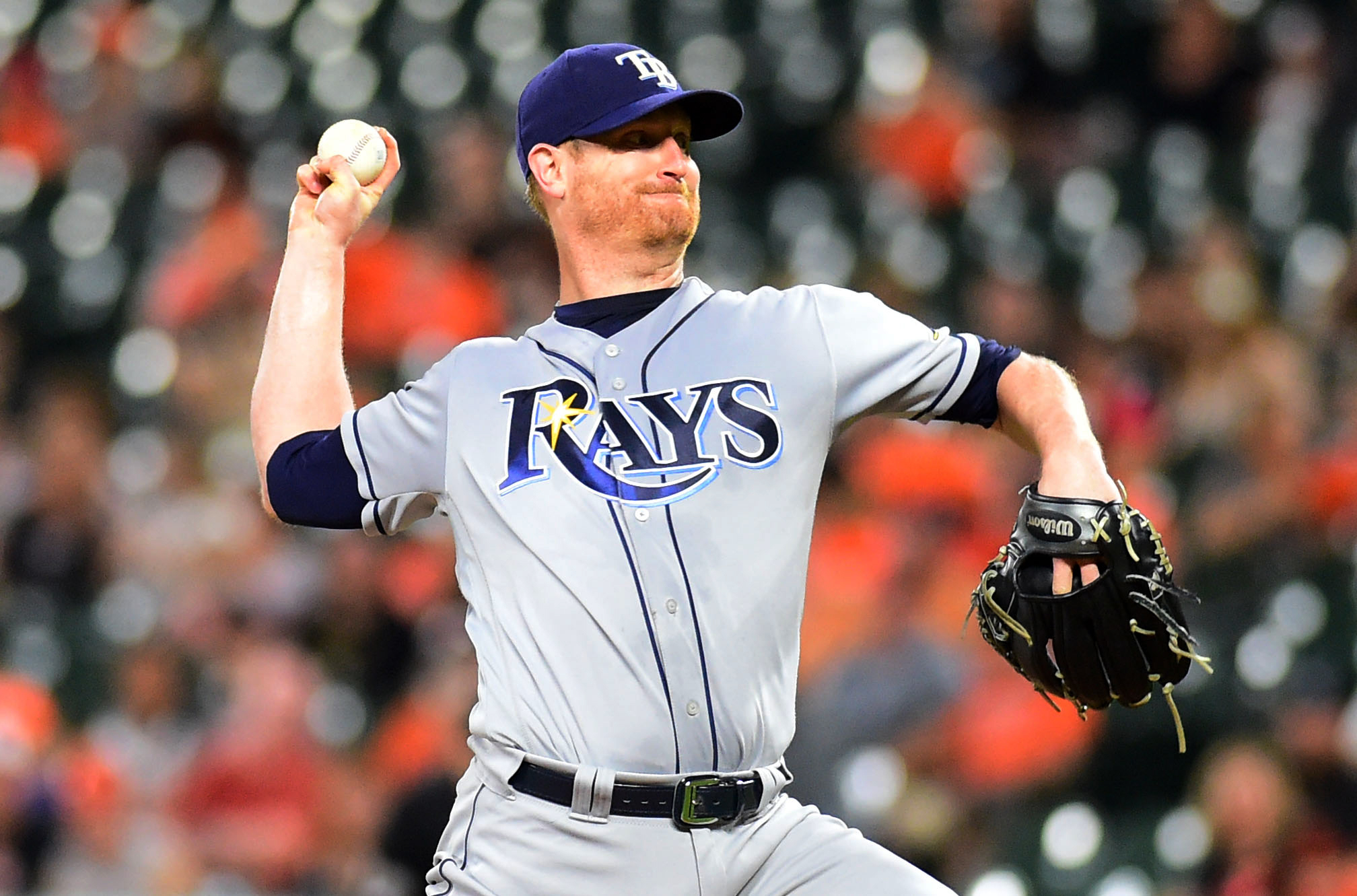 On February 18, the Star Tribune’s Phil Miller tweeted that Falvey was quoted as saying “I’m not turning my phone off” in regard to adding another starter. Since that date, Darren Wolfson reported on 1500 ESPN radio that Minnesota lowballed Lance Lynn, and then more reports surfaced in early March suggesting an offer of two years and $20 million was made to the former Cardinals starter. Just under a $3 million boost on the rejected qualifying offer probably isn’t going to get it done, but it’s hard to ignore the makings of a fire being in place. Jake Arrieta, Alex Cobb and Lance Lynn are the trio the baseball world is currently focused on. While Mike Moustakas, Neil Walker, and a host of position players remain unsigned, it’s impact pitchers that are generally in short supply. With those three arms still to be had, almost every outlet sees Minnesota as a logical landing spot. On ESPN, David Schoenfield put five teams down as his “best bets” to land one of them. While the Brewers should be competitive with their additions, it’s the Twins and Nationals that look the best of the bunch (excluding the Orioles and Phillies). His piece can be added to the long list of articles making the suggestion that Minnesota make another move, but the question remains if, and if so, who? Of the group, it seems as though Jake Arrieta remains the most remote possibility. Being a Scott Boras client, Arrieta has sought a massive payday and has seemingly stood behind that notion. After peaking late, Arrieta has put just four strong seasons of work together. In a Cubs uniform, he looked the part of an ace and picked up a Cy Young award in 2015. At 32 years-old however, there’s a lot of mileage on the arm, and the decline could be both sharp and immediate. Should the Twins continue to create the Rays of the Midwest, then Alex Cobb has to be considered. Both Logan Morrison and Jake Odorizzi serve as recruiters, while pitching guru Josh Kalk is already in house. Undergoing Tommy John surgery, Cobb has just 34 starts under his belt since 2014. At 30 however, age is still on his side and the 2.82 ERA from 2013-14 looks dazzling in retrospect. Minnesota has to have some level of belief that there’s more to be unleashed than the 3.66 ERA and 6.4 K/9 of 2017, but he too would represent a clear upgrade. Rounding out the trio is the name the Twins have been most tied to, Lance Lynn. If not for Yu Darvish, it was probably Lynn who presented the most intriguing combination of dollars and sense on the free agent market this offseason. Also a Tommy John survivor, Lynn will soon be 31 and bounced back to start a league high 33 games in 2017. The career 3.4 BB/9 isn’t ideal for a starter, and jumping up to 3.8 in 2017 is worrisome. However, he’s consistently posted K/9 totals over 8.0 and that’s something the Twins would love to have on the bump. As things stand, the Twins have exactly three weeks left until Opening Day in Baltimore. That same time frame applies to those players still left on the open market. Derek Falvey and Thad Levine could run Kyle Gibson and Phil Hughes to the mound as 50% of their starting rotation (until Ervin Santana returns), but that duo doesn’t provide much confidence for a team with postseason aspirations. Both represent solid depth options, but with money left in attempts to reach 51% of revenues, a path to an upgrade is in clear view. The longer the process drags on, the more negative the impact becomes for both sides. Getting free agents into camp and acclimated should be of integral importance, regardless of it being with the Twins or elsewhere. Although it’s not as if the players are simply doing nothing, gearing up their throwing programs within the organization is a far better use of time. Examples of late-signing free agents aren’t plentiful, and signings well into the season bring back bad memories of Stephen Drew and Kendrys Morales. Despite being tied to draft pick compensation, both a team and the player budging a bit makes too much sense not to get done. When the smoke clears, I’m inclined to believe Minnesota will have one more new face in the clubhouse. Lynn seems to be the odds-on favorite, with Cobb or no one coming in ahead of Arrieta. A one-year pact to give up the pick would be tough, but a two-year deal hardly benefits guys looking for some stability. One thing is certain, the calendar isn’t stopping and we’ll have resolution at some point.
 -
Romero Ready and Waiting for Twins
Ted Schwerzler commented on Ted Schwerzler 's blog entry in Off The Baggy
Actually, the last piece to him being a starter is developing a usable chanegup. He needs to put forth a better command showing than he had at AA last year as well. I get he could make an impact in the pen, but I'd stay away from that for now. -
For the most part, the Minnesota Twins 25 man roster is easy to project. I tried my hand in projection 1.0 at the end of February and feel pretty much the same about that group here at the beginning of March. That being said, I think there remains one position battle of intrigue when it comes to the position players. As Logan Morrison has entered to fill the regular DH role, there's a two man race for the fourth and final outfield spot. The incumbent is none other than Robbie Grossman. Signed off the scrap heap by the Twins back in 2016, he was an answer while Minnesota was having to send out the young Eddie Rosario. In his first 99 games with the club, Grossman put forth the best numbers of his career. An on-base machine, Grossman's .280/.386/.443 slash line in his debut year for the Twins was easily a high water mark. As an encore last season, the .741 OPS was fine for a guy that provided rotational flexibility and assumed DH duties on a semi-regular basis. While nothing jumped off the page in the average or power categories, it was again a .361 OBP that could be noted as the strongest asset. When looking at Grossman's time with the Twins, it's never been his presence at the plate proving to be a deficiency. In the field however, it's been another story altogether. In his first 637.1 innings spanning across 2016, abysmal doesn't even begin to categorize the output. Worth -21 DRS and with a UZR of -15.2, Grossman's performance was bad enough to make even Delmon Young and Josh Willingham blush. Knowing it needed to improve, Grossman made strides a season ago. Despite roughly half the amount of innings (357.0), the numbers checked in at -3 DRS and -3.3 UZR. Robbie isn't ever likely to be above average in the field, but in 2017, he proved he can be better than a black hole as well. That's really what the Twins have to weigh when it comes to filling out their 25 man roster. Grossman leaves an immeasurable amount to be desired in the field, and a potential replacement would be a virtual opposite. Zack Granite is a blazing (albeit not Buxton-like) centerfielder, with the ability to track balls down from well out of his reach. Arm strength isn't anything of note, but it's hardly a downfall either. In just 174 inning sample size, Granite was worth 4 DRS and 1.2 UZR for Minnesota per Fangraphs. At the plate, Zack has just 107 major league plate appearances under his belt. Making his debut a season ago for the Twins, Granite posted a .237/.321/.290 slash line. A .611 OPS isn't ever going to get it done at the highest level, but there's plenty of reason to believe he can acclimate. At Triple-AA Rochester for the first time in his career, Granite played 71 games and grabbed 313 plate appearances in 2017. He turned those opportunities into a .338/.392/.475 slash line. While those numbers are definitely gaudy, they follow the trend of a guy who's posted consistent on-base numbers while being more average than power over the course of his professional career. For Granite to really round into form, he'll need to display a strong level of plate discipline over the course of his big league time. At Triple-A last season, he struck out just 34 times in 284 at bats, while drawing 24 walks. Jumping up a level, he actually posted just nine strikeouts for the Twins while drawing 12 free passes over his 93 at bats. Another good sign is that a strong knowledge of the strike zone has never left him. With just a 1.9% swinging strike rate, and a 95% contact rate, no one in baseball (with at least 100 plate appearances) posted better numbers. Paul Molitor and the Minnesota Twins will likely let the battle run it's course through the end of the spring. Granite has options left, while Robbie Grossman would need to be DFA'd to make room. As things stand currently, that's probably the biggest feather in the cap for the latter. The Twins could certainly opt to go with Grossman out of the gate, and then call upon Granite as soon as they've seen enough. If they're looking at bringing the best or most ideal 25 north however, Zack definitely has a case to be made. For more from Off The Baggy, click here. Follow @tlschwerz
-
Romero Ready and Waiting for Twins
Ted Schwerzler commented on Ted Schwerzler 's blog entry in Off The Baggy
I had Romero debuting with the Twins in June for the piece I did in the Twins Daily Prospect Handbook, that's a bit aggressive. I do lean aggressive timelines though as I try to tab a prospect a month. -
Coming into spring training 2018, there were two key names on the mound when it came to up and coming Twins prospects. Stephen Gonsalves and Fernando Romero were the guys to watch, and thus far, they’ve both been appointment viewing. For Romero, the ceiling is that of a big league ace, and thus far he’s done little to dispel that notion. It’s hard to glean much from such an incredibly small sample size, but the process is just as imperative as the results. First by the numbers, Romero has appeared in three games pitching a total of five innings. He’s tallied six strikeouts, given up zero hits, and has walked just one batter. If that were stretched out over a considerable amount of any given season, he’d be staring at the business end of a Cy Young award and some big league records. As it stands, the numbers are just a small flash in the pan allowing Twins fans to dream of what could one day be. That being said, it was his latest outing that might have been the most promising and indicative of the ceiling those within the organization hope he reaches. Against the Phillies in Clearwater on March 5, Romero worked the bottom of the 7th inning facing Dylan Cozens, Roman Quinn, and Pedro Florimon (all big league bats). Starting out at 94 mph with his fastball, he topped out at 96 mph on his 19th offering of the inning. Striking out the trio swinging, Quinn and Florimon flailed at sliders biting their heels after facing straight heat. The outing included 21 pitches, 15 of which were strikes, 88 mph sliders, and 96 mph fastballs. Over the course of those 21 pitches thrown to three Phillies batters, Romero showed exactly why he’s viewed as a top of the rotation arm. The velocity was there, the breaking pitches were devastating, the efficiency in the zone was displayed, and a mound presence well beyond his years was apparent. If every outing went like that one, Romero would find himself paired with Jose Berrios as a one-two punch for Minnesota out of the gate in 2018. When it comes to the greater picture, Romero’s deficiencies lie where many like him find fault. Reaching Double-A Chattanooga for the first time last season as a 22 year old, command issues returned for the first time since his Tommy John surgery in 2014. Striking out 8.6 per nine across his 125.0 IP, he also allowed 3.2 BB/9. In 2016, his first season back from the surgery, Romero had sat down hitters at a 9.0 K/9 clip and walked just 1.5 per nine over 90.1 IP at two levels. If there’s an area of focus for the 2018 season, it will be in seeing how the free passes add up. Looking back on his time as a pro, Romero has never been bit hard by the home run bug, and he’s generally kept his H/9 numbers to a minimum. As he continues to rise levels, potentially starting at Double-A Chattanooga to open 2018, seeing refinement in some integral areas will be a consistent focus. It’s in how the development with command and control shakes out that will eventually determine if Romero can assume a spot at the top of the rotation, or if he’s destined for a relief role. At the end of spring training, it would be a virtual shock to see Romero break the 25 man headed up to Minnesota. The Twins would most likely prefer he break into the big leagues as a starter, and while he could see time first in a relief role, that coming directly out of spring seems incredibly unlikely. That being said, the clock has absolutely begun to tick, and there will be knocks on the major league door sooner rather than later. Outside of the player acquisitions this offseason, pitching guru Derek Falvey has developed an infrastructure that should foster internal development. Task number one will be unlocking the highest possible percentile of Fernando Romero, and if achieved, could mean the Twins have the ace they’ve been craving since the days of Johan Santana and Francisco Liriano. For more from Off The Baggy, click here. Follow @tlschwerz
-
Article: Buxton Extending Into the Future
Ted Schwerzler replied to Ted Schwerzler 's topic in Twins Daily Front Page News
Even if that's the case, which it very well may be, an extension that simply buys out his arbitration years still gives him guaranteed money and allows for a FA payday. -
Article: Buxton Extending Into the Future
Ted Schwerzler replied to Ted Schwerzler 's topic in Twins Daily Front Page News
Couldn't disagree with this more, and I like Sano. The reality that he could be solely a power hitting DH in a year makes his arbitration numbers far less scary. I'd extend him, but I'd want him to give me more reason to do so than he has thus far.- 27 replies
-
- 4
-
-
- byron buxton
- minnesota twins
- (and 2 more)
-
Article: Buxton Extending Into the Future
Ted Schwerzler replied to Ted Schwerzler 's topic in Twins Daily Front Page News
FWIW, I'm a subscriber to The Athletic, and think the content thus far has been great and more than worthy of the modest price point. Bowden's stuff has been less than impressive thus far however. Discussed a mistake with Rosenthal on something JB wrote, and he's probably the guy that brings up the rear when it comes to their M~LB coverage. -
Article: Buxton Extending Into the Future
Ted Schwerzler replied to Ted Schwerzler 's topic in Twins Daily Front Page News
Obviously the idea is to buy into free agency years. What provides a wrinkle is that you aren't getting a discount once getting past arbitration seasons. Long term can mean any number of things, but I'd imagine both sides will want to do what best positions them. Buxton could give up one year of free agency and still hit the market sub-30, but I doubt he'd want to go much deeper than that. Also, as noted above as well, the idea wasn't in comparing Betts and Buxton. The notion was that Betts over his career, provided a decent comparison to Byron at his best in 2017. There's still plenty of ceiling for the Twins CF, and that being reached likely looks similar to the contract path that Betts has been on. If you want to avoid those numbers, an extension effectively does that. -
Article: Buxton Extending Into the Future
Ted Schwerzler replied to Ted Schwerzler 's topic in Twins Daily Front Page News
Betts and Buxton aren't comparable over their careers. They are absolutely compared in the vein of 2017, and with the notion that Betts is something similar to Buxton's 100th percentile. In that scenario, you have a layout of what arbitration numbers could come in around. Byron's strong stretch, as noted in the piece, was from June 1 onwards (and obviously better if you decrease the sample size further). Knowing that his fWAR was virtually comprised of 75% defense, being even near Betts' output in 2017 suggests a decent talking point. The idea wasn't that they have had similar careers, but in that should Byron be a candidate for extension in terms of merit derived through max potential, the Red Sox OF is a guy that's a bit ahead of the timeline. -
Over the weekend, Jim Bowden of The Athletic tweeted that the Minnesota Twins and star centerfielder Byron Buxton have a mutual interest when it comes to figuring out a long-term extension. Quickly, local names like Mike Berardino and Darren Wolfson noted that while true, that's quite a ways from happening. Although things could come together quickly, it's worth wondering what a deal might look like, and whether or not it makes sense for both sides.As players like Byron Buxton, Miguel Sano, Jose Berrios, and some of the other developing youngsters push towards extensions, the Twins crossroads is an interesting one. It's at the end of 2018 that star second basemen Brian Dozier sees his four-year, $20 million extension run out. As John Bonnes from Twins Daily reported last week, the Mississippi native believes he's headed for free agency. Minnesota wasn't able to buy into Dozier's free agency years, and retaining him now would require a new deal to be worked out. For a player like Buxton, the ideal scenario for the Twins would be to lock him up for a considerable amount of time. Obviously on Byron's end, he'll be foregoing arbitration induced pay raises, and will want to be compensated fairly. At 24 years old, and arbitration eligible for the first time in 2019, the clock is ticking. When looking for some level of comparison, another young outfielder comes to mind. Enter Mookie Betts. Although Betts doesn't play center field, he's a decent case study when it comes to Buxton. Betts won his second straight Gold Glove for the Red Sox in 2017, and posted his fourth straight season with an OPS north of .800. Across all of baseball, only Betts had more DRS (31) in the outfield than the Twins Buxton (24). The Red Sox right fielder's UZR more than doubled the Twins centerfielder's, and his RngR factor also checked in slightly higher. The breakout was hardly a one-year thing either, as Betts posted dazzling digits across multiple defensive metrics in 2016. Even before reaching tallies of 32 and 31 DRS the last two years respectively, Betts owned marks of 5 and 10 in his first two seasons. On the offensive side of the diamond, there's little argument to be made that Betts hasn't been the far superior player. In his worst season, an .803 OPS still shines amongst an all-star caliber resume, along with a third straight year of MVP votes. For Buxton, the .728 OPS in 2017 showed part of the promise that made him the number one prospect in all of baseball, but it was still an early season swoon that weighed down his overall numbers. For Buxton to reach the overall impact that Betts has for the Red Sox, Minnesota will need to see a full 162 games worth of the .796 OPS tallied from June 1st through the end of the season. As Buxton legitimately broke down his swing and rebuilt it at the big league level under James Rowson a season ago, it's an expectation that doesn't seem too incredibly lofty. What is an All-Star candidate based upon a lackluster OPS and his glove alone, is an MVP threat for multiple years in a row when reaching his peak potential. So knowing they stack up similarly, Betts is a bit further into the process of being paid. While having not been extended by the Red Sox, he's seen raises from $514.7k to $566k, and then further to $950k a season ago. Being arbitration eligible for the first time this season, Betts' case went to a hearing. The Red Sox offered him $7.5 million, while he believed in his being worth more. After having the case heard, the outfielder came out on top and will make $10.5 million in 2018. Over a 10x increase on his 2017 salary, Betts has three more years of arbitration induced salaries before he'll hit free agency. That $10.5 million Betts was awarded comes in as the second highest salary for a player in his first year of arbitration eligibility, and it was only beaten by Kris Bryant in this same offseason ($10.85m.) It was in this same offseason that Blue Jays third basemen Josh Donaldson set the record for the largest arbitration contract in history, checking in at $23 million. Toronto had worked out a deal to give Donaldson cost certainty each of the past two years with a deal that paid him a total of $28.65 million. Having run out the year before he hits the open market however, the new number is a hefty one. What the numbers above suggest is that Byron Buxton could have the Twins in a place where they see some really inflated numbers rather quickly. After making $535k in 2017, Buxton's increase is a modest one to $570k. This is the last deal that will be consummated without the intervention of the arbitration system unless a long-term agreement is struck however. If Byron continues to let nothing fall but raindrops, and the bat is in the place it appears to be, the dollar amounts should roll in rather quickly. Minnesota could be looking at numbers like $8m, $10m, $12m, and $15m over the course of the next four seasons. Having yet to earn a seven-figure yearly salary, the Georgia native could be staring at the business end of $45 million in a few short years. While that would still pale in comparison to the value he'd bring in that scenario, a more economically focused route could be beneficial for the Twins. The current front office wasn't in place when Minnesota agreed to keep Brian Dozier around for $20 million over the course of four years. That being said, this astute collection likely sees the value in a similar cost-certainty model for their superstar centerfielder. Dozier was 28 at the time of his first multi-year deal, while Buxton turned 24 last December. There're plenty of factors at play, but the numbers seem to suggest that giving up a sense of certainty for a level of security is a good play for both sides. I'm not entirely sure what the numbers would look like (although Seth Stohs provided a great breakdown back in October), but something like $30-35 million through four years of arbitration could be a nice get for all parties involved. No matter what the dollars say however, it appears to make sense, for both Buxton and the Twins, to pencil each other into plans for the immediate future. Posted originally at Off The Baggy. Click here to view the article
- 27 replies
-
- 1
-
-
- byron buxton
- minnesota twins
- (and 2 more)
-
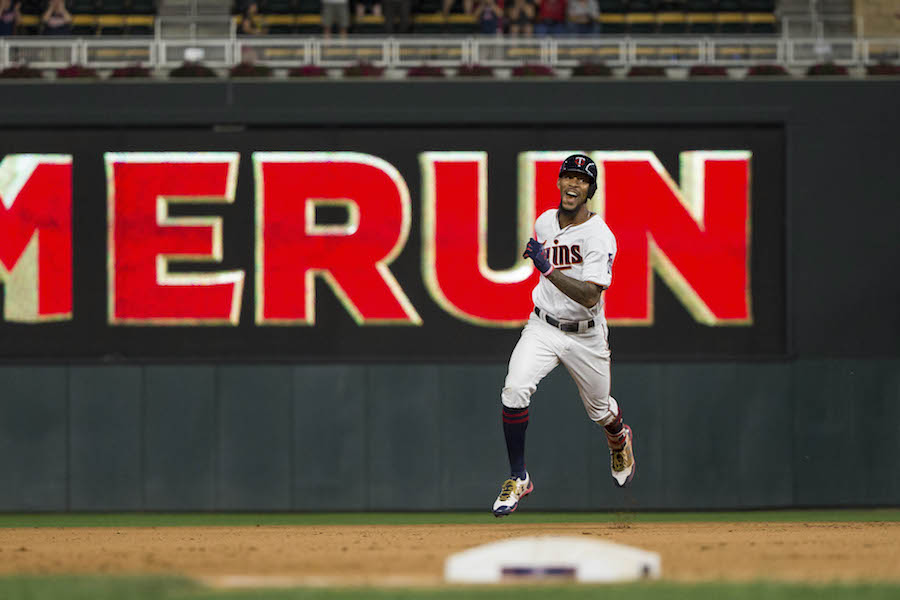 As players like Byron Buxton, Miguel Sano, Jose Berrios, and some of the other developing youngsters push towards extensions, the Twins crossroads is an interesting one. It's at the end of 2018 that star second basemen Brian Dozier sees his four-year, $20 million extension run out. As John Bonnes from Twins Daily reported last week, the Mississippi native believes he's headed for free agency. Minnesota wasn't able to buy into Dozier's free agency years, and retaining him now would require a new deal to be worked out. For a player like Buxton, the ideal scenario for the Twins would be to lock him up for a considerable amount of time. Obviously on Byron's end, he'll be foregoing arbitration induced pay raises, and will want to be compensated fairly. At 24 years old, and arbitration eligible for the first time in 2019, the clock is ticking. When looking for some level of comparison, another young outfielder comes to mind. Enter Mookie Betts. Although Betts doesn't play center field, he's a decent case study when it comes to Buxton. Betts won his second straight Gold Glove for the Red Sox in 2017, and posted his fourth straight season with an OPS north of .800. Across all of baseball, only Betts had more DRS (31) in the outfield than the Twins Buxton (24). The Red Sox right fielder's UZR more than doubled the Twins centerfielder's, and his RngR factor also checked in slightly higher. The breakout was hardly a one-year thing either, as Betts posted dazzling digits across multiple defensive metrics in 2016. Even before reaching tallies of 32 and 31 DRS the last two years respectively, Betts owned marks of 5 and 10 in his first two seasons. On the offensive side of the diamond, there's little argument to be made that Betts hasn't been the far superior player. In his worst season, an .803 OPS still shines amongst an all-star caliber resume, along with a third straight year of MVP votes. For Buxton, the .728 OPS in 2017 showed part of the promise that made him the number one prospect in all of baseball, but it was still an early season swoon that weighed down his overall numbers. For Buxton to reach the overall impact that Betts has for the Red Sox, Minnesota will need to see a full 162 games worth of the .796 OPS tallied from June 1st through the end of the season. As Buxton legitimately broke down his swing and rebuilt it at the big league level under James Rowson a season ago, it's an expectation that doesn't seem too incredibly lofty. What is an All-Star candidate based upon a lackluster OPS and his glove alone, is an MVP threat for multiple years in a row when reaching his peak potential. So knowing they stack up similarly, Betts is a bit further into the process of being paid. While having not been extended by the Red Sox, he's seen raises from $514.7k to $566k, and then further to $950k a season ago. Being arbitration eligible for the first time this season, Betts' case went to a hearing. The Red Sox offered him $7.5 million, while he believed in his being worth more. After having the case heard, the outfielder came out on top and will make $10.5 million in 2018. Over a 10x increase on his 2017 salary, Betts has three more years of arbitration induced salaries before he'll hit free agency. That $10.5 million Betts was awarded comes in as the second highest salary for a player in his first year of arbitration eligibility, and it was only beaten by Kris Bryant in this same offseason ($10.85m.) It was in this same offseason that Blue Jays third basemen Josh Donaldson set the record for the largest arbitration contract in history, checking in at $23 million. Toronto had worked out a deal to give Donaldson cost certainty each of the past two years with a deal that paid him a total of $28.65 million. Having run out the year before he hits the open market however, the new number is a hefty one. What the numbers above suggest is that Byron Buxton could have the Twins in a place where they see some really inflated numbers rather quickly. After making $535k in 2017, Buxton's increase is a modest one to $570k. This is the last deal that will be consummated without the intervention of the arbitration system unless a long-term agreement is struck however. If Byron continues to let nothing fall but raindrops, and the bat is in the place it appears to be, the dollar amounts should roll in rather quickly. Minnesota could be looking at numbers like $8m, $10m, $12m, and $15m over the course of the next four seasons. Having yet to earn a seven-figure yearly salary, the Georgia native could be staring at the business end of $45 million in a few short years. While that would still pale in comparison to the value he'd bring in that scenario, a more economically focused route could be beneficial for the Twins. The current front office wasn't in place when Minnesota agreed to keep Brian Dozier around for $20 million over the course of four years. That being said, this astute collection likely sees the value in a similar cost-certainty model for their superstar centerfielder. Dozier was 28 at the time of his first multi-year deal, while Buxton turned 24 last December. There're plenty of factors at play, but the numbers seem to suggest that giving up a sense of certainty for a level of security is a good play for both sides. I'm not entirely sure what the numbers would look like (although Seth Stohs provided a great breakdown back in October), but something like $30-35 million through four years of arbitration could be a nice get for all parties involved. No matter what the dollars say however, it appears to make sense, for both Buxton and the Twins, to pencil each other into plans for the immediate future. Posted originally at Off The Baggy.
 -
Article: An Offense Poised To Do Damage
Ted Schwerzler posted a topic in Twins Daily Front Page News
In 2017, the Minnesota Twins owned the 19th best team ERA in baseball. They didn’t have a true ace, and they used a club record 36 pitchers. Stability on the mound wasn’t a trait for Paul Molitor’s club, but the group came together to produce an 85-win season and grab a Wild Card spot. Evidenced by the performance on the mound, it was offense that carried the Twins, and this offseason one addition makes them even scarier in the American League.A year ago, the Twins had back-to-back 200 home run seasons for the first time since Harmon Killebrew was on the roster (1964). Minnesota base runners touched home plate 815 times, which was good enough for seventh in all of Major League Baseball (4th in the American League). Though the 206 longballs didn’t threaten the club record (225 in 1963), and the 815 runs didn’t push for immortality either (877 in 1996), both positioned them as a force to be reckoned with at the plate. Suffering through a dismal 2016 season, Minnesota needed until June 21 to register their first double-digit run output. They replicated the feat just 11 more times that whole season. In 2017, the Twins put up double-digits in their ninth game, and went on to do so in 18 matchups over the course of the season. From a year-by-year improvement standard, the production equated to a net of +93 runs. A relatively similar starting lineup by comparison, development had allowed much of the youth to take the next step. Going into this offseason, the Twins focus needed to be pitching. Derek Falvey and Thad Levine needed to give Molitor answers in the pen, as well as the starting rotation. From Jake Odorizzi to Addison Reed, they accomplished those goals and then some. An additional boost could be had for the offense, but it always seemed to be somewhat of a luxury acquisition. When Logan Morrison agreed to a one-year deal worth $6.5 million (and an option for a second year at $8 million), luxury became reality. Not only did Minnesota get a 30 year-old player on the heels of a breakout season, but also they did so at a bargain price, and were able to supplement an area that was already considered a strength. As Morrison enters the Twins fold, it’s an already productive offense that could find it vaulting into the top tier across all of baseball. Despite the success Molitor had with his group a season ago, Minnesota’s designated hitter spot left plenty to be desired. Manned mainly by Robbie Grossman, Twins designated hitters combined to post a sub .720 OPS in 2017. Despite being an on-base machine, Grossman posted just a .380 slugging percentage, and owned a .665 OPS across 59 games from June 1 through September 5th. For a guy who had never previously hit more than 23 homers in a season, it’s hard to see Morrison replicating his 38-long ball performance from 2017. The .868 OPS was good enough for 34th in all of baseball, and is over 100 points better than his .763 career number. Regression is going to factor into production going forward, but most importantly, Morrison made wholesale changes that allowed his advancement at the dish. A dedication to launch angle and elevating the baseball make what was a significant outlying year seem to be more of a result generated by process, and repeatable. Considering Tropicana Field and Target Field had similar park factors a year ago, Morrison’s production should remain relatively stable. Having gone from a 10.8 launch angle in 2015, all the way to 17.4 last year, the hard-hit and contact rates do not need to fluctuate to generate performance. What Morrison, even in a muted sense, brings to the Twins is much higher production at a spot in the lineup where they have previously been considered weak. Expecting the Twins to once again surpass the 200 home run plateau is a pretty solid bet. While Brian Dozier has proven it for the last couple of years, guys like Miguel Sano, Byron Buxton and Max Kepler all have the potential to lose more baseballs in the seats. Even outside of the moonshots, run production remains a byproduct of simply getting on base. By adding a player like Morrison, Minnesota will generate more opportunities to put runs on the board. It’s hard to think that the Twins will challenge the 877 run club record, but even an additional 10 runs (to 825) in 2017 would’ve had Minnesota as the third highest scoring offense in baseball (behind the Astros and Yankees). If the Twins are going to get better pitching performances in the year ahead (which they’ve set themselves up to do), and can also increase run production, then this club is going to be a real force to be reckoned with. The reality is few teams have the ability to run Max Scherzer and Stephen Strasburg out to the mound on a nightly basis. Only so many Clayton Kershaw’s and Chris Sale’s exist across the big leagues. As the Twins continue to develop pitching and push towards a more sustainable model in deploying it, scoring more runs than their opponent is a great fallback option. Falvey and Levine deserve plenty of credit for the supplementing they did for the organization this winter, but it may be the last addition they made that ends up having the largest impact. James Rowson has plenty of bats to work with, and Paul Molitor should have plenty of fun organizing them one through nine. Click here to view the article- 10 replies
-
- 4
-
-
- minnesota twins
- logan morrison
- (and 3 more)
-
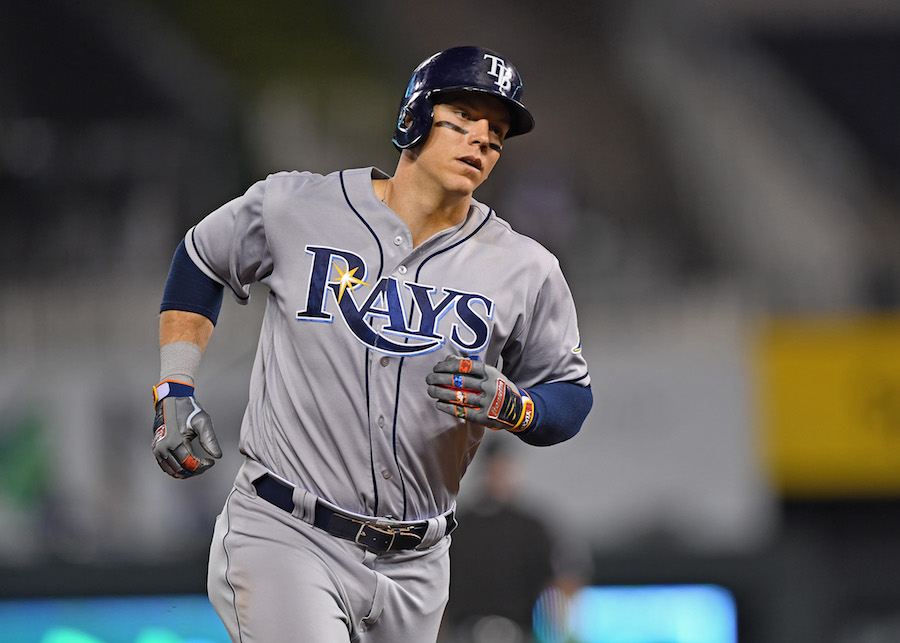 A year ago, the Twins had back-to-back 200 home run seasons for the first time since Harmon Killebrew was on the roster (1964). Minnesota base runners touched home plate 815 times, which was good enough for seventh in all of Major League Baseball (4th in the American League). Though the 206 longballs didn’t threaten the club record (225 in 1963), and the 815 runs didn’t push for immortality either (877 in 1996), both positioned them as a force to be reckoned with at the plate. Suffering through a dismal 2016 season, Minnesota needed until June 21 to register their first double-digit run output. They replicated the feat just 11 more times that whole season. In 2017, the Twins put up double-digits in their ninth game, and went on to do so in 18 matchups over the course of the season. From a year-by-year improvement standard, the production equated to a net of +93 runs. A relatively similar starting lineup by comparison, development had allowed much of the youth to take the next step. Going into this offseason, the Twins focus needed to be pitching. Derek Falvey and Thad Levine needed to give Molitor answers in the pen, as well as the starting rotation. From Jake Odorizzi to Addison Reed, they accomplished those goals and then some. An additional boost could be had for the offense, but it always seemed to be somewhat of a luxury acquisition. When Logan Morrison agreed to a one-year deal worth $6.5 million (and an option for a second year at $8 million), luxury became reality. Not only did Minnesota get a 30 year-old player on the heels of a breakout season, but also they did so at a bargain price, and were able to supplement an area that was already considered a strength. As Morrison enters the Twins fold, it’s an already productive offense that could find it vaulting into the top tier across all of baseball. Despite the success Molitor had with his group a season ago, Minnesota’s designated hitter spot left plenty to be desired. Manned mainly by Robbie Grossman, Twins designated hitters combined to post a sub .720 OPS in 2017. Despite being an on-base machine, Grossman posted just a .380 slugging percentage, and owned a .665 OPS across 59 games from June 1 through September 5th. For a guy who had never previously hit more than 23 homers in a season, it’s hard to see Morrison replicating his 38-long ball performance from 2017. The .868 OPS was good enough for 34th in all of baseball, and is over 100 points better than his .763 career number. Regression is going to factor into production going forward, but most importantly, Morrison made wholesale changes that allowed his advancement at the dish. A dedication to launch angle and elevating the baseball make what was a significant outlying year seem to be more of a result generated by process, and repeatable. Considering Tropicana Field and Target Field had similar park factors a year ago, Morrison’s production should remain relatively stable. Having gone from a 10.8 launch angle in 2015, all the way to 17.4 last year, the hard-hit and contact rates do not need to fluctuate to generate performance. What Morrison, even in a muted sense, brings to the Twins is much higher production at a spot in the lineup where they have previously been considered weak. Expecting the Twins to once again surpass the 200 home run plateau is a pretty solid bet. While Brian Dozier has proven it for the last couple of years, guys like Miguel Sano, Byron Buxton and Max Kepler all have the potential to lose more baseballs in the seats. Even outside of the moonshots, run production remains a byproduct of simply getting on base. By adding a player like Morrison, Minnesota will generate more opportunities to put runs on the board. It’s hard to think that the Twins will challenge the 877 run club record, but even an additional 10 runs (to 825) in 2017 would’ve had Minnesota as the third highest scoring offense in baseball (behind the Astros and Yankees). If the Twins are going to get better pitching performances in the year ahead (which they’ve set themselves up to do), and can also increase run production, then this club is going to be a real force to be reckoned with. The reality is few teams have the ability to run Max Scherzer and Stephen Strasburg out to the mound on a nightly basis. Only so many Clayton Kershaw’s and Chris Sale’s exist across the big leagues. As the Twins continue to develop pitching and push towards a more sustainable model in deploying it, scoring more runs than their opponent is a great fallback option. Falvey and Levine deserve plenty of credit for the supplementing they did for the organization this winter, but it may be the last addition they made that ends up having the largest impact. James Rowson has plenty of bats to work with, and Paul Molitor should have plenty of fun organizing them one through nine.
 -
Who Goes North for the Twins
Ted Schwerzler commented on Ted Schwerzler 's blog entry in Off The Baggy
From a talent standpoint, I'd agree, but in general it doesn't mean much. They'll end up lining him up for the Puerto Rico series.- 5 comments
-
- 1
-
-
- minnesota twins
- spring training
- (and 1 more)
-
Nick Gordon and the Tea Leaves
Ted Schwerzler commented on Ted Schwerzler 's blog entry in Off The Baggy
While I don't think Gordon sticks at 2B, you're also reading too much into it IMO. Polanco is the MLB starting SS right now and will remain so for the immediate future. You aren't going to play him out of position for a non-roster invitee- 11 comments
-
- 4
-
-
- minnesota twins
- nick gordon
- (and 2 more)
-
Nick Gordon and the Tea Leaves
Ted Schwerzler commented on Ted Schwerzler 's blog entry in Off The Baggy
Has to be an ability to have that scenario present itself. They aren't going to be in play for Kershaw, and that leaves Keuchel, who will probably have plenty of suitors. -
As February comes to a close, and the calendar turns over to March, spring training is well underway for the Minnesota Twins. After an 85 win season took them to a Wild Card tilt in the Bronx, Paul Molitor's club is looking to make waves in the year ahead. Looking to make waves on his own, Nick Gordon seems to have been given a handful of opportunity from the get go this exhibition season. As of this writing, Minnesota will have played five games in Grapefruit League action, and Gordon has competed in three of them. He's started twice, manning the middle of the diamond with Jorge Polanco flanking him at shortstop. Playing second base in all of his action, Dee's brother and Tom's son has provided some interesting messages to read into. At Double-A Chattanooga in 2017, Gordon played 104 games at short, while manning second base in just 14 contests. Drafted as a shortstop out of high school, the hope was that his glove would allow him to stick at the position. Now through 415 minor league games, he's started 374 of them at short. Although the expectation was that the bat needed to develop, the early belief is that the glove and arm could stick. With defensive metrics being tracked much more lightly on the farm, we're forced to look at much more archaic forms of measurement. Spanning all of his game action, Gordon owns a .960 fielding percentage to go with 69 errors. The past two seasons, he's committed 24 and 19 errors respectively. Multiple prospect experts see Gordon needing to slide over to second at the next level. While he has the speed and range at short, the glove and arm have left him susceptible to miscues. If that ends up being the case, the likely outcome is an up-the-middle-pairing with Jorge Polanco. Unfortunately, both of those players would be somewhat miscast for an every day role at short, but Polanco did make strides a season ago. After being worth -8 DRS and posted a -10.9 UZR in 406 innings during 2016, Jorge played over 1,110 innings in 2017 and compiled a -1 DRS and -4.3 UZR. Gordon's bat has been on a nice trajectory however. After compiling a .699 and .696 OPS in his first two seasons, Gordon has surpassed the .700 OPS mark in each of the past two years. His .749 OPS in 2017 was a career best, and still reached that height despite a final 30 games (8/1-9/4) that equated to just a .593 OPS. Over the course of his first 92 games last season (4/6-7/31), Gordon posted a .287/.362/.439 slash line with 24 doubles, seven triples, and seven homers. As a 21 year-old at Double-A, those numbers are glowing. Currently in Fort Myers at the Twins spring training complex, John Bonnes spoke with Minnesota second basemen Brian Dozier. In his comments, he makes it relatively clear that he's looking forward to his impending free agency. At 31 years-old, he'll be somewhat difficult to hand a long-term, big-money deal. If Derek Falvey and Thad Levine decide to go a different direction, letting Dozier walk could open the door for Gordon to run with the role for good. There's no reason to believe Gordon's early action in spring training suggests he's got a legitimate shot to break camp with the Twins. Right now, the top prospect isn't even on the 40 man roster. What I do think we are seeing is an early-and-often approach that suggests Minnesota knows he's close. Gordon will probably spend the bulk of 2018 at Triple-A, and could see time at the big league level later in the year. The more he plays alongside potential future teammates however, the easier it is for him to integrate when called upon. Over the course of recent Twins seasons, there may be no bigger shoes to fill than Brian Dozier's. Nick Gordon isn't ever going to hit anywhere near 30+ home runs in a season, but he could be called upon to take the baton from the Twins All-Star. The more he plays in starting lineups during 2018 spring training should only fuel the fire to make that a reality on a nightly basis when the games count. It seems to me that Minnesota believes Gordon is very close, and for the player, that should be motivating enough to make 2018 a season to keep an eye on. For more from Off The Baggy, click here. Follow @tlschwerz
- 11 comments
-
- 1
-
-
- minnesota twins
- nick gordon
- (and 2 more)
