



Ted Schwerzler
-
Posts
5,149 -
Joined
-
Last visited
Content Type
Profiles
News
Minnesota Twins Videos
2026 Minnesota Twins Top Prospects Ranking
2022 Minnesota Twins Draft Picks
Minnesota Twins Free Agent & Trade Rumors, Notes, & Tidbits
Guides & Resources
2023 Minnesota Twins Draft Picks
The Minnesota Twins Players Project
2024 Minnesota Twins Draft Picks
2025 Minnesota Twins Draft Pick Tracker
2026 Minnesota Twins Draft Tracker: Picks & Bonuses
Forums
Blogs
Events
Store
Downloads
Gallery
Everything posted by Ted Schwerzler
-
I laid out in the article that he wouldn't actually be paid $17MM. It'd be just under $14MM, and that is what his market should be near.
- 59 replies
-
- 2
-

-
- minnesota twins
- michael pineda
- (and 1 more)
-
Moving Eddie Rosario, but Where?
Ted Schwerzler commented on Ted Schwerzler 's blog entry in Off The Baggy
That's exactly the pitcher that Zone Coverage's Brandon Warne mentioned moving Rosario for. I would be ecstatic if that's the type of return they could get. I think that would involve some other very real pieces for the Twins though, and would include the sell job I mentioned on Rosario's prospects in Colorado.- 26 comments
-
- 2
-
-
- minnesota twins
- eddie rosario
- (and 3 more)
-
Moving Eddie Rosario, but Where?
Ted Schwerzler commented on Ted Schwerzler 's blog entry in Off The Baggy
He is a shmuck, that’s fair. -
The Minnesota Twins are going to be looking at filling a starting rotation that has just one guaranteed arm for 2020. A top-tier talent or two is going to be a must but bolstering the group with a strong 4th or 5th is equally as important. Derek Falvey will need to decide on what holdovers he wants back, but Michael Pineda is a talent that could be worthy of a qualifying offer.Reports have suggested that the 2020 qualifying offer amount will drop to $17.8 million, which is a $100,000 step back from 2019. Determined by the average of the top 125 salaries in the game, it’s the first season that the amount has taken a step backwards. That alone is just another bullet point in a long list that the MLBPA must attack in upcoming CBA discussions. Minnesota organized a shrewd pact with the former Yankees starter prior to the 2018 season. Paying him $2 million to watch over his Tommy John rehab, he then made another $8 million as a fully healthy starter in 2019. Posting one of the best seasons in his career, Pineda was estimated to be worth $21.1 million after accumulating 2.7 fWAR. His season came to an abrupt halt after failing a PED test for taking a diuretic he noted as being for weight loss. At least in part, an appeals process deemed his reasoning sufficient, as his suspension was reduced to 60 games and would not have carried postseason ineligibility. From a merit-based standpoint, Pineda has plenty going in his favor. The 4.01 ERA was the best he had posted since his rookie season, and his 1.7 BB/9 established command not seen since 2015. After an ugly first month of the season, Minnesota got a 3.46 ERA in 117.0 IP from Pineda and he allowed opposing batters just a .670 OPS against him. Prior to his suspension, there was serious steam to him being the Game One starter in the American League Division Series. Looking ahead we see a soon-to-be 31-year-old that has had some health concerns. Pineda is now well distanced from Tommy John surgery, but he’s never pitched more than 175 innings in a given year, and (as evidenced by the intentions of weight loss) is not slight in stature. The body of work and physical profile make him somewhat of a risk on a long-term contract, but that’s mitigated on a one-year deal, and even moreso through the 2020 qualifying offer implications. The Twins have a substantial cash flow going into the upcoming offseason, and while they could certainly afford to pay Pineda nearly $18 million for a single year, that’s probably not the best plan of action. Fortunately, because of his remaining suspension, that’s not what the bill would look like. Having something north of 35 games left to serve for 2020, Pineda’s deal would be a prorated portion of that total QO. Rough math indicates a bill resembling something just shy of $14 million, which would be more enticing. Again, there’s no denying that an arm like Pineda’s can’t be the premiere acquisition, but we saw how important a strong back-end starter can be with the revolving door in 2019. Allowing an internal option or two an avenue to hold down the fort until Pineda is reinstated would be a solid blueprint, and there’s no long-term commitment here either. If the QO gets rejected, Minnesota gets draft pick compensation and wins either way. What do you think? Does Pineda get a QO if you’re in charge? Click here to view the article
-
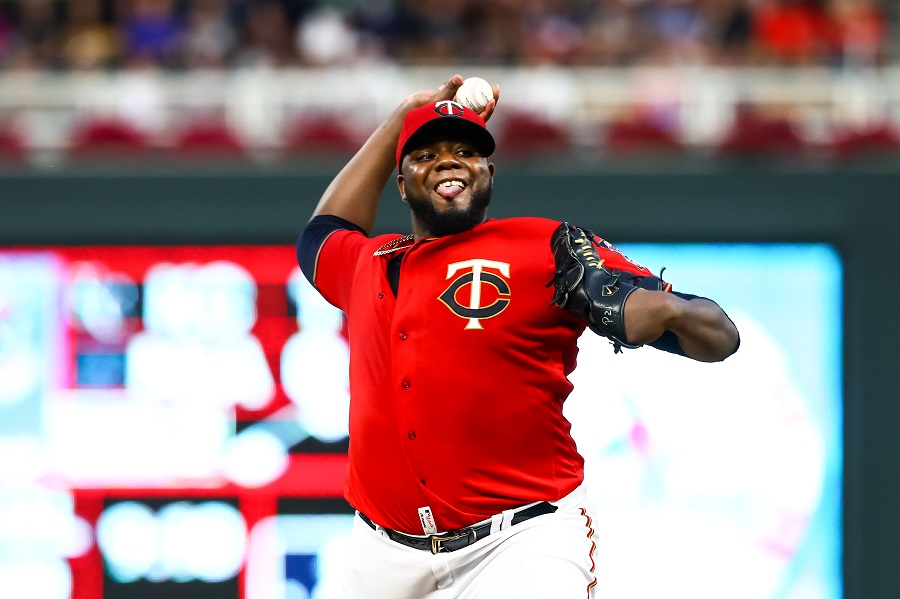 Reports have suggested that the 2020 qualifying offer amount will drop to $17.8 million, which is a $100,000 step back from 2019. Determined by the average of the top 125 salaries in the game, it’s the first season that the amount has taken a step backwards. That alone is just another bullet point in a long list that the MLBPA must attack in upcoming CBA discussions. Minnesota organized a shrewd pact with the former Yankees starter prior to the 2018 season. Paying him $2 million to watch over his Tommy John rehab, he then made another $8 million as a fully healthy starter in 2019. Posting one of the best seasons in his career, Pineda was estimated to be worth $21.1 million after accumulating 2.7 fWAR. His season came to an abrupt halt after failing a PED test for taking a diuretic he noted as being for weight loss. At least in part, an appeals process deemed his reasoning sufficient, as his suspension was reduced to 60 games and would not have carried postseason ineligibility. From a merit-based standpoint, Pineda has plenty going in his favor. The 4.01 ERA was the best he had posted since his rookie season, and his 1.7 BB/9 established command not seen since 2015. After an ugly first month of the season, Minnesota got a 3.46 ERA in 117.0 IP from Pineda and he allowed opposing batters just a .670 OPS against him. Prior to his suspension, there was serious steam to him being the Game One starter in the American League Division Series. Looking ahead we see a soon-to-be 31-year-old that has had some health concerns. Pineda is now well distanced from Tommy John surgery, but he’s never pitched more than 175 innings in a given year, and (as evidenced by the intentions of weight loss) is not slight in stature. The body of work and physical profile make him somewhat of a risk on a long-term contract, but that’s mitigated on a one-year deal, and even moreso through the 2020 qualifying offer implications. The Twins have a substantial cash flow going into the upcoming offseason, and while they could certainly afford to pay Pineda nearly $18 million for a single year, that’s probably not the best plan of action. Fortunately, because of his remaining suspension, that’s not what the bill would look like. Having something north of 35 games left to serve for 2020, Pineda’s deal would be a prorated portion of that total QO. Rough math indicates a bill resembling something just shy of $14 million, which would be more enticing. Again, there’s no denying that an arm like Pineda’s can’t be the premiere acquisition, but we saw how important a strong back-end starter can be with the revolving door in 2019. Allowing an internal option or two an avenue to hold down the fort until Pineda is reinstated would be a solid blueprint, and there’s no long-term commitment here either. If the QO gets rejected, Minnesota gets draft pick compensation and wins either way. What do you think? Does Pineda get a QO if you’re in charge?
 -
Moving Eddie Rosario, but Where?
Ted Schwerzler commented on Ted Schwerzler 's blog entry in Off The Baggy
This is a common refrain from anyone scouting his stat line. He did those things and was STILL barely above league average. He doesn’t get on base, he drove in runs because he batted cleanup, and he’s a poor fielder. You aren’t a bad ball hitter just because you swing at balls. He’s a bad ball hitter because he can’t tell a strike nearly 50% of the time.- 26 comments
-
- 4
-
-
- minnesota twins
- eddie rosario
- (and 3 more)
-
If there’s a lineup fixture from the 2019 Minnesota Twins that Derek Falvey should look to move before 2020, it’s Eddie Rosario. Despite lacking outfield depth down the stretch, the organization should be flush with options in the coming season, and a cheap commodity could be picked up on the open market. When trying to capitalize on return, this is the time. The elephant in the room is whether any of the other 29 teams see adequate value. You’ll quickly hear that Rosario hit a career high 32 dingers this season, and he plated 109 runs. His .276 average was the lowest it’s been since 2016, but his .500 SLG just missed being a career high. Entering his second year of arbitration eligibility he’s projected to get just shy of $9 million (per MLB Trade Rumors), and performance would only create an increase from there. If we stop at that then there’s little reason not to be enamored by his performance. It’s when you consider that Rosario produced just a .300 OBP, .329 wOBA, and 103 wRC+ (100 is league average). He’s still the guy that doesn’t walk at all (3.7%) and has no relative clue where the strike zone is (46.3% chase rate). In the Postseason he was an absolute abomination, and even his “good” production in game three came through pitches he had no business generating positive results off. Unfortunately stepping out of the batter’s box doesn’t make it any better. During his debut season Rosario posted an 11 DRS in the outfield. His 16 assists were reflective of a strong arm and astute mind that constantly had him in position to make a play. His arm still performs above average (he had 8 assists in 2019) but the DRS dropped all the way to -8. He posted a career worst -5.6 UZR ranking 44th among 50 qualifying outfielders. Often looking disengaged, and if not then overmatched, defensive prowess is no longer a calling card of his. When Falvey and Thad Levine approach the opposition this winter, they’ll be looking to engage trade partners for pitching. Dangling Rosario as a preferred trade chip, they’ll be working with the premise that the best is yet to come. Their sell must be in the form of a 28-year-old still waiting to hit his peak, and one that can do significantly more than his 1.2 fWAR this season. At $9 million he’s no longer a cheap commodity, and team control isn’t appealing if Rosario becomes a non-tender player a year from now. You can bet that those in the game are smarter than getting sucked in by hollow production stats largely derived by the 127 starts out of the cleanup spot. Minnesota won’t likely see the return they seek in a one for one swap and making Eddie the foundation of a deal could result in a project or fresh situation type of return. There’s nothing wrong with both sides in a trade coming out as winners, but unlike the Aaron Hicks deal of a few seasons ago, it’s Minnesota that will be pawning off promise as opposed to projectable production. Rocco Baldelli probably isn’t thrilled about the idea of rookies Brent Rooker, Trevor Larnach, or Alex Kirilloff starting in the Opening Day outfield for a team coming off 100+ wins. Those prospects could immediately force play their way into action though, and a veteran presence manning the fort vacated by Rosario until they are ready is hardly a difficult ask. Much like Byron Buxton being mentioned in talks for the Mets Noah Syndergaard, Rosario was representative of an immovable asset during the season. While Buxton is still untouchable for a handful of reasons, it’s Rosario that now is unprotected by current clubhouse chemistry. We will sit on wait on a potential deal to be consummated, but while we do there must be an understanding that the front office will need to be astute salesmen while getting any swap done. For more from Off The Baggy, click here. Follow @tlschwerz
- 26 comments
-
- 3
-
-
- minnesota twins
- eddie rosario
- (and 3 more)
-
Front Page: Spending the Twins Rotation Tab
Ted Schwerzler replied to Ted Schwerzler 's topic in Twins Daily Front Page News
I'd bet pretty heavily that Graterol starts at Triple-A. That fifth spot could be reserved for one of Dobnak/Smeltzer/Thorpe, and then shift in your developing arms. -
Front Page: Spending the Twins Rotation Tab
Ted Schwerzler replied to Ted Schwerzler 's topic in Twins Daily Front Page News
He has a handful of games left to serve on his suspension, which will make his 2020 contract prorated for only the games he plays. The Postseason ban was not in play because of the reduced suspension. -
Front Page: Spending the Twins Rotation Tab
Ted Schwerzler replied to Ted Schwerzler 's topic in Twins Daily Front Page News
Feel honored to get your first comment. Glad to have you here! -
They didn't tell anyone that they increased the core density of the baseballs prior to this season, and then acted as if they were oblivious to the results despite research pointing out what had happened. Manfred has consistently run so many different initiatives to impact and influence the game, it's nuts.
-
I was doing some of this on Twitter while feeding a baby last night haha. A couple of the Astros batted balls that looked launched went absolutely nowhere.
-
Front Page: Spending the Twins Rotation Tab
Ted Schwerzler replied to Ted Schwerzler 's topic in Twins Daily Front Page News
I can’t imagine a scenario in which Graterol starts 2020 in the MLB rotation. He’s never worked more than 102 innings in a season, and they’ll likely work him back into starting at Triple-A. I don’t dislike Keuchel as an option. Definitely out on Porcello. -
Although there is still major league baseball being played the Minnesota Twins can begin full offseason mode. Here at Twins Daily pre-orders for the 2020 Offseason Handbook are now live, and John jumped into the most pressing matter for Derek Falvey. If there was a takeaway from the stretch run and American League Division Series, it’s that Rocco Baldelli can’t continue to be hamstrung by his pitching staff. This team has money to spend, and there’s only one place to spend it.To set up some initial parameters here, we need to understand the financial situation. The Twins are coming off a $120MM payroll after a $130MM payroll in 2018. A 2020 payroll should check in at no less than $135MM, and more realistically hover around $140MM. From a commitment standpoint there’s only a first base and backup catcher role open for position players, and then there’s something like one or two bullpen opportunities. As was the title of his article, John pointed out that Minnesota has around $70 million to hand out in the form of starting pitching contracts. So, how does that break down? Looking at what is available on the market, and a baseline understanding of what acquisition cost will be, there’s certainly not an abundance of players that will command more than $25 million annually. Although there is never a shortage of Martin Perez-types that can be had for less than $10 million, Minnesota must be aiming higher. With Jose Berrios as a given, and one spot tabbed for an internal candidate (think Devin Smeltzer, Randy Dobnak, or Lewis Thorpe), the rotation gets remade with projectable talent. To break down options I categorized the three opportunities into different salary buckets. This is what I’ve come up with. SP1 ($25 million and up AAV)- Gerrit Cole, Stephen Strasburg, Madison Bumgarner I believe this group to be completely represented by the names above. Strasburg is not a lock to opt out of his current deal, but with just $100 million left over the next four years he should cash in for a final big payday. Cole is the premiere target on the market, and while even a blank check may be thwarted by a more enticing market, there’s no excuse for Minnesota not to make their best effort. Bumgarner was not an appealing trade option at the deadline given the estimated return for a rental. He’s still not the pitcher he once was, but he’s only 30-years-old and proved his durability again this season. Competition for three arms that every team needs will be substantial, but the Twins are as well positioned as anyone to make it happen. SP2 ($15-25 million AAV)- Zack Wheeler, Dallas Keuchel, Hyun-Jin Ryu The youngster of this group is the former Mets pitcher Wheeler. He’ll pitch next season at the age of 30 and was one of the most intriguing names at the deadline. He wasn’t moved but posted strong numbers across the board and looks to be knocking on the door of another level. If the Twins are convinced Wes Johnson can provide the breakthrough, they should be all in. Keuchel has given Atlanta about what was expected, but most importantly has calmed health concerns. He’s not a velocity guy but saw and uptick in strikeouts. The new ball has burned him more than ever, but this is the type of two or three starter that a really good rotation employs. Eldest of the bunch is Ryu, who was fully healthy for the first time since 2013. Getting below 1.0 HR/9 in the toughest season to do so implies he really has no flaws, but it also comes down to belief in him going forward despite a track record of unavailability due to injuries. SP3 ($10-20 million AAV)- Alex Wood, Julio Teheran, Jose Quintana Only Wood is truly a free agent among this trio. Both Teheran and Quintana have team options that the Braves and Cubs respectively could pick up. For Wood, 2019 was a throwaway season due to back issues, so he comes with caution tape unless the medicals all check out. Teheran is a bigger name than he is talent, but there’s workable ability in his repertoire. Quintana would be returning to a familiar division, and while the Cubs could move on, his 3.80 FIP suggests the 4.58 ERA wasn’t truly indicative of the stuff. The Twins have two parting options that would both fit in this group as well. Michael Pineda pitched himself into a decent payday even with his suspension, and because of the games missed, he’ll likely offer an immediate discount. Jake Odorizzi could be handed a QO which would put him at the top of this range, but he should have no problem finding a longer-term pact that falls somewhere in the middle. I don’t believe the Twins will sign an arm from all three of these buckets given the likelihood for a trade being swung. If they did only hand out paychecks though, a strong trio can be formed from the group above. To say Cole is immediately out because he’d have to chose Minnesota seems dismissive. He’s a long shot, but money talks. If Gerrit turns you down, I’m more into Strasburg than Bumgarner, but I’d make sure one of them is cashing a check from 1 Twins Way. Wheeler is the most exciting name from the second group, and I believe he’s got another level yet to unlock. I’d round out the options by making sure that Jake Odorizzi never gives up the lease on whatever rental property he calls home in Minneapolis. Who would be the three arms you’re targeting to accomplish an acquisition from each pool above? Click here to view the article
-
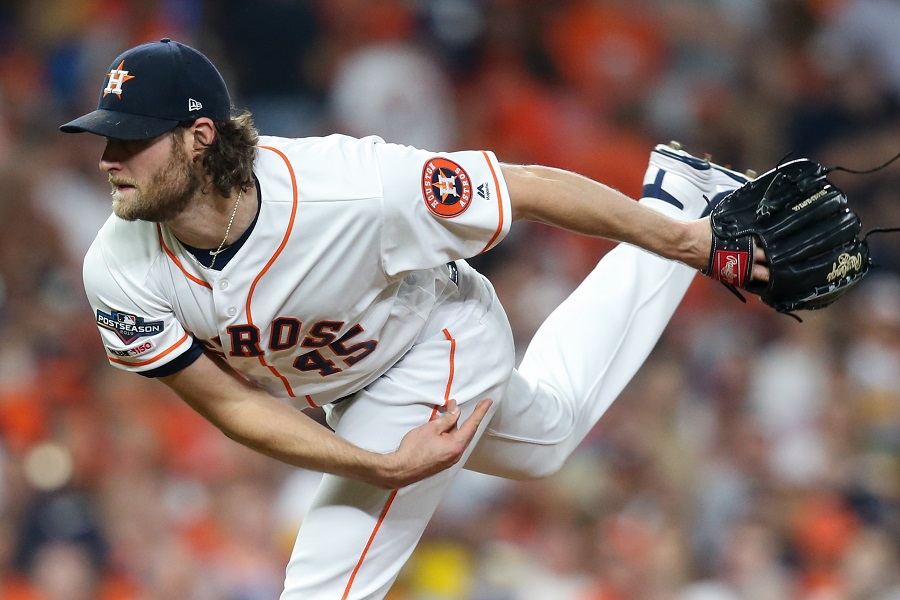 To set up some initial parameters here, we need to understand the financial situation. The Twins are coming off a $120MM payroll after a $130MM payroll in 2018. A 2020 payroll should check in at no less than $135MM, and more realistically hover around $140MM. From a commitment standpoint there’s only a first base and backup catcher role open for position players, and then there’s something like one or two bullpen opportunities. As was the title of his article, John pointed out that Minnesota has around $70 million to hand out in the form of starting pitching contracts. So, how does that break down? Looking at what is available on the market, and a baseline understanding of what acquisition cost will be, there’s certainly not an abundance of players that will command more than $25 million annually. Although there is never a shortage of Martin Perez-types that can be had for less than $10 million, Minnesota must be aiming higher. With Jose Berrios as a given, and one spot tabbed for an internal candidate (think Devin Smeltzer, Randy Dobnak, or Lewis Thorpe), the rotation gets remade with projectable talent. To break down options I categorized the three opportunities into different salary buckets. This is what I’ve come up with. SP1 ($25 million and up AAV)- Gerrit Cole, Stephen Strasburg, Madison Bumgarner I believe this group to be completely represented by the names above. Strasburg is not a lock to opt out of his current deal, but with just $100 million left over the next four years he should cash in for a final big payday. Cole is the premiere target on the market, and while even a blank check may be thwarted by a more enticing market, there’s no excuse for Minnesota not to make their best effort. Bumgarner was not an appealing trade option at the deadline given the estimated return for a rental. He’s still not the pitcher he once was, but he’s only 30-years-old and proved his durability again this season. Competition for three arms that every team needs will be substantial, but the Twins are as well positioned as anyone to make it happen. SP2 ($15-25 million AAV)- Zack Wheeler, Dallas Keuchel, Hyun-Jin Ryu The youngster of this group is the former Mets pitcher Wheeler. He’ll pitch next season at the age of 30 and was one of the most intriguing names at the deadline. He wasn’t moved but posted strong numbers across the board and looks to be knocking on the door of another level. If the Twins are convinced Wes Johnson can provide the breakthrough, they should be all in. Keuchel has given Atlanta about what was expected, but most importantly has calmed health concerns. He’s not a velocity guy but saw and uptick in strikeouts. The new ball has burned him more than ever, but this is the type of two or three starter that a really good rotation employs. Eldest of the bunch is Ryu, who was fully healthy for the first time since 2013. Getting below 1.0 HR/9 in the toughest season to do so implies he really has no flaws, but it also comes down to belief in him going forward despite a track record of unavailability due to injuries. SP3 ($10-20 million AAV)- Alex Wood, Julio Teheran, Jose Quintana Only Wood is truly a free agent among this trio. Both Teheran and Quintana have team options that the Braves and Cubs respectively could pick up. For Wood, 2019 was a throwaway season due to back issues, so he comes with caution tape unless the medicals all check out. Teheran is a bigger name than he is talent, but there’s workable ability in his repertoire. Quintana would be returning to a familiar division, and while the Cubs could move on, his 3.80 FIP suggests the 4.58 ERA wasn’t truly indicative of the stuff. The Twins have two parting options that would both fit in this group as well. Michael Pineda pitched himself into a decent payday even with his suspension, and because of the games missed, he’ll likely offer an immediate discount. Jake Odorizzi could be handed a QO which would put him at the top of this range, but he should have no problem finding a longer-term pact that falls somewhere in the middle. I don’t believe the Twins will sign an arm from all three of these buckets given the likelihood for a trade being swung. If they did only hand out paychecks though, a strong trio can be formed from the group above. To say Cole is immediately out because he’d have to chose Minnesota seems dismissive. He’s a long shot, but money talks. If Gerrit turns you down, I’m more into Strasburg than Bumgarner, but I’d make sure one of them is cashing a check from 1 Twins Way. Wheeler is the most exciting name from the second group, and I believe he’s got another level yet to unlock. I’d round out the options by making sure that Jake Odorizzi never gives up the lease on whatever rental property he calls home in Minneapolis. Who would be the three arms you’re targeting to accomplish an acquisition from each pool above?
 -
Totally expected something like this to come next year (though it seems a bit too much), but it can’t happen between the regular and post season.
-
I agree that this is what you can’t compare across seasons, and absolutely across eras. It’s inexcusable though for the sport to make a change this drastic in the midst of a season.
-
Whether you have been watching the postseason from inside a stadium or the friendly confines of your house, there’s been something fishy about the action. Did you notice that the Nationals and Dodgers game featured more than a few opportunities to rob a home run in game 5? How about that Miguel Sano and Nelson Cruz could barely squeak their blasts out of Yankee Stadium in game 1? Well, it appears there’s something to it, and that’s not a good discovery for Major League Baseball.Data scientist and former FiveThirtyEight journalist Rob Arthur wrote a piece today for Baseball Prospectus. The premise was that the baseball teams played the game with all season is now gone, and that’s quite a damning revelation. If you don’t have access to a subscription at Baseball Prospectus, he did a nice job breaking it down to a bite-sized Twitter thread. The ball itself is causing more drag than it has at any point since 2016. Home runs are down more than 50%, and the playing field established for 162 games has now been abolished. Arthur went on to clarify that weather is not the culprit for these outcomes. He stated that drag factors in both temperature and pressure, while also noting conditions have been more optimal than normal and don’t have a significant overall impact. Considering the research he provided, and the comments offered up by Baseball America’s J.J. Cooper, I began to think of specific examples. Earlier I mentioned thinking that something seemed off about that Dodgers and Nationals game to close out the National League Division Series. I didn’t dig in enough to see the amount of wall scrapers typically present on a game-by-game basis, but it certainly seemed abnormal. I did however consider that Will Smith at bat in the bottom of the 9th. His 100 mph exit velocity and 26-degree launch angle resulted in a fly out. During the regular season there was 75 similar occurrences of those inputs, and they resulted in 44 homers with an 83% base hit rate. This is a Minnesota Twins website, so let’s bring things full circle here. Parker Hageman immediately turned to Monday’s game against the Yankees. I remembered thinking it was odd to see Gleyber Torres barely get out on a well struck ball, but it was Marwin Gonzalez’s blast that immediately looked gone and fell way short that got me. As Parker notes, the Twins 1B had his well struck ball become a pretty small outlier. If we think back to game one, there were homers hit by both Miguel Sano and Nelson Cruz that struck me as odd. Although the ball went out to the opposite field, power sluggers like those two rarely need every extra inch to reach the seats. In doing some research through MLB’s own Statcast service, the balls that left the yard in the Postseason traveled an average of 70 feet shorter than they same circumstances produced during the regular season. All along, the expectation should’ve been that the sport would walk the baseball back. Despite the home run providing a level of excitement to the game (one that pace of play changes would seemingly be geared towards), Rob Manfred has publicly stated that inquiries would be made too many times for tools of the trade to go untouched. What strikes this writer as irresponsible, unfair, and downright disingenuous is to make these wholesale changes during the season. The point isn’t to suggest that the Twins or any other team is getting a raw deal because of the deadened baseball. What is fair is for players across the league, most importantly hitters, to have a level of frustration aimed at the governing body of their sport. As former pitcher Dallas Braden puts it, “The guy that deflated footballs in the NFL was drug over the coals by the commissioner of the NFL for altering the sports’ ball. What do WE do when it’s THE COMMISSIONER altering balls like some MAD plastic surgeon? Let the man snip & shape as he sees fit, no issues?” I’ll never have a problem with seasons being analyzed separately as not all factors remain the same as the calendar changes. I do think you’ve got a significant problem when the integrity of a collective season is being manipulated at the drop of a hat. Because of this uproar Major League Baseball has now issued a statement on the situation. Unfortunately it does little to address any of the actual problems and avoids any statements that point to real reasons why there's such drastic changes in results. Click here to view the article
-
 Data scientist and former FiveThirtyEight journalist Rob Arthur wrote a piece today for Baseball Prospectus. The premise was that the baseball teams played the game with all season is now gone, and that’s quite a damning revelation. If you don’t have access to a subscription at Baseball Prospectus, he did a nice job breaking it down to a bite-sized Twitter thread. The ball itself is causing more drag than it has at any point since 2016. Home runs are down more than 50%, and the playing field established for 162 games has now been abolished. https://twitter.com/No_Little_Plans/status/1182286423833096192 Arthur went on to clarify that weather is not the culprit for these outcomes. He stated that drag factors in both temperature and pressure, while also noting conditions have been more optimal than normal and don’t have a significant overall impact. Considering the research he provided, and the comments offered up by Baseball America’s J.J. Cooper, I began to think of specific examples. Earlier I mentioned thinking that something seemed off about that Dodgers and Nationals game to close out the National League Division Series. I didn’t dig in enough to see the amount of wall scrapers typically present on a game-by-game basis, but it certainly seemed abnormal. I did however consider that Will Smith at bat in the bottom of the 9th. His 100 mph exit velocity and 26-degree launch angle resulted in a fly out. During the regular season there was 75 similar occurrences of those inputs, and they resulted in 44 homers with an 83% base hit rate. https://twitter.com/tlschwerz/status/1182363415228141574 This is a Minnesota Twins website, so let’s bring things full circle here. Parker Hageman immediately turned to Monday’s game against the Yankees. I remembered thinking it was odd to see Gleyber Torres barely get out on a well struck ball, but it was Marwin Gonzalez’s blast that immediately looked gone and fell way short that got me. As Parker notes, the Twins 1B had his well struck ball become a pretty small outlier. https://twitter.com/tlschwerz/status/1182366456899670016 If we think back to game one, there were homers hit by both Miguel Sano and Nelson Cruz that struck me as odd. Although the ball went out to the opposite field, power sluggers like those two rarely need every extra inch to reach the seats. In doing some research through MLB’s own Statcast service, the balls that left the yard in the Postseason traveled an average of 70 feet shorter than they same circumstances produced during the regular season. https://twitter.com/tlschwerz/status/1182367265683058688 All along, the expectation should’ve been that the sport would walk the baseball back. Despite the home run providing a level of excitement to the game (one that pace of play changes would seemingly be geared towards), Rob Manfred has publicly stated that inquiries would be made too many times for tools of the trade to go untouched. What strikes this writer as irresponsible, unfair, and downright disingenuous is to make these wholesale changes during the season. The point isn’t to suggest that the Twins or any other team is getting a raw deal because of the deadened baseball. What is fair is for players across the league, most importantly hitters, to have a level of frustration aimed at the governing body of their sport. As former pitcher Dallas Braden puts it, “The guy that deflated footballs in the NFL was drug over the coals by the commissioner of the NFL for altering the sports’ ball. What do WE do when it’s THE COMMISSIONER altering balls like some MAD plastic surgeon? Let the man snip & shape as he sees fit, no issues?” I’ll never have a problem with seasons being analyzed separately as not all factors remain the same as the calendar changes. I do think you’ve got a significant problem when the integrity of a collective season is being manipulated at the drop of a hat. Because of this uproar Major League Baseball has now issued a statement on the situation. Unfortunately it does little to address any of the actual problems and avoids any statements that point to real reasons why there's such drastic changes in results. https://twitter.com/BizballMaury/status/1182385320311963649
 -
Postseason Perils Provide Reality for Twins
Ted Schwerzler commented on Ted Schwerzler 's blog entry in Off The Baggy
Medicaid are shared amongst all teams in trades. It’s not exactly on the Twins that Dyson or the Giants held back his long standing, unaddressed health concerns. I genuinely was not trying to be smug or off putting. The point was that “going for it” or making massive waves in baseball is far less reflective in the outcome than it is in other sports. That can’t be how you operate when attempting to construct a consistent winner. I’m sorry that Hildenberger’s brief resurgence was such a mirage btw. -
Postseason Perils Provide Reality for Twins
Ted Schwerzler commented on Ted Schwerzler 's blog entry in Off The Baggy
1.) If mortgaging the franchise on one venture into the Postseason is your MO, then baseball probably isn't for you. 2.) This Twins team is 0-3 against the Yankees. They got swept in a 3 game series. That happened two other times this season. It's not indicative of any far reaching conclusion you're going for. -
Postseason Perils Provide Reality for Twins
Ted Schwerzler commented on Ted Schwerzler 's blog entry in Off The Baggy
And don't get so hung up on what just happened living with recency bias. The Twins did plenty at the deadline, and to suggest more would have made a difference in the eventual outcome is disingenuous. -
For years I’ve suggested that the goal of a Major League Baseball team should be reaching the Postseason. The ultimate prize is a World Series ring, but you can’t accomplish that without making it into the final tournament. A run of Postseason berths provides excitement that often trumps a single World Series ring, and outside of the casual fan boost, attendance generally follows that trend. Plenty of unfounded frustration has been flung towards a 101-win Twins team, but thankfully we have the Dodgers to bring us down to earth. After a sweep at the hands of the New York Yankees in the American League Division Series plenty of Twins fans were sought searching for more. There’s been hot takes and wild opinions thrown out left and right. Analysis of a season is now being done through a three-game window, and hindsight has become everyone’s favorite tool. Instead of understanding a good team, that has nothing in common with historical matchups, beat the Twins in a short series there’s a need to find justification for the outcome. Forget that the organization had no idea they’d lose Michael Pineda, there wasn’t enough starting pitching. More was supposed to be added at the trade deadline despite the best arm being moved having a full no trade clause and being hit around in his first Postseason outing. The front office didn’t spend enough in the winter (which was a fair argument), but still churned out a ridiculous 101 wins. Take your pick, there’s plenty of avenues available to gripe that may make you feel better about how one of the best seasons in Minnesota history ended. Then again, you could go ahead and think about the Los Angeles Dodgers. Los Angeles has won 90 games every year since 2013 and haven’t had a losing record since 2010. They have picked up seven straight division titles and reached the World Series twice. Last night they fell to a Washington Nationals team that owned a run differential over 100 points less than theirs. You could say they should have acquired more pitching, but then you remember Buehler, Kershaw, and Ryu. You could say they should have spent more, but then you remember they were in the top five to begin the year. What we saw take place in the Division Series round is complete pandemonium. We’re a Tampa Bay Rays victory over Gerrit Cole and the Houston Astros away from complete chaos in the Championship round. That’s not to suggest the Postseason is a complete crapshoot, but it absolutely solidifies the reality that nothing in October is certain. The Dodgers and Astros had no business facing a game five. They were on a collision course to meet in the World Series. Instead, here we are. As Derek Falvey and Thad Levine look to build a consistent winner, their goal will be in the form of projectable success. While owning one of the best farm systems in baseball, and now having a Major League roster flush with controllable talent, they’ll look to stack the deck in their favor for years to come. Rather than sacrificing high level assets for a fleeting hope or additional percentage points, they’ll be calculated and well thought out in pushing for consistency. There are avenues for handwringing to take place, but angst about the Twins not having a better showing in their first season of a competitive window is hardly the place to bring it out. Division titles will get old after four or five are strung together. Hopefully a Championship Series or two culminates in a ring, or shot at one, but the reminder has been put in front of us. Nothing is guaranteed in the Postseason, and very little goes as planned. Get there often, position yourself well, and let the chips fall where they may. For more from Off The Baggy, click here. Follow @tlschwerz
-
I don't subscribe to the idea that a win, or longer series wouldn't have been beneficial. I do believe that just about anything but a really deep run can only be analyzed within a minute context of what took place over a few days. To correlate Postseason performance as a parallel to regular season performance doesn't do much for me.
-
Yeah, I don't agree with that at all. Extrapolating a 3 game sample size to draw vast conclusions like that is pretty hollow.
