



Ted Schwerzler
-
Posts
5,149 -
Joined
-
Last visited
Content Type
Profiles
News
Minnesota Twins Videos
2026 Minnesota Twins Top Prospects Ranking
2022 Minnesota Twins Draft Picks
Minnesota Twins Free Agent & Trade Rumors, Notes, & Tidbits
Guides & Resources
2023 Minnesota Twins Draft Picks
The Minnesota Twins Players Project
2024 Minnesota Twins Draft Picks
2025 Minnesota Twins Draft Pick Tracker
2026 Minnesota Twins Draft Tracker: Picks & Bonuses
Forums
Blogs
Events
Store
Downloads
Gallery
Everything posted by Ted Schwerzler
-
2020 Minnesota Twins Top 15 Prospects
Ted Schwerzler commented on Ted Schwerzler 's blog entry in Off The Baggy
Will be revisiting 15-30 at Midseason. Right now he’s probably around 20 for me. Like him quite a bit though. -
2020 Minnesota Twins Top 15 Prospects
Ted Schwerzler commented on Ted Schwerzler 's blog entry in Off The Baggy
That’s not actually true though. Every team in baseball would want a prospect that talented in their system. No team is going to take a 20 year old who struggled at Low-A and put them on their active roster for a full season.- 8 comments
-
- 7
-

-
- minnesota twins
- rocye lewis
- (and 2 more)
-
The Winter Meetings in San Diego have come to a close and the Minnesota Twins have all sights set on the 2020 Major League Baseball season. Rocco Baldelli is looking to repeat an extraordinary 2019 performance, and the big-league club looks to remain one of the best in the majors. As the reigning AL Central Division champions, the Twins now have teams gunning for them, and while the offseason still must incorporate significant talent acquisition, getting contributions from a deep and loaded farm system is something to be expected. My top 15 prospects were last updated back in June at the midway point of the season; you can find those here. Going back over rankings, here is the full history. 2016 Top 15 Prospects 2017 Top 15 Prospects 2018 Top 15 Prospects 2019 Top 15 Prospects 15. Nick Gordon INF Gordon followed the same narrative he has employed most of his minor league career. Year two at Triple-A was significantly better than the first season, but the ceiling looks relatively muted at this point. He’s a contact hitter with average defensive ability and good speed. There are some question marks on passion, but talent remains enough for him to be a big league regular. 14. Matt Canterino RHP After being taken in the 2nd round of the 2019 draft Canterino quickly established himself in pro ball. He skipped over Elizabethton and turned in five nice starts at Low-A. He’s got strikeout stuff, and while the delivery is somewhat quirky, it showed well in his debut. We’ll need to find out what tweaks are necessary as he rises through the system, but this looks like a middle of the rotation arm. 13. Wander Javier SS No one had more anticipation leading up to 2019 than Javier. After missing all the 2018 season, he finally had a clean bill of health. Now with the year in the rear view, it’s hard not to suggest health was the only positive development. Playing 80 games at Cedar Rapids, Javier posted just a .601 OPS and put up a 116/35 K/BB. He’s got all the talent to be a top 20 prospect in baseball, but he needs a turnaround in 2020 badly. 12. Matt Wallner OF A big arm but drafted for his bat, Wallner showed out in his first year of pro ball. He posted an .813 OPS at Elizabethton and swatted six homers. His time in Cedar Rapids didn’t include gaudy numbers, but it was brief only getting in 12 games. Owning somewhat of a similar profile to fellow prospect Brent Rooker, Wallner should be able to use his athleticism to continue producing at higher levels. 11. Keoni Cavaco SS Minnesota grabbed Cavaco with the 13th overall pick and sense him to the GCL. Freshly out of high school, the 18-year-old didn’t get off too much of a hot start. That said, he ascended draft boards due to strong national showings, and his tools all jump off the page. The most important thing that took place for him this year was simply getting engrained into the pro ball schedule. 10. Ryan Jeffers C If there’s something the Twins did at the highest level last year, it was develop catchers. Jeffers took another step forwards behind the dish, and his bat continues to be an asset. He was promoted to Double-A down the stretch and generated an .856 OPS. Possessing true home run power as well as a growing ability as a defender, he’s asserted himself as the best catching prospect in the system. 9. Blayne Enlow RHP Things just continue to trend upwards for the Louisiana native. He made it to High-A Fort Myers and posted a 3.38 ERA across 69.1 IP. The hope would be that strikeouts would continue to rise with the walks seeing some decrease. He’s still working on pitching, honing in command, and being able to do more than simply put the ball behind opposing hitters. There’s a ton of talent here and he’s a hard enough worker to harness it all. 8. Lewis Thorpe LHP Thorpe’s big-league debut came as a contributor to the Twins division title. Although he posted a gaudy 6.18 ERA, it was backed by a 3.47 FIP and was a result of one blow up start against the Indians. He was great in relief and posted a strong 10.1 K/9. He should be still viewed as a starter, but he could be a lefty weapon out of the pen if a change is made. Although he won’t ever be an ace, he looks the part of a certain asset in on the mound. 7. Jhoan Duran RHP An MLB debut is probably on the horizon for Duran in 2020 if things go well. He was dominant at High-A Fort Myers and outpitched his 4.86 ERA at Double-A Pensacola. A fireballer with strikeout stuff, this is looking like a very nice return for the Twins from the Eduardo Escobar trade. Duran keeps the ball in the yard and does a decent job limiting walks. Another step up and he could be trending towards a frontline starter. 6. Brent Rooker 1B/OF Somewhat limited by position and age, Rooker continues to rake and make it not matter. He could factor in for the Twins at 1B if the footwork gets in line, but the bat is going to have him up sooner rather than later. He missed the latter half of the season due to injury, but in 65 games at Triple-A Rochester he posted a .933 OPS with 14 dingers. Expect him to start on the farm, but there should be early opportunity for him in the majors. 5. Trevor Larnach OF After a strong pro debut with an .890 OPS over his first 42 games in 2018, the former Beavers outfielder did nothing to calm his steam last season. He made it to Double-A Pensacola and posted the same .842 OPS he had in 84 games with High-A Fort Myers. A power threat homered in his first major league spring training game, Larnach can play all over the outfield and could push for an opportunity with the Twins before 2020 ends. 4. Jordan Balazovic RHP Maybe no one in baseball ascended more in 2019 than Balazovic did. After being a fringe top 100 prospect, it’s hard to see him anywhere outside the top 50 heading into the upcoming season. He threw 73 innings for Fort Myers and posted a 2.84 ERA. The strikeouts are there, the command is there, and it all resulted in dominance. We’ll see if he’s tested at the next level, but the Canadian is looking like a staff ace. 3. Brusdar Graterol RHP A three-inning cameo was what Graterol got to call his MLB debut experience. Velocity is his game and that showed as he routinely pumped triple digits. Strikeouts dipped for him at Double-A Pensacola this year, but he was enough of an asset to be used out of the pen on a division winning club. Expect him to go back to starting and be stretch out to begin 2020, but there’s so much to like here. If a third pitch develops, he could be a dominant starter. If it doesn’t, he’ll be a lockdown relief talent. 2. Alex Kirilloff OF Missing time to start the year, Kirilloff took a while to get going. It resulted in just a .756 OPS in his first look at the Double-A level, but that shouldn’t cool anything about his trajectory. He’s still a corner outfielder that oozes athleticism and has an advanced approach at the dish. He’s a disciplined hitter with plenty of power, and a quick start in 2020 is going to light a fire under the promotion talk. 1. Royce Lewis SS Much like Kirilloff, Lewis didn’t get off to a quick start and his bat scuffled all season. He posted just a .661 OPS between Fort Myers and Pensacola, while being questioned as to whether he’d stick at shortstop. Heading to the Arizona Fall League, he took home the MVP trophy and challenged for the batting title after posting a .975 OPS in 22 games. There’s far too much talent to ever write Lewis off regardless of the sample size. This kid still looks like an absolute superstar and getting back in a Blue Wahoos uniform to prove it is likely driving him this winter. For more from Off The Baggy, click here. Follow @tlschwerz
- 8 comments
-
- 2
-
-
- minnesota twins
- rocye lewis
- (and 2 more)
-
It’s December 12, the snow is falling in Minneapolis, and the Minnesota Twins contingent is headed home from the Winter Meetings. They brought back a pitcher, and signed their backup catcher, but impact pitching hasn’t landed, and assets dwindled. Now, an ask for patience.No, that’s not coming from the front office. I think that Derek Falvey and Thad Levine could take a quick look on the Twitter machine and realize pitchforks and brimstone flow heavily through Twins Territory. Doom and gloom is the mood with some big arms being off the board, and the fear of being left out in the cold has set in. All is not lost though, there’s still plenty of time and assets still to be sifted through. All we must do is wait. I have a tough time listening to arguments about what Minnesota has traditionally done. This front office has been in place for three years, and they’ve yet to be in a position where opportunity and trajectory point towards a path of sensible spending. They’ve embarked on a sustainable window of winning that we’ve never seen the dual-headed monster execute upon. In short, this is uncharted territory. On top of all of that, this front office is directly responsible for the positioning that the Minnesota Twins are currently in. The farm system is loaded, and the infrastructure designed around development and advancement is derived from their vision. Internal talent is being explored and cultivated, while major league success looks here to stay. Through those happenings, it’s hard not to argue a benefit of doubt should be granted. As I wrote back in early November, the Twins can take a page from the book of Houston and Chicago in creating their juggernaut. Now is a time to supplement, spend, and add, but it isn’t representative of the only time that will ring true in the years ahead. This needs to be a strong and consistent build. A right foot forward is put forth this offseason with that being doubled down upon in the immediate future. The gnashing of teeth is far from unexpected. We live in a world searching for immediate gratification and behind a “what have you done for me lately” ideology. It can be increasingly hard to separate from that, but there’s solace in understanding deadlines allow for processes to play out as well. The Twins didn’t need to make all their moves during the Winter Meetings, and free agents weren’t tied to accepting contracts while executives were out in San Diego. We’re exactly two months from the first spring training workout in Fort Myers, and plenty of work remains. From the outset of the offseason Thad Levine noted the Twins goal was to add “impact pitching.” If they don’t like what is presented to them, further supplementing the offense is another way to increase the water level. What can’t happen is stagnant display of standing pat, but I’d have to imagine two intelligent guys that have orchestrated an organizational turnaround are aware of that fact. Until the dust settles, the point is this; breathe. Allow for Falvey and Levine to cash in on some of their generated benefit. Trust that a similar process instituted to right the organization will be utilized to bolster the roster. When Bumgarner or Ryu sign elsewhere, assume that there’s a plan and other irons in the fire. All the way up until we get our first play ball from Twins Territory south, pump the breaks. If we’re still in a similar situation at that point, then, burn it all down. MORE FROM TWINS DAILY — Latest Twins coverage from our writers — Recent Twins discussion in our forums — Follow Twins Daily via Twitter, Facebook or email Click here to view the article
-
 No, that’s not coming from the front office. I think that Derek Falvey and Thad Levine could take a quick look on the Twitter machine and realize pitchforks and brimstone flow heavily through Twins Territory. Doom and gloom is the mood with some big arms being off the board, and the fear of being left out in the cold has set in. All is not lost though, there’s still plenty of time and assets still to be sifted through. All we must do is wait. I have a tough time listening to arguments about what Minnesota has traditionally done. This front office has been in place for three years, and they’ve yet to be in a position where opportunity and trajectory point towards a path of sensible spending. They’ve opened a sustainable window of winning that we’ve not really seen the dual-headed monster work within. In short, this is uncharted territory. On top of all of that, this front office is directly responsible for the positioning that the Minnesota Twins are currently in. The farm system is loaded, and the infrastructure designed around development and advancement is derived from their vision. Internal talent is being explored and cultivated, while major league success looks here to stay. Through those happenings, it’s hard not to argue a benefit of doubt should be granted. As I wrote back in early November, the Twins can take a page from the book of Houston and Chicago in creating their juggernaut. Now is a time to supplement, spend, and add, but it isn’t the only time that will ring true in the years ahead. This needs to be a strong and consistent build. A right foot forward is put forth this offseason with that being doubled down upon in the immediate future. The gnashing of teeth is far from unexpected. We live in a world searching for immediate gratification and behind a “what have you done for me lately” ideology. It can be increasingly hard to separate from that, but there’s solace in understanding deadlines allow for processes to play out as well. The Twins didn’t need to make all their moves during the Winter Meetings, and free agents weren’t tied to accepting contracts while executives were out in San Diego. We’re exactly two months from the first spring training workout in Fort Myers, and plenty of work remains. From the outset of the offseason Thad Levine noted the Twins goal was to add “impact pitching.” If they don’t like what is presented to them, further supplementing the offense is another way to increase the water level. What can’t happen is a stagnant display of standing pat, but I’d have to imagine two intelligent guys that have orchestrated an organizational turnaround are aware of that fact. Until the dust settles, the point is this; breathe. Allow Falvey and Levine to cash in on some of their generated benefit. Trust that a similar process instituted to right the organization will be utilized to bolster the roster. When Bumgarner or Ryu sign elsewhere, assume that there’s a plan and other irons in the fire. All the way up until we get our first play ball from Twins Territory south, pump the brakes. If we’re still in a similar situation at that point, then, burn it all down. MORE FROM TWINS DAILY — Latest Twins coverage from our writers — Recent Twins discussion in our forums — Follow Twins Daily via Twitter, Facebook or email
-
Last night the baseball world watched in awe of the contract that Gerrit Cole was handed by the New York Yankees. He signed the for the largest AAV and total contract value ever given to a pitcher. New York spending money isn’t surprising at all, but there’s a tickle down effect and how it impacts a team like the Twins remains to be seen. It’s a great thing that the Minnesota Twins have significant funds and a real opportunity ahead of them. What is less than great is there’s only so many desirable commodities. When Cole came off the board, teams like the Los Angeles Dodgers and Angels immediately pivoted to the likes of Madison Bumgarner and Hyun-Jin Ryu. Just hours before, those arms looked like targets Minnesota may be able to wrangle in. Now, the competition just became more fierce. This exact scenario is one that we can consider during the regular season as well. Although many teams like to wait until closer to the deadline providing an ability to determine their fate, acquiring organizations obviously benefit by earlier action. We can assume somewhat of a premium is paid for early swaps, but the desired result could outweigh that cost when it results in additional wins. During the offseason games aren’t being immediately impacted, but the game of musical chairs gets more intense with each spot pulled from the circle. Zack Wheeler went from reports suggesting he’d accept something south of $100 million to signing for $18 million north of it. That contract upped Madison Bumgarner’s ask, and both Stephen Strasburg and Cole being gone dwindled the list of worthy assets. Does all of that equate to an opportunity being missed? We’ll never directly know what contract negotiations sound like on an individual basis, but early action could seem to hold some weight. Rather than being worried about setting the market to high, a team could be sitting pretty having nabbed their desired talent prior to feeling pressure of commodities being unavailable. A team like the Twins is now faced with the proposition of outbidding either Los Angeles franchise if Ryu or Bumgarner was their man, and that creates a higher level of stress than was initially desired. Although we’re discussing these principles within the realm of baseball, it’s applicable across so many facets of life. As human beings we’re all out for our best interests and looking to snipe a deal. Is the coupon at Target going to save us the most money, or should we save the additional five miles by going to Walmart and buying it first? The fear of missing out can cause us to make rash decisions but being comfortable in our evaluations may afford the opportunity to overlook the result. I’d imagine Derek Falvey and Thad Levine aren’t going to tip their hand as to which pitching assets they had ranked highest. Maybe everyone was lumped together and they truly do not care who winds up in Twins Territory, a true test of their internal development staff. We can draw some conclusions or generate educated guesses once all the chips are on the table, but the waiting and guessing game is all we have for now. In a vacuum it seems the Twins may be best suited to approach a high value target with a strong offer and a deadline. Maybe it doesn’t work that way and maybe they tried, but maybe being the one without a dance partner at the end of the song isn’t so great either. For more from Off The Baggy, click here. Follow @tlschwerz
- 2 comments
-
- 1
-
-
- minnesota twins
- madison bumgarner
- (and 3 more)
-
101 wins, an AL Central Division crown, and a trip to the postseason. That’s what the Minnesota Twins accomplished under first-year manager Rocco Baldelli in 2019. Now when looking to sustain that the front office is faced with a you-choose menu involving risk. How they navigate it will lay a foundation or the future.There isn’t a soul within the organization or outside of it that will tell you Minnesota doesn’t need more pitching. Despite his efforts down the stretch, rookie Randy Dobnak in Yankee Stadium during the ALDS was hardly an ideal scenario. That said, the situation isn’t at all as dire as one may assume. From June 1st onward the Twins had the sixth best rotation in baseball, as well as the third best in the American League. That was on top of employing the now departed Kyle Gibson, who posted a 5.26 ERA over that stretch. So far this offseason has included the Twins bringing back Jake Odorizzi and Michael Pineda. The former graciously accepted the $17.8 million qualifying offer, while the latter is being had just south of that same dollar amount over the course of two years. Talking to reporters on Monday, GM Thad Levine said the team needed to be stabilized and “now we have the ability to impact it significantly.” Making sure the foundation is laid is something this front office has carried as a premise throughout their time, but this is the first opportunity to make a substantial impact. When looking at the free agent market, there’s scrutiny at every turn. Do you want to bet on Madison Bumgarner holding up despite the mileage? Is Hyun-Jin Ryu going to be any good if he keeps getting hurt? Is Dallas Keuchel really any better than a mid-rotation arm? All of those questions are entirely fair, and they’re being asked because teams must commit substantial sums to players seeking their next opportunity. Unless you want the certainty of the elite, and that comes with the unlikely proposition of outspending (and being more desired) than the big boys, this is the landscape the Twins must traverse. On the flip side, you’ve got the trade market. You can bet that the Chicago Cubs would love to have Gleyber Torres right about now, but I’d also assume they’re more than happy to have ended their World Series drought. Detroit probably wishes they’d hit on more for Justin Verlander, and the Pirates are no doubt kicking themselves for the gaffe that was the return for Chris Archer. Win some and lose some there too, but the risk is not much different. As Minnesota looks to make moves and additions that significantly impact the major league club, it becomes a chess game of evaluation. Is there enough information on free agents to hand out paydays, and is it detrimental to give up dollars if the deals go sideways? The farm system has both height and depth. Does that make it more enticing to part with a known commodity to acquire something that hasn’t been cast off by a former employer? This organization is often chided about spending, or lack thereof. Now with the first legitimate opportunity to do so in quite some time, it comes down to which risk factors are weighed most heavily by Derek Falvey and Thad Levine. The payroll needs to be north of $135 million going into 2020, but there’s more than one avenue to get there. Before the dust settles it will be hard to present an argument for any real hand wringing, but a reflective analysis is certainly going to be on the table. At the end of the day we can pick apart what’s on the open market and push toward the trade route. We can also overvalue certain prospects and shy away from making that big move. What we can’t do is operate on both of those levels to the full extent and fail to make a well-timed acquisition solely because of inherent risk. The front office has worked their way into deserved trust, and now they need to cash the check and stand by their decision. MORE FROM TWINS DAILY — Latest Twins coverage from our writers — Recent Twins discussion in our forums — Follow Twins Daily via Twitter, Facebook or email Click here to view the article
- 30 replies
-
- 2
-
-
- minnesota twins
- madison bumgarner
- (and 3 more)
-
 There isn’t a soul within the organization or outside of it that will tell you Minnesota doesn’t need more pitching. Despite his efforts down the stretch, rookie Randy Dobnak in Yankee Stadium during the ALDS was hardly an ideal scenario. That said, the situation isn’t at all as dire as one may assume. From June 1st onward the Twins had the sixth best rotation in baseball, as well as the third best in the American League. That was on top of employing the now departed Kyle Gibson, who posted a 5.26 ERA over that stretch. So far this offseason has included the Twins bringing back Jake Odorizzi and Michael Pineda. The former graciously accepted the $17.8 million qualifying offer, while the latter is being had just south of that same dollar amount over the course of two years. Talking to reporters on Monday, GM Thad Levine said the team needed to be stabilized and “now we have the ability to impact it significantly.” Making sure the foundation is laid is something this front office has carried as a premise throughout their time, but this is the first opportunity to make a substantial impact. When looking at the free agent market, there’s scrutiny at every turn. Do you want to bet on Madison Bumgarner holding up despite the mileage? Is Hyun-Jin Ryu going to be any good if he keeps getting hurt? Is Dallas Keuchel really any better than a mid-rotation arm? All of those questions are entirely fair, and they’re being asked because teams must commit substantial sums to players seeking their next opportunity. Unless you want the certainty of the elite, and that comes with the unlikely proposition of outspending (and being more desired) than the big boys, this is the landscape the Twins must traverse. On the flip side, you’ve got the trade market. You can bet that the Chicago Cubs would love to have Gleyber Torres right about now, but I’d also assume they’re more than happy to have ended their World Series drought. Detroit probably wishes they’d hit on more for Justin Verlander, and the Pirates are no doubt kicking themselves for the gaffe that was the return for Chris Archer. Win some and lose some there too, but the risk is not much different. As Minnesota looks to make moves and additions that significantly impact the major league club, it becomes a chess game of evaluation. Is there enough information on free agents to hand out paydays, and is it detrimental to give up dollars if the deals go sideways? The farm system has both height and depth. Does that make it more enticing to part with a known commodity to acquire something that hasn’t been cast off by a former employer? This organization is often chided about spending, or lack thereof. Now with the first legitimate opportunity to do so in quite some time, it comes down to which risk factors are weighed most heavily by Derek Falvey and Thad Levine. The payroll needs to be north of $135 million going into 2020, but there’s more than one avenue to get there. Before the dust settles it will be hard to present an argument for any real hand wringing, but a reflective analysis is certainly going to be on the table. At the end of the day we can pick apart what’s on the open market and push toward the trade route. We can also overvalue certain prospects and shy away from making that big move. What we can’t do is operate on both of those levels to the full extent and fail to make a well-timed acquisition solely because of inherent risk. The front office has worked their way into deserved trust, and now they need to cash the check and stand by their decision. MORE FROM TWINS DAILY — Latest Twins coverage from our writers — Recent Twins discussion in our forums — Follow Twins Daily via Twitter, Facebook or email
-
Twins Could Trade for a Former Free Agent Target
Ted Schwerzler commented on Ted Schwerzler 's blog entry in Off The Baggy
Right, I'm certainly more interested in MadBum. I like Ryu if the Twins are comfortable in his medicals. If they'd prefer to move prospects, then Darvish makes some sense. Make sure you know where to turn because ending up empty handed can't become reality. -
Twins Could Trade for a Former Free Agent Target
Ted Schwerzler posted a blog entry in Off The Baggy
After bringing back Jake Odorizzi and Michael Pineda the Minnesota Twins should be turning their focus solely to the top of their rotation. Madison Bumgarner is the presumed name, but Jon Heyman recently reported that former Dodgers starter Hyun-Jin Ryu could be the target. What if Minnesota wanted to go a different route entirely? There’s no denying that Bumgarner and Ryu are the best (see: only) arms left in the second tier of available starters. Bumgarner has been dissected plenty, and Ryu is essentially the flip side of what he brings to the table. Injury concerns are abundant and could be an immediate issue. He won’t command the same length in a contract, but that may not matter if you get burned on the front end. Ryu is a really nice arm, but there’s plenty of risk regarding how much time he’ll miss. For a while I’ve contended the Twins plan this winter should be to acquire a top-tier arm through free agency while also dealing for an option with some nice team control. What if it they decided to deal for the top-tier arm as well, and spend by taking on someone else’s contract? Enter Yu Darvish. Minnesota came up a year short in signing Darvish before he eventually landed a six-year deal with the Chicago Cubs. Thad Levine has in-depth knowledge of the arm having worked in the front office that originally signed him in Texas, and the parallels with Ryu run pretty deep. Chicago’s starter is roughly six months older than Ryu. He could be had on a four-year, $81 million contract today assuming the Cubs take on no salary. Although Ryu may not get four years, he’ll probably wind up somewhere between the $60-75 million range. Darvish was injury and bad a season ago, and then started slow in 2019. Across his final 20 starts last year he allowed just a .629 OPS and had a 162/18 K/BB ratio. When looking at Darvish and Ryu it comes down to what path you prefer (and if Chicago is truly motivated to move him). Ryu costs dollars and brings a strong amount of command while lacking the strikeouts. Darvish would require prospect capital, involves a similar level of injury risk, but brings arguably the best strikeout numbers Minnesota would have ever employed. If you’re hoarding prospects, and there’s reason to suggest that the Twins should be at least until the deadline this season, then spending money on Ryu or Bumgarner should be the obvious decision. If Darvish is seen as the superior option to Ryu, then engaging the Cubs in meaningful discussion is absolutely a conversation worth having. We’re at the point in roster construction where big moves are going to involve a certain level of skepticism. Knowing that there’s nothing certain about any of the options involved, a level of belief will be required with any asset acquired. I’m not sure which path the Twins will choose, and I don’t know what the right one is. I am glad we’re at the crossroads where it becomes a necessity, and these are the real discussions that we’re having. For more from Off The Baggy, click here. Follow @tlschwerz- 7 comments
-
- 4
-
-
- minnesota twins
- chicago cubs
- (and 3 more)
-
Twins Set Up for a Big Splash
Ted Schwerzler commented on Ted Schwerzler 's blog entry in Off The Baggy
While Jorge's throws were certainly the most problematic in the infield last year, it is worth noting that Sano contributed plenty and would not be in that spot if playing 1B. Imagine the footwork and scooping would absolutely take time though. -
Twins Set Up for a Big Splash
Ted Schwerzler commented on Ted Schwerzler 's blog entry in Off The Baggy
I think they probably avoid signing a SS with Lewis still trending in that direction. Didi also is being hotly pursued by the Reds it seems. I like the idea of getting Jorge lateral help on that side with a 3B possessing more range though. -
Wanted to apologize quick as the "credibility" notation wasn't specifically aimed at you or any idea of having a platform. I was coming from a place of calling out the dismissive nature of current and future decisions solely because of what has taken place or how the Twins "have always" operated. I don't view writing here, tweeting, being a blogger, or anything else as more than an avenue to share my opinion and engage in meaningful discussion. I appreciate you contributing to that and am sorry if it came across as otherwise. In all things I find it generally unproductive to assume the future stays status quo because of the past. With regards to the Twins that's become a very common narrative and one I can't buy into. Thank you for reading, and I do hope that the front office and opportunities ahead quickly sway your feelings about the direction of the franchise.
- 19 replies
-
- 6
-
-
- minnesota twins
- derek falvey
- (and 3 more)
-
Twins Set Up for a Big Splash
Ted Schwerzler commented on Ted Schwerzler 's blog entry in Off The Baggy
I specifically noted Frazier on Twitter as being a hard no. He's a marginal defender at this point, and isn't a good OPS guy with awful OBP's. There's zero reason to move Sano for a borderline worse option at 3B. Keuchel doesn't make a ton of sense with groundball tendencies and poor infield defense. They still are going to grab another pitcher though. Donaldson does make sense, but that interest may be overstated. Also, $35MM from where they are right now would be roughly $135MM total. That should be the baseline of where they begin 2020. -
You can't lose credibility in an argument about the state of the Twins currently any faster than comparing history with what the current front office has done. They're lightyears apart...
- 19 replies
-
- 10
-
-
- minnesota twins
- derek falvey
- (and 3 more)
-
So far, the Minnesota Twins have committed something like $30 million in 2020 contracts to three players this offseason. Two pitchers and a backup catch mean the 26-man roster is quickly closing in on finality. At this point, there’s nothing left but the big bang. Jake Odorizzi returning to the Twins was a great development. A longer-term deal is probably better than the qualifying offer situation, but it’s negligible nonetheless. Michael Pineda is a guy that made sense to QO, and instead Minnesota’s front office gets him on a two-year deal for less than the one-year tag. Alex Avila replaces Jason Castro as the backup catcher, and he provides a logical platoon partner for star starter Mitch Garver. Although Odorizzi and Pineda are returning talents, their abilities represent some of the best on the market. Disappointment in the lack of a new name doesn’t hold much weight when the accomplishment of high-quality assets is the goal. Avila isn’t flashy, but it’s a pretty lofty expectation for catcher number two being able to accomplish that. In the moves they've made this front office has gotten the job done and nailed each and every acquisition. Now comes the big wave. At this point the Twins have something just shy of $100 million committed to 2019. Needing to push the payroll to no less than $135 million, there’s a significant chunk of change yet to be doled out. A reliever and corner infielder seem to still be on the docket, but it’s that key starter still twisting in the wind that has everyone wondering. Maybe it’s Madison Bumgarner or maybe it’s Hyun Jin Ryu, but no matter who it is, a fat check is getting cut. I still think that the Twins are best served by both paying and trading for starters. The latter isn’t going to jump the bottom line much given the goal should be a level of youth and team control, which generally has a muted price tag. No one has ever gotten more in a free agent deal from Minnesota than Ervin Santana’s 4/$54 million in 2014, but both the total and AAV should be blitzed by in the immediate future. There has been somewhat of a back to front way about attacking this offseason cycle from Derek Falvey and Thad Levine. They’ve shored up the holes with some of the lesser coveted assets, and now they can focus solely on positioning of the big guns. It seems to be only a matter of time before it happens, but the reality of when and not if has started to sink in. Expect the Twins to land a player with an AAV of $15-20 million yet, and another $15-20 million split on the final assets to follow. It’s been fun seeing clubs cut checks before Christmas, and just maybe we’ll get back to the days of the Winter Meetings being some sort of exciting frenzy. We’ll have to wait a bit longer to see how and what all transpires, but the monumental move looks to be on the horizon. For more from Off The Baggy, click here. Follow @tlschwerz
- 7 comments
-
- 1
-
-
- jake odorizzi
- michael pineda
- (and 2 more)
-
Recently the Philadelphia Phillies inked Zack Wheeler to a five-year deal, and in losing out on a highly coveted free agent starting pitcher a good portion of the Twins fanbase lost their collective minds. What if we’re going about this all wrong though, and the expectations need to be shifted?The more I worked through my own disappointment regarding the reality that Wheeler would not be coming to Twins Territory, the more I concluded that my expectations are largely built on straightforward belief. The Twins have a substantial amount of unallocated cash flow to deal with. They also have a very distinct area of need, even before considering corner infield and backup catcher. From there it’s pretty simple to assume that pieces are plugged in following a linear decision-making process and that it resembles the simplicity of a puzzle coming together. One of the greatest impressions this front office has made on me since taking over however, is the depth and talent within an infrastructure that supports all the club does. From fresh and progressive coaches and coordinators in the player development realm, to outside-the-box thinkers on the big-league side, everything about the way Minnesota is building looks different than ever before. Rather than simply operating from the standpoint that Madison Bumgarner is now the best available talent with a logical degree of signability, Minnesota is likely considering previously glossed-over factors. Wes Johnson has brought a wealth of knowledge and information, but which arms will be most open to latching onto it and utilizing suggestions. Does the loss of assistant pitching coach Jeremy Hefner pose challenges in the relay or dissemination of information? Are there talented players that simply won’t fit within the confines of how the Twins work toward performance growth? I think that may be true now more than ever, and it’s beyond just a changing culture. With so much money, and plenty of holes yet to fill, finding angst in who or what opportunities Minnesota passes on in December or January is a losing proposition. This free agent cycle has certainly started better than those in years past, and that gives us a bit of belief that the offseason will truly conclude before spring training begins. Until that dust settles though, there isn’t much reason to make conclusive statements on the pending number of transactions. Although the Twins are going to be building to repeat as AL Central Division winners and sustain a high level of performance, we should be trying to find the takeaways from each addition that they make. There’s a high level of intrigue regarding who steps in to important roles vacated by Hefner and Derek Shelton. There’s an even higher level of intrigue regarding the free agents or trade acquisitions and what their profiles tell us about how Minnesota assesses them internally. Maybe I’m reaching a bit too far into the realms of uncertainty here, but I think the takeaway from the next few months will be an additional understanding of what this front office is trying to construct. The Twins have overhauled a process and blueprint and have positioned themselves to be a force for the foreseeable future. Finding the right pieces to capitalize on that, both coaching and players, is more about spending on the right assets than the expected ones. Certainly, there’s an intersection of those two narratives combining forces, but part of this whole process will be understanding which situations that Derek Falvey and Thad Levine find worthy of pulling the trigger on. Sign me up for the shopping spree, but we already know that needs to take place. To whom the checks are written and what they tell us going forward is the chapter I’m excited to read. MORE FROM TWINS DAILY - Wheeler’s Gone, But Bumgarner Would Give the Twins Plenty to Work With - Twins Announce Plans to Extend Netting at Target Field - Twins Making Sweeping Changes on the Diamond Click here to view the article
- 19 replies
-
- 6
-
-
- minnesota twins
- derek falvey
- (and 3 more)
-
 The more I worked through my own disappointment regarding the reality that Wheeler would not be coming to Twins Territory, the more I concluded that my expectations are largely built on straightforward belief. The Twins have a substantial amount of unallocated cash flow to deal with. They also have a very distinct area of need, even before considering corner infield and backup catcher. From there it’s pretty simple to assume that pieces are plugged in following a linear decision-making process and that it resembles the simplicity of a puzzle coming together. One of the greatest impressions this front office has made on me since taking over however, is the depth and talent within an infrastructure that supports all the club does. From fresh and progressive coaches and coordinators in the player development realm, to outside-the-box thinkers on the big-league side, everything about the way Minnesota is building looks different than ever before. Rather than simply operating from the standpoint that Madison Bumgarner is now the best available talent with a logical degree of signability, Minnesota is likely considering previously glossed-over factors. Wes Johnson has brought a wealth of knowledge and information, but which arms will be most open to latching onto it and utilizing suggestions. Does the loss of assistant pitching coach Jeremy Hefner pose challenges in the relay or dissemination of information? Are there talented players that simply won’t fit within the confines of how the Twins work toward performance growth? I think that may be true now more than ever, and it’s beyond just a changing culture. With so much money, and plenty of holes yet to fill, finding angst in who or what opportunities Minnesota passes on in December or January is a losing proposition. This free agent cycle has certainly started better than those in years past, and that gives us a bit of belief that the offseason will truly conclude before spring training begins. Until that dust settles though, there isn’t much reason to make conclusive statements on the pending number of transactions. Although the Twins are going to be building to repeat as AL Central Division winners and sustain a high level of performance, we should be trying to find the takeaways from each addition that they make. There’s a high level of intrigue regarding who steps in to important roles vacated by Hefner and Derek Shelton. There’s an even higher level of intrigue regarding the free agents or trade acquisitions and what their profiles tell us about how Minnesota assesses them internally. Maybe I’m reaching a bit too far into the realms of uncertainty here, but I think the takeaway from the next few months will be an additional understanding of what this front office is trying to construct. The Twins have overhauled a process and blueprint and have positioned themselves to be a force for the foreseeable future. Finding the right pieces to capitalize on that, both coaching and players, is more about spending on the right assets than the expected ones. Certainly, there’s an intersection of those two narratives combining forces, but part of this whole process will be understanding which situations that Derek Falvey and Thad Levine find worthy of pulling the trigger on. Sign me up for the shopping spree, but we already know that needs to take place. To whom the checks are written and what they tell us going forward is the chapter I’m excited to read. MORE FROM TWINS DAILY - Wheeler’s Gone, But Bumgarner Would Give the Twins Plenty to Work With - Twins Announce Plans to Extend Netting at Target Field - Twins Making Sweeping Changes on the Diamond
-
Today is one of the biggest releases on the calendar in the hobby world. As Topps pumps out the latest Bowman Draft product, collectors feast their eyes on an opportunity to grab autographs and cardboard of the next great stars. For the Minnesota Twins specifically, a Bowman product hasn’t been this exciting in a few years. While collecting sports cards is a hobby, a large contingent of its appeal is monetarily driven and provides an aspect of gambling. Outside of buying specific cards you covet on secondary markets, opening boxes or packs leaves the consumer fully open to chance. With Bowman that reality is heightened given the nature of the product. Up and coming prospects are put in their major league uniforms, and for many, it will be their first professional cards. From a desire perspective it’s the “1st Bowman” card that reigns supreme. Mike Trout’s fetch more than $20,000, and while no one else is on that pedestal, plenty of players routinely top the $1,000 mark on an annual basis. At the most fundamental level, you’re looking for strong prospects with youth and talent on their side, with the understanding that hitters are more desirable than pitchers. In Draft, which features the top picks from the previous amateur cycle, Minnesota has five key subjects. Let’s get into what their potential, cardboard and baseball, may look like. Matt Wallner- OF 1st Round 2019 Age 21 A decent comp within the Twins system would be Brent Rooker, although the Minnesota native has youth on his side. Wallner pitched as Southern Miss as well, but he’s being groomed solely for his bat after being taken in the first round. There’s plenty of power potential here as he set college records, and his eight professional dingers in 65 games was a nice start. Wallner is the type of hobby player that sits in the middle. He’ll hit a boatload of homers, but the position and other abilities leave him with some bust potential. Given his hometown narrative, he could be coveted by Twins collectors, but this should remain an affordable chase player. Keoni Cavaco- SS 1st Round 2019 Age 18 A helium pick for the Twins, Cavaco played in 25 games after being the 13th overall pick. He didn’t show well owning just a .470 OPS in the GCL, but there’s reason to call that expected. He came into his own during the showcase circuit, and pro ball is going to be yet another leap. Minnesota obviously sees all-around promise and continuing his development should only raise his overall ceiling. In the card world he could soon become an expensive get. Youth is in his corner, and talent is through the roof. The minute results follow, there’ll be a clamoring for his cardboard. Anthony Prato- INF 7th Round 2019 Age 21 Taken after his junior season at Uconn, Prato is an up-the-middle player that the Twins see promise in. He played in 45 games for Elizabethton while getting in two at the next level for Cedar Rapids. He’s not a power guy, but he can swipe bases and hit the gaps. That profile is much more beneficial on the diamond than it is in the baseball card realm. He could be a solid utility player at the big-league level, but his cards aren’t going to see much of a jump unless there’s a shift in projection. Matt Canterino- SP 2nd Round Age 21 Another Conference USA product, Canterino was taken in a class with Wallner, who he is very familiar with. Arguably the best projected player of Minnesota’s 2019 class right now, the pitcher posted a 1.44 ERA across his first seven professional starts. He’s got a quirky delivery, but he’ll mow down hitters and has an advanced approach on the mound. There’s middle-of-the-rotation upside here for Minnesota and that’s great news for the big-league club. Pitchers aren’t highly collectible however, and that generally mutes prices significantly. With the volatility of injury or ineffectiveness as well, there should be no reason this is ever more than an entry level purchase. Spencer Steer- INF 3rd Round Age 21 After playing for the Oregon Ducks across three seasons, Steer was selected by the Twins and made quite the impression. His .949 OPS at Elizabethton earned him a promotion to Cedar Rapids. In 44 games there he owned a .745 OPS still buoyed by a strong OBP. He’s always controlled the strike zone well, and he should have some potential to grow into power. Steer isn’t going to light the world on fire, but he’s probably got the safest floor of anyone that made it into the product for Minnesota. An affordable autograph with staying power makes this one worthy of looking into. For more from Off The Baggy, click here. Follow @tlschwerz
-
When the Minnesota Twins decided to non-tender C.J. Cron it immediately created another position of need for the 2020 club. Joining the necessity to add starting pitching and a backup catcher, they’ll now must figure out who plays first base. The question is, was the decision part of a grander plan?After grabbing Cron following his DFA from the Tampa Bay Rays last offseason, Minnesota got a tale of two halves from their first basemen. Through May Cron had an .866 OPS and that number was still .833 at the end of June. He went on the injured list for the first time on July 7. At that point he had an .821 OPS and he returned nine days later only to make a second IL trip on the 22nd on July. From the time he returned on August 3, he posted just a .702 OPS and seven homers across 149 plate appearances. Gone was the power hitter that started the year so well for Minnesota. Having undergone offseason surgery to address the issue with his thumb, something he has done previously in his career, the health status of the California native will remain largely up in the air until spring training begins. Judging by their decision to non-tender, it seems that was a risk that the Twins were unwilling to take. But what do they do now? Well, if there was one thing that substantially failed the Twins down the stretch last year it was defense. Byron Buxton being on the shelf didn’t help the outfield at all, but the infield struggled to stay above water as well. Miguel Sano proved limited in his lateral movement, Jorge Polanco’s throws were often erratic, and Luis Arraez posted negative defensive numbers despite being otherworldly at the dish. If Rocco Baldelli wants that to take a step forward, shuffling some pieces on the dirt makes some sense. The growing sentiment is that Miguel Sano can slide over to first base. That seems like his most likely position long-term unless he’s going to be a designated hitter. He would need to put in significant work to be capable there given the number of scoops Cron saved for his fielders in 2019. Footwork is also a drastic change across the diamond, and while Sano is plenty good enough as an athlete to do this, it would absolutely be a work in progress. From a net gain perspective for the team however, there’s probably the most room for growth by acquiring an elite third basemen. On this year’s market there are just two players that fit the bill: Josh Donaldson and Anthony Rendon. They couldn’t be more different from a compensation and future perspective and they offer drastically differing opportunities. Donaldson is a larger risk due to age and injury but comes at a muted cost. Rendon has the probability of being a perennial MVP candidate, but will be close to breaking the bank for years to come. Should Minnesota venture down either of these paths, the substantial step forward at third would likely boost Polanco on that side as well. You acquire a plus bat with a glove that plays well above average at the hot corner and the defensive acumen begins to turn up. I’m not suggesting that it’s Donaldson, Rendon, or bust for the Twins. Maybe they have an eye on a non-tender like Travis Shaw, maybe they believe Alex Kirilloff or Brent Rooker is ready, or maybe someone not currently on the radar becomes an option. It does seem logical to believe that with Cron being moved on from, a shift on the infield dirt is coming. I’d bet on regression for almost all lineups across baseball in 2020, so how you handle the other facets of the game will wind up being the difference in who sinks or swims. MORE FROM TWINS DAILY - Minnesota’s Internal First Base Options - Twins Offseason Trade Target: Matt Chapman - What the Early Twins Offseason Rumblings Tell Us Click here to view the article
-
 After grabbing Cron following his DFA from the Tampa Bay Rays last offseason, Minnesota got a tale of two halves from their first basemen. Through May Cron had an .866 OPS and that number was still .833 at the end of June. He went on the injured list for the first time on July 7. At that point he had an .821 OPS and he returned nine days later only to make a second IL trip on the 22nd on July. From the time he returned on August 3, he posted just a .702 OPS and seven homers across 149 plate appearances. Gone was the power hitter that started the year so well for Minnesota. Having undergone offseason surgery to address the issue with his thumb, something he has done previously in his career, the health status of the California native will remain largely up in the air until spring training begins. Judging by their decision to non-tender, it seems that was a risk that the Twins were unwilling to take. But what do they do now? Well, if there was one thing that substantially failed the Twins down the stretch last year it was defense. Byron Buxton being on the shelf didn’t help the outfield at all, but the infield struggled to stay above water as well. Miguel Sano proved limited in his lateral movement, Jorge Polanco’s throws were often erratic, and Luis Arraez posted negative defensive numbers despite being otherworldly at the dish. If Rocco Baldelli wants that to take a step forward, shuffling some pieces on the dirt makes some sense. https://twitter.com/tlschwerz/status/1201521805829320709 The growing sentiment is that Miguel Sano can slide over to first base. That seems like his most likely position long-term unless he’s going to be a designated hitter. He would need to put in significant work to be capable there given the number of scoops Cron saved for his fielders in 2019. Footwork is also a drastic change across the diamond, and while Sano is plenty good enough as an athlete to do this, it would absolutely be a work in progress. From a net gain perspective for the team however, there’s probably the most room for growth by acquiring an elite third basemen. On this year’s market there are just two players that fit the bill: Josh Donaldson and Anthony Rendon. They couldn’t be more different from a compensation and future perspective and they offer drastically differing opportunities. Donaldson is a larger risk due to age and injury but comes at a muted cost. Rendon has the probability of being a perennial MVP candidate, but will be close to breaking the bank for years to come. Should Minnesota venture down either of these paths, the substantial step forward at third would likely boost Polanco on that side as well. You acquire a plus bat with a glove that plays well above average at the hot corner and the defensive acumen begins to turn up. I’m not suggesting that it’s Donaldson, Rendon, or bust for the Twins. Maybe they have an eye on a non-tender like Travis Shaw, maybe they believe Alex Kirilloff or Brent Rooker is ready, or maybe someone not currently on the radar becomes an option. It does seem logical to believe that with Cron being moved on from, a shift on the infield dirt is coming. I’d bet on regression for almost all lineups across baseball in 2020, so how you handle the other facets of the game will wind up being the difference in who sinks or swims. MORE FROM TWINS DAILY - Minnesota’s Internal First Base Options - Twins Offseason Trade Target: Matt Chapman - What the Early Twins Offseason Rumblings Tell Us
-
Once again, it's that time of year and December 1 saw my inbox being hit with the yearly IBWAA Hall of Fame ballot. Although this isn't part of the official BBWAA vote to enshrine players in Cooperstown, there's plenty of crossover between voting parties and many of the same principles are the same. At this time the IBWAA allows voters to select up to 12 candidates. You can find my 2018 ballot here, and my 2019 selections here. As was the case last year, I wound up with a ballot less than the maximum amount. The IBWAA has cleared a backlog of candidates already enshrining Barry Bonds and Roger Clemens. Although I could've included more players I had previously left off, I chose to stay the course. When sending my ballot back to the IBWAA I wound up with four holdovers and the expected unanimous selection who makes his first appearance. Here we go: Curt Schilling: 79.7 fWAR Bloody sock nonsense aside, Schilling is a three time Cy Young runner-up, and six-time All Star. He struck out 3,116 batters in his career and owns a 3.46 ERA while totaling more than 200 wins. Three World Series rings, an MVP, and a 2.23 postseason ERA do him favors as well. Since voting for him last year, Schilling has made plenty of splashes in the media. He's not well liked off the field, but the character clause is among the most dated pieces of inclusion into the Hall of Fame. On baseball merit alone, he's worthy of the nod. Derek Jeter 73.0 fWAR The Yankees Captain enters the ballot as a near-lock for unanimous selection. He had an incredible career with significant accolades in both the regular season and playoffs. Over-glorified in part because of the market in which he played, Jeter will go down as one of the best to ever play the shortstop position. What he lacked on defense he contributed with his bat. The 14-time All-Star and five-time World Series winner will forever be one of the most celebrated Yankees of All-Time. Scott Rolen 70.1 fWAR Vastly under appreciated, Rolen started as a Rookie of the Year winner, and went on to tally eight Gold Glove awards. He was a seven time All Star and among the best to ever field the Hot Corner. With an .855 career OPS, his bat more than does enough to supplement what was an exceptional defensive career. Larry Walker: 68.7 fWAR Although he played the field plenty, Walker also turned in a nice run spending time in both the infield and outfield. He was the 1997 NL MVP and made five All Star games. His glove netted him seven Gold Gloves and his bat produced three Silver Slugger awards. Walker finished his 17 seasons with 383 homers and drove in over 1,300 runs. Andruw Jones 67.1 fWAR Jones's 17 year career is often going to be questioned as he held on for five uninspiring seasons to closer out his time as a big leaguer. That aside, the 10 year stretch from 199-2007 was one for the ages. With 10 Gold Glove's and five All Star appearances, he was easily among the greatest in the game for a decade. For more from Off The Baggy, click here. Follow @tlschwerz
-
Now that you’ve had your Thanksgiving feast and are relaxing after a day of family and festivities, it’s time to prepare for the next logical step…Let’s go shopping! Entering Black Friday, we’ve got as good of an opportunity as ever to take a look at what players teams may snipe from the Twins in the Rule 5 Draft.A week ago, Seth did a great job outlining players that the Minnesota Twins needed to add to the 40-man roster. With five of them being handed promotions to the 40- man, a handful of players are left open to the possibility of selection through the Rule 5 process. Although a well-positioned contender like the Twins aren’t an ideal candidate to make a selection, they are a team that could get pulled from. When taking a player through the Rule 5 Draft process a major league team must keep the player on their active 26-man (New for 2020) roster throughout the full season or offer him back to the original team. That caveat makes low-level prospects a bit of a reach to select, and the most often targeted are pitchers that can immediately slot into a relief role. Although Wander Javier is the headliner of the bunch that went unprotected, he is just 20 years old (soon to be 21) and struggled in his first exposure to full-season ball. The ceiling on Javier remains high but asking him to contribute at the big-league level right now seems like a massive leap. That leads us to the question of who is likely to get selected from the organization. Here’s some names that make sense: RHP Griffin Jax Jax recently turned 25 and the third-round pick in the 2016 draft is as close to the big leagues as he’s ever been. Having pitched initially intermittently due to a military commitment, he was as advertised in 2019. Throwing 127 innings, he combined to post a 2.90 ERA at AA/AAA with a 6.6 K/9 and 1.9 BB/9. The ceiling isn’t much here as he’s more finesse than velocity, but Jax has command and control down and that should help him at the next level. There’s no reason a non-contender couldn’t find a place for him at the back end of their rotation. LHP Sam Clay Pitching is generally the easiest commodity to control through Rule 5 stipulations, and a high-strikeout lefty can be plenty enticing. Clay was selected by the Twins in the fourth round of the 2014 draft. He’ll be 27 in 2020 but owned a 9.3 K/9 across 69.1 IP at AA/AAA in 2019. In the 22 innings at Triple-A, the 10.3 H/9 is pretty concerning. However, Clay didn’t give up a single home run last year and surrendered just one in 2018. Across 405 minor league innings he’s allowed six balls to leave the yard. In a game that’s now power rich, it’s a skill set that any manager would love to employ in their pen. 1B/OF Zander Wiel The former Vanderbilt star was a 12th-round pick in the 2015 draft. Wiel started slowly in his professional career but turned in his best season as a 26-year-old for Rochester last season. He posted an .834 OPS that was buoyed by 40 doubles and 24 dingers. He’s not a huge on-base guy and driving up his plate discipline could lead to a longer big-league leash. With the Twins he’s blocked at both first and corner outfield so he became expendable, but there could be a nice bat to be had here for someone looking to take a flier on their bench. RHP Jake Reed Appearing in columns like this for the past couple of years, Reed finds himself here once again. Originally expected to blitz the system as a fifth-round pick in 2014, being passed over at the end of 2018 seemed to be the book closing on potential with the Twins. His 1.89 ERA a year ago was watered down by a 4.0 BB/9. In 2019 he posted an ugly 5.76 ERA but pushed his strikeout rate to a career best 11.0. Minnesota changed up his arm action a significant amount last season, and there were stretches of productivity, but he was often done in as evidenced by the career worst 1.467 WHIP. As a high-velocity arm, it’s more than arguable that a sink or swim moment at the big-league level should come from some organization. Do you think the Twins lose anyone during the Rule 5 Draft, and if so, who are you most certain gets taken? Click here to view the article
-
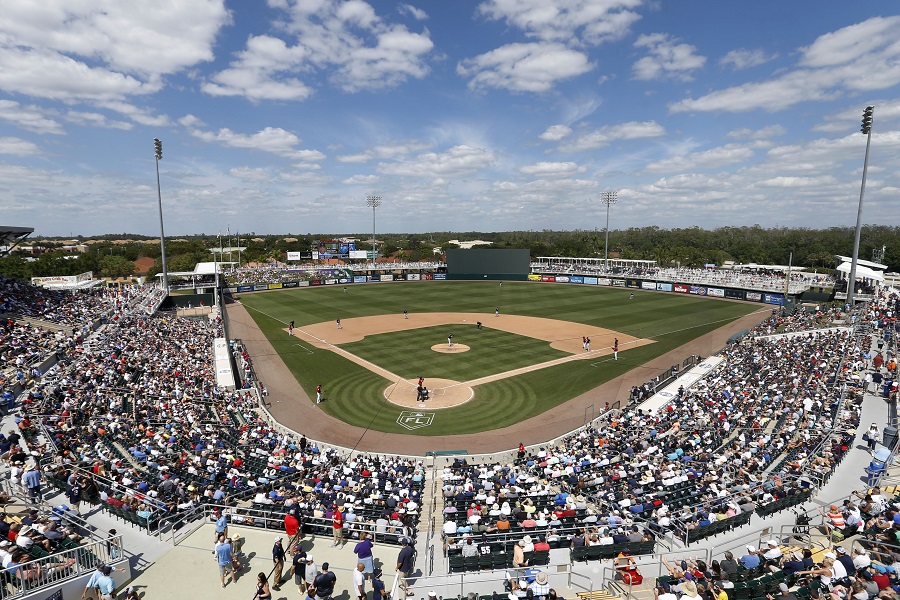 A week ago, Seth did a great job outlining players that the Minnesota Twins needed to add to the 40-man roster. With five of them being handed promotions to the 40- man, a handful of players are left open to the possibility of selection through the Rule 5 process. Although a well-positioned contender like the Twins aren’t an ideal candidate to make a selection, they are a team that could get pulled from. When taking a player through the Rule 5 Draft process a major league team must keep the player on their active 26-man (New for 2020) roster throughout the full season or offer him back to the original team. That caveat makes low-level prospects a bit of a reach to select, and the most often targeted are pitchers that can immediately slot into a relief role. Although Wander Javier is the headliner of the bunch that went unprotected, he is just 20 years old (soon to be 21) and struggled in his first exposure to full-season ball. The ceiling on Javier remains high but asking him to contribute at the big-league level right now seems like a massive leap. That leads us to the question of who is likely to get selected from the organization. Here’s some names that make sense: RHP Griffin Jax Jax recently turned 25 and the third-round pick in the 2016 draft is as close to the big leagues as he’s ever been. Having pitched initially intermittently due to a military commitment, he was as advertised in 2019. Throwing 127 innings, he combined to post a 2.90 ERA at AA/AAA with a 6.6 K/9 and 1.9 BB/9. The ceiling isn’t much here as he’s more finesse than velocity, but Jax has command and control down and that should help him at the next level. There’s no reason a non-contender couldn’t find a place for him at the back end of their rotation. LHP Sam Clay Pitching is generally the easiest commodity to control through Rule 5 stipulations, and a high-strikeout lefty can be plenty enticing. Clay was selected by the Twins in the fourth round of the 2014 draft. He’ll be 27 in 2020 but owned a 9.3 K/9 across 69.1 IP at AA/AAA in 2019. In the 22 innings at Triple-A, the 10.3 H/9 is pretty concerning. However, Clay didn’t give up a single home run last year and surrendered just one in 2018. Across 405 minor league innings he’s allowed six balls to leave the yard. In a game that’s now power rich, it’s a skill set that any manager would love to employ in their pen. 1B/OF Zander Wiel The former Vanderbilt star was a 12th-round pick in the 2015 draft. Wiel started slowly in his professional career but turned in his best season as a 26-year-old for Rochester last season. He posted an .834 OPS that was buoyed by 40 doubles and 24 dingers. He’s not a huge on-base guy and driving up his plate discipline could lead to a longer big-league leash. With the Twins he’s blocked at both first and corner outfield so he became expendable, but there could be a nice bat to be had here for someone looking to take a flier on their bench. RHP Jake Reed Appearing in columns like this for the past couple of years, Reed finds himself here once again. Originally expected to blitz the system as a fifth-round pick in 2014, being passed over at the end of 2018 seemed to be the book closing on potential with the Twins. His 1.89 ERA a year ago was watered down by a 4.0 BB/9. In 2019 he posted an ugly 5.76 ERA but pushed his strikeout rate to a career best 11.0. Minnesota changed up his arm action a significant amount last season, and there were stretches of productivity, but he was often done in as evidenced by the career worst 1.467 WHIP. As a high-velocity arm, it’s more than arguable that a sink or swim moment at the big-league level should come from some organization. Do you think the Twins lose anyone during the Rule 5 Draft, and if so, who are you most certain gets taken?
-
While the Hot Stove is still percolating prior to fully engaging all coils, there’s something else keeping things warm in Twins Territory. Justin Morneau is in the midst of the 10th Annual Winter Warm-Up Coat Drive to benefit the Salvation Army Harbor Light. I caught up with him to check on the progress and talk some baseball.Partnering with Fan HQ, located at both Ridgedale and the Eden Prairie Center, the former Twins great is in search of new or gently used winter coats. The donated coats will be distributed throughout the Twin Cities by the Salvation Army Harbor Light Center and they have already begun handing out coats to those in need. Through the relationship with Fan HQ, Justin has decided to hand out free autographs in exchange for each coat donated. In case you can’t donate in person, a $33 donation can be made to the Salvation Army’s website to receive a signed photo through the mail. The coat drive began at the start of the decade, and since 2010 over 30,000 coats have been donated. This year the drive total will surpass Morneau’s playing number with the hometown team. 33,000 coats coming in over the course of the entire effort is no small feat, and the response has been significant to Justin. Making himself available for a quick conversation, Justin had plenty to add on the drive itself and the state of the Minnesota Twins. Twins Daily- Having been around cold weather climates your whole life, a coat drive seems natural. What specifically about giving back and providing for others is important to you? What has this coat drive meant to you personally? Justin Morneau- At some point we all need help, and this is a simple gesture that can change, or even save, someone’s life. The most amazing thing to me about the coat drive is the people who put in so much time and effort to collect hundreds and even thousands of coats. All coats are appreciated, but the time and effort that people put in for the benefit of others is the type of thing that the world could use a little more of. TD- Minneapolis has been a part of your life for over a decade. What about the city and the people inspire you to use your platform to help those in need? JM- I feel at home in Minnesota and the people have made it that way for me. I tell people all the time, we could live almost anywhere, but we chose to live here. In a place that has been so good to me and my family, the coat drive seems like a small way to say thank you to people who may be going through a tough time and could use someone to help lift them up. TD- The coat drive has been a yearly thing. Where did the idea come from and what has been some of your favorite memories over the years? JM- The coat drive originated out of necessity, not sure who’s idea it was in the first place. My favorite memory of the coat drive has been witnessing a young man named Ben set up coat drive donation boxes all over town and drive with his parents to collect all the coats. He was 7 or 8 when he started doing this. To think of someone so young being able to do something for others is an inspiration for me and should act as one for others as well. TD- Switching to baseball, how do you feel about where the Twins are heading into 2020? Obviously coming off a great season, how serious of a threat do you see them in the immediate future? JM- I’m excited to continue to watch the development of this Twins team. There were so many big years from guys that didn’t have those expectations going in. Garver is one of those guys that comes to mind; he had a great year and I’m looking forward to seeing how he follows that up. I’m also looking forward to the Twins vs. White sox becoming a rivalry again. Chicago is going to be better than people think and those were always series that I looked forward to playing. TD- Finally, how have you enjoyed taking in the game from the booth? Personally, you’ve become one of my favorite broadcasters for how you combine many different aspects of the game. Are you looking for it to be a more expansive role? JM- I have enjoyed being in the booth far more than I ever could’ve imagined. I like being around the game and the preparation that goes into a broadcast. Talking baseball for a few hours on TV with possibly the biggest Twins fan of all in Dick [bremer] has been something that I really look forward to. There will not be anything that will ever replace the feeling of stepping in the batter’s box or running out of the dugout onto the field, but broadcasting does give me an adrenaline rush that I miss from my playing days. I’m looking forward to doing a few more games next season, while still being able to spend time with my family during the summer. For more information regarding the coat drive call Fan HQ at 952-545-6460 or visit JustinMorneau.com. Thanks again to Justin and Fan HQ for the discussion and setting up such a positive event. Click here to view the article
