



Ted Schwerzler
-
Posts
5,149 -
Joined
-
Last visited
Content Type
Profiles
News
Minnesota Twins Videos
2026 Minnesota Twins Top Prospects Ranking
2022 Minnesota Twins Draft Picks
Minnesota Twins Free Agent & Trade Rumors, Notes, & Tidbits
Guides & Resources
2023 Minnesota Twins Draft Picks
The Minnesota Twins Players Project
2024 Minnesota Twins Draft Picks
2025 Minnesota Twins Draft Pick Tracker
2026 Minnesota Twins Draft Tracker: Picks & Bonuses
Forums
Blogs
Events
Store
Downloads
Gallery
Everything posted by Ted Schwerzler
-
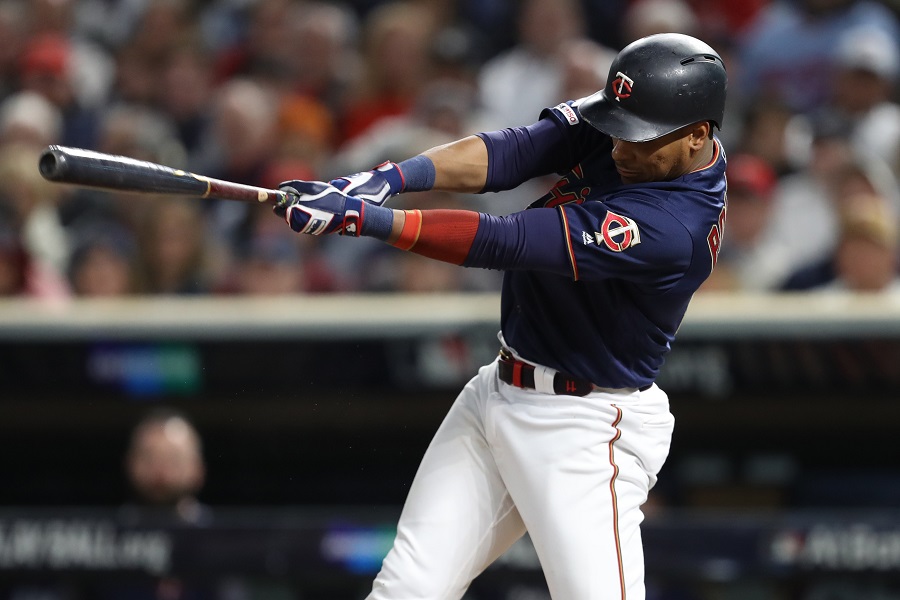 The 2009 squad hit a grand total of 172 round-trippers. Only four guys launched more than 15 on the year, and in the decisive 6-5 walkoff victory just two balls left the park for the home team. One of them came from a traditional slugger in the form of Jason Kubel, while the other was deposited into the very first row of the left field seats by Orlando Cabrera. No, the 2009 Ron Gardenhire club was not a Bomba Squad in any right, and how they played would be seen as a massive outlier today. In watching the replay of that game, it became increasingly obvious just how much of an extinct skillset guys like those defined as Piranhas encapsulated. Nick Punto, Matt Tolbert, Brendan Harris, and Alex Casilla are all defined by that mold. Speedy, defense first, light hitting bats were littered throughout that Minnesota lineup. Although bunts weren’t entirely prevalent over the 12 innings played that evening, they were a staple of the season. The aforementioned Punto dropped down a whopping 13 sac bunts on his own in 2009. Denard Span was on his heels with 12, while Tolbert rounded out the top three reaching double digits with 10. Fast forward to the analytical age, and objectively the launch angle revolution that was 2019, and the decade couldn’t have produced a more opposite result. Last season Minnesota had a grand total of 10 sac bunts, and no one player owned more than two of them. Obviously, it makes little sense for the likes of Miguel Sano, Mitch Garver, or Nelson Cruz to cede and out in an at bat, but that doesn’t mean it wouldn’t have been encouraged in previous seasons. As a guy who’s always been viewed as a bomber, Cruz has a total of just two sac bunts to his credit in more than 6,900 career plate appearances. Sano has never been asked to drop one down in just north of 2,000 trips to the dish. Being shocked that home run hitters aren’t dropping down bunts is rather unimpressive. Where the trend is positive though comes through in a guy like Jorge Polanco. During his first full big-league season back in 2017 there we seven instances in which he gave up an out. That number dropped to three the next year and was just two in 2019. Obviously, Jorge has grown a substantial amount as a hitter, but the climb to a .773 and eventually an .841 OPS is reflective of a guy that should be swinging the lumber. If there’s a guy cut from a cloth that early-2000’s Ron Gardenhire would have salivated over, it’s definitely Byron Buxton. Although it’s clear he’s got pop in his bat, the speed profile and slow start would likely have caused him to be utilized differently. Buck’s largest total of sac bunts, five, came in the 2017 season under Paul Molitor. Since then, he’s been asked to drop down outs just three times in the past two campaigns. The takeaway here seems to be two-fold. One, it’s painfully obvious that there wasn’t a more drastically different set of Twins teams than the two separated by 10 years. The Bomba Squad became synonymous with pulverizing the baseball and beating teams into submission. The 163 group played 44 one-run games and nearly split them down the middle. Two, we can see that the sport has continued to move away from a station-to-station approach. You can effectively advanced bases in a multitude of ways, but by giving up the one finite commodity in the game to do so is a losing proposition. Thanks to Out of the Park Baseball 21 we're getting a glimpse of the 2019 and 1991 Twins squaring off. It'd be a pretty stark difference to see the style of the 2009 club thrown into the ring as well. Eras change how competition is handled, and it'll be interesting to look back after advancements take place ten years from now. MORE FROM TWINS DAILY — Latest Twins coverage from our writers — Recent Twins discussion in our forums — Follow Twins Daily via Twitter, Facebook or email
 -
This week, with the help of Out of the Park Baseball, we’ve simulated the 91/19 World Series, a seven-game battle between the 1991 Twins and the 2019 Twins. Facing elimination in game 5 up against a 3-1 deficit, the Bomba Squad climbed back to the tune of a 14-7 drubbing. Despite somewhat of a clunker by Jake Odorizzi, Nelson Cruz put the team on his back and was nearly single-handedly enough.Jack Morris was the pick for Tom Kelly in this one while Rocco Baldelli turned to Jake Odorizzi. Although Odo gave up five runs (four earned) and failed to make it out of the 5th, that bested the effort from Morris who gave up five and departed in the third. It was a multi-arm approach for TK’s club the rest of the way while Baldelli needed to rely upon only curveball master Ryne Harper, and a surprising appearance from Gabriel Moya. The World Series winning 1991 club tallied the first run when Kirby Puckett raced home from second base on a Chili Davis single to center. Baldelli’s group evened the score in the bottom half when Cruz notched his first RBI of the day, scoring Jorge Polanco on a double. Things remained status quo in the second, and a single run in the top half of the third inning paved way for the original dam to break. A four spot was hung by the Bomba Squad on a pair of two-run dingers from Cruz and Max Kepler. Now with a three-run lead, the newer generation needed to lock things down. That lead would hold until the 5th, at which point the World Series winners hung a crooked number of their own. Chuck Knoblauch stepped in with Greg Gagne at second following a successful steal attempt. He brought him home on a single, and then hulking Minnesota first basemen Kent Hrbek served up some tater salad of his own. The two-run blast put the 1991 club back out in front, this time by a score of 6-5. After drawing back even in the bottom of the 5th, the Bomba Squad was ready to put some distance between them and their opponent. Eddie Rosario scampered home on a wild pitch before Luis Arraez drove in C.J. Cron with a single. Then, bases still chucked, Nelson Cruz stepped to the plate. He blasted his second dinger of the day, this one of the grand variety, to punctuate a six-run rally. Miguel Sano would put a stamp on the inning following a Kepler triple with a ground out to drive him in. When the dust had settled the new score read 2019 Twins 13, 1991 Twins 5. Both teams took a breather in the seventh for just the third scoreless frame of the day. In the 8th however, the 1991 club looked to make it a game again. Davis was looking to make another mark on the action, and he delivered following up a Hrbek single with a two-run shot of his own. Still looking up at their opponents, the runs scratched away making it 13-7. As if the six-run lead wasn’t good enough, Baldelli wanted to make sure his guys kept the gas pedal down. Rosario lifted a solo shot to double up the 1991 squad and send things to the 9th. With such a commanding lead Rocco allowed Moya to trot back out for the final frame after giving up two in the 8th. He promptly plunked Gene Larkin but then bounced back getting Gagne to ground into a 3-6-3 double play. Mike Pagliarulo popped out to right for the final out and this one was over. Target Field fans were sent home happy and will see a Game 6 in the series. Still needing to take another with hopes of evening the series and forcing a decisive game seven, this was the type of performance Rocco Baldelli had to have hoped for from his guys. Nelson Cruz played the leadership role in a big way tonight, and the momentum may be swapping sides. You can find the box score and pitch-by-pitch results for Game One attached below. If you would like to learn more about Out of the Park Baseball 21, please click on this link. If you would like to try it, you can also download it for 10% off the regular price using the code TWINSDAILY. You may also want to read the recaps for: Game 1 Game 2 Game 3 Game 4 Download attachment: MLB Box Score, Minnesota 2019 Twins at Minnesota 1991 Twins Game 5.pdf Download attachment: Twins series Game 5 Game Log.pdf Click here to view the article
-
91/19 World Series Game 5: Nelson Goes Bomba to Stay Alive
Ted Schwerzler posted an article in Twins
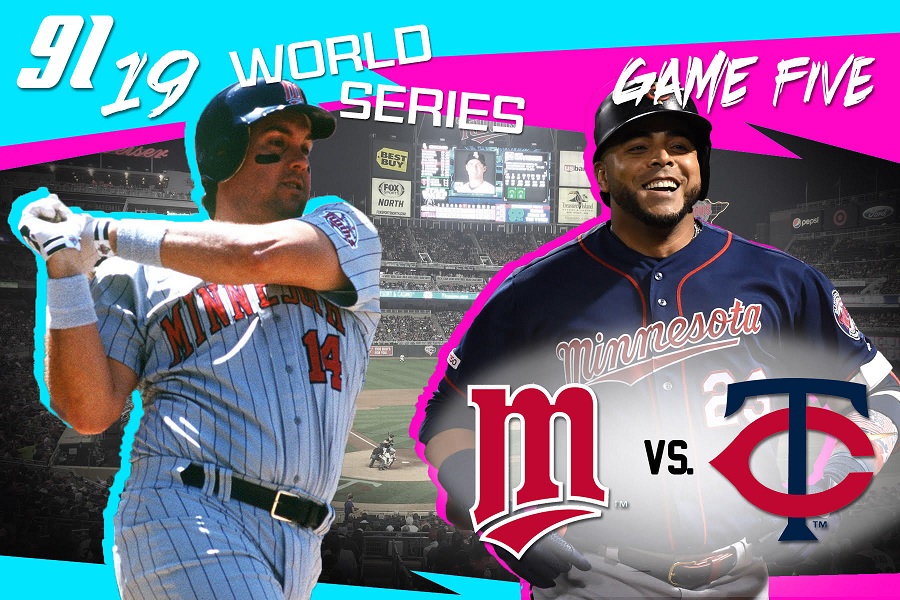 Jack Morris was the pick for Tom Kelly in this one while Rocco Baldelli turned to Jake Odorizzi. Although Odo gave up five runs (four earned) and failed to make it out of the 5th, that bested the effort from Morris who gave up five and departed in the third. It was a multi-arm approach for TK’s club the rest of the way while Baldelli needed to rely upon only curveball master Ryne Harper, and a surprising appearance from Gabriel Moya. The World Series winning 1991 club tallied the first run when Kirby Puckett raced home from second base on a Chili Davis single to center. Baldelli’s group evened the score in the bottom half when Cruz notched his first RBI of the day, scoring Jorge Polanco on a double. Things remained status quo in the second, and a single run in the top half of the third inning paved way for the original dam to break. A four spot was hung by the Bomba Squad on a pair of two-run dingers from Cruz and Max Kepler. Now with a three-run lead, the newer generation needed to lock things down. That lead would hold until the 5th, at which point the World Series winners hung a crooked number of their own. Chuck Knoblauch stepped in with Greg Gagne at second following a successful steal attempt. He brought him home on a single, and then hulking Minnesota first basemen Kent Hrbek served up some tater salad of his own. The two-run blast put the 1991 club back out in front, this time by a score of 6-5. After drawing back even in the bottom of the 5th, the Bomba Squad was ready to put some distance between them and their opponent. Eddie Rosario scampered home on a wild pitch before Luis Arraez drove in C.J. Cron with a single. Then, bases still chucked, Nelson Cruz stepped to the plate. He blasted his second dinger of the day, this one of the grand variety, to punctuate a six-run rally. Miguel Sano would put a stamp on the inning following a Kepler triple with a ground out to drive him in. When the dust had settled the new score read 2019 Twins 13, 1991 Twins 5. Both teams took a breather in the seventh for just the third scoreless frame of the day. In the 8th however, the 1991 club looked to make it a game again. Davis was looking to make another mark on the action, and he delivered following up a Hrbek single with a two-run shot of his own. Still looking up at their opponents, the runs scratched away making it 13-7. As if the six-run lead wasn’t good enough, Baldelli wanted to make sure his guys kept the gas pedal down. Rosario lifted a solo shot to double up the 1991 squad and send things to the 9th. With such a commanding lead Rocco allowed Moya to trot back out for the final frame after giving up two in the 8th. He promptly plunked Gene Larkin but then bounced back getting Gagne to ground into a 3-6-3 double play. Mike Pagliarulo popped out to right for the final out and this one was over. Target Field fans were sent home happy and will see a Game 6 in the series. Still needing to take another with hopes of evening the series and forcing a decisive game seven, this was the type of performance Rocco Baldelli had to have hoped for from his guys. Nelson Cruz played the leadership role in a big way tonight, and the momentum may be swapping sides. You can find the box score and pitch-by-pitch results for Game One attached below. If you would like to learn more about Out of the Park Baseball 21, please click on this link. If you would like to try it, you can also download it for 10% off the regular price using the code TWINSDAILY. You may also want to read the recaps for: Game 1 Game 2 Game 3 Game 4 MLB Box Score, Minnesota 2019 Twins at Minnesota 1991 Twins Game 5.pdf Twins series Game 5 Game Log.pdf
 -
Back in early March, when the United States was still experiencing a simpler time, Darren Wolfson noted some big news about a Twins slugger. Minnesota was suggested to have had dialogue about bringing Nelson Cruz back for the 2021 season. Regardless of the looming uncertainty, should that be a consideration, and should they want to?Signed to a two-year $26 million pact prior to the 2019 season, Cruz was brought in for his age 39 and 40 seasons. Yes, he’s an elder statesman, but he keeps himself in impeccable shape and didn’t make his big-league debut until age 24. Last season he was among the chief reasons Minnesota was dubbed the Bomba Squad as he went on to blast 41 dingers. Posting a career high 1.031 OPS it would be hard to fathom a reason to bet against him in the immediate future. Looking at Cruz’s slash line provides some beautiful imagery. He finished 9th in the American League MVP voting despite being active solely as a designated hitter. His .311 average was the best in a single season dating back to 2010, and he hit 40 homers for just the 4th time in his career. Virtually anywhere you looked in the counting digit fields, you left impressed. Statistics aren’t generally indicative of future production however, and a fall off can seem drastic if and when the production disappears. Fortunately for Cruz, who turns 40 on July 1st, the process is what suggests a positive trend of results can continue. Venturing from his Baseball Reference page, both Baseball Savant and Fangraphs tell an equal exciting story. It was Cruz that topped the 2019 leaderboards across baseball in terms of barrels per plate appearance (12.5%). His average exit velocity trailed only the Yankees Aaron Judge and teammate Miguel Sano. He also sat third in batted balls of 95+ mph exit velocities, producing those instances over 51% of the time. The .351 BABIP doesn’t suggest a great deal of luck was in play, and that’s to be expected when you’ve got a 52% hard hit rate and 31% HR/FB output. Download attachment: Capture.PNG Not only was Cruz absolutely murdering baseballs, but he was staying within himself to do so. His 13.8% whiff rate sat right on his career average, and then 30.5% chase rate mimicked that as well. While his 69.7% contact rate was a career low dating back to 2009, he was successfully contacting 80% of the pitches he offered at within the strike zone. This isn’t entirely unprecedented ground either. Fellow countryman David Ortiz retired following his age 40 season in 2016. Despite a wildly successful career, his final season was among his best. Posting a 1.021 OPS with 38 dingers, the former Twins slugger went out at what could certainly be considered the peak of his existence. Like Cruz, Ortiz had become a full-time designated hitter, and focusing on the craft of obliterating pitches took significant strain off a much less athletic frame. This isn’t to say there won’t be a decline in store for Cruz. Father time is undefeated, and some of the percentages Nelson produced a year ago are at a level even he has never before seen. However, what he has going for him is that hitting is a craft he’s mastered and the only one tasked of him. He’s intimately in tune with his body, and although the wrist tendon issue could prove more cumbersome as time goes on, risk for future problems should be relatively mitigated. What Cruz has brought to the table from a production standpoint makes both years of his deal a steal. What he has contributed in the clubhouse, and most importantly imparted upon Miguel Sano, has taken that value up another level on its own. We’ll see what baseball has in store for us in the coming months but asking Nelson to put on a Twins uniform for a couple of seasons into his 40’s seems like more than a reasonable ask. MORE FROM TWINS DAILY — Latest Twins coverage from our writers — Recent Twins discussion in our forums — Follow Twins Daily via Twitter, Facebook or email Click here to view the article
-
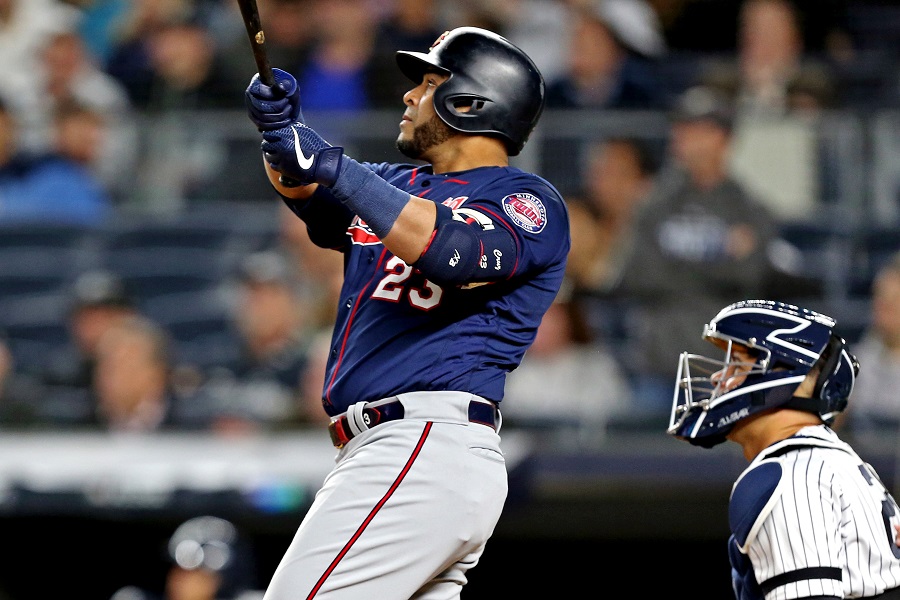 Signed to a two-year $26 million pact prior to the 2019 season, Cruz was brought in for his age 39 and 40 seasons. Yes, he’s an elder statesman, but he keeps himself in impeccable shape and didn’t make his big-league debut until age 24. Last season he was among the chief reasons Minnesota was dubbed the Bomba Squad as he went on to blast 41 dingers. Posting a career high 1.031 OPS it would be hard to fathom a reason to bet against him in the immediate future. Looking at Cruz’s slash line provides some beautiful imagery. He finished 9th in the American League MVP voting despite being active solely as a designated hitter. His .311 average was the best in a single season dating back to 2010, and he hit 40 homers for just the 4th time in his career. Virtually anywhere you looked in the counting digit fields, you left impressed. Statistics aren’t generally indicative of future production however, and a fall off can seem drastic if and when the production disappears. Fortunately for Cruz, who turns 40 on July 1st, the process is what suggests a positive trend of results can continue. Venturing from his Baseball Reference page, both Baseball Savant and Fangraphs tell an equal exciting story. It was Cruz that topped the 2019 leaderboards across baseball in terms of barrels per plate appearance (12.5%). His average exit velocity trailed only the Yankees Aaron Judge and teammate Miguel Sano. He also sat third in batted balls of 95+ mph exit velocities, producing those instances over 51% of the time. The .351 BABIP doesn’t suggest a great deal of luck was in play, and that’s to be expected when you’ve got a 52% hard hit rate and 31% HR/FB output. Not only was Cruz absolutely murdering baseballs, but he was staying within himself to do so. His 13.8% whiff rate sat right on his career average, and then 30.5% chase rate mimicked that as well. While his 69.7% contact rate was a career low dating back to 2009, he was successfully contacting 80% of the pitches he offered at within the strike zone. This isn’t entirely unprecedented ground either. Fellow countryman David Ortiz retired following his age 40 season in 2016. Despite a wildly successful career, his final season was among his best. Posting a 1.021 OPS with 38 dingers, the former Twins slugger went out at what could certainly be considered the peak of his existence. Like Cruz, Ortiz had become a full-time designated hitter, and focusing on the craft of obliterating pitches took significant strain off a much less athletic frame. This isn’t to say there won’t be a decline in store for Cruz. Father time is undefeated, and some of the percentages Nelson produced a year ago are at a level even he has never before seen. However, what he has going for him is that hitting is a craft he’s mastered and the only one tasked of him. He’s intimately in tune with his body, and although the wrist tendon issue could prove more cumbersome as time goes on, risk for future problems should be relatively mitigated. What Cruz has brought to the table from a production standpoint makes both years of his deal a steal. What he has contributed in the clubhouse, and most importantly imparted upon Miguel Sano, has taken that value up another level on its own. We’ll see what baseball has in store for us in the coming months but asking Nelson to put on a Twins uniform for a couple of seasons into his 40’s seems like more than a reasonable ask. MORE FROM TWINS DAILY — Latest Twins coverage from our writers — Recent Twins discussion in our forums — Follow Twins Daily via Twitter, Facebook or email
 -
Tomorrow was scheduled to be Major League Baseball's Opening Day for the 2020 season. Jose Berrios was to toe the rubber against the Oakland Athletics in California. Thanks to COVID-19 none of that will happen, but I'm determined to live out the season we were promised. Eventually, things will return to normal. As with any bit of adversity, finding a way to rise above and conquer will present the ultimate prize. Until we reach a period in which baseball returns to the real-life diamond, it's MLB The Show that we'll need to live vicariously through. On Twitter I teased this a few days ago. Currently I'm running a daily thread of the 2019 blasts the Twins sent into the seats. Starting tomorrow, I'll be simulating the day's game on MLB The Show 20 and providing box scores and stats to catalog the action. First pitch against the Athletics was scheduled for 3:07pm CT, so look for the box score around 7pm. Without playing any of the games myself, it will be interesting to see what the video game sees happening over the course of a season. Baseball Prospectus' projection system, PECOTA, tabbed Twins second basemen Luis Arraez as the 2020 batting champ. Interestingly enough, Out of the Park Baseball 21 suggested the same result. Will The Show follow suit? One thing I am hoping for is that we don't make it through all 162 games. I'd prefer there be live action sooner rather than later. At this point we're looking at summer as a best case scenario, but any amount of season is better than one being wiped off the map altogether. The Twins were set up to do something special this year, and now while it all hangs in the balance we must wait. Hopefully this is something we can all rally around together, enjoy some fun, and see a virtual depiction of the Minnesota Twins make a run at a World Series title. For more from Off The Baggy, click here. Follow @tlschwerz
-
The Five Most Underrated Players in Twins History
Ted Schwerzler replied to Ted Schwerzler 's topic in Twins Daily Front Page News
I'm not intimately familiar with Goltz, but he was a strong candidate for sure. More fWAR than Viola in less IP. I also saw Kaat mentioned above. I didn't include him and he was never a consideration as I don't think there's much underrated about his track record. Tons of awards, second highest fWAR in team history. -
The Five Most Underrated Players in Twins History
Ted Schwerzler replied to Ted Schwerzler 's topic in Twins Daily Front Page News
Wanted to add a couple of guys I wrestled with including: Gagne came up but the 14 fWAR in over 1,000 games suggests more average than anything else. Gaetti is also a guy I considered, though I think he gets his due. Knobluach was an interesting one. He's arguably among the greatest Twins ever, and I think he is thought of in that ilk, heck he was to have his number retired. His perception has changed because of what he became. Thought about Earl Battey. Told Seth the next guy up if I was doing a HM two-deep was Kevin Tapani. -
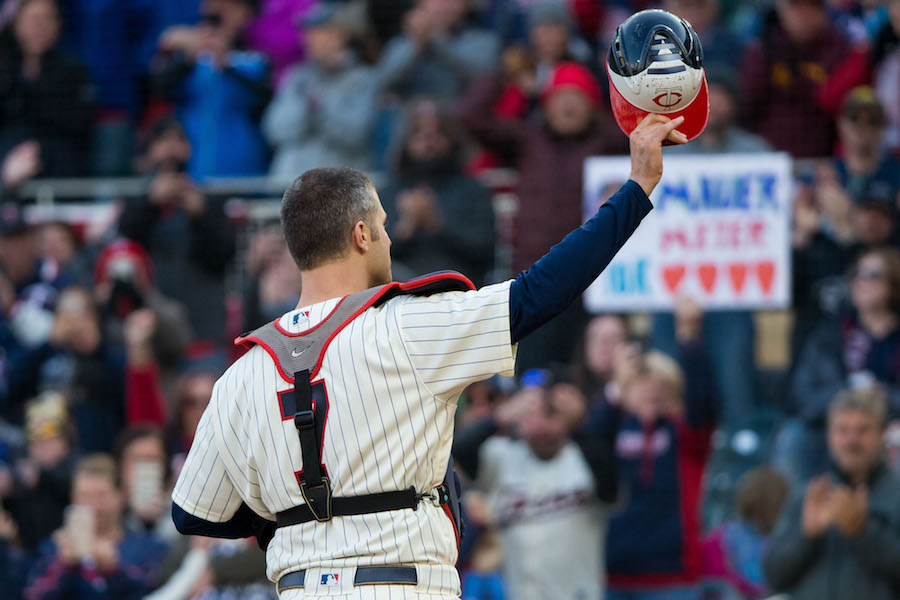 When teasing this piece on Twitter recently I found myself inundated with names that all fill this bill. From Kevin Tapani to Jason Kubel, there were dozens of replies reflective of compelling cases. Many of them I found myself nodding in agreement. While this is obviously opinion, I tried to create some objective parameters. https://twitter.com/tlschwerz/status/1242221195770159112 To truly be underrated there was a need for a sustained level of greatness. No player below a career fWAR mark of 20.0 would be included. That’s a modest bar to clear for the established veteran, but one that generally comes with some substantial highlights along the way (for the sake of comparison, Justin Morneau produced exactly 20.0 fWAR as a Twin). That numerator was the only hard and fast rule. If I was going to blueprint another, it was that the player needed to be given a higher level of appreciation than I felt they’d been shown. There’s nothing more subjective than that, but again, opinion. Honorable Mention: Shane Mack 17.9 fWAR He doesn’t meet the numerical parameters and therefore could never have been fully under consideration. However, for a guy that played in just north of 600 games for the Twins after being out of the big leagues the year prior to joining the club, he made his presence felt. After two seasons with the Padres, Mack showed up and posted an .854 OPS across parts of five seasons. He batted .309, had some pop, and played all three outfield positions. A 130 OPS+ is nothing to make light of. 4. Cesar Tovar 21.6 fWAR Of all players in Minnesota history, Tovar owns the 13th highest fWAR. Despite playing in fewer games, he’s ahead of guys like Roy Smalley, Justin Morneau, and Greg Gagne. Often brought up during the yearly debate regarding the Twins Hall of Fame inductions, Tovar gave the Twins eight seasons of a good average and great plate discipline. He played all over the diamond and earned MVP votes in five straight seasons. Not often considered among the best in franchise history, this is a guy too often forgotten in those discussions. 3. Corey Koskie 23.2 fWAR Maybe the most impressive on this list given the games played, Koskie compiled the 10th best fWAR in franchise history despite playing in the 25th most games. He tallied better totals than both Torii Hunter and Brian Dozier, all while being a relative footnote on those early 2000’s teams. He earned MVP votes one time, but never drew any other accolades. His .836 OPS with the Twins matches Eddie Rosario’s best year, and is nearly 50 points above Rosario's career average. 2. Brad Radke 38.7 fWAR Arguably the most overlooked member on this list, Radke was the reliable anchor on some clubs that faced significant uphill battles. His contributions trump those of Frank Viola and Jim Perry while getting only a smaller amount of runway. An All- Star just once in his career, Radke earned a top-3 Cy Young finish in 1997, starting 35 games. He pitched 200 innings in nine of his twelve major league seasons, and it was because of his efforts that Tom Kelly and Ron Gardenhire had a go-to arm they could count on. Nothing was flashy about Brad, but he never was going to beat himself, and he gave Minnesota that luxury for 377 career starts. 1. Joe Mauer 52.5 fWAR We can argue all day long about whether Joe was better than Kirby Puckett, Rod Carew, or Harmon Killebrew but I don’t see any questions around which one struggles to get his due. Minnesota’s top trio are all enshrined in Cooperstown while the generational catcher is often questioned about his inclusion by a hometown fan base. One-third of Mauer’s career was dragged through a period in which injury altered his trajectory (though he became one of the best defensive first basemen in the game). Poor press releases and an out-of-position contract further complicated his narrative. There’s no reason for a future Hall of Fame catcher to have a questioned legacy. Because of the subjective nature here, let’s see your list. Who do you agree with and what would you change? MORE FROM TWINS DAILY — Latest Twins coverage from our writers — Recent Twins discussion in our forums — Follow Twins Daily via Twitter, Facebook or email
 -
While there have been more than a few tough years since 1961, and there hasn’t been a World Series since 1991, there have been a ton of great individual performers over the years. Many of them are celebrated, but these five stick out as being deserving of a higher amount of praise.When teasing this piece on Twitter recently I found myself inundated with names that all fill this bill. From Kevin Tapani to Jason Kubel, there were dozens of replies reflective of compelling cases. Many of them I found myself nodding in agreement. While this is obviously opinion, I tried to create some objective parameters. To truly be underrated there was a need for a sustained level of greatness. No player below a career fWAR mark of 20.0 would be included. That’s a modest bar to clear for the established veteran, but one that generally comes with some substantial highlights along the way (for the sake of comparison, Justin Morneau produced exactly 20.0 fWAR as a Twin). That numerator was the only hard and fast rule. If I was going to blueprint another, it was that the player needed to be given a higher level of appreciation than I felt they’d been shown. There’s nothing more subjective than that, but again, opinion. Honorable Mention: Shane Mack 17.9 fWAR He doesn’t meet the numerical parameters and therefore could never have been fully under consideration. However, for a guy that played in just north of 600 games for the Twins after being out of the big leagues the year prior to joining the club, he made his presence felt. After two seasons with the Padres, Mack showed up and posted an .854 OPS across parts of five seasons. He batted .309, had some pop, and played all three outfield positions. A 130 OPS+ is nothing to make light of. 4. Cesar Tovar 21.6 fWAR Of all players in Minnesota history, Tovar owns the 13th highest fWAR. Despite playing in fewer games, he’s ahead of guys like Roy Smalley, Justin Morneau, and Greg Gagne. Often brought up during the yearly debate regarding the Twins Hall of Fame inductions, Tovar gave the Twins eight seasons of a good average and great plate discipline. He played all over the diamond and earned MVP votes in five straight seasons. Not often considered among the best in franchise history, this is a guy too often forgotten in those discussions. 3. Corey Koskie 23.2 fWAR Maybe the most impressive on this list given the games played, Koskie compiled the 10th best fWAR in franchise history despite playing in the 25th most games. He tallied better totals than both Torii Hunter and Brian Dozier, all while being a relative footnote on those early 2000’s teams. He earned MVP votes one time, but never drew any other accolades. His .836 OPS with the Twins matches Eddie Rosario’s best year, and is nearly 50 points above Rosario's career average. 2. Brad Radke 38.7 fWAR Arguably the most overlooked member on this list, Radke was the reliable anchor on some clubs that faced significant uphill battles. His contributions trump those of Frank Viola and Jim Perry while getting only a smaller amount of runway. An All- Star just once in his career, Radke earned a top-3 Cy Young finish in 1997, starting 35 games. He pitched 200 innings in nine of his twelve major league seasons, and it was because of his efforts that Tom Kelly and Ron Gardenhire had a go-to arm they could count on. Nothing was flashy about Brad, but he never was going to beat himself, and he gave Minnesota that luxury for 377 career starts. 1. Joe Mauer 52.5 fWAR We can argue all day long about whether Joe was better than Kirby Puckett, Rod Carew, or Harmon Killebrew but I don’t see any questions around which one struggles to get his due. Minnesota’s top trio are all enshrined in Cooperstown while the generational catcher is often questioned about his inclusion by a hometown fan base. One-third of Mauer’s career was dragged through a period in which injury altered his trajectory (though he became one of the best defensive first basemen in the game). Poor press releases and an out-of-position contract further complicated his narrative. There’s no reason for a future Hall of Fame catcher to have a questioned legacy. Because of the subjective nature here, let’s see your list. Who do you agree with and what would you change? MORE FROM TWINS DAILY — Latest Twins coverage from our writers — Recent Twins discussion in our forums — Follow Twins Daily via Twitter, Facebook or email Click here to view the article
-
We’re pushing towards what should have been Major League Baseball’s Opening Day. Despite the amount of waiting through the winter, COVID-19 has served up other plans and we won’t hit the mark. In what could be a lost season, what impact is there on certain Twins players? Having casually watched some of the news and hearing this situation equated to one of wartime, I gravitated to players who previously missed big league time by serving in the military. Obviously, we haven’t had a war necessitating that level of commitment for some time, but the list of names is impact. Everyone from Jackie Robinson to Warren Spahn served the country through different branches of the military. Some players were in the peak of their careers, while others were on the fringes. There’s no denying the time off has an impact, but to what extent? For a guy like Jose Berrios, a lost year couldn’t come at a worse time. While a shortened season may actually benefit him from a stamina and longevity perspective down the stretch, missing out on his age 26 season just a couple of years shy of free agency is suboptimal. He had put in work to retool his process this offseason, and the final hurdle remaining in between him and Cy Young candidacy was a goal to be cleared. There’s lots of good baseball left in that arm, but 2020 was set to be a pretty big turning point. We know through multiple occurrences that Father Time is undefeated. Obviously, there were no signs of Nelson Cruz slowing down in 2019 after posting career highs across the board, but he’s quickly approaching 40 and without a contract in 2021. There’s been reports that the Twins would like to extend him if there’s desire to continue playing, but all that raises the bar of uncertainty as age trends upwards. Cruz benefits from focusing on solely one aspect of the game, but I’d hate to see ability leave him sooner with strong production still on the table. On the flip side, there’s probably not a better scenario for guys on the edges of positional battles. Players like Randy Dobnak and Willians Astudillo have waited in the wings for most of their careers. Dobnak is fighting for a final rotation spot, but eventually will see competition from both Michael Pineda and Rich Hill. Astudillo isn’t a great fit anywhere but is adequate almost everywhere. He’s a utility guy that Minnesota currently has an abundance of, but after some departures, he’d be pushing towards the front of the line. There’s probably no way you can slice it that a lost season is good for any healthy player. A guy like Chris Sale undergoing Tommy John surgery at this juncture becomes about as lucky as you can be given those circumstances, but that’s where the good news ends. We’re losing a year of peak performance for a handful of guys, and regardless if they can reset the health toll on their bodies, so many more questions than answers will remain. At the end of the day this is all uncharted territory. Sports have stood still like never before, and we’re truly in a period where the level of uncertainty is at an all time high. Getting back to normalcy, on the diamond and elsewhere is the chief goal, but it remains to be seen when we’ll embark on that reality. For more from Off The Baggy, click here. Follow @tlschwerz
-
A Virus Can't Stop Baseball After All
Ted Schwerzler replied to Ted Schwerzler 's topic in Twins Daily Front Page News
OOTP is incredible, and I'm working on a review there as well (Twins Daily actually has partnered with them on multiple things in the past). OOTP isn't a traditional simulation game though as the emphasis is put more on inputs and management rather than gameplay. Great product however! -
Thanks to the aggressive spread of COVID-19 we no longer have major league baseball, or sports in general. While that’s a reality hard to grasp, it’s one we’ll need to grow accustomed to for a while. Fortunately, there’s an outlet, and although Fantasy Sports are tied to the real action, what MLB The Show provides is fully operational.You’ve likely heard of the Sony Playstation exclusive before, and it’s the only baseball simulation on the market. Prior to MLB developing their own “RBI Baseball,” competition was nonexistent (and to be fair, even with RBI, it still is). This is the last year The Show is a Playstation exclusive however, as the game will be released on multiple consoles in the year ahead. Expecting everything from a traditional sports game in The Show is a good place to start. You’ve got your “Play Now” modes, as well as season and franchise-centric modes. Where baseball fans can really sink their teeth in and get lost in an alternate reality is the Diamond Dynasty experience. Driven from the view of a card-collecting hobby, it’s a full-fledged baseball experience that brings Fantasy Baseball to life. Going back to early versions of EA Sports’ Madden series, you’ll find the origination of these card-based game modes (with that one being dubbed “Ultimate Team”). Baseball ties this in perfectly as Sony San Diego uses the Topps license to provide actual card art from the physical cards purchased at retailers across the globe. In collecting players, the goal is to assemble a team worthy of competition either against multiple computer modes, or a more difficult run against other human opponents. Although Diamond Dynasty has not been around as long as Ultimate Team, it may have made more substantial advancements. Content has been king for The Show in recent years, and this season The Show 20 married it with gameplay improvements that greatly enhance the overall experience. Much of what made The Show 19 great within the Diamond Dynasty game mode returns, and the small additions such as the new “Showdown” game mode take it over the top. A significant addition to the player pool has been made in 2020 as well. Each year new legends are added to the roster in hopes of drawing heightened interest. Now not only are former MLB stars included, but up and coming prospects are put into the action (although they are not paid for the use of their likenesses). It can’t be overstated how much fun creating your dream lineup of current and former MLB stars only to deploy them in a seemingly endless amount of game modes truly is. Although the time commitment to generating an upper tier squad is immense, the rewards as you progress through certain achievements along the way become addicting and grow in value as well. Having thought I would forego this year’s version and focus entirely on the real thing, a cease in baseball had me scouring Craigslist for a Playstation and grabbing a copy of The Show 20 on Monday. Countless reviews are on the market in regard to the game as a whole. Diamond Dynasty remains a different beast entirely, but it’s potentially the most rewarding. Fangraphs' own Paul Sporer put together a great tutorial for newcomers, and while lengthy, it’s a great dive into everything the mode has to offer. As has been the case every year, you can follow the exploits of my Hardball Kekambas on Twitter and utilize #HBK to sort through some of the notable events. I committed last night to making sure we’ll have a Twins box score every day from a simulation on the game that was intended to be played as well. Finally, check out Cooper Carlson’s run through the 2020 season through the eyes of The Show 20 right here at Twins Daily. MORE FROM TWINS DAILY — Latest Twins coverage from our writers — Recent Twins discussion in our forums — Follow Twins Daily via Twitter, Facebook or email Click here to view the article
-
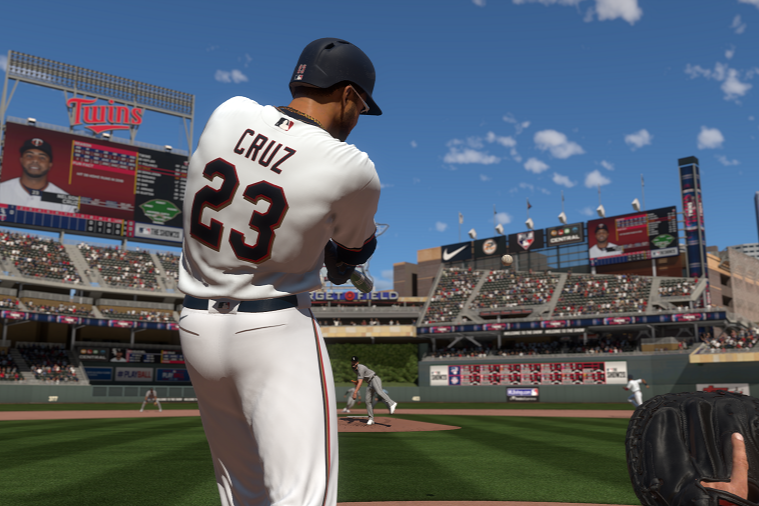 You’ve likely heard of the Sony Playstation exclusive before, and it’s the only baseball simulation on the market. Prior to MLB developing their own “RBI Baseball,” competition was nonexistent (and to be fair, even with RBI, it still is). This is the last year The Show is a Playstation exclusive however, as the game will be released on multiple consoles in the year ahead. Expecting everything from a traditional sports game in The Show is a good place to start. You’ve got your “Play Now” modes, as well as season and franchise-centric modes. Where baseball fans can really sink their teeth in and get lost in an alternate reality is the Diamond Dynasty experience. Driven from the view of a card-collecting hobby, it’s a full-fledged baseball experience that brings Fantasy Baseball to life. Going back to early versions of EA Sports’ Madden series, you’ll find the origination of these card-based game modes (with that one being dubbed “Ultimate Team”). Baseball ties this in perfectly as Sony San Diego uses the Topps license to provide actual card art from the physical cards purchased at retailers across the globe. In collecting players, the goal is to assemble a team worthy of competition either against multiple computer modes, or a more difficult run against other human opponents. Although Diamond Dynasty has not been around as long as Ultimate Team, it may have made more substantial advancements. Content has been king for The Show in recent years, and this season The Show 20 married it with gameplay improvements that greatly enhance the overall experience. Much of what made The Show 19 great within the Diamond Dynasty game mode returns, and the small additions such as the new “Showdown” game mode take it over the top. A significant addition to the player pool has been made in 2020 as well. Each year new legends are added to the roster in hopes of drawing heightened interest. Now not only are former MLB stars included, but up and coming prospects are put into the action (although they are not paid for the use of their likenesses). It can’t be overstated how much fun creating your dream lineup of current and former MLB stars only to deploy them in a seemingly endless amount of game modes truly is. Although the time commitment to generating an upper tier squad is immense, the rewards as you progress through certain achievements along the way become addicting and grow in value as well. Having thought I would forego this year’s version and focus entirely on the real thing, a cease in baseball had me scouring Craigslist for a Playstation and grabbing a copy of The Show 20 on Monday. https://twitter.com/sporer/status/1240631128467419136 Countless reviews are on the market in regard to the game as a whole. Diamond Dynasty remains a different beast entirely, but it’s potentially the most rewarding. Fangraphs' own Paul Sporer put together a great tutorial for newcomers, and while lengthy, it’s a great dive into everything the mode has to offer. https://twitter.com/tlschwerz/status/1240451503556624386 As has been the case every year, you can follow the exploits of my Hardball Kekambas on Twitter and utilize #HBK to sort through some of the notable events. I committed last night to making sure we’ll have a Twins box score every day from a simulation on the game that was intended to be played as well. Finally, check out Cooper Carlson’s run through the 2020 season through the eyes of The Show 20 right here at Twins Daily. MORE FROM TWINS DAILY — Latest Twins coverage from our writers — Recent Twins discussion in our forums — Follow Twins Daily via Twitter, Facebook or email
 -
Baseball is not a game meant to be enjoyed in a small sample size. There’s nuance and correction that takes place. The sport plays 162 games because it’s deemed necessary to sort out divisional races. Thanks to the COVID-19 outbreak, all of that is up in the air, and the Twins could lose big.Right now, baseball continues to suggest that a full season is going to take place whenever play resumes. While that’s a great though, and obviously what would favor the almighty dollar, any logistical hurdles that would impose seem certain to have other ideas. With there only being so many teams in warm weather portions of the country, and a 2021 season to consider on the back end, some sort of alternative schedule would seem to make sense. In digging through what the Twins have planned for 2020, there are 18 games scheduled against the National League. Of the 162 games played during 2019, 47% of them were against divisional opponents. Adjusting for travel and removing what could be deemed non-essential contests, interleague opponents could quickly be wiped off the map this year. With divisional races often being tightly contested, it would stand to reach that playing that same volume remain imperative. A year ago, Rocco Baldelli’s club played the AL Central to the tune of a 50-26 record (.658 winning percentage). The Chicago White Sox have taken steps forward, while the Cleveland Indians have taken steps backwards. It’s mainly status quo at the bottom of the grouping, but Kansas City and Detroit should be expected to take plenty of lumps regardless of who is in the other dugout. We’re in uncertain times to be sure, and no one really knows when baseball will return. Soon doesn’t appear to be a good descriptor though, and that leaves any number of things on the table. Maybe a year in which only division games are player, or some construction of around 100 games makes sense. At any rate, some baseball would be better than none at all. I recently touched on how the timelines of players like Byron Buxton and Rich Hill could be impacted by this delay. Certainly, having them healthy for a new Opening Day would be more ideal than not. The flip side could be losing a substantial portion of what may be Nelson Cruz’s final contributions. Outside of the individual impact though, we can turn back to that nuance lost by playing a shortened campaign. Fangraphs recently ran simulations utilizing ZiPS to provide context to what impact may be felt in a diminished season. Gone is the opportunity to run away and hide at that top, and what is generally a marathon turns into an all-out sprint. Heading into what was scheduled for 2020, the Twins owned a Postseason probability of 75.4% (5th highest in the game). Shrink the schedule to 110 games and that drops to 63.4%. If we’re talking about a June or July start, something like an 81-game schedule could commence, and that scenario has Minnesota’s odds to make the Postseason at just 55.5%. That’s a significant 19% drop and more importantly is an amount eaten up by the competition. With less variables in play it’s the fringe teams that find themselves in the most ideal position to benefit. When looking at Postseason percentage gains, AL Central foe Chicago is third highest in baseball at just north of 16%. Even the Kansas City Royals go from being non-factors to having a 14% probability of playing after the regular season. If this division was the Twins to lose in the year ahead, it certainly becomes much easier for them to do so without much room for error. Again, we aren’t yet in a place where we know what tomorrow looks like much less how October or November baseball may play out. What we do know is that once the first pill is delivered in 2020, there will be an immense amount of pressure to make sure every result acted upon with a high level of execution. MORE FROM TWINS DAILY — Latest Twins coverage from our writers — Recent Twins discussion in our forums — Follow Twins Daily via Twitter, Facebook or email Click here to view the article
-
 Right now, baseball continues to suggest that a full season is going to take place whenever play resumes. While that’s a great though, and obviously what would favor the almighty dollar, any logistical hurdles that would impose seem certain to have other ideas. With there only being so many teams in warm weather portions of the country, and a 2021 season to consider on the back end, some sort of alternative schedule would seem to make sense. In digging through what the Twins have planned for 2020, there are 18 games scheduled against the National League. Of the 162 games played during 2019, 47% of them were against divisional opponents. Adjusting for travel and removing what could be deemed non-essential contests, interleague opponents could quickly be wiped off the map this year. With divisional races often being tightly contested, it would stand to reach that playing that same volume remain imperative. A year ago, Rocco Baldelli’s club played the AL Central to the tune of a 50-26 record (.658 winning percentage). The Chicago White Sox have taken steps forward, while the Cleveland Indians have taken steps backwards. It’s mainly status quo at the bottom of the grouping, but Kansas City and Detroit should be expected to take plenty of lumps regardless of who is in the other dugout. We’re in uncertain times to be sure, and no one really knows when baseball will return. Soon doesn’t appear to be a good descriptor though, and that leaves any number of things on the table. Maybe a year in which only division games are player, or some construction of around 100 games makes sense. At any rate, some baseball would be better than none at all. I recently touched on how the timelines of players like Byron Buxton and Rich Hill could be impacted by this delay. Certainly, having them healthy for a new Opening Day would be more ideal than not. The flip side could be losing a substantial portion of what may be Nelson Cruz’s final contributions. Outside of the individual impact though, we can turn back to that nuance lost by playing a shortened campaign. Fangraphs recently ran simulations utilizing ZiPS to provide context to what impact may be felt in a diminished season. Gone is the opportunity to run away and hide at that top, and what is generally a marathon turns into an all-out sprint. Heading into what was scheduled for 2020, the Twins owned a Postseason probability of 75.4% (5th highest in the game). Shrink the schedule to 110 games and that drops to 63.4%. If we’re talking about a June or July start, something like an 81-game schedule could commence, and that scenario has Minnesota’s odds to make the Postseason at just 55.5%. That’s a significant 19% drop and more importantly is an amount eaten up by the competition. With less variables in play it’s the fringe teams that find themselves in the most ideal position to benefit. When looking at Postseason percentage gains, AL Central foe Chicago is third highest in baseball at just north of 16%. Even the Kansas City Royals go from being non-factors to having a 14% probability of playing after the regular season. If this division was the Twins to lose in the year ahead, it certainly becomes much easier for them to do so without much room for error. Again, we aren’t yet in a place where we know what tomorrow looks like much less how October or November baseball may play out. What we do know is that once the first pill is delivered in 2020, there will be an immense amount of pressure to make sure every result acted upon with a high level of execution. MORE FROM TWINS DAILY — Latest Twins coverage from our writers — Recent Twins discussion in our forums — Follow Twins Daily via Twitter, Facebook or email
 -
We are just days into this global pandemic and so far, COVID-19 has taken a multitude of normalcy away from our daily lives. Forced to reconsider how we’ll operate in the weeks ahead; we no longer have baseball (and sports as a whole) to view. While that’s disappointing, it is in these passions that people have long since become a unified community. Major League Baseball shelved operations in the Grapefruit and Cactus Leagues last week. We now have seen teams disperse, with players returning home to the extent of some even leaving the country. As things stand right now, resumption of the sport couldn’t be more distant. First pitches were supposed to be thrown out on Opening Day’s around the league in less than two weeks. That has been taken away from us. Amidst this unfortunate revelation, we’re forced to consider what aspect of the sport really brings us together in the first place. Statistics, analysis, and fandom is generated by the on-field play of athletes we follow. Baseball is a labor of love requiring buy in over a long seasons that tracks many months. The level of consumption can be different for each fan, but the outlets and offerings available to us are plentiful and provide something for everyone. It’s in this time of stoppage that we can shift a focus to where we’re all at, and that’s a reality of togetherness. Sure, there’s no breakdowns of Spring Training action or roster movement taking place right now. We don’t have highlights to pour over or tickets to buy. What we still have however is a community of people that share a passion towards a singular subject. While we’re all divided by teams and players, baseball is the greater thread that brings it all back together. In this downtime there’s more than a handful of great writers putting out content. There are websites still pumping out great pieces. There have been a handful of awesome books published over the past couple of seasons. Heck, Twitter allows for immediate dialogue and interaction amongst an endless number of participants. Really, it’s baseball that has brought us all together, but not the on-field product that keeps us here. Hopefully sooner rather than later we’ll have a return to action on the field. In the meantime, though, the fan wins alongside every other fan going through the same experience. Find different ways to consume this passion. Strike up new conversations, read new writers, join new communities. The impact of this experience, and the way we’re able to consume a sport that has temporarily been taken away, is entirely up to each individual. There won’t be any box scores when it’s all said and done, but the appreciation and love of the game can be certain to grow along the way. For more from Off The Baggy, click here. Follow @tlschwerz
-
- 1
-

-
- minnesota twins
- major league baseball
- (and 1 more)
-
Yesterday was one of the largest whirlwinds the baseball world has ever seen. After the massive cancellations and postponements on March 11, Major League Baseball took action. Having been in Fort Myers intending to cover a baseball game, hypothetical tumbleweeds cross the Lee County Sports Complex. For the 2020 Twins however, this new reality presents two distinct positives.Despite what little information we have on where Byron Buxton had been in regards to appearing in game action, there seemed to be a zero percent chance he’d have been ready for Opening Day. Having just begun to face live pitching this week, and take some hacks at near 100%, the runway for ramp up time simply was not long enough. Less than 10 games remaining before Opening Day, getting acclimated would have been a problem. As good as Minnesota is, there’s arguably no more valuable player to the team than their centerfielder. In games he played last year, the Twins went 62-25. A .713 winning percentage is truly unprecedented, and while his .827 OPS is glowing offensively, it’s the glue he provides to the defensive strategy as a whole. Max Kepler is a potentially elite fielder but is a bit more stretched in center. Utilizing Marwin Gonzalez or Jake Cave in the outfield is a step back as well. The Twins curbed some of their overall defensive issues by acquired an elite stopper at third in Josh Donaldson, but it’s Buxton that’s the linchpin for the greater whole. Now with something like a month to prepare for Opening Day, Buxton should have ample opportunity to get right. He was progressing towards game action and will now have a similar opportunity to everyone else in regards to ramp up. Healing can continue to take place, and regardless of the direction players are given, process driven drills can continue to happen. The other substantial come up here is on the mound. All offseason the front office sought impact pitching. Eventually they acquired an arm that fit the bill in the form of Kenta Maeda, but it was his former and current teammate Rich Hill that also posted numbers of importance. Expected back sometime in the early summer, Hill is coming off a campaign in which he posted a 2.45 ERA and 11.0 K/9. Yes, injuries have been his bugaboo, but they’ve also been something he’s come through unscathed while being more than dominant when healthy. Rather than trudging through a couple months’ worth of games piecing together the back end of their rotation, Hill could provide a spark just weeks into the season. Having pushed their chips in this offseason, it would only make sense that the Twins look at acquiring more arm talent around the trade deadline. We won’t know how that could be impacted until the logistics of this whole scheduling mess get figured out, but internally Minnesota will now see an intended boost on the bump sooner rather than later. In all of this, we continue to wade through uncharted territory. The vibe around Twins camp was different over the past couple of days, and the measures put in place were like things never before imagined. Ultimately though, baseball will return. There will be another day, there will be a season, and the same opportunity to push towards a World Series is on the horizon for Rocco Baldelli’s squad. We’re going to need to wait a bit longer this time around, but the reward of two substantial assets being more readily available is one that could pay big dividends. MORE FROM TWINS DAILY — Latest Twins coverage from our writers — Recent Twins discussion in our forums — Follow Twins Daily via Twitter, Facebook or email Click here to view the article
-
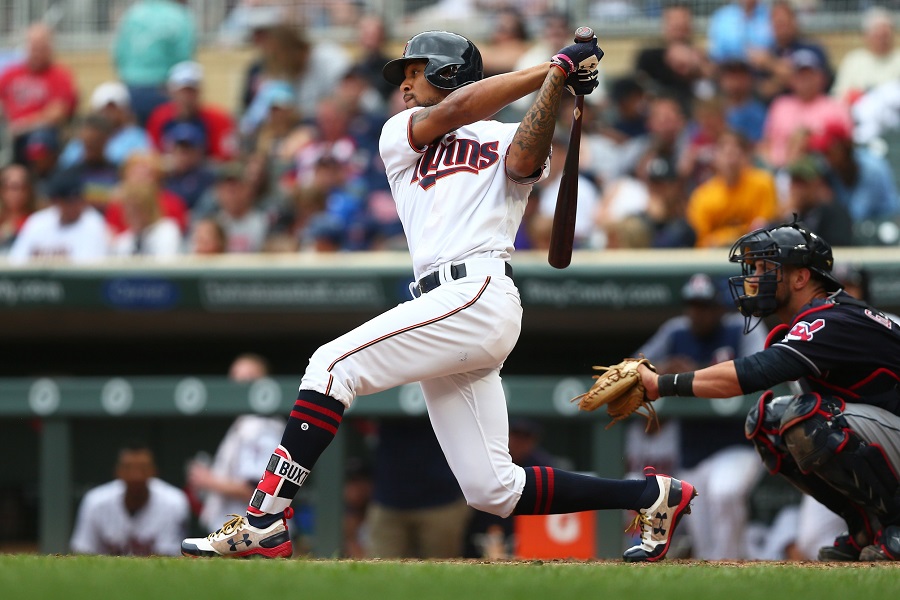 Despite what little information we have on where Byron Buxton had been in regards to appearing in game action, there seemed to be a zero percent chance he’d have been ready for Opening Day. Having just begun to face live pitching this week, and take some hacks at near 100%, the runway for ramp up time simply was not long enough. Less than 10 games remaining before Opening Day, getting acclimated would have been a problem. As good as Minnesota is, there’s arguably no more valuable player to the team than their centerfielder. In games he played last year, the Twins went 62-25. A .713 winning percentage is truly unprecedented, and while his .827 OPS is glowing offensively, it’s the glue he provides to the defensive strategy as a whole. Max Kepler is a potentially elite fielder but is a bit more stretched in center. Utilizing Marwin Gonzalez or Jake Cave in the outfield is a step back as well. The Twins curbed some of their overall defensive issues by acquired an elite stopper at third in Josh Donaldson, but it’s Buxton that’s the linchpin for the greater whole. https://twitter.com/tlschwerz/status/1237742372957683712 Now with something like a month to prepare for Opening Day, Buxton should have ample opportunity to get right. He was progressing towards game action and will now have a similar opportunity to everyone else in regards to ramp up. Healing can continue to take place, and regardless of the direction players are given, process driven drills can continue to happen. The other substantial come up here is on the mound. All offseason the front office sought impact pitching. Eventually they acquired an arm that fit the bill in the form of Kenta Maeda, but it was his former and current teammate Rich Hill that also posted numbers of importance. Expected back sometime in the early summer, Hill is coming off a campaign in which he posted a 2.45 ERA and 11.0 K/9. Yes, injuries have been his bugaboo, but they’ve also been something he’s come through unscathed while being more than dominant when healthy. Rather than trudging through a couple months’ worth of games piecing together the back end of their rotation, Hill could provide a spark just weeks into the season. Having pushed their chips in this offseason, it would only make sense that the Twins look at acquiring more arm talent around the trade deadline. We won’t know how that could be impacted until the logistics of this whole scheduling mess get figured out, but internally Minnesota will now see an intended boost on the bump sooner rather than later. In all of this, we continue to wade through uncharted territory. The vibe around Twins camp was different over the past couple of days, and the measures put in place were like things never before imagined. Ultimately though, baseball will return. There will be another day, there will be a season, and the same opportunity to push towards a World Series is on the horizon for Rocco Baldelli’s squad. We’re going to need to wait a bit longer this time around, but the reward of two substantial assets being more readily available is one that could pay big dividends. MORE FROM TWINS DAILY — Latest Twins coverage from our writers — Recent Twins discussion in our forums — Follow Twins Daily via Twitter, Facebook or email
 -
Today in Fort Myers there was a big-league game as well as some minor league intrasquad action. Across the entire landscape though, it was the fallout of Coronavirus that was being felt. Major League implications were now in place, and minor league changes had come as well. With the Governor of Washington, Jay Inslee, placing a ban on public gatherings in an attempt to cease the spread of COVID-19 the Minnesota Twins had officially felt their first 2020 impact. Scheduled to play the Seattle Mariners for their second series of the season, those games must now be relocated. Talk has been that they could happen in Arizona, where the Mariners hold their Spring Training, but the situation remains fluid. This isn’t a one city ordeal either. San Francisco has limited public gatherings of more than 1,000 people, and with Oakland just across the bay, a disruption of Minnesota’s Opening Day affairs could soon follow. The NCAA has determined a fan less March Madness will take place, and many individual conferences have followed suit. In response to the newly discovered health scare, many are erring on the side of caution. It wasn’t until today that the Twins decided things would translate to the minor leagues as well. I talked with a couple of players earlier in the week, and they’d noted having been given instruction and direction relating to Coronavirus. On Wednesday however, the Twins had roped off significant portions of the minor league fields at the Lee Country Sports Complex, and ushers were put in place to interrupt the flow of foot traffic. A full-on quarantine of the athletes from bystanders had now been instituted. I’m not old enough to understand what the SARS outbreak looked like, and regardless of any research, living this is bordering on interesting to say the least. It feels akin to something like a video-game-esque zombie apocalypse and I feel as though we’re just beginning to see the total fallout. Having had discussions with those more in the know, I’d be greatly surprised to see Major League Baseball play a full 162-game slate in 2020. The logistical hurdles ahead are going to be immense, and without clarification on what could be yet to come, a simple delay could be more straightforward that the nightmare of reactive decisions. We likely won’t know the overall societal impact of this situation for years to come, and it’s almost assuredly going to be a benchmark in history books. While sports play a very small part of the overall social landscape, they are front and center when determining what many citizens gravitate towards. Unfortunately, I think this gets worse before it gets better, and the fallout we see from that could be unprecedented. For more from Off The Baggy, click here. Follow @tlschwerz
- 6 comments
-
- 1
-
-
- minnesota twins
- coronavirus
- (and 1 more)
-
Royce Lewis was the first overall selection in the 2017 Major League Baseball draft. The Minnesota Twins passed on Tommy John recipient Hunter Greene, a Babe Ruthian multi-position player, in the process. As one of the game’s best prospects, it’s time for Lewis to take the next step.Although not all minor league players develop at the same rate, it’s become clear that Lewis is knocking on the door to the big leagues. He’s not a realistic shot to crack the major league roster for 2020, but a debut this season is trending more towards a possibility. Having enjoyed plenty of run in big league camp thanks to an injury sustained by starter Jorge Polanco, Lewis has been provided ample opportunity to show what he’s capable of. More than in any other instance, the results on Tuesday in Clearwater provide a strong depiction of what’s currently taking place. In his first at-bat Lewis stepped in and cranked a homer way out to left field. The wind was blowing in that direction, but with a distracted focus, my immediate reaction was to drop a four-letter word in simply saying, “Holy s***.” He got every bit of the pitch and cranked in over the Tiki bar down the line, eventually leaving the stadium. Although not seen as a hulking power threat, it was in that swing that Lewis displayed his advanced ability to send the pill on a ride. Not long after his exploits at the dish, Lewis was making an impact in the field. Over the course of his day in the field it appeared there was a level of comfort between he and second baseman Luis Arraez (and a nice heads up prior to his home run). Fluid double plays were turned, and a level of communication seemed apparent. It was on a grounder deep in the hole, inducing a throw that Hall of Famer Derek Jeter would’ve been proud of, that we saw Royce’s defensive skill on display. Plenty has been made about both his leg kick at the dish and the ability to stick at shortstop. It’s in instances like the two big contributions made against the Phillies that should give pause to any concerns. His home run came against big ticket free-agent acquisition Zack Wheeler, and the defensive effort was put up against a respectable runner in Adam Haseley. If we dream on an extrapolation of those results, it’s easy to see why he’s touted as one of baseball’s best prospects. The flip side introduces us to the potential pitfalls of Lewis’ projection. He played a sound game defensively so there was nothing to be concerned with there. However, it was at the dish that we saw the negative effects of timing induced by a pronounced leg kick. There were not any strikeouts today, but his third at-bat included a lunge I’m sure he’d rather not replicate. When utilizing a leg kick to work through rhythm and timing, a heavy emphasis must be put on getting that foot back down. If there’s a guess made to the pitch selection then any sort of incorrect thought process will likely result in a substantial weight transfer, wider base, and lack of impact at the point of contact. You’re certainly going to be fooled at times as a hitter, but the door left open for a pitcher to exploit it more often can be opened wider with a leg kick or moving hands at the plate. Overall, this game was a very good representation of where Lewis is right now. The athleticism and talent are legit, he’s got the ability to be a bona fide star. There are a couple of refinements still be added however, and that will dictate his timeline to the big leagues, and his eventual impact when he arrives in Twins Territory. MORE FROM TWINS DAILY — Latest Twins coverage from our writers — Recent Twins discussion in our forums — Follow Twins Daily via Twitter, Facebook or email Click here to view the article
- 15 replies
-
- 1
-
-
- minnesota twins
- royce lewis
- (and 1 more)
-
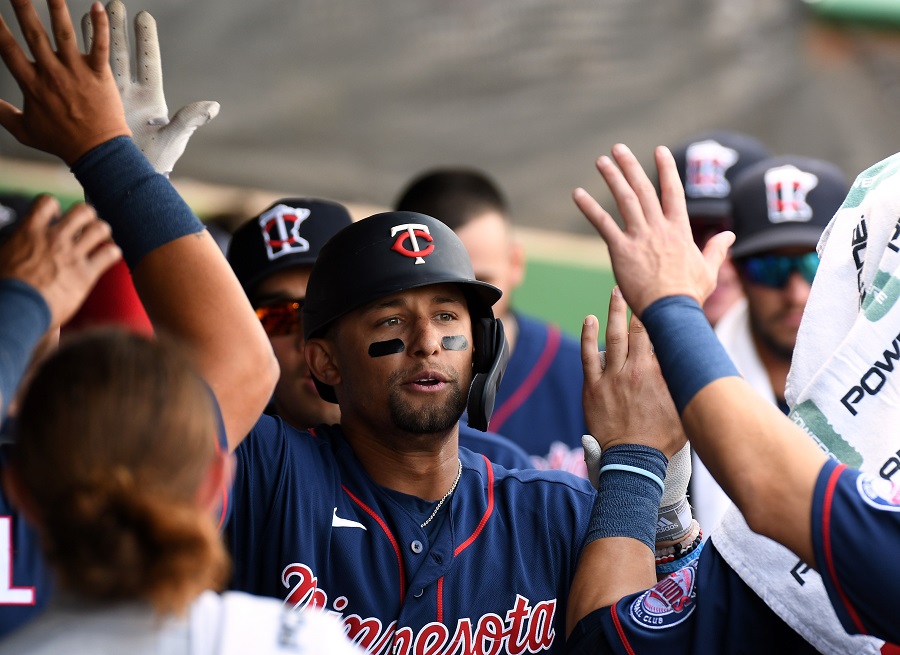 Although not all minor league players develop at the same rate, it’s become clear that Lewis is knocking on the door to the big leagues. He’s not a realistic shot to crack the major league roster for 2020, but a debut this season is trending more towards a possibility. Having enjoyed plenty of run in big league camp thanks to an injury sustained by starter Jorge Polanco, Lewis has been provided ample opportunity to show what he’s capable of. More than in any other instance, the results on Tuesday in Clearwater provide a strong depiction of what’s currently taking place. In his first at-bat Lewis stepped in and cranked a homer way out to left field. The wind was blowing in that direction, but with a distracted focus, my immediate reaction was to drop a four-letter word in simply saying, “Holy s***.” He got every bit of the pitch and cranked in over the Tiki bar down the line, eventually leaving the stadium. Although not seen as a hulking power threat, it was in that swing that Lewis displayed his advanced ability to send the pill on a ride. https://twitter.com/MLBPipeline/status/1237442286407081985 Not long after his exploits at the dish, Lewis was making an impact in the field. Over the course of his day in the field it appeared there was a level of comfort between he and second baseman Luis Arraez (and a nice heads up prior to his home run). Fluid double plays were turned, and a level of communication seemed apparent. It was on a grounder deep in the hole, inducing a throw that Hall of Famer Derek Jeter would’ve been proud of, that we saw Royce’s defensive skill on display. https://twitter.com/MLBPipeline/status/1237488440935157769 Plenty has been made about both his leg kick at the dish and the ability to stick at shortstop. It’s in instances like the two big contributions made against the Phillies that should give pause to any concerns. His home run came against big ticket free-agent acquisition Zack Wheeler, and the defensive effort was put up against a respectable runner in Adam Haseley. If we dream on an extrapolation of those results, it’s easy to see why he’s touted as one of baseball’s best prospects. The flip side introduces us to the potential pitfalls of Lewis’ projection. He played a sound game defensively so there was nothing to be concerned with there. However, it was at the dish that we saw the negative effects of timing induced by a pronounced leg kick. There were not any strikeouts today, but his third at-bat included a lunge I’m sure he’d rather not replicate. https://twitter.com/tlschwerz/status/1237457247485284353 When utilizing a leg kick to work through rhythm and timing, a heavy emphasis must be put on getting that foot back down. If there’s a guess made to the pitch selection then any sort of incorrect thought process will likely result in a substantial weight transfer, wider base, and lack of impact at the point of contact. You’re certainly going to be fooled at times as a hitter, but the door left open for a pitcher to exploit it more often can be opened wider with a leg kick or moving hands at the plate. Overall, this game was a very good representation of where Lewis is right now. The athleticism and talent are legit, he’s got the ability to be a bona fide star. There are a couple of refinements still be added however, and that will dictate his timeline to the big leagues, and his eventual impact when he arrives in Twins Territory. MORE FROM TWINS DAILY — Latest Twins coverage from our writers — Recent Twins discussion in our forums — Follow Twins Daily via Twitter, Facebook or email
 -
There are not many question marks on the Minnesota Twins 26-man roster coming into the 2020 season. Jake Cave and Willians Astudillo are in contention for the final bench spot, and the rotation has turned into a two-man race. How do Randy Dobnak and Jhoulys Chacin stack up? Coming into the spring there’s no denying the Twins hope was to have the veteran Chacin make this decision easy. Forget that Dobnak was the game two starter during the 2019 ALDS in Yankees Stadium, he’s a guy that showed up out of nowhere and has options remaining. The caveat though, is that he is the one continuing to force Minnesota’s hand. By now you know the story. Former Uber driver that played through all three levels of the farm in 2019 while posting a ridiculous 2.07 ERA, he’s the fun-loving guy with the handlebar mustache. Although he deviates from the traditional strikeout hurlers of today, he’s also incredibly strong with both his control and command. In not allowing hitters to beat him with big innings, he’s pitching in front of a lineup that will always give him a chance. After arguably his worst spring start, Dobnak now own a line of 10.0 IP 5 H 3 R 3 ER 3 BB and 6 K. Dominant, maybe not, but he’s looked the part of a big leaguer ever single time he’s stepped on the mound. Again, with the Twins hoping to unlock the 2018 Milwaukee Brewers version of Chacin, this wasn’t likely part of the equation. The long-time vet was an absolute mess last year. Jhoulys posted a 5.79 ERA while walking everyone before being jettisoned from The Crew. He landed in Boston and things actually got worse. Contributing just north of 14 IP, he tallied an ERA north of 7.00 and continued giving out free passes for frequently than an ice cream man at the playground. Looking to rekindle the arm that produced a 3.50 ERA in 192 innings during the 2018 season, Minnesota made a smart decision by nabbing him on a non-roster deal. Given his big-league experience, the assumption should have always been that the final rotation spot out of the gate was his to lose. He’s been projected as such in each of my roster breakdowns in this space, but it’s becoming ever harder to do so. After his last outing Chacin has now totaled 8.0 IP in Grapefruit League play for Minnesota. Although he does have a solid 8/2 K/BB, he’s given up seven hits, plenty of hard contact, and six earned runs. To say that hitters have rarely been fooled by his stuff would be accurate. Obviously as a newly developed pitching institution, there’s plenty of tweaks the Twins are working on with the Venezuelan. Between analytical deep dives and scrapping of offerings, the goal has been to rekindle a career under the tutelage of Wes Johnson and the infrastructure that Derek Falvey has built. So far, the fruits of everyone’s labor have yet to produce anything ripe. We’re probably still too far out to call this race over, and still with an option Dobnak is going to need to be head and shoulders above his competition. Right now though, it’s inaccurate to call him anything but the most productive candidate, and once again the taxi driver is weaving his way through traffic. For more from Off The Baggy, click here. Follow @tlschwerz
- 9 comments
-
- 2
-
-
- minnesota twins
- randy dobnak
- (and 1 more)
-
Award Winners and World Series Victors
Ted Schwerzler commented on Ted Schwerzler 's blog entry in Off The Baggy
I wouldn't lump Ohtani into the Buxton category. He had TJ which is pretty standard for pitchers today. It's not like he has a track record of being injury prone, and he's been elite when on the field either hitting or pitching. -
After eating Jonathan Schoop’s lunch last season Luis Arraez went on to draw comparisons to players like Tony Gwynn and Rod Carew. PECOTA recently projected him to win a batting title in 2020, and he’s quickly vaulted into the hearts of Twins fans everywhere. What if he’s Ben Revere though?Twins Daily’s Nick Nelson recently workshopped a couple of ideas on Twitter regarding the Minnesota second basemen. Chief among them was that his hard-hit rate was in the 4th percentile, he posted a 19th percentile exit velo, and he didn’t cover the inside part of the plate. Coupled with defensive questions, and those exist to the tune of a -8 DRS at second, you’ve got a light-hitting combination of mediocrity. An immediate response would be to look at the track record of Arraez in the minors. He posted a career .799 OPS formed almost entirely by average and on-base skills. That same line of thinking could be applied to Ben Revere, who posted a .777 OPS across nearly 2,000 minor league plate appearances. The parallels are more than evident from a production standpoint, but their athletic profiles begged us to dig a bit deeper. Before we get to the good stuff it’s worth noting that results had similar parallels at the big-league level as well. Although we’re working with just 366 MLB plate appearances for Arraez, he posted a 7.9% strikeout rate, 2.8% whiff rate, and 26.9% chase rate last year. Revere was at 9.2%, 3.4%, and 26.8% over the course of his career. Again, nearly identical. Looking for a differentiator, it’s time to turn results on their head and look at process (which also would incorporate athletic style). In his final two seasons Revere averaged just north of 27 feet per second on the basepaths. Arraez held his own at 26.9 ft/sec last year but has never been considered the burner Ben was early on in his career. Couple the thought process with approach and this is where the paths change. Revere posted just a 17.9% hard hit rate over his career while generating line drives only one-fifth of the time and hitting ground balls a whopping 61.3% of the time. Conversely, Arraez owned a 34.7% hard hit rate, 29.4% line drive rate, and only a 41.5% ground ball rate in 2019. In short, Luis understands that the path to success is solid contact on an upward trajectory. Download attachment: Luis Arraez.png Although Arraez hasn’t yet developed into much more than a contact hitter, Matthew Taylor recently outlined why that isn’t a narrative to be shocked by should it come to fruition. Despite his lighter hitting profile, Arraez generated a .336 xwOBA in 2019 while Revere’s best season (2015) produced a .305 mark. Further exemplifying his desire to lift baseballs, Arraez owned an 11.4-degree launch angle last season, while Revere never was above 4.4-degree dating back to Statcast’s inception in 2015. There won’t be any point in Arraez’s career that he becomes the second base version of Miguel Sano. He’s also not the swinging bunt player that the Twins traded to acquire Trevor May. Ben Revere and Luis Arraez posted nearly identical slash lines during their time on the farm, but the how they got there couldn’t be more different. Obviously the 100th percentile of Arraez is in reaching the heights of those to whom he’s been compared. What he’s done from a statistical measure is much more than the comparison to Revere however, and that floor (Revere) is one he should remain well clear of, barring significant change. Ben Revere was a tough guy to get it past, but Arraez is a disciplined bat with a workable plan that can be implemented and projected for consistent success many years into the future. MORE FROM TWINS DAILY — Latest Twins coverage from our writers — Recent Twins discussion in our forums — Follow Twins Daily via Twitter, Facebook or email Click here to view the article
