



John Bonnes
-
Posts
6,785 -
Joined
-
Last visited
-
Days Won
4
Content Type
Profiles
News
Minnesota Twins Videos
2026 Minnesota Twins Top Prospects Ranking
2022 Minnesota Twins Draft Picks
Minnesota Twins Free Agent & Trade Rumors, Notes, & Tidbits
Guides & Resources
2023 Minnesota Twins Draft Picks
The Minnesota Twins Players Project
2024 Minnesota Twins Draft Picks
2025 Minnesota Twins Draft Pick Tracker
2026 Minnesota Twins Draft Tracker: Picks & Bonuses
Forums
Blogs
Events
Store
Downloads
Gallery
Everything posted by John Bonnes
-
 Twins Daily had its first ever Date Night on Thursday Night at the Ordway. 30 people enjoyed the event, which included: Gathering Generous samples of four varieties of Summit beer. It was so nice (and so accessible) that we made a critical tactical error. We had reserved a gorgeous room that overlooked the beer tasting with a cash bar – but nobody used it. We kept seeing couples go up there and then see the rest of us at the beer tasting and come and join us. I literally never stepped foot in that room once the event started. The bartender we had there must have been bored stiff.Clyde A really cool walk through of old Washington Senators memorabilia by Clyde Doepner, the Twins archivist. The display included several items from the time that the Damn Yankees was on Broadway (the mid-50s) including several letters from Presidents to Calvin Griffith, since it was tradition that the President threw out the first pitch on Opening Day. But the biggest treasure was Clyde. What a cool, passionate guy. Everything that was in that case was stuff that was saved by him when Calvin Griffith tried to throw out all his Senators stuff when he moved to the more cramped Metrodome. Did you know that the Twins are the only team that has a full-time historical archivist? Goodies Several clever touches, like baseball trivia before the show, a chance to get your selfie on a baseball card, and $2 hot dogs at concessions. The Show Finally, we watched a sold out Damn Yankees musical. I’m sure you can read better reviews than I can give. Me? It's baseball and a musical, so I’m a pretty easy sell. The show's goofy but delightful material was well done with performances ranging from solid to fantastic. The Ordway is clearly excited about this event, partly because I know they have a lot of big baseball fans on staff. That excitement shows through in the production and in all the stuff that surrounds it. Here are a few (pretty poor) pictures I snapped to give you a sense of the event. We’ll need to do something like this again. Here's the lobby overlooking the Summit Beer tasting that we didn't use. Download attachment: Lobby.JPG And here's the Summit Beer Guy.... Download attachment: Summit.JPG ...who we obviously did use. Download attachment: Gathering_900.jpg Click here to view the article
 -
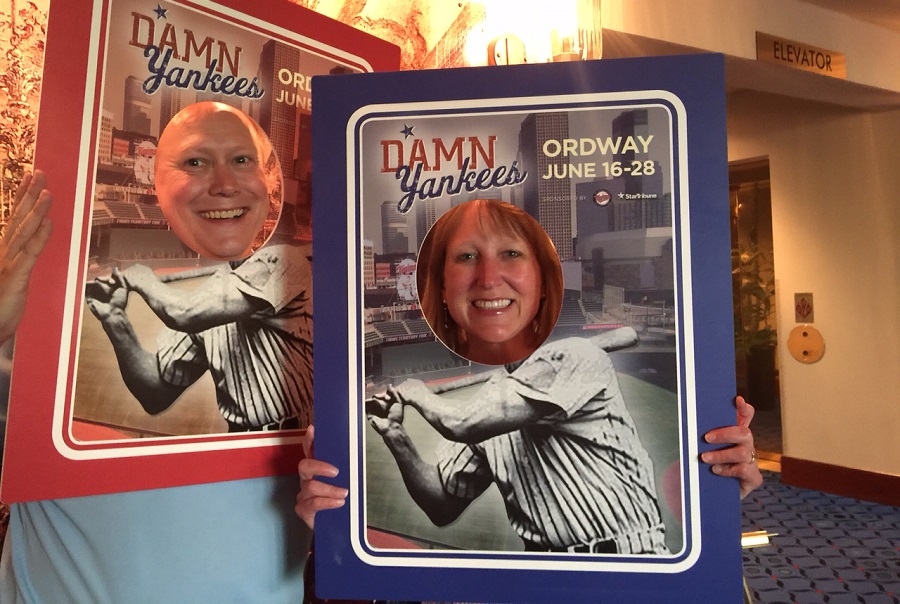 Clyde A really cool walk through of old Washington Senators memorabilia by Clyde Doepner, the Twins archivist. The display included several items from the time that the Damn Yankees was on Broadway (the mid-50s) including several letters from Presidents to Calvin Griffith, since it was tradition that the President threw out the first pitch on Opening Day. But the biggest treasure was Clyde. What a cool, passionate guy. Everything that was in that case was stuff that was saved by him when Calvin Griffith tried to throw out all his Senators stuff when he moved to the more cramped Metrodome. Did you know that the Twins are the only team that has a full-time historical archivist? Goodies Several clever touches, like baseball trivia before the show, a chance to get your selfie on a baseball card, and $2 hot dogs at concessions. The Show Finally, we watched a sold out Damn Yankees musical. I’m sure you can read better reviews than I can give. Me? It's baseball and a musical, so I’m a pretty easy sell. The show's goofy but delightful material was well done with performances ranging from solid to fantastic. The Ordway is clearly excited about this event, partly because I know they have a lot of big baseball fans on staff. That excitement shows through in the production and in all the stuff that surrounds it. Here are a few (pretty poor) pictures I snapped to give you a sense of the event. We’ll need to do something like this again. Here's the lobby overlooking the Summit Beer tasting that we didn't use. And here's the Summit Beer Guy.... ...who we obviously did use.
 -
On Friday, June 5th the Saints opened their second home stand at CHS Field. The Sioux Falls Canaries and Joplin Blasters visited St. Paul for three games apiece. Both teams were quickly sent packing by your number one team in the American Association. The Saints continued their amazing start to 2015, winning five of the six games.In the first series the Saints took two of three from the Canaries. They used a great diving catch by right fielder Mike Kvasnicka to end game one. Then a lights out start by Dustin Crenshaw took game two. The second win tied the team’s single season record for longest winning streak at ten. Next up were the Blasters who came to town in second place in the South Division. The Saints offense was clicking on all cylinders as they won two of the games by five runs each. With sweeping the series our boys of summer have now swept four of six series this season. Let that sink in. Four of six series. Wow. My MVP for the home stand is Dustin Crenshaw. Now I know what you’re thinking, how can a pitcher who only started one game get my MVP? Well, let me tell you about Crenshaw's Saturday night. He gave up a single in the first. Then induced a 6-4-3 double play to erase it. He gave up a one-out triple in the second. Then Willie Argo caught a fly ball in left field and gunned down the runner trying to tag from third for a 7-2 double play. After that, Crenshaw shut down the Canaries the rest of the way all by himself, retiring the final 22 batters in a row and leading the Saints to a 2-0 victory in only two hours and two minutes! To show how fast the game was, the average MLB game takes two hours and 54 minutes. Crenshaw's impressive line for the night: 9IP, 2H, 2K, 0BB, 88 pitches. Great game Dustin! No home stand recap would be complete without a little talk about the offensive side of the ball. Ian Gac and Angelo Songco once again led the way for the Saints. Songco smashed two home runs, had eight RBI, and hit .304. Meanwhile, Gac continued his torrid start to the season with five doubles, four RBI, and hitting .347. He also had at least one hit in each game of the series. Highlights from the week's entertainment included Friday night fireworks accompanied by Grateful Dead music. It was a really groovy mix, man. The colors and the music just blended too.... Whoa. Flashback. Sorry about that. During the game the Saints wore special tie-dyed jerseys that fans could bid on in a silent auction. All jerseys were signed by a player or coach after the game Bring-your-dog-to-the-park day was a hit like always. It is so much fun to see so many different breeds of dogs interacting with each other. There was everything from a gigantic Mastiff to a tiny Chihuahua. We decided for this home stand, and for the rest of the year, we were going to pick a new section to sit in for a couple of innings during each series. We figure this is a great way to meet new people and to experience the awesomeness of CHS Field from every angle. This time we got hooked on the third base line and left field. First, we sat in sec. 118 row 1. I must say first row seating at field level is a wonderful thing. You can really see the speed of the game. Next we sat on the drink rail next to the Beer Dabbler with a couple of new friends. This is one of the best views in the ballpark. You have the downtown skyline above the park one way and twenty one different craft beer taps to choose from the other way. Perfect. A new thing we learned about CHS Field is that you are not safe from foul balls just about anywhere in the park. That and I think we had a baseball magnet on our heads for a couple of games. First we had one land literally right between our seats. I protected Steph from it but in the process figured out that a phone is not the same as a glove. It's a long story, best told over a beer sometime. Luckily the phone still works. Kids, this is why you buy a good case. Next we had a couple more land within ten feet of us by the main gate in deep right field. Then we had one land on the roof above us, hit something, and come back down a few seconds later. It landed two seats down from me. I've never been closer than 10-15 rows from a foul ball before at any pro game. That week we had for four in two games. Once again tailgating was a big part of our weekend at the field. We had a great time with our normal crews and were even joined by Seigo Masubuchi and Sister Ros one evening at the Candy Lady's spot. On Saturday night we had the pleasure of chatting with Saints Manager George Tsamis and hitting coach Ole Sheldon at the 10th Inning Stretch. It was great seeing them in the lot again and talking baseball with them and good friends Kevin Luckow and Bill Tyler (10th Inning Stretch tailgating founders). Looking to keep the good vibes going, the team hit the road for seven games in seven days. The first four against the Sioux Falls Canaries and the last three versus the Winnipeg Goldeyes. The Saints proved it doesn't matter what country they’re in, the results are the same. They win. Taking three of four and two of three on this road trip, they have not lost a series all season. A stat worth mentioning from the trip is catcher Vinny DiFazio has an RBI in seven straight games and finished the last two games with four hits in each. At 22-4 I've run out of sports clichés to describe how good the team is playing. So I think I'll go with their playing supercalifragilisticexpialidocious! Yep, that about sums it up. The hottest team in baseball returns home for six straight starting Friday, June 19th, with the Saints taking on the the top two teams in the Central Division. The Gary Southshore Railcats (2nd) and the Sioux City Explorers (1st) visit CHS Field for what should be a great week of baseball. With rain in the forecast for a couple days this seems like a perfect time to fill you in on one on the best features of the new ballpark. The covered concourse stretching from first base to third base. You can still see the game while not getting wet. I think that takes away the "I'm not going. It's going to rain" excuse. So there you have it. Great baseball, not getting wet if it rains, and fun promotions once again. Click here for tickets, and we'll see you there. Go Saints! Train!!! Rain or shine the fun goes on for the Saints. 'Merica night (Saturday, June 20th), Replica Jersey night where the first 750 kids and 750 adults get the giveaway (Sunday, June 21st), and a visit from John Moe host of Wits for a night of comedy (Wednesday, June 24th) highlight the six day home stand. Get your tickets here! Click here to view the article
-
Tyler Jay signed with the Minnesota Twins prior to Wednesday's game. At a press conference introducing him to the local media, he talked a lot about how thrilled he was to start his professional career, get throwing again and -- I presume -- be very wealthy, as he signed for close to $4 million.Terry Ryan talked a little about the past process, including how Jay climbed up their draft board and how difficult it was to scout a college reliever since they can pitch in any game the team has. And Jay did a lot of pitching as a reliever, racking up more than 66 innings as he was often deployed as a traditional 'fireman,' used for several innings until he finished out the game. Two big questions surround the pick. The first regards the wisdom of drafting a college reliever with a top ten pick in the hopes of turning him into a starter. Ryan talked about what they liked, referring to the same traits we have heard before: He has good velocity, four good pitches, control and he's left-handed. But Jay gave some hints as to why he remained a reliever as he made his way through his college career. It sounds like it was mostly seniority. "Our Friday guy was a three-year starter," explained Jay. "We had Drasen [Johnson] who was a three-year starter. Then [John] Kravetz, who started all four years and then a midweek guy who ended up being drafted. All four-five of our starters ended up signing to play pro baseball. So you can't complain." That willingness to accept his role for the good of the team is something that Ryan clearly admired. "I think you call that unselfish and teamwork. And that’s one of the reasons -- probably more than just one of the reasons. We talk about makeup all the time. Usually the guys with makeup are the guys that that excel. And he seems to have that as part of his DNA." The second question is what his future role will be. Ryan made it clear that Jay will start the season in High-A and that he'll pitch out of the bullpen, mostly in one-inning stints. But given the chance to limit expectations for Jay helping the Twins later this year, Ryan chose not to. "Every guy that goes out you expect and you give them that little carrot there: 'Why don't you pitch your way out of that affiliate?' " said Ryan. "The next stop would be Chattanooga. But it's up to the player. We can't dictate a guy's progression. Ultimately, you've got to go down and produce and perform. Let's see what he does when he gets down there. But I've talked to him about that: 'If you want to prove that we have you at too low of a level, go out and show us on the mound.' We're not trying to hold people back, here." OK, but with 66 innings already on Jay's arm, how realistic is that? Is there an inning limit in mind? "We don't want to get too carried away with innings," replied Ryan. "I'm not going to give you a number. We're certainly going to monitor it. Because I know that I'm going to hear from you guys if I give you a number and he goes 1/3 over it. I'm going to keep it at that. We'll monitor his innings." Given the shortage of quality left-handed relievers in the upper levels of the Twins organization, so will we, Terry. So will we. Click here to view the article
-
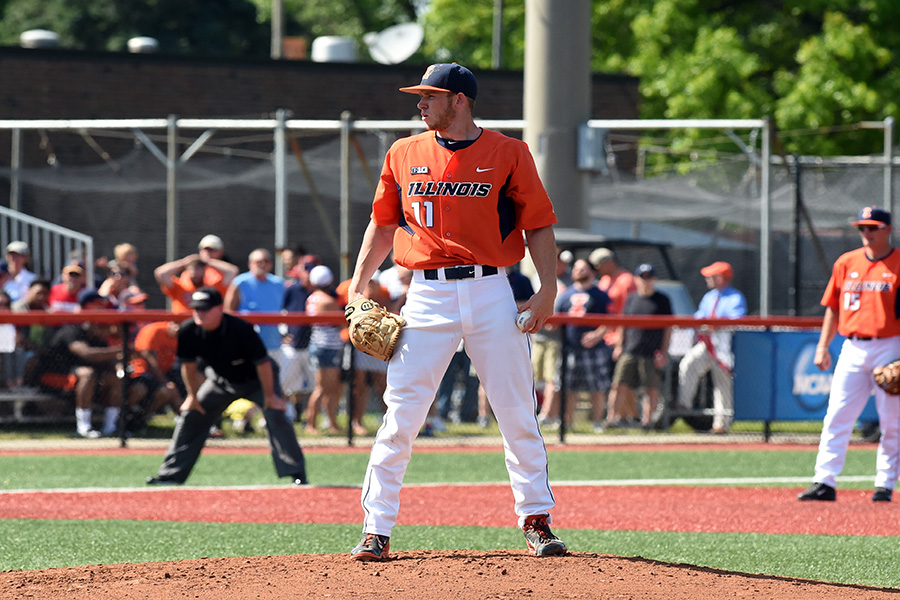 Terry Ryan talked a little about the past process, including how Jay climbed up their draft board and how difficult it was to scout a college reliever since they can pitch in any game the team has. And Jay did a lot of pitching as a reliever, racking up more than 66 innings as he was often deployed as a traditional 'fireman,' used for several innings until he finished out the game. Two big questions surround the pick. The first regards the wisdom of drafting a college reliever with a top ten pick in the hopes of turning him into a starter. Ryan talked about what they liked, referring to the same traits we have heard before: He has good velocity, four good pitches, control and he's left-handed. But Jay gave some hints as to why he remained a reliever as he made his way through his college career. It sounds like it was mostly seniority. "Our Friday guy was a three-year starter," explained Jay. "We had Drasen [Johnson] who was a three-year starter. Then [John] Kravetz, who started all four years and then a midweek guy who ended up being drafted. All four-five of our starters ended up signing to play pro baseball. So you can't complain." That willingness to accept his role for the good of the team is something that Ryan clearly admired. "I think you call that unselfish and teamwork. And that’s one of the reasons -- probably more than just one of the reasons. We talk about makeup all the time. Usually the guys with makeup are the guys that that excel. And he seems to have that as part of his DNA." The second question is what his future role will be. Ryan made it clear that Jay will start the season in High-A and that he'll pitch out of the bullpen, mostly in one-inning stints. But given the chance to limit expectations for Jay helping the Twins later this year, Ryan chose not to. "Every guy that goes out you expect and you give them that little carrot there: 'Why don't you pitch your way out of that affiliate?' " said Ryan. "The next stop would be Chattanooga. But it's up to the player. We can't dictate a guy's progression. Ultimately, you've got to go down and produce and perform. Let's see what he does when he gets down there. But I've talked to him about that: 'If you want to prove that we have you at too low of a level, go out and show us on the mound.' We're not trying to hold people back, here." OK, but with 66 innings already on Jay's arm, how realistic is that? Is there an inning limit in mind? "We don't want to get too carried away with innings," replied Ryan. "I'm not going to give you a number. We're certainly going to monitor it. Because I know that I'm going to hear from you guys if I give you a number and he goes 1/3 over it. I'm going to keep it at that. We'll monitor his innings." Given the shortage of quality left-handed relievers in the upper levels of the Twins organization, so will we, Terry. So will we.
 -
It is one of the paradoxes of sports media. We think because we have heard of a player it is because the organization has been pushing him to us. The opposite is true. The players with real promise are the most protected, and we are fascinated by them because the access to them is scarce, not because it is freely available. Byron Buxton had his debutante ball yesterday; he was presented to the outside world by the Minnesota Twins. Perhaps, because you have heard of Buxton since he was drafted second overall by the Twins in 2012, you think the Twins have been promoting him. The opposite is true.Buxton has mostly been kept out of the media's way. He was young. He was famous. He represented a tremendous amount of past investment and future hope. Many in the media were meeting him for the first time, at a pivotal moment of his career. And what strikes you at that moment isn't the big stuff - his speed, his potential, his quest for greatness. What strikes you at that moment is the small stuff, as you start to get a glimpse of the person behind the hype. "Shock went through me," said Buxton, talking about the moment he heard the news. It was not a moment he expected. He had been focusing on Double-A Chattanooga's playoff race. Suddenly, he found himself on his way to Texas for his first game, where he was joined by his parents, fiancé and son. That son provides a special incentive. "He don't have a clue what's going on right now," quipped Buxton. "But one day I'll be able to tell him what happened. And I gave him my first hit, so I'll be able to tell him what I did for him then. Hopefully he understands what's going on." You are struck by the people he finds close to him. That starts with family. "My parents just flew in, like, 30 minutes ago," said Buxton. "So they'll be here. My fiancé flew in last night. So they'll be here to my home debut." But you also get a sense of the people he trusts professionally. "[Chattanooga Manager Doug Mientkiewicz] just told me 'Don't change anything. Keep being the person I am. Stay humble. And come out here and play hard every day and give it all.'" You get a sense of someone who, despite all the distractions and excitement, needs to keep his attention focused on competing. Amid the clichés about relaxing and playing his game, Buxton wasn't afraid to talk about the level of pitching he's seen. "Quite a difference, especially off-speed breaking pitches. I'm not used to seeing such short breaking pitches as much as you did in Chattanooga. So I just got to get used to it and adjust to how they pitch me here." And you are struck by the small jolts that are maybe a little more personal. When asked about his jersey #25, Buxton says "Oh, yeah. I'm going to stick with that number. Me and [Twins Public Relations and Media Director] Dustin [Morse] actually picked that out. So I'm going to stick with it as long as I can." But less than five hours before his debut Buxton still hadn't faced his most important decision. "I actually haven't picked a walk up song yet," he admitted sheepishly. "I'm probably going to go around the clubhouse to see what other guys got before I decide to pick what I want." (The announcement came less than an hour later: Flashlight by Parliament, a funky #1 R&B hit from 1978.) In all, Buxton seemed to be the guy we had heard about confidentially - humble, confident, relaxed and focused. And most of all, ready. "I look at this as a start," he says. "I mean, I'm not really trying to come up here to get sent back down. I'm trying to come up here to stay in and try to help us win." Click here to view the article
-
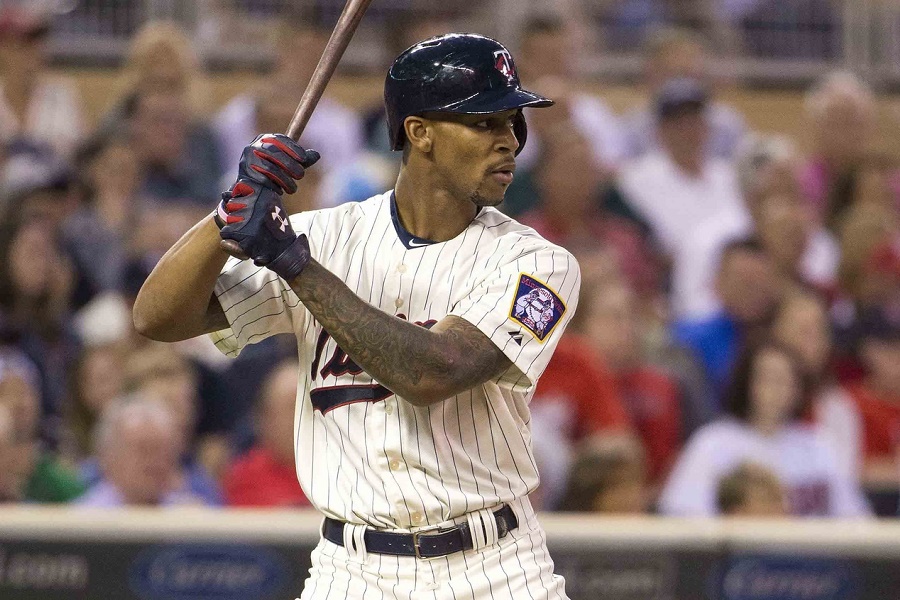 Buxton has mostly been kept out of the media's way. He was young. He was famous. He represented a tremendous amount of past investment and future hope. Many in the media were meeting him for the first time, at a pivotal moment of his career. And what strikes you at that moment isn't the big stuff - his speed, his potential, his quest for greatness. What strikes you at that moment is the small stuff, as you start to get a glimpse of the person behind the hype. "Shock went through me," said Buxton, talking about the moment he heard the news. It was not a moment he expected. He had been focusing on Double-A Chattanooga's playoff race. Suddenly, he found himself on his way to Texas for his first game, where he was joined by his parents, fiancé and son. That son provides a special incentive. "He don't have a clue what's going on right now," quipped Buxton. "But one day I'll be able to tell him what happened. And I gave him my first hit, so I'll be able to tell him what I did for him then. Hopefully he understands what's going on." You are struck by the people he finds close to him. That starts with family. "My parents just flew in, like, 30 minutes ago," said Buxton. "So they'll be here. My fiancé flew in last night. So they'll be here to my home debut." But you also get a sense of the people he trusts professionally. "[Chattanooga Manager Doug Mientkiewicz] just told me 'Don't change anything. Keep being the person I am. Stay humble. And come out here and play hard every day and give it all.'" You get a sense of someone who, despite all the distractions and excitement, needs to keep his attention focused on competing. Amid the clichés about relaxing and playing his game, Buxton wasn't afraid to talk about the level of pitching he's seen. "Quite a difference, especially off-speed breaking pitches. I'm not used to seeing such short breaking pitches as much as you did in Chattanooga. So I just got to get used to it and adjust to how they pitch me here." And you are struck by the small jolts that are maybe a little more personal. When asked about his jersey #25, Buxton says "Oh, yeah. I'm going to stick with that number. Me and [Twins Public Relations and Media Director] Dustin [Morse] actually picked that out. So I'm going to stick with it as long as I can." But less than five hours before his debut Buxton still hadn't faced his most important decision. "I actually haven't picked a walk up song yet," he admitted sheepishly. "I'm probably going to go around the clubhouse to see what other guys got before I decide to pick what I want." (The announcement came less than an hour later: Flashlight by Parliament, a funky #1 R&B hit from 1978.) In all, Buxton seemed to be the guy we had heard about confidentially - humble, confident, relaxed and focused. And most of all, ready. "I look at this as a start," he says. "I mean, I'm not really trying to come up here to get sent back down. I'm trying to come up here to stay in and try to help us win."
 -
Update: Sorry, we're sold out! And we tried to get more tickets, but the Saints are sold out too! We'll see those lucky people who got tickets on July 3rd. Here again are the details: Cost was just $20.It includes an outfield reserved ticket and a catered picnic starting at 5:30 inside the new Saints Ballpark before the game.Tickets will be available at Will Call.There will also be door prizes, including two front row tickets to a Twins game for one lucky attendee.We are working on also getting guided tours of the ballpark. Because It's Baseball. And You're An American. If you have been to our Winter Meltdown or to our Touch ‘Em All Pub Crawl, you know how legendary Twins Daily parties can be. This could top them. We’re going to celebrate our country’s birthday with your BFFs: Beer, Food and Fireworks. On Friday, July 3rd, we’ll check out the Saints brand new ballpark with Twins Daily and other MinnCentric writers that includes a Saints game, a pregame picnic and postgame fireworks. The Saints are playing in a brand new ballpark in downtown St. Paul, that you need to see. Tailgating is part of the Saints tradition, but you'll be tailgating IN THE BALLPARK with a catered picnic. There is also a local craft brew stand steps away with something like 20 taps. And the night ends with a fireworks display. The good news is that we’ve swung a deal to get a limited amount of tickets for both the food and the reserved seat for just $25 apiece. The better news is that we have an even more limited batch available for just $20 apiece. The bad news is that stupid word “limited”; you’ll want to act FAST. I can’t imagine we don’t sell out of these. Details: Cost is just $20, but only until our initial batch sells out. Price will go up to $25 next week and even those are limited.It includes an outfield reserved ticket and a catered picnic starting at 5:30 inside the new Saints Ballpark before the game.Tickets will be available at Will Call.There will also be door prizes, including two front row tickets to a Twins game for one lucky attendee.We are working on also getting guided tours of the ballpark.This is going to be a family friendly event, and for those prices, you can bring the kids or neighbors or friends or BFFs. There is no better way to start out the Fourth of July weekend than with baseball – it’s your darn near patriotic duty to attend this. So get your ticket now at this link. Click here to view the article
-
Article: Twins Daily Contest: What Would You Give?
John Bonnes replied to John Bonnes's topic in Twins Daily Front Page News
I'm going to think about this overnight, but my initial reaction to it is this.... - pet is too far. - there are absolutely some people I know that I would be willing to un-know if it meant a championship. - Twins Daily is too much. I'm sure it's not for some of you... - I would not be willing to give up writing. - I would not be willing to give up baseball. - I would not be willing to give up Target Field - but I might for a temporary ban, like five years. - I would sign up for 9 90-loss seasons for one magical one. -
What would you give up to win it all? What Faustian deal would you strike? That’s my question for the Twins Daily community today. And I get to play the Devil.By now, you know that in Damn Yankees (which starts tonight at the Ordway), the protagonist offers up his soul to turn into the hero the Senators need to win the pennant. Ultimately, he battles to hang onto both and especially his marriage. That’s all crazy territory, but what if…. We’ll start small, what if you had to give up both Byron Buxton and Miguel Sano? You don’t get to watch their careers for the next decade, but you get a special year this year. Would you give up a decade of playoff appearances with a chance to win the World Series for nine 90-loss seasons but a single year in which it was guaranteed? Would you trade that one magical year, right now, if it meant you would never see another World Series championship? Or a championship for any of your other teams? Those seem pragmatic, so let’s go a little further with baseball. Would you trade a championship for Twins Daily? Would you trade it for no more sports talk radio? Would you trade a World Series if it meant the Twins had to go back to playing in the Metrodome? Never ever attending another game at Target Field? Never being able to watch a Twins game, period? Would you give up your team for that one glorious season? Would you be willing to give up baseball completely? Let’s leave the realm of sports. How much would you pay? (How much have you already paid?) I want a cash figure. Would you give up your car for a year? What other sacrifices would you be willing to make? Would you give up your favorite food? Beer? Let’s get closer to a Faustian contract. Where would you be willing to live for the thrill of a championship? Which of your friends or coworkers would you be willing to never see again (not have them hurt, just not be able to contact)? Would you give up your pet? What do you get in return? Do you get to go to the winning game with your kid? Or listen to it while fishing with your dad? Do you get a night again with your deceased grandma, who listened to games with you as a kid? Is she young again? Are you? Or are you the ballboy or girl, on the field, jumping up and down deliriously? Take your stab below in the comments. The top handful of answers will get a free Twins Daily pint glass from one of the Winter Meltdown events, with me playing the part of the Devil as judge. Let’s see just what you can come up with. Click here to view the article
-
 By now, you know that in Damn Yankees (which starts tonight at the Ordway), the protagonist offers up his soul to turn into the hero the Senators need to win the pennant. Ultimately, he battles to hang onto both and especially his marriage. That’s all crazy territory, but what if…. We’ll start small, what if you had to give up both Byron Buxton and Miguel Sano? You don’t get to watch their careers for the next decade, but you get a special year this year. Would you give up a decade of playoff appearances with a chance to win the World Series for nine 90-loss seasons but a single year in which it was guaranteed? Would you trade that one magical year, right now, if it meant you would never see another World Series championship? Or a championship for any of your other teams? Those seem pragmatic, so let’s go a little further with baseball. Would you trade a championship for Twins Daily? Would you trade it for no more sports talk radio? Would you trade a World Series if it meant the Twins had to go back to playing in the Metrodome? Never ever attending another game at Target Field? Never being able to watch a Twins game, period? Would you give up your team for that one glorious season? Would you be willing to give up baseball completely? Let’s leave the realm of sports. How much would you pay? (How much have you already paid?) I want a cash figure. Would you give up your car for a year? What other sacrifices would you be willing to make? Would you give up your favorite food? Beer? Let’s get closer to a Faustian contract. Where would you be willing to live for the thrill of a championship? Which of your friends or coworkers would you be willing to never see again (not have them hurt, just not be able to contact)? Would you give up your pet? What do you get in return? Do you get to go to the winning game with your kid? Or listen to it while fishing with your dad? Do you get a night again with your deceased grandma, who listened to games with you as a kid? Is she young again? Are you? Or are you the ballboy or girl, on the field, jumping up and down deliriously? Take your stab below in the comments. The top handful of answers will get a free Twins Daily pint glass from one of the Winter Meltdown events, with me playing the part of the Devil as judge. Let’s see just what you can come up with.
 -
Today is your last day to buy one of the half dozen or so tickets left for the exclusive Twins Daily Date Night this Thursday July 18th. We’ll watch Damn Yankees at the Ordway, with lots of other goodies. Our schedule:5:30 – Doors Open and Summit Beer Tasting starts on 2nd floor. (Your tickets will be at Will Call.) 6:00 – 7:00 – Meet & greet cocktails at the Securian Sky Lobby with John Bonnes and Parker Hageman. 7:00 – Tour of Twins/Yankees memorabilia with Twins Daily writers 7:30 – Damn Yankees musical begins. Damn Yankees is a musical about a Washington Senators (who eventually became the Twins) fan who sells his soul to the Devil to beat the Yankees. It’s filled with iconic songs like “You Gotta Have Heart” and “Whatever Lola Wants” and we'll be seeing it on Press Night, which means your spouse’s friends will be reading reviews the next day about the performance you have already seen. Tickets are $99 for a pair, which is a special price we have secured due to Twins Daily’s support of this show. It also includes the Summit Beer Tasting and the Securian Sky Lobby reception. Tickets will absolutely be gone by tomorrow, so get your ticket today. It should be a night that you and your date will remember many years from now. Buy your tickets here. Click here to view the article
-
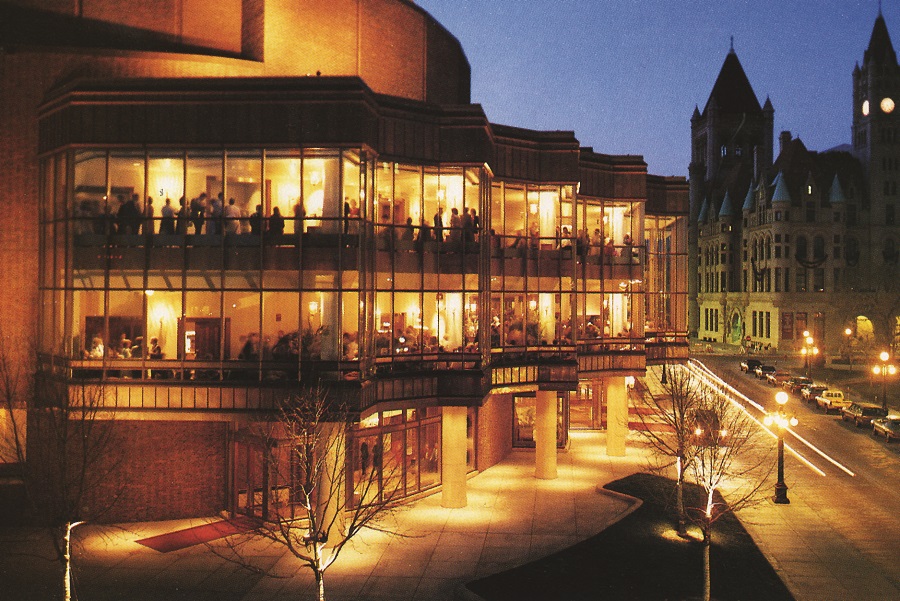 5:30 – Doors Open and Summit Beer Tasting starts on 2nd floor. (Your tickets will be at Will Call.) 6:00 – 7:00 – Meet & greet cocktails at the Securian Sky Lobby with John Bonnes and Parker Hageman. 7:00 – Tour of Twins/Yankees memorabilia with Twins Daily writers 7:30 – Damn Yankees musical begins. Damn Yankees is a musical about a Washington Senators (who eventually became the Twins) fan who sells his soul to the Devil to beat the Yankees. It’s filled with iconic songs like “You Gotta Have Heart” and “Whatever Lola Wants” and we'll be seeing it on Press Night, which means your spouse’s friends will be reading reviews the next day about the performance you have already seen. Tickets are $99 for a pair, which is a special price we have secured due to Twins Daily’s support of this show. It also includes the Summit Beer Tasting and the Securian Sky Lobby reception. Tickets will absolutely be gone by tomorrow, so get your ticket today. It should be a night that you and your date will remember many years from now. Buy your tickets here.
 -
Twins vs. Yankees (Part 3): A Twin Defects To The Damn Yankees
John Bonnes posted an article in Twins
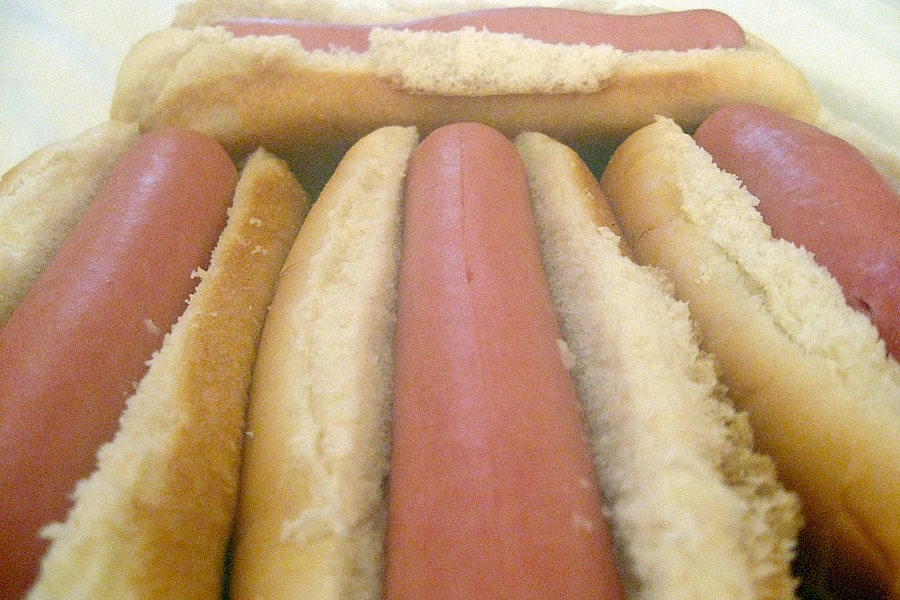 The Yankees, meanwhile struggled for a decade. They returned to relevance in the late 1970s thanks to a new economic development in Major League Baseball: free agency. Fueled by free agents like Catfish Hunter and Reggie Jackson, they returned to the postseason under argumentative manager, Billy Martin, winning two World Series. However, their window was shutting in the early 80s, just as the core of the next competitive Twins team was coming together. The Twins also won two World Series over the next decade - just in time to fade for another Yankees dynasty. That dynasty began May 29, 1995 when a rookie shortstop named Derek Jeter was called up to play with the Yankees. He joined a bumper crop of other homegrown talent such as Jorge Posada, Bernie Williams and Mariano Rivera to form the core of championship teams for almost two decades. The Yankees made the playoffs for thirteen straight years and seventeen of the next eighteen seasons. From 1996 through 2000, they won the World Series four times in five years and one more time the next decade. The Twins, meanwhile, had lost their mojo when Kirby Pucket lost the vision in his right eye. The losing became too much for star second baseman Chuck Knoblauch. Despite having recently signed a five-year, $30 million deal with the Twins, Knoblauch demanded a trade to a more competitive team. Terry Ryan accommodated him, sending him to the Yankees for a package of four prospects. Knoblauch led off for the Yankees and helped them win three of those championships from 1998-2000. Soon after, the Twins started their own return to relevance, helped in part by the package of prospects that they had received from the Yankees, which included shortstop Cristian Guzman and pitcher Eric Milton. Along with a their own homegrown talent such as Doug Mientiewicz, Corey Koskie, Jacque Jones, AJ Pierzynski and Torii Hunter, they stormed to the top of the AL Central in 2001. Fans started returning to the Metrodome, especially on nights where they Twins had deep discounts for students or sold hot dogs for $1. Ever since he had left the Twins, Knoblauch had endured boos in the Metrodome. However, late in his Yankees career, he was also enduring a case of "the yips" - he suddenly couldn't throw accurately to first base from his position at second base. Still valuable as a leadoff presence for the Yankees, Knoblauch was moved to left field in 2001. All those ingredients came together on May 2nd of 2001 to put Knoblauch in the proximity of the young, raucous Metrodome party crowd, loaded with beer and dollar dogs. In the fifth inning, Knoblauch was greeted with a handful hot dogs thrown from the bleachers but all hell broke loose in the sixth. Dogs, plastic beer bottles and coins rained down on left field towards the Damn Yankee. Yankees coach Joe Torre responded by pulling his team from the field. The Twins responded by having legendary public announcer Bob Casey scold the fans. "If this trouble does not stop in left field, this game will be forfeited and the Yankees will win," chided Casey. "NOW QUIT THAT." The possibility of forfeiting a game to the Damn Yankees helped to restore sanity. So did Twins manager Tom Kelley walking Knoblauch out to left field. During the game, 40 fans were evicted, and although there was a small recurrence in the 8th inning, order was restored. The "Knoblauch Hot Dog Game" coincided with the end of the Yankees series of World Championships, although they would continue to challenge for that title annually. It also coincided with the rise of the Twins after a decade's worth of dismal results, and ushered in a decade of division championships. But it also may have jinxed that next decade, as the Damn Yankees became the bane of the Twins - and especially new manager Ron Gardenhire's - existence. Next: A New Manager And The Damn Yankees Previously: Twins vs Yankees (Part 1): The Rise Of The Damn Yankees Twins vs Yankees (Part 2): How Killebrew Killed The Damn Yankees
 -
Following Harmon Killebrew's historic home run versus the Yankees in 1965, the Twins competed for postseason spots annually for the next half dozen years. But they didn't return to the postseason until 1969 when they won the AL West under new and controversial manager Billy Martin, a former Yankee. Martin only managed the Twins that one year, as he was fired after several internal disagreements with the team and organization that included once incident in which he punched out his own starting pitcher.The Yankees, meanwhile struggled for a decade. They returned to relevance in the late 1970s thanks to a new economic development in Major League Baseball: free agency. Fueled by free agents like Catfish Hunter and Reggie Jackson, they returned to the postseason under argumentative manager, Billy Martin, winning two World Series. However, their window was shutting in the early 80s, just as the core of the next competitive Twins team was coming together. The Twins also won two World Series over the next decade - just in time to fade for another Yankees dynasty. That dynasty began May 29, 1995 when a rookie shortstop named Derek Jeter was called up to play with the Yankees. He joined a bumper crop of other homegrown talent such as Jorge Posada, Bernie Williams and Mariano Rivera to form the core of championship teams for almost two decades. The Yankees made the playoffs for thirteen straight years and seventeen of the next eighteen seasons. From 1996 through 2000, they won the World Series four times in five years and one more time the next decade. The Twins, meanwhile, had lost their mojo when Kirby Pucket lost the vision in his right eye. The losing became too much for star second baseman Chuck Knoblauch. Despite having recently signed a five-year, $30 million deal with the Twins, Knoblauch demanded a trade to a more competitive team. Terry Ryan accommodated him, sending him to the Yankees for a package of four prospects. Knoblauch led off for the Yankees and helped them win three of those championships from 1998-2000. Soon after, the Twins started their own return to relevance, helped in part by the package of prospects that they had received from the Yankees, which included shortstop Cristian Guzman and pitcher Eric Milton. Along with a their own homegrown talent such as Doug Mientiewicz, Corey Koskie, Jacque Jones, AJ Pierzynski and Torii Hunter, they stormed to the top of the AL Central in 2001. Fans started returning to the Metrodome, especially on nights where they Twins had deep discounts for students or sold hot dogs for $1. Ever since he had left the Twins, Knoblauch had endured boos in the Metrodome. However, late in his Yankees career, he was also enduring a case of "the yips" - he suddenly couldn't throw accurately to first base from his position at second base. Still valuable as a leadoff presence for the Yankees, Knoblauch was moved to left field in 2001. All those ingredients came together on May 2nd of 2001 to put Knoblauch in the proximity of the young, raucous Metrodome party crowd, loaded with beer and dollar dogs. In the fifth inning, Knoblauch was greeted with a handful hot dogs thrown from the bleachers but all hell broke loose in the sixth. Dogs, plastic beer bottles and coins rained down on left field towards the Damn Yankee. Yankees coach Joe Torre responded by pulling his team from the field. The Twins responded by having legendary public announcer Bob Casey scold the fans. "If this trouble does not stop in left field, this game will be forfeited and the Yankees will win," chided Casey. "NOW QUIT THAT." The possibility of forfeiting a game to the Damn Yankees helped to restore sanity. So did Twins manager Tom Kelley walking Knoblauch out to left field. During the game, 40 fans were evicted, and although there was a small recurrence in the 8th inning, order was restored. The "Knoblauch Hot Dog Game" coincided with the end of the Yankees series of World Championships, although they would continue to challenge for that title annually. It also coincided with the rise of the Twins after a decade's worth of dismal results, and ushered in a decade of division championships. But it also may have jinxed that next decade, as the Damn Yankees became the bane of the Twins - and especially new manager Ron Gardenhire's - existence. Next: A New Manager And The Damn Yankees Previously: Twins vs Yankees (Part 1): The Rise Of The Damn Yankees Twins vs Yankees (Part 2): How Killebrew Killed The Damn Yankees Click here to view the article
-
Aaron and John talk about BYRON BUXTON (and some other stuff). You can listen by downloading us from iTunes, Stitcher or find it at GleemanAndTheGeek.com. Or just click the Play button below. Click here to view the article
-
 http://traffic.libsyn.com/gleemangeek/GATG_06142015_final.mp3
 -
Article: MINNESOTA TWINS PROMOTE BYRON BUXTON!
John Bonnes replied to John Bonnes's topic in Twins Daily Front Page News
I wonder if this means Hicks is hurt bad enough to go on the DL. I also wonder if it means he got hurt sometime between last night's game and today's game. The Twins seemed surprised by the injury. -
Article: MINNESOTA TWINS PROMOTE BYRON BUXTON!
John Bonnes replied to John Bonnes's topic in Twins Daily Front Page News
I'm really excited by this. But boy, the timing of this is weird. When was something like this announced during a game? Was it leaked and they needed to respond? First I saw of it was the Twins official announcement. -
I'll beg you to excuse the caps. Seems appropriate. In the middle of today's game versus the Texas Rangers, the Minnesota Twins announced that they are promoting Byron Buxton from AA-Chattanooga to join the team Sunday in Texas. They have not announced a corresponding move, but Buxton won’t be here as insurance or to sit on the bench. He will almost assuredly be handed a full time role, likely in center field, so the corresponding roster move will likely involve Aaron Hicks, who was a last minute scratch from the lineup before today’s game due to a sore elbow.Buxton was the consensus #1 rated prospect in all of baseball entering the 2014 season, but suffered wrist injuries and a concussion that cost him almost all of the 2014 season. Maybe more impressively, he was still ranked one of the top prospects in all of baseball entering the 2015 season. Even after the lost year, he’s just 21 years old. He started the season slowly at AA-Chattanooga; in his first 12 games he hit just .180 with 14 strikeouts. But since then, he has hit .313, got on base at a .380 clip and slugged .536(!). His speed is fast approaching the status of "legendary," fueled by videos like this, where he beat out an infield single on a routine, cleanly-fielded, ground ball last night. Click here to view the article
-
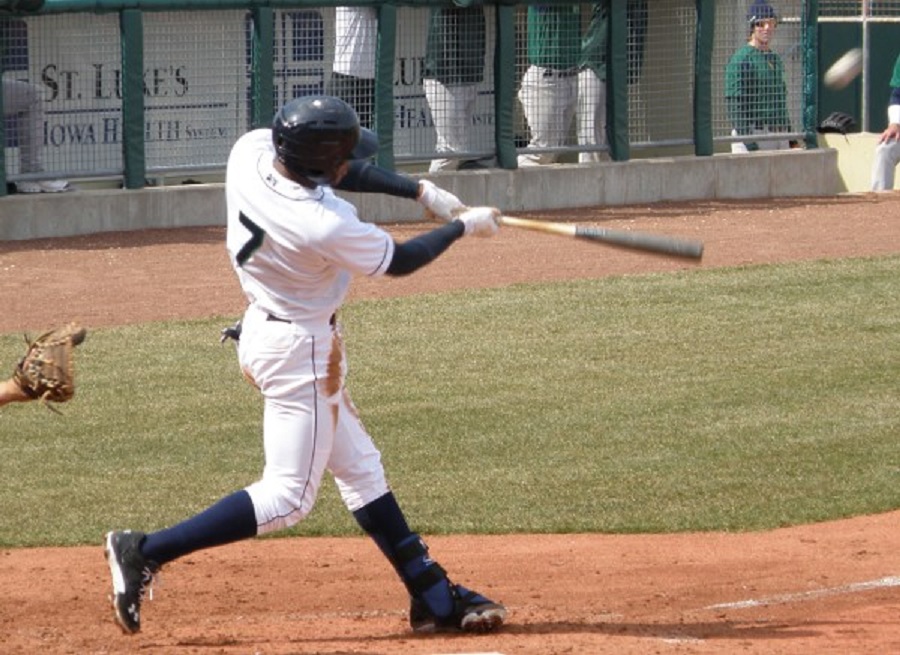 Buxton was the consensus #1 rated prospect in all of baseball entering the 2014 season, but suffered wrist injuries and a concussion that cost him almost all of the 2014 season. Maybe more impressively, he was still ranked one of the top prospects in all of baseball entering the 2015 season. Even after the lost year, he’s just 21 years old. He started the season slowly at AA-Chattanooga; in his first 12 games he hit just .180 with 14 strikeouts. But since then, he has hit .313, got on base at a .380 clip and slugged .536(!). His speed is fast approaching the status of "legendary," fueled by videos like this, where he beat out an infield single on a routine, cleanly-fielded, ground ball last night.
 -
From the moment Tim Stauffer took the mound in spring training, Twins fans (and probably the Twins) have been concerned and wondering what is wrong with him. The concern stopped last night. The wondering - not so much.The Twins announced they had designated Stauffer for assignment after Wednesday night's loss to the Royals. The move was inevitable due to his struggles in the bullpen throughout the year. Stauffer was rocked in his first spring training outing and never really regained any credibility or velocity. His $2.2M signing (plus quite a bit more in incentives) was logical enough if one looked at his numbers as a reliever: 57K in 56.1 IP with 19 BB. Critics might point out that his numbers were also considerably better in spacious Petco Park, and that's true. But Target Field can hide some flaws, too, and a comparison to Glen Perkins did not seem outlandish at the time of his signing. Until, of course, his velocity and strikeout numbers fell off a cliff. For the Twins this year, that 1:1 ratio for strikeouts and innings pitched fell to 6:15 - with more walks than strikeouts. That suggests something was wrong. He acquiesced to a month on the disabled list, but came back to the majors after having almost no success in AAA-Rochester, despite having additional time he could spend in AAA. His return went about as well as one would think of a pitcher who has shown zero credibility as a reliever. He got a single out in his first outing. Was shelled in his second. His next three he gave up hits in short outings, but nothing disastrous. And then, after not pitching for three days AND having an off-day the next day, he was replaced with (a far more deserving) Michael Tonkin. So what happened? Your guess is as good as mine. It's not like the Twins bullpen is in IMMEDIATE need of help; the whole bullpen other than mop-up guy JR Graham had Wednesday night off and Thursday is an off-day. On Friday, most of the bullpen should be fresh. And Stauffer should be at the top of that fresh list. The Twins have used Stauffer in extremely low leverage situations all year, put him on the disabled list for a very dubious injury, recalled him long before they needed to and then put him back into low-leverage situations the rest of the year. Instead, the Twins are moving to Tonkin. They have been yo-yo-ing reliever Michael Tonkin between AAA and the majors all season, despite his superior performances. So if you're looking for good news, you have it. If you're looking for a good explanation, I'm afraid I'm coming up short. The wondering is going to need to continue. Click here to view the article
-
Stauffer DFA'd. Tonkin Recalled. We Don't Know What We Don't Know
John Bonnes posted an article in Twins
 The Twins announced they had designated Stauffer for assignment after Wednesday night's loss to the Royals. The move was inevitable due to his struggles in the bullpen throughout the year. Stauffer was rocked in his first spring training outing and never really regained any credibility or velocity. His $2.2M signing (plus quite a bit more in incentives) was logical enough if one looked at his numbers as a reliever: 57K in 56.1 IP with 19 BB. Critics might point out that his numbers were also considerably better in spacious Petco Park, and that's true. But Target Field can hide some flaws, too, and a comparison to Glen Perkins did not seem outlandish at the time of his signing. Until, of course, his velocity and strikeout numbers fell off a cliff. For the Twins this year, that 1:1 ratio for strikeouts and innings pitched fell to 6:15 - with more walks than strikeouts. That suggests something was wrong. He acquiesced to a month on the disabled list, but came back to the majors after having almost no success in AAA-Rochester, despite having additional time he could spend in AAA. His return went about as well as one would think of a pitcher who has shown zero credibility as a reliever. He got a single out in his first outing. Was shelled in his second. His next three he gave up hits in short outings, but nothing disastrous. And then, after not pitching for three days AND having an off-day the next day, he was replaced with (a far more deserving) Michael Tonkin. So what happened? Your guess is as good as mine. It's not like the Twins bullpen is in IMMEDIATE need of help; the whole bullpen other than mop-up guy JR Graham had Wednesday night off and Thursday is an off-day. On Friday, most of the bullpen should be fresh. And Stauffer should be at the top of that fresh list. The Twins have used Stauffer in extremely low leverage situations all year, put him on the disabled list for a very dubious injury, recalled him long before they needed to and then put him back into low-leverage situations the rest of the year. Instead, the Twins are moving to Tonkin. They have been yo-yo-ing reliever Michael Tonkin between AAA and the majors all season, despite his superior performances. So if you're looking for good news, you have it. If you're looking for a good explanation, I'm afraid I'm coming up short. The wondering is going to need to continue.
 -
Aaron and John have a special midweek podcast-only episode to discuss the Twins 2015 MLB draft picks, Aaron's experience with a Casper mattress and answer a few mailbag questions. You can listen by downloading us from iTunes, Stitcher or find it at GleemanAndTheGeek.com. Or just click the Play button below. Click here to view the article
-
 http://traffic.libsyn.com/gleemangeek/Ep_197_Midweek_Draft_Spectacular.mp3



