Jump to content
Twins Daily
  • Create Account

John Bonnes

Site Manager
  • Posts

    6,757
  • Joined

  • Last visited

  • Days Won

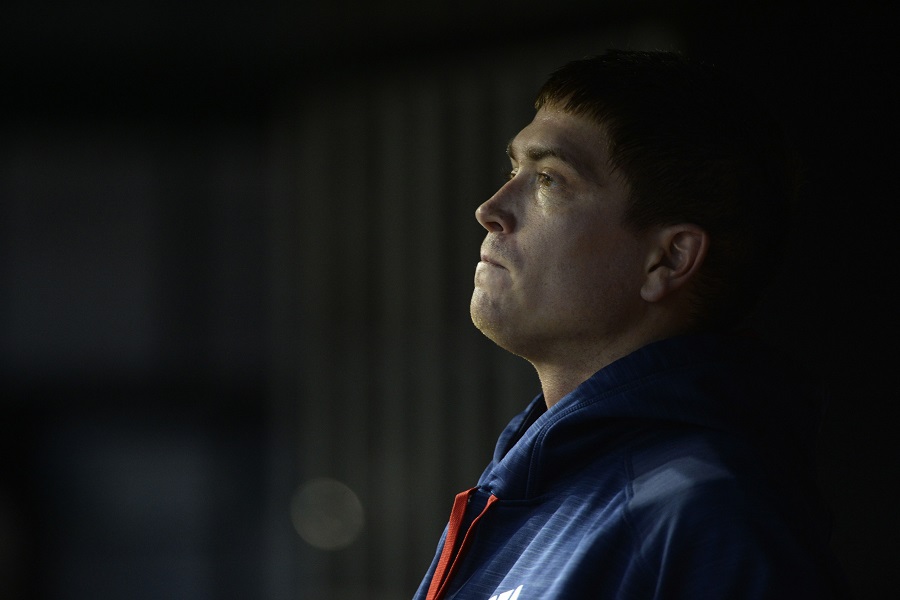
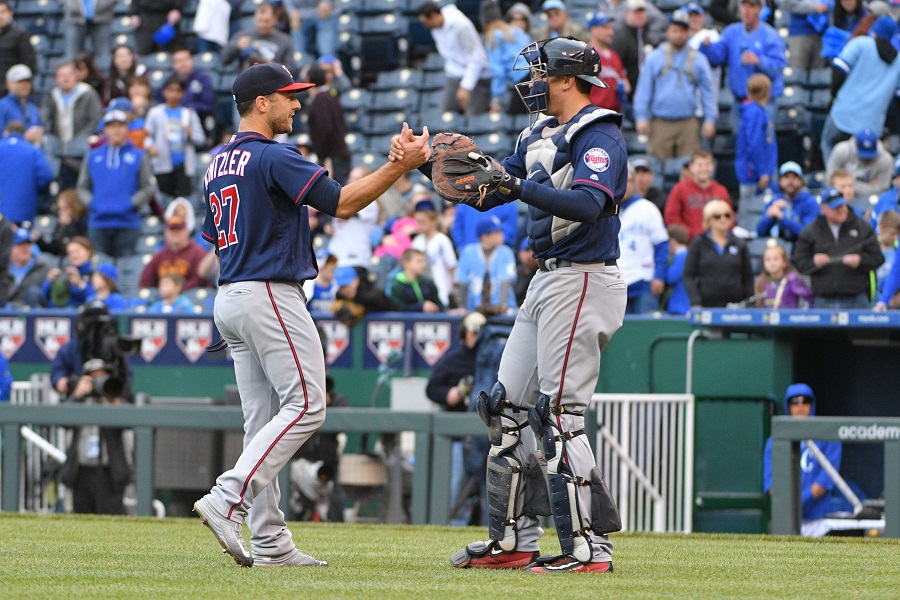
    4

 Content Type 

Profiles

News

Minnesota Twins Videos

2026 Minnesota Twins Top Prospects Ranking

2022 Minnesota Twins Draft Picks

Minnesota Twins Free Agent & Trade Rumors, Notes, & Tidbits

Guides & Resources

2023 Minnesota Twins Draft Picks

The Minnesota Twins Players Project

2024 Minnesota Twins Draft Picks

2025 Minnesota Twins Draft Pick Tracker

2026 Minnesota Twins Draft Pick Tracker

Forums

Blogs

Events

Store

Downloads

Gallery

Everything posted by John Bonnes

  1. I'd lean toward putting him back into a starting role as soon as possible. It's far too early to be giving up on him as a starter. His performance last year was ... odd. A 1000+ OPS against right-handed hitters? If, by next year, it looks like starting pitching isn't working out, then bullpen. This year, he still has options, so the Twins can let him get back up to speed in AAA. You move a guy to the bullpen when you must, either for his sake or for the organization's, and not before.
  2. Aaron tells me tickets are almost gone for this event and sales are cutting off soon! Join the TD and BP gang at a Twins game AND hear live from Twins GM Thad Levine right after the trade deadline! Baseball Prospectus is coming to Minneapolis! You're invited to join them and members of the Twins Daily community for a pregame Q&A with Twins GM Thad Levine, a meet-and-greet with Baseball Prospectus writers and then watch a Twins game with the whole gang. And tickets are on sale right now! Here are the details and everything that is included: The event is Saturday, August 5th. The game is at 6:05 but everyone will gather at 3:00 inside Target Field for the meet-and-greet and Q&A sessions.The Q&A session will be with members of the Minnesota Twins front office, including General Manager Thad Levine, followed by one with BP staff members, including editor (and Gleeman and the Geek host) Aaron Gleeman.Twins Daily members Parker Hageman and John Bonnes will also be part of the panel, and we hope we can get the whole gang there to chat Twins before and during the game.The "during the game" part means you also get a ticket to the Twins game that night in the right field grandstand.You'll also get a special coupon for $15 to be used toward a new Baseball Prospectus Premium or Super Premium subscription or your next Premium or Super Premium renewal.Finally, bring your kids because they qualify for a free back-to-school themed giveaway.The cost for everything - the ticket to the game, the $15 coupon plus the special event beforehand - is just $45. They went on sale at BP a week or so ago, so they're starting to run short, but they still have some available for the Twins Daily community, so I suggest you go grab them this week. The event is likely to sell out, and sales will need to be cut off soon regardless. There is no way to get these at the door, so this is your chance! Grab them here! Two of your favorite sites are coming together to celebrate the Twins at Target Field. How could you not be there? Click here to view the article
  3. Aaron and John, courtesy of the Minnesota Corn Growers, console each other about Byron Buxton, wonder why Twins fans can't appreciate Miguel Sano, try Chef Jeff's Duck Pastrami at the Iron Door Pub, raise eyebrows at the Twins pitching (especially Phil Hughes), remind you to hang out with them and Thad Levine, detail some (not so) minor league injuries and rudely interrupt Bianca's date. You can listen by downloading us from iTunes, Stitcher, or GleemanAndTheGeek.com. Or just click this link.http://traffic.libsy...3?dest-id=74590 Click here to view the article

  4. http://traffic.libsyn.com/gleemangeek/Episode_305_Hey_Girl.mp3?dest-id=74590
  5. It kind of blows my mind that this could happen. Official scorers calls are already the cause of so much (mostly faux) outrage. Can you imagine if it meant a team like Venezuela missed the WBC playoffs? Holy cow. It also is amazing to me that Mexico didn't advance because they didn't get one out before a walkoff hit. I had no idea.
  6. I’ve often pointed out that official scorers affect only statistics, not the outcome of a game. However, recently official scorers were put in a position in which they could affect the outcome of the World Baseball Classic, when earned runs were used as a tiebreaker in deciding which team moved on to the next round. In the first two rounds of the World Baseball Classic, two teams advance to the next round. In the event of a tie for second, a tiebreaker game is played. However - with four teams playing round robin - the only tie for second place has to be a three-way tie. So a tiebreaker procedure is used to either anoint one team to move on and have the other two play it off (if the tied teams are 2-1) or to eliminate a team and have the other two play (if the tied teams are 1-2).The latter is what happened in Jalisco, Mexico. I was the official scorer. My wife, Brenda Himrich, made the press box announcements in Spanish. She was in the modified press box in the upper deck while I was in a room at the top of the first deck. I’d tell her my scoring decision via walkie-talkie, and she announced it to the press in Spanish. Brenda is obviously a lot smarter than I am. Not only can she speak Spanish, she was up on the tiebreaker procedures more than I was. As we walked into the stadium on Sunday, the final day of scheduled games, she told me that earned runs could be used as a criteria for the tiebreaker. “No way,” I thought, but it was “Way.” I was glad I wasn’t aware of that over the first three days. Official scorers try to ignore situations in which their call could have a bigger impact than just a player’s batting average (a hitting streak, no-hitter, league leadership, etc.). It’s hard to ignore these things sometimes. But for me, my ignorance over the first four games served the same purpose. At least earned runs weren’t the first step in the tiebreaker. The first was runs allowed per number of innings (including partial innings) played in the field. The runs allowed would be only in games against the other teams involved in the tiebreaker. I liked that it included innings in the field; otherwise, the team batting last more often than another team had was at a disadvantage. The next step was earned runs allowed per number of innings in the field. The next step was team batting average. If there were somehow a tie after this, the standings would be determined by the drawing of lots. In the first game on Sunday, Puerto Rico beat Italy to go 3-0. If Mexico beat Venezuela in the second game, the tiebreaker would have to be used to eliminate one of the teams. I calculated the situation at that point, which the MLB public-relations rep took in case it was needed. Here was the situation: Download attachment: stew 2017-04-13 graph 1.jpg It looked bad for Italy. Even if Venezuela lost to Mexico, Italy would lose out if Venezuela gave up 9 or fewer runs. If Venezuela lost and gave up 10 runs (and if they were all earned), Italy would prevail on the basis of fewer earned runs. If Venezuela gave up 10 runs but one were unearned, the teams would be tied for earned runs per inning, and it would come down to team batting average. Venezuela had an edge there, but a bad night at the plate and in the field could do them in. Venezuela fell behind 8-1 after four-and-a-half innings against Mexico, and I focused on how many runs it would give up. Mexico got another run in the top of the sixth and had runners at second and third with two out in the top of the seventh when Chris Roberson hit a grounder off Jose Altuve’s glove (clear hit) to score both runners and make the score 11-6. I figured Venezuela would have to win the game, and it almost did, making a series of comebacks that fell short and losing 11-9. Brenda called me on the walkie-talkie to report that the media, including MLB Network, were announcing that Mexico and Italy would play in the tiebreaker Monday night. I wasn’t needed in the meeting to confirm this, so we took off. (The Venezuela-Mexico game had gone 4 hours, 44 minutes and ended at 12:52 a.m.) Other officials hung around for the post-mortem, which wasn’t quick. The issue was that Mexico had put itself in a position of elimination by allowing 9 runs. The meeting went at least three hours and culminated with a call to Commissioner Rob Manfred. Mexico thought it was credited with 9 innings against Italy, but it was only 8 innings. The issue of the partial inning made the difference. Italy had allowed 1.05 runs per inning in the field, Venezuela 1.11, and Mexico 1.12. Had Mexico been credited with 9 innings against Italy, Mexico’s total would have been 1.06. Download attachment: stew 2017-04-13 graph 2.jpg By a thin margin, Mexico had the highest runs allowed per inning. Mexico protested that it should receive a partial inning against Italy; even 1/3 more of an inning would have been enough for them to move ahead of Venezuela. But innings are measured in outs, and Mexico didn’t record any outs in the ninth against Italy, so it did not get credit for a partial inning. Venezuela and Italy played the tiebreaker, a great game in which Miguel Cabrera tied the score with a home run in the top of the ninth. Venezuela scored two more runs and held on for a 4-3 win, eliminating Italy and sending Venezuela to the second round. In the post-game reception MLB had for us, we discussed other missed opportunities for Mexico. In the top of the ninth, Mexico had runners on first and second with no out. Another run for Mexico would mean another run against for Venezuela. However, pinch-runner Manny Rodriguez didn’t advance on a long fly to left-center. He did when the next batter flied out, but had he advanced on the former he would have scored on the latter. I was happy that I scored the first four games (from Thursday to Saturday) in blissful ignorance about the possible impact of one of my scoring decisions. But when we got home, I looked at the tally a little closer and also at the scoring decisions I had made. Two things stood out. First, we came really close to having earned runs per inning become a factor. If Mexico had given up fewer runs in its final game, it would have made it to the tiebreaker game. The tiebreaker steps would have been used to determine whether Italy or Venezuela was eliminated. And if Venezuela had given up just 10, instead of 11 runs, to Mexico, then Italy and Venezuela would have been tied in the first tiebreaker step, total runs allowed. This would have brought it to the second step, earned runs allowed per innings in the field. Italy would have prevailed by 1 run over Venezuela (had Venezuela would have given up only 10 runs to Mexico). Later I went over the scoring decisions I had made, and one stood out. In the Saturday game between Italy and Venezuela, I called what I would describe as a “tough” error on Italy shortstop Gavin Checchini on a hard grounder hit by Jose Altuve. Altuve scored, and, because of my decision, the run was unearned rather than earned. With just a couple of tweaks in the score of the Venezuela-Mexico game, this call could have been the determining factor. Teams have the right to appeal scoring decisions immediately after the game, and I was surprised that Venezuela did not appeal it. I thought they might appeal for the purpose of getting a hit for Altuve, the normal reason a player or team challenges a scoring decision. In this case, though, the stakes were greater. One of Venezuela’s competitors was getting off without an earned run, which could be, and nearly was decisive. All I could think of was that Venezuela hadn’t paid attention to the tiebreaker procedures. It seemed others had not, either, until it was time to do the final tally. The tiebreaker steps were different from the previous World Baseball Classic, in 2013. According to Society for American Baseball Research member Bob Timmerman, the first tiebreaker step used then was “Team Quality Balance,” which was runs scored per innings at bat minus runs allowed per innings pitched. This run-differential method was less likely to produce a tie and send it to the second step, whatever it was. However, in 2013 a brawl broke out in a Canada-Mexico game. Canada, with a large lead, broke one of those sacred unwritten rules by bunting, and the Mexico pitcher threw at the next batter, setting off a fight. Beyond that these unwritten rules are a load of crap, the World Baseball Classic organizers apparently switched the tiebreaker steps to discourage running up the score. However, that ignores that teams should still score as much as possible for the purpose of adding runs allowed to their competitors’ totals. However they do it, in my opinion, anything influenced by the official scorer should be out of it. Scoring decisions are subjective, and it shouldn’t come down to a 50-50 call being decided one way or another. The games were long but were exciting. It was a great tournament and experience. Stew Thornley is a baseball historian and one of the official scorers of the Minnesota Twins home games. You can find more of his research and writing at StewThornley.net. Click here to view the article
  7. Aaron and John talk about the Twins' excellent first week, reunite at Tin Whiskers, rehash the decision to carry 13 pitchers, debate the logic and mysticism behind the Twins' batting order, detail the Baseball Prospectus event at Target Field, wonder about the struggles of Byron Buxton, talk way too much about Michael Tonkin, explain why Aaron bought another Casper mattress, evaluate the Twins' improved defense, and discuss college tours. You can listen by downloading us from iTunes, Stitcher or find it at GleemanAndTheGeek.com. Or just click this link.http://traffic.libsy...3?dest-id=74590 Click here to view the article
  8. http://traffic.libsyn.com/gleemangeek/Episode_304.mp3?dest-id=74590
  9. As a team, they're striking out nearly as much as they walk: 23 BB/25 K. And that's including Buxton's abysmal start. They supposedly brought in Castro for his leadership as much as his glove. Is it coincidence that just as he is being uber-patient at the plate, that the whole team is? (Probably. But still....)
  10. The Twins made their final bullpen roster moves today, reassigning Nick Tepesch and Alex Wimmers to minor league camp. While the official roster is not set, those moves clarify the likely bullpen. It is not an impressive group. Brandon Kintzler will return as a closer. The 32-year-old took over the closer job for the Twins last year when Glen Perkins was injured and saved 17 games. He also struck out 5.8 guys per nine innings pitched, which puts him well below the average strikeout rate of a major league pitcher (which is 8.1 K/9), let alone a major league closer.Free agent signee Matt Belisle will be one of the right-handed setup men. He is 36 years old and this is his fourth team in the last four years. His strikeout rate last year was 6.8 K/9. He and Kintzler have been effective, but It is safe to posit that on many teams, they would be trusted to be seventh inning setup men, at best. Indeed, that was their role on their teams the year before they joined the Twins. The other right-handed setup men have a little more upside, but fewer results. Ryan Pressly is 28 years old and put up an average strikeout rate (8.0 K/9) and showed added velocity during spring training. Michael Tonkin is even younger (27 years old) and had an even higher strikeout rate (10.0 K/9), but was homer-prone last year (13 HR in 71.1 IP) and again in spring training (3 HR in 12.1 IP). He had a poor spring training and it is likely that being out of options (which means the Twins could lose him if he didn’t make the roster) is why he made the roster. The left-handed relievers have a similar "veteran/youngster" profile as the right-handers. The veteran is Craig Breslow, a 36-year-old who the Twins signed on a minor-league deal this offseason. The “youngster” is 26-year-old Taylor Rogers who is truly tough on lefties (547 OPS against in 2016) but is unlikely to expand that role due to his troubles against right-handed hitters (811 OPS against in 2016). Finally, the swingman will be 25-year-old Justin Haley, who is also likely on the roster due to his status as a Rule 5 pick. If he did not make the roster, the Twins would need to return him to the Red Sox. It’s not difficult to justify each of these players having a spot in a major league bullpen. And with the exception of the decision to demote JT Chargois, it’s probably the best group that could come north with the team. But this is a group of back-of-the-bullpen talents, some of which are going to be saddled with high-leverage bullpen roles. Twins manager Paul Molitor seems to understand this. “I think we’re going to have to do some mixing and matching towards the end,” said Molitor last week, “with Kintzler on the backside, so, we’ll see how it goes.” There is a scenario where this bullpen is successful. “My hope is that between the experience and the talent - some still developing - that it’s going to be better,” said Molitor. But there are a lot of scenarios where the opposite is true and the lack of tools that are at Molitor’s discretion is an organizational problem. The one thing a bad team should be able to do is find good relief arms; they have all the advantages in that area. They have the first pick in waivers. They have innings to invest. They have opportunities for under-the-radar free agents. They have higher draft picks. They can trade veterans for younger, still developing arms. The advantages go on and on. That the Twins have utterly failed in this area after six years of futility is the most damning indictment of the Terry Ryan front office. But just so we’re clear, the new leadership has not garnered immediate results either. The biggest change so far is adding the journeyman reliever Belisle. There were no obvious diamonds in the rough discovered in spring training this year that provide hope that 2017 will be any better than the previous six years. We'll see how it goes. The tension that Twins fans will feel at the end of ballgames is, for now, the same as the tension fans of the other 29 teams feel as their bullpen tries to nail down a win. But the feeling today - of skepticism after six years of cringing - is uniquely their own. Click here to view the article
  11. Free agent signee Matt Belisle will be one of the right-handed setup men. He is 36 years old and this is his fourth team in the last four years. His strikeout rate last year was 6.8 K/9. He and Kintzler have been effective, but It is safe to posit that on many teams, they would be trusted to be seventh inning setup men, at best. Indeed, that was their role on their teams the year before they joined the Twins. The other right-handed setup men have a little more upside, but fewer results. Ryan Pressly is 28 years old and put up an average strikeout rate (8.0 K/9) and showed added velocity during spring training. Michael Tonkin is even younger (27 years old) and had an even higher strikeout rate (10.0 K/9), but was homer-prone last year (13 HR in 71.1 IP) and again in spring training (3 HR in 12.1 IP). He had a poor spring training and it is likely that being out of options (which means the Twins could lose him if he didn’t make the roster) is why he made the roster. The left-handed relievers have a similar "veteran/youngster" profile as the right-handers. The veteran is Craig Breslow, a 36-year-old who the Twins signed on a minor-league deal this offseason. The “youngster” is 26-year-old Taylor Rogers who is truly tough on lefties (547 OPS against in 2016) but is unlikely to expand that role due to his troubles against right-handed hitters (811 OPS against in 2016). Finally, the swingman will be 25-year-old Justin Haley, who is also likely on the roster due to his status as a Rule 5 pick. If he did not make the roster, the Twins would need to return him to the Red Sox. It’s not difficult to justify each of these players having a spot in a major league bullpen. And with the exception of the decision to demote JT Chargois, it’s probably the best group that could come north with the team. But this is a group of back-of-the-bullpen talents, some of which are going to be saddled with high-leverage bullpen roles. Twins manager Paul Molitor seems to understand this. “I think we’re going to have to do some mixing and matching towards the end,” said Molitor last week, “with Kintzler on the backside, so, we’ll see how it goes.” There is a scenario where this bullpen is successful. “My hope is that between the experience and the talent - some still developing - that it’s going to be better,” said Molitor. But there are a lot of scenarios where the opposite is true and the lack of tools that are at Molitor’s discretion is an organizational problem. The one thing a bad team should be able to do is find good relief arms; they have all the advantages in that area. They have the first pick in waivers. They have innings to invest. They have opportunities for under-the-radar free agents. They have higher draft picks. They can trade veterans for younger, still developing arms. The advantages go on and on. That the Twins have utterly failed in this area after six years of futility is the most damning indictment of the Terry Ryan front office. But just so we’re clear, the new leadership has not garnered immediate results either. The biggest change so far is adding the journeyman reliever Belisle. There were no obvious diamonds in the rough discovered in spring training this year that provide hope that 2017 will be any better than the previous six years. We'll see how it goes. The tension that Twins fans will feel at the end of ballgames is, for now, the same as the tension fans of the other 29 teams feel as their bullpen tries to nail down a win. But the feeling today - of skepticism after six years of cringing - is uniquely their own.
  12. The big purge has been delayed for at least one more day, leading to a day of anticipation or anxiety or purgatory or … living in the present, maybe? After all, it sounds like the decisions have been made. Tomorrow isn’t getting here any faster. There is a baseball game in the sunshine. Let’s travel the zen path and soak in what is in front of us today.Speaking Of Zen, Stay Calm We saw at least one possible version of the Twins lineup versus right-handed pitching, and as soon as I saw it, I knew what would freak people out: 1 - Dozier 2 - Kepler 3 - Buxton 4 - Mauer 5 - Sano 6 - Rosario 7 - Park 8 - Polanco 9 - Murphy If this ends up being the lineup the first week of the regular season (and it probably will), I can describe fans reactions in six words: OHMYGOD JOE MAUER IS BATTING CLEANUP. There is going to be a lot of freaking out. I think the thought process is as follows. First, this allows Molitor to bat two of his guys where he wants them: Dozier leads off and Buxton bats third. Also, batting Mauer after Buxton does the following: Gives Buxton a little protection.Puts a high OBP guy in front of SanoDivides to strikeout prone right-handers with a left-hander.And finally, it’s not like Buxton needs an extra-base hit to move around the bases.Postgame, regarding his lineup versus right-handers, Molitor said straight up “This is definitely an options I would consider in terms of the top five.” So we know which way he’s leaning right now. But I’ll predict it doesn’t last long, for the same reason we talked about on Monday: I can’t imagine Mauer feels comfortable with the expectations of being a cleanup hitter. In the meantime, enjoy this hanging curveball for snark. Also, while I do like the idea of someone breaking up Buxton and Sano, I’m also hesitant saddling Buxton with the expectations that come with hitting third. It may be that this is a work in progress all season. Again, stay tuned. Lord He’s Fun To Watch In the bottom of the first, Buxton hit a line drive to left field, towards the line. It was not in danger of getting past the outfielder, who raced over, fielded it cleanly and gunned it into the infield. And Buxton was STANDING on second base. There are very fast players who could hustle right out of the box and slide into second base beating that throw. But Buxton made it look routine. When he rounded first there was a gasp of anticipation from the crowd for his daring ploy. And then ... the tension just faded away. There was never really any question. It was so smooth as to be mundane. I’m sure there were casual fans who didn’t think there was anything unusual about the play. Meanwhile, in the press box, baseball writers are laughing and looking around at each other with that “Did you SEE that?” look on their face. It was the first topic that came up when talking to Molitor. "Don't watch the ball," Molitor advised us after a Buxton hit. He doesn't need to worry. Park vs Heat The Twins faced Tampa Bay’s Chris Archer today, who throws 97 miles per hour. I was most intrigued to see how ByungHo Park would fare against that kind of speed. I wouldn’t say he looked overmatched, but he did strike out swinging. He made up for it two at-bats later, albeit against a cutter from Austin Pruitt. It was the lone run of the game, which the Twins won. The Last Piece? Robbie Grossman played in a minor league game today and it sounds like everything went well. He should play versus Boston tomorrow. That might well be the last piece of the puzzle for the roster. If something changes and he isn’t healthy, the Twins could bring north JB Shuck as a backup outfielder, though with Danny Santana on the roster, that’s not a sure thing. With Ehire Adrianza battling an oblique strain (and Tommy Fields demoted today), I don’t see an infielder that would replace him. Which leaves the possibility of carrying 13 pitchers north. That sounds crazy, but it would allow the coaching staff and the front office to both get what they want. Alex Wimmers could make the team and still keep Michael Tonkin and Justin Haley in the organization. At the very least, it would allow the Twins to delay exposing Tonkin to waivers. I asked a scout with a front office background about whether that is really beneficial or not. Is a player even more likely to be claimed when there isn’t as much traffic on the waiver wire in a week or two? In general, he felt like it was easier to get a player through waivers then because of teams' mindset. The question becomes: “Is he that much better than the guy we got?” If there isn’t a clear cut difference, they’ll just stand pat. 40-Man Moves One challenge about carrying 13 pitchers is it would require another move to make room for Alex Wimmers on the 40-man roster. I don't think that's likely, so let’s wrap up this story with the candidates for the roster that are not on the 40-man and the probable moves: If ByungHo Park wins the DH job, the Twins can put left-handed reliever Glen Perkins on the 60-day DLIf Chris Gimenez wins the backup catcher job, they’ll need to drop someone. I expect that is left-handed reliever Buddy Boshers.If Alex Wimmers wins the bullpen job, it likely means Michael Tonkin does not. So he would need to be exposed to waivers because he’s out of options. That would open a spot.If Nick Tepesch wins the swingman role, it likely means Justin Haley does not. So as a Rule 5 pick, he would need to be offered back to his old team. That would open a spot.There will be more cuts tomorrow, but it sounds like final cuts might wait as long as Thursday. Still, Molitor said we’ll have some (maybe not all) clarification on final roles tomorrow. It was pointed out to me that the truck with players’ stuff left on Monday morning, when there were still around 40 guys left on the roster. So there are about 15 guys whose stuff is going to need to be shipped back. Click here to view the article
  13. Speaking Of Zen, Stay Calm We saw at least one possible version of the Twins lineup versus right-handed pitching, and as soon as I saw it, I knew what would freak people out: 1 - Dozier 2 - Kepler 3 - Buxton 4 - Mauer 5 - Sano 6 - Rosario 7 - Park 8 - Polanco 9 - Murphy If this ends up being the lineup the first week of the regular season (and it probably will), I can describe fans reactions in six words: OHMYGOD JOE MAUER IS BATTING CLEANUP. There is going to be a lot of freaking out. I think the thought process is as follows. First, this allows Molitor to bat two of his guys where he wants them: Dozier leads off and Buxton bats third. Also, batting Mauer after Buxton does the following: Gives Buxton a little protection. Puts a high OBP guy in front of Sano Divides to strikeout prone right-handers with a left-hander. And finally, it’s not like Buxton needs an extra-base hit to move around the bases. Postgame, regarding his lineup versus right-handers, Molitor said straight up “This is definitely an options I would consider in terms of the top five.” So we know which way he’s leaning right now. But I’ll predict it doesn’t last long, for the same reason we talked about on Monday: I can’t imagine Mauer feels comfortable with the expectations of being a cleanup hitter. In the meantime, enjoy this hanging curveball for snark. Also, while I do like the idea of someone breaking up Buxton and Sano, I’m also hesitant saddling Buxton with the expectations that come with hitting third. It may be that this is a work in progress all season. Again, stay tuned. Lord He’s Fun To Watch In the bottom of the first, Buxton hit a line drive to left field, towards the line. It was not in danger of getting past the outfielder, who raced over, fielded it cleanly and gunned it into the infield. And Buxton was STANDING on second base. There are very fast players who could hustle right out of the box and slide into second base beating that throw. But Buxton made it look routine. When he rounded first there was a gasp of anticipation from the crowd for his daring ploy. And then ... the tension just faded away. There was never really any question. It was so smooth as to be mundane. I’m sure there were casual fans who didn’t think there was anything unusual about the play. Meanwhile, in the press box, baseball writers are laughing and looking around at each other with that “Did you SEE that?” look on their face. It was the first topic that came up when talking to Molitor. "Don't watch the ball," Molitor advised us after a Buxton hit. He doesn't need to worry. Park vs Heat The Twins faced Tampa Bay’s Chris Archer today, who throws 97 miles per hour. I was most intrigued to see how ByungHo Park would fare against that kind of speed. I wouldn’t say he looked overmatched, but he did strike out swinging. He made up for it two at-bats later, albeit against a cutter from Austin Pruitt. It was the lone run of the game, which the Twins won. The Last Piece? Robbie Grossman played in a minor league game today and it sounds like everything went well. He should play versus Boston tomorrow. That might well be the last piece of the puzzle for the roster. If something changes and he isn’t healthy, the Twins could bring north JB Shuck as a backup outfielder, though with Danny Santana on the roster, that’s not a sure thing. With Ehire Adrianza battling an oblique strain (and Tommy Fields demoted today), I don’t see an infielder that would replace him. Which leaves the possibility of carrying 13 pitchers north. That sounds crazy, but it would allow the coaching staff and the front office to both get what they want. Alex Wimmers could make the team and still keep Michael Tonkin and Justin Haley in the organization. At the very least, it would allow the Twins to delay exposing Tonkin to waivers. I asked a scout with a front office background about whether that is really beneficial or not. Is a player even more likely to be claimed when there isn’t as much traffic on the waiver wire in a week or two? In general, he felt like it was easier to get a player through waivers then because of teams' mindset. The question becomes: “Is he that much better than the guy we got?” If there isn’t a clear cut difference, they’ll just stand pat. 40-Man Moves One challenge about carrying 13 pitchers is it would require another move to make room for Alex Wimmers on the 40-man roster. I don't think that's likely, so let’s wrap up this story with the candidates for the roster that are not on the 40-man and the probable moves: If ByungHo Park wins the DH job, the Twins can put left-handed reliever Glen Perkins on the 60-day DL If Chris Gimenez wins the backup catcher job, they’ll need to drop someone. I expect that is left-handed reliever Buddy Boshers. If Alex Wimmers wins the bullpen job, it likely means Michael Tonkin does not. So he would need to be exposed to waivers because he’s out of options. That would open a spot. If Nick Tepesch wins the swingman role, it likely means Justin Haley does not. So as a Rule 5 pick, he would need to be offered back to his old team. That would open a spot. There will be more cuts tomorrow, but it sounds like final cuts might wait as long as Thursday. Still, Molitor said we’ll have some (maybe not all) clarification on final roles tomorrow. It was pointed out to me that the truck with players’ stuff left on Monday morning, when there were still around 40 guys left on the roster. So there are about 15 guys whose stuff is going to need to be shipped back.
  14. Pop quiz, hot shot: When the rubber meets the road, what makes everything move forward? Answer: Friction. For a team that was supposedly going through an overhaul, the Twins offseason has been one giant Kumbaya singing chorus. The new organizational leaders, CBO Derek Falvey and General Manager Thad Levine, have emphasized relationships, including the one with incumbent manager Paul Molitor. But the season is starting up, and that is when relationships get tested. It usually starts with roster cuts.All sides say that Molitor and the new front office are getting along very well. “It’s been very comfortable,’ says Molitor. His boss agrees. “[Molitor] and I have had really candid conversations about the roster all the way through spring training,” said Falvey this weekend. “I don’t think it will change. It gets harder as you get to 25, but I think we’ll be in a good place coming out of it.” The truth is that it gets exponentially harder once you get to 25, because there are players who, if they don’t make the roster, are likely lost to the organization. If there is going to be a disagreement between the front office and the coaching staff, it’s going to happen this week with a few of the last roster spots. The conflict is that the coach and front office have different priorities. Everyone understands that. “Paul’s job is to focus exclusively on what’s happening now and putting the best team out on the field,” said Falvey. “My job is to think a little more broadly about the long term path of the organization.“ Those diverging responsibilities differ most obviously in the last two spots in the bullpen. For the last right-handed reliever, Alex Wimmers looks like the coaching staff’s preferred option over Michael Tonkin. Wimmers has been seeing time earlier and earlier and getting his manager’s praise. See how many compliments you can count in this next paragraph. “He’s had a really good camp,” said Molitor after Wimmers last outing. “He did a nice job last year. I mean, there was a few walks, but it’s not like he misfires all the time. He throws all four pitches out of the bullpen, which make him unique. He doesn’t back down from people; I like that he has good presence. You don’t see a change in body language when a guy gets a hit or a walk or whatever. He just seems to be very steady out there. He’s had a lot of nice innings down here. We’ve seen all his pitches. The changeup has been a really good pitch for him this spring.” Tonkin, meanwhile, has show the same thing this year that he’s shown the last couple of years. He has a tantalizing mid 90s fastball. It strikes people out, including 10 in the 11 innings he has pitched this spring. He also gives up home runs, including three this spring. Plus, this year he’s added to the debit side of the ledger; he’s walked six guys in those 11 innings. However, Michael Tonkin is out of options, meaning that if he doesn’t make the 25-man roster, he would need to be offered free-of-charge to all 29 other teams. If anyone can find a place for him on their 25-man roster, they get him. And you can bet that the front office, confronted with an organization that has struggled to find pitching for the last six years, would like to keep that arm around and see if they could have a chance to tap his potential. That’s harder to do when he’s playing for the Pirates. The same question applies to the last spot in the bullpen, or the “swingman” who is often used to throw several innings when a starter is knocked out of a game early. Nick Tepesch has been getting starts in front of Justin Haley for the last couple games. For that matter, the Twins have had Tyler Duffey, Jose Berrios (already demoted) and Adalberto Mejia competing for the fifth spot in the rotation, and any of them would make a good cleanup option, too. But Justin Haley is a Rule 5 pick, and if the Twins don’t keep him on the 25-man roster (or disabled list) for the entirety of the 2017 season, he’ll need to be offered back to the Red Sox. Haley hasn’t pitched particularly well in camp, as his 6.08 ERA suggests. But in an organization starved for pitching, adding a 25-year-old who has struck out almost a guy per inning in spring training is a good idea. Especially if his role is mostly to throw strikes in games that are already lost. There are other possible challenges, though they appear less significant. If ByungHo Park makes the roster as the starting designated hitter and Chris Gimenez makes the roster as the backup catcher, both must be added to the 40-man roster. One of those spots seems straight-forward: Glen Perkins appears to be a likely candidate for the 60 day DL, which opens a spot. But the other means dropping someone. That doesn’t appear to be a huge issue. “I think we’re fine,” said Molitor regarding finding room on the 40-man. There surely have been tests outside the public’s view between the front office and their manager this offseason, but cementing a 25-man roster raises the ante. For his part, Falvey doesn’t anticipate a lot of drama. “I’ve only been around groups that make [these decisions] together. And I’d like to do that with Paul and with Thad and with our group,” he said. “Ultimately, I’m responsible for our baseball operations, so that [decisionmaker] will be me, but I’m confident we’ll all get to a place where we feel good about the outcome with the 25-man [roster] at the end.” They may all feel good. But the way forward likely involves a little friction. Click here to view the article
  15. All sides say that Molitor and the new front office are getting along very well. “It’s been very comfortable,’ says Molitor. His boss agrees. “[Molitor] and I have had really candid conversations about the roster all the way through spring training,” said Falvey this weekend. “I don’t think it will change. It gets harder as you get to 25, but I think we’ll be in a good place coming out of it.” The truth is that it gets exponentially harder once you get to 25, because there are players who, if they don’t make the roster, are likely lost to the organization. If there is going to be a disagreement between the front office and the coaching staff, it’s going to happen this week with a few of the last roster spots. The conflict is that the coach and front office have different priorities. Everyone understands that. “Paul’s job is to focus exclusively on what’s happening now and putting the best team out on the field,” said Falvey. “My job is to think a little more broadly about the long term path of the organization.“ Those diverging responsibilities differ most obviously in the last two spots in the bullpen. For the last right-handed reliever, Alex Wimmers looks like the coaching staff’s preferred option over Michael Tonkin. Wimmers has been seeing time earlier and earlier and getting his manager’s praise. See how many compliments you can count in this next paragraph. “He’s had a really good camp,” said Molitor after Wimmers last outing. “He did a nice job last year. I mean, there was a few walks, but it’s not like he misfires all the time. He throws all four pitches out of the bullpen, which make him unique. He doesn’t back down from people; I like that he has good presence. You don’t see a change in body language when a guy gets a hit or a walk or whatever. He just seems to be very steady out there. He’s had a lot of nice innings down here. We’ve seen all his pitches. The changeup has been a really good pitch for him this spring.” Tonkin, meanwhile, has show the same thing this year that he’s shown the last couple of years. He has a tantalizing mid 90s fastball. It strikes people out, including 10 in the 11 innings he has pitched this spring. He also gives up home runs, including three this spring. Plus, this year he’s added to the debit side of the ledger; he’s walked six guys in those 11 innings. However, Michael Tonkin is out of options, meaning that if he doesn’t make the 25-man roster, he would need to be offered free-of-charge to all 29 other teams. If anyone can find a place for him on their 25-man roster, they get him. And you can bet that the front office, confronted with an organization that has struggled to find pitching for the last six years, would like to keep that arm around and see if they could have a chance to tap his potential. That’s harder to do when he’s playing for the Pirates. The same question applies to the last spot in the bullpen, or the “swingman” who is often used to throw several innings when a starter is knocked out of a game early. Nick Tepesch has been getting starts in front of Justin Haley for the last couple games. For that matter, the Twins have had Tyler Duffey, Jose Berrios (already demoted) and Adalberto Mejia competing for the fifth spot in the rotation, and any of them would make a good cleanup option, too. But Justin Haley is a Rule 5 pick, and if the Twins don’t keep him on the 25-man roster (or disabled list) for the entirety of the 2017 season, he’ll need to be offered back to the Red Sox. Haley hasn’t pitched particularly well in camp, as his 6.08 ERA suggests. But in an organization starved for pitching, adding a 25-year-old who has struck out almost a guy per inning in spring training is a good idea. Especially if his role is mostly to throw strikes in games that are already lost. There are other possible challenges, though they appear less significant. If ByungHo Park makes the roster as the starting designated hitter and Chris Gimenez makes the roster as the backup catcher, both must be added to the 40-man roster. One of those spots seems straight-forward: Glen Perkins appears to be a likely candidate for the 60 day DL, which opens a spot. But the other means dropping someone. That doesn’t appear to be a huge issue. “I think we’re fine,” said Molitor regarding finding room on the 40-man. There surely have been tests outside the public’s view between the front office and their manager this offseason, but cementing a 25-man roster raises the ante. For his part, Falvey doesn’t anticipate a lot of drama. “I’ve only been around groups that make [these decisions] together. And I’d like to do that with Paul and with Thad and with our group,” he said. “Ultimately, I’m responsible for our baseball operations, so that [decisionmaker] will be me, but I’m confident we’ll all get to a place where we feel good about the outcome with the 25-man [roster] at the end.” They may all feel good. But the way forward likely involves a little friction.
  16. And I just realized I've been saying "Castro" and thinking Gimenez. He was the catcher yesterday.
  17. On the one hand, it's hard to find an ideal lineup with this group. On the other hand, I look at almost all of the lineups above and find myself nodding and saying "Yeah, I can see that."
  18. No, nothing to read into this. I specifically asked if he was trying to work on his offspeed pitches in this start because I saw how many he threw when facing Red Sox a second time. He replied "No" and that he did it just because that was how Castro was calling the game. TBH, I don't know who he has worked with more. FWIW, I think we'll get clarification on the 5th starter today. And I wouldn't be shocked if we hear about the catchers at that point, too, though, maybe not.
  19. I'll take a stab, by the way. Vs. Right-handers Dozier Polanco Mauer Sano Kepler Park Buxton Rosario Castro I redid this three times. I started with Buxton batting 3rd, because I think there is a real good chance that happens. But I don't think I want that kid feeling that responsibility. So I moved Mauer from 5 to 3. But I didn't want Buxton trapped between Sano and Park either. So I moved Kepler from 7 to 5. This is hard. Let's see if LHers are any easier. (I bet not.) Vs Left-hander Dozier Grossman Buxton Sano Mauer Park Kepler/Rosario Polanco Gimenez Yeah, I'm not crazy about that either. But maybe it gets Buxton a chance to try hitting 3rd on the occasional day to gear him up for hitting that way versus right-handers, too.
  20. I’ve got good news for the batting order obsessed: it’s finally your time. With more regulars playing more games this week, it’s time to start paying attention to the Twins lineup. Molitor is clearly trying to find the right mix, and Friday he hinted that the batting order could look quite a bit different against right-handed and left-handed pitching. The only thing he has committed to so far is that Byron Buxton will not hit leadoff. Sabremetric types likely concur, given Buxton’s .274 OBP in the majors so far. But I get the sense that Moltor’s decision is more about catering to Buxton’s mindset. Buxton has been at his best when he is aggressive, and the traditional leadoff role expects patience.In a recent MNSPN podcast, Roy Smalley talked a little about a time in his career when he batted cleanup. He was a team player, so he was happy to do what the team wanted, but he was never comfortable there, and he admitted it was partly because he was kind of embarrassed to be batting there. He knew what a cleanup hitter was, and he was no cleanup hitter. It feels like we saw something similar last year when on-base machine Joe Mauer batted leadoff and promptly went right into the tank. It’s easy to say “Don’t change your approach” but these guys have a lifetime of expectations baked into their brains. Finding someone’s comfort zone is worth something. (By the way, I just looked up Smalley’s career OPS as a cleanup hitter. It was .824, 84 points higher than his career OPS. So, as usual, I have no point.) Where would Buxton hit instead? Well, today Buxton hit third in the lineup - and that’s the third time in the last four games that he has batted there. Molitor is clearly playing with the idea. Stay tuned. One of the other places that Buxton has batted a couple of times lately is second, but today it was Jorge Polanco in that spot versus southpaw Chris Sale. Polanco is a switch-hitter, and he seems to be a true switch hitter, without a really dominant side. I wondered if he might be a fit batting second from one side or the other. It turns out, for the last two years, he has hit for a higher average and higher OPS right-handed. However, he seems to have a better eye at the plate right-handed. For instance, last year hitting right-handed he had 27 strikeouts and 14 walks (about a 2:1 ratio). Left-handed, it was much worse: 19/3. But his batting average, on-base percentage, slugging percentage and OPS were all higher hitting left-handed. ¯\_(ツ)_/¯ True to form, he got a hit versus the left-hander Sale, and a walk against the right-handed Joe Kelly. But don’t get too accustomed to seeing Polanco there or at least not against southpaws. After the game, Molitor suggested this lineup was a little different than might be the case versus left-handed pitching in the regular season. In particular, he mentioned Robbie Grossman, who with his career .347 OBP, would be a pretty good fit in that second spot. With both Kepler and Rosario hitting left-handed, one could imagine a split platoon, where Grossman replaces one or the other. And versus right-handers? We saw Kepler there the other night. Before that, over the last two weeks, the other regulars that have played there are Polanco (two weeks ago vs a right-hander), Buxton and Brian Dozier. Dozier would be a great fit there if Buxton bats third, but…. The smart money is riding on Brian Dozier to hit leadoff. He clearly feels most comfortable there, to the point where we hear about him lobbying for the spot. Indeed, he hit really well there last year, with a .917 OPS. He may just feel comfortable there. For those of you howling, I agree; putting their 40+ home run guy at leadoff makes no logical sense. On the other hand, there are worse hells than having one of your best hitters get most of your team’s at-bats. Of course, the other player who would be great hitting second is Joe Mauer. He hasn’t played as often with Dozier and Buxton, so it’s not totally clear where Molitor sees him fitting. The last four times he has played with them, he led off twice and hit third and fifth (versus a left-hander) today. Miguel Sano has pretty regularly hit out of the cleanup spot this spring, but in two game he played last week, Molitor tried batting him fifth. And with ByungHo Park likely making the roster, the Twins need to figure out how they want to space their dual slugging right-handed hitters. Versus right-handers, one could break them up with Rosario or Kepler, both of whom have been anemic against left-handed pitching but effective against right-handed pitching. Unfortunately, neither has done a lot in camp this spring. Or, I suppose one could look at left-handed hitting catcher Jason Castro, who has veteranness (veterenacity? veterantment?) on his side. Plus his career OPS against right-handers virtually matches that of Rosario. Monday we’ll likely see a number of backups in the lineup, but Tuesday, Wednesday and Thursday expect the team to be ramping up for the regular season. We’ll see if Molitor settles on the right mix. You’re welcome to take your shot below. Click here to view the article
  21. In a recent MNSPN podcast, Roy Smalley talked a little about a time in his career when he batted cleanup. He was a team player, so he was happy to do what the team wanted, but he was never comfortable there, and he admitted it was partly because he was kind of embarrassed to be batting there. He knew what a cleanup hitter was, and he was no cleanup hitter. It feels like we saw something similar last year when on-base machine Joe Mauer batted leadoff and promptly went right into the tank. It’s easy to say “Don’t change your approach” but these guys have a lifetime of expectations baked into their brains. Finding someone’s comfort zone is worth something. (By the way, I just looked up Smalley’s career OPS as a cleanup hitter. It was .824, 84 points higher than his career OPS. So, as usual, I have no point.) Where would Buxton hit instead? Well, today Buxton hit third in the lineup - and that’s the third time in the last four games that he has batted there. Molitor is clearly playing with the idea. Stay tuned. One of the other places that Buxton has batted a couple of times lately is second, but today it was Jorge Polanco in that spot versus southpaw Chris Sale. Polanco is a switch-hitter, and he seems to be a true switch hitter, without a really dominant side. I wondered if he might be a fit batting second from one side or the other. It turns out, for the last two years, he has hit for a higher average and higher OPS right-handed. However, he seems to have a better eye at the plate right-handed. For instance, last year hitting right-handed he had 27 strikeouts and 14 walks (about a 2:1 ratio). Left-handed, it was much worse: 19/3. But his batting average, on-base percentage, slugging percentage and OPS were all higher hitting left-handed. ¯\_(ツ)_/¯ True to form, he got a hit versus the left-hander Sale, and a walk against the right-handed Joe Kelly. But don’t get too accustomed to seeing Polanco there or at least not against southpaws. After the game, Molitor suggested this lineup was a little different than might be the case versus left-handed pitching in the regular season. In particular, he mentioned Robbie Grossman, who with his career .347 OBP, would be a pretty good fit in that second spot. With both Kepler and Rosario hitting left-handed, one could imagine a split platoon, where Grossman replaces one or the other. And versus right-handers? We saw Kepler there the other night. Before that, over the last two weeks, the other regulars that have played there are Polanco (two weeks ago vs a right-hander), Buxton and Brian Dozier. Dozier would be a great fit there if Buxton bats third, but…. The smart money is riding on Brian Dozier to hit leadoff. He clearly feels most comfortable there, to the point where we hear about him lobbying for the spot. Indeed, he hit really well there last year, with a .917 OPS. He may just feel comfortable there. For those of you howling, I agree; putting their 40+ home run guy at leadoff makes no logical sense. On the other hand, there are worse hells than having one of your best hitters get most of your team’s at-bats. Of course, the other player who would be great hitting second is Joe Mauer. He hasn’t played as often with Dozier and Buxton, so it’s not totally clear where Molitor sees him fitting. The last four times he has played with them, he led off twice and hit third and fifth (versus a left-hander) today. Miguel Sano has pretty regularly hit out of the cleanup spot this spring, but in two game he played last week, Molitor tried batting him fifth. And with ByungHo Park likely making the roster, the Twins need to figure out how they want to space their dual slugging right-handed hitters. Versus right-handers, one could break them up with Rosario or Kepler, both of whom have been anemic against left-handed pitching but effective against right-handed pitching. Unfortunately, neither has done a lot in camp this spring. Or, I suppose one could look at left-handed hitting catcher Jason Castro, who has veteranness (veterenacity? veterantment?) on his side. Plus his career OPS against right-handers virtually matches that of Rosario. Monday we’ll likely see a number of backups in the lineup, but Tuesday, Wednesday and Thursday expect the team to be ramping up for the regular season. We’ll see if Molitor settles on the right mix. You’re welcome to take your shot below.
  22. The "Writer Of Spring" Newletter allows each of our writers to explore an in-depth topic during their time in Fort Myers, along with various notes they gather. Over 3000 people that have signed up, but if you haven't (or are not sure), sign up again; we'll resolve it if you're already signed up. Again, you can sign up: 1) Just below this story where is says "Subscribe to Twins Daily Email" or 2) On the upper right-hand area of Twins Daily's front page. I'm looking forward to getting your feedback on our new Write Of Spring Newsletter, so be sure to sign up! (And if you signup but don't get the newsletter early next week, you might want to check that pesty spam filter...)
  23. The Twins lost to the cross-city foes the Red Sox today. The damage was done late, which is both good news and bad news, depending on whether you are worried about the starting pitching or the bullpen. Optimistic Outing Kyle Gibson started against a Boston regular season lineup and kept them off-balance and in check for six innings, throwing only 78 pitches. By my count, 56 (72%) of them were strikes, so it’s not surprising that he also had no walks amid his four strikeouts. The first time through the lineup he relied primarily on his fastball, and the second there were a lot more offspeed pitches, but that wasn’t a conscious effort; Gibson said afterwards it was just how catcher Chris Gimenez called the game.Except for a couple of batters, he made things looked effortless. Whether that’s a good sign or not for the regular season remains to be seen. Gibson cautioned that he never knows what the other team is working on, and it might be that they’re working on something that gives Gibson an advantage. Towards that end, I’ve been very surprised by how patient teams have been against the Twins pitching this year. Today, the first time through the order, only two of the Red Sox batters swung at the first pitch, and five of them just watched strike one. It was similar the second time through the lineup; at least four guys watched themselves go down 0-1 in the count. It’s a lot easier to have an efficient outing when that’s the case. But for what it’s worth, Gibson is clearly in a positive mindset. So is his manager. “Bottle it,” exclaimed Twins manager Paul Molitor when asked for his reaction. Back To Your Regularly Schedule Pessimism Less exciting was Ryan Pressly’s outing. I counted (roughy) 24 pitches and 10 strikes. He started by walking the first two batters. He bounced back a bit for a strikeout and then outlasted left-handed hitting Pablo Sandoval when Panda chased a 92 mph 3-2 fastball outside the zone. But that gift was erased when his next pitch to catcher Christian Vazquez ended up in the left field bleachers. So in one inning he walked two, gave up three runs and never really found the strike zone. I’m 99% sure he’s safe to make the bullpen, so I don’t think it matters, unless you’re hoping for a rebound this year from the bullpen. It was the exactly the opposite of Gibson’s outing, and exactly the opposite outing one wants to have just before the regular season. I expect we’ll see him again midweek. Let’s Leave On Some High Notes Molitor talked a little about how impressed he has been with Alex Wimmers, who had a clean inning in relief, this spring. He likes that he has four pitches and he likes that he has a presence about him when things go wrong. I also heard from a baseball guy that he views Wimmers' changeup as a “separator,” a pitch that raises him above the others who might be relievers. I mention this all since I wasn’t very excited with the demotion of JT Chargois and the possible (maybe probable) addition of Wimmers to the 25-man. On that note, it looks like Michael Tonkin will have a chance to pitch in relief tomorrow night versus the Pirates. He needs a good outing. Kennys Vargas made some progress today: he put on a shoe. He was also supposed to run, but he is fighting the flu, and it sounds like a couple of guys from the WBC are also. Next up for Kennys: locusts followed by pestilence, probably. I’ve been wondering about the status of Robbie Grossman, who had a groin strain and has been out a few days. He took batting practice today and ran, although he didn’t run the bases. Molitor is hoping he can play again on Wednesday, so keep an eye on that lineup. If Grossman regresses, it’s not at all clear what the Twins would do. He wouldn’t necessarily be replaced by an outfielder, as Danny Santana and (cringe) Eduardo Escobar could play there if necessary. But the Twins likely won’t be adding the slick-fielding infielder Ehire Adrianza; he has an oblique strain. If he isn’t added to the 25-man and isn’t placed on the DL, he would need to be exposed to waivers. He’s out of options. And finally, there are a few candidates with a real chance to make the team who are not on the 40-man roster. ByungHo Park and Chris Gimenez would both need to be added. Molitor said he thinks they know what they would do. Presumably, one spot could be opened up rather easily, as Glen Perkins could be put on the DL. Click here to view the article
  24. Except for a couple of batters, he made things looked effortless. Whether that’s a good sign or not for the regular season remains to be seen. Gibson cautioned that he never knows what the other team is working on, and it might be that they’re working on something that gives Gibson an advantage. Towards that end, I’ve been very surprised by how patient teams have been against the Twins pitching this year. Today, the first time through the order, only two of the Red Sox batters swung at the first pitch, and five of them just watched strike one. It was similar the second time through the lineup; at least four guys watched themselves go down 0-1 in the count. It’s a lot easier to have an efficient outing when that’s the case. But for what it’s worth, Gibson is clearly in a positive mindset. So is his manager. “Bottle it,” exclaimed Twins manager Paul Molitor when asked for his reaction. Back To Your Regularly Schedule Pessimism Less exciting was Ryan Pressly’s outing. I counted (roughy) 24 pitches and 10 strikes. He started by walking the first two batters. He bounced back a bit for a strikeout and then outlasted left-handed hitting Pablo Sandoval when Panda chased a 92 mph 3-2 fastball outside the zone. But that gift was erased when his next pitch to catcher Christian Vazquez ended up in the left field bleachers. So in one inning he walked two, gave up three runs and never really found the strike zone. I’m 99% sure he’s safe to make the bullpen, so I don’t think it matters, unless you’re hoping for a rebound this year from the bullpen. It was the exactly the opposite of Gibson’s outing, and exactly the opposite outing one wants to have just before the regular season. I expect we’ll see him again midweek. Let’s Leave On Some High Notes Molitor talked a little about how impressed he has been with Alex Wimmers, who had a clean inning in relief, this spring. He likes that he has four pitches and he likes that he has a presence about him when things go wrong. I also heard from a baseball guy that he views Wimmers' changeup as a “separator,” a pitch that raises him above the others who might be relievers. I mention this all since I wasn’t very excited with the demotion of JT Chargois and the possible (maybe probable) addition of Wimmers to the 25-man. On that note, it looks like Michael Tonkin will have a chance to pitch in relief tomorrow night versus the Pirates. He needs a good outing. Kennys Vargas made some progress today: he put on a shoe. He was also supposed to run, but he is fighting the flu, and it sounds like a couple of guys from the WBC are also. Next up for Kennys: locusts followed by pestilence, probably. I’ve been wondering about the status of Robbie Grossman, who had a groin strain and has been out a few days. He took batting practice today and ran, although he didn’t run the bases. Molitor is hoping he can play again on Wednesday, so keep an eye on that lineup. If Grossman regresses, it’s not at all clear what the Twins would do. He wouldn’t necessarily be replaced by an outfielder, as Danny Santana and (cringe) Eduardo Escobar could play there if necessary. But the Twins likely won’t be adding the slick-fielding infielder Ehire Adrianza; he has an oblique strain. If he isn’t added to the 25-man and isn’t placed on the DL, he would need to be exposed to waivers. He’s out of options. And finally, there are a few candidates with a real chance to make the team who are not on the 40-man roster. ByungHo Park and Chris Gimenez would both need to be added. Molitor said he thinks they know what they would do. Presumably, one spot could be opened up rather easily, as Glen Perkins could be put on the DL.
×
×
  • Create New...