



John Bonnes
-
Posts
6,785 -
Joined
-
Last visited
-
Days Won
4
Content Type
Profiles
News
Minnesota Twins Videos
2026 Minnesota Twins Top Prospects Ranking
2022 Minnesota Twins Draft Picks
Minnesota Twins Free Agent & Trade Rumors, Notes, & Tidbits
Guides & Resources
2023 Minnesota Twins Draft Picks
The Minnesota Twins Players Project
2024 Minnesota Twins Draft Picks
2025 Minnesota Twins Draft Pick Tracker
2026 Minnesota Twins Draft Tracker: Picks & Bonuses
Forums
Blogs
Events
Store
Downloads
Gallery
Everything posted by John Bonnes
-
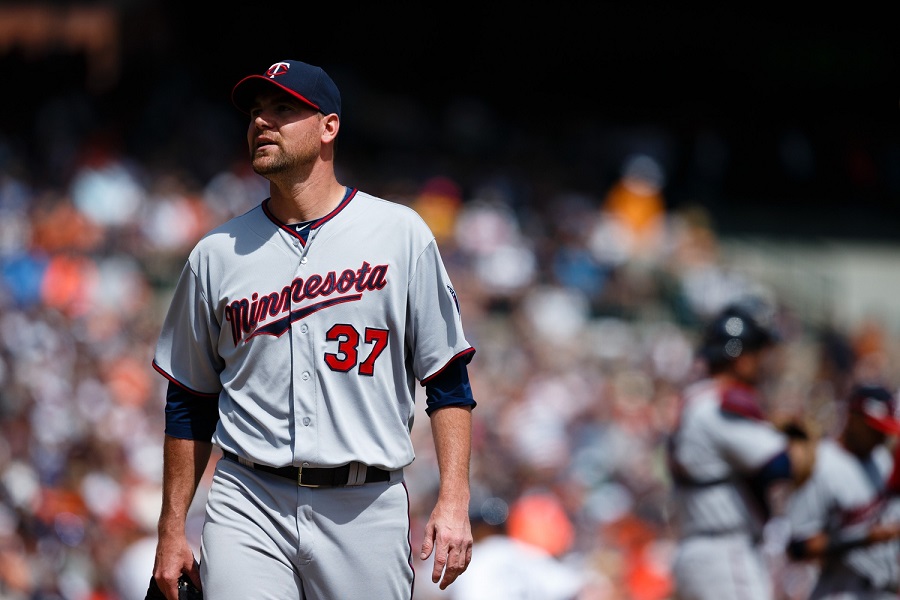 http://traffic.libsyn.com/gleemangeek/Ep_187_Roster_Moves_and_Dozier_Extension.mp3
 -

Article: Notes From Pohlad, Ryan & Manfred
John Bonnes posted a topic in Twins Daily Front Page News
Parker gets to take over Casa Del TwinsDaily starting today, but the Twins were kind enough to provide all kinds of pregame excitement. Twins owner Jim Pohlad addressed the media, followed by Twins GM Terry Ryan, followed by the new Commissioner of Major League Baseball, Rob Manfred. Here are some notes from the interviews:Total Flexibility The Twins payroll is in excess of $100M as the they enter the 2015 season, but if the team finds itself competitive, Pohlad would love to see them add players, even if it costs money. “That would be a great situation,” said Pohlad before today’s game, “and there would be total flexibility.” Josmil Pinto Seeking Clearance Twins GM Terry Ryan said that things continue to progress well for Josmil Pinto and he’ll seek clearance to return to game action. He will likely get acclimated in minor league games before joining the club. It doesn’t sound like his concussion will necessarily preclude him from making the opening day roster. Brian Duensing Returns Brian Duensing pitched in relief for the Twins today after leaving a game earlier this week when a comebacker hit him in the thigh. He threw 1.1 innings, got a strikeout and gave up no hits. Same Page Whatever decisions Ryan and Molitor are making regarding the roster, Ryan claims they are “on the same page”. They met this morning and Ryan said of Molitor “He has opinions.” And then added, “So do I.” Milone at Target Field Ryan described Milone’s outing yesterday as “OK” but also thought that the smaller ballpark and wind hurt him a bit. He expects better results in Target Field. “He’s more oriented towards Target Field than some. It’s a nice big ballpark and he’ll have some of those fly balls that go and sometimes they’ll drop at the track,” said Ryan. “I think the ballpark benefited [Phil Hughes] and it will benefit Milone in whatever capacity we’re going to pitch him in.” It might not be fair to look at last year’s stats, as Milone obviously struggled mightily after being traded from Oakland, but Target Field doesn’t appear to have done him any favors. Milone’s ERA in Target Field was 11.57 last year, the highest in any ballpark. The only place worse was Fenway – which yesterday’s jetBlue Ballpark essentially copies. But Ryan’s point about Target Field keeping fly balls from becoming home runs appears true. Milone’s home run rate in Target Field was 0.9 HR/9, which was quite a bit lower than several other ballparks in which he pitched. “None of Mr. Boras’s business.” Commissioner Rob Manfred spoke to the media before yesterday’s game and was asked about Scott Boras’ criticism of the Cubs for not adding slugging prospect Chris Bryant to their roster. That move is widely perceived to be a financial one. By delaying adding Bryant to their roster for a few weeks, the Cubs delay his service clock from starting, meaning he’ll need to wait another whole year to become a free agent. Manfred, not surprisingly, doesn’t think the Cubs are doing anything wrong. “I don’t think that the Cubs decision with respect to Chris Bryant is really any of Mr. Boras’s business,” replied Manfred. "I think the Cubs – I know the Cubs – will make decisions that are best for the long-term competitiveness of the club.” An Answer From Outside? I don’t want to make too much of this because Terry Ryan was specifically asked, but it is possible that some folks from the opening day roster are not yet in the Twins organization. Terry Ryan mentioned that Jason Repko and Hector Corrasco were both examples of players the Twins picked up late in spring training from other clubs. “Right now is about the time that things start to speed up,” said Ryan. “There hasn’t been much action yet. It’s going to start.” If I was going to speculate on what the Twins would look for, it would be right-handed centerfielder who can hit southpaws. But Molitor did praise Shane Robinson in yesterday's postgame talk. He qualifies as a right-handed hitter and is good defensively. But he hasn't hit in the majors no matter which side he faced. Click here to view the article -
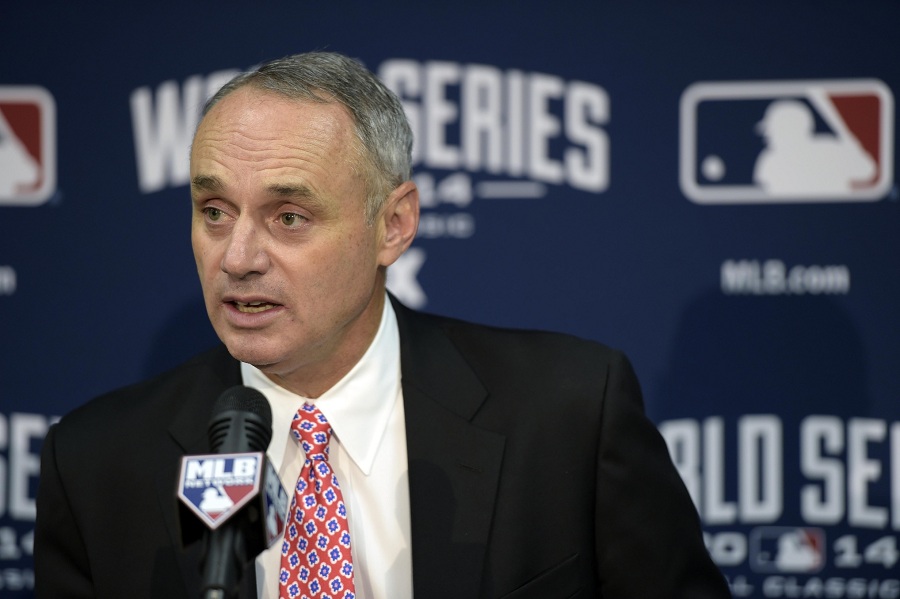 Total Flexibility The Twins payroll is in excess of $100M as the they enter the 2015 season, but if the team finds itself competitive, Pohlad would love to see them add players, even if it costs money. “That would be a great situation,” said Pohlad before today’s game, “and there would be total flexibility.” Josmil Pinto Seeking Clearance Twins GM Terry Ryan said that things continue to progress well for Josmil Pinto and he’ll seek clearance to return to game action. He will likely get acclimated in minor league games before joining the club. It doesn’t sound like his concussion will necessarily preclude him from making the opening day roster. Brian Duensing Returns Brian Duensing pitched in relief for the Twins today after leaving a game earlier this week when a comebacker hit him in the thigh. He threw 1.1 innings, got a strikeout and gave up no hits. Same Page Whatever decisions Ryan and Molitor are making regarding the roster, Ryan claims they are “on the same page”. They met this morning and Ryan said of Molitor “He has opinions.” And then added, “So do I.” Milone at Target Field Ryan described Milone’s outing yesterday as “OK” but also thought that the smaller ballpark and wind hurt him a bit. He expects better results in Target Field. “He’s more oriented towards Target Field than some. It’s a nice big ballpark and he’ll have some of those fly balls that go and sometimes they’ll drop at the track,” said Ryan. “I think the ballpark benefited [Phil Hughes] and it will benefit Milone in whatever capacity we’re going to pitch him in.” It might not be fair to look at last year’s stats, as Milone obviously struggled mightily after being traded from Oakland, but Target Field doesn’t appear to have done him any favors. Milone’s ERA in Target Field was 11.57 last year, the highest in any ballpark. The only place worse was Fenway – which yesterday’s jetBlue Ballpark essentially copies. But Ryan’s point about Target Field keeping fly balls from becoming home runs appears true. Milone’s home run rate in Target Field was 0.9 HR/9, which was quite a bit lower than several other ballparks in which he pitched. “None of Mr. Boras’s business.” Commissioner Rob Manfred spoke to the media before yesterday’s game and was asked about Scott Boras’ criticism of the Cubs for not adding slugging prospect Chris Bryant to their roster. That move is widely perceived to be a financial one. By delaying adding Bryant to their roster for a few weeks, the Cubs delay his service clock from starting, meaning he’ll need to wait another whole year to become a free agent. Manfred, not surprisingly, doesn’t think the Cubs are doing anything wrong. “I don’t think that the Cubs decision with respect to Chris Bryant is really any of Mr. Boras’s business,” replied Manfred. "I think the Cubs – I know the Cubs – will make decisions that are best for the long-term competitiveness of the club.” An Answer From Outside? I don’t want to make too much of this because Terry Ryan was specifically asked, but it is possible that some folks from the opening day roster are not yet in the Twins organization. Terry Ryan mentioned that Jason Repko and Hector Corrasco were both examples of players the Twins picked up late in spring training from other clubs. “Right now is about the time that things start to speed up,” said Ryan. “There hasn’t been much action yet. It’s going to start.” If I was going to speculate on what the Twins would look for, it would be right-handed centerfielder who can hit southpaws. But Molitor did praise Shane Robinson in yesterday's postgame talk. He qualifies as a right-handed hitter and is good defensively. But he hasn't hit in the majors no matter which side he faced.
 -
I've been calling the 5th starter outings "tryouts," which sort of implies they count for something. It's not totally clear they do. Tommy Milone had his - probably last - tryout Thursday afternoon. I'll give you the numbers, because some of you might be interested - 5 IP, 3 ER, 6H, 3K, 2 BB. But a more complete summarization was that he pitched like the fairly good version of Tommy Milone. That is not the guy that Twins fans saw last summer, but he's also not going to be anything much better than a back-of-the-rotation starting pitcher.He has four pitches, but his best fastball tops out in the highish 80s. He got a few strikeouts on changeups. He is best getting ahead in the count and you worry about him when he falls behind or is going through the lineup multiple times. He needs to manage a baseball game the way less-talented quarterbacks manage a football game. He needs to not make mistakes. He needs to mix things up. He needs a little luck. And unless something drastic changes, that is who he is going to be. What we learned this spring is that nothing has changed drastically, but he might be good enough to hold a spot in a rotation. And that, incidentally, is still a pretty nice player to have in the organization when the only thing the team gave up is a backup outfielder, and only needs to pay him first year arbitration money. Seeing a performance like this, it is easy to mock the idea that ANY of the stuff seen at spring training should be used in the roster decision-making process. After all, spring training is, by definition, a small sample size. It is a fraction of the available information we have on these guys. Beyond obvious questions like "Is this guy healthy" or "Has something changed drastically" it shouldn't be used to answer many questions. And for the most part, that is the way it works. More than 20 of the available roster spots on the 25-man roster were going to certain guys provided they weren't injured. The remaining spots are either pretty low leverage (like the last spots in the bullpen) or choosing among less than ideal options. OR finding out whether someone is "ready." For instance, the center field competition would have been over had Aaron Hicks (again) demonstrated he is ready for the majors. As late as this weekend Manager Paul Molitor didn't know who the starting center fielder is, which demonstrates that hasn't happened. Entering camp, I wondered if the same wasn't true of Trevor May and the fifth starter spot. But then May got sick and Milone was the one pitching in the major league fields and people started talking about Pelfrey and.... On Tuesday, I thought the three starts by Milone, May and Mike Pelfrey would all be important. Today, I'm wondering if the only one that really matters is that of May. The others are known commodities and their last couple of starts have confirmed that they are known commodities. I also wonder, given that we won't know when Pelfrey will next pitch until tomorrow, that he might already be out of the competition. If all that is true, then tomorrow's start is going to be much more fun to watch, as it truly counts for something. And it is wholly appropriate that it does. Twins Takes Twins lost 5-4 in 10 innings on the road versus the Red Sox. Spring training games often end tied after nine innings but Molitor wanted to see relief prospect Jake Reed pitch. Reed retired the first batter he faced, but threw a first pitch slider to Rusney Castillo which ended up barely clearing the Faux Green Monster at jetBlue field.Milone was relieved by Tim Stauffer, who has drawn a lot of commentary in our forums after my bullpen story. Given that Twins fans are not real familiar with him, it's easy to view him as a soft-throwing failed fifth starter candidate, but that's not the case. He pitched out of the bullpen for the Padres last year and racked up 57K in 56.1 IP as a reliever, and posted a 2.56 ERA. Those are awfully good setup man numbers.His poor camp is mostly a result of his failed fifth starter attempts, but today didn't do a ton to help his numbers. He got two K in 1.2 IP, but gave up four hits, though he was also the victim of a little bad luck. The worst part was that he walked in a run. He's not in any danger of not making the roster and Molitor noted in the postgame talk that Stauffer was throwing harder. But Stauffer might have a slow start this season or be used in lower leverage roles until the Twins see the guy he is supposed to be. Stauffer was pulled after walking in the run and replaced by Mark Hamburger. Hamburger was outstanding again, striking out two and giving up one hit in 2.1 IP. I had him as the odd man out in my bullpen calculus story yesterday, but its worth noting that he has put up far better strikeout numbers than Blaine Boyer or even the hard-throwing J.R. Graham. Hamburger now has 10 K in 9.2IP, versus 5K in 9.2 IP for Boyer and 6 K in 9.0 IP for Graham. I still think the odds are against him, but Hamburger would come north if it was up to me. I want to see more of this kid. I expect we will, one way or the other, later this year.Finally, regarding center field, Shane Robinson started in center field and got a hit in his first at-bat but also struck out twice. Later in the game Eddie Rosario replaced him but didn't have any challenges defensively. He went 0-2 with a strikeout. And finally, Jordan Schafer played left field for the whole game, going 0-4. The Red Sox starter was Wade Miley, a southpaw, against which Schafer has usually struggled. Click here to view the article
-
 He has four pitches, but his best fastball tops out in the highish 80s. He got a few strikeouts on changeups. He is best getting ahead in the count and you worry about him when he falls behind or is going through the lineup multiple times. He needs to manage a baseball game the way less-talented quarterbacks manage a football game. He needs to not make mistakes. He needs to mix things up. He needs a little luck. And unless something drastic changes, that is who he is going to be. What we learned this spring is that nothing has changed drastically, but he might be good enough to hold a spot in a rotation. And that, incidentally, is still a pretty nice player to have in the organization when the only thing the team gave up is a backup outfielder, and only needs to pay him first year arbitration money. Seeing a performance like this, it is easy to mock the idea that ANY of the stuff seen at spring training should be used in the roster decision-making process. After all, spring training is, by definition, a small sample size. It is a fraction of the available information we have on these guys. Beyond obvious questions like "Is this guy healthy" or "Has something changed drastically" it shouldn't be used to answer many questions. And for the most part, that is the way it works. More than 20 of the available roster spots on the 25-man roster were going to certain guys provided they weren't injured. The remaining spots are either pretty low leverage (like the last spots in the bullpen) or choosing among less than ideal options. OR finding out whether someone is "ready." For instance, the center field competition would have been over had Aaron Hicks (again) demonstrated he is ready for the majors. As late as this weekend Manager Paul Molitor didn't know who the starting center fielder is, which demonstrates that hasn't happened. Entering camp, I wondered if the same wasn't true of Trevor May and the fifth starter spot. But then May got sick and Milone was the one pitching in the major league fields and people started talking about Pelfrey and.... On Tuesday, I thought the three starts by Milone, May and Mike Pelfrey would all be important. Today, I'm wondering if the only one that really matters is that of May. The others are known commodities and their last couple of starts have confirmed that they are known commodities. I also wonder, given that we won't know when Pelfrey will next pitch until tomorrow, that he might already be out of the competition. If all that is true, then tomorrow's start is going to be much more fun to watch, as it truly counts for something. And it is wholly appropriate that it does. Twins Takes Twins lost 5-4 in 10 innings on the road versus the Red Sox. Spring training games often end tied after nine innings but Molitor wanted to see relief prospect Jake Reed pitch. Reed retired the first batter he faced, but threw a first pitch slider to Rusney Castillo which ended up barely clearing the Faux Green Monster at jetBlue field. Milone was relieved by Tim Stauffer, who has drawn a lot of commentary in our forums after my bullpen story. Given that Twins fans are not real familiar with him, it's easy to view him as a soft-throwing failed fifth starter candidate, but that's not the case. He pitched out of the bullpen for the Padres last year and racked up 57K in 56.1 IP as a reliever, and posted a 2.56 ERA. Those are awfully good setup man numbers. His poor camp is mostly a result of his failed fifth starter attempts, but today didn't do a ton to help his numbers. He got two K in 1.2 IP, but gave up four hits, though he was also the victim of a little bad luck. The worst part was that he walked in a run. He's not in any danger of not making the roster and Molitor noted in the postgame talk that Stauffer was throwing harder. But Stauffer might have a slow start this season or be used in lower leverage roles until the Twins see the guy he is supposed to be. Stauffer was pulled after walking in the run and replaced by Mark Hamburger. Hamburger was outstanding again, striking out two and giving up one hit in 2.1 IP. I had him as the odd man out in my bullpen calculus story yesterday, but its worth noting that he has put up far better strikeout numbers than Blaine Boyer or even the hard-throwing J.R. Graham. Hamburger now has 10 K in 9.2IP, versus 5K in 9.2 IP for Boyer and 6 K in 9.0 IP for Graham. I still think the odds are against him, but Hamburger would come north if it was up to me. I want to see more of this kid. I expect we will, one way or the other, later this year. Finally, regarding center field, Shane Robinson started in center field and got a hit in his first at-bat but also struck out twice. Later in the game Eddie Rosario replaced him but didn't have any challenges defensively. He went 0-2 with a strikeout. And finally, Jordan Schafer played left field for the whole game, going 0-4. The Red Sox starter was Wade Miley, a southpaw, against which Schafer has usually struggled.
 -
Stauffer last year as a reliever - 57K in 56.1 IP, 2.56 ERA. He' no your average failed 5th starter.
- 85 replies
-
- 1
-

-
- blaine boyer
- j.r. graham
- (and 3 more)
-
FWIW, Everyone seems very optimistic about Pinto. I'll be surprised if he doesn't make the roster right now.And personally, I feel like it will be Herrmann who gets the job over Fryer. I'll be shocked if Rosario is playing left field over Arcia on opening day. Stunned. I will be a lot less surprised if he's the center fielder.
- 68 replies
-
- 2
-
-
- tommy milone
- trevor may
- (and 3 more)
-
I had forgotten that Milone has an option. If I can, I'll ask some folks about that tomorrow. I'll say that Terry Ryan said that it was a safe assumption that Milone would be on the roster if he doesn't start. He aso said that at some folks were going to need to perform now at the end of spring training when they were under the most pressure, and he could very well have been talking about Milone. I wouldn't judge Stauffer too much on his attempts to be s starter. I think we'll see him in tomorrow's game. Let's see what he looks like as a reliever.
-
After yesterday’s crazy day at Fort Myers, today was considerably more serene. It also served as a deep breath before the last big push for several roster spots. Twins Manager Paul Molitor says he would like to get the roster set by this weekend, so the pressure to perform (or at least not mess up) is high. “It always is in spring training,” said Twins General Manager Terry Ryan. “Especially when you get to the last ten games or so.”I’ve written a lot about the other spring training battles but have stayed away from the bullpen, partly because Nick Nelson covered it this weekend and partly because there were just so many options. But with recent demotions, the bullpen battles are becoming a little more clear – but not a lot more clear. There are just so many factors, and the biggest ones might not be the individual relievers' performance. It might be the performance of the guys trying out for the fifth starter job or whether or not the Twins can make a trade for a Rule 5 pick. Here’s the breakdown: There are seven spots. Four of them are essentially spoken for: 1. Glen Perkins has overcome his oblique strain, so he’s in. 2. Casey Fien is in and seems to have overcome whatever ailed him last September. 3. Brian Duensing was hit by a comebacker yesterday just over the knee on his thigh, but while he won’t pitch for a couple of days, he should have no problem being back for opening day. 4. Tim Stauffer has a major league contract, and while Terry Ryan stopped short of calling him an “absolute lock” in his pregame press conference, he did say he’ll be getting the “benefit of the doubt.” So he’s in. That leaves three spots and they are largely dependent on what happens in the fifth spot in the rotation. At least one, and possibly, two, are spoken for. Mike Pelfrey, Tommy Milone and Trevor May are all competing for that last spot. Ryan confirmed that “is a fair assumption” that Pelfrey and Milone would end up in the bullpen if they don’t win the job, and oddly enough would not say that Trevor May would be sent to Rochester if he didn’t with the job, leaving the option open that he could be in the bullpen, too. However, that chance seems very remote. Your guess is as good as mine regarding the fifth starter job. Everyone seems to be playing their cards very close to their vest. Prior to the postgame conference, I would have handicapped it like this: Pelfrey 1:1 Milone 2:1 May 5:1 But I talked to at least one veteran sportswriter who thought Milone was still in the lead, and it also seemed like there was some confusion whether Pelfrey would get another start with the big league club. Whether that means he’s out of the running or they just don’t need to see any more is unknown. So again, take those odds with much more than a grain of salt. Like, maybe a shaker of salt. Back to the bullpen. Whoever wins could have a major effect on the makeup of the bullpen. Let’s look at the scenarios. What If Pelfrey Wins The Fifth Starter Spot? 5. Tommy Milone becomes the second (or third if you count Perkins) lefty in the bullpen. That leaves two spots in the bullpen. My best guess is they are taken by the right-handers: 6. Blaine Boyer and 7. J.R. Graham Missing out: RHP Mark Hamburger LHP Caleb Thielbar, Aaron Thompson Boyer and Graham are mostly a guess, though they have had great camps. But so have all the guys that are still in camp, so either one could be replaced by Hamburger. It’s also possible that the Twins could decide to still take another left-hander, and Terry Ryan praised both Thielbar and Thompson’s spring earlier today. Ryan also said a few days ago he doesn’t feel strongly about how many left-handers or right-handers are in the bullpen. What If Milone Wins The Fifth Starter Spot? 5. Mike Pelfrey becomes the third right-hander in the bullpen. That leaves two spots in the bullpen. My best guess is they would want a right-hander and a left-hander, so let’s go with: 6. Caleb Thielbar and 7. J.R. Graham Missing out: RHP Mark Hamburger LHP Blaine Boyer, Aaron Thompson I’m in the minority in thinking that the Twins would choose Graham over Boyer. But since Graham is a Rule 5 pick and since Boyer isn’t on the 40-man roster, that’s the way I’m going. I should emphasize – Boyer has really impressed people. If the Twins decide to keep Boyer and send Graham down in this scenario, they would either need to return him to the Braves or make a deal. In the past, the Twins have had some luck making deals with the Braves; that’s how they secured Scott Diamond. That happened very late in spring training that year, on the 28th of March. I’m optimistic that this could happen again. As for the lefties, I don’t know if Thielbar is really in front of Thompson. I think Thielbar will get the benefit of the doubt given his time on the team the last few years. Then today, Thompson pitched before Thielbar did today and Thielbar did struggle a bit, giving up two hits and the winning run (though I think it should have been unearned). However, Molitor emphasized that he didn’t mean to give them a “head-to-head” matchup; he just wasn’t able to use Thompson in the game yesterday, so he made sure he got him in the game today. What If May Wins The Fifth Starter Spot? 5. Mike Pelfrey becomes the third right-hander in the bullpen. 6. Tommy Milone becomes the second lefty in the bullpen. That leaves just one spot in the bullpen. My best guess is they would want a right-hander, so let’s go with: 7. Blaine Boyer Missing out: RHP Mark Hamburger, J.R. Graham LHP Caleb Thielbar, Aaron Thompson Looking at this, it seems that Trevor May is going to need to overcome even more than having an option to send him down and a limited spring training resume due to the flu. Putting him in the fifth spot also squeezes the bullpen that much more. (Oh, and the forecast for his start on Friday has a 90% chance of rain. What’s next? Locusts?) If you want to distill things a little further, it feels like there will likely be two spots in the bullpen and three pitchers essentially competing for it: Boyer, Graham and Thielbar. The key factor might be if they can work a trade for Graham. If so, and May doesn’t win the fifth job, the logjam could be cleared. Click here to view the article
- 85 replies
-
- 1
-
-
- blaine boyer
- j.r. graham
- (and 3 more)
-
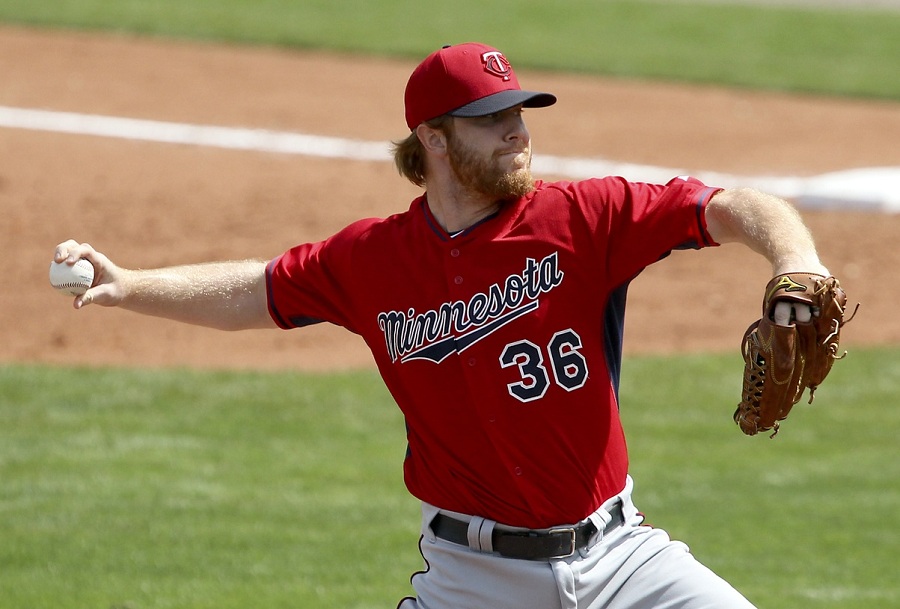 I’ve written a lot about the other spring training battles but have stayed away from the bullpen, partly because Nick Nelson covered it this weekend and partly because there were just so many options. But with recent demotions, the bullpen battles are becoming a little more clear – but not a lot more clear. There are just so many factors, and the biggest ones might not be the individual relievers' performance. It might be the performance of the guys trying out for the fifth starter job or whether or not the Twins can make a trade for a Rule 5 pick. Here’s the breakdown: There are seven spots. Four of them are essentially spoken for: 1. Glen Perkins has overcome his oblique strain, so he’s in. 2. Casey Fien is in and seems to have overcome whatever ailed him last September. 3. Brian Duensing was hit by a comebacker yesterday just over the knee on his thigh, but while he won’t pitch for a couple of days, he should have no problem being back for opening day. 4. Tim Stauffer has a major league contract, and while Terry Ryan stopped short of calling him an “absolute lock” in his pregame press conference, he did say he’ll be getting the “benefit of the doubt.” So he’s in. That leaves three spots and they are largely dependent on what happens in the fifth spot in the rotation. At least one, and possibly, two, are spoken for. Mike Pelfrey, Tommy Milone and Trevor May are all competing for that last spot. Ryan confirmed that “is a fair assumption” that Pelfrey and Milone would end up in the bullpen if they don’t win the job, and oddly enough would not say that Trevor May would be sent to Rochester if he didn’t with the job, leaving the option open that he could be in the bullpen, too. However, that chance seems very remote. Your guess is as good as mine regarding the fifth starter job. Everyone seems to be playing their cards very close to their vest. Prior to the postgame conference, I would have handicapped it like this: Pelfrey 1:1 Milone 2:1 May 5:1 But I talked to at least one veteran sportswriter who thought Milone was still in the lead, and it also seemed like there was some confusion whether Pelfrey would get another start with the big league club. Whether that means he’s out of the running or they just don’t need to see any more is unknown. So again, take those odds with much more than a grain of salt. Like, maybe a shaker of salt. Back to the bullpen. Whoever wins could have a major effect on the makeup of the bullpen. Let’s look at the scenarios. What If Pelfrey Wins The Fifth Starter Spot? 5. Tommy Milone becomes the second (or third if you count Perkins) lefty in the bullpen. That leaves two spots in the bullpen. My best guess is they are taken by the right-handers: 6. Blaine Boyer and 7. J.R. Graham Missing out: RHP Mark Hamburger LHP Caleb Thielbar, Aaron Thompson Boyer and Graham are mostly a guess, though they have had great camps. But so have all the guys that are still in camp, so either one could be replaced by Hamburger. It’s also possible that the Twins could decide to still take another left-hander, and Terry Ryan praised both Thielbar and Thompson’s spring earlier today. Ryan also said a few days ago he doesn’t feel strongly about how many left-handers or right-handers are in the bullpen. What If Milone Wins The Fifth Starter Spot? 5. Mike Pelfrey becomes the third right-hander in the bullpen. That leaves two spots in the bullpen. My best guess is they would want a right-hander and a left-hander, so let’s go with: 6. Caleb Thielbar and 7. J.R. Graham Missing out: RHP Mark Hamburger LHP Blaine Boyer, Aaron Thompson I’m in the minority in thinking that the Twins would choose Graham over Boyer. But since Graham is a Rule 5 pick and since Boyer isn’t on the 40-man roster, that’s the way I’m going. I should emphasize – Boyer has really impressed people. If the Twins decide to keep Boyer and send Graham down in this scenario, they would either need to return him to the Braves or make a deal. In the past, the Twins have had some luck making deals with the Braves; that’s how they secured Scott Diamond. That happened very late in spring training that year, on the 28th of March. I’m optimistic that this could happen again. As for the lefties, I don’t know if Thielbar is really in front of Thompson. I think Thielbar will get the benefit of the doubt given his time on the team the last few years. Then today, Thompson pitched before Thielbar did today and Thielbar did struggle a bit, giving up two hits and the winning run (though I think it should have been unearned). However, Molitor emphasized that he didn’t mean to give them a “head-to-head” matchup; he just wasn’t able to use Thompson in the game yesterday, so he made sure he got him in the game today. What If May Wins The Fifth Starter Spot? 5. Mike Pelfrey becomes the third right-hander in the bullpen. 6. Tommy Milone becomes the second lefty in the bullpen. That leaves just one spot in the bullpen. My best guess is they would want a right-hander, so let’s go with: 7. Blaine Boyer Missing out: RHP Mark Hamburger, J.R. Graham LHP Caleb Thielbar, Aaron Thompson Looking at this, it seems that Trevor May is going to need to overcome even more than having an option to send him down and a limited spring training resume due to the flu. Putting him in the fifth spot also squeezes the bullpen that much more. (Oh, and the forecast for his start on Friday has a 90% chance of rain. What’s next? Locusts?) If you want to distill things a little further, it feels like there will likely be two spots in the bullpen and three pitchers essentially competing for it: Boyer, Graham and Thielbar. The key factor might be if they can work a trade for Graham. If so, and May doesn’t win the fifth job, the logjam could be cleared.
 -
To quote Halsey Hall: “Holy Cow!” It was a big day in Fort Myers with early roster cuts, an exciting win over the Blue Jays, and of course the big Brian Dozier contract. Let’s catch up on all of them, notes style. Twins Make Roster Cuts Innings and at-bats are a very valuable commodity. As split-squad games end and as the regulars need more innings to prepare for the season, that commodity becomes scarcer and scarcer.This drives a lot of the cuts that happen towards the end of spring training; the coaching staff just doesn't have room to play a guy, so why keep him in camp? When Stephen Pryor was optioned to Rochester on Monday, Twins General Manager Terry Ryan talked about that. "We had him on the trip [sunday] and he didn't pitch," explained Ryan. "Now it's time. We have to get him going. So we're sending him across the street." The same thing happened today when six more players were removed from the spring training roster. Over the weekend, the Twins needed some extra bodies in camp. They had a split-squad game on Saturday, so they needed to field two teams. On Sunday and Monday they played games in Jupiter and Clearwater, two of the longer road trips they face. A lot of veterans don't go on those trips, so that opened up at-bats and innings for other players. (Incidentally, two people who always DO make that long road trip are the Twins manager and the Twins general manager. Talking to Terry Ryan the other day, he feels very strongly that if he's going to ask the kids to ride three hours across Florida for a game, he should go too, and he says each of the Twins managers since Tom Kelly has felt the same way. Ryan says he has never missed one as GM of the Twins.) So cuts were expected today, and they included relief pitcher AJ Achter, second baseman James Beresford, outfielders Eric Farris and Jose Martinez, first baseman Jose Martinez and catcher Tyler Grimes. You likely don’t recognize most of those names. Only Achter was on the 40-man roster and pitched with the Twins a little last September. Terry Ryan was impressed by Achter this spring, saying ""I think he fared well here," summarized Ryan. “He's behind a couple of other guys but he did a nice job. You'll probably see him through the course of this season at some point, because he's one of those guys that will get down there and get to work." Fifth Starter Notes The Twins revealed yesterday how they're going to handle one more round of "tryouts" for the fifth starter role. The problem was that both Tommy Milone and Trevor May last pitched on Saturday in split-squad games. So both were scheduled to pitch Thursday, but there was no split-squad game. One could pitch in the AAA game, but that would indicate that he was on the outside looking in. Instead, the Twins are bumping May back to Friday. That day's starting pitcher, Phil Hughes, will pitch in the AAA game. So it looks like we'll see May, Milone and Mike Pelfrey starting consecutive games on Thursday through Saturday. That will surely be the last chance for them all to make an impression before final roles are determined. Midseason Form Nick wrote earlier this spring about how much more comfortable Joe Mauer looked playing first base. In today's game, he and Danny Santana turned two 3-6-3 double plays. It was fun to watch. Center Field Competition In the center field competition, Jordan Schafer started in center field and hit his first home run of this spring. It's also notable it came against a southpaw, against whom Schafer has struggled his whole career. Molitor recognized it and talked about it, but thinks Schafer has made improvements against both sides. “The big key for him offensively has been the mechanical changes he has made which has calmed himself down in the batter’s box. It’s a more controlled swing and seeing the ball a little bit longer, but still having enough bat speed to catch it up front.” Eddie Rosario pinch hit for Schafer in the bottom of the ninth with the winning run on second base and drove him in with a single to left-center field. “He’s a guy, for me, that likes those moments,” revealed Molitor after the game. “He’s not intimidated. He watched the guy. He knew he was throwing a lot of off-speed pitches. He kept it in the middle of the field and delivered.” Molitor also talked a little bit about Rosario’s defense in center field. He recognizes Rosario isn’t the best option there defensively, but sounds like he’s comfortable with Rosario as a center fielder due to everything else he brings to the table. “I think he’s more comfortable in center and left than right,” said Molitor. “He doesn’t have the speed of [Aaron] Hicks or Schafer, but I think the fact that he understands the pitch-to-pitch importance, and with how he’s progressing his game - offensively and on the base paths and defensively - he’s obviously good enough to play out there, we think.” That said, Rosario hasn’t played in center field since Thursday. From this morning’s lineup, it looked like he would play center field in the later innings, but he didn't, only coming into the game in the bottom of the ninth. For what it's worth, Molitor sounded like he was much happier with his center field options after today's game than he sounded this weekend. The Veterans Get Into The Act, Too Besides getting a lifetime’s worth of financial security, Brian Dozier also got a home run on his first pitch today, giving the Twins an early lead. Later, as the friend to whom I was talking was disparaging the Torii Hunter signing, Hunter deposited a hanging off-speed pitch into the bleachers. Ouch Brian Duensing was hit in the thigh by a comebacker in the seventh inning and had to leave the game. “That’s something that is going to tighten up very quickly, so I had to get him out of there,” explained Molitor. “I think he’s going to be fine. He’s going to be a little sore.” The Game Oh yeah, there was a game that the Twins won 6-5 in the bottom of the ninth after blowing the lead in the top of the ninth. There were a lot of highlights, but there were also several times when they went into full-blown Keystone Cops mode. In the regular season, this would have been a thriller. In spring training, it just looked sloppy. One Last Dozier Note If you’re looking for a recap of the Dozier contract, start here, but I could do a whole second story with all the talk there was after the press conference. Instead, I’ll limit myself to one conversation I had at the end with Damon Lapa, Dozier’s agent. It deserves to be transcribed and published in its entirety, and if I have time later I will, but I wanted to touch on one point specifically. I asked about the possibility of the Twins getting an option year on one of Dozier’s free agency years, because I sensed Dozier’s side really wanted to hit free agency on time. Q: How dead set against an option year in free agency were you guys, or was that something that was somewhat on the table, but it just didn’t work out? A: You never say never. I think you look at anything in the context of the entire offer. So something in the back of the contract that would function as a team option – you don’t strictly rule it out, but you look at it in the totality of everything that is being offered. And in this case, through our discussions back and forth, this proposal just made sense not to attach anything to the back end. But as far as the future, you have to look at every negotiation and the player’s particular situation.” When someone says “You never say never” I usually means “damn near almost never.” So to me that translates as: “If we were going to give a team option for a year of free agency, then we weren’t going to be giving big potential savings.” Personally, I feel the Twins made the right choice. I would rather get Dozier a little cheaper for the next few years than get an option on him when he’s 31 years old. Better to cross the bridge when one comes to it. And for what it's worth, it doesn't sound like Dozier or Lapa are opposed to looking at that in the future. Click here to view the article
-
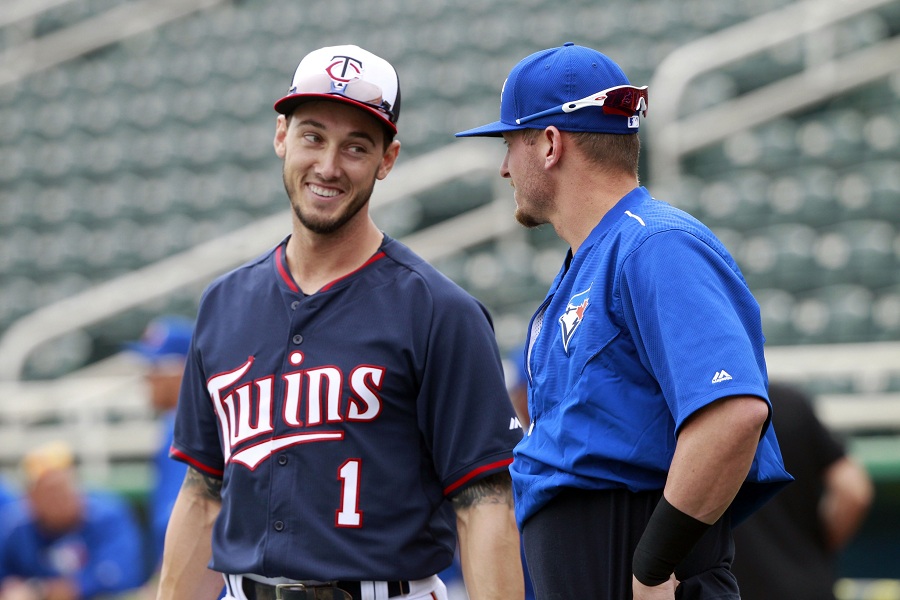 This drives a lot of the cuts that happen towards the end of spring training; the coaching staff just doesn't have room to play a guy, so why keep him in camp? When Stephen Pryor was optioned to Rochester on Monday, Twins General Manager Terry Ryan talked about that. "We had him on the trip [sunday] and he didn't pitch," explained Ryan. "Now it's time. We have to get him going. So we're sending him across the street." The same thing happened today when six more players were removed from the spring training roster. Over the weekend, the Twins needed some extra bodies in camp. They had a split-squad game on Saturday, so they needed to field two teams. On Sunday and Monday they played games in Jupiter and Clearwater, two of the longer road trips they face. A lot of veterans don't go on those trips, so that opened up at-bats and innings for other players. (Incidentally, two people who always DO make that long road trip are the Twins manager and the Twins general manager. Talking to Terry Ryan the other day, he feels very strongly that if he's going to ask the kids to ride three hours across Florida for a game, he should go too, and he says each of the Twins managers since Tom Kelly has felt the same way. Ryan says he has never missed one as GM of the Twins.) So cuts were expected today, and they included relief pitcher AJ Achter, second baseman James Beresford, outfielders Eric Farris and Jose Martinez, first baseman Jose Martinez and catcher Tyler Grimes. You likely don’t recognize most of those names. Only Achter was on the 40-man roster and pitched with the Twins a little last September. Terry Ryan was impressed by Achter this spring, saying ""I think he fared well here," summarized Ryan. “He's behind a couple of other guys but he did a nice job. You'll probably see him through the course of this season at some point, because he's one of those guys that will get down there and get to work." Fifth Starter Notes The Twins revealed yesterday how they're going to handle one more round of "tryouts" for the fifth starter role. The problem was that both Tommy Milone and Trevor May last pitched on Saturday in split-squad games. So both were scheduled to pitch Thursday, but there was no split-squad game. One could pitch in the AAA game, but that would indicate that he was on the outside looking in. Instead, the Twins are bumping May back to Friday. That day's starting pitcher, Phil Hughes, will pitch in the AAA game. So it looks like we'll see May, Milone and Mike Pelfrey starting consecutive games on Thursday through Saturday. That will surely be the last chance for them all to make an impression before final roles are determined. Midseason Form Nick wrote earlier this spring about how much more comfortable Joe Mauer looked playing first base. In today's game, he and Danny Santana turned two 3-6-3 double plays. It was fun to watch. Center Field Competition In the center field competition, Jordan Schafer started in center field and hit his first home run of this spring. It's also notable it came against a southpaw, against whom Schafer has struggled his whole career. Molitor recognized it and talked about it, but thinks Schafer has made improvements against both sides. “The big key for him offensively has been the mechanical changes he has made which has calmed himself down in the batter’s box. It’s a more controlled swing and seeing the ball a little bit longer, but still having enough bat speed to catch it up front.” Eddie Rosario pinch hit for Schafer in the bottom of the ninth with the winning run on second base and drove him in with a single to left-center field. “He’s a guy, for me, that likes those moments,” revealed Molitor after the game. “He’s not intimidated. He watched the guy. He knew he was throwing a lot of off-speed pitches. He kept it in the middle of the field and delivered.” Molitor also talked a little bit about Rosario’s defense in center field. He recognizes Rosario isn’t the best option there defensively, but sounds like he’s comfortable with Rosario as a center fielder due to everything else he brings to the table. “I think he’s more comfortable in center and left than right,” said Molitor. “He doesn’t have the speed of [Aaron] Hicks or Schafer, but I think the fact that he understands the pitch-to-pitch importance, and with how he’s progressing his game - offensively and on the base paths and defensively - he’s obviously good enough to play out there, we think.” That said, Rosario hasn’t played in center field since Thursday. From this morning’s lineup, it looked like he would play center field in the later innings, but he didn't, only coming into the game in the bottom of the ninth. For what it's worth, Molitor sounded like he was much happier with his center field options after today's game than he sounded this weekend. The Veterans Get Into The Act, Too Besides getting a lifetime’s worth of financial security, Brian Dozier also got a home run on his first pitch today, giving the Twins an early lead. Later, as the friend to whom I was talking was disparaging the Torii Hunter signing, Hunter deposited a hanging off-speed pitch into the bleachers. Ouch Brian Duensing was hit in the thigh by a comebacker in the seventh inning and had to leave the game. “That’s something that is going to tighten up very quickly, so I had to get him out of there,” explained Molitor. “I think he’s going to be fine. He’s going to be a little sore.” The Game Oh yeah, there was a game that the Twins won 6-5 in the bottom of the ninth after blowing the lead in the top of the ninth. There were a lot of highlights, but there were also several times when they went into full-blown Keystone Cops mode. In the regular season, this would have been a thriller. In spring training, it just looked sloppy. One Last Dozier Note If you’re looking for a recap of the Dozier contract, start here, but I could do a whole second story with all the talk there was after the press conference. Instead, I’ll limit myself to one conversation I had at the end with Damon Lapa, Dozier’s agent. It deserves to be transcribed and published in its entirety, and if I have time later I will, but I wanted to touch on one point specifically. I asked about the possibility of the Twins getting an option year on one of Dozier’s free agency years, because I sensed Dozier’s side really wanted to hit free agency on time. Q: How dead set against an option year in free agency were you guys, or was that something that was somewhat on the table, but it just didn’t work out? A: You never say never. I think you look at anything in the context of the entire offer. So something in the back of the contract that would function as a team option – you don’t strictly rule it out, but you look at it in the totality of everything that is being offered. And in this case, through our discussions back and forth, this proposal just made sense not to attach anything to the back end. But as far as the future, you have to look at every negotiation and the player’s particular situation.” When someone says “You never say never” I usually means “damn near almost never.” So to me that translates as: “If we were going to give a team option for a year of free agency, then we weren’t going to be giving big potential savings.” Personally, I feel the Twins made the right choice. I would rather get Dozier a little cheaper for the next few years than get an option on him when he’s 31 years old. Better to cross the bridge when one comes to it. And for what it's worth, it doesn't sound like Dozier or Lapa are opposed to looking at that in the future.
 -
You're right. I'll adjust that. I worded it poorly. I meant that he is in his fifth year.
-
Also some notes from the press conference and stuff after: The question about Polanco was raised a couple times after the conference. Rob Antony's response is that Polanco is no guarantee - remember, they thought Dozier was going to be a shorstop, so things don't always work out the way they think they will. And, of course, that's where the fact that there is no no-trade clause is important, too. This contract, assuming Dozier continues to perform, could be an asset instead of a liability in trade discussions. Also, talking to Damon Lapa, Dozier's agent, it sounds like hitting free agency as a 31-year-old was VERY important to them. Any attempt to delay that was going to require some big adjustments to the deal to include that.
-
The easy answer is they have a LOT less leverage. At this time next year, assuming Dozier has a year similar to last, he's making close to $4M in guaranteed money for 2016 and already has a lifetime of security locked up. He isnt willing to give nearly as much as a discount on years two and three, if a deal even happens. In fact, I can' see a deal working out unless it inlcludes free agency years.
-
The Minnesota Twins announced today that they and second baseman Brian Dozier have signed a 4-year guaranteed contract that will pay Dozier $20 million guaranteed through the 2018 season. The deal buys out Dozier's arbitration years but not any of the years in which he will be a free agent.The contract makes sense from both sides. Dozier gets $20 million up front, as opposed to having to work on year-to-year agreements over the next four years. He also gets a significant bump in salary this year. The Twins take on the risk of Dozier, who had a breakthrough season last year, severely regressing or getting injured. In return, they should see overall savings in future years compared to what Dozier would have received in arbitration over the next four years if he continues to play at a fairly high level. Dozier's .242 batting average last year disguised an outstanding year. His patience at the plate led to a .345 on-base percentage and he powered out 23 home runs, all while playing a middle infield position at an above-average level. His OPS last year was fourth among qualified MLB second baseman, above that of better known names liks Chase Utley and Dustin Pedroia. He's certainly shown no sign of regression this spring, as he is hitting .462. The contract pays him $2 million dollars this year (as opposed to $590,000) and then $3M, $6M and $9M in his three years of arbitration. It is an inexact science to estimate exactly what future arbitration awards would have been, but for any starting player, those values are on the low end. And for player who is an all-star, they could be very low. For instance, Pirates second baseman Neil Walker, who had similar production to that of Dozier last year, is making $8M in his second year of arbitration - and he lost his case. compare that to the $6M that Dozier is now guaranteed. Correction: Walker's 3rd year of arbitration wa $8M, but it still compares to Dozier's 2nd year of arbitration, because both are in their fifth year of service time. Walker was a Super-2 player, so he was able to reach arbitration a year earlier. Plus, the average arbitration awards tend to go up from year to year because they reflect the free agent salaries at the high end, and those values are also increasing significantly under the new collective bargaining agreement. The trick with a lot of these contracts, and particularly with this one, is how long the deal should be. Dozier's case is a little unique in that he is old for a player entering his 3rd year; he's 27 years old. That means he won't become a free agent until he is 31 years old, which is often on the downside of a player's career. So it is of questionable value to guarantee money out that far. Often when a team signs a deal like this, it is to guarantee that they buy out a free agent year or two for a player who will hit free agency in their 20s. This deal ignores that option and strikes a different balance. It runs exactly the same time frame at whcih the player would have been under team control, but it gives enough potential future savings to take on the risk of guaranteeing the money. As with any deal, both sides probably wish it were a little different. Dozier's side likely wishes it was for more money or had another guaranteed year. The Twins side likely wishes they would have made it for a little less money, or had a team option when Dozier reaches free agency. But it looks like a solid, thoughtful agreement for both sides. Click here to view the article
-
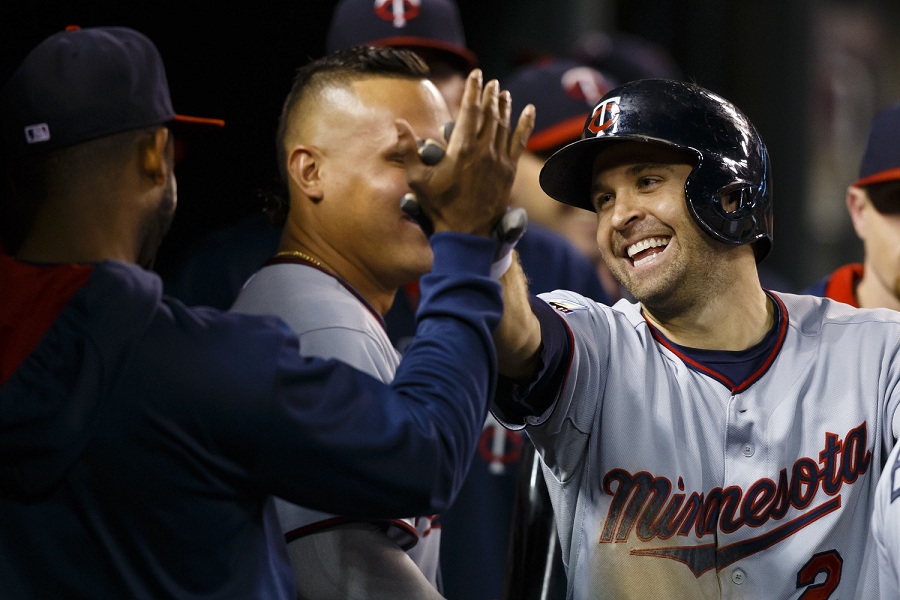 The contract makes sense from both sides. Dozier gets $20 million up front, as opposed to having to work on year-to-year agreements over the next four years. He also gets a significant bump in salary this year. The Twins take on the risk of Dozier, who had a breakthrough season last year, severely regressing or getting injured. In return, they should see overall savings in future years compared to what Dozier would have received in arbitration over the next four years if he continues to play at a fairly high level. Dozier's .242 batting average last year disguised an outstanding year. His patience at the plate led to a .345 on-base percentage and he powered out 23 home runs, all while playing a middle infield position at an above-average level. His OPS last year was fourth among qualified MLB second baseman, above that of better known names liks Chase Utley and Dustin Pedroia. He's certainly shown no sign of regression this spring, as he is hitting .462. The contract pays him $2 million dollars this year (as opposed to $590,000) and then $3M, $6M and $9M in his three years of arbitration. It is an inexact science to estimate exactly what future arbitration awards would have been, but for any starting player, those values are on the low end. And for player who is an all-star, they could be very low. For instance, Pirates second baseman Neil Walker, who had similar production to that of Dozier last year, is making $8M in his second year of arbitration - and he lost his case. compare that to the $6M that Dozier is now guaranteed. Correction: Walker's 3rd year of arbitration wa $8M, but it still compares to Dozier's 2nd year of arbitration, because both are in their fifth year of service time. Walker was a Super-2 player, so he was able to reach arbitration a year earlier. Plus, the average arbitration awards tend to go up from year to year because they reflect the free agent salaries at the high end, and those values are also increasing significantly under the new collective bargaining agreement. The trick with a lot of these contracts, and particularly with this one, is how long the deal should be. Dozier's case is a little unique in that he is old for a player entering his 3rd year; he's 27 years old. That means he won't become a free agent until he is 31 years old, which is often on the downside of a player's career. So it is of questionable value to guarantee money out that far. Often when a team signs a deal like this, it is to guarantee that they buy out a free agent year or two for a player who will hit free agency in their 20s. This deal ignores that option and strikes a different balance. It runs exactly the same time frame at whcih the player would have been under team control, but it gives enough potential future savings to take on the risk of guaranteeing the money. As with any deal, both sides probably wish it were a little different. Dozier's side likely wishes it was for more money or had another guaranteed year. The Twins side likely wishes they would have made it for a little less money, or had a team option when Dozier reaches free agency. But it looks like a solid, thoughtful agreement for both sides.
 -
The primary drama for the Twins-Phillies game on Monday surrounded Twins starting pitcher Mike Pelfrey looking to stake his claim on the last spot in the Twins rotation. The Phillies did their part to make the litmus test feel real. Their lineup featured Ben Revere, Chase Utley, Ryan Howard and Carlos Ruiz in the top five spots. So how did Pelfrey do?He was "OK." He described it as such. He didn't dominate (only two strikeouts amid seven hits and two walks in 4.2 IP) but also didn't give up many runs (only two, and only one was earned). His control wasn't terrible, but it also wasn't stellar. He was hurt by his defense. (Eduardo Nunez had and error and a couple he probably could have fielded.) He was also helped by it. (Eduardo Escobar and Reynaldo Rodriguez both made wonderful plays, and Escobar's probably saved more runs.) In short, it wasn't the dominant game he probably wanted to lay sole claim to the job of fifth starter with, nor was it a step backwards. Both he and Twins Manager Paul Molitor said he "battled" and that's about right. When asked about the competition for fifth starter, Pelfrey deferred and talked about how he's just happy to feel healthy. "I feel good. In 2013, I came back from Tommy John in eleven months for opening day. Maybe it was too early," said Pelfrey. "Last year, it faded off pretty quick. But I feel good again. I expect good things to happen - to be successful - when I feel good. At the end of they day, as long as I feel good, no matter what happens, so be it." So this was not a knockout. Instead, it looks like we're going to have at least one more round as Molitor said after the game that both pitchers competing against Pelfrey, Tommy Milone and Trevor Mays, will get another start this week. It is not clear if both would start on the same day - both of them should have their next turn on Thursday. If that happens, one would need to start in one of the minor league games. But the Twins could bump one of them back a day to Friday - the day that Phil Hughes is scheduled to pitch - and have Hughes throw to minor leaguers instead. Whatever the decision, Molitor doesn't seem to be overly worried that he isn't going to be stuck with someone who isn't prepared. He finished his postgame talk by saying "I like my options." Escobar's Day Last night I wrote that we should trust Eduardo Escobar's bat more than we do, so today he struck out in his first three at-bats. He had only struck out twice over 32 at-bats in spring training prior to today. However, he made two very good defensive plays at third base. In the first inning, he started a double play that Molitor talked about at length, praising Escobar's patience. "On the first double play, we try to preach a lot: don't let the speed of the ball speed you up," reflected Molitor. "That was a play with a left-hand hitter, where the double play wasn't there yet. A lot of time, that guy catches that ball and turns and fires and there's nobody there yet, but he let the play kind of develop, and it made it close at first [base], but that was the right way to go about it." Then, in the second inning, following a two-run home run, the Phillies got runners on the corners with only one out. Ben Revere hit a hot grounder down the third base line where Escobar was playing inside the bag, but he ranged to the line, speared it, and caught the runner off base after an efficient run down. Pelfrey's outing might have looked a lot worse if not for that play. By the way, Molitor also had Escobar play a little in the outfield in the late innings today. He did not get a chance to field a fly ball. "A Real Fine Play" Escobar's play was topped the next innings when Twins first baseman Reynaldo Rodriguez dove and speared a hot grounder by Chase Utley, turning it into a leadoff out. When Reynaldo came up to bat at the top of the next frame, there was a memorable scene. One of the beer vendors at the Phillies park has a resonating voice that you can hear throughout the park. When Reynaldo was batting, the vendor happened to be working the aisle right behind home plate and had made it all the way to the bottom, right next to the netting. Midway between yelling "Water! Soda! Beer!" he looked up, saw Rodriguez and boomed "That was a REAL FINE PLAY at first base. JUST GREAT." Not only did Rodriguez hear him - he was only about 10 yards away - but I bet Aaron Hicks heard him in center field. Hell, Eddie Rosario might have heard him, and he didn't make the trip to Clearwater. Rodriguez just looked around as if thinking "Am I not in the middle of an at-bat here?" One More Defensive Play As Pelfrey was battling, trying to get through the fifth inning, the leadoff hitter laid down a successful bunt single. Suddenly, a tiring Pelfrey was faced with a speedster on first and Utley, Howard and Ruiz coming up to bat. Utley laced a line drive to deep right-center field but (at least from my angle behind home plate) it looked like Hicks got a great jump on the ball and raced it down. I asked Molitor about it after the game and Molitor thought he might have started to turn the wrong way but caught up to it. "We all know he can play the position out there." Center Field Battle Hicks started in center field, made that catch, but went 0-2 with a strikeout. He was facing a right-hander. Shane Robinson also made the trip and started in right field. He went 1-3 but also drew a walk. Before the game, I asked Twins general manager Terry Ryan if the Twins felt that Rosario or Hicks would need to play every day to make the 25-man roster. "You could give it some thought with Hicks," replied Ryan, "but I don't see falling into that situation at all. If he's going to be on this team, he's going to have to be a player." I got the sense the Twins are resistant to that idea for Hicks and dead set against it with Rosario. Boyer Continues To Roll Blaine Boyer relieved Pelfrey and continued his streak of strong pitching. He got through 1.1 innings on 14 pitches, and Molitor wanted to bring him back for one more inning, so Boyer had to bat in the National League park. It was not a comfortable moment. "I was just saying 'Don't get hurt. Don't get hurt,'" grinned Molitor. He didn't, by the way. He grounded out. Boyer is an interesting dark horse candidate to make the bullpen. The 33-year-old right-hander retired from baseball in 2012 but then went to play in Japan in 2013 and came back to play with the Padres last year. He's on a minor league deal. He hasn't posted impressive strikeout numbers - just 6.9 K/9 last year in San Diego - but was very effective with only 8 walks in 40.1 innings and a 1.04 WHIP (walks + hits divided by innings pitched). For reference, the only Twins pitchers that matched that WHIP were ... nobody. Not Phil Hughes. Not Glen Perkins. Nobody. Click here to view the article
-
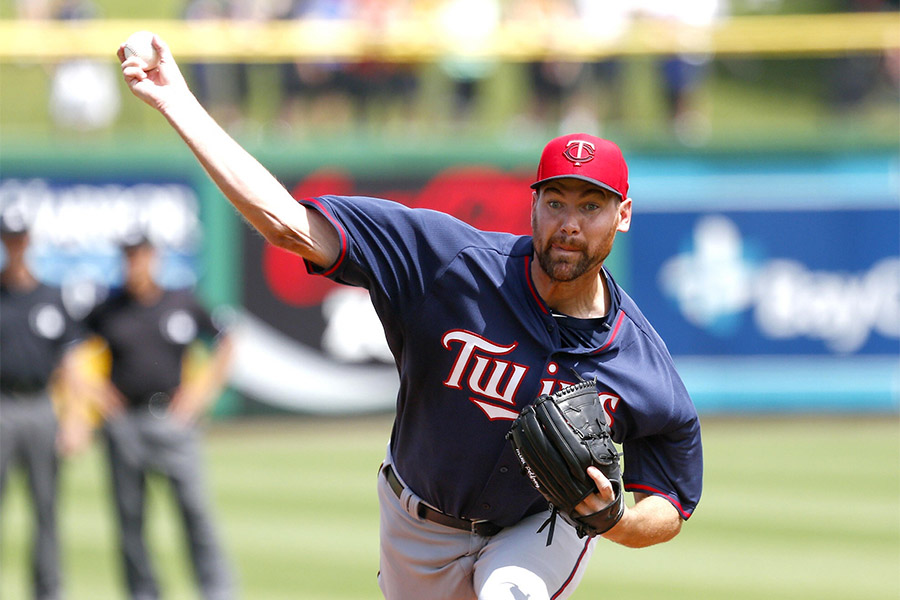 He was "OK." He described it as such. He didn't dominate (only two strikeouts amid seven hits and two walks in 4.2 IP) but also didn't give up many runs (only two, and only one was earned). His control wasn't terrible, but it also wasn't stellar. He was hurt by his defense. (Eduardo Nunez had and error and a couple he probably could have fielded.) He was also helped by it. (Eduardo Escobar and Reynaldo Rodriguez both made wonderful plays, and Escobar's probably saved more runs.) In short, it wasn't the dominant game he probably wanted to lay sole claim to the job of fifth starter with, nor was it a step backwards. Both he and Twins Manager Paul Molitor said he "battled" and that's about right. When asked about the competition for fifth starter, Pelfrey deferred and talked about how he's just happy to feel healthy. "I feel good. In 2013, I came back from Tommy John in eleven months for opening day. Maybe it was too early," said Pelfrey. "Last year, it faded off pretty quick. But I feel good again. I expect good things to happen - to be successful - when I feel good. At the end of they day, as long as I feel good, no matter what happens, so be it." So this was not a knockout. Instead, it looks like we're going to have at least one more round as Molitor said after the game that both pitchers competing against Pelfrey, Tommy Milone and Trevor Mays, will get another start this week. It is not clear if both would start on the same day - both of them should have their next turn on Thursday. If that happens, one would need to start in one of the minor league games. But the Twins could bump one of them back a day to Friday - the day that Phil Hughes is scheduled to pitch - and have Hughes throw to minor leaguers instead. Whatever the decision, Molitor doesn't seem to be overly worried that he isn't going to be stuck with someone who isn't prepared. He finished his postgame talk by saying "I like my options." Escobar's Day Last night I wrote that we should trust Eduardo Escobar's bat more than we do, so today he struck out in his first three at-bats. He had only struck out twice over 32 at-bats in spring training prior to today. However, he made two very good defensive plays at third base. In the first inning, he started a double play that Molitor talked about at length, praising Escobar's patience. "On the first double play, we try to preach a lot: don't let the speed of the ball speed you up," reflected Molitor. "That was a play with a left-hand hitter, where the double play wasn't there yet. A lot of time, that guy catches that ball and turns and fires and there's nobody there yet, but he let the play kind of develop, and it made it close at first [base], but that was the right way to go about it." Then, in the second inning, following a two-run home run, the Phillies got runners on the corners with only one out. Ben Revere hit a hot grounder down the third base line where Escobar was playing inside the bag, but he ranged to the line, speared it, and caught the runner off base after an efficient run down. Pelfrey's outing might have looked a lot worse if not for that play. By the way, Molitor also had Escobar play a little in the outfield in the late innings today. He did not get a chance to field a fly ball. "A Real Fine Play" Escobar's play was topped the next innings when Twins first baseman Reynaldo Rodriguez dove and speared a hot grounder by Chase Utley, turning it into a leadoff out. When Reynaldo came up to bat at the top of the next frame, there was a memorable scene. One of the beer vendors at the Phillies park has a resonating voice that you can hear throughout the park. When Reynaldo was batting, the vendor happened to be working the aisle right behind home plate and had made it all the way to the bottom, right next to the netting. Midway between yelling "Water! Soda! Beer!" he looked up, saw Rodriguez and boomed "That was a REAL FINE PLAY at first base. JUST GREAT." Not only did Rodriguez hear him - he was only about 10 yards away - but I bet Aaron Hicks heard him in center field. Hell, Eddie Rosario might have heard him, and he didn't make the trip to Clearwater. Rodriguez just looked around as if thinking "Am I not in the middle of an at-bat here?" One More Defensive Play As Pelfrey was battling, trying to get through the fifth inning, the leadoff hitter laid down a successful bunt single. Suddenly, a tiring Pelfrey was faced with a speedster on first and Utley, Howard and Ruiz coming up to bat. Utley laced a line drive to deep right-center field but (at least from my angle behind home plate) it looked like Hicks got a great jump on the ball and raced it down. I asked Molitor about it after the game and Molitor thought he might have started to turn the wrong way but caught up to it. "We all know he can play the position out there." Center Field Battle Hicks started in center field, made that catch, but went 0-2 with a strikeout. He was facing a right-hander. Shane Robinson also made the trip and started in right field. He went 1-3 but also drew a walk. Before the game, I asked Twins general manager Terry Ryan if the Twins felt that Rosario or Hicks would need to play every day to make the 25-man roster. "You could give it some thought with Hicks," replied Ryan, "but I don't see falling into that situation at all. If he's going to be on this team, he's going to have to be a player." I got the sense the Twins are resistant to that idea for Hicks and dead set against it with Rosario. Boyer Continues To Roll Blaine Boyer relieved Pelfrey and continued his streak of strong pitching. He got through 1.1 innings on 14 pitches, and Molitor wanted to bring him back for one more inning, so Boyer had to bat in the National League park. It was not a comfortable moment. "I was just saying 'Don't get hurt. Don't get hurt,'" grinned Molitor. He didn't, by the way. He grounded out. Boyer is an interesting dark horse candidate to make the bullpen. The 33-year-old right-hander retired from baseball in 2012 but then went to play in Japan in 2013 and came back to play with the Padres last year. He's on a minor league deal. He hasn't posted impressive strikeout numbers - just 6.9 K/9 last year in San Diego - but was very effective with only 8 walks in 40.1 innings and a 1.04 WHIP (walks + hits divided by innings pitched). For reference, the only Twins pitchers that matched that WHIP were ... nobody. Not Phil Hughes. Not Glen Perkins. Nobody.
 -
Article: Twins Waiting, Watching (And Wanting)
John Bonnes replied to John Bonnes's topic in Twins Daily Front Page News
If you're talking about Friday's game, Molitor didn't have any problem with Hicks' actions on that ball. He would have liked him to catch it, but said he did what he was supposed to do but just didn't get it. Terry Ryan said today that if this was the regular season, Pinto would have been put on the DL. Since it is not, and they have time, they're going to see what happens. They don't need to put anyone on the DL for two weeks, I don't think, so which DL he might go on is kind of moot. And he may not go onto one at all. One thing I didn't mention is that Ryan said he saw Pinto this morning and was very encouraged by his condition.- 75 replies
-
- 2
-
-
- paul molitor
- terry ryan
- (and 3 more)
-
Article: Twins Waiting, Watching (And Wanting)
John Bonnes replied to John Bonnes's topic in Twins Daily Front Page News
FWIW, I don't think that is the case. I think they were just giving Plouffe some experience there in case he needs to move there during the season. (I think it's much more likely that Molitor is thinking ahead to what his options might eventually be if Sano is promoted. )- 75 replies
-
- 3
-
-
- paul molitor
- terry ryan
- (and 3 more)
-
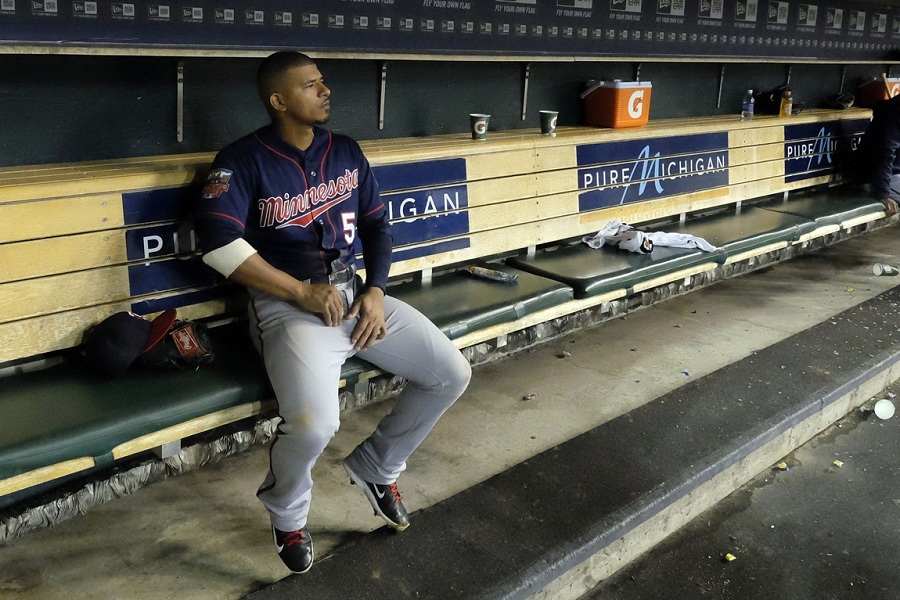 Watching Eduardo Escobar play shortstop on Friday afternoon, it’s understandable why he does not excite a lot of people. He isn’t smooth. He is not stylish. You catch yourself holding your breath watching him … (I’m having coming up with a verb here. He doesn’t race. Stumble is too harsh. Let’s go with hustle, as it conveys both the cynical and positive connotations.) You catch yourself holding your breath watching him hustle towards the hole, field the ball, pivot and make the throw to first base. He looks like he is laboring. He does not inspire confidence. But he made the plays. Asked about Escobar’s defense after Friday’s game, manager Paul Molitor portrayed it as “solid.” “He made all the plays,” reflected Molitor. “That’s typical of what we expect out of him because he’s going to do that.” It’s expected because he made damn near all the plays last year, too. You might be surprised to hear that Eduardo Escobar’s shortstop UZR last year was +2.1 which means he saved approximately two runs more than the average shortstop over the 771 innings he played. Don’t trust the defensive metrics? Let’s do some old school scouting instead. Inside Edge counted 252 ground balls to Escobar last year that were “routine” meaning they are turned into outs 90-100% of the time. Escobar turned all but 6 into outs, or 97.6%. As you might expect, he was not as solid for the plays which are less routine, making a handful fewer outs than one might expect in those cases. Again, not flashy, but solid. His bat, on the other hand, has been eye-catching, especially this spring. He knocked in his 11th RBI on Saturday to lend further credence to the .721 OPS he put up last year over 465 plate appearances. You would think posting an OPS equivalent to Jose Reyes and Jimmy Rollins, while playing solid defense would cement a 26-year-old’s spot in the lineup. You would be wrong, because Escobar is being crowded out of an everyday spot in the lineup so Danny Santana, who filled in as a center fielder last year, can have his turn at shortstop. What isn’t as clear is why that is happening. Why not keep Santana in center field? The obvious reason is that Santana’s future is likely at shortstop, and so why not start that future that right now? But that raises the question: why not start that future last year? The easy answer is that center field was a disaster last year – but it doesn’t looks like a lot has changed. Just like last year, the Twins are throwing a lot of players at the problem in hope that one of them sticks. The other question it raises is: why not start that future, you know, in the future? By then, maybe Aaron Hicks has a track record in AAA that inspires some confidence. Maybe Byron Buxton is ready to take over center field for the next decade. Maybe Escobar has established himself as an everyday shortstop in the eyes of the league and becomes a much more valuable asset in a trade. Or, maybe, Escobar flames out. His doubters can point to last year’s 93 strikeouts (versus just 24 walks) as evidence that his success is far from assured, or that he’s ill-suited for the adjustment pitchers are likely to make this year. But that still is a solution, only now Hicks and Buxton (or Eddie Rosario?) have had more time to establish themselves in center field. In short, the Twins seem to be embracing a solution in search of a problem - except that the problem is fairly obvious. It hasn’t moved; it is where it was last year, in center field, not at shortstop. Escobar’s results should rank higher than whatever potential the Twins still see in their center field candidates. He may not be as stunningly beautiful as my lovely wife, but he’s dependable. Shouldn't that be the priority?
 -
Article: Report From The Fort: John Bonnes
John Bonnes posted a topic in Twins Daily Front Page News
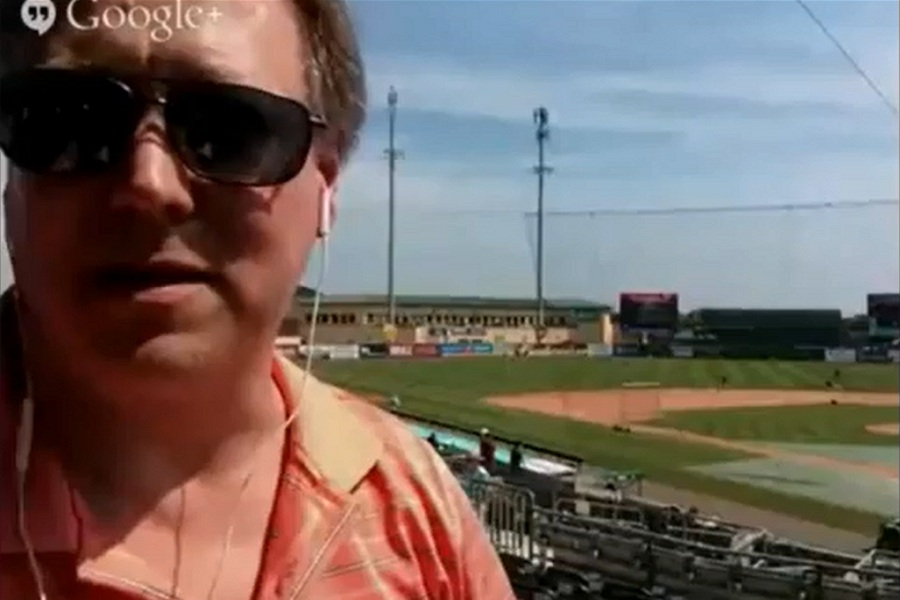
Reading is hard. That's why, for your conveniece, Parker dialed up John reporting Sunday live from Twins batting practice in Jupiter, Florida. They talked about Josmil Pinto's injury, the roster decisions the Twins face, why Eduardo Escobar is getting a raw deal, why you should be going to spring training, the Twins reaction to Trevor May's impressive gameand John's favorite beer in Fort Myers. Plus, you get to see John look like a witness protection enrollee. Click here to view the article -
 https://www.youtube.com/watch?v=MfwGnHIEhrE&feature=youtu.be
 -
Aaron and John talk about Paul Molitor showing stat-head tendencies, Ron Gardenhire going full-on dad mode, gambling on the over/under win totals for AL East and AL West teams, giving away season ticket packages from the Minnesota Farm Growers, top prosopects Byron Buxton, Miguel Sano, Jose Berrios, and Alex Meyer going to the minors, and the best and worst leadoff hitters in Twins history. You can listen by downloading us from iTunes, Stitcher or find it at GleemanAndTheGeek.com. Or just click the Play button below. Click here to view the article

