



Greg Logan
-
Posts
68 -
Joined
-
Last visited
Content Type
Profiles
News
Minnesota Twins Videos
2026 Minnesota Twins Top Prospects Ranking
2022 Minnesota Twins Draft Picks
Minnesota Twins Free Agent & Trade Rumors, Notes, & Tidbits
Guides & Resources
2023 Minnesota Twins Draft Picks
The Minnesota Twins Players Project
2024 Minnesota Twins Draft Picks
2025 Minnesota Twins Draft Pick Tracker
2026 Minnesota Twins Draft Tracker: Picks & Bonuses
Forums
Blogs
Events
Store
Downloads
Gallery
Everything posted by Greg Logan
-
One of the luxuries of being nine games over .500 at the All-Star break is the chance to take a closer look at some of the often-ignored corners of the roster for upgrades. Building a bench that can make a difference late in a ballgame is tough, and in fact most teams in baseball have struggled to do so in recent years, but no team has struggled to quite the extent that the Twins have.Let’s start by taking a look at how American League pinch-hitters have fared over the last five years: 2011: .216/.299/.321, .620 OPS, 73 wRC+2012: .207/.290/.339, .628 OPS, 74 wRC+2013: .208/.300/.343, .643 OPS, 79 wRC+2014: .221/.303/.329, .633 OPS, 82 wRC+2015: .215/.289/.342, .631 OPS, 80 wRC+Clearly fielding strong pinch-hitting options has been a struggle for AL clubs, with pinch-hitters statistically performing 18-27% worse than a league-average hitter according to wRC+, a statistic that attempts to measure such things. By comparison, here’s how the Twins have performed in pinch-hitting situations during the same time frame (390 PA): BA: .178 (last in AL by 19 points)OBP: .250 (last in AL by 26 points)SLG: .247 (last in AL by 65 points)OPS: .497 (last in AL by 100 points)38 wRC+ (last in AL by 27 points)Not only have the Twins been the worst pinch-hitting team in the AL over this stretch, based on the gaps above it hasn’t been particularly close. Judging by wRC+ they’ve been nearly 30% worse than anyone else. And to add insult to injury, in their 35 pinch-hitting opportunities so far in 2015 they’ve been even worse: .086/.158/.114.272 OPS-23 wRC+That’s impressively bad, and while it certainly won’t continue across a full season’s sample size (unless you’re the 2006 Orioles, apparently), the consistently poor performance across five years is concerning. As the July 31st non-waiver trade deadline approaches, it will be interesting to see if a bench bat is a target for the Twins front office or whether they feel they have enough talent in the wings with players like Oswaldo Arcia, Kennys Vargas or even a promising bat like Max Kepler. If it’s the latter, is the team ready to table everyday development for young players in favor of bench production? It could be a fascinating story line as we approach the deadline. Click here to view the article
-
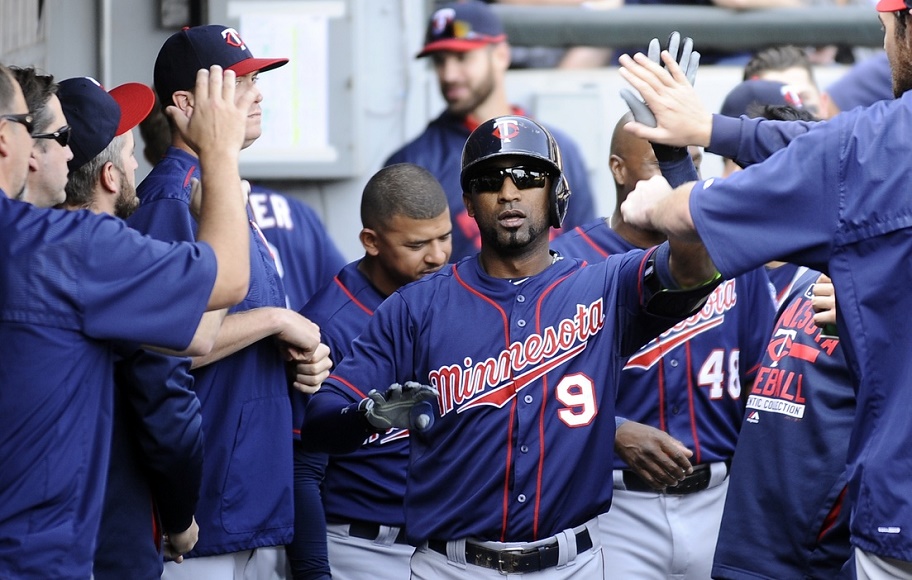 Let’s start by taking a look at how American League pinch-hitters have fared over the last five years: 2011: .216/.299/.321, .620 OPS, 73 wRC+ 2012: .207/.290/.339, .628 OPS, 74 wRC+ 2013: .208/.300/.343, .643 OPS, 79 wRC+ 2014: .221/.303/.329, .633 OPS, 82 wRC+ 2015: .215/.289/.342, .631 OPS, 80 wRC+ Clearly fielding strong pinch-hitting options has been a struggle for AL clubs, with pinch-hitters statistically performing 18-27% worse than a league-average hitter according to wRC+, a statistic that attempts to measure such things. By comparison, here’s how the Twins have performed in pinch-hitting situations during the same time frame (390 PA): BA: .178 (last in AL by 19 points) OBP: .250 (last in AL by 26 points) SLG: .247 (last in AL by 65 points) OPS: .497 (last in AL by 100 points) 38 wRC+ (last in AL by 27 points) Not only have the Twins been the worst pinch-hitting team in the AL over this stretch, based on the gaps above it hasn’t been particularly close. Judging by wRC+ they’ve been nearly 30% worse than anyone else. And to add insult to injury, in their 35 pinch-hitting opportunities so far in 2015 they’ve been even worse: .086/.158/.114 .272 OPS -23 wRC+ That’s impressively bad, and while it certainly won’t continue across a full season’s sample size (unless you’re the 2006 Orioles, apparently), the consistently poor performance across five years is concerning. As the July 31st non-waiver trade deadline approaches, it will be interesting to see if a bench bat is a target for the Twins front office or whether they feel they have enough talent in the wings with players like Oswaldo Arcia, Kennys Vargas or even a promising bat like Max Kepler. If it’s the latter, is the team ready to table everyday development for young players in favor of bench production? It could be a fascinating story line as we approach the deadline.
 -
One of the luxuries of being nine games over .500 at the All-Star break is the chance to take a closer look at some of the often-ignored corners of the roster for upgrades. Building a bench that can make a difference late in a ballgame is tough, and in fact most teams in baseball have struggled to do so in recent years, but no team has struggled to quite the extent that the Twins have. Let’s start by taking a look at how American League pinch-hitters have fared over the last five years: 2011: .216/.299/.321, .620 OPS, 73 wRC+ 2012: .207/.290/.339, .628 OPS, 74 wRC+ 2013: .208/.300/.343, .643 OPS, 79 wRC+ 2014: .221/.303/.329, .633 OPS, 82 wRC+ 2015: .215/.289/.342, .631 OPS, 80 wRC+ Clearly fielding strong pinch-hitting options has been a struggle for AL clubs, with pinch-hitters statistically performing 18-27% worse than a league-average hitter according to wRC+, a statistic that attempts to measure such things. By comparison, here’s how the Twins have performed in pinch-hitting situations during the same timeframe (390 PA): BA: .178 (last in AL by 19 points) OBP: .250 (last in AL by 26 points) SLG: .247 (last in AL by 65 points) OPS: .497 (last in AL by 100 points) 38 wRC+ (last in AL by 27 points) Not only have the Twins been the worst pinch-hitting team in the AL over this stretch, based on the gaps above it hasn’t been particularly close. Judging by wRC+ they’ve been nearly 30% worse than anyone else. And to add insult to injury, in their 35 pinch-hitting opportunities so far in 2015 they’ve been even worse: .086/.158/.114 .272 OPS -23 wRC+ That’s impressively bad, and while it certainly won’t continue across a full season’s sample size (unless you’re the 2006 Orioles, apparently), the consistently poor performance across five years is concerning. As the July 31st non-waiver trade deadline approaches, it will be interesting to see if a bench bat is a target for the Twins front office or whether they feel they have enough talent in the wings with players like Oswaldo Arcia, Kennys Vargas or even a promising bat like Max Kepler. If it’s the latter, is the team ready to table everyday development for young players in favor of bench production? It could be a fascinating storyline as we approach the deadline.
-
 Also, Robinson looks like a middle schooler standing next to Matt Weiters.
 -
I had this awesome ****ting-on-Nunez session with a bunch of Yankees fans in the stands today. And of course it ended 30 seconds before his homer.
- 25 replies
-
- 2
-

-
- eduardo escobar
- kennys vargas
- (and 2 more)
-
Article: Most Marketable Twin: 2015
Greg Logan replied to Cody Christie's topic in Twins Daily Front Page News
This guy's a marketing machine. -
Article: Terry Ryan at the Helm, Part One
Greg Logan replied to Daniel R Levitt's topic in Twins Daily Front Page News
Dan - this is fascinating, thanks for sharing. It's hard not to draw a link between the disappointment with the farm system in the late 90's and TR's conservative approach with his prospects now. Looking forward to reading the rest. -
Article: Who Says No? Brian Dozier Edition
Greg Logan replied to Seth Stohs's topic in Twins Daily Front Page News
I think most people don't realize how long we have Dozier under team control, and I think that's where the extension talk comes from. The example here would cost at least $15M more to essentially book Dozier's age-32 season. I'm not sure its worth it if you look at it that way. I'm in the camp with the folks commenting above. Give it another year. If he maintains the pop he showed, especially in the 1st half, and keeps getting on base at the same rate, book him at least through age 32 as suggested in the Seth's article, probably a year or two more -
“Each year, the Twins have a group of players who are under team control but have accumulated enough major-league service time to be arbitration eligible. This means that the player and his agent have a say in the matter of compensation. Both the club and player submit figures that they believe will be fair, and then the two sides typically reach a compromise in the middle. In extremely rare cases where an agreement can’t be reached, an arbitrator hears the case and selects the figure offered by either the player or the team. [Arbitration eligibility] means that the player and his agent have a say in the matter of compensation. Both the club and player submit figures that they believe will be fair, and then the two sides typically reach a compromise in the middle. In extremely rare cases where an agreement can’t be reached, an arbitrator hears the case and selects the figure offered by either the player or the team.” - Nick Nelson, Twins Daily 2015 Offseason Handbook This brief explanation from Nick Nelson’s arbitration segment in the Offseason Handbook paints a good picture of one of the first stages of the offseason for the Twins, and one that could have a bigger impact on the rest of the Twins’ decisions than most fans realize. Step 1: Committed Payroll To set the stage on how arbitration figures and non-tender decisions might impact the payroll and offseason moves, let’s look at a a very conservative (and very unlikely) projection of a 2015 roster, based solely around current team control: C – Suzuki - $6M 1B – Mauer - $23M 2B – Dozier - $0.5M SS – Escobar - $0.5M 3B – Plouffe - Arb LF – Schafer - Arb CF – Santana - $0.5M RF – Arcia – $0.5M DH – Vargas - $0.5M B – Pinto - $0.5M B – Hicks - $0.5M B – Nunez - Arb B – Parmelee/TBD - $0.5M SP – Hughes - $8M SP – Nolasco - $12M SP – Gibson - $0.5M SP – Milone - Arb SP – May - $0.5M CL – Perkins - $4.7M SU – Fien - Arb LHP – Duensing - Arb RHP – Thielbar - $0.5M RHP – Tonkin/Pressly - $0.5M RHP – Swarzak - Arb RHP – Pelfrey - $5.5M There's a lot of room for variation here, but the point of this exercise isn’t necessarily to predict the 25-man roster. In this example, the fixed portion of the payroll (before factoring in arbitration-eligible players) shakes out to roughly $65M, with Plouffe, Schafer, Nunez, Milone, Fien, Duensing and Swarzak rounding out the 25-man roster as arbitration eligible players. Step 2: Arbitration Projections Projecting arbitration figures is tough work, and everyone has their own ways of doing it. I’ll illustrate this by comparing the Offseason Handbook’s projections (trying to keep the player-specific arbitration figures a mystery for the authors’ sake) to those of the folks at MLB Trade Rumors. For the Twins Daily staff, the total for the arbitration-eligible players came out to $17.3M, or a total of $82.5M in payroll in the example above. By comparison, MLB Trade Rumors projects these players at a total of only $14.8M, for a total payroll of $80M. Two things should jump out to you: How close both are to the roughly $85M the Twins spent last year, a figure that Terry Ryan has been quoted as saying he “does not see… going down significantly.” If you take Mr. Ryan at his word, Twins fans shouldn’t expect a big investment on a left fielder or a starting pitcher in the unlikely case that all arbitration-eligible players are retained. The difference of $2.5M between the two, which displays how much uncertainty is associated with these figures. This $2.5M range could impact the free agent tier the team is able to land if/when they do test the market this offseason. For example, the difference between a $7.5M/year pitcher and a $10M/year pitcher could be significant. Step 3: Non-tender Decisions As mentioned above, it’s highly unlikely the Twins will retain all seven arbitration-eligible players this offseason. Plouffe, Fien and likely Schafer will get their raises, but the remaining non-tender candidates are at risk due to either younger, cheaper alternatives (Duensing, Swarzak and Milone) or a simple lack of production/upside (Nunez). An aggressive approach to the non-tender process, perhaps involving the latter four, could yield an extra $8-9M in extra payroll flexibility (depending on the projection) that could be applied to free agent offers. In this scenario the Twins would land at between a $73.3M (TD) and $73.1M (MLBTR) in payroll, leaving them with roughly $12M to spend before hitting the $85M mark. Step 4: The Impact Putting all of this into context, $12M is decidedly not a lot of money for a team hoping to fill holes in both left field and the rotation. Every little bit counts, however, especially with the competitive disadvantage the Twins struggles give them in signing free agents. An extra $2-3 million from non-tendering a Brian Duensing or a Tommy Milone could push the Twins above a more competitive team for a free agent. What’s your take? Is Duensing worth the money with no proven alternatives to fill the lefty roll in the bullpen? Is Milone due for a bounceback (hint: outfield defense)? Can Schafer maintain enough productivity to warrant ~$1.5M as a fourth outfielder?
-
Yup! He's hit the above criteria in his last 9 straight starts.
-
As we near the end of yet another September stretch that's given Twins fans little incentive to tune in, our de facto staff ace Phil Hughes is about to give us one big reason to pop in the headphones at work on Wednesday: a genuine shot at history. As reported by NBC's HardBallTalk on Saturday, Hughes currently sits at the highest single-season K/BB rate in baseball history going into his Wednesday start against the Diamondback. His 11.31 K/BB rate narrowly edges Bret Saberhagen's 1994 rate of 11.00. By my math, Hughes needs to accomplish one of two things against the Diamondbacks to take the record: 1. Issue zero walks 2. Issue a single walk while striking out 7 or more I should also mention that if Hughes goes 8.1 innings, he hits the 210 IP mark that qualifies him for an extra $500k bonus. I think we can all agree he deserves it. So skip work if you can, pop in the earbuds if you can't, and cheer hard for strikes (under your breath if you have to). It ain't every day you get a chance to witness history, folks.
-
Article: Non-Roster Hopefuls
Greg Logan replied to Seth Stohs's topic in Twins Daily Front Page News
Let's not forget that we barely got to use the new "Debbie" nickname during Spring Training. -
As reported by Jackson Alexander of MLB.com, Ron Gardenhire was quoted Thursday as stating that "we've got to take some pressure off our starters." While it's clear that the Twins' 28th ranked rotation (dead last in August) could use some help, it seems shortsighted to call out the offense, which despite two quiet nights at the plate has led baseball in most major categories this month. The Twins' offense has been a force in August, leading baseball in runs scored, batting average, OBP, wOBA and wRC+. Using a relatively consistent lineup for the majority of the month, the Twins seem to have found their identity on offense; and even more promising is the fact that they did it using mainly players that most would consider key pieces of the next Twins playoff team. Ultimately, fans across Twins territory demand more from a team 15 games out of first and flirting with its fourth straight 90-loss season, and rightfully so. But the question should be asked, why is the manager placing blame on the offense and not on his struggling rotation and a suddenly spotty bullpen? Most would agree that the rotation is in a difficult position, with Phil Hughes and Kyle Gibson being the only points of reliability. Trevor May hasn't been able to translate the improved command he showed at AAA into major league success, and Tommy Milone has seen an expected dropoff in his early inflated numbers after moving from the A's 17th-ranked defense to the Twins' 26th-ranked squad. Nolasco remains an enigma, as the team needing a few more starts to truly feel out whether he is healthy or whether he may simply be struggling with AL offenses. The Twins will likely have to ride out the rotation in its current form for the remainder of the season to gauge where it stands going into 2015, but Gardenhire isn't doing the team any favors misrepresenting them as merely needing run support to be successful. Baseball is a game plagued by small sample sizes, and it feels as if the skipper was quick to jump on two games of quiet bats rather than challenge his struggling arms to step up against the division leaders.
-
It's a fair point. Meyer's averaged just under 5 IP over his last ten starts, including the clunkers in late June, but over his last 5 starts its been around 6 IP/start. For comparison, here are the averages for some of the replaceable pitchers who have started this season: Pino - ~5.2 IP/start Correia - ~5.2 IP/start Deduno - <5 IP/start Darnell - 4.5 IP/start Johnson - <4.5 IP/start So the argument could certainly be made that, if consistent, Meyer is no worse on the bullpen than the existing AAAA options.
-
If he has a ~150 inning limit, he's looking at about 6-7 more starts before being shut down. It's hard to fault the organization one way or the other. Seth just tweeted a scenario involving May starting Saturday and Correia being pushed back a day to let Milone start Monday. If we follow that pitching schedule for another week, it lines Correia up with Meyer on 8/18 vs. the Royals. If the organization wants to let Meyer taste a few MLB starts, it wouldn't be hard to swing it by cutting Correia prior to that game and calling up Meyer for the next 2-3 times through the rotation
-
On the other hand, they've been quicker to promote position players than pitchers. On top of Hicks last year, Santana and Polanco have both seen major league time more quickly than expected. I wonder if Santana's early success balances out Hicks's lack thereof in their decision-making.
- 28 replies
-
- 1
-
-
- joe mauer
- kyle gibson
- (and 2 more)
-
The 30-And-Under Experiment (Plus Joe And Glen)
Greg Logan commented on Greg Logan's blog entry in Bloop Singles
See, if nothing else, I have to think it would be an entertaining disaster. The alternative is equally disastrous, but boring at the same time. And that's the recipe for just god-awful ticket sales next year. -
It's over, folks. Time to throw in the towel. Again. As we push past the trade deadline into the final 50-ish games of the season, conventional baseball wisdom would suggest that the younger players should be getting the majority of the plate appearances and innings. I say we throw caution to the wind. Let's assume, for the sake of argument, that we find new homes for the likes of Willingham, Suzuki, Correia, and even Duensing, and let's also assume, as expected, that Twins Daily is given complete control over the roster for the remainder of the season. What's the worst that could happen if we refuse to give another PA or IP to anyone under the age of 30? A 30-or-younger active roster might come out looking like the one below. Try to look past the fact that I have 31-year-olds Mauer, Perkins and Nolasco in there. The guys have contracts. We might as well be realistic here. 25-Man Roster C Josmil Pinto 1B Joe Mauer 2B Brian Dozier SS Eduardo Escobar 3B Trevor Plouffe OF Aaron Hicks CF Byron Buxton OF Oswaldo Arcia DH Kennys Vargas C Eric Fryer C/OF Chris Herrmann SS/OF Danny Santana 1B/OF Chris Parmelee SP Phil Hughes SP Ricky Nolasco SP Kyle Gibson SP Alex Meyer SP Trevor May CL Glen Perkins SU Casey Fien LHP Caleb Thielbar RHP Ryan Pressly RHP Stephen Pryor RHP Michael Tonkin LHP Logan Darnell Frankly, I've yet to find anyone who can convince me that this isn't a good idea, or at very least a replacement-level one. I'll admit that you probably keep Buxton in AA, but you gotta put fans in the seats somehow, right? Fire away. Santana or Hicks in CF instead of Buxton? Eddie Rosario in the mix? Go all-in and throw in Jose Berrios? Go for it. It's your organization. TR and Gardy are just working in it.
-
Download attachment: Hicks_Aaron_Gardy_US_720.jpg I’m not in love with Aaron Hicks. I can’t disagree with Rob Antony and Ron Gardenhire’s critique of his preparation, and I’ve always been an unabashed Denard Span guy. (Note: I'm hugely excited that he ended up in DC, where I live now). But I do think we (the Twins-loving public) have been giving Hicks a raw deal by bashing the year he’s having. First off, the easy part: let’s look at his on-base percentage (OBP). I noticed today that, of the 32 major league center fielders that have 100+ plate appearances, Hicks is actually in the top half with an OBP of .339. That’s well above league average and good for 14th out of those 32. In spite of the batting average that’s been getting all the attention, this is certainly not the Aaron Hicks of last year, who got on base at a .259 rate. Now, granted, he isn’t hitting for any power, as shown by his almost Revere-ish .073 ISO, but for a guy in the 8 or 9 hole, most teams would take an above league-average on-base guy any day, power or not. Speaking of Ben Revere, I should note that both he and (gasp) Denard Span sit well behind Hicks in the OBP rankings, at .287 and .284 respectively. Even if you take a look at wOBA, which factors in power numbers, you still don’t have Hicks as far down the rankings as you might think when looking at his batting average: 23rd out of 32 with a .290 wOBA. Next, Hicks’ BABIP (batting average on balls in play) is substantially lower than any guy with his kind of speed has any business maintaining. If we take a look at his batted ball rates, we see part of the issue. He’s hitting grounders 53.8% of the time (league average 45.6%) and hitting line drives only 16.9% of the time (league average 20.2%). But, even normalizing his batting average based on league average BABIP for those different batted ball rates, he’d be batting closer to the .230 mark than the .198 mark he’s showing now. (Note: I’ll be putting out another entry in the next few days explaining how I calculated this). And that’s assuming he continues grounding the ball so often and lining the ball so rarely, which both seem unlikely. Also of note, for a guy who’s shown a history some pop, Hicks has a HR/FB rate of only 5.3% (league average 10.1%). This tends to normalize to career average over a full season, so I would assume that a few more of these fly balls will be finding the seats, particularly as the Twins spend more games away from Target Field between now and the All-Star break. Now, I’m not saying Hicks is the top-of-the-order guy the fan base (and organization) wanted him to be when he took the centerfield job last spring. But I do think if he continues to improve on defense and his offense starts normalizing, he can be the fairly-decent placeholder for the Byron Buxton era that this team needs. A little prep work can go a long way, and if what Gardy and Antony are saying is true, Hicks could see substantial improvement on his strikeout rate and overall batting average by putting in a bit more time in the clubhouse. And, after all, let’s not forget that he’s only 24. Agree? Disagree? “New Breed Stat Guys” nonsense, as Bob Ryan would say? Click here to view the article
-
Download attachment: Santana_Danny_Stare_US_720.jpg My first exposure to Danny Santana was a spring game in March against the Red Sox. While I certainly remember his flashy play (1-3 with a 2B, a walk and a SB), it was a costly 5th inning fielding error, leading to a 2-run Red Sox rally that gave the defending champs the game, that stuck with me as a perfect example of the inconsistency marking Santana’s young career. That defensive inconsistency was the reason many assumed Santana’s first call-up in early May would be a short one, but he slammed the door behind him with a blistering pace at the plate. He has now hit at a .340/.382/.447 clip for roughly a month and a half, thanks in a large part to a .423 BABIP. Even his defensive shortcomings have been masked by a shift to center field, where lack of experience on defense has been helped by lowered expectations given the limited options at the position. Between his tremendous offensive output from the leadoff spot and the injuries to Aaron Hicks and Trevor Plouffe, it seems Santana has cemented himself in the lineup for the foreseeable future. But for how long can a young man with a career minor league batting line of .274/.318/.393 be expected to perform at this high level? The Bad News: As the sabermetricians among us will point out, a .423 sample BABIP won’t last long. A high BABIP will inevitably regress, given enough AB's, toward the player’s career average BABIP, which for the league average player was .297 in 2013. If Santana maintains the same K%, BB% and batted ball rates, we can expect him to hit at roughly a .287/323/.412 line the rest of the season provided he follows league averages for BABIP. The Good News: While we can assume Santana’s BABIP of .423 won’t maintain, it may not normalize to quite as low a level as we’d expect. The above projections assume league average BABIP for ground balls (roughly .241), and players with Santana’s speed tend to have above-average BABIP for grounders. Santana has already shown the ability to consistently outrun routine grounders and even bunts. Hard-hitting speedsters like Mike Trout and Andrew McCutchen were able to maintain GB BABIP’s of over .300 in 2013, but a more conservative ground ball BABIP for Santana would be Dozier’s 2013 rate of .277 The Other Good News: The guy hits a lot of line drives, and line drives get you hits. Danny Santana leads the team (minus Eric Fryer and his 5 AB’s) in LD% with 29.7%, and line drives yield a league average of a .695/.688/.894 line. While I couldn’t find Santana’s minor league batted ball rates (note: any suggestions for this would be much appreciated), it’s fairly safe to assume this will regress a bit, but it does bode well for his normalized numbers to land above his minor league averages. Santana’s speed will also continue to stretch line drives from singles to doubles and from doubles to triples. The Bottom Line: Trying to project Santana’s numbers as the season progresses, we can make a few reasonable assumptions: A) his BABIP will drop substantially, his ground ball BABIP will be well above league average, and C) his LD%, if maintained, will keep his average decent and yield a good number of extra bases. If he can maintain his LD% and keeps his GB BABIP up around .275, he would project at around a .300/.335/.417 slash, but splitting the difference between his LD% and the team’s rate of 21.4% would yield closer to .282/.319/.409, which seems more likely given his minor league averages. With Eduardo Escobar covering third base for the next few weeks, Santana will have to prove his bat can outperform the inconsistency of his glove. If he can meet these projections, he just may be able to hold his spot on a healthy 25-man roster for the long term. Click here to view the article
-
My first exposure to Danny Santana was a spring game in March against the Red Sox. While I certainly remember his flashy play (1-3 with a 2B, a walk and a SB), it was a costly 5th inning fielding error, leading to a 2-run Red Sox rally that gave the defending champs the game, that stuck with me as a perfect example of the inconsistency marking Santana’s young career. That defensive inconsistency was the reason many assumed Santana’s first call-up in early May would be a short one, but he slammed the door behind him with a blistering pace at the plate. He has now hit at a .340/.382/.447 clip for roughly a month and a half, thanks in a large part to a .423 BABIP. Even his defensive shortcomings have been masked by a shift to center field, where lack of experience on defense has been helped by lowered expectations given the limited options at the position. Between his tremendous offensive output from the leadoff spot and the injuries to Aaron Hicks and Trevor Plouffe, it seems Santana has cemented himself in the lineup for the foreseeable future. But for how long can a young man with a career minor league batting line of .274/.318/.393 be expected to perform at this high level? The Bad News: As the sabermetricians among us will point out, a .423 sample BABIP won’t last long. A high BABIP will inevitably regress, given enough AB's, toward the player’s career average BABIP, which for the league average player was .297 in 2013. If Santana maintains the same K%, BB% and batted ball rates, we can expect him to hit at roughly a .287/323/.412 line the rest of the season provided he follows league averages for BABIP. The Good News: While we can assume Santana’s BABIP of .423 won’t maintain, it may not normalize to quite as low a level as we’d expect. The above projections assume league average BABIP for ground balls (roughly .241), and players with Santana’s speed tend to have above-average BABIP for grounders. Santana has already shown the ability to consistently outrun routine grounders and even bunts. Hard-hitting speedsters like Mike Trout and Andrew McCutchen were able to maintain GB BABIP’s of over .300 in 2013, but a more conservative ground ball BABIP for Santana would be Dozier’s 2013 rate of .277 The Other Good News: The guy hits a lot of line drives, and line drives get you hits. Danny Santana leads the team (minus Eric Fryer and his 5 AB’s) in LD% with 29.7%, and line drives yield a league average of a .695/.688/.894 line. While I couldn’t find Santana’s minor league batted ball rates (note: any suggestions for this would be much appreciated), it’s fairly safe to assume this will regress a bit, but it does bode well for his normalized numbers to land above his minor league averages. Santana’s speed will also continue to stretch line drives from singles to doubles and from doubles to triples. The Bottom Line: Trying to project Santana’s numbers as the season progresses, we can make a few reasonable assumptions: A) his BABIP will drop substantially, his ground ball BABIP will be well above league average, and C) his LD%, if maintained, will keep his average decent and yield a good number of extra bases. If he can maintain his LD% and keeps his GB BABIP up around .275, he would project at around a .300/.335/.417 slash, but splitting the difference between his LD% and the team’s rate of 21.4% would yield closer to .282/.319/.409, which seems more likely given his minor league averages. With Eduardo Escobar covering third base for the next few weeks, Santana will have to prove his bat can outperform the inconsistency of his glove. If he can meet these projections, he just may be able to hold his spot on a healthy 25-man roster for the long term.
-
My first exposure to Danny Santana was a spring game against the Red Sox in March. While I certainly remember his flashy play (1-3 with a 2B, a walk and a SB), it was a costly 5th inning fielding error, leading to a 2-run Red Sox rally that gave the defending champs the game, that stuck with me as a perfect example of the inconsistency of Santana’s young career. That defensive inconsistency was the reason many assumed Santana’s first call-up in early May would be a short one, but he slammed the door behind him with a blistering pace at the plate. He has now hit at a .340/.382/.447 clip for roughly a month and a half, thanks in a large part to a .423 BABIP. Even his defensive shortcomings have been masked by a shift to center field, where lack of experience on defense has been helped by lowered expectations given the limited options at the position. Between his tremendous offensive output from the leadoff spot and the injuries to Aaron Hicks and Trevor Plouffe, it seems that Santana has cemented himself in the lineup for the foreseeable future. But for how long can a young man with a career minor league batting line of .274/.318/.393 be expected to perform at this high of a level? The Bad News: As the sabermetricians among us will point out, a .423 sample BABIP won’t last long. A high BABIP will inevitably regress toward the player’s career average BABIP given enough ABs, which for the league average player was .297 in 2013. If Santana maintains the same K%, BB% and batted ball rates, we can expect him to hit at roughly a .287/323/.412 line the rest of the season if he follows league averages for BABIP. The Good News: While we can assume Santana’s BABIP of .423 won’t maintain, it may not normalize to quite as low a level as we’d expect. The above projections assume league average BABIP for ground balls (roughly .241), and players with Santana’s speed tend to have above-average BABIP for grounders. Santana has already shown the ability to outrun routine grounders and even bunts consistently. Hard hitting speedsters like Mike Trout and Andrew McCutchen were able to maintain GB BABIP’s of over .300 in 2013, but a more conservative ground ball BABIP for Santana would be Dozier’s 2013 rate of .277 The Other Good News: The guy hits a lot of line drives, and line drives get you hits. Danny Santana leads the team (minus Eric Fryer and his 5 AB’s) in LD% with 29.7%, and line drives yield a league average of a .695/.688/.894 line. While I couldn’t find Santana’s minor league batted ball rates (note: any suggestions for this would be much appreciated), it’s fairly safe to assume this will regress a bit, but it does bode well for his normalized numbers to land above his minor league averages. Santana’s speed will also continue to stretch line drives from singles into doubles and from doubles into triples. The Bottom Line: Trying to project Santana’s numbers as the season progresses, we can make a few reasonable assumptions: A) his BABIP will drop substantially; his ground ball BABIP will be well above league average; and C) his LD%, if maintained, will keep his average decent and yield a good number of extra bases. If he can maintain his LD% and keeps his GB BABIP up around .275, he would project at around a .300/.335/.417 slash, but splitting the difference between his LD% and the team’s rate of 21.4% would yield closer to .282/.319/.409, which seems more likely given his minor league averages. With Eduardo Escobar covering third base for the next few weeks, Santana will have to prove that his bat can outperform the inconsistency of his glove. If he can meet these projections, he just may be able to hold his spot on a healthy 25-man roster for the long-term.
-
I’m not in love with Aaron Hicks. I can’t disagree with Rob Antony and Ron Gardenhire’s critique of his preparation, and I’ve always been an unabashed Denard Span guy. (Note: I'm hugely excited that he ended up in DC, where I live now). But I do think we (the Twins-loving public) have been giving Hicks a raw deal by bashing the year he’s having. First off, the easy part: let’s look at his on-base percentage (OBP). I noticed today that, of the 32 major league center fielders that have 100+ plate appearances, Hicks is actually in the top half with an OBP of .339. That’s well above league average and good for 14th out of those 32. In spite of the batting average that’s been getting all the attention, this is certainly not the Aaron Hicks of last year, who got on base at a .259 rate. Now, granted, he isn’t hitting for any power, as shown by his almost Revere-ish .073 ISO, but for a guy in the 8 or 9 hole, most teams would take an above league-average on-base guy any day, power or not. Speaking of Ben Revere, I should note that both he and (gasp) Denard Span sit well behind Hicks in the OBP rankings, at .287 and .284 respectively. Even if you take a look at wOBA, which factors in power numbers, you still don’t have Hicks as far down the rankings as you might think when looking at his batting average: 23rd out of 32 with a .290 wOBA. Next, Hicks’ BABIP (batting average on balls in play) is substantially lower than any guy with his kind of speed has any business maintaining. If we take a look at his batted ball rates, we see part of the issue. He’s hitting grounders 53.8% of the time (league average 45.6%) and hitting line drives only 16.9% of the time (league average 20.2%). But, even normalizing his batting average based on league average BABIP for those different batted ball rates, he’d be batting closer to the .230 mark than the .198 mark he’s showing now. (Note: I’ll be putting out another entry in the next few days explaining how I calculated this). And that’s assuming he continues grounding the ball so often and lining the ball so rarely, which both seem unlikely. Also of note, for a guy who’s shown a history some pop, Hicks has a HR/FB rate of only 5.3% (league average 10.1%). This tends to normalize to career average over a full season, so I would assume that a few more of these fly balls will be finding the seats, particularly as the Twins spend more games away from Target Field between now and the All-Star break. Now, I’m not saying Hicks is the top-of-the-order guy the fan base (and organization) wanted him to be when he took the centerfield job last spring. But I do think if he continues to improve on defense and his offense starts normalizing, he can be the fairly-decent placeholder for the Byron Buxton era that this team needs. A little prep work can go a long way, and if what Gardy and Antony are saying is true, Hicks could see substantial improvement on his strikeout rate and overall batting average by putting in a bit more time in the clubhouse. And, after all, let’s not forget that he’s only 24. Agree? Disagree? “New Breed Stat Guys” nonsense, as Bob Ryan would say?
-
Are we giving Aaron Hicks a raw deal?
Greg Logan commented on Greg Logan's blog entry in Bloop Singles
I agree with you folks to an extent. I agree that he likely won't get back to his minor league offensive numbers, but I also think its reasonable to expect his average to normalize to a .230-.250 range with decent walk rate. If his walk rate settles down to his minor league rate (14.7%) and he's able to boost his LD% even slightly, that equates to about a .225 BA and a .325 OBP. Without any alternatives, I can settle for a .325 OBP at the back of the lineup until Buxton is ready to take over CF. I focused this article on his offense to keep it brief, but I'm on the same page with the three of you that his defense is troubling. The angles he's been taking to balls in the field and the (perceived?) lack of hustle makes it hard to see the defensive upside we thought he had. It's also hard for me to tell whether he isn't going full speed on defense in some cases or if it only looks that way because of his longer strides. -
I’ll start by saying that I’m not an Aaron Hicks lover. I can’t disagree with Rob Antony and Ron Gardenhire’s critique of his preparation, and I’ve always been an unabashed Denard Span guy (note: hugely excited that he ended up in DC, where I live now). But I do think we (the Twins-loving public) have been giving Hicks a raw deal by bashing the year he’s having. First off, the easy part: let’s look at his OBP. I noticed today that, of the 32 major league center fielders that have 100+ plate appearances, Hicks is actually in the top half with an OBP of .339. That’s well above league average and good for 14th out of those 32. In spite of the batting average that’s been getting all the attention, this is certainly not the Aaron Hicks of last year, who got on base at a .259 rate. Now, granted, he isn’t hitting for any power, as shown by his almost Revere-ish .073 ISO, but for a guy in the 8 or 9 hole in the lineup, most teams would take an above league-average on-base guy any day, power or not. Speaking of Ben Revere, I should note that both he and (gasp) Denard Span sit well behind Hicks in the OBP rankings, at .287 and .284 respectively. Even if you take a look at wOBA, which factors in power numbers, you still don’t have Hicks as far down the rankings as you might think when looking at his batting average - 23rd out of 32 with a .290 wOBA. Next, Hicks’ BABIP is substantially lower than any guy with his kind of speed has any business maintaining. If we take a look at his batted ball rates, we see part of the issue. He’s hitting grounders 53.8% of the time (league average 45.6%) and hitting line drives only 16.9% of the time (league average 20.2%). But, even normalizing his batting average based on league average BABIP for those different batted ball rates, he’d be batting closer to the .230 mark than the .198 mark he’s showing now. (Note: I’ll be putting out another entry in the next few days explaining how I calculated this). And that’s assuming he continues grounding the ball so often and lining the ball so rarely, which both seem unlikely. Also of note, for a guy who’s shown a history some pop, Hicks has a HR/FB rate of only 5.3% (league average 10.1%). This tends to normalize to career average over a full season, so I would assume that a few more of these fly balls will be finding the seats, particularly as the Twins spend more games away from Target Field between now and the All-Star break. Now, I’m not saying Hicks is the top-of-the-order guy the fanbase wanted him to be when he took the CF job last spring, but I do think if he continues to improve on defense and his offense starts normalizing, he can be the fairly-decent placeholder for the Byron Buxton era that this team needs. A little prep work can go a long way, and if what Gardy and Antony are saying is true, Hicks could see substantial improvement on his K% and overall batting average by putting in a bit more time in the clubhouse. And, after all, let’s not forget that he’s only 24. Agree? Disagree? “New Breed Stat Guys” nonsense, as Bob Ryan would say?
