



Cody Schoenmann
-
Posts
768 -
Joined
-
Last visited
-
Days Won
1
Content Type
Profiles
News
Minnesota Twins Videos
2026 Minnesota Twins Top Prospects Ranking
2022 Minnesota Twins Draft Picks
Minnesota Twins Free Agent & Trade Rumors, Notes, & Tidbits
Guides & Resources
2023 Minnesota Twins Draft Picks
The Minnesota Twins Players Project
2024 Minnesota Twins Draft Picks
2025 Minnesota Twins Draft Pick Tracker
2026 Minnesota Twins Draft Tracker: Picks & Bonuses
Forums
Blogs
Events
Store
Downloads
Gallery
Everything posted by Cody Schoenmann
-
 A right-handed hitting corner outfielder remains the Twins greatest need at the upcoming trade deadline. Could this journeyman corner outfielder be the solution? Image courtesy of Kirby Lee-USA TODAY Sports The term "journeyman" typically carries a negative connotation with it. Journeymen are considered below-average yet adequate players who bounce from team to team, never finding a consistent home. Although this is the case in most scenarios, current Angels right-fielder Hunter Renfroe is an anomaly. Since 2019, Renfroe has played for the San Diego Padres, Tampa Bay Rays, Boston Red Sox, Milwaukee Brewers, and Los Angeles Angels. Renfroe has bounced around, and if the Angels elect to trade Renfroe this upcoming trade deadline, it would be his sixth team in just five seasons. Despite not finding a long-term home since leaving the Padres in 2019, Renfroe has been an above-average offensive corner outfielder who is about average defensively. If you take out Renfroe's 2020 season with the Rays, where he hit only .156/.252/.393 (.645) over 42 games and 139 plate appearances, Renfroe has hit .243/.305/.480 (.785) with an average wRC+ of 109 and 7.6 WAR accumulated over four seasons. In the past, Renfroe has been a traditional high strikeout power-hitting right-handed hitting corner outfielder, as evidenced by his career K% of 24.6% and Isolated Power (ISO) of .263, with a strong arm and limited range. Yet, this narrative has shifted slightly this year with the Angels. Through 348 at-bats, here are Renfroe's numbers with the Angels: .239/.299/.431 (.730) 16 home runs wRC+ of 98, which is just below the league average K% of 21.8%, just below the league average of 22.7% ISO of .193, which is .30 points higher than the league average Much of these numbers fit Renfroe's career averages, but what is especially encouraging is that Renfroe has lowered his K% while maintaining above-average power. The fascinating aspect of Renfroe's game is that he is more of a balanced right-handed corner outfielder hitting who is hovering toward having reverse splits rather than the lefty masher that those who follow the Twins have been clamoring for. Let's look at Renfroe's splits with the Angels this season: Versus Left-Handed Pitching: 96 PA, .276/.323/.402 (.725), 24 H, five doubles, two home runs, 23 K, six walks. Versus Right-Handed Pitching: 294 PA, .241/.303/.467 (.770), 65 H, 19 doubles, 14 home runs, 61 K, 23 walks. The most logical explanation for Renfroe displaying reverse split tendencies is sample size. Renfroe has 198 more at-bats versus right-handed pitching, but that is more so because of matchups rather than platooning. Like most other teams in Major League Baseball, the Angels have faced far more right-handed pitchers than left-handed pitchers, so there have been few opportunities for Renfroe to face left-handed pitching. Career-wise, Renfroe has fared extremely well when facing left-handed pitching in a larger sample size. Here are Renfroe's career numbers versus left-handed pitching: 933 Plate Appearances .263/.344/.532 (.876) 214 H 99 BB 199 K 57 Home Runs 103 extra-base hits Although Renfroe's numbers this season deviate from his career norms, Renfroe hits left-handed pitching very well while hitting for an immense amount of power, as illustrated by his career .532 slugging percentage when facing left-handed pitching. Renfroe is also a relatively serviceable defensive right fielder. So far in 2023, Renfroe has generated -3 Outs Above Average (OAA) between 726 innings in right field and 39 at first base. Most of his struggles are due to poor jumps and low sprint speed, but Renfroe is not a bad defender. Renfroe has elite arm strength, as evidenced by 95th-percentile arm strength, and makes up for his athletic shortcomings by being a threat to throw runners out, similar to Matt Wallner. On July 26, the Los Angeles Angels traded prospects catching prospect Edgar Quero and pitching prospect Ky Bush to the Chicago White Sox for starting pitcher Lucas Giolito and relief pitcher Reynaldo Lopez. Also, it has been reported that the Angels will not be trading two-way phenom Shohei Ohtani. These two moves signal the Angels, who currently hold a 21.8% chance of making the playoffs according to Fangraphs, are, in fact, going for it rather than selling at the upcoming trade deadline. Whether this is the right decision or not for the Angels, it is improbable they will be trading any of their core pieces, including Renfroe. Although the Angels intend on contending, there is a chance they could make a "big leaguer for big leaguer" type trade like the Cleveland Guardians just did, trading shortstop Amed Rosario to the Los Angeles Dodgers for starting pitcher Noah Syndergaard. Trading Renfroe could be in the Angels best interest as they have serviceable outfielders in Mickey Moniak, Taylor Ward, former Twins prospect Trey Cabbage, with Mike Trout and Jo Adell soon returning from the 10-day IL. The Angels need infield help, particularly at second base, so a Kyle Farmer for Renfroe trade could make sense. Farmer, 32, is on his final year of arbitration this upcoming offseason, so the Angels could elect to non-tender Farmer, theoretically making him a rental player just like Renfroe. One-for-one swaps like this are rare, but considering the Twins very recently traded relief pitcher Jorge López for relief pitcher Dylan Floro, trading Farmer for Renfroe would be another reasonable swap. Both the Angels and Twins are buying with the intent to contend, so trading Major League Caliber players for one another to patch weaknesses could be in both teams' best interests. If the Twins elect not to include Farmer in a deal, there are other routes they could go down to acquire Renfroe, including prospect capital or other Major League caliber players. How Would Renfroe Fit In With the Post-Deadline Twins? The Twins offense has performed exceptionally well out of the All-Star Break, but this team still needs a right-handed hitting corner outfield. If the Twins don't include Farmer in a trade, as I proposed earlier, other roster moves they could make to free up a spot for Renfroe include optioning Wallner or designating one of Joey Gallo or Donovan Solano for assignment. The most likely transaction is optioning Wallner to Triple-A St. Paul, but I argue the move the Twins should make is parting ways with Solano. Solano has been a cult hero of sorts for the Twins through the first 104 games of the season, but his performance has unfortunately significantly declined in the last 15 games hitting just .194/.333/.306 (.639) with only seven hits, zero home runs, and 13 strikeouts in 36 at-bats. To further illustrate Solano's recent struggles, he is hitting just .077/.188/.077 (.265) over his last seven games with only one hit, zero home runs, and eight strikeouts in 13 at-bats. Admittedly, both examples are small sample sizes, but Solano is a 35-year-old utility player with little to no defensive value and a rapidly declining offensive game. Parting with Solano and adding Renfroe to the mix would help the Twins in a multitude of ways. The most significant is that the Twins would finally have a serviceable right-handed hitting corner outfielder to platoon with Kepler, Gallo, Wallner, and Alex Kirilloff while opening up more opportunities for Kirilloff, Edouard Julien, and the soon-to-return Jorge Polanco and Royce Lewis in the infield. Many right-handed corner outfield options will be available at the upcoming trade deadline, but Renfroe is one the Twins best options. With Renfroe being on an expiring deal, the Twins would have to give up very little in a deal, and Renfroe would step in and immediately be one of if not the best corner outfielder on the Twins 26-man roster. Should the Twins trade for Renfroe? What corresponding move would you make if the Twins traded for Renfroe? Comment below. View full article
 -
Should the Twins Trade For This Power Hitting Corner Oufielder?
Cody Schoenmann posted an article in Twins
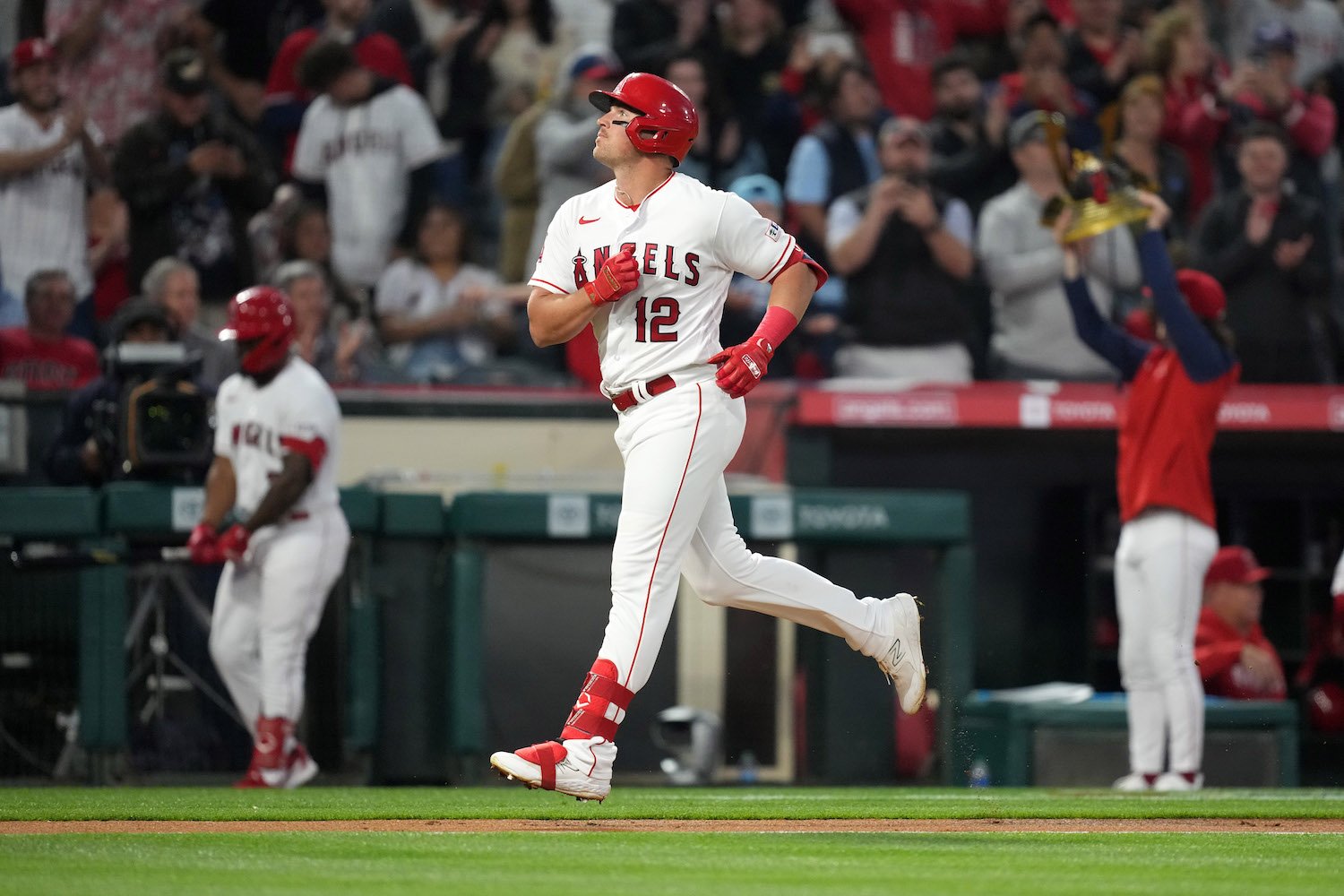 The term "journeyman" typically carries a negative connotation with it. Journeymen are considered below-average yet adequate players who bounce from team to team, never finding a consistent home. Although this is the case in most scenarios, current Angels right-fielder Hunter Renfroe is an anomaly. Since 2019, Renfroe has played for the San Diego Padres, Tampa Bay Rays, Boston Red Sox, Milwaukee Brewers, and Los Angeles Angels. Renfroe has bounced around, and if the Angels elect to trade Renfroe this upcoming trade deadline, it would be his sixth team in just five seasons. Despite not finding a long-term home since leaving the Padres in 2019, Renfroe has been an above-average offensive corner outfielder who is about average defensively. If you take out Renfroe's 2020 season with the Rays, where he hit only .156/.252/.393 (.645) over 42 games and 139 plate appearances, Renfroe has hit .243/.305/.480 (.785) with an average wRC+ of 109 and 7.6 WAR accumulated over four seasons. In the past, Renfroe has been a traditional high strikeout power-hitting right-handed hitting corner outfielder, as evidenced by his career K% of 24.6% and Isolated Power (ISO) of .263, with a strong arm and limited range. Yet, this narrative has shifted slightly this year with the Angels. Through 348 at-bats, here are Renfroe's numbers with the Angels: .239/.299/.431 (.730) 16 home runs wRC+ of 98, which is just below the league average K% of 21.8%, just below the league average of 22.7% ISO of .193, which is .30 points higher than the league average Much of these numbers fit Renfroe's career averages, but what is especially encouraging is that Renfroe has lowered his K% while maintaining above-average power. The fascinating aspect of Renfroe's game is that he is more of a balanced right-handed corner outfielder hitting who is hovering toward having reverse splits rather than the lefty masher that those who follow the Twins have been clamoring for. Let's look at Renfroe's splits with the Angels this season: Versus Left-Handed Pitching: 96 PA, .276/.323/.402 (.725), 24 H, five doubles, two home runs, 23 K, six walks. Versus Right-Handed Pitching: 294 PA, .241/.303/.467 (.770), 65 H, 19 doubles, 14 home runs, 61 K, 23 walks. The most logical explanation for Renfroe displaying reverse split tendencies is sample size. Renfroe has 198 more at-bats versus right-handed pitching, but that is more so because of matchups rather than platooning. Like most other teams in Major League Baseball, the Angels have faced far more right-handed pitchers than left-handed pitchers, so there have been few opportunities for Renfroe to face left-handed pitching. Career-wise, Renfroe has fared extremely well when facing left-handed pitching in a larger sample size. Here are Renfroe's career numbers versus left-handed pitching: 933 Plate Appearances .263/.344/.532 (.876) 214 H 99 BB 199 K 57 Home Runs 103 extra-base hits Although Renfroe's numbers this season deviate from his career norms, Renfroe hits left-handed pitching very well while hitting for an immense amount of power, as illustrated by his career .532 slugging percentage when facing left-handed pitching. Renfroe is also a relatively serviceable defensive right fielder. So far in 2023, Renfroe has generated -3 Outs Above Average (OAA) between 726 innings in right field and 39 at first base. Most of his struggles are due to poor jumps and low sprint speed, but Renfroe is not a bad defender. Renfroe has elite arm strength, as evidenced by 95th-percentile arm strength, and makes up for his athletic shortcomings by being a threat to throw runners out, similar to Matt Wallner. On July 26, the Los Angeles Angels traded prospects catching prospect Edgar Quero and pitching prospect Ky Bush to the Chicago White Sox for starting pitcher Lucas Giolito and relief pitcher Reynaldo Lopez. Also, it has been reported that the Angels will not be trading two-way phenom Shohei Ohtani. These two moves signal the Angels, who currently hold a 21.8% chance of making the playoffs according to Fangraphs, are, in fact, going for it rather than selling at the upcoming trade deadline. Whether this is the right decision or not for the Angels, it is improbable they will be trading any of their core pieces, including Renfroe. Although the Angels intend on contending, there is a chance they could make a "big leaguer for big leaguer" type trade like the Cleveland Guardians just did, trading shortstop Amed Rosario to the Los Angeles Dodgers for starting pitcher Noah Syndergaard. Trading Renfroe could be in the Angels best interest as they have serviceable outfielders in Mickey Moniak, Taylor Ward, former Twins prospect Trey Cabbage, with Mike Trout and Jo Adell soon returning from the 10-day IL. The Angels need infield help, particularly at second base, so a Kyle Farmer for Renfroe trade could make sense. Farmer, 32, is on his final year of arbitration this upcoming offseason, so the Angels could elect to non-tender Farmer, theoretically making him a rental player just like Renfroe. One-for-one swaps like this are rare, but considering the Twins very recently traded relief pitcher Jorge López for relief pitcher Dylan Floro, trading Farmer for Renfroe would be another reasonable swap. Both the Angels and Twins are buying with the intent to contend, so trading Major League Caliber players for one another to patch weaknesses could be in both teams' best interests. If the Twins elect not to include Farmer in a deal, there are other routes they could go down to acquire Renfroe, including prospect capital or other Major League caliber players. How Would Renfroe Fit In With the Post-Deadline Twins? The Twins offense has performed exceptionally well out of the All-Star Break, but this team still needs a right-handed hitting corner outfield. If the Twins don't include Farmer in a trade, as I proposed earlier, other roster moves they could make to free up a spot for Renfroe include optioning Wallner or designating one of Joey Gallo or Donovan Solano for assignment. The most likely transaction is optioning Wallner to Triple-A St. Paul, but I argue the move the Twins should make is parting ways with Solano. Solano has been a cult hero of sorts for the Twins through the first 104 games of the season, but his performance has unfortunately significantly declined in the last 15 games hitting just .194/.333/.306 (.639) with only seven hits, zero home runs, and 13 strikeouts in 36 at-bats. To further illustrate Solano's recent struggles, he is hitting just .077/.188/.077 (.265) over his last seven games with only one hit, zero home runs, and eight strikeouts in 13 at-bats. Admittedly, both examples are small sample sizes, but Solano is a 35-year-old utility player with little to no defensive value and a rapidly declining offensive game. Parting with Solano and adding Renfroe to the mix would help the Twins in a multitude of ways. The most significant is that the Twins would finally have a serviceable right-handed hitting corner outfielder to platoon with Kepler, Gallo, Wallner, and Alex Kirilloff while opening up more opportunities for Kirilloff, Edouard Julien, and the soon-to-return Jorge Polanco and Royce Lewis in the infield. Many right-handed corner outfield options will be available at the upcoming trade deadline, but Renfroe is one the Twins best options. With Renfroe being on an expiring deal, the Twins would have to give up very little in a deal, and Renfroe would step in and immediately be one of if not the best corner outfielder on the Twins 26-man roster. Should the Twins trade for Renfroe? What corresponding move would you make if the Twins traded for Renfroe? Comment below.
 -
Thanks for letting me know @USAFChief . I corrected it. I appreciate it!
- 29 replies
-
- 1
-

-
- 2023 trade deadline
- jeimer candelario
- (and 3 more)
-
The Twins have lacked stability at the third base all season. Could a past divisional foe provide consistency at the hot corner? Image courtesy of © Gary A. Vasquez-USA TODAY Sports Since the departure of Trevor Plouffe after the 2016 season, third base has been a revolving door of sorts for the Twins. They tried handing the position to top prospect Miguel Sano, signing Josh Donaldson to a four-year contract, and then trading Donaldson to the Yankees, hoping to replace him with Gio Urshela. Sadly, none of these attempts to improve at third base worked. After trading Urshela to the Los Angeles Angels this past offseason, the plan was to hand third base to Jose Miranda. Whether it be a nagging shoulder injury or succumbing to the pressure those who follow the Twins placed on him, Miranda has been nearly unplayable at third base, offensively and defensively. After demoting Miranda to Triple-A St. Paul, the Twins immediately activated Royce Lewis from the 60-day IL and anointed him as the full-time starting third baseman. Lewis thrived at third, hitting .326/.354/.474 (.828) with a wRC+ of 132 over 99 plate appearances, but unfortunately, suffered a left oblique strain while running to first while facing the Baltimore Orioles at Camden Yards and has been on the 10-day IL since July 2. Fortunately, Lewis has recently begun playing catch and swinging the bat and plans to return around mid-August. Lewis feels destined to take over the full-time role once he returns from injury. Even so, with rumors of Jorge Polanco planning on playing third base during his rehab assignment at Triple-A due to the grand emergence of Edouard Julien, the Twins plan for the position appears to be up in the air. Lewis, Polanco, and the rotation of Kyle Farmer, Donovan Solano, and Willi Castro feel like adequate solutions for third base, but what if there was a more reliable option? That option may be current Washington Nationals third baseman Jeimer Candelario. Despite flying under the radar to the average baseball fan, Candelario is all too familiar to Twins fans. Candelario, 29, was the starting third baseman for the Detroit Tigers, spanning six years from 2017-2022. Candelario has played 76 total games versus the Twins, including three earlier this season with the Nationals. In 2023 with the Nationals, Candelario has been outstanding. Through 386 plate appearances, Candelario is hitting .257/.334/.478 (.812) with 15 home runs with a wRC+ of 117. Candelario has also accumulated 2.7 fWAR while sporting an Isolated Power (ISO) of .222, 59 points above the league average. Candelario, a switch-hitter, is hitting the ball hard and far from both sides of the batter's box, but he is hitting exceptionally well against left-handed pitching, a trait this Twins team needs. Let's take a look. When Facing Left-Handed Pitching: 119 PA, 25 H, 8 Doubles, 3 HR, 11 BB, 24 K, .240 AVG, .740 OPS When Facing Right-Handed Pitching: 267 PA, 63 H, 19 Doubles, 12 HR, 20 BB, 57 K, .264 AVG, .843 OPS Candelario, unlike Farmer and Solano, has been able hit left-handed pitching at an exceptional level this season, and would instantly provide a spark to that element of the Twins lineup. Candelario is also an incredible defensive third-baseman. Through 91 games, Candelario has generated six (6) Outs Above Average (OAA), ranking him as the sixth-best defensive third baseman in baseball. Here is how Candelario's OAA is divided: To the left: 5 OAA To the right: 0 OAA Going back: 1 OAA Candelario is average while ranging back and to his right, but he excels when going to his left. This is interesting as Candelario's potential life side of the infield partner, Carlos Correa, does exceptionally well going to his right, generating three OAA. With Candelario and Correa's strengths coinciding with one another, the Twins, in theory, could effectively cover the "5.5 hole", which is something the Twins have struggled with this season. To put Candelario's defensive performance into perspective, here is how Twins third baseman have fared when it comes to generating OAA this season: Miranda, 38 games (-6 OAA) Farmer, 27 games (-2 OAA) Castro, 26 games (1 OAA) Lewis, 24 games (-1 OAA) Castro has been the Twins best defensive third baseman, and he has done so by being merely average. Admittedly, Castro is a solid defensive third baseman, but his value resides in being a utility player who can also play every outfield spot, shortstop, and second base. Lewis was fine when healthy, although he is better suited as a center fielder or second baseman. Farmer has been serviceable, and Miranda has unsurprisingly been one of baseball's worst defensive third baseman this season. Regardless, no current Twins third base options are on par with Candelario defensively. With a mix of power, contact, and an overall presence that, whether the concept of lineup protection is real or not, would add a sense of protection to this Twins lineup at a corner infield spot, Candelario is a player the Twins should strongly consider investing in. A hypothetical infield of Kirilloff, Julien, Correa, and Candelario is intriguing and would make the Twins one of the best offensive infields in the American League. Admittedly, having Farmer, Solano, and Castro, as well as Polanco, Lewis, and Miranda likely returning soon from injury, makes adding Candelario seem redundant on the surface. Yet, the addition of Candelario would bring a sense of consistency and resolution to one of the more critical positions on the field and in the lineup. Hypothetically, when the Twins face a left-handed pitcher, Lewis could play third, Candelario could play first, and Polanco could play second alongside Correa at shortstop. Then, when the Twins faced a right-handed pitcher, Candelario could play third, Kirilloff could play first, and Julien could play second with Correa at shortstop. Adding Candelario would give the Twins a plus corner infield bat that would give them an abundance of options when facing different-handed pitchers. Also, and arguably more importantly, trading for Candelario would provide the Twins a sense of stability at third base that has yet to be present since Plouffe departed in 2016. A right-handed hitting corner outfielder that hits left-handed pitching well (i.e., Hunter Renfroe, Teoscar Hernandez, Tommy Pham, etc.) should be the Twins main priority, but adding a corner infielder who hits left-handed pitching well is an area the team the Twins shouldn't shy away from improving. Should the Twins trade for Candelario? How do you think the Twins have fared at third base this season? Comment below. View full article
-
This Former Divisional Foe Could Provide Stability at Third Base
Cody Schoenmann posted an article in Twins
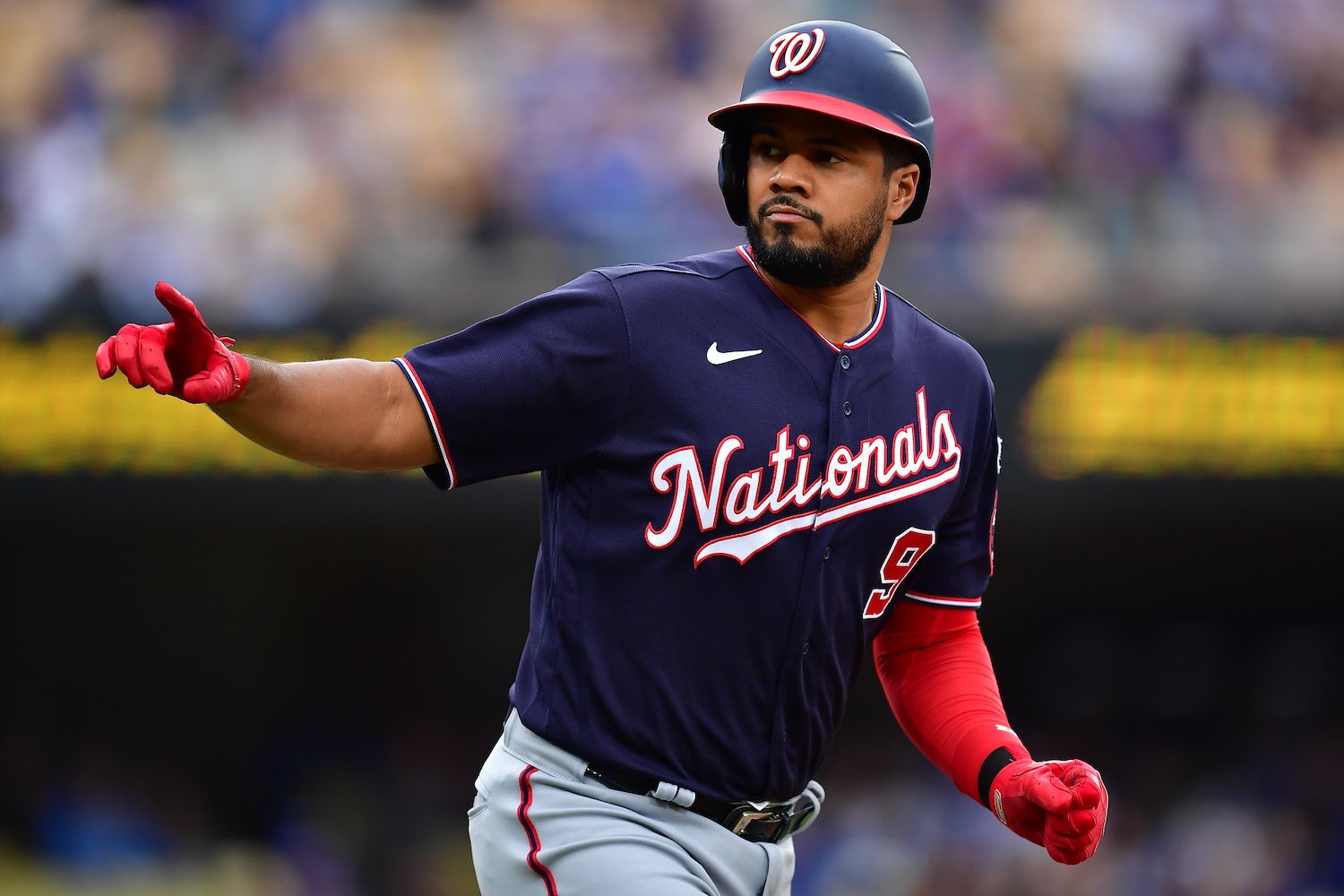 Since the departure of Trevor Plouffe after the 2016 season, third base has been a revolving door of sorts for the Twins. They tried handing the position to top prospect Miguel Sano, signing Josh Donaldson to a four-year contract, and then trading Donaldson to the Yankees, hoping to replace him with Gio Urshela. Sadly, none of these attempts to improve at third base worked. After trading Urshela to the Los Angeles Angels this past offseason, the plan was to hand third base to Jose Miranda. Whether it be a nagging shoulder injury or succumbing to the pressure those who follow the Twins placed on him, Miranda has been nearly unplayable at third base, offensively and defensively. After demoting Miranda to Triple-A St. Paul, the Twins immediately activated Royce Lewis from the 60-day IL and anointed him as the full-time starting third baseman. Lewis thrived at third, hitting .326/.354/.474 (.828) with a wRC+ of 132 over 99 plate appearances, but unfortunately, suffered a left oblique strain while running to first while facing the Baltimore Orioles at Camden Yards and has been on the 10-day IL since July 2. Fortunately, Lewis has recently begun playing catch and swinging the bat and plans to return around mid-August. Lewis feels destined to take over the full-time role once he returns from injury. Even so, with rumors of Jorge Polanco planning on playing third base during his rehab assignment at Triple-A due to the grand emergence of Edouard Julien, the Twins plan for the position appears to be up in the air. Lewis, Polanco, and the rotation of Kyle Farmer, Donovan Solano, and Willi Castro feel like adequate solutions for third base, but what if there was a more reliable option? That option may be current Washington Nationals third baseman Jeimer Candelario. Despite flying under the radar to the average baseball fan, Candelario is all too familiar to Twins fans. Candelario, 29, was the starting third baseman for the Detroit Tigers, spanning six years from 2017-2022. Candelario has played 76 total games versus the Twins, including three earlier this season with the Nationals. In 2023 with the Nationals, Candelario has been outstanding. Through 386 plate appearances, Candelario is hitting .257/.334/.478 (.812) with 15 home runs with a wRC+ of 117. Candelario has also accumulated 2.7 fWAR while sporting an Isolated Power (ISO) of .222, 59 points above the league average. Candelario, a switch-hitter, is hitting the ball hard and far from both sides of the batter's box, but he is hitting exceptionally well against left-handed pitching, a trait this Twins team needs. Let's take a look. When Facing Left-Handed Pitching: 119 PA, 25 H, 8 Doubles, 3 HR, 11 BB, 24 K, .240 AVG, .740 OPS When Facing Right-Handed Pitching: 267 PA, 63 H, 19 Doubles, 12 HR, 20 BB, 57 K, .264 AVG, .843 OPS Candelario, unlike Farmer and Solano, has been able hit left-handed pitching at an exceptional level this season, and would instantly provide a spark to that element of the Twins lineup. Candelario is also an incredible defensive third-baseman. Through 91 games, Candelario has generated six (6) Outs Above Average (OAA), ranking him as the sixth-best defensive third baseman in baseball. Here is how Candelario's OAA is divided: To the left: 5 OAA To the right: 0 OAA Going back: 1 OAA Candelario is average while ranging back and to his right, but he excels when going to his left. This is interesting as Candelario's potential life side of the infield partner, Carlos Correa, does exceptionally well going to his right, generating three OAA. With Candelario and Correa's strengths coinciding with one another, the Twins, in theory, could effectively cover the "5.5 hole", which is something the Twins have struggled with this season. To put Candelario's defensive performance into perspective, here is how Twins third baseman have fared when it comes to generating OAA this season: Miranda, 38 games (-6 OAA) Farmer, 27 games (-2 OAA) Castro, 26 games (1 OAA) Lewis, 24 games (-1 OAA) Castro has been the Twins best defensive third baseman, and he has done so by being merely average. Admittedly, Castro is a solid defensive third baseman, but his value resides in being a utility player who can also play every outfield spot, shortstop, and second base. Lewis was fine when healthy, although he is better suited as a center fielder or second baseman. Farmer has been serviceable, and Miranda has unsurprisingly been one of baseball's worst defensive third baseman this season. Regardless, no current Twins third base options are on par with Candelario defensively. With a mix of power, contact, and an overall presence that, whether the concept of lineup protection is real or not, would add a sense of protection to this Twins lineup at a corner infield spot, Candelario is a player the Twins should strongly consider investing in. A hypothetical infield of Kirilloff, Julien, Correa, and Candelario is intriguing and would make the Twins one of the best offensive infields in the American League. Admittedly, having Farmer, Solano, and Castro, as well as Polanco, Lewis, and Miranda likely returning soon from injury, makes adding Candelario seem redundant on the surface. Yet, the addition of Candelario would bring a sense of consistency and resolution to one of the more critical positions on the field and in the lineup. Hypothetically, when the Twins face a left-handed pitcher, Lewis could play third, Candelario could play first, and Polanco could play second alongside Correa at shortstop. Then, when the Twins faced a right-handed pitcher, Candelario could play third, Kirilloff could play first, and Julien could play second with Correa at shortstop. Adding Candelario would give the Twins a plus corner infield bat that would give them an abundance of options when facing different-handed pitchers. Also, and arguably more importantly, trading for Candelario would provide the Twins a sense of stability at third base that has yet to be present since Plouffe departed in 2016. A right-handed hitting corner outfielder that hits left-handed pitching well (i.e., Hunter Renfroe, Teoscar Hernandez, Tommy Pham, etc.) should be the Twins main priority, but adding a corner infielder who hits left-handed pitching well is an area the team the Twins shouldn't shy away from improving. Should the Twins trade for Candelario? How do you think the Twins have fared at third base this season? Comment below.
- 29 comments
-
- 1
-
-
- 2023 trade deadline
- jeimer candelario
- (and 3 more)
-
I do like Toby as a candidate as well.
-
I didn't intend for this to be a clickbait article. I wanted to look at the insight and skills Cruz could provide as a manager, analyze how former players perform as first-time managers, and bring to light how Latino members of the baseball community are underrepresented in the managerial hiring process. I hope I was able to accomplish that.
-
The only way the Twins would hire Mientkiewicz as their manager is if Terry Ryan was re-hired as the President of Baseball Operations and the entire analytics department was gutted lol. Hiring Mientkiewicz would be a sign of regression as an organization, and I don't see Joe Pohlad taking that approach. Mientkiewicz is entertaining to listen to on podcasts, but I don't see him being a manager in the MLB any time soon.
-
If the Twins miss the playoff this season, widespread organizational changes will likely occur. One of the changes could be the firing of manager Rocco Baldelli. If Baldelli gets fired, would former Twins slugger Nelson Cruz make sense as his successor? Image courtesy of Tommy Gilligan-USA TODAY Sports The last three and a half months of Twins fandom has felt like being forced to open a cursed Matryoshka doll. The first and largest doll is an inept offense. The next doll is a stubborn front office who won't part ways with players. The third doll is star players being injured or underperforming. So on and so forth. There has been a yin-and-yang nature about this Twins team all season. They will look competent against teams like the Royals and Athletics but then completely submit and get swept by teams like the Braves or Orioles. To quote pop icon, Olivia Rodrigo, "It's always one step forward and three steps back." Consistently beating bad teams is a good thing, and it may be enough to win this year's AL Central crown, as the Twins have the easiest remaining strength of schedule for any team in baseball, but this team is something other than a real contender. Although the Twins' chances of making the playoffs this year are favorable (75% on Fangraphs and 81.5% on Baseball Reference), it is evident that they cannot play at the same level as some of the best teams in the American League. Excuses and justifications have been and will continue to be made, but action needs to be taken by those in charge. And if the Twins miss the playoffs, that action must be extreme. Passivity will no longer do. The great auteurist Wes Anderson once wrote, "You can't wake up if you don't fall asleep." In my interpretation, this quote means that we, as people, cannot genuinely move on or accept something that has happened to us until we go through a genuine period of emotional mourning and acceptance. When applied to the 2023 Twins, Anderson's quote can be interpreted as if the Twins miss the playoffs this year, and they would need to sleep or reset if they ever want to wake up as an organization. This idea has been nearly impossible for the Pohlad family to accept in years past, but with new executive chair Joe Pohlad at the helm, this upcoming off-season may be different. To genuinely pursue a sense of awakening, or progression, the first step Joe Pohlad would have to make is relieving President of Baseball Operations Derek Falvey, Manager Rocco Baldelli, and the Twins coaching staff of their duties. At the moment, that feels like an unlikelihood, but in a recent interview with Star Tribune's Jim Souhan, Pohlad expressed a sense of urgency that has opened eyes amongst those who follow the Twins closely. If the Twins fail to win the lowly American League Central and miss the playoffs for the third season, would Pohlad fire Falvey? It feels unlikely, as Pohlad and Falvey appear to have incredible respect and an overall relationship with one another. Even so, the Twins would be forced to make organizational shake-ups, and the most logical shake-up would be to fire Baldelli. The firing of Baldelli would be a surprise that would feel like a scapegoating tactic, but change, even if symbolic, is better than blatant stagnation. If Baldelli got fired, who would be the best option to replace him? A fascinating option is former Twins slugger Nelson Cruz. Cruz, 43, was designated for assignment by the San Diego Padres on July 4 and eventually released. Despite allegedly drawing interest from teams around the league, Cruz's recent release may signify the end of his playing career. Despite Cruz's playing days destined to conclude very soon, that doesn't mean his involvement in Major League Baseball is ending. It may open up the door for a new chapter, his managerial chapter. During the past World Baseball Classic, Cruz served as the General Manager of the Dominican Republic World Baseball Classic Team. Cruz also played for the team serving as the primary designated hitter. Despite not managing the team in-game, Cruz was in a position of power, having to construct a team and make player-centric decisions, similar to the responsibilities a Major League manager is tasked with on a game-to-game basis. During his relatively brief time with Minnesota from 2019-2021, Cruz had a significant presence in the clubhouse, and many viewed him as the leader of the infamous 2019 Bomba Squad. Despite Jorge Alcala, Max Kepler, Jorge Polanco, and Byron Buxton being the last remaining members of the Bomba Squad, Cruz's impact has remained in Minnesota, and his return as a manager would be welcomed with open arms by both players and ownership. Also, the Twins have a robust Latino presence on their current team, with 16 members of the 40-man roster of Latino descent. Major League Baseball has the most substantial Latino presence it has ever had, yet there are only four Major League managers of Latino descent. By the end of the 2023 season, only one manager of Latino descent could be left in Alex Cora, as Oliver Marmol, Dave Martinez, and Pedro Grifol could be relieved of their duties due to poor team performance. Similarly to Black coaches in the National Football League, coaches of Latino descent deserve more opportunities in Major League Baseball. And Cruz is a coaching candidate of Latino descent that should be pursued if the Twins do, in fact, fire Baldelli. Do Former Players Perform Well as First-Time Managers? This is an interesting question, as sometimes they do and sometimes they do not. Let's look at recent former players' who recently stepped away from playing in the MLB's first seasons as full-time managers: Craig Counsell, Brewers (2016): 73-89 Dave Roberts, Dodgers (2016): 91-71 Aaron Boone, Yankees (2018): 100-62 Alex Cora, Red Sox (2018): 108-54 (WS Champions) Gabe Kapler, Phillies (2018): 80-82 Rocco Baldelli, Twins (2019): 101-60 David Ross, Cubs (2020): 34-26 Mark Kotsay, Athletics (2022): 60-102 Skip Schumaker, Marlins (2023): Currently 53-43 Five of the eight managers on this list had winning records in their first seasons, and Schumaker projects to have a winning record. A 62% success rate is nothing to overlook, but context is needed. Boone, Roberts, and Ross inherited above-average rosters with winning expectations, Cora cheated, and the juiced ball helped Baldelli and the 2019 Twins immensely. On the other hand, Kotsay, Kapler, and Counsell were handed lowly teams without a strong foundation or the expectation of winning. First-time managers, and managers in general, shouldn't be given too much praise or blame, as what happens on the field is largely out of their hands. Despite this being the case, managers do control the environment and overall culture their 26-man roster breeds. For example, a huge reason why the Cardinals, who are 43-53, are struggling this year could be because their manager, Oliver Marmol, has created a toxic and aggressive environment. On the flip side, the Marlins, who are 53-45, are performing so well this year because Schumaker created an inclusive and welcoming environment where players tend to thrive. What would Cruz's expectations be? It depends on if Pohlad decides to fire Falvey. If Falvey stays, fans can expect more of the same as the front office is the control center of the Twins organization, and Falvey's process won't change as long as he remains the President of Baseball Operations. The Twins will platoon, pinch-hit, be stubborn about keeping veterans to maintain depth, etc. If Pohlad fires Falvey, expectations for Cruz and a hypothetical new front become an open door. The 2024 Twins team that Cruz would be inheriting compares most notably to the 2020 Cubs team that Ross inherited. The 2020 Cubs, who finished 34-26 in the COVID shortened 2020 season, were headlined by star players Kris Bryant, Javier Baez, Anthony Rizzo, Willson Contreras, Kyle Schwarber, Ian Happ, and frontline starting pitchers Yu Darvish and Kyle Hendricks finished first place in the NL Central before getting swept 2-0 by the Miami Marlins in the shortened three-game Wild Card round. If fully actualized, the 2020 Cubs were on pace for an 88-74 record, and this Twins roster feels like an 88-win team. A core of Carlos Correa, Byron Buxton, Royce Lewis, Alex Kirilloff, Jorge Polanco, Jhoan Duran, Griffin Jax, Joe Ryan, Pablo López, Bailey Ober, with a blossoming Edouard Julien, and potential star in Brooks Lee is a roster that, if managed correctly, is capable of winning divisional titles and playoff games. Cruz has the qualities of a great manager. A voice that is heard and respected, the ability to create genuine and healthy relationships with players, and a strong presence within the clubhouse. Would he thrive in game theory and making decisions like when to pull a starting pitcher and which reliever to use? That is unknown. But Cruz has played professional baseball for 19 years and has been around the game for much longer. Taking chances on former players as first-time managers feels risky, but it has proven to be a success almost two-thirds of the time in recent history. If the Twins move on from Baldelli this off-season and Cruz elects to retire from playing, they should consider hiring Cruz as their next manager. What do you think? Should the Twins consider hiring Nelson Cruz if they fire Rocco Baldelli this upcoming off-season? Comment below. View full article
-
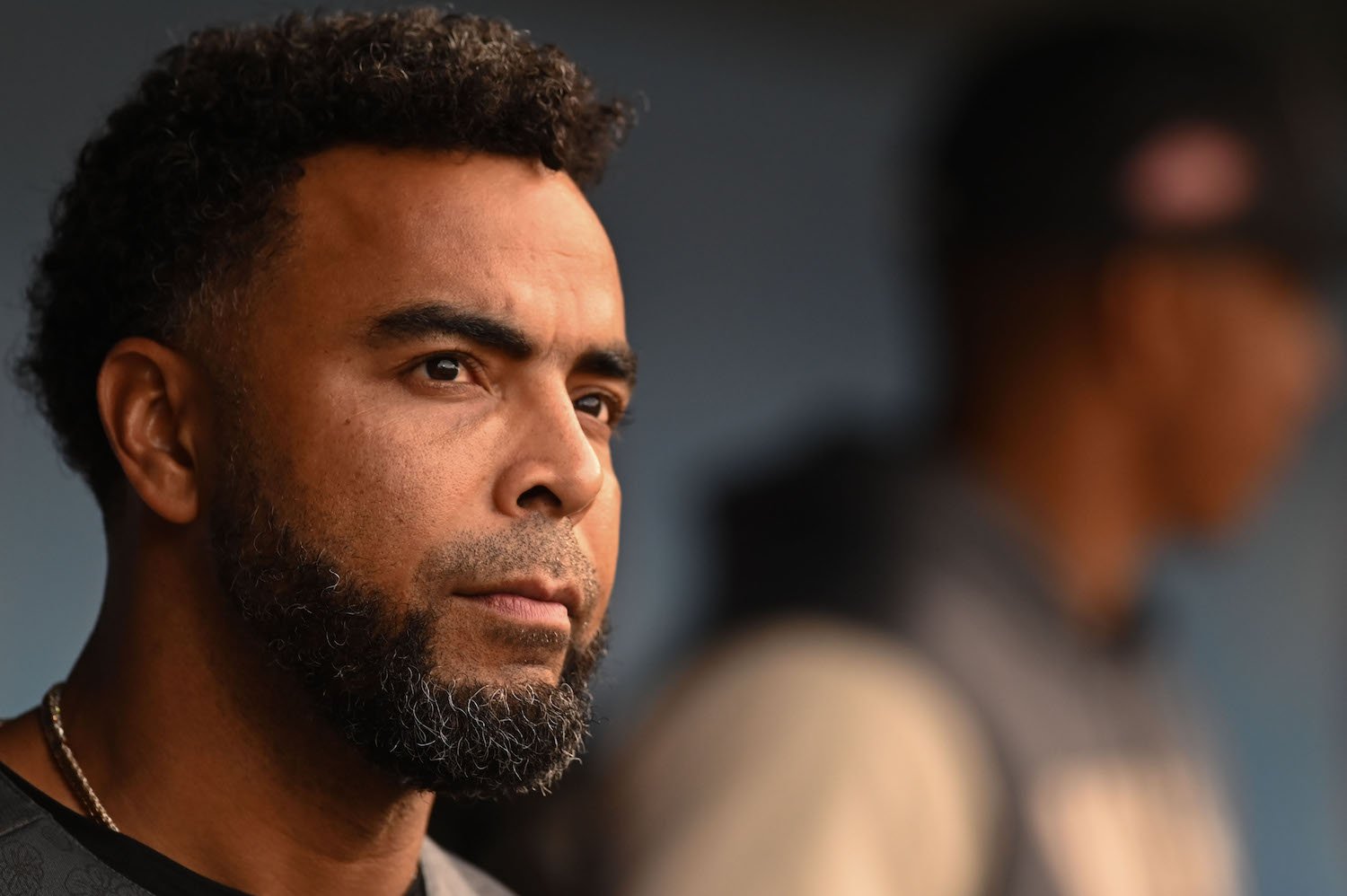 The last three and a half months of Twins fandom has felt like being forced to open a cursed Matryoshka doll. The first and largest doll is an inept offense. The next doll is a stubborn front office who won't part ways with players. The third doll is star players being injured or underperforming. So on and so forth. There has been a yin-and-yang nature about this Twins team all season. They will look competent against teams like the Royals and Athletics but then completely submit and get swept by teams like the Braves or Orioles. To quote pop icon, Olivia Rodrigo, "It's always one step forward and three steps back." Consistently beating bad teams is a good thing, and it may be enough to win this year's AL Central crown, as the Twins have the easiest remaining strength of schedule for any team in baseball, but this team is something other than a real contender. Although the Twins' chances of making the playoffs this year are favorable (75% on Fangraphs and 81.5% on Baseball Reference), it is evident that they cannot play at the same level as some of the best teams in the American League. Excuses and justifications have been and will continue to be made, but action needs to be taken by those in charge. And if the Twins miss the playoffs, that action must be extreme. Passivity will no longer do. The great auteurist Wes Anderson once wrote, "You can't wake up if you don't fall asleep." In my interpretation, this quote means that we, as people, cannot genuinely move on or accept something that has happened to us until we go through a genuine period of emotional mourning and acceptance. When applied to the 2023 Twins, Anderson's quote can be interpreted as if the Twins miss the playoffs this year, and they would need to sleep or reset if they ever want to wake up as an organization. This idea has been nearly impossible for the Pohlad family to accept in years past, but with new executive chair Joe Pohlad at the helm, this upcoming off-season may be different. To genuinely pursue a sense of awakening, or progression, the first step Joe Pohlad would have to make is relieving President of Baseball Operations Derek Falvey, Manager Rocco Baldelli, and the Twins coaching staff of their duties. At the moment, that feels like an unlikelihood, but in a recent interview with Star Tribune's Jim Souhan, Pohlad expressed a sense of urgency that has opened eyes amongst those who follow the Twins closely. If the Twins fail to win the lowly American League Central and miss the playoffs for the third season, would Pohlad fire Falvey? It feels unlikely, as Pohlad and Falvey appear to have incredible respect and an overall relationship with one another. Even so, the Twins would be forced to make organizational shake-ups, and the most logical shake-up would be to fire Baldelli. The firing of Baldelli would be a surprise that would feel like a scapegoating tactic, but change, even if symbolic, is better than blatant stagnation. If Baldelli got fired, who would be the best option to replace him? A fascinating option is former Twins slugger Nelson Cruz. Cruz, 43, was designated for assignment by the San Diego Padres on July 4 and eventually released. Despite allegedly drawing interest from teams around the league, Cruz's recent release may signify the end of his playing career. Despite Cruz's playing days destined to conclude very soon, that doesn't mean his involvement in Major League Baseball is ending. It may open up the door for a new chapter, his managerial chapter. During the past World Baseball Classic, Cruz served as the General Manager of the Dominican Republic World Baseball Classic Team. Cruz also played for the team serving as the primary designated hitter. Despite not managing the team in-game, Cruz was in a position of power, having to construct a team and make player-centric decisions, similar to the responsibilities a Major League manager is tasked with on a game-to-game basis. During his relatively brief time with Minnesota from 2019-2021, Cruz had a significant presence in the clubhouse, and many viewed him as the leader of the infamous 2019 Bomba Squad. Despite Jorge Alcala, Max Kepler, Jorge Polanco, and Byron Buxton being the last remaining members of the Bomba Squad, Cruz's impact has remained in Minnesota, and his return as a manager would be welcomed with open arms by both players and ownership. Also, the Twins have a robust Latino presence on their current team, with 16 members of the 40-man roster of Latino descent. Major League Baseball has the most substantial Latino presence it has ever had, yet there are only four Major League managers of Latino descent. By the end of the 2023 season, only one manager of Latino descent could be left in Alex Cora, as Oliver Marmol, Dave Martinez, and Pedro Grifol could be relieved of their duties due to poor team performance. Similarly to Black coaches in the National Football League, coaches of Latino descent deserve more opportunities in Major League Baseball. And Cruz is a coaching candidate of Latino descent that should be pursued if the Twins do, in fact, fire Baldelli. Do Former Players Perform Well as First-Time Managers? This is an interesting question, as sometimes they do and sometimes they do not. Let's look at recent former players' who recently stepped away from playing in the MLB's first seasons as full-time managers: Craig Counsell, Brewers (2016): 73-89 Dave Roberts, Dodgers (2016): 91-71 Aaron Boone, Yankees (2018): 100-62 Alex Cora, Red Sox (2018): 108-54 (WS Champions) Gabe Kapler, Phillies (2018): 80-82 Rocco Baldelli, Twins (2019): 101-60 David Ross, Cubs (2020): 34-26 Mark Kotsay, Athletics (2022): 60-102 Skip Schumaker, Marlins (2023): Currently 53-43 Five of the eight managers on this list had winning records in their first seasons, and Schumaker projects to have a winning record. A 62% success rate is nothing to overlook, but context is needed. Boone, Roberts, and Ross inherited above-average rosters with winning expectations, Cora cheated, and the juiced ball helped Baldelli and the 2019 Twins immensely. On the other hand, Kotsay, Kapler, and Counsell were handed lowly teams without a strong foundation or the expectation of winning. First-time managers, and managers in general, shouldn't be given too much praise or blame, as what happens on the field is largely out of their hands. Despite this being the case, managers do control the environment and overall culture their 26-man roster breeds. For example, a huge reason why the Cardinals, who are 43-53, are struggling this year could be because their manager, Oliver Marmol, has created a toxic and aggressive environment. On the flip side, the Marlins, who are 53-45, are performing so well this year because Schumaker created an inclusive and welcoming environment where players tend to thrive. What would Cruz's expectations be? It depends on if Pohlad decides to fire Falvey. If Falvey stays, fans can expect more of the same as the front office is the control center of the Twins organization, and Falvey's process won't change as long as he remains the President of Baseball Operations. The Twins will platoon, pinch-hit, be stubborn about keeping veterans to maintain depth, etc. If Pohlad fires Falvey, expectations for Cruz and a hypothetical new front become an open door. The 2024 Twins team that Cruz would be inheriting compares most notably to the 2020 Cubs team that Ross inherited. The 2020 Cubs, who finished 34-26 in the COVID shortened 2020 season, were headlined by star players Kris Bryant, Javier Baez, Anthony Rizzo, Willson Contreras, Kyle Schwarber, Ian Happ, and frontline starting pitchers Yu Darvish and Kyle Hendricks finished first place in the NL Central before getting swept 2-0 by the Miami Marlins in the shortened three-game Wild Card round. If fully actualized, the 2020 Cubs were on pace for an 88-74 record, and this Twins roster feels like an 88-win team. A core of Carlos Correa, Byron Buxton, Royce Lewis, Alex Kirilloff, Jorge Polanco, Jhoan Duran, Griffin Jax, Joe Ryan, Pablo López, Bailey Ober, with a blossoming Edouard Julien, and potential star in Brooks Lee is a roster that, if managed correctly, is capable of winning divisional titles and playoff games. Cruz has the qualities of a great manager. A voice that is heard and respected, the ability to create genuine and healthy relationships with players, and a strong presence within the clubhouse. Would he thrive in game theory and making decisions like when to pull a starting pitcher and which reliever to use? That is unknown. But Cruz has played professional baseball for 19 years and has been around the game for much longer. Taking chances on former players as first-time managers feels risky, but it has proven to be a success almost two-thirds of the time in recent history. If the Twins move on from Baldelli this off-season and Cruz elects to retire from playing, they should consider hiring Cruz as their next manager. What do you think? Should the Twins consider hiring Nelson Cruz if they fire Rocco Baldelli this upcoming off-season? Comment below.
 -
Walker JenkinsBrooks LeeEmmanuel RodriguezMatt WallnerAustin MartinMarco RayaCharlee SotoDavid FestaBrandon WinokurTanner SchobelKala'i RosarioLuke KeaschallJose RodriguezJose SalasConnor PrielippYasser MercedesDanny De AndradeChris WilliamsJordan BalazovicCJ Culpepper Byron Chourio is in my Top 20 Prospect list, but he isn't an option.
-
I really don't think wins are relevant when analyzing how good a starting pitcher may or may not be for many reasons. To begin, wins are largely out of the starting pitchers hands and a lot of that has to do with run support. For example, in 1987 Viola got 4.4 runs of support per game and in 1988 he got 5.5 runs of support per game. Viola's win-loss record in 1987 was 17-10 and his record win-loss record in 1988 was 24-7. Now, if we were to look at Viola's seasons side-by-side and compare 17-10 to 24-7, everyone would agree that Viola's 1988 season was better. Yet, in 1987 Viola had a better ERA+ (159) than in 1988 (154) and he accumulated more WAR in 1987 (8.1) than he did in 1988 (7.7). Viola could have won the Cy Young Award in both years, but he only won it in 1988. Why? Probably because voters prioritized win-loss record while voting and were enamored by his 24-7 record. Taijuan Walker leads the league with 11 wins while the best current pitcher in baseball, Framber Valdez, is tied for 30th in the MLB with seven wins. In 2015, Drew Hutchison finished the year with a 13-5 record yet had an ERA of 5.57 ERA. There are many examples of this. Wins are like touchdowns, it doesn't matter who gets them as long as they are gotten if that makes sense.
-
With an excellent start to the 2023 season, All-Star Sonny Gray is on track to have one of the greatest seasons for a starting pitcher in Twins' history. Surprisingly, Gray's season is showing similarities to a past Twins Cy Young Award winner. Image courtesy of Joe Nicholson-USA TODAY Sports Every game Sonny Gray takes the mound, adjusts his hat, and winds up, there tends to be a sense of ease present that has rarely been felt while watching Twins starting pitchers. Gray's intense and unassailable demeanor gives fans an unwavering sense of trust in him on the mound. On July 2, it was announced that Gray was selected to his third career All-Star game and first as a member of the Twins. Gray and fellow starting pitcher Pablo López were the only Twins in the 2023 All-Star Game. Gray threw a scoreless inning, walked one and struck out two batters, including NL MVP favorite Ronald Acuña Jr. According to Fan Duel, Gray is tied with fellow Twins All-Star López with the 10th highest odds to win the AL Cy Young Award. Although Gray winning the AL Cy Young Award looks like a long shot, if he can replicate his first-half numbers, Gray will have one of the best seasons for a starting pitcher in Twins history. In some order, most Twins fans would agree that the greatest seasons for Twins starting pitchers are: Johan Santana in 2004 and 2006 (2x Cy Young Award) Kenta Maeda in the shortened 2020 season Jim Perry in 1970 (Cy Young Award) Bert Blyleven in 1973 and 1974 Frank Viola in 1988 (Cy Young Award) Viola's first half of the 1988 season and Gray's 2023 season are surprisingly similar. Through 18 starts: Gray (2023) posted a 2.89 ERA through 99 2/3 innings pitched and 419 total batters faced. Viola (1988) posted a 2.33 ERA through 131 1/3 innings pitched and 529 total batters faced. Admittedly, there is a significant difference between a 2.33 ERA and a 2.89 ERA, but if you take out Gray's final start before the All-Star break, where he gave up six earned runs through six innings pitched against the Baltimore Orioles on July 8, his ERA would be sitting at 2.50. Although Viola and Gray's ERAs have a marginally significant difference, their underlying numbers have quantifiable similarities. Through 18 starts: Gray (2023) currently has a FIP of 2.85, a LOB% of 77.5%, and an elite HR/9 of 0.27 while striking out 101 hitters and walking 39. Viola (1988) finished with a FIP of 2.99, a LOB% of 83.3%, and a similarly-elite HR/9 of 0.75 while striking out 99 hitters and walking only 26. Also, "Sweet Music" had an ERA+ of 154 and a WHIP of 1.13, while Gray currently possesses a nearly identical ERA+ of 150 and a WHIP of 1.27. Gray commands the zone as an "east-to-west" pitcher utilizing his sinker and cutter to work the edges while keeping hitters off balance with his semblance of off-speed pitches, including a curveball, sweeper, and changeup. Gray, who has six different pitches in his arsenal, relies heavily on his fastball, and when his fastball, which has 96th-percentile spin, is on, Gray is nearly untouchable. Viola is a different story. Viola struggled to be a consistently-efficient pitcher during his early seasons with the Twins from 1982-1986. But in 1987, Viola tinkered with his original changeup grip taught to him by former Twins pitching coach Johnny Podres, and made it one of the best off-speed pitches in the game. Gray is a fastball-dominant pitcher who works the edges of the zone with finesse. During Viola's playing days, he was a traditional left-handed pitcher who would work the fastball to set up his elite changeup, not too dissimilar from current Twins relief pitcher Jovani Moran. When comparing pitchers of the 1980s to pitchers of today, the most prominent difference will always be their total number of innings pitched. In 1988, Viola pitched 255 1/3 innings. That will not happen with Gray or any Twins starting pitcher. If Gray and the Twins are lucky, he will finish the season between 160-180 innings pitched, and even that feels like an optimistic outlook. Throwing fewer innings doesn't make what Gray is doing any less remarkable, and it is safe to assume that if the Twins forced Gray to throw seven to eight innings every start, his numbers would not be nearly as impressive. Gray will never compare to Viola in that aspect of the game, nor will any modern-day starting pitcher. Despite having many functional differences, Gray most closely resembles Viola by being an above-average and reliable Twins starting pitcher, which is valuable and rare in any era of baseball. Gray and Viola limit home runs, generate a significant amount of quality starts, and efficiently get through innings while limiting walks and producing respectable strikeout numbers. Many of these phenomena are further evidenced by Gray and Viola's advanced metrics. Although Gray likely won't win the AL Cy Young Award this season, he is undoubtedly on track to have one of the best seasons for a starting pitcher in Minnesota Twins history. While not in the same realm as Santana's dominant seasons in the mid-2000s, Gray's season looks to conclude very similarly to Viola's 1988 Cy Young Award-winning campaign numbers wise. Do you think Gray's first half is comparable to Viola's 1988? Do you see any other similarities between the two? Comment below. View full article
- 21 replies
-
- 1
-
-
- sonny gray
- frank viola
- (and 1 more)
-
Sonny Gray's Season is Similar to a Past Cy Young-Winning Twins Pitcher
Cody Schoenmann posted an article in Twins
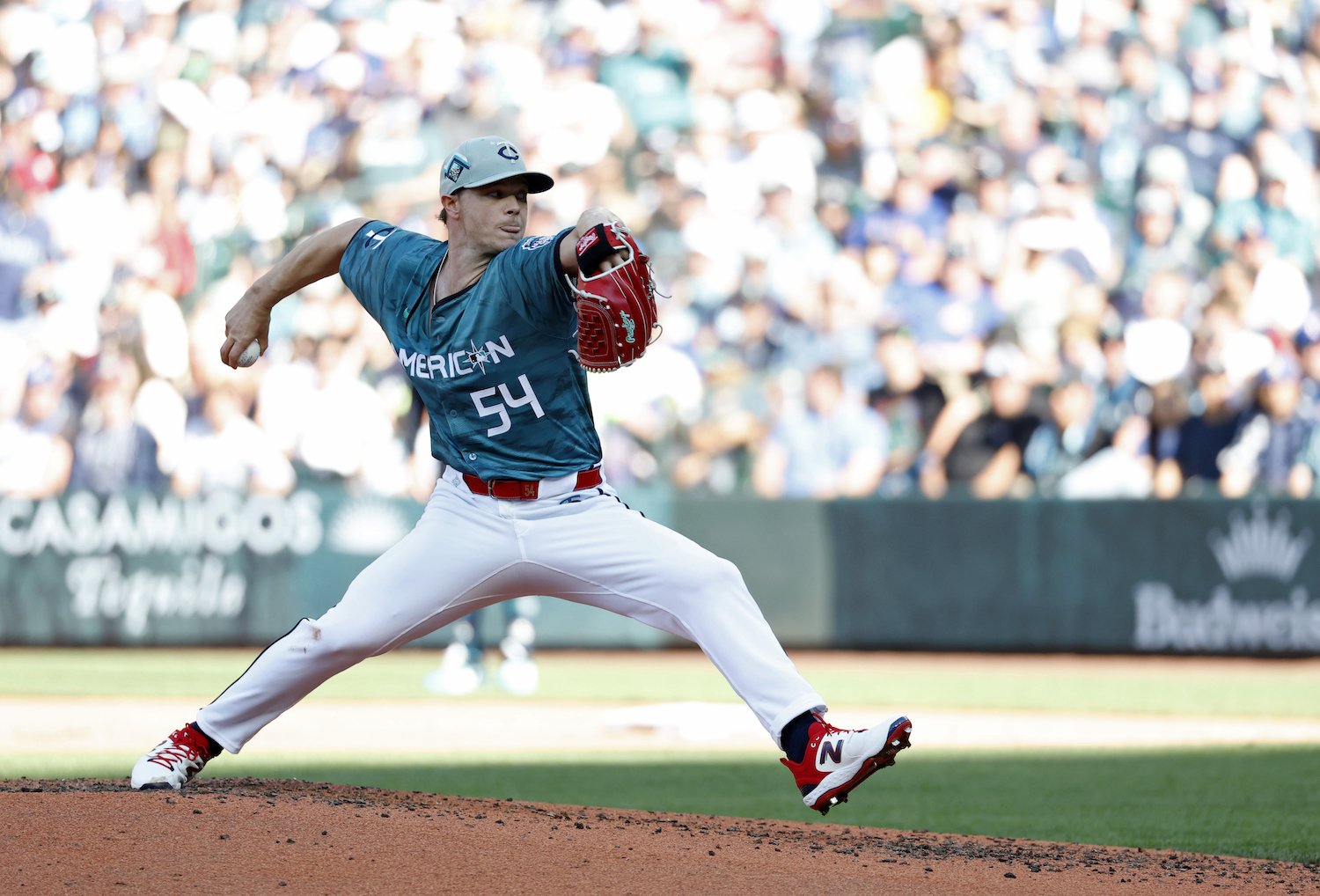 Every game Sonny Gray takes the mound, adjusts his hat, and winds up, there tends to be a sense of ease present that has rarely been felt while watching Twins starting pitchers. Gray's intense and unassailable demeanor gives fans an unwavering sense of trust in him on the mound. On July 2, it was announced that Gray was selected to his third career All-Star game and first as a member of the Twins. Gray and fellow starting pitcher Pablo López were the only Twins in the 2023 All-Star Game. Gray threw a scoreless inning, walked one and struck out two batters, including NL MVP favorite Ronald Acuña Jr. According to Fan Duel, Gray is tied with fellow Twins All-Star López with the 10th highest odds to win the AL Cy Young Award. Although Gray winning the AL Cy Young Award looks like a long shot, if he can replicate his first-half numbers, Gray will have one of the best seasons for a starting pitcher in Twins history. In some order, most Twins fans would agree that the greatest seasons for Twins starting pitchers are: Johan Santana in 2004 and 2006 (2x Cy Young Award) Kenta Maeda in the shortened 2020 season Jim Perry in 1970 (Cy Young Award) Bert Blyleven in 1973 and 1974 Frank Viola in 1988 (Cy Young Award) Viola's first half of the 1988 season and Gray's 2023 season are surprisingly similar. Through 18 starts: Gray (2023) posted a 2.89 ERA through 99 2/3 innings pitched and 419 total batters faced. Viola (1988) posted a 2.33 ERA through 131 1/3 innings pitched and 529 total batters faced. Admittedly, there is a significant difference between a 2.33 ERA and a 2.89 ERA, but if you take out Gray's final start before the All-Star break, where he gave up six earned runs through six innings pitched against the Baltimore Orioles on July 8, his ERA would be sitting at 2.50. Although Viola and Gray's ERAs have a marginally significant difference, their underlying numbers have quantifiable similarities. Through 18 starts: Gray (2023) currently has a FIP of 2.85, a LOB% of 77.5%, and an elite HR/9 of 0.27 while striking out 101 hitters and walking 39. Viola (1988) finished with a FIP of 2.99, a LOB% of 83.3%, and a similarly-elite HR/9 of 0.75 while striking out 99 hitters and walking only 26. Also, "Sweet Music" had an ERA+ of 154 and a WHIP of 1.13, while Gray currently possesses a nearly identical ERA+ of 150 and a WHIP of 1.27. Gray commands the zone as an "east-to-west" pitcher utilizing his sinker and cutter to work the edges while keeping hitters off balance with his semblance of off-speed pitches, including a curveball, sweeper, and changeup. Gray, who has six different pitches in his arsenal, relies heavily on his fastball, and when his fastball, which has 96th-percentile spin, is on, Gray is nearly untouchable. Viola is a different story. Viola struggled to be a consistently-efficient pitcher during his early seasons with the Twins from 1982-1986. But in 1987, Viola tinkered with his original changeup grip taught to him by former Twins pitching coach Johnny Podres, and made it one of the best off-speed pitches in the game. Gray is a fastball-dominant pitcher who works the edges of the zone with finesse. During Viola's playing days, he was a traditional left-handed pitcher who would work the fastball to set up his elite changeup, not too dissimilar from current Twins relief pitcher Jovani Moran. When comparing pitchers of the 1980s to pitchers of today, the most prominent difference will always be their total number of innings pitched. In 1988, Viola pitched 255 1/3 innings. That will not happen with Gray or any Twins starting pitcher. If Gray and the Twins are lucky, he will finish the season between 160-180 innings pitched, and even that feels like an optimistic outlook. Throwing fewer innings doesn't make what Gray is doing any less remarkable, and it is safe to assume that if the Twins forced Gray to throw seven to eight innings every start, his numbers would not be nearly as impressive. Gray will never compare to Viola in that aspect of the game, nor will any modern-day starting pitcher. Despite having many functional differences, Gray most closely resembles Viola by being an above-average and reliable Twins starting pitcher, which is valuable and rare in any era of baseball. Gray and Viola limit home runs, generate a significant amount of quality starts, and efficiently get through innings while limiting walks and producing respectable strikeout numbers. Many of these phenomena are further evidenced by Gray and Viola's advanced metrics. Although Gray likely won't win the AL Cy Young Award this season, he is undoubtedly on track to have one of the best seasons for a starting pitcher in Minnesota Twins history. While not in the same realm as Santana's dominant seasons in the mid-2000s, Gray's season looks to conclude very similarly to Viola's 1988 Cy Young Award-winning campaign numbers wise. Do you think Gray's first half is comparable to Viola's 1988? Do you see any other similarities between the two? Comment below.
 -
The Twins' pitching staff started to show some ups and downs in June, but who stood out among the group? Despite the Twins lineup being horrible, awful, no good, and downright bad in June, the starting rotation was once again outstanding, and the bullpen was middling around average while producing some elite performances. According to FanGraphs, the Twins were the sixth-best rotation and the 17th-best bullpen in baseball. The Twins were generally solid as a staff overall, but four pitchers stood out. Here is how they rank. Honorable Mention Jordan Balazovic - 5 G, 1.29 ERA, 1.00 WHIP, 7.0 IP, 5 H, 2 BB, 4 K Balazovic performed well in a small sample but is only on this list because he made his long-awaited Major League debut. Congratulations to Jordan. Hopefully, he and Brent Headrick can step up in mid-to-high leverage short-relief roles. Joe Ryan - 5 G, 4.83 ERA, 0.92 WHIP, 31.2 IP, 27 H, 2 BB, 29 K Ryan's June was a story of ups and downs. Ryan was the first Twins starting pitcher to throw a nine-inning complete game since Jose Berrios did in 2018. Ryan also walked only two batters in 31 2/3 innings pitched while producing a WHIP of just 0.92. On the other hand, Ryan imploded in his start before and after his nine-inning complete game, giving up a combined 12 earned runs and pitching to a combined Home Run to Fly Ball Ratio (HR/FB) of 49.35%. Overall, Ryan was adequate in June, and I plan on buying one of his new Grateful Dead-inspired limited edition tee shirts. June Pitchers of the Month #4. Jhoan Duran - 8 G, 1.86 ERA, 1.03 WHIP, 9.2 IP, 5 H, 5 BB, 13 K Appropriately dubbed "The fireman. The closer. The set-up guy. The multi-inning hurler. The weapon.", by Twins Daily's own Nash Walker, Duran has yet again been one of the best all-around relief pitchers for the Twins and in all of baseball during June. Despite experiencing some lows, like giving up a walk-off home run to Rays outfielder Randy Arozarena on June 7, Duran has helped the Twins by shutting down hitters in high-stress and high-leverage spots. Duran did an exceptional job of not allowing runners to reach base. In June, Duran generated a BABIP of just .211, and when runners did get on base, 93.8% of the time, they were left on base. The flame-throwing Duran has been incredible all season for the Twins, and fans should be excited as Duran will likely make his first all-star appearance representing the Twins during the 2023 MLB All-Star Game in Seattle on July 11. #3. Bailey Ober - 5 G, 3.38 ERA, 1.02 WHIP, 29.1 IP, 26 H, 4 BB, 29 K Ober, who would be the odds-on favorite to win the sixth man of the year award if it were an MLB award rather than an NBA award, was the Twins best-starting pitcher during June. Through 29 1/3 innings pitched, Ober was incredibly effective despite getting little-to-no help from his offense during his starts. Ober gave up 11 total earned runs in June while never giving up more than three earned runs in a start. Ober also left 80% of runners on base, an incredible number for a starting pitcher. When teams would generate runs off of Ober, it was usually through solo home runs, but when Ober was on, he was virtually untouchable. Ober is an incredible developmental story, and hopefully, he can continue his strong performance into July. #2. Brock Stewart - 9 G, 0.00 ERA, 0.62 WHIP, 9.2 IP, 6 H, 0 BB, 15 K The miracle that was and will continue to be Brock Stewart was incredible for the Twins in June. Unfortunately, Stewart was recently placed on the 15-day IL with right forearm soreness. According to Stewart's agent Joe Speed (I'm not sure if Stewart's agent has any relation to his fastball velocity), Stewart's injured list placement was hopefully precautionary. Stewart should return to the Twins to continue pitching during the second half of the season. Despite the somber news of Stewart having a sore right elbow, Stewart was incredible during June. In 9 2/3 innings pitched, Stewart, like Duran, saved the Twins repeatedly. Stewart allowed minimal runners, as evidenced by his FIP of just 0.17, and when runners did get on, Stewart left 100% of them on base. Along with not giving up a run, Stewart didn't give up a single walk in June. Stewart's performance in June was one of the best in recent Twins history, and he would have been the pitcher of the month if it wasn't for the exceptionally high-performing reliever below. Winner: Griffin Jax - 11 G, 0.00 ERA, 0.00 ERA, 0.47 WHIP, 10.2 IP, 4 H, 1 BB, 8 K In June, Air Force Reserve Officer and Minnesota Twin Griffin Jax was the best relief pitcher on a Twins team that also employs Stewart and Duran. For his services, Jax is getting bestowed with the grand title of Twins Daily Pitcher of the Month for June. Certainly, this Fourth of July will be extra sentimental for the Jax family. In June, like Stewart, Jax left 100% of runners on base while also allowing a BABIP of just .154, a FIP of 2.05, and a BB/9 of 0.84. Jax dominated the strike zone with his five-pitch mix, including an elite sweeper and fastball. What makes Jax's performance in June so impressive is that seemingly nothing went his way in the first two months of the season. Jax started the first two months of the 2023 season going 2-6 with a 4.63 ERA while surrendering a .357 BABIP, leaving only 58.8% of runners on base through 23 1/3 innings pitched. Despite struggling, Jax still had promising underlying numbers and hadn't given up a home run all season, so there was still reason to be optimistic that Jax would turn things around. Finally, things started going Jax's way in June, as evidenced by his BABIP and LOB% exponentially progressing. Jax was able to supplant himself as one of the best relievers on the Twins as he was most of the 2022 season. Congratulations to Jax on a stellar month of June, and hopefully, his elite performance will continue for the rest of the 2023 season. The Twins are going to need it. What do you think? How would you rank your top Twins pitchers of June? Comment below. View full article
- 3 replies
-
- 1
-
-
- jordan balazovic
- jhoan duran
- (and 3 more)
-
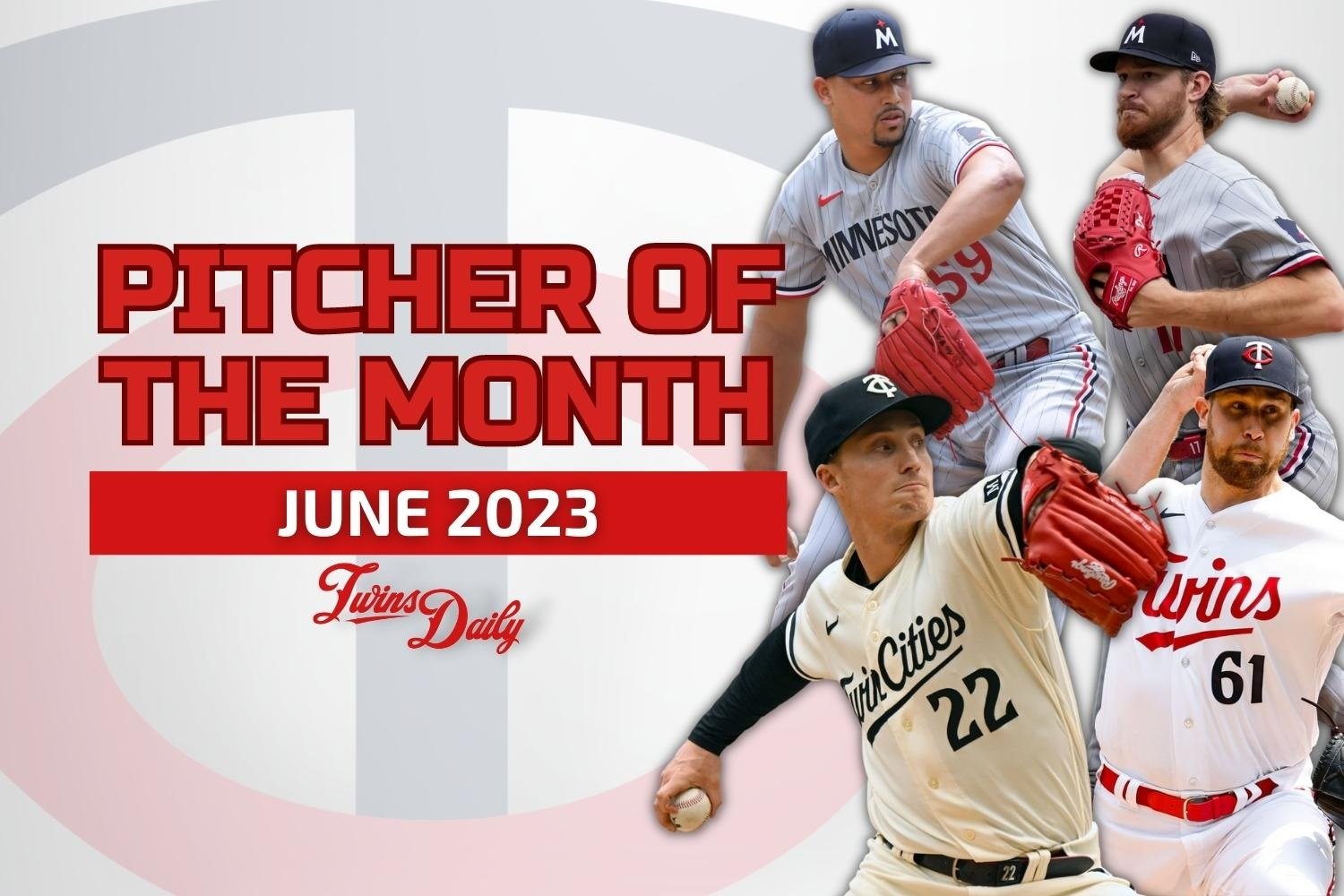 Despite the Twins lineup being horrible, awful, no good, and downright bad in June, the starting rotation was once again outstanding, and the bullpen was middling around average while producing some elite performances. According to FanGraphs, the Twins were the sixth-best rotation and the 17th-best bullpen in baseball. The Twins were generally solid as a staff overall, but four pitchers stood out. Here is how they rank. Honorable Mention Jordan Balazovic - 5 G, 1.29 ERA, 1.00 WHIP, 7.0 IP, 5 H, 2 BB, 4 K Balazovic performed well in a small sample but is only on this list because he made his long-awaited Major League debut. Congratulations to Jordan. Hopefully, he and Brent Headrick can step up in mid-to-high leverage short-relief roles. Joe Ryan - 5 G, 4.83 ERA, 0.92 WHIP, 31.2 IP, 27 H, 2 BB, 29 K Ryan's June was a story of ups and downs. Ryan was the first Twins starting pitcher to throw a nine-inning complete game since Jose Berrios did in 2018. Ryan also walked only two batters in 31 2/3 innings pitched while producing a WHIP of just 0.92. On the other hand, Ryan imploded in his start before and after his nine-inning complete game, giving up a combined 12 earned runs and pitching to a combined Home Run to Fly Ball Ratio (HR/FB) of 49.35%. Overall, Ryan was adequate in June, and I plan on buying one of his new Grateful Dead-inspired limited edition tee shirts. June Pitchers of the Month #4. Jhoan Duran - 8 G, 1.86 ERA, 1.03 WHIP, 9.2 IP, 5 H, 5 BB, 13 K Appropriately dubbed "The fireman. The closer. The set-up guy. The multi-inning hurler. The weapon.", by Twins Daily's own Nash Walker, Duran has yet again been one of the best all-around relief pitchers for the Twins and in all of baseball during June. Despite experiencing some lows, like giving up a walk-off home run to Rays outfielder Randy Arozarena on June 7, Duran has helped the Twins by shutting down hitters in high-stress and high-leverage spots. Duran did an exceptional job of not allowing runners to reach base. In June, Duran generated a BABIP of just .211, and when runners did get on base, 93.8% of the time, they were left on base. The flame-throwing Duran has been incredible all season for the Twins, and fans should be excited as Duran will likely make his first all-star appearance representing the Twins during the 2023 MLB All-Star Game in Seattle on July 11. #3. Bailey Ober - 5 G, 3.38 ERA, 1.02 WHIP, 29.1 IP, 26 H, 4 BB, 29 K Ober, who would be the odds-on favorite to win the sixth man of the year award if it were an MLB award rather than an NBA award, was the Twins best-starting pitcher during June. Through 29 1/3 innings pitched, Ober was incredibly effective despite getting little-to-no help from his offense during his starts. Ober gave up 11 total earned runs in June while never giving up more than three earned runs in a start. Ober also left 80% of runners on base, an incredible number for a starting pitcher. When teams would generate runs off of Ober, it was usually through solo home runs, but when Ober was on, he was virtually untouchable. Ober is an incredible developmental story, and hopefully, he can continue his strong performance into July. #2. Brock Stewart - 9 G, 0.00 ERA, 0.62 WHIP, 9.2 IP, 6 H, 0 BB, 15 K The miracle that was and will continue to be Brock Stewart was incredible for the Twins in June. Unfortunately, Stewart was recently placed on the 15-day IL with right forearm soreness. According to Stewart's agent Joe Speed (I'm not sure if Stewart's agent has any relation to his fastball velocity), Stewart's injured list placement was hopefully precautionary. Stewart should return to the Twins to continue pitching during the second half of the season. Despite the somber news of Stewart having a sore right elbow, Stewart was incredible during June. In 9 2/3 innings pitched, Stewart, like Duran, saved the Twins repeatedly. Stewart allowed minimal runners, as evidenced by his FIP of just 0.17, and when runners did get on, Stewart left 100% of them on base. Along with not giving up a run, Stewart didn't give up a single walk in June. Stewart's performance in June was one of the best in recent Twins history, and he would have been the pitcher of the month if it wasn't for the exceptionally high-performing reliever below. Winner: Griffin Jax - 11 G, 0.00 ERA, 0.00 ERA, 0.47 WHIP, 10.2 IP, 4 H, 1 BB, 8 K In June, Air Force Reserve Officer and Minnesota Twin Griffin Jax was the best relief pitcher on a Twins team that also employs Stewart and Duran. For his services, Jax is getting bestowed with the grand title of Twins Daily Pitcher of the Month for June. Certainly, this Fourth of July will be extra sentimental for the Jax family. In June, like Stewart, Jax left 100% of runners on base while also allowing a BABIP of just .154, a FIP of 2.05, and a BB/9 of 0.84. Jax dominated the strike zone with his five-pitch mix, including an elite sweeper and fastball. What makes Jax's performance in June so impressive is that seemingly nothing went his way in the first two months of the season. Jax started the first two months of the 2023 season going 2-6 with a 4.63 ERA while surrendering a .357 BABIP, leaving only 58.8% of runners on base through 23 1/3 innings pitched. Despite struggling, Jax still had promising underlying numbers and hadn't given up a home run all season, so there was still reason to be optimistic that Jax would turn things around. Finally, things started going Jax's way in June, as evidenced by his BABIP and LOB% exponentially progressing. Jax was able to supplant himself as one of the best relievers on the Twins as he was most of the 2022 season. Congratulations to Jax on a stellar month of June, and hopefully, his elite performance will continue for the rest of the 2023 season. The Twins are going to need it. What do you think? How would you rank your top Twins pitchers of June? Comment below.
- 3 comments
-
- 2
-
-

-
- jordan balazovic
- jhoan duran
- (and 3 more)
-
I do like Castro at 3B and I think it is his best defensive position. He has an incredible arm and his range is good as well. The only problem is the Castro doesn't hit well enough to get a long look as a third baseman, so he needs to be a utility player to stay in the Majors.
-
In my opinion, Lewis is a better fielding third baseman than Farmer, Castro, and Solano.
-
If Lewis didn't tear his ACL twice in two years, I think there is a good chance he is the fastest player on the Twins and a top 30 fastest player in Major League Baseball. I feel empathetic towards Royce for all that he had to go with tearing his ACL twice in two years. I am happy that he has been able to stay healthy since getting activated from the 60-day IL.
- 23 replies
-
- 1
-
-
- royce lewis
- byron buxton
- (and 2 more)
-
Elly De La Cruz plays mostly 3B for the Reds and he is only 21.
-
Not many young players are fully actualized 5-Tool players by the time they get their first full-time opportunity at the Major League level, but Twins top prospect Royce Lewis is. Analyzing all 5-tools, let's see how Lewis has impacted the Twins so far. Image courtesy of Jordan Johnson - USA TODAY Sports When Royce Lewis returned from the 60-day IL on May 29, it was precisely one year (May 29, 2022) to the date since he tore his ACL for a second time. There was a sense of optimism that hadn't been present among Twins fans since 2019. Lewis was healthy, the Twins were playing relatively well, and there was cause for naïve optimism. While the Twins offense has underperformed since Lewis' return, the 2017 top pick has performed well. He is hitting .315/.333/.507 (.840) with an above-average wRC+ of 134 through 75 plate appearances but has shown signs of plate discipline and swing-and-miss issues as illustrated by his high strikeout rater (K%) of 28.0% and well below league average walk percentage (BB%) of just 2.8%. Despite showing a lack of discipline at the plate, a common trait for young major-league hitters, Lewis has undoubtedly been one of the Twins best hitters since his return and arguably their best hitter in June. Lewis, who fits the mold of the five-tool player trope almost perfectly, has displayed the ability to hit for power. He hit two home runs over the past week while also sporting an Isolated Power (ISO), which measures a hitter's raw power and how often that player hits for extra bases, of .192, which is well above-average. Although Lewis' ISO of .192 may be somewhat inflated due to 75 plate appearances being a small sample size, there is reason to believe Lewis' power tool will be sustainable, though that at quite that rate. Defensively, Lewis has had some initial struggles with accurately throwing the ball to first after ranging to his left or right. However, he has shown continual progression as a near-everyday third baseman while making the occasional spectacular play. The last area of Lewis' game is his speed. After being drafted first overall in the 2017 Major League Baseball draft, many analysts labeled Lewis as one of the fastest prospects in baseball. Unfortunately, after tearing his right ACL in back-to-back years, Lewis' speed has regressed, but early signs show he is still a very speedy player. Lewis is rated the 82nd fastest player in Major League Baseball, alongside players like Marcus Semien and Nico Hoerner. Lewis, on average, gets from home plate to first base in 4.38 seconds while topping at 28.5 feet/second, which ranks him as the fourth fastest Twins player behind Byron Buxton (33rd), Willi Castro (62nd) and Michael A. Taylor (77th). Buxton, Castro, and Taylor are the only Twins players who have attempted a relatively high volume of steal attempts and have done so at a very successful rate. On stolen base attempts, Buxton is 6-for-6, Castro is 13-for-15 (86%), and Taylor is 11-for-11 (100%). Combined, they are 30-for-32 on steal attempts, a 93% success rate. Should the Twins consider adding Lewis to the base-stealing mix? Last week against the Boston Red Sox, Lewis stole his first base in the big leagues. Firsts are always a big deal for any young player, but knowing what Lewis has had to endure the last two years physically, stealing his first base had to be particularly satisfying, considering that base stealing is one of the more dangerous aspects of baseball. During the 2022 season, Lewis, in 41 games played with the Triple-A St. Paul Saints, was 12/14 (85%) on stolen base attempts. While rehabbing with the Double-A Wichita Wind Surge and Triple-A St. Paul Saints this season, Lewis was 3-for-4 (75%) on stolen base attempts. Having Lewis attempt to steal bases is a good indicator of the Twins comfort level with Lewis and the strength and overall health of his twice surgically repaired right knee. With Lewis playing more back-to-backs, attempting to steal bases, and getting platooned for less-and-less, the Twins appear close to allowing Lewis to take on a full-time role similar to other key infielders in Carlos Correa and, when healthy, Jorge Polanco. When healthy, Lewis is a dynamic hitter and fielder who showcases his arm strength, power, and speed, which makes him a true five-tool player. With Lewis having nearly a month of good health and above-average offensive production under his belt, adding him to the immensely successful base-stealing tandem of Buxton, Castro, and Taylor. It would undoubtedly help the Twins base running game which desperately needs a kickstart as the Twins as a team are tied for 28th in Major League Baseball with just 36 stolen bases. For reference, the first-place Tampa Bay Rays have 96 stolen bases as a team, and stolen base leader Esteury Ruiz of the Oakland Athletics currently has 39 stolen bases. With the bases getting bigger and pick-off attempts being limited, stolen base rates have gone up exponentially this year, and the best teams in baseball are taking advantage of this small ball element to help them win games. The Twins should join the party, and one of the more obvious ways to start is by having their fourth-fastest player attempt to steal bases more often. What do you think of Royce Lewis stealing bases? Do you want Lewis to attempt to steal bases at a higher rate? View full article
-
 When Royce Lewis returned from the 60-day IL on May 29, it was precisely one year (May 29, 2022) to the date since he tore his ACL for a second time. There was a sense of optimism that hadn't been present among Twins fans since 2019. Lewis was healthy, the Twins were playing relatively well, and there was cause for naïve optimism. While the Twins offense has underperformed since Lewis' return, the 2017 top pick has performed well. He is hitting .315/.333/.507 (.840) with an above-average wRC+ of 134 through 75 plate appearances but has shown signs of plate discipline and swing-and-miss issues as illustrated by his high strikeout rater (K%) of 28.0% and well below league average walk percentage (BB%) of just 2.8%. Despite showing a lack of discipline at the plate, a common trait for young major-league hitters, Lewis has undoubtedly been one of the Twins best hitters since his return and arguably their best hitter in June. Lewis, who fits the mold of the five-tool player trope almost perfectly, has displayed the ability to hit for power. He hit two home runs over the past week while also sporting an Isolated Power (ISO), which measures a hitter's raw power and how often that player hits for extra bases, of .192, which is well above-average. Although Lewis' ISO of .192 may be somewhat inflated due to 75 plate appearances being a small sample size, there is reason to believe Lewis' power tool will be sustainable, though that at quite that rate. Defensively, Lewis has had some initial struggles with accurately throwing the ball to first after ranging to his left or right. However, he has shown continual progression as a near-everyday third baseman while making the occasional spectacular play. The last area of Lewis' game is his speed. After being drafted first overall in the 2017 Major League Baseball draft, many analysts labeled Lewis as one of the fastest prospects in baseball. Unfortunately, after tearing his right ACL in back-to-back years, Lewis' speed has regressed, but early signs show he is still a very speedy player. Lewis is rated the 82nd fastest player in Major League Baseball, alongside players like Marcus Semien and Nico Hoerner. Lewis, on average, gets from home plate to first base in 4.38 seconds while topping at 28.5 feet/second, which ranks him as the fourth fastest Twins player behind Byron Buxton (33rd), Willi Castro (62nd) and Michael A. Taylor (77th). Buxton, Castro, and Taylor are the only Twins players who have attempted a relatively high volume of steal attempts and have done so at a very successful rate. On stolen base attempts, Buxton is 6-for-6, Castro is 13-for-15 (86%), and Taylor is 11-for-11 (100%). Combined, they are 30-for-32 on steal attempts, a 93% success rate. Should the Twins consider adding Lewis to the base-stealing mix? Last week against the Boston Red Sox, Lewis stole his first base in the big leagues. Firsts are always a big deal for any young player, but knowing what Lewis has had to endure the last two years physically, stealing his first base had to be particularly satisfying, considering that base stealing is one of the more dangerous aspects of baseball. During the 2022 season, Lewis, in 41 games played with the Triple-A St. Paul Saints, was 12/14 (85%) on stolen base attempts. While rehabbing with the Double-A Wichita Wind Surge and Triple-A St. Paul Saints this season, Lewis was 3-for-4 (75%) on stolen base attempts. Having Lewis attempt to steal bases is a good indicator of the Twins comfort level with Lewis and the strength and overall health of his twice surgically repaired right knee. With Lewis playing more back-to-backs, attempting to steal bases, and getting platooned for less-and-less, the Twins appear close to allowing Lewis to take on a full-time role similar to other key infielders in Carlos Correa and, when healthy, Jorge Polanco. When healthy, Lewis is a dynamic hitter and fielder who showcases his arm strength, power, and speed, which makes him a true five-tool player. With Lewis having nearly a month of good health and above-average offensive production under his belt, adding him to the immensely successful base-stealing tandem of Buxton, Castro, and Taylor. It would undoubtedly help the Twins base running game which desperately needs a kickstart as the Twins as a team are tied for 28th in Major League Baseball with just 36 stolen bases. For reference, the first-place Tampa Bay Rays have 96 stolen bases as a team, and stolen base leader Esteury Ruiz of the Oakland Athletics currently has 39 stolen bases. With the bases getting bigger and pick-off attempts being limited, stolen base rates have gone up exponentially this year, and the best teams in baseball are taking advantage of this small ball element to help them win games. The Twins should join the party, and one of the more obvious ways to start is by having their fourth-fastest player attempt to steal bases more often. What do you think of Royce Lewis stealing bases? Do you want Lewis to attempt to steal bases at a higher rate?
- 23 comments
-
- 4
-
-
- royce lewis
- byron buxton
- (and 2 more)
-
Should the Twins Pursue Wil Myers?
Cody Schoenmann replied to Cody Schoenmann's topic in Twins Daily Front Page News
It was announced earlier today that the Reds released Myers, so the Twins can either sign him to a major league contract or see if he will accept a minor league deal.- 48 replies
-
- 1
-
-
- wil myers
- max kepler
- (and 1 more)
-
Should the Twins Pursue Wil Myers?
Cody Schoenmann replied to Cody Schoenmann's topic in Twins Daily Front Page News
The Berríos trade is still an open case. I think Martin and Woods Richardson will become contributors for the Twins in the near future, but we will just have to see if they ever become above-replacement level or even replacement level for that matter Major League players.- 48 replies
-
- 1
-
-
- wil myers
- max kepler
- (and 1 more)
-
Should the Twins Pursue Wil Myers?
Cody Schoenmann replied to Cody Schoenmann's topic in Twins Daily Front Page News
Was that manager Jayce Tingler? lol
