



Ted Wiedmann
-
Posts
127 -
Joined
-
Last visited
-
Days Won
1
Content Type
Profiles
News
Minnesota Twins Videos
2026 Minnesota Twins Top Prospects Ranking
2022 Minnesota Twins Draft Picks
Minnesota Twins Free Agent & Trade Rumors, Notes, & Tidbits
Guides & Resources
2023 Minnesota Twins Draft Picks
The Minnesota Twins Players Project
2024 Minnesota Twins Draft Picks
2025 Minnesota Twins Draft Pick Tracker
2026 Minnesota Twins Draft Tracker: Picks & Bonuses
Forums
Blogs
Events
Store
Downloads
Gallery
Everything posted by Ted Wiedmann
-
We expected the Twins' centerfielder to lead the team in home runs. Just not THIS centerfielder. Image courtesy of © Wendell Cruz-USA TODAY Sports In a lineup with several disappointing performances in 2023, the Twins have a bright spot in their ninth hitter. The Twins' starting nine that has left much to be desired, but fans disappointment mostly surrounds the expected top hitters underperforming. The team have been pleasantly surprised with the production from both catchers, Donovan Solano, and the focus of this piece, Michael A. Taylor . Acquired in a division trade from the Royals over the off-season, Taylor was expected to log centerfield innings, serve as a right-handed bat versus left-handed pitching, and fill in adequately for Byron Buxton in the event he gets injured. Currently second on the team in fWAR and fifth in wRC+, Taylor has been instrumental in the Twins' hot start to the season. In addition to filling his anticipated role, Taylor has already had several memorable moments as a Twin. From the walk-off bunt against the White Sox to his diving catch and the two home run game in Yankee Stadium, Taylor is quickly cementing himself as not just an insurance policy, but as a critical everyday player for the AL Central leaders. While it's unlikely Taylor will continue to lead the team in home runs, his current power streak is not too out of character. Taylor's .464 SLG would be the second-highest of his career, as he posted a .486 SLG in 2017 with 19 home runs and a .424 SLG in 2020. In the past, he has shown the ability to be a power threat at the bottom of the lineup. It's a safe bet that playing most of his games in Kauffman Stadium over the last two years suppressed his power numbers. Unfortunately for Taylor, this power might have come with a tradeoff. Taylor has been a wild swinger this year, with a whopping 54.8% swing rate, 7.7% higher than the league average. He owns a 36.8% K% and has taken one walk in 2023. I boldly predict both numbers to regress throughout the season. His career BB% is 6.7%, a touch below league average, but expect strikeouts from him, as his career 29.5% K% is well above league average. Whether pitchers are eager to challenge him with the risk of putting him on base for Carlos Correa and Byron Buxton or he is just leaning further into what he has become as a player, Taylor's zone-swing% is 9.1% higher than the league average and almost 4% higher than his career marks. His chase% is 5.6% higher than the league average and 3.8% higher than his career average. If Taylor ends up being a below-average hitter, which he is expected to do, this is likely a big reason. Less likely to change is Taylor's defensive impact. His defense has been as advertised, a crucial part of the Twins' new identity. According to SIS, the Twins are the best team in baseball at turning fly balls and line drives into outs. Taylor currently ranks sixth in defensive runs saved among center fielders on Fangraphs and is 84th percentile in outs above average on Baseball Savant. Early-season defense metrics are quite unstable due to sample size, but given his track record, these confirm what past data has shown throughout his career. The Twins had a goal in the off-season to find players capable of filling their roles, and Michael A. Taylor is an example of that. His defense is about as close to Buxton's as you will find, and he's showing flashes of power on offense that is not unprecedented but also not necessarily anticipated. Taylor fits in quite well with his new team and may be well on his way to exceeding expectations and finding a nice payday in 2024. Correction: This story was originally pubished under John Bonnes' byline, when it was actually written by Ted Weiman. John edited and entered the story into the system and messed up putting in the actual author. Unfortunately, we can't change that field once it's published, so the original story needed to be deleted and that also means five comments were deleted with it. Twins Daily (and John Bonnes) sincerely apologize for our mistake. View full article
-
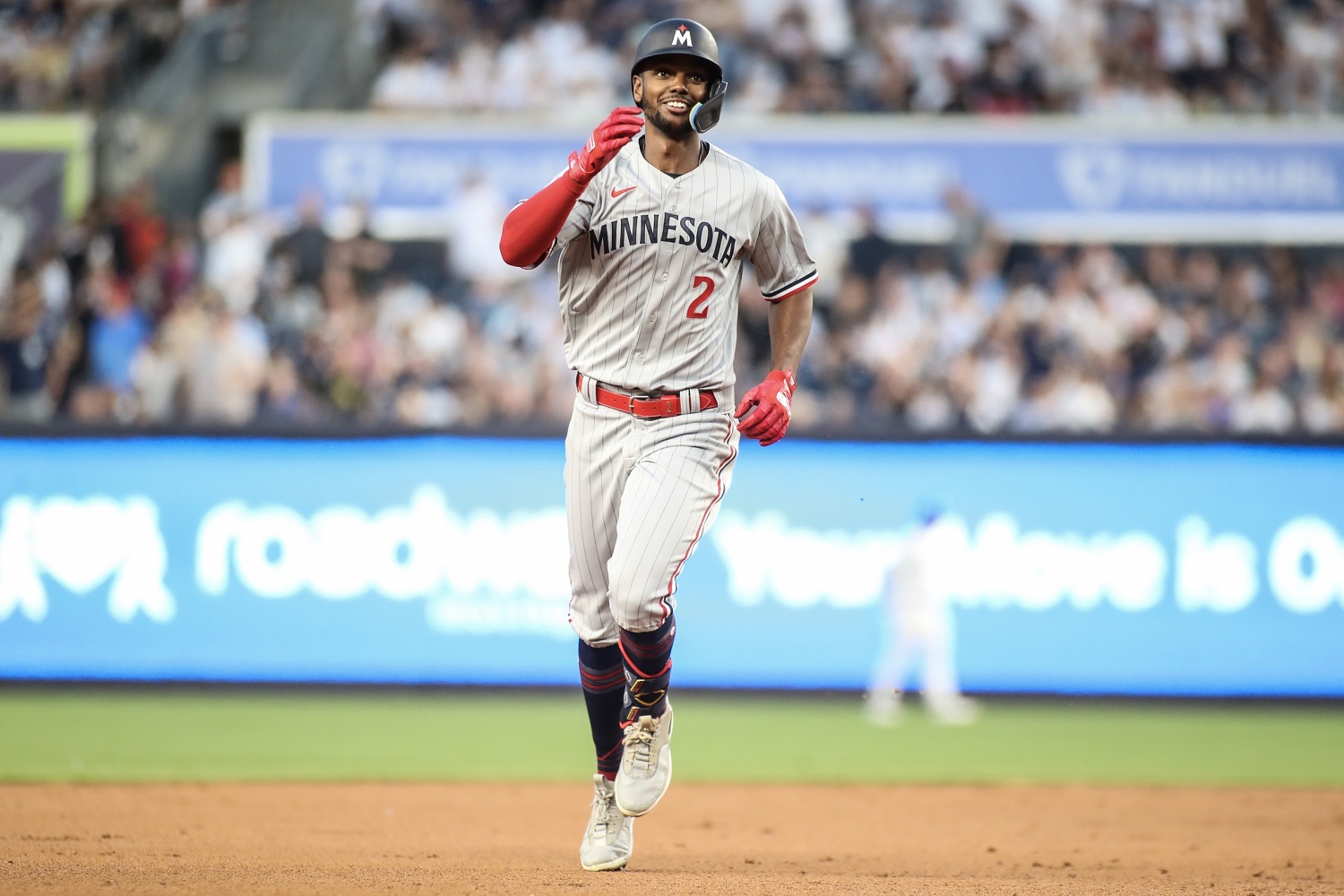 In a lineup with several disappointing performances in 2023, the Twins have a bright spot in their ninth hitter. The Twins' starting nine that has left much to be desired, but fans disappointment mostly surrounds the expected top hitters underperforming. The team have been pleasantly surprised with the production from both catchers, Donovan Solano, and the focus of this piece, Michael A. Taylor . Acquired in a division trade from the Royals over the off-season, Taylor was expected to log centerfield innings, serve as a right-handed bat versus left-handed pitching, and fill in adequately for Byron Buxton in the event he gets injured. Currently second on the team in fWAR and fifth in wRC+, Taylor has been instrumental in the Twins' hot start to the season. In addition to filling his anticipated role, Taylor has already had several memorable moments as a Twin. From the walk-off bunt against the White Sox to his diving catch and the two home run game in Yankee Stadium, Taylor is quickly cementing himself as not just an insurance policy, but as a critical everyday player for the AL Central leaders. While it's unlikely Taylor will continue to lead the team in home runs, his current power streak is not too out of character. Taylor's .464 SLG would be the second-highest of his career, as he posted a .486 SLG in 2017 with 19 home runs and a .424 SLG in 2020. In the past, he has shown the ability to be a power threat at the bottom of the lineup. It's a safe bet that playing most of his games in Kauffman Stadium over the last two years suppressed his power numbers. Unfortunately for Taylor, this power might have come with a tradeoff. Taylor has been a wild swinger this year, with a whopping 54.8% swing rate, 7.7% higher than the league average. He owns a 36.8% K% and has taken one walk in 2023. I boldly predict both numbers to regress throughout the season. His career BB% is 6.7%, a touch below league average, but expect strikeouts from him, as his career 29.5% K% is well above league average. Whether pitchers are eager to challenge him with the risk of putting him on base for Carlos Correa and Byron Buxton or he is just leaning further into what he has become as a player, Taylor's zone-swing% is 9.1% higher than the league average and almost 4% higher than his career marks. His chase% is 5.6% higher than the league average and 3.8% higher than his career average. If Taylor ends up being a below-average hitter, which he is expected to do, this is likely a big reason. Less likely to change is Taylor's defensive impact. His defense has been as advertised, a crucial part of the Twins' new identity. According to SIS, the Twins are the best team in baseball at turning fly balls and line drives into outs. Taylor currently ranks sixth in defensive runs saved among center fielders on Fangraphs and is 84th percentile in outs above average on Baseball Savant. Early-season defense metrics are quite unstable due to sample size, but given his track record, these confirm what past data has shown throughout his career. The Twins had a goal in the off-season to find players capable of filling their roles, and Michael A. Taylor is an example of that. His defense is about as close to Buxton's as you will find, and he's showing flashes of power on offense that is not unprecedented but also not necessarily anticipated. Taylor fits in quite well with his new team and may be well on his way to exceeding expectations and finding a nice payday in 2024. Correction: This story was originally pubished under John Bonnes' byline, when it was actually written by Ted Weiman. John edited and entered the story into the system and messed up putting in the actual author. Unfortunately, we can't change that field once it's published, so the original story needed to be deleted and that also means five comments were deleted with it. Twins Daily (and John Bonnes) sincerely apologize for our mistake.
 -
Maybe Max Kepler Needs to Strike Out More?
Ted Wiedmann replied to Ted Wiedmann's topic in Twins Daily Front Page News
Kepler would be far from a problem on a handful of teams as a platoon/4th outfielder . There are a handful of contending teams that Kepler has a spot on and he's an everyday player for pretty much every bad team. He has his gaps as a player but he's still a 2-2.5 win player that can hit right handed pitching. -
Maybe Max Kepler Needs to Strike Out More?
Ted Wiedmann replied to Ted Wiedmann's topic in Twins Daily Front Page News
In 2022, Kepler had his lowest Pull% since 2017 and his highest opposite field% ever. His flyball% was his lowest since 2017 and his ground ball% was his highest since 2016. He did change his approach to try to hit the other way more, it did not go well for him. -
Maybe Max Kepler Needs to Strike Out More?
Ted Wiedmann replied to Ted Wiedmann's topic in Twins Daily Front Page News
That's a really good point, and you're probably right that a swing overhaul is needed. His flyball% has been trending down since 2019, as well as his pull%. I'm not sure if he adjusted his swing to pull fewer balls in the air or if the holes in his swing are being exploited, but the data you're showing is pointing towards a swing adjustment. Still, hard ground balls are still better than soft groundballs. We'll see if Popkins can fix him. -
Maybe Max Kepler Needs to Strike Out More?
Ted Wiedmann replied to Ted Wiedmann's topic in Twins Daily Front Page News
That's an interesting question, I'm having a hard time finding data on that but my hunch would be that it probably doesn't change much situationally. His pitches per Plate appearance is slightly higher this year than last so maybe, but we don't have the sample to confirm anything yet. -
Maybe Max Kepler Needs to Strike Out More?
Ted Wiedmann replied to Ted Wiedmann's topic in Twins Daily Front Page News
I'm not saying his K% needs to jump to 30%, but maybe from 14% to 18-20%. Overall Kepler needs to improve the consistency of his quality of contact, it's one of those things where his ability to put the ball in play is hurting him sometimes. He has tremendous raw power and he needs to find a way to take advantage of it more than he does. -
It seems like the same old story for Max Kepler, but maybe he can learn something from his new teammate Joey Gallo. Image courtesy of Rhona Wise-USA TODAY Sports While certainly not lacking in controversy, Rocco Baldelli has opted to double down on Max Kepler as the Twins' leadoff hitter, at least in the short term. Against the wishes of many (including myself), Kepler has found himself in the top spot in the order every game so far this year. Very early returns suggest the Twins got this one wrong, but there could be some adjustments for the German-born lefty that may yield results this season. I'm no MLB hitting coach, but I believe Max Kepler is far too aggressive at the plate. Per Baseball Reference, in 2022, he ranked far below the league average at 3.71 pitches per plate appearance; so far in 2023, that number has increased to 3.86, just under the league average of 3.89. Kepler's first pitch swing% in 2022 was 33.9%, much higher than the league average (29.5%). He should take more pitches in his at-bats, not just because he is the leadoff hitter, but because it will play into his strengths as a hitter more. Much of Kepler's appeal comes in peripheral number: his exit max velocities, plate discipline, swing decisions, and raw power. Per Baseball Savant, in 2022, perhaps his worst MLB season since his rookie year, Kepler had a max exit velocity in the 93rd percentile and 115.8 MPH, and borderline elite strikeout and walk rates at 14.3% K% and 11.0% BB%. Furthermore, Kepler's chase rate was 4.9% below the league average (28.4%) at 23.5%, and his swing and miss% was 19.9%, compared to a league average of 24.7%. Kepler's zone-contact% was 87.2%, 5.2% higher than the league average. These numbers suggest Kepler has both exceptional bat-to-ball skills and excellent plate discipline. Taking more pitches early in the count will allow Kepler to sit in his hot zones and be less prone to swing at pitches he doesn't hit as well. Kepler's max exit velocity shows he has plenty of power to tap into, and even in his non-2019 seasons, he has shown 20-home run ability. Despite the impressive max exit velocity, Kepler's hard hit% was only the 49th percentile, and his average exit velocity was the 51st percentile. I believe being more patient and waiting for pitches he is better at hitting will lead to a higher quality of contact for the Twins right fielder. Even if he falls behind in the count more often, as a result, Kepler has both the bat-to-ball skills and the plate discipline to put together a quality at-bat still. Of course, taking more pitches would inevitably lead to more strikeouts. Hitting for power requires a tradeoff, and given the last two seasons, Kepler isn't good as a contact hitter. Leaning into a more all-or-nothing approach could be beneficial for him. I think Kepler, the Twins, and Twins fans would trade a few more strikeouts for more production at the plate. If you have been a supporter of Kepler and have Baseball Savant red dot syndrome, you have been waiting for a Kepler rebound for a few years. The Twins front office and Rocco Baldelli have committed to Kepler in the lineup for better or for worse, and hopefully, some better patience is the key to more success. View full article
-
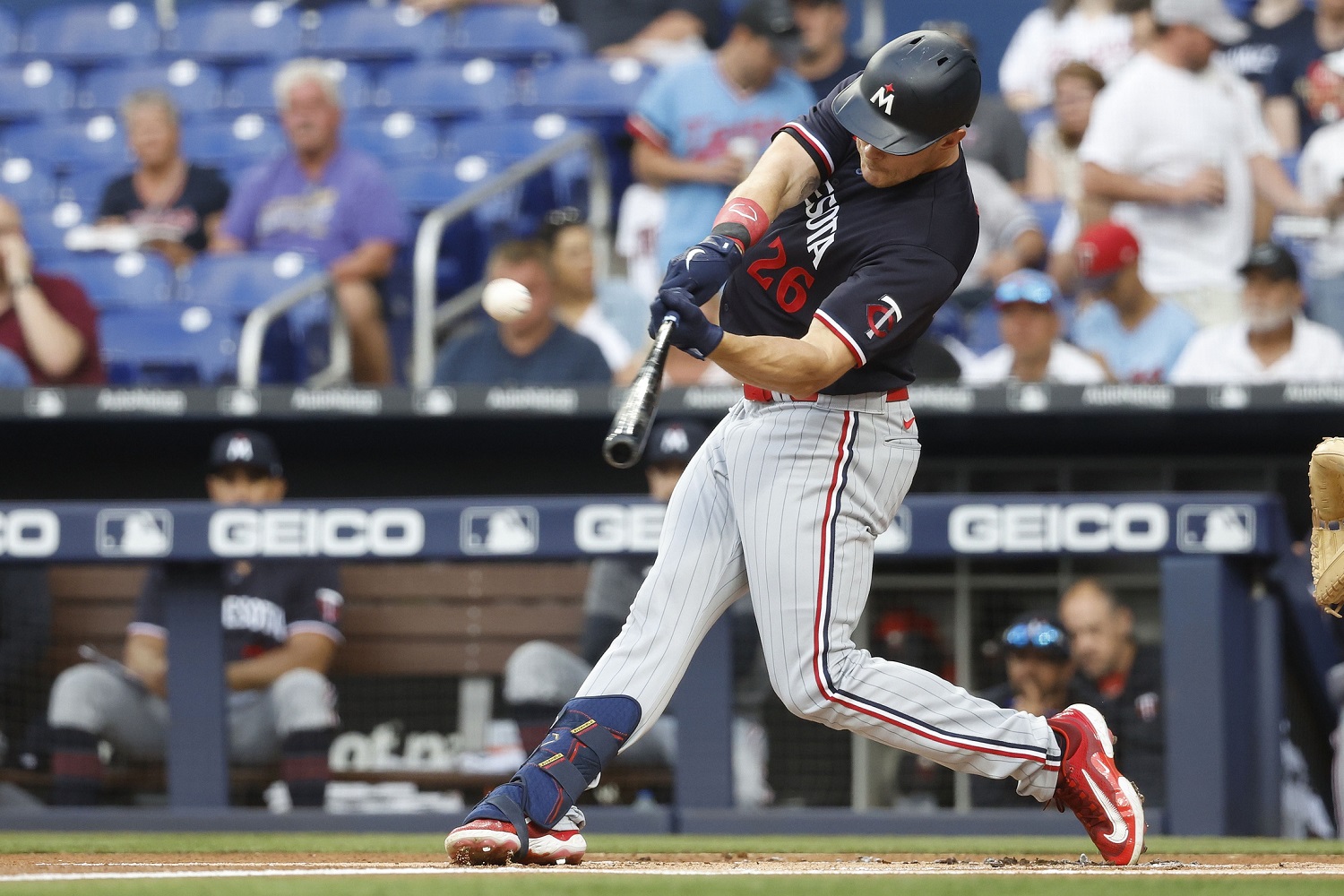 While certainly not lacking in controversy, Rocco Baldelli has opted to double down on Max Kepler as the Twins' leadoff hitter, at least in the short term. Against the wishes of many (including myself), Kepler has found himself in the top spot in the order every game so far this year. Very early returns suggest the Twins got this one wrong, but there could be some adjustments for the German-born lefty that may yield results this season. I'm no MLB hitting coach, but I believe Max Kepler is far too aggressive at the plate. Per Baseball Reference, in 2022, he ranked far below the league average at 3.71 pitches per plate appearance; so far in 2023, that number has increased to 3.86, just under the league average of 3.89. Kepler's first pitch swing% in 2022 was 33.9%, much higher than the league average (29.5%). He should take more pitches in his at-bats, not just because he is the leadoff hitter, but because it will play into his strengths as a hitter more. Much of Kepler's appeal comes in peripheral number: his exit max velocities, plate discipline, swing decisions, and raw power. Per Baseball Savant, in 2022, perhaps his worst MLB season since his rookie year, Kepler had a max exit velocity in the 93rd percentile and 115.8 MPH, and borderline elite strikeout and walk rates at 14.3% K% and 11.0% BB%. Furthermore, Kepler's chase rate was 4.9% below the league average (28.4%) at 23.5%, and his swing and miss% was 19.9%, compared to a league average of 24.7%. Kepler's zone-contact% was 87.2%, 5.2% higher than the league average. These numbers suggest Kepler has both exceptional bat-to-ball skills and excellent plate discipline. Taking more pitches early in the count will allow Kepler to sit in his hot zones and be less prone to swing at pitches he doesn't hit as well. Kepler's max exit velocity shows he has plenty of power to tap into, and even in his non-2019 seasons, he has shown 20-home run ability. Despite the impressive max exit velocity, Kepler's hard hit% was only the 49th percentile, and his average exit velocity was the 51st percentile. I believe being more patient and waiting for pitches he is better at hitting will lead to a higher quality of contact for the Twins right fielder. Even if he falls behind in the count more often, as a result, Kepler has both the bat-to-ball skills and the plate discipline to put together a quality at-bat still. Of course, taking more pitches would inevitably lead to more strikeouts. Hitting for power requires a tradeoff, and given the last two seasons, Kepler isn't good as a contact hitter. Leaning into a more all-or-nothing approach could be beneficial for him. I think Kepler, the Twins, and Twins fans would trade a few more strikeouts for more production at the plate. If you have been a supporter of Kepler and have Baseball Savant red dot syndrome, you have been waiting for a Kepler rebound for a few years. The Twins front office and Rocco Baldelli have committed to Kepler in the lineup for better or for worse, and hopefully, some better patience is the key to more success.
 -
Cole Sands Can Be More Than a Mop-Up Man
Ted Wiedmann replied to Ted Wiedmann's topic in Twins Daily Front Page News
Perhaps 7 runs was an exaggeration. Most win probability models would show being down 3-4 runs in mid-late innings as low leverage, which even for good teams isn't infrequent. Spring training numbers aren't very reliable for player evaluation, too many variables for it to be reliable data and teams (every team, not just the Twins) clearly don't use them to make roster decisions. While it's better to pitch well than not pitch well I'm not concerned about it. We don't know if he was working on stuff or trying out new things. I would expect Sands to be in AAA by the end of April, given the role assigned, the options left, and the guys likely coming off the IL. This is Winder's spot on the team, I would assume as soon as he's healthy Sands is headed for St. Paul. -
Cole Sands Can Be More Than a Mop-Up Man
Ted Wiedmann replied to Ted Wiedmann's topic in Twins Daily Front Page News
much better than relievers without stuff, I assure you -
Cole Sands Can Be More Than a Mop-Up Man
Ted Wiedmann replied to Ted Wiedmann's topic in Twins Daily Front Page News
I think your pitch selection speculation is correct, but at some point either the Twins or Sands need to recognize giving up walks is probably better than extra base hits. Sands is very likely on this team because Winder is hurt, and I would think as soon as he's back Sands is headed to St. Paul. You need low leverage pitchers too, not every game is going to be 3-2 and you need length to eat innings when your losing by 7. I suspect Sands and Pagán can fill those spots, especially after seeing them work multi-inning outings in spring. -
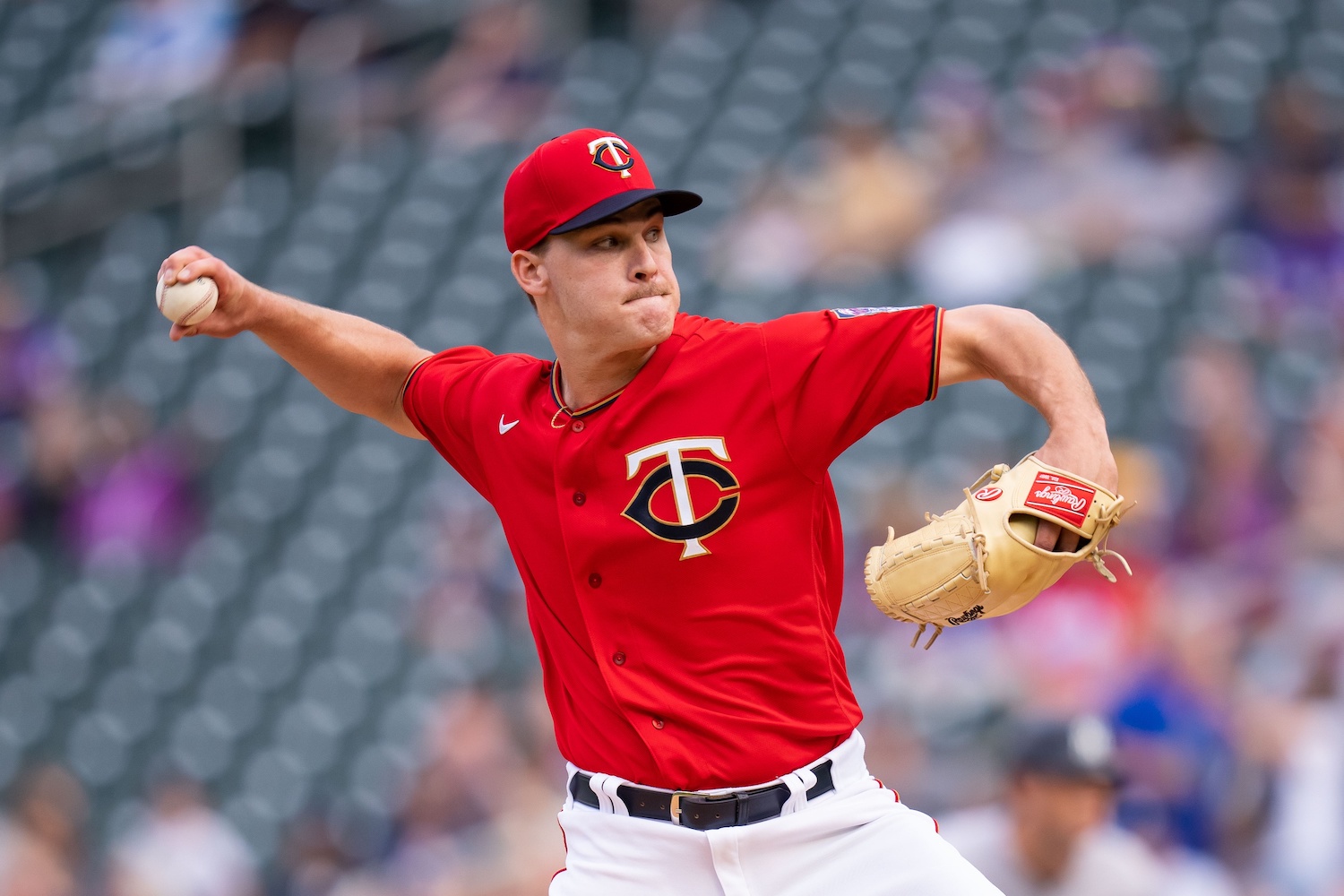 When the Minnesota Twins announced their Opening Day bullpen on Wednesday, one member was a surprise. Many (including myself) expected Bailey Ober to fill a six-man rotation or long relief role, or maybe a reclamation project like Jeff Hoffman or WBC sensation Jose De Leon would claim the final reliever spot. Instead the Twins opted to go with their homegrown player, Cole Sands. 2022 wasn’t inspiring for Sands as he posted a 5.87 ERA, a 4.74 FIP, and a 1.57 WHIP in just over 30 innings for the Twins. Strikeouts were not particularly high (19.3%), walks were not particularly low (9.0%), and loud contact wasn’t rare (39.4% hard-hit rate). So what are the Twins doing here? Sands would not have been my pick to make the team coming out of spring training, but I found some reasons they decided to keep him. Let’s look deeper into what Sands offers as a pitcher and see if we can make sense of all this. Sands Brings Length and Spin to the Twins Bullpen As a prospect, Sands profiled as a reliever very early into his professional career. Despite being a full-time starting pitcher until last season, I don’t think the Twins or anyone else saw Sands realistically developing into an MLB rotation arm. Due in part to injuries and in part to a 70-grade breaking ball (per Fangraphs), Sands found his way into the big leagues as a spot starter and a long reliever – the same role the Twins envision for him in 2023. As stated previously, Sands has an elite breaking ball. On Baseball Savant, his curveball generated 18.1 inches of horizontal movement, good for second-most among all pitchers that threw at least 100 curves in 2022 and just ahead of the infamous Rich Hill bender. While it didn’t quite generate the swings and misses its counterparts did, the tools to do it are certainly there. According to Jeremy Maschino’s MLB Pitch Profiler, Sands’ curveball has a Stuff+ rating of 135. This metric measures a pitch’s movement and velocity compared to others around the league. It works like other comparative rate stats such as wRC+ or OPS+, where 100 is the league average, so 135 is an excellent number. For some context, Jhoan Duran’s curveball that generated a 49.7% swing-and-miss clip is rated at 112 Stuff+. While mostly apples to oranges here, this demonstrates what Sands could have with his curveball. Sands offers an above-average split finger at 106 Stuff+, and an above-average cutter at 110 Stuff+, enabling him to pitch effectively to left-handed hitters. Could Pitch Mix Tweaks Lead to Improvement? Sands could benefit from a change in pitch selection as well. In 2022, Sands threw his fastball 48.8% of the time, much too high of a percentage given what his secondary offerings are and what his fastball is. Last season Sands’ fastball registered a 52.8% hard-hit rate against, good for 38th-worst out of 369 pitchers with at least 50 PA concluding against a four-seam fastball. MLB Pitch Profiler didn’t like his fastball any better as it has his fastball rated at a 72 Stuff+, 28% below a league-average fastball. Reduced fastball usage and increased curveball, splitter, and cutter usage could greatly benefit Sands. While all of Cole Sands’ success is still theoretical, he still has options, the ability to pitch multiple innings in long relief, and a decent prospect repertoire. Given the potential upside, taking this chance makes sense for the Twins. As long as he can stay in low-leverage situations for now, this is a good opportunity for Sands to develop at the major league level and maybe realize his potential to become a dependable reliever for the Twins.
 -
The team's desire for a length in the bullpen led to Cole Sands landing an unexpected spot on the Opening Day roster. While he hasn't been too impressive as a big-leaguer thus far, his pitch metrics suggest there's more than meets the eye. Image courtesy of Brad Rempel-USA TODAY Sports When the Minnesota Twins announced their Opening Day bullpen on Wednesday, one member was a surprise. Many (including myself) expected Bailey Ober to fill a six-man rotation or long relief role, or maybe a reclamation project like Jeff Hoffman or WBC sensation Jose De Leon would claim the final reliever spot. Instead the Twins opted to go with their homegrown player, Cole Sands. 2022 wasn’t inspiring for Sands as he posted a 5.87 ERA, a 4.74 FIP, and a 1.57 WHIP in just over 30 innings for the Twins. Strikeouts were not particularly high (19.3%), walks were not particularly low (9.0%), and loud contact wasn’t rare (39.4% hard-hit rate). So what are the Twins doing here? Sands would not have been my pick to make the team coming out of spring training, but I found some reasons they decided to keep him. Let’s look deeper into what Sands offers as a pitcher and see if we can make sense of all this. Sands Brings Length and Spin to the Twins Bullpen As a prospect, Sands profiled as a reliever very early into his professional career. Despite being a full-time starting pitcher until last season, I don’t think the Twins or anyone else saw Sands realistically developing into an MLB rotation arm. Due in part to injuries and in part to a 70-grade breaking ball (per Fangraphs), Sands found his way into the big leagues as a spot starter and a long reliever – the same role the Twins envision for him in 2023. As stated previously, Sands has an elite breaking ball. On Baseball Savant, his curveball generated 18.1 inches of horizontal movement, good for second-most among all pitchers that threw at least 100 curves in 2022 and just ahead of the infamous Rich Hill bender. While it didn’t quite generate the swings and misses its counterparts did, the tools to do it are certainly there. According to Jeremy Maschino’s MLB Pitch Profiler, Sands’ curveball has a Stuff+ rating of 135. This metric measures a pitch’s movement and velocity compared to others around the league. It works like other comparative rate stats such as wRC+ or OPS+, where 100 is the league average, so 135 is an excellent number. For some context, Jhoan Duran’s curveball that generated a 49.7% swing-and-miss clip is rated at 112 Stuff+. While mostly apples to oranges here, this demonstrates what Sands could have with his curveball. Sands offers an above-average split finger at 106 Stuff+, and an above-average cutter at 110 Stuff+, enabling him to pitch effectively to left-handed hitters. Could Pitch Mix Tweaks Lead to Improvement? Sands could benefit from a change in pitch selection as well. In 2022, Sands threw his fastball 48.8% of the time, much too high of a percentage given what his secondary offerings are and what his fastball is. Last season Sands’ fastball registered a 52.8% hard-hit rate against, good for 38th-worst out of 369 pitchers with at least 50 PA concluding against a four-seam fastball. MLB Pitch Profiler didn’t like his fastball any better as it has his fastball rated at a 72 Stuff+, 28% below a league-average fastball. Reduced fastball usage and increased curveball, splitter, and cutter usage could greatly benefit Sands. While all of Cole Sands’ success is still theoretical, he still has options, the ability to pitch multiple innings in long relief, and a decent prospect repertoire. Given the potential upside, taking this chance makes sense for the Twins. As long as he can stay in low-leverage situations for now, this is a good opportunity for Sands to develop at the major league level and maybe realize his potential to become a dependable reliever for the Twins. View full article
-
Ryan Jeffers is Facing an Uphill Battle
Ted Wiedmann replied to Ted Wiedmann's topic in Twins Daily Front Page News
They do make rSB for pitchers too -
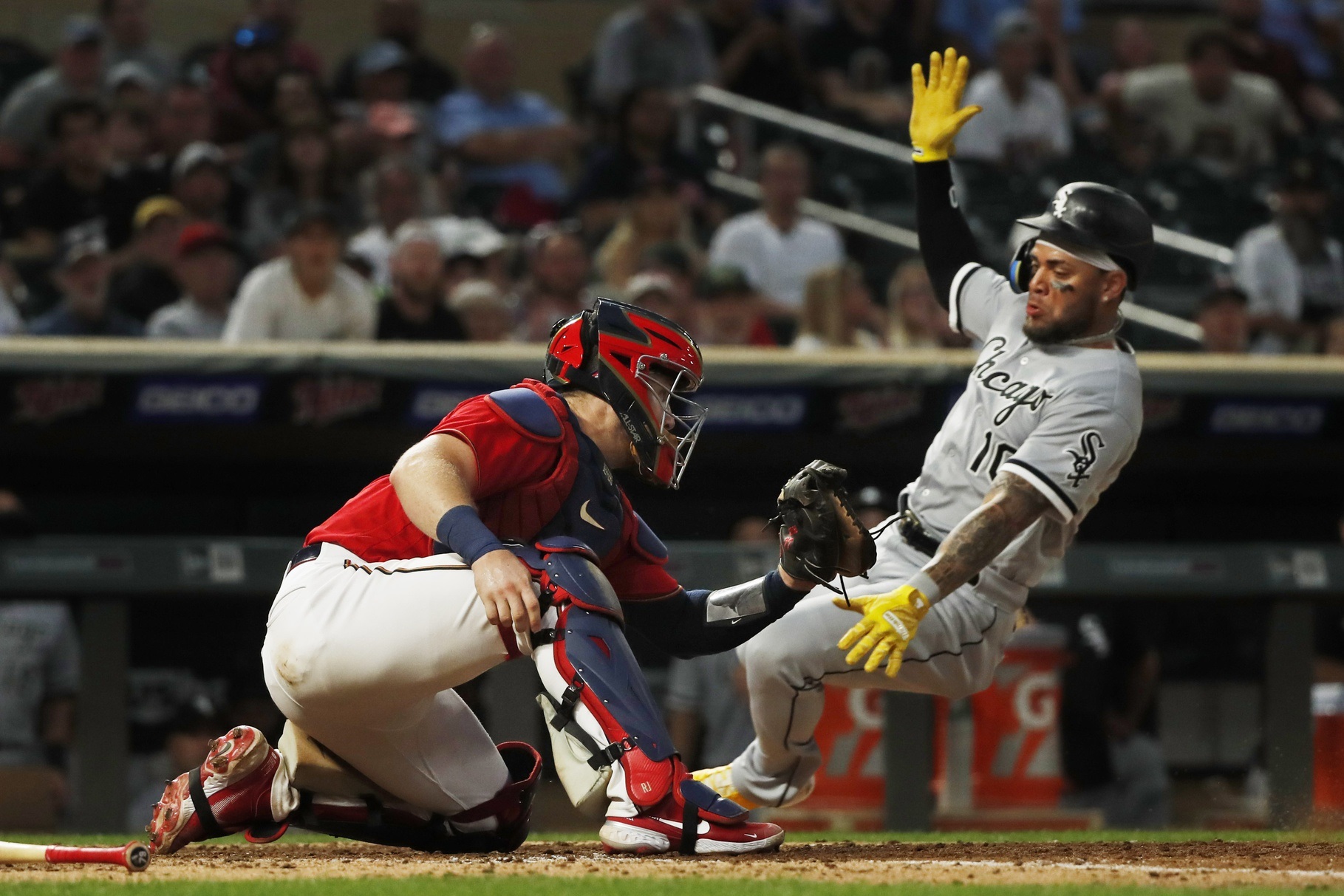 There's been plenty of speculation about how MLB's new rule changes will affect hitters and pitchers. It makes sense, given the current roster the Twins have that contains Joey Gallo, Max Kepler, and a plethora of fly-ball pitchers. But, one other Twins player may be significantly affected by these rule changes, catcher Ryan Jeffers. Jeffers has a classic backup catcher prototype, lots of power with little contact, and a good defensive reputation. However, the current and some inevitable rule changes could hinder Jeffers' value this year and moving forward. First off, we need to understand where Jeffers provides value. This piece will focus purely on his defensive strengths and weaknesses, so offense aside for now. We have comparable quantitative data for three defensive categories: pitch framing, blocking, and throwing out runners. Other aspects of catcher defense, like understanding the pitching staff, calling pitches, leadership, and other intangibles, play a significant part in catching too. Still, from the outside, it's difficult to see who excels in those areas outside of player and staff quotes. Let's start with the good for Jeffers, his pitch framing. It's a big reason the Twins have been high on Jeffers coming into the season the last two years. From 2021 to 2022, Jeffers established himself as one of the better pitch framers in baseball. According to Fangprahs, Jeffers' 3.3 framing runs above average (FRM) placed him 22nd among 51 catchers that caught at least 400 innings. However, limiting the pool to catchers that have caught at least 1000 innings over those two years makes him look much more impressive. Jeffers' 6.8 FRM ranks 14th out of 36, notably ahead of the presumed starter, Christian Vazquez, who was 18th at 3.7 FRM. This data is supported by Statcast as well. In 2022 Jeffers was 18th out of 60 qualified catchers in catcher framing runs, which was good for the 64th percentile. He also finished 21st out of 60 in strike rate. Jeffers performed similarly in 2021, finishing 21st out of 59 qualified catchers in catcher framing runs and 15th in strike rate. While not among the elite in strike zone manipulation, Jeffers certainly provides value in stealing strikes behind the plate. Unfortunately for Jeffers, with the automated strike zone being tested in the Minor Leagues, this could potentially neutralize his best skillset as a catcher. Let's move on to areas Jeffers could improve. The first area is his ability to control the running game. Jeffers had a poor caught-stealing rate in 2022, only throwing out 7 of 38 runners in motion. That is a stolen base success rate of over 81%. This has been a problem for Jeffers throughout his career, as in his three years behind the plate, he has allowed more than 80% (91/113) of stolen base attempts to be successful. We can also look to another stat to show Jeffers' struggles in this area. Fangraphs as a stat called stolen base runs saved (rSB). This statistic credits the catchers with their caught stealing rate and the rate at which runners try to steal. In 2022 Jeffers finished with -1 rSB, placing him 35th among 51 catchers that caught at least 400 innings. While -1 might not seem like a huge issue, if we expand the sample, we get a better picture. If we look at catchers that have caught at least 1,000 innings between 2021 and 2022, Jeffers ranks 35th out of 36 in rSB at -5. Only Austin Nola finished below him. The third defensive area to focus on is pitch blocking, the first thing youth catchers learn to do. Statcast recently released a new stat called blocks above average, which measures "the number of passed balls and wild pitches compared to the expectation of an average catcher." Jeffers ranks 53rd out of 66 qualified Statcast catchers in this metric with -3. There is a pretty sizable runs gap between the bottom ten players and where Jeffers ranks, as the bottom couple of catchers are -11 and lower, so that 53rd ranking may be a bit misleading. Nonetheless, Jeffers still finished below Gary Sanchez, who was made notorious (probably too much so) for having passed balls and wild pitches issues. While it is unclear how the pitch clock, the pickoff limit, and the bigger bases will affect baserunning, they were undoubtedly created to incentivize aggressive baserunning. This likely means more stolen base attempts, bigger leads, and better jumps on balls in the dirt. Because Jeffers already struggles to control the running game as is, these new rules can potentially severely hurt Jeffers' value as a defensive catcher. In addition to his struggles at the plate, if Jeffers' most valuable asset on defense also becomes neutralized, Jeffers’ ceiling as a starting catcher could be in question.
 -
Last year, Ryan Jeffers came up short in his expectations to be the Twins' everyday catcher, but what does his future hold if the most recent rule changes amplify his struggles and limit his strengths? Image courtesy of © Bruce Kluckhohn-USA TODAY Sports There's been plenty of speculation about how MLB's new rule changes will affect hitters and pitchers. It makes sense, given the current roster the Twins have that contains Joey Gallo, Max Kepler, and a plethora of fly-ball pitchers. But, one other Twins player may be significantly affected by these rule changes, catcher Ryan Jeffers. Jeffers has a classic backup catcher prototype, lots of power with little contact, and a good defensive reputation. However, the current and some inevitable rule changes could hinder Jeffers' value this year and moving forward. First off, we need to understand where Jeffers provides value. This piece will focus purely on his defensive strengths and weaknesses, so offense aside for now. We have comparable quantitative data for three defensive categories: pitch framing, blocking, and throwing out runners. Other aspects of catcher defense, like understanding the pitching staff, calling pitches, leadership, and other intangibles, play a significant part in catching too. Still, from the outside, it's difficult to see who excels in those areas outside of player and staff quotes. Let's start with the good for Jeffers, his pitch framing. It's a big reason the Twins have been high on Jeffers coming into the season the last two years. From 2021 to 2022, Jeffers established himself as one of the better pitch framers in baseball. According to Fangprahs, Jeffers' 3.3 framing runs above average (FRM) placed him 22nd among 51 catchers that caught at least 400 innings. However, limiting the pool to catchers that have caught at least 1000 innings over those two years makes him look much more impressive. Jeffers' 6.8 FRM ranks 14th out of 36, notably ahead of the presumed starter, Christian Vazquez, who was 18th at 3.7 FRM. This data is supported by Statcast as well. In 2022 Jeffers was 18th out of 60 qualified catchers in catcher framing runs, which was good for the 64th percentile. He also finished 21st out of 60 in strike rate. Jeffers performed similarly in 2021, finishing 21st out of 59 qualified catchers in catcher framing runs and 15th in strike rate. While not among the elite in strike zone manipulation, Jeffers certainly provides value in stealing strikes behind the plate. Unfortunately for Jeffers, with the automated strike zone being tested in the Minor Leagues, this could potentially neutralize his best skillset as a catcher. Let's move on to areas Jeffers could improve. The first area is his ability to control the running game. Jeffers had a poor caught-stealing rate in 2022, only throwing out 7 of 38 runners in motion. That is a stolen base success rate of over 81%. This has been a problem for Jeffers throughout his career, as in his three years behind the plate, he has allowed more than 80% (91/113) of stolen base attempts to be successful. We can also look to another stat to show Jeffers' struggles in this area. Fangraphs as a stat called stolen base runs saved (rSB). This statistic credits the catchers with their caught stealing rate and the rate at which runners try to steal. In 2022 Jeffers finished with -1 rSB, placing him 35th among 51 catchers that caught at least 400 innings. While -1 might not seem like a huge issue, if we expand the sample, we get a better picture. If we look at catchers that have caught at least 1,000 innings between 2021 and 2022, Jeffers ranks 35th out of 36 in rSB at -5. Only Austin Nola finished below him. The third defensive area to focus on is pitch blocking, the first thing youth catchers learn to do. Statcast recently released a new stat called blocks above average, which measures "the number of passed balls and wild pitches compared to the expectation of an average catcher." Jeffers ranks 53rd out of 66 qualified Statcast catchers in this metric with -3. There is a pretty sizable runs gap between the bottom ten players and where Jeffers ranks, as the bottom couple of catchers are -11 and lower, so that 53rd ranking may be a bit misleading. Nonetheless, Jeffers still finished below Gary Sanchez, who was made notorious (probably too much so) for having passed balls and wild pitches issues. While it is unclear how the pitch clock, the pickoff limit, and the bigger bases will affect baserunning, they were undoubtedly created to incentivize aggressive baserunning. This likely means more stolen base attempts, bigger leads, and better jumps on balls in the dirt. Because Jeffers already struggles to control the running game as is, these new rules can potentially severely hurt Jeffers' value as a defensive catcher. In addition to his struggles at the plate, if Jeffers' most valuable asset on defense also becomes neutralized, Jeffers’ ceiling as a starting catcher could be in question. View full article
-
An Unfair Comparison for Jose Miranda
Ted Wiedmann replied to Ted Wiedmann's topic in Twins Daily Front Page News
Pointing out similarities in an elite hitter and a player that needs to be an elite hitter may be pointless, sure. As a genuine question, would you rather read about how Miranda is the same player as Ty France? -
An Unfair Comparison for Jose Miranda
Ted Wiedmann replied to Ted Wiedmann's topic in Twins Daily Front Page News
100% agree on the number change. I think the point of this was to find a similarly performing player early in their career that made the necessary adjustments to become a premier league bat, maybe adjustments that Miranda can make as well. While overall value will never be the same, offensively there is tons of room for Miranda to grow still and maybe elite offensive production is in play for him. -
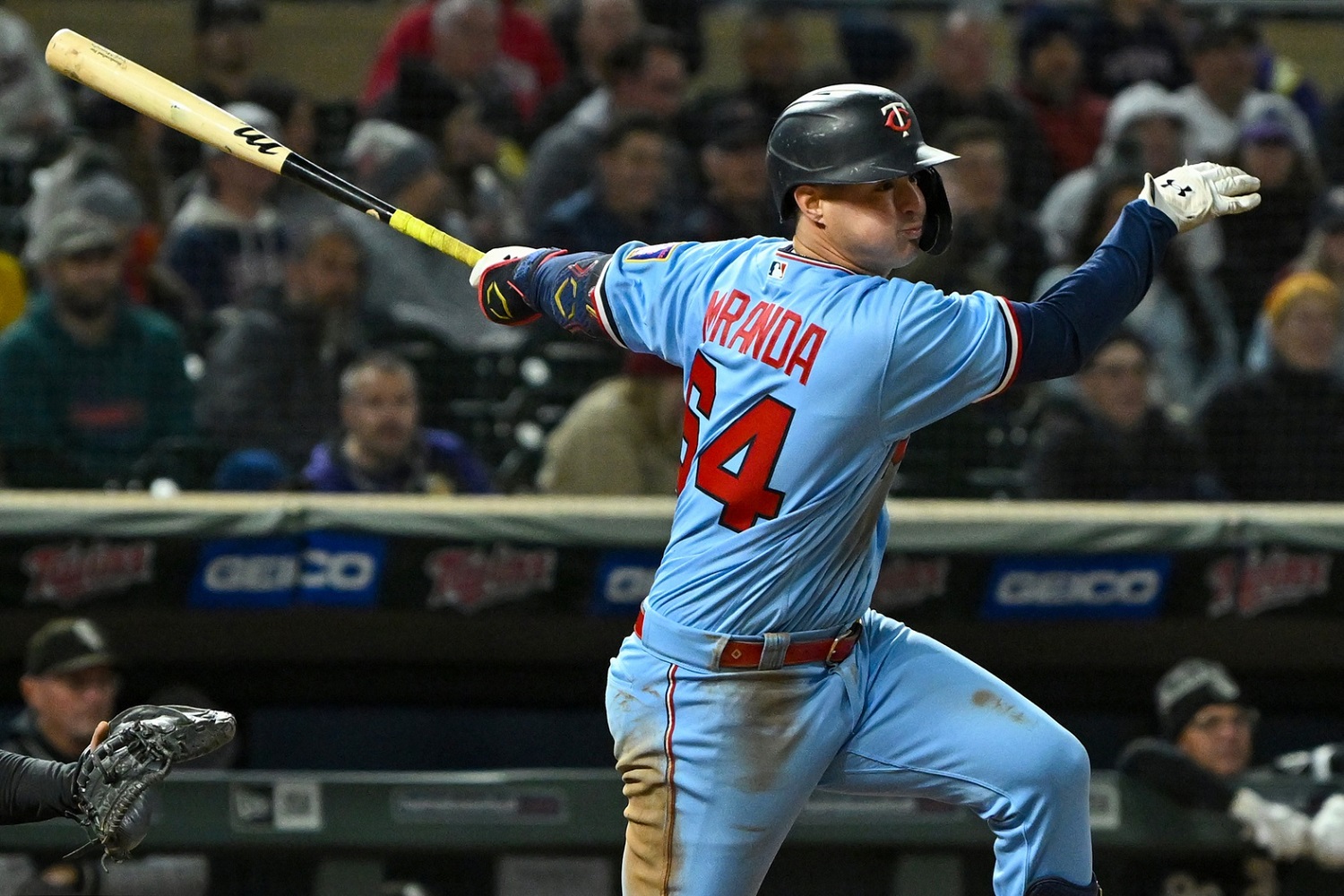 As I looked at numbers for Jose Miranda's stellar rookie campaign, something about it seemed quixotically familiar. This gap-to-gap line-drive hitter with a below-average walk rate and a below-average league strikeout rate reminded me of a season another young third baseman had several years ago, 2013 Manny Machado. This may initially seem bewildering, but give me a chance to explain, because while similarities exist, it’s the (somewhat hidden) differences that highlight the contrast between the two players. But they also point out why Twins fans can be so optimistic about Miranda. Miranda was never the prospect that Machado was, but they did end up having similar hit and power grades. On Fangraphs in 2012, Machado was given a 60-hit 50-power, and Miranda had a 50-hit 50-power. The difference in the overall ranking had much to do with other tools Machado possesses that Miranda does not. We will get to that later. For now, I want to focus on the similarities between 2022 Jose Miranda and 2013 Manny Machado. While not identical, Machado and Miranda were aggressive, quality bat-to-ball hitters in their first full seasons. Machado posted a 4.1% BB rate and 15.9% K rate, and Miranda had a 5.8% BB rate and an 18.8% K rate. Their BB/K was 0.26 for Machado and 0.31 for Miranda, so while the rates were slightly different, the ratios were very close. The approach of Machado and Miranda wasn't the only similarity. Their line drive rates and power numbers are what stuck out to me. Let's take a look at some categories where Miranda and Machado performed similarly: 2022 Miranda vs. 2013 Machado HR: 15 vs 14 OBP: .325 vs .314 SLG: .426 vs .432 OPS: .751 vs .746 ISO: .158 vs .148 wOBA: .329 vs .325 LD%: 20.3% vs 20.6% Fastball RAA: 2.5 vs 2.3 Machado logged over 700 plate appearances in 2013, while Jose Miranda had fewer than 500, so volume totals will look significantly different. Still, this was a fun thing to research, given what Machado has developed into as a hitter. The differences in the seasons are relatively obvious, but we should look at them anyway. First, Machado played his 2013 season at age 20, whereas Miranda played in 2022 at age 24. That doesn’t mean anything in the value of that year, but it means a tremendous difference in what that year means to their future projections. So to be clear, the fact that their years were similar offensively, doesn’t mean that the players should develop in a similar manner. Jose Miranda is not on pace to become Manny Machado. There is another glaring disparity between these seasons that does affect the value of that particular season: their defense. Miranda's defensive struggles at first base have been well documented, and it seems to be deemed a success if he turns into an average third baseman. On the contrary, Machado is one of the best defensive third basemen in the history of baseball. In that 2013 season, Machado netted 27 defensive runs saved, tops among all third baseman and fifth among all positions. His 20.8 UZR ranked first among all third basemen and first among all positions. Machado also finished first among all non-catchers in defensive runs above average at 23.2, a defensive stat that takes into account position value, which is a particularly impressive accomplishment given third base is not considered a premium defensive position. For some context, Miranda had -9.3 defensive runs above average last season. He was penalized for being a below-average defender and additionally penalized for playing most of his innings at first base. The differences in defensive value, along with the volume disparity, were enough to give Machado a 5.0 fWAR season compared to Miranda's 1.1 fWAR. Still, it should also be noted that Miranda's offensive production came in a much unfriendlier run-scoring environment. Not only was Camden Yards one of the most hitter-friendly parks in MLB, but changes to the baseball and the progression of pitchers also played a part. The difference in these factors is shown in wRC+ and OPS+, which consider the hitter's environment. For both of these stats, the league average is 100. Miranda's and Machado's OPS were nearly identical, but Miranda performed much better in wRC+ at 117 than 2013 Machado at 102. OPS+, which compares a player's OPS to the league average, shows the same with Miranda at 116 and 2013 Machado at 102. Jose Miranda most likely doesn't have the talent to become the player Manny Machado has developed into. Still, there are enough parallels in their early career hitting performances that there might be more upside in Miranda's bat than initially perceived. I don't want to imply that Miranda will match Machado as one of the premier players in the game; even in Miranda's highest standard deviation of outcomes, he doesn't become the player Machado is. But as someone who began writing this piece a little lower on Miranda than public perception, I am more optimistic about the Twins' starting third baseman for the years to come.
 -
Jose Miranda had an encouraging rookie season at the plate for the Twins in 2022, but how does he compare to one of baseball's best? Image courtesy of Nick Wosika-USA TODAY Sports As I looked at numbers for Jose Miranda's stellar rookie campaign, something about it seemed quixotically familiar. This gap-to-gap line-drive hitter with a below-average walk rate and a below-average league strikeout rate reminded me of a season another young third baseman had several years ago, 2013 Manny Machado. This may initially seem bewildering, but give me a chance to explain, because while similarities exist, it’s the (somewhat hidden) differences that highlight the contrast between the two players. But they also point out why Twins fans can be so optimistic about Miranda. Miranda was never the prospect that Machado was, but they did end up having similar hit and power grades. On Fangraphs in 2012, Machado was given a 60-hit 50-power, and Miranda had a 50-hit 50-power. The difference in the overall ranking had much to do with other tools Machado possesses that Miranda does not. We will get to that later. For now, I want to focus on the similarities between 2022 Jose Miranda and 2013 Manny Machado. While not identical, Machado and Miranda were aggressive, quality bat-to-ball hitters in their first full seasons. Machado posted a 4.1% BB rate and 15.9% K rate, and Miranda had a 5.8% BB rate and an 18.8% K rate. Their BB/K was 0.26 for Machado and 0.31 for Miranda, so while the rates were slightly different, the ratios were very close. The approach of Machado and Miranda wasn't the only similarity. Their line drive rates and power numbers are what stuck out to me. Let's take a look at some categories where Miranda and Machado performed similarly: 2022 Miranda vs. 2013 Machado HR: 15 vs 14 OBP: .325 vs .314 SLG: .426 vs .432 OPS: .751 vs .746 ISO: .158 vs .148 wOBA: .329 vs .325 LD%: 20.3% vs 20.6% Fastball RAA: 2.5 vs 2.3 Machado logged over 700 plate appearances in 2013, while Jose Miranda had fewer than 500, so volume totals will look significantly different. Still, this was a fun thing to research, given what Machado has developed into as a hitter. The differences in the seasons are relatively obvious, but we should look at them anyway. First, Machado played his 2013 season at age 20, whereas Miranda played in 2022 at age 24. That doesn’t mean anything in the value of that year, but it means a tremendous difference in what that year means to their future projections. So to be clear, the fact that their years were similar offensively, doesn’t mean that the players should develop in a similar manner. Jose Miranda is not on pace to become Manny Machado. There is another glaring disparity between these seasons that does affect the value of that particular season: their defense. Miranda's defensive struggles at first base have been well documented, and it seems to be deemed a success if he turns into an average third baseman. On the contrary, Machado is one of the best defensive third basemen in the history of baseball. In that 2013 season, Machado netted 27 defensive runs saved, tops among all third baseman and fifth among all positions. His 20.8 UZR ranked first among all third basemen and first among all positions. Machado also finished first among all non-catchers in defensive runs above average at 23.2, a defensive stat that takes into account position value, which is a particularly impressive accomplishment given third base is not considered a premium defensive position. For some context, Miranda had -9.3 defensive runs above average last season. He was penalized for being a below-average defender and additionally penalized for playing most of his innings at first base. The differences in defensive value, along with the volume disparity, were enough to give Machado a 5.0 fWAR season compared to Miranda's 1.1 fWAR. Still, it should also be noted that Miranda's offensive production came in a much unfriendlier run-scoring environment. Not only was Camden Yards one of the most hitter-friendly parks in MLB, but changes to the baseball and the progression of pitchers also played a part. The difference in these factors is shown in wRC+ and OPS+, which consider the hitter's environment. For both of these stats, the league average is 100. Miranda's and Machado's OPS were nearly identical, but Miranda performed much better in wRC+ at 117 than 2013 Machado at 102. OPS+, which compares a player's OPS to the league average, shows the same with Miranda at 116 and 2013 Machado at 102. Jose Miranda most likely doesn't have the talent to become the player Manny Machado has developed into. Still, there are enough parallels in their early career hitting performances that there might be more upside in Miranda's bat than initially perceived. I don't want to imply that Miranda will match Machado as one of the premier players in the game; even in Miranda's highest standard deviation of outcomes, he doesn't become the player Machado is. But as someone who began writing this piece a little lower on Miranda than public perception, I am more optimistic about the Twins' starting third baseman for the years to come. View full article
-
I agree I'm not a fan of the Moyer comparison. Should not discount Moyer's career as as starter, multiple CY Young top ten finishes along with an all-star appearance and WS championship. Thielbar is putting together a nice career but not even in the same breath as Moyer's.
-
He was top ten among left handed relievers in several pitching categories. And every reliever is a couple homeruns away from drastically different results.
-
Caleb Thielbar's resurgence can help us change our perception of youth and potential. Image courtesy of © Jeffrey Becker-USA TODAY Sports Caleb Thielbar just had his best career season in the Major Leagues. If you were unfamiliar with Thielbar's journey to the Big Leagues, you may think he would be a failed starter that figured things out in the bullpen or perhaps a young pitcher with a live arm that learned how to get MLB hitters out. However, as Twins fans, we know he is neither. Caleb Thielbar pitched 2022 as a 35-year-old that should have been seeing the twilight of his career in view but instead had his best season and made several improvements. You don't typically see that from someone at age 35. Thielbar broke into the Majors as a sinker-slider lefty specialist, a role that is becoming obsolete in MLB. He didn't strike out many hitters, and his fastball mainly sat in the upper 80s. He had an eephus-like curveball that would range into the mid-60s that was always fun to watch hitters buckle at, but it was more of a gimmick pitch. Thielbar was far from that pitcher in 2022. He ditched the sinker in favor of exclusively four seamers, ramped up the velocity, and transformed his fluttering curveball into a bat-missing machine. Since his return to the Twins, Thielbar has turned himself into one of the most dominant left-handed relievers in all of baseball. In 2022 Thielbar saw career bests in fastball, slider, and curveball velocity at 92.8, 81.3, and 73.0 MPH, respectively. Compared to his age 28 season in 2015, the first year Baseball Savant had spin rate data, Thielbar also has seen his spin rates in his fastball jump from 2,091 RPMs in 2015 to 2,298 RPMs in 2022. He made similar progress in his breaking pitches: his slider went from 1,963 RPMs in 2015 to 2,368 in 2022, and his curveball went from 2,127 to 2,455. As a result of these pitch improvements, Thielbar's strikeout rate in his most recent two seasons is more than 10% higher than that of his first two seasons. These are not typical improvements from someone entering their mid to late 30s. This data is nice, but how has it resulted in his pitching? I mentioned earlier that Thielbar was a premier left-handed reliever in 2022, and here is why. According to Baseball Savant, Thielbar completed 2022 in the 99th percentile in average exit velocity against, 100th percentile in hard hit%, 94th percentile in xwOBA, and 89th percentile in xSLG. He was one of baseball's best pitchers in limiting hard contact. His improved pitch physicals also helped him miss bats; Thielbar finished 93rd percentile in K% and 80th percentile in swing and miss%. While batted ball data is valuable, it only tells part of the story. Sometimes results can still be underwhelming despite excellent peripherals. (Shoutout, Max Kepler). Fortunately for Thielbar, this is not the case. Using Fangraphs' splits tool, we can see Thielbar finished top ten among left-handed relievers that threw at least 50 innings in FIP (4th 2.42), xFIP (7th 3.07), K% (5th 32.7%), and K%-BB% (4th 25.3%). He also finished in the top 20 in batting average against (20th), OBP against (11th), SLG against (14th), and wOBA against (11th). Potential is a tricky thing to figure out. So many factors go into player development; we only see a small percentage of those as a fan. Perhaps Caleb Thielbar can help us change our perception of youth and potential. You don't have to be 22 years old to get better at baseball, and just because you hit age 30 doesn't mean you have to get worse. Maybe Caleb Thieblar can be a lesson for us when projecting a player's upside because, in 2013, I don't think anyone saw this coming from him. View full article
-
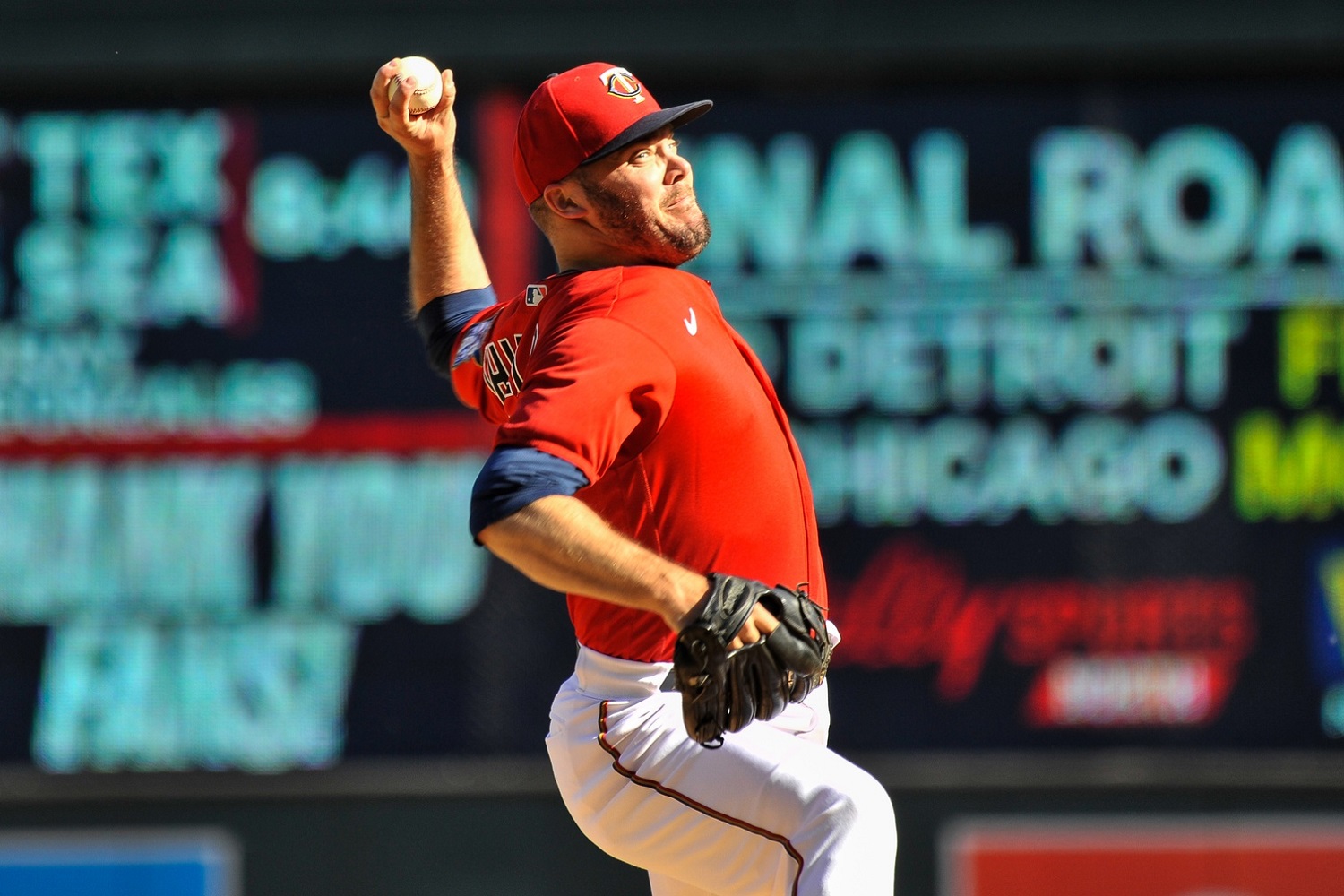 Caleb Thielbar just had his best career season in the Major Leagues. If you were unfamiliar with Thielbar's journey to the Big Leagues, you may think he would be a failed starter that figured things out in the bullpen or perhaps a young pitcher with a live arm that learned how to get MLB hitters out. However, as Twins fans, we know he is neither. Caleb Thielbar pitched 2022 as a 35-year-old that should have been seeing the twilight of his career in view but instead had his best season and made several improvements. You don't typically see that from someone at age 35. Thielbar broke into the Majors as a sinker-slider lefty specialist, a role that is becoming obsolete in MLB. He didn't strike out many hitters, and his fastball mainly sat in the upper 80s. He had an eephus-like curveball that would range into the mid-60s that was always fun to watch hitters buckle at, but it was more of a gimmick pitch. Thielbar was far from that pitcher in 2022. He ditched the sinker in favor of exclusively four seamers, ramped up the velocity, and transformed his fluttering curveball into a bat-missing machine. Since his return to the Twins, Thielbar has turned himself into one of the most dominant left-handed relievers in all of baseball. In 2022 Thielbar saw career bests in fastball, slider, and curveball velocity at 92.8, 81.3, and 73.0 MPH, respectively. Compared to his age 28 season in 2015, the first year Baseball Savant had spin rate data, Thielbar also has seen his spin rates in his fastball jump from 2,091 RPMs in 2015 to 2,298 RPMs in 2022. He made similar progress in his breaking pitches: his slider went from 1,963 RPMs in 2015 to 2,368 in 2022, and his curveball went from 2,127 to 2,455. As a result of these pitch improvements, Thielbar's strikeout rate in his most recent two seasons is more than 10% higher than that of his first two seasons. These are not typical improvements from someone entering their mid to late 30s. This data is nice, but how has it resulted in his pitching? I mentioned earlier that Thielbar was a premier left-handed reliever in 2022, and here is why. According to Baseball Savant, Thielbar completed 2022 in the 99th percentile in average exit velocity against, 100th percentile in hard hit%, 94th percentile in xwOBA, and 89th percentile in xSLG. He was one of baseball's best pitchers in limiting hard contact. His improved pitch physicals also helped him miss bats; Thielbar finished 93rd percentile in K% and 80th percentile in swing and miss%. While batted ball data is valuable, it only tells part of the story. Sometimes results can still be underwhelming despite excellent peripherals. (Shoutout, Max Kepler). Fortunately for Thielbar, this is not the case. Using Fangraphs' splits tool, we can see Thielbar finished top ten among left-handed relievers that threw at least 50 innings in FIP (4th 2.42), xFIP (7th 3.07), K% (5th 32.7%), and K%-BB% (4th 25.3%). He also finished in the top 20 in batting average against (20th), OBP against (11th), SLG against (14th), and wOBA against (11th). Potential is a tricky thing to figure out. So many factors go into player development; we only see a small percentage of those as a fan. Perhaps Caleb Thielbar can help us change our perception of youth and potential. You don't have to be 22 years old to get better at baseball, and just because you hit age 30 doesn't mean you have to get worse. Maybe Caleb Thieblar can be a lesson for us when projecting a player's upside because, in 2013, I don't think anyone saw this coming from him.


