



Andrew Mahlke
-
Posts
151 -
Joined
-
Last visited
Content Type
Profiles
News
Minnesota Twins Videos
2026 Minnesota Twins Top Prospects Ranking
2022 Minnesota Twins Draft Picks
Minnesota Twins Free Agent & Trade Rumors, Notes, & Tidbits
Guides & Resources
2023 Minnesota Twins Draft Picks
The Minnesota Twins Players Project
2024 Minnesota Twins Draft Picks
2025 Minnesota Twins Draft Pick Tracker
2026 Minnesota Twins Draft Tracker: Picks & Bonuses
Forums
Blogs
Events
Store
Downloads
Gallery
Everything posted by Andrew Mahlke
-
There have been plenty of great players in the history of the Minnesota Twins. From Killebrew to Buxton and many in-between, it is tough to narrow it down to the top twelve players in the history of the Twins. One fan favorite who was vital in bringing popularity and success to the Twins was Kent Hrbek. Image courtesy of Graphics by David Youngs There have been plenty of great players in the history of the Minnesota Twins. From Killebrew to Buxton and many in-between, it is tough to narrow it down to the top twelve players in the history of the Twins. One fan favorite who was vital in bringing popularity and success to the Twins was Kent Hrbek. Hometown Kid Hrbek grew up in Bloomington, MN and attended Bloomington Kennedy High School. In 1978, the Twins drafted Hrbek in the 17th round of the MLB draft. Late in the summer after Kent was drafted, he still wasn’t sure if he would sign with the Twins or take his scholarship offer to play baseball at the University of Minnesota. Eventually, owner Calvin Griffith increased his offer to $35,000 and Hrbek decided to sign with the Twins and start his professional career. After posting OPS’s of .576 and .805 his first two years in the minors, Hrbek exploded onto the scene in 1981. In 121 games in the minors, he hit .379/.446/.630 (1.076) with 27 home runs, 111 RBI, and the same amount of strikeouts and walks. Hrbek’s .379 average was the second-highest for a full season in the minor leagues in the 1980’s. It was clear Hrbek was ready to make his Major League Debut. Hrbek got his feet wet in the majors at the end of 1981 but he really took the league by storm in his full first season, 1982. His rookie year, Hrbek hit .301/.363/.485 with 23 home runs and posted a wRC+ of 124. He also had 3.3 WAR, was named an all-star, and finished 2nd in AL Rookie of the Year voting, only behind some guy named Cal Ripken Jr. (I wonder if he ended up being any good?). Glory Years From 1983 to 1986, Hrbek was a picture of consistency, hitting .288 with a 125 wRC+ and 13.3 WAR. He especially excelled in 1984, with a career high 174 hits and driving in a career high 107 runs. He posted a 145 OPS+, 5.6 WAR, and finished second in MVP voting. In 1987, Hrbek finally experienced some team success. The Twins won their first division title since 1970 and Hrbek played a major role in the team’s success. That year, he hit a career high 34 homers, had a career high .934 OPS. Hrbek was not outstanding in the postseason in 1987, only going 8 for 44. But one of those eight hits remains one of the biggest hits in Twins history. With the Twins trailing 3-2 in the series to the Cardinals in the World Series, game six was a must win. Hitless in his first three at bats, Hrbek came up with the bases loaded and two outs in the bottom of the sixth with the Twins clinging to a one-run lead. Hrbek took the first pitch he saw and deposited it past the center field wall. Hrbek blew the game open and gave the Twins a 10-5 advantage in game six, essentially clinching a game seven. One day later, Gary Gaetti fielded a ground ball and threw it across to Hrbek for the final out, and the Twins were World Series Champions. How fitting that the hometown boy caught the final out of the World Series. Running it Back After the magical World Series run in 1987, the Twins had a few mediocre years. During this time, Hrbek kept mashing, hitting .290/.375/.504 (.879) with a wRC+ of 140. In 1990, the Twins went 74-88 and it seemed like they were not a contending team anymore. In 1991 however, the Twins rekindled some of that magic that they had in 1987. Hrbek had a down year by his standards, only posting an OPS of .834 with 20 home runs, but it didn’t matter. On June 1, the Twins started a 15-game winning streak which brought their record from 23-25 to 38-25. This would prove not to be a fluke as the Twins went 95-67 and won the AL West. Hrbek hit a big home run in game one of the 1991 World Series and helped the Twins get out to a 1-0 lead in the series. In game two, Hrbek was involved in the most controversial play in Twins history. In the third inning, Ron Gant singled to left for the Atlanta Braves. He took a very wide turn at first base, and pitcher Kevin Tapani fired it to Hrbek. Gant got back to the base in time but Hrbek put a hard tag on Gant who came off the base and was called out. Many Braves fans still contend to this day that Hrbek pulled Gant off the base, but I will let you decide that yourself in the video below. The Twins would go on to win their second World Series in team history and the hometown kid was a champion once again. The Latter Years After his second World Series title, Hrbek started to regress with injuries and decreased performance. In 1994, Hrbek informed General Manager Andy MacPhail that he would be retiring at the end of the season, which ended up being on August 11th because of the player strike. Hrbek said he wanted to retire because it was something his dad never got the chance to do, and Kent wanted the chance to enjoy retirement. After Hrbek retired, he started a TV Program called Kent Hrbek Outdoors where he shared his love for hunting and fishing with viewers and showed them that despite his larger than life persona on the field, he was just another guy with a goofy personality. In his career, Hrbek hit .282/.367/.481 (.848). His .848 OPS is 5th best in Twins history. He hit 312 doubles (4th in Twins history), 293 home runs (2nd), scored 903 runs (5th), drove in 1086 runs (2nd), and accumulated 37.6 fWAR (6th among hitters). Hrbek is a Twins legend and his numbers back it up. Conclusion Hrbek is an all-time fan favorite Twin. With his slugging bat, his great glove, and his happy-go-lucky personality off the field, everyone around the Twin Cities loved Hrbek and he is the eighth best Twin of all-time. Thank you for reading, and Go Twins! Read Previous "12 Days of TwinsMas" articles here: #12 - Torii Hunter #11 - Chuck Knoblauch #10 - Jim Kaat #9 - Frank Viola #8 - Kent Hrbek #7 - Coming Soon! View full article
-
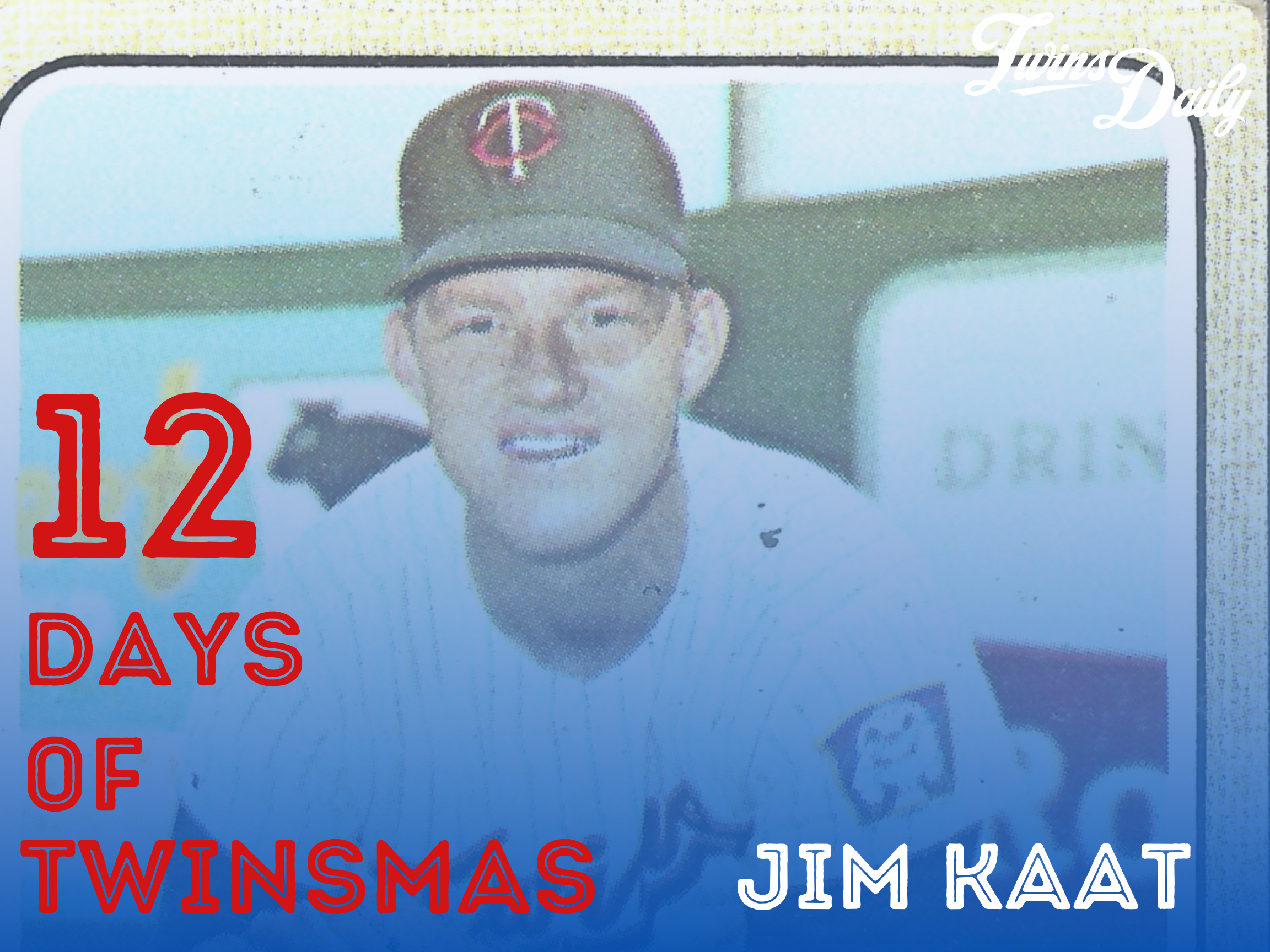 Early Days Kaat was signed as an amateur free agent by the Washington Senators out of Hope College (Michigan) as an 18 year old. Kaat spent a few years in the minor leagues with the Washington Senators affiliates. Kaat bounced back-and-forth between the minors and majors in 1959 and 1960 before becoming a mainstay in the rotation in 1961. Kaat made 11 starts for the Washington Senators, going 1-7 with a 6.22 ERA. Kaat was not very effective with the Senators, walking 35 batters while only striking out 27 in the 55 innings he threw for Washington. Kaat on the Prowl With a rocky first couple of years, Kaat needed a change of scenery. When the Senators relocated to Minnesota in 1961 and became the Twins, Kaat was seen to be a big part of their future. In the Twins inaugural season, Kaat was a decent starter, going 9-16 but posted an ERA of 3.90 and threw 200 2/3 innings at the age of 22. He showed promise despite the team’s poor record of 70-90. Longevity is King Longevity is often downplayed in baseball today. Corbin Burnes won the NL Cy Young with only 167 innings in 2021. Burnes was so dominant that he still got the award, but I think one of the best qualities a pitcher can have is going deep into games. Kaat always went deep into games, giving his team a chance to win while limiting the workload other pitchers needed to throw. In MLB history, Kaat has the 25th most innings pitched (4,530). In Kaat’s career, he had 14 seasons in which he threw more than 200 innings. From 1964 to 1971, Kaat was an absolute workhorse for the Twins. Over that eight year stretch, he threw 2,016 1/3 innings (over 250 per year on average). In that stretch, he was 131-97 with a 3.13 ERA and a 3.15 FIP. He also accumulated 38.3 fWAR in that stretch, or almost 5 WAR per season on average. Kaat was not super dominant, only striking out 5.5 batters per 9 innings throughout his 15 years with the Twins. However, he understood how to get guys out and worked quickly, often being called the master of the quick pitch. Kaat was a very smart pitcher and got guys out by locating his pitches, changing speeds, and working extremely fast. Prime Years In 1964, Kaat hit his stride. After a 1963 season in which he regressed to a 4.19 ERA in only 178 innings, he bounced back and went 17-11 with a 3.22 ERA and threw 243 innings. It was clear that Kaat was going to be a very consistent pitcher for the Twins going forward, and a workhorse they could rely on to eat up innings. The following year, 1965, Kaat was a crucial member of potentially the best pitching staff in Twins history. The 1965 Twins went 102-60 and posted a 3.14 ERA as a staff. Kaat went 18-11 with a 2.83 ERA, his first time posting a sub-3 ERA. He also threw 264 innings (2nd on team), only trailing Mudcat Grant. The 1965 team was the first team in Twins history to make it to the World Series. In the World Series, Kaat pitched game two and was excellent. He outdueled Sandy Koufax, pitching a complete game while allowing seven hits and only one run in a 5-1 Twins win. The Twins would end up losing the series in seven games but the team showed great promise. Kaat’s best season was 1966. In 1966, Kaat started an astonishing 41 games, threw 304 2/3 innings, and went 25-13 with a 131 ERA+ (2.75 ERA). He led the American League in wins, games started, complete games (19), innings, and strikeout to walk ratio (3.73). He also led all American League pitchers in fWAR (6.4). Kaat finished fifth in MVP voting. At the time, there was only one Cy Young Award and Dodgers lefty Sandy Koufax won it. Had there been separate awards in the American and National League, Kaat was very likely to have won the AL version in 1966. Defense Wins Championships When people think of Jim Kaat, they usually think about his longevity as a pitcher or his ability to pitch deep into games. One thing Jim Kaat excelled at more than anything was defending his position. In Kaat’s career, he won 16 gold gloves. This is the second most for any player all-time, behind Greg Maddux. After Twins In the early 1970’s, the Twins were very mediocre. However, Kaat was not. After an outstanding 1972 season in which Kaat was 10-2 with a 2.06 ERA, he demanded that owner Calvin Griffith raise his salary to $60,000. Griffith unhappily obliged. In 1973, the Twins were once again mediocre so Griffith placed Kaat on waivers in early August and he was claimed by the Chicago White Sox. For the rest of his career, Kaat spent time with the White Sox, Phillies, Yankees, and Cardinals, winning a World Series championship with the Cardinals in 1982. Kaat was recently elected to the Hall of Fame by the Golden Days Era Committee with former teammate Tony Oliva. Conclusion Jim Kaat is not only an all-time Twins great, but an all-time MLB great. He has the second highest WAR (53.8) out of all Twins pitchers, trailing only Bert Blyleven. He also threw the most innings in Twins history (2,959). He was a bulldog and fan favorite pitcher who is now rightfully enshrined in the Baseball Hall of Fame. Kaat is also a Twins broadcaster and offers analysis during some Twins broadcasts throughout the year, and a player who played in four different decades in his career brings some unique insight to the broadcast. Stay tuned for the fourth day of Twinsmas! Thank you for reading, and Go Twins! Read Previous "12 Days of TwinsMas" articles here: #12 - Torii Hunter #11 - Chuck Knoblauch #10 - Jim Kaat #9 - Coming tomorrow!
 -

Let’s Remember Some Guys: Twins Players with Short Stints
Andrew Mahlke replied to Vanimal46's topic in Minnesota Twins Talk
39 games in 2014. Twins legend Kendrys Morales
-
There have been plenty of great players in the history of the Minnesota Twins. From Killebrew to Buxton and many in-between, it is tough to narrow it down to the top twelve players in the history of the Twins. So far, we have highlighted Torii Hunter and Chuck Knoblauch on the first two days of Twinsmas. On the third day of Twinsmas, we see our first pitcher on the list. The tenth greatest player in Twins history is none other than Twins broadcaster Jim Kaat. Image courtesy of Graphics by David Youngs There have been plenty of great players in the history of the Minnesota Twins. From Killebrew to Buxton and many in-between, it is tough to narrow it down to the top twelve players in the history of the Twins. So far, we have highlighted Torii Hunter and Chuck Knoblauch on the first two days of Twinsmas. On the third day of Twinsmas, we see our first pitcher on the list. The tenth greatest player in Twins history is none other than Twins broadcaster Jim Kaat. Early Days Kaat was signed as an amateur free agent by the Washington Senators out of Hope College (Michigan) as an 18 year old. Kaat spent a few years in the minor leagues with the Washington Senators affiliates. Kaat bounced back-and-forth between the minors and majors in 1959 and 1960 before becoming a mainstay in the rotation in 1961. Kaat made 11 starts for the Washington Senators, going 1-7 with a 6.22 ERA. Kaat was not very effective with the Senators, walking 35 batters while only striking out 27 in the 55 innings he threw for Washington. Kaat on the Prowl With a rocky first couple of years, Kaat needed a change of scenery. When the Senators relocated to Minnesota in 1961 and became the Twins, Kaat was seen to be a big part of their future. In the Twins inaugural season, Kaat was a decent starter, going 9-16 but posted an ERA of 3.90 and threw 200 2/3 innings at the age of 22. He showed promise despite the team’s poor record of 70-90. Longevity is King Longevity is often downplayed in baseball today. Corbin Burnes won the NL Cy Young with only 167 innings in 2021. Burnes was so dominant that he still got the award, but I think one of the best qualities a pitcher can have is going deep into games. Kaat always went deep into games, giving his team a chance to win while limiting the workload other pitchers needed to throw. In MLB history, Kaat has the 25th most innings pitched (4,530). In Kaat’s career, he had 14 seasons in which he threw more than 200 innings. From 1964 to 1971, Kaat was an absolute workhorse for the Twins. Over that eight year stretch, he threw 2,016 1/3 innings (over 250 per year on average). In that stretch, he was 131-97 with a 3.13 ERA and a 3.15 FIP. He also accumulated 38.3 fWAR in that stretch, or almost 5 WAR per season on average. Kaat was not super dominant, only striking out 5.5 batters per 9 innings throughout his 15 years with the Twins. However, he understood how to get guys out and worked quickly, often being called the master of the quick pitch. Kaat was a very smart pitcher and got guys out by locating his pitches, changing speeds, and working extremely fast. Prime Years In 1964, Kaat hit his stride. After a 1963 season in which he regressed to a 4.19 ERA in only 178 innings, he bounced back and went 17-11 with a 3.22 ERA and threw 243 innings. It was clear that Kaat was going to be a very consistent pitcher for the Twins going forward, and a workhorse they could rely on to eat up innings. The following year, 1965, Kaat was a crucial member of potentially the best pitching staff in Twins history. The 1965 Twins went 102-60 and posted a 3.14 ERA as a staff. Kaat went 18-11 with a 2.83 ERA, his first time posting a sub-3 ERA. He also threw 264 innings (2nd on team), only trailing Mudcat Grant. The 1965 team was the first team in Twins history to make it to the World Series. In the World Series, Kaat pitched game two and was excellent. He outdueled Sandy Koufax, pitching a complete game while allowing seven hits and only one run in a 5-1 Twins win. The Twins would end up losing the series in seven games but the team showed great promise. Kaat’s best season was 1966. In 1966, Kaat started an astonishing 41 games, threw 304 2/3 innings, and went 25-13 with a 131 ERA+ (2.75 ERA). He led the American League in wins, games started, complete games (19), innings, and strikeout to walk ratio (3.73). He also led all American League pitchers in fWAR (6.4). Kaat finished fifth in MVP voting. At the time, there was only one Cy Young Award and Dodgers lefty Sandy Koufax won it. Had there been separate awards in the American and National League, Kaat was very likely to have won the AL version in 1966. Defense Wins Championships When people think of Jim Kaat, they usually think about his longevity as a pitcher or his ability to pitch deep into games. One thing Jim Kaat excelled at more than anything was defending his position. In Kaat’s career, he won 16 gold gloves. This is the second most for any player all-time, behind Greg Maddux. After Twins In the early 1970’s, the Twins were very mediocre. However, Kaat was not. After an outstanding 1972 season in which Kaat was 10-2 with a 2.06 ERA, he demanded that owner Calvin Griffith raise his salary to $60,000. Griffith unhappily obliged. In 1973, the Twins were once again mediocre so Griffith placed Kaat on waivers in early August and he was claimed by the Chicago White Sox. For the rest of his career, Kaat spent time with the White Sox, Phillies, Yankees, and Cardinals, winning a World Series championship with the Cardinals in 1982. Kaat was recently elected to the Hall of Fame by the Golden Days Era Committee with former teammate Tony Oliva. Conclusion Jim Kaat is not only an all-time Twins great, but an all-time MLB great. He has the second highest WAR (53.8) out of all Twins pitchers, trailing only Bert Blyleven. He also threw the most innings in Twins history (2,959). He was a bulldog and fan favorite pitcher who is now rightfully enshrined in the Baseball Hall of Fame. Kaat is also a Twins broadcaster and offers analysis during some Twins broadcasts throughout the year, and a player who played in four different decades in his career brings some unique insight to the broadcast. Stay tuned for the fourth day of Twinsmas! Thank you for reading, and Go Twins! Read Previous "12 Days of TwinsMas" articles here: #12 - Torii Hunter #11 - Chuck Knoblauch #10 - Jim Kaat #9 - Coming tomorrow! View full article
-
Everyone has a player or a team that sparked their love for Twins baseball. For my dad's generation, it was Kirby Puckett. A player who played with passion and delivered many clutch moments to bring the Twins two championships. For me, it was Joe Mauer. As a kid who loved everything to do with baseball growing up in the suburbs of the Twin Cities, I looked up to Mauer in just about every way. I saw a homegrown kid who was the star player on the team that I loved. My first year getting into the Twins was 2008, when I was six years old. My dad started taking me to Twins games and would always put them on the TV in hopes that I would share his love for baseball. It worked. Soon, I was watching every game and my favorite player was the AL Batting Champ, Joe Mauer. The next year, Mauer won MVP and I loved it. I was hooked. On a great site like Twins Daily, there are people of all ages. So I am interested to hear: who was the player that sparked your love for the Twins?
-
12 Days of Twinsmas: #12 Torii Hunter
Andrew Mahlke replied to Andrew Mahlke's topic in Twins Daily Front Page News
I agree that Bostock was on a great track! However I found it hard to rate him ahead of other players like Hunter when he just didn't play enough games (no fault of his own). I did not think it would be fair to these other players but Bostock would've had a fantastic career. -
In this series, we will be counting down the top 12 players in Twins history, starting with number 12, Torii Hunter. Image courtesy of David Berding, USA Today In this series, we will be counting down the top 12 players in Twins history, starting with number 12, Torii Hunter. There have been plenty of great players in the history of the Minnesota Twins. From Killebrew to Buxton and many in-between, it is tough to narrow it down to the top twelve players in the history of the Twins. One player who had a huge impact on me growing up was the electrifying Torii Hunter. Torii Hunter is the 12th greatest player in Twins history. Rough Start Torii Hunter was drafted 20th overall in the 1993 draft by the Twins out of Pine Bluff High School in Arkansas. He spent parts of five seasons in the minor leagues before making his Major League debut as a pinch runner in 1997. In 1998, he mostly spent time in the minor leagues and it wasn’t until 1999 that he finally played a full season in the majors. He hit .255/.309/.380 (.689) while only accumulating 0.1 fWAR in 135 games for the Twins. In 2000, he had a terrible start to the season, hitting .207 with an OPS of .543 and no home runs in 140 at-bats. He was then demoted to AAA, and he thrived, hitting .368/.403/.727 with 18 home runs in 55 games. He was then recalled to the big leagues on July 29 and hit .332/.371/.485 in 53 games the rest of the season. The Prime From 2001 to 2007, Torii Hunter was one of the best center fielders in all of MLB. He was 5th among all center fielders in fWAR (22.4), 4th in Home Runs (178), and 3rd in RBI (630). Defensively, among all center fielders, Hunter was second in defensive WAR with 7.7 in this seven year stretch, behind only Andruw Jones. He won an incredible seven straight gold gloves with the Twins in this span, while being voted as an all-star twice. His best season was 2002. Hunter hit .289/.334/.524 (.858) with 37 doubles, 29 home runs, 94 RBI, and 23 stolen bases. Hunter finished 6th in MVP voting, won a gold glove, made the all-star team as a starter, and was a leader of the first Twins team to win the AL Central. They beat the Moneyball A’s in the ALDS in five games before eventually losing to the World Series Champion Angels in five games in the ALCS. The Robbery Hunter was notorious for making incredible catches in the outfield. Despite having a good 2001 season, he still was not a household name. Then came 2002. Hunter had an incredible first half, hitting .306/.347/.564 (.911) with a wRC+ of 135 and 20 home runs while stealing 14 bases. For this effort, Hunter was rewarded by being named the American League All-Star starting center fielder. Then came the All-Star Game. In the bottom of the first inning with two outs, slugger Barry Bonds stepped up to the plate for the National League. Derek Lowe threw Bonds a 1-1 hanging slider, and Bonds (who hit 73 home runs the year prior) unloaded on it to center field. The crowd erupted, thinking Bonds had just hit a home run. Hunter had other thoughts. He raced back to the wall, timed his leap perfectly, and robbed Bonds of a home run. On his way into the dugout, Bonds picked Hunter up and lifted him over his shoulder. This was an iconic moment in Hunter’s career and put the league on notice. Leadership Hunter was never afraid to speak his mind. In 2015, he came back for one final season with the Twins. That season was very impactful for young Twins such as Aaron Hicks and Byron Buxton. In a 2016 interview, Buxton said he still talked to Torii Hunter weekly about baseball. Hunter clearly had a knack for helping the young bucks with their game, and his impact is still seen today through Buxton. Hunter also knew how to fire a team up. Most notably, he threw a tantrum in which he berated the home plate umpire for a bad strike three call, and he started to throw his equipment, including his jersey, onto the field when they had to remove him. Conclusion Torii Hunter was a great center fielder for the Twins teams of the early 2000’s, accumulating 22.6 fWAR across ten seasons with the Twins. In his Twins career, he hit .268/.321/.462 (.783). He also hit 214 home runs which is 6th in franchise history, stole 128 bases (14th), and hit 281 doubles (13th). He impacted the team on and off the field, was an idol for many young Minnesotan ballplayers, and is an all-time fan favorite in Minnesota for rejuvenating the Twins in the early 2000s. Stay tuned for the second day of Twinsmas! Thank you for reading, and Go Twins View full article
-
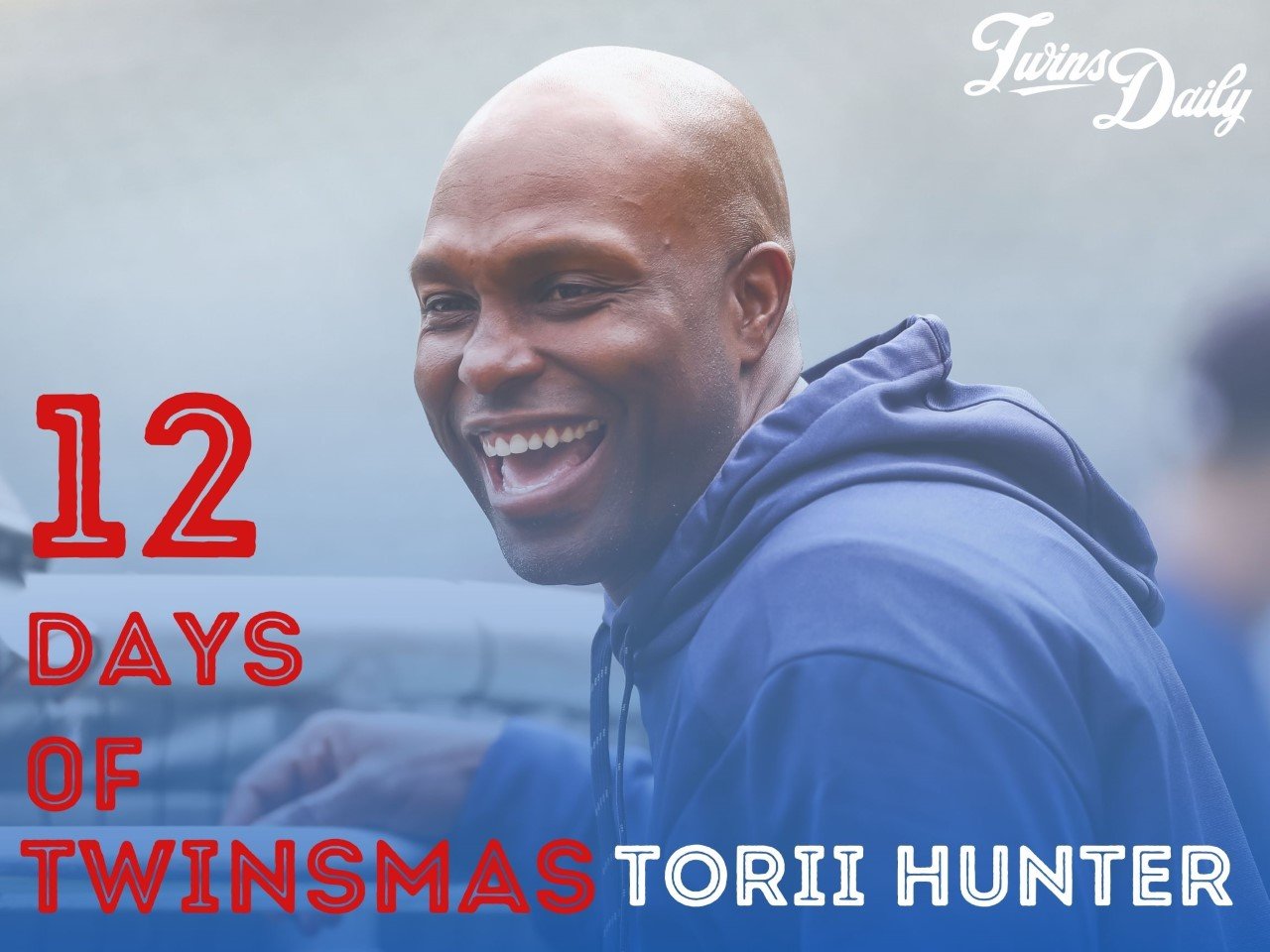 There have been plenty of great players in the history of the Minnesota Twins. From Killebrew to Buxton and many in-between, it is tough to narrow it down to the top twelve players in the history of the Twins. One player who had a huge impact on me growing up was the electrifying Torii Hunter. Torii Hunter is the 12th greatest player in Twins history. Rough Start Torii Hunter was drafted 20th overall in the 1993 draft by the Twins out of Pine Bluff High School in Arkansas. He spent parts of five seasons in the minor leagues before making his Major League debut as a pinch runner in 1997. In 1998, he mostly spent time in the minor leagues and it wasn’t until 1999 that he finally played a full season in the majors. He hit .255/.309/.380 (.689) while only accumulating 0.1 fWAR in 135 games for the Twins. In 2000, he had a terrible start to the season, hitting .207 with an OPS of .543 and no home runs in 140 at-bats. He was then demoted to AAA, and he thrived, hitting .368/.403/.727 with 18 home runs in 55 games. He was then recalled to the big leagues on July 29 and hit .332/.371/.485 in 53 games the rest of the season. The Prime From 2001 to 2007, Torii Hunter was one of the best center fielders in all of MLB. He was 5th among all center fielders in fWAR (22.4), 4th in Home Runs (178), and 3rd in RBI (630). Defensively, among all center fielders, Hunter was second in defensive WAR with 7.7 in this seven year stretch, behind only Andruw Jones. He won an incredible seven straight gold gloves with the Twins in this span, while being voted as an all-star twice. His best season was 2002. Hunter hit .289/.334/.524 (.858) with 37 doubles, 29 home runs, 94 RBI, and 23 stolen bases. Hunter finished 6th in MVP voting, won a gold glove, made the all-star team as a starter, and was a leader of the first Twins team to win the AL Central. They beat the Moneyball A’s in the ALDS in five games before eventually losing to the World Series Champion Angels in five games in the ALCS. The Robbery Hunter was notorious for making incredible catches in the outfield. Despite having a good 2001 season, he still was not a household name. Then came 2002. Hunter had an incredible first half, hitting .306/.347/.564 (.911) with a wRC+ of 135 and 20 home runs while stealing 14 bases. For this effort, Hunter was rewarded by being named the American League All-Star starting center fielder. Then came the All-Star Game. In the bottom of the first inning with two outs, slugger Barry Bonds stepped up to the plate for the National League. Derek Lowe threw Bonds a 1-1 hanging slider, and Bonds (who hit 73 home runs the year prior) unloaded on it to center field. The crowd erupted, thinking Bonds had just hit a home run. Hunter had other thoughts. He raced back to the wall, timed his leap perfectly, and robbed Bonds of a home run. On his way into the dugout, Bonds picked Hunter up and lifted him over his shoulder. This was an iconic moment in Hunter’s career and put the league on notice. Leadership Hunter was never afraid to speak his mind. In 2015, he came back for one final season with the Twins. That season was very impactful for young Twins such as Aaron Hicks and Byron Buxton. In a 2016 interview, Buxton said he still talked to Torii Hunter weekly about baseball. Hunter clearly had a knack for helping the young bucks with their game, and his impact is still seen today through Buxton. Hunter also knew how to fire a team up. Most notably, he threw a tantrum in which he berated the home plate umpire for a bad strike three call, and he started to throw his equipment, including his jersey, onto the field when they had to remove him. Conclusion Torii Hunter was a great center fielder for the Twins teams of the early 2000’s, accumulating 22.6 fWAR across ten seasons with the Twins. In his Twins career, he hit .268/.321/.462 (.783). He also hit 214 home runs which is 6th in franchise history, stole 128 bases (14th), and hit 281 doubles (13th). He impacted the team on and off the field, was an idol for many young Minnesotan ballplayers, and is an all-time fan favorite in Minnesota for rejuvenating the Twins in the early 2000s. Stay tuned for the second day of Twinsmas! Thank you for reading, and Go Twins
 -
Building the Twins All-Time Dream Team - Part 2
Andrew Mahlke replied to Andrew Mahlke's topic in Twins Daily Front Page News
I really appreciate the support, thank you! The highest single season WAR for a team's hitters since 2000 was the 2001 Mariners with 44.4. Here were the players above $20M translated: Mauer 2012: 4.6 WAR ($31M translated) Mauer 2013: 5.2 WAR ($28.6) Knoblauch 1997: 6.2 WAR ($23) Puckett 1989: 4.7 WAR ($22.6) Gaetti 1988: 4.3 WAR ($22.4) Morneau 2010: 5 WAR ($21.8) - in my mind this would've been one of the greatest seasons in Twins history if not for injury. 5 WAR in 81 games is insane Knoblauch 1996: 8.1 WAR ($20.7)- 10 replies
-
- 3
-

-

-
- kirby puckett
- tony oliva
- (and 3 more)
-
Building the Twins All-Time Dream Team - Part 2
Andrew Mahlke replied to Andrew Mahlke's topic in Twins Daily Front Page News
Killebrew's best season was about equal to Allison's in terms of WAR and Allison was cheaper relative to 2021 $$. If this was about full careers it's Harmon no doubt but this is just single seasons.- 10 replies
-
- 2
-
-
- kirby puckett
- tony oliva
- (and 3 more)
-
As we saw in part 1, having your pick of whoever you want in Twins history can be quite fun. We built a pitching rotation of 40.6 WAR while only spending about 20 percent of our $130 million budget. This is what the lineup would look like. Image courtesy of Brad Rempel, USA Today As we saw in part 1, having your pick of whoever you want in Twins history can be quite fun. We built a pitching rotation of 40.6 WAR while only spending about 20 percent of our $130 million budget. This is what the lineup would look like. I explained my process of how I chose these players in the first part of this trilogy, so if you didn’t read that, I recommend reading this so this article will make more sense. Taking all of the position player seasons over 4 WAR, I found salary data for 86 players. Using these 86 players, I compared their equivalent 2021 salaries with their season WAR’s and constructed the graph below. The names highlighted in yellow are the players who made the starting lineup As was the case in part 1, the bottom right of the graph is where you want to have your players be, signifying a lot of WAR for not a lot of 2021 money. There were some very tough decisions in constructing this lineup, but these are the position players I decided would make the best team in Twins history. Catcher: 2009 Joe Mauer - $15.69M translated salary, 7.8 WAR Because of his lackluster production despite a large contract in the latter part of his career, some Twins fans see Joe Mauer as a bust and not as one of the best players in Twins history. In reality, over the course of his career, Mauer vastly outproduced his contracts. Adding in 2018 to these totals, Mauer made just over $218M in his career but according to FanGraphs, he was worth over $307M. Mauer was so phenomenal early in his career that he completely outperformed his rookie contract and arbitration deals. It makes you wonder what he would’ve done if not for his concussion problems later in his career. Mauer’s best year was 2009. He slashed .365/.444/.587 for the second highest single-season OPS in Twins history of 1.031. Mauer also hit a career high 28 home runs, had a wRC+ of 170, walked more than he struck out, and was an above average defensive catcher in his MVP campaign. In 2009, Mauer had a salary of $10.5 million. This translates to over $15 million in 2021, meaning his contract efficiency number was 0.497. Mauer outperformed his contract not just in 2009, but over the duration of his entire career and he should be inducted in the hall of fame. First Base: 1977 Rod Carew - $10.93M translated salary, 9.7 WAR In 2021, Rod Carew would not be your stereotypical first baseman. Today, first basemen are power-hitters who strike out quite a bit, hit home runs, and don’t steal a lot of bases (see Sano, Miguel). Carew was the greatest player in Twins history and in 1977, he had the greatest season in Twins history. In Carew’s historic 1977 season, he stole 23 bases, slashed .388/.449/.570 for an OPS of 1.019, and had a 135 wRC+. He had a Twins franchise record 239 hits, his .388 average was a franchise record, and he won the MVP award. In 1977, Carew had a salary of $180,000. This translates to just shy of $11 million in 2021 for a contract efficiency number of 0.888. Carew was an outstanding player, will bring some defensive quickness to first base, and would be an outstanding leadoff hitter for this dream-team. Second Base: 1995 Chuck Knoblauch - $13.44M translated salary, 6.7 WAR Even though Chuck Knoblauch isn’t Keith Olbermann's favorite player, he still had an outstanding tenure as a Twin. Knoblauch was a four-time all-star with the Twins before contract disputes led to him becoming a Yankee. In 1995, Knoblauch batted .333, had a .911 OPS, stole 46 bases, and won the American League Silver Slugger at second base. Although Knoblauch’s best season may have been a year later in 1996, he still accumulated nearly 7 WAR in 1995 on a cheaper contract. In 1995, Knoblauch had a salary of nearly $3 million. This translates to $13.4 million in 2021 for a contract efficiency number of 0.499. Knoblauch was a great all-around player for the Twins and is the greatest second baseman in Twins history, so it is only right to put him here. Third Base: 2001 Corey Koskie - $606K translated salary, 6.3 WAR One player who was always undervalued for the Twins was Corey Koskie. In the early 2000’s, you could tell Koskie was a very solid player for the Twins but if you look at him in a more advanced scope, you can see that Koskie was a great player for the Twins and they did not have to pay much for him. In 2001, Koskie slashed .276/.362/.488 for an OPS of .850 and a wRC+ of 119. He led the team in slugging percentage, walks (68), RBI (103), and WAR (6.3). He was an outstanding defender at third base, racking up 1.9 defensive WAR which ranked 4th among third basemen in MLB. Combining above average offense with a stellar glove at third base makes Koskie an easy choice to be our third baseman. In 2001, Koskie had a salary of only $300K. This translates to only $606K in 2021 for a contract efficiency number of 10.39, which was the highest contract efficiency number out of all of the top 100 WAR seasons in Twins history. Getting a 6 WAR player for nearly league minimum does not happen very often so we can save a lot of money while getting a lot of value out of Koskie at 3B. Plus, the man is a townball star Shortstop: 1965 Zoilo Versalles - $7.63M translated salary, 7.2 WAR When building this team of superstars, Zoilo Versalles was the most confusing player I researched. He only had 12 career WAR, and over half of it came in this MVP 1965 campaign. Versalles was the Baha Men of 1965, a one-hit wonder. Digging deeper into his MVP season, he only had a wRC+ of 116 and led the American League in strikeouts. The reason Versalles was so good in 1965 was that he was the best defensive shortstop in the league. He led all MLB shortstops with 3 defensive WAR, also the best mark for any shortstop in Twins history. Versalles’ defensive prowess coupled with his above average offensive abilities (led AL in runs, doubles, and triples) made him the best player in the AL in 1965 and the best shortstop in Twins history. In 1965, Versalles had a salary of $28K, which translates to $7.63 million in 2021. His contract efficiency number (0.944) was very good. Cristian Guzman was also in contention for this spot with an extremely cheap contract, but Versalles accumulated 2.4 more WAR than Guzman so I thought it was a worthwhile trade-off. Left Field: 1992 Shane Mack - $5.44M translated salary, 6.5 WAR One of the most overlooked Twins of all-time is World Series Champion outfielder Shane Mack. After being the Twins Rule 5 draft pick in 1989, he had a great five-year stretch with the Twins. In those five years, he slashed .309/.375/.479 (.854) while hitting 119 doubles, 67 home runs, and stealing 71 bases. His best year of that stretch was 1992, having a wRC+ of 142, hitting 31 doubles, 16 home runs, and stealing 26 bases. He also led the American League with 15 hit by pitches. In 1992, Mack had a salary of $1.075 million, which translates to $5.44 million in 2021. He posted a WAR of 6.5, so his contract efficiency number was very good at 1.195. Mack is one of the most underrated players in Twins history and was frankly one of the best outfielders in Twins history. Center Field: 1992 Kirby Puckett - $6M translated salary, 7.2 WAR Undoubtedly the most beloved figure in Twins history, Kirby Puckett is also the best outfielder in team history and delivered some unforgettable moments, like his walk-off home run in Game 6 of the 1991 World Series. Kirby joins fellow ‘92 outfielder Shane Mack on the team. One of Kirby’s best seasons was 1992. He hit .329/.374/.490 (.864) while leading MLB in hits (210). He had 110 RBI, a wRC+ of 136, hit 38 doubles, 19 home runs, and had a defensive WAR of 1 while manning center field for the reigning World Champs and being a clubhouse leader. In 1992, Puck had a salary of $2.97 million, which is about $6 million today. He had a 7.1 WAR so his contract efficiency was about 1.184. Puck would be the heart and soul of this team and bring some much needed energy and leadership to the team. Right Field: 1964 Tony Oliva - $2.12M translated salary, 6.8 WAR Recent Hall of Fame inductee Tony Oliva joins the squad with his phenomenal rookie season of 1964. Oliva is one of the greatest hitters in Twins history and a Twins great, hitting .304/.353/.476 (.830) over his 15-year career with the Twins. Oliva was phenomenal in his rookie season, winning rookie of the year and finishing fourth in AL MVP voting. He had a wRC+ of 148, led the AL with a .323 batting average, 109 runs, 43 doubles, and 217 hits while posting a .916 OPS and clubbing 32 home runs. In 1964, Oliva had a salary of $7,500, which translates to $2.12 million in 2021. He accumulated 6.8 WAR, so his contract efficiency was 0.73. Oliva has always been an excellent representative of the Twins organization both on and off the field, so he is a great addition to the team. Designated Hitter: 1963 Bob Allison - $8.75M translated salary, 7.4 WAR The last hitter we have in the lineup is Bob Allison. Allison was ahead of his time. He was more of a three true outcomes hitter than most people in his time. Allison was one of the original Twins, coming from the Washington Senators. He is one of the more underrated players in Twins history and he was one of the leaders on the 1965 World Series team. Allison was a star in 1963, hitting .271/.378/.533 (.911). He led the American League in WAR (7.4), OPS, and wRC+ (150). He hit 35 home runs and was solid defensively, posting a defensive WAR of 1.1 as a right fielder. Somehow, he finished 15th in MVP voting despite leading the league in all of these categories. If they could revote today knowing what actually makes a player valuable, he would most definitely finish in the top 3. In 1963, Allison had a salary of $29,250, translating to a $8.75 million salary today. His contract efficiency was 0.846 so he would be a great bopper in a lineup full of them. Harmon Killebrew was also considered for this position but Allison edged him out in WAR and was slightly cheaper. Summary Overall, the Twins lineup would bolster some heavy hitters and some very high on-base guys, creating a high-powered offense that would wreck the league. These hitters accumulated 65.6 WAR and would be worth $70.6 million translated to 2021 salaries. Part 3 will cover the bullpen and bench, so stay tuned for that. Thanks for reading, and Go Twins! View full article
-
 I explained my process of how I chose these players in the first part of this trilogy, so if you didn’t read that, I recommend reading this so this article will make more sense. Taking all of the position player seasons over 4 WAR, I found salary data for 86 players. Using these 86 players, I compared their equivalent 2021 salaries with their season WAR’s and constructed the graph below. The names highlighted in yellow are the players who made the starting lineup As was the case in part 1, the bottom right of the graph is where you want to have your players be, signifying a lot of WAR for not a lot of 2021 money. There were some very tough decisions in constructing this lineup, but these are the position players I decided would make the best team in Twins history. Catcher: 2009 Joe Mauer - $15.69M translated salary, 7.8 WAR Because of his lackluster production despite a large contract in the latter part of his career, some Twins fans see Joe Mauer as a bust and not as one of the best players in Twins history. In reality, over the course of his career, Mauer vastly outproduced his contracts. Adding in 2018 to these totals, Mauer made just over $218M in his career but according to FanGraphs, he was worth over $307M. Mauer was so phenomenal early in his career that he completely outperformed his rookie contract and arbitration deals. It makes you wonder what he would’ve done if not for his concussion problems later in his career. Mauer’s best year was 2009. He slashed .365/.444/.587 for the second highest single-season OPS in Twins history of 1.031. Mauer also hit a career high 28 home runs, had a wRC+ of 170, walked more than he struck out, and was an above average defensive catcher in his MVP campaign. In 2009, Mauer had a salary of $10.5 million. This translates to over $15 million in 2021, meaning his contract efficiency number was 0.497. Mauer outperformed his contract not just in 2009, but over the duration of his entire career and he should be inducted in the hall of fame. First Base: 1977 Rod Carew - $10.93M translated salary, 9.7 WAR In 2021, Rod Carew would not be your stereotypical first baseman. Today, first basemen are power-hitters who strike out quite a bit, hit home runs, and don’t steal a lot of bases (see Sano, Miguel). Carew was the greatest player in Twins history and in 1977, he had the greatest season in Twins history. In Carew’s historic 1977 season, he stole 23 bases, slashed .388/.449/.570 for an OPS of 1.019, and had a 135 wRC+. He had a Twins franchise record 239 hits, his .388 average was a franchise record, and he won the MVP award. In 1977, Carew had a salary of $180,000. This translates to just shy of $11 million in 2021 for a contract efficiency number of 0.888. Carew was an outstanding player, will bring some defensive quickness to first base, and would be an outstanding leadoff hitter for this dream-team. Second Base: 1995 Chuck Knoblauch - $13.44M translated salary, 6.7 WAR Even though Chuck Knoblauch isn’t Keith Olbermann's favorite player, he still had an outstanding tenure as a Twin. Knoblauch was a four-time all-star with the Twins before contract disputes led to him becoming a Yankee. In 1995, Knoblauch batted .333, had a .911 OPS, stole 46 bases, and won the American League Silver Slugger at second base. Although Knoblauch’s best season may have been a year later in 1996, he still accumulated nearly 7 WAR in 1995 on a cheaper contract. In 1995, Knoblauch had a salary of nearly $3 million. This translates to $13.4 million in 2021 for a contract efficiency number of 0.499. Knoblauch was a great all-around player for the Twins and is the greatest second baseman in Twins history, so it is only right to put him here. Third Base: 2001 Corey Koskie - $606K translated salary, 6.3 WAR One player who was always undervalued for the Twins was Corey Koskie. In the early 2000’s, you could tell Koskie was a very solid player for the Twins but if you look at him in a more advanced scope, you can see that Koskie was a great player for the Twins and they did not have to pay much for him. In 2001, Koskie slashed .276/.362/.488 for an OPS of .850 and a wRC+ of 119. He led the team in slugging percentage, walks (68), RBI (103), and WAR (6.3). He was an outstanding defender at third base, racking up 1.9 defensive WAR which ranked 4th among third basemen in MLB. Combining above average offense with a stellar glove at third base makes Koskie an easy choice to be our third baseman. In 2001, Koskie had a salary of only $300K. This translates to only $606K in 2021 for a contract efficiency number of 10.39, which was the highest contract efficiency number out of all of the top 100 WAR seasons in Twins history. Getting a 6 WAR player for nearly league minimum does not happen very often so we can save a lot of money while getting a lot of value out of Koskie at 3B. Plus, the man is a townball star Shortstop: 1965 Zoilo Versalles - $7.63M translated salary, 7.2 WAR When building this team of superstars, Zoilo Versalles was the most confusing player I researched. He only had 12 career WAR, and over half of it came in this MVP 1965 campaign. Versalles was the Baha Men of 1965, a one-hit wonder. Digging deeper into his MVP season, he only had a wRC+ of 116 and led the American League in strikeouts. The reason Versalles was so good in 1965 was that he was the best defensive shortstop in the league. He led all MLB shortstops with 3 defensive WAR, also the best mark for any shortstop in Twins history. Versalles’ defensive prowess coupled with his above average offensive abilities (led AL in runs, doubles, and triples) made him the best player in the AL in 1965 and the best shortstop in Twins history. In 1965, Versalles had a salary of $28K, which translates to $7.63 million in 2021. His contract efficiency number (0.944) was very good. Cristian Guzman was also in contention for this spot with an extremely cheap contract, but Versalles accumulated 2.4 more WAR than Guzman so I thought it was a worthwhile trade-off. Left Field: 1992 Shane Mack - $5.44M translated salary, 6.5 WAR One of the most overlooked Twins of all-time is World Series Champion outfielder Shane Mack. After being the Twins Rule 5 draft pick in 1989, he had a great five-year stretch with the Twins. In those five years, he slashed .309/.375/.479 (.854) while hitting 119 doubles, 67 home runs, and stealing 71 bases. His best year of that stretch was 1992, having a wRC+ of 142, hitting 31 doubles, 16 home runs, and stealing 26 bases. He also led the American League with 15 hit by pitches. In 1992, Mack had a salary of $1.075 million, which translates to $5.44 million in 2021. He posted a WAR of 6.5, so his contract efficiency number was very good at 1.195. Mack is one of the most underrated players in Twins history and was frankly one of the best outfielders in Twins history. Center Field: 1992 Kirby Puckett - $6M translated salary, 7.2 WAR Undoubtedly the most beloved figure in Twins history, Kirby Puckett is also the best outfielder in team history and delivered some unforgettable moments, like his walk-off home run in Game 6 of the 1991 World Series. Kirby joins fellow ‘92 outfielder Shane Mack on the team. One of Kirby’s best seasons was 1992. He hit .329/.374/.490 (.864) while leading MLB in hits (210). He had 110 RBI, a wRC+ of 136, hit 38 doubles, 19 home runs, and had a defensive WAR of 1 while manning center field for the reigning World Champs and being a clubhouse leader. In 1992, Puck had a salary of $2.97 million, which is about $6 million today. He had a 7.1 WAR so his contract efficiency was about 1.184. Puck would be the heart and soul of this team and bring some much needed energy and leadership to the team. Right Field: 1964 Tony Oliva - $2.12M translated salary, 6.8 WAR Recent Hall of Fame inductee Tony Oliva joins the squad with his phenomenal rookie season of 1964. Oliva is one of the greatest hitters in Twins history and a Twins great, hitting .304/.353/.476 (.830) over his 15-year career with the Twins. Oliva was phenomenal in his rookie season, winning rookie of the year and finishing fourth in AL MVP voting. He had a wRC+ of 148, led the AL with a .323 batting average, 109 runs, 43 doubles, and 217 hits while posting a .916 OPS and clubbing 32 home runs. In 1964, Oliva had a salary of $7,500, which translates to $2.12 million in 2021. He accumulated 6.8 WAR, so his contract efficiency was 0.73. Oliva has always been an excellent representative of the Twins organization both on and off the field, so he is a great addition to the team. Designated Hitter: 1963 Bob Allison - $8.75M translated salary, 7.4 WAR The last hitter we have in the lineup is Bob Allison. Allison was ahead of his time. He was more of a three true outcomes hitter than most people in his time. Allison was one of the original Twins, coming from the Washington Senators. He is one of the more underrated players in Twins history and he was one of the leaders on the 1965 World Series team. Allison was a star in 1963, hitting .271/.378/.533 (.911). He led the American League in WAR (7.4), OPS, and wRC+ (150). He hit 35 home runs and was solid defensively, posting a defensive WAR of 1.1 as a right fielder. Somehow, he finished 15th in MVP voting despite leading the league in all of these categories. If they could revote today knowing what actually makes a player valuable, he would most definitely finish in the top 3. In 1963, Allison had a salary of $29,250, translating to a $8.75 million salary today. His contract efficiency was 0.846 so he would be a great bopper in a lineup full of them. Harmon Killebrew was also considered for this position but Allison edged him out in WAR and was slightly cheaper. Summary Overall, the Twins lineup would bolster some heavy hitters and some very high on-base guys, creating a high-powered offense that would wreck the league. These hitters accumulated 65.6 WAR and would be worth $70.6 million translated to 2021 salaries. Part 3 will cover the bullpen and bench, so stay tuned for that. Thanks for reading, and Go Twins!
- 10 comments
-
- 3
-
-
- kirby puckett
- tony oliva
- (and 3 more)
-
Who Will Be Buxton’s Backup in 2022?
Andrew Mahlke replied to Theodore Tollefson's topic in Twins Daily Front Page News
I agree. Right away Kepler seems like the right option, but long-term I think it is Celestino with guys like Martin and Lewis also being able to do it. -
Byron Buxton is Here to Stay
Andrew Mahlke replied to Andrew Mahlke's topic in Twins Daily Front Page News
I haven't heard anything to indicate we will be spending over 130MM. After the Scherzer signing the Mets projected payroll is 265MM (!!) so hopefully the Pohlad's are willing to push the envelope a bit and run it up to the 140-150 range. -
Byron Buxton is Here to Stay
Andrew Mahlke replied to Andrew Mahlke's topic in Twins Daily Front Page News
I agree. He is a player the Twins should build around. Hopefully this is just the start and we can sign a couple starting pitchers over the next couple of days. -
Byron Buxton is Here to Stay
Andrew Mahlke replied to Andrew Mahlke's topic in Twins Daily Front Page News
I agree. I don't think paying him that much is too egregious. Will be interesting to see what he can do outside of Coors Field. -
Byron Buxton Prospect Retrospective
Andrew Mahlke replied to Cody Christie's topic in Twins Daily Front Page News
Great article Cody. Super interesting to see how Buck was back then and all that has changed. I remember thinking that if he could figure out how to hit MLB pitching he would be a star. Glad to see that came true. -
Everyone can relax. The Twins have extended their most talented player in the last decade for seven more years. Image courtesy of Nick Wosika/USA Today Everyone can relax. The Twins have extended their most talented player in the last decade for seven more years. Right before the Vikings game on Sunday, Ken Rosenthal announced that the Twins and Byron Buxton were finalizing an extension. Minutes later, he tweeted that the deal was for seven years and $100 million. This is huge news for Twins fans everywhere as Buxton is an electrifying player with MVP talent. As you all know, Buxton’s main downfall is concerns about his health. Since 2018, Buxton has only played in 48% of Twins games. It is hard to justify giving a lot of money to someone who has not been on the field for half of the games. However, when Buxton is on the field, the Twins are a completely different team. Since the beginning of 2019, the Twins have played at a 98 win pace when Buxton is on the field and an 81 win pace when he is not. When a player has an impact this profound on the success of his team, you want to keep him around with hopes that he can stay healthy. Over a month ago, I wrote an article about what a potential Buxton extension would look like. I predicted it to be 7 years for $133 million, so signing him for $100 million is a steal for us. If Buxton performs like an MVP for his contract, he could make much more. Below are the full details of his contract. Included in the contract is a full no-trade clause. This means that if the Twins want to trade Buxton during his contract, he would have to agree to it. This was reportedly the final piece of the deal to be completed. This no-trade clause shows me that Buxton really loves Minnesota and wants to be here for his whole career. Buxton could have held off and waited until free agency in 2022 and probably got more money from a different team, but given his injury issues he wanted guaranteed money and he got it. In 2021, Buxton was worth over 4 wins above replacement in only 61 games. If he would’ve kept that pace up for even 120 games, he would have led all of Major League Baseball in WAR. Buxton is a generational talent that excels in every phase of the game. Now that the Twins have extended their superstar, look for them to be aggressive in free agency. After including Buxton’s $9 million in the 2022 payroll, the Twins are up to $77 million in payroll. They now have roughly $50 million to spend on 3 starting pitchers, a shortstop, and a reliever or two. I look for them to sign a middle to top-tier starting pitcher (Stroman, Rodon, Ray) and two more mid-tier pitchers, like Jon Gray, Yusei Kikuchi, or Michael Pineda. This will probably cost us about $40 million, so we will have to sign a stop-gap shortstop like Jonathan Villar or Freddy Galvis until Royce Lewis or Austin Martin is ready to take the reins. Byron Buxton is the most exciting player I have ever seen play for the Twins, and I am looking forward to seven more years of this. Thank you for reading, and Go Twins! View full article
-
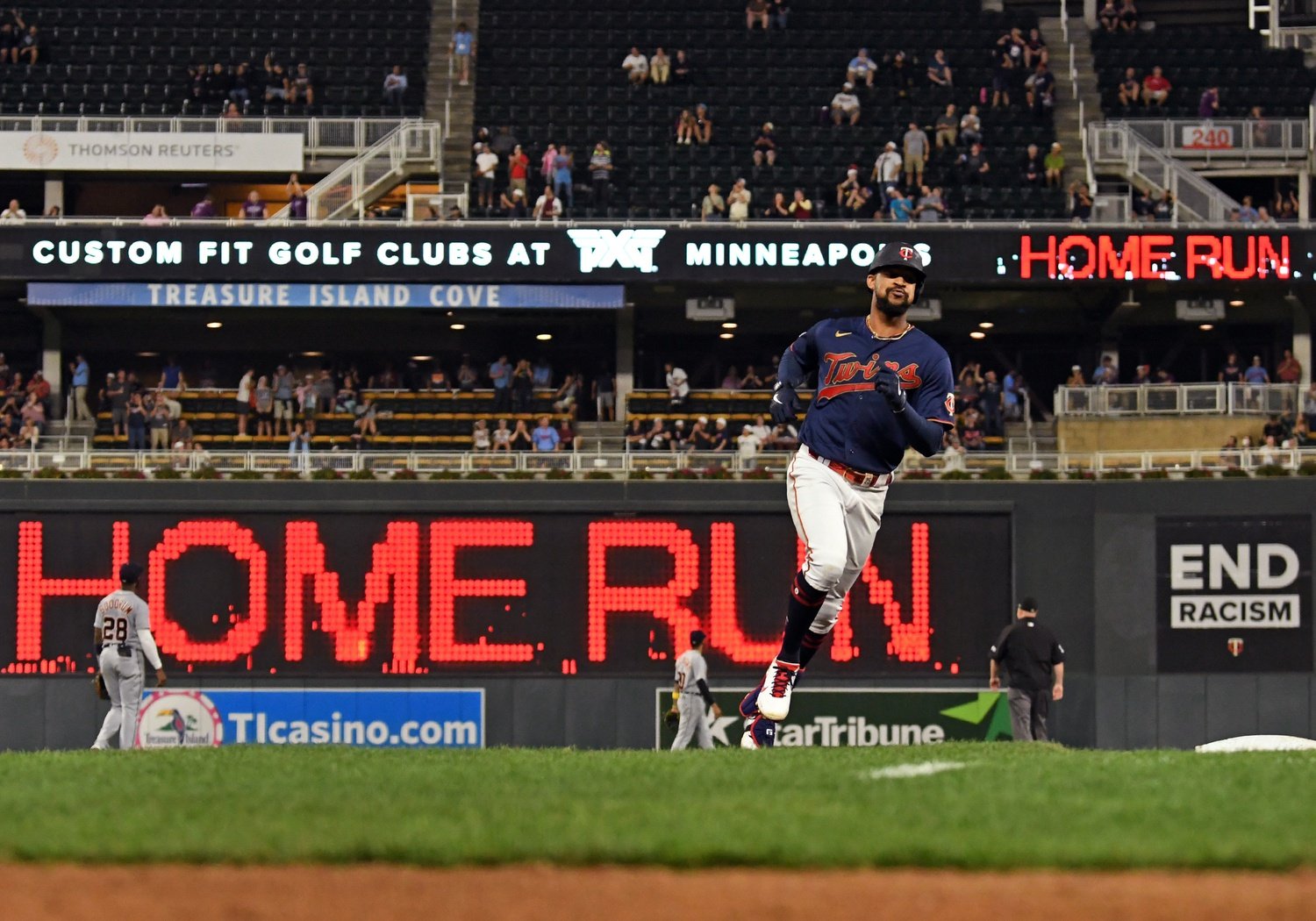 Right before the Vikings game on Sunday, Ken Rosenthal announced that the Twins and Byron Buxton were finalizing an extension. Minutes later, he tweeted that the deal was for seven years and $100 million. This is huge news for Twins fans everywhere as Buxton is an electrifying player with MVP talent. As you all know, Buxton’s main downfall is concerns about his health. Since 2018, Buxton has only played in 48% of Twins games. It is hard to justify giving a lot of money to someone who has not been on the field for half of the games. However, when Buxton is on the field, the Twins are a completely different team. Since the beginning of 2019, the Twins have played at a 98 win pace when Buxton is on the field and an 81 win pace when he is not. When a player has an impact this profound on the success of his team, you want to keep him around with hopes that he can stay healthy. Over a month ago, I wrote an article about what a potential Buxton extension would look like. I predicted it to be 7 years for $133 million, so signing him for $100 million is a steal for us. If Buxton performs like an MVP for his contract, he could make much more. Below are the full details of his contract. Included in the contract is a full no-trade clause. This means that if the Twins want to trade Buxton during his contract, he would have to agree to it. This was reportedly the final piece of the deal to be completed. This no-trade clause shows me that Buxton really loves Minnesota and wants to be here for his whole career. Buxton could have held off and waited until free agency in 2022 and probably got more money from a different team, but given his injury issues he wanted guaranteed money and he got it. In 2021, Buxton was worth over 4 wins above replacement in only 61 games. If he would’ve kept that pace up for even 120 games, he would have led all of Major League Baseball in WAR. Buxton is a generational talent that excels in every phase of the game. Now that the Twins have extended their superstar, look for them to be aggressive in free agency. After including Buxton’s $9 million in the 2022 payroll, the Twins are up to $77 million in payroll. They now have roughly $50 million to spend on 3 starting pitchers, a shortstop, and a reliever or two. I look for them to sign a middle to top-tier starting pitcher (Stroman, Rodon, Ray) and two more mid-tier pitchers, like Jon Gray, Yusei Kikuchi, or Michael Pineda. This will probably cost us about $40 million, so we will have to sign a stop-gap shortstop like Jonathan Villar or Freddy Galvis until Royce Lewis or Austin Martin is ready to take the reins. Byron Buxton is the most exciting player I have ever seen play for the Twins, and I am looking forward to seven more years of this. Thank you for reading, and Go Twins!
 -
This was an excellent read Nick, thank you for this. That being said, this whole Buxton situation is the epitome of being a Minnesota sports fan. A player I have fallen in love with watching over the year finally seems to be putting his whole game together and looks like he has the potential to be the greatest player in Twins history if he could get some injury luck and become a Minnesota legend. Just sad that the only thing holding that back from happening is the unwillingness to pay him what he deserves. And you just know he will go elsewhere and absolutely thrive, and it will be awesome to watch a class-act play to his MVP-level potential yet extremely sad because we know it could be for us.
-
Building the Twins All-Time Dream Team - Part 1
Andrew Mahlke replied to Andrew Mahlke's topic in Twins Daily Front Page News
Frank Viola 1989 - $31.3 million in today's dollars Jack Morris 1991 - $23.3 million in today's dollars Johan Santana 2007 - $20.8 million in today's dollars Brad Radke 2004 - $20.5 million in today's dollars Mauer has an interesting case as you will see in the next part. -
Building the Twins All-Time Dream Team - Part 1
Andrew Mahlke replied to Andrew Mahlke's topic in Twins Daily Front Page News
Perry had some great seasons for us, but Baseball Reference did not have any information on his salaries and I could not find any elsewhere. He would've been a strong contender to be on the team for sure. As far as Pascual goes, he had some great seasons between 1961 and 1963, however his translated salary came out to be be 1961 - No salary data available, 5.3 WAR 1962 - 29,500 nominal salary, $9.04M translated salary, 5.3 WAR, 0.586 Contract Efficiency 1963 - 39,500 nominal salary, $11.82 translated salary, 6.1 WAR, 0.516 Contract Efficiency These numbers are very impressive and he is still a top pitcher in Twins history, however it is extremely tough to have one of the five best seasons of all time for a franchise, especially when you take contracts into account- 9 replies
-
- 1
-
-
- bert blyleven
- johan santana
- (and 3 more)
-
 This discrepancy is beautifully highlighted in Moneyball when Brad Pitt is talking with his scouts. “There are rich teams and there are poor teams. Then there’s 50 feet of crap, and then there’s us. It’s an unfair game,” said Pitt. When the Twins last won the World Series in 1991, the Total MLB Payroll was just over $630 million. In 2021, the Total MLB Payroll was just south of $4 billion. This is an increase of over 500%. In 1991, the highest paid player in the league was Darryl Strawberry with a salary of $3.8 million (based on the ESPN film Doc & Darryl, he needed every penny). In 2021, the highest paid player was Mike Trout with a salary of over $37 million, an increase of over 870% from the highest paid player in 1991. So what if we found how salaries from Twins teams since 1961 translated to salaries today? More interestingly, what if we found the translated salaries and built a 26-man roster of the greatest players in Twins history but kept the translated budget under $130 million? I know WAR is a very basic advanced stat, but in my opinion is the best way to view a player’s total production between all phases of the game. Top executives in Major League Baseball agree, recently proposing arbitration salaries to be based off of players’ FanGraphs WAR calculation. With this being said, I looked at the Twins top 100 seasons for position players in terms of WAR, and I did the same thing with pitchers. I wanted to create an optimal roster while staying under the $130 million budget. My next step was to find each of these players’ salaries relative to the 2021 value. I did this by creating a “salary multiplier” for each season. I did this by using the formula below. Salary Multiplier = (2021 MLB Payroll) / (MLB Payroll of n Year) For example, if we wanted to find the multiplier for the 1991 season, we would take 2021’s payroll of $3.97 billion and divide it by the 1991 payroll of $630 million. We would get a multiplier of about 6.3, meaning we would multiply any salary in the year 1991 by 6.3. To find the payrolls of each season, I used information from The Baseball Cube, average salary data from Edmund Edmonds's research, player information from Baseball Reference, and for years I could not find, I estimated the payrolls by using Census Data on the average American salary after figuring out that the average MLB salary is usually right around 2.5 times as large as the average American salary. To find the player salaries, I used Baseball Reference’s information under each player’s salaries tab. If you look at Kirby Puckett’s 1991 salary, you would think $3.17 million is a bargain to be paid for a World Series hero. But using the multiplier, you would find that his salary in 1991 would be equal to about $20 million in 2021. To find a player’s 2021 translated salary, you simply use the formula below. 2021 Translated Salary = (Multiplier) x (Player’s Nominal Salary) Now we have to see how the player performed under the contract. To find this value, I used this fancy formula: Contract Efficiency = (WAR) / (2021 Translated Salary in Millions) To find Puckett’s contract performance in 1991, you would take his WAR of 4.3 and divide it by 19.9 to get a WAR/$M of 0.216, which is good but not even close to the value produced under some of these contracts. Taking the 77 top pitchers I could find salary data for, I constructed the figure below. It shows the relationship between equivalent 2021 salary and WAR. When creating our team, we want players with their data points on the bottom right part of this graph. This means that they will have a high WAR for a relatively low salary. The players’ names lie to the right of their data points. The five names I highlighted will be the starting rotation for this team, and below the figure I will be highlighting each of those players and telling you why they are a great fit for this championship team. SP1: 1973 Bert Blyleven - $4.37M translated salary, 9.8 WAR Most people think of him as a Twins broadcaster, but Bert Blyleven was a truly special pitcher with an elite curveball. After all, he is a Hall-of-Famer. Blyleven was surgical in 1973. Among all starting pitcher seasons with more than three WAR in Twins history, he had the best FIP (2.32), the fifth best ERA+ (156), the most innings (325!!!), and the second most strikeouts (258). He also posted an insane 9.8 WAR. In 1973, Blyleven’s age 22 season, he had a salary of $33,000. This translates to just under $4.4 million in 2021, meaning he was worth 2.24 WAR per million dollars. In 2021, the standard number to pay per WAR is $8 million, or 0.125 WAR per million dollars. Blyleven vastly outperformed his contract and recorded the best season by any pitcher in Twins history. SP2: 2004 Johan Santana - $3.06M translated salary, 8.7 WAR With one of the best changeups in baseball history, Johan Santana was nearly unhittable in the mid-2000’s and he should be in the Hall of Fame. In his first Cy Young season, 2004, Johan was phenomenal. He had an ERA+ of 182, a 30% strikeout rate, held opponents to a .565 OPS, and posted a FIP of 2.92. He also recorded 8.7 WAR In 2004, Santana’s age 25 season, he had a salary of $1.6 million. This translates to a salary just north of $3 million in 2021, giving him a WAR/$M of 2.84. Santana clearly outperformed his contract. In following years, Santana would continue to prove why he was one of the best pitchers in the league at a young age. He received a large salary boost soon after, making $13 million ($20.8M translated) in 2007. The Twins haven’t had a dominant starting pitcher since Johan and it will be hard to find a pitcher that successful. And come on, this changeup steals souls. SP3: 1987 Frank Viola - $10.8M translated salary, 8.1 WAR A devastating changeup is becoming the norm for this rotation. With a fastball in the mid to upper 80s (a power pitch in the 80’s…), Frank Viola needed a dominant off-speed pitch to truly perform to the best of his abilities. Reliever Jeff Reardon marveled at the changeup. “Frank will throw nine in a row, and they still won’t touch it,” said Reardon. Viola truly unlocked the changeup in 1987. In 1987, he posted an ERA+ of 159, a FIP of 3.66, only 2.36 BB/9, 8.1 WAR, and won the first World Series MVP award in Twins history. In that historic season, Viola earned a salary of $830,000. In 2021, this salary would be equivalent to about $10.8 million. He was worth 0.75 WAR/$M, significantly less than Blyleven and Santana, but still exceeded expectations and was a postseason hero. Additionally, he would significantly increase the team drip with his mustache. SP4: 1979 Jerry Koosman - $6.38M translated salary, 7.2 WAR Another World Series champ joins the team! Jerry Koosman was a fierce competitor on the mound who was beloved by his teammates. Koosman won the 1969 World Series with the Miracle Mets. The Minnesota-Morris legend featured a 90+ MPH fastball and a good slider to complement it. In 1979, Koosman won 20 games, had a 130 ERA+, a 3.46 FIP, and posted 7.2 WAR. These numbers are not remarkable but they are still very good, especially for our #4 starter. In his age-36 season, Koosman earned a salary of $150,000. In 2021, this salary would be worth $6.38 million. He had 1.13 WAR for every million dollars he would have made in 2021. This is great value for just 5% of our $130 million budget. Koosman is a good veteran addition to a staff with youngsters Blyleven and Santana. Plus, it helps to have a pitcher who recorded the final out of a World Series. SP5: 1991 Kevin Tapani - $1.24M translated salary, 6.8 WAR World Series champions seems to be the theme so far, and Kevin Tapani adds one to the total. The 1991 Game 2 winning pitcher was an efficient finesse pitcher, often working deep into games and refusing to issue free passes to opposing teams. In his third season, Tapani had one of the best seasons in franchise history. He posted a miniscule walk rate of only 4.1%, had a 143 ERA+, a 1.09 WHIP, and threw 244 innings on the way to a 16-9 record. In 1991, Tapani earned a salary of $197,500 which is equivalent to about $1.24 million in 2021. For every million dollars he would’ve made, he earned 5.47 WAR. This is the most efficient contract on the starting rotation. Tapani would be an outstanding fifth starter who can go deep into games and give the bullpen some much needed rest. Also, he was a big part of the infamous Kent Hrbek and Ron Gant play. Conclusion This dream team has some great starting pitching with many proven winners. For these five star pitchers, the Twins would only be paying $25.8 million total. However, although extremely important, starting pitching isn’t the only aspect of a team. Over the next week or so, I will be introducing the position players and relief pitchers of this dream team. Stay tuned to find out who else made the cut. Thank you for reading, and Go Twins!
- 9 comments
-
- 2
-
-
- bert blyleven
- johan santana
- (and 3 more)
-
Winning in the MLB is difficult. It is even more difficult when you have a lesser budget than the rest of the league. Image courtesy of Jeffrey Becker, USA Today Winning in the MLB is difficult. It is even more difficult when you have a lesser budget than the rest of the league. This discrepancy is beautifully highlighted in Moneyball when Brad Pitt is talking with his scouts. “There are rich teams and there are poor teams. Then there’s 50 feet of crap, and then there’s us. It’s an unfair game,” said Pitt. When the Twins last won the World Series in 1991, the Total MLB Payroll was just over $630 million. In 2021, the Total MLB Payroll was just south of $4 billion. This is an increase of over 500%. In 1991, the highest paid player in the league was Darryl Strawberry with a salary of $3.8 million (based on the ESPN film Doc & Darryl, he needed every penny). In 2021, the highest paid player was Mike Trout with a salary of over $37 million, an increase of over 870% from the highest paid player in 1991. So what if we found how salaries from Twins teams since 1961 translated to salaries today? More interestingly, what if we found the translated salaries and built a 26-man roster of the greatest players in Twins history but kept the translated budget under $130 million? I know WAR is a very basic advanced stat, but in my opinion is the best way to view a player’s total production between all phases of the game. Top executives in Major League Baseball agree, recently proposing arbitration salaries to be based off of players’ FanGraphs WAR calculation. With this being said, I looked at the Twins top 100 seasons for position players in terms of WAR, and I did the same thing with pitchers. I wanted to create an optimal roster while staying under the $130 million budget. My next step was to find each of these players’ salaries relative to the 2021 value. I did this by creating a “salary multiplier” for each season. I did this by using the formula below. Salary Multiplier = (2021 MLB Payroll) / (MLB Payroll of n Year) For example, if we wanted to find the multiplier for the 1991 season, we would take 2021’s payroll of $3.97 billion and divide it by the 1991 payroll of $630 million. We would get a multiplier of about 6.3, meaning we would multiply any salary in the year 1991 by 6.3. To find the payrolls of each season, I used information from The Baseball Cube, average salary data from Edmund Edmonds's research, player information from Baseball Reference, and for years I could not find, I estimated the payrolls by using Census Data on the average American salary after figuring out that the average MLB salary is usually right around 2.5 times as large as the average American salary. To find the player salaries, I used Baseball Reference’s information under each player’s salaries tab. If you look at Kirby Puckett’s 1991 salary, you would think $3.17 million is a bargain to be paid for a World Series hero. But using the multiplier, you would find that his salary in 1991 would be equal to about $20 million in 2021. To find a player’s 2021 translated salary, you simply use the formula below. 2021 Translated Salary = (Multiplier) x (Player’s Nominal Salary) Now we have to see how the player performed under the contract. To find this value, I used this fancy formula: Contract Efficiency = (WAR) / (2021 Translated Salary in Millions) To find Puckett’s contract performance in 1991, you would take his WAR of 4.3 and divide it by 19.9 to get a WAR/$M of 0.216, which is good but not even close to the value produced under some of these contracts. Taking the 77 top pitchers I could find salary data for, I constructed the figure below. It shows the relationship between equivalent 2021 salary and WAR. When creating our team, we want players with their data points on the bottom right part of this graph. This means that they will have a high WAR for a relatively low salary. The players’ names lie to the right of their data points. The five names I highlighted will be the starting rotation for this team, and below the figure I will be highlighting each of those players and telling you why they are a great fit for this championship team. SP1: 1973 Bert Blyleven - $4.37M translated salary, 9.8 WAR Most people think of him as a Twins broadcaster, but Bert Blyleven was a truly special pitcher with an elite curveball. After all, he is a Hall-of-Famer. Blyleven was surgical in 1973. Among all starting pitcher seasons with more than three WAR in Twins history, he had the best FIP (2.32), the fifth best ERA+ (156), the most innings (325!!!), and the second most strikeouts (258). He also posted an insane 9.8 WAR. In 1973, Blyleven’s age 22 season, he had a salary of $33,000. This translates to just under $4.4 million in 2021, meaning he was worth 2.24 WAR per million dollars. In 2021, the standard number to pay per WAR is $8 million, or 0.125 WAR per million dollars. Blyleven vastly outperformed his contract and recorded the best season by any pitcher in Twins history. SP2: 2004 Johan Santana - $3.06M translated salary, 8.7 WAR With one of the best changeups in baseball history, Johan Santana was nearly unhittable in the mid-2000’s and he should be in the Hall of Fame. In his first Cy Young season, 2004, Johan was phenomenal. He had an ERA+ of 182, a 30% strikeout rate, held opponents to a .565 OPS, and posted a FIP of 2.92. He also recorded 8.7 WAR In 2004, Santana’s age 25 season, he had a salary of $1.6 million. This translates to a salary just north of $3 million in 2021, giving him a WAR/$M of 2.84. Santana clearly outperformed his contract. In following years, Santana would continue to prove why he was one of the best pitchers in the league at a young age. He received a large salary boost soon after, making $13 million ($20.8M translated) in 2007. The Twins haven’t had a dominant starting pitcher since Johan and it will be hard to find a pitcher that successful. And come on, this changeup steals souls. SP3: 1987 Frank Viola - $10.8M translated salary, 8.1 WAR A devastating changeup is becoming the norm for this rotation. With a fastball in the mid to upper 80s (a power pitch in the 80’s…), Frank Viola needed a dominant off-speed pitch to truly perform to the best of his abilities. Reliever Jeff Reardon marveled at the changeup. “Frank will throw nine in a row, and they still won’t touch it,” said Reardon. Viola truly unlocked the changeup in 1987. In 1987, he posted an ERA+ of 159, a FIP of 3.66, only 2.36 BB/9, 8.1 WAR, and won the first World Series MVP award in Twins history. In that historic season, Viola earned a salary of $830,000. In 2021, this salary would be equivalent to about $10.8 million. He was worth 0.75 WAR/$M, significantly less than Blyleven and Santana, but still exceeded expectations and was a postseason hero. Additionally, he would significantly increase the team drip with his mustache. SP4: 1979 Jerry Koosman - $6.38M translated salary, 7.2 WAR Another World Series champ joins the team! Jerry Koosman was a fierce competitor on the mound who was beloved by his teammates. Koosman won the 1969 World Series with the Miracle Mets. The Minnesota-Morris legend featured a 90+ MPH fastball and a good slider to complement it. In 1979, Koosman won 20 games, had a 130 ERA+, a 3.46 FIP, and posted 7.2 WAR. These numbers are not remarkable but they are still very good, especially for our #4 starter. In his age-36 season, Koosman earned a salary of $150,000. In 2021, this salary would be worth $6.38 million. He had 1.13 WAR for every million dollars he would have made in 2021. This is great value for just 5% of our $130 million budget. Koosman is a good veteran addition to a staff with youngsters Blyleven and Santana. Plus, it helps to have a pitcher who recorded the final out of a World Series. SP5: 1991 Kevin Tapani - $1.24M translated salary, 6.8 WAR World Series champions seems to be the theme so far, and Kevin Tapani adds one to the total. The 1991 Game 2 winning pitcher was an efficient finesse pitcher, often working deep into games and refusing to issue free passes to opposing teams. In his third season, Tapani had one of the best seasons in franchise history. He posted a miniscule walk rate of only 4.1%, had a 143 ERA+, a 1.09 WHIP, and threw 244 innings on the way to a 16-9 record. In 1991, Tapani earned a salary of $197,500 which is equivalent to about $1.24 million in 2021. For every million dollars he would’ve made, he earned 5.47 WAR. This is the most efficient contract on the starting rotation. Tapani would be an outstanding fifth starter who can go deep into games and give the bullpen some much needed rest. Also, he was a big part of the infamous Kent Hrbek and Ron Gant play. Conclusion This dream team has some great starting pitching with many proven winners. For these five star pitchers, the Twins would only be paying $25.8 million total. However, although extremely important, starting pitching isn’t the only aspect of a team. Over the next week or so, I will be introducing the position players and relief pitchers of this dream team. Stay tuned to find out who else made the cut. Thank you for reading, and Go Twins! View full article
-
I would also be interested in hearing about the compensation systems you have developed, as I am always trying to learn. Feel free to shoot me a message.


