



Brandon Warne
-
Posts
1,486 -
Joined
-
Last visited
Content Type
Profiles
News
Minnesota Twins Videos
2026 Minnesota Twins Top Prospects Ranking
2022 Minnesota Twins Draft Picks
Minnesota Twins Free Agent & Trade Rumors, Notes, & Tidbits
Guides & Resources
2023 Minnesota Twins Draft Picks
The Minnesota Twins Players Project
2024 Minnesota Twins Draft Picks
2025 Minnesota Twins Draft Pick Tracker
2026 Minnesota Twins Draft Tracker: Picks & Bonuses
Forums
Blogs
Events
Store
Downloads
Gallery
Everything posted by Brandon Warne
-

WARNE: What Awaits the Twins in the Final 13 Games?
Brandon Warne posted a blog entry in BW on the Beat
Monday marks the Twins last off day before the end of the season, and provides a good chance to take a step back and survey what lies ahead. Minnesota opens a three-game series with Cleveland coming to town, with Tuesday marking the first of seven remaining games between the Twins and the Tribe. So essentially, more than half the Twins’ remaining 13 games come against Cleveland, a team which has underachieved virtually the entire season, but finds itself a mere 1.5 games behind the local nine. The series matchups don’t favor the Twins, either. Danny Salazar takes the mound for Cleveland Tuesday night, and he’s proven to be one of the most physically gifted pitchers in the American League, with 9.7 strikeouts per nine, a league-average groundball rate and a 3.48 ERA to go along with legit 95 mph heat. His changeup (27.2 percent whiff rate) is absolutely devastating as well. Things get no easier with Corey Kluber starting on Wednesday. And while he’s taken a bit of a step back — far less than most think, however — from last year’s Cy Young pace, he’s still had the Twins’ number all season long. He’s held them to a .085/.128/.146 batting line with a 1.38 ERA across three starts. In 26 innings, he’s allowed only 11 baserunners. Cody Anderson starts on Thursday, and while he’s a total wild card — he’s faced the Twins just once, and they smoked him — keep in mind that manager Terry Francona was willing to bump Trevor Bauer from the rotation to keep him in there. After a rough August, Anderson has a 1.78 ERA in four September starts. And if that isn’t tough enough, the upcoming four-game series with Cleveland promises to be just as tough. Not only are the odds good that the Twins will get Kluber again in the series opener on Monday, but that’s four games in a row down the stretch against the team which ranks fourth in the AL in starter ERA, first in strikeouts and second in FIP. It’s pretty easy to make an argument that this rotation and the Rays’ are in a dogfight to be the best in the AL. It’s not certain which Tigers team the Twins will find at Comerica after the first Cleveland series, but there are a couple things at play here. The Twins lost two of three to Detroit at Target Field last week, and this is probably a Tigers team that hasn’t totally forgotten the thrashing they took to end last season. The Twins took two of three from the Tigers in Detroit in mid-September last year and split a four-game series to end the season with two blowout wins when they were jockeying for position in the playoffs. The Tigers were summarily bounced from the playoffs in three straight by the Orioles and find themselves fighting to get out of the cellar at the present time with a 69-79 record — a game back of fourth-place Chicago. The other team in the Twins’ way of the end of the season is Kansas City, and while an 11-game lead wouldn’t suggest a team needing to get things together, it’s been a bit of a bumpy ride for the Royals for awhile now. The Royals are 7-13 in their last 20 games and now are battling with Toronto for home-field advantage throughout the playoffs. The Royals have a two-game lead as of this writing, and of course at this point it’s unclear where that’ll stand when they invade Target Field from Oct. 2-4, but ultimately it’d be ideal for the Twins if they have nothing left to play for. The odds don’t seem to favor it, however. So what’s a realistic need for the Twins record-wise in the 13 games that remain? Fangraphs’ Cool Standings presently gives the Twins a 6.1 percent chance of making the playoffs, and an expected final record of 82-80. That’s progress from the last four seasons, but disappointing to be sure. Not many teams get to the cusp of the playoffs after a rough stretch and revel in the fact that they almost made it, even if that represents considerable growth. Cool Standings projects 89 wins for the Yankees and the top Wild Card slot; the Twins would have to finish 13-0 to match that. So … that can clearly be ruled out. The projections suggest 85.4 wins for the Astros and 82.7 for the Angels; we’ll round to 85 and 83 for mathematical ease. At 76-73, the Twins would need to go 9-4 to match that projection for the Astros — and maybe 10-3 to be safe — and that’s assuming the Halos don’t flip the script. Going 7-6 would be enough to beat their projection and the Angels’ as well, but that would only claim the third Wild Card spot which, as of this writing, doesn’t exist. In short, the Twins are going to have to go all Chris Sale on Corey Kluber and friends if they’re going to punch their ticket into October. Well, further into October. The odds don’t favor it, but that’s why they play the games. This content originated at Cold Omaha here; please consider clicking through to support it. -
The Breakdown - Ep 9 with Cole De Vries and Brandon Warne
Brandon Warne posted a blog entry in BW on the Beat
As the Twins prepare for the home stretch, Brandon and Cole discuss the Wild Card race and Cole answers Brandon's questions about former teammates. https://www.spreaker.com/user/sbarnard4/the-breakdown-ep-9 -
The Breakdown - Ep 8 with Cole De Vries and Brandon Warne
Brandon Warne posted a blog entry in BW on the Beat
We discussed the current state of the Twins, Minor Leaguers' pay (or lack thereof), and what's playing on their iTunes, among other topics. https://www.spreaker.com/user/sbarnard4/the-breakdown-ep-8 -
I would like the paycheck, but somehow my shoulder is shredded. Not joking. I showed up to play baseball this spring and couldn't throw anymore. As a first baseman it isn't a huge deal....but how did it happen in the first place?!
-
With Hoey it was control, with Pelfrey I think it's command.
-
Prodded by a caller on his weekly radio show, Minnesota Twins manager Paul Molitor admitted the club was exploring their options with regards to the rotation spot of right-hander Mike Pelfrey. A number of factors make the situation difficult, including the shutdown of Jose Berrios, the presence of Tyler Duffey, and the current situations surrounding Phil Hughes and Trevor May.To be clear, the presence of Duffey is simply just that he’s already promoted, and thus not a candidate to take Pelfrey’s rotation spot. May is not stretched out, as he’s worked as a reliever almost exclusively for over two months. There isn’t time, or really a place — short of using him during Chattanooga’s playoff run — to get him lengthened back out. Hughes isn’t healthy enough to return to the rotation yet either, otherwise he might be the natural choice to take Pelfrey’s rotation spot. A possible wild card in the situation is left-hander Logan Darnell, whom the club recalled after his last start with Rochester on Thursday. And if Darnell’s usage is any indication — he threw just 4.2 innings and 45 pitches in that start — he might in fact be the man for the job. A Rochester-based source indicated he was removed for reasons other than ineffect, and his spot to start lines up quite nicely with Pelfrey — who pitched (poorly) on Friday. Darnell has also been a man on fire of late. While he hasn’t pitched at all in the big leagues this year, Darnell took strongly to a late-season move to the rotation. Darnell started in his final five appearances of the season for Rochester and posted a 0.83 ERA and 28-7 K/BB ratio. Opposing batters hit just .185/.228/.210 off Darnell in that stretch, and he’s been especially stingy against left-handed hitters all season, allowing just one extra-base hit (a double) as they’ve collectively batted just .265/.327/.275. Opposing batters haven’t been as kind to Pelfrey, who has allowed a triple-slash line of .298/.354/.404. For context, just 27 of 154 qualified batters across baseball (17.5 percent) have a batting average that high across MLB in this depressed offensive era. Despite starting off well enough even with shaky peripherals, the wheels have come off for Pelfrey since his 2.28 ERA at the 11-start mark of the season. To that point, opposing batters had hit .254/.321/.331 against Pelfrey, which made up for the fact that he had just a 34-19 K/BB ratio through those 67 innings. It’s truly odd that a pitcher with good velocity and a solid splitter still gets barreled up to that extent, but it’s just the truth. Anyway, since mid-June it’s been rough for Pelfrey. Sure, there have been good starts here and there, but the aggregate numbers tell a pretty definitive story: 5.76 ERA, .331/.378/.459 slash against and just 42 strikeouts in 79.2 innings. Pelfrey’s groundball-heavy tendencies (No. 7 in AL at 51.9 percent) keep him from being an unmitigated disaster (just six home runs allowed), but there’s still way too much contact and damage being done. An enterprising team is going to put him in their bullpen, where he’ll turn into a very nice back-end option with a velocity uptick, grounders and what’ll likely be a strong jump in strikeouts. It just doesn’t appear that’ll be the Twins. UPCOMING The Twins are fortunate enough to miss ace Johnny Cueto in the series with the Royals, but won’t be as lucky with the White Sox series that follows. As it currently stands, the Twins are slated to face Chris Sale and Jose Quintana — two of the finest lefties in the junior circuit. And while the Twins have strangely owned Sale all season long — 6.30 ERA versus the Twins, 2.68 against everyone else — this is a guy who’d probably be the AL Cy Young if it weren’t for the fact that his team around him has been a huge disappointment. There is a silver lining here in the series, though: John Danks is slated to start one of the games as well. The Twins have absolutely obliterated Danks through the years (5.76 ERA), and that is even more magnified this season (1.188 OPS, 9.39 ERA). ALLEN vs ANDERSON It’s only the perception of the writer, but it appears that Twins fans have been far more supportive of current pitching coach Neil Allen than his deposed predecessor, Rick Anderson. Whether it’s on Facebook, Twitter or even in sports bars, it seems as though fans have really bought into Allen, despite the fact that stats show a pretty interesting story. Here are the numbers for the 2014 rotation: 5.06 ERA/4.03 FIP 6.4 K/9 2.4 BB/9 1.0 HR/9 And now, 2015: 4.23 ERA/4.19 FIP 6.2 K/9 2.4 BB/9 1.1 HR/9 Even if you don’t want to buy FIP’s argument that this rotation is actually worse, it’s not as though you could pick out one or the other out of a crowd of numbers. And I’m not saying you have to believe this year is as bad as last year, but it’s pretty close. It’s just a simple exercise to see if perception mirrors reality. In this case, not really. This article was originally posted at Cold Omaha here; please click through to support the content. Click here to view the article
-
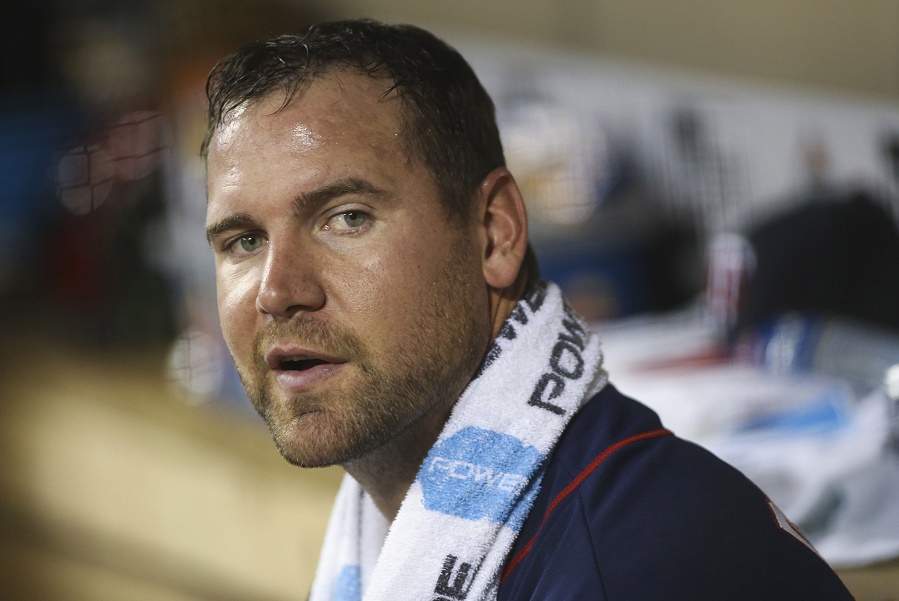 To be clear, the presence of Duffey is simply just that he’s already promoted, and thus not a candidate to take Pelfrey’s rotation spot. May is not stretched out, as he’s worked as a reliever almost exclusively for over two months. There isn’t time, or really a place — short of using him during Chattanooga’s playoff run — to get him lengthened back out. Hughes isn’t healthy enough to return to the rotation yet either, otherwise he might be the natural choice to take Pelfrey’s rotation spot. A possible wild card in the situation is left-hander Logan Darnell, whom the club recalled after his last start with Rochester on Thursday. And if Darnell’s usage is any indication — he threw just 4.2 innings and 45 pitches in that start — he might in fact be the man for the job. A Rochester-based source indicated he was removed for reasons other than ineffect, and his spot to start lines up quite nicely with Pelfrey — who pitched (poorly) on Friday. Darnell has also been a man on fire of late. While he hasn’t pitched at all in the big leagues this year, Darnell took strongly to a late-season move to the rotation. Darnell started in his final five appearances of the season for Rochester and posted a 0.83 ERA and 28-7 K/BB ratio. Opposing batters hit just .185/.228/.210 off Darnell in that stretch, and he’s been especially stingy against left-handed hitters all season, allowing just one extra-base hit (a double) as they’ve collectively batted just .265/.327/.275. Opposing batters haven’t been as kind to Pelfrey, who has allowed a triple-slash line of .298/.354/.404. For context, just 27 of 154 qualified batters across baseball (17.5 percent) have a batting average that high across MLB in this depressed offensive era. Despite starting off well enough even with shaky peripherals, the wheels have come off for Pelfrey since his 2.28 ERA at the 11-start mark of the season. To that point, opposing batters had hit .254/.321/.331 against Pelfrey, which made up for the fact that he had just a 34-19 K/BB ratio through those 67 innings. It’s truly odd that a pitcher with good velocity and a solid splitter still gets barreled up to that extent, but it’s just the truth. Anyway, since mid-June it’s been rough for Pelfrey. Sure, there have been good starts here and there, but the aggregate numbers tell a pretty definitive story: 5.76 ERA, .331/.378/.459 slash against and just 42 strikeouts in 79.2 innings. Pelfrey’s groundball-heavy tendencies (No. 7 in AL at 51.9 percent) keep him from being an unmitigated disaster (just six home runs allowed), but there’s still way too much contact and damage being done. An enterprising team is going to put him in their bullpen, where he’ll turn into a very nice back-end option with a velocity uptick, grounders and what’ll likely be a strong jump in strikeouts. It just doesn’t appear that’ll be the Twins. UPCOMING The Twins are fortunate enough to miss ace Johnny Cueto in the series with the Royals, but won’t be as lucky with the White Sox series that follows. As it currently stands, the Twins are slated to face Chris Sale and Jose Quintana — two of the finest lefties in the junior circuit. And while the Twins have strangely owned Sale all season long — 6.30 ERA versus the Twins, 2.68 against everyone else — this is a guy who’d probably be the AL Cy Young if it weren’t for the fact that his team around him has been a huge disappointment. There is a silver lining here in the series, though: John Danks is slated to start one of the games as well. The Twins have absolutely obliterated Danks through the years (5.76 ERA), and that is even more magnified this season (1.188 OPS, 9.39 ERA). ALLEN vs ANDERSON It’s only the perception of the writer, but it appears that Twins fans have been far more supportive of current pitching coach Neil Allen than his deposed predecessor, Rick Anderson. Whether it’s on Facebook, Twitter or even in sports bars, it seems as though fans have really bought into Allen, despite the fact that stats show a pretty interesting story. Here are the numbers for the 2014 rotation: 5.06 ERA/4.03 FIP 6.4 K/9 2.4 BB/9 1.0 HR/9 And now, 2015: 4.23 ERA/4.19 FIP 6.2 K/9 2.4 BB/9 1.1 HR/9 Even if you don’t want to buy FIP’s argument that this rotation is actually worse, it’s not as though you could pick out one or the other out of a crowd of numbers. And I’m not saying you have to believe this year is as bad as last year, but it’s pretty close. It’s just a simple exercise to see if perception mirrors reality. In this case, not really. This article was originally posted at Cold Omaha here; please click through to support the content.
 -
WARNE: Could the Twins be Replacing Mike Pelfrey?
Brandon Warne posted a blog entry in BW on the Beat
Prodded by a caller on his weekly radio show, Minnesota Twins manager Paul Molitor admitted the club was exploring their options with regards to the rotation spot of right-hander Mike Pelfrey. A number of factors make the situation difficult, including the shutdown of Jose Berrios, the presence of Tyler Duffey, and the current situations surrounding Phil Hughes and Trevor May. To be clear, the presence of Duffey is simply just that he’s already promoted, and thus not a candidate to take Pelfrey’s rotation spot. May is not stretched out, as he’s worked as a reliever almost exclusively for over two months. There isn’t time, or really a place — short of using him during Chattanooga’s playoff run — to get him lengthened back out. Hughes isn’t healthy enough to return to the rotation yet either, otherwise he might be the natural choice to take Pelfrey’s rotation spot. A possible wild card in the situation is left-hander Logan Darnell, whom the club recalled after his last start with Rochester on Thursday. And if Darnell’s usage is any indication — he threw just 4.2 innings and 45 pitches in that start — he might in fact be the man for the job. A Rochester-based source indicated he was removed for reasons other than ineffect, and his spot to start lines up quite nicely with Pelfrey — who pitched (poorly) on Friday. Darnell has also been a man on fire of late. While he hasn’t pitched at all in the big leagues this year, Darnell took strongly to a late-season move to the rotation. Darnell started in his final five appearances of the season for Rochester and posted a 0.83 ERA and 28-7 K/BB ratio. Opposing batters hit just .185/.228/.210 off Darnell in that stretch, and he’s been especially stingy against left-handed hitters all season, allowing just one extra-base hit (a double) as they’ve collectively batted just .265/.327/.275. Opposing batters haven’t been as kind to Pelfrey, who has allowed a triple-slash line of .298/.354/.404. For context, just 27 of 154 qualified batters across baseball (17.5 percent) have a batting average that high across MLB in this depressed offensive era. Despite starting off well enough even with shaky peripherals, the wheels have come off for Pelfrey since his 2.28 ERA at the 11-start mark of the season. To that point, opposing batters had hit .254/.321/.331 against Pelfrey, which made up for the fact that he had just a 34-19 K/BB ratio through those 67 innings. It’s truly odd that a pitcher with good velocity and a solid splitter still gets barreled up to that extent, but it’s just the truth. Anyway, since mid-June it’s been rough for Pelfrey. Sure, there have been good starts here and there, but the aggregate numbers tell a pretty definitive story: 5.76 ERA, .331/.378/.459 slash against and just 42 strikeouts in 79.2 innings. Pelfrey’s groundball-heavy tendencies (No. 7 in AL at 51.9 percent) keep him from being an unmitigated disaster (just six home runs allowed), but there’s still way too much contact and damage being done. An enterprising team is going to put him in their bullpen, where he’ll turn into a very nice back-end option with a velocity uptick, grounders and what’ll likely be a strong jump in strikeouts. It just doesn’t appear that’ll be the Twins. UPCOMING The Twins are fortunate enough to miss ace Johnny Cueto in the series with the Royals, but won’t be as lucky with the White Sox series that follows. As it currently stands, the Twins are slated to face Chris Sale and Jose Quintana — two of the finest lefties in the junior circuit. And while the Twins have strangely owned Sale all season long — 6.30 ERA versus the Twins, 2.68 against everyone else — this is a guy who’d probably be the AL Cy Young if it weren’t for the fact that his team around him has been a huge disappointment. There is a silver lining here in the series, though: John Danks is slated to start one of the games as well. The Twins have absolutely obliterated Danks through the years (5.76 ERA), and that is even more magnified this season (1.188 OPS, 9.39 ERA). ALLEN vs ANDERSON It’s only the perception of the writer, but it appears that Twins fans have been far more supportive of current pitching coach Neil Allen than his deposed predecessor, Rick Anderson. Whether it’s on Facebook, Twitter or even in sports bars, it seems as though fans have really bought into Allen, despite the fact that stats show a pretty interesting story. Here are the numbers for the 2014 rotation: 5.06 ERA/4.03 FIP 6.4 K/9 2.4 BB/9 1.0 HR/9 And now, 2015: 4.23 ERA/4.19 FIP 6.2 K/9 2.4 BB/9 1.1 HR/9 Even if you don’t want to buy FIP’s argument that this rotation is actually worse, it’s not as though you could pick out one or the other out of a crowd of numbers. And I’m not saying you have to believe this year is as bad as last year, but it’s pretty close. It’s just a simple exercise to see if perception mirrors reality. In this case, not really. This article was originally posted at Cold Omaha here; please click through to support the content. -
The Breakdown - Ep 7 with Cole De Vries and Brandon Warne
Brandon Warne posted a blog entry in BW on the Beat
We talked about Fan mail, fantasy sports and had a really good laugh over a fan who sent coupons to Joe Mauer, of all people. Check us out: https://www.spreaker.com/user/sbarnard4/the-breakdown-ep-7 -
PODCAST: The Breakdown - Ep 6 - Cole DeVries and Brandon Warne
Brandon Warne posted a blog entry in BW on the Beat
hey, here's a fresh new episode recorded today: https://www.spreaker.com/user/sbarnard4/the-breakdown-ep-6 -
The two most recent additions to this Minnesota Twins team were to help prop up a sagging bullpen. True enough, the unit was adequate in the first half as the Twins raced out to as high as 11 games over .500. But early-season darlings Blaine Boyer and the since-demoted Aaron Thompson hit proverbial walls, leaving the Twins’ fans wondering if the club would take steps to address the bullpen before it ultimately sapped their playoff chances.And the answer as of right now is … sort of? That’s not meant to be a backhanded jab at Terry Ryan, who has built this into a team that has not only surprised people on the national front, but led the teams around them to make moves as well. Do the Tigers sell off if the upstart Twins don’t exist? Maybe, maybe not. That might be more of a reflection of the Royals — the guaranteed Central champs — as well as the surrounding wild card landscape, and it might just as well be where the Tigers are on their winning curve as well. But I’d have to believe just the mere existence of the Twins — 3.5 games up on the Tigers in the standings even now — played at least some part. And if that wild card situation daunted the Tigers, why didn’t it scare off the Twins? The teams were virtually tied at that fork in the road, and yet Dave Dombrowski — since deposed — decided to sell hard on assets like David Price, Yoenis Cespedes and Joakim Soria. Part of it has to do with winning windows and where each team is. The Tigers’ would seem to be drawing to a close, while the Twins are just starting to open theirs, even if this season is a bit like cracking them open during that first early March heatwave that sees temperatures rise into the 30s. And so rather than jumping headlong into those frigid waters, Ryan dipped his toes in by acquiring Rays reliever Kevin Jepsen. But hold the phone; aren’t the Rays right in the thick of things, too? As a matter of fact, entering play Monday they were just one game behind the Twins at an even 62-62. Unfortunately for the Rays, that still means there are five teams ahead of them in the race — including the Yankees and Rangers who are the current leaders. In a sense, the Rays figured they’d get wherever they were going, with or without Jepsen. And that’s sort of how the average reliever is viewed in today’s game. Here’s a dose of context: The Twins were a markedly better bullpen in the first half; that much is known for sure. In the first half, Twins relievers carried a 3.71 ERA. Since the break that has swollen by more than a run to 4.81, and just six teams — including the Tigers — are worse. But let’s frame those numbers in terms of the modern bullpen. Surely not everyone’s bullpen is comprised of flamethrowers like the Royals, or with two lockdown closers at the back end like the Yankees, right? Well, when the Twins were sitting at a 3.71 ERA at the All-Star break, they were still tied with the White Sox for just 18th overall. Throw in FIP for good measure, and the smoke-and-mirrors Twins had the seventh-worst mark across the league, bound for regression and limited by a lack of strikeout stuff. Here’s some more context: For the season, the Twins have a 4.04 bullpen ERA. That’s among the 10 worst marks in baseball, and is backed by a 4.11 FIP that basically says “what you see is what you get.” The Twins are also dead last in strikeouts at 6.7 per nine innings. In fact, just three teams are ahead of the Twins by less than a strikeout per nine innings. The Rays bullpen that decided it didn’t need Jepsen to get where it’s going? They’ve fanned 8.6 batters per nine this year. To put a tidy bow on it all, here’s what the average AL reliever looks like. 8.4 K/9 3.64 ERA 44.8 percent ground ball rate No Twins reliever with any semblance of a sample size is striking out that many batters. Glen Perkins is fanning 8.2 batters per nine as the Twins’ best — when healthy — reliever, and he’s still below the AL average for his contemporaries. Recently-added Jepsen is right at that 8.4 mark — that’s in just 10.2 innings — but it’s one he’s only reached twice in the past five seasons. Casey Fien used to be able to reach that mark but has seen his cutter become very hittable over this season. Even the ground ball rate is a hard one to match, as relievers should usually be able to: A. Strike batters out, or B. Get grounders, in large part due to coming into double play situations in crunch time. But the Twins still fall short of that as a whole with a 43 percent rate. So essentially, the Twins are a group of flyballing non-strikeout guys who walk nobody. In this day and age, that’s not really a sustainable bullpen plan. Going out and getting Jepsen made plenty of sense, even if it was met with trepidation. The most important part of his acquisition was that he’s under control for one more season after this, thereby not leaving the Twins viewing this contention run as a short-term thing. Jepsen brings a lot of things the Twins don’t have within — namely, throwing 95 mph — and didn’t cost too terribly much. It was a sensible addition. So too is the recent acquisition of Neal Cotts, a left-hander from Milwaukee who has gained steam as the season has gone on. At the time of his acquisition, Cotts had a 3.26 ERA that had been as high as 6.10 back in early May. Cotts has been rather good while working in low-leverage spots for the Brewers all season long. From June 1 until the trade, Cotts put together a 28-inning stretch with a 1.93 ERA, 26-11 K/BB ratio and just a .654 OPS against. He does have his limitations — he’s signed just through this season and should really only be used against lefties — but he does have value. Depending on the return when the trade is finalized, this has potential to be a shrewd move by Ryan. Left-handed hitters are batting just .179/.222/.333 against Cotts this year. Righties, however, are hitting .279/.375/.462. But again, if he’s used properly, there’s some value here. The movement of Trevor May to the bullpen was certainly a puzzling one, but it would be lying to say he hasn’t taken to that role with aplomb. Of course, he was far more than adequate in the rotation, and moving him to the bullpen is like some bizarro Peter Pan move since the rotation isn’t exactly fortified. But the numbers for May in the bullpen speak for themselves: 2.00 ERA, 20-3 K/BB ratio in 18 innings and .243/.293/.357 line against. That’s elite late-inning relief in a spot where you need it. His stuff is also sizzling in smaller doses; his fastball averaged 93.0 mph in June according to Brooks Baseball. It’s now up to 96 mph in August. And if Perkins can come back from his neck injury to be anything close to what he was in the first half, suddenly you might have something. Jepsen, May and Perkins at the back end isn’t going to make anyone forget about Wade Davis and Greg Holland or Dellin Betances and Andrew Miller, but it’s also a far cry from Boyer, Thompson and Fien. Furthermore, moving Fien into lower-leverage innings could be extremely useful as well; for all his issues, he’s still managed the second-lowest walk rate among 177 big league relievers that have thrown at least 30 innings. So while his 5.2 K/9 isn’t ideal to work the eighth or ninth with, he can still have some value working in earlier innings — especially if he faces mostly righties (.200/.222/.308). Having three lefties certainly doesn’t hurt either, especially considering the fact that Paul Molitor can use Brian Duensing as a long guy and let Ryan O’Rourke (.152/.250/.250 against lefties) and Cotts face just lefties later in games. It’s not a perfect bullpen, but for now it’s something Molitor can piecemeal together until September, when rosters expand and perhaps Ryan Pressly and even Boyer — in a reduced role — can return as well. One thing remains for sure, and that is that they’ll need all hands on deck to stay in this race. This content originated at Cold Omaha here, please consider clicking through -- NEW WEBSITE -- to support it. Click here to view the article
-
 And the answer as of right now is … sort of? That’s not meant to be a backhanded jab at Terry Ryan, who has built this into a team that has not only surprised people on the national front, but led the teams around them to make moves as well. Do the Tigers sell off if the upstart Twins don’t exist? Maybe, maybe not. That might be more of a reflection of the Royals — the guaranteed Central champs — as well as the surrounding wild card landscape, and it might just as well be where the Tigers are on their winning curve as well. But I’d have to believe just the mere existence of the Twins — 3.5 games up on the Tigers in the standings even now — played at least some part. And if that wild card situation daunted the Tigers, why didn’t it scare off the Twins? The teams were virtually tied at that fork in the road, and yet Dave Dombrowski — since deposed — decided to sell hard on assets like David Price, Yoenis Cespedes and Joakim Soria. Part of it has to do with winning windows and where each team is. The Tigers’ would seem to be drawing to a close, while the Twins are just starting to open theirs, even if this season is a bit like cracking them open during that first early March heatwave that sees temperatures rise into the 30s. And so rather than jumping headlong into those frigid waters, Ryan dipped his toes in by acquiring Rays reliever Kevin Jepsen. But hold the phone; aren’t the Rays right in the thick of things, too? As a matter of fact, entering play Monday they were just one game behind the Twins at an even 62-62. Unfortunately for the Rays, that still means there are five teams ahead of them in the race — including the Yankees and Rangers who are the current leaders. In a sense, the Rays figured they’d get wherever they were going, with or without Jepsen. And that’s sort of how the average reliever is viewed in today’s game. Here’s a dose of context: The Twins were a markedly better bullpen in the first half; that much is known for sure. In the first half, Twins relievers carried a 3.71 ERA. Since the break that has swollen by more than a run to 4.81, and just six teams — including the Tigers — are worse. But let’s frame those numbers in terms of the modern bullpen. Surely not everyone’s bullpen is comprised of flamethrowers like the Royals, or with two lockdown closers at the back end like the Yankees, right? Well, when the Twins were sitting at a 3.71 ERA at the All-Star break, they were still tied with the White Sox for just 18th overall. Throw in FIP for good measure, and the smoke-and-mirrors Twins had the seventh-worst mark across the league, bound for regression and limited by a lack of strikeout stuff. Here’s some more context: For the season, the Twins have a 4.04 bullpen ERA. That’s among the 10 worst marks in baseball, and is backed by a 4.11 FIP that basically says “what you see is what you get.” The Twins are also dead last in strikeouts at 6.7 per nine innings. In fact, just three teams are ahead of the Twins by less than a strikeout per nine innings. The Rays bullpen that decided it didn’t need Jepsen to get where it’s going? They’ve fanned 8.6 batters per nine this year. To put a tidy bow on it all, here’s what the average AL reliever looks like. 8.4 K/9 3.64 ERA 44.8 percent ground ball rate No Twins reliever with any semblance of a sample size is striking out that many batters. Glen Perkins is fanning 8.2 batters per nine as the Twins’ best — when healthy — reliever, and he’s still below the AL average for his contemporaries. Recently-added Jepsen is right at that 8.4 mark — that’s in just 10.2 innings — but it’s one he’s only reached twice in the past five seasons. Casey Fien used to be able to reach that mark but has seen his cutter become very hittable over this season. Even the ground ball rate is a hard one to match, as relievers should usually be able to: A. Strike batters out, or B. Get grounders, in large part due to coming into double play situations in crunch time. But the Twins still fall short of that as a whole with a 43 percent rate. So essentially, the Twins are a group of flyballing non-strikeout guys who walk nobody. In this day and age, that’s not really a sustainable bullpen plan. Going out and getting Jepsen made plenty of sense, even if it was met with trepidation. The most important part of his acquisition was that he’s under control for one more season after this, thereby not leaving the Twins viewing this contention run as a short-term thing. Jepsen brings a lot of things the Twins don’t have within — namely, throwing 95 mph — and didn’t cost too terribly much. It was a sensible addition. So too is the recent acquisition of Neal Cotts, a left-hander from Milwaukee who has gained steam as the season has gone on. At the time of his acquisition, Cotts had a 3.26 ERA that had been as high as 6.10 back in early May. Cotts has been rather good while working in low-leverage spots for the Brewers all season long. From June 1 until the trade, Cotts put together a 28-inning stretch with a 1.93 ERA, 26-11 K/BB ratio and just a .654 OPS against. He does have his limitations — he’s signed just through this season and should really only be used against lefties — but he does have value. Depending on the return when the trade is finalized, this has potential to be a shrewd move by Ryan. Left-handed hitters are batting just .179/.222/.333 against Cotts this year. Righties, however, are hitting .279/.375/.462. But again, if he’s used properly, there’s some value here. The movement of Trevor May to the bullpen was certainly a puzzling one, but it would be lying to say he hasn’t taken to that role with aplomb. Of course, he was far more than adequate in the rotation, and moving him to the bullpen is like some bizarro Peter Pan move since the rotation isn’t exactly fortified. But the numbers for May in the bullpen speak for themselves: 2.00 ERA, 20-3 K/BB ratio in 18 innings and .243/.293/.357 line against. That’s elite late-inning relief in a spot where you need it. His stuff is also sizzling in smaller doses; his fastball averaged 93.0 mph in June according to Brooks Baseball. It’s now up to 96 mph in August. And if Perkins can come back from his neck injury to be anything close to what he was in the first half, suddenly you might have something. Jepsen, May and Perkins at the back end isn’t going to make anyone forget about Wade Davis and Greg Holland or Dellin Betances and Andrew Miller, but it’s also a far cry from Boyer, Thompson and Fien. Furthermore, moving Fien into lower-leverage innings could be extremely useful as well; for all his issues, he’s still managed the second-lowest walk rate among 177 big league relievers that have thrown at least 30 innings. So while his 5.2 K/9 isn’t ideal to work the eighth or ninth with, he can still have some value working in earlier innings — especially if he faces mostly righties (.200/.222/.308). Having three lefties certainly doesn’t hurt either, especially considering the fact that Paul Molitor can use Brian Duensing as a long guy and let Ryan O’Rourke (.152/.250/.250 against lefties) and Cotts face just lefties later in games. It’s not a perfect bullpen, but for now it’s something Molitor can piecemeal together until September, when rosters expand and perhaps Ryan Pressly and even Boyer — in a reduced role — can return as well. One thing remains for sure, and that is that they’ll need all hands on deck to stay in this race. This content originated at Cold Omaha here, please consider clicking through -- NEW WEBSITE -- to support it.
 -
The two most recent additions to this Minnesota Twins team were to help prop up a sagging bullpen. True enough, the unit was adequate in the first half as the Twins raced out to as high as 11 games over .500. But early-season darlings Blaine Boyer and the since-demoted Aaron Thompson hit proverbial walls, leaving the Twins’ fans wondering if the club would take steps to address the bullpen before it ultimately sapped their playoff chances. And the answer as of right now is … sort of? That’s not meant to be a backhanded jab at the expense of Terry Ryan, who has built this into a team that has not only surprised people on the national front, but led the teams around them to make moves as well. Do the Tigers sell off if the upstart Twins don’t exist? Maybe, maybe not. That might be more of a reflection of the Royals — the guaranteed Central champs — as well as the surrounding Wild Card landscape, and it might just as well be where the Tigers are on their winning curve as well. But I’d have to believe just the mere existence of the Twins — 3.5 games up on the Tigers in the standings even now — played at least some part. And if that Wild Card situation daunted the Tigers, why didn’t it scare off the Twins? The teams were virtually tied at that fork in the road, and yet Dave Dombrowski — since deposed — decided to sell hard on assets like David Price, Yoenis Cespedes and Joakim Soria. Part of it has to do with winning windows and where each team is. The Tigers’ would seem to be drawing to a close, while the Twins are just starting to open theirs, even if this season is a bit like cracking them open during that first early March heatwave that sees temperatures rise into the 30s. And so rather than jumping headlong into those frigid waters, Ryan dipped his toes in by acquiring Rays reliever Kevin Jepsen. But hold the phone; aren’t the Rays right in the thick of things, too? As a matter of fact, entering play Monday they were just one game behind the Twins at an even 62-62. Unfortunately for the Rays, that still means there are five teams ahead of them in the race — including the Yankees and Rangers who are the current leaders. In a sense, the Rays figured they’d get wherever they were going, with or without Jepsen. And that’s sort of how the average reliever is viewed in today’s game. Here’s a dose of context: The Twins were a markedly better bullpen in the first half; that much is known for sure. In the first half, Twins relievers carried a 3.71 ERA. Since the break that has swollen by more than a run to 4.81, and just six teams — including the Tigers — are worse. But let’s frame those numbers in terms of the modern bullpen. Surely not everyone’s bullpen is comprised by flamethrowers like the Royals, or with two lockdown closers at the back end like the Yankees, right? Well, when the Twins were sitting at a 3.71 ERA at the All Star break, they were still tied with the White Sox for just 18th overall. Throw in FIP for good measure, and the smoke-and-mirrors Twins had the seventh-worst mark across the league, bound for regression and limited by a lack of strikeout stuff. Here’s some more context: For the season, the Twins have a 4.04 bullpen ERA. That’s among the 10 worst marks in baseball, and is backed by a 4.11 FIP that basically says “what you see is what you get.” The Twins are also dead last in strikeouts at 6.7 per nine innings. In fact, just three teams are ahead of the Twins by fewer than a strikeout per nine innings. The Rays bullpen that decided it didn’t need Jepsen to get where it’s going? They’ve fanned 8.6 batters per nine this year. To put a tidy bow on it all, here’s what the average AL reliever looks like. 8.4 K/9 3.64 ERA 44.8 percent groundball rate No Twins reliever with any semblance of a sample size is striking out that many batters. Glen Perkins is fanning 8.2 batters per nine as the Twins’ best — when healthy — reliever, and he’s still below the AL average for his contemporaries. Recently-added Jepsen is right at that 8.4 mark — that’s in just 10.2 innings — but it’s one he’s only reached twice in the past five seasons. Casey Fien used to be able to reach that mark but has seen his cutter become very hittable over this season. Even the groundball rate is a hard one to match, as relievers should usually be able to: A. Strike batters out, or B. Get grounders, in large part due to coming into double play situations in crunch time. But the Twins still fall short of that as a whole with a 43 percent rate. So essentially, the Twins are a group of flyballing non-strikeout guys who walk nobody. In this day and age, that’s not really a sustainable bullpen plan. Going out and getting Jepsen made plenty of sense, even if it was met with trepidation. The most important part of his acquisition was that he’s under control for one more season after this, thereby not leaving the Twins viewing this contention run as a short-term thing. Jepsen brings a lot of things the Twins don’t have within — namely, throwing 95 mph — and didn’t cost too terribly much. It was a sensible addition. So too is the recent acquisition of Neal Cotts, a left-hander from Milwaukee who has gained steam as the season has gone on. At the time of his acquisition, Cotts had a 3.26 ERA that had been as high as 6.10 back in early May. Cotts has been rather good while working in low-leverage spots for the Brewers all season long. From June 1 until the trade, Cotts put together a 28-inning stretch with a 1.93 ERA, 26-11 K/BB ratio and just a .654 OPS against. He does have his limitations — he’s signed just through this season and should really only be used against lefties — but he does have value. Depending on the return when the trade is finalized, this has potential to be a shrewd move by Ryan. Left-handed hitters are batting just .179/.222/.333 against Cotts this year. Righties, however, are hitting .279/.375/.462. But again, if he’s used properly, there’s some value here. The movement of Trevor May to the bullpen was certainly a puzzling one, but it would be lying to say he hasn’t taken to that role with aplomb. Of course, he was far more than adequate in the rotation, and moving him to the bullpen is like some bizarro Peter Pan move since the rotation isn’t exactly fortified. But the numbers for May in the bullpen speak for themselves: 2.00 ERA, 20-3 K/BB ratio in 18 innings and .243/.293/.357 line against. That’s elite late-inning relief in a spot where you need it. His stuff is also sizzling in smaller doses; his fastball averaged 93.0 mph in June according to Brooks Baseball. It’s now up to 96 mph in August. And if Perkins can come back from his neck injury to be anything close to what he was in the first half, suddenly you might have something. Jepsen, May and Perkins at the back end isn’t going to make anyone forget about Wade Davis and Greg Holland or Dellin Betances and Andrew Miller, but it’s also a far cry from Boyer, Thompson and Fien. Furthermore, moving Fien into lower-leverage innings could be extremely useful as well; for all his issues, he’s still managed the second-lowest walk rate among 177 big league relievers that have thrown at least 30 innings. So while his 5.2 K/9 isn’t ideal to work the eighth or ninth with, he can still have some value working in earlier innings — especially if he faces mostly righties (.200/.222/.308). Having three lefties certainly doesn’t hurt either, especially considering the fact that Paul Molitor can use Brian Duensing as a long guy and let Ryan O’Rourke (.152/.250/.250 against lefties) and Cotts face just lefties later in games. It’s not a perfect bullpen, but for now it’s something Molitor can piecemeal together until September, when rosters expand and perhaps Ryan Pressly and even Boyer — in a reduced role — can return as well. One thing remains for sure, and that is that they’ll need all hands on deck to stay in this race. This content originated at Cold Omaha here, please consider clicking through -- NEW WEBSITE -- to support it.
-
PODCAST: The Breakdown Eps4 w/Cole Devries and Brandon Warne
Brandon Warne posted a blog entry in BW on the Beat
Brandon and Cole dive into a bevy of topics, including pitcher-catcher relations and the current state of the Twins. http://www.spreaker.com/user/sbarnard4/the-breakdown-eps4 -
PODCAST: The Breakdown - Episode 3.0 w/ Cole De Vries and Brandon Warne
Brandon Warne posted a blog entry in BW on the Beat
Brandon and Cole dive into the current state of the Minnesota Twins, re-visit the trade deadline and take your Twitter questions. LINK: http://www.spreaker.com/user/sbarnard4/the-breakdown-eps-3-w-cole-devries-and-b -
PODCAST: The Breakdown-Eps 2 w/Cole Devries & Brandon Warne
Brandon Warne posted a blog entry in BW on the Beat
It's the second edition of The Breakdown. Brandon and Cole are breaking down trade deadline and getting insights from a former major league player on spring training, trades, and preparation for big league pitchers. Check us out. http://www.spreaker.com/user/sbarnard4/the-breakdown -
It’s hard to envision Miguel Sano rewarding the Twins any more than he has through 18 big league games. The 22 year old has hit .283/.405/.517 in 74 plate appearances, and eight of his 17 hits have gone for extra bases. Strikeouts were always going to be an issue in the short term, and that’s held true as he’s fanned in 35.1 percent of his plate appearances.For some context, his 162-game paces according to BaseballReference.com are 27 home runs, 99 RBIs and 234 strikeouts. And considering the MLB record for strikeouts in a single season is 223, by Mark Reynolds in 2009, there is some cause for concern. Just six batters in MLB history have struck out 200 or more times in a season — and they’ve all come between 2008 and now. But it would be a lot more worrisome if Sano weren't also taking plenty of walks. Sano’s current pace is 117 walks over a full season of playing time — a 17.6 percent rate. And while his numbers would surely see some form of regression over a full season worth of play, he’s walking at a rate that this year just two big league hitters have sustained as “qualified” hitters. That is, batters who have 3.1 plate appearances per team games played. Those two batters are Paul Goldschmidt (18.4 percent) and Bryce Harper (18.7 percent). That’s some incredible company. In this age where average fans have become more and more engaged and aware with what prospects are doing, it’s no surprise that teams have been keenly aware of what Sano is capable of from the get-go. He hasn’t been pitched like a rookie; rather, he’s been pitched like a 10-year veteran, and the incredible thing is that he’s more than held his own. Here’s some evidence: Fangraphs keeps track of which batters face what pitches, both in terms of frequency and at what velocity. So for instance, among Twins big league regulars, Kurt Suzuki has seen the most fastballs at a 64.6 percent rate. And given Suzuki’s offensive struggles, that makes sense. Joe Mauer is right behind him at 62.6 percent, and it’s clear that opposing pitchers want to see if his bat is still quick enough to keep up with the heat. Given that he’s hitting .277/.339/.394, the jury is still out on that one. But to scroll all the way down the list brings us to some interesting cases. Demoted designated hitter Kennys Vargas saw fastballs just 51.7 percent of the time, as pitchers tried to — and succeeded — at getting him to chase offspeed and breaking stuff both in and out of the zone. But at the bottom of the list is our subject, Mr. Sano, who has seen fastballs just 48.6 percent of the time. Manager Paul Molitor isn’t surprised by this. “I think that people have enough contacts in the game to have an idea of how to go about facing him from the first day he got here,” Molitor said. “They still try to get him to expand (the zone) a little bit, whether it’s high velocity or breaking pitches off the plate.” The velocity comment is interesting, and it checks out with the data. No Twins regular is seeing a harder average fastball than Sano at 93.5 mph. Molitor added: “(Sano) hasn’t had a lot of hits as of late, but his at-bats have still been really good.” One would have to conclude they’ve been remarkably good, given his relative age and level of experience on the game’s grandest stage. Backup catcher Eric Fryer, who was never a teammate of Sano’s in the minors but is well regarded for his defense, game-calling and handling of pitchers, has been impressed by the approach taken by the young hitter. “He’s doing very well,” Fryer said. “Even his walks, you know sometimes you think he’s not doing great, but he had that big walk in Oakland off Sonny Gray that set up Trevor Plouffe’s grand slam which pretty much won the game. Him being disciplined to take pitches when he needs to take ‘em and swing when he needs to is great.” Fryer’s intel is helpful when considering how pitchers and catchers would like to attack such a young and talented hitter, especially considering how he can also tap into his knowledge as a minor league lifer who has seen how these guys have been handled. “From what I remember from Double-A, there’s definitely more fastballs in fastball counts,” Fryer added. “So I think that’s a big adjustment as you go to Triple-A — which Sano skipped — and the big leagues is being able to see breaking pitches in fastball counts consistently.” Fryer wasn’t surprised when presented with the numbers regarding Sano being pitched carefully. “I mean, they’ve seen he’s got some pretty good juice. They know it from batting practice,” Fryer said. “I think the word is around he can swing the bat a little bit. So a lot of times when younger guys come up, pitchers — especially veteran pitchers — are going to try and go to their offspeed and see if they can adjust to it. A lot of times, here in the big leagues, you can hit a fastball. It’s just a matter of if you can adjust to it. So I guess what they’re doing — showing more breaking pitches — is to see if he can adjust to offspeed consistently. Once he shows that, they’ll have to change their game plan a little bit.” For some added context, if Sano were a qualified batter, he’d rank 161st of 162 batters in terms of fastball percentage, behind Kendrys Morales (48.9 percent) but ahead of just Pedro Alvarez (47.6 percent). He’d also rank first in terms of fastballs seen velocity-wise, ahead of Kris Bryant (93.1 mph). And while obviously there’s wiggle room for those numbers to shake out as he plays himself into a bigger sample size, it does portray a pretty good picture of what pitchers are trying to do to him in the near or short term. To Sano’s credit, he’s also handled offspeed and breaking balls very well. According to BaseballSavant.com — a must-browse if you’re a serious baseball fan — Sano is hitting .345 (10-for-29) on breaking balls and off-speed stuff, another very encouraging sign. None of this really bothers Sano, however. “Yeah, I don’t see too many fastballs,” Sano told Cold Omaha on Friday. “I try to have a good approach every time. I try to hit the ball hard to right field. I try to work hard every day. That’s what I do.” Sano’s comments on Double-A match up with Fryer’s recollection of the level. “In Double-A, I saw a lot of fastballs,” Sano added. “A couple years ago before I was hurt, I saw a lot of fastballs. Here I don’t see too many. This is the game, you know? Power hitter. And I try to have a good approach, and try to be healthy. I’m excited to be in the game.” But is it difficult for Sano to be patient as he tries to take the league by storm with his best tool? Not really, he says. “No, it’s not hard to be patient because I played in Double-A, and a lot of pitchers there are good,” Sano said. “I try to have the same patience I had in Double-A, taking my walks.” Nobody is more confident in Sano’s ability than he is, as he coolly added, ”If a pitcher makes a mistake and gives me a good pitch, I can hit a bomb or something like that. Or I can take a ball. Here the pitchers don’t make a lot of mistakes. Sometimes they walk me. And I’ll take the walk. Every at-bat I try to take a good at-bat.” This article originally appeared at Cold Omaha here; please click through to support the content. Click here to view the article
-
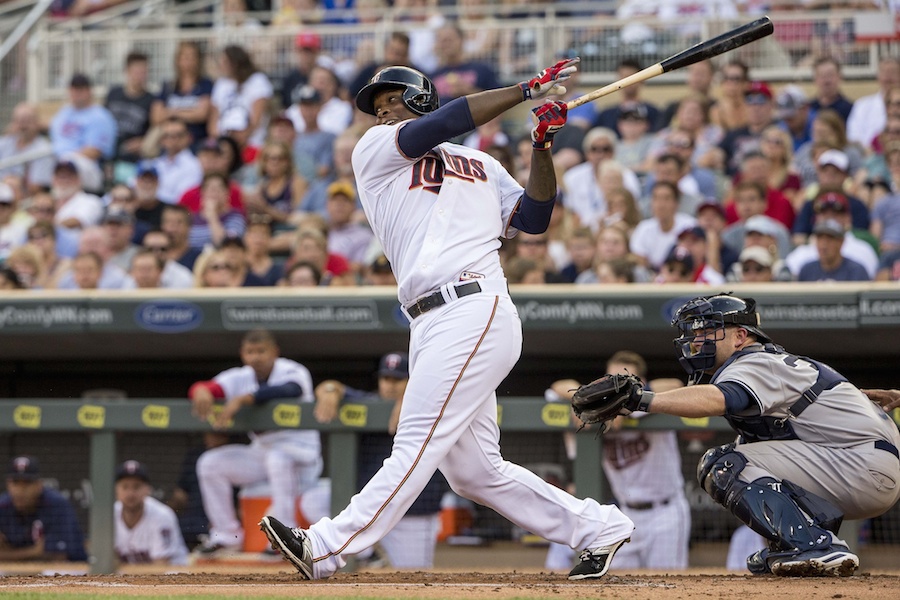 For some context, his 162-game paces according to BaseballReference.com are 27 home runs, 99 RBIs and 234 strikeouts. And considering the MLB record for strikeouts in a single season is 223, by Mark Reynolds in 2009, there is some cause for concern. Just six batters in MLB history have struck out 200 or more times in a season — and they’ve all come between 2008 and now. But it would be a lot more worrisome if Sano weren't also taking plenty of walks. Sano’s current pace is 117 walks over a full season of playing time — a 17.6 percent rate. And while his numbers would surely see some form of regression over a full season worth of play, he’s walking at a rate that this year just two big league hitters have sustained as “qualified” hitters. That is, batters who have 3.1 plate appearances per team games played. Those two batters are Paul Goldschmidt (18.4 percent) and Bryce Harper (18.7 percent). That’s some incredible company. In this age where average fans have become more and more engaged and aware with what prospects are doing, it’s no surprise that teams have been keenly aware of what Sano is capable of from the get-go. He hasn’t been pitched like a rookie; rather, he’s been pitched like a 10-year veteran, and the incredible thing is that he’s more than held his own. Here’s some evidence: Fangraphs keeps track of which batters face what pitches, both in terms of frequency and at what velocity. So for instance, among Twins big league regulars, Kurt Suzuki has seen the most fastballs at a 64.6 percent rate. And given Suzuki’s offensive struggles, that makes sense. Joe Mauer is right behind him at 62.6 percent, and it’s clear that opposing pitchers want to see if his bat is still quick enough to keep up with the heat. Given that he’s hitting .277/.339/.394, the jury is still out on that one. But to scroll all the way down the list brings us to some interesting cases. Demoted designated hitter Kennys Vargas saw fastballs just 51.7 percent of the time, as pitchers tried to — and succeeded — at getting him to chase offspeed and breaking stuff both in and out of the zone. But at the bottom of the list is our subject, Mr. Sano, who has seen fastballs just 48.6 percent of the time. Manager Paul Molitor isn’t surprised by this. “I think that people have enough contacts in the game to have an idea of how to go about facing him from the first day he got here,” Molitor said. “They still try to get him to expand (the zone) a little bit, whether it’s high velocity or breaking pitches off the plate.” The velocity comment is interesting, and it checks out with the data. No Twins regular is seeing a harder average fastball than Sano at 93.5 mph. Molitor added: “(Sano) hasn’t had a lot of hits as of late, but his at-bats have still been really good.” One would have to conclude they’ve been remarkably good, given his relative age and level of experience on the game’s grandest stage. Backup catcher Eric Fryer, who was never a teammate of Sano’s in the minors but is well regarded for his defense, game-calling and handling of pitchers, has been impressed by the approach taken by the young hitter. “He’s doing very well,” Fryer said. “Even his walks, you know sometimes you think he’s not doing great, but he had that big walk in Oakland off Sonny Gray that set up Trevor Plouffe’s grand slam which pretty much won the game. Him being disciplined to take pitches when he needs to take ‘em and swing when he needs to is great.” Fryer’s intel is helpful when considering how pitchers and catchers would like to attack such a young and talented hitter, especially considering how he can also tap into his knowledge as a minor league lifer who has seen how these guys have been handled. “From what I remember from Double-A, there’s definitely more fastballs in fastball counts,” Fryer added. “So I think that’s a big adjustment as you go to Triple-A — which Sano skipped — and the big leagues is being able to see breaking pitches in fastball counts consistently.” Fryer wasn’t surprised when presented with the numbers regarding Sano being pitched carefully. “I mean, they’ve seen he’s got some pretty good juice. They know it from batting practice,” Fryer said. “I think the word is around he can swing the bat a little bit. So a lot of times when younger guys come up, pitchers — especially veteran pitchers — are going to try and go to their offspeed and see if they can adjust to it. A lot of times, here in the big leagues, you can hit a fastball. It’s just a matter of if you can adjust to it. So I guess what they’re doing — showing more breaking pitches — is to see if he can adjust to offspeed consistently. Once he shows that, they’ll have to change their game plan a little bit.” For some added context, if Sano were a qualified batter, he’d rank 161st of 162 batters in terms of fastball percentage, behind Kendrys Morales (48.9 percent) but ahead of just Pedro Alvarez (47.6 percent). He’d also rank first in terms of fastballs seen velocity-wise, ahead of Kris Bryant (93.1 mph). And while obviously there’s wiggle room for those numbers to shake out as he plays himself into a bigger sample size, it does portray a pretty good picture of what pitchers are trying to do to him in the near or short term. To Sano’s credit, he’s also handled offspeed and breaking balls very well. According to BaseballSavant.com — a must-browse if you’re a serious baseball fan — Sano is hitting .345 (10-for-29) on breaking balls and off-speed stuff, another very encouraging sign. None of this really bothers Sano, however. “Yeah, I don’t see too many fastballs,” Sano told Cold Omaha on Friday. “I try to have a good approach every time. I try to hit the ball hard to right field. I try to work hard every day. That’s what I do.” Sano’s comments on Double-A match up with Fryer’s recollection of the level. “In Double-A, I saw a lot of fastballs,” Sano added. “A couple years ago before I was hurt, I saw a lot of fastballs. Here I don’t see too many. This is the game, you know? Power hitter. And I try to have a good approach, and try to be healthy. I’m excited to be in the game.” But is it difficult for Sano to be patient as he tries to take the league by storm with his best tool? Not really, he says. “No, it’s not hard to be patient because I played in Double-A, and a lot of pitchers there are good,” Sano said. “I try to have the same patience I had in Double-A, taking my walks.” Nobody is more confident in Sano’s ability than he is, as he coolly added, ”If a pitcher makes a mistake and gives me a good pitch, I can hit a bomb or something like that. Or I can take a ball. Here the pitchers don’t make a lot of mistakes. Sometimes they walk me. And I’ll take the walk. Every at-bat I try to take a good at-bat.” This article originally appeared at Cold Omaha here; please click through to support the content.
 -
WARNE: Pitchers Hesitant to Challenge Patient Sano
Brandon Warne posted a blog entry in BW on the Beat
t’s hard to envision Miguel Sano rewarding the Twins any more than he has through 18 big league games. The 22 year old has hit .283/.405/.517 in 74 plate appearances, and eight of his 17 hits have gone for extra bases. Strikeouts were always going to be an issue in the short term, and that’s been no exception as he’s fanned in 35.1 percent of his plate appearances so far. For some context, his 162-game paces according to BaseballReference.com are 27 home runs, 99 RBIs and 234 strikeouts. And considering the MLB record for strikeouts in a single season is 223, by Mark Reynolds in 2009, there is some cause for concern. Just six batters in MLB history have struck out 200 or more times in a season — and they’ve all come between 2008 and now. But it would be a lot more worrisome if Sano wasn’t also taking plenty of walks. Sano’s current pace is 117 walks over a full season of playing time — a 17.6 percent rate. And while his numbers would surely see some form of regression over a full season worth of play, he’s walking at a present rate that just two big league hitters have sustained as “qualified” hitters. That is, batters who have 3.1 plate appearances per team games played. Those two batters are Paul Goldschmidt (18.4 percent) and Bryce Harper (18.7 percent). That’s some incredible company. In this age where average fans have become more and more engaged and aware with what prospects are doing, it’s no surprise that teams have been keenly aware of what Sano is capable of from the get-go. He hasn’t been pitched like a rookie; rather, he’s been pitched like a 10-year veteran, and the incredible thing is that he’s more than held his own. Here’s some evidence: Fangraphs keeps track of what batters face what pitches, both in terms of frequency and at what velocity. So for instance, among Twins big league regulars, Kurt Suzuki has seen the most fastballs at a 64.6 percent rate. And given Suzuki’s offensive struggles, that makes sense. Joe Mauer is right behind him at 62.6 percent, and it’s clear that opposing pitchers want to see if his bat is still quick enough to keep up with the heat. Given that he’s hitting .277/.339/.394, the jury is still out on that one. But to scroll all the way down the list brings us to some interesting cases. Demoted designated hitter Kennys Vargas saw fastballs just 51.7 percent of the time, as pitchers tried to — and succeeded — at getting him to chase offspeed and breaking stuff both in and out of the zone. But at the bottom of the list is our subject, Mr. Sano, who has seen fastballs just 48.6 percent of the time. Manager Paul Molitor isn’t surprised by this. “I think that people have enough contacts in the game to have an idea of how to go about facing him from the first day he got here,” Molitor said. “They still try to get him to expand (the zone) a little bit, whether it’s high velocity of breaking pitches off the plate.” The velocity comment is interesting, and it checks out with the data. No Twins regular is seeing a harder average fastball than Sano at 93.5 mph. Molitor added: “(Sano) hasn’t had a lot of hits as of late, but his at-bats have still been really good.” One would have to conclude they’ve been remarkably good, given his relative age and level of experience on the game’s grandest stage. Backup catcher Eric Fryer, who was never a teammate of Sano’s in the minors but is well regarded for his defense, game-calling and handling of pitchers, has been impressed by the approach taken by the young hitter. “He’s doing very well,” Fryer said. “Even his walks, you know sometimes you think he’s not doing great, but he had that big walk in Oakland off Sonny Gray that set up Trevor Plouffe’s grand slam which pretty much won the game. Him being disciplined to take pitches when he needs to take ‘em and swing when he needs to is great.” Fryer’s intel is helpful when considering how pitchers and catchers would like to attack such a young and talented hitter, especially considering how he can also tap into his knowledge as a minor league lifer who has seen how these guys have been handled. “From what I remember from Double-A, there’s definitely more fastballs in fastball counts,” Fryer added. “So I think that’s a big adjustment as you go to Triple-A — which Sano skipped — and the big leagues is being able to see breaking pitches in fastball counts consistently.” Fryer wasn’t surprised when presented with the numbers regarding Sano being pitched carefully. “I mean, they’ve seen he’s got some pretty good juice. They know it from batting practice,” Fryer said. “I think the word is around he can swing the bat a little bit. So a lot of times when younger guys come up, pitchers — especially veteran pitchers — are going to try and go to their offspeed and see if they can adjust to it. A lot of times, here in the big leagues, you can hit a fastball. It’s just a matter of if you can adjust to it. So I guess what they’re doing — showing more breaking pitches — is to see if he can adjust to offspeed consistently. Once he shows that, they’ll have to change their gameplan a little bit.” For some added context, if Sano were a qualified batter, he’d rank 161st of 162 batters in terms of fastball percentage, behind Kendrys Morales (48.9 percent) but ahead of just Pedro Alvarez (47.6 percent). He’d also rank first in terms of fastballs seen velocity-wise, ahead of Kris Bryant (93.1 mph). And while obviously there’s wiggle room for those numbers to shake out as he plays himself into a bigger sample size, it does portray a pretty good picture of what pitchers are trying to do to him in the near or short term. To Sano’s credit, he’s also handled offspeed and breaking balls very well. According to BaseballSavant.com — a must-browse if you’re a serious baseball fan — Sano is hitting .345 (10-for-29) on breaking balls and offspeed stuff, another very encouraging sign. None of this really bothers Sano, however. “Yeah, I don’t see too many fastballs,” Sano told Cold Omaha on Friday. “I try to have a good approach every time. I try to hit the ball hard to right field. I try to work hard every day. That’s what I do.” Sano’s comments on Double-A match up with Fryer’s recollection of the level. “In Double-A, I saw a lot of fastballs,” Sano added. “A couple years ago before I was hurt, I saw a lot of fastballs. Here I don’t see too many. This is the game, you know? Power hitter. And I try to have a good approach, and try to be healthy. I’m excited to be in the game.” But is it difficult for Sano to be patient as he tries to take the league by storm with his best tool? Not really, he says. “No, it’s not hard to be patient because I played in Double-A, and a lot of pitchers there are good,” Sano said. “I try to have the same patience I had in Double-A, taking my walks.” Nobody is more confident in Sano’s ability than he is, as he coolly added, ”If a pitcher makes a mistake and gives me a good pitch, I can hit a bomb or something like that. Or I can take a ball. Here the pitchers don’t make a lot of mistakes. Sometimes they walk me. And I’ll take the walk. Every at-bat I try to take a good at-bat.” This article originally appeared at Cold Omaha here; please click through to support the content. -
PODCAST: Brandon Warne and Cole DeVries - Breakdown, Episode 1.o
Brandon Warne commented on Brandon Warne's blog entry in BW on the Beat
(Link updated to reflect re-uploading) -
PODCAST: Brandon Warne and Cole DeVries - Breakdown, Episode 1.o
Brandon Warne posted a blog entry in BW on the Beat
Hey friends. Just writing to let you know that I've started a podcast with former Twins righty Cole DeVries called "The Breakdown" and we recorded our first episode on Thursday. Check it out! http://www.spreaker.com/user/sbarnard4/breakdown-w-brandon-and-cole-de-vries-ep Heads up: The first minute is a bit goofy, but it gets better after that. -
Article: Three Trades The Twins Must Make Now, Part I
Brandon Warne replied to Thrylos's topic in Twins Daily Front Page News
I know for a fact Terry Ryan is a big Zobrist fan -- who wouldn't be -- but just can't see this being enough. I have thought about Santana and how he'd be a fit for the A's, but just can't see them taking on another shaky shortstop with Semien in tow. This deal doesn't add up for me. -
When a team plays drastically better from one year to the next, it usually means one of a couple of things. With some teams, it means a number of key offseason acquisitions have paid off. For others, especially if the roster is largely intact from a season ago, it suggests that some guys — usually younger players — have taken a step forward and elevated their game to a new level.Considering the complexion of this current Twins roster, the latter seems far more likely. Sure, players from the outside have (Torii Hunter, Blaine Boyer) and will (Ervin Santana) continue to shape the way this team evolves, but this is largely the same roster from a season ago, and most of the changes that’ll come after the break will come from within. So who has improved the most on this Twins roster from a season ago? Here’s a look at my personal picks, in order. Feel free to differ if you like, via Twitter with @Brandon_Warne or @ColdOmahaMN, or in the comments section below. 1. Trevor May May’s growth has been nothing short of amazing. It’s not just because he’s got really nice peripheral numbers, or that his ERA — while still a bit high at 4.16 — is so much under what he did in his shot of espresso last year with the Twins. It’s because May has completely reversed a trend, at least so far, that had plagued him through his entire development as a rather highly-regarded prospect. Walks were always part of the deal with May, who peaked as the No. 51 prospect on Baseball Prospectus’ pre-2012 list. May walked 4.4 batters per nine innings in his seven minor league seasons, and 4.3 per nine in his 10 appearances with the big club last year as well. The stuff was raw and powerful, but the belief was always that his command would hold him down as a back-end horse who could eat up innings with lots of strikeouts and walks. Or in the worst case, he’d profile as a late-inning power reliever. That all has changed this season, as May told Cold Omaha in an exclusive earlier this year, as he decided to just not be afraid anymore. May has attacked the strike zone in much the same way — though not to the same exact effect — as Phil Hughes did a season ago, and the results have been quite good. May has walked just 1.9 batters per nine innings this season and has walked more than two batters in just three of 18 starts so far. He did the same last year in his nine starts with the Twins and six times in 18 starts at Rochester. The change-up (16.1 percent whiff rate, .637 OPS against) has been big for May, as has been a new-found reliance on a two-seam fastball, which has not only filled up the strike zone, but induced a healthy number of grounders as well. He’ll need to continue to avoid walks and miss a few more bats to reach his xFIP and FIP, but he’s already improved by leaps and bounds in just a short time in the majors. 2. Aaron Hicks Hicks looks like an entirely different player, and it’s in pretty much every fashion. He’s ascended into the defensive player he was always advertised to be, making highlight-reel catches with relative ease while showing off a powerful and accurate arm. He’s also started to drive the ball more, and in recent games has seen his usually precise batting eye return in the form of adding walks back into the mix. Add it up and you’ve got a batter hitting .266/.333/.387 with a higher walk rate (9.4 percent) than Joe Mauer. The AL average center fielder has a wOBA of .318; Hicks’ is .319. Don’t be surprised if this is your starting right fielder next season. 3. Kyle Gibson Gibson’s growth on the whole is pretty unremarkable, as his 2014 and 2015 seasons are mostly indistinguishable when you look at peripherals. He’s slashed his ERA a run and a half, but he’s done so with better strand rates, nearly an extra strikeout per nine innings and virtually the same batted-ball profile. But where Gibson’s growth has come most has been in recent starts, at least in my opinion. Gibson has posted 59 strikeouts in his last 10 starts, spanning 65.1 innings for an 8.1 K/9 mark in that span. That’s well above anything Gibson has done for any extended stretch of time, and could be him turning the corner and becoming a very nice No. 2 starter, especially when used in conjunction with his fantastic penchant for inducing grounders. Gibson’s growth pitch-wise has come with the slider, which is inducing swinging strikes at a 20.7 percent rate — a career high. The change-up has also taken steps forward (17.9 percent this year, 13.8 last), and his two-seamer has a ground ball rate of 65.5 percent. He’s on the upswing, folks. 4. Brian Dozier It’s hard to envision a scenario in which Dozier has become better than his grand breakout in 2014, yet here we are. Dozier faded a bit in the second half in 2014, but if you were to extrapolate his numbers out evenly to 700 plate appearances, he played at a 4.8 fWAR pace a season ago, and is at a pace for a 5.9 mark this season. He’s not walking quite as much as last year, but you can see it simply in his triple-slash. Last year he hit .242/.345/.416; this year, he’s at .256/.328/.513. It remains to be seen if there’s another second half slowdown in his future, but right now his blistering pace is ahead of last year’s tremendous run, overall. This is a star, perhaps verging on superstar. 5. Tommy Milone Neither Milone nor Sam Fuld did much for their respective clubs after last season’s trade found them on the move. But unlike Fuld, who has continued to flounder in Oakland this season, Milone has taken his game to a new level and has now made decisions awfully difficult for the Twins brass in the first half. Milone sprung out of the gate before faltering pretty hard and getting sent to Rochester, but that stretch at Triple-A seems to have ignited something inside the lefty, as he’s pitched like a man possessed since returning. Milone allowed just three earned runs in his five-start stay in Rochester (0.70 ERA), and since returning in early June has slashed his ERA by nearly two full runs. Milone returned to a 4.55 ERA but has that all the way down to 2.83 after this seven-start stretch: 1.84 ERA, .236/.284/.345 opponents’ line and 32-11 K/BB ratio in 44 innings. In other words, he’s averaging pitching well into the sixth inning, taking pressure off an otherwise-distressed Twins bullpen while giving the club a quality start in the last six straight. Milone has never been, nor will he ever be, overpowering but for now he seems to have a stronger hold on his starting spot than rotation mate Mike Pelfrey, who is a free agent at season’s end. Also considered: Eduardo Nunez, Ryan Pressly, Pelfrey This article appeared originally at Cold Omaha here; please consider clicking through to support the content. Click here to view the article
-
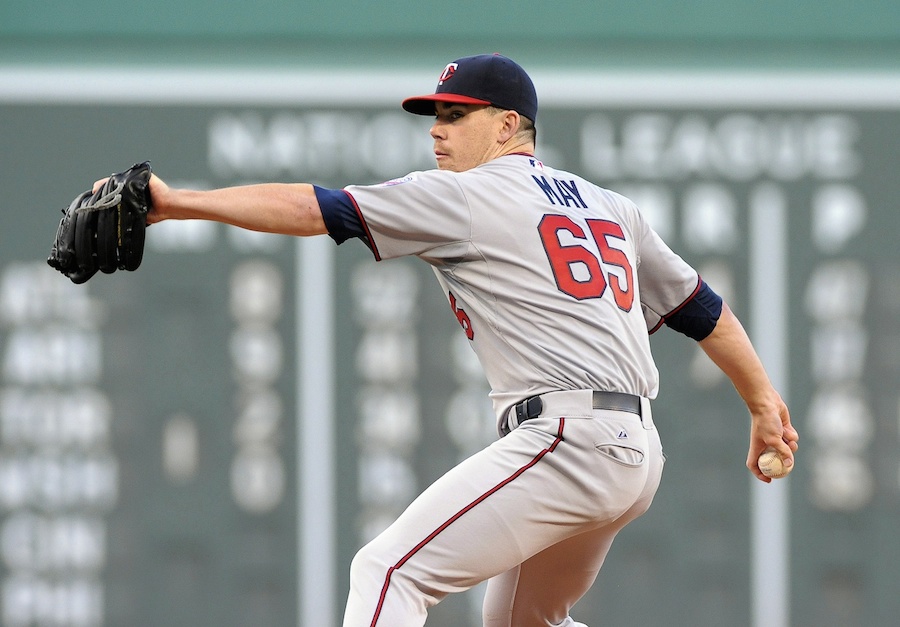 Considering the complexion of this current Twins roster, the latter seems far more likely. Sure, players from the outside have (Torii Hunter, Blaine Boyer) and will (Ervin Santana) continue to shape the way this team evolves, but this is largely the same roster from a season ago, and most of the changes that’ll come after the break will come from within. So who has improved the most on this Twins roster from a season ago? Here’s a look at my personal picks, in order. Feel free to differ if you like, via Twitter with @Brandon_Warne or @ColdOmahaMN, or in the comments section below. 1. Trevor May May’s growth has been nothing short of amazing. It’s not just because he’s got really nice peripheral numbers, or that his ERA — while still a bit high at 4.16 — is so much under what he did in his shot of espresso last year with the Twins. It’s because May has completely reversed a trend, at least so far, that had plagued him through his entire development as a rather highly-regarded prospect. Walks were always part of the deal with May, who peaked as the No. 51 prospect on Baseball Prospectus’ pre-2012 list. May walked 4.4 batters per nine innings in his seven minor league seasons, and 4.3 per nine in his 10 appearances with the big club last year as well. The stuff was raw and powerful, but the belief was always that his command would hold him down as a back-end horse who could eat up innings with lots of strikeouts and walks. Or in the worst case, he’d profile as a late-inning power reliever. That all has changed this season, as May told Cold Omaha in an exclusive earlier this year, as he decided to just not be afraid anymore. May has attacked the strike zone in much the same way — though not to the same exact effect — as Phil Hughes did a season ago, and the results have been quite good. May has walked just 1.9 batters per nine innings this season and has walked more than two batters in just three of 18 starts so far. He did the same last year in his nine starts with the Twins and six times in 18 starts at Rochester. The change-up (16.1 percent whiff rate, .637 OPS against) has been big for May, as has been a new-found reliance on a two-seam fastball, which has not only filled up the strike zone, but induced a healthy number of grounders as well. He’ll need to continue to avoid walks and miss a few more bats to reach his xFIP and FIP, but he’s already improved by leaps and bounds in just a short time in the majors. 2. Aaron Hicks Hicks looks like an entirely different player, and it’s in pretty much every fashion. He’s ascended into the defensive player he was always advertised to be, making highlight-reel catches with relative ease while showing off a powerful and accurate arm. He’s also started to drive the ball more, and in recent games has seen his usually precise batting eye return in the form of adding walks back into the mix. Add it up and you’ve got a batter hitting .266/.333/.387 with a higher walk rate (9.4 percent) than Joe Mauer. The AL average center fielder has a wOBA of .318; Hicks’ is .319. Don’t be surprised if this is your starting right fielder next season. 3. Kyle Gibson Gibson’s growth on the whole is pretty unremarkable, as his 2014 and 2015 seasons are mostly indistinguishable when you look at peripherals. He’s slashed his ERA a run and a half, but he’s done so with better strand rates, nearly an extra strikeout per nine innings and virtually the same batted-ball profile. But where Gibson’s growth has come most has been in recent starts, at least in my opinion. Gibson has posted 59 strikeouts in his last 10 starts, spanning 65.1 innings for an 8.1 K/9 mark in that span. That’s well above anything Gibson has done for any extended stretch of time, and could be him turning the corner and becoming a very nice No. 2 starter, especially when used in conjunction with his fantastic penchant for inducing grounders. Gibson’s growth pitch-wise has come with the slider, which is inducing swinging strikes at a 20.7 percent rate — a career high. The change-up has also taken steps forward (17.9 percent this year, 13.8 last), and his two-seamer has a ground ball rate of 65.5 percent. He’s on the upswing, folks. 4. Brian Dozier It’s hard to envision a scenario in which Dozier has become better than his grand breakout in 2014, yet here we are. Dozier faded a bit in the second half in 2014, but if you were to extrapolate his numbers out evenly to 700 plate appearances, he played at a 4.8 fWAR pace a season ago, and is at a pace for a 5.9 mark this season. He’s not walking quite as much as last year, but you can see it simply in his triple-slash. Last year he hit .242/.345/.416; this year, he’s at .256/.328/.513. It remains to be seen if there’s another second half slowdown in his future, but right now his blistering pace is ahead of last year’s tremendous run, overall. This is a star, perhaps verging on superstar. 5. Tommy Milone Neither Milone nor Sam Fuld did much for their respective clubs after last season’s trade found them on the move. But unlike Fuld, who has continued to flounder in Oakland this season, Milone has taken his game to a new level and has now made decisions awfully difficult for the Twins brass in the first half. Milone sprung out of the gate before faltering pretty hard and getting sent to Rochester, but that stretch at Triple-A seems to have ignited something inside the lefty, as he’s pitched like a man possessed since returning. Milone allowed just three earned runs in his five-start stay in Rochester (0.70 ERA), and since returning in early June has slashed his ERA by nearly two full runs. Milone returned to a 4.55 ERA but has that all the way down to 2.83 after this seven-start stretch: 1.84 ERA, .236/.284/.345 opponents’ line and 32-11 K/BB ratio in 44 innings. In other words, he’s averaging pitching well into the sixth inning, taking pressure off an otherwise-distressed Twins bullpen while giving the club a quality start in the last six straight. Milone has never been, nor will he ever be, overpowering but for now he seems to have a stronger hold on his starting spot than rotation mate Mike Pelfrey, who is a free agent at season’s end. Also considered: Eduardo Nunez, Ryan Pressly, Pelfrey This article appeared originally at Cold Omaha here; please consider clicking through to support the content.
 -
WARNE: The Most Improved Twins From the First Half
Brandon Warne posted a blog entry in BW on the Beat
When a team plays drastically better from one year to the next, it usually means one of a couple things. With some teams, it means a number of key offseason acquisitions have paid off. For others, especially if the roster is largely intact from a season ago, it suggests that some guys — usually younger players — have taken a step forward and elevated their game to a new level. Considering the complexion of this current Twins roster, the latter seems far more likely. Sure, players from the outside have (Torii Hunter, Blaine Boyer) and will (Ervin Santana) continue to shape the way this team evolves, but this is largely the same roster from a season ago, and most of the changes that’ll come after the break will come from within. So who has improved the most on this Twins roster from a season ago? Here’s a look at my personal picks, in order. Feel free to differ if you like, via Twitter with @Brandon_Warne or @ColdOmahaMN, or in the comments section below. 1. Trevor May May’s growth has been nothing short of amazing. It’s not just because he’s got really nice peripheral numbers, or that his ERA — while still a bit high at 4.16 — is so much under what he did in his shot of espresso last year with the Twins. It’s because May has completely reversed a trend, at least so far, that has plagued him through his entire development as a rather highly-regarded prospect. Walks were always part of the deal with May, who peaked as the No. 51 prospect on Baseball Prospectus’ pre-2012 list. May walked 4.4 batters per nine innings in his seven minor league seasons, and 4.3 per nine in his 10 appearances with the big club last year as well. The stuff was raw and powerful, but the belief was always that his command would hold him down as a back-end horse who could eat up innings with lots of strikeouts and walks. Or in the worst case, he’d profile as a late-inning power reliever. That all has changed this season, as May told Cold Omaha in an exclusive earlier this year that he decided to just not be afraid anymore. May has attacked the strike zone much in the same way — though not to the same exact effect — as Phil Hughes did a season ago, and the results have been quite good. May has walked just 1.9 batters per nine innings this season and has walked more than two batters in just three of 18 starts so far. He did the same last year in his nine starts with the Twins and six times in 18 starts at Rochester. The changeup (16.1 percent whiff rate, .637 OPS against) has been big for May, as has been a newfound reliance on a two-seam fastball, which has not only filled up the strike zone, but induced a healthy number of grounders as well. He’ll need to continue to avoid walks and miss a few more bats to reach his xFIP and FIP, but he’s already improved by leaps and bounds in just a short time in the majors. 2. Aaron Hicks Hicks looks like an entirely different player, and it’s in pretty much every fashion. He’s ascended into the defensive player he was always advertised to be, making highlight-reel catches with relative ease while showing off a powerful and accurate arm. He’s also started to drive the ball more, and in recent games has seen his usually precise batting eye return in the form of adding walks back into the mix. Add it up and you’ve got a batter hitting .266/.333/.387 with a higher walk rate (9.4 percent) than Joe Mauer. The AL average center fielder has a wOBA of .318; Hicks’ is .319. Don’t be surprised if this is your starting right fielder next season. 3. Kyle Gibson Gibson’s growth on the whole is pretty unremarkable, as his 2014 and 2015 seasons are mostly indifferentiable when you look at peripherals. He’s slashed his ERA a run and a half, but he’s done so with better strand rates, nearly an extra strikeout per nine innings and virtually the same batted-ball profile. But where Gibson’s growth has come most has been in recent starts, at least in my opinion. Gibson’s posted 59 strikeouts in his last 10 starts, spanning 65.1 innings for an 8.1 K/9 mark in that span. That’s well above anything Gibson has done for any extended stretch of time, and could be him turning the corner and becoming a very nice No. 2 starter, especially when used in conjunction with his fantastic penchant for inducing grounders. Gibson’s growth pitch-wise has come with the slider, which is inducing swinging strikes at a 20.7 percent rate — a career high. The changeup has also taken steps forward (17.9 percent this year, 13.8 last), and his two-seamer has a groundball rate of 65.5 percent. He’s on the upswing, folks. 4. Brian Dozier It’s hard to envision a scenario in which Dozier has become better than his grand breakout in 2014, but yet here we are. Dozier faded a bit in the second half in 2014, but if you were to extrapolate his numbers out evenly to 700 plate appearances, he played at a 4.8 fWAR pace a season ago, and is at a pace for a 5.9 mark this season. He’s not walking quite as much as last year, but you can see it simply in his triple-slash. Last year he hit .242/.345/.416; this year, he’s at .256/.328/.513. It remains to be seen if there’s another second half slowdown in his future, but right now his blistering pace is ahead of last year’s tremendous run overall. This is a star, perhaps verging on superstar. 5. Tommy Milone Neither Milone nor Sam Fuld did much for their respective clubs after last season’s trade found them on the move. But unlike Fuld, who has continued to flounder in Oakland this season, Milone has taken his game to a new level and has now made decisions awfully difficult for the Twins brass in the first half. Milone sprung out of the gates before faltering pretty hard and getting sent to Rochester, but that stretch at Triple-A seems to have ignited something inside the lefty, as he’s pitched like a man possessed since returning. Milone allowed just three earned runs in his five-start stay in Rochester (0.70 ERA), and since returning in early June has slashed his ERA by nearly two full runs. Milone returned to a 4.55 ERA but has that all the way down to 2.83 after this seven-start stretch: 1.84 ERA, .236/.284/.345 opponents’ line and 32-11 K/BB ratio in 44 innings. In other words, he’s averaging pitching well into the sixth inning, taking pressure off an otherwise-distressed Twins bullpen while giving the club a quality start in the last six straight. Milone has never been, nor will he ever be overpowering, but for now he seems to have a stronger hold on his starting spot than rotation mate Mike Pelfrey, who is a free agent at season’s end. Also considered: Eduardo Nunez, Ryan Pressly, Pelfrey This article appeared originally at Cold Omaha here; please consider clicking through to support the content.



