



Brandon Warne
-
Posts
1,486 -
Joined
-
Last visited
Content Type
Profiles
News
Minnesota Twins Videos
2026 Minnesota Twins Top Prospects Ranking
2022 Minnesota Twins Draft Picks
Minnesota Twins Free Agent & Trade Rumors, Notes, & Tidbits
Guides & Resources
2023 Minnesota Twins Draft Picks
The Minnesota Twins Players Project
2024 Minnesota Twins Draft Picks
2025 Minnesota Twins Draft Pick Tracker
2026 Minnesota Twins Draft Tracker: Picks & Bonuses
Forums
Blogs
Events
Store
Downloads
Gallery
Everything posted by Brandon Warne
-

NEW PODCAST: Midwest Swing, Episode 1.o - Cold Omaha Podcast Network
Brandon Warne posted a blog entry in BW on the Beat
THE FIRST EPISODE OF MIDWEST SWING: Subscribe: https://t.co/P0BmNXKlyq -or- Listen: https://t.co/S8tIhcHPwH -
PODCAST - The Breakdown - Ep 19 - Where do we stand?
Brandon Warne posted a blog entry in BW on the Beat
Brandon Warne, Cole DeVries and Tom Schreier discuss the offseason moves in the AL Central. Where do the Twins stack up in the division for 2016? http://www.spreaker.com/user/sbarnard4/the-breakdown-ep-19-where-do-we-stand -
PODCAST: The Breakdown - Ep 18 - Why are we talking about the Cubs?
Brandon Warne posted a blog entry in BW on the Beat
Matt Trueblood of Baseball Prospectus joins Brandon Warne, Cole DeVries, and Tom Schreier to break down some of the latest MLB offseason moves. https://www.spreaker.com/user/sbarnard4/the-breakdown-ep-18-why-are-we-talking-a -
PODCAST: The Breakdown - Ep 17 - Back for the Very First Time
Brandon Warne posted a blog entry in BW on the Beat
Brandon Warne, Cole DeVries, and Tom Schreier are back to discuss the latest Twins' offseason moves. They also talk about the dynamic between sports personalities and the media and cliches in sports. https://www.spreaker.com/user/sbarnard4/the-breakdown-ep-17-back-for-the-very-fi -
The Minnesota Twins made a flurry of moves over the past few days that have left fans and media types buzzing with anticipation not only for the 2016 season, but also the rest of this offseason. It’s not even Thanksgiving yet, and the Twins have already made or have the wheels in motion on three moves that had direct 40-man and even 25-man roster implications. The trade to move Chris Herrmann to the Diamondbacks was mostly borne out of a necessity to clear roster space. Even with catcher Eric Fryer outrighted off the 40-man roster at the end of the season, the odds that Herrmann would stick through the winter with the Twins were slim. The Twins flipped him to Arizona and got a toolsy, old-for-his level outfielder in Daniel Palka, who might remind some of Adam Brett Walker with his big-time power and propensity for the strikeout. Both of those characteristics are a bit more tempered with Palka, though he did post the California League’s only 20-20 season in 2015 with 29 home runs and 24 stolen bases. Again, he was old for the level — just a half year above the average age of other High-A contemporaries according to Baseball Reference — and might not have a long-term position, but it’s still an ample return for the less-than-stellar game tape Herrmann had put up in parts of four seasons with the big league club.The other two moves were surprising. The Twins won the bidding for Korean first baseman Byung-ho Park, a 29-year-old masher who has hit 105 home runs over the past two seasons in the KBO. For reference, former Twins left-hander Andrew Albers went to the KBO immediately after the Twins took him off the roster, and NL Rookie of the Year finalist Jung Ho Kang of the Pirates was a nine-year veteran of the KBO before he came over to the big leagues. Kang and Park were teammates with the Nexen Heroes from 2011 to 2014. Kang was coming off an incredible season with nearly a 1.200 OPS with the Heroes when he made the defection a year ago and put together a solid .287/.355/.461 season for Pittsburgh this year as a 28 year old. It sounds as though Park might be seeking a four-year deal perhaps in excess of $20 million, but that seems like a reasonable cost and risk for a player who brings big-time power potential to the table. Park has posted OPS figures north of 1.000 the last three years, with tons of swing-and-miss in his game as well as walks to go with the obvious power. Speed doesn’t appear to be a part of his game, and defensively the folks at Baseball America suggested he was a 55 defensive first baseman (on the 20-80 scouting scale) and perhaps a 40 left fielder. We’ll get into this a more in a bit, but it’ll be interesting to see how he’s handled on that side of the game. The other stunning move was the club shipping Aaron Hicks to the Yankees for catcher John Ryan Murphy. Hicks had a breakthrough in 2015, hitting .256/.323/.398 while showing his loud tools far more frequently than he ever did in his first two seasons. For as good as he looked at times, Hicks’ breakout was still mostly confined to one month — a 1.001 OPS in July — and still primarily from the right side of the plate. In other words, the short side of what would typically be a platoon guy. Yankee Stadium might play up his left-handed swing a bit, and the tools are still here for a star — he’s still younger than when Carlos Gomez broke out with the Brewers, for instance — but the Twins saw a need and struck by getting Murphy. Murphy is just 24, and is late to the game as a catcher who has seen his abilities behind the plate get better each season. Various reports suggest he’s adequate defensively right now, with a pretty good arm and framing and perhaps a need to improve his blocking. He should still in time be able to grade out as slightly above average, and he makes enough contact to be a decent hitter. There isn’t a ton of power — more against lefties than righties — but against same-sided pitchers he did manage to show a better ability to draw walks and hit for average. It’s all in small sample sizes anyway, so it’s hard to really get a read on what he’d look like in, say, 400 plate appearances. It’s all for good reason, too, as the Yankees have Brian McCann ahead of him and Austin Romine and Gary Sanchez behind him. As ESPN’s Keith Law said, it was a good old-fashioned deal that worked for both sides. The Yankees took a chance on potential, while the Twins went the safer route with a stronger floor. Sound familiar? With all these wheels in motion, there are countless storylines that are affected on the existing team. Let’s take a look at each player (possibly) affected, and what it may mean: Kurt Suzuki – Clearly Suzuki is going to see a reduction in his workload, and by the end of the year could be a strict backup if things go perfectly for Murphy. Ultimately, all that really matters is that Suzuki won’t reach the 485 plate appearances needed for his $6 million option in 2017 to vest. It wasn’t going to anyway; with just Fryer and Herrmann behind him Suzuki still got just 479 plate appearances in 2015. Joe Mauer – The sun could be setting on Mauer as a full-time regular, barring a Justin Morneau-style resurrection. With playing time needed for Park and the uncertain futures of a couple other corner-type players, Mauer could see a reduced role in 2016. Then again, if he continues to be one of the best on the team at getting on base, it’s certainly possible he’ll get another 500-plus plate appearances. Miguel Sano – Just how serious are the Twins about Sano playing outfield? That’s the next most important domino to fall, and maybe the club doesn’t even know the answer yet. Could it possibly just be posturing for…. Trevor Plouffe – …a possible Plouffe trade? It’s unclear how much public perception really matters in trade talks, but if the Twins are steadfast in their belief that Sano can handle an outfield corner and that they’ll keep Plouffe well into his arbitration years, well, that’s what they want other teams to believe, too. There’ll be no reason at all to dip into the free agent market for an outfielder if the Twins keep that configuration, though they’d have to be awfully sure Sano can handle the outfield, even if it’s just until the team ultimately moves or moves on from Plouffe, who is eligible for free agency after 2017. Plouffe’s evolution as a solid hitter with big power for the position, as well as his continued development defensively has made this a good problem for the Twins. Eddie Rosario – The only real dilemma for Rosario is where he’ll play. He could literally play any of the three outfield positions, with center seeming to be the least talked about and least likely. Still, most people I’ve talked to believe he could handle it, and it’s clear he’s got the arm to play just about anywhere. Byron Buxton – The pervasive belief from national types is that the Hicks trade opens up center field for Buxton, but the Twins most likely won’t make the same mistake twice. That is, handing the job to a raw but talented youngster who is in over his head. He’ll have ample opportunity to take the job in spring training, but if he’s in Rochester in early April, it wouldn’t be a stunner. Max Kepler – Local sources believe that the club is in love with Kepler’s future, and Law said in an exclusive chat on Thursday that he views the German as having star potential. The odds of him cracking the opening day roster seem remote at this juncture — mostly due to how recently all of his development and skills have come together — but there’s a real chance that his coming of age made the Twins more comfortable with a deal including Hicks. Oswaldo Arcia – Arcia’s sort of a forgotten man, though it’s for good reason given his defensive inadequacies and the fact that he hit sub-.200 while in Rochester for the bulk of the 2015 season. He doesn’t appear to be long for the organization one way or the other — keep in mind he’s out of options this spring — but if he’s starting in right field on opening day, it wouldn’t be a complete stunner. Though that probably means Plouffe was traded and Sano is at third base. Arcia could make it as a reserve outfielder, too, with multiple options who can play center already on the roster. Danny Santana – Santana will be on the big league roster one way or the other as he’s also out of options, but there’s an outside chance he too could start on opening day in center field. After an abysmal 2015 season, it’ll be on Santana to prove he has a big league future, regardless of if it’s as a super utility or if he can settle into one position. Chances are if it’s the latter, it’s in another organization. Kennys Vargas – These offseason moves ultimately feel like the kiss of death for Vargas’ big league prospects as a member of the Twins. After a successful cup of coffee in 2014, Vargas had a very Santana-like 2015, and unlike Danny carries absolutely no value in the field. An enterprising team with a hole at DH might give the Twins a ring — Tampa Bay makes a lot of sense here — but unless he can fix holes in his swing and discipline, he’ll be an all-or-nothing pinch hitting option. There’s still potential here, though; he’ll be 25 for nearly the entire 2016 season. Josmil Pinto – Pinto is just one of three ‘catchers’ on the 40-man roster, and it’s unclear if he’s even viewed as a catcher anymore anyway. After returning from concussion issues in late August, Pinto didn’t get back behind the plate with the Red Wings and hit just .217/.288/.283 in 15 games before the Twins sent him home for the winter. If memory serves he too is out of options in 2016, and with no position flexibility and no room at catcher as the roster currently stands, he’s firmly in limbo as far as the Twins are concerned. The bat has flashed potential at times, but there’s really no hope of him playing anywhere but DH or first base if he can’t catch, and he probably doesn’t have enough juice in the stick to do that on a regular basis. He could make the Twins as a bench bat, but it just doesn’t seem too terribly likely right now. This article originated at Cold Omaha here, please consider clicking through to support the content. Click here to view the article
-
Keeping Track Of All The Moving Pieces In The Twins Offseason
Brandon Warne posted an article in Twins
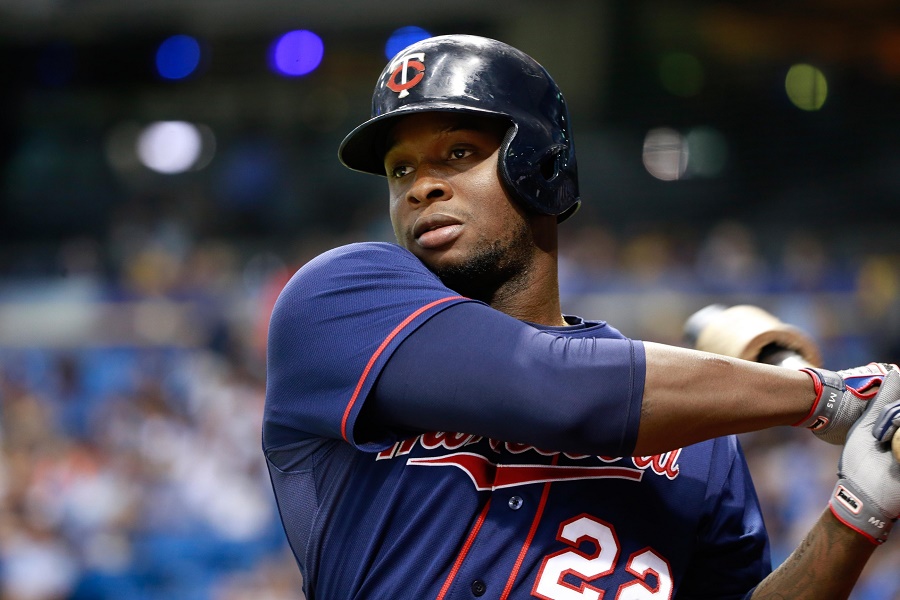 The other two moves were surprising. The Twins won the bidding for Korean first baseman Byung-ho Park, a 29-year-old masher who has hit 105 home runs over the past two seasons in the KBO. For reference, former Twins left-hander Andrew Albers went to the KBO immediately after the Twins took him off the roster, and NL Rookie of the Year finalist Jung Ho Kang of the Pirates was a nine-year veteran of the KBO before he came over to the big leagues. Kang and Park were teammates with the Nexen Heroes from 2011 to 2014. Kang was coming off an incredible season with nearly a 1.200 OPS with the Heroes when he made the defection a year ago and put together a solid .287/.355/.461 season for Pittsburgh this year as a 28 year old. It sounds as though Park might be seeking a four-year deal perhaps in excess of $20 million, but that seems like a reasonable cost and risk for a player who brings big-time power potential to the table. Park has posted OPS figures north of 1.000 the last three years, with tons of swing-and-miss in his game as well as walks to go with the obvious power. Speed doesn’t appear to be a part of his game, and defensively the folks at Baseball America suggested he was a 55 defensive first baseman (on the 20-80 scouting scale) and perhaps a 40 left fielder. We’ll get into this a more in a bit, but it’ll be interesting to see how he’s handled on that side of the game. The other stunning move was the club shipping Aaron Hicks to the Yankees for catcher John Ryan Murphy. Hicks had a breakthrough in 2015, hitting .256/.323/.398 while showing his loud tools far more frequently than he ever did in his first two seasons. For as good as he looked at times, Hicks’ breakout was still mostly confined to one month — a 1.001 OPS in July — and still primarily from the right side of the plate. In other words, the short side of what would typically be a platoon guy. Yankee Stadium might play up his left-handed swing a bit, and the tools are still here for a star — he’s still younger than when Carlos Gomez broke out with the Brewers, for instance — but the Twins saw a need and struck by getting Murphy. Murphy is just 24, and is late to the game as a catcher who has seen his abilities behind the plate get better each season. Various reports suggest he’s adequate defensively right now, with a pretty good arm and framing and perhaps a need to improve his blocking. He should still in time be able to grade out as slightly above average, and he makes enough contact to be a decent hitter. There isn’t a ton of power — more against lefties than righties — but against same-sided pitchers he did manage to show a better ability to draw walks and hit for average. It’s all in small sample sizes anyway, so it’s hard to really get a read on what he’d look like in, say, 400 plate appearances. It’s all for good reason, too, as the Yankees have Brian McCann ahead of him and Austin Romine and Gary Sanchez behind him. As ESPN’s Keith Law said, it was a good old-fashioned deal that worked for both sides. The Yankees took a chance on potential, while the Twins went the safer route with a stronger floor. Sound familiar? With all these wheels in motion, there are countless storylines that are affected on the existing team. Let’s take a look at each player (possibly) affected, and what it may mean: Kurt Suzuki – Clearly Suzuki is going to see a reduction in his workload, and by the end of the year could be a strict backup if things go perfectly for Murphy. Ultimately, all that really matters is that Suzuki won’t reach the 485 plate appearances needed for his $6 million option in 2017 to vest. It wasn’t going to anyway; with just Fryer and Herrmann behind him Suzuki still got just 479 plate appearances in 2015. Joe Mauer – The sun could be setting on Mauer as a full-time regular, barring a Justin Morneau-style resurrection. With playing time needed for Park and the uncertain futures of a couple other corner-type players, Mauer could see a reduced role in 2016. Then again, if he continues to be one of the best on the team at getting on base, it’s certainly possible he’ll get another 500-plus plate appearances. Miguel Sano – Just how serious are the Twins about Sano playing outfield? That’s the next most important domino to fall, and maybe the club doesn’t even know the answer yet. Could it possibly just be posturing for…. Trevor Plouffe – …a possible Plouffe trade? It’s unclear how much public perception really matters in trade talks, but if the Twins are steadfast in their belief that Sano can handle an outfield corner and that they’ll keep Plouffe well into his arbitration years, well, that’s what they want other teams to believe, too. There’ll be no reason at all to dip into the free agent market for an outfielder if the Twins keep that configuration, though they’d have to be awfully sure Sano can handle the outfield, even if it’s just until the team ultimately moves or moves on from Plouffe, who is eligible for free agency after 2017. Plouffe’s evolution as a solid hitter with big power for the position, as well as his continued development defensively has made this a good problem for the Twins. Eddie Rosario – The only real dilemma for Rosario is where he’ll play. He could literally play any of the three outfield positions, with center seeming to be the least talked about and least likely. Still, most people I’ve talked to believe he could handle it, and it’s clear he’s got the arm to play just about anywhere. Byron Buxton – The pervasive belief from national types is that the Hicks trade opens up center field for Buxton, but the Twins most likely won’t make the same mistake twice. That is, handing the job to a raw but talented youngster who is in over his head. He’ll have ample opportunity to take the job in spring training, but if he’s in Rochester in early April, it wouldn’t be a stunner. Max Kepler – Local sources believe that the club is in love with Kepler’s future, and Law said in an exclusive chat on Thursday that he views the German as having star potential. The odds of him cracking the opening day roster seem remote at this juncture — mostly due to how recently all of his development and skills have come together — but there’s a real chance that his coming of age made the Twins more comfortable with a deal including Hicks. Oswaldo Arcia – Arcia’s sort of a forgotten man, though it’s for good reason given his defensive inadequacies and the fact that he hit sub-.200 while in Rochester for the bulk of the 2015 season. He doesn’t appear to be long for the organization one way or the other — keep in mind he’s out of options this spring — but if he’s starting in right field on opening day, it wouldn’t be a complete stunner. Though that probably means Plouffe was traded and Sano is at third base. Arcia could make it as a reserve outfielder, too, with multiple options who can play center already on the roster. Danny Santana – Santana will be on the big league roster one way or the other as he’s also out of options, but there’s an outside chance he too could start on opening day in center field. After an abysmal 2015 season, it’ll be on Santana to prove he has a big league future, regardless of if it’s as a super utility or if he can settle into one position. Chances are if it’s the latter, it’s in another organization. Kennys Vargas – These offseason moves ultimately feel like the kiss of death for Vargas’ big league prospects as a member of the Twins. After a successful cup of coffee in 2014, Vargas had a very Santana-like 2015, and unlike Danny carries absolutely no value in the field. An enterprising team with a hole at DH might give the Twins a ring — Tampa Bay makes a lot of sense here — but unless he can fix holes in his swing and discipline, he’ll be an all-or-nothing pinch hitting option. There’s still potential here, though; he’ll be 25 for nearly the entire 2016 season. Josmil Pinto – Pinto is just one of three ‘catchers’ on the 40-man roster, and it’s unclear if he’s even viewed as a catcher anymore anyway. After returning from concussion issues in late August, Pinto didn’t get back behind the plate with the Red Wings and hit just .217/.288/.283 in 15 games before the Twins sent him home for the winter. If memory serves he too is out of options in 2016, and with no position flexibility and no room at catcher as the roster currently stands, he’s firmly in limbo as far as the Twins are concerned. The bat has flashed potential at times, but there’s really no hope of him playing anywhere but DH or first base if he can’t catch, and he probably doesn’t have enough juice in the stick to do that on a regular basis. He could make the Twins as a bench bat, but it just doesn’t seem too terribly likely right now. This article originated at Cold Omaha here, please consider clicking through to support the content.
 -
WARNE: Keeping Track of All the Moving Pieces in the Twins Offseason
Brandon Warne posted a blog entry in BW on the Beat
The Minnesota Twins made a flurry of moves over the past few days that have left fans and media types buzzing with anticipation not only for the 2016 season, but also the rest of this offseason. It’s not even Thanksgiving yet, and the Twins have already made or have the wheels in motion on three moves that had direct 40-man and even 25-man roster implications. The trade to move Chris Herrmann to the Diamondbacks was mostly borne out of a necessity to clear roster space. Even with catcher Eric Fryer outrighted off the 40-man roster at the end of the season, the odds that Herrmann would stick through the winter with the Twins were slim. The Twins flipped him to Arizona and got a toolsy, old-for-his level outfielder in Daniel Palka, who might remind some of Adam Brett Walker with his big-time power and propensity for the strikeout. Both of those characteristics are a bit more tempered with Palka, though he did post the California League’s only 20-20 season in 2015 with 29 home runs and 24 stolen bases. Again, he was old for the level — just a half year above the average age of other High-A contemporaries according to Baseball Reference — and might not have a long-term position, but it’s still an ample return for the less-than-stellar game tape Herrmann had put up in parts of four seasons with the big league club. The other two moves were surprising. The Twins won the bidding for Korean first baseman Byung-ho Park, a 29-year-old masher who has hit 105 home runs over the past two seasons in the KBO. For reference, former Twins left-hander Andrew Albers went to the KBO immediately after the Twins took him off the roster, and NL Rookie of the Year finalist Jung Ho Kang of the Pirates was a nine-year veteran of the KBO before he came over to the big leagues. Kang and Park were teammates with the Nexen Heroes from 2011 to 2014. Kang was coming off an incredible season with nearly a 1.200 OPS with the Heroes when he made the defection a year ago and put together a solid .287/.355/.461 season for Pittsburgh this year as a 28 year old. It sounds as though Park might be seeking a four-year deal perhaps in excess of $20 million, but that seems like a reasonable cost and risk for a player who brings big-time power potential to the table. Park has posted OPS figures north of 1.000 the last three years, with tons of swing-and-miss in his game as well as walks to go with the obvious power. Speed doesn’t appear to be a part of his game, and defensively the folks at Baseball America suggested he was a 55 defensive first baseman (on the 20-80 scouting scale) and perhaps a 40 left fielder. We’ll get into this a more in a bit, but it’ll be interesting to see how he’s handled on that side of the game. The other stunning move was the club shipping Aaron Hicks to the Yankees for catcher John Ryan Murphy. Hicks had a breakthrough in 2015, hitting .256/.323/.398 while showing his loud tools far more frequently than he ever did in his first two seasons. For as good as he looked at times, Hicks’ breakout was still mostly confined to one month — a 1.001 OPS in July — and still primarily from the right side of the plate. In other words, the short side of what would typically be a platoon guy. Yankee Stadium might play up his left-handed swing a bit, and the tools are still here for a star — he’s still younger than when Carlos Gomez broke out with the Brewers, for instance — but the Twins saw a need and struck by getting Murphy. Murphy is just 24, and is late to the game as a catcher who has seen his abilities behind the plate get better each season. Various reports suggest he’s adequate defensively right now, with a pretty good arm and framing and perhaps a need to improve his blocking. He should still in time be able to grade out as slightly above average, and he makes enough contact to be a decent hitter. There isn’t a ton of power — more against lefties than righties — but against same-sided pitchers he did manage to show a better ability to draw walks and hit for average. It’s all in small sample sizes anyway, so it’s hard to really get a read on what he’d look like in, say, 400 plate appearances. It’s all for good reason, too, as the Yankees have Brian McCann ahead of him and Austin Romine and Gary Sanchez behind him. As ESPN’s Keith Law said, it was a good old-fashioned deal that worked for both sides. The Yankees took a chance on potential, while the Twins went the safer route with a stronger floor. Sound familiar? With all these wheels in motion, there are countless storylines that are affected on the existing team. Let’s take a look at each player (possibly) affected, and what it may mean: Kurt Suzuki – Clearly Suzuki is going to see a reduction in his workload, and by the end of the year could be a strict backup if things go perfectly for Murphy. Ultimately, all that really matters is that Suzuki won’t reach the 485 plate appearances needed for his $6 million option in 2017 to vest. It wasn’t going to anyway; with just Fryer and Herrmann behind him Suzuki still got just 479 plate appearances in 2015. Joe Mauer – The sun could be setting on Mauer as a full-time regular, barring a Justin Morneau-style resurrection. With playing time needed for Park and the uncertain futures of a couple other corner-type players, Mauer could see a reduced role in 2016. Then again, if he continues to be one of the best on the team at getting on base, it’s certainly possible he’ll get another 500-plus plate appearances. Miguel Sano – Just how serious are the Twins about Sano playing outfield? That’s the next most important domino to fall, and maybe the club doesn’t even know the answer yet. Could it possibly just be posturing for…. Trevor Plouffe – …a possible Plouffe trade? It’s unclear how much public perception really matters in trade talks, but if the Twins are steadfast in their belief that Sano can handle an outfield corner and that they’ll keep Plouffe well into his arbitration years, well, that’s what they want other teams to believe, too. There’ll be no reason at all to dip into the free agent market for an outfielder if the Twins keep that configuration, though they’d have to be awfully sure Sano can handle the outfield, even if it’s just until the team ultimately moves or moves on from Plouffe, who is eligible for free agency after 2017. Plouffe’s evolution as a solid hitter with big power for the position, as well as his continued development defensively has made this a good problem for the Twins. Eddie Rosario – The only real dilemma for Rosario is where he’ll play. He could literally play any of the three outfield positions, with center seeming to be the least talked about and least likely. Still, most people I’ve talked to believe he could handle it, and it’s clear he’s got the arm to play just about anywhere. Byron Buxton – The pervasive belief from national types is that the Hicks trade opens up center field for Buxton, but the Twins most likely won’t make the same mistake twice. That is, handing the job to a raw but talented youngster who is in over his head. He’ll have ample opportunity to take the job in spring training, but if he’s in Rochester in early April, it wouldn’t be a stunner. Max Kepler – Local sources believe that the club is in love with Kepler’s future, and Law said in an exclusive chat on Thursday that he views the German as having star potential. The odds of him cracking the opening day roster seem remote at this juncture — mostly due to how recently all of his development and skills have come together — but there’s a real chance that his coming of age made the Twins more comfortable with a deal including Hicks. Oswaldo Arcia – Arcia’s sort of a forgotten man, though it’s for good reason given his defensive inadequacies and the fact that he hit sub-.200 while in Rochester for the bulk of the 2015 season. He doesn’t appear to be long for the organization one way or the other — keep in mind he’s out of options this spring — but if he’s starting in right field on opening day, it wouldn’t be a complete stunner. Though that probably means Plouffe was traded and Sano is at third base. Arcia could make it as a reserve outfielder, too, with multiple options who can play center already on the roster. Danny Santana – Santana will be on the big league roster one way or the other as he’s also out of options, but there’s an outside chance he too could start on opening day in center field. After an abysmal 2015 season, it’ll be on Santana to prove he has a big league future, regardless of if it’s as a super utility or if he can settle into one position. Chances are if it’s the latter, it’s in another organization. Kennys Vargas – These offseason moves ultimately feel like the kiss of death for Vargas’ big league prospects as a member of the Twins. After a successful cup of coffee in 2014, Vargas had a very Santana-like 2015, and unlike Danny carries absolutely no value in the field. An enterprising team with a hole at DH might give the Twins a ring — Tampa Bay makes a lot of sense here — but unless he can fix holes in his swing and discipline, he’ll be an all-or-nothing pinch hitting option. There’s still potential here, though; he’ll be 25 for nearly the entire 2016 season. Josmil Pinto – Pinto is just one of three ‘catchers’ on the 40-man roster, and it’s unclear if he’s even viewed as a catcher anymore anyway. After returning from concussion issues in late August, Pinto didn’t get back behind the plate with the Red Wings and hit just .217/.288/.283 in 15 games before the Twins sent him home for the winter. If memory serves he too is out of options in 2016, and with no position flexibility and no room at catcher as the roster currently stands, he’s firmly in limbo as far as the Twins are concerned. The bat has flashed potential at times, but there’s really no hope of him playing anywhere but DH or first base if he can’t catch, and he probably doesn’t have enough juice in the stick to do that on a regular basis. He could make the Twins as a bench bat, but it just doesn’t seem too terribly likely right now. This article originated at Cold Omaha here, please consider clicking through to support the content. -
PODCAST: The Breakdown - Ep 16 - Slow Week
Brandon Warne commented on Brandon Warne's blog entry in BW on the Beat
Again, thank you! There hasn't been much feedback and admittedly that makes it feel like it goes in one ear and out the other. Pun intended, I guess. Thank you, thank you, thank you! -
PODCAST: The Breakdown - Ep 16 - Slow Week
Brandon Warne commented on Brandon Warne's blog entry in BW on the Beat
This is really nice to read. Thank you! Cole's candidness has been really, really refreshing. -
The guys discuss the Twins' busy offseason so far and share what they think the team might look like going into next season. http://www.spreaker.com/user/sbarnard4/the-breakdown-ep-16-slow-week
-
PODCAST: The Breakdown - Ep 15 - Welcome Home, Cole!
Brandon Warne posted a blog entry in BW on the Beat
Cole is back from his safari in Africa! The guys talk about that, Torii Hunter's retirement, speculate on veteran free agents to possibly replace Hunter's leadership, answer your Twitter questions, and more. https://www.spreaker.com/user/sbarnard4/the-breakdown-ep-15-welcome-home-cole -
The Blank Check For Matt Wieters
Brandon Warne commented on Ted Schwerzler 's blog entry in Off The Baggy
Easy soldier. Re-read what you posted. -
Cole is still on safari in Africa, so Zach Bennett and Tom Schreier are joining Brandon again to discuss the World Series, the Wolves' first game, Flip Saunders' legacy, Torii Hunter's retirement, and a lot more. Check out Zach and Tom's work at @ColdOmahaMN. http://www.spreaker.com/user/sbarnard4/the-breakdown-ep-14-save-it
-
PODCAST: The Breakdown - Ep 13 - The Replacements
Brandon Warne posted a blog entry in BW on the Beat
With Cole gone on a safari, Zach Bennett and Tom Schreier of Cold Omaha join Brandon in studio to discuss Timberwolves and Lynx basketball and, of course, the Twins. https://www.spreaker.com/user/sbarnard4/the-breakdown-ep-13-the-replacements -
Cole and Brandon discuss the latest in MLB playoff action, including Jose Bautista's crazy bat flip, share Chris Colabello's amazing story about how a game of poker saved his baseball career, Cole's dog, Baybee is in the studio causing trouble, the guys talk about winter baseball and Cole's experience with Los Tigres de Aragua in the Venezuelan League, and, as always, answer your Twitter questions. https://www.spreaker.com/user/sbarnard4/the-breakdown-ep-12-winter-ball
-
Zimmermann is scary as hell. Bottom 1/3 in swinging strike percent this year.
-
Yep, just prefer Heyward.
-
It would not stun me to see Heyward get 10/$200. And yes, I would give him that.
-
Surprises are great. They crop up when you least expect them and can frequently be a harbinger of the days to come. And if the 2015 season is any indicator, things are about to be a lot more fun in Twins Territory. This season was dotted with debuts of players that fans have been awaiting for years. First Eddie Rosario, then Miguel Sano, Byron Buxton, even Tyler Duffey and finally Max Kepler. Even without the highly-anticipated debut of Jose Berrios — no doubt not far down the road — the Twins assimilated a group of high-end prospects that by and large hit the ground running. Sano won’t win the Rookie of the Year award, but in the words of Trevor May he injected some life into a team at midseason that was desperately looking for some punch.Sano and Rosario helped lock down a batting order that saw Kurt Suzuki bat in the middle on 37 occasions. Rosario, along with an awakened Aaron Hicks, an improved Torii Hunter and Buxton helped transform the outfield defense from downright brutal to around league average, depending on what defensive stats you believe. That’ll improve as Hunter sees less time in the outfield next year. And I know what you’re saying; what if he doesn’t come back? Well, that would also qualify as less time in the outfield next year. There’s still room for the outfield defense to improve even more, and that’s huge for a team that has quite a few prominent fly ball pitchers, like Glen Perkins, Casey Fien, Trevor May and Phil Hughes. Hicks’ emergence all but solidified that he’ll be starting in center or right field come Opening Day 2016. He hit .259/.333/.432 in 291 post-July 3 plate appearances — after coming off the disabled list — and flashed the loud tools he possesses far more frequently than he did in his first two big league seasons. Rosario also showed loud tools but is perhaps a bit too exploitable outside of the strike zone to sustain his 2015 success. He won’t have a Danny Santana-like regression, but it’s also worth noting that he finished the season with a .289 on-base percentage; four points lower than Hunter and what would be the 10th-worst mark in baseball had he accumulated enough plate appearances to qualify. He fell 28 plate appearances short. A disappointing development for the Twins in 2015 was the backsliding of Oswaldo Arcia, who put together 19 uninspiring games for the big club before getting injured and subsequently sent to Rochester once healthy. The time with the Red Wings was a catastrophe, as he hit just .199/.257/.372 with an 82-18 K/BB ratio. With the amount of outfield depth that has emerged as big league ready or close to it, Arcia is alarmingly close to being an organizational afterthought. The Twins have likely made up their mind on what’ll happen with him, but it wouldn’t be surprising if his future hinges on what Hunter decides. Arcia is out of options in 2016 and could in theory serve as the fourth outfielder with multiple center field options on the roster as is. Another disappointing development with the 2015 Twins was the obvious regression of Santana, who clearly couldn’t replicate the .405 BABIP-fueled 2014 line he put together. Santana’s value completely bottomed out, as he hit just .215/.241/.291, with all three triple-slash marks at least 100 points off his 2014 values. At this point, his best shot to carve out a role is as a super utility guy. It’s as if someone was saying that a year ago or something, but I don’t recall for sure … The 2015 season was the season of breakouts and improvements for the Twins, mostly. May and Kyle Gibson headlined rotation improvements, while Eduardo Escobar had a red-hot second half, and Hicks finally showed the Twins he was ready to handle a full-time role. But for all the improvements, there were significant fallbacks for players which hampered the Twins’ efforts, especially in the second half. The Twins got literally nothing from Ervin Santana in the first half due to a suspension, while the second half saw virtually nothing from Ricky Nolasco and not a whole lot from Phil Hughes, who struggled with velocity and home runs throughout the season. Glen Perkins was perfect in save opportunities in the first half and headed to Cincinnati as an All Star; then did the following in the second stanza: 7.32 ERA, 1.88 WHIP and 1.068 OPS against. Kevin Jepsen, and to some extent May, filled in admirably down the stretch in the late innings, but the Twins need Perkins to be right going into 2016. It’s also not positive that Joe Mauer’s first mention comes nearly 800 words into this piece. Mauer hit just .265/.338/.380 — considerably worse than the average AL first baseman — and at times struggled just as badly on defense as offense. With three years and $69 million left on his deal, the Twins are surely hoping he’s got a Justin Morneau-like resurgence in him. Unfortunately, the Twins aren’t moving to Coors Field anytime soon. To strip the season down to nuts and bolts, the club was basically fantastic in May (20-7, .741 winning percentage) and meh otherwise (63-72, .467). That boils down to a 76-win pace over a full season, which is worth noting not because those wins in May can be taken away, but that it’s pretty close to how advanced statistics — such as BaseRuns, etc. — felt the Twins would and should have played this season. There’s plenty to be said for a plucky bunch proving the pundits wrong, but moving into the offseason the Twins’ brass should take the opportunity to make a few moves to better position the team into the future. Bringing Hunter back at a reduced role and salary would be tolerable, but on both fronts would probably have to be considerable on both ends. Addressing the starting rotation is probably not much of a priority for the first time in nearly a half decade, as there are quite literally up to eight sensible options for next season’s rotation. The bullpen will experience considerable turnover no matter what happens, but most obvious long-term answers will come from within for this bunch. The team may look to add an arm or two, but it’ll probably be like they usually do, which is on the minor league side. It worked with Jared Burton, Casey Fien and countless others — even Blaine Boyer this year — so the club isn’t likely to break the mold there. The one thing the club absolutely has to do is address the catching position. A veritable plethora of options will be at Terry Ryan’s fingers, whether he chooses to go the platoon route (A.J. Pierzynski and Brayan Pena make sense there) or if he wants to drop a ton of money (Matt Wieters) or resources (maybe San Francisco’s Andrew Susac?). But one thing is clear: the Twins need to supplement Suzuki, who was named to the Sporting News’ Anti-All Star Team for 2015. Between regressing significantly offensively and defensively — no starting catcher threw out a lower percentage of attempted base thieves — it became clear in 2015 that the Twins need to make an upgrade. The one other thing that would make some sense is for the Twins to pursue a top-end talent. The Twins roster is made up almost exclusively of solid players at their respective positions, but bringing in a top-tier talent like Jason Heyward makes a lot of sense if the club is willing to spend the money. I can hear you scoffing, but if the Twins want to take the next step, it makes sense to drop money in the team while players like Buxton, Rosario and Sano are in the cheap portions of their contracts. I’d place the likelihood at less than one percent the Twins sign anyone to a huge deal, but I’m just suggesting that’s what I’d do. The 2015 Twins season was a rousing success, but I think the brass needs to be proactive to keep from slipping backwards a bit in 2016. Will they do it? We have a long, cold winter ahead to find out. Cold Omaha is now on 92KQRS and 93x, catch this content where it originated here. Click here to view the article
- 29 replies
-
- 3
-

-
- miguel sano
- eddie rosario
- (and 3 more)
-
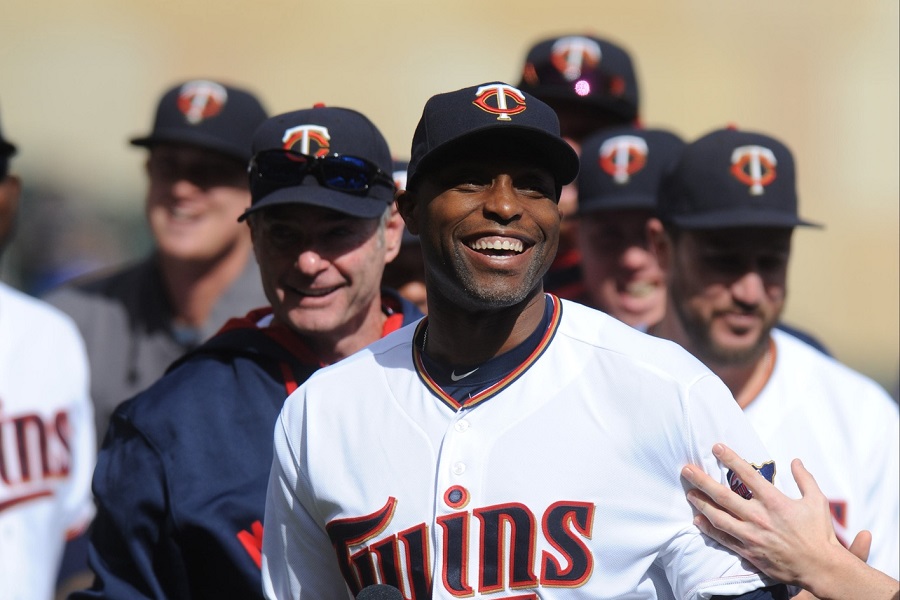 Sano and Rosario helped lock down a batting order that saw Kurt Suzuki bat in the middle on 37 occasions. Rosario, along with an awakened Aaron Hicks, an improved Torii Hunter and Buxton helped transform the outfield defense from downright brutal to around league average, depending on what defensive stats you believe. That’ll improve as Hunter sees less time in the outfield next year. And I know what you’re saying; what if he doesn’t come back? Well, that would also qualify as less time in the outfield next year. There’s still room for the outfield defense to improve even more, and that’s huge for a team that has quite a few prominent fly ball pitchers, like Glen Perkins, Casey Fien, Trevor May and Phil Hughes. Hicks’ emergence all but solidified that he’ll be starting in center or right field come Opening Day 2016. He hit .259/.333/.432 in 291 post-July 3 plate appearances — after coming off the disabled list — and flashed the loud tools he possesses far more frequently than he did in his first two big league seasons. Rosario also showed loud tools but is perhaps a bit too exploitable outside of the strike zone to sustain his 2015 success. He won’t have a Danny Santana-like regression, but it’s also worth noting that he finished the season with a .289 on-base percentage; four points lower than Hunter and what would be the 10th-worst mark in baseball had he accumulated enough plate appearances to qualify. He fell 28 plate appearances short. A disappointing development for the Twins in 2015 was the backsliding of Oswaldo Arcia, who put together 19 uninspiring games for the big club before getting injured and subsequently sent to Rochester once healthy. The time with the Red Wings was a catastrophe, as he hit just .199/.257/.372 with an 82-18 K/BB ratio. With the amount of outfield depth that has emerged as big league ready or close to it, Arcia is alarmingly close to being an organizational afterthought. The Twins have likely made up their mind on what’ll happen with him, but it wouldn’t be surprising if his future hinges on what Hunter decides. Arcia is out of options in 2016 and could in theory serve as the fourth outfielder with multiple center field options on the roster as is. Another disappointing development with the 2015 Twins was the obvious regression of Santana, who clearly couldn’t replicate the .405 BABIP-fueled 2014 line he put together. Santana’s value completely bottomed out, as he hit just .215/.241/.291, with all three triple-slash marks at least 100 points off his 2014 values. At this point, his best shot to carve out a role is as a super utility guy. It’s as if someone was saying that a year ago or something, but I don’t recall for sure … The 2015 season was the season of breakouts and improvements for the Twins, mostly. May and Kyle Gibson headlined rotation improvements, while Eduardo Escobar had a red-hot second half, and Hicks finally showed the Twins he was ready to handle a full-time role. But for all the improvements, there were significant fallbacks for players which hampered the Twins’ efforts, especially in the second half. The Twins got literally nothing from Ervin Santana in the first half due to a suspension, while the second half saw virtually nothing from Ricky Nolasco and not a whole lot from Phil Hughes, who struggled with velocity and home runs throughout the season. Glen Perkins was perfect in save opportunities in the first half and headed to Cincinnati as an All Star; then did the following in the second stanza: 7.32 ERA, 1.88 WHIP and 1.068 OPS against. Kevin Jepsen, and to some extent May, filled in admirably down the stretch in the late innings, but the Twins need Perkins to be right going into 2016. It’s also not positive that Joe Mauer’s first mention comes nearly 800 words into this piece. Mauer hit just .265/.338/.380 — considerably worse than the average AL first baseman — and at times struggled just as badly on defense as offense. With three years and $69 million left on his deal, the Twins are surely hoping he’s got a Justin Morneau-like resurgence in him. Unfortunately, the Twins aren’t moving to Coors Field anytime soon. To strip the season down to nuts and bolts, the club was basically fantastic in May (20-7, .741 winning percentage) and meh otherwise (63-72, .467). That boils down to a 76-win pace over a full season, which is worth noting not because those wins in May can be taken away, but that it’s pretty close to how advanced statistics — such as BaseRuns, etc. — felt the Twins would and should have played this season. There’s plenty to be said for a plucky bunch proving the pundits wrong, but moving into the offseason the Twins’ brass should take the opportunity to make a few moves to better position the team into the future. Bringing Hunter back at a reduced role and salary would be tolerable, but on both fronts would probably have to be considerable on both ends. Addressing the starting rotation is probably not much of a priority for the first time in nearly a half decade, as there are quite literally up to eight sensible options for next season’s rotation. The bullpen will experience considerable turnover no matter what happens, but most obvious long-term answers will come from within for this bunch. The team may look to add an arm or two, but it’ll probably be like they usually do, which is on the minor league side. It worked with Jared Burton, Casey Fien and countless others — even Blaine Boyer this year — so the club isn’t likely to break the mold there. The one thing the club absolutely has to do is address the catching position. A veritable plethora of options will be at Terry Ryan’s fingers, whether he chooses to go the platoon route (A.J. Pierzynski and Brayan Pena make sense there) or if he wants to drop a ton of money (Matt Wieters) or resources (maybe San Francisco’s Andrew Susac?). But one thing is clear: the Twins need to supplement Suzuki, who was named to the Sporting News’ Anti-All Star Team for 2015. Between regressing significantly offensively and defensively — no starting catcher threw out a lower percentage of attempted base thieves — it became clear in 2015 that the Twins need to make an upgrade. The one other thing that would make some sense is for the Twins to pursue a top-end talent. The Twins roster is made up almost exclusively of solid players at their respective positions, but bringing in a top-tier talent like Jason Heyward makes a lot of sense if the club is willing to spend the money. I can hear you scoffing, but if the Twins want to take the next step, it makes sense to drop money in the team while players like Buxton, Rosario and Sano are in the cheap portions of their contracts. I’d place the likelihood at less than one percent the Twins sign anyone to a huge deal, but I’m just suggesting that’s what I’d do. The 2015 Twins season was a rousing success, but I think the brass needs to be proactive to keep from slipping backwards a bit in 2016. Will they do it? We have a long, cold winter ahead to find out. Cold Omaha is now on 92KQRS and 93x, catch this content where it originated here.
 -
Surprises are great. They crop up when you least expect them and can frequently be a harbinger of the days to come. And if the 2015 season is any indicator, things are about to be a lot more fun in Twins Territory. This season was dotted with debuts of players that fans have been awaiting for years. First Eddie Rosario, then Miguel Sano, Byron Buxton, even Tyler Duffey and finally Max Kepler. Even without the highly-anticipated debut of Jose Berrios — no doubt not far down the road — the Twins assimilated a group of high-end prospects that by and large hit the ground running. Sano won’t win the Rookie of the Year award, but in the words of Trevor May he injected some life into a team at midseason that was desperately looking for some punch. Sano and Rosario helped lock down a batting order that saw Kurt Suzuki bat in the middle on 37 occasions. Rosario, along with an awakened Aaron Hicks, an improved Torii Hunter and Buxton helped transform the outfield defense from downright brutal to around league average, depending on what defensive stats you believe. That’ll improve as Hunter sees less time in the outfield next year. And I know what you’re saying; what if he doesn’t come back? Well, that would also qualify as less time in the outfield next year. There’s still room for the outfield defense to improve even more, and that’s huge for a team that has quite a few prominent fly ball pitchers, like Glen Perkins, Casey Fien, Trevor May and Phil Hughes. Hicks’ emergence all but solidified that he’ll be starting in center or right field come Opening Day 2016. He hit .259/.333/.432 in 291 post-July 3 plate appearances — after coming off the disabled list — and flashed the loud tools he possesses far more frequently than he did in his first two big league seasons. Rosario also showed loud tools but is perhaps a bit too exploitable outside of the strike zone to sustain his 2015 success. He won’t have a Danny Santana-like regression, but it’s also worth noting that he finished the season with a .289 on-base percentage; four points lower than Hunter and what would be the 10th-worst mark in baseball had he accumulated enough plate appearances to qualify. He fell 28 plate appearances short. A disappointing development for the Twins in 2015 was the backsliding of Oswaldo Arcia, who put together 19 uninspiring games for the big club before getting injured and subsequently sent to Rochester once healthy. The time with the Red Wings was a catastrophe, as he hit just .199/.257/.372 with an 82-18 K/BB ratio. With the amount of outfield depth that has emerged as big league ready or close to it, Arcia is alarmingly close to being an organizational afterthought. The Twins have likely made up their mind on what’ll happen with him, but it wouldn’t be surprising if his future hinges on what Hunter decides. Arcia is out of options in 2016 and could in theory serve as the fourth outfielder with multiple center field options on the roster as is. Another disappointing development with the 2015 Twins was the obvious regression of Santana, who clearly couldn’t replicate the .405 BABIP-fueled 2014 line he put together. Santana’s value completely bottomed out, as he hit just .215/.241/.291, with all three triple-slash marks at least 100 points off his 2014 values. At this point, his best shot to carve out a role is as a super utility guy. It’s as if someone was saying that a year ago or something, but I don’t recall for sure … The 2015 season was the season of breakouts and improvements for the Twins, mostly. May and Kyle Gibson headlined rotation improvements, while Eduardo Escobar had a red-hot second half, and Hicks finally showed the Twins he was ready to handle a full-time role. But for all the improvements, there were significant fallbacks for players which hampered the Twins’ efforts, especially in the second half. The Twins got literally nothing from Ervin Santana in the first half due to a suspension, while the second half saw virtually nothing from Ricky Nolasco and not a whole lot from Phil Hughes, who struggled with velocity and home runs throughout the season. Glen Perkins was perfect in save opportunities in the first half and headed to Cincinnati as an All Star; then did the following in the second stanza: 7.32 ERA, 1.88 WHIP and 1.068 OPS against. Kevin Jepsen, and to some extent May, filled in admirably down the stretch in the late innings, but the Twins need Perkins to be right going into 2016. It’s also not positive that Joe Mauer’s first mention comes nearly 800 words into this piece. Mauer hit just .265/.338/.380 — considerably worse than the average AL first baseman — and at times struggled just as badly on defense as offense. With three years and $69 million left on his deal, the Twins are surely hoping he’s got a Justin Morneau-like resurgence in him. Unfortunately, the Twins aren’t moving to Coors Field anytime soon. To strip the season down to nuts and bolts, the club was basically fantastic in May (20-7, .741 winning percentage) and meh otherwise (63-72, .467). That boils down to a 76-win pace over a full season, which is worth noting not because those wins in May can be taken away, but that it’s pretty close to how advanced statistics — such as BaseRuns, etc. — felt the Twins would and should have played this season. There’s plenty to be said for a plucky bunch proving the pundits wrong, but moving into the offseason the Twins’ brass should take the opportunity to make a few moves to better position the team into the future. Bringing Hunter back at a reduced role and salary would be tolerable, but on both fronts would probably have to be considerable on both ends. Addressing the starting rotation is probably not much of a priority for the first time in nearly a half decade, as there are quite literally up to eight sensible options for next season’s rotation. The bullpen will experience considerable turnover no matter what happens, but most obvious long-term answers will come from within for this bunch. The team may look to add an arm or two, but it’ll probably be like they usually do, which is on the minor league side. It worked with Jared Burton, Casey Fien and countless others — even Blaine Boyer this year — so the club isn’t likely to break the mold there. The one thing the club absolutely has to do is address the catching position. A veritable plethora of options will be at Terry Ryan’s fingers, whether he chooses to go the platoon route (A.J. Pierzynski and Brayan Pena make sense there) or if he wants to drop a ton of money (Matt Wieters) or resources (maybe San Francisco’s Andrew Susac?). But one thing is clear: the Twins need to supplement Suzuki, who was named to the Sporting News’ Anti-All Star Team for 2015. Between regressing significantly offensively and defensively — no starting catcher threw out a lower percentage of attempted base thieves — it became clear in 2015 that the Twins need to make an upgrade. The one other thing that would make some sense is for the Twins to pursue a top-end talent. The Twins roster is made up almost exclusively of solid players at their respective positions, but bringing in a top-tier talent like Jason Heyward makes a lot of sense if the club is willing to spend the money. I can hear you scoffing, but if the Twins want to take the next step, it makes sense to drop money in the team while players like Buxton, Rosario and Sano are in the cheap portions of their contracts. I’d place the likelihood at less than one percent the Twins sign anyone to a huge deal, but I’m just suggesting that’s what I’d do. The 2015 Twins season was a rousing success, but I think the brass needs to be proactive to keep from slipping backwards a bit in 2016. Will they do it? We have a long, cold winter ahead to find out. Cold Omaha is now on 92KQRS and 93x, catch this content where it originated here.
-
PODCAST: The Breakdown - Ep 5 - Terry Ryan Interview
Brandon Warne posted a blog entry in BW on the Beat
HEY! WE finally got hold of the audio from the Terry Ryan podcast. If you haven't listened to any of these yet, start here! https://www.spreaker.com/user/sbarnard4/the-breakdown-ep-5-terry-ryan-interview -
PODCAST: The Breakdown - Ep 10 - Play the Game the Right Way
Brandon Warne posted a blog entry in BW on the Beat
Brandon and Cole discuss the Twins' doubleheader yesterday, playing the game the "right" way, baseball culture vs real life, fights in the clubhouse, justice in the game, and more. https://www.spreaker.com/user/sbarnard4/the-breakdown-ep-10-play-the-game-the-ri -
WARNE: What has Happened Since the Twins Last Won 81 Games?
Brandon Warne posted a blog entry in BW on the Beat
You can be forgiven if you don’t remember what exactly happened on Sept. 6, 2010. The Twins defeated the Royals by a 5-4 margin at Target Field. Jeff Manship got the win, Matt Capps the save and the Royals — under the direction of a man in his first year at the helm of the team named Ned Yost — fell to 57-80, 23.5 games out of first place. Give up? On that day, the Minnesota Twins won their 81st game of that season. It’s not really remarkable because the Twins won 13 more games by the end of the season and ended up playing in the first and only playoff games Target Field has ever hosted. But little did anyone know that it’d be another five-plus years before the Twins would win game No. 81 in any season after that. That feat was accomplished Monday night for this year’s team, as the Twins defeated Corey Kluber for the second time in less than a week, and basically left the Tribe’s playoff chances on life support. In an odd quirk, Manship factored (somewhat) in both games, as he warmed up for the Indians in Monday night’s game. He’s got a 0.97 ERA in 30 appearances working mostly low-leverage middle inning relief. So I thought … how about a look at what has changed since the Twins last won at least 81 games? First, let’s look at the lineup from back on that day in 2010: 1. Denard Span CF 2. Orlando Hudson 2B 3. Joe Mauer C 4. Jason Kubel RF 5. Michael Cuddyer 1B 6. Jim Thome DH 7. Delmon Young LF 8. J.J. Hardy SS 9. Matt Tolbert 3B Starting Pitcher: Kevin Slowey Other players who saw action that day include Jason Repko, who spelled Kubel in the outfield, as well as pitchers Randy Flores, Matt Guerrier, Jesse Crain and of course, Manship and Capps. Kubel and Thome both homered in the game, and future Twin Dusty Hughes threw the last 3.1 innings in relief of starter Sean O’Sullivan for the Royals in the losing effort. Man, things have changed. So what else has happened in that time frame, both in the baseball world and otherwise? Consider: Justin Morneau It can be easy to forget he was on that 2010 team before suffering the concussion that quite frankly has derailed his career since. He was never again the same with the Twins and again battled those issues this year with the Rockies. Morneau has luckily been able to come back and play 17 games in September this year with the Rockies — and hit .377/.450/.509 besides — but he most certainly faces a murky future with a $9 million mutual option looming as well as his mid-30s. It wouldn’t be stunning to see the Rockies go in another direction, unfortunately. Mauer In a twist of cruel irony, Morneau’s direct replacement at first base has been someone who has battled an all-too-familiar issue. And Mauer has gone from a superstar catcher worth every penny to a first baseman who’s merely a shadow of his former self at the plate, drawing the ire of people from all across the board who might suggest he’s soft to the fact that he was never all that good to begin with. Mauer won’t have the benefit of moving to Coors Field to get his bat back, and entering his age-33 season next year, it’s worth wondering if that’ll ever happen. The odds are clearly not in favor. Phil Hughes The Twins signed Phil Hughes from the Yankees over the winter prior to the 2014 season. What’s notable about this? Hughes started and won Game 3 of the American League Division Series in 2010 at Yankee Stadium, bouncing the Twins from their most recent playoff run. The opposing starter in that game? Free-agent-to-be lefty Brian Duensing. AL Central Every team in the AL Central has finished over .500 since the Twins last did. The White Sox were 88-74 in 2010 and 85-77 in 2012, the Tigers were at least .500 in every season but this one, the Indians were over .500 the last two seasons and everyone remembers the story of the Royals a season ago. Or perhaps even more apt, how dominant they’ve been this year. Terry Ryan The Twins former GM returned after things went sour during the Bill Smith tenure. Ryan returned after a four-season hiatus which saw Torii Hunter walk as well as the Twins dealing the likes of Johan Santana (after just four months on the job for Smith), Matt Garza (less that two months in for Smith), Carlos Gomez and, in a cruel twist of fate, Mr. Hardy as well. It’s not fair that these moves are often the hallmarks of Smith’s tenure — he also signed Max Kepler and Miguel Sano, and traded for Hardy in the first place — but it’s certainly what is remembered most. Skipper The Twins also dismissed manager Ron Gardenhire after four 90-loss seasons, replacing him with Hall of Famer and existing bench coach Paul Molitor after an exhaustive search led to interviews with the likes of (at least reportedly) Joe McEwing, DeMarlo Hale, Sandy Alomar Jr., Gene Glynn, Doug Mientkiewicz, Torey Lovullo and others. Gardenhire was the second-most tenured manager at the time of his dismissal — Angels manager Mike Scioscia stands alone — but the worst four-year stretch in franchise history was too much for the Twins brass to ignore, even with a year remaining on a two-year extension. For as bad as the last four years were under Gardenhire’s direction, he still finished his career at the helm of the Twins with a 1,068-1,039 record — 29 games over .500. The .222 playoff winning percentage still looms large in the minds of Twins fans, however. Hunter Oh yeah, he left and came back. So did Guerrier, Kubel, Jason Bartlett, Yohan Pino and … well, no, that’s about it. Even the Minnesota Vikings… …made the playoffs since the Twins last finished over .500, and did so with Christian Ponder at the helm. Christian Ponder! Four Teams… …have represented the American League in the World Series in that time frame, including the Rangers (twice), Tigers, Red Sox and the Royals. Oddly enough, just two National League teams — the Cardinals and Giants — have played in the Fall Classic. USA The Twins last won 81 games more than a full year before we remembered the 10-year anniversary of the Sept. 11 terrorist attacks. And we’re already moving onto the 15-year anniversary next year. Time flies, folks. Oh, and by the way Bin Laden was killed in 2011. USA, Part II Two Olympics have been held — London (Summer) 2012 and Sochi (Winter) 2014 — since the Twins last won 81 games. The United States was first in the medal count in London and fourth in Sochi. USA, Part III Obama won reelection. It wasn’t particularly close. Twitter Twitter has blown up since the Twins were last particularly good. There were fewer than 50 million active users when the Twins won game No. 81 in 2010; now, there are an estimated 316 million users, a more than six-fold increase. Even the Pope is on Twitter. Actually, he’s got a few accounts. Miners The Chilean miners were rescued over a month after the Twins won game No. 81 in 2010, after 69 days following the cave-in of a 121-year-old mine. Now? They’re going to be the subject of a feature film called “The 33” starring Antonio Banderas which will be released in the United States on Nov. 13, 2015. The End of the Mayan Calendar Apparently that ended on Dec. 21, 2012. The world didn’t. So we beat on, boats against the current, borne back ceaselessly into the past. Countless other world events took place, like the Boston Marathon Bombings, Pope Benedict resigning, Nelson Mandela dying and even Ebola outbreaks. All told, fans had to wait 1850 days between seeing the Twins win 81 games in a season. Was the wait worth it? I sure hope so. -
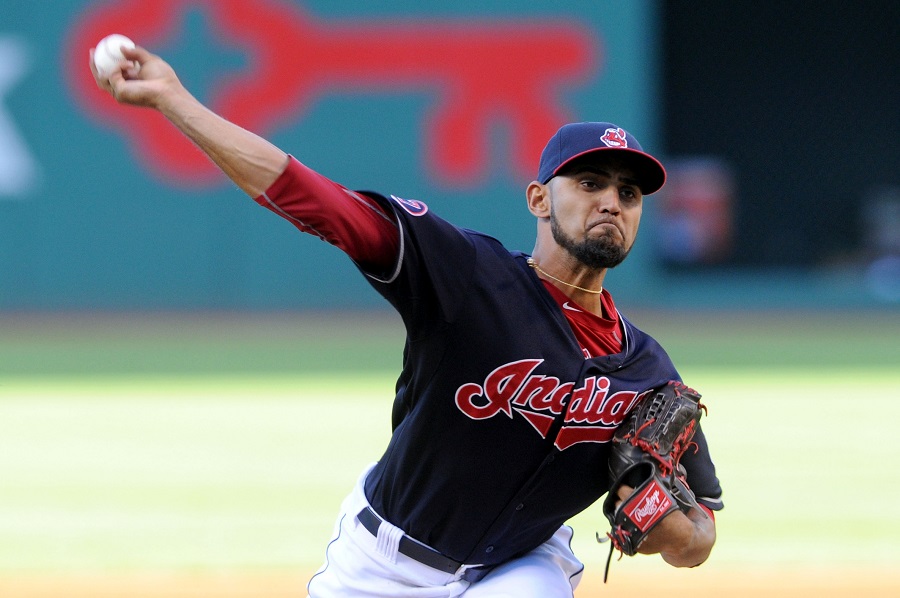 The series matchups don’t favor the Twins, either. Danny Salazar takes the mound for Cleveland Tuesday night, and he’s proven to be one of the most physically gifted pitchers in the American League, with 9.7 strikeouts per nine, a league-average groundball rate and a 3.48 ERA to go along with legit 95 mph heat. His changeup (27.2 percent whiff rate) is absolutely devastating as well. Things get no easier with Corey Kluber starting on Wednesday. And while he’s taken a bit of a step back — far less than most think, however — from last year’s Cy Young pace, he’s still had the Twins’ number all season long. He’s held them to a .085/.128/.146 batting line with a 1.38 ERA across three starts. In 26 innings, he’s allowed only 11 baserunners. Cody Anderson starts on Thursday, and while he’s a total wild card — he’s faced the Twins just once, and they smoked him — keep in mind that manager Terry Francona was willing to bump Trevor Bauer from the rotation to keep him in there. After a rough August, Anderson has a 1.78 ERA in four September starts. And if that isn’t tough enough, the upcoming four-game series with Cleveland promises to be just as tough. Not only are the odds good that the Twins will get Kluber again in the series opener on Monday, but that’s four games in a row down the stretch against the team which ranks fourth in the AL in starter ERA, first in strikeouts and second in FIP. It’s pretty easy to make an argument that this rotation and the Rays’ are in a dogfight to be the best in the AL. It’s not certain which Tigers team the Twins will find at Comerica after the first Cleveland series, but there are a couple things at play here. The Twins lost two of three to Detroit at Target Field last week, and this is probably a Tigers team that hasn’t totally forgotten the thrashing they took to end last season. The Twins took two of three from the Tigers in Detroit in mid-September last year and split a four-game series to end the season with two blowout wins when they were jockeying for position in the playoffs. The Tigers were summarily bounced from the playoffs in three straight by the Orioles and find themselves fighting to get out of the cellar at the present time with a 69-79 record — a game back of fourth-place Chicago. The other team in the Twins’ way of the end of the season is Kansas City, and while an 11-game lead wouldn’t suggest a team needing to get things together, it’s been a bit of a bumpy ride for the Royals for a while now. The Royals are 7-13 in their last 20 games and now are battling with Toronto for home-field advantage throughout the playoffs. The Royals have a two-game lead as of this writing, and of course at this point it’s unclear where that’ll stand when they invade Target Field from Oct. 2-4, but ultimately it’d be ideal for the Twins if they have nothing left to play for. The odds don’t seem to favor it, however. So what’s a realistic need for the Twins record-wise in the 13 games that remain? Fangraphs’ Cool Standings presently gives the Twins a 6.1 percent chance of making the playoffs, and an expected final record of 82-80. That’s progress from the last four seasons, but disappointing to be sure. Not many teams get to the cusp of the playoffs after a rough stretch and revel in the fact that they almost made it, even if that represents considerable growth. Cool Standings projects 89 wins for the Yankees and the top Wild Card slot; the Twins would have to finish 13-0 to match that. So … that can clearly be ruled out. The projections suggest 85.4 wins for the Astros and 82.7 for the Angels; we’ll round to 85 and 83 for mathematical ease. At 76-73, the Twins would need to go 9-4 to match that projection for the Astros — and maybe 10-3 to be safe — and that’s assuming the Halos don’t flip the script. Going 7-6 would be enough to beat their projection and the Angels’ as well, but that would only claim the third Wild Card spot which, as of this writing, doesn’t exist. In short, the Twins are going to have to go all Chris Sale on Corey Kluber and friends if they’re going to punch their ticket into October. Well, further into October. The odds don’t favor it, but that’s why they play the games. This content originated at Cold Omaha here; please consider clicking through to support it.

