



Parker Hageman
-
Posts
4,162 -
Joined
-
Last visited
-
Days Won
6
Content Type
Profiles
Minnesota Twins News, Rumors & Analysis
Minnesota Twins Videos
2026 Minnesota Twins Top Prospect Rankings
2022 Minnesota Twins Draft Picks & Signing Bonuses
Minnesota Twins Trade & Free Agent Rumors
Minnesota Twins Fan Guides & Resources
2023 Minnesota Twins Draft Picks & Signing Bonuses
2024 Minnesota Twins Draft Picks & Signing Bonuses
2025 Minnesota Twins Draft Picks & Signing Bonuses
2026 Minnesota Twins Draft Picks & Signing Bonuses
Forums
Blogs
Events
Store
Downloads
Gallery
Everything posted by Parker Hageman
-

Trevor May And Pitching From The Stretch
Parker Hageman replied to Parker Hageman's topic in Twins Daily Front Page News
Would you mind calling my wife and telling her that? -
Off the field, pitcher Trevor May likes to create music and spin tracks. However, while on the mound with the Twins this season, this DJ has been unable to find the right rhythm. Off the field, pitcher Trevor May likes to create music and spin tracks. However, while on the mound with the Twins this season, this DJ has been unable to find the right rhythm. After an impressive season in Triple-A -- where he had his lowest walk rate since 2010 -- May was called up to the Twins in August. May’s minor league success did not transfer to the major league level. So far, starting in six of his seven appearances, May has pitched 29.2 innings while turning in a 24/19 K/BB ratio to go along with 41 hits to which have cumulated in a rotund 8.38 ERA. His biggest foe, besides people who do not enjoy his sick beats, has been pitching with runners on base. To this point in his major league career, ESPN/Trumedia says he has thrown 279 pitches in both the windup and the stretch. With the bases empty, he has kept opponents to a passable .269 average with a 17/9 K/BB ratio but when he puts a runner on, opponents have lambasted him to the tune of .479 with a disheartening 7/13 K/BB ratio. To be fair, a sizable number of those walks occurred during his debut in Oakland (6 walks from the stretch), but his performance has been shakiest when the bases are clogged. An American League scout who had observed May told the Star Tribune’s LaVelle Neal that May’s “got the ammo. He needs to locate it. And his fastball is pretty flat.” May has a four-pitch mix but has yet to show he can locate his fastball consistently enough to make the other pitches effective. For most of May’s tenure in professional baseball, his ability to repeat his mechanics has been questioned as his release point will occasionally vary and his arm slot will drop. This keeps his pitches up in the zone where they can flatten out and it seems to happen to him more often from the stretch. Overall, May’s fastball has been turned into hits at a high rate from both the windup and stretch. The biggest difference is the type of contact hitters are making. Consider this: When runners are on, opponents have posted a 46% line drive rate with a .276 hard-hit average compared to a 20% line drive rate and a .135 hard-hit average from his full windup. This makes sense when you consider the locations of his fastballs when in the windup (top) versus the stretch (bottom): Getting strike one while working in the stretch has been an on-going struggle for May as he has hit the zone with fewer than half of his first-pitch pitches (46%), a far cry from when there are no baserunners (63%). What’s more, hitters have become more conservative once May is pitching from the stretch, chasing far fewer pitches out of the zone (16%) than when he is in the windup (35%). That puts the 24-year-old at quite the disadvantage. Broadcasters and media-types often talk about things “snowballing” for pitchers. Each of May’s outings so far has been more avalanche than snowball once runners step on to the bases. Every pitcher has some discrepancy between the windup and the stretch, but May’s splits are more pronounced than most thus far in his small sample size. Obviously, the stats will normalize over time as his .404 batting average on balls in play is sure to come down and he is able to corral that grotesque walk rate. Look for improvements out of May in his next start on Sunday in Chicago. View full article
-
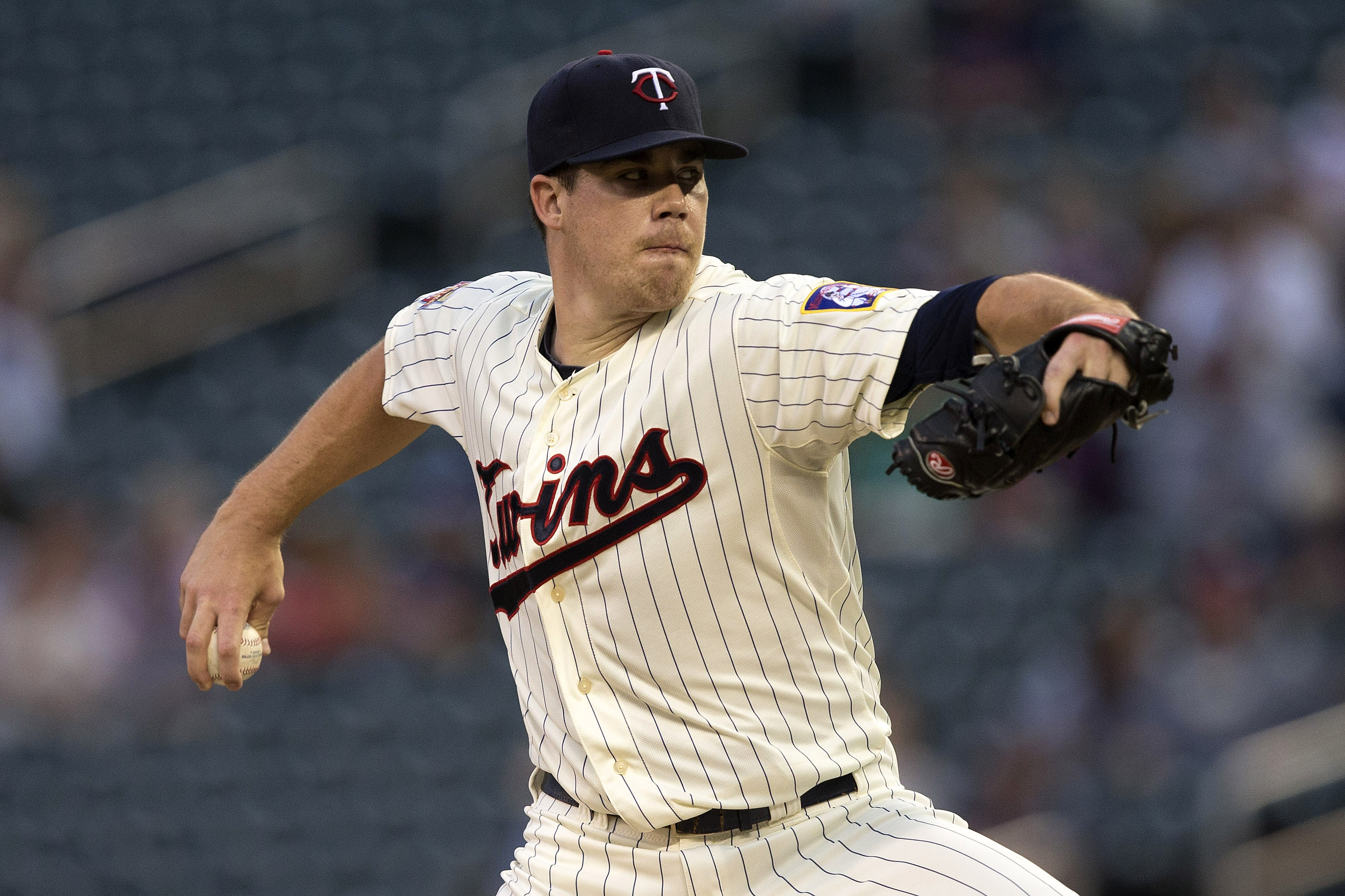 After an impressive season in Triple-A -- where he had his lowest walk rate since 2010 -- May was called up to the Twins in August. May’s minor league success did not transfer to the major league level. So far, starting in six of his seven appearances, May has pitched 29.2 innings while turning in a 24/19 K/BB ratio to go along with 41 hits to which have cumulated in a rotund 8.38 ERA. His biggest foe, besides people who do not enjoy his sick beats, has been pitching with runners on base. To this point in his major league career, ESPN/Trumedia says he has thrown 279 pitches in both the windup and the stretch. With the bases empty, he has kept opponents to a passable .269 average with a 17/9 K/BB ratio but when he puts a runner on, opponents have lambasted him to the tune of .479 with a disheartening 7/13 K/BB ratio. To be fair, a sizable number of those walks occurred during his debut in Oakland (6 walks from the stretch), but his performance has been shakiest when the bases are clogged. An American League scout who had observed May told the Star Tribune’s LaVelle Neal that May’s “got the ammo. He needs to locate it. And his fastball is pretty flat.” May has a four-pitch mix but has yet to show he can locate his fastball consistently enough to make the other pitches effective. For most of May’s tenure in professional baseball, his ability to repeat his mechanics has been questioned as his release point will occasionally vary and his arm slot will drop. This keeps his pitches up in the zone where they can flatten out and it seems to happen to him more often from the stretch. Overall, May’s fastball has been turned into hits at a high rate from both the windup and stretch. The biggest difference is the type of contact hitters are making. Consider this: When runners are on, opponents have posted a 46% line drive rate with a .276 hard-hit average compared to a 20% line drive rate and a .135 hard-hit average from his full windup. This makes sense when you consider the locations of his fastballs when in the windup (top) versus the stretch (bottom): Getting strike one while working in the stretch has been an on-going struggle for May as he has hit the zone with fewer than half of his first-pitch pitches (46%), a far cry from when there are no baserunners (63%). What’s more, hitters have become more conservative once May is pitching from the stretch, chasing far fewer pitches out of the zone (16%) than when he is in the windup (35%). That puts the 24-year-old at quite the disadvantage. Broadcasters and media-types often talk about things “snowballing” for pitchers. Each of May’s outings so far has been more avalanche than snowball once runners step on to the bases. Every pitcher has some discrepancy between the windup and the stretch, but May’s splits are more pronounced than most thus far in his small sample size. Obviously, the stats will normalize over time as his .404 batting average on balls in play is sure to come down and he is able to corral that grotesque walk rate. Look for improvements out of May in his next start on Sunday in Chicago.
-
The Star Tribune's LaVelle Neal has a story on the Twins working with Oswaldo Arcia and it has some interesting quotes from the coaching staff: Manager Ron Gardenhire -- From hitting coach Tom Brunansky --
-
Who is your surprise Twins Minor Leaguer?
Parker Hageman replied to DocBauer's topic in Twins Minor League Talk
Thanks for the topic idea! We discussed this in our test video. https://www.youtube.com/watch?v=AOArbaj6xAA&list=UUUksIQgrcv2hgbughOgsuAg We will leave the deep minor league analysis to Seth Stohs and SD Buhr. -
MUST SEE: Worst Stadium Big Screen Factoid Ever?
Parker Hageman replied to Parker Hageman's topic in Other Baseball
I'm holding out for the Vienna Beef. -
At US Cellular Field last night, the White Sox marketing team seemed to have been a little lazy or drunk or something. Check out the "fact" they splayed on their jumbotron about first baseman Andy Wilkins: http://i.imgur.com/lUUbnzG.jpg Ooooh. Interesting. (h/t @thebaseballgirl)
-
Thanks for watching/listening. This, of course, was a trial run. Going forward, the video will likely be smaller segments/bits rather than the entire show. The only reason we did not release the audio separately is because we wanted people to watch/listen to the video in order to get some feedback/ideas. Once again, thanks for listening!
-
Thanks for supplying the topic. We shared our thoughts in the inaugural Twins Daily/No Juice VidCast: https://www.youtube.com/watch?v=_PhH1gLTyy8
-
Thanks for the topic idea. We used this as part of the inaugural No Juice Podcast VidCast. You can watch that section below: https://www.youtube.com/watch?v=sDEGhe9gqo4
-
The No Juice Podcast takes a different route in this week’s episode, unleashing the first No Juice Vidcast to address all of the #HotTopics in the Twins Daily forum section. In this video, Parker Hageman and Dan Anderson answer questions regarding Ron Washington vs Ron Gardenhire, the Minnesota Twins’ email survey, the magic of Tom Brunansky, Tommy Milone, Kyle Gibson and pitcher handling and surprising Twins minor leaguers. The No Juice Podcast takes a different route in this week’s episode, unleashing the first No Juice Vidcast to address all of the #HotTopics in the Twins Daily forum section. In this video, Parker Hageman and Dan Anderson answer questions regarding Ron Washington vs Ron Gardenhire, the Minnesota Twins’ email survey, the magic of Tom Brunansky, Tommy Milone, Kyle Gibson and pitcher handling and surprising Twins minor leaguers. Click play on the video to have all of your baseball dreams come true: https://www.youtube.com/watch?v=lfg587A-_QM&list=UUUksIQgrcv2hgbughOgsuAg%5B/media Please share any and all feedback in the comments section below or follow us on Twitter (@nojuicepodcast). We would love to hear what you think about the show, Parker’s stupid #SoberBeard or Dan’s constant head-bobbing. To hear the podcast which tackles the Minnesota Vikings, sinking pontoons, stealing other podcast’s mailbag questions and the music of 1996, listen below, on iTunes or on Stitcher: THE NO JUICE PODCAST, EPISODE #20: VIKINGS OPENER View full article
-
The No Juice Podcast, Episode #20: Video Killed The Podcast Star
Parker Hageman posted an article in Twins
 Click play on the video to have all of your baseball dreams come true: https://www.youtube.com/watch?v=lfg587A-_QM&list=UUUksIQgrcv2hgbughOgsuAg%5B/media Please share any and all feedback in the comments section below or follow us on Twitter (@nojuicepodcast). We would love to hear what you think about the show, Parker’s stupid #SoberBeard or Dan’s constant head-bobbing. To hear the podcast which tackles the Minnesota Vikings, sinking pontoons, stealing other podcast’s mailbag questions and the music of 1996, listen below, on iTunes or on Stitcher: THE NO JUICE PODCAST, EPISODE #20: VIKINGS OPENER
-
Yeah, that is an on-going problem that the Twins have been trying to fix. http://twinsdaily.com/articles.html/_/minnesota-twins-news/minnesota-twins/oswaldo-arcia-is-very-good-but-hes-not-quite-there-yet-r2724
-
If it feels like I have dedicated a lot of words in this space to Oswaldo Arcia’s approach at the plate, it is because he remains a work-in-progress and the Minnesota Twins realize this. Arcia has impressed in stretches (like hitting seven home runs in August) but then regresses into a mess as pitchers tie him in knots. With the focus shifting toward 2015, the Twins are doing all they can to mold Arcia into a complete hitter. If it feels like I have dedicated a lot of words in this space to Oswaldo Arcia’s approach at the plate, it is because he remains a work-in-progress and the Minnesota Twins realize this. Arcia has impressed in stretches (like hitting seven home runs in August) but then regresses into a mess as pitchers tie him in knots. With the focus shifting toward 2015, the Twins are doing all they can to mold Arcia into a complete hitter. Early in the season, Fox Sports North’s Roy Smalley pointed out that the Twins were attempting to get Arcia to adjust his hands during the swing to avoid being eaten up by fastballs up in the zone. That is still a project as Arcia has gone 3-for-45 on fastballs in the upper third or higher this year while missing on 48% of his cuts (compared to the 21% league average). More recently, prior to Wednesday’s game Fox Sports North has shown Twins hitting coach Tom Brunansky attempting to break Arcia from the habit of dropping his shoulder and remaining closed in order to handle being pitched away more. Once again, Arcia is hitting a paltry .182 on the outer-half (one of the lowest in the league) while pulling a significant number of those pitches. These areas of his game need to improve. The Twins are also trying to get him to understand how pitchers are attacking him. According to a tweet from the Star Tribune’s La Velle E Neal, manager Ron Gardenhire said the team is having Arcia watch more video to absorb what teams are doing with him. Heat maps from ESPN/TruMedia reveal the simple formula: Fastballs up in the zone, breaking stuff/offspeed down and away. It is relatively easy to understand why opposing teams apply this treatment. Because he has such strength combined with a pull-happy tendency, Arcia has detonated pitches middle-in: Another factor that is involved in his streaky hitting is his pitch selection. In terms of breaking and offspeed pitches, Arcia has chased 44% of those pitches out of the zone compared to the 33% MLB average. The coaching staff obviously has the best insight on how to move forward with Arcia but it is possible that resurrecting a method from his past might help his future. Watching him now, it may be easy to credit Arcia’s aggressive leg kick as a big source for his power generation. True, it does help cultivate power, but Arcia has been as strong as they come with or without that stage in his swing. The model that Arcia uses today had its inception in 2013 while with the Rochester Red Wings. Prior to that, he displayed the muted toe tap stride while in Double-A. http://i.imgur.com/AoaBdR0.gif Compare that to the current model: http://i.imgur.com/4IOzAsG.gif This is not an intent to discuss the merits of the toe tap versus the leg kick, but you can notice the difference in just the head movement when he strides. In 2012, his head stays on the plane whereas with the current version, the head has noticeable movement and changes planes. Beyond that, because of the timing mechanism in the leg lift, there is less time for pitch recognition before committing to swing, which may explain why he is so susceptible to slower and breaking stuff out of the zone. To be sure, there is little difference in Arcia’s power numbers and strikeout/walk rates from 2012 to now. He had plenty of pop and struck out in a very high proportion of his at-bats in both Double-A and in the majors. Admittedly, major league pitchers are much better at locating their secondary pitches than their Double-A counterparts but Arcia’s previous swing seems to give him more balance, which could translate to handling being pitched away better, and greater opportunity for pitch recognition. When Kennys Vargas came up to the Twins this year, he initially had a big leg kick that was quickly trashed for the muted toe tap. Despite the change, this has not seemed to have stymied Vargas’ power in the least while allowing him to better combat the assortment of secondary offerings of major league pitching. This might be a good opportunity to see if Arcia would be interested in trying the same. The 23-year-old Venezuelan is plenty talented and gifted in the power department. With the team firmly out of any postseason contention, now is the time to make adjustments and improve for next year. There is no need to pull every pitch into the IDS, mostly because every pitch should not be pulled. As the season winds down, the goal is to reduce the number of pitches chased out of the zone and drive some of those away pitches back up the middle and the other way. View full article
-
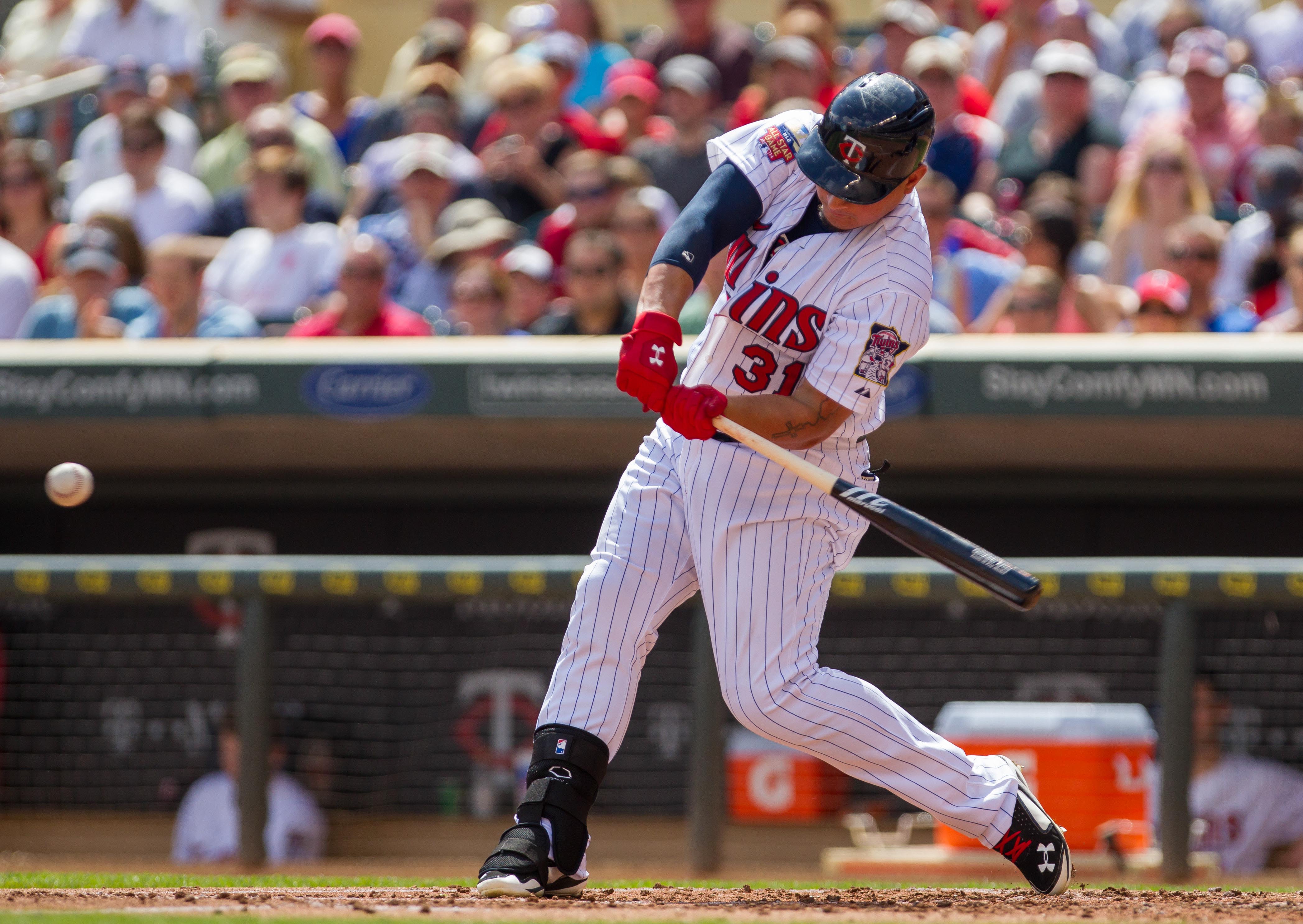 Early in the season, Fox Sports North’s Roy Smalley pointed out that the Twins were attempting to get Arcia to adjust his hands during the swing to avoid being eaten up by fastballs up in the zone. That is still a project as Arcia has gone 3-for-45 on fastballs in the upper third or higher this year while missing on 48% of his cuts (compared to the 21% league average). More recently, prior to Wednesday’s game Fox Sports North has shown Twins hitting coach Tom Brunansky attempting to break Arcia from the habit of dropping his shoulder and remaining closed in order to handle being pitched away more. Once again, Arcia is hitting a paltry .182 on the outer-half (one of the lowest in the league) while pulling a significant number of those pitches. These areas of his game need to improve. The Twins are also trying to get him to understand how pitchers are attacking him. According to a tweet from the Star Tribune’s La Velle E Neal, manager Ron Gardenhire said the team is having Arcia watch more video to absorb what teams are doing with him. Heat maps from ESPN/TruMedia reveal the simple formula: Fastballs up in the zone, breaking stuff/offspeed down and away. It is relatively easy to understand why opposing teams apply this treatment. Because he has such strength combined with a pull-happy tendency, Arcia has detonated pitches middle-in: Another factor that is involved in his streaky hitting is his pitch selection. In terms of breaking and offspeed pitches, Arcia has chased 44% of those pitches out of the zone compared to the 33% MLB average. The coaching staff obviously has the best insight on how to move forward with Arcia but it is possible that resurrecting a method from his past might help his future. Watching him now, it may be easy to credit Arcia’s aggressive leg kick as a big source for his power generation. True, it does help cultivate power, but Arcia has been as strong as they come with or without that stage in his swing. The model that Arcia uses today had its inception in 2013 while with the Rochester Red Wings. Prior to that, he displayed the muted toe tap stride while in Double-A. http://i.imgur.com/AoaBdR0.gif Compare that to the current model: http://i.imgur.com/4IOzAsG.gif This is not an intent to discuss the merits of the toe tap versus the leg kick, but you can notice the difference in just the head movement when he strides. In 2012, his head stays on the plane whereas with the current version, the head has noticeable movement and changes planes. Beyond that, because of the timing mechanism in the leg lift, there is less time for pitch recognition before committing to swing, which may explain why he is so susceptible to slower and breaking stuff out of the zone. To be sure, there is little difference in Arcia’s power numbers and strikeout/walk rates from 2012 to now. He had plenty of pop and struck out in a very high proportion of his at-bats in both Double-A and in the majors. Admittedly, major league pitchers are much better at locating their secondary pitches than their Double-A counterparts but Arcia’s previous swing seems to give him more balance, which could translate to handling being pitched away better, and greater opportunity for pitch recognition. When Kennys Vargas came up to the Twins this year, he initially had a big leg kick that was quickly trashed for the muted toe tap. Despite the change, this has not seemed to have stymied Vargas’ power in the least while allowing him to better combat the assortment of secondary offerings of major league pitching. This might be a good opportunity to see if Arcia would be interested in trying the same. The 23-year-old Venezuelan is plenty talented and gifted in the power department. With the team firmly out of any postseason contention, now is the time to make adjustments and improve for next year. There is no need to pull every pitch into the IDS, mostly because every pitch should not be pulled. As the season winds down, the goal is to reduce the number of pitches chased out of the zone and drive some of those away pitches back up the middle and the other way.
-
A few days ago the Minnesota Twins sent ticket buyers an emailed survey to find out more about their potential customer base. The survey, however, was slightly biased and skewed in reality. One question in particular asked what kind of car would the Twins brand be, most of which were either sports cars (like a Dodge Viper) or high-end luxury vehicles (BMW or Mercedes). Recognizing the absurdity that is associating these automobiles with a team that is on-track to finish with their 4th consecutive 90-loss season, NBC's Keith Olbermann reacts accordingly: KEITH OLBERMANN -- MINNESOTA TWINS MARKETING DEPT IS WORLD'S WORST IN SPORTS
-
To be sure, I don't think the Twins are interested in trading any of that group yet, either.
-
I would love to see Vargas, Arcia, Pinto and Sano in the same lineup together. I get the impression, however, that eventually there will be a trade. After all, there is only one Designated Hitter and Joe Mauer is entrenched at first for the near future. So, question, if you had to trade one, who do you trade and why?
-
If you were at last night’s game (and judging by the attendance, you weren’t), you probably saw Kennys Vargas murder-death-killing a Hector Noesi fastball. If you missed this, you should probably watch (and listen) to the ball coming off of Vargas’s bat: VIDEO: KENNYS VARGAS MURDER-DEATH-KILLS A FASTBALL Vargas has been very good since joining the Minnesota Twins, specifically at hitting baseballs hard. During the series in Oakland, Vargas hit a ball that was registered at 120 miles an hour off the bat. That, according to Trackman’s 100,000 batted ball database, was the hardest hit ball ever. EVER. Meanwhile, Vargas’s home run last night came off the lumber at a brisk 108.6 miles an hour (according to HitTrackerOnline.com) before it caromed off the facing of the second deck in right-center field. Based on the True Distance measurements, the ball would have ricocheted off of Ramp B had the grandstand not impeded its flight. In short, Vargas is Liam Neeson and baseballs are the guys who tried to kidnap his daughter. Of course, regular contact has been an issue for the big man. He made some changes to his timing mechanism in efforts to increase his contact but his pitch selection needs refining. He is swinging and chasing a lot at breaking balls resulting in a grotesque amount of strikeouts. In fact, his 36 K’s in the month of August is a new franchise record for most strikeouts in that month. For a rookie who is making the jump from Double-A ball, this is nothing out of the ordinary – he is supposed to swing and drive the ball. As he matures and grows more comfortable at the plate, the walk rate should increase. In the minors, Vargas maintained a respectable 10.4% walk rate but that skill has evaporated at the game’s highest level as he struggles to recognize the plethora of breaking and offspeed pitches being twirled in that direction.

-
By listening to this week’s episode of the No Juice Podcast, you will subject yourself to a variety of baseball topics including, but not limited to, the Minnesota Twins and September, the Houston Astros and EXTREME MONEYBALL, Jesus Montero and the Ice Cream Sandwich Incident, Bill Murray and ticket-taking and thoughts on Midway Stadium in general. By listening to this week’s episode of the No Juice Podcast, you will subject yourself to a variety of baseball topics including, but not limited to, the Minnesota Twins and September, the Houston Astros and EXTREME MONEYBALL, Jesus Montero and the Ice Cream Sandwich Incident, Bill Murray and ticket-taking and thoughts on Midway Stadium in general. But wait! That’s not all! If you act now, you will also receive non-baseball talk which includes Parker Hageman’s Health Issues, Dan Anderson’s State Fair Visit, the Minnesota Vikings and much, much more! Listen below, on iTunes or on Stitcher: THE NO JUICE PODCAST, EPISODE #19: AUGUST AND EVERYTHING AFTER View full article
-
The No Juice Podcast, Episode #19: August And Everything After
Parker Hageman posted an article in Twins
 But wait! That’s not all! If you act now, you will also receive non-baseball talk which includes Parker Hageman’s Health Issues, Dan Anderson’s State Fair Visit, the Minnesota Vikings and much, much more! Listen below, on iTunes or on Stitcher: THE NO JUICE PODCAST, EPISODE #19: AUGUST AND EVERYTHING AFTER
-
Did I mention his line drive rate is 28%? Because his line drive rate with the Twins is 28%. That is all coming down. There will be regression. To be clear, 30 days is nothing to make a determining factor upon. There have been plenty of other hitters who have made some changes to their approach only to have teams readjust and render them hitless again (cough, Colabello, cough). What will be interesting to see if how opposing teams adjust and if Schafer makes adjustments with them in September.
-
BABIP driven. That's one way to look at it. The other way is that he fouled a ball off his ankle which led to missing 31 games after getting consistent playing time and then coming back and trying to get regular at-bats. Just to reiterate, I don't think Schafer's recent approach modifications makes him a star suddenly, but this is positive progress for someone who has been viewed as a top talent as a prospect who is now entering his prime. The other side of the coin is, if he is converted to a part-time OFer -- which he should -- would he be able to provide the same contributions as he is right now without the consistent playing time? Obviously the defense is strong but it is possible he falls into the same bad habits that he had with the Braves this year.
-
First it was Sam Fuld, now the Minnesota Twins front office have worked their waiver wire magic on Jordan Schafer. On Thursday night, Schafer continued his unpredictably solid batsmanship against the Royals. In five at-bats, he collected three hits including a double, drove in three, scored another two on his own and also swiped a base. Just another day at the office for Schafer who is now hitting .328/.411/.438 in 77 plate appearances since coming over to the Twins. Who would have seen this coming?There are plenty of scouts in the Braves, Astros and Twins organization who would say they knew he is capable of this type of production. Once upon a time, Schafer was a top-50 rated prospect in the Braves system but that promise never came to fruition in two stints in Atlanta which sandwiched time in Houston as well. A vicious cycle of injuries and the subsequent ineffectiveness contributed to the struggle over his big league career. In all, from 2009 until he was claimed by the Twins this season, Schafer put up a sad trombone line of .222/.307/.304 over 1,251 plate appearances. At 27, Schafer was back with his original organization to begin the 2014 season and was pressed to find a consistent role. He would start in just 14 of the 63 games he would play in for the Braves. Offensively, his career hit a jagged rock bottom when he could not hit anything. Perhaps it was pressing to do too much in order to gain more playing time but Schafer’s swing rate increased exponentially as he offered at every other pitch regardless of where it may be located. Is this stretch a breakout or a blip? With the sample size as miniscule as it is, it is easy to consider this streak one of those sample sample size flukes. There certainly is an element of that, no question, however with the regular playing time, Schafer has seemingly shorn up his wild swing (reducing his chase rate from 33% to 25%) and increased his connectivity (dropping his swing-and-miss rate from 31% to 22%). What’s more is that the contact is far better has his line drive rate has jumped (from 16% to 28%) as has his hard-hit average (from .084 to .162). These are solid progress marks. When the Braves had re-obtained the outfielder in 2013, Schafer confessed to falling into bad habits at the plate that dragged down his numbers. He was trying to pull the ball far too often and lost the ability to drive the ball up the middle and to the opposite field. Turning over when being pitched away resulted in groundouts instead of base hits where he could showcase his blazing speed. He reached out to Braves’ hitting coach Greg Walker to help fix this. While he showed a better ability to go the other way in 2013 but a foul ball off his ankle led to a stress fracture that sidelined him for 31 days that year, Schafer never came back the same and it seemed his sound approach at the plate he displayed before the injury had disappeared. Opposing teams in the National League exploited Schafer’s overzealous approach and targeted the outer half of the zone: Download attachment: strike-zone (46).png According to ESPN/TruMedia, when being pitched on the outer-half (middle and away), Schafer pounded a vast majority of those into the ground, yanking almost 50% of those balls in play and predictably performed poorly (6-for-52, .115). Maybe it was because of regularly scheduled at-bats or a sweet nothing that Twins hitting coach Tom Brunansky whispered in his ear, but after the Twins got their hooks into him, Schafer turned things around, particularly in this area. On pitches on the outer-half, Schafer has driven those to the middle of the field (60%) which has yielded plenty of hits (14-for-39, .359). As an example, here is a clip of Schafer versus Joba Chamberlain in which Schafer -- rather than turning over on the pitch -- stays behind the ball to intentionally drive the pitch to the spacious 5.5 hole where the third baseman is drawn in and the shortstop is playing at double-play depth. http://i.imgur.com/pBEpDSa.gif What does the future hold for Schafer and the Twins? After his performance against the Royals, manager Ron Gardenhire said that the organization is going to continue to feed him playing time for the rest of the year and see how he responds. “That’s what we’re trying to figure out here. We’re letting him play and giving him plenty of at bats and he’s responding and he’s doing well,” Gardenhire told reporters after the game, “You see him running the bases, he can fly -- he scored on that ball late in the game there. He was absolutely flying, I thought he had no chance to score. He has a lot of talent and we’re going to see how he does here the rest of the way for us. And we’ll to kind of figure out how he fits in this organization. We like the young man, he’s come over here and he’s shown some of his skills.” So we will see more of Schafer in September and the Twins will make an evaluation on what to do with him heading into 2015. He might not be a starter but he could be a very good contributor both defensively and offensively. The Minnesota Twins stomped on the Kansas City Royals, so Friday you can get 50% off a L or XL pizza at PapaJohns.com. Enjoy! Click here to view the article
-
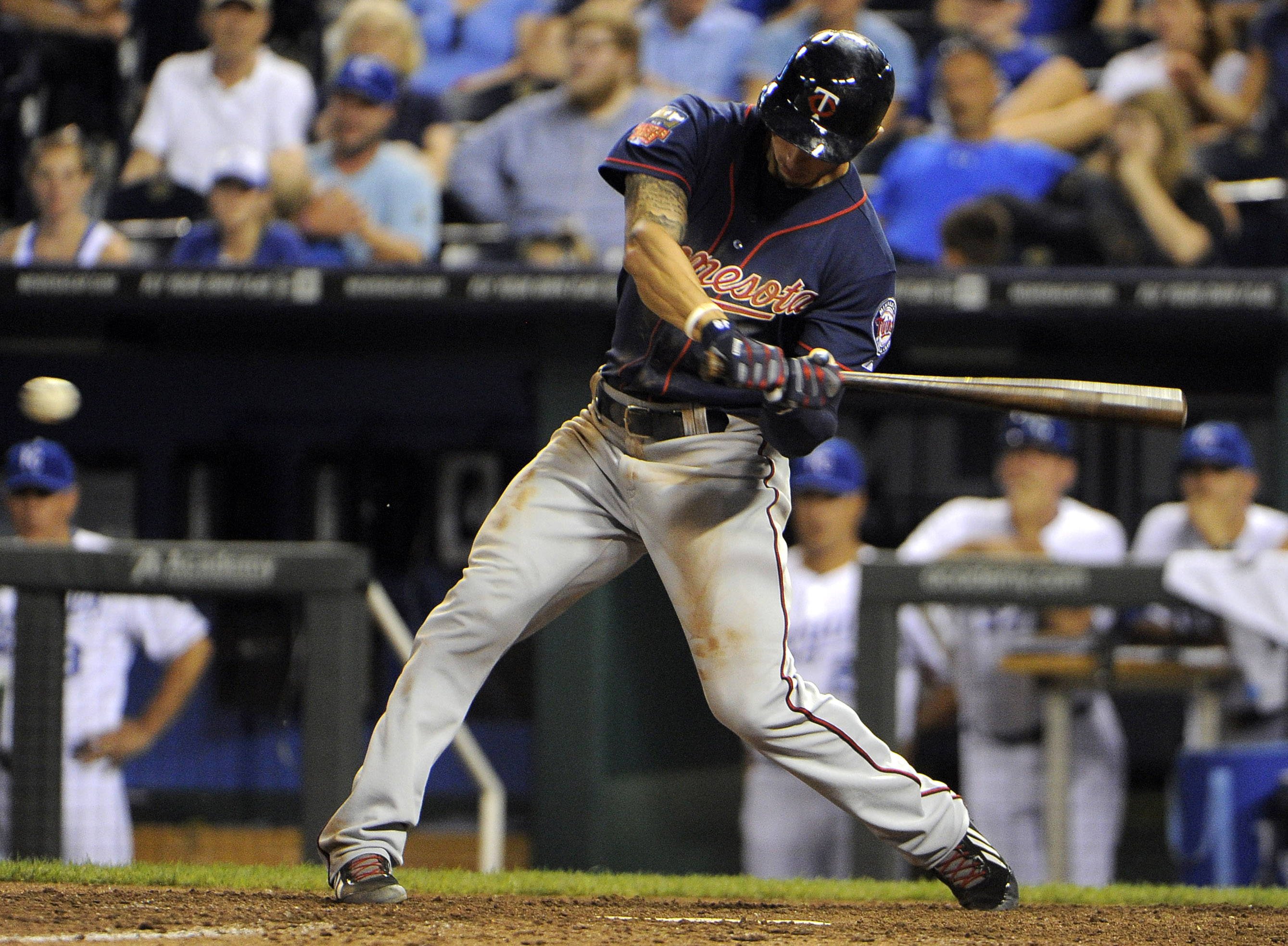 There are plenty of scouts in the Braves, Astros and Twins organizations who would say they knew he was capable of this type of production. Once upon a time, Schafer was a top-50 prospect in the Braves system but that promise never came to fruition in two stints in Atlanta which sandwiched time in Houston as well. A vicious cycle of injuries and subsequent ineffectiveness contributed to the struggles over his big league career. In all, from 2009 until he was claimed by the Twins this season, Schafer put up a sad trombone line of .222/.307/.304 over 1,251 plate appearances. At 27, to begin the 2014 season, Schafer was back with his original organization and was hard-pressed to find a consistent role. He started just 14 of the 63 games he played in for the Braves. Offensively, his career hit a jagged rock bottom when he could not hit anything. Perhaps it was pressing to do too much in order to gain more playing time but Schafer’s swing rate increased exponentially as he offered at every other pitch regardless of where it may have been located. Is this stretch a breakout or a blip? With the sample size as miniscule as it is, it is easy to consider this streak one of those sample size flukes. There certainly is an element of that, no question. However, with the regular playing time Schafer has seemingly tightened up his wild swing --reducing his chase rate from 33% to 25%-- and increased his connectivity, dropping his swing-and-miss rate from 31% to 22%. What’s more, the contact is far better, as his line drive rate has jumped from 16% to 28%, as has his hard-hit average from .084 to .162. These marks show solid progress. When the Braves re-obtained the outfielder in 2013, Schafer confessed to falling into bad habits at the plate that dragged down his numbers. He was trying to pull the ball far too often and lost the ability to drive the ball up the middle and to the opposite field. Turning over when being pitched away resulted in ground-outs instead of base hits where he could showcase his blazing speed. He reached out to Braves’ hitting coach Greg Walker to help fix this. While he did show more ability to go the other way in 2013, a foul ball off his ankle led to a stress fracture that sidelined him for 31 days that year. Schafer did not return the same and it seemed the sound approach at the plate he had displayed before the injury had disappeared. Opposing teams in the National League exploited Schafer’s overzealous approach and targeted the outer half of the zone: According to ESPN/TruMedia, when being pitched on the outer-half (middle and away), Schafer pounded a vast majority of those into the ground, yanking almost 50% of those balls in play and predictably performed poorly, going 6-for-52, .115. Maybe it was because of regularly scheduled at-bats or a sweet nothing that Twins hitting coach Tom Brunansky whispered in his ear, but after the Twins got their hooks into him, Schafer turned things around, particularly in this area. On pitches on the outer-half, Schafer has driven 60% of those to the middle of the field which has yielded plenty of hits (14-for-39, .359). As an example, here is a clip of Schafer versus Joba Chamberlain in which Schafer -- rather than turning over on the pitch -- stays behind the ball to intentionally drive the pitch to the spacious 5.5 hole where the third baseman is drawn in and the shortstop is playing at double-play depth. http://i.imgur.com/pBEpDSa.gif What does the future hold for Schafer and the Twins? After his performance against the Royals, manager Ron Gardenhire said that the organization is going to continue to feed him playing time for the rest of the year and see how he responds. “That’s what we’re trying to figure out here. We’re letting him play and giving him plenty of at bats and he’s responding and he’s doing well,” Gardenhire told reporters after the game, “You see him running the bases, he can fly -- he scored on that ball late in the game there. He was absolutely flying, I thought he had no chance to score. He has a lot of talent and we’re going to see how he does here the rest of the way for us. And we’ll to kind of figure out how he fits in this organization. We like the young man, he’s come over here and he’s shown some of his skills.” So we will see more of Schafer in September and the Twins will make an evaluation on what to do with him heading into 2015. He might not be a starter but he could be a very good contributor both defensively and offensively. The Minnesota Twins stomped on the Kansas City Royals, so Friday you can get 50% off a L or XL pizza at PapaJohns.com. Enjoy!


