



Parker Hageman
-
Posts
4,162 -
Joined
-
Last visited
-
Days Won
6
Content Type
Profiles
Minnesota Twins News, Rumors & Analysis
Minnesota Twins Videos
2026 Minnesota Twins Top Prospect Rankings
2022 Minnesota Twins Draft Picks & Signing Bonuses
Minnesota Twins Trade & Free Agent Rumors
Minnesota Twins Fan Guides & Resources
2023 Minnesota Twins Draft Picks & Signing Bonuses
2024 Minnesota Twins Draft Picks & Signing Bonuses
2025 Minnesota Twins Draft Picks & Signing Bonuses
2026 Minnesota Twins Draft Picks & Signing Bonuses
Forums
Blogs
Events
Store
Downloads
Gallery
Everything posted by Parker Hageman
-
With Derek Jeter set to retire this week, former Minnesota Twins minor leaguer Jamie Ogden shares his memories about playing with the Yankees' shortstop when they were both in the Florida State League: https://www.youtube.com/watch?v=zLPwTo89nMk For more stories from Ogden, be sure to subscribe to the No Juice Podcast on iTunes and listen to next week's episode. Follow the Twins Daily YouTube for more video.
-
 Knowing what/where the pitch was going helped a lot. The machine can throw just about any type of pitch at basically any speed. We got a warm-up round at 85-mph and Jamie was kind enough to provide Dan with an unannounced curveball that that left him bailing out and skittish for the rest of the night. Hitting 100 when a pitcher is able to unleash another type of pitch must be damn near impossible.
-
Earlier in the week, Parker Hageman and Dan Anderson showed you what it looked like to try to pitch frame a 100-mph fastball. Today, they try to hit it. Earlier in the week, Parker Hageman and Dan Anderson showed you what it looked like to try to pitch frame a 100-mph fastball. Today, they try to hit it. According to ESPN/TruMedia, in the Major Leagues this year there have 821 fastballs thrown over 100 miles an hour -- with Cincinnati’s closer Aroldis Chapman firing the bulk of them. The results have been understandably poor as hitters have batted just .144 off the triple digit heat. Professional hitters have swung and missed on 36% of their swings. So, with that in mind, what are the odds that two yahoos from the town leagues can even get a piece of the heat? https://www.youtube.com/watch?v=g-r-UMAYKm4&list=UUUksIQgrcv2hgbughOgsuAg Ever wonder if you could make contact with a 100-mile per hour fastball? Line Drive Sports in Lino Lakes and Killebrew Root Beer have created the Killebrew 100 MPH Challenge that supports the Assist2Play.org foundation. Contact Line Drive Sports to set up your challenge today. Special thanks to former Twins minor league Jamie Ogden for providing the instructions and spiritual support. View full article
-
 According to ESPN/TruMedia, in the Major Leagues this year there have 821 fastballs thrown over 100 miles an hour -- with Cincinnati’s closer Aroldis Chapman firing the bulk of them. The results have been understandably poor as hitters have batted just .144 off the triple digit heat. Professional hitters have swung and missed on 36% of their swings. So, with that in mind, what are the odds that two yahoos from the town leagues can even get a piece of the heat? https://www.youtube.com/watch?v=g-r-UMAYKm4&list=UUUksIQgrcv2hgbughOgsuAg Ever wonder if you could make contact with a 100-mile per hour fastball? Line Drive Sports in Lino Lakes and Killebrew Root Beer have created the Killebrew 100 MPH Challenge that supports the Assist2Play.org foundation. Contact Line Drive Sports to set up your challenge today. Special thanks to former Twins minor league Jamie Ogden for providing the instructions and spiritual support.
-
Catcher Framing has been the statistic that has been all the rage -- it is the sooper popular thing right now among stat nerds. Catchers who previously were undervalued, like Rene Rivera or Jose Molina, are suddenly highly sought after when studies showed that some catchers could coax extra strikes from out of the zone. Meanwhile, backstops like Ryan Doumit have become dinosaurs. How difficult is it to corral a 100 mile per hour pitch? Catcher Framing has been the statistic that has been all the rage -- it is the sooper popular thing right now among stat nerds. Catchers who previously were undervalued, like Rene Rivera or Jose Molina, are suddenly highly sought after when studies showed that some catchers could coax extra strikes from out of the zone. Meanwhile, backstops like Ryan Doumit have become dinosaurs. How difficult is it to corral a 100 mile per hour pitch? It is possible that velocity plays a difference in how a catcher receives the ball or how an umpire gauges it. According to ESPN, since 2009, 9% of balls taken out of the zone that were 99 MPH or below were called strikes. In that same time, 7% of all pitches thrown 100 MPH or above and taken out of the zone were called strikes. Is it more difficult to frame pitches at that velocity or does the speed play a bigger factor? With average fastball velocity from major league pitcher’s climbing each year, this could play a factor in the coming years. Thanks to former Twins minor leaguer Jamie Odgen and Line Drive Sports in Lino Lakes, the No Juice Podcast’s Dan Anderson’s shows just how difficult it is to catch and frame 100 mile per hour heat. [NOTE: Some adult language] For more on this subject and others, be sure to listen to this week’s No Juice Podcast. View full article
-
VIDEO: How Difficult Is It To Frame A 100-Miles-Per-Hour Pitch?
Parker Hageman posted an article in Twins
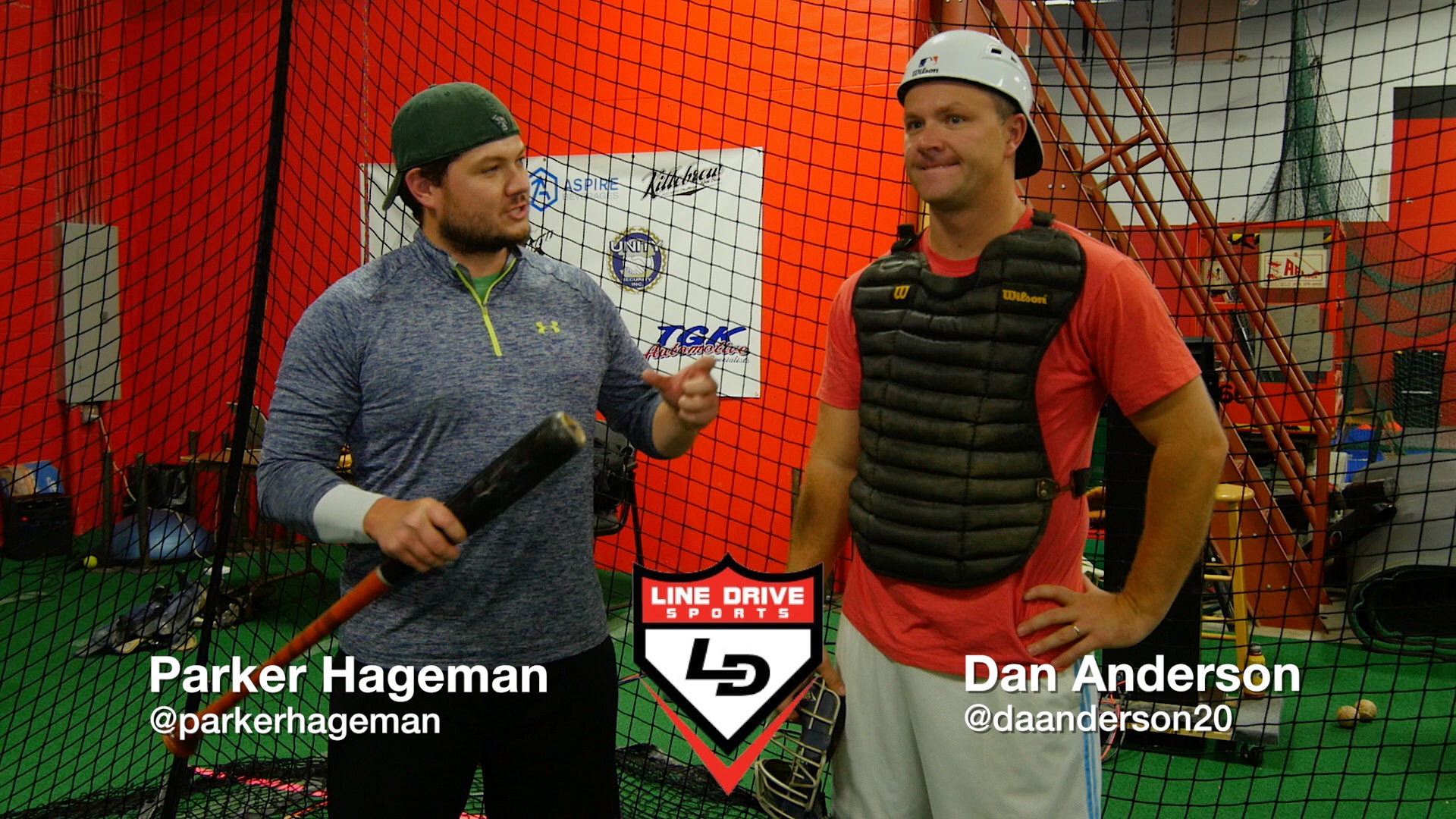 It is possible that velocity plays a difference in how a catcher receives the ball or how an umpire gauges it. According to ESPN, since 2009, 9% of balls taken out of the zone that were 99 MPH or below were called strikes. In that same time, 7% of all pitches thrown 100 MPH or above and taken out of the zone were called strikes. Is it more difficult to frame pitches at that velocity or does the speed play a bigger factor? With average fastball velocity from major league pitcher’s climbing each year, this could play a factor in the coming years. Thanks to former Twins minor leaguer Jamie Odgen and Line Drive Sports in Lino Lakes, the No Juice Podcast’s Dan Anderson’s shows just how difficult it is to catch and frame 100 mile per hour heat. [NOTE: Some adult language] For more on this subject and others, be sure to listen to this week’s No Juice Podcast.
-
In this week's No Juice Podcast episode, Dan Anderson and Parker Hageman discuss the week's Minnesota Twins talkers. Topics include shutting down Glen Perkins for the year, the shift from New Britain to Chattanooga, thoughts on Danny Santana at short and #HotTwinsTakes from the Twins Daily forum from members Mike Wants Wins and jaimedude2. Listen below. In this week's No Juice Podcast episode, Dan Anderson and Parker Hageman discuss the week's Minnesota Twins talkers. Topics include shutting down Glen Perkins for the year, the shift from New Britain to Chattanooga, thoughts on Danny Santana at short and #HotTwinsTakes from the Twins Daily forum from members Mike Wants Wins and jaimedude2. Listen below. Other topics include the Minnesota Vikings, things Minnesotans need to stop doing, the best compensated Minnesotan athletes and college football at the FargoDome. Listen below, on iTunes or on Stitcher: THE NO JUICE PODCAST, EPISODE #22: ALL OUT OF GLENS View full article
-
 Other topics include the Minnesota Vikings, things Minnesotans need to stop doing, the best compensated Minnesotan athletes and college football at the FargoDome. Listen below, on iTunes or on Stitcher: THE NO JUICE PODCAST, EPISODE #22: ALL OUT OF GLENS
-
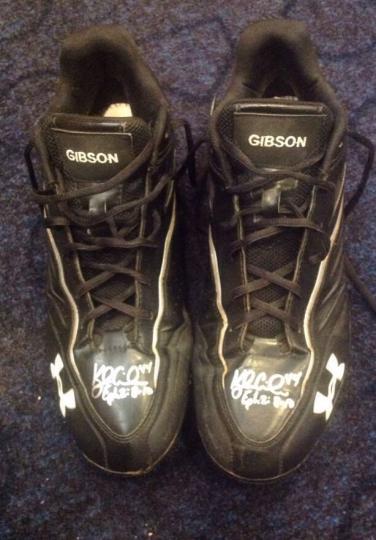
Minnesota Twins pitcher Kyle Gibson tweeted today that he has a signed pair of game-used cleats that he is offering on eBay where the proceeds will help the Kevin Lanigan Memorial Foundation. The foundation was created for former Twins' farm hand Bobby Lanigan's father and helps support community associations. Click here to bid on the items at eBay.
-
During Sunday's Inside Twins broadcast with Cory Provus, Provus asked Minnesota Twins General Manager Terry Ryan if Danny Santana was still regarded as the organization's top shortstop. Terry Ryan responded thusly: They also addressed Santana's offense, which the rookie has shown a better propensity of handling right-handed pitching in comparison to lefties. Ryan said he is not worried about Santana's approach against lefties and should develop from the right-side: To listen to the segment in its entirety, click here.
-
According to a spreadsheet that Joe Roegele (@MLBPlayerAnalys) has maintained for those who have gone through ulnar collateral ligament replacement surgery, the Minnesota Twins, with 12 players who have met with the knife, leads all of baseball since 2012: Included in that list is third baseman Miguel Sano, helping catapult the Twins to the top of the list, however, pitchers like J.T. Chargois, who had a great year in short-season rookie ball after being drafted in the second round in 2012, and Alex Wimmers, the 2010 first round selection, have missed substantial development time. Part of this may be influenced by organization practices, part mechanics and part just nature of throwing overhand. The takeaway, according to Roegele's findings, is that recovery is becoming more consistent at under 15-months since the beginning of 2013:
-
What Is Going On With Glen?
Parker Hageman replied to Parker Hageman's topic in Twins Daily Front Page News
Update on Glen: That's good-ish news. -
Nationals Claim Twins Middle Infielder
Parker Hageman replied to Parker Hageman's topic in Minnesota Twins Talk
I will always remember this relay throw though... https://vine.co/v/MFOJiXvrFVM -
According to Dan Kolko of MASN, the Washington Nationals have claimed shortstop Pedro Florimon on waivers today. After an appendectomy delayed the start to his spring training, Florimon struggled mightily to provide any semblance of offensive. In 86 plate appearances, the switch-hitter went 7-for-76 (.092) while striking out 22 times before being demoted to Rochester. In AAA While his contributions with the bat were few and far between, his fielding was much improved in 2013, as advanced fielding statistics rating him above average. According to BIS's Plus/Minus metric, Florimon finished the year +15 -- the third-highest rated shortstop in 2013.
-
What Is Going On With Glen?
Parker Hageman replied to Parker Hageman's topic in Twins Daily Front Page News
This should be interesting. -
1st half: 40.8% overall fly ball% 2nd half: 40.4% overall fly ball% *From ESPN/TruMedia In hitters' counts -- where he hit 7 first-half home runs -- he is seeing slightly fewer fastballs and hitting fewer fly balls (from 53% to 44%) from the first-half to the second.
-
What Is Going On With Glen?
Parker Hageman replied to Parker Hageman's topic in Twins Daily Front Page News
Agreed. In theory, there are two things happening. The season-long velocity decline is aging while the recent trend of not being able to finish his slider is injury related. To the former, it is of concern but not damning. As you said, he had been very good. Different approach, but good. If he continues to trend like Fangraphs.com show that relievers experience, there is going to be a decline in production over the next few seasons. After all -- a 92-to-95 mph fastball is turned into a hit more frequently than the 96+. More 92-to-95 = more hits. More hits = more runs. I guess we'll see after the winter where he is at. Hopefully, whatever is ailing his arm right now, is something that rest will resolve. -
What Is Going On With Glen?
Parker Hageman replied to Parker Hageman's topic in Twins Daily Front Page News
I wish I could always be as positive as you, Seth! I unfortunately look at too much data. In all, I think he will be "fine". The recent struggles with the slider appear to be influenced by the neck/shoulder. More concerning, as shown in the chart, his velocity has been down all season -- not just at the end. The hope is that the velocity loss is effected by the lingering neck/shoulder issue and that will rebound after an offseason of rest. If not, and it is indeed the effects of aging, we will still see a very good Perkins, just not the shutdown one from 2012-2013. -
For most of 2014 it was business as usual for Minnesota Twins closer Glen Perkins. His numbers have been very similar to his previous two seasons. Yes, there were subtle changes -- like he has struck out batters at a slightly lower rate (declined from 32% to 26%) and he also shaved off free passes (reducing his walk rate from 6.3% to 4.3%) but you would have to squint to pick up the differences. Image courtesy of Image courtesy of Jesse Johnson, USA Today Sports For most of 2014 it was business as usual for Minnesota Twins closer Glen Perkins. His numbers have been very similar to his previous two seasons. Yes, there were subtle changes -- like he has struck out batters at a slightly lower rate (declined from 32% to 26%) and he also shaved off free passes (reducing his walk rate from 6.3% to 4.3%) but you would have to squint to pick up the differences. The latter statistic is a point of pride for the closer. “I know that I want to avoid home runs, strike guys out and not walk guys,” Perkins told MLB.com’s Rhett Bollinger in August. “If I can do that, and maybe even get a groundball, and even that it's that important to me as not walking a guy and those things. As long as I don't walk guys and don't give up home runs, I know I'm doing the right thing.” But while he has limited the walks, he has been hit hard as of late -- allowing a home run in each of his last three outings -- and even raising concerns that there may be an injury in play. He told reporters that he was unable to finish his slider which even prompted an MRI of his shoulder to see if there was any damage. No damage was found but the location of his sliders since August -- which have led to three home runs -- shows that something is not right: In addition to his slider, there is also concern for his fastball. According to the Pioneer Press, an unnamed scout had watched Perkins’ September 4th outing and said that his “velocity was down a tick”. While it is more noticeable as he has scuffled as of late, Perkins’ fastball has been “down a tick” almost all season. When the left-hander was converted to a reliever, he saw his average fastball velocity increase considerably from his days as a starter with the Twins. In 2011, he was averaging 93.9 but touched 98 several times. In 2012 and 2013, he was averaging 94.9 and throwing his fastball above 96 on a semi-regular basis. This season however Perkins has not had that same gas on the pitch that he had in 2012 and 2013. Just four of the 604 fastballs he has thrown this season were measured at 96 miles per hour or above: Despite the drop in velocity, Perkins’ fastball has not been a liability this season. Yes, it has been turned into hits more frequently partly due to a higher line drive rate than past years but according to ESPN/TruMedia’s Hard Hit Average, it has not been hit that hard. Beyond that, Perkins has shown a better ability to locate his fastball in the strike zone -- he has his career highest in-zone percentage (59.6%) and tied his highest strike rate (70%). So the higher batting average on his fastball could be a product of attacking the strike zone and avoiding walks. Still, this precipitous dip in velocity could be of concern for the front office with $17.25 million remaining to be paid to the closer. At 31 years old, Perkins is near the age where relievers start to experience a decline in their velocity, which also correlates to fewer strikeouts: The difference for relievers who throw 92-to-95 or 96-to-98 is significant. This year, hitters are batting .267/.347/.412 with a 9.1% swinging strike rate on fastballs that range from 92-to-95. From 96-to-98, hitters have been less successful posting a .230/.305/.326 line with a 11.4% swinging strike rate. Being able to throw 96-plus is a definite advantage. If it is an injury that has been acting as a governor for Perkins’ fastball, the good news is the year is almost finished. If it is age that is inhibiting his velocity, that is a different story. View full article
-
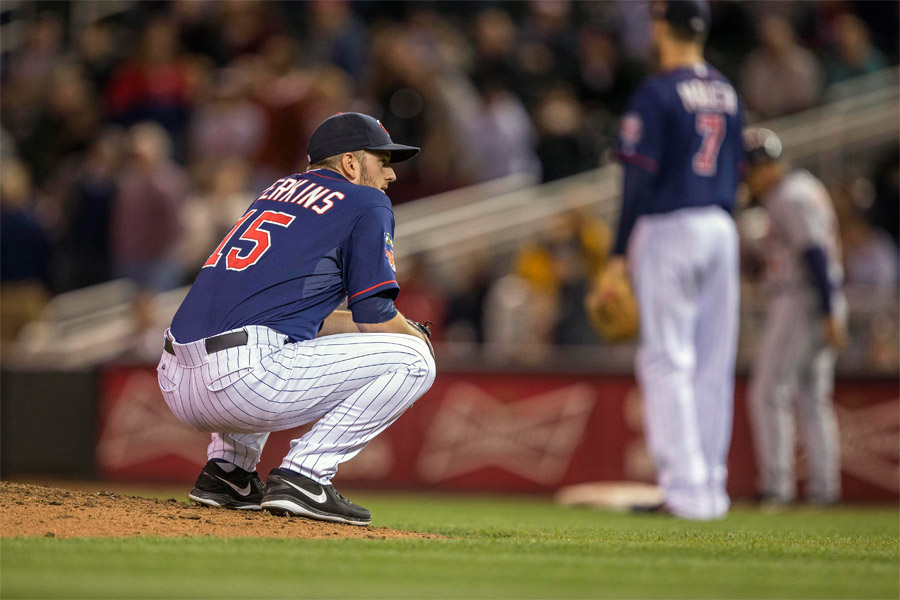 The latter statistic is a point of pride for the closer. “I know that I want to avoid home runs, strike guys out and not walk guys,” Perkins told MLB.com’s Rhett Bollinger in August. “If I can do that, and maybe even get a groundball, and even that it's that important to me as not walking a guy and those things. As long as I don't walk guys and don't give up home runs, I know I'm doing the right thing.” But while he has limited the walks, he has been hit hard as of late -- allowing a home run in each of his last three outings -- and even raising concerns that there may be an injury in play. He told reporters that he was unable to finish his slider which even prompted an MRI of his shoulder to see if there was any damage. No damage was found but the location of his sliders since August -- which have led to three home runs -- shows that something is not right: In addition to his slider, there is also concern for his fastball. According to the Pioneer Press, an unnamed scout had watched Perkins’ September 4th outing and said that his “velocity was down a tick”. While it is more noticeable as he has scuffled as of late, Perkins’ fastball has been “down a tick” almost all season. When the left-hander was converted to a reliever, he saw his average fastball velocity increase considerably from his days as a starter with the Twins. In 2011, he was averaging 93.9 but touched 98 several times. In 2012 and 2013, he was averaging 94.9 and throwing his fastball above 96 on a semi-regular basis. This season however Perkins has not had that same gas on the pitch that he had in 2012 and 2013. Just four of the 604 fastballs he has thrown this season were measured at 96 miles per hour or above: Despite the drop in velocity, Perkins’ fastball has not been a liability this season. Yes, it has been turned into hits more frequently partly due to a higher line drive rate than past years but according to ESPN/TruMedia’s Hard Hit Average, it has not been hit that hard. Beyond that, Perkins has shown a better ability to locate his fastball in the strike zone -- he has his career highest in-zone percentage (59.6%) and tied his highest strike rate (70%). So the higher batting average on his fastball could be a product of attacking the strike zone and avoiding walks. Still, this precipitous dip in velocity could be of concern for the front office with $17.25 million remaining to be paid to the closer. At 31 years old, Perkins is near the age where relievers start to experience a decline in their velocity, which also correlates to fewer strikeouts: The difference for relievers who throw 92-to-95 or 96-to-98 is significant. This year, hitters are batting .267/.347/.412 with a 9.1% swinging strike rate on fastballs that range from 92-to-95. From 96-to-98, hitters have been less successful posting a .230/.305/.326 line with a 11.4% swinging strike rate. Being able to throw 96-plus is a definite advantage. If it is an injury that has been acting as a governor for Perkins’ fastball, the good news is the year is almost finished. If it is age that is inhibiting his velocity, that is a different story.
-
The Chicago Cubs’ Midwest League (Class A) affiliate Kane County Cougars out of Geneva, IL, have plans to make additions to Fifth Third Ballpark (which, by the way, there are three stadiums in the Midwest League that are named First Third Ballpark). According to a Daily Herald article, the Cougars will be appeasing their MLB overlords by adding a few items: Whoa? A second fitness center? Do you even bench, bro? A modernized video review room? Like where the chairs and tables are made out of iPads and you can watch your last at bat in hologram form? I bet they will have a curved TV. Damn I want a curved TV. These improvements got me wondering about what the Twins’ Midwest League equivalent Cedar Rapids Kernels were working with. Fortunately, SD Buhr, who covers the Kernels for Twins Daily and Knuckleballs, nabbed some photographs that show similar facilities for the Twins’ prospects: http://knuckleballsblog.com/blog/wp-content/uploads/2013/04/HomeWeightRoom3.jpg http://knuckleballsblog.com/blog/wp-content/uploads/2013/04/IndoorCage.jpg http://knuckleballsblog.com/blog/wp-content/uploads/2013/04/FamilyRoom.jpg The Twins’ facilities seem on par with what the Cubs’ affiliate is proposing but infinitely superior to the ones that Beloit’s Pohlman Field, which had just spent $100,000 this just to bring the outfield level up to that of the infield.
-
In this week's No Juice Podcast episode, Dan Anderson and Parker Hageman discuss the improvement of Trevor May, what Doug Mientkiewicz might bring to the table as a manager and the struggles of top prospects. They also lob #HotTakes when addressing forum posts from Twins Daily community members Boom Boom and James Richter. In this week's No Juice Podcast episode, Dan Anderson and Parker Hageman discuss the improvement of Trevor May, what Doug Mientkiewicz might bring to the table as a manager and the struggles of top prospects. They also lob #HotTakes when addressing forum posts from Twins Daily community members Boom Boom and James Richter. Other topics include the fallout of the recent Adrian Peterson news, the loss to the New England Patriots and the NFL's secret security team. Listen below, on iTunes or on Stitcher: THE NO JUICE PODCAST, EPISODE #21: VEGAS OF THE UPPER MIDWEST View full article
-
The No Juice Podcast, Episode #21: Vegas Of The Upper Midwest
Parker Hageman posted an article in Twins
 Other topics include the fallout of the recent Adrian Peterson news, the loss to the New England Patriots and the NFL's secret security team. Listen below, on iTunes or on Stitcher: THE NO JUICE PODCAST, EPISODE #21: VEGAS OF THE UPPER MIDWEST
-
On Thursday night in Cleveland, Minnesota Twins' Danny Santana displayed his extremely quick hands in the outfield. With left fielder Jordan Schafer converging on a fly ball in the left-center gap, Schafer deferred at the last second to Santana who had to make a rapid adjustment to the falling orb. VIDEO: DANNY SANTANA MAKES BASKET CATCH IN OUTFIELD At the plate we marvel at how he can generate a healthy swing with little movement and I think this play highlights why he is so good: He has lightning quick hands. In slow motion Santana turn away from the ball so he did not necessarily SEE the ball land in his glove: http://i.imgur.com/WNBsp9W.gif
-
Trevor May And Pitching From The Stretch
Parker Hageman replied to Parker Hageman's topic in Twins Daily Front Page News
That would be a good idea. I'm interested to find out what sort of bullpen sessions he goes through.



