



Parker Hageman
-
Posts
4,152 -
Joined
-
Last visited
-
Days Won
6
Content Type
Profiles
Minnesota Twins News, Rumors & Analysis
Minnesota Twins Videos
2026 Minnesota Twins Top Prospect Rankings
2022 Minnesota Twins Draft Picks & Signing Bonuses
Minnesota Twins Trade & Free Agent Rumors
Minnesota Twins Fan Guides & Resources
2023 Minnesota Twins Draft Picks & Signing Bonuses
The Minnesota Twins Players Project
2024 Minnesota Twins Draft Picks & Signing Bonuses
2025 Minnesota Twins Draft Picks & Signing Bonuses
2026 Minnesota Twins Draft Picks & Signing Bonuses
Forums
Blogs
Events
Store
Downloads
Gallery
Everything posted by Parker Hageman
-

What Would a Francisco Liriano Trade Look Like?
Parker Hageman posted a blog entry in Over the Baggy
-
What Would a Francisco Liriano Trade Look Like?
Parker Hageman commented on Parker Hageman's blog entry in Over the Baggy
[ATTACH=CONFIG]1374[/ATTACH]Ever since his demotion to the bullpen, Francisco Liriano has been back to his new-old self. In 37.1 innings, Liriano has posted a much improved 2.41 ERA, limited hitters to a .157 average against and has struck out 40 while walking just 14 thanks to rekindling his relationship with his dirty, dirty slider. Nevertheless, even with the improvement, the Twins front office has to be considering moving the enigmatic starter at the upcoming trade deadline because of the current state of the organization and the $12 million price tag required to offer him in arbitration in order to secure a compensatory draft pick. If the Twins are committed to rebuilding and strengthening the organization for several years instead of just next year, trading the rejuvenated Liriano makes complete sense. The question is what sort of return can the Twins expect at the deadline? FoxSports.com’s Jon Morosi tweeted yesterday that his club sources told him that officials expect “robust” interest in Liriano based on his recent performance. With the added Wild Card berth granted this year, clearly more teams will consider themselves buyers rather than sellers and the deadline. And, if what Morosi said is accurate, Liriano’s value is elevated by a number of clubs competing for his service and the Twins return should be expectedly more substantial. Of course, it is not quite that cut-and-dry. For starters, Liriano’s impending free agency undoubtedly drives his return down. After all, we’re not talking a Cliff Lee/CC Sabathia-type track record that would merit a team unloading multiple prospects for the half-season rental. Liriano has just six consecutive starts in which he’s pitched well. Furthermore, even though he has not shown it this season, he remains an injury concern. Since 2001, there seems to be just a few trades that occurred at the non-waiver deadline that are comparable to the Twins if they choose to move Liriano by himself (if they add players to the trade, all bets are off). On July 28th, 2010, the 56-44 Chicago White Sox were clinging to a one-game lead over the Twins and looking to further distance themselves by adding some starting pitching. Sox GM Kenny Williams targeted the Arizona Diamondbacks’ hard-throwing right-handed, 26-year-old Edwin Jackson. Jackson, who had worked 397.1 innings with a 27-20 record along with a 3.99 ERA the previous two seasons, was not finding the National League nearly as accommodating as Tampa Bay or Detroit. In 21 starts with the Arizona club in 2010, he went 6-10 with a 5.16 ERA while walking four batters per nine innings – his highest rate since 2007. Despite that performance, Chicago’s lust for a winner and Jackson’s recent success combined with a 94 mile per hour fastball incited Williams to pull the trigger by sending their third and eighth highest ranking prospects according to Baseball America in right-handed starter Dan Hudson and lefty David Holmberg. Hudson has been extremely valuable in Arizona, going 26-14 in 52 starts with a very nice 3.47 ERA while striking out 273 and walking just 78 in 345.1 innings pitched. Holmberg, meanwhile, has turned 20 years old this year but is a fast-moving prospect in the Dback’s system. In his stop at high-A Visalia he struck out 86 batters in 78.1 innings and was bumped to AA Mobile. What’s the likelihood of this scenario playing out for the Twins? I wouldn’t hold my breath. Unlike Liriano, Jackson was under contract at the time and due to make a reasonable sum of $8.35 million in 2011 and he had also never showed much injury potential making his acquisition seemingly less risky than Liriano. Still, never underestimate a GM who reeks of desperation for a winner, as Williams proved, who was willing to flip a productive and club-controlled pitcher for one they felt could contribute immediately. If the Jackson-for-Hudson trade is at one end of the potential spectrum (the “hey, wouldn’t it be great if…” end of the spectrum) at the other end is the Kyle Lohse-to-Philly trade in 2007 (the “hey, this feels about right” end). That year, the Phillies, who had finished second in the NL East for three consecutive seasons and were denied playoff berths, wanted to improve their starting rotation. Curiously enough, they tapped into Cincinnati’s Lohse who had been traded from Minnesota to the Reds one year ago to the day. In Lohse, the Phillies were receiving a 28-year-old right-hander who had seen a steady decline in his performance since his solid 2003 season – although his record while in Cincinnati was more reflective of his lack of run support, receiving below average offense in his time with the Reds. In exchange, Philadelphia shipped a left-handed pitcher who was tearing up the lower ranks of their system: 23-year-old Matt Maloney. Although Lohse is nothing like Liriano in terms of style – Liriano’s ceiling and floor is wildly different than Lohse’s had been up to that point - their situations share similarities. For instance, when traded, Lohse would be paid a prorated share of his $4.2 million salary, not all too different from Liriano’s $5.5 million. Both were reasonable contracts to assume but potential trade partners likely recognize that the current teams (the Reds and Twins respectively) were not planning on retaining either pitcher. As Twins fans know by now, Maloney never quite panned out but back in 2007, he was an interesting commodity for Cincinnati. As Baseball America pointed out, Maloney had just come off a season in the South Atlantic League in which he was named Pitcher of the Year thanks to leading the league in wins (16), innings (169) and strikeouts (180) and finishing a close second in ERA (2.03). Since they were going to lose Lohse to free agency likely anyways, landing an intriguing arm in exchange seemed like a fair compensation. Obviously, it is hard to predict what the market with do for Liriano with a month remaining to the deadline. If he continues his current output, it is easy to see more teams jumping into the fray (such as the Toronto Blue Jays who Nick Nelson wrote about today) and perhaps push offers up towards the Daniel Hudson level. However, if he falters a bit, his stock likely drops to the Maloney-prospect-gamble range. -
Ever since his demotion to the bullpen, Francisco Liriano has been back to his new-old self. In 37.1 innings, Liriano has posted a much improved 2.41 ERA, limited hitters to a .157 average against and has struck out 40 while walking just 14 thanks to rekindling his relationship with his dirty, dirty slider. Nevertheless, even with the improvement, the Twins front office has to be considering moving the enigmatic starter at the upcoming trade deadline because of the current state of the organization and the $12 million price tag required to offer him in arbitration in order to secure a compensatory draft pick. If the Twins are committed to rebuilding and strengthening the organization for several years instead of just next year, trading the rejuvenated Liriano makes complete sense. The question is what sort of return could the Twins expect at the deadline? [PRBREAK][/PRBREAK] FoxSports.com’s Jon Morosi tweeted yesterday that his club sources told him that officials expect “robust” interest in Liriano based on his recent performance. With the added Wild Card berth granted this year, clearly more teams will consider themselves buyers rather than sellers and the deadline. And, if what Morosi said is accurate, Liriano’s value is elevated by a number of clubs competing for his service and the Twins return should be expectedly more substantial. Of course, it is not quite that cut-and-dry. For starters, Liriano’s impending free agency undoubtedly drives his return down. After all, we’re not talking a Cliff Lee/CC Sabathia-type track record that would merit a team unloading multiple prospects for the half-season rental. Liriano has just six consecutive starts in which he’s pitched well. Furthermore, even though he has not shown it this season, he remains an injury concern. Since 2001, there seems to be just a few trades that occurred at the non-waiver deadline that are comparable to the Twins if they choose to move Liriano by himself (if they add players to the trade, all bets are off). On July 28th, 2010, the 56-44 Chicago White Sox were clinging to a one-game lead over the Twins and looking to further distance themselves by adding some starting pitching. Sox GM Kenny Williams targeted the Arizona Diamondbacks’ hard-throwing right-handed, 26-year-old Edwin Jackson. Jackson, who had worked 397.1 innings with a 27-20 record along with a 3.99 ERA the previous two seasons, was not finding the National League nearly as accommodating as Tampa Bay or Detroit. In 21 starts with the Arizona club in 2010, he went 6-10 with a 5.16 ERA while walking four batters per nine innings – his highest rate since 2007. Despite that performance, Chicago’s lust for a winner and Jackson’s recent success combined with a 94 mile per hour fastball incited Williams to pull the trigger by sending their third and eighth highest ranking prospects according to Baseball America in right-handed starter Dan Hudson and lefty David Holmberg. Hudson has been extremely valuable in Arizona, going 26-14 in 52 starts with a very nice 3.47 ERA while striking out 273 and walking just 78 in 345.1 innings pitched. Holmberg, meanwhile, has turned 20 years old this year but is a fast-moving prospect in the Dback’s system. In his stop at high-A Visalia he struck out 86 batters in 78.1 innings and was bumped to AA Mobile. What’s the likelihood of this scenario playing out for the Twins? I wouldn’t hold my breath. Unlike Liriano, Jackson was under contract at the time and due to make a reasonable sum of $8.35 million in 2011 and he had also never showed much injury potential making his acquisition seemingly less risky than Liriano. Still, never underestimate a GM who reeks of desperation for a winner, as Williams proved, who was willing to flip a productive and club-controlled pitcher for one they felt could contribute immediately. If the Jackson-for-Hudson trade is at one end of the potential spectrum (the “hey, wouldn’t it be great if…” end of the spectrum) at the other end is the Kyle Lohse-to-Philly trade in 2007 (the “hey, this feels about right” end). That year, the Phillies, who had finished second in the NL East for three consecutive seasons and were denied playoff berths, wanted to improve their starting rotation. Curiously enough, they tapped into Cincinnati’s Lohse who had been traded from Minnesota to the Reds one year ago to the day. In Lohse, the Phillies were receiving a 28-year-old right-hander who had seen a steady decline in his performance since his solid 2003 season – although his record while in Cincinnati was more reflective of his lack of run support, receiving below average offense in his time with the Reds. In exchange, Philadelphia shipped a left-handed pitcher who was tearing up the lower ranks of their system: 23-year-old Matt Maloney. Although Lohse is nothing like Liriano in terms of style – Liriano’s ceiling and floor is wildly different than Lohse’s had been up to that point - their situations share similarities. For instance, when traded, Lohse would be paid a prorated share of his $4.2 million salary, not all too different from Liriano’s $5.5 million. Both were reasonable contracts to assume but potential trade partners likely recognize that the current teams (the Reds and Twins respectively) were not planning on retaining either pitcher. As Twins fans know by now, Maloney never quite panned out but back in 2007, he was an interesting commodity for Cincinnati. As Baseball America pointed out, Maloney had just come off a season in the South Atlantic League in which he was named Pitcher of the Year thanks to leading the league in wins (16), innings (169) and strikeouts (180) and finishing a close second in ERA (2.03). Since they were going to lose Lohse to free agency likely anyways, landing an intriguing arm in exchange seemed like a fair compensation. Obviously, it is hard to predict what the market with do for Liriano with a month remaining to the deadline. If he continues his current output, it is easy to see more teams jumping into the fray (such as the Toronto Blue Jays who Nick Nelson wrote about today) and perhaps push offers up towards the Daniel Hudson level. However, if he falters a bit, his stock likely drops to the Maloney-prospect-gamble range.
-
You can view the page at http://twinsdaily.com/content.php?716-Twins-Daily-presents-the-inaugural-“Fracas-at-the-Field”!
-
Come out to the ballpark on Saturday, August 11th for a 6 PM game and enjoy a high level of baseball discourse with the opportunity to interact with fellow fans and the front office of the Minnesota Twins. Prior to Saturday’s game, relax in the Owner’s Boardroom among 40 or so of your closest newfound friends and pepper the front office with topical inquiries such as “Y u no sign Prince Fielder?” and “What does Brian Dozier smell like?” (Note: You are not allowed to ask about the J.J. Hardy trade as it is still too fresh in Nick Nelson’s mind. Please do not re-open that wound.) [PRBREAK][/PRBREAK] Afterward, head down to your seat in the left field bleachers and watch the Twins play competitively against the Tampa Bay Rays. Once there, you will enjoy: Your own personal seat! Amazing views of the field! An opportunity to have a Josh Willingham home run ball bounce off your hands! Access to purchase unlimited quantities of beer for six and two-thirds glorious innings! Conveniently located restrooms in the concourse! Listening to John Bonnes laugh in real life! So, in summary, for a low, low payment of $45, you will receive: One (1) ticket in the Left Field Bleachers to the 6 PM Saturday, August 11th game against the Tampa Bay Rays. One (1) admission to the pre-game private Q & A session held in the Owner’s Boardroom at Target Field with a front office member(s) who will field your burning questions on the team. One (1) unforgettable evening shared with the Twins Daily crew and community. Supplies are limited so act now and reserve your seat! http://www.e-junkie.com/ej/x-click-butcc.gif_________________________ http://www.e-junkie.com/ej/x-click-but22.gif http://www.e-junkie.com/ej/view_cart.gif
-
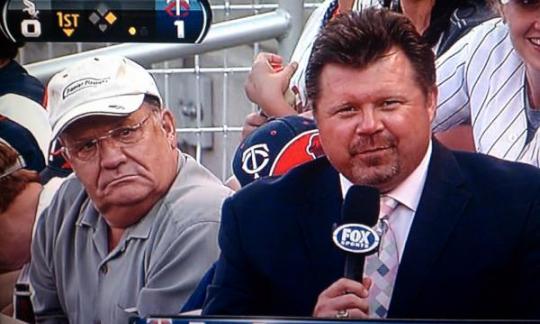
Beat the caption I have provided below and DiamondCentric Apparel will provide the best one with a free t-shirt: "Hey Ron Coomer, GET OFF MY LAWN!"
-
Some ESPN Love for Twins Daily
Parker Hageman replied to Kirsten Brown's topic in Minnesota Twins Talk
What he said. -
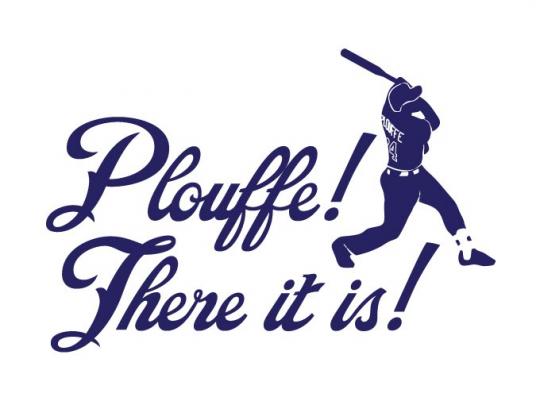
Attention please! Some of you may know that I run a little t-shirt shop known as DiamondCentric. Thanks to RocketPig (aka Brock), we've got a new design that is about to hit the printers - "Plouffe! There It Is!" We're offering this little number for $18 prior to the print run, saving you a couple of bucks. If you are interested, today is the last day to order the shirt and save cash. Thank you for your time. Please continue on with your daily lives.
-
Article: New Member to the Twins Daily Crew
Parker Hageman replied to Nick Nelson's topic in Twins Daily Front Page News
Thanks for cleaning up the place, Brock. You are a graphical wizard. -
Article: Liriano Rediscovers the Slider
Parker Hageman replied to Parker Hageman's topic in Twins Daily Front Page News
It's not personality, it's performance related. -
Article: Liriano Rediscovers the Slider
Parker Hageman replied to Parker Hageman's topic in Twins Daily Front Page News
I do believe he's worn out his welcome in Minnesota but if he continues this trend, he'll definitely be a buy-low type of pitcher either at the trade deadline or in free agency at the end of the season. -
Article: Liriano Rediscovers the Slider
Parker Hageman posted a topic in Twins Daily Front Page News
You can view the page at http://twinsdaily.com/content.php?686-Liriano-Rediscovers-the-Slider -
Francisco Liriano’s first six starts of the season were nothing short of disappointing. With plenty of raw talent, the Twins potential rotation leader failed miserably, throwing 26.2 innings, allowed 37 hits (six of which were home runs), posted a terrible 21-to-19 strikeout-to-walk ratio and failed to pitch into to the sixth inning in all but one start. In that time, Liriano was drastically out of whack mechanically and the coaching staff had even tried to recreate his spring training success by getting him to throw his four-seam fastball more than his two-seamer which he struggled to command. The changes did not keep him from derailing and a shift to the bullpen would be required. After several outings in the ‘pen, injuries and perhaps a need to inflate his trade value necessitated his return to the rotation. Even though the team’s record in those four starts may not reflect it (1-3), Liriano has been a better pitcher during this more recent stretch. He’s worked 23.2 innings (completing six innings in all but one start in which he fell one out shy of the mark) and has allowed just 12 hits to go along with a much improved 29-to-10 strikeout-to-walk ratio. One of the main reasons for this subtle rejuvenation is that he has increased his slider usage. In the past three years, Liriano has had one of the game’s best sliders. According to Fangraphs.com, since 2010 Liriano’s slider has been “worth” 23.6 runs above average, making it the eighth most valuable slider in that time. However, he was encouraged to throw his two-seam fastball more often in attempts to get more quick outs – a ground ball here and there – to avoid getting into deeper counts like most strikeout pitchers do. So, during his first stint in the rotation this year (April 1 – May 7), Liriano favored the two-seam fastball, throwing it 52% of the time and, of those, threw 56% for strikes – a good not great rate. Because of favoring his two-seamer, he threw his slider just 26% of the time in those six starts. In his second stint in the rotation (May 30 – Present), Liriano has leaned more on the biting slider, mixing it in now at 38% of the time. [TABLE=align: center] [TD=colspan: 4]Francisco Liriano – Slider Usage (2012)[/TD] [/TD][TD]Two-Seam Fastball Slider Batting Average April 1 – May 7 52% 26% .346 May 30 – June 15 38% 38% .143 [/TABLE] What’s more is that not only is Liriano using the breaking ball more frequently across the board he is also using it quite a bit to start off each batter in efforts to get ahead of opponents. One of Liriano’s shortcomings these past two years has been his inability to get ahead of hitters. In fact, of starters who have thrown a minimum of 150 innings since 2011, Liriano’s 51% first-pitch strike rate was the lowest in baseball. Not surprisingly, Liriano mainly threw his two-seam fastball on the first pitch and 62% of the time in his first six starts. Meanwhile, in his second go round, he has increased the amount of slider’s he has thrown (from 22% to 36%) and reduced the amount of two-seamers (from 62% to 38%). Because his slider has a much higher strike rate than his fastball, Liriano has found himself ahead in the count more in these last four starts. The change in his pitch distribution has led not only to more strikes but also more ground balls. Liriano’s slider is a ground ball manufacturer and in his first six starts, he exercised a GB/FB split of 0.69, meaning he was inducing more fly balls than grounders (as seen in his six home runs allowed in that time). More recently, that batted ball ratio has increased to 1.00 GB/FB which means the amount of grounders has grown (and he has allowed just one home run in those four starts). What we are likely seeing is Liriano upping his value from absolute zero to something that could bring the Twins a decent prospect in return if he continues this performance and the Twins decide to move him. Watch for Liriano to throw more slide pieces in tonight’s start again Pittsburgh.
-
-
Liriano Rediscovers the Slider
Parker Hageman commented on Parker Hageman's blog entry in Over the Baggy
[ATTACH=CONFIG]1303[/ATTACH]Francisco Liriano’s first six starts of the season were nothing short of disappointing. With plenty of raw talent, the Twins potential rotation leader failed miserably, throwing 26.2 innings, allowed 37 hits (six of which were home runs), posted a terrible 21-to-19 strikeout-to-walk ratio and failed to pitch into to the sixth inning in all but one start. In that time, Liriano was drastically out of whack mechanically and the coaching staff had even tried to recreate his spring training success by getting him to throw his four-seam fastball more than his two-seamer which he struggled to command. The changes did not keep him from derailing and a shift to the bullpen would be required. After several outings in the ‘pen, injuries and perhaps a need to inflate his trade value necessitated his return to the rotation. Even though the team’s record in those four starts may not reflect it (1-3), Liriano has been a better pitcher during this more recent stretch. He’s worked 23.2 innings (completing six innings in all but one start in which he fell one out shy of the mark) and has allowed just 12 hits to go along with a much improved 29-to-10 strikeout-to-walk ratio. One of the main reasons for this subtle rejuvenation is that he has increased his slider usage. In the past three years, Liriano has had one of the game’s best sliders. According to Fangraphs.com, since 2010 Liriano’s slider has been “worth” 23.6 runs above average, making it the eighth most valuable slider in that time. However, he was encouraged to throw his two-seam fastball more often in attempts to get more quick outs – a ground ball here and there – to avoid getting into deeper counts like most strikeout pitchers do. So, during his first stint in the rotation this year (April 1 – May 7), Liriano favored the two-seam fastball, throwing it 52% of the time and, of those, threw 56% for strikes – a good not great rate. Because of favoring his two-seamer, he threw his slider just 26% of the time in those six starts. In his second stint in the rotation (May 30 – Present), Liriano has leaned more on the biting slider, mixing it in now at 38% of the time. [TABLE=align: center] [TD=colspan: 4]Francisco Liriano – Slider Usage (2012)[/TD] [/TD][TD]Two-Seam Fastball Slider Batting Average April 1 – May 7 52% 26% .346 May 30 – June 15 38% 38% .143 [/TABLE] What’s more is that not only is Liriano using the breaking ball more frequently across the board he is also using it quite a bit to start off each batter in efforts to get ahead of opponents. One of Liriano’s shortcomings these past two years has been his inability to get ahead of hitters. In fact, of starters who have thrown a minimum of 150 innings since 2011, Liriano’s 51% first-pitch strike rate was the lowest in baseball. Not surprisingly, Liriano mainly threw his two-seam fastball on the first pitch and 62% of the time in his first six starts. Meanwhile, in his second go round, he has increased the amount of slider’s he has thrown (from 22% to 36%) and reduced the amount of two-seamers (from 62% to 38%). Because his slider has a much higher strike rate than his fastball, Liriano has found himself ahead in the count more in these last four starts. The change in his pitch distribution has led not only to more strikes but also more ground balls. Liriano’s slider is a ground ball manufacturer and in his first six starts, he exercised a GB/FB split of 0.69, meaning he was inducing more fly balls than grounders (as seen in his six home runs allowed in that time). More recently, that batted ball ratio has increased to 1.00 GB/FB which means the amount of grounders has grown (and he has allowed just one home run in those four starts). What we are likely seeing is Liriano upping his value from absolute zero to something that could bring the Twins a decent prospect in return if he continues this performance and the Twins decide to move him. Watch for Liriano to throw more slide pieces in tonight’s start again Pittsburgh. -
The Associated Press's Jon Krawcynski tweeted this morning that the aftermath of Vikings wide receiver Percy Harvin's "unhappiness" yesterday is that he is requesting a trade from the team. Your thoughts?
-
Ripped from the front pages of Duh Magazine, Twins GM Terry Ryan tells ESPN.com's Buster Olney (Insider), that the organization is looking for more starting pitching. The Twins rotation is carrying a hefty 6.06 ERA, highest in the AL, while allowing 1.69 home runs per nine innings pitched, the highest rate in all of baseball (extra disappointing since they play in a pitcher-friendly ballpark). What's more, they seem to be losing 1.3 starters per week. After losing PJ Walters and Carl Pavano, the Twins are in need of promoting for the minors once again or reaching into the bullpen for a spot start. That, however, does not address the long term needs for the rotation and, as Olney alluded to, may require the Twins to trade Denard Span, Josh Willingham or Justin Morneau to get some adequate pitching.
-
You can view the page at http://twinsdaily.com/content.php?672-Gleeman-the-Geek-Ep-46-Loving-a-Filthy-Twitter
-
Gleeman & the Geek Ep 46: Loving a Filthy Twitter
Parker Hageman posted a blog entry in Over the Baggy
Aaron and special guest co-hosts Parker Hageman and Joe Nelson talk about Trevor Plouffe's power explosion, Liam Hendriks' long-ball troubles, whether or not the Twins should be looking to trade Denard Span, Josh Willingham, Justin Morneau, and other veterans, why a filthy Twitter is a good thing, the development of power pitchers, and a phone call from a vacationing John Bonnes. Here are: the podcast the rss feed the podcast on itunes -
Gleeman & the Geek Ep 46: Loving a Filthy Twitter
Parker Hageman commented on Parker Hageman's blog entry in Over the Baggy
Aaron and special guest co-hosts Parker Hageman and Joe Nelson talk about Trevor Plouffe's power explosion, Liam Hendriks' long-ball troubles, whether or not the Twins should be looking to trade Denard Span, Josh Willingham, Justin Morneau, and other veterans, why a filthy Twitter is a good thing, the development of power pitchers, and a phone call from a vacationing John Bonnes. Here are: the podcast the rss feed the podcast on itunes -
Aaron and special guest co-hosts Parker Hageman and Joe Nelson talk about Trevor Plouffe's power explosion, Liam Hendriks' long-ball troubles, whether or not the Twins should be looking to trade Denard Span, Josh Willingham, Justin Morneau, and other veterans, why a filthy Twitter is a good thing, the development of power pitchers, and a phone call from a vacationing John Bonnes. Here are: the podcast the rss feed the podcast on itunes
-
You can view the page at http://twinsdaily.com/content.php?666-Braun-powers-Brewers-past-Twins
-
-
Braun powers Brewers past Twins
Parker Hageman commented on Parker Hageman's blog entry in Over the Baggy
[ATTACH=CONFIG]1246[/ATTACH]No one would blame Liam Hendriks if he wakes up in the middle of the night because of some horrific dreams involving Ryan Braun. After all, the Brewers outfielder tormented Hendriks throughout the afternoon, going 2-for-2 with a pair of home runs and a walk. Braun has inspired fear in all of baseball’s pitchers - now amassing 19 home runs thanks to his multi-homer day at Target Field - and Milwaukee’s big right-handed bat showed why he’s such a good hitter, grinding through a nine-pitch match-up in the third inning and finally got Hendriks to throw something that he could handle. After falling behind 1-2 in the count, Braun made Hendriks labor and fouled off three pitches, working himself into a full count and drove the Hendriks’ fastball into the right field flower bed for an opposite field home runs – a rare feat for a right-handed hitter a Target Field. “Braun’s a strong guy and knows what he’s looking for,” said manager Ron Gardenhire. “He knows how to come to the plate and knows how to protect. He fights off some pitches and finally gets to a pitch he can do something with.” Meanwhile, one pitch later, Aramis Ramirez would pull a first-pitch slider over the fence, giving Milwaukee a quick four run lead, ample cushion for Brewers’ starter Michael Fiers who kept the Twins hitters off-balanced with an array of pitches including a very good cutter and slow curve. Fiers managed to avoid any damage from the league’s hottest hitter, Trevor Plouffe, by bypassing the strike zone altogether, walking him in two of their three match-ups on the afternoon. In all, Plouffe would be walked three times in the game – a career-high for the Twins third baseman. Whether this was a strategy implemented by the Brewers in response to Plouffe’s monumental month is unknown, but Gardenhire gave him plenty of credit for not caving into those pitches out of the zone. “Trevor didn’t chase, he didn’t give in. Whether their pitching around him or not, I don’t know but I know he didn’t chase the pitches and force the issue.” Braun, Plouffe’s off-season workout compatriot, would strike again in the fifth, sending his second home run on the day in the bullpen and equaling Plouffe’s multi-home run game from the night before. In response to the second shot, Hendriks said it was not his intention of giving Braun something he could handle on that particular pitch. “I threw a slider which I did not get it off the plate enough – I was trying to get it away off the plate for a ball – and I left it a little bit over and he put a good swing on that one as well” The three home runs allowed by Hendriks on the day was the sixth time this season one Twins pitcher has allowed a trifecta of home runs in a game. Despite being hit with the loss, Hendriks’ day was not all bad. In five innings he did strikeout five, walked just one and coaxed seven ground ball outs to just two fly ball outs but, in a rare defensive off-day for Jamey Carroll, the veteran second baseman committed two errors – just the second time he has done so in one game in his career. Had Carroll was able corral the second inning grounder or held on to the foul pop from Braun in the fifth, Hendriks may have come away from his first start back in Minnesota since the May demotion a little less scathed. Still Hendriks, who was coming off a 125-pitch start for Rochester seven days ago, did not look crisp as he fell behind hitters early in the game and had required 39 pitches through the first two innings. Being behind shifted the advantage to the Brewers’ offense, which took control of the game. “I think you saw Hendriks behind in the count quite a bit,” said Gardenhire. “He left his breaking ball up a couple of times and they made him pay for it, banged it out of the ballpark.” -
No one would blame Liam Hendriks if he wakes up in the middle of the night because of some horrific dreams involving Ryan Braun. After all, the Brewers outfielder tormented Hendriks throughout the afternoon, going 2-for-2 with a pair of home runs and a walk. Braun has inspired fear in all of baseball’s pitchers - now amassing 19 home runs thanks to his multi-homer day at Target Field - and Milwaukee’s big right-handed bat showed why he’s such a good hitter, grinding through a nine-pitch match-up in the third inning and finally got Hendriks to throw something that he could handle. After falling behind 1-2 in the count, Braun made Hendriks labor and fouled off three pitches, working himself into a full count and drove the Hendriks’ fastball into the right field flower bed for an opposite field home runs – a rare feat for a right-handed hitter a Target Field. “Braun’s a strong guy and knows what he’s looking for,” said manager Ron Gardenhire. “He knows how to come to the plate and knows how to protect. He fights off some pitches and finally gets to a pitch he can do something with.” Meanwhile, one pitch later, Aramis Ramirez would pull a first-pitch slider over the fence, giving Milwaukee a quick four run lead, ample cushion for Brewers’ starter Michael Fiers who kept the Twins hitters off-balanced with an array of pitches including a very good cutter and slow curve. Fiers managed to avoid any damage from the league’s hottest hitter, Trevor Plouffe, by bypassing the strike zone altogether, walking him in two of their three match-ups on the afternoon. In all, Plouffe would be walked three times in the game – a career-high for the Twins third baseman. Whether this was a strategy implemented by the Brewers in response to Plouffe’s monumental month is unknown, but Gardenhire gave him plenty of credit for not caving into those pitches out of the zone. “Trevor didn’t chase, he didn’t give in. Whether they are pitching around him or not, I don’t know but I know he didn’t chase the pitches and force the issue.” Braun, Plouffe’s off-season workout compatriot, would strike again in the fifth, sending his second home run on the day in the bullpen and equaling Plouffe’s multi-home run game from the night before. In response to the second shot, Hendriks said it was not his intention of giving Braun something he could handle on that particular pitch. “I threw a slider which I did not get it off the plate enough – I was trying to get it away off the plate for a ball – and I left it a little bit over and he put a good swing on that one as well” The three home runs allowed by Hendriks on the day was the sixth time this season one Twins pitcher has allowed a trifecta of home runs in a game. Despite being hit with the loss, Hendriks’ day was not all bad. In five innings he did strikeout five, walked just one and coaxed seven ground ball outs to just two fly ball outs but, in a rare defensive off-day for Jamey Carroll, the veteran second baseman committed two errors – just the second time he has done so in one game in his career. Had Carroll been able to corral the second inning grounder or held on to the foul pop from Braun in the fifth, Hendriks may have come away from his first start back in Minnesota since the May demotion a little less scathed. Still Hendriks, who was coming off a 125-pitch start for Rochester seven days ago, did not look crisp as he fell behind hitters early in the game and had required 39 pitches through the first two innings. Being behind shifted the advantage to the Brewers’ offense, which took control of the game. “I think you saw Hendriks behind in the count quite a bit,” said Gardenhire. “He left his breaking ball up a couple of times and they made him pay for it, banged it out of the ballpark.”

