



Seth Stohs
-
Posts
25,912 -
Joined
-
Last visited
-
Days Won
109
Content Type
Profiles
News
Minnesota Twins Videos
2026 Minnesota Twins Top Prospects Ranking
2022 Minnesota Twins Draft Picks
Minnesota Twins Free Agent & Trade Rumors, Notes, & Tidbits
Guides & Resources
2023 Minnesota Twins Draft Picks
The Minnesota Twins Players Project
2024 Minnesota Twins Draft Picks
2025 Minnesota Twins Draft Pick Tracker
2026 Minnesota Twins Draft Tracker: Picks & Bonuses
Forums
Blogs
Events
Store
Downloads
Gallery
Everything posted by Seth Stohs
-
Max Kepler has been added to the Chattanooga Lookouts roster today.
-
Consider this a place where we can post weekly or monthly Twins award winners. For instance: LHP Pat Dean was named the International League's first Pitcher of the Week. He made two starts and gave up one run on six hits in 12.0 innings for the Red Wings. He walked three and struck out 15 batters. RHP Tyler Duffey was named the Southern League's first Pitcher of the Week. He made two starts and gave up no runs on six hits in 13.2 innings. He walked two and struck out 18. Duffey was also named the first Minor League Player of the Week by the Twins.
-

Souhan: Buxton Deserves A Look in CF
Seth Stohs replied to Seth Stohs's topic in Twins Minor League Talk
Fair point, but I do feel that there are some subtle differences. Buxton is arguably the most important prospect in the organization so no matter what, they need to do what is best for him. Just objectively looking at the numbers, and the strikeout percentage and such, in a very limited amount of time in AA, it's hard to say that he deserves it right now. (I also think that opinion could change in a month or two) As for Schafer, yes, he has two full seasons worth of plate appearances spanning about 7 years. We all agree that most likely he's a 4th outfielder and not a starter. However, last year was his first real, extended opportunity to play full time and he came through fairly well. With no obvious options, I do think that he deserved the first crack at it to start this season. I would say that he doesn't deserve as long of a leash as a more veteran, more experienced player might get, but I have no problem saying he deserved the first shot. Of course, by that definition, Eduardo Escobar deserves the starting shortstop job too... but that's for another thread. -
Twins Minor League Report (4/18): The Power Of Walker
Seth Stohs replied to Seth Stohs's topic in Twins Daily Front Page News
Those would also be non-good numbers and hurt future success... Like those three, we always hope that they will make the adjustments and all four are talented enough to do that. -
Souhan: Buxton Deserves A Look in CF
Seth Stohs replied to Seth Stohs's topic in Twins Minor League Talk
I assume most agree that it's not the time... but figured I'd post it to see if anyone thinks that now is the time for Buxton. -
Twins Minor League Report (4/18): The Power Of Walker
Seth Stohs replied to Seth Stohs's topic in Twins Daily Front Page News
I'm not worried about the One Walk as much as I'm concerned about 15 strikeouts in 35 plate appearances. And, I'm not really worried about that small sample... but to be successful, he'll likely have to be below 30% K rate. It's at 43% right now. Again, small sample, but we all know that's the one number that probably matters most to his development. -
I should have started this a week ago, and I'm sure I'll miss a few. Earlier this week, the Twins called up Caleb Thielbar and Ryan O'Rourke was moved from Chattanooga to Rochester. Nate Hanson has been taken off the Disabled List and played on Saturday for Rochester. John Curtiss has been placed on the Cedar Rapids Kernels' Disabled List with a concussion. Miles Nordgren has been promoted from Extended Spring Training.
-
To be honest, it's been as expected. It's what he has always been in the minor leagues, inconsistent. Everyone can see the tools, the speed and the big arm... That said, it's way too small of a sample at this point to worry about it much or to make any drastic changes.
-
I am as high on Byron Buxton as anyone, and even I can't get behind this Jim Souhan article. Is he the best choice? Arguable. Is he ready? I don't think so, but maybe not terribly far off. Does he "deserve" it? I can't think of a reason why. Maybe that one word is what spoils the article for me. Deserves? Is Schafer an ideal starting CF? Of course not. He had a nice run as an every day player last year and with his past as a top prospect certainly deserves an opportunity for now.The Twins know that he's not a long-term answer. Robinson's a 4th/5th outfielder. Hicks isn't hitting at Rochester. Rosario isn't hitting much at Rochester. But Buxton isn't hitting at Chattanooga, and he missed a lot of time last year. He needs time, and his overall, long-term development should be all that matters with the timing of his promotion. But, I'm willing to hear other's opinions.
-
Twins Minor League Report (4/18): The Power Of Walker
Seth Stohs replied to Seth Stohs's topic in Twins Daily Front Page News
The home runs are certainly encouraging, as is the .303 batting average. That said, the 1 walk to 15 strikeouts in 35 plate appearances continues to create cause for concern. He's just so strong. -
Twins Minor League Report (4/18): The Power Of Walker
Seth Stohs replied to Seth Stohs's topic in Twins Daily Front Page News
He is at Extended Spring Training. I believe he was listed as being on the DL through parts of spring training. So, could be working to get to 100% -
Twins Minor League Report (4/18): The Power Of Walker
Seth Stohs replied to Seth Stohs's topic in Twins Daily Front Page News
Not based on two starts, cuz that's silly, but I agree with this thought. His track to the big leagues is as a reliever. That said, there's value in extending him because he'd be a long man in the big leagues. -
There were a couple of really rough starting pitching performances on this night, but there was one that was very good. One of the prolific power hitters in the Twins farm system went deep a couple of times. On Saturday, there were five Twins minor league games. In a bit of a riddle, all four affiliates lost on Saturday, although they went 1-4 on the day. Read below for the scores and highlights from today’s action. Image courtesy of Seth Stohs There were a couple of really rough starting pitching performances on this night, but there was one that was very good. One of the prolific power hitters in the Twins farm system went deep a couple of times. On Saturday, there were five Twins minor league games. In a bit of a riddle, all four affiliates lost on Saturday, although they went 1-4 on the day. Read below for the scores and highlights from today’s action. RED WINGS REPORT Rochester 3, Pawtucket 13 Box Score It was a rough game for the Red Wings on Saturday afternoon in Rhode Island. Baseball America ranked Pawtucket team as the most talented minor league team in baseball. On this day, they were certainly very good. Mark Hamburger made the start for the Red Wings. He gave up three runs through the first four innings. He began the fifth with two runners on base before he was replaced by Stephen Pryor. The reliever allowed both of his inherited runners to score on a three-run homer. Pryor began the sixth inning by allowing a walk and another home run. After a walk and a single, Pryor gave up a third home run and the game was well out of reach. Lester Oliveros got the team out of the sixth inning. Ryan O’Rourke came on for the seventh. He issued a leadoff walk but got the next two batters out. Two runs scored on back-to-back doubles. The Red Wings got creative in the eighth inning, bringing in first baseman Brock Peterson to pitch. He got a strikeout and a walk before giving up a single and a walk. However, he got a ground ball back to himself to end the inning. The Red Wings managed just six hits in the game. Eric Fryer had two of them. Jose Martinez had an extra base hit, his second double. Brock Peterson hit his second home run of the season. Infielder Nate Hanson was activated from the disabled list and got two at-bats in his season debut. CHATTANOOGA CHATTER Game 1 – Chattanooga 5, Birmingham 11 Box Score Not the way that the Lookouts wanted to start their doubleheader. Minor league Rule 5 pick Greg Peavey made his second start of the season. It didn’t go well. He was charged with 11 runs (10 earned) on 13 hits in just 2.2 innings. He was replaced by Adrian Salcedo who was able to restore order. Salcedo went the next 3.1 innings without allowing any more runs. He gave up two hits, walked one and struck out two. Dallas Gallant pitched a scoreless seventh inning. Adam Brett Walker had a big game. He went 2-4 and hit his third and fourth home runs of the season. Miguel Sano went 2-2 with two walks. Travis Harrison went 2-4 with two doubles. He now has four doubles on the season. Game 2 – Chattanooga 1, Birmingham 0 Box Score The Lookouts took an early lead in the bottom of the first inning of Game 2. Jorge Polanco and Dalton Hicks singled, and with two outs Travis Harrison singled in Polanco to give the Lookouts a 1-0 lead. That was all the run support that DJ Baxendale would need. The right-hander gave up just three hits over six shutout innings. He walked three, but he also struck out eight. He left a 1-0 lead to Zack Jones who gave up a leadoff single, but then retired the next three batters, two of them on strikeouts, to record his second save. Baxendale improved to 2-0 and maintained his 0.00 ERA. He now has 12 strikeouts in 12.1 scoreless innings. Dalton Hicks went 2-4, half of the Lookouts hits in the game. MIRACLE MATTERS Ft. Myers 5, St. Lucie 7 Box Score Ethan Mildren made the start for the Miracle. He was charged with five runs (4 earned) on six hits in 4.1 innings. He left the game having allowed three runs. However, he left the game in the fifth inning with two runners on. Alex Muren came on and served up a three-run homer. He retired the next five batters that he faced. Brian Gilbert gave up a run on two hits and two walks in two innings. He struck out two. Madison Boer struck out three in a scoreless ninth inning. Max Kepler went 2-4 with a walk and a double. Alex Swim went 2-4 with a walk. Marcus Knecht went 1-2 with three walks. For the second straight game, Jason Kanzler homered. The Miracle are now 4-6 on the season. KERNELS NUGGETS Cedar Rapids 3, Burlington 4 Box Score After six games at home, the Kernels made the first of three commuter trips to Burlington. It was a close game throughout, but the Kernels fell 4-3. Michael Cederoth was charged with four runs on six hits over six innings. He walked two and struck out six. He struggled early, giving up three runs in the first two innings, but he settled down well after that. Randy LeBlanc came on and threw two scoreless innings. He gave up two hits, walked none and struck out one. The Kernels had six hits in the game, two of them were off the bat of T.J. White. Tanner Vavra hit his second double and the Kernels cut the Bees lead to 3-2 in the third inning when he hit a two-run single. Tanner English drove in the other run with a sacrifice fly. The Kernels are now 7-3 this year. TWINS DAILY PLAYERS OF THE DAY Twins Daily Minor League Pitcher of the Day – DJ Baxendale, Chattanooga Lookouts Twins Daily Minor League Hitter of the Day – Adam Brett Walker, Chattanooga Lookouts SUNDAY’S PROBABLE STARTERS Rochester @ Pawtucket (12:05 CST) – LHP Pat Dean Birmingham @ Chattanooga (1:15 CST) – RHP Alex Wimmers St. Lucie @ Ft. Myers (3:05 CST) – RHP Ryan Eades Cedar Rapids @ Burlington (2:00 CST) – RHP Felix Jorge Please feel free to ask any questions and discuss the Saturday games. View full article
- 18 replies
-
- 1
-

-
- adam walker
- dj baxendale
- (and 3 more)
-
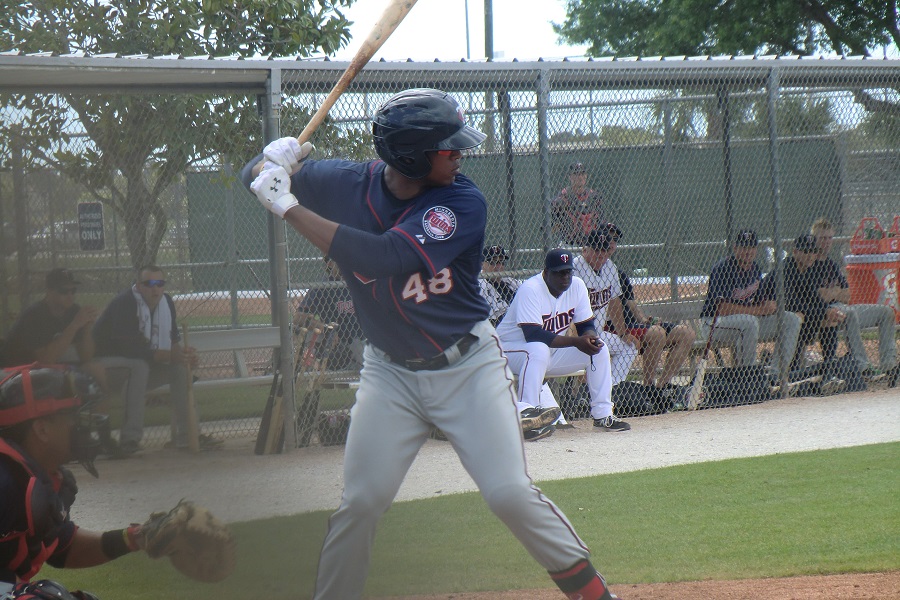 RED WINGS REPORT Rochester 3, Pawtucket 13 Box Score It was a rough game for the Red Wings on Saturday afternoon in Rhode Island. Baseball America ranked Pawtucket team as the most talented minor league team in baseball. On this day, they were certainly very good. Mark Hamburger made the start for the Red Wings. He gave up three runs through the first four innings. He began the fifth with two runners on base before he was replaced by Stephen Pryor. The reliever allowed both of his inherited runners to score on a three-run homer. Pryor began the sixth inning by allowing a walk and another home run. After a walk and a single, Pryor gave up a third home run and the game was well out of reach. Lester Oliveros got the team out of the sixth inning. Ryan O’Rourke came on for the seventh. He issued a leadoff walk but got the next two batters out. Two runs scored on back-to-back doubles. The Red Wings got creative in the eighth inning, bringing in first baseman Brock Peterson to pitch. He got a strikeout and a walk before giving up a single and a walk. However, he got a ground ball back to himself to end the inning. The Red Wings managed just six hits in the game. Eric Fryer had two of them. Jose Martinez had an extra base hit, his second double. Brock Peterson hit his second home run of the season. Infielder Nate Hanson was activated from the disabled list and got two at-bats in his season debut. CHATTANOOGA CHATTER Game 1 – Chattanooga 5, Birmingham 11 Box Score Not the way that the Lookouts wanted to start their doubleheader. Minor league Rule 5 pick Greg Peavey made his second start of the season. It didn’t go well. He was charged with 11 runs (10 earned) on 13 hits in just 2.2 innings. He was replaced by Adrian Salcedo who was able to restore order. Salcedo went the next 3.1 innings without allowing any more runs. He gave up two hits, walked one and struck out two. Dallas Gallant pitched a scoreless seventh inning. Adam Brett Walker had a big game. He went 2-4 and hit his third and fourth home runs of the season. Miguel Sano went 2-2 with two walks. Travis Harrison went 2-4 with two doubles. He now has four doubles on the season. Game 2 – Chattanooga 1, Birmingham 0 Box Score The Lookouts took an early lead in the bottom of the first inning of Game 2. Jorge Polanco and Dalton Hicks singled, and with two outs Travis Harrison singled in Polanco to give the Lookouts a 1-0 lead. That was all the run support that DJ Baxendale would need. The right-hander gave up just three hits over six shutout innings. He walked three, but he also struck out eight. He left a 1-0 lead to Zack Jones who gave up a leadoff single, but then retired the next three batters, two of them on strikeouts, to record his second save. Baxendale improved to 2-0 and maintained his 0.00 ERA. He now has 12 strikeouts in 12.1 scoreless innings. Dalton Hicks went 2-4, half of the Lookouts hits in the game. MIRACLE MATTERS Ft. Myers 5, St. Lucie 7 Box Score Ethan Mildren made the start for the Miracle. He was charged with five runs (4 earned) on six hits in 4.1 innings. He left the game having allowed three runs. However, he left the game in the fifth inning with two runners on. Alex Muren came on and served up a three-run homer. He retired the next five batters that he faced. Brian Gilbert gave up a run on two hits and two walks in two innings. He struck out two. Madison Boer struck out three in a scoreless ninth inning. Max Kepler went 2-4 with a walk and a double. Alex Swim went 2-4 with a walk. Marcus Knecht went 1-2 with three walks. For the second straight game, Jason Kanzler homered. The Miracle are now 4-6 on the season. KERNELS NUGGETS Cedar Rapids 3, Burlington 4 Box Score After six games at home, the Kernels made the first of three commuter trips to Burlington. It was a close game throughout, but the Kernels fell 4-3. Michael Cederoth was charged with four runs on six hits over six innings. He walked two and struck out six. He struggled early, giving up three runs in the first two innings, but he settled down well after that. Randy LeBlanc came on and threw two scoreless innings. He gave up two hits, walked none and struck out one. The Kernels had six hits in the game, two of them were off the bat of T.J. White. Tanner Vavra hit his second double and the Kernels cut the Bees lead to 3-2 in the third inning when he hit a two-run single. Tanner English drove in the other run with a sacrifice fly. The Kernels are now 7-3 this year. TWINS DAILY PLAYERS OF THE DAY Twins Daily Minor League Pitcher of the Day – DJ Baxendale, Chattanooga Lookouts Twins Daily Minor League Hitter of the Day – Adam Brett Walker, Chattanooga Lookouts SUNDAY’S PROBABLE STARTERS Rochester @ Pawtucket (12:05 CST) – LHP Pat Dean Birmingham @ Chattanooga (1:15 CST) – RHP Alex Wimmers St. Lucie @ Ft. Myers (3:05 CST) – RHP Ryan Eades Cedar Rapids @ Burlington (2:00 CST) – RHP Felix Jorge Please feel free to ask any questions and discuss the Saturday games.
 -
Two more home runs in Game 1 tonight for the Lookouts. He now has four homers in the Lookouts' 8 games.
-
Twins Minor League Report (4/17): Pitchers and Power
Seth Stohs replied to Seth Stohs's topic in Twins Daily Front Page News
Just don't expect perfection. That's the key. They all need to adjust. As you said, some will, some won't. Reed and Burdi will be just fine when they throw strikes. Sano and Buxton will be just fine. It is a big step...- 13 replies
-
- 2
-
-
- chih-wei hu
- stephen gonsalves
- (and 3 more)
-
One thing to note... they have the radar gun (used for the scoreboard) up high by the press box. It shows 2 mph slower than the radar gun that the pitchers who are scouting pitches down on the field have. So, 88 mph on the scoreboard is likely 90. 91 on the scoreboard is likely 93, etc. Regarding Gonsalves, teammates and others were so impressed with his advanced knowledge of pitching, mechanics, but also situations, etc.
-
Power and pitching have a way of getting noticed, in the big leagues or in the minor leagues, or frankly any level of organized baseball. On Friday night in the Minnesota Twins minor leagues, there were some big home runs (to go with Trevor Plouffe’s extra-innings, walk-off blast), but there were a couple of very strong pitching performances as well. Continue reading to find out all of the details about Friday night in the Twins farm system. Image courtesy of Seth Stohs Power and pitching have a way of getting noticed, in the big leagues or in the minor leagues, or frankly any level of organized baseball. On Friday night in the Minnesota Twins minor leagues, there were some big home runs (to go with Trevor Plouffe’s extra-innings, walk-off blast), but there were a couple of very strong pitching performances as well. Continue reading to find out all of the details about Friday night in the Twins farm system. RED WINGS REPORT Rochester 4, Pawtucket 6 Box Score It was a matchup of left-handers in Pawtucket on Friday night. The Red Wings sent Jason Wheeler to the mound to face Paw Sox top pitching prospect Henry Owens. The Red Wings’ bats were able to touch up Owens for four runs on three hits and six walks in just 4.2 innings. On the other side, Wheeler gave up two runs on five hits and two walks in five innings. He struck out four. Lester Oliveros came on and gave up one run, while striking out two, in his inning. AJ Achter was charged with two runs on two hits and a walk in his inning. Michael Tonkin gave up a solo home run in the eighth inning. The big hit off of Owens was a grand slam by Eddie Rosario. It was his first AAA home run. Doug Bernier had two hits. Reynaldo Rodriguez and a single and walked once. CHATTANOOGA CHATTER Chattanooga 4, Birmingham 6 Box Score After being rained out on Thursday, JO Berrios finally made his second start of the season on Friday night. The good news? He struck out nine batters. However, he went just 4.2 innings and gave up three runs on eight hits, three walks and a hit batter. He needed 107 pitches and just 60 of them were strikes. Jake Reed came on and was charged with one run on two hits in 1.1 innings. Nick Burdi went the next two innings and was charged with an unearned run on one hit and one walk. He struck out two. DJ Johnson gave up a run on three hits in the ninth inning. In the third inning, Miguel Sano came up with the bases loaded and launched his second home run of the year. The grand slam gave the Lookouts a 4-2 lead at the time. However, the Lookouts had only six hits. Levi Michael and Jorge Polanco each had a single and a walk in the game. The Lookouts defense did not help the cause either. They totaled four errors, two of them were throws by Miguel Sano. The Lookouts are now 5-2. MIRACLE MATTERS Ft. Myers 7, St. Lucie 0 Box Score On Thursday, Jason Kanzler had a bunt single to end his 0-23 start to the season. As you would expect, he busted out in style on Friday night. In his first at-bat, he gave the Miracle a 2-0 lead with a long, two-run homer. He added a double later in the game as well. His game ended a little early though. In the 6th inning, the Miracle started with a single, an error and a walk to load the bases. After two strikeouts, Jason Kanzler came to the plate. He went around on a check swing. At least, that’s what the home plate ump said, and called. Kanzler objected vehemently and was immediately ejected. Chad Christensen was called on to replace him, and he singled to right to score two more runs. Another run scored on a balk and the Miracle had a three-run sixth inning. The Miracle added another run in the 7th inning to give them their seventh run. Of course, an even more important story for the team occurred on the mound. Chih-Wei Hu started and threw seven shutout innings. He gave up just two hits, walked one and struck out ten for the Win. He had a three-ball count just twice in the game. Tim Shibuya and JT Chargois each threw a scoreless inning to complete the shutout. KERNELS NUGGETS Cedar Rapids 5, Peoria 1 Box Score It may not show from the final score, but this was quite the pitcher’s duel through most of the game. The Kernels were able to break their losing streak thanks to a big eighth inning. Lefty Stephen Gonsalves got a no-decision, but he pitched very well. He gave up one run on five hits and a walk in his seven innings. He recorded ten strikeouts. Through his first two starts, he has given up two runs on ten hits in 13 innings. He has just one walk allowed and has struck out 19 batters. (I was a guest on the Talk 2 Contact podcast this week and predicted Gonsalves as the Minor League Pitcher of the Year in 2015. Hear who the others predicted for their minor league pitcher and hitter of the year.) Gonsalves was replaced by Zach Tillery who pitched two scoreless innings in relief to improve to 2-0 on the season. Max Murphy led the offense. He went 3-4 in the game. Tyler Kuresa had a 2-4 night. However, the big hit came from a guy who was getting a night off. Trey Vavra came up with two runners on base in the eighth inning of a tie game. He launched his second home run of the season, a three-run blast to give the Kernels a 5-1 lead. TWINS DAILY PLAYERS OF THE DAY Twins Daily Minor League Pitcher of the Day – Chih-Wei Hu, Ft. Myers Miracle Twins Daily Minor League Hitter of the Day – Trey Vavra, Cedar Rapids Kernels SATURDAY’S PROBABLE STARTERS Rochester @ Pawtucket (12:05 CST) – RHP Mark Hamburger Birmingham @ Chattanooga (5:15 CST) – RHP Greg Peavey St. Lucie @ Ft. Myers (5:05 CST) – RHP Ethan Mildren Cedar Rapids @ Burlington (6:30 CST) – RHP Michael Cederoth Please feel free to ask any questions and discuss the Friday games. View full article
- 13 replies
-
- 1
-
-
- chih-wei hu
- stephen gonsalves
- (and 3 more)
-
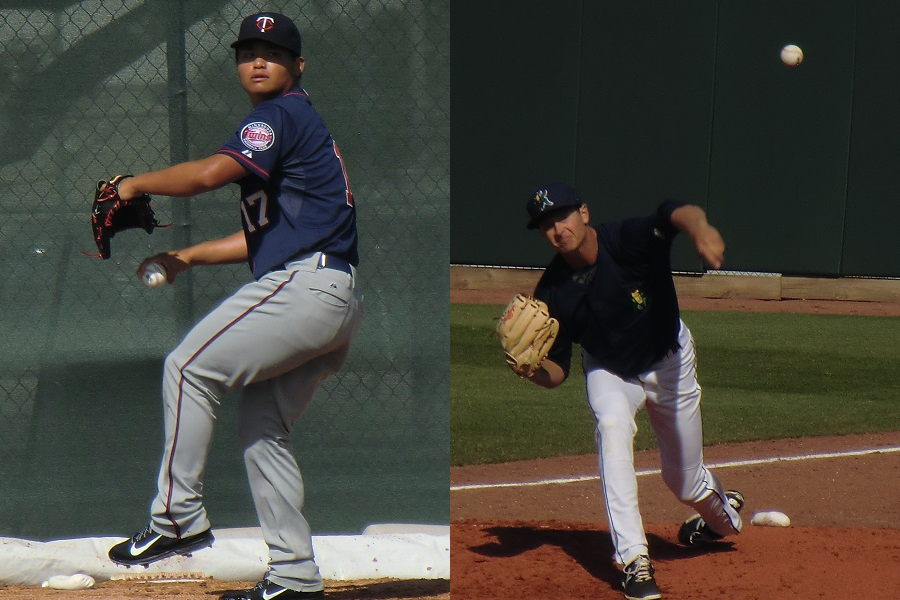 RED WINGS REPORT Rochester 4, Pawtucket 6 Box Score It was a matchup of left-handers in Pawtucket on Friday night. The Red Wings sent Jason Wheeler to the mound to face Paw Sox top pitching prospect Henry Owens. The Red Wings’ bats were able to touch up Owens for four runs on three hits and six walks in just 4.2 innings. On the other side, Wheeler gave up two runs on five hits and two walks in five innings. He struck out four. Lester Oliveros came on and gave up one run, while striking out two, in his inning. AJ Achter was charged with two runs on two hits and a walk in his inning. Michael Tonkin gave up a solo home run in the eighth inning. The big hit off of Owens was a grand slam by Eddie Rosario. It was his first AAA home run. Doug Bernier had two hits. Reynaldo Rodriguez and a single and walked once. CHATTANOOGA CHATTER Chattanooga 4, Birmingham 6 Box Score After being rained out on Thursday, JO Berrios finally made his second start of the season on Friday night. The good news? He struck out nine batters. However, he went just 4.2 innings and gave up three runs on eight hits, three walks and a hit batter. He needed 107 pitches and just 60 of them were strikes. Jake Reed came on and was charged with one run on two hits in 1.1 innings. Nick Burdi went the next two innings and was charged with an unearned run on one hit and one walk. He struck out two. DJ Johnson gave up a run on three hits in the ninth inning. In the third inning, Miguel Sano came up with the bases loaded and launched his second home run of the year. The grand slam gave the Lookouts a 4-2 lead at the time. However, the Lookouts had only six hits. Levi Michael and Jorge Polanco each had a single and a walk in the game. The Lookouts defense did not help the cause either. They totaled four errors, two of them were throws by Miguel Sano. The Lookouts are now 5-2. MIRACLE MATTERS Ft. Myers 7, St. Lucie 0 Box Score On Thursday, Jason Kanzler had a bunt single to end his 0-23 start to the season. As you would expect, he busted out in style on Friday night. In his first at-bat, he gave the Miracle a 2-0 lead with a long, two-run homer. He added a double later in the game as well. His game ended a little early though. In the 6th inning, the Miracle started with a single, an error and a walk to load the bases. After two strikeouts, Jason Kanzler came to the plate. He went around on a check swing. At least, that’s what the home plate ump said, and called. Kanzler objected vehemently and was immediately ejected. Chad Christensen was called on to replace him, and he singled to right to score two more runs. Another run scored on a balk and the Miracle had a three-run sixth inning. The Miracle added another run in the 7th inning to give them their seventh run. Of course, an even more important story for the team occurred on the mound. Chih-Wei Hu started and threw seven shutout innings. He gave up just two hits, walked one and struck out ten for the Win. He had a three-ball count just twice in the game. Tim Shibuya and JT Chargois each threw a scoreless inning to complete the shutout. KERNELS NUGGETS Cedar Rapids 5, Peoria 1 Box Score It may not show from the final score, but this was quite the pitcher’s duel through most of the game. The Kernels were able to break their losing streak thanks to a big eighth inning. Lefty Stephen Gonsalves got a no-decision, but he pitched very well. He gave up one run on five hits and a walk in his seven innings. He recorded ten strikeouts. Through his first two starts, he has given up two runs on ten hits in 13 innings. He has just one walk allowed and has struck out 19 batters. (I was a guest on the Talk 2 Contact podcast this week and predicted Gonsalves as the Minor League Pitcher of the Year in 2015. Hear who the others predicted for their minor league pitcher and hitter of the year.) Gonsalves was replaced by Zach Tillery who pitched two scoreless innings in relief to improve to 2-0 on the season. Max Murphy led the offense. He went 3-4 in the game. Tyler Kuresa had a 2-4 night. However, the big hit came from a guy who was getting a night off. Trey Vavra came up with two runners on base in the eighth inning of a tie game. He launched his second home run of the season, a three-run blast to give the Kernels a 5-1 lead. TWINS DAILY PLAYERS OF THE DAY Twins Daily Minor League Pitcher of the Day – Chih-Wei Hu, Ft. Myers Miracle Twins Daily Minor League Hitter of the Day – Trey Vavra, Cedar Rapids Kernels SATURDAY’S PROBABLE STARTERS Rochester @ Pawtucket (12:05 CST) – RHP Mark Hamburger Birmingham @ Chattanooga (5:15 CST) – RHP Greg Peavey St. Lucie @ Ft. Myers (5:05 CST) – RHP Ethan Mildren Cedar Rapids @ Burlington (6:30 CST) – RHP Michael Cederoth Please feel free to ask any questions and discuss the Friday games.
 -
Enjoy the game!! It's a fun time there! Look forward to your thoughts!
-
2015 Adopt-a-Prospect Sign-Up Here (NOW LIVE!)
Seth Stohs replied to Seth Stohs's topic in Twins Daily Front Page News
The Adopt-A-Prospect 2015 is now open... Take a player or two... If you haven't already, be sure to get your initial profiles now if you haven't already... -
2015 Adopt-a-Prospect Sign-Up Here (NOW LIVE!)
Seth Stohs replied to Seth Stohs's topic in Twins Daily Front Page News
Update: WxMan17 - DJ Baxendale SD Buhr - James Beresford curt1965 - JO Berrios Steve Lein - Nick Burdi Hrbowski - Byron Buxton 2wins87 - Michael Cederoth Peanutsfromheaven - JT Chargois JunkWaxTwins - Ryan Eades Jeff Reboulet - Tanner English ashburyjohn - JJ Fernandez tyomoth - Mitch Garver MinnFan4Life - Stephen Gonsalves lightfoot789 - Niko Goodrum RollingOaks - Nick Gordon gunnarthor - Travis Harrison curt1965 - Aaron Hicks nicksaviking - Dalton Hicks JaleelWhiteFanClub - Chih-Wei Hu Hrbowski - Zack Jones ashburyjohn - Felix Jorge blue chipper - Max Kepler Jeff Reboulet - Yorman Landa Joe Mulligan - Zack Larson James - Brett Lee Joe Mulligan - Trevor May markos - Alex Meyer teekz - Levi Michael AM. - Amaurys Minier TJG - Max Murphy Shane Wahl - Brian Navarreto scottz - Greg Peavey TheDean - Brandon Peterson milldaddy35 - Jorge Polanco Bill Tanner - Jake Reed bulldozier14 - Eddie Rosario Shane Wahl - Adrian Salcedo nytwinsfan - Miguel Sano Dance with Disco Dan - Kohl Stewart Stringer Bell - Alex Swim nate10s - Stuart Turner Shane Wahl - Adam Brett Walker always 33 - Luke Westphal Secondary User - Jason Wheeler -
Ironically 12 days later... He's 0-3 with 3 strikeouts against James Shields so far today.
-
Thielbar's definitely the right guy, though any of them would have been fine. Side note - To replace Thielbar in Rochester, they receive Ryan O'Rourke from Chattanooga.
-
Haha!! Fair point!
