



Seth Stohs
-
Posts
25,912 -
Joined
-
Last visited
-
Days Won
109
Content Type
Profiles
News
Minnesota Twins Videos
2026 Minnesota Twins Top Prospects Ranking
2022 Minnesota Twins Draft Picks
Minnesota Twins Free Agent & Trade Rumors, Notes, & Tidbits
Guides & Resources
2023 Minnesota Twins Draft Picks
The Minnesota Twins Players Project
2024 Minnesota Twins Draft Picks
2025 Minnesota Twins Draft Pick Tracker
2026 Minnesota Twins Draft Tracker: Picks & Bonuses
Forums
Blogs
Events
Store
Downloads
Gallery
Everything posted by Seth Stohs
-
 This is such a non-issue. Buxton has now played three games in the last 6-7 weeks. Letting him play another 10-12 in AAA isn't hurting anyone. The Twins OF can manage. He'll be up within 20 days so that the option doesn't count. it's all good. Much ado about nothing.
 -
To make room for Byron Buxton on the Rochester roster, Minnesotan and former Gopher Nate Hanson was released.
-
I'm 100% on board with him spending a week or two at AAA after missing 6 weeks. That totally makes sense to me. I don't get activating him and optioning him after just 3 days on a rehab when they could use up to 20 days for rehab. But, that's pretty minor too. Service Time has nothing to do with it (in my opinion...). See this Jeremy Nygaard tweet for why. If he's optioned for less than 20 days, I guess it doesn't count.
-
Twins Daily Awards: Hitter: April: Dalton Hicks, Chattanooga Lookouts May: Max Kepler, Chattanooga Lookouts June: Adam Brett Walker, Chattanooga Lookouts July: Jermaine Palacios, GCL/Elizabethton Twins Starting Pitcher: April: Stephen Gonsalves, Cedar Rapids Kernels May: Tommy Milone, Rochester Red Wings June: Taylor Rogers, Rochester Red Wings July: Mat Batts, Ft. Myers Miracle Relief Pitcher: April: Tim Shibuya, Ft. Myers Miracle May: Trevor Hildenberger, Cedar Rapids Kernels June: Brandon Peterson, Ft. Myers/Chattanooga July: Trevor Hildenberger, Cedar Rapids/Ft. Myers
-
Kennys Vargas was named the Southern League Hitter of the Week.
-
From the time they called up Duffey, Berrios has gone from 3 consecutive good starts to 5 consecutive good starts. At the time of the call up, Duffey was the right call and I believe he was the one that gave them a better chance to win. We don't know if Berrios would have done well. Maybe he would have, but no way to know. Berrios is the better prospect. It didn't make him the right call at that time. Right now, it's clear that Berrios is pitching better and looks ready. Duffey hasn't pitched since his outing against the Blue Jays.
-
He also had like 12 errors at 1B, which is pretty hard to do. He could land on his feet and there is some good power potential with him too.
-
Twins Minor League Leader Board (through August 8)
Seth Stohs replied to Seth Stohs's topic in Twins Daily Front Page News
He is not on the 40 man roster. He has returned/stayed with the organization that signed him as a 16-year-old in 2005. He has become a free agent after the last three seasons but came back. He has played almost exclusively 2B the last 3-4 years, but he can play 3B and SS as well. -
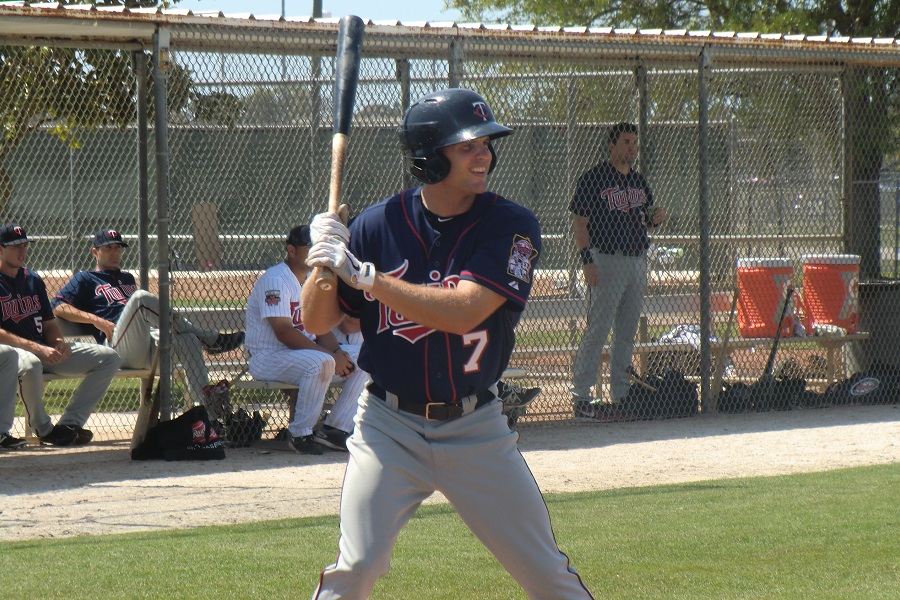
Plenty of action on a Sunday in the Minnesota Twins minor leagues. Which prospect knocked in six runs on this day? Which prospect had a four-hit game? Which reliever finally got a chance to start… and pitched just as well as he had out of the bullpen? There was a blowout, and there were three, one-run games. Image courtesy of Seth Stohs (photo of Stephen Wickens) Plenty of action on a Sunday in the Minnesota Twins minor leagues. Which prospect knocked in six runs on this day? Which prospect had a four-hit game? Which reliever finally got a chance to start… and pitched just as well as he had out of the bullpen? There was a blowout, and there were three, one-run games. All that and more can be found as you work your way through Sunday’s minor league report. RED WINGS REPORT Rochester 6, Charlotte 5 Box Score Michael Bowden made his third start for the Red Wings and got his first win. He gave up four runs on eight hits and a walk over six innings. He struck out six. Alex Meyer walked two but did not allow a run in his inning. Mark Hamburger gave up a solo home run in his inning. Michael Tonkin gave up one hit in a scoreless inning to record his 11th save. Xavier Avery went 2-4 with his fourth home run. Argenis Diaz was also 2-4. Reynaldo Rodriguez hit his 13th home run. Byron Buxton went 1-4 with a walk. CHATTANOOGA CHATTER Chattanooga 14, Mobile 2 Box Score The Lookouts bats showed up for this game as they got contributions from almost everyone in the lineup. Stephen Wickens had a very productive day. The infielder went 3-5 with his 11th double. He also drove in six runs. He had a two-run single and a bases-clearing double. Kennys Vargas went 2-4 with a walk and his seventh Lookouts home run. Heiker Meneses went 2-5. Stuart Turner and Niko Goodrum were each 1-2 with two walks. The team scored their 14 runs on 11 hits and seven walks. They were ahead 7-1 after just three innings before scoring seven runs in the fourth frame. DJ Baxendale was solid and recorded the win. He gave up two runs on seven hits over six innings. He walked one and struck out three. Brandon Peterson gave up one hit in a scoreless inning. Alex Wimmers struck out two over two perfect innings. MIRACLE MATTERS Ft. Myers 2, Palm Beach 3 Box Score Not much offense for the Miracle, but they held a late 2-1 lead. Ryan Eades started. He gave up one run on five hits and a walk in 5.2 innings. He struck out four. Corey Williams got the final out of the sixth and three more outs in the seventh. Holding a 2-1 lead in the eighth, Trevor Hildenberger gave up two runs on three hits to take the loss. The Miracle took a 1-0 lead in the top of the first when a Marcus Knecht ground out scored Engelb Vielma. In the sixth inning, In the sixth Mitch Garver provided the second run. He doubled in Aderlin Mejia, who had walked. Garver was 2-4 with his 17th double. KERNELS NUGGETS Cedar Rapids 4, Bowling Green 0 Box Score Randy LeBlanc has been one of the top relief pitchers in the Twins system all year. He leads all relievers in Innings pitched. On Sunday, he finally was given the opportunity to start. He came through as hoped. He worked five shutout innings. He gave up just one hit, walked three and struck out two. He recorded ten groundouts to just one fly out. Ethan Mildren and Yorman Landa each pitched two scoreless innings in relief. Pat Kelly went 3-4. TJ White hit his first home run of the year, a two-run shot in the seventh inning. Tanner English went 2-4 with a walk and his 35th stolen base. E-TOWN E-NOTES Elizabethton 6, Bluefield 5 Box Score Jermaine Palacios continues his incredible season. He went 4-5 in this game to raise his Twins batting average to .455. AJ Murray went 3-5. LaMonte Wade was 2-3 with two walks. He also stole his fourth base. Brad Hartong was 2-5. Amaurys Minier was 2-2 with a walk. However, the E-Twins had four errors which kept the game close. Palacios committed his fifth and sixth errors in his ninth game with the E-Twins. Nelson Molina also had two errors. Miles Nordgren got the starting nod for the Twins. He gave up just two unearned runs on three hits over 6.2 innings. He walked one and struck out three. Tyler Stirewalt came on and was charged with three unearned runs on three hits in one inning. Kuo Hua Lo struck out three and walked one in 1.1 scoreless innings. GCL TWINS TAKES GCL Twins Box Score No GCL games scheduled on Sundays. TWINS DAILY PLAYERS OF THE DAY Twins Daily Minor League Pitcher of the Day – Randy LeBlanc, Cedar Rapids Kernels Twins Daily Minor League Hitter of the Day – Stephen Wickens, Chattanooga Lookouts MONDAY’S PROBABLE STARTERS Rochester @ Buffalo (6:05 CST) – RHP Tyler Duffey Mobile @ Chattanooga (6:15 CST) – RHP Tim Shibuya Ft. Myers @ St. Lucie (5:30 CST) – LHP Mat Batts Cedar Rapids – No Game Scheduled Greeneville @ Elizabethton (DH @ 5:00 CST) – RHP Andro Cutura GCL Rays @ GCL Twins (11:00 CST) – TBD Feel free to leave any questions or comments below View full article
- 13 replies
-
- 1
-

-
- jermaine palacios
- stephen wickens
- (and 3 more)
-
 All that and more can be found as you work your way through Sunday’s minor league report. RED WINGS REPORT Rochester 6, Charlotte 5 Box Score Michael Bowden made his third start for the Red Wings and got his first win. He gave up four runs on eight hits and a walk over six innings. He struck out six. Alex Meyer walked two but did not allow a run in his inning. Mark Hamburger gave up a solo home run in his inning. Michael Tonkin gave up one hit in a scoreless inning to record his 11th save. Xavier Avery went 2-4 with his fourth home run. Argenis Diaz was also 2-4. Reynaldo Rodriguez hit his 13th home run. Byron Buxton went 1-4 with a walk. CHATTANOOGA CHATTER Chattanooga 14, Mobile 2 Box Score The Lookouts bats showed up for this game as they got contributions from almost everyone in the lineup. Stephen Wickens had a very productive day. The infielder went 3-5 with his 11th double. He also drove in six runs. He had a two-run single and a bases-clearing double. Kennys Vargas went 2-4 with a walk and his seventh Lookouts home run. Heiker Meneses went 2-5. Stuart Turner and Niko Goodrum were each 1-2 with two walks. The team scored their 14 runs on 11 hits and seven walks. They were ahead 7-1 after just three innings before scoring seven runs in the fourth frame. DJ Baxendale was solid and recorded the win. He gave up two runs on seven hits over six innings. He walked one and struck out three. Brandon Peterson gave up one hit in a scoreless inning. Alex Wimmers struck out two over two perfect innings. MIRACLE MATTERS Ft. Myers 2, Palm Beach 3 Box Score Not much offense for the Miracle, but they held a late 2-1 lead. Ryan Eades started. He gave up one run on five hits and a walk in 5.2 innings. He struck out four. Corey Williams got the final out of the sixth and three more outs in the seventh. Holding a 2-1 lead in the eighth, Trevor Hildenberger gave up two runs on three hits to take the loss. The Miracle took a 1-0 lead in the top of the first when a Marcus Knecht ground out scored Engelb Vielma. In the sixth inning, In the sixth Mitch Garver provided the second run. He doubled in Aderlin Mejia, who had walked. Garver was 2-4 with his 17th double. KERNELS NUGGETS Cedar Rapids 4, Bowling Green 0 Box Score Randy LeBlanc has been one of the top relief pitchers in the Twins system all year. He leads all relievers in Innings pitched. On Sunday, he finally was given the opportunity to start. He came through as hoped. He worked five shutout innings. He gave up just one hit, walked three and struck out two. He recorded ten groundouts to just one fly out. Ethan Mildren and Yorman Landa each pitched two scoreless innings in relief. Pat Kelly went 3-4. TJ White hit his first home run of the year, a two-run shot in the seventh inning. Tanner English went 2-4 with a walk and his 35th stolen base. E-TOWN E-NOTES Elizabethton 6, Bluefield 5 Box Score Jermaine Palacios continues his incredible season. He went 4-5 in this game to raise his Twins batting average to .455. AJ Murray went 3-5. LaMonte Wade was 2-3 with two walks. He also stole his fourth base. Brad Hartong was 2-5. Amaurys Minier was 2-2 with a walk. However, the E-Twins had four errors which kept the game close. Palacios committed his fifth and sixth errors in his ninth game with the E-Twins. Nelson Molina also had two errors. Miles Nordgren got the starting nod for the Twins. He gave up just two unearned runs on three hits over 6.2 innings. He walked one and struck out three. Tyler Stirewalt came on and was charged with three unearned runs on three hits in one inning. Kuo Hua Lo struck out three and walked one in 1.1 scoreless innings. GCL TWINS TAKES GCL Twins Box Score No GCL games scheduled on Sundays. TWINS DAILY PLAYERS OF THE DAY Twins Daily Minor League Pitcher of the Day – Randy LeBlanc, Cedar Rapids Kernels Twins Daily Minor League Hitter of the Day – Stephen Wickens, Chattanooga Lookouts MONDAY’S PROBABLE STARTERS Rochester @ Buffalo (6:05 CST) – RHP Tyler Duffey Mobile @ Chattanooga (6:15 CST) – RHP Tim Shibuya Ft. Myers @ St. Lucie (5:30 CST) – LHP Mat Batts Cedar Rapids – No Game Scheduled Greeneville @ Elizabethton (DH @ 5:00 CST) – RHP Andro Cutura GCL Rays @ GCL Twins (11:00 CST) – TBD Feel free to leave any questions or comments below
 -
Minnesota Twins Minor League Player of the Week: Week 1: Tyler Duffey, Chattanooga Lookouts Week 2: Stephen Gonsalves, Cedar Rapids Kernels Week 3: Byron Buxton, Chattanooga Lookouts Week 4: Trey Vavra, Cedar Rapids Lookouts Week 5: Miguel Sano, Chattanooga Lookouts Week 6: Max Kepler, Chattanooga Lookouts Week 7: Aaron Slegers, Ft. Myers Miracle Week 8: Brandon Peterson, Ft. Myers Miracle Week 9: David Hurlbut, Chattanooga Lookouts Week 10: Alex Wimmers, Chattanooga Lookouts Week 11: Engelb Vielma, Ft. Myers Miracle Week 12: AJ Achter, Rochester Red Wings Week 13: Oswaldo Arcia, Rochester Red Wings Week 14: Mat Batts, Ft. Myers Miracle Week 15: Felix Jorge, Cedar Rapids Kernels Week 16: Chris Paul, Elizabethton Twins Elizabethton (Rookie Level) outfielder Chris Paul is the Twins minor league Player of the Week...Paul, 22, played in six games for the E-Twins, hitting .357 (10-for-28) with three doubles, two home runs, 12 RBI and four runs scored...Paul has seen action in left field, first base and third base this season....he was drafted by the Twins in the sixth round of the 2015 First-Year Player Draft out of UC Berkeley
-
Lewin Diaz to E-Town.
-
Twins Minor League Leader Board (through August 8)
Seth Stohs replied to Seth Stohs's topic in Twins Daily Front Page News
I don't like going all over to get numbers, so 1.) it's easy to calculate, and 2.) It tells me how much of his OBP is based on BA. Can't make too uch of it, but it's another tracking point. -
405 on Sunday night... The Hits Just Keep On Coming!
-
He's put himself in the discussion, but he's not in the Arcia category. He's had a very nice year. And he'll almost certainly start next year in Cedar Rapids.
-
Wade isn't doing what Max Murphy did a year ago in E-Town. He's been very solid, but it's OK to leave him there a bit. I wouldn't be surprised if he moves up for the playoffs. Palacios also has like 6 games played in E-Town. I'd for sure let him finish out the season there.
- 28 replies
-
- 1
-
-
- jose berrios
- sam gibbons
- (and 3 more)
-
Twins Minor League Leader Board (through August 8)
Seth Stohs replied to Seth Stohs's topic in Twins Daily Front Page News
And Reynaldo Rodriguez and Danny Ortiz, and Tanner English, and Trevor Hildenberger and Stephen Gonsalves and Aaron Slegers... -
Twins Minor League Leader Board (through August 8)
Seth Stohs replied to Seth Stohs's topic in Twins Daily Front Page News
To be fair, Buxton and Sano are up (or at least below the minimum PA limits). And, it's important to remember that the top pitching prospects have moved up a level and they're not going to get the same K rates as the lower level, at least not at first. -
Twins Minor League Leader Board (through August 8)
Seth Stohs replied to Seth Stohs's topic in Twins Daily Front Page News
He has been tremendous the last couple of weeks. He's been in the daily reports and usually with at least one extra base hits.- 11 replies
-
- 1
-
-
- max kepler
- stephen gonsalves
- (and 3 more)
-
Like Buxton, Berrios doesn't (or didn't) need to be added to the 40-man roster until after the 2016 season. Like Buxton, if Berrios is ready to contribute now, they will call him up. I agree that a September call-up, unless they're still contending, doesn't make much sense.
- 28 replies
-
- 1
-
-
- jose berrios
- sam gibbons
- (and 3 more)
-
And by me, and at the time that decision was made, I 100% stand by it... I didn't say it was by a lot, but Duffey earned that promotion and he deserves to still be up here. That said, Berrios is at the point where he should be up too.
- 28 replies
-
- 1
-
-
- jose berrios
- sam gibbons
- (and 3 more)
-
Duffey is on the same prospect plane that Trevor May was at this time one year ago... Let's not start bashing him because he got beat up in his MLB debut against the best team in baseball.
- 28 replies
-
- 3
-
-
- jose berrios
- sam gibbons
- (and 3 more)
-
That is one of the stranger lists I have ever seen. I've heard a lot of those same things about Palacios. He's certainly made an impression and he is still young... He could wind up in my Top 30 or so.
-
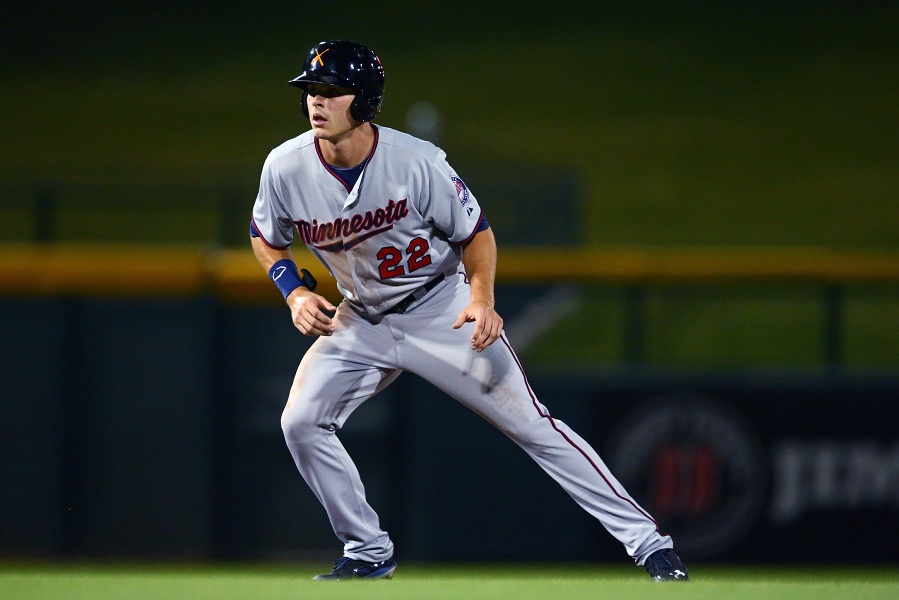
It’s been a couple of weeks since we last updated the Twins Minor League Leaderboard, so it is time. Due to minimum plate appearances, both Miguel Sano and Byron Buxton are now off of these lists. But, it’s interesting to see which names are consistently rising to the top. We’re about a month from the minor league season’s end, the dog days, one might say. Image courtesy of Mark J. Rebilas, USA Today It’s been a couple of weeks since we last updated the Twins Minor League Leaderboard, so it is time. Due to minimum plate appearances, both Miguel Sano and Byron Buxton are now off of these lists. But, it’s interesting to see which names are consistently rising to the top. We’re about a month from the minor league season’s end, the dog days, one might say. Here is a look at the updated list of Twins minor league statistical leaders through Saturday, August 8. Feel free to discuss. HITTERS For batting average, on-base percentage, slugging percentage, OPS, IsoD and IsoP, we used a minimum of 300 plate appearances. Plate Appearances: Zach Granite (450), Reynaldo Rodriguez (448), Adam Brett Walker (436), Nick Gordon/Jorge Polanco (431) Batting Average: Max Kepler (.326), James Beresford (.314), Alex Swim (.311), Jorge Polanco (.292), Nick Gordon (.274) On-Base Percentage: Max Kepler (.409), Mitch Garver (.362), Tanner English (.357), James Beresford/Alex Swim/Zach Granite (.349) Isolated Discipline: Mitch Garver (.116), Travis Harrison (.112), Niko Goodrum (.100), Marcus Knecht (.094), Tanner English (.092) Slugging Percentage: Max Kepler (.539), Adam Brett Walker (.526), Reynaldo Rodriguez (.459), Danny Ortiz (.432), Tanner English (.409) Isolated Power (IsoP): Adam Brett Walker (.276), Max Kepler (.213), Reynaldo Rodriguez (.192), Danny Ortiz (.186), Tanner English (.144) OPS: Max Kepler (.948), Adam Brett Walker (.844), Reynaldo Rodriguez (.771), Tanner English (.767), Jorge Polanco (.731) Hits: James Beresford (.122), Jorge Polanco (116), Reynaldo Rodriguez (110), Max Kepler (109), Alex Swim (107), Nick Gordon (105) 2B: Reynaldo Rodriguez (31), Max Kepler/Danny Ortiz (28), Adam Brett Walker (24), Tanner English (21) 3B: Byron Buxton (12), Max Kepler (11), Tanner English (8), Max Murphy (7), Reynaldo Rodriguez (6) HR: Adam Brett Walker (26), Miguel Sano (15), Danny Ortiz (13), Reynaldo Rodriguez (12), Oswaldo Arcia (10), Kennys Vargas (9) Runs: Reynaldo Rodriguez (68), Zach Granite (67), Tanner English/Max Kepler (64), Nick Gordon (61), Adam Brett Walker (58) RBI: Adam Brett Walker (86), Reynaldo Rodriguez/Danny Ortiz (65), Zach Larson (52), Max Kepler (51), Nick Gordon (50) SB: Tanner English (34), Engelb Vielma (27), Niko Goodrum (24), Nick Gordon (23), Zach Granite (22), Byron Buxton (21) STARTING PITCHERS (>95 IP) Innings: Pat Dean (141.2), Taylor Rogers (140.1), JO Berrios (135.1), Tyler Duffey (132.0), Aaron Slegers (126.1) ERA: Stephen Gonsalves (1.77), Mat Batts (2.10), Tyler Duffey (2.66), Felix Jorge (2.76), Aaron Slegers (2.92) WHIP: Felix Jorge (1.02), Aaron Slegers (1.05), Mat Batts (1.06), Stephen Gonsalves (1.10), JO Berrios (1.116), Tyler Duffey (1.121) K/9: Stephen Gonsalves (9.4), JO Berrios (9.0), Mat Batts (8.5), Tyler Duffey (8.0), Alex Wimmers (7.6) BB/9: Aaron Slegers (1.6), Mat Batts (1.9), Pat Dean/Tyler Duffey (2.0), Felix Jorge (2.1), Greg Peavey/Jason Wheeler (2.2) Strikeouts: JO Berrios (135), Tyler Duffey (117), Stephen Gonsalves (112), Mat Batts (105), Taylor Rogers (100) Wins: Stephen Gonsalves (11-2), JO Berrios (11-4), Mat Batts (8-5), Aaron Slegers (8-7), Taylor Rogers (8-9), Pat Dean (8-10) RELIEF PITCHERS (>35 IP, Games: AJ Achter (40), Todd Van Steensel (39), JT Chargois (38), Alex Muren (37), Mark Hamburger/DJ Johnson/Zack Jones (36) Innings: Randy LeBlanc (65.1), Alex Muren (61.1), Mike Theofanopoulos (57.0), Todd Van Steensel (56.0), Trevor Hildenberger (52.2), Tim Shibuya (52.1) ERA: Trevor Hildenberger (1.03), Brandon Peterson (1.65), Luke Bard (2.11), Matt Summers (2.31), Randy LeBlanc (2.48) WHIP: Trevor Hildenberger (0.68), AJ Achter (0.85), Brandon Peterson/Matt Summers (1.00), Luke Bard (1.12), Randy LeBlanc (1.15) K/9: Cameron Booser (12.5), Trevor Hildenberger (12.0), Lester Oliveros (11.6), Brandon Peterson (11.4), Zack Jones (11.3), Todd Van Steensel (11.1) BB/9: Trevor Hildenberger (0.9), Tim Shibuya (1.7), Luke Bard (2.3), AJ Achter (2.4), Matt Summers/Randy LeBlanc (2.6) Saves: AJ Achter/Trevor Hildenberger (14), JT Chargois (13), Todd Van Steenself (12), Zack Jones (11), Michael Tonkin/Cameron Booser (10) There you have it. The Twins Minor League Leader Board through Saturday, August 8. What are your thoughts? Any names jump out as surprising? There are certainly some candidates emerging for the 2015 Twins Minor League Awards. View full article
-
 Here is a look at the updated list of Twins minor league statistical leaders through Saturday, August 8. Feel free to discuss. HITTERS For batting average, on-base percentage, slugging percentage, OPS, IsoD and IsoP, we used a minimum of 300 plate appearances. Plate Appearances: Zach Granite (450), Reynaldo Rodriguez (448), Adam Brett Walker (436), Nick Gordon/Jorge Polanco (431) Batting Average: Max Kepler (.326), James Beresford (.314), Alex Swim (.311), Jorge Polanco (.292), Nick Gordon (.274) On-Base Percentage: Max Kepler (.409), Mitch Garver (.362), Tanner English (.357), James Beresford/Alex Swim/Zach Granite (.349) Isolated Discipline: Mitch Garver (.116), Travis Harrison (.112), Niko Goodrum (.100), Marcus Knecht (.094), Tanner English (.092) Slugging Percentage: Max Kepler (.539), Adam Brett Walker (.526), Reynaldo Rodriguez (.459), Danny Ortiz (.432), Tanner English (.409) Isolated Power (IsoP): Adam Brett Walker (.276), Max Kepler (.213), Reynaldo Rodriguez (.192), Danny Ortiz (.186), Tanner English (.144) OPS: Max Kepler (.948), Adam Brett Walker (.844), Reynaldo Rodriguez (.771), Tanner English (.767), Jorge Polanco (.731) Hits: James Beresford (.122), Jorge Polanco (116), Reynaldo Rodriguez (110), Max Kepler (109), Alex Swim (107), Nick Gordon (105) 2B: Reynaldo Rodriguez (31), Max Kepler/Danny Ortiz (28), Adam Brett Walker (24), Tanner English (21) 3B: Byron Buxton (12), Max Kepler (11), Tanner English (8), Max Murphy (7), Reynaldo Rodriguez (6) HR: Adam Brett Walker (26), Miguel Sano (15), Danny Ortiz (13), Reynaldo Rodriguez (12), Oswaldo Arcia (10), Kennys Vargas (9) Runs: Reynaldo Rodriguez (68), Zach Granite (67), Tanner English/Max Kepler (64), Nick Gordon (61), Adam Brett Walker (58) RBI: Adam Brett Walker (86), Reynaldo Rodriguez/Danny Ortiz (65), Zach Larson (52), Max Kepler (51), Nick Gordon (50) SB: Tanner English (34), Engelb Vielma (27), Niko Goodrum (24), Nick Gordon (23), Zach Granite (22), Byron Buxton (21) STARTING PITCHERS (>95 IP) Innings: Pat Dean (141.2), Taylor Rogers (140.1), JO Berrios (135.1), Tyler Duffey (132.0), Aaron Slegers (126.1) ERA: Stephen Gonsalves (1.77), Mat Batts (2.10), Tyler Duffey (2.66), Felix Jorge (2.76), Aaron Slegers (2.92) WHIP: Felix Jorge (1.02), Aaron Slegers (1.05), Mat Batts (1.06), Stephen Gonsalves (1.10), JO Berrios (1.116), Tyler Duffey (1.121) K/9: Stephen Gonsalves (9.4), JO Berrios (9.0), Mat Batts (8.5), Tyler Duffey (8.0), Alex Wimmers (7.6) BB/9: Aaron Slegers (1.6), Mat Batts (1.9), Pat Dean/Tyler Duffey (2.0), Felix Jorge (2.1), Greg Peavey/Jason Wheeler (2.2) Strikeouts: JO Berrios (135), Tyler Duffey (117), Stephen Gonsalves (112), Mat Batts (105), Taylor Rogers (100) Wins: Stephen Gonsalves (11-2), JO Berrios (11-4), Mat Batts (8-5), Aaron Slegers (8-7), Taylor Rogers (8-9), Pat Dean (8-10) RELIEF PITCHERS (>35 IP, Games: AJ Achter (40), Todd Van Steensel (39), JT Chargois (38), Alex Muren (37), Mark Hamburger/DJ Johnson/Zack Jones (36) Innings: Randy LeBlanc (65.1), Alex Muren (61.1), Mike Theofanopoulos (57.0), Todd Van Steensel (56.0), Trevor Hildenberger (52.2), Tim Shibuya (52.1) ERA: Trevor Hildenberger (1.03), Brandon Peterson (1.65), Luke Bard (2.11), Matt Summers (2.31), Randy LeBlanc (2.48) WHIP: Trevor Hildenberger (0.68), AJ Achter (0.85), Brandon Peterson/Matt Summers (1.00), Luke Bard (1.12), Randy LeBlanc (1.15) K/9: Cameron Booser (12.5), Trevor Hildenberger (12.0), Lester Oliveros (11.6), Brandon Peterson (11.4), Zack Jones (11.3), Todd Van Steensel (11.1) BB/9: Trevor Hildenberger (0.9), Tim Shibuya (1.7), Luke Bard (2.3), AJ Achter (2.4), Matt Summers/Randy LeBlanc (2.6) Saves: AJ Achter/Trevor Hildenberger (14), JT Chargois (13), Todd Van Steenself (12), Zack Jones (11), Michael Tonkin/Cameron Booser (10) There you have it. The Twins Minor League Leader Board through Saturday, August 8. What are your thoughts? Any names jump out as surprising? There are certainly some candidates emerging for the 2015 Twins Minor League Awards.
