



Seth Stohs
-
Posts
25,912 -
Joined
-
Last visited
-
Days Won
109
Content Type
Profiles
News
Minnesota Twins Videos
2026 Minnesota Twins Top Prospects Ranking
2022 Minnesota Twins Draft Picks
Minnesota Twins Free Agent & Trade Rumors, Notes, & Tidbits
Guides & Resources
2023 Minnesota Twins Draft Picks
The Minnesota Twins Players Project
2024 Minnesota Twins Draft Picks
2025 Minnesota Twins Draft Pick Tracker
2026 Minnesota Twins Draft Tracker: Picks & Bonuses
Forums
Blogs
Events
Store
Downloads
Gallery
Everything posted by Seth Stohs
-
 I haven't heard anything about Polanco being done at SS. He just came back, so it's possible. However, we'll find out more, I'm sure. Goodrum has played all over. Played a bit in CF as well, 3B most of the last 2 years, obviously came up as a SS... He's such a great athlete. Pat Dean has been one of the biggest surprises of the 2015 season, for me. I think he tops out around 88-89, and as I've written many times, he wasn't even in their rotation to start the season. Only May getting called up because of the Santana suspension got him the opportunity.
-
What A Miguel Sano Long-Term Contract Might Look Like
Seth Stohs replied to Seth Stohs's topic in Twins Daily Front Page News
Right, the difference is that if a guy gets to arbitration, there's less risk for the team since he'd have 3ish years of service time. If Sano puts up the numbers we think he could in these first four seasons, he could make $50+ million over those three arbitration years. The value in signing him this soon is that the Twins take more risk, but in doing so, Sano has to concede something too. It's an interesting discussion. -
What A Miguel Sano Long-Term Contract Might Look Like
Seth Stohs replied to Seth Stohs's topic in Twins Daily Front Page News
The difference is that Sano is 22 and has three years of basically league-minimum earnings plus three years of arbitration, so it's not apples to apples. Mauer was about 28 when they signed him for 8/184. He had already gone through the pre-arb and had the four year deal that bought out his arbitration years plus one free agent year. That $100 million difference is maybe 3 years of Sano free agency years if he gets to that point. -
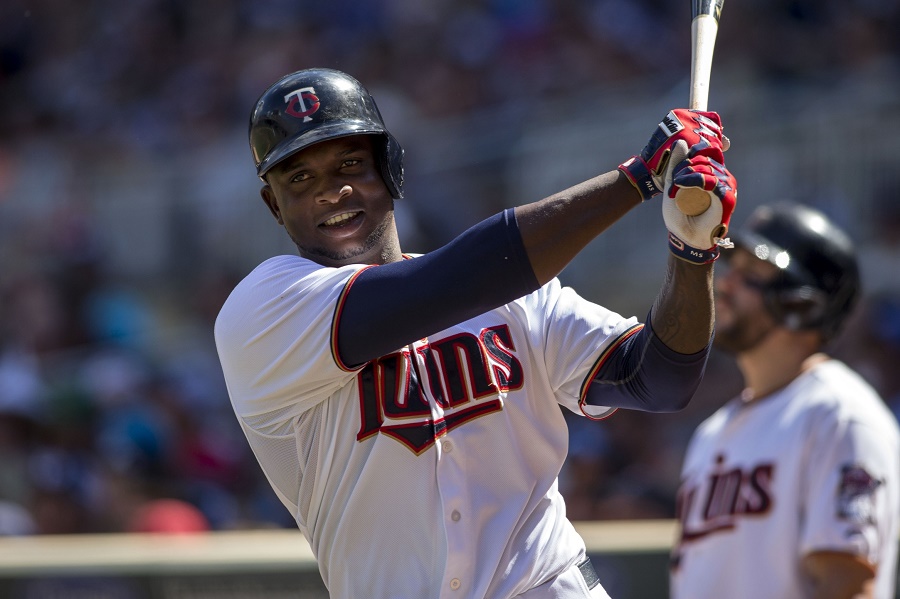
On April 12, 2008, Evan Longoria made his major league debut with the Tampa Bay Rays. Six days later, he signed a six year, $17.5 million contract with the team that included three option years which really made it a nine year, $47.5 million deal. Miguel Sano burst onto the scene and has now played 40 games for the Twins. The topic of signing him to a long-term contract has already become a talker on Twitter and on local radio air waves. So, I thought I would take a few minutes to think about what a long-term contract could potentially mean for Miguel Sano and the Twins. Image courtesy of Bruce Kluckhohn, USA Today On April 12, 2008, Evan Longoria made his major league debut with the Tampa Bay Rays. Six days later, he signed a six year, $17.5 million contract with the team that included three option years which really made it a nine year, $47.5 million deal. Miguel Sano burst onto the scene and has now played 40 games for the Twins. The topic of signing him to a long-term contract has already become a talker on Twitter and on local radio air waves. So, I thought I would take a few minutes to think about what a long-term contract could potentially mean for Miguel Sano and the Twins. Of course, it turned into a lot of work. Trying to find similar contracts wasn’t easy. A lot of players sign long-term deals to eat up some arbitration years and buy out a couple of years of free agency. In the last 15 years, the Twins have done that with the following players (and some that didn’t work out as well): Joe Mauer – 4 years, $33 million - bought out three years of arbitration and a year of free agency. Torii Hunter – 4 years, $32 million – bought out two years of arbitration and two years of free agency. It included an option year that made it a five year, $42 million deal. Michael Cuddyer – 3 years, $24 million – bought out one year of arbitration and two years of free agency. Justin Morneau – 6 years, $80 million – bought out two years of arbitration and four years of free agency. Johan Santana – 4 years, $39.75 million – bought out two years of arbitration and two free agent years. Joe Nathan – 4 years, $47 million – That came after two separate two year deals. If the Twins go that route, they can wait until after the 2019 or 2020 season to try to lock him up long term. It may make sense. The sample size and his track record will be much more telling than a 40-game sample. However, here are some recently signed deals for players who waited until they were arbitration eligible to sign long-term deals. Mike Trout – 6 years, $144.5 million – Trout is obviously in a world all of his own, so this would be the ceiling for a potential deal. He would have gone through his first arbitration year but instead signed the deal. Albert Pujols – 7 years, $100 million – This deal was almost a decade ago, but he, like Trout, should have had more MVP awards than he actually did. He avoided arbitration with this deal. Giancarlo Stanton – 13 years, $325 million – Stanton made $5.5 million in his first year of arbitration. The Marlins surprised many with the deal, though Stanton has an opt-out in six years, if he feels he can make more. The first six years of the deal are worth $107 million. The seven years after the opt-out would be worth $218 million. Ryan Howard – 3 year, $54 million – Howard set records before arbitration and made $10 million in year one of arbitration. He signed the three-year deal the next year and then got a huge deal later. Sano has less than a year of service time. As I said earlier, there are not many examples of players who signed long-term deals with less than one year of service time. Evan Longoria – 6 years, $17.5 million with three option years. As I mentioned above, it turned into a nine year, $47.5 million deal. He remains with the Rays and has signed another long-term deal to stick there. Ryan Braun – 8 years, $45 million – Braun came up about the same time Sano did and the next offseason reached this deal. He proved to be well worth it and has signed another long-term deal. Those two deals were made about eight years ago, and inflation and new national TV deals mean that Sano should make a bit more than they have. Let’s play a couple of scenarios out. Let’s say that Sano becomes a perennial All- Star, maybe even an MVP candidate. Let’s estimate what he would make from year-to-year if the Twins and Sano went year-to-year. 2016: $550,000, 2017: $650,000, 2018: $800,000 (pre-arbitration, $2.0 million) 2019: $7 million, 2020: $14 million, 2021: $20 million (arbitration years, $41 million) That would be $43 million for six years. At that point, he would become a free agent. He would have teams lining up for his services and $30 million annual salaries might be the starting point for negotiations. So, after looking at the contracts of mentioned above, plus the long-term contracts of All-Stars like Andrew McCutchen, Anthony Rizzo and Paul Goldschmidt, let me try to lay out what a long-term deal could look like for Miguel Sano and the Twins. Pre-Arbitration – 2016: $600,000, 2017: $700,000, 2018: $1 million ($2.3 million) Arbitration Buy-Out – 2019: $5 million, 2020: $8 million, 2021: $12 million ($25 million) Free Agency Buy-Out – 2022: $18 million, 2023: $20 million, 2024: $30 million option with $8 million buyout ($46 million) That equates to an 8 year, $73.3 million deal, with a team option. Why the Twins Should do this deal? The term ‘cost certainty’ comes up when these types of deals are made. Rather than going year to year and not knowing what it’ll cost, they will have one certain contract for eight years. Also, if Sano becomes the player that many believe that he will become (a slugging, middle of the lineup hitter), this deal would give them at least two to three extra years with the slugger. They would also potentially save a bunch of money to spend elsewhere, including a similar deal with Byron Buxton or others. He’s 22, and eight years would take him through his 20s, his best years.Why the Twins Should Not do this deal? That’d be a $73 million risk. What if he gets hurt? What if he strikes out 240 times every season and never makes an adjustment? Knowing the make-up for Sano, there is little concern that he will take the money and stop working, but how a player will handle that kind of financial security has to factor into the discussion. Most believe that he will be a star, but there is risk. As Nick wrote yesterday, the Twins have tied themselves to some big contracts in recent years that have not yet paid off.Why Miguel Sano Should do this deal? Can you imagine being offered $73 million when you’re 22 years old? That kind of money takes care of Sano and his family for generations to come. He can still become a free agent at age 30 and get another long-term deal.Why Miguel Sano Should Not do this deal? If he truly wants to optimize his earning potential, it makes the most sense for him to go year-to-year. He would then become a free agent at age 28 and be set up for a ten-year deal if things play out right.It is an interesting discussion, and likely one that we will have regarding Byron Buxton in the next year or two as well. Who knows? Maybe they’ll pull a Parise-Suter and sign equal contracts to stick around together for the next eight to ten years. What would you do? Reach out to Sano’s agent (Rob Plummer) now, or wait a couple of years? View full article
- 66 replies
-
- 2
-

-
- miguel sano
- evan longoria
- (and 3 more)
-
 Of course, it turned into a lot of work. Trying to find similar contracts wasn’t easy. A lot of players sign long-term deals to eat up some arbitration years and buy out a couple of years of free agency. In the last 15 years, the Twins have done that with the following players (and some that didn’t work out as well): Joe Mauer – 4 years, $33 million - bought out three years of arbitration and a year of free agency. Torii Hunter – 4 years, $32 million – bought out two years of arbitration and two years of free agency. It included an option year that made it a five year, $42 million deal. Michael Cuddyer – 3 years, $24 million – bought out one year of arbitration and two years of free agency. Justin Morneau – 6 years, $80 million – bought out two years of arbitration and four years of free agency. Johan Santana – 4 years, $39.75 million – bought out two years of arbitration and two free agent years. Joe Nathan – 4 years, $47 million – That came after two separate two year deals. If the Twins go that route, they can wait until after the 2019 or 2020 season to try to lock him up long term. It may make sense. The sample size and his track record will be much more telling than a 40-game sample. However, here are some recently signed deals for players who waited until they were arbitration eligible to sign long-term deals. Mike Trout – 6 years, $144.5 million – Trout is obviously in a world all of his own, so this would be the ceiling for a potential deal. He would have gone through his first arbitration year but instead signed the deal. Albert Pujols – 7 years, $100 million – This deal was almost a decade ago, but he, like Trout, should have had more MVP awards than he actually did. He avoided arbitration with this deal. Giancarlo Stanton – 13 years, $325 million – Stanton made $5.5 million in his first year of arbitration. The Marlins surprised many with the deal, though Stanton has an opt-out in six years, if he feels he can make more. The first six years of the deal are worth $107 million. The seven years after the opt-out would be worth $218 million. Ryan Howard – 3 year, $54 million – Howard set records before arbitration and made $10 million in year one of arbitration. He signed the three-year deal the next year and then got a huge deal later. Sano has less than a year of service time. As I said earlier, there are not many examples of players who signed long-term deals with less than one year of service time. Evan Longoria – 6 years, $17.5 million with three option years. As I mentioned above, it turned into a nine year, $47.5 million deal. He remains with the Rays and has signed another long-term deal to stick there. Ryan Braun – 8 years, $45 million – Braun came up about the same time Sano did and the next offseason reached this deal. He proved to be well worth it and has signed another long-term deal. Those two deals were made about eight years ago, and inflation and new national TV deals mean that Sano should make a bit more than they have. Let’s play a couple of scenarios out. Let’s say that Sano becomes a perennial All- Star, maybe even an MVP candidate. Let’s estimate what he would make from year-to-year if the Twins and Sano went year-to-year. 2016: $550,000, 2017: $650,000, 2018: $800,000 (pre-arbitration, $2.0 million) 2019: $7 million, 2020: $14 million, 2021: $20 million (arbitration years, $41 million) That would be $43 million for six years. At that point, he would become a free agent. He would have teams lining up for his services and $30 million annual salaries might be the starting point for negotiations. So, after looking at the contracts of mentioned above, plus the long-term contracts of All-Stars like Andrew McCutchen, Anthony Rizzo and Paul Goldschmidt, let me try to lay out what a long-term deal could look like for Miguel Sano and the Twins. Pre-Arbitration – 2016: $600,000, 2017: $700,000, 2018: $1 million ($2.3 million) Arbitration Buy-Out – 2019: $5 million, 2020: $8 million, 2021: $12 million ($25 million) Free Agency Buy-Out – 2022: $18 million, 2023: $20 million, 2024: $30 million option with $8 million buyout ($46 million) That equates to an 8 year, $73.3 million deal, with a team option. Why the Twins Should do this deal? The term ‘cost certainty’ comes up when these types of deals are made. Rather than going year to year and not knowing what it’ll cost, they will have one certain contract for eight years. Also, if Sano becomes the player that many believe that he will become (a slugging, middle of the lineup hitter), this deal would give them at least two to three extra years with the slugger. They would also potentially save a bunch of money to spend elsewhere, including a similar deal with Byron Buxton or others. He’s 22, and eight years would take him through his 20s, his best years. Why the Twins Should Not do this deal? That’d be a $73 million risk. What if he gets hurt? What if he strikes out 240 times every season and never makes an adjustment? Knowing the make-up for Sano, there is little concern that he will take the money and stop working, but how a player will handle that kind of financial security has to factor into the discussion. Most believe that he will be a star, but there is risk. As Nick wrote yesterday, the Twins have tied themselves to some big contracts in recent years that have not yet paid off. Why Miguel Sano Should do this deal? Can you imagine being offered $73 million when you’re 22 years old? That kind of money takes care of Sano and his family for generations to come. He can still become a free agent at age 30 and get another long-term deal. Why Miguel Sano Should Not do this deal? If he truly wants to optimize his earning potential, it makes the most sense for him to go year-to-year. He would then become a free agent at age 28 and be set up for a ten-year deal if things play out right. It is an interesting discussion, and likely one that we will have regarding Byron Buxton in the next year or two as well. Who knows? Maybe they’ll pull a Parise-Suter and sign equal contracts to stick around together for the next eight to ten years. What would you do? Reach out to Sano’s agent (Rob Plummer) now, or wait a couple of years?
-
Hicks Placed On DL, Buxton Coming Up
Seth Stohs replied to Seth Stohs's topic in Minnesota Twins Talk
As expected, with Aaron Hicks going on the Disabled List, Byron Buxton has been recalled from Rochester (per Dustin Morse on Twitter). He will join the team in Baltimore tomorrow. -
Following Wednesday afternoon's game, Paul Molitor announced that Aaron Hicks would be placed on the Disabled List and a player from Rochester would take his place. If it's not Byron Buxton, everyone will be shocked, and rightfully so... As my friend Brandon Warne sent to me in a message... what would happen if they added Danny Ortiz instead? That would make me laugh.
-
Twins Minor League Report (8/17): Pitchers Dominate
Seth Stohs replied to Seth Stohs's topic in Twins Daily Front Page News
I'm not down on Jay at all... I just don't make much of first-year numbers, good or bad.- 16 replies
-
- 2
-
-
- stephen gonsalves
- kohl stewart
- (and 3 more)
-
I have no problem with "negative" article. I think that both John's and Nick's articles were factual and well written and most important, they were fair. I don't have any problem with that. I don't think that the Twins front office would have any problem with that. And, we know that they do often read this site. Like I said, my issue is taking it to the next step, calling for everyone to be fired, not getting past certain things, maybe not understanding the big picture, and obviously there have been several personal attacks that are just unfair. This Yankees jinx or the struggles against them are one of those triggers. It's happened every year. Even though the Twins have maybe played better than the should have or exceeded the expectations of many, losing to the Yankees brings out the worst in people, myself included. I put some things on Twitter last night that I'm not proud of. It's frustrating, and I feel bad about it... But after a couple of tweets, I catch myself and (try to) calm down.
-
Twins Minor League Report (8/17): Pitchers Dominate
Seth Stohs replied to Seth Stohs's topic in Twins Daily Front Page News
Slegers was already moved up which should help. Eades may have been close, but now with the oblique injury, it's doubtful. I don't think Stewart or Gonsalves move up this year. Batts possibly could. -
Twins Minor League Report (8/17): Pitchers Dominate
Seth Stohs replied to Seth Stohs's topic in Twins Daily Front Page News
I'm sure they're able to throw 100-105, though that can change from start to start depending on how they did previously, rest, how things are going, etc. -
Twins Minor League Report (8/17): Pitchers Dominate
Seth Stohs replied to Seth Stohs's topic in Twins Daily Front Page News
Not apples to apples, but I know which one I will rank higher (probably) in my rankings. A lot will depend on what happens when Jay begins to start next year.- 16 replies
-
- 1
-
-
- stephen gonsalves
- kohl stewart
- (and 3 more)
-
Twins Minor League Report (8/17): Pitchers Dominate
Seth Stohs replied to Seth Stohs's topic in Twins Daily Front Page News
Yeah, it took him 3-4 starts to figure things out in the FSL. He and Batts have both been remarkable in the FSL since moving up. -
Twins Minor League Report (8/17): Pitchers Dominate
Seth Stohs replied to Seth Stohs's topic in Twins Daily Front Page News
Ha! Not sure what happened there. I just updated it. He signed with the Saints.- 16 replies
-
- 1
-
-
- stephen gonsalves
- kohl stewart
- (and 3 more)
-
Rochester Democrat and Chronicle Red Wings beat writer Kevin Oklobzija wrote a nice article on JO Berrios. It was interesting to know that he grew up playing a lot of 2B. He played some shortstop, but when this Carlos Correa guy was on the same team, he generally played shortstop.
-
I hope that this development of getting strikeouts starts to show up soon!!
-
Forums are built, and some of the articles today encourage, debate and negative discussion about the front office, players, manager, etc. Some of it is deserved. Some of it is a bit much. I just don't like when it's day after day and forum after forum of saying the same things. That's what gets old.
- 114 replies
-
- 11
-
-
Are The Twins Drowning In Bad Contracts?
Seth Stohs replied to Nick Nelson's topic in Twins Daily Front Page News
Agree on all counts. Extending Suzuki made no sense. Extending Hughes just wasn't necessary. But I really liked the Nolasco deal at the time. He's always been a solid starter whose performance and peripherals were always better than his ERA showed. I thought it was a good risk. I still like the Santana deal. I don't have much problem with that. The reality is that #3 type of starters gets $12-13 million a year. And after how bad things were, I didn't have a problem with them grabbing some starters with a lot of experience. And again, the Mauer contract was never going to make sense from a "baseball" sense, but it made complete sense from a business sense. He was elite, and that's what happens. Players get paid for what they've done, knowing that those years 5-8 aren't going to be as good as those pre-free agency deals have been.- 72 replies
-
- 3
-
-
- phil hughes
- ervin santana
- (and 1 more)
-
Are The Twins Drowning In Bad Contracts?
Seth Stohs replied to Nick Nelson's topic in Twins Daily Front Page News
Which goes back to why signing free agents is rarely a wise investment. That's always been the case. The reality, for whatever reason, is that after age 31 or 32, players don't get better. You get value from guys within that first six seasons. That's why it's so vital to build from within and have that be the core. They're getting close to having that again.- 72 replies
-
- 3
-
-
- phil hughes
- ervin santana
- (and 1 more)
-
Twins Explosive Bullpen Had A Long Fuse
Seth Stohs replied to John Bonnes's topic in Twins Daily Front Page News
When the Twins announced that May would pitch Friday and Duffey would pitch Saturday, there were two thoughts by Twins fans: 1.) Excitement because they wanted May to be stretched out so he could pitch more innings. 2.) Upset because Duffey was getting another start instead of Berrios. In hindsight, after Duffey was terrific, they decided he'd get more starts and May would go back to the bullpen. At that point, it became a clear mistake to have May start on Friday. As you wrote, it hurt them on Thursday, and Monday and Tuesday, at least to some degree. I don't think those two things (bullpen being a priority and having a Rule 5 guy) are the same. It would be silly at this stage to return Graham (who has been pretty OK all things considered, role, never pitching above AA, etc.) to the Braves. How this year's bullpen was built was very similar to how previous years' bullpens were constructed. Go with the guys who have had success before, mix in a couple of minor league free agents and a couple of internal options. It definitely has not worked this year like it has in past years. Finally, the hard-throwing guys that they drafted that I thought could surface this year have not been good. Burdi has been better of late (exception tonight). Jones and Reed struggled too. JT Chargois is pitching for the first time in two years, so he shouldn't be pushed too much, and yet he's pitched (well) at two levels. I still expect Burdi, Reed and Jones, along with Chargois, to be big-time bullpen arms in the future. Thompson and Boyer were really good for 5-6 weeks during their hot stretch. Perkins was perfect, which wasn't sustainable. Also, the starting pitchers were consistently going 7 innings which helped the bullpen. That's the biggest issue.- 59 replies
-
- 1
-
-
- j.r. graham
- ryan orourke
- (and 3 more)
-
Wetmore: Perkins to get cortisone shot
Seth Stohs replied to Seth Stohs's topic in Minnesota Twins Talk
Again, that's not fair... We don't know if they had conversations with him, and it's not their job to tell him he's hurt. That's on Perkins, if it's been lingering for long. Doesn't have to be blame for every situation. -
Are The Twins Drowning In Bad Contracts?
Seth Stohs replied to Nick Nelson's topic in Twins Daily Front Page News
I agree with this actually. I liked the Nolasco and Santana contracts when they were signed. I still believe Santana will be fine. I liked the original Hughes contract, and the Suzuki one was fine, but they didn't need to extend either of them.- 72 replies
-
- 10
-
-
- phil hughes
- ervin santana
- (and 1 more)
-
I don't see it here, but Tim Shibuya was promoted to Rochester.
-
That's really unfortunate! He was putting together a really good second half.
