



Seth Stohs
-
Posts
25,870 -
Joined
-
Last visited
-
Days Won
109
Content Type
Profiles
News
Minnesota Twins Videos
2026 Minnesota Twins Top Prospects Ranking
2022 Minnesota Twins Draft Picks
Minnesota Twins Free Agent & Trade Rumors, Notes, & Tidbits
Guides & Resources
2023 Minnesota Twins Draft Picks
The Minnesota Twins Players Project
2024 Minnesota Twins Draft Picks
2025 Minnesota Twins Draft Pick Tracker
2026 Minnesota Twins Draft Tracker: Picks & Bonuses
Forums
Blogs
Events
Store
Downloads
Gallery
Everything posted by Seth Stohs
-
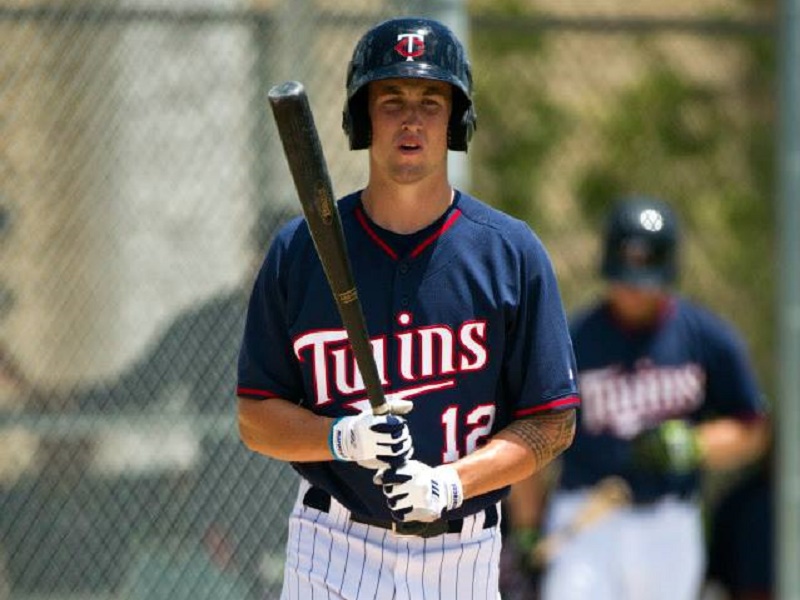 He is currently playing for the Brisbane Bandits in the Australian Baseball League. He played for the Australian team in the ABL’s All Star game. He is currently hitting .294/.308/.333 (.641) with a couple of doubles. Without further ado, here is our interview with Twins minor leaguer Aaron Whitefield. Thank you to Aaron for taking time to respond. Please feel free to ask questions or discuss below. ------- Seth Stohs (SS): Growing up in Australia, were you able to follow Major League Baseball? Did you have a favorite team or players? Aaron Whitefield (AW): It's not that big over here, and I was not much of a team follower but more a player follower! My favorite player is Robinson Cano, but I also like the likes of Derek Jeter and Bryce Harper! SS: You played a lot of softball growing up including representing Australia in some international tournaments. What was it like to represent your country? AW: I love softball and loved getting to represent my country at a young age. It really helped me develop into a better player playing against/with older world players. SS: Had you played much baseball early in your life? What was your transition like moving from softball to baseball? At what point did you realize that you were good enough to sign and make baseball a career? AW: I have only been playing baseball for a year and a half and found it hard to transition especially when I was still playing both at a grade level. So I gave up softball and pursued my career in baseball! I always just played the game hard, and a team looked at me and liked it. So that's when I really pursued that path! SS: For you, what was it about the Twins that made them the team that you signed with? AW: The Twins gave me shot, and I took it especially with the pathway that they have. And I had heard a lot of good things about the Twins. So made it an easier decision! SS: What was the transition last year coming to the States from Australia? What were some of the biggest adjustments on and off the field? AW: Was not too bad was there for three weeks, the on-field was great, loved a competition and challenge that was there every day! But not too many off- field, a few Aussie slang words people didn't understand but that's all. SS: At this time, what would you say your biggest strengths are on the baseball field? AW: My speed. It is my number one tool, and I work on it a lot to try get faster and faster! SS: What are the areas you would like to improve upon in your game? AW: Power off the bat which will come. I am seeing more and more, but producing the back spin from the barrel is a real focus point for me at the moment! SS: What has your Australian Baseball League experience been like with Brisbane? I understand that originally you were only going to be on the home roster. AW: I love it in the Bandits culture. Great staff and players to share the season with! It makes it a lot easier to play, and great players to learn from! SS: Who are a few of the people who have helped you most getting to this point in your career? AW: There are a lot of people that have helped me a lot from the softball culture, and all those people know who they are and I'm very grateful! But John Deeble has helped me with skills and mental part of the game. I could not thank him enough for everything he has done especially when I first came over from softball! SS: What are some things you enjoy doing when you’re not playing baseball? AW: I like to hang out with my family and friends, gym and beach! SS: Favorite Baseball Movie? AW: The Sandlot SS: One more question... you have played second base and around the outfield for Brisbane. Where do you like to play and where are you most comfortable playing? AW: I have played shortstop my whole life and have made the transition to the outfield and second base. I feel a lot more comfortable in the infield but love learning and playing the outfield! ----- Again, a huge Thank You to Aaron Whitefield for taking time to respond to our questions.
 -
Article: Dozier's Defensive Dilemma
Seth Stohs replied to Cody Christie's topic in Twins Daily Front Page News
He spends a week building houses and digging drainage ditches for underprivileged people in the world. Pretty sure that's a decent workout. -
Worrying about double plays as a statistic makes little sense. Each year, some really good hitters are on the DP leaderboard. Why? They hit the ball pretty hard and have runners on in front of them. They're just part of it.
-
Article: Memorable Memorabilia
Seth Stohs replied to Seth Stohs's topic in Twins Daily Front Page News
These stories have been so much fun! I hope that people will continue to share their stories and such! I have really enjoyed it! -
I was young. It must have been about 1984. I was eight and my family was at the Twins game. We got there early and watched batting practice. The Twins were playing the Red Sox. We were down the third base line. There was a roller and the ball was right in front of us. Lefty-hander John Henry Johnson of the Red Sox came to get the ball. Me, being eight-years-old, did what any eight year old boy would do. "Hey Mister! Mister, can I have that ball!?" Johnson got to the wall, looked up at me, turned away, turned back and said, "I've come too far over here for this." And he tossed me the ball. It was the first and only time I got a ball at a baseball game.Moments later, we walked closer to the Twins dugout. A couple of players were signing, so I went over there with the ball. I can't recall who the first player was, but the second was none other than Kirby Puckett. There wasn't a lot of interaction, that I can recall, but he signed it for me and tossed it back up. I was happy, but now having had some success, I continued to the dugout. I tossed the ball down to one-time All Star catcher Dave Engle. He proceeded to throw the ball into the Twins ball bag. He looked up at me, saw devastation, and quickly went to the ball bag, chuckled, signed it and tossed the ball back to me. Who knows where that ball is? I'm guessing my brother and I played catch with it in the backyard within no time. But even now, over 30 years later, I can remember that. It's the holidays which means that there is a lot of gift-giving. It can be fun. It can be stressful. So, my goal with this article is to not provide you with any stress. No arguing over who the Twins have or haven't signed, or for how much. No worrying about whether Player X or Player Y will do with their contract in 2016. Today, at least in this article, I want to pose a question to Twins Daily readers. Hopefully the question(s) will make you pause and give some thought to an answer and you'll share it with us. It's actually a two-part question, so bear with me. #1 - The first question I would like to ask you is, what is your favorite memory of an interaction with a professional ballplayer. Obviously as Twins fans, if that story happens to involve a Twins player that would be wonderful, but don't limit yourself. Did you or your kids ever get a player's autograph and it became a great conversation or something memorable? #2 - In your dream world, what is the one piece of memorabilia or an experience with a big leaguer (current or past) that you would want? And why? I'll give a couple of examples to kick this thing off, but please consider adding your stories. #1 - I have many great stories now about interactions with ballplayers. I've had the great opportunity to meet several in the clubhouse at Target Field, or in spring training ,or when I make trips to Cedar Rapids. But one that will always stick out for me was Twins Fest probably in probably 2010. I had my then-three-year-old daughter with me, and we were going through the free minor leaguer autograph line. I told my daughter she had to ask nicely if she could have their autograph. When she asked Plouffe, Trevor looked at her and said, "Only if I can have your autograph first." He gave her a Sharpee and told her to write her name on the paper covering the table right in front of him. She loved that and scribbled a few lines. He thanked her and then signed something for her. That's the kind of stuff I won't forget. Or Mike Radcliff coming up from behind Plouffe and saying, "Seth, keep your daughter away from this guy!" #2 - As far as what piece of memorabilia or experience I would love to have. That's a little more difficult. I know I would have loved to meet Harmon Killebrew and chat with him and get his autograph on a ball or a picture or something. When we went to the Hall of Fame ceremony in 2001, a friend of mine shelled out the money to get Killebrew's autograph and also took a selfie with him (way before selfies were really a thing). Another that I think would be neat would be to get some sort of poster of Mudcat Grant. One half of it a picture of him pitching for the Twins in the 1965 World Series. The other half a picture of him signing at Killebrew's Memorial Service at Target Field. Again, to meet him and have him sign that would be pretty neat. So there you have it, a challenge from me. Something to make you think. And feel free to expand as much as you'd like. I'm sure some of you have some tremendous stories!! Please have a safe and happy holidays! Click here to view the article
-
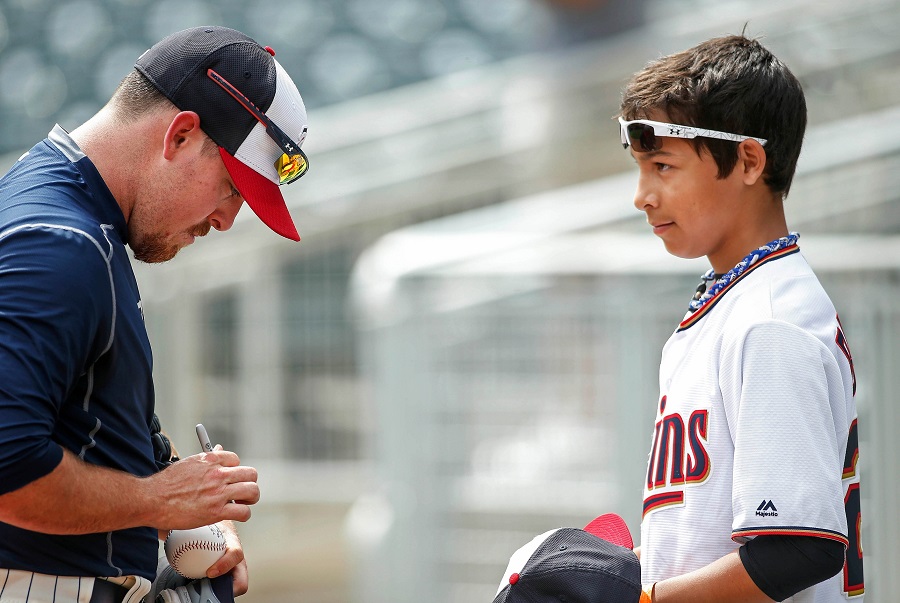 Moments later, we walked closer to the Twins dugout. A couple of players were signing, so I went over there with the ball. I can't recall who the first player was, but the second was none other than Kirby Puckett. There wasn't a lot of interaction, that I can recall, but he signed it for me and tossed it back up. I was happy, but now having had some success, I continued to the dugout. I tossed the ball down to one-time All Star catcher Dave Engle. He proceeded to throw the ball into the Twins ball bag. He looked up at me, saw devastation, and quickly went to the ball bag, chuckled, signed it and tossed the ball back to me. Who knows where that ball is? I'm guessing my brother and I played catch with it in the backyard within no time. But even now, over 30 years later, I can remember that. It's the holidays which means that there is a lot of gift-giving. It can be fun. It can be stressful. So, my goal with this article is to not provide you with any stress. No arguing over who the Twins have or haven't signed, or for how much. No worrying about whether Player X or Player Y will do with their contract in 2016. Today, at least in this article, I want to pose a question to Twins Daily readers. Hopefully the question(s) will make you pause and give some thought to an answer and you'll share it with us. It's actually a two-part question, so bear with me. #1 - The first question I would like to ask you is, what is your favorite memory of an interaction with a professional ballplayer. Obviously as Twins fans, if that story happens to involve a Twins player that would be wonderful, but don't limit yourself. Did you or your kids ever get a player's autograph and it became a great conversation or something memorable? #2 - In your dream world, what is the one piece of memorabilia or an experience with a big leaguer (current or past) that you would want? And why? I'll give a couple of examples to kick this thing off, but please consider adding your stories. #1 - I have many great stories now about interactions with ballplayers. I've had the great opportunity to meet several in the clubhouse at Target Field, or in spring training ,or when I make trips to Cedar Rapids. But one that will always stick out for me was Twins Fest probably in probably 2010. I had my then-three-year-old daughter with me, and we were going through the free minor leaguer autograph line. I told my daughter she had to ask nicely if she could have their autograph. When she asked Plouffe, Trevor looked at her and said, "Only if I can have your autograph first." He gave her a Sharpee and told her to write her name on the paper covering the table right in front of him. She loved that and scribbled a few lines. He thanked her and then signed something for her. That's the kind of stuff I won't forget. Or Mike Radcliff coming up from behind Plouffe and saying, "Seth, keep your daughter away from this guy!" #2 - As far as what piece of memorabilia or experience I would love to have. That's a little more difficult. I know I would have loved to meet Harmon Killebrew and chat with him and get his autograph on a ball or a picture or something. When we went to the Hall of Fame ceremony in 2001, a friend of mine shelled out the money to get Killebrew's autograph and also took a selfie with him (way before selfies were really a thing). Another that I think would be neat would be to get some sort of poster of Mudcat Grant. One half of it a picture of him pitching for the Twins in the 1965 World Series. The other half a picture of him signing at Killebrew's Memorial Service at Target Field. Again, to meet him and have him sign that would be pretty neat. So there you have it, a challenge from me. Something to make you think. And feel free to expand as much as you'd like. I'm sure some of you have some tremendous stories!! Please have a safe and happy holidays!
 -
Who knows? Maybe he already has a registered account and has been monitoring these forums at Twins Daily all year long!
-
This is my hope as well...
-
Article: Let's Stop Discounting Tommy Milone
Seth Stohs replied to Nick Nelson's topic in Twins Daily Front Page News
I like Milone and I enjoy watching him pitch. Obviously, like most pitchers, there will be the occasional game, or even stretch of a few games, that don't go well. But when Milone is pitching well, he is fun to watch. He'll give up base runners, but he nibbles and claws and finds a way. Also, 2014 - when there was an injury in play - is the only season in his four full(ish) seasons that he's had a K/9 of less than 6.4. His location, and that changeup, are really good. -
That would be nice... but to move up a level and the cut your strikeouts in half seems a bit much. How about 150? maybe 160?
-
Adam Brett Walker has been a very polarizing figure in the forums of Twins Daily. Yes, there are the strikeouts, but he has immense power. In 2015, he hit .239/.309/.498 (.807) with 31 doubles, 31 homers and 106 RBI. He led the Southern League in extra-base hits, home runs and RBI. And strikeouts. He has led his league in homers and RBI the last three years. He had a solid showing in the Arizona Fall League and last month he was added to the Twins 40-man roster. Walker just turned 24 in October and will head to big league spring training for the first time in February. He was the Twins third-round draft pick in 2012 out of Jacksonville University which is where he spends a lot of his offseason time. However, he is a Milwaukee native so he won’t be intimidated by the weather in Minneapolis when he makes his first trip to Twins Fest next month.Recently, Adam Brett Walker was willing to answer several questions for Twins Daily. Feel free to comment below. Seth Stohs (SS): What was that adjustment from the Florida State League to the Southern League like for you? Adam Brett Walker (ABW): I think the biggest change was the abilities for pitchers to have more control over their third and fourth pitches. They attacked the zone more and their misses were much smaller. SS: What were your thoughts when you got the invite to the Arizona Fall League? What were your hopes going into the Fall League? ABW: When I found out I was going to the AFL, I was very excited. I heard a lot of great things about the league. I knew there was going to be some very good competition and was looking forward to the challenge and see how it went. SS: Now that the AFL season is complete, you won a championship, and have had a little time away from it, what was the experience like there, and did you learn anything about yourself through it? ABW: It was an awesome experience on and off the field. It’s fun to be able to have new teammates and create friendships. We were able to try and learn from each other and help. Overall I was pretty happy with the way I played. Besides, the last week I was definitely happy. Was able to finish with winning a championship so that always helps. SS: You’ve won championships in Elizabethton (2012), Ft. Myers (2014), Chattanooga (2015) and Scottsdale (2015), and that Cedar Rapids team had the best record in the Midwest League in 2013. What does that say about you and your teammates and coaches, and how much fun is it to be part of a team where winning a championship is realistic? ABW: It is an awesome feeling to have been able to have been on so many winning teams. I've always been pretty competitive so I love winning. I've been with a lot of the same guys throughout my professional career with the Twins, and I believe we have created a winning mentality and expect to win wherever we go. In the AFL, I was lucky to have such a great group of guys on my team. I think we all came together as a team and decided we wanted to stay and win it all in the beginning. When a group of people decide to play as a team and expects to win every day it becomes very fun to play the game. SS: What do you do with all of the rings? ABW: I personally don't wear my rings very often but I am starting a nice collection that I definitely enjoy looking at. I want to keep working hard so I can add more to the collection. SS: You worked with Doug Mientkiewicz and Chad Allen the last two years. What does each bring to the table for your teams, and individually, how does each help bring out the best in you? ABW: Doug and Chad are two great coaches that I know what they want for us and push us to succeed. Doug has been very fun to play for as a manager. He loves to let us have fun as a team and enjoy coming to the field every day. He also holds the bar high and expects us to go out there and play our best every night. if we aren't playing to the best of our abilities, he will let us know. But that is why I respect him as a manager. Chad as a hitting coach is awesome as well. He has always been there for me to talk or go to the cage and work on things. He is very open to our thoughts as players and tries to learn from us as well. There is a lot of knowledge on the coaching staffs I've been on, and they love to help us become the best we can be. SS: How did you find out about being added to the 40-man roster? ABW: I was in Arizona at the time, and it was an off day so I had some time to relax at my apartment with my roommate. I received a phone call, and they talked to me about their selection to put me on the 40-man roster. It was a very exciting moment for me and a definite honor. SS: What's the plan for the rest of the offseason? How long before you start getting into baseball activities? ABW: I have been enjoying some time off after the AFL, spending time with my family and friends. It's been a crazy but fun offseason traveling around from Arizona to Wisconsin and a couple other places. I am enjoying this time, but I am starting to get back into baseball mode. After the holiday season, it will be time to really focus and get ready for spring training. SS: Are you looking forward to being at Twins Fest? Since you’re from Milwaukee, I can’t even scare you with tales of cold and snow storms! ABW: I am very excited for Twins Fest. I've heard it is a very fun time but very cold. I think I will be able to handle it though after growing up in Wisconsin. I am definitely looking forward to Twins Fest though. SS: What are you most looking forward to in your first big league spring training? ABW: First, I think spring training will be a great opportunity for me to show my talents and skills. I am definitely looking forward to being around and learning from guys though. Being able to see how some have been so successful for such a long time. You can learn a lot from just watching how players prepare for a season and day-to-day routines that may be able to help me. There is a lot of knowledge on the big league side, and I will always want to learn how to make myself a better player. A big Thank You to Adam Brett Walker for taking his time to answer our questions today. Feel free to discuss or ask questions below. Click here to view the article
-
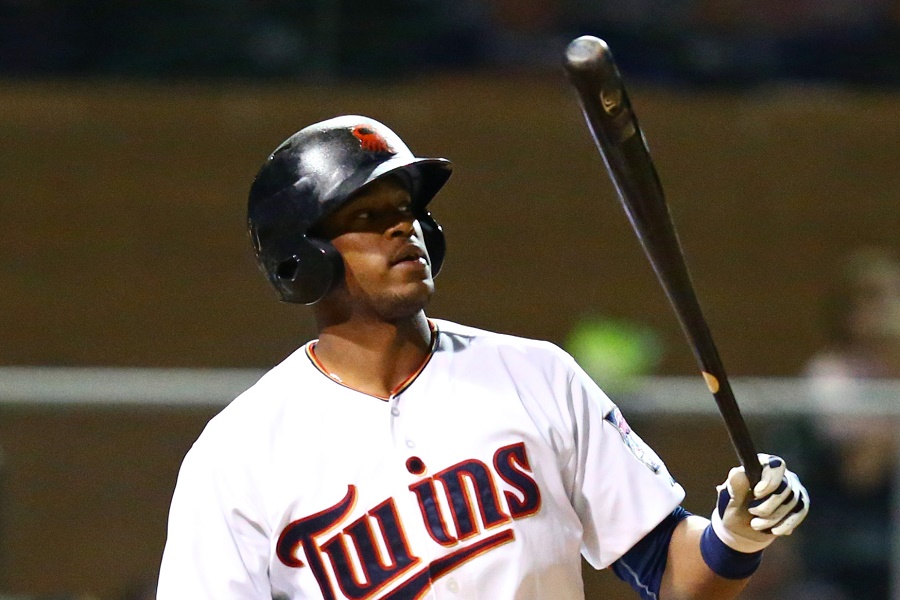 Recently, Adam Brett Walker was willing to answer several questions for Twins Daily. Feel free to comment below. Seth Stohs (SS): What was that adjustment from the Florida State League to the Southern League like for you? Adam Brett Walker (ABW): I think the biggest change was the abilities for pitchers to have more control over their third and fourth pitches. They attacked the zone more and their misses were much smaller. SS: What were your thoughts when you got the invite to the Arizona Fall League? What were your hopes going into the Fall League? ABW: When I found out I was going to the AFL, I was very excited. I heard a lot of great things about the league. I knew there was going to be some very good competition and was looking forward to the challenge and see how it went. SS: Now that the AFL season is complete, you won a championship, and have had a little time away from it, what was the experience like there, and did you learn anything about yourself through it? ABW: It was an awesome experience on and off the field. It’s fun to be able to have new teammates and create friendships. We were able to try and learn from each other and help. Overall I was pretty happy with the way I played. Besides, the last week I was definitely happy. Was able to finish with winning a championship so that always helps. SS: You’ve won championships in Elizabethton (2012), Ft. Myers (2014), Chattanooga (2015) and Scottsdale (2015), and that Cedar Rapids team had the best record in the Midwest League in 2013. What does that say about you and your teammates and coaches, and how much fun is it to be part of a team where winning a championship is realistic? ABW: It is an awesome feeling to have been able to have been on so many winning teams. I've always been pretty competitive so I love winning. I've been with a lot of the same guys throughout my professional career with the Twins, and I believe we have created a winning mentality and expect to win wherever we go. In the AFL, I was lucky to have such a great group of guys on my team. I think we all came together as a team and decided we wanted to stay and win it all in the beginning. When a group of people decide to play as a team and expects to win every day it becomes very fun to play the game. SS: What do you do with all of the rings? ABW: I personally don't wear my rings very often but I am starting a nice collection that I definitely enjoy looking at. I want to keep working hard so I can add more to the collection. SS: You worked with Doug Mientkiewicz and Chad Allen the last two years. What does each bring to the table for your teams, and individually, how does each help bring out the best in you? ABW: Doug and Chad are two great coaches that I know what they want for us and push us to succeed. Doug has been very fun to play for as a manager. He loves to let us have fun as a team and enjoy coming to the field every day. He also holds the bar high and expects us to go out there and play our best every night. if we aren't playing to the best of our abilities, he will let us know. But that is why I respect him as a manager. Chad as a hitting coach is awesome as well. He has always been there for me to talk or go to the cage and work on things. He is very open to our thoughts as players and tries to learn from us as well. There is a lot of knowledge on the coaching staffs I've been on, and they love to help us become the best we can be. SS: How did you find out about being added to the 40-man roster? ABW: I was in Arizona at the time, and it was an off day so I had some time to relax at my apartment with my roommate. I received a phone call, and they talked to me about their selection to put me on the 40-man roster. It was a very exciting moment for me and a definite honor. SS: What's the plan for the rest of the offseason? How long before you start getting into baseball activities? ABW: I have been enjoying some time off after the AFL, spending time with my family and friends. It's been a crazy but fun offseason traveling around from Arizona to Wisconsin and a couple other places. I am enjoying this time, but I am starting to get back into baseball mode. After the holiday season, it will be time to really focus and get ready for spring training. SS: Are you looking forward to being at Twins Fest? Since you’re from Milwaukee, I can’t even scare you with tales of cold and snow storms! ABW: I am very excited for Twins Fest. I've heard it is a very fun time but very cold. I think I will be able to handle it though after growing up in Wisconsin. I am definitely looking forward to Twins Fest though. SS: What are you most looking forward to in your first big league spring training? ABW: First, I think spring training will be a great opportunity for me to show my talents and skills. I am definitely looking forward to being around and learning from guys though. Being able to see how some have been so successful for such a long time. You can learn a lot from just watching how players prepare for a season and day-to-day routines that may be able to help me. There is a lot of knowledge on the big league side, and I will always want to learn how to make myself a better player. A big Thank You to Adam Brett Walker for taking his time to answer our questions today. Feel free to discuss or ask questions below.
 -
Article: Twins Winter League Update
Seth Stohs replied to Seth Stohs's topic in Twins Daily Front Page News
I haven't talked to him, but I don't know that he would go to one of these leagues anyway. Maybe Australia, or maybe to one of these leagues' minor leagues. -
Article: Get To Know: RHP Callan Pearce
Seth Stohs replied to Seth Stohs's topic in Twins Daily Front Page News
Completely agree!! A lot of humility shown in this one, and an acknowledgement of work to do. -
Article: Get To Know: Catcher/Outfielder Brad Hartong
Seth Stohs replied to Seth Stohs's topic in Twins Daily Front Page News
Honestly, that's what is fun for me in doing these. A lot of the guys that I interview aren't well known, but 1.) They deserve to be talked about and 2.) you get to find out some pretty neat things about them. But most of all, you get to see that love of the game, and it's shown in these responses. -
Not that I'd share... Sorry!
-
It has been an interesting 12-13 months for Twins catching prospect Mitch Garver. He’s had some downs, but it has been a series of positives. Although he’s had a busy week, and now is out of the country, he took some time while waiting for his plane on Monday night to answer some questions for Twins Daily. Twins Daily named Mitch Garver its 2014 Minor League Hitter of the Year after he put up big numbers for Cedar Rapids. His efforts earned him an invitation to big league spring training. He was promoted to Ft. Myers where after struggling early, he hit well over the final four months. Well enough that he was invited to participate in the Arizona Fall League. He made a strong impression for Scottsdale and helped his team to the AFL championship. He recently found out that he will again be going to big league spring training with the Twins in 2016.That championship was the end of his baseball season. He was able to start his offseason. He may have been even busier when he got home to Albuquerque. He and his fiancé were married on Saturday. On Sunday night, while sitting through a long layover at a connecting airport, Garver took the time to answer our questions about his 2015 season. Seth Stohs (SS): How did you find out about getting the spring training invite? How quickly did you accept that?? Mitch Garver (MG): I woke up on a random day in the middle of December and I had a missed call from a Minnesota area code phone number. I called the number back and Terry Ryan answered the phone. I of course was a little embarrassed that I slept through a phone call from my general manager. He ended up inviting me to ML camp and I immediately accepted. SS: What was that experience like for you, being in the big league clubhouse and working with the players and coaches? MG: When I first walked in the clubhouse I was quite shy and didn’t want to do anything wrong to upset the major leaguers. After a week or so they made me feel very comfortable going about my own business. Torii Hunter was a huge presence in the clubhouse. He introduced himself to me and wanted to know who I was and I thought that was a really cool experience. SS: You had a slow start the first two months in Ft. Myers, but something seemed to click for you about June 1st and you hit well after that. What was that adjustment to the Florida State League like for you, and was there a moment where you felt things turned to the positive for you? MG: For me, this season was a good learning experience, but on September 7th when the season ended, I flushed it and started working towards 2016. Defensively I had a really good year and I learned a lot about controlling a bullpen and starting rotation. Offensively I failed to make an adjustment early in the year and I lost the sense of who I was as a hitter. I was searching for answers and I found success in a few at-bats in late June, but by then the season was only salvageable by my standards. SS: What were your thoughts when you got the invite to the Arizona Fall League? What were your hopes going into the Fall League? MG: My manager Jeff Smith called me into his office one day and asked if I would be interested in playing in the Arizona Fall League. Obviously I knew this league was very prestigious and I had known players who had been invited in previous years so I was excited. I also saw it as an opportunity to redeem my horrible 2015. I knew that I had to play and show well in Arizona to continue climbing levels in the Twins organization. I ended up playing a very good month of baseball while learning a ton of new information along the way. It was all I could have hoped the AFL to be and more (oh yeah, and we won a championship). SS: Now that the AFL season is complete, you won a championship, and have had a little time away from it, what was the experience like there, and did you learn anything about yourself through it? MG: The major theme I pulled from the AFL is that there are a ton of extremely talented baseball players in the world, and I can compete with them. Sometimes in baseball you can lose confidence in yourself, which makes the game even more difficult than it already is. I thoroughly enjoyed my time in Arizona. I played with awesome teammates in an amazing stadium during the best time of the year as far as weather is concerned. It’s also very fun to expand your horizons on the baseball players in the MiLB. I loved meeting new people, facing some of the best players in the minors right now, and competing at the highest level to win baseball games. SS: What's the plan for the rest of the offseason? How long before you start getting into baseball activities? MG: I am currently answering these questions in the Salt Lake City airport during hour three of my five-hour layover. I am answering these questions sitting next to my fiancée wife because we were married on the 19th of December. We are in the airport because we are flying to our honeymoon in the Bahamas. We had an amazing wedding with the best friends and family that we could afford on our minor league budget. When I get back to Albuquerque it will be to focus on a big year in 2016. I will also be attending Twins Fest and I cannot wait for this awesome experience. Minneapolis in late January is not exactly the most appealing vacation destination, but it will be worth it to meet and greet with fellow teammates and fans. Before I know it, I’ll be in Fort Myers getting ready to compete for a spot! Congratulations to Mitch Garver on another solid season in 2015, a nice run in the Arizona Fall League and his wedding! Thank you for taking time to answer these questions! Click here to view the article
-
 That championship was the end of his baseball season. He was able to start his offseason. He may have been even busier when he got home to Albuquerque. He and his fiancé were married on Saturday. On Sunday night, while sitting through a long layover at a connecting airport, Garver took the time to answer our questions about his 2015 season. Seth Stohs (SS): How did you find out about getting the spring training invite? How quickly did you accept that?? Mitch Garver (MG): I woke up on a random day in the middle of December and I had a missed call from a Minnesota area code phone number. I called the number back and Terry Ryan answered the phone. I of course was a little embarrassed that I slept through a phone call from my general manager. He ended up inviting me to ML camp and I immediately accepted. SS: What was that experience like for you, being in the big league clubhouse and working with the players and coaches? MG: When I first walked in the clubhouse I was quite shy and didn’t want to do anything wrong to upset the major leaguers. After a week or so they made me feel very comfortable going about my own business. Torii Hunter was a huge presence in the clubhouse. He introduced himself to me and wanted to know who I was and I thought that was a really cool experience. SS: You had a slow start the first two months in Ft. Myers, but something seemed to click for you about June 1st and you hit well after that. What was that adjustment to the Florida State League like for you, and was there a moment where you felt things turned to the positive for you? MG: For me, this season was a good learning experience, but on September 7th when the season ended, I flushed it and started working towards 2016. Defensively I had a really good year and I learned a lot about controlling a bullpen and starting rotation. Offensively I failed to make an adjustment early in the year and I lost the sense of who I was as a hitter. I was searching for answers and I found success in a few at-bats in late June, but by then the season was only salvageable by my standards. SS: What were your thoughts when you got the invite to the Arizona Fall League? What were your hopes going into the Fall League? MG: My manager Jeff Smith called me into his office one day and asked if I would be interested in playing in the Arizona Fall League. Obviously I knew this league was very prestigious and I had known players who had been invited in previous years so I was excited. I also saw it as an opportunity to redeem my horrible 2015. I knew that I had to play and show well in Arizona to continue climbing levels in the Twins organization. I ended up playing a very good month of baseball while learning a ton of new information along the way. It was all I could have hoped the AFL to be and more (oh yeah, and we won a championship). SS: Now that the AFL season is complete, you won a championship, and have had a little time away from it, what was the experience like there, and did you learn anything about yourself through it? MG: The major theme I pulled from the AFL is that there are a ton of extremely talented baseball players in the world, and I can compete with them. Sometimes in baseball you can lose confidence in yourself, which makes the game even more difficult than it already is. I thoroughly enjoyed my time in Arizona. I played with awesome teammates in an amazing stadium during the best time of the year as far as weather is concerned. It’s also very fun to expand your horizons on the baseball players in the MiLB. I loved meeting new people, facing some of the best players in the minors right now, and competing at the highest level to win baseball games. SS: What's the plan for the rest of the offseason? How long before you start getting into baseball activities? MG: I am currently answering these questions in the Salt Lake City airport during hour three of my five-hour layover. I am answering these questions sitting next to my fiancée wife because we were married on the 19th of December. We are in the airport because we are flying to our honeymoon in the Bahamas. We had an amazing wedding with the best friends and family that we could afford on our minor league budget. When I get back to Albuquerque it will be to focus on a big year in 2016. I will also be attending Twins Fest and I cannot wait for this awesome experience. Minneapolis in late January is not exactly the most appealing vacation destination, but it will be worth it to meet and greet with fellow teammates and fans. Before I know it, I’ll be in Fort Myers getting ready to compete for a spot! Congratulations to Mitch Garver on another solid season in 2015, a nice run in the Arizona Fall League and his wedding! Thank you for taking time to answer these questions!
 -
Article: Get To Know: Catcher Brian Olson
Seth Stohs replied to Seth Stohs's topic in Twins Daily Front Page News
There's some of that, but at the same time, Cedar Rapids had Brian Navarreto and Brett Doe. Olson was in his pro debut... as a late round pick. They started him low and let him work his way up. -
Article: Building The Twins 2018 Lineup
Seth Stohs replied to Seth Stohs's topic in Twins Daily Front Page News
I don't know who Gary Petite is, but Buxton absolutely can have value even if he hits like .250/.310/.350 because of his speed and arm and defense. That said, obviously we'd all like to see more than that. There are a ton of 5-tool prospects. There are very few 5-tool big leaguers. I still believe that Buxton can get there, but obviously there are no guarantees in prospects. We can all acknowledge that he wasn't ready when he was called up. The Twins admit as much. Mientkiewicz said that he wasn't ready. He was called up for need, not readiness.- 24 replies
-
- 1
-

-
- miguel sano
- byron buxton
- (and 3 more)
-
Article: Twins Winter League Update
Seth Stohs replied to Seth Stohs's topic in Twins Daily Front Page News
Wow!! I don't know how I did that, but i did completely miss Puerto Rico! Vargas has done well. Juan Centeno is catching there. Dereck Rodriguez has thrown about 10 innings. My bad! -
Article: Twins Winter League Update
Seth Stohs replied to Seth Stohs's topic in Twins Daily Front Page News
On Saturday night, Boshers went 5 shutout innings (started). Improved to 4-0 with a 1.95 ERA on the season. Not too shabby. -
Article: Twins Winter League Update
Seth Stohs replied to Seth Stohs's topic in Twins Daily Front Page News
Thanks man for sharing my secret site with everyone... I prefer everyone think that I worked really, really hard and did a bunch of number-crunching to arrive at this...- 26 replies
-
- 7
-
-
- levi michael
- eduardo escobar
- (and 3 more)
-
Article: Building The Twins 2018 Lineup
Seth Stohs replied to Seth Stohs's topic in Twins Daily Front Page News
It wasn't the same... both were very good, but in very different ways. I prefer Wade's way, and I think he'll be successful, but it's just impossible to know for sure what will happen in a college guy's first full season. -
Article: Building The Twins 2018 Lineup
Seth Stohs replied to Seth Stohs's topic in Twins Daily Front Page News
Maybe Cody will answer with his opinion. I think if I wrote this one today, I would agree that I think Murphy will be the starting/primary catcher starting in May or June of 2016 and hopefully keep that job for a few years.
