



Seth Stohs
-
Posts
25,912 -
Joined
-
Last visited
-
Days Won
109
Content Type
Profiles
News
Minnesota Twins Videos
2026 Minnesota Twins Top Prospects Ranking
2022 Minnesota Twins Draft Picks
Minnesota Twins Free Agent & Trade Rumors, Notes, & Tidbits
Guides & Resources
2023 Minnesota Twins Draft Picks
The Minnesota Twins Players Project
2024 Minnesota Twins Draft Picks
2025 Minnesota Twins Draft Pick Tracker
2026 Minnesota Twins Draft Tracker: Picks & Bonuses
Forums
Blogs
Events
Store
Downloads
Gallery
Everything posted by Seth Stohs
-

2017 Twins Player Predictions: Brian Dozier
Seth Stohs replied to Seth Stohs's topic in Twins Daily Front Page News
He's signed for two more years, but if he continues to produce, there's no reason that the Twins wouldn't extend him. I'm not saying they will, but it is certainly possible. -
2017 Twins Player Predictions: Brian Dozier
Seth Stohs replied to Seth Stohs's topic in Twins Daily Front Page News
#2 pitcher prospect, probably fits somewhere in the 25-50 range, so I went back 5 years, looks at starting pitcher prospects in that range and named a bunch. I don't know if it's 1-in-6, but based on Dozier coming off of a monster 2016 season and only being offered Jose De Leon (a 25-50 range prospect), it seems like a fair range. -
Today's segment is with Joe Mauer: http://springfeverbaseball.com/springfeverbaseball/2017/Report_13_JoeMauer2017.mp3
-
2017 Twins Player Predictions: Brian Dozier
Seth Stohs replied to Seth Stohs's topic in Twins Daily Front Page News
That always sounds good... but... That'd be like the Red Sox trading Dustin Pedroia before the 2012 season in exchange for Jarrod Parker or Manny Banuelos or Mike Montgomery or Zach Wheeler or Brad Peacock. Or Carlos Martinez... but the odds of getting a Carlos Martinez in a 1-for-1 trade probably about 1 in 6 or so... I just think we take the trade Dozier for a #2 type of pitcher has such a low chance of getting a return that comes anywhere close to what Dozier has done and could continue to do for another 4-5 years. Note - just used Pedroia as an example. You could pick Cano or Kinsler in his place if you prefer. -
2017 Twins Player Predictions: Brian Dozier
Seth Stohs posted a topic in Twins Daily Front Page News
After an offseason of rumors, Brian Dozier is still with the Twins. The second baseman gives the team a reliable bat in their lineup. He put up a career high in batting average and became the only Minnesota Twins player not named Harmon Killebrew to hit over 40 home runs in a season. 2016 was an historic season for Brian Dozier. What will he do for an encore in 2017? Brian Dozier was the Twins 8th round pick in 2009. He was drafted as a senior. Many said he was “too old for his level of competition” to be a prospect. He came up the first time at age 24 and really struggled as a shortstop. He was moved to second base, the defense was sound, and suddenly he started displaying remarkable power. After two very slow months to start 2016. After May 22nd, Dozier was hitting just .199/.284/.318 (.602). Paul Molitor didn’t start him for two straight games, allowing him to clear his head. Over his final 115 games, Dozier hit .291/.356/.621 (.977) with a remarkable 38 home runs. Image courtesy of Seth Stohs, Twins Daily After an offseason of rumors, Brian Dozier is still with the Twins. The second baseman gives the team a reliable bat in their lineup. He put up a career high in batting average and became the only Minnesota Twins player not named Harmon Killebrew to hit over 40 home runs in a season. 2016 was an historic season for Brian Dozier. What will he do for an encore in 2017? Brian Dozier was the Twins 8th round pick in 2009. He was drafted as a senior. Many said he was “too old for his level of competition” to be a prospect. He came up the first time at age 24 and really struggled as a shortstop. He was moved to second base, the defense was sound, and suddenly he started displaying remarkable power. After two very slow months to start 2016. After May 22nd, Dozier was hitting just .199/.284/.318 (.602). Paul Molitor didn’t start him for two straight games, allowing him to clear his head. Over his final 115 games, Dozier hit .291/.356/.621 (.977) with a remarkable 38 home runs. So what will 2017 look like for Brian Dozier? Can he come anywhere near replicating those numbers? Below you will find my predictions (or guesses, if you prefer) for Brian Dozier’s 2017 season. Consider posting your thoughts and your predictions into the comments below. It’s always fun to take a look at the end of the season and see how our predictions look. KEY NUMBERS 15.3% - According to FanGraphs, Dozier hit the ball to the opposite field just 15.3% of the time, down from 15.6% of the time in 2016. The message to Dozier (from many) early in the season was that he needed to use the whole field. And while that’s never bad advice, Brian Dozier is an extreme pull hitter and that is where he finds the vast majority of his success. $47.2 million - FanGraphs also provides a “Value” to each player for their season. Base on fWAR, they calculate how much that player’s season was worth. Brian Dozier’s 2016 season was worth $47.2 million. (5.9 fWAR) Over this past four seasons, Dozier has been worth a total of $127.9 million. Dozier is in Year 3 of a four year, $20 million contract that bought out his arbitration years. PREDICTIONS Brian Dozier: 574 at-bats, .261/.328/.458 (.786), 37 doubles, 2 triples, 24 home runs. -------------------------------------------------------------------------------------- Over the past three years, Brian Dozier has averaged 156 games played. I believe there is benefit to giving him a few extra days off, but I think Dozier’s going to want to play as much as possible. I have him at 152 games, so a few extra days off. I’m not going to put Dozier at 42 home runs again, in fact, not all that close. But I have his walk total increasing and I anticipate a lot more doubles. I don’t even try to pretend to calculate Runs scored or RBI, but Dozier can pretty much be relied on to score 100 runs. If he’s leading off, he’ll likely end up in the 87-80 RBI range. If he were to his 3rd or 4th, I think he’d surpass 100 RBI. YOUR TURN Your turn. Share your thoughts on and predictions on Brian Dozier in 2017. We can take a look back at the end of the season and see how we did. PREVIOUS PREDICTIONS Jason Castro Joe Mauer Brian Dozier View full article -
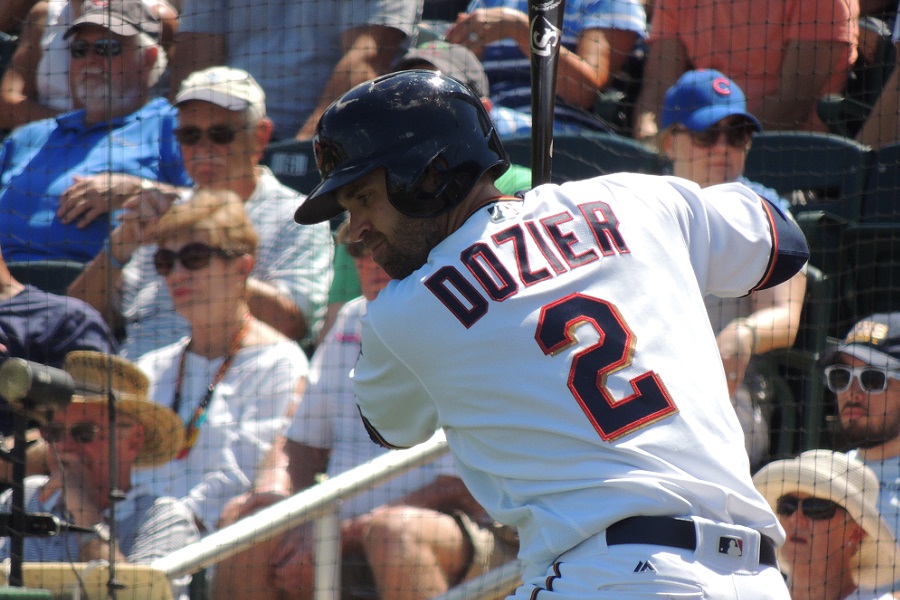 So what will 2017 look like for Brian Dozier? Can he come anywhere near replicating those numbers? Below you will find my predictions (or guesses, if you prefer) for Brian Dozier’s 2017 season. Consider posting your thoughts and your predictions into the comments below. It’s always fun to take a look at the end of the season and see how our predictions look. KEY NUMBERS 15.3% - According to FanGraphs, Dozier hit the ball to the opposite field just 15.3% of the time, down from 15.6% of the time in 2016. The message to Dozier (from many) early in the season was that he needed to use the whole field. And while that’s never bad advice, Brian Dozier is an extreme pull hitter and that is where he finds the vast majority of his success. $47.2 million - FanGraphs also provides a “Value” to each player for their season. Base on fWAR, they calculate how much that player’s season was worth. Brian Dozier’s 2016 season was worth $47.2 million. (5.9 fWAR) Over this past four seasons, Dozier has been worth a total of $127.9 million. Dozier is in Year 3 of a four year, $20 million contract that bought out his arbitration years. PREDICTIONS Brian Dozier: 574 at-bats, .261/.328/.458 (.786), 37 doubles, 2 triples, 24 home runs. -------------------------------------------------------------------------------------- Over the past three years, Brian Dozier has averaged 156 games played. I believe there is benefit to giving him a few extra days off, but I think Dozier’s going to want to play as much as possible. I have him at 152 games, so a few extra days off. I’m not going to put Dozier at 42 home runs again, in fact, not all that close. But I have his walk total increasing and I anticipate a lot more doubles. I don’t even try to pretend to calculate Runs scored or RBI, but Dozier can pretty much be relied on to score 100 runs. If he’s leading off, he’ll likely end up in the 87-80 RBI range. If he were to his 3rd or 4th, I think he’d surpass 100 RBI. YOUR TURN Your turn. Share your thoughts on and predictions on Brian Dozier in 2017. We can take a look back at the end of the season and see how we did. PREVIOUS PREDICTIONS Jason Castro Joe Mauer Brian Dozier
 -
When Joe Mauer makes a start next Monday for the Twins at Target Field, it will be his 13th Opening Day start for the Twins. That will tie Harmon Killebrew for the most in team history. In 2004, Mauer debuted as a 20-year-old kid in 2004. Late next week, Mauer will turn 34 and that will make many of us feel even older than we are. Twins fans are all aware of the date August 19, 2013. The Twins played a make up, interleague game against the Mets. Joe Mauer went 2-4 to raise his stat line to .324/.404/.476 (.880), numbers that would rank as one of the best in his career. Unfortunately, that was the day he took a foul tip to the face mask and suffered a concussion that would alter the rest of his career. The last three seasons he has hit .277, .265 and .261. Obviously there is a large sector of Twins fans that don’t care about any of that. Others will tell you that he was hitting .284/.384/.417 (.801) on August 16th last year. In that game, he strained his quadriceps (both of them) which affected him the rest of the season. Had he just shut it down at that time, that .801 OPS would have been good, something to build some excitement about. Instead, he toughed it out and kept playing through the injury. Over the season’s final six weeks, he barely hit over .100 and his OPS dropped by almost 50 points. Image courtesy of Seth Stohs, Twins Daily When Joe Mauer makes a start next Monday for the Twins at Target Field, it will be his 13th Opening Day start for the Twins. That will tie Harmon Killebrew for the most in team history. In 2004, Mauer debuted as a 20-year-old kid in 2004. Late next week, Mauer will turn 34 and that will make many of us feel even older than we are. Twins fans are all aware of the date August 19, 2013. The Twins played a make up, interleague game against the Mets. Joe Mauer went 2-4 to raise his stat line to .324/.404/.476 (.880), numbers that would rank as one of the best in his career. Unfortunately, that was the day he took a foul tip to the face mask and suffered a concussion that would alter the rest of his career. The last three seasons he has hit .277, .265 and .261. Obviously there is a large sector of Twins fans that don’t care about any of that. Others will tell you that he was hitting .284/.384/.417 (.801) on August 16th last year. In that game, he strained his quadriceps (both of them) which affected him the rest of the season. Had he just shut it down at that time, that .801 OPS would have been good, something to build some excitement about. Instead, he toughed it out and kept playing through the injury. Over the season’s final six weeks, he barely hit over .100 and his OPS dropped by almost 50 points. So what’s in store for Joe Mauer in 2017? Below you will find my predictions (or guesses, if you prefer) for Joe Mauer’s 2017 season. Hopefully you will consider posting your thoughts and your predictions into the comments below. It’s always fun to take a look at the end of the season and see how our predictions look. KEY NUMBERS .224 (.610) / .272 (.793) - As you would probably guess, these numbers are Mauer’s lefty-righty splits in 2016. Even with the struggles in the final six weeks, Mauer put up solid numbers against right-handers. However, he really struggled against same-siders. Although he’s always hit better against right-handers, he had always put up solid numbers against lefties. The last couple of years, his performance against lefties has dropped. In the second half, Mauer rarely started against lefties, even before the injury. A platoon at first base for the Twins makes a lot of sense due to his production, but also in an attempt to keep those legs with all those catcher innings on them. 87 - When Joe Mauer plays his 87th game of 2017, he will have passed Rod Carew and Tony Oliva and be in fourth place in games played for the Twins. Also, if Mauer accumulates 100 hits this season, he’ll pass Tony Oliva and move into third place on the Twins list. When Mauer walks for the 17th time this year, he’ll pass Kent Hrbek into second place on the Twins list, trailing only Kent Hrbek. He’s already in the Top 10 in most Twins offensive categories. It should be fun watching him pass some of the greats in the Twins history. PREDICTIONS Joe Mauer: 381 at-bats, .281/.350/.404 (.754), 19 doubles, 2 triples, 9 home runs. ---------------------------------------------------------------------------------- I believe that the Twins and specifically Paul Molitor needs to be strict in making himself give Mauer days off, even two a week. Ideally, he’ll give those days off when left-handers start against the Twins. If they can keep his legs strong and put him into situations to succeed, it should show up in his statistics as well. My prediction is that Mauer will play in about 115 games. He’ll continue to walk, though at a slightly lesser rate. He has become a very good defensive first baseman, and that will also be a very important piece to the Twins puzzle if he can help keep the errors down for the left side of the Twins infield. I think Byungho Park will get a lot of playing time at first base throughout 2017, particularly against right-handers. YOUR TURN Your turn. Share your thoughts on and predictions on Joe Mauer in 2017. We can take a look back at the end of the season and see how we did. PREVIOUS PREDICTIONS Jason Castro View full article
-
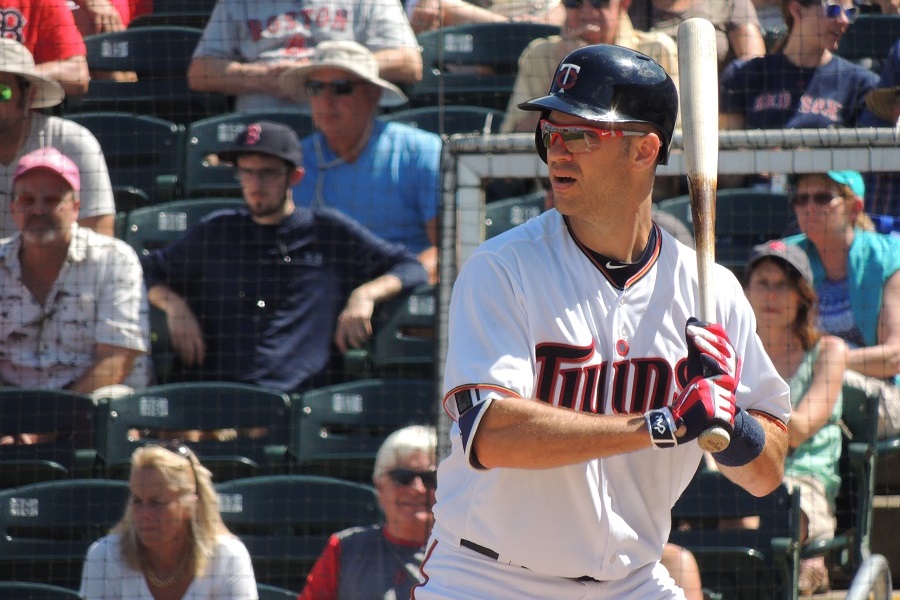 So what’s in store for Joe Mauer in 2017? Below you will find my predictions (or guesses, if you prefer) for Joe Mauer’s 2017 season. Hopefully you will consider posting your thoughts and your predictions into the comments below. It’s always fun to take a look at the end of the season and see how our predictions look. KEY NUMBERS .224 (.610) / .272 (.793) - As you would probably guess, these numbers are Mauer’s lefty-righty splits in 2016. Even with the struggles in the final six weeks, Mauer put up solid numbers against right-handers. However, he really struggled against same-siders. Although he’s always hit better against right-handers, he had always put up solid numbers against lefties. The last couple of years, his performance against lefties has dropped. In the second half, Mauer rarely started against lefties, even before the injury. A platoon at first base for the Twins makes a lot of sense due to his production, but also in an attempt to keep those legs with all those catcher innings on them. 87 - When Joe Mauer plays his 87th game of 2017, he will have passed Rod Carew and Tony Oliva and be in fourth place in games played for the Twins. Also, if Mauer accumulates 100 hits this season, he’ll pass Tony Oliva and move into third place on the Twins list. When Mauer walks for the 17th time this year, he’ll pass Kent Hrbek into second place on the Twins list, trailing only Kent Hrbek. He’s already in the Top 10 in most Twins offensive categories. It should be fun watching him pass some of the greats in the Twins history. PREDICTIONS Joe Mauer: 381 at-bats, .281/.350/.404 (.754), 19 doubles, 2 triples, 9 home runs. ---------------------------------------------------------------------------------- I believe that the Twins and specifically Paul Molitor needs to be strict in making himself give Mauer days off, even two a week. Ideally, he’ll give those days off when left-handers start against the Twins. If they can keep his legs strong and put him into situations to succeed, it should show up in his statistics as well. My prediction is that Mauer will play in about 115 games. He’ll continue to walk, though at a slightly lesser rate. He has become a very good defensive first baseman, and that will also be a very important piece to the Twins puzzle if he can help keep the errors down for the left side of the Twins infield. I think Byungho Park will get a lot of playing time at first base throughout 2017, particularly against right-handers. YOUR TURN Your turn. Share your thoughts on and predictions on Joe Mauer in 2017. We can take a look back at the end of the season and see how we did. PREVIOUS PREDICTIONS Jason Castro
 -
Today they posted the segment with Byron Buxton. http://springfeverbaseball.com/springfeverbaseball/2017/Report_12_ByronBuxton2017.mp3
-
Tyler Jay and Baseball's Evolving Bullpen
Seth Stohs replied to Cody Christie's topic in Twins Daily Front Page News
I guess I'd be curious to hear if people really think that bullpens are changing much in baseball. I mean, the idea of starters going more than 6 innings often was done several years ago. I would 100% agree that the role of bullpens have changed markedly in the playoffs, but obviously using the top guys as much as they did in the playoffs last year is not even close to feasible during the season. I will also be curious to see how Chapman and Miller perform in 2017 after their usage in the 2016 playoffs, especially Miller.- 58 replies
-
- 5
-

-
- andrew miller
- glen perkins
- (and 2 more)
-
Tyler Jay and Baseball's Evolving Bullpen
Seth Stohs replied to Cody Christie's topic in Twins Daily Front Page News
And Billy Wagner was like 5-10. I'm not saying that Jay will become Miller or Chapman, in fact the odds are very much stacked against him. Those two are very rare. But Jay can be a very good reliever. If he becomes the next Glen Perkins, that would be huge and very valuable. And, mid-90s is very realistic for Jay.- 58 replies
-
- 5
-
-
- andrew miller
- glen perkins
- (and 2 more)
-
2017 Twins Player Predictions: Jason Castro
Seth Stohs posted a topic in Twins Daily Front Page News
The Minnesota Twins offseason is generally considered to have been very quiet. It would be difficult to dispute that too much. However, the Twins new front office was very aggressive in their pursuit of one free agent. By mid-November, just weeks after the new regime began, it was clear that the Twins were a serious player in negotiations for catcher Jason Castro. By the end of the month, Castro had signed a three year, $24.5 million deal with the Twins. As has been written about, ad nauseum, much of Castro’s value comes from the his work behind the plate. No need to go over there much here, but Castro has great pitch framing stats. He presents the ball well, but he’s also touted for working well with pitchers and calling a good game. His numbers indicate that he is average at controlling the running game. He also seems to give up a fair number of passed balls. Image courtesy of Seth Stohs, Twins Daily The Minnesota Twins offseason is generally considered to have been very quiet. It would be difficult to dispute that too much. However, the Twins new front office was very aggressive in their pursuit of one free agent. By mid-November, just weeks after the new regime began, it was clear that the Twins were a serious player in negotiations for catcher Jason Castro. By the end of the month, Castro had signed a three year, $24.5 million deal with the Twins. As has been written about, ad nauseum, much of Castro’s value comes from the his work behind the plate. No need to go over there much here, but Castro has great pitch framing stats. He presents the ball well, but he’s also touted for working well with pitchers and calling a good game. His numbers indicate that he is average at controlling the running game. He also seems to give up a fair number of passed balls. However, we are here to provide predictions for the offensive side of the game. Castro was the Astros first-round pick in 2008 (10th overall) out of Stanford. He was an All Star in 2013 when he set career-highs in most statistical categories. The last three years have not been great offensively, particularly if you only look at batting average. He has hit .222, .211 and .310. However, he generally appears to have a good idea at the plate, and he has had ten or more home runs each of the last four years. So let’s get to it. Below you will find my predictions (or guesses, if you prefer) for Jason Castro’s 2017 season. Hopefully you will consider posting your thoughts and your predictions into the comments below. It’s always fun to take a look at the end of the season and see how our predictions look. KEY NUMBERS 30 - No, Castro isn’t going to hit for average, and he won’t be an on-base machine, but the last two years he has had 30 extra base hits and 11 home runs each year. He will occasionally show some pop in his bat. .149 - Castro only hit .231 against right-handers last year, but he hit just .149 against lefties. The American League Central Division has several quality left-handed starters (Carlos Rodon, Jose Quintana, Danny Duffy, to name a few), which is why it is important that the backup hit right-handed. Aside from Opening Day against Duffy, hopefully Castro will have limited plate appearances against southpaws. PREDICTIONS Jason Castro: 390 at-bats, .228/.302/.372 (.674), 20 doubles, 0 triples, 12 home runs. --------------------------------------------------------------------------- I think that Castro will play around 120 games, and obviously he’ll bat in the lower third of the lineup. It’s unlikely that Castro will hit even .250, but I think he can hit for a better average if he is used appropriately. He’s got a smooth swing, and he should continue to hit plenty of extra base hits. Now, a .674 OPS for a catcher would be pretty solid. I think coupled with his defense, it would be a successful season for the 29-year-old. YOUR TURN Your turn. Share your thoughts on and predictions on Jason Castro in 2017. We can take a look back at the end of the season and see how we did. View full article -
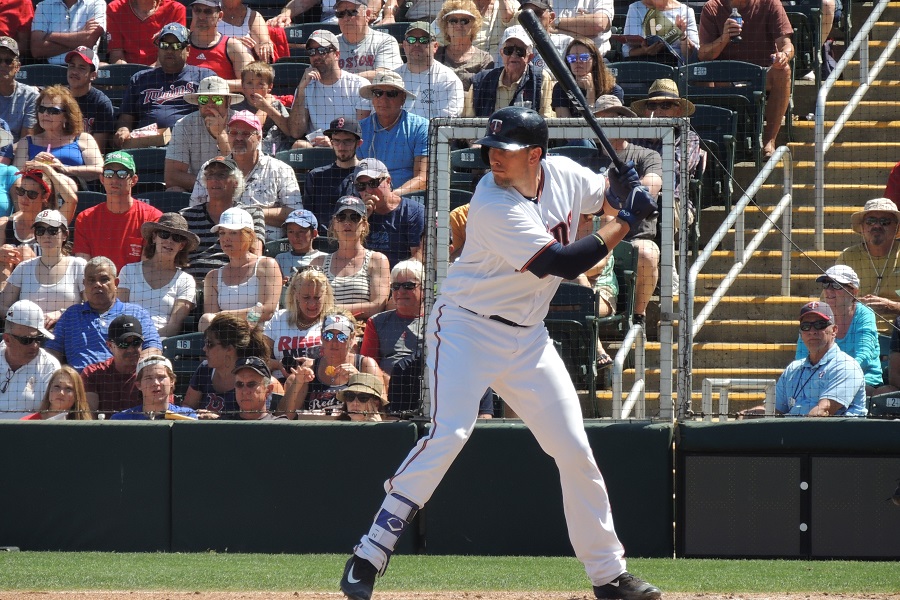 However, we are here to provide predictions for the offensive side of the game. Castro was the Astros first-round pick in 2008 (10th overall) out of Stanford. He was an All Star in 2013 when he set career-highs in most statistical categories. The last three years have not been great offensively, particularly if you only look at batting average. He has hit .222, .211 and .310. However, he generally appears to have a good idea at the plate, and he has had ten or more home runs each of the last four years. So let’s get to it. Below you will find my predictions (or guesses, if you prefer) for Jason Castro’s 2017 season. Hopefully you will consider posting your thoughts and your predictions into the comments below. It’s always fun to take a look at the end of the season and see how our predictions look. KEY NUMBERS 30 - No, Castro isn’t going to hit for average, and he won’t be an on-base machine, but the last two years he has had 30 extra base hits and 11 home runs each year. He will occasionally show some pop in his bat. .149 - Castro only hit .231 against right-handers last year, but he hit just .149 against lefties. The American League Central Division has several quality left-handed starters (Carlos Rodon, Jose Quintana, Danny Duffy, to name a few), which is why it is important that the backup hit right-handed. Aside from Opening Day against Duffy, hopefully Castro will have limited plate appearances against southpaws. PREDICTIONS Jason Castro: 390 at-bats, .228/.302/.372 (.674), 20 doubles, 0 triples, 12 home runs. --------------------------------------------------------------------------- I think that Castro will play around 120 games, and obviously he’ll bat in the lower third of the lineup. It’s unlikely that Castro will hit even .250, but I think he can hit for a better average if he is used appropriately. He’s got a smooth swing, and he should continue to hit plenty of extra base hits. Now, a .674 OPS for a catcher would be pretty solid. I think coupled with his defense, it would be a successful season for the 29-year-old. YOUR TURN Your turn. Share your thoughts on and predictions on Jason Castro in 2017. We can take a look back at the end of the season and see how we did.
 -
Updated to include the Jason Castro interview: http://springfeverbaseball.com/springfeverbaseball/2017/Report_11_JasonCastro2017.mp3
-
Updated with a Jason Castro interview. http://springfeverbaseball.com/springfeverbaseball/2017/Report_11_JasonCastro2017.mp3
-
Back Fields in Motion - March 23, 2017
Seth Stohs commented on ashbury's blog entry in Left Coast Bias
Kind of... he was signed last summer after the draft. He had played at Valdosta State, but I think he was playing summer ball in Alaska when he signed. -
Back Fields in Motion - March 23, 2017
Seth Stohs commented on ashbury's blog entry in Left Coast Bias
It would be KEVIN Garcia, not former Dodgers outfielder Karim Garcia... -
Report From The Fort: Ups And Downs
Seth Stohs replied to John Bonnes's topic in Twins Daily Front Page News
In fact, he's the top set up guy, and I would say that at the end of the year, he'll have been the team's top bullpen guy. He's definitely a lock.- 14 replies
-
- 1
-
-
- kyle gibson
- alex wimmers
- (and 3 more)
-
There are five new interviews to listen to including Brian Dozier and Joe Mauer. See the original post, and listen to the three-minute segments.
-
http://www.twincities.com/2017/03/26/minnesota-twins-veteran-drew-stubbs-among-latest-round-of-cuts/ According to Mike Berardino, outfielder Drew Stubb was informed this morning that he will not make the Twins Opening Day roster and has decided to opt-out of his deal. He says he is hoping for an Opening Day job, but if he doesn't find out, he will then re-evaluate and could return to the Twins. Also, RHP Drew Rucinski has been reassigned to minor league camp.
-
Ben Lindbergh from The Ringer is calling Byron Buxton the breakout king for 2017. He's struggled to transition to the big leagues. Terry Ryan and Doug Mientkieiwicz admitted he wasn't ready when he was called up, but he is poised to break out in a big way in 2017. https://theringer.com/2017-mlb-preview-minnesota-twins-byron-buxton-breakout-season-9da46c261223#.5se1nzkb7 He's been a prospect for so long, people think his development has been slow, and you could make that argument.
-
The Twins have started making some releases, something that is never fun... The following players have been told that their time with the Twins is over within the last couple of days: RHP Jim Miller RHP Brandon Peterson RHP Tyler Fox RHP Zach Strecker LHP Austin Tribby OF Leandro Castro OF JJ Fernandez OF Roberto Gonzalez
-
Mike Berardino wrote about a system the Twins are trying to implement. The last year, the Twins have been charting fatigue and workload of its players whether it's hitting in the cages, taking grounders, etc. Tony Clark of the Players Union is concerned about the methods. It's interesting to see how they think maybe moving around positions hurt Miguel Sano and Danny Santana last year. It'll need a lot of extra data points, but the system is at least interesting. What do you think? http://www.twincities.com/2017/03/25/twins-attempt-to-chart-fatigue-raises-concerns-with-players-union/
-
Never know... maybe it's happened. I prefer Progresso soup... new england clam chowder! Also, pitching inside is an important key to being successful in baseball.
-
is the USC-Aiken player hot-dogging when he's flipping the bat 20 feet into the air? I mean, that is pretty much the definition of hot-dogging. Do I enjoy watching it? Sure. Not sure you can bash the coach for his "I" speak, when the "hot-dogging" is completely a look-at-me thing. I have no problem with the coach pulling the player... he likely would have been hurt had he come up to bat again, something I also have no problem with, unless it's close to the head.
