



Seth Stohs
-
Posts
25,912 -
Joined
-
Last visited
-
Days Won
109
Content Type
Profiles
News
Minnesota Twins Videos
2026 Minnesota Twins Top Prospects Ranking
2022 Minnesota Twins Draft Picks
Minnesota Twins Free Agent & Trade Rumors, Notes, & Tidbits
Guides & Resources
2023 Minnesota Twins Draft Picks
The Minnesota Twins Players Project
2024 Minnesota Twins Draft Picks
2025 Minnesota Twins Draft Pick Tracker
2026 Minnesota Twins Draft Tracker: Picks & Bonuses
Forums
Blogs
Events
Store
Downloads
Gallery
Everything posted by Seth Stohs
-
It'll be interesting to see what happens the next week. Slegers moved up for one day. But maybe he goes back to MN in 5 days. Stewart moved up to the Red Wings. That could be just for one start tonight, or depending on 1.) how he does, and 2.) Slegers and Gonsalves plans, he could stay. Same thing with Thorpe at Chattanooga. It probably depends on Stewart, along with how he performs. It may also be why Eduardo Del Rosario just pitched one inning in his return to the Kernels this week. I'm sure we'll know much more soon.
-
Lewis Thorpe tweeted this morning.... "Next Stop Knoxville." Well, Knoxville is the home of the Tennessee Smokies, the team that the Chattanooga Lookouts are playing tonight, in Knoxville....
-
Aaron Slegers to Make Major League Debut Tomorrow
Seth Stohs replied to SwainZag's topic in Minnesota Twins Talk
Recker was removed from the 40-man roster. twinsbaseball.com not correct. -
Aaron Slegers to Make Major League Debut Tomorrow
Seth Stohs replied to SwainZag's topic in Minnesota Twins Talk
Not in a forum thread titled "Aaron Slegers Making His MLB Debut tomorrow." And we dont' know, for sure, that Gonsalves is starting Monday. -
I just think Perkins should be celebrated more for coming back. Do people not realize how bad his shoulder was? Just feels like it isn't getting talked about enough. Maybe I'm wrong.
-
Twins Minor League Report (8/16): Wiel With A Walkoff
Seth Stohs replied to Seth Stohs's topic in Twins Daily Front Page News
I don't know that Heston or Pino would be considered starters. Also, Slegers will be back down after tonight's Twins game, so he'll jump back there. Possible that Stewart starts and goes back down. Also possible that Gonsalves starts in the DH for the Twins on Monday and Stewart takes his spot.- 12 replies
-
- 1
-

-
- zander wiel
- zack littell
- (and 3 more)
-
Twins Minor League Report (8/16): Wiel With A Walkoff
Seth Stohs replied to Seth Stohs's topic in Twins Daily Front Page News
Updated to show that Dereck Rodriguez is starting in place of Stewart tonight for the Lookouts.- 12 replies
-
- 1
-
-
- zander wiel
- zack littell
- (and 3 more)
-
Looking Back: Recent Twins Drafts
Seth Stohs replied to Seth Stohs's topic in Twins Daily Front Page News
' Which part of the article talks about that?? -
Twins Minor League Report (8/16): Wiel With A Walkoff
Seth Stohs replied to Seth Stohs's topic in Twins Daily Front Page News
Moya could be as early as September, though mid-2018 maybe more realistic.- 12 replies
-
- 2
-
-
- zander wiel
- zack littell
- (and 3 more)
-
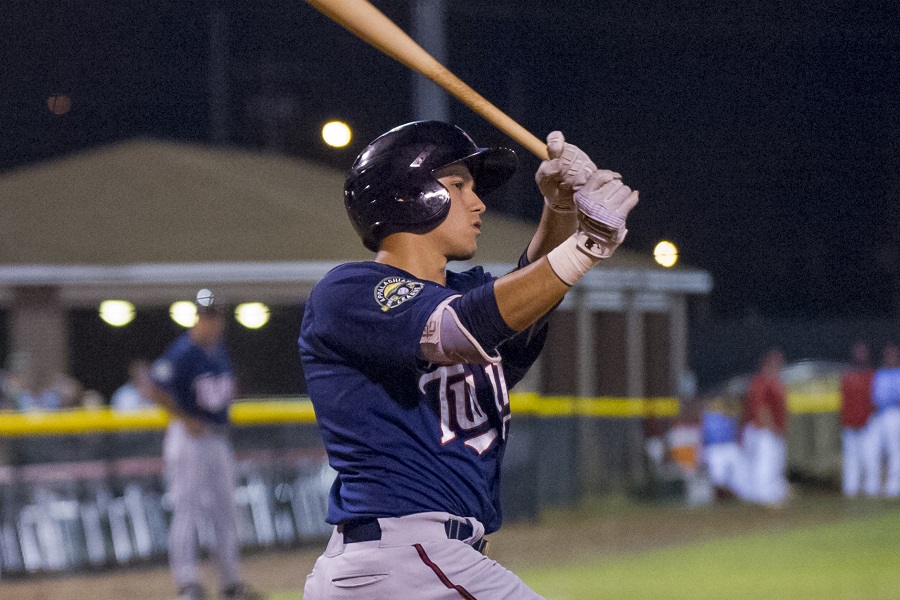
Yesterday, Nick wrote about the early returns that we’ve seen from the Minnesota Twins 2017 draft class. Brent Rooker is already performing in Ft. Myers. #1 overall pick Royce Lewis recently was promoted to Cedar Rapids, becoming the fourth member of the 2017 draft class to play for the Kernels already. At this stage, Sean Johnson’s first draft looks great. Early returns are great, but for today, I reviewed the previous six Twins drafts (2011 to 2016) to see what they showed. My intent was to look at the drafts from a very high level. Of course, it’s hard to know what the success of any draft is for probably ten years. There are many variables. There are high school players, junior college players and four-year college guys. There are guys drafted after their junior seasons in college, and there are senior draft picks. But even those in a same category can’t be judged the same. A 22nd round five year college relief pitcher’s development may be judged differently than a first-round pick out of high school. But at the end of the day, a draft class is going to be judged by its big league success. Often the most visible member of that draft class is the first-round pick, but there is more to the draft than that. Image courtesy of David McQueen (photo of Alex Kirilloff) Yesterday, Nick wrote about the early returns that we’ve seen from the Minnesota Twins 2017 draft class. Brent Rooker is already performing in Ft. Myers. #1 overall pick Royce Lewis recently was promoted to Cedar Rapids, becoming the fourth member of the 2017 draft class to play for the Kernels already. At this stage, Sean Johnson’s first draft looks great. Early returns are great, but for today, I reviewed the previous six Twins drafts (2011 to 2016) to see what they showed. My intent was to look at the drafts from a very high level. Of course, it’s hard to know what the success of any draft is for probably ten years. There are many variables. There are high school players, junior college players and four-year college guys. There are guys drafted after their junior seasons in college, and there are senior draft picks. But even those in a same category can’t be judged the same. A 22nd round five year college relief pitcher’s development may be judged differently than a first-round pick out of high school. But at the end of the day, a draft class is going to be judged by its big league success. Often the most visible member of that draft class is the first-round pick, but there is more to the draft than that. What I did was looked at six drafts. I counted how many players the team signed from each draft. I looked at which levels the players have advanced to, and of course, how many players from each class have been released. Some have chosen to retire. There have been some players drafted in the major league and minor league Rule 5 drafts. And, of course, there have been some players who have spent time with the Twins. There are also some top prospects and others who will eventually get there. 2016 Draft Players Signed: 33 Players Releases: 5 Players at Ft. Myers: 5 (Tom Hackimer, Mitchell Kranson, Brandon Lopez, Sean Poppen, Clark Beeker) Players at Cedar Rapids: 12 (Ben Rortvedt, Griffin Jax, Alex Schick, Shane Carrier, Ryan Mason, Tyler Wells, Tyler Beardsley, Dom Carlini, Caleb Hamilton, Colton Davis, Joe Cronin, Pat McGuff) Players at Elizabethton: 4 (Jose Miranda, Akil Baddoo, Matt Albanese, Juan Gamez) Players at the GCL: 6 (Jordan Balazovic, Tyler Benninghoff, Zack Featherstone, Kidany Salva, Matt Jones, Dane Hutcheon) First-Round Draft Pick: Alex Kirilloff is not listed with any of the teams. He is rehabbing following Tommy John surgery in March. The One That Got Away: In the 38th round, the Twins selected Brent Rooker. He went back to college, won the SEC Triple Crown, and the Twins used their Competitive Balance pick to take him. He’s already in Ft. Myers, but it does make me wonder what would have happened had he signed. He would have played 2016 in Elizabethton, and probably would have spent all of 2017 in Cedar Rapids. For him,going back to school was absolutely the best move for him. Summary: The Twins surprised many with their strategy of taking high-ceiling prep players with their first four picks (Kirilloff, Rortvedt, Miranda, Baddoo). In addition, the took high school pitchers Jordan Balazovic and Tyler Benninghoff. Kirilloff was touted by many in the scouting world as the top hitter in the draft. Rortvedt struggled the first two months in Cedar Rapids before being pretty solid the last six weeks or so. Benninghoff had Tommy John surgery right after being drafted and just returned this week. Hackimer, Poppen and Beeker were senior draft picks. So was Brandon Lopez, but they’ve all been good. Shane Carrier struggled early in Cedar Rapids, but after a stint in Elizabethton, he’s returned to the Kernels red hot. Griffin Jax only had six weeks to pitch, but he made a good impression with the Kernels before heading to Cape Canaveral. Zach Featherstone was drafted as an outfielder/first baseman. He was transitioned to the mound a few weeks before the GCL season started. Frankly, it’s just hard to judge this draft yet because of taking so many young players early. Those players are doing fine, of course, but all will need time. 2015 Draft Players Signed: 27 Players Released: 6 Players at Chattanooga: 3 (Tyler Jay, LaMonte Wade, Alex Perez) Players at Ft. Myers: 9 (Alex Robinson, Chris Paul, Sean Miller, Zander Wiel, Cody Stashak, Anthony McIver, Jaylin Davis, Andrew Vasquez, Brian Olson) Players at Cedar Rapids: 6 (Travis Blankenhorn, Trey Cabbage, Lean Marrero, Logan Lombana, Hector Lujan, Max Cordy) Players at Elizabethton: 2 (Jovani Moran, Kolton Kendrick) First-Round Draft Pick: College reliever Tyler Jay was taken with the sixth overall pick. The Twins, and many other in the industry believed that he could be a starter in pro ball. In fact, when I talked to Keith Law in May, he was disappointed the Twins (and Jay) decided to move him back to the bullpen. He’s missed most of this season, though he pitched in the GCL in a rehab appearance on Wednesday. Summary: Jay was a questionable and a questioned pick when it was made. Of course Andrew Benintendi being taken one pick later doesn’t help, although that is always a terrible way to judge a draft pick. If healthy (or hopefully when healthy), Jay has a chance to be a Glen Perkins-in-his-prime type of pitcher, which can be incredibly valuable. The jury is out on the rest of the draft. Most of the college players have advanced to Ft. Myers. Alex Robinson appears to have overcome some of his control issues and become a strikeout machine. Chris Paul, Zander Wiel, Cody Stashak and Anthony McIver have put up solid numbers the last couple of years. Jaylin Davis has provided a lot of power. There is certainly some ceiling in Travis Blankenhorn and Trey Cabbage. Taken in the third and fourth rounds, respectively, they both are tremendous athletes with high ceilings, but still more to learn. Kolton Kendrick and Jovani Moran are still in Elizabethton. Both were very young, raw prospects when drafted, and both have shown some of that talent in 2017. Two late-round college pitchers have become sleeper prospects this season. Drafted out of Westmont College, lefty Andrew Vasquez and right-hander Hector Lujan have done very nice jobs. Lujan has turned into the Kernels closer and throws 95-96 with two good secondary pitches. Vasquez has been a strikeout machine. 2014 Draft Players Signed: 30 Players Released: 15 Players Retired: 2 (Mat Batts, Alex Real) Players with the Twins: 1 (Trevor Hildenberger) Players at Rochester: 2 (Jake Reed, John Curtiss) Players at Chattanooga: 5 (Nick Gordon, Nick Burdi, Sam Clay, Max Murphy, TJ White) Players at Ft. Myers: 4 (Keaton Steele, Randy LeBlanc, Tanner English, Michael Theofanopoulos) Players at Cedar Rapids: 1 (Andro Cutura - TJ in May 2016) First-Round Draft Picks: Nick Gordon was the Twins choice, and he’s become a consensus Top 40 prospect in all of baseball. Following a strong performance in the Arizona Fall League, he got a big league spring training invitation. He had a great first half, was named a Southern League All-Star, and participated in the Futures Game. Between he and Royce Lewis, the Twins have a 1-2 combo of top prospects who are very exciting. Summary: Nick Gordon has become an elite prospect. You could have made a lot of money if you had said Trevor Hildenberger, drafted in the 22nd round after five years at Cal-Berkeley, would be the first player from this draft to get to the big leagues. And he looks like he could stick for a long time. Nick Burdi and Jake Reed would likely be in the big leagues now if not for injuries. Reed should be up in September. So should John Curtiss. If not, those two should be givens to be added to the 40-man roster in November. Sam Clay moved back to the bullpen this year, and he’s been terrific. Recently, he was moved to AA Chattanooga. 2013 Draft Players Signed: 28 Players Released: 17 Players Retired: 1 (Alex Swim) Players with the Twins: Zack Granite (14), Aaron Slegers (5) Players at Rochester: 2 (Stephen Gonsalves, Mitch Garver) Players at Chattanooga: 4 (Kohl Stewart, Ryan Eades, Brian Navarreto, Ryan Walker) Players at Ft. Myers: 1 (Nelson Molina) Rule 5 pick lost: Stuart Turner First-Round Pick: Kohl Stewart was the #4 pick out of high school where he was a star quarterback, committed to Texas A&M. The Twins convinced him, with a lot of money, to forgo his football dreams to pursue pitching. He put up solid numbers throughout the lower levels of the minor leagues, though his lack of strikeouts concerned many. But he has advanced pretty quickly. This year, he missed a couple of months due to a knee injury. He’s returned, and he’s still in the Twins plans, as he should be. Kohl Stewart will pitch in the big leagues. Summary: Zack Granite was hitting over .360 when he was promoted to the Twins. With Rosario, Buxton and Kepler in the daily lineup, Granite is back down in Rochester, but he’s ready to contribute when needed. Slegers was called up to the Twins to be the 26th man and start Thursday’s second game for the Twins. But the top prospect from this group is certainly Stephen Gonsalves, their fourth-round pick. He may be in line to get his big league promotion for the Twins double- header on Monday. If not then, it will happen in the near future. Mitch Garver probably should be in the big leagues, but he’ll have to wait until the end of the Red Wings season to make his debut. 2012 Draft Players Signed: 27 Players Released: 15 Players Retired: 1 (Dalton Hicks) Players with the Twins: 5 (Byron Buxton (1), Jose Berrios (1s), JT Chargois (2), Tyler Duffey (5), Taylor Rogers (11). Players at Rochester: 2 (Luke Bard, Mason Melotakis) Players at Chattanooga: 2 (Zack Jones, DJ Baxendale) Players at Ft. Myers: 1 (Alex Muren) Players lost in Rule 5 draft: Zack Jones (to Milwaukee, but he was returned mid-season) Players DFAd: 1 - Adam Brett Walker spent a season on the Twins 40-man roster before being DFAd last November. First-Round Picks: Byron Buxton was the #2 overall draft pick, selected after Houston took Carlos Correa. He moved quickly the first two pro seasons, earning the title of baseball’s #1 prospect. He was likely going to be called up sometime in 2014, but it became an injury-riddled season for him. He debuted in 2015, likely far before he was ready. He’s struggled, including the first six weeks of this season. His defense is elite, and his offense has been pretty good since that slow start. Jose Berrios was taken with the 32nd overall pick. He put up numbers, and slowly his prospect rankings (among Twins raters, and national publications) continued to rise. He finally made his debut in 2016 and really struggled. He’s been much better since his call up in 2017, though it’s clear he’s still working to gain more consistency. Luke Bard was the second supplemental pick. He fought injuries from the time he was drafted until the 2016 season. He’s been quite good, a strikeout machine the last two years, and recently he was promoted to Rochester, just one step from the big leagues. SUMMARY: The Twins went with youth and high-ceiling talent with their first two picks. After that, they went with a string of college relievers and attempted to convert some of them to starters. Tyler Duffey got to the big leagues as a starter, but has pitched out of the bullpen this year. The others moved to the bullpen full-time earlier. Injuries played a big role in a lot of that as well. Melotakis, Chargois, Zack Jones, Alex Muren have all missed significant time due to surgeries. I think it would be hard to label the 2012 Twins draft as anything but successful. Buxton and Berrios have taken their lumps in the big leagues, but they’ve experienced success as 23-year-olds this year. Chargois and Duffey can both be very good relievers. Chargois just needs to be healthy. Duffey has success, but will need to be more consistent. Taylor Rogers has been reliable in the Twins bullpen and was fantastic in the first half this year. Also, guys like Luke Bard and Mason Melotakis could still surface with the Twins as soon as September. 2011 Draft Players Signed: 33 Players Released: 26 Players Retired: 1 (Tyler Grimes) Players selected in minor league portion of Rule 5 draft: 1 (Matthew Tomshaw) Players with Twins (Jason Wheeler pitched twice for the Twins this year, then DFAd) Players with Rochester: 1 (David Hurlbut) Players with Chattanooga: 3 (Levi Michael, Travis Harrison, Dereck Rodriguez) First-Round Picks: Levi Michael was drafted out of North Carolina with the 30th pick. While he had missed some time that year due to injury, many evaluators, including Keith Law, ranked him much higher than #30. Unfortunately, Michael was hurt much of his early career, and after spending a couple of years at Ft. Myers, he has spent the past three seasons in AA. He plays some second base, but mostly center field. Travis Harrison was drafted with the first of two supplemental picks. He moved up one level at a time, until 2014 when he hit AA. He’s still in AA Chattanooga. He’s moved from third base to the outfield. He is currently on the DL. The other supplemental pick was Hudson Boyd, and that just didn’t work out. He fought issues from weight to substance abuse (including a 50-game suspension). He was released in 2015. Summary: I think it’s fair to say that 2011 was not a successful draft for the Twins. Six years later, the two remaining first round picks are still in AA. Jason Wheeler got to the big leagues, but after two games, they let him go and he was selected by the Dodgers. He’s now in the Orioles system. Davis Hurlbut was drafted by the Twins in 2010 and 2011. The 28th rounder has pitched quite well in Rochester the last two seasons. The fourth player remaining in the organization from that draft is Dereck Rodriguez. After three years as an outfielder, he was shifted to the mound where he’s done a nice job, and the Twins have been patient with him. He’s split this season between the Miracle and the Lookouts. These four players can become free agents following the World Series, unless they are put on the 40-man roster before then. Rodriguez is a possibility. This was fun to research and write. I enjoyed remembering so many of the names of players who have been released that I've met over the years. But hopefully you get something out of this. Maybe, if nothing else, an appreciation for how hard it is the get to the big leagues... and judging from the number of releases, you can see how hard it is to last even just three years in an organization before being released. View full article
- 27 replies
-
- 2
-
-
- stephen gonsalves
- nick gordon
- (and 3 more)
-
 What I did was looked at six drafts. I counted how many players the team signed from each draft. I looked at which levels the players have advanced to, and of course, how many players from each class have been released. Some have chosen to retire. There have been some players drafted in the major league and minor league Rule 5 drafts. And, of course, there have been some players who have spent time with the Twins. There are also some top prospects and others who will eventually get there. 2016 Draft Players Signed: 33 Players Releases: 5 Players at Ft. Myers: 5 (Tom Hackimer, Mitchell Kranson, Brandon Lopez, Sean Poppen, Clark Beeker) Players at Cedar Rapids: 12 (Ben Rortvedt, Griffin Jax, Alex Schick, Shane Carrier, Ryan Mason, Tyler Wells, Tyler Beardsley, Dom Carlini, Caleb Hamilton, Colton Davis, Joe Cronin, Pat McGuff) Players at Elizabethton: 4 (Jose Miranda, Akil Baddoo, Matt Albanese, Juan Gamez) Players at the GCL: 6 (Jordan Balazovic, Tyler Benninghoff, Zack Featherstone, Kidany Salva, Matt Jones, Dane Hutcheon) First-Round Draft Pick: Alex Kirilloff is not listed with any of the teams. He is rehabbing following Tommy John surgery in March. The One That Got Away: In the 38th round, the Twins selected Brent Rooker. He went back to college, won the SEC Triple Crown, and the Twins used their Competitive Balance pick to take him. He’s already in Ft. Myers, but it does make me wonder what would have happened had he signed. He would have played 2016 in Elizabethton, and probably would have spent all of 2017 in Cedar Rapids. For him,going back to school was absolutely the best move for him. Summary: The Twins surprised many with their strategy of taking high-ceiling prep players with their first four picks (Kirilloff, Rortvedt, Miranda, Baddoo). In addition, the took high school pitchers Jordan Balazovic and Tyler Benninghoff. Kirilloff was touted by many in the scouting world as the top hitter in the draft. Rortvedt struggled the first two months in Cedar Rapids before being pretty solid the last six weeks or so. Benninghoff had Tommy John surgery right after being drafted and just returned this week. Hackimer, Poppen and Beeker were senior draft picks. So was Brandon Lopez, but they’ve all been good. Shane Carrier struggled early in Cedar Rapids, but after a stint in Elizabethton, he’s returned to the Kernels red hot. Griffin Jax only had six weeks to pitch, but he made a good impression with the Kernels before heading to Cape Canaveral. Zach Featherstone was drafted as an outfielder/first baseman. He was transitioned to the mound a few weeks before the GCL season started. Frankly, it’s just hard to judge this draft yet because of taking so many young players early. Those players are doing fine, of course, but all will need time. 2015 Draft Players Signed: 27 Players Released: 6 Players at Chattanooga: 3 (Tyler Jay, LaMonte Wade, Alex Perez) Players at Ft. Myers: 9 (Alex Robinson, Chris Paul, Sean Miller, Zander Wiel, Cody Stashak, Anthony McIver, Jaylin Davis, Andrew Vasquez, Brian Olson) Players at Cedar Rapids: 6 (Travis Blankenhorn, Trey Cabbage, Lean Marrero, Logan Lombana, Hector Lujan, Max Cordy) Players at Elizabethton: 2 (Jovani Moran, Kolton Kendrick) First-Round Draft Pick: College reliever Tyler Jay was taken with the sixth overall pick. The Twins, and many other in the industry believed that he could be a starter in pro ball. In fact, when I talked to Keith Law in May, he was disappointed the Twins (and Jay) decided to move him back to the bullpen. He’s missed most of this season, though he pitched in the GCL in a rehab appearance on Wednesday. Summary: Jay was a questionable and a questioned pick when it was made. Of course Andrew Benintendi being taken one pick later doesn’t help, although that is always a terrible way to judge a draft pick. If healthy (or hopefully when healthy), Jay has a chance to be a Glen Perkins-in-his-prime type of pitcher, which can be incredibly valuable. The jury is out on the rest of the draft. Most of the college players have advanced to Ft. Myers. Alex Robinson appears to have overcome some of his control issues and become a strikeout machine. Chris Paul, Zander Wiel, Cody Stashak and Anthony McIver have put up solid numbers the last couple of years. Jaylin Davis has provided a lot of power. There is certainly some ceiling in Travis Blankenhorn and Trey Cabbage. Taken in the third and fourth rounds, respectively, they both are tremendous athletes with high ceilings, but still more to learn. Kolton Kendrick and Jovani Moran are still in Elizabethton. Both were very young, raw prospects when drafted, and both have shown some of that talent in 2017. Two late-round college pitchers have become sleeper prospects this season. Drafted out of Westmont College, lefty Andrew Vasquez and right-hander Hector Lujan have done very nice jobs. Lujan has turned into the Kernels closer and throws 95-96 with two good secondary pitches. Vasquez has been a strikeout machine. 2014 Draft Players Signed: 30 Players Released: 15 Players Retired: 2 (Mat Batts, Alex Real) Players with the Twins: 1 (Trevor Hildenberger) Players at Rochester: 2 (Jake Reed, John Curtiss) Players at Chattanooga: 5 (Nick Gordon, Nick Burdi, Sam Clay, Max Murphy, TJ White) Players at Ft. Myers: 4 (Keaton Steele, Randy LeBlanc, Tanner English, Michael Theofanopoulos) Players at Cedar Rapids: 1 (Andro Cutura - TJ in May 2016) First-Round Draft Picks: Nick Gordon was the Twins choice, and he’s become a consensus Top 40 prospect in all of baseball. Following a strong performance in the Arizona Fall League, he got a big league spring training invitation. He had a great first half, was named a Southern League All-Star, and participated in the Futures Game. Between he and Royce Lewis, the Twins have a 1-2 combo of top prospects who are very exciting. Summary: Nick Gordon has become an elite prospect. You could have made a lot of money if you had said Trevor Hildenberger, drafted in the 22nd round after five years at Cal-Berkeley, would be the first player from this draft to get to the big leagues. And he looks like he could stick for a long time. Nick Burdi and Jake Reed would likely be in the big leagues now if not for injuries. Reed should be up in September. So should John Curtiss. If not, those two should be givens to be added to the 40-man roster in November. Sam Clay moved back to the bullpen this year, and he’s been terrific. Recently, he was moved to AA Chattanooga. 2013 Draft Players Signed: 28 Players Released: 17 Players Retired: 1 (Alex Swim) Players with the Twins: Zack Granite (14), Aaron Slegers (5) Players at Rochester: 2 (Stephen Gonsalves, Mitch Garver) Players at Chattanooga: 4 (Kohl Stewart, Ryan Eades, Brian Navarreto, Ryan Walker) Players at Ft. Myers: 1 (Nelson Molina) Rule 5 pick lost: Stuart Turner First-Round Pick: Kohl Stewart was the #4 pick out of high school where he was a star quarterback, committed to Texas A&M. The Twins convinced him, with a lot of money, to forgo his football dreams to pursue pitching. He put up solid numbers throughout the lower levels of the minor leagues, though his lack of strikeouts concerned many. But he has advanced pretty quickly. This year, he missed a couple of months due to a knee injury. He’s returned, and he’s still in the Twins plans, as he should be. Kohl Stewart will pitch in the big leagues. Summary: Zack Granite was hitting over .360 when he was promoted to the Twins. With Rosario, Buxton and Kepler in the daily lineup, Granite is back down in Rochester, but he’s ready to contribute when needed. Slegers was called up to the Twins to be the 26th man and start Thursday’s second game for the Twins. But the top prospect from this group is certainly Stephen Gonsalves, their fourth-round pick. He may be in line to get his big league promotion for the Twins double- header on Monday. If not then, it will happen in the near future. Mitch Garver probably should be in the big leagues, but he’ll have to wait until the end of the Red Wings season to make his debut. 2012 Draft Players Signed: 27 Players Released: 15 Players Retired: 1 (Dalton Hicks) Players with the Twins: 5 (Byron Buxton (1), Jose Berrios (1s), JT Chargois (2), Tyler Duffey (5), Taylor Rogers (11). Players at Rochester: 2 (Luke Bard, Mason Melotakis) Players at Chattanooga: 2 (Zack Jones, DJ Baxendale) Players at Ft. Myers: 1 (Alex Muren) Players lost in Rule 5 draft: Zack Jones (to Milwaukee, but he was returned mid-season) Players DFAd: 1 - Adam Brett Walker spent a season on the Twins 40-man roster before being DFAd last November. First-Round Picks: Byron Buxton was the #2 overall draft pick, selected after Houston took Carlos Correa. He moved quickly the first two pro seasons, earning the title of baseball’s #1 prospect. He was likely going to be called up sometime in 2014, but it became an injury-riddled season for him. He debuted in 2015, likely far before he was ready. He’s struggled, including the first six weeks of this season. His defense is elite, and his offense has been pretty good since that slow start. Jose Berrios was taken with the 32nd overall pick. He put up numbers, and slowly his prospect rankings (among Twins raters, and national publications) continued to rise. He finally made his debut in 2016 and really struggled. He’s been much better since his call up in 2017, though it’s clear he’s still working to gain more consistency. Luke Bard was the second supplemental pick. He fought injuries from the time he was drafted until the 2016 season. He’s been quite good, a strikeout machine the last two years, and recently he was promoted to Rochester, just one step from the big leagues. SUMMARY: The Twins went with youth and high-ceiling talent with their first two picks. After that, they went with a string of college relievers and attempted to convert some of them to starters. Tyler Duffey got to the big leagues as a starter, but has pitched out of the bullpen this year. The others moved to the bullpen full-time earlier. Injuries played a big role in a lot of that as well. Melotakis, Chargois, Zack Jones, Alex Muren have all missed significant time due to surgeries. I think it would be hard to label the 2012 Twins draft as anything but successful. Buxton and Berrios have taken their lumps in the big leagues, but they’ve experienced success as 23-year-olds this year. Chargois and Duffey can both be very good relievers. Chargois just needs to be healthy. Duffey has success, but will need to be more consistent. Taylor Rogers has been reliable in the Twins bullpen and was fantastic in the first half this year. Also, guys like Luke Bard and Mason Melotakis could still surface with the Twins as soon as September. 2011 Draft Players Signed: 33 Players Released: 26 Players Retired: 1 (Tyler Grimes) Players selected in minor league portion of Rule 5 draft: 1 (Matthew Tomshaw) Players with Twins (Jason Wheeler pitched twice for the Twins this year, then DFAd) Players with Rochester: 1 (David Hurlbut) Players with Chattanooga: 3 (Levi Michael, Travis Harrison, Dereck Rodriguez) First-Round Picks: Levi Michael was drafted out of North Carolina with the 30th pick. While he had missed some time that year due to injury, many evaluators, including Keith Law, ranked him much higher than #30. Unfortunately, Michael was hurt much of his early career, and after spending a couple of years at Ft. Myers, he has spent the past three seasons in AA. He plays some second base, but mostly center field. Travis Harrison was drafted with the first of two supplemental picks. He moved up one level at a time, until 2014 when he hit AA. He’s still in AA Chattanooga. He’s moved from third base to the outfield. He is currently on the DL. The other supplemental pick was Hudson Boyd, and that just didn’t work out. He fought issues from weight to substance abuse (including a 50-game suspension). He was released in 2015. Summary: I think it’s fair to say that 2011 was not a successful draft for the Twins. Six years later, the two remaining first round picks are still in AA. Jason Wheeler got to the big leagues, but after two games, they let him go and he was selected by the Dodgers. He’s now in the Orioles system. Davis Hurlbut was drafted by the Twins in 2010 and 2011. The 28th rounder has pitched quite well in Rochester the last two seasons. The fourth player remaining in the organization from that draft is Dereck Rodriguez. After three years as an outfielder, he was shifted to the mound where he’s done a nice job, and the Twins have been patient with him. He’s split this season between the Miracle and the Lookouts. These four players can become free agents following the World Series, unless they are put on the 40-man roster before then. Rodriguez is a possibility. This was fun to research and write. I enjoyed remembering so many of the names of players who have been released that I've met over the years. But hopefully you get something out of this. Maybe, if nothing else, an appreciation for how hard it is the get to the big leagues... and judging from the number of releases, you can see how hard it is to last even just three years in an organization before being released.
 -
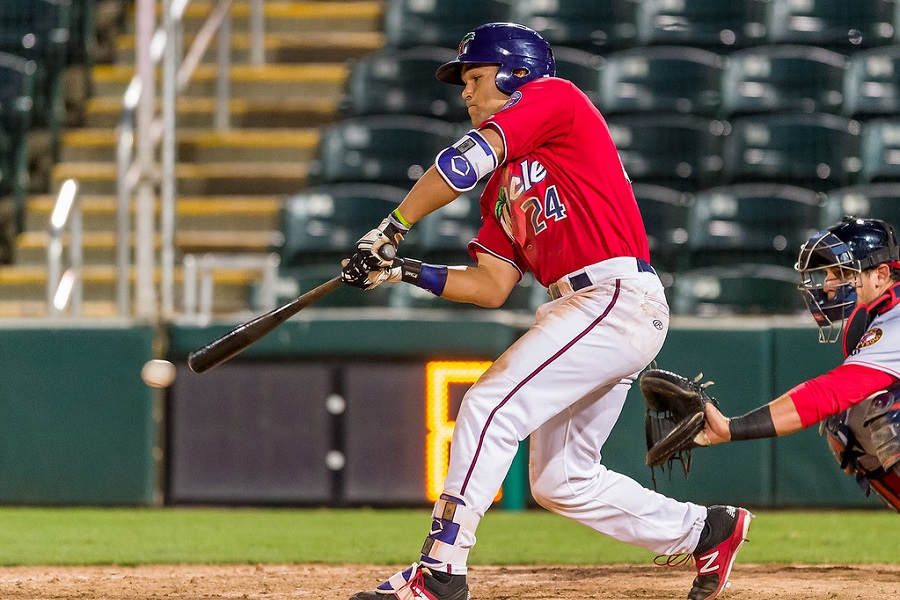
While the Twins game on Wednesday night was postponed, things were quite busy in the minor league system with seven games. The Red Wings needed a couple of extra innings. The Miracle played a doubleheader, and one of them went an extra inning. Tyler Watson and Zack Littell each made a start. And there was a surprise starter in the GCL on Wednesday, making a rehab appearance. Image courtesy of Linwood Ferguson (photo of Zander Wiel) While the Twins game on Wednesday night was postponed, things were quite busy in the minor league system with seven games. The Red Wings needed a couple of extra innings. The Miracle played a doubleheader, and one of them went an extra inning. Tyler Watson and Zack Littell each made a start. And there was a surprise starter in the GCL on Wednesday, making a rehab appearance. Find out everything and more that happened happened in the Twins system on Wednesday. Let’s start with the transactions of the day: RHP Chris Heston was removed from the Red Wings disabled list. He had made one appearance in the GCL this week. RHP Michael Kohn has been moved from the GCL to Ft. Myers as he tries to return from shoulder surgery. With the Twins postponement on Wednesday, the Twins will play twice on Thursday. The team announced that RHP Aaron Slegers will be the team's 26th man and start the night game. In his last 10 starts, he is 9-0 with a 2.10 ERA. (Glen Perkins was activated and Dietrich Enns placed on the DL.) We have also learned that Kohl Stewart will be promoted to Rochester to start on Friday. Yohan Pino was promoted to Rochester on Thursday. RED WINGS REPORT Rochester 4, Columbus 3 (11 innings) Box Score They had to play a couple of extra innings, but the Red Wings were able to pick up another win on Wednesday night. David Hurlbut started and gave up one run on seven hits over 6.1 innings. He struck out four with no walks. Luke Bard came on and got out of the seventh. The eighth inning was not a good inning for inherited runners. Bard started the inning and gave up a double. He got a ground out for the first out. Mason Melotakis came on to face Tyler Naquin who doubled in a run. Jake Reed came on and got a strikeout before giving up an RBI single. Reed ended up going two innings and struck out two. Alex Wimmers got the final five outs, four of them on strikeouts. Niko Goodrum led the offense. He went 3-5 with his 24th double. Mitch Garver got things going in the first inning with an RBI single. Daniel Palka had RBI singles in the third and eighth innings. In the 11th inning, Mitch Garver hit his 29th double. It was followed shortly by an RBI single from Kennys Vargas which proved to be the game-winner. CHATTANOOGA CHATTER Chattanooga 6, Tennessee 3 Box Score The Lookouts put together a lot of hits. They scored six runs and even left nine others on base. Jonathan Rodriguez led the way with another big game. The first baseman went 2-4 with a walk, his 27th double and his 17th home run. Andy Wilkins was 3-5 with his 14th double. Ryan Walker was 2-4 with his 13th double. LaMonte Wade went 2-4 with a walk. Max Murphy was 1-1 but he walked three times in the game as well. Zack Littell improved to 3-0 since joining the Twins and Lookouts. In this game, he gave up just one run on five hits in six innings. He walked two and struck out four. Ryan Eades gave up two runs on two hits and a walk in 1.1 innings. Nick Anderson got two outs right away to drop his Lookouts ERA to 0.98. Gabriel Moya came on for the ninth and recorded his 20th save of the season. He gave up a hit and struck out two, dropping his season ERA to 0.88. MIRACLE MATTERS Game 1 - Ft. Myers 5, Lakeland 4 Box Score In the first of two, the Miracle came out and scored three in the first inning, followed by single runs the next two innings, and then they held on. Brent Rooker went 2-2 with a walk and his fourth double. Chris Paul was 2-3 with his 17th double. Brandon Lopez was 1-2 with a walk and his sixth double. Tanner English walked twice and stole his 26th bag. Zander Wiel went 1-2 with a sacrifice fly. Playing left field, he also threw out a runner at the plate. Anthony McIver started. The southpaw went the first three innings and gave up two runs on six hits. He walked one and struck out three. Michael Kohn, in his first Miracle appearance, gave up a hit but struck out three in his inning. Tom Hackimer struck one out in his inning. Michael Theofanopoulos gave up two runs on two hits but held on for the save. Game 2 - Ft. Myers 3, Lakeland 2 (8 innings) Box Score Randy LeBlanc started the second game for the Miracle. He gave up one run on five hits and a walk over five innings. He struck out seven. Williams Ramirez walked two, but struck out three, over his inning of work. Alex Muren gave up a run in the seventh to send it to an extra inning, but he also got the win by pitching a scoreless eighth inning. In the bottom of the 8th, Sean Miller led off with a triple (his second of the year). After intentional walks to Mitchell Kranson and Brent Rooker, Zander Wiel walked it off with a single. Miller went 2-3 with a walk and added his 16th double to the triple. Jaylin Davis was 2-3 with his eighth double. KERNELS NUGGETS Cedar Rapids 2, Burlington 7 Box Score Tyler Watson made his third start since joining the Kernels. It wasn’t great, but it was his best so far. The left-hander gave up four runs (two earned) on six hits and two walks. He struck out three. Max Cordy pitched the seventh inning and gave up three runs on two hits and two walks. Eddie del Rosario, back from Ft. Myers, worked a perfect inning in relief. After throwing 83.1 innings last year with the Kernels, Del Rosario has thrown 121.1 innings between Cedar Rapids and Ft. Myers. Trey Cabbage led the offense by going 2-4. Jordan Gore added his second triple. Caleb Hamilton hit his 14th double. Royce Lewis went 0-4. There are were two really good Royce Lewis interviews posted on Wednesday. First, Lewis joined the MLB Pipeline podcast with Tim McMaster, Jonathan Mayo and Jim Callis. He also joined Todd Brommelkamp on KGYM in Cedar Rapids for an extended interview. https://twitter.com/KGYMRADIO/status/897973008727515138 E-TWINS E-NOTES Elizabethton Box Score The Elizabethton Twins had the second of their three days off during their short season. GCL TWINS TAKES GCL Rays 2, GCL Twins 4 Box Score To the surprise of most, Tyler Jay made his return to the mound in a rehab start for the GCL Twins. It was his first appearance since May 30th. It went well. The lefty struck out two in a perfect inning. Pedro Garcia came on and gave up one run on two hits over the next five innings. He walked one and struck out five. Jordan Balazovic then gave up one run on two hits over the next 2.2 innings. He walked two and struck out two and walked two. Derek Molina came in for the final out, a strikeout, to record his third save. Benjamin Rodriguez led the offense. He went 3-4 with his 10th double and two RBI. Roni Tapia’s sixth double also drove in a run. TWINS DAILY PLAYERS OF THE DAY Twins Daily Minor League Pitcher of the Day - Zack Littell, Ft. Myers Miracle Twins Daily Minor League Hitter of the Day – Jonathan Rodriguez, Chattanooga Lookouts THURSDAY’S PROBABLE STARTERS Rochester @ Columbus (11:05 CST) - RHP Drew Rucinski (since Aaron Slegers is starting for the Twins) Chattanooga @ Tennessee (6:00 CST) - Dereck Rodriguez (in place of Kohl Stewart) Lakeland @ Ft. Myers (6:30 CST) - RHP Sean Poppen Cedar Rapids @ Burlington (6:30 CST) - RHP Patrick McGuff Elizabethton @ Bristol (4:30 CST) - RHP Randy Dobnak GCL Twins @ GCL Rays (11:00 CST) - RHP Austin Bizzle Please feel free to ask any questions and discuss Thursday’s games. View full article
- 12 replies
-
- 2
-
-
- zander wiel
- zack littell
- (and 3 more)
-
 Find out everything and more that happened happened in the Twins system on Wednesday. Let’s start with the transactions of the day: RHP Chris Heston was removed from the Red Wings disabled list. He had made one appearance in the GCL this week. RHP Michael Kohn has been moved from the GCL to Ft. Myers as he tries to return from shoulder surgery. With the Twins postponement on Wednesday, the Twins will play twice on Thursday. The team announced that RHP Aaron Slegers will be the team's 26th man and start the night game. In his last 10 starts, he is 9-0 with a 2.10 ERA. (Glen Perkins was activated and Dietrich Enns placed on the DL.) We have also learned that Kohl Stewart will be promoted to Rochester to start on Friday. Yohan Pino was promoted to Rochester on Thursday. RED WINGS REPORT Rochester 4, Columbus 3 (11 innings) Box Score They had to play a couple of extra innings, but the Red Wings were able to pick up another win on Wednesday night. David Hurlbut started and gave up one run on seven hits over 6.1 innings. He struck out four with no walks. Luke Bard came on and got out of the seventh. The eighth inning was not a good inning for inherited runners. Bard started the inning and gave up a double. He got a ground out for the first out. Mason Melotakis came on to face Tyler Naquin who doubled in a run. Jake Reed came on and got a strikeout before giving up an RBI single. Reed ended up going two innings and struck out two. Alex Wimmers got the final five outs, four of them on strikeouts. Niko Goodrum led the offense. He went 3-5 with his 24th double. Mitch Garver got things going in the first inning with an RBI single. Daniel Palka had RBI singles in the third and eighth innings. In the 11th inning, Mitch Garver hit his 29th double. It was followed shortly by an RBI single from Kennys Vargas which proved to be the game-winner. CHATTANOOGA CHATTER Chattanooga 6, Tennessee 3 Box Score The Lookouts put together a lot of hits. They scored six runs and even left nine others on base. Jonathan Rodriguez led the way with another big game. The first baseman went 2-4 with a walk, his 27th double and his 17th home run. Andy Wilkins was 3-5 with his 14th double. Ryan Walker was 2-4 with his 13th double. LaMonte Wade went 2-4 with a walk. Max Murphy was 1-1 but he walked three times in the game as well. Zack Littell improved to 3-0 since joining the Twins and Lookouts. In this game, he gave up just one run on five hits in six innings. He walked two and struck out four. Ryan Eades gave up two runs on two hits and a walk in 1.1 innings. Nick Anderson got two outs right away to drop his Lookouts ERA to 0.98. Gabriel Moya came on for the ninth and recorded his 20th save of the season. He gave up a hit and struck out two, dropping his season ERA to 0.88. MIRACLE MATTERS Game 1 - Ft. Myers 5, Lakeland 4 Box Score In the first of two, the Miracle came out and scored three in the first inning, followed by single runs the next two innings, and then they held on. Brent Rooker went 2-2 with a walk and his fourth double. Chris Paul was 2-3 with his 17th double. Brandon Lopez was 1-2 with a walk and his sixth double. Tanner English walked twice and stole his 26th bag. Zander Wiel went 1-2 with a sacrifice fly. Playing left field, he also threw out a runner at the plate. Anthony McIver started. The southpaw went the first three innings and gave up two runs on six hits. He walked one and struck out three. Michael Kohn, in his first Miracle appearance, gave up a hit but struck out three in his inning. Tom Hackimer struck one out in his inning. Michael Theofanopoulos gave up two runs on two hits but held on for the save. Game 2 - Ft. Myers 3, Lakeland 2 (8 innings) Box Score Randy LeBlanc started the second game for the Miracle. He gave up one run on five hits and a walk over five innings. He struck out seven. Williams Ramirez walked two, but struck out three, over his inning of work. Alex Muren gave up a run in the seventh to send it to an extra inning, but he also got the win by pitching a scoreless eighth inning. In the bottom of the 8th, Sean Miller led off with a triple (his second of the year). After intentional walks to Mitchell Kranson and Brent Rooker, Zander Wiel walked it off with a single. Miller went 2-3 with a walk and added his 16th double to the triple. Jaylin Davis was 2-3 with his eighth double. KERNELS NUGGETS Cedar Rapids 2, Burlington 7 Box Score Tyler Watson made his third start since joining the Kernels. It wasn’t great, but it was his best so far. The left-hander gave up four runs (two earned) on six hits and two walks. He struck out three. Max Cordy pitched the seventh inning and gave up three runs on two hits and two walks. Eddie del Rosario, back from Ft. Myers, worked a perfect inning in relief. After throwing 83.1 innings last year with the Kernels, Del Rosario has thrown 121.1 innings between Cedar Rapids and Ft. Myers. Trey Cabbage led the offense by going 2-4. Jordan Gore added his second triple. Caleb Hamilton hit his 14th double. Royce Lewis went 0-4. There are were two really good Royce Lewis interviews posted on Wednesday. First, Lewis joined the MLB Pipeline podcast with Tim McMaster, Jonathan Mayo and Jim Callis. He also joined Todd Brommelkamp on KGYM in Cedar Rapids for an extended interview. https://twitter.com/KGYMRADIO/status/897973008727515138 E-TWINS E-NOTES Elizabethton Box Score The Elizabethton Twins had the second of their three days off during their short season. GCL TWINS TAKES GCL Rays 2, GCL Twins 4 Box Score To the surprise of most, Tyler Jay made his return to the mound in a rehab start for the GCL Twins. It was his first appearance since May 30th. It went well. The lefty struck out two in a perfect inning. Pedro Garcia came on and gave up one run on two hits over the next five innings. He walked one and struck out five. Jordan Balazovic then gave up one run on two hits over the next 2.2 innings. He walked two and struck out two and walked two. Derek Molina came in for the final out, a strikeout, to record his third save. Benjamin Rodriguez led the offense. He went 3-4 with his 10th double and two RBI. Roni Tapia’s sixth double also drove in a run. TWINS DAILY PLAYERS OF THE DAY Twins Daily Minor League Pitcher of the Day - Zack Littell, Ft. Myers Miracle Twins Daily Minor League Hitter of the Day – Jonathan Rodriguez, Chattanooga Lookouts THURSDAY’S PROBABLE STARTERS Rochester @ Columbus (11:05 CST) - RHP Drew Rucinski (since Aaron Slegers is starting for the Twins) Chattanooga @ Tennessee (6:00 CST) - Dereck Rodriguez (in place of Kohl Stewart) Lakeland @ Ft. Myers (6:30 CST) - RHP Sean Poppen Cedar Rapids @ Burlington (6:30 CST) - RHP Patrick McGuff Elizabethton @ Bristol (4:30 CST) - RHP Randy Dobnak GCL Twins @ GCL Rays (11:00 CST) - RHP Austin Bizzle Please feel free to ask any questions and discuss Thursday’s games.
 -
I really didn't, not until it was happening...
-
For now I think that makes the most sense... but obviously that could change... Or, like Kepler, you could go one level at a time, and then (basically) come up from AA. To note... Kepler played 1 year in the GCL and 2 years in E-Town before getting to Cedar Rapids. Of course, Kepler signed at 16 and Whitefield signed at 18, so it's not apples to apples, but both were raw, incredible athletes.
- 16 replies
-
- 1
-
-
- tyler benninghoff
- stephen gonsalves
- (and 3 more)
-
Yup, no reason to move Sano off of 3B for awhile... Maybe 4-5 years... maybe 7-8 years. That's also why it's good to get Rooker some position flexibility, so that he could play LF and 1B and DH. Sano can play 3B, 1B and DH (would have been nice if he'd tried out in the OF, though fortunately now with Rosario, Buxton and Kepler, it isn't as necessary now).
-
Great early returns... Rooker's already in Ft. Myers, way ahead of a 'normal' draft curve. Charlie Barnes, Bryan Sammons and Jordan Gore are already up in Cedar Rapids and doing well. And Lewis being in Cedar Rapids is quite unusual... It's exciting to see.
-
I have him just outside my top 20, but he's pretty impressive. He's got size, strength, power, speed, youth... I mean, then consider the numbers he's putting up in the Midwest League having less than 3 years of baseball experience. Defensively, he's got great range, and a good arm... He's kind of natural out there in CF. He's impressive.
- 16 replies
-
- 2
-
-
- tyler benninghoff
- stephen gonsalves
- (and 3 more)
-
Just skipping a start... There are no plans to shut him down. I don't know what the big picture plans as far as the Southern League playoffs and/or a September call up, but this is just a skipped start.
- 16 replies
-
- 2
-
-
- tyler benninghoff
- stephen gonsalves
- (and 3 more)
-
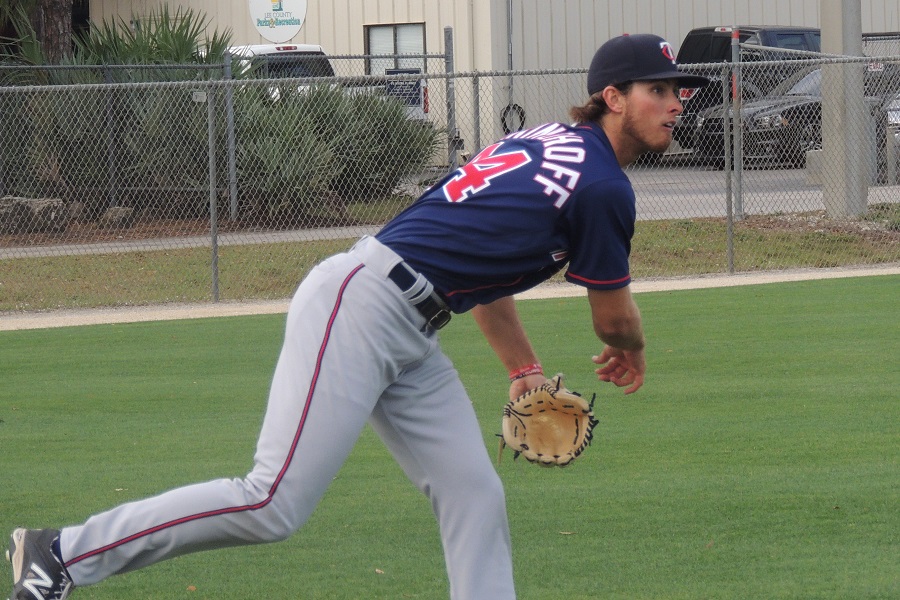
There were a lot of good stories in the Twins minor leagues on Tuesday. It started with the announcement in the morning that Clark Beekerwith his 33.2 innings scoreless streak has been promoted. The E-Twins and GCL Twins started their games in the morning too. The guy who pitched the first inning of the GCL game is quite the story, and we were able to talk to him after the appearance. The Kernels and Red Wings found ways to win, and a top prospect recorded his first AAA win and just might be pitching in a big league uniform next time out. Image courtesy of Seth Stohs, Twins Daily (photo of Tyler Benninghoff) There were a lot of good stories in the Twins minor leagues on Tuesday. It started with the announcement in the morning that Clark Beekerwith his 33.2 innings scoreless streak has been promoted. The E-Twins and GCL Twins started their games in the morning too. The guy who pitched the first inning of the GCL game is quite the story, and we were able to talk to him after the appearance. The Kernels and Red Wings found ways to win, and a top prospect recorded his first AAA win and just might be pitching in a big league uniform next time out. Find out everything and more that happened happened in the Twins system on Tuesday. Let’s start with the transactions of the day: RHP Clark Beeker - he of the 32.2 inning scoreless streak - has been promoted from Cedar Rapids to the Ft. Myers Miracle. RHP Eduardo Del Rosario is moving back to the Kernels from the Miracle. Keaton Steele was placed on the Miracle’s disabled list. Cody Stashak started his rehab assignment in the GCL. RED WINGS REPORT Rochester 6, Columbus 2 Box Score With Hector Santiago’s rehab put on hold, Stephen Gonsalves made the start for Rochester on his regular rest. He again performed very well. The southpaw went six innings and gave up just one run on four hits. He walked two and struck out eight. The run he gave up was on a double off the bat of the rehabbing Lonnie Chisenhall. Gonsalves struck out the side in both the second and fifth innings. With the help of the bullpen and the bats, Gonsalves recorded his first AAA win. Could his next start be in Chicago as a member of the big league club? Stay tuned. Drew Rucinski gave up a run on three hits in the seventh. John Curtiss pitched a perfect eighth. Michael Tonkin was given the ninth inning and finished off the win with a scoreless inning. A lot of guys contributed to the offense. Matt Hague led the way. He went 3-5 with three RBI. Mitch Garver went 2-4 and his 28th double drove in a run. Kennys Vargas went 2-4, was intentionally walked, and contributed his ninth homer. JB Shuck went 2-3 with his 23rd double and a sacrifice. Daniel Palka was 2-5. Niko Goodrum was 1-2 with two walks and a very, very long home run. It was his 11th of the season. Zack Granite went 1-3 before he left the game in the fifth inning. He is day-to-day. CHATTANOOGA CHATTER Chattanooga Box Score The Lookouts had an off-day on Tuesday before starting a five-game series against Tennessee on Wednesday. MIRACLE MATTERS Ft. Myers , Lakeland Box Score Rain won the day again in Florida and this game was postponed. The two teams will play two seven-inning games on Wednesday. KERNELS NUGGETS Cedar Rapids 5, Burlington 2 Box Score The Kernels got ahead early and were able to hold it thanks to some strong pitching. Lefty Bryan Sammons started and gave up two runs on four hits over five innings. He walked one and struck out six. Ryan Mason provided two scoreless innings before Colton Davis and Hector Lujan each threw a scoreless frame. For Lujan, who struck out two, it was his 13th save of the season. Caleb Hamilton provided the big blast in the first inning when he hit his ninth home run. Trey Cabbage went 2-4 with the seventh RBI. Aaron Whitefield knocked in a run with his sixth triple. He was 2-4 with a walk. He also stole his 29th base. Royce Lewis was given a game off for the first time since joining the Kernels. Tommy Watkins told Steve Buhr the following for an article which appeared in the Star Tribune. “‘I think the plan is to play him a couple of days, then give him a day or two (off),’ Watkins said. ‘Definitely not try to overload him with swinging every day. He’s coming from a high school season, first taste of pro ball, so we’ll ease him in.’” E-TWINS E-NOTES Elizabethton 4, Johnson City 11 Box Score It was a rare afternoon games for the E-Twins, particularly leading up to a rare off day for the team on Wednesday (they have three off days all season). Things didn’t exactly go well for the Twins. Edwar Colina started. He gave up four runs on five hits and three walks in just 3.2 innings. He struck out three. Juan Gamez came on next and the converted catcher struggled with his control. In two innings, he gave up five runs on one hit and five walks. He struck out one. Rickey Ramirez gave up two runs on three hits and a walk over the final 2.1 innings. He struck out two. The Twins had seven hits. Ariel Montesino went 1-2 with two walks and his fourth double. He drove in two runs. Gorge Munoz went 2-3 and was hit by a pitch. GCL TWINS TAKES GCL Twins 1, GCL Rays 4 Box Score Tyler Benninghoff was the Twins 11th-round pick last June out of high school. He fell to the 11th round because he wasn’t able to pitch much his senior year. The Twins signed him, for well over slot, and he immediately underwent Tommy John surgery. It was a gradual recovery, but on Tuesday, about 14 months following surgery, Benninghoff returned to a game mound. It went well. He threw one inning. He walked one and he struck out one. He was able to do what he wanted. Benninghoff told Twins Daily, “I had one inning or 20 pitches today whichever came first, but for me I wanted to fill up the zone and get out of the inning in less than 20 pitches.” Tyler Wells came on next and went the next five innings. He gave up four runs (two earned) on five hits, a walk and and a hit batter. He struck out four. Cody Stashak pitched the final two innings. He gave up one hit and hit a batter, but he did not allow a run. He struck out two batters. There wasn’t much offense for the Twins either. Shane Kennedy, also rehabbing, went 1-2 with two walks and a stolen base. Ben Rodriguez drove in the team’s lone run with his second home run. Emmanuel Morel was 1-4 with his ninth double. The big story of the game was the return (is it a return if it’s also his first pro appearance). It meant a lot to the right-hander, an end to one phase and a start to another. “It was a weight lifted of my shoulder being able to throw my first inning and get that under my belt. Now instead of focusing on rehab, I can focus on furthering my baseball career with the Twins.” TWINS DAILY PLAYERS OF THE DAY Twins Daily Minor League Pitcher of the Day – Stephen Gonsalves, Cedar Rapids Kernels Twins Daily Minor League Hitter of the Day – Aaron Whitefield, Cedar Rapids Kernels WEDNESDAY’S PROBABLE STARTERS Rochester @ Columbus (6:05 CST) - LHP David Hurlbut Chattanooga @ Tennessee (6:00 CST) - RHP Kohl Stewart Lakeland @ Ft. Myers (DH at 4:00 CST) - LHP Anthony McIver, RHP Randy LeBlanc Cedar Rapids @ Burlington (6:30 CST) - LHP Tyler Watson Elizabethton - No Game Scheduled GCL Rays @ GCL Twins (9:00 CST) - TBD Please feel free to ask any questions and discuss Tuesday’s games. View full article
- 16 replies
-
- 2
-
-
- tyler benninghoff
- stephen gonsalves
- (and 3 more)
-
Twins Minor League Report (8/15): Benninghoff's Long-Awaited Debut
Seth Stohs posted an article in Minor Leagues
 Find out everything and more that happened happened in the Twins system on Tuesday. Let’s start with the transactions of the day: RHP Clark Beeker - he of the 32.2 inning scoreless streak - has been promoted from Cedar Rapids to the Ft. Myers Miracle. RHP Eduardo Del Rosario is moving back to the Kernels from the Miracle. Keaton Steele was placed on the Miracle’s disabled list. Cody Stashak started his rehab assignment in the GCL. RED WINGS REPORT Rochester 6, Columbus 2 Box Score With Hector Santiago’s rehab put on hold, Stephen Gonsalves made the start for Rochester on his regular rest. He again performed very well. The southpaw went six innings and gave up just one run on four hits. He walked two and struck out eight. The run he gave up was on a double off the bat of the rehabbing Lonnie Chisenhall. Gonsalves struck out the side in both the second and fifth innings. With the help of the bullpen and the bats, Gonsalves recorded his first AAA win. Could his next start be in Chicago as a member of the big league club? Stay tuned. Drew Rucinski gave up a run on three hits in the seventh. John Curtiss pitched a perfect eighth. Michael Tonkin was given the ninth inning and finished off the win with a scoreless inning. A lot of guys contributed to the offense. Matt Hague led the way. He went 3-5 with three RBI. Mitch Garver went 2-4 and his 28th double drove in a run. Kennys Vargas went 2-4, was intentionally walked, and contributed his ninth homer. JB Shuck went 2-3 with his 23rd double and a sacrifice. Daniel Palka was 2-5. Niko Goodrum was 1-2 with two walks and a very, very long home run. It was his 11th of the season. Zack Granite went 1-3 before he left the game in the fifth inning. He is day-to-day. CHATTANOOGA CHATTER Chattanooga Box Score The Lookouts had an off-day on Tuesday before starting a five-game series against Tennessee on Wednesday. MIRACLE MATTERS Ft. Myers , Lakeland Box Score Rain won the day again in Florida and this game was postponed. The two teams will play two seven-inning games on Wednesday. KERNELS NUGGETS Cedar Rapids 5, Burlington 2 Box Score The Kernels got ahead early and were able to hold it thanks to some strong pitching. Lefty Bryan Sammons started and gave up two runs on four hits over five innings. He walked one and struck out six. Ryan Mason provided two scoreless innings before Colton Davis and Hector Lujan each threw a scoreless frame. For Lujan, who struck out two, it was his 13th save of the season. Caleb Hamilton provided the big blast in the first inning when he hit his ninth home run. Trey Cabbage went 2-4 with the seventh RBI. Aaron Whitefield knocked in a run with his sixth triple. He was 2-4 with a walk. He also stole his 29th base. Royce Lewis was given a game off for the first time since joining the Kernels. Tommy Watkins told Steve Buhr the following for an article which appeared in the Star Tribune. “‘I think the plan is to play him a couple of days, then give him a day or two (off),’ Watkins said. ‘Definitely not try to overload him with swinging every day. He’s coming from a high school season, first taste of pro ball, so we’ll ease him in.’” E-TWINS E-NOTES Elizabethton 4, Johnson City 11 Box Score It was a rare afternoon games for the E-Twins, particularly leading up to a rare off day for the team on Wednesday (they have three off days all season). Things didn’t exactly go well for the Twins. Edwar Colina started. He gave up four runs on five hits and three walks in just 3.2 innings. He struck out three. Juan Gamez came on next and the converted catcher struggled with his control. In two innings, he gave up five runs on one hit and five walks. He struck out one. Rickey Ramirez gave up two runs on three hits and a walk over the final 2.1 innings. He struck out two. The Twins had seven hits. Ariel Montesino went 1-2 with two walks and his fourth double. He drove in two runs. Gorge Munoz went 2-3 and was hit by a pitch. GCL TWINS TAKES GCL Twins 1, GCL Rays 4 Box Score Tyler Benninghoff was the Twins 11th-round pick last June out of high school. He fell to the 11th round because he wasn’t able to pitch much his senior year. The Twins signed him, for well over slot, and he immediately underwent Tommy John surgery. It was a gradual recovery, but on Tuesday, about 14 months following surgery, Benninghoff returned to a game mound. It went well. He threw one inning. He walked one and he struck out one. He was able to do what he wanted. Benninghoff told Twins Daily, “I had one inning or 20 pitches today whichever came first, but for me I wanted to fill up the zone and get out of the inning in less than 20 pitches.” Tyler Wells came on next and went the next five innings. He gave up four runs (two earned) on five hits, a walk and and a hit batter. He struck out four. Cody Stashak pitched the final two innings. He gave up one hit and hit a batter, but he did not allow a run. He struck out two batters. There wasn’t much offense for the Twins either. Shane Kennedy, also rehabbing, went 1-2 with two walks and a stolen base. Ben Rodriguez drove in the team’s lone run with his second home run. Emmanuel Morel was 1-4 with his ninth double. The big story of the game was the return (is it a return if it’s also his first pro appearance). It meant a lot to the right-hander, an end to one phase and a start to another. “It was a weight lifted of my shoulder being able to throw my first inning and get that under my belt. Now instead of focusing on rehab, I can focus on furthering my baseball career with the Twins.” TWINS DAILY PLAYERS OF THE DAY Twins Daily Minor League Pitcher of the Day – Stephen Gonsalves, Cedar Rapids Kernels Twins Daily Minor League Hitter of the Day – Aaron Whitefield, Cedar Rapids Kernels WEDNESDAY’S PROBABLE STARTERS Rochester @ Columbus (6:05 CST) - LHP David Hurlbut Chattanooga @ Tennessee (6:00 CST) - RHP Kohl Stewart Lakeland @ Ft. Myers (DH at 4:00 CST) - LHP Anthony McIver, RHP Randy LeBlanc Cedar Rapids @ Burlington (6:30 CST) - LHP Tyler Watson Elizabethton - No Game Scheduled GCL Rays @ GCL Twins (9:00 CST) - TBD Please feel free to ask any questions and discuss Tuesday’s games.
 -
Huh? Did I forget to add the "if they want" qualifier?
-
Stashak threw two scoreless innings on Tuesday in the GCL... It was his first appearance since going on the DL July 25th.
-
While I don't necessarily disagree that adding a bullpen option or two would be good, I just challenge anyone to go through the list of free agent relievers the last 2-3 offseasons... Determine which of them has been successful and which haven't been, and then try to remember if we thought that would have been a good sign. My bigger point here, probably clearly, is that there is no way to know which 31-33 year old relievers will be good and which ones won't. (And, we don't know which top relief pitchers will become solid MLB relievers either... And, additionally, we don't know which "failed starters" will become solid MLB relievers too). Remember two offseasons ago when we (Twins fans) really wanted to give Antonio Bastardo and/or Tony Sipp 3 year deals for whatever it would take (likely above the 3 years, $18ish million that they got). Check out their baseball reference pages and see how they've done the last couple of years. I guess for me, there's just no way to know what any relief pitcher free agent who signs for less than $8-10 million (all the way down to minor league deals)... and if you sign them for more than that, there's much, much higher risk.
- 55 replies
-
- 5
-
-
- glen perkins
- trevor hildenberger
- (and 3 more)
-
Since the Twins traded closer Brandon Kintzler to the Nationals on July 31st, the team’s bullpen has been under some fan scrutiny. However, aside from one game, the bullpen has come up big. Again, in all but one game, the bullpen has come through, and that was in the third of three straight games in which the team’s starter failed to go past five innings. Hopefully the bullpen will be able to continue getting the job done. It will be important if they want to maintain playoff aspirations. Here’s a quick look at how we got here, and what they could do next. Image courtesy of Kim Klement, USA Today Since the Twins traded closer Brandon Kintzler to the Nationals on July 31st, the team’s bullpen has been under some fan scrutiny. However, aside from one game, the bullpen has come up big. Again, in all but one game, the bullpen has come through, and that was in the third of three straight games in which the team’s starter failed to go past five innings. Hopefully the bullpen will be able to continue getting the job done. It will be important if they want to maintain playoff aspirations. Here’s a quick look at how we got here, and what they could do next. The Twins bullpen has not been good again this year. Here are the numbers: Bullpen ERA: 4.53 (25th) Strikeouts: 345 (26th) Walks: 132 (7th) Batting Average Against: .269 (30th) Also, the Twins bullpen ranks seventh in Innings pitched with 407.1 innings. That is largely the fault of the starting rotation. Even with the first halves of Ervin Santana and Jose Berrios, the starters’ ERA is 4.89 (26th). The 625.1 innings the Twins starters have thrown ranks 27th lowest. They are also in the bottom half of MLB in strikeouts, walks, and batting average against. Again, the bullpen has generally been OK (not good, but not horrific either) until they have to throw a lot of innings due to a run of short starts. While the Twins were generally healthy during spring training, there were some things that were already known. First, while Glen Perkins was trying to throw some bullpens, it was clear that he would miss an extended time at the beginning of the season. Trevor May was going to be transitioned back to a starter before his season ended before it started when he had Tommy John surgery. In the offseason, the Twins spent $2 million on veteran Matt Belisle. He had four horrific outings early in the season. But then he was nearly flawless for about six weeks before becoming the team’s closer. He recorded saves in his first three opportunities before blowing one. The Twins also brought in some veteran types on minor league contracts. Craig Breslow got the longest big league look before the Twins DLd him and released him. Drew Rucinski has seen some time. Independent ball signing Nik Turley made three starts that didn’t go well, though it looks like his future could be in the bullpen. So, why did the Twins sign so few relievers when we knew that there was potential for it to be a huge concern? Brandon Kintzler would likely be solid, if not a stereotypical closer. He was much better than anticipated, even earning an All-Star berth and appearance. Taylor Rogers was coming off a solid rookie season and looking to improve upon it. Ryan Pressly’s clearly got the stuff to believe in. Fair to say that hasn’t gone real well much of this season. Tyler Duffey made the move to the bullpen and needed an opportunity to develop in that role. It was clear from the get-go that 2017 was going to be an evaluation year for Derek Falvey and Thad Levine. That meant giving extended opportunities to several arms. Could Buddy Boshers be an alternative if (and eventually when) Craig Breslow didn’t pan out? Michael Tonkin got through 2016 without an option. Could he take a step forward in 2017? The team also added Justin Haley in the Rule 5 draft and wanted to evaluate him. Just like claiming the likes of Adam Wilk, Chris Heston and Dillon Gee. Add arms and evaluate. Already, we have mentioned nine names for eight (and ideally seven) bullpen spots. But then there were other injuries that started piling up toward the end of spring training. JT Chargois and his upper-90s fastball had a terrific September for the Twins and could have been a key contributor this season. Instead, 2017 has been the third lost season for Chargois since the Twins drafted him in 2012. Nick Burdi had a lost 2016 season, but in the season’s first month, he was throwing hard, and throwing strikes, and seemingly very closer to debuting with the Twins. Instead, he had Tommy John surgery in May and that will likely cost him much of the 2018 season as well. Tyler Jay was moved from the role of starting pitcher to reliever in spring training. The idea was that he would be able to move up more quickly. Instead, he’s missed nearly the entire season with biceps tendinitis and thoracic outlet-type symptoms. And Jake Reed stayed with the big league club through most of spring training, but in the final spring game, he pulled a muscle in his side and missed the season’s first two months. If you want to add Mason Melotakis to this group, that may work because he was supposed to get to the big league club this year. Unfortunately, he pulled an oblique early in the spring and didn’t have an opportunity to pitch in big league camp. While he hasn’t been injured, his velocity is way down. His numbers at AAA Rochester have been quite good. But he was able to be DFAd, went unclaimed and was outrighted to Rochester. Each of those guys was likely expected to be a key contributor in the Twins bullpen by this time in the season. Instead, they have received zero innings so far but Reed, and possibly Melotakis, has a shot of getting a call this season. However, that has opened up opportunity for others. Alan Busenitz got the call first. He went up and down a few times, but with recent outings, he has shown good improvement. His mid-to-upper 90s fastball is good, and he has a good breaking ball too. Trevor Hildenberger was the Twins Daily Minor League Relief Pitcher of the Year in 2015 and 2016. He came up in late June and has shown that he can get big league hitters out. On Sunday, he got four outs to record his first MLB save. While his fastball sits in the upper-80s most of the time, his changeup is really, really good. And he throws each of his pitches from a couple of angles. Busenitz and Hildenberger should factor into the 2018 Twins bullpen options. Hopefully Jay and Reed, Chargois and Melotakis, and maybe even Burdi at some point, will get an opportunity and could factor into the bullpen. But other names have surfaced for 2018 as well. John Curtiss had a very strong 2016 season, spending a month in Cedar Rapids before moving up to the Miracle. He also performed well in the Arizona Fall League. He’s been absolutely fantastic in 2017, both in Chattanooga and since his move up to Rochester. Luke Bard was recently promoted to AAA after putting up huge strikeout numbers at Chattanooga. Ryan Eades has been solid in the bullpen. The Twins also acquired lefty reliever Gabriel Moya from the Diamondbacks in exchange for John Ryan Murphy. He’s put up silly numbers at AA all year. Nick Anderson has been, arguably, quietly, the best reliever in the Twins farm system all season. Todd Van Steensel has put up another year with great numbers, this time at Chattanooga. And we don’t know what the ultimate roles will be for the likes of Fernando Romero, Dietrich Enns, Dereck Rodriguez or other starters in the upper levels of the minor leagues. The cabinet is certainly not bare, and as Falvey and Levine have said, accumulating arms and talented arms is clearly a focus. If you’re looking for a sleeper for 2018, look to the GCL where right-hander Michael Kohn has been pitching the last few weeks. A former teammate of Torii Hunter, Kohn threw for the Twins in a tryout and soon after the Twins offered him a deal. Kohn was eating lunch with another former teammate and former Twins reliever Kevin Jepsen when his agent texted him with the Twins offer. The Twins signed him to a two-year minor league deal that includes an invitation to big league camp in 2018. He hasn’t pitched in the big leagues since May of 2015 due to shoulder surgery. In 115 games (132 games) over parts of five seasons in the big leagues, he struck out 111. He has pitched five innings over five appearances in the GCL over the last two weeks. And finally, there is Glen Perkins. The three-time All-Star hasn’t pitched since April of 2016. He had shoulder surgery, reattaching the muscle to the bone. It had to be incredibly painful, and clearly it has taken a ton of work to get back. His rehab stint in entering its final week. The Twins will (presumably) call him up and give him an opportunity. I’m realistic about how much he’ll be able to contribute down the stretch. I hope he can just be solid. This is most likely the final season of his career, unless his plans have changed due to these injuries. The Twins aren’t going to pick up his option. So enjoy what he’s got left. Hope for the best. Appreciate the work he’s put in to get back and remember how great he was for a three or four year stretch. The Twins could certainly go out right now and add a reliever or two in a trade. The cost, in terms of dollars or prospects would not be high. Or, they could call up guys like John Curtiss, Mason Melotakis, Luke Bard and Jake Reed in September and give them a shot. The cupboard for Twins relief pitching options is far from bare. I would again advocate in the upcoming offseason that they not go crazy on bullpen arms in free agency. Maybe one veteran on a one-year, low cost, low risk deal, and a couple more minor league signings. That’s it. And then find a manager and pitching coach (whether that is Paul Molitor and Neil Allen or not) who will be willing to go with the young arms. View full article
