



Seth Stohs
-
Posts
25,911 -
Joined
-
Last visited
-
Days Won
109
Content Type
Profiles
News
Minnesota Twins Videos
2026 Minnesota Twins Top Prospects Ranking
2022 Minnesota Twins Draft Picks
Minnesota Twins Free Agent & Trade Rumors, Notes, & Tidbits
Guides & Resources
2023 Minnesota Twins Draft Picks
The Minnesota Twins Players Project
2024 Minnesota Twins Draft Picks
2025 Minnesota Twins Draft Pick Tracker
2026 Minnesota Twins Draft Tracker: Picks & Bonuses
Forums
Blogs
Events
Store
Downloads
Gallery
Everything posted by Seth Stohs
-
TB 11, MIN 4: Bullpen Lets Game Get Out Of Hand
Seth Stohs replied to Tom Froemming's topic in Twins Daily Front Page News
Keeping Garver over Turner was an easy decision. Yes, Turner is tremendous defensively, but he never could hit at AA. Garver was very much a work-in-progress when he was drafted as a catcher. He had spent time playing some other positions at New Mexico. He's come a long way. I thought he blocked the ball real well last night, had some really tough ones. He's always had a very strong arm and been able to throw out over 30% of base runners. He can be an MLB catcher defensively. I think making too much out of any small sample isn't good, but trust his progress at the plate and behind the plate. He'll be just fine.- 25 replies
-
- 8
-

-
- jose berrios
- brian dozier
- (and 3 more)
-
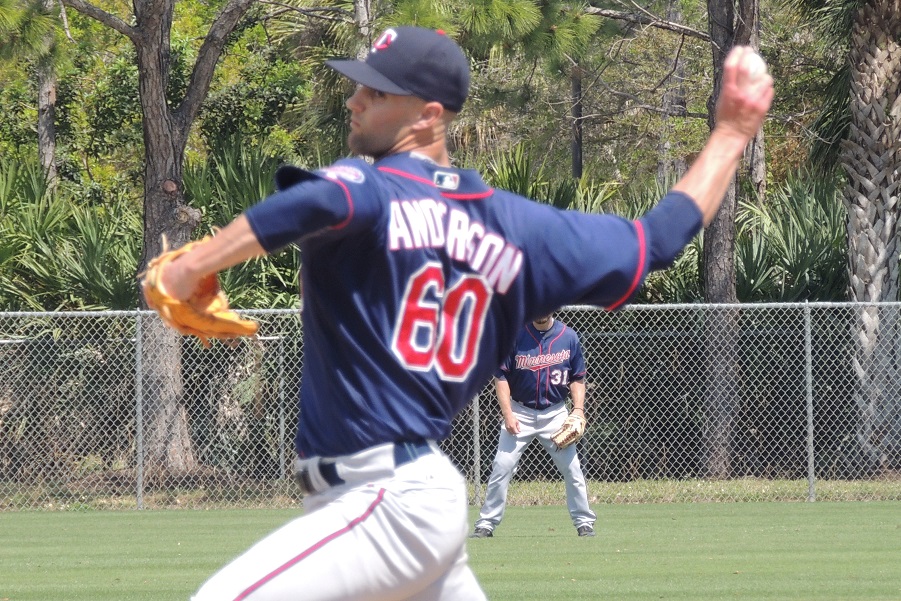
Minor league regular season 2017 has come to an end. Every minor league club with the exception of the Rochester Red Wings will be in the playoffs. And the Red Wings became the first team in International League history to win 80 games in a season two years in a row without going to the playoffs either season (per Red Wings PR director Nate Rowan). But before we get to the end of the season, we need to honor those players who ended their season with a strong final month. The next three days, we’ll post our August minor league awards, starting today with the top six relievers. Image courtesy of Seth Stohs, Twins Daily (photo of Nick Anderson) Minor league regular season 2017 has come to an end. Every minor league club with the exception of the Rochester Red Wings will be in the playoffs. And the Red Wings became the first team in International League history to win 80 games in a season two years in a row without going to the playoffs either season (per Red Wings PR director Nate Rowan). But before we get to the end of the season, we need to honor those players who ended their season with a strong final month. The next three days, we’ll post our August minor league awards, starting today with the top six relievers. Before we share our Twins Daily Minor League Top Six Relievers for August, here are some terrific bullpen performances that just missed the cut. It may have been a shorter list to jot down which minor league relievers didn’t have a good month. HONORABLE MENTION Pedro Garcia - GCL Twins - 5 G, 1 GS, 22.2 IP, 11 H, 11 BB, 20 K, 1.99 ERA, 0.97 WHIP. Moises Gomez - Elizabethton Twins - 5 G, 1 GS, 18.2 IP, 12 H, 8 BB, 20 K, 3.38 ERA, 1.07 WHIP. Michael Kohn - GCL Twins/Ft. Myers Miracle/Rochester Red Wings - 12 G, 4 GS, 12.0 IP, 7 H, 3 BB, 17 K, 0.75 ERA, 0.83 WHIP. Logan Lombana - Cedar Rapids Kernels - 9 G, 19.2 IP, 18 H, 4 BB, 16 K, 1.37 ERA, 1.12 WHIP. Hector Lujan - Cedar Rapids Kernels - 10 G, 10.1 IP, 8 H, 3 BB, 9 K, 0.87 ERA, 1.07 WHIP. Kevin Marnon - GCL Twins - 7 G, 16.2 IP, 14 H, 4 BB, 17 K, 0.54 ERA, 1.08 WHIP. Anthony McIver - Ft. Myers Miracle/Chattanooga Lookouts - 7 G, 15.1 IP, 19 H, 4 BB, 11 K, 1.17 ERA, 1.50 WHIP. Gabriel Moya - Chattanooga Lookouts - 7 G, 10.1 IP, 7 H, 2 BB, 12 K, 0.87 ERA, 0.87 WHIP. Jake Reed - Rochester Red Wings - 9 G, 14.2 IP, 11 H, 6 BB, 15 K, 1.84 ERA, 1.16 WHIP. Michael Theofanopoulos - Ft. Myers Miracle - 8 G, 15.0 IP, 9 H, 8 BB, 18 K, 1.13 ERA, 1.13 WHIP. THE TOP SIX RELIEF PITCHERS #6 - Derek Molina - GCL Twins - 8 G, 1.23 ERA, 0.89 WHIP, 14.2 IP, 10 H, 3 BB, 18 K Molina was the Twins 14th-round pick in 2017 out of Merced College. Obviously that is a small college, but Doug Fister and briefly-a-Twins-pitcher Brian Fuentes were drafted from the school. Molina’s career began a little bit later (late July) as he was getting healthy and ready, but he’s been quite good since signing. You can see from the numbers above that he’s pitched well. Opponents hit just .192/.232/.231 (.463) off of him during August. #5 - Blayne Enlow - GCL Twins - 4 G, 1.23 ERA, 0.82 WHIP, 14.2 IP, 9 H, 3 BB, 13 K I know. I know. Enlow isn’t a reliever. He was drafted in the third round and given lots of money over the slotted amount to sign to be a starting pitcher. However, things are a little different in the GCL. It’s in Ft. Myers, where big leaguers and minor leaguers tend to rehab. When they rehab, they typically start and then the regularly-scheduled GCL starter piggybacks him, coming in second in the game. That’s what the situation was for Enlow. He made four appearances, and all four were out of the bullpen in August. Opponents hit just .170/.228/.283 (.511) off him. He’s shown good control and an ability early to miss bats. Hopefully we’ll see him in the Twins Daily Starting Pitcher of the Month reports a few times over the next two to three years. #4 - John Curtiss - Rochester Red Wings - 6 G, 0.87 ERA, 0.97 WHIP, 10.1 IP, 5 H, 5 BB, 11 K Curtiss is certainly a candidate for Twins Daily Minor League Relief Pitcher of the Year, to be sure. In August, he continued to pitch well in Rochester right up until he was called up to the Twins later in the month. As he has been most of the season, he worked late innings, gave up very few runs, gave up very few hits, and missed a lot of bats. He’s had some struggles now in the big leagues, but even so, you can see his electric stuff. He’s got plenty of fastball, with movement, and his breaking pitches are terrific too. He’s got a chance to be very good. Against minor leaguers in August, he gave up a slash line of just .139/.244/.139 (.383). #3 - Jared Finkel - Elizabethton Twins - 8 G, 0.55 ERA, 0.55 WHIP, 16.1 IP, 8 H, 1 BB, 16 K Finkel was the Twins 23rd-round draft choice in 2017 out of Iona College in New York. The last player drafted out of Iona was Mariano Rivera’s son, Mariano. It’s not a baseball hotbed, though Jason Motte and Dennis Leonard went there. Finkel was rather Rivera-like, admittedly in rookie ball, in August. Opponents hit just .192/.232/.231 (.463) against the right-hander. #2 - Jovani Moran - Elizabethton Twins - 9 G, 0.87 ERA, 0.68 WHIP, 10.1 IP, 3 H, 4 BB, 23 K Moran was the Twins seventh-round draft pick in 2015 out of high school in Puerto Rico. The left-hander has a good pitch mix. Unfortunately, he had to miss the 2016 season after getting bone chips removed from his elbow. He’s returned to form this year and been fantastic. For Elizabethton, he started this season without giving up a run until his penultimate regular season outing of the year, a stretch of 20.1 innings. He gave up just one run the full season. He’s been hard to hit, hasn’t issued an excessive amount of walks, and certainly has the stuff to miss a lot of bats. For August, opponents hit just .086/.179/.171 (.351) off of him.And the Twins Minor League Relief Pitcher of the Month is: Chattanooga Lookouts – RHP Nick Anderson - 11 G, 0.00 ERA, 0.53 WHIP, 11.1 IP, 5 H, 1 BB, 10 K For the second straight month, a Minnesotan will win the Twins Daily Relief Pitcher of the Month award. For the second straight month, that Minnesotan is RHP Nick Anderson. So, right or wrong, a bit of what you see below will be similar to what you read a month ago. Even his numbers are very similar to the previous month. He didn’t give up an earned run. He gave up about one base runner every other inning. He picked up four saves. He was named the Southern League Relief Pitcher of the Month for August. Opponents hit just .139/.162/.139 (.301) off of him. As a reminder, Anderson is a graduate of Brainerd High School. He went to St. Cloud state for three years before heading to Mayville State for a season. The Brewers drafted him, but they didn’t even offer him a contract. After working in the indy leagues for a few seasons, the Twins signed him late in 2015, and he’s been a dominant late inning reliever wherever he’s played. He’s spent most of this season with the Lookouts.There were a lot of very strong relief pitcher performances in August throughout the Twins minor league system. It was a good month for each of these pitchers mentioned today, but again, congratulations to the Twins Daily Minor League Relief Pitcher of the Month for August 2017, Nick Anderson. View full article
- 9 replies
-
- 1
-
-
- nick anderson
- jared finkel
- (and 3 more)
-
Twins Minor League Relief Pitcher of the Month - August 2017
Seth Stohs posted an article in Minor Leagues
 Before we share our Twins Daily Minor League Top Six Relievers for August, here are some terrific bullpen performances that just missed the cut. It may have been a shorter list to jot down which minor league relievers didn’t have a good month. HONORABLE MENTION Pedro Garcia - GCL Twins - 5 G, 1 GS, 22.2 IP, 11 H, 11 BB, 20 K, 1.99 ERA, 0.97 WHIP. Moises Gomez - Elizabethton Twins - 5 G, 1 GS, 18.2 IP, 12 H, 8 BB, 20 K, 3.38 ERA, 1.07 WHIP. Michael Kohn - GCL Twins/Ft. Myers Miracle/Rochester Red Wings - 12 G, 4 GS, 12.0 IP, 7 H, 3 BB, 17 K, 0.75 ERA, 0.83 WHIP. Logan Lombana - Cedar Rapids Kernels - 9 G, 19.2 IP, 18 H, 4 BB, 16 K, 1.37 ERA, 1.12 WHIP. Hector Lujan - Cedar Rapids Kernels - 10 G, 10.1 IP, 8 H, 3 BB, 9 K, 0.87 ERA, 1.07 WHIP. Kevin Marnon - GCL Twins - 7 G, 16.2 IP, 14 H, 4 BB, 17 K, 0.54 ERA, 1.08 WHIP. Anthony McIver - Ft. Myers Miracle/Chattanooga Lookouts - 7 G, 15.1 IP, 19 H, 4 BB, 11 K, 1.17 ERA, 1.50 WHIP. Gabriel Moya - Chattanooga Lookouts - 7 G, 10.1 IP, 7 H, 2 BB, 12 K, 0.87 ERA, 0.87 WHIP. Jake Reed - Rochester Red Wings - 9 G, 14.2 IP, 11 H, 6 BB, 15 K, 1.84 ERA, 1.16 WHIP. Michael Theofanopoulos - Ft. Myers Miracle - 8 G, 15.0 IP, 9 H, 8 BB, 18 K, 1.13 ERA, 1.13 WHIP. THE TOP SIX RELIEF PITCHERS #6 - Derek Molina - GCL Twins - 8 G, 1.23 ERA, 0.89 WHIP, 14.2 IP, 10 H, 3 BB, 18 K Molina was the Twins 14th-round pick in 2017 out of Merced College. Obviously that is a small college, but Doug Fister and briefly-a-Twins-pitcher Brian Fuentes were drafted from the school. Molina’s career began a little bit later (late July) as he was getting healthy and ready, but he’s been quite good since signing. You can see from the numbers above that he’s pitched well. Opponents hit just .192/.232/.231 (.463) off of him during August. #5 - Blayne Enlow - GCL Twins - 4 G, 1.23 ERA, 0.82 WHIP, 14.2 IP, 9 H, 3 BB, 13 K I know. I know. Enlow isn’t a reliever. He was drafted in the third round and given lots of money over the slotted amount to sign to be a starting pitcher. However, things are a little different in the GCL. It’s in Ft. Myers, where big leaguers and minor leaguers tend to rehab. When they rehab, they typically start and then the regularly-scheduled GCL starter piggybacks him, coming in second in the game. That’s what the situation was for Enlow. He made four appearances, and all four were out of the bullpen in August. Opponents hit just .170/.228/.283 (.511) off him. He’s shown good control and an ability early to miss bats. Hopefully we’ll see him in the Twins Daily Starting Pitcher of the Month reports a few times over the next two to three years. #4 - John Curtiss - Rochester Red Wings - 6 G, 0.87 ERA, 0.97 WHIP, 10.1 IP, 5 H, 5 BB, 11 K Curtiss is certainly a candidate for Twins Daily Minor League Relief Pitcher of the Year, to be sure. In August, he continued to pitch well in Rochester right up until he was called up to the Twins later in the month. As he has been most of the season, he worked late innings, gave up very few runs, gave up very few hits, and missed a lot of bats. He’s had some struggles now in the big leagues, but even so, you can see his electric stuff. He’s got plenty of fastball, with movement, and his breaking pitches are terrific too. He’s got a chance to be very good. Against minor leaguers in August, he gave up a slash line of just .139/.244/.139 (.383). #3 - Jared Finkel - Elizabethton Twins - 8 G, 0.55 ERA, 0.55 WHIP, 16.1 IP, 8 H, 1 BB, 16 K Finkel was the Twins 23rd-round draft choice in 2017 out of Iona College in New York. The last player drafted out of Iona was Mariano Rivera’s son, Mariano. It’s not a baseball hotbed, though Jason Motte and Dennis Leonard went there. Finkel was rather Rivera-like, admittedly in rookie ball, in August. Opponents hit just .192/.232/.231 (.463) against the right-hander. #2 - Jovani Moran - Elizabethton Twins - 9 G, 0.87 ERA, 0.68 WHIP, 10.1 IP, 3 H, 4 BB, 23 K Moran was the Twins seventh-round draft pick in 2015 out of high school in Puerto Rico. The left-hander has a good pitch mix. Unfortunately, he had to miss the 2016 season after getting bone chips removed from his elbow. He’s returned to form this year and been fantastic. For Elizabethton, he started this season without giving up a run until his penultimate regular season outing of the year, a stretch of 20.1 innings. He gave up just one run the full season. He’s been hard to hit, hasn’t issued an excessive amount of walks, and certainly has the stuff to miss a lot of bats. For August, opponents hit just .086/.179/.171 (.351) off of him. And the Twins Minor League Relief Pitcher of the Month is: Chattanooga Lookouts – RHP Nick Anderson - 11 G, 0.00 ERA, 0.53 WHIP, 11.1 IP, 5 H, 1 BB, 10 K For the second straight month, a Minnesotan will win the Twins Daily Relief Pitcher of the Month award. For the second straight month, that Minnesotan is RHP Nick Anderson. So, right or wrong, a bit of what you see below will be similar to what you read a month ago. Even his numbers are very similar to the previous month. He didn’t give up an earned run. He gave up about one base runner every other inning. He picked up four saves. He was named the Southern League Relief Pitcher of the Month for August. Opponents hit just .139/.162/.139 (.301) off of him. As a reminder, Anderson is a graduate of Brainerd High School. He went to St. Cloud state for three years before heading to Mayville State for a season. The Brewers drafted him, but they didn’t even offer him a contract. After working in the indy leagues for a few seasons, the Twins signed him late in 2015, and he’s been a dominant late inning reliever wherever he’s played. He’s spent most of this season with the Lookouts. There were a lot of very strong relief pitcher performances in August throughout the Twins minor league system. It was a good month for each of these pitchers mentioned today, but again, congratulations to the Twins Daily Minor League Relief Pitcher of the Month for August 2017, Nick Anderson.
 -
Where To Find Great Twins Content
Seth Stohs replied to Nick Nelson's topic in Twins Daily Front Page News
I'll echo your thoughts on Doogie's The Scoop podcast and Mackey and Wetmore's Touch 'Em All podcast... Both are tremendous. -
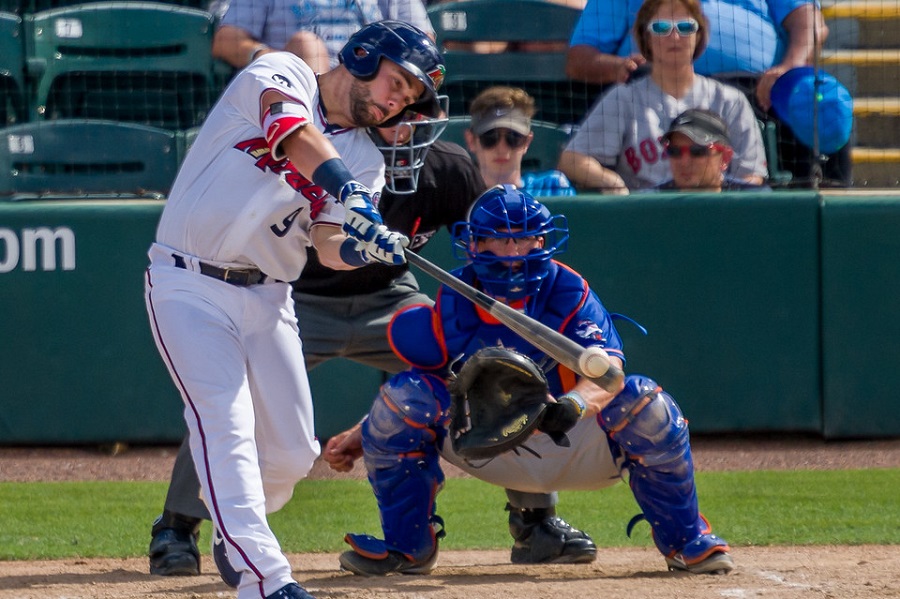
On the first Saturday of the college football season, the Minnesota Twins topped Kansas City with a football score, 17-0. In the minor leagues, playoff spots are to be had or prepared for, and there were strides toward those spots. There have been playoff-setting transactions, and some very good performances, so enjoy today’s Minor League Report. Image courtesy of Linwood Ferguson (photo of Mitchell Kranson) On the first Saturday of the college football season, the Minnesota Twins topped Kansas City with a football score, 17-0. In the minor leagues, playoff spots are to be had or prepared for, and there were strides toward those spots. There have been playoff-setting transactions, and some very good performances, so enjoy today’s Minor League Report. Let’s start with the recent transactions: Kohl Stewart was removed from the DL to pitch for the Lookouts. IF Joe Cronin, who was promoted from Cedar Rapids to Ft. Myers last week, was now promoted to Chattanooga. RHP Alex Muren was sent back to Ft. Myers IF Ariel Montesino was promoted from Elizabethton to Ft. Myers. C Jhon Alvarez was promoted from the GCL to Ft. Myers. The Twins signed IF Daniel Crespo and assigned him to the GCL. Needing players for their playoff run, the Twins have signed Crespo, who was the 34th round pick of the Yankees in 2013 out of Appalachian State. He just turned 26. He spent 2014 and 2015 in the independent Frontier League. I’m not sure where he was most recently. RED WINGS REPORT Rochester 3, Pawtucket 5 Box Score Felix Jorge was on the mound. The right-hander gave up three runs on seven hits and two walks over the first 4.1 innings. Luke Bard had an interesting outing. He walked two and struck out four in 1.2 innings. Just one of seven batters even put the ball in play off of him. Michael Kohn gave up a home run in the seventh inning. Jake Reed then gave up one run on three hits in his inning. Yohan Pino gave up a hit in a scoreless ninth inning. Byungho Park went 2-4. Levi Michael hit his first AAA double and drove in two runs. Lehigh Valley was rained out on Saturday, so the Red Wings magic number to take the IL wild card spot sits at two with two games to play. CHATTANOOGA CHATTER Chattanooga 4, Montgomery 3 Box Score The Lookouts already had a playoff spot. They earned that in the first half. Then they went out and had an even better second half. Kohl Stewart returned from the DL to make the start in this one. He gave up two runs in the first inning but settled in after that. He gave up just those two runs on four hits and three walks in three innings. DJ Baxendale came on and was able to work the next 4.2 innings without allowing any more runs. He gave up three hits, a walk and struck out three. Todd Van Steensel gave walked one but got the final out of the eighth inning. In that time, LaMonte Wade hit a two-run homer (his seventh) to tie the game at two. In the top of the ninth, the Lookouts took the lead when Wade doubled in Edgar Corcino (who had led off with a double). Later, Max Murphy singled in Wade with the fourth run. So Nick Anderson came into the game to protect a two-run lead. He gave up one run on two hits, but he recorded his ninth save for the Lookouts. Wade led the way going 3-4 with his 22nd double, seventh home run and third RBI. Corcino went 2-4 with his 19th double. Murphy went 2-4 with his 12th double. Nelson Molina went 1-3 with a walk. MIRACLE MATTERS Ft. Myers 4, Jupiter 1 Box Score The Miracle came into their Saturday night game against Jupiter with a magic number of two. Charlotte lost to Bradenton 5-0, dropping the magic number to one. Could the Miracle clinch a playoff spot? The answer... Yes. Lefty Lachlan Wells returned to the mound for the Miracle and was very good. He went five shutout innings. He gave up two hits, walked two and struck out seven. Tyler Jay came on for the sixth inning and allowed a run to score to tie the game at one. He worked the seventh as well. In his two innings, he struck out five. Zander Wiel had given the Miracle a 1-0 lead with his 13th home run. When the Miracle lost their lead in the sixth, they grabbed it right back in the bottom of the inning. Mitchell Kranson hit a solo homer to give the lead back to the Miracle. Kranson led the way for the Miracle offense. He went 3-4 with two doubles (eight on the season) and his fourth home run. He drove in three runs. Tanner English went 2-3 with a walk and his 29th stolen base. Ariel Montesino drove in the other run and went 2-3 with a walk. Jermaine Palacios and Sean Miller each had two singles in four at-bats. Tom Hackimer recorded his seventh Kernels save with two scoreless innings. He walked one and struck out two. KERNELS NUGGETS Cedar Rapids 4, Beloit 2 Box Score The start of this game was delayed by more than 90 minutes, but the teams were able to get it in. 2017 eighth-round pick Bryan Sammons made the start. He gave up only an unearned run on three hits and a walk in five innings. He struck out six. Evan Sanders came on and gave up one run on two hits and two walks over his two innings. Patrick McGuff pitched two no-hit innings to close things out and earn his first save. He struck out two and walked one. The Kernels got three of their runs in the fourth inning, which got started with a Travis Blankenhorn triple. Aaron Whitefield drove him in with a single and advanced to third on a base hit by Lewis Diaz. Trey Cabbage drew a walk and Shane Carrier delivered a bases-loaded two-run single. Whitefield, Carrier and Jordan Gore each had two hits on the night. Gore also drew a walk. E-TWINS E-NOTES Elizabethton, Greeneville (Rain - Postponed) Box Score The E-Twins were supposed to start their playoff run on Saturday, but unfortunately rains pushed the start of their postseason back a day. The two teams will play Game 1 on Sunday. GCL TWINS TAKES GCL Twins Box Score The doubleheader was cancelled due to potential for rain in Ft. Myers. The team will begin its playoff hopes on Sunday. The will play the semi-finals game on Sunday morning against the Nationals. Should they win, they’ll advance to the finals on Monday. TWINS DAILY PLAYERS OF THE DAY Twins Daily Minor League Pitcher of the Day - Lachlan Wells, Ft. Myers Miracle Twins Daily Minor League Hitter of the Day – Mitchell Kranson, Ft. Myers Miracle SUNDAY’S PROBABLE STARTERS Pawtucket @ Rochester (5:05 CST) - LHP Hector Santiago Montgomery @ Chattanooga (5:15 CST) - RHP Randy LeBlanc (vs Logan Darnell) Jupiter @ Ft. Myers (10:05 am CST) - TBD Cedar Rapids @ Beloit (2:00 CST) - RHP Randy Dobnak Elizabethton @ Greeneville (5:00 CST) - RHP Edwar Colina (Playoffs - Game 1) GCL Twins @ GCL Nationals (11:00am CST) - RHP Blayne Enlow (Playoffs - Semi-finals) Please feel free to ask any questions and discuss Saturday’s games. View full article
- 9 replies
-
- 1
-
-
- mitchell kranson
- lachlan wells
- (and 3 more)
-
Twins Minor League Report (9/2): Kranson, Wade Lead Teams To Wins
Seth Stohs posted an article in Minor Leagues
 Let’s start with the recent transactions: Kohl Stewart was removed from the DL to pitch for the Lookouts. IF Joe Cronin, who was promoted from Cedar Rapids to Ft. Myers last week, was now promoted to Chattanooga. RHP Alex Muren was sent back to Ft. Myers IF Ariel Montesino was promoted from Elizabethton to Ft. Myers. C Jhon Alvarez was promoted from the GCL to Ft. Myers. The Twins signed IF Daniel Crespo and assigned him to the GCL. Needing players for their playoff run, the Twins have signed Crespo, who was the 34th round pick of the Yankees in 2013 out of Appalachian State. He just turned 26. He spent 2014 and 2015 in the independent Frontier League. I’m not sure where he was most recently. RED WINGS REPORT Rochester 3, Pawtucket 5 Box Score Felix Jorge was on the mound. The right-hander gave up three runs on seven hits and two walks over the first 4.1 innings. Luke Bard had an interesting outing. He walked two and struck out four in 1.2 innings. Just one of seven batters even put the ball in play off of him. Michael Kohn gave up a home run in the seventh inning. Jake Reed then gave up one run on three hits in his inning. Yohan Pino gave up a hit in a scoreless ninth inning. Byungho Park went 2-4. Levi Michael hit his first AAA double and drove in two runs. Lehigh Valley was rained out on Saturday, so the Red Wings magic number to take the IL wild card spot sits at two with two games to play. CHATTANOOGA CHATTER Chattanooga 4, Montgomery 3 Box Score The Lookouts already had a playoff spot. They earned that in the first half. Then they went out and had an even better second half. Kohl Stewart returned from the DL to make the start in this one. He gave up two runs in the first inning but settled in after that. He gave up just those two runs on four hits and three walks in three innings. DJ Baxendale came on and was able to work the next 4.2 innings without allowing any more runs. He gave up three hits, a walk and struck out three. Todd Van Steensel gave walked one but got the final out of the eighth inning. In that time, LaMonte Wade hit a two-run homer (his seventh) to tie the game at two. In the top of the ninth, the Lookouts took the lead when Wade doubled in Edgar Corcino (who had led off with a double). Later, Max Murphy singled in Wade with the fourth run. So Nick Anderson came into the game to protect a two-run lead. He gave up one run on two hits, but he recorded his ninth save for the Lookouts. Wade led the way going 3-4 with his 22nd double, seventh home run and third RBI. Corcino went 2-4 with his 19th double. Murphy went 2-4 with his 12th double. Nelson Molina went 1-3 with a walk. MIRACLE MATTERS Ft. Myers 4, Jupiter 1 Box Score The Miracle came into their Saturday night game against Jupiter with a magic number of two. Charlotte lost to Bradenton 5-0, dropping the magic number to one. Could the Miracle clinch a playoff spot? The answer... Yes. Lefty Lachlan Wells returned to the mound for the Miracle and was very good. He went five shutout innings. He gave up two hits, walked two and struck out seven. Tyler Jay came on for the sixth inning and allowed a run to score to tie the game at one. He worked the seventh as well. In his two innings, he struck out five. Zander Wiel had given the Miracle a 1-0 lead with his 13th home run. When the Miracle lost their lead in the sixth, they grabbed it right back in the bottom of the inning. Mitchell Kranson hit a solo homer to give the lead back to the Miracle. Kranson led the way for the Miracle offense. He went 3-4 with two doubles (eight on the season) and his fourth home run. He drove in three runs. Tanner English went 2-3 with a walk and his 29th stolen base. Ariel Montesino drove in the other run and went 2-3 with a walk. Jermaine Palacios and Sean Miller each had two singles in four at-bats. Tom Hackimer recorded his seventh Kernels save with two scoreless innings. He walked one and struck out two. KERNELS NUGGETS Cedar Rapids 4, Beloit 2 Box Score The start of this game was delayed by more than 90 minutes, but the teams were able to get it in. 2017 eighth-round pick Bryan Sammons made the start. He gave up only an unearned run on three hits and a walk in five innings. He struck out six. Evan Sanders came on and gave up one run on two hits and two walks over his two innings. Patrick McGuff pitched two no-hit innings to close things out and earn his first save. He struck out two and walked one. The Kernels got three of their runs in the fourth inning, which got started with a Travis Blankenhorn triple. Aaron Whitefield drove him in with a single and advanced to third on a base hit by Lewis Diaz. Trey Cabbage drew a walk and Shane Carrier delivered a bases-loaded two-run single. Whitefield, Carrier and Jordan Gore each had two hits on the night. Gore also drew a walk. E-TWINS E-NOTES Elizabethton, Greeneville (Rain - Postponed) Box Score The E-Twins were supposed to start their playoff run on Saturday, but unfortunately rains pushed the start of their postseason back a day. The two teams will play Game 1 on Sunday. GCL TWINS TAKES GCL Twins Box Score The doubleheader was cancelled due to potential for rain in Ft. Myers. The team will begin its playoff hopes on Sunday. The will play the semi-finals game on Sunday morning against the Nationals. Should they win, they’ll advance to the finals on Monday. TWINS DAILY PLAYERS OF THE DAY Twins Daily Minor League Pitcher of the Day - Lachlan Wells, Ft. Myers Miracle Twins Daily Minor League Hitter of the Day – Mitchell Kranson, Ft. Myers Miracle SUNDAY’S PROBABLE STARTERS Pawtucket @ Rochester (5:05 CST) - LHP Hector Santiago Montgomery @ Chattanooga (5:15 CST) - RHP Randy LeBlanc (vs Logan Darnell) Jupiter @ Ft. Myers (10:05 am CST) - TBD Cedar Rapids @ Beloit (2:00 CST) - RHP Randy Dobnak Elizabethton @ Greeneville (5:00 CST) - RHP Edwar Colina (Playoffs - Game 1) GCL Twins @ GCL Nationals (11:00am CST) - RHP Blayne Enlow (Playoffs - Semi-finals) Please feel free to ask any questions and discuss Saturday’s games.
 -
No... I think there are some questions. But I also know that his one-inning stint earlier this week was to help line him up for the playoffs, so they like him... but we shall see.
-
Versatile Goodrum Gets September Call
Seth Stohs replied to Seth Stohs's topic in Twins Daily Front Page News
And yes... the obvious move happened... Santiago was placed on the 60 Day DL.- 39 replies
-
- 1
-
-
- niko goodrum
- nik turley
- (and 1 more)
-
Versatile Goodrum Gets September Call
Seth Stohs replied to Seth Stohs's topic in Twins Daily Front Page News
I definitely think people undervalue what Escobar brings to the team. He's shown that when given consistent playing time, he can hit and has some pop. He can play 3 positions pretty well, and he - from all I've seen - is truly a leader in that clubhouse. I don't know if they'll pay him $4 million next year to be a top utility guy, but I definitely think we need to realize that he has some value. Now, Goodrum I think can have a role as a utility guy on rosters. I don't know if he will, but he's got a ton of talent that has just started really coming together the last year. He's got room to continue progressing too. I think his ability to play 7 positions at least adequately is a big deal, especially with more and more teams (including the Twins) often going to 13 pitchers.- 39 replies
-
- 1
-
-
- niko goodrum
- nik turley
- (and 1 more)
-
AJ made Barry Bonds and Jeff Kent seem to be great teammates...
- 20 replies
-
- 1
-
-
- joe nathan
- aj pierzynski
- (and 2 more)
-
Derek Falvey spoke very highly about him during a presser this afternoon. Had the chance to meet him (with a group of media this afternoon), and he looks really young. When I have a chance, I will try to transcribe Falvey's comments on Adler. He has known him for several years. He likes the fact that he comes from another business/sport, and he wouldn't be surprised to more of that happening. Very, very smart guy. Like I said, he said a lot more, but I've been in a car for about 8 hours since, so I don't remember and don't want to type something incorrect.
-
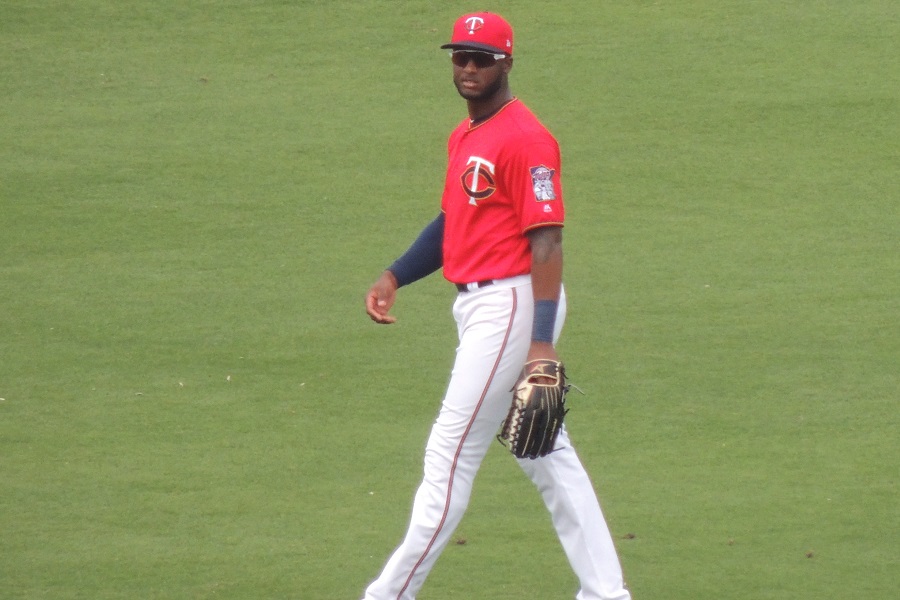
Last year, following an injury-plagued season at AA Chattanooga, Niko Goodrum could have become a six-year minor league free agent. Instead, he quickly signed on to remain with the Twins for another year on a minor league contract. On Wednesday night following a game in Rochester, Goodrum learned that it was all worth it. He was told that he is heading to the Minnesota Twins as a September call up. He will fly to Minneapolis on Thursday and be in uniform on Friday. Joining Goodrum as September 1st callups will be left-handed pitchers Nik Turley and Buddy Boshers. Image courtesy of Seth Stohs, Twins Daily (photo of Niko Goodrum) Last year, following an injury-plagued season at AA Chattanooga, Niko Goodrum could have become a six-year minor league free agent. Instead, he quickly signed on to remain with the Twins for another year on a minor league contract. On Wednesday night following a game in Rochester, Goodrum learned that it was all worth it. He was told that he is heading to the Minnesota Twins as a September call up. He will fly to Minneapolis on Thursday and be in uniform on Friday. Joining Goodrum as September 1st callups will be left-handed pitchers Nik Turley and Buddy Boshers. To entice Goodrum to stick around, the Twins offered him an invitation to major league spring training. He spent about a month with the club this spring, playing sparingly, but learning from the big league coaches and players. He fought a little shoulder issue in camp, but he hit .375 (6-16) and impressed his manager. Molitor spoke well of Goodrum following a spring game the day that he was sent back to minor league camp. “Niko Goodrum had a shoulder issue midway through camp, but he showed versatility. I really encouraged him to embrace that rather than wondering why he can't find a position because it has value and can open more doors for him. He showed some things." “Versatile” is the key word, and it is the reason that Goodrum will be up right away in September rather than finish out the Red Wings season. With the Red Wings, he has played games at each position except pitcher and catcher this season. He’s started 47 game in right field, 37 games at second base, 20 games at third base, 15 games in center field, nine games at shortstop, three games at first base, and one game in left field. I asked him in spring training if he ever considered getting a catcher’s mitt. “No!” Goodrum announced emphatically. Goodrum will be part of a “first wave” of players coming up from the minor leagues as September call ups to bolster a team fighting with the Yankees, Angels, Mariners and others for two wild card spots. As Derek Falvey explained it. “We’ll have a few come Friday. The question is always if it’s beneficial to get at-bats every day or pitch more regularly rather than being the last guy up here. You can always go get somebody. We’ll have a first wave, and then we’ll make other decisions pending results in Rochester.” Goodrum was signed as the team’s second-round pick in 2010 out of high school near Atlanta, Georgia. His uncle, Otis Nixon, stole 37 bases for the Twins in 1998. Goodrum is an incredible athlete, but he was quite raw in baseball terms. He has been moved through the system accordingly. He spent his draft season in the GCL before spending two seasons in extended spring training and with the Elizabethton Twins. He was the primary shortstop on that talented 2013 Cedar Rapids team and moved up to Ft. Myers for the 2014 season. He split 2015 between the Miracle and Chattanooga. Last year, he started the season with a foot injury that cost him much of the first half. But when he returned, he posted an .808 OPS with the Lookouts. In scouting circles, there is a reason to take great athletes. Goodrum fits into that category. He’s tall, and when drafted, he was thin. He was always fast, and he could play a pretty good shortstop. He is blessed with a strong arm. His speed has allowed him to become a pretty good outfielder as well as he has played out there more in recent years. Scouts would often talk about Goodrum’s “high waist” with the idea that he would eventually add more power. The started to show last year, but this year, he has hit 25 doubles, five triples and 13 home runs in his first season in AAA. Goodrum will have family at the game. His mom and dad, his dad’s wife, his aunt, and his girlfriend will make the trip. In the offseason, he owns Elite Metro Sports and Cages, a baseball and softball facility in his hometown of Fayetteville, Georgia. The indoor facilities and batting cages are open year-round. Goodrum is there during his offseasons and enjoys being able to give back to his community. His dad, Tim, operates the business. Goodrum will likely be used in a utility role over the season’s final month. With the news that Byron Buxton will not need to go on the disabled list and could soon play, Zack Granite will likely be the team’s fourth outfielder, but Goodrum’s ability to play seven positions will allow Molitor to mix and match lineups and moves throughout games. View full article
-
 To entice Goodrum to stick around, the Twins offered him an invitation to major league spring training. He spent about a month with the club this spring, playing sparingly, but learning from the big league coaches and players. He fought a little shoulder issue in camp, but he hit .375 (6-16) and impressed his manager. Molitor spoke well of Goodrum following a spring game the day that he was sent back to minor league camp. “Niko Goodrum had a shoulder issue midway through camp, but he showed versatility. I really encouraged him to embrace that rather than wondering why he can't find a position because it has value and can open more doors for him. He showed some things." “Versatile” is the key word, and it is the reason that Goodrum will be up right away in September rather than finish out the Red Wings season. With the Red Wings, he has played games at each position except pitcher and catcher this season. He’s started 47 game in right field, 37 games at second base, 20 games at third base, 15 games in center field, nine games at shortstop, three games at first base, and one game in left field. I asked him in spring training if he ever considered getting a catcher’s mitt. “No!” Goodrum announced emphatically. Goodrum will be part of a “first wave” of players coming up from the minor leagues as September call ups to bolster a team fighting with the Yankees, Angels, Mariners and others for two wild card spots. As Derek Falvey explained it. “We’ll have a few come Friday. The question is always if it’s beneficial to get at-bats every day or pitch more regularly rather than being the last guy up here. You can always go get somebody. We’ll have a first wave, and then we’ll make other decisions pending results in Rochester.” Goodrum was signed as the team’s second-round pick in 2010 out of high school near Atlanta, Georgia. His uncle, Otis Nixon, stole 37 bases for the Twins in 1998. Goodrum is an incredible athlete, but he was quite raw in baseball terms. He has been moved through the system accordingly. He spent his draft season in the GCL before spending two seasons in extended spring training and with the Elizabethton Twins. He was the primary shortstop on that talented 2013 Cedar Rapids team and moved up to Ft. Myers for the 2014 season. He split 2015 between the Miracle and Chattanooga. Last year, he started the season with a foot injury that cost him much of the first half. But when he returned, he posted an .808 OPS with the Lookouts. In scouting circles, there is a reason to take great athletes. Goodrum fits into that category. He’s tall, and when drafted, he was thin. He was always fast, and he could play a pretty good shortstop. He is blessed with a strong arm. His speed has allowed him to become a pretty good outfielder as well as he has played out there more in recent years. Scouts would often talk about Goodrum’s “high waist” with the idea that he would eventually add more power. The started to show last year, but this year, he has hit 25 doubles, five triples and 13 home runs in his first season in AAA. Goodrum will have family at the game. His mom and dad, his dad’s wife, his aunt, and his girlfriend will make the trip. In the offseason, he owns Elite Metro Sports and Cages, a baseball and softball facility in his hometown of Fayetteville, Georgia. The indoor facilities and batting cages are open year-round. Goodrum is there during his offseasons and enjoys being able to give back to his community. His dad, Tim, operates the business. Goodrum will likely be used in a utility role over the season’s final month. With the news that Byron Buxton will not need to go on the disabled list and could soon play, Zack Granite will likely be the team’s fourth outfielder, but Goodrum’s ability to play seven positions will allow Molitor to mix and match lineups and moves throughout games.
 -
From Prospects To Playoff Push
Seth Stohs replied to Seth Stohs's topic in Twins Daily Front Page News
Yeah, that was a great night. We went on the Twins Train to Quad Cities and then the next morning to Beloit. Was great... Ballpark is quite scenic! -
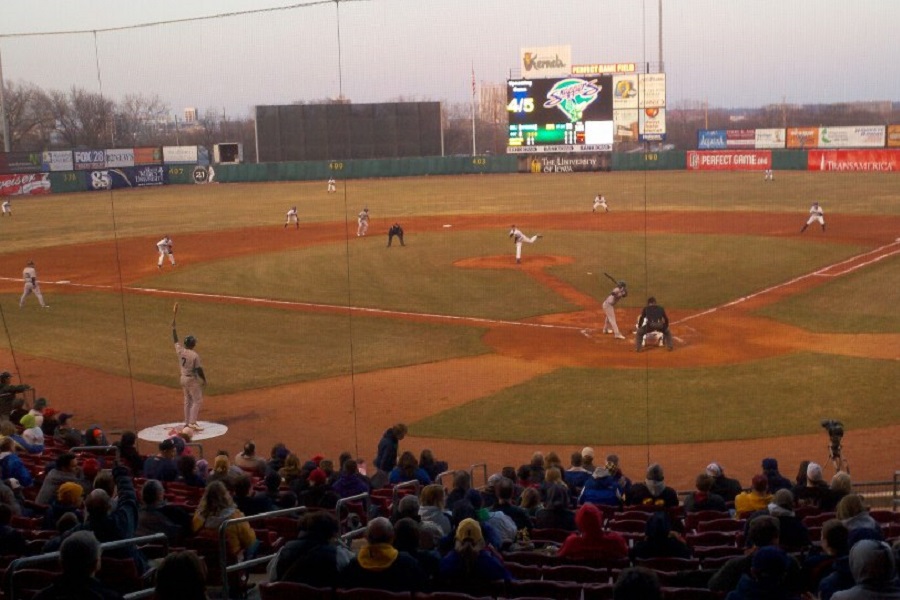
Building from within. It’s one of those baseball phrases (or really any business) that is used by both sides. Most would acknowledge that building from within is ideal, particularly in baseball with its pay scales. Others will use the phrase as a reason to accuse a team of not spending enough money on outside players via free agency. For the Twins and their fans, it was the basis for frustration and the basis for hope over the last half-decade. It was clear the Twins needed to build up a farm system and bring players up, but others wanted the Twins to spend wildly in free agency to speed up the process. The reality for almost all organizations is that the path is somewhere in the middle. While the Twins branched into free agency, it was clear that the plan long-term was all about the prospects. And right now, the organization and its fans are seeing the fruits of that patience. The hope, of course, is to see even more success over the next decade or so. Image courtesy of Seth Stohs, Twins Daily (Opening Night in Cedar Rapids, 2013) Building from within. It’s one of those baseball phrases (or really any business) that is used by both sides. Most would acknowledge that building from within is ideal, particularly in baseball with its pay scales. Others will use the phrase as a reason to accuse a team of not spending enough money on outside players via free agency. For the Twins and their fans, it was the basis for frustration and the basis for hope over the last half-decade. It was clear the Twins needed to build up a farm system and bring players up, but others wanted the Twins to spend wildly in free agency to speed up the process. The reality for almost all organizations is that the path is somewhere in the middle. While the Twins branched into free agency, it was clear that the plan long-term was all about the prospects. And right now, the organization and its fans are seeing the fruits of that patience. The hope, of course, is to see even more success over the next decade or so. If you’re looking for a blueprint for how this is supposed to work, just look back 20 years in to Twins history. The Twins made trades, drafted well, signed appropriate free agents who could then be traded later in the season for more prospects. Starting in 1998, the Twins called up rookie after rookie. Matt Lawton. Corey Koskie. Torii Hunter. Jacque Jones. Cristian Guzman. Eric Milton. Joe Mays. Doug Mientkiewicz. AJ Pierzynski. They joined guys like Brad Radke, Eddie Guardado and LaTroy Hawkins to form a group that ‘arrived’ in 2001 and reached the playoffs in 2002. While that group never got to the World Series, it provided Twins fans with about a decade of winning seasons and exciting baseball in September and into October. Each year, that group would change some, adding a piece or two. Johan Santana came in the Rule 5 draft. Justin Morneau arrived. Then Joe Mauer. Then Jason Kubel. Then Francisco Liriano. And later guys like Trevor Plouffe and Danny Valencia. Likewise, the Twins have been building through their farm system the last several years. Mauer is the one holdover from the previous decade’s teams of success. ------------------------------------------------------------------------------ The first time I made the trek to watch the Twins Low-A, Midwest League affiliate play was in 2010. The five hour drive between the Twin Cities and Beloit didn’t seem too bad. Ironically, the Snappers were playing Cedar Rapids. The Kernels were an Angels affiliate at the time, and their center fielder for those games was an 18-year-old named Mike Trout. Brian Dozier was the team’s shortstop in that first game I saw. After the game, he was promoted to High-A Ft. Myers. The next day’s shortstop was Danny Santana. Dozier quickly moved up the Twins system and debuted as a 24-year-old in 2012. He’s become an All-Star, hit 42 home runs last year and is having another strong second half this year. In 2012, I made the trip to Beloit twice. A slender third baseman was kind of the star cleanup hitter for the Snappers. The Beloit lineup in the 2nd half included Eddie Rosario batting third, Miguel Sano batting fourth, and Kennys Vargas batting fifth. Miguel Sano and Jhonatan Goncalves The Minnesota Twins moved their Midwest League affiliate from Beloit to Cedar Rapids before the 2013 season. I made the trek down there for their first series. What an interesting, talented roster they had. Byron Buxton was the team’s #1 pick the year before, so he was the focal point. In a press conference before the season opener, then-Kernels manager Jake Mauer said, “ Byron’s going to lead off and probably be our primary center fielder. You’ll see him out there quite a bit. Tools-wise, it’s kind of cultivating all of them. He’s going to learn some things, tendencies. He’s got a chance to steal a lot of bases. And then again, he’s got a chance to be a middle of the lineup-type hitter, and that’s kind of rare. You don’t find a guy with that tool set and the things that he can do.” My first impression of Buxton? Well, in those three games, I saw him beat out ground balls to third base, shortstop and even second base. He also hit a LONG home run off of Snappers prospect Michael Ynoa. Byron Buxton and Adam Brett Walker, 2013 My favorite story from that trip was a hitter’s press conference that included Buxton, Travis Harrison and Adam Brett Walker. When Buxton himself was asked what he was going to be working on the most, he hesitated for a couple of seconds. Teammate Travis Harrison jumped in saying, “He’s pretty good at a lot of things!” Harrison is another very exciting prospect in the Twins system. He was the team’s first supplemental first round pick in 2011 out of high school in California. He gave up a scholarship to USC to sign with the Twins. He hit for average last year in Elizabethton, but did struggle early in that short-season with the glove at third base. It’s an area he knows he needs to improve upon. “I want all parts to see improvement. Everyone knows I need to get better at defense. I know that. That’s what I’ve been working really hard in the offseason trying to get better at. But then again, I can always be a better hitter as well, so, if you were to say a strength, I’d say hitting, but hopefully by the end of the season, it’ll be both.” I’d say he’s done a good job with that defense thing, and the offense, well, hopefully we are now seeing the player that he will be. The starting pitcher for the Kernels in their first game as a Twins affiliate? Left-hander Taylor Rogers. He made about three starts for the Kernels before being promoted to the Miracle. He ended the 2013 season as the Twins Daily Starting Pitcher of the Year. Jorge Polanco started the season batting second and playing second base. He also got time at shortstop when Niko Goodrum got a day off or was hurt. Two days into the season, the Kernels Opening Night leadoff hitter, Drew Leachman, hurt his shoulder sliding into second base on a stolen base attempt. By game three, Polanco was batting third. In his first at bat that night, he homered. I asked Mauer about Polanco batting third after the game, and Mauer chuckled, saying that wasn’t the plan, but he was very high on Polanco. Said he had coached him shortly after he signed as a little, skinny 16-year-old and he had grown so much. Obviously he has continued to hit, and grow stronger, and after the first prolonged slump of his career, he has been hitting right in the middle of the Twins lineup. He’s also been an adequate shortstop. I was there for the first three games (the third started by Mason Melotakis), and as I was driving the 5 hours home, I learned that Tyler Duffey had started and threw the first seven innings of a combined no-hitter. Max Kepler, 2013 When I went back to Cedar Rapids in July, Buxton had already been promoted to Ft. Myers. However, Max Kepler, a very raw but very talented Max Kepler had taken over. He spent time at all three outfield spots and first base. Also in the Cedar Rapids starting rotation was Jose Berrios. He hadn’t been there to start the season only because he had pitched for Puerto Rico in the WBC. Jose Berrios and Mason Melotakis, 2013 I didn’t get to Cedar Rapids until later in the season in 2014. When I was there, Aaron Slegers was in the rotation. Also, a kid from extended spring training had recently been called up and was pitching well. That was Stephen Gonsalves. One of the catchers was Mitch Garver, though he was on the disabled list when I was there. He went on to be the Twins Daily Minor League Hitter of the Year that year. Stephen Gonsalves, 2015 In 2015, Gonsalves was still there in the first half. Trevor Hildenberger starred in the Kernels bullpen. After struggling in Cedar Rapids in 2014, Felix Jorge was one of the best pitchers in the league in 2015. Randy Rosario was also on the team, returning from Tommy John surgery. Zack Granite was the team’s leadoff hitter in April. He had spent 2014 with the Kernels, but he missed most of that season with injuries. By May 1st, Granite was moved up to Ft. Myers. Zack Granite, 2015 Recently-promoted John Curtiss began the 2015 season in the Kernels rotation. After May, he went on the DL before returning in the Kernels dugout as a reliever in August. He then spent April of 2016 in the Kernels bullpen, dominating, which he has done at every level since. Nick Gordon was the “star prospect” from that 2015 season. He’s one of baseball’s top prospects and hopefully a piece that we’ll see added sometime in 2017. Sure, I am trying to encourage Twins fans to get to Cedar Rapids to watch games this year (not many left, but they will have some playoff games too) and in the future. Pretty much every minor league team will have at least a couple of players that will get to the big leagues. But I am trying to illustrate that it is often a long process to develop players. As a young player, Berrios was in Cedar Rapids in 2013. He debuted in 2016, and he’s establishing him in 2017. That’s pretty normal, maybe even fast progression for a high school draft pick. The college guys typically move up more quickly, barring injury. Miguel Sano, 2012, batting in Davenport, vs Quad Cities But it’s important to have a pipeline. That group of top prospects we had heard about for so long is now the core of the Twins. I’ve talked about the Core Four Twins prospects; Miguel Sano, Byron Buxton, Max Kepler and Jose Berrios. All four of them have had their very strong moments this year and look like they’re starting to get it. But several others have taken big strides in 2017, particularly of late. Eddie Rosario is just 25 and has been the team’s top hitter over most of the last three months. Polanco is 24 and having an incredible month. Zack Granite showed that he can be a solid fourth outfielder and he can contribute well when needed as a starter. Mitch Garver is getting a chance now. And there will be pitching to go with all the young bats. Adalberto Mejia was acquired as a 22 year old in a trade and debuted with the Twins. Trevor Hildenberger and Alan Busenitz (who may have been a throw-in in that Nolasco/Meyer/Santiago trade) have come up and been given more and more high-leverage opportunities. John Curtiss is now there. But don’t forget about JT Chargois and Nick Burdi, who were likely supposed to be up by now, have missed most of this year. Jake Reed missed time early, but he’s been pitching great and should be up in September. We will likely see Aaron Slegers return as well as the debut of Stephen Gonsalves. If not soon, Gonsalves will likely be up early next year. Felix Jorge and Randy Rosario have had brief cups of coffee, and Fernando Romero and Zack Littell are doing well in Chattanooga. In other words, the future looks really bright. It looks bright while the present is providing them with an opportunity for the playoffs this year. And, worst-case scenario, they will get to play in important September games in a playoff race. That can only make them better. It’s an exciting time to be a Twins fan. Terry Ryan and those who worked under him deserve a ton of credit. So does Brad Steil, along with all of the player development personnel. The new Twins leadership knew what they were signing on for, a very talent-laden organization. Hopefully they’re able to lead this group of homegrown talent back to the playoffs for years to come, and maybe even celebrate another World Series championship in years to come. We can wish, at least. View full article
- 17 replies
-
- 4
-
-
- miguel sano
- byron buxton
- (and 3 more)
-
 If you’re looking for a blueprint for how this is supposed to work, just look back 20 years in to Twins history. The Twins made trades, drafted well, signed appropriate free agents who could then be traded later in the season for more prospects. Starting in 1998, the Twins called up rookie after rookie. Matt Lawton. Corey Koskie. Torii Hunter. Jacque Jones. Cristian Guzman. Eric Milton. Joe Mays. Doug Mientkiewicz. AJ Pierzynski. They joined guys like Brad Radke, Eddie Guardado and LaTroy Hawkins to form a group that ‘arrived’ in 2001 and reached the playoffs in 2002. While that group never got to the World Series, it provided Twins fans with about a decade of winning seasons and exciting baseball in September and into October. Each year, that group would change some, adding a piece or two. Johan Santana came in the Rule 5 draft. Justin Morneau arrived. Then Joe Mauer. Then Jason Kubel. Then Francisco Liriano. And later guys like Trevor Plouffe and Danny Valencia. Likewise, the Twins have been building through their farm system the last several years. Mauer is the one holdover from the previous decade’s teams of success. ------------------------------------------------------------------------------ The first time I made the trek to watch the Twins Low-A, Midwest League affiliate play was in 2010. The five hour drive between the Twin Cities and Beloit didn’t seem too bad. Ironically, the Snappers were playing Cedar Rapids. The Kernels were an Angels affiliate at the time, and their center fielder for those games was an 18-year-old named Mike Trout. Brian Dozier was the team’s shortstop in that first game I saw. After the game, he was promoted to High-A Ft. Myers. The next day’s shortstop was Danny Santana. Dozier quickly moved up the Twins system and debuted as a 24-year-old in 2012. He’s become an All-Star, hit 42 home runs last year and is having another strong second half this year. In 2012, I made the trip to Beloit twice. A slender third baseman was kind of the star cleanup hitter for the Snappers. The Beloit lineup in the 2nd half included Eddie Rosario batting third, Miguel Sano batting fourth, and Kennys Vargas batting fifth. Miguel Sano and Jhonatan Goncalves The Minnesota Twins moved their Midwest League affiliate from Beloit to Cedar Rapids before the 2013 season. I made the trek down there for their first series. What an interesting, talented roster they had. Byron Buxton was the team’s #1 pick the year before, so he was the focal point. In a press conference before the season opener, then-Kernels manager Jake Mauer said, “ Byron’s going to lead off and probably be our primary center fielder. You’ll see him out there quite a bit. Tools-wise, it’s kind of cultivating all of them. He’s going to learn some things, tendencies. He’s got a chance to steal a lot of bases. And then again, he’s got a chance to be a middle of the lineup-type hitter, and that’s kind of rare. You don’t find a guy with that tool set and the things that he can do.” My first impression of Buxton? Well, in those three games, I saw him beat out ground balls to third base, shortstop and even second base. He also hit a LONG home run off of Snappers prospect Michael Ynoa. Byron Buxton and Adam Brett Walker, 2013 My favorite story from that trip was a hitter’s press conference that included Buxton, Travis Harrison and Adam Brett Walker. When Buxton himself was asked what he was going to be working on the most, he hesitated for a couple of seconds. Teammate Travis Harrison jumped in saying, “He’s pretty good at a lot of things!” Harrison is another very exciting prospect in the Twins system. He was the team’s first supplemental first round pick in 2011 out of high school in California. He gave up a scholarship to USC to sign with the Twins. He hit for average last year in Elizabethton, but did struggle early in that short-season with the glove at third base. It’s an area he knows he needs to improve upon. “I want all parts to see improvement. Everyone knows I need to get better at defense. I know that. That’s what I’ve been working really hard in the offseason trying to get better at. But then again, I can always be a better hitter as well, so, if you were to say a strength, I’d say hitting, but hopefully by the end of the season, it’ll be both.” I’d say he’s done a good job with that defense thing, and the offense, well, hopefully we are now seeing the player that he will be. The starting pitcher for the Kernels in their first game as a Twins affiliate? Left-hander Taylor Rogers. He made about three starts for the Kernels before being promoted to the Miracle. He ended the 2013 season as the Twins Daily Starting Pitcher of the Year. Jorge Polanco started the season batting second and playing second base. He also got time at shortstop when Niko Goodrum got a day off or was hurt. Two days into the season, the Kernels Opening Night leadoff hitter, Drew Leachman, hurt his shoulder sliding into second base on a stolen base attempt. By game three, Polanco was batting third. In his first at bat that night, he homered. I asked Mauer about Polanco batting third after the game, and Mauer chuckled, saying that wasn’t the plan, but he was very high on Polanco. Said he had coached him shortly after he signed as a little, skinny 16-year-old and he had grown so much. Obviously he has continued to hit, and grow stronger, and after the first prolonged slump of his career, he has been hitting right in the middle of the Twins lineup. He’s also been an adequate shortstop. I was there for the first three games (the third started by Mason Melotakis), and as I was driving the 5 hours home, I learned that Tyler Duffey had started and threw the first seven innings of a combined no-hitter. Max Kepler, 2013 When I went back to Cedar Rapids in July, Buxton had already been promoted to Ft. Myers. However, Max Kepler, a very raw but very talented Max Kepler had taken over. He spent time at all three outfield spots and first base. Also in the Cedar Rapids starting rotation was Jose Berrios. He hadn’t been there to start the season only because he had pitched for Puerto Rico in the WBC. Jose Berrios and Mason Melotakis, 2013 I didn’t get to Cedar Rapids until later in the season in 2014. When I was there, Aaron Slegers was in the rotation. Also, a kid from extended spring training had recently been called up and was pitching well. That was Stephen Gonsalves. One of the catchers was Mitch Garver, though he was on the disabled list when I was there. He went on to be the Twins Daily Minor League Hitter of the Year that year. Stephen Gonsalves, 2015 In 2015, Gonsalves was still there in the first half. Trevor Hildenberger starred in the Kernels bullpen. After struggling in Cedar Rapids in 2014, Felix Jorge was one of the best pitchers in the league in 2015. Randy Rosario was also on the team, returning from Tommy John surgery. Zack Granite was the team’s leadoff hitter in April. He had spent 2014 with the Kernels, but he missed most of that season with injuries. By May 1st, Granite was moved up to Ft. Myers. Zack Granite, 2015 Recently-promoted John Curtiss began the 2015 season in the Kernels rotation. After May, he went on the DL before returning in the Kernels dugout as a reliever in August. He then spent April of 2016 in the Kernels bullpen, dominating, which he has done at every level since. Nick Gordon was the “star prospect” from that 2015 season. He’s one of baseball’s top prospects and hopefully a piece that we’ll see added sometime in 2017. Sure, I am trying to encourage Twins fans to get to Cedar Rapids to watch games this year (not many left, but they will have some playoff games too) and in the future. Pretty much every minor league team will have at least a couple of players that will get to the big leagues. But I am trying to illustrate that it is often a long process to develop players. As a young player, Berrios was in Cedar Rapids in 2013. He debuted in 2016, and he’s establishing him in 2017. That’s pretty normal, maybe even fast progression for a high school draft pick. The college guys typically move up more quickly, barring injury. Miguel Sano, 2012, batting in Davenport, vs Quad Cities But it’s important to have a pipeline. That group of top prospects we had heard about for so long is now the core of the Twins. I’ve talked about the Core Four Twins prospects; Miguel Sano, Byron Buxton, Max Kepler and Jose Berrios. All four of them have had their very strong moments this year and look like they’re starting to get it. But several others have taken big strides in 2017, particularly of late. Eddie Rosario is just 25 and has been the team’s top hitter over most of the last three months. Polanco is 24 and having an incredible month. Zack Granite showed that he can be a solid fourth outfielder and he can contribute well when needed as a starter. Mitch Garver is getting a chance now. And there will be pitching to go with all the young bats. Adalberto Mejia was acquired as a 22 year old in a trade and debuted with the Twins. Trevor Hildenberger and Alan Busenitz (who may have been a throw-in in that Nolasco/Meyer/Santiago trade) have come up and been given more and more high-leverage opportunities. John Curtiss is now there. But don’t forget about JT Chargois and Nick Burdi, who were likely supposed to be up by now, have missed most of this year. Jake Reed missed time early, but he’s been pitching great and should be up in September. We will likely see Aaron Slegers return as well as the debut of Stephen Gonsalves. If not soon, Gonsalves will likely be up early next year. Felix Jorge and Randy Rosario have had brief cups of coffee, and Fernando Romero and Zack Littell are doing well in Chattanooga. In other words, the future looks really bright. It looks bright while the present is providing them with an opportunity for the playoffs this year. And, worst-case scenario, they will get to play in important September games in a playoff race. That can only make them better. It’s an exciting time to be a Twins fan. Terry Ryan and those who worked under him deserve a ton of credit. So does Brad Steil, along with all of the player development personnel. The new Twins leadership knew what they were signing on for, a very talent-laden organization. Hopefully they’re able to lead this group of homegrown talent back to the playoffs for years to come, and maybe even celebrate another World Series championship in years to come. We can wish, at least.
 -
Twins in the 2017 Arizona Fall League
Seth Stohs replied to Seth Stohs's topic in Twins Minor League Talk
Last year, the Twins left one TBD spot on the roster. The Lookouts lost out on a playoff spot, and the next day, they announced Gonsalves was going to the Fall League. -
AFL rosters for 2017 were announced this afternoon. The Twins prospects will play for Surprise. Unfortunately, only four players from the Twins organization were announced: RHP Tom Hackimer LHP Tyler Jay OF LaMonte Wade IF Chris Paul Paul missed 2+ months with a broken hamate. Jay missed most of the season. Now, teams will typically have 6-7 players in the AFL. My assumption is the Twins will add 2-3 more players. Players have to be healthy to play there. A guy like Kohl Stewart could be added if he is cleared before then. Also, I would guess innings limits could factor in. For instance, Zack Littell could be a candidate, but he's already around 150 innings. The Lookouts are going to the playoffs, but if they got done with the playoffs and he was at 158 (to make up a number) and they hoped to get him to 175, this would be a great way to do that. But if the Lookouts get all the way through the playoffs, and he's made three more starts and is already at 165 innings, they likely would send someone else, maybe a Cody Stashak who has missed time this year on the DL. Will be interesting to follow.
-
Rooker Chasing Russo (Get To Know Paul Russo)
Seth Stohs replied to Seth Stohs's topic in Twins Daily Front Page News
Roger, I know you and I talked a lot about Kevin West and Deacon Burns way back when. I know we liked both of them a lot. Kris Bryant was drafted in 2012 but didn't play until 2013. Maybe that's an important note. With the signing deadline moved up to July 15th from August 15th, that certainly changes things. A lot of the top guys maybe didn't sign until late and either didn't play or barely played. Bryce Harper debuted in the AFL after the 2010 season when he was drafted #1 overall.- 22 replies
-
- 2
-
-
- paul russo
- brent rooker
- (and 1 more)
-
Lecroy had 12 homers in 51 games in Ft. Myers in 1998 (year after he was drafted). Then he had 20 in 89 games there in 1999. Sano had 16 in 56 games in Ft. Myers as a 20-year-old in 2013 before moving up to AA for the 2nd half. Walker had 25 there in 132 games as a 22-year-old in 2014 (Full season).
- 24 replies
-
- 1
-
-
- brent rooker
- bryan sammons
- (and 3 more)
-
I've written about him quite a bit, and I just really like that signing. Not just for rehabbing this year, but a spring invite next year. I like flyers like that.
- 24 replies
-
- 1
-
-
- brent rooker
- bryan sammons
- (and 3 more)
-
I think it says more about Rooker than the rest of the lineup. Last year, the Miracle HR leader had like 7. That's more normal. Sano hit a bunch, but he was different. AB Walker hit like 27 or something. But even double digit homers is unusual.
- 24 replies
-
- 1
-
-
- brent rooker
- bryan sammons
- (and 3 more)
-
My guess is he'll go to the AFL and start next year at Chattanooga.
- 24 replies
-
- 8
-
-
- brent rooker
- bryan sammons
- (and 3 more)
-
I was told that he experienced fatigue in his side session, so they are doing what they would normally do, miss 1-2 starts. Obviously since that's pretty much the end of the season, he's not likely to pitch again this season. I was told that innings-wise, he could have gone 3-4 more starts.
- 24 replies
-
- 1
-
-
- brent rooker
- bryan sammons
- (and 3 more)
