



Seth Stohs
-
Posts
25,912 -
Joined
-
Last visited
-
Days Won
109
Content Type
Profiles
News
Minnesota Twins Videos
2026 Minnesota Twins Top Prospects Ranking
2022 Minnesota Twins Draft Picks
Minnesota Twins Free Agent & Trade Rumors, Notes, & Tidbits
Guides & Resources
2023 Minnesota Twins Draft Picks
The Minnesota Twins Players Project
2024 Minnesota Twins Draft Picks
2025 Minnesota Twins Draft Pick Tracker
2026 Minnesota Twins Draft Tracker: Picks & Bonuses
Forums
Blogs
Events
Store
Downloads
Gallery
Everything posted by Seth Stohs
-
 Yesterday, Jonathan Rodriguez was named our Twins Minor League Hitter of the Month. Today, we’ll turn to the pitching, starting with the starters. There were some strong performances at every level, from the rookie leagues to AAA. One starting pitcher gave up one run in the entire month. Another won all of his starts. There are players new to the organization and players who are new to professional baseball. There are 20 year olds and 27 year olds and everything in between. You’ll want to keep reading to find out more. Image courtesy of Joe Territo/Rochester Red Wings Yesterday, Jonathan Rodriguez was named our Twins Minor League Hitter of the Month. Today, we’ll turn to the pitching, starting with the starters. There were some strong performances at every level, from the rookie leagues to AAA. One starting pitcher gave up one run in the entire month. Another won all of his starts. There are players new to the organization and players who are new to professional baseball. There are 20 year olds and 27 year olds and everything in between. You’ll want to keep reading to find out more. Before we get to our Top 6 starting pitchers for the month of July, here is a list of a others who deserve to be recognized for a solid month. HONORABLE MENTION Edwar Colina - Elizabethton - 5 GS, 24.2 IP, 1-2, 2.19 ERA, 1.22 WHIP, 20 H, 10 BB, 29 K Stephen Gonsalves - Chattanooga - 6 GS, 32.2 IP, 3-0, 3.31 ERA, 1.32 WHIP, 32 H, 11 BB, 36 K Brusdar Graterol - GCL/Elizabethton - 5 G, 3 GS, 19.1 IP, 2-0, 2.33 ERA, 1.03 WHIP, 13 H, 7 BB, 23 K. David Hurlbut - Rochester - 5 G, 4 GS, 29.2 IP, 3-1, 3.03 ERA, 1.01 WHIP, 29 H, 4 BB, 24 K. Griffin Jax - Elizabethton/Cedar Rapids - 4 GS, 26.1 IP, 2-1, 2.39 ERA, 0.99 WHIP, 19 H, 7 BB, 13 K. Bryan Sammons - Elizabethton - 5 G, 3 GS, 21.0 IP, 2-0, 1.29 ERA, 0.81 WHIP, 11 H, 6 BB, 25 K. THE TOP SIX STARTING PITCHERS #6 - Fernando Romero - Chattanooga Lookouts - 6 GS, 3-1, 1.67 ERA, 1.22 WHIP, 27.0 IP, 22 H, 11 BB, 36 K Romero was the Twins Daily #1 Twins Prospect coming into the season. He’s pitched like it through most of the season. Over the last six starts, he has been limited to five innings per start, and as you can see from the July numbers, he’s been very good. His fastball is consistently 96-99 mph. He’s got a good, sharp slider. His changeup is his pitch that needs work, but reports are that it continues to improve. It will be interesting to see how he is used the rest of this season. July was a good month for Romero, but he’s been good all year. He’s 11-6 with a 2.60 ERA with 115 strikeouts in 110.2 innings. #5 - Clark Beeker - Cedar Rapids Kernels - 5 GS, 3-1, 0.84 ERA, 0.78 WHIP, 32.0 IP, 22 H, 3 BB, 23 K Beeker has been a regular in these monthly reports this season. He was the Twins 33rd-round pick in 2016 out of Davidson. In July, batters hit just .190/.230/.241 (.471) off of him. An ERA under 1.00. A WHIP under 1.00. You can’t ask a starter to do that, but Beeker’s been doing it while still providing a lot of innings. Last week, he tossed a complete game shutout. On the year, Beeker is now 11-3 with a 2.31 ERA and a 0.97 WHIP. He’s got tremendous control, having walked just 14 batters in 113 innings. #4 - Eduardo Del Rosario - Cedar Rapids/Ft. Myers Miracle - 4 GS, 1-2, 1.33 ERA, 0.74 WHIP, 27.0 IP, 15 H, 5 BB, 17 K Del Rosario was the Kernels Opening Day starter, and he was their first starter coming back after the All-Star break. At the end of July, he was finally promoted to the Miracle. In his final start of July, his first start with the Miracle, he gave up just an unearned run and one hit over eight innings. For the full month, opponents hit just .165/.232/.275 (.507) against him. He’s not a big guy, but he’s wiry, and throws with a whip-like action. On the season, he is now 7-6 with a 4.39 ERA. He’s got 90 strikeouts in 98.1 innings. #3 - Tim Melville - Rochester Red Wings - 5 GS, 1-3, 1.89 ERA, 0.99 WHIP, 33.1 IP, 25 H, 8 BB, 28 K Melville was the Royals fourth-round pick in 2008 out of high school in Missouri. He was very highly-touted, but he struggled right away. He stayed in the Royals organization through the 2014 season. He pitched for Detroit’s AAA affiliate in 2015. He went to the Reds in 2016 and received a three-game, 11 inning big league debut. Following the season, he was not signed by anyone. So he went to the independent Atlanta League where he was a teammate for Twins legend Lew Ford with the Long Island Ducks. The Twins came calling, and since joining the Red Wings, Melville has been quite good. In nine games (eight starts), he is 3-3 with a 2.72 ERA. In July, batters hit just .205/.263/.279 (.542) off of him. Reports indicate that the still-just-27-year-old is sitting between 93 and 96 with his fastball, and he’s got a good breaking ball too. He might be a guy given an opportunity if the front office doesn’t believe that the AA guys are ready yet this year. #2- Charlie Barnes - Elizabethton Twins - 6 G, 5 GS, 2-0, 0.37 ERA, 1.03 WHIP, 24.1 IP, 17 H, 8 BB, 26 K I mean, what can Charlie Barnes possibly do in his second month of pro ball after a debut like this. He gave up two runs in 2.1 innings in his pro debut (which came in June). In his next start, he gave up one run, the only run he gave up in 24.1 innings over the whole month. Opponents hit just .183/.255/.215 (.470) off him. Drafted in the fourth round out of Clemson this year, Barnes was touted as a changeup artist. It was no surprise that he was quickly promoted to Cedar Rapids where he threw four shutout innings to keep the streak going.And the Twins Minor League Starting Pitcher of the Month is: Rochester Red Wings - RHP Aaron Slegers - 5 GS, 5-0, 0.99 ERA, 0.83 WHIP, 36.1 IP, 26 H, 4 BB, 22 K For the second month this season, Aaron Slegers is our choice for Twins Minor League Starting Pitcher of the Month. He was also the choice in May. Slegers made five starts in July and won all five of them. He gave up three runs in the first start. Over the last four starts, he gave up one run in 29.2 innings. Opponents hit just .202/.226/.240 (.466) off of him in July. The 24-year-old was the Twins fifth-round draft pick in 2014 out of Indiana. He wasn’t protected from the Rule 5 draft which made a lot of people in the organization nervous. When he wasn’t selected, he received an invitation to big league camp. He made a strong impression on the coaches and has taken some of the things he learned and put them to use this season. His five straight wins in July extends his streak to eight straight starts with a win. In that stretch, he is 8-0 with a 1.73 ERA. Overall on the season, Slegers has made 19 starts. He is 12-4 with a 3.13 ERA and a 1.23 WHIP. In 118 innings, he has walked just 25 and struck out just 85 (6.5 K/9). Slegers isn’t a flame thrower. Opponents get hits off of him. But what he does is not hurt himself with walks, and he keeps the ball in the yard. His fastball sits in the low 90s, but he’s been known to touch 94 and even 95 at times. He’s got a good pitch mix and knows how to pitch. He should gets an opportunity to make starts for the Twins before season’s end.Congratulations to our Twins Daily Minor League Starting Pitcher of the Month of July, Rochester starter Aaron Slegers. Feel free to agree or disagree with the order, if you like. It wasn’t as easy a decision as you might think. There were several solid starters in July, and several really stood out. View full article
- 20 replies
-
- 2
-

-
- aaron slegers
- charlie barnes
- (and 3 more)
-
Twins Minor League Starting Pitcher Of The Month - July 2017
Seth Stohs posted an article in Minor Leagues
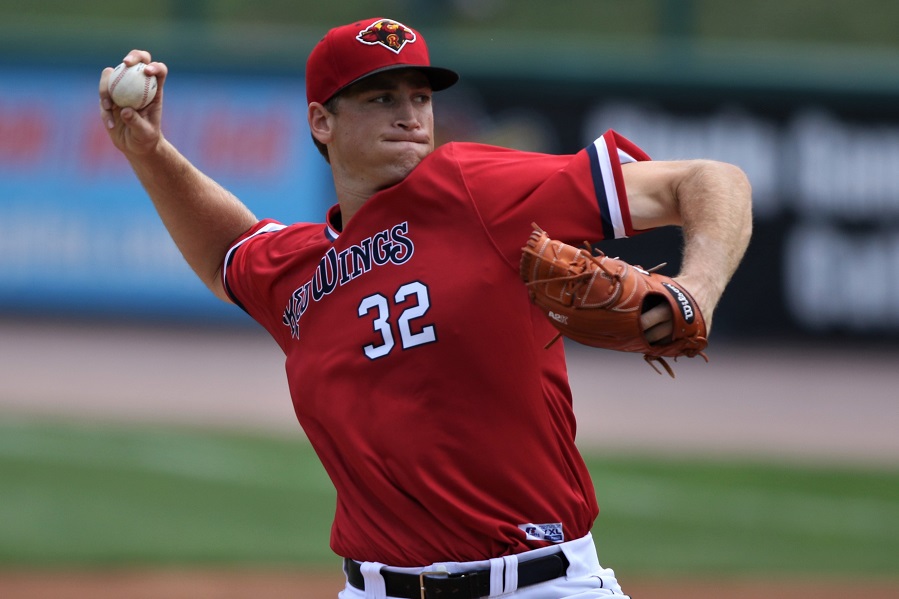 Before we get to our Top 6 starting pitchers for the month of July, here is a list of a others who deserve to be recognized for a solid month. HONORABLE MENTION Edwar Colina - Elizabethton - 5 GS, 24.2 IP, 1-2, 2.19 ERA, 1.22 WHIP, 20 H, 10 BB, 29 K Stephen Gonsalves - Chattanooga - 6 GS, 32.2 IP, 3-0, 3.31 ERA, 1.32 WHIP, 32 H, 11 BB, 36 K Brusdar Graterol - GCL/Elizabethton - 5 G, 3 GS, 19.1 IP, 2-0, 2.33 ERA, 1.03 WHIP, 13 H, 7 BB, 23 K. David Hurlbut - Rochester - 5 G, 4 GS, 29.2 IP, 3-1, 3.03 ERA, 1.01 WHIP, 29 H, 4 BB, 24 K. Griffin Jax - Elizabethton/Cedar Rapids - 4 GS, 26.1 IP, 2-1, 2.39 ERA, 0.99 WHIP, 19 H, 7 BB, 13 K. Bryan Sammons - Elizabethton - 5 G, 3 GS, 21.0 IP, 2-0, 1.29 ERA, 0.81 WHIP, 11 H, 6 BB, 25 K. THE TOP SIX STARTING PITCHERS #6 - Fernando Romero - Chattanooga Lookouts - 6 GS, 3-1, 1.67 ERA, 1.22 WHIP, 27.0 IP, 22 H, 11 BB, 36 K Romero was the Twins Daily #1 Twins Prospect coming into the season. He’s pitched like it through most of the season. Over the last six starts, he has been limited to five innings per start, and as you can see from the July numbers, he’s been very good. His fastball is consistently 96-99 mph. He’s got a good, sharp slider. His changeup is his pitch that needs work, but reports are that it continues to improve. It will be interesting to see how he is used the rest of this season. July was a good month for Romero, but he’s been good all year. He’s 11-6 with a 2.60 ERA with 115 strikeouts in 110.2 innings. #5 - Clark Beeker - Cedar Rapids Kernels - 5 GS, 3-1, 0.84 ERA, 0.78 WHIP, 32.0 IP, 22 H, 3 BB, 23 K Beeker has been a regular in these monthly reports this season. He was the Twins 33rd-round pick in 2016 out of Davidson. In July, batters hit just .190/.230/.241 (.471) off of him. An ERA under 1.00. A WHIP under 1.00. You can’t ask a starter to do that, but Beeker’s been doing it while still providing a lot of innings. Last week, he tossed a complete game shutout. On the year, Beeker is now 11-3 with a 2.31 ERA and a 0.97 WHIP. He’s got tremendous control, having walked just 14 batters in 113 innings. #4 - Eduardo Del Rosario - Cedar Rapids/Ft. Myers Miracle - 4 GS, 1-2, 1.33 ERA, 0.74 WHIP, 27.0 IP, 15 H, 5 BB, 17 K Del Rosario was the Kernels Opening Day starter, and he was their first starter coming back after the All-Star break. At the end of July, he was finally promoted to the Miracle. In his final start of July, his first start with the Miracle, he gave up just an unearned run and one hit over eight innings. For the full month, opponents hit just .165/.232/.275 (.507) against him. He’s not a big guy, but he’s wiry, and throws with a whip-like action. On the season, he is now 7-6 with a 4.39 ERA. He’s got 90 strikeouts in 98.1 innings. #3 - Tim Melville - Rochester Red Wings - 5 GS, 1-3, 1.89 ERA, 0.99 WHIP, 33.1 IP, 25 H, 8 BB, 28 K Melville was the Royals fourth-round pick in 2008 out of high school in Missouri. He was very highly-touted, but he struggled right away. He stayed in the Royals organization through the 2014 season. He pitched for Detroit’s AAA affiliate in 2015. He went to the Reds in 2016 and received a three-game, 11 inning big league debut. Following the season, he was not signed by anyone. So he went to the independent Atlanta League where he was a teammate for Twins legend Lew Ford with the Long Island Ducks. The Twins came calling, and since joining the Red Wings, Melville has been quite good. In nine games (eight starts), he is 3-3 with a 2.72 ERA. In July, batters hit just .205/.263/.279 (.542) off of him. Reports indicate that the still-just-27-year-old is sitting between 93 and 96 with his fastball, and he’s got a good breaking ball too. He might be a guy given an opportunity if the front office doesn’t believe that the AA guys are ready yet this year. #2- Charlie Barnes - Elizabethton Twins - 6 G, 5 GS, 2-0, 0.37 ERA, 1.03 WHIP, 24.1 IP, 17 H, 8 BB, 26 K I mean, what can Charlie Barnes possibly do in his second month of pro ball after a debut like this. He gave up two runs in 2.1 innings in his pro debut (which came in June). In his next start, he gave up one run, the only run he gave up in 24.1 innings over the whole month. Opponents hit just .183/.255/.215 (.470) off him. Drafted in the fourth round out of Clemson this year, Barnes was touted as a changeup artist. It was no surprise that he was quickly promoted to Cedar Rapids where he threw four shutout innings to keep the streak going. And the Twins Minor League Starting Pitcher of the Month is: Rochester Red Wings - RHP Aaron Slegers - 5 GS, 5-0, 0.99 ERA, 0.83 WHIP, 36.1 IP, 26 H, 4 BB, 22 K For the second month this season, Aaron Slegers is our choice for Twins Minor League Starting Pitcher of the Month. He was also the choice in May. Slegers made five starts in July and won all five of them. He gave up three runs in the first start. Over the last four starts, he gave up one run in 29.2 innings. Opponents hit just .202/.226/.240 (.466) off of him in July. The 24-year-old was the Twins fifth-round draft pick in 2014 out of Indiana. He wasn’t protected from the Rule 5 draft which made a lot of people in the organization nervous. When he wasn’t selected, he received an invitation to big league camp. He made a strong impression on the coaches and has taken some of the things he learned and put them to use this season. His five straight wins in July extends his streak to eight straight starts with a win. In that stretch, he is 8-0 with a 1.73 ERA. Overall on the season, Slegers has made 19 starts. He is 12-4 with a 3.13 ERA and a 1.23 WHIP. In 118 innings, he has walked just 25 and struck out just 85 (6.5 K/9). Slegers isn’t a flame thrower. Opponents get hits off of him. But what he does is not hurt himself with walks, and he keeps the ball in the yard. His fastball sits in the low 90s, but he’s been known to touch 94 and even 95 at times. He’s got a good pitch mix and knows how to pitch. He should gets an opportunity to make starts for the Twins before season’s end. Congratulations to our Twins Daily Minor League Starting Pitcher of the Month of July, Rochester starter Aaron Slegers. Feel free to agree or disagree with the order, if you like. It wasn’t as easy a decision as you might think. There were several solid starters in July, and several really stood out.
 -
Updated, and Oops!
-
To be fair, we haven't seen a lot of real long innings for the Twins bats. Ha! But I do think innings matter too, even if you just end up considering the 7-8 warm up pitches each inning that they throw too.
-
I think he did sail it. Ha! But it landed in just the right place at just the right time.
- 28 replies
-
- 1
-
-
- daniel palka
- blayne enlow
- (and 3 more)
-
I asked someone who sees Red Wings games for their thoughts on Reed and Curtiss and Slegers and some others in terms of their readiness. The first sentence was, of that group, Reed is the furthest away from ready right now. The injury set him back, so he's really working on control and command. Curtiss has struggled some with his control/command in AAA too. And, Slegers comes with the concern about how well his 'stuff' would work in MLB, though he's been so good there that he's earned a shot. The same person has told me that Tim Melville is definitely worth watching. He's been really good, and he's got good stuff to go with it.
-
I've asked that question before too, but i can't remember what the response was. But, he's worked a lot on pitches 80-95 earlier in the season and even in his 5-inning starts a couple of times. In the six starts of five innings, he's gone past 80 pitches in four of them, and even 94 in his last outing. It's interesting though. In the past, they did what you suggested. Have a guy skip a start shortly after the All Star break or something. I wonder if this is a new strategy from above?
-
Yup, I was told about a month or six weeks ago that he'd be going 5 innings for the foreseeable future. Definitely looking to take care of him and keep his innings down.
-
Yes, Dereck's dad was inducted into the Hall of Fame. If you watch the whole speech, it was great. But he said really nice things about Dereck ("Keep pitching inside!"), and then he told a story about Dereck and Ken Griffey Jr, which you can see here... http://m.mlb.com/news/article/245338870/ivan-rodriguez-inducted-into-hall-of-fame/
-
Twins Minor League Hitter Of The Month - July 2017
Seth Stohs replied to Seth Stohs's topic in Twins Daily Front Page News
This is the key point. Miranda and Javier and Baddoo are the "prospects" in ET with their youth. Ynoa was young. And, again, college guys need to play somewhere, and they're not going to bump them straight to CR. That's the case for adding a level above the Appy League. But again... there are still the same numbers in Cedar Rapids. So adding a NYPL-like team only means more guys in Extended Spring Training. For instance, I think Royce Lewis and Blayne Enlow probably jump to CR next year from the GCL. If you want another level for them to go through, they could get a more advanced rookie league, short-season team. But that may be where they would send those two, and maybe Miranda and Javier and others that otherwise would be in CR. And maybe that would be good for some of them. Maybe Ben Rortvedt would have been better served by staying in EST for 2 1/2 months and wait for that league to start instead of jumping up to the Kernels right away.- 20 replies
-
- 4
-
-
- jonathan rodriguez
- mitch garver
- (and 3 more)
-
Twins Minor League Hitter Of The Month - July 2017
Seth Stohs replied to Seth Stohs's topic in Twins Daily Front Page News
I haven't heard any thought of adding another short-season rookie league team. I guess they could slow the development of players by adding a level, or add more players to push into Cedar Rapids the next year. I think they're fine... High school players and most guys from the DSL go to the GCL. Guys who played in the GCL and didn't get to Cedar Rapids, and college guys go to E-Town. They've already sent four college draft guys up to higher levels (Rooker to FM, Barnes, Sammons and Gore to CR). But for the most part, rookie leagues are an introduction pro ball. I don't know if the Twins and Elizabethton have resolved their issues, but it's possible the Twins could leave there and maybe go to the NYPL or something similar. I'm not convinced there's much benefit in that for the organization.- 20 replies
-
- 1
-
-
- jonathan rodriguez
- mitch garver
- (and 3 more)
-
He was released by the O's like 10 days ago.
-
I updated the transactions section. The Twins signed two other players from the USPBL.
-
August is upon us. That means that we are now entering (basically) the final month of the minor league season. Most of the minor league season is complete on Labor Day with playoffs starting soon after. The Dog Days are here, but that doesn’t mean that there weren’t a lot of solid hitting performances in the system in July. As you’ve noticed, ,the Elizabethton Twins have been a very hot offense. A couple of Red Wings had strong months are are making their cases to be called up. With the short-season teams having a full month, there are a lot more candidates, so grab some coffee and enjoy. Image courtesy of Seth Stohs, Twins Daily (photo of Jonathan Rodriguez) August is upon us. That means that we are now entering (basically) the final month of the minor league season. Most of the minor league season is complete on Labor Day with playoffs starting soon after. The Dog Days are here, but that doesn’t mean that there weren’t a lot of solid hitting performances in the system in July. As you’ve noticed, ,the Elizabethton Twins have been a very hot offense. A couple of Red Wings had strong months are are making their cases to be called up. With the short-season teams having a full month, there are a lot more candidates, so grab some coffee and enjoy. Let’s take a look at the Top 6 hitters for the month of July, but first here are some players deserving of honorable mention. HONORABLE MENTION Akil Baddoo - GCL Twins/Elizabethton - 25 G, 26-94, 277/.398/.447 (.845) with four doubles, three triples, two homers, 16 RBI. Jordan Gore - Elizabethton - 15 G, 20-59, .339/.400/.441 (.841) with three doubles and a homer, 11 RBI. Matt Hague - Rochester - 29 G, 32-106, .302/.375/.453 (.828) with ten doubles, two homers, 16 RBI. Wander Javier - Elizabethton - 15 G, 18-58, .310/.412/.483 (.895) with five doubles, one triple, one homer and seven RBI. Royce Lewis - GCL Twins - 22 G, 27-84, .321/.412/.464 (.877) with four doubles, one triple, two homers and 11 RBI. Levi Michael - Chattanooga - 19 G, 22-73, .301/.370/.548 (.918) with four doubles, one triple, four homers and 12 RBI Sean Miller - Ft. Myers - 25 G, 30-94, .319/.347/.436 (.783) with five doubles, two homers and 15 RBI. Ben Rodriguez - GCL Twins - 20 G, 23-67, .343/.443/.507 (.951) with six doubles, one triple, one home run, and 20 RBI. Alex Robles - GCL Twins - 22 G, 29-88, .330/.348/.432 (.780) with three doubles, two home runs and 16 RBI. LaMonte Wade - Chattanooga - 24 G, 28-103, .272/.359/.417 (.776) with seven doubles, one triple, two home runs and 18 RBI. THE TOP SIX HITTERS Number 6 – Rochester - Byungho Park - 29 G, .292/.333/.538 (.871). 31-106 with six doubles, one triple, six home runs and 19 RBI. Park turned 31 years old in July, and he put together ae solid month. An injury slowed him in the early season, but he’s been hitting well since mid-June. In July, he started to show some of the power that made him legendary in Korea. Signed through 2019, with an option for 2020, the Twins will likely give him another shot at some point. Until then, it’s just good to see him healthy and starting to hit well again in Rochester.Number 5 – Elizabethton – 2B Jose Miranda - 24 G, .317/.360/.515 (.875). 32-101 with two doubles, six home runs and 22 RBI. In 2016, the Twins had four of the first 74 draft picks. With their first of two compensation picks (following the second round), they selected infielder Jose Miranda out of the Leadership Christian Academy in Puerto Rico. Miranda just turned 19 at the end of June. He’s been one (of several) really good hitters in the middle of the E-Town lineup. He’s shown a good approach at the plate, but he hits the ball with authority often. Of his 23 games played in the field so far this season, he’s played second base in 22 of them, with one start at third base. He’s also DHd a bit.Number 4 – Rochester - Mitch Garver - 25 G, .244/.340/.567 (.906). 22-90 with five doubles, eight home runs and 16 RBI. These are things I’ve written several times throughout the season and particularly the last couple of weeks. “It is inexcusable that Mitch Garver is not in the big leagues.” “Mitch Garver is the best all-around catcher in the Twins organization, including the two catchers with the Twins.” Overall this season, he is hitting .267/.370/.509 (.879) with 22 doubles and 15 home runs. He’s also thrown out 30% of would-be base stealers. He turned 26 in January. My assumption is that Chris Gimenez will either be traded or DFAd sometime in August to get Mitch Garver to the big leagues. If not, he should be up on September 1st. It just shouldn’t have taken that long.Number 3 - Elizabethton – 3B Andrew Bechtold - .387/.467/.629 (1.096) 24-62 with seven doubles, one triple, two homers and 11 RBI. He was drafted by the Rangers out of high school in 2014. He went to Maryland where he red-shirted before playing one season there. He transferred to Chipola College where he was part of a tremendous junior college team. The Twins took him in the fifth round. After signing (above slot), he went to Elizabethton. He went 0-7 his first two games. Since then, he has hit .403/.481/.627 (1.108).Number 2 - Elizabethton Twins – OF Shane Carrier - 23 G, .390/.402/.630 (1.032), 39-100 with nine doubles, five homers and 30 RBI. Carrier was the Twins 8th round pick in 2016 out of Fullerton College. He signed, forgoing a scholarship offer at Cal St. Fullerton. He spent last summer in Elizabethton. He began this season in Cedar Rapids, but through 30 games, he was hitting just .215/.243/.299 (.542), so he went down to extended spring training. It’s paid off. He has been destroying the ball in the Appy League to the tune of a .341/.353/.535 (.888) rate with ten doubles and five home runs. Carrier is strong and has a ton of power potential that he is just tapping into.And the Twins Minor League Hitter of the Month is: Chattanooga Lookouts – 1B Jonathan Rodriguez - .383/.455/.652 (1.107), 44-115 with 13 doubles, six homers and 22 RBI. The Twins signed Jonathan Rodriguez as a six-year minor league free agent this past offseason. The Puerto Rico native went to the State College of Florida, Manatee-Sarasota and was the 17th round pick of the St. Louis Cardinals in 2009. Rodriguez gradually worked his way up the Cardinals system. He got to AA in 2014, but he stayed there until 2016 when he played in 39 AAA games. The Twins were quick to sign him and he’s been a mainstay in the Chattanooga lineup all season. With the Cardinals organization, he mostly played corner outfield positions. With the Lookouts, he’s only played first base and DH so far. That makes sense for the 27-year-old who stands 6-2 and weighs in at 250 pounds. He will turn 28 in just a couple of weeks. In 94 games with the Lookouts this year, he has hit .317/.413/.516 (.928) with 24 doubles and 15 home runs. His July was tremendous. He had two four-hit games, four three-hit games and eight two-hit games during the month. He was an extra-base hit machine, with 13 doubles and six home runs. He was named the Southern League Player of the Month as well. With Byungho Park and Kennys Vargas, along with Matt Hague, at AAA, Rodriguez is likely to spend the full season with the Lookouts.Congratulations to the July Twins Daily Minor League Hitter of the Month for 2017, Chattanooga Lookouts Jonathan Rodriguez. View full article
- 20 replies
-
- 1
-
-
- jonathan rodriguez
- mitch garver
- (and 3 more)
-
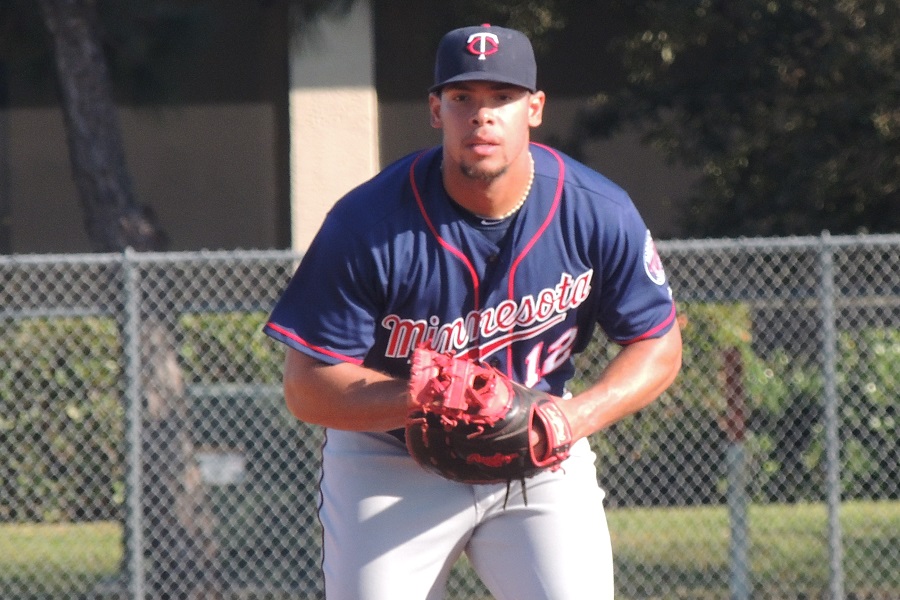 Let’s take a look at the Top 6 hitters for the month of July, but first here are some players deserving of honorable mention. HONORABLE MENTION Akil Baddoo - GCL Twins/Elizabethton - 25 G, 26-94, 277/.398/.447 (.845) with four doubles, three triples, two homers, 16 RBI. Jordan Gore - Elizabethton - 15 G, 20-59, .339/.400/.441 (.841) with three doubles and a homer, 11 RBI. Matt Hague - Rochester - 29 G, 32-106, .302/.375/.453 (.828) with ten doubles, two homers, 16 RBI. Wander Javier - Elizabethton - 15 G, 18-58, .310/.412/.483 (.895) with five doubles, one triple, one homer and seven RBI. Royce Lewis - GCL Twins - 22 G, 27-84, .321/.412/.464 (.877) with four doubles, one triple, two homers and 11 RBI. Levi Michael - Chattanooga - 19 G, 22-73, .301/.370/.548 (.918) with four doubles, one triple, four homers and 12 RBI Sean Miller - Ft. Myers - 25 G, 30-94, .319/.347/.436 (.783) with five doubles, two homers and 15 RBI. Ben Rodriguez - GCL Twins - 20 G, 23-67, .343/.443/.507 (.951) with six doubles, one triple, one home run, and 20 RBI. Alex Robles - GCL Twins - 22 G, 29-88, .330/.348/.432 (.780) with three doubles, two home runs and 16 RBI. LaMonte Wade - Chattanooga - 24 G, 28-103, .272/.359/.417 (.776) with seven doubles, one triple, two home runs and 18 RBI. THE TOP SIX HITTERS Number 6 – Rochester - Byungho Park - 29 G, .292/.333/.538 (.871). 31-106 with six doubles, one triple, six home runs and 19 RBI. Park turned 31 years old in July, and he put together ae solid month. An injury slowed him in the early season, but he’s been hitting well since mid-June. In July, he started to show some of the power that made him legendary in Korea. Signed through 2019, with an option for 2020, the Twins will likely give him another shot at some point. Until then, it’s just good to see him healthy and starting to hit well again in Rochester. Number 5 – Elizabethton – 2B Jose Miranda - 24 G, .317/.360/.515 (.875). 32-101 with two doubles, six home runs and 22 RBI. In 2016, the Twins had four of the first 74 draft picks. With their first of two compensation picks (following the second round), they selected infielder Jose Miranda out of the Leadership Christian Academy in Puerto Rico. Miranda just turned 19 at the end of June. He’s been one (of several) really good hitters in the middle of the E-Town lineup. He’s shown a good approach at the plate, but he hits the ball with authority often. Of his 23 games played in the field so far this season, he’s played second base in 22 of them, with one start at third base. He’s also DHd a bit. Number 4 – Rochester - Mitch Garver - 25 G, .244/.340/.567 (.906). 22-90 with five doubles, eight home runs and 16 RBI. These are things I’ve written several times throughout the season and particularly the last couple of weeks. “It is inexcusable that Mitch Garver is not in the big leagues.” “Mitch Garver is the best all-around catcher in the Twins organization, including the two catchers with the Twins.” Overall this season, he is hitting .267/.370/.509 (.879) with 22 doubles and 15 home runs. He’s also thrown out 30% of would-be base stealers. He turned 26 in January. My assumption is that Chris Gimenez will either be traded or DFAd sometime in August to get Mitch Garver to the big leagues. If not, he should be up on September 1st. It just shouldn’t have taken that long. Number 3 - Elizabethton – 3B Andrew Bechtold - .387/.467/.629 (1.096) 24-62 with seven doubles, one triple, two homers and 11 RBI. He was drafted by the Rangers out of high school in 2014. He went to Maryland where he red-shirted before playing one season there. He transferred to Chipola College where he was part of a tremendous junior college team. The Twins took him in the fifth round. After signing (above slot), he went to Elizabethton. He went 0-7 his first two games. Since then, he has hit .403/.481/.627 (1.108). Number 2 - Elizabethton Twins – OF Shane Carrier - 23 G, .390/.402/.630 (1.032), 39-100 with nine doubles, five homers and 30 RBI. Carrier was the Twins 8th round pick in 2016 out of Fullerton College. He signed, forgoing a scholarship offer at Cal St. Fullerton. He spent last summer in Elizabethton. He began this season in Cedar Rapids, but through 30 games, he was hitting just .215/.243/.299 (.542), so he went down to extended spring training. It’s paid off. He has been destroying the ball in the Appy League to the tune of a .341/.353/.535 (.888) rate with ten doubles and five home runs. Carrier is strong and has a ton of power potential that he is just tapping into. And the Twins Minor League Hitter of the Month is: Chattanooga Lookouts – 1B Jonathan Rodriguez - .383/.455/.652 (1.107), 44-115 with 13 doubles, six homers and 22 RBI. The Twins signed Jonathan Rodriguez as a six-year minor league free agent this past offseason. The Puerto Rico native went to the State College of Florida, Manatee-Sarasota and was the 17th round pick of the St. Louis Cardinals in 2009. Rodriguez gradually worked his way up the Cardinals system. He got to AA in 2014, but he stayed there until 2016 when he played in 39 AAA games. The Twins were quick to sign him and he’s been a mainstay in the Chattanooga lineup all season. With the Cardinals organization, he mostly played corner outfield positions. With the Lookouts, he’s only played first base and DH so far. That makes sense for the 27-year-old who stands 6-2 and weighs in at 250 pounds. He will turn 28 in just a couple of weeks. In 94 games with the Lookouts this year, he has hit .317/.413/.516 (.928) with 24 doubles and 15 home runs. His July was tremendous. He had two four-hit games, four three-hit games and eight two-hit games during the month. He was an extra-base hit machine, with 13 doubles and six home runs. He was named the Southern League Player of the Month as well. With Byungho Park and Kennys Vargas, along with Matt Hague, at AAA, Rodriguez is likely to spend the full season with the Lookouts. Congratulations to the July Twins Daily Minor League Hitter of the Month for 2017, Chattanooga Lookouts Jonathan Rodriguez.
 -
It was a relatively quiet day in the Twins minor league system on Wednesday. The Ft. Myers Miracle and Elizabethton Twins each had a rare day off. However, the other four affiliates played. There were two lopsided games, and two close games. A few players new to the organization pitched in the GCL, while one of the top prospects pitched well for the GCL as well. It was Fernando Romero night, and so much more. Image courtesy of Seth Stohs, Twins Daily (photo of Daniel Palka) It was a relatively quiet day in the Twins minor league system on Wednesday. The Ft. Myers Miracle and Elizabethton Twins each had a rare day off. However, the other four affiliates played. There were two lopsided games, and two close games. A few players new to the organization pitched in the GCL, while one of the top prospects pitched well for the GCL as well. It was Fernando Romero night, and so much more. Find out everything and more that happened happened in the Twins system on Wednesday. Let’s start with the transaction of the day: As Jeff Johnson tweeted after the Kernels game on Tuesday night, Gorge Munoz was sent down to Elizabethton with 2017 draft pick Jordan Gore called up to Cedar Rapids. You'll see below that LHP Kevin Marnon signed with the Twins and made his GCL debut. The Twins also signed RHP Randy Dobnak and catcher Taylor Grzelakowski from the Utica Unicorns from the United Shore Professional Baseball League. Dobnak was assigned to Elizabethton. Grzelakowski was assigned to the GCL. Darling Cuestro, Jose Bermudez and Juan Mojica were sent from the GCL back to the Dominican Summer League. RED WINGS REPORT Rochester 3, Lehigh Valley 4 Box Score The Red Wings clawed back from a 3-0 deficit only to lose by one. Niko Goodrum led the offense with a 3-5 game. Mitch Garver added his 22nd double. Daniel Palka went 2-5 and added his ninth home run. It was his first since returning from his injury. Palka also made a play on defense. Now, we do encourage outfielders to hit the cutoff man, and probably not to throw at the launch angle you see below, but this worked well for the Red Wings. https://twitter.com/RocRedWings/status/892914839995248640 Tim Melville made the start. The veteran right-hander went the first five innings. He gave up three runs on six hits, a walk and a hit batter. He struck out six. Drew Rucinski came on for the sixth inning. He gave up one run on two hits over two innings. Jake Reed worked two scoreless innings and struck out four. 20 of his 25 pitches were strikes. CHATTANOOGA CHATTER Chattanooga 5, Montgomery 2 Box Score It was Fernando Romero’s turn to start on Wednesday. He improved to 11-6 and dropped his ERA to 2.60. He gave up one run on six hits over five innings. He hit a batter and struck out six. Of his 72 pitches, 50 of them were strikes. Dereck Rodriguez, back from his weekend in Cooperstown, returned to the mound and worked two scoreless innings out of the bullpen. He walked two and struck out three. Ryan Eades got the eighth and gave up one run on three hits. Gabriel Moya worked a scoreless ninth inning to record his 18th save and reduced his ERA to 0.77. Travis Harrison had the big hit early. He went 2-4 with a two-run homer, his third of the season. Levi Michael continues to hit well. He went 2-4. Ryan Walker went 1-2 with two walks. Alex Perez also walked twice. Nick Gordon added his 25th double of the season. The win ended a rare one-game losing streak for the Lookouts in the second half. MIRACLE MATTERS Ft. Myers Box Score The Miracle had a rare scheduled day off. KERNELS NUGGETS Cedar Rapids 1, Kane County 9 Box Score It was a long night in Cedar Rapids. Lefty Evan Sanders made the start. He gave up five runs on six hits in five innings. He walked four and struck out three. Another lefty, Bryan Sammons came on for his first Kernels appearance. He pitched a quick 1-2-3 sixth inning. His final line was three runs on five hits and two walks over three innings. He struck out three. Logan Lombana gave up a run on two hits in one inning. The Kernels offense just wasn’t able to bunch together enough hits to score much. Christian Cavaness went 2-4 with his seventh triple. Lewin Diaz went 2-4. Jimmy Kerrigan was also 2-4. He’s hitting .333 and has at least one hit in all five games he’s played for the Kernels. In the second inning, Ben Rortvedt was called out on strikes to start the inning. That was the last play of the game for manager Tommy Watkins as he was ejected for arguing. E-TWINS E-NOTES Elizabethton Box Score There are not very many off days once the Appalachian League starts. GCL TWINS TAKES GCL Twins 9, GCL Rays 4 Box Score A couple of pitchers rehabbed. A top 2017 prospect put in his longest outing. The offense provided plenty of offense. And a guy with a fun story made his debut in affiliated ball. Just another day in the Gulf Coast League. Michael Kohn started for the GCL Twins. He gave up one run on one hit in the first inning. The 30-year-old right-hander pitched in the big leagues from 2010-2015. He hasn’t pitched since May of 2015 because of a shoulder injury. He worked out for a couple of teams, but the Twins offered him a two-year deal with an invitation to major league spring training next year. Next, Henry Centeno gave up two runs on two hits and a walk in the next 1.2 innings. He struck out one. It was his second rehab appearance. He has missed the whole season so far with an elbow injury. Next in for the GCL Twins was 2017 draft pick Blayne Enlow. He recorded his first professional win in his longest outing so far. In 4.1 innings, he gave up one run on four hits. He struck out four and did not issue a walk. ‘ The final two innings were pitched by left-hander Kevin Marnon. He signed last week after pitching for the Birmingham/Bloomfield Beavers of the United Shore Professional Baseball League. The Ball State grad threw two scoreless innings. He gave up one hit and struck one out. The offense was led by Alex Robles who hit his fifth double and his third home run. He drove in four runs. Kidany Salva went 2-5. Ben Rodriguez was 1-3 with two walks. Royce Lewis went 0-2, but he walked three times and stole his ninth and tenth bases. TWINS DAILY PLAYERS OF THE DAY Twins Daily Minor League Pitcher of the Day – Fernando Romero, Chattanooga Lookouts Twins Daily Minor League Hitter of the Day – Daniel Palka, Rochester Red Wings THURSDAY’S PROBABLE STARTERS Lehigh Valley @ Rochester (6:05 CST) - LHP Hector Santiago Chattanooga @ Montgomery (7:05 CST) - RHP Felix Jorge Jupiter @ Ft. Myers (6:05 CST) - RHP Brady Anderson Kane County @ Cedar Rapids (6:35 CST) - LHP Tyler Watson Burlington @ Elizabethton (6:00 CST) - RHP Edwar Colina GCL Rays @ GCL Twins (11:00 am CST) - No Game Scheduled Please feel free to ask any questions and discuss Wednesday’s games. View full article
- 28 replies
-
- 2
-
-
- daniel palka
- blayne enlow
- (and 3 more)
-
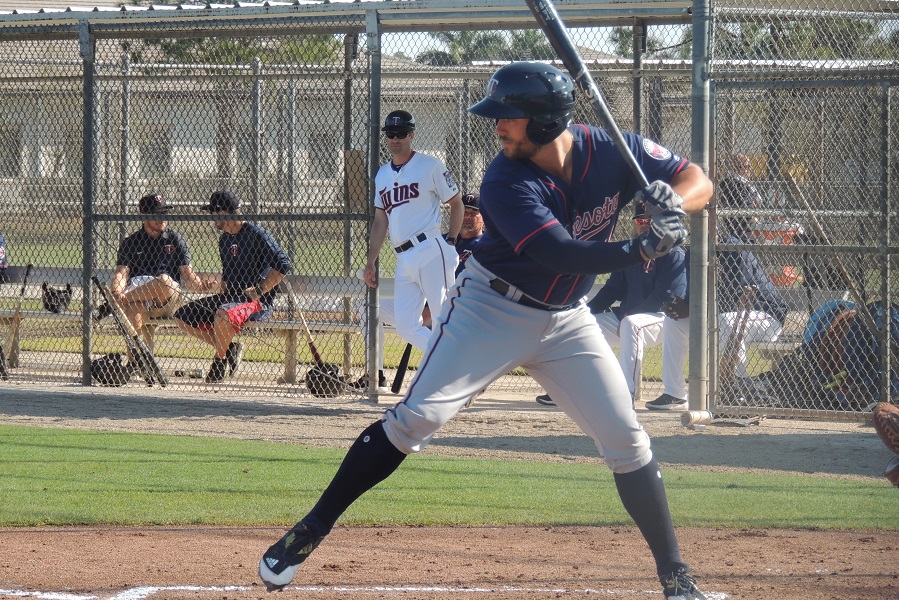 Find out everything and more that happened happened in the Twins system on Wednesday. Let’s start with the transaction of the day: As Jeff Johnson tweeted after the Kernels game on Tuesday night, Gorge Munoz was sent down to Elizabethton with 2017 draft pick Jordan Gore called up to Cedar Rapids. You'll see below that LHP Kevin Marnon signed with the Twins and made his GCL debut. The Twins also signed RHP Randy Dobnak and catcher Taylor Grzelakowski from the Utica Unicorns from the United Shore Professional Baseball League. Dobnak was assigned to Elizabethton. Grzelakowski was assigned to the GCL. Darling Cuestro, Jose Bermudez and Juan Mojica were sent from the GCL back to the Dominican Summer League. RED WINGS REPORT Rochester 3, Lehigh Valley 4 Box Score The Red Wings clawed back from a 3-0 deficit only to lose by one. Niko Goodrum led the offense with a 3-5 game. Mitch Garver added his 22nd double. Daniel Palka went 2-5 and added his ninth home run. It was his first since returning from his injury. Palka also made a play on defense. Now, we do encourage outfielders to hit the cutoff man, and probably not to throw at the launch angle you see below, but this worked well for the Red Wings. https://twitter.com/RocRedWings/status/892914839995248640 Tim Melville made the start. The veteran right-hander went the first five innings. He gave up three runs on six hits, a walk and a hit batter. He struck out six. Drew Rucinski came on for the sixth inning. He gave up one run on two hits over two innings. Jake Reed worked two scoreless innings and struck out four. 20 of his 25 pitches were strikes. CHATTANOOGA CHATTER Chattanooga 5, Montgomery 2 Box Score It was Fernando Romero’s turn to start on Wednesday. He improved to 11-6 and dropped his ERA to 2.60. He gave up one run on six hits over five innings. He hit a batter and struck out six. Of his 72 pitches, 50 of them were strikes. Dereck Rodriguez, back from his weekend in Cooperstown, returned to the mound and worked two scoreless innings out of the bullpen. He walked two and struck out three. Ryan Eades got the eighth and gave up one run on three hits. Gabriel Moya worked a scoreless ninth inning to record his 18th save and reduced his ERA to 0.77. Travis Harrison had the big hit early. He went 2-4 with a two-run homer, his third of the season. Levi Michael continues to hit well. He went 2-4. Ryan Walker went 1-2 with two walks. Alex Perez also walked twice. Nick Gordon added his 25th double of the season. The win ended a rare one-game losing streak for the Lookouts in the second half. MIRACLE MATTERS Ft. Myers Box Score The Miracle had a rare scheduled day off. KERNELS NUGGETS Cedar Rapids 1, Kane County 9 Box Score It was a long night in Cedar Rapids. Lefty Evan Sanders made the start. He gave up five runs on six hits in five innings. He walked four and struck out three. Another lefty, Bryan Sammons came on for his first Kernels appearance. He pitched a quick 1-2-3 sixth inning. His final line was three runs on five hits and two walks over three innings. He struck out three. Logan Lombana gave up a run on two hits in one inning. The Kernels offense just wasn’t able to bunch together enough hits to score much. Christian Cavaness went 2-4 with his seventh triple. Lewin Diaz went 2-4. Jimmy Kerrigan was also 2-4. He’s hitting .333 and has at least one hit in all five games he’s played for the Kernels. In the second inning, Ben Rortvedt was called out on strikes to start the inning. That was the last play of the game for manager Tommy Watkins as he was ejected for arguing. E-TWINS E-NOTES Elizabethton Box Score There are not very many off days once the Appalachian League starts. GCL TWINS TAKES GCL Twins 9, GCL Rays 4 Box Score A couple of pitchers rehabbed. A top 2017 prospect put in his longest outing. The offense provided plenty of offense. And a guy with a fun story made his debut in affiliated ball. Just another day in the Gulf Coast League. Michael Kohn started for the GCL Twins. He gave up one run on one hit in the first inning. The 30-year-old right-hander pitched in the big leagues from 2010-2015. He hasn’t pitched since May of 2015 because of a shoulder injury. He worked out for a couple of teams, but the Twins offered him a two-year deal with an invitation to major league spring training next year. Next, Henry Centeno gave up two runs on two hits and a walk in the next 1.2 innings. He struck out one. It was his second rehab appearance. He has missed the whole season so far with an elbow injury. Next in for the GCL Twins was 2017 draft pick Blayne Enlow. He recorded his first professional win in his longest outing so far. In 4.1 innings, he gave up one run on four hits. He struck out four and did not issue a walk. ‘ The final two innings were pitched by left-hander Kevin Marnon. He signed last week after pitching for the Birmingham/Bloomfield Beavers of the United Shore Professional Baseball League. The Ball State grad threw two scoreless innings. He gave up one hit and struck one out. The offense was led by Alex Robles who hit his fifth double and his third home run. He drove in four runs. Kidany Salva went 2-5. Ben Rodriguez was 1-3 with two walks. Royce Lewis went 0-2, but he walked three times and stole his ninth and tenth bases. TWINS DAILY PLAYERS OF THE DAY Twins Daily Minor League Pitcher of the Day – Fernando Romero, Chattanooga Lookouts Twins Daily Minor League Hitter of the Day – Daniel Palka, Rochester Red Wings THURSDAY’S PROBABLE STARTERS Lehigh Valley @ Rochester (6:05 CST) - LHP Hector Santiago Chattanooga @ Montgomery (7:05 CST) - RHP Felix Jorge Jupiter @ Ft. Myers (6:05 CST) - RHP Brady Anderson Kane County @ Cedar Rapids (6:35 CST) - LHP Tyler Watson Burlington @ Elizabethton (6:00 CST) - RHP Edwar Colina GCL Rays @ GCL Twins (11:00 am CST) - No Game Scheduled Please feel free to ask any questions and discuss Wednesday’s games.
 -
A Deep Dive Into The Twins 40 Man
Seth Stohs commented on Ted Schwerzler 's blog entry in Off The Baggy
Do you think they would add Recker back to the 40-man roster, or just try to sign him on a minor league deal? -
I definitely agree... but I've been getting literally dozens of requests for this information, so I was happy to do the research. The list of names won't change much. Maybe a couple will be let go or will be called up. If they are, then they'll be part of the discussion later for whether or not to keep them on the 40-man.
- 93 replies
-
- 4
-
-
- stephen gonsalves
- lewin diaz
- (and 3 more)
-
Twins Trade Pieces Not That Valuable
Seth Stohs replied to Cody Christie's topic in Twins Daily Front Page News
That's because they've been added to a 40-man roster already. So, it's obviously an important thing. And also, I think that they'll give some other guys chances the rest of the way. Adding Gordon just doesn't make any sense right now. If you were to say, Add Gonsalves, I'm on bored because he can start and they need starters. I probably still wouldn't for a few more weeks because I would not want to have to use up an option year. But at shortstop, they've got to figure out what they've got in Polanco and Adrianza since both are out of options).- 57 replies
-
- 1
-
-
- brandon kintzler
- brian dozier
- (and 2 more)
-
Twins Trade Pieces Not That Valuable
Seth Stohs replied to Cody Christie's topic in Twins Daily Front Page News
I just think the 40-man spot this offseason is too valuable. Gordon's not quite ready. Getting closer... but they have a lot of tough 40-man decisions already. And they can keep playing Polanco and figure out more of what to do with him.- 57 replies
-
- 3
-
-
- brandon kintzler
- brian dozier
- (and 2 more)
-
I did edit this one too. Ha!
-
He's made four starts in Ft. Myers... He'll finish the year there.
- 7 replies
-
- 1
-
-
- sean poppen
- andrew bechtold
- (and 3 more)
-
Bechtold's doing just fine. I'd leave him there. Nothing wrong with succeeding. Blankenhorn has been playing 2B the whole second half. Cabbage has been playing more 3B of late. Those guys obviously need to play most days. So, I'd just let them all play.
- 7 replies
-
- 1
-
-
- sean poppen
- andrew bechtold
- (and 3 more)
-
The July 31st trade deadline has now passed, but that doesn’t mean that the Twins are necessarily done trading. Derek Falvey and Thad Levine are likely to continue racking up minutes on their phones throughout the month. In November, the front office will have to make some difficult decisions as it relates to the 40-man roster. At the trade deadline, the team added Dietrich Enns, who is already on the 40-man roster. They added Zack Littell and Gabriel Moya who are currently not on the 40-man roster but are certainly candidates. They don’t have to decide yet on Tyler Watson. In case you missed them, here are the Twins trades: John Ryan Murphy for Gabriel Moya - Diamondbacks Jaime Garcia for Ryan Littell and Dietrich Enns - Yankees Brandon Kintzler for Justin Watson - Nationals Image courtesy of Seth Stohs, Twins Daily (photo of Stephen Gonsalves) The July 31st trade deadline has now passed, but that doesn’t mean that the Twins are necessarily done trading. Derek Falvey and Thad Levine are likely to continue racking up minutes on their phones throughout the month. In November, the front office will have to make some difficult decisions as it relates to the 40-man roster. At the trade deadline, the team added Dietrich Enns, who is already on the 40-man roster. They added Zack Littell and Gabriel Moya who are currently not on the 40-man roster but are certainly candidates. They don’t have to decide yet on Tyler Watson. In case you missed them, here are the Twins trades: John Ryan Murphy for Gabriel Moya - Diamondbacks Jaime Garcia for Ryan Littell and Dietrich Enns - Yankees Brandon Kintzler for Justin Watson - Nationals 40-man roster consideration comes into play during the August trade period. So I think it’s a good time to take a first glance at which players in the Twins system would be Rule 5 draft eligible if they are not protected before the Winter Meetings. I put together the list of players, and then sorted them into three categories. The Givens: There is no question in my mind that these guys will be added… or lost. 2nd Tier: These guys have to be given strong consideration. For one reason or another, they are not quite givens, but have a decent chance depending on how many players get added. 3rd Tier: The next group probably won’t be added. It’s not that there aren’t some really good baseball players in this group. It’s that you’ll see the number of players who fall into the first two categories. However, the front office will need to have a conversation on several of these players. So, I often get asked who is eligible for the Rule 5. The following are eligible this offseason for the first time: Players who signed when they were 18 or younger in 2013 (during the minor league season). Players who signed when they were 19 or older in 2014. Players who were eligible in previous seasons are also eligible again. Impending Minor League Free Agents Before spring training, I wrote about five players who would become free agents after the 2017 World Series if they were not added to the Twins 40-man roster before then. Four of those players remain in the organization. Levi Michael - 2011 first-round pick. Travis Harrison - 2011 supplemental first-round pick. Dereck Rodriguez - 2011 6th round pick. David Hurlbut - 2011 28th-round pick. Hurlbut is starting for the Red Wings. The other three players are playing for Chattanooga. While the Twins may try to bring back a couple of these players on minor league free agent deals, Rodriguez is the one player the team may consider adding to the 40-man roster before the completion of the World Series. The Givens Stephen Gonsalves - The lefty is a Top 100 prospect who has had a lot of success this year in AA Chattanooga. Easiest choice of the bunch. Zack Littell - Like Gonsalves, Littell was drafted out of high school in 2013. He has split this season between High-A and AA, and will debut with the Lookouts this week. Jake Reed - Drafted in 2014 out of Oregon, Reed moved up the system very quickly. The last couple of years he’s split between AA and AAA. Like Gonsalves, his season started late due to injury, but he’s back with the Red Wins and should debut this season. John Curtiss - Twins sixth-round pick in 2014 out of Texas, Curtiss was given some time as a starter early in his career, but since moving to the bullpen for the 2016 season, he has taken off and become one of the most dominant relievers in the organization. He was recently promoted to AAA. Lewin Diaz - Signed out of the Dominican in July of 2013, Diaz gradually worked his way up. Last year, he started showing his power at Elizabethton. He’s been a solid performer at Cedar Rapids this year. He’s a top ten prospect (#6, for me). 2nd Tier The following list is really tough, but as I mentioned above, the Twins are going to have some really difficult decisions, and a couple of these guys will likely be left off the list. I’ll put them in the order I would likely add them, but you can feel free to discuss. 6.) Lewis Thorpe - The left-hander was eligible a year ago, but since he hadn’t pitched in two seasons, he went unselected. He’s been back for a couple of months now, and he’s been solid. He’s getting stronger, and he’s pitching well in Ft. Myers. He’s pretty close to a given. 7.) Aaron Slegers - Slegers was eligible for the Rule 5 draft last year and a lot of people thought there was a good chance he would be taken. He wasn’t, and the team invited him to big league camp. He moved up to Rochester, and he has been good, especially his last eight starts over which he has gone 8-0. Slegers should be promoted soon, even before September. 8.) Kohl Stewart - The strikeouts, I know. However, based on his draft position (1st round, 4th overall, in 2013), there’s a good chance he’s added. He hasn’t put up the numbers that Gonsalves has, particularly lacking in strikeouts, but until his rough start this season, he has always limited baserunners and runs with little hard contact. 9.) Gabriel Moya - He was acquired last week in the trade for John Ryan Murphy. He’s putting up incredible numbers in AA. While he doesn’t throw real hard, the lefty gets strikeouts, has deception and dominates. 10.) Luke Bard - The supplemental 2012 first-round pick has been healthy these last two years. With health, he’s improved his velocity and spin rates, and he has missed a lot of bats this year. Bard should be called up before the end of the season. 11.) Nick Burdi - A year ago, even having missed most of 2016 with the humerus injury, Burdi would have been an easy add. He was off to a great start this year and certainly would be up with the Twins by now. Instead, he had Tommy John surgery and will likely miss at least half of the 2018 season.That’s why he’s a borderline add. 12.) Mason Melotakis - He spent about a season and a half on the 40-man roster, but last month he was removed. His velocity has been down, but he has been very good since his promotion to Rochester. It’s possible he could be added back, though it may make more sense to call him up in late August or September. 3rd Tier Remember the players in this group have a lot of talent. However, those first two groups of twelve, plus Dereck Rodriguez, are really talented and not all of them will be added. Jhon Alvarez DJ Baxendale Cameron Booser Sam Clay Edgar Corcino Andro Cutura Eduardo Del Rosario Ryan Eades Tanner English Edgar Herrera Zack Jones Randy LeBlanc Jose Martinez Amaurys Minier Nelson Molina Robert Molina Ariel Montesino Emmanuel Morel Alex Muren Max Murphy Brian Navarreto Callan Pearce Johan Quezada Williams Ramirez Rainis Silva Keaton Steele Roni Tapia Todd Van Steensel Michael Theofanopoulos Ryan Walker TJ White Before I get asked… and since this is right at the end, it probably will be asked (so you can answer it for me). What about Jermaine Palacios and Luis Arraez. Arraez signed in 2013, but not until November, so he won’t be eligible until next season. Palacios signed on September 6th, 2013, just days after the regular season ended. I believe that means that he does not have to be added until after the 2018 season as well. So, with the above information, who would you add? The Twins have added anywhere from three players to eight players in a year, so it could be anywhere in there. View full article
- 93 replies
-
- 3
-
-
- stephen gonsalves
- lewin diaz
- (and 3 more)
