



Seth Stohs
-
Posts
25,911 -
Joined
-
Last visited
-
Days Won
109
Content Type
Profiles
News
Minnesota Twins Videos
2026 Minnesota Twins Top Prospects Ranking
2022 Minnesota Twins Draft Picks
Minnesota Twins Free Agent & Trade Rumors, Notes, & Tidbits
Guides & Resources
2023 Minnesota Twins Draft Picks
The Minnesota Twins Players Project
2024 Minnesota Twins Draft Picks
2025 Minnesota Twins Draft Pick Tracker
2026 Minnesota Twins Draft Tracker: Picks & Bonuses
Forums
Blogs
Events
Store
Downloads
Gallery
Everything posted by Seth Stohs
-
Report From The Fort: Peeking Ahead At Payroll
Seth Stohs replied to John Bonnes's topic in Twins Daily Front Page News
The goal for most teams (and Tony Clark acknowledged last year as well) was for teams' payrolls to be 48-52% of their revenues.- 16 replies
-
- 1
-

-
- brian dozier
- joe mauer
- (and 3 more)
-
As minor league camp starts today, the Minnesota Twins made their first cuts from big league spring training. Pitchers Zack Littell and Lewis Thorpe were optioned to AA Chattanooga. Pitchers Felix Jorge and Dietrich Enns were optioned to AAA Rochester. Catchers Brian Navarreto and Wynston Sawyer were reassigned to minor league camp. Image courtesy of Jesse Johnson, USA Today As minor league camp starts today, the Minnesota Twins made their first cuts from big league spring training. Pitchers Zack Littell and Lewis Thorpe were optioned to AA Chattanooga. Pitchers Felix Jorge and Dietrich Enns were optioned to AAA Rochester. Catchers Brian Navarreto and Wynston Sawyer were reassigned to minor league camp. No real surprises among this first group of players sent across the parking lot to minor league camp. Zack Littell has had a very strong camp including a win and two saves among his outings. Felix Jorge pitched well at times as well. He debuted with the Twins last year. Dietrich Enns and Lewis Thorpe didn't pitch a lot. With minor league camp starting today, there is definitely a need for more catchers in that camp, so two non-roster guys (Navarreto and Sawyer) find themselves back over there. Both are likely to play in Chattanooga in 2018. The spring training roster is now at 53 players. 26 pitchers (3 non-roster) 5 catchers (3 non-roster) 13 infielders (5 non-roster) 9 outfielders (4 non-roster) View full article
- 51 replies
-
- 1
-
-
- felix jorge
- zack littell
- (and 3 more)
-
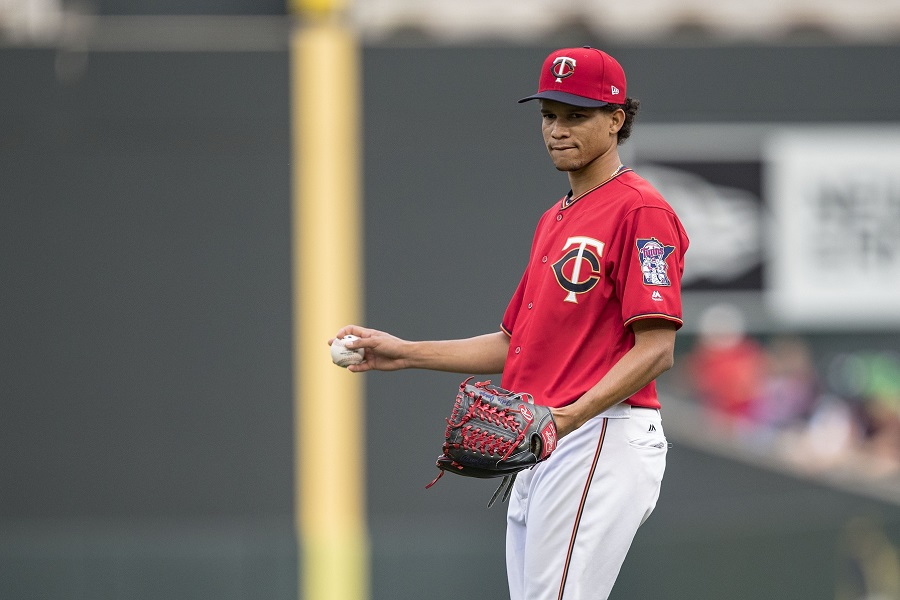 No real surprises among this first group of players sent across the parking lot to minor league camp. Zack Littell has had a very strong camp including a win and two saves among his outings. Felix Jorge pitched well at times as well. He debuted with the Twins last year. Dietrich Enns and Lewis Thorpe didn't pitch a lot. With minor league camp starting today, there is definitely a need for more catchers in that camp, so two non-roster guys (Navarreto and Sawyer) find themselves back over there. Both are likely to play in Chattanooga in 2018. The spring training roster is now at 53 players. 26 pitchers (3 non-roster) 5 catchers (3 non-roster) 13 infielders (5 non-roster) 9 outfielders (4 non-roster)
 -
Who Will Be Crowned Sire of Fort Myers?
Seth Stohs replied to Tom Froemming's topic in Twins Daily Front Page News
I would suspect that Gonsalves, Romero and Littell (along with Thorpe) will be among the first cuts this spring so that they can get stretched out. Assuming I read it right and Erick Aybar is eligible, he's right up there with Kinley in terms of likelihood of making the roster.- 18 replies
-
- 1
-
-
- fernando romero
- zack littell
- (and 3 more)
-
You may have noticed that the 2018 Adopt-A-Prospect forum opened up on Monday. Over the next couple of weeks, you'll be able to adopt Twins minor leaguers and write about them and promote them throughout the season. Round 1 of the Adopt-A-Prospect began on Monday. About 40 of the Twins top prospects were made available for adopting. Next week, more Twins minor leaguers will be adoptable as well. Image courtesy of Seth Stohs, Twins Daily (photo of Jose Miranda and Wander Javier) You may have noticed that the 2018 Adopt-A-Prospect forum opened up on Monday. Over the next couple of weeks, you'll be able to adopt Twins minor leaguers and write about them and promote them throughout the season. Round 1 of the Adopt-A-Prospect began on Monday. About 40 of the Twins top prospects were made available for adopting. Next week, more Twins minor leaguers will be adoptable as well. Twins Daily's Adopt-A-Prospect began several years ago as an opportunity to let Twins Daily readers contribute, but also to allow fans to get to know more about minor leaguers. Twins Daily is the the best place online for Twins minor league coverage. Part of that is because we believe that these minor leaguers deserve to be recognized for their work in season and in the offseason, when no one is looking. They don't get the big bucks, in fact, they make less than minimum wage. They get to take long bus rides around remote parts of the country. The top prospects get some talk nationally or regionally. However, Adopt-A-Prospect allows us to connect with them on a different level. What would we like to see from those who adopt a prospect? Create a thread for the player in the Adopt-A-Prospect forums. Write up an introductory post on the player. Information can include anything you think is noteworthy; background, stats, video or more. Throughout the year, watch for their name in the daily Minor League Reports and report back into your forum. Do the occasional online search to see if there have been articles written on him. Sometimes their local newspapers will write an article on a player that we might never see. So, if we can find those, it'd be great. We expect that there will be at least one update each week, but the more the better. Sometimes the most interesting stories are from the lesser-known prospects. This is a great opportunity to contribute to Twins Daily and help our readers get to know more about the players in the Twins minor league system. Please consider adopting a couple of Twins prospects this year. View full article
-
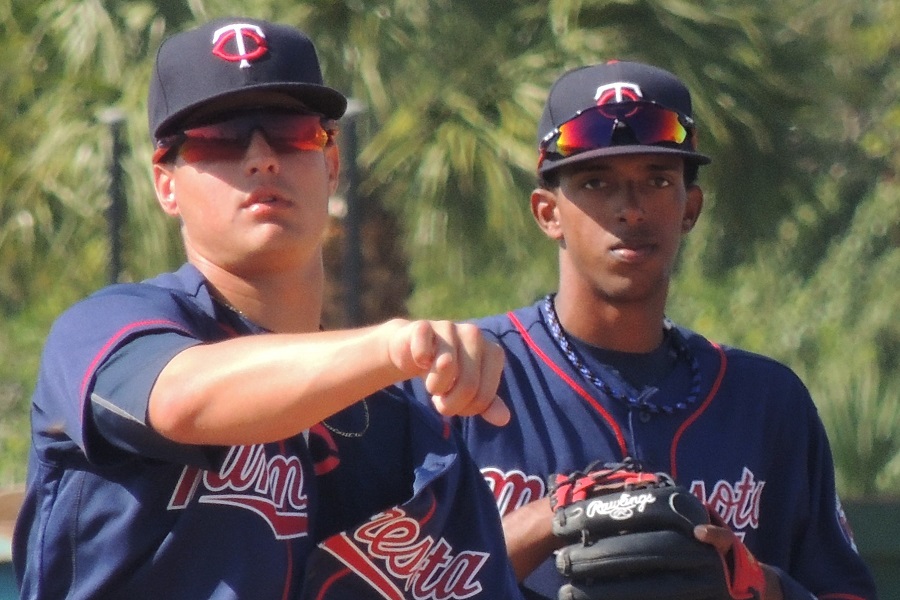 Twins Daily's Adopt-A-Prospect began several years ago as an opportunity to let Twins Daily readers contribute, but also to allow fans to get to know more about minor leaguers. Twins Daily is the the best place online for Twins minor league coverage. Part of that is because we believe that these minor leaguers deserve to be recognized for their work in season and in the offseason, when no one is looking. They don't get the big bucks, in fact, they make less than minimum wage. They get to take long bus rides around remote parts of the country. The top prospects get some talk nationally or regionally. However, Adopt-A-Prospect allows us to connect with them on a different level. What would we like to see from those who adopt a prospect? Create a thread for the player in the Adopt-A-Prospect forums. Write up an introductory post on the player. Information can include anything you think is noteworthy; background, stats, video or more. Throughout the year, watch for their name in the daily Minor League Reports and report back into your forum. Do the occasional online search to see if there have been articles written on him. Sometimes their local newspapers will write an article on a player that we might never see. So, if we can find those, it'd be great. We expect that there will be at least one update each week, but the more the better. Sometimes the most interesting stories are from the lesser-known prospects. This is a great opportunity to contribute to Twins Daily and help our readers get to know more about the players in the Twins minor league system. Please consider adopting a couple of Twins prospects this year.
 -
On Monday night, Seth was joined by three new guests on Episode 9 of his weekly Twins On Deck Podcast. Leading off the show was Gophers junior shortstop Terrin Vavra. He was followed by Twins right-handed pitching prospect Randy Dobnak. The final guest was the Twins Scouting Director Sean Johnson. You can listen the entire show here, or go to iTunes and search "Minnesota Sports Weekly." Image courtesy of Seth Stohs, Twins Daily On Monday night, Seth was joined by three new guests on Episode 9 of his weekly Twins On Deck Podcast. Leading off the show was Gophers junior shortstop Terrin Vavra. He was followed by Twins right-handed pitching prospect Randy Dobnak. The final guest was the Twins Scouting Director Sean Johnson. You can listen the entire show here, or go to iTunes and search "Minnesota Sports Weekly." It was a fun-filled episode of Twins On Deck last night. As the season gets going, we're likely to have just three guests each week rather than the five guests we've had throughout the offseason. Today in Ft. Myers, minor leaguers will be reporting to spring training. It's obviously a big day for over 100 MLB hopefuls as they get a new opportunity to make an impression and move up the ladder. The last name of our first guest is familiar to Twins fans. Terrin Vavra is the son of former Twins coach (hitting coach, bench coach, etc.) Joe Vavra who joined Ron Gardenhire's staff in Detroit this offseason. He is the younger brother of former Twins minor leaguers Tanner Vavra and Trey Vavra. Terrin is the shortstop for the Minnesota Gophers again this year, and he's off to a fantastic start.Through the team's first 12 games, he is hitting .420/.482/.580 (1.062) with a double, two triples and a home run. We discussed Tanner's youth and some of his memories from being in the Twins clubhouse at Metrodome, Target Field and Hammond Stadium. But we also talk about his terrific season and career-to-date at the University of Minnesota. Not only is he hitting, but he's got just one error on the season at shortstop. The second guest may be a more unfamiliar name to many Twins fans, but he certainly is intriguing. Randy Dobnak went to Division II Alderson Broadus University in West Virginia where he was a four-year starting pitcher. He went undrafted and was set to play in the USPBL (United Shores Professional Baseball League) when he got a call from the Twins. He quickly signed and reported to Elizabethton. He then joined the Cedar Rapids Kernels and made a start for them at the end of the season, and another in the playoffs. I often say that it's a lot of fun to follow the top prospects and the first round picks, but the stories of the four-year college guys and the non-drafted free agents are often just as fun and more interesting. Find out about Dobnak's background and what he's got that made him interesting to the Twins staff. Finally, we were joined by the Twins Scouting Director, Sean Johnson. Now working hard for his second draft in charge, Johnson noted the he watched 11 baseball games in four days last weekend, came home for part of a day, and then flew out again to watch a lot more baseball. It's amazing what the scouts do for an organization, usually without my fanfare. Get to know Sean's path from player at Wichita State, to Twins area scout and up to the Scouting Director position. Learn what the Twins look for in scouts and what the schedule really looks like for them. We discussed the collaboration between the scouting department and the front office and even the on-field staff. As he noted, "We want to get everybody’s opinion on a topic." For instance, later this month, Johnson and some of the scouting supervisors will be at spring training for a few days to meet with people. "We’re going to have a video meeting with our player development, mainly the coaches. We’re going to (discuss) some guys that we’re considering at pick 20, that we think might be there, and get their insight. What do you think of this delivery? What do you think of this swing? Which we did last year as well and it was super helpful on guys like Royce Lewis and Blayne Enlow, just to name a couple. The insights that they gave us kind of kept us in the race on those guys and gave us confidence to take them. So there’s no boundaries here when we talk about decision-making across the board, whether it’s scouting or whether to move a guy up in player development. There’s a lot of people who get asked their opinion which really connects this group, and I think it’s at a level it’s never been at before and it feels really good to get it to that level." Speaking of Royce Lewis. He was a guest on Episode 2 and Episode 8 of the Twins On Deck Podcast. He continues to note that he had no idea that the Twins were going to take him at #1 until he heard the selection on TV. So I asked Sean how long before they made the pick they knew they were going to take Royce Lewis. "Going back to that day, we tried to keep the decision open until the very end. Some of that is talking to the agents, but like I’ve said, Royce was our guy. This was the guy we wanted, our group wanted. So it was a matter of making sure we could get the agreement done with Scott Boras and his group." Johnson continued, "He’s telling the truth. He didn’t know because, I’m going to say, seven minutes before the draft we knew were were taking him. He couldn’t have known. His reaction, you could tell if you were watching on TV, he was truly… that was real emotion, which is who he is. He’s a great kid, as you know and as most of the Twins fans will come to know. He’s just as good of a kid as you can come across, and we’re glad to have him." There's so much more interesting discussion with Sean Johnson and with all three of our guests in this week's podcast, so be sure to check it out. And if you haven't, see below for a listing of the guests from the previous episodes. -------------------------------------------------------------------------- To listen to Monday night's show, click here. Either way, you'll want to listen and learn more about some Twins minor leaguers and more. Also, if you subscribe to "Minnesota Sports Weekly" on iTunes, you'll also be able to listen to these shows. PREVIOUS EPISODES While you're eagerly anticipating tonight's show, tune in to some of the previous episodes... Episode 1: Twins (LaMonte Wade, Stephen Gonsalves, Tyler Wells), Gophers (Luke Pettersen), MLB.com's prospect guru Jonathan Mayo. Episode 2: Twins (Aaron Slegers, Alex Kirilloff, Brent Rooker, Royce Lewis), Gophers (Toby Hanson) Episode 3: Twins (Bryan Sammons, Ryley Widell, Zack Littell, Travis Blankenhorn), Gophers (Alex Boxwell) Episode 4: Twins (Zack Granite, Nelson Molina, Lewis Thorpe, Josh Rabe), and Baseball HQ prospect guru, Chris Blessing. Episode 5: Twins prospects Charlie Barnes, Alex Robles, Tyler Watson, David Banuelos. Episode 6: Twins prospects Clark Beeker and Hector Lujan, Gopher senior infielder Micah Coffey, and Twins radio voice Cory Provus. Episode 7: Twins prospects Jake Reed and Jordan Gore, Gophers senior infielder Luke Pettersen, former Twins pitcher Pat Mahomes, and Twins TV voice Dick Bremer. Episode 8: Twins prospects Royce Lewis, Trey Cabbage and Sean Miller, former Twins prospect and current Miracle hitting coach Steve Singleton, and former Twins prospect and Gophers shortstop AJ Pettersen. ------------------------------------------------------------------------ Finally, take a moment and join this year's Twins Adopt-A-Prospect. Get to know all about a Twins prospect, start a forum thread for them and then brag them up throughout the season. Check it out right here. View full article
-
 It was a fun-filled episode of Twins On Deck last night. As the season gets going, we're likely to have just three guests each week rather than the five guests we've had throughout the offseason. Today in Ft. Myers, minor leaguers will be reporting to spring training. It's obviously a big day for over 100 MLB hopefuls as they get a new opportunity to make an impression and move up the ladder. The last name of our first guest is familiar to Twins fans. Terrin Vavra is the son of former Twins coach (hitting coach, bench coach, etc.) Joe Vavra who joined Ron Gardenhire's staff in Detroit this offseason. He is the younger brother of former Twins minor leaguers Tanner Vavra and Trey Vavra. Terrin is the shortstop for the Minnesota Gophers again this year, and he's off to a fantastic start.Through the team's first 12 games, he is hitting .420/.482/.580 (1.062) with a double, two triples and a home run. We discussed Tanner's youth and some of his memories from being in the Twins clubhouse at Metrodome, Target Field and Hammond Stadium. But we also talk about his terrific season and career-to-date at the University of Minnesota. Not only is he hitting, but he's got just one error on the season at shortstop. The second guest may be a more unfamiliar name to many Twins fans, but he certainly is intriguing. Randy Dobnak went to Division II Alderson Broadus University in West Virginia where he was a four-year starting pitcher. He went undrafted and was set to play in the USPBL (United Shores Professional Baseball League) when he got a call from the Twins. He quickly signed and reported to Elizabethton. He then joined the Cedar Rapids Kernels and made a start for them at the end of the season, and another in the playoffs. I often say that it's a lot of fun to follow the top prospects and the first round picks, but the stories of the four-year college guys and the non-drafted free agents are often just as fun and more interesting. Find out about Dobnak's background and what he's got that made him interesting to the Twins staff. Finally, we were joined by the Twins Scouting Director, Sean Johnson. Now working hard for his second draft in charge, Johnson noted the he watched 11 baseball games in four days last weekend, came home for part of a day, and then flew out again to watch a lot more baseball. It's amazing what the scouts do for an organization, usually without my fanfare. Get to know Sean's path from player at Wichita State, to Twins area scout and up to the Scouting Director position. Learn what the Twins look for in scouts and what the schedule really looks like for them. We discussed the collaboration between the scouting department and the front office and even the on-field staff. As he noted, "We want to get everybody’s opinion on a topic." For instance, later this month, Johnson and some of the scouting supervisors will be at spring training for a few days to meet with people. "We’re going to have a video meeting with our player development, mainly the coaches. We’re going to (discuss) some guys that we’re considering at pick 20, that we think might be there, and get their insight. What do you think of this delivery? What do you think of this swing? Which we did last year as well and it was super helpful on guys like Royce Lewis and Blayne Enlow, just to name a couple. The insights that they gave us kind of kept us in the race on those guys and gave us confidence to take them. So there’s no boundaries here when we talk about decision-making across the board, whether it’s scouting or whether to move a guy up in player development. There’s a lot of people who get asked their opinion which really connects this group, and I think it’s at a level it’s never been at before and it feels really good to get it to that level." Speaking of Royce Lewis. He was a guest on Episode 2 and Episode 8 of the Twins On Deck Podcast. He continues to note that he had no idea that the Twins were going to take him at #1 until he heard the selection on TV. So I asked Sean how long before they made the pick they knew they were going to take Royce Lewis. "Going back to that day, we tried to keep the decision open until the very end. Some of that is talking to the agents, but like I’ve said, Royce was our guy. This was the guy we wanted, our group wanted. So it was a matter of making sure we could get the agreement done with Scott Boras and his group." Johnson continued, "He’s telling the truth. He didn’t know because, I’m going to say, seven minutes before the draft we knew were were taking him. He couldn’t have known. His reaction, you could tell if you were watching on TV, he was truly… that was real emotion, which is who he is. He’s a great kid, as you know and as most of the Twins fans will come to know. He’s just as good of a kid as you can come across, and we’re glad to have him." There's so much more interesting discussion with Sean Johnson and with all three of our guests in this week's podcast, so be sure to check it out. And if you haven't, see below for a listing of the guests from the previous episodes. -------------------------------------------------------------------------- To listen to Monday night's show, click here. Either way, you'll want to listen and learn more about some Twins minor leaguers and more. Also, if you subscribe to "Minnesota Sports Weekly" on iTunes, you'll also be able to listen to these shows. PREVIOUS EPISODES While you're eagerly anticipating tonight's show, tune in to some of the previous episodes... Episode 1: Twins (LaMonte Wade, Stephen Gonsalves, Tyler Wells), Gophers (Luke Pettersen), MLB.com's prospect guru Jonathan Mayo. Episode 2: Twins (Aaron Slegers, Alex Kirilloff, Brent Rooker, Royce Lewis), Gophers (Toby Hanson) Episode 3: Twins (Bryan Sammons, Ryley Widell, Zack Littell, Travis Blankenhorn), Gophers (Alex Boxwell) Episode 4: Twins (Zack Granite, Nelson Molina, Lewis Thorpe, Josh Rabe), and Baseball HQ prospect guru, Chris Blessing. Episode 5: Twins prospects Charlie Barnes, Alex Robles, Tyler Watson, David Banuelos. Episode 6: Twins prospects Clark Beeker and Hector Lujan, Gopher senior infielder Micah Coffey, and Twins radio voice Cory Provus. Episode 7: Twins prospects Jake Reed and Jordan Gore, Gophers senior infielder Luke Pettersen, former Twins pitcher Pat Mahomes, and Twins TV voice Dick Bremer. Episode 8: Twins prospects Royce Lewis, Trey Cabbage and Sean Miller, former Twins prospect and current Miracle hitting coach Steve Singleton, and former Twins prospect and Gophers shortstop AJ Pettersen. ------------------------------------------------------------------------ Finally, take a moment and join this year's Twins Adopt-A-Prospect. Get to know all about a Twins prospect, start a forum thread for them and then brag them up throughout the season. Check it out right here.
 -
Brian Dozier: I'll Be A Free Agent
Seth Stohs replied to John Bonnes's topic in Twins Daily Front Page News
Today, Jim Souhan wrote the Dozier/Free Agent article with the not eating fried foods angle. http://www.startribune.com/brian-dozier-sounds-willing-to-walk-away-from-twins-after-season/475776713/ -
How does Spring Training work for Minor Leagues?
Seth Stohs replied to AZTwin's topic in Twins Minor League Talk
I think most are at 1, but sometimes they get going a little early. I think Sunday's are also at 9 or 10. -
Uncertainty Continues To Follow Sano
Seth Stohs replied to Cody Christie's topic in Twins Daily Front Page News
I can confirm that Sano was not the last person interviewed by MLB investigators. Hopefully that scenario is over soon. As for him being 0-8 with 3 Ks, Pretty sure that means nothing. Nothing to worry about with that.- 28 replies
-
- 5
-
-
- miguel sano
- aroldis chapman
- (and 1 more)
-
How does Spring Training work for Minor Leagues?
Seth Stohs replied to AZTwin's topic in Twins Minor League Talk
Yeah, typically they do their stretching at 9 or so for 20 minutes and then they do work groups until 11 or 11:30. They'll go to lunch for a little while, and then once games start, they start at 1. -
That's why the velocity is just a part of it. He'll have to almost recreate himself. Some do, some don't. Worth trying.
-
When do the Twins cut bait with Phil Hughes?
Seth Stohs replied to adorduan's topic in Minnesota Twins Talk
Yeah, it should be a non-topic at this point. He's coming back from his second TOS surgery. No reason to not see where it goes. At the end of spring training, they can DL him. If needed, they can push him to the 60 Day DL... No need to cut bait until after the season at this point or when a roster spot is needed.- 303 replies
-
- 10
-
-
If he's not where he needs to be by Opening Day, you DL him... keep him on a program and get him a rehab assignment. I mean, at the end of the day, he is coming off of his 2nd TOS surgery in two years. Shouldn't expect him to be at 100% right now. How he did today means nothing. But obviously the velo will need to work itself up. So, let spring training run its course. Use the DL. Use the rehab time. See where he's at, and make the call at some point.
-
Seth Twins On Deck Podcast (Episode 8)
Seth Stohs replied to Seth Stohs's topic in Twins Daily Front Page News
90 minutes of transcribing doesn't sound too fun to me. Ha! But I should be doing it, just for future stories on these guys or the topics we cover.- 3 replies
-
- 1
-
-
- royce lewis
- steve singleton
- (and 3 more)
-
Unless you have boycotted baseball news for the last several days, you are likely aware of the fact that the Minnesota Twins signed DH/1B Logan Morrison. The Twins Geek reported that Chief Baseball Officer Derek Falvey told Morrison all along that Mauer was the first baseman and that Miguel Sano is his third baseman. He said that Logan Morrison would be the team’s primary DH. So, what might that mean for the likes of Robbie Grossman and Kennys Vargas? Let’s consider the options. Image courtesy of Bruce Kluckhohn, USA Today Unless you have boycotted baseball news for the last several days, you are likely aware of the fact that the Minnesota Twins signed DH/1B Logan Morrison. The Twins Geek reported that Chief Baseball Officer Derek Falvey told Morrison all along that Mauer was the first baseman and that Miguel Sano is his third baseman. He said that Logan Morrison would be the team’s primary DH. So, what might that mean for the likes of Robbie Grossman and Kennys Vargas? Let’s consider the options. First, we have to note that the Twins do not have to make this decision right now. Because they had DFAd JT Chargois late last week, the Twins 40-man roster was down to 39. So with the addition of Morrison, the Twins roster is back up to 40. Second, we have to acknowledge that Kennys Vargas and Robbie Grossman are likely the two players most likely to be affected by the addition of Morrison since they are the two guys who would have been the primary DHs. However, Grossman has the ability to play both outfield positions. That is important since Kennys Vargas can DH and also play a little first base. Those are the two positions that Joe Mauer and Logan Morrison can play. I mean, Morrison has played some outfield, but he’s played a total of 14 games in the outfield over the past five years. The Twins could cut Robbie Grossman and pay only a portion of the $2 million he was awarded in arbitration. That is a possibility. But with Mauer and Morrison, Vargas is so redundent. And when the team gets only so many bench spots, versatility might be more important. Last year, the Twins were able to get a fourth option for Vargas, but he is now out of options. In other words, he can’t be optioned to AAA in 2018 without being placed on waivers and potentially claimed by another team. In that scenario, the Twins would get nothing in return for him. Unless the Twins sign more players to MLB deals, the front office does have until March 27th to decide what they will do. March 27th is the final day of spring training. It is also the day that Erick Aybar has an opt-out. As I mentioned in my Roster Projection earlier in the week, Aybar’s spot on the Opening Day roster may have a lot to do with whether or not Miguel Sano is able to be on the Opening Day roster (DL or suspension). If Aybar is added to the roster, that is when someone would need to come off of the DL. Now, the front office is wise to wait. Hey, in the next month, Mauer could get hurt. Morrison could get hurt. Having Vargas around as long as possible makes sense for depth purposes. If the Twins do go with a four-man rotation and a 12-man pitching staff, maybe they will decide to keep Vargas and Grossman on the roster. In the meantime, there are other options. The front office could consider trading Vargas. Teams certainly know that he is available, so they may be receiving some calls. They can hold out in hopes that they could receive a B- prospect for him, but at the end of spring, they might be able to get a C prospect for him. Maybe. A more elaborate study can be done by someone reading this to determine which American League teams might want a DH/1B. There could be interest in Vargas from a National League team as a pinch hitter or part-time first baseman too. In the past, there were often rumors of interest from teams in Korea in Vargas. While that might be more difficult to do at this time of year, it isn’t completely impossible. What's next for Kennys Vargas? I mean, he just needs to keep playing, getting his at-bats and working hard. At this point, he's essentially getting at-bats to show 29 other teams what he can do. I would guess that his agent has already contacted the Twins about attempting to trade him, and that may happen, but it's also wise for the Twins front office to take their time with that. So now it’s your turn? First, based on current players in the Twins system, would there be any way to have a roster that includes Kennys Vargas? Who do you think the other options might be? If you’re Derek Falvey and Thad Levine, what would you do? View full article
-
 First, we have to note that the Twins do not have to make this decision right now. Because they had DFAd JT Chargois late last week, the Twins 40-man roster was down to 39. So with the addition of Morrison, the Twins roster is back up to 40. Second, we have to acknowledge that Kennys Vargas and Robbie Grossman are likely the two players most likely to be affected by the addition of Morrison since they are the two guys who would have been the primary DHs. However, Grossman has the ability to play both outfield positions. That is important since Kennys Vargas can DH and also play a little first base. Those are the two positions that Joe Mauer and Logan Morrison can play. I mean, Morrison has played some outfield, but he’s played a total of 14 games in the outfield over the past five years. The Twins could cut Robbie Grossman and pay only a portion of the $2 million he was awarded in arbitration. That is a possibility. But with Mauer and Morrison, Vargas is so redundent. And when the team gets only so many bench spots, versatility might be more important. Last year, the Twins were able to get a fourth option for Vargas, but he is now out of options. In other words, he can’t be optioned to AAA in 2018 without being placed on waivers and potentially claimed by another team. In that scenario, the Twins would get nothing in return for him. Unless the Twins sign more players to MLB deals, the front office does have until March 27th to decide what they will do. March 27th is the final day of spring training. It is also the day that Erick Aybar has an opt-out. As I mentioned in my Roster Projection earlier in the week, Aybar’s spot on the Opening Day roster may have a lot to do with whether or not Miguel Sano is able to be on the Opening Day roster (DL or suspension). If Aybar is added to the roster, that is when someone would need to come off of the DL. Now, the front office is wise to wait. Hey, in the next month, Mauer could get hurt. Morrison could get hurt. Having Vargas around as long as possible makes sense for depth purposes. If the Twins do go with a four-man rotation and a 12-man pitching staff, maybe they will decide to keep Vargas and Grossman on the roster. In the meantime, there are other options. The front office could consider trading Vargas. Teams certainly know that he is available, so they may be receiving some calls. They can hold out in hopes that they could receive a B- prospect for him, but at the end of spring, they might be able to get a C prospect for him. Maybe. A more elaborate study can be done by someone reading this to determine which American League teams might want a DH/1B. There could be interest in Vargas from a National League team as a pinch hitter or part-time first baseman too. In the past, there were often rumors of interest from teams in Korea in Vargas. While that might be more difficult to do at this time of year, it isn’t completely impossible. What's next for Kennys Vargas? I mean, he just needs to keep playing, getting his at-bats and working hard. At this point, he's essentially getting at-bats to show 29 other teams what he can do. I would guess that his agent has already contacted the Twins about attempting to trade him, and that may happen, but it's also wise for the Twins front office to take their time with that. So now it’s your turn? First, based on current players in the Twins system, would there be any way to have a roster that includes Kennys Vargas? Who do you think the other options might be? If you’re Derek Falvey and Thad Levine, what would you do?
 -
Twins Daily Nightly Wrap - 2/27
Seth Stohs replied to John Bonnes's topic in Twins Daily Front Page News
No matter how you slice it, spring training is always too much of a small sample size to really know those answers. What you're looking for by the end of spring training are: 1.) Is Phil Hughes feeling comfortable and strong, and does his fastball velocity stay in that 91 range, tip up or down. 2.) Are Buxton and Rosario putting together quality plate appearances,, looking like they have an understanding of the strike zone, etc. 3.) With Kepler, you're looking for competency against lefties, like he's staying down on pitches, not swinging at the slider away, stuff like that. And then when Opening Day starts, you just hope.- 3 replies
-
- 1
-
-
- brian dozier
- nick gordon
- (and 3 more)
-
It's a night later than normal, but this week's Seth's Twins On Deck Podcast was a lot of fun, with five really strong guests. Starting at 8:00 central time, you can listen live to Episode 8. Of course, if that time doesn't work for you, feel free to download it at the same link after the show's completion. You can also find it on iTunes by searching "Minnesota Sports Weekly." Image courtesy of Steve Buhr (photo of Royce Lewis) It's a night later than normal, but this week's Seth's Twins On Deck Podcast was a lot of fun, with five really strong guests. Starting at 8:00 central time, you can listen live to Episode 8. Of course, if that time doesn't work for you, feel free to download it at the same link after the show's completion. You can also find it on iTunes by searching "Minnesota Sports Weekly." First on the show tonight was the first overall pick of the 2017 draft, Royce Lewis. The infielder was fantastic as always, talking about his offseason, camaraderie with teammates at the academy in Ft. Myers and much more. Lewis was followed by former Twins prospect and current Miracle hitting coach Steve Singleton. We discussed his playing career and transitioning into coach. We also talked about the collaboration between hitting coaches at all levels of the system. Also, how tough can the Florida State League be? Prospect Trey Cabbage, who ended 2017 with the Kernels, batted third in our show lineup. We'll discuss his high school days, the transition to the pro game and his 2017 season. Also look ahead to his 2018. Infielder Sean Miller found out in January that he was heading to big league camp. He's been working out with the big leaguers as an additional non-roster invitee. He's played in pretty much all of the Twins games so far. We'll discuss his time in the Arizona Fall League, big league camp and look ahead to 2018. Finally, former Gopher and Twins prospect AJ Pettersen came on to talk about a variety of topics his playing days for the Gophers, in the Twins system and transitioning to his coaching career at Chanhassen High School. Find out what else he's up to post playing career. It was a super fun show, (Listen Here). Thank you to the guests and everyone else for listening. View full article
-
 First on the show tonight was the first overall pick of the 2017 draft, Royce Lewis. The infielder was fantastic as always, talking about his offseason, camaraderie with teammates at the academy in Ft. Myers and much more. Lewis was followed by former Twins prospect and current Miracle hitting coach Steve Singleton. We discussed his playing career and transitioning into coach. We also talked about the collaboration between hitting coaches at all levels of the system. Also, how tough can the Florida State League be? Prospect Trey Cabbage, who ended 2017 with the Kernels, batted third in our show lineup. We'll discuss his high school days, the transition to the pro game and his 2017 season. Also look ahead to his 2018. Infielder Sean Miller found out in January that he was heading to big league camp. He's been working out with the big leaguers as an additional non-roster invitee. He's played in pretty much all of the Twins games so far. We'll discuss his time in the Arizona Fall League, big league camp and look ahead to 2018. Finally, former Gopher and Twins prospect AJ Pettersen came on to talk about a variety of topics his playing days for the Gophers, in the Twins system and transitioning to his coaching career at Chanhassen High School. Find out what else he's up to post playing career. It was a super fun show, (Listen Here). Thank you to the guests and everyone else for listening.
 -
The Twins have now played four spring training games. The regular season is only a month away. Many spots on the roster are pretty well set, but there are still some jobs up for grabs. Today, we’ll take a first run at an Opening Day roster. There are already a couple of disabled list moves, and there could be more of those, or other transactions. But, knowing what we know right now, we’ll attempt to make predictions and discuss the other options. Image courtesy of David Richard, USA Today The Twins have now played four spring training games. The regular season is only a month away. Many spots on the roster are pretty well set, but there are still some jobs up for grabs. Today, we’ll take a first run at an Opening Day roster. There are already a couple of disabled list moves, and there could be more of those, or other transactions. But, knowing what we know right now, we’ll attempt to make predictions and discuss the other options. So here is my first attempt at projecting the Twins Opening Day roster for 2018… I encourage you to read my thoughts, develop your own and then post your thoughts and projections in the comments below. THE HITTERS (13) Catchers (2): Jason Castro, Mitch Garver Jason Castro will be the primary catcher. He will likely catch 110-120 games, so the question will be who can start behind the plate in the other 40-50 games. The front office, at least to this point, has not provided Mitch Garver with any real competition for the #2 catcher spot. And, frankly, that is the right decision. Garver has hit at each level on the way up the system, including a big 2017 in Rochester. It’s his time to get a full season of service time. Also, his bat should play against left-handed pitchers and more. Infielders (7): Joe Mauer, Brian Dozier, Jorge Polanco, Eduardo Escobar, Logan Morrison, Ehire Adrianza, Erick Aybar, Miguel Sano (DL or suspended) The starting infield is pretty well set, pending the Miguel Sano situation. Joe Mauer will be the main first baseman. Logan Morrison will play some first but primarily DH. Brian Dozier will start at second base. Jorge Polanco will be the shortstop. Miguel Sano will get a lot of time at third base when he’s able to play, but he’ll also likely spend plenty of time as the DH. Until then, Eduardo Escobar will get a lot of the playing time at third base. When Sano is on the roster, Escobar again the primary utility infielder. In that scenario, Ehire Adrianza will most likely fall back to the second utility infielder. In that scenario, The addition of Erick Aybar is interesting. If Sano is not on the active roster, Aybar likely becomes the second utility infielder along with Adrianza. When Sano then is active, it will be interesting to see how the Adriana/Aybar situation plays itself out. Still in the game: Kennys Vargas remains on the 40-man roster, but unless there is an injury, it’s hard to imagine a spot on the 25-man roster. Since he’s out of options, I would assume that the Twins will be looking to deal Vargas for something. Outfielders (4): Eddie Rosario, Byron Buxton, Max Kepler, Robbie Grossman Nothing falls but raindrops. The starting outfield remains intact from last year. Rosario had a bit of a breakout season in 2017. Byron Buxton was tremendous in the secomd half and won not only the Gold Glove but the Platinum Glove as well in 2017. Kepler had a similar 2017 as he had in 2016, and we’re all hoping that he’ll take a step forward in 2018. The defense is strong. With the additions of Morrison and Aybar, the fourth outfield spot is now up for grabs. Robbie Grossman and Zack Granite are the two options, so there may be a bit of a competition. Right now, I’m projecting Grossman because he’s out of options and Granite has two options remaining. POSSIBLE LINEUPS Since it’s more fun to consider the Twins lineup with Miguel Sano in it, that’s what I’ve done below. Primary lineup versus RHP: Joe Mauer 1B, Brian Dozier 2B, Jorge Polanco SS, Miguel Sano 3B, Logan Morrison DH, Eddie Rosario LF, Byron Buxton CF, Max Kepler RF, Jason Castro C. Versus LHP: Joe Mauer 1B, Brian Dozier 2B, Jorge Polanco SS, Miguel Sano 3B, Logan Morrison DH, Byron Buxton CF, Eddie Rosario LF, Mitch Garver C, Max Kepler/Robbie Grossman RF. THE PITCHERS (12) Starting Pitchers (5): Ervin Santana (DL), Jose Berrios, Jake Odorizzi, Kyle Gibson, Adalberto Mejia, Phil Hughes Will the Twins add another starter? Should they? Ervin Santana will miss the first month of the season with his finger injury. Obviously as soon as he is ready, he jumps right back into the rotation. Jose Berrios has a chance to take a big step in 2018. Acquiring Jake Odorizzi recently for Jermaine Palacios was a very nice trade. Kyle Gibson? We can all hope that he truly figured something out over his final 12 starts last year. If he can be that for the full 2018 season, that’s going to be huge for the Twins. I think there are two spots open in the Twins rotation until Santana comes back. I think Adalberto Mejia comes in with the first opportunity to win the job. I think that Stephen Gonsalves and Aaron Slegers also have at least some sort of chance to win a spot. But for right now, I’m going to put Phil Hughes as the fifth starter for right now. I mean, it would be great if the second thoracic outlet surgery is the charm. Reports from his first spring start indicated that he was hitting 91 mph with his fastball. That’s a good start. It will also be very interesting to see how the Anibal Sanchez situation plays out. He has the non-guaranteed contract, so I think he’s going to have to pitch real well to make the ball club. Trevor May and Michael Pineda are on the 60-day disabled list already. Bullpen (7): Fernando Rodney, Addison Reed, Trevor Hildenberger, Ryan Pressly, Zach Duke, Taylor Rogers, Tyler Duffey. The Twins front office made over the bullpen, to some degree. Veteran Fernando Rodney comes on as the team’s closer after a 39 save 2017 in Arizona. In 55.1 innings, he struck out 55. Addison Reed got a two-year deal. He’s been a strong reliever throughout his career and has 425 strikeouts in 401 innings. Hildenberger came up in June last year. By the end of the season, he was Molitor’s go-to guy in the bullpen in any situation. Ryan Pressly continues to be interesting. While he needed to spend time in AAA in 2017, he continues to have the best stuff in the organization. He throws hard and has that breaking ball. Taylor Rogers was as reliable as any left-handed reliever in baseball the first three months of the season last year. He was probably over-used a bit and slowed in the second half. The addition of veteran Zach Duke should really help the Twins bullpen. He returned very quickly from Tommy John surgery last year and pitched well. Tyler Duffey gets my choice for a job in long relief. Of the other six spots, there really isn’t anyone who should work more than two innings. And if the Twins decide to go with an eight-man bullpen to start the season, Phil Hughes might be the right choice because he too can eat innings and make those fifth-starter starts. Others in Contention: Alan Busenitz also became very reliable down the stretch for the Twins last year. John Curtiss got called up right before September. Gabriel Moya came up from AA after helping the Lookouts to the Southern League championship. Dietrich Enns could be another long-relief candidate if he pitches well in spring. Tyler Kinley is the team’s Rule 5 pick, which in many years would give him the advantage. It may not for this year’s Twins team. The Twins want Fernando Romero to get stretched out as a starter, but his fastball/slider combination may be really, really intriguing to the Twins staff, especially in the second half. In one month, the Twins will have broken camp and be preparing for Opening Day. So there is a lot of time left and a lot can happen. Who knows? The Twins could potentially add another player, or two, or three. What are your thoughts? What does your roster look like? View full article
- 75 replies
-
- 1
-
-
- joe mauer
- brian dozier
- (and 3 more)
-
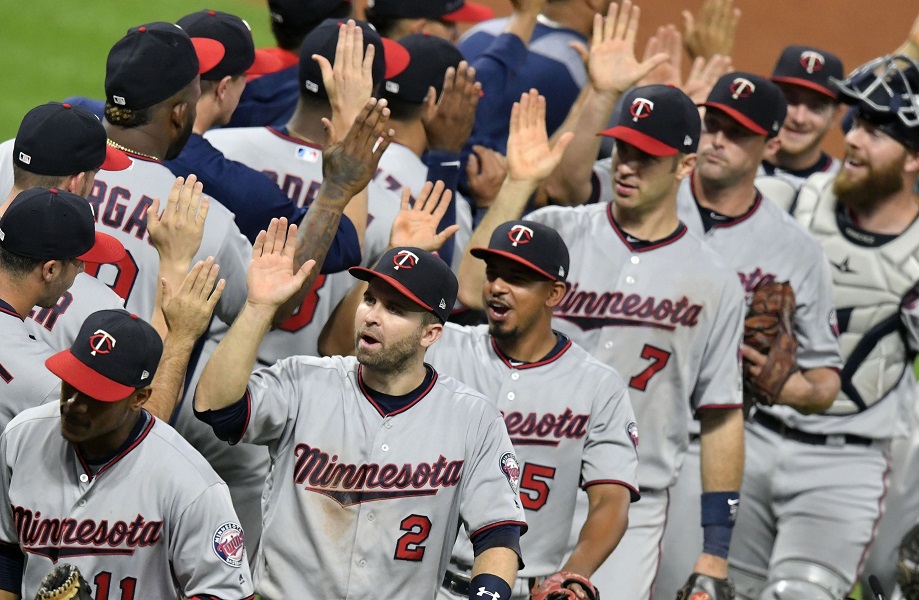 So here is my first attempt at projecting the Twins Opening Day roster for 2018… I encourage you to read my thoughts, develop your own and then post your thoughts and projections in the comments below. THE HITTERS (13) Catchers (2): Jason Castro, Mitch Garver Jason Castro will be the primary catcher. He will likely catch 110-120 games, so the question will be who can start behind the plate in the other 40-50 games. The front office, at least to this point, has not provided Mitch Garver with any real competition for the #2 catcher spot. And, frankly, that is the right decision. Garver has hit at each level on the way up the system, including a big 2017 in Rochester. It’s his time to get a full season of service time. Also, his bat should play against left-handed pitchers and more. Infielders (7): Joe Mauer, Brian Dozier, Jorge Polanco, Eduardo Escobar, Logan Morrison, Ehire Adrianza, Erick Aybar, Miguel Sano (DL or suspended) The starting infield is pretty well set, pending the Miguel Sano situation. Joe Mauer will be the main first baseman. Logan Morrison will play some first but primarily DH. Brian Dozier will start at second base. Jorge Polanco will be the shortstop. Miguel Sano will get a lot of time at third base when he’s able to play, but he’ll also likely spend plenty of time as the DH. Until then, Eduardo Escobar will get a lot of the playing time at third base. When Sano is on the roster, Escobar again the primary utility infielder. In that scenario, Ehire Adrianza will most likely fall back to the second utility infielder. In that scenario, The addition of Erick Aybar is interesting. If Sano is not on the active roster, Aybar likely becomes the second utility infielder along with Adrianza. When Sano then is active, it will be interesting to see how the Adriana/Aybar situation plays itself out. Still in the game: Kennys Vargas remains on the 40-man roster, but unless there is an injury, it’s hard to imagine a spot on the 25-man roster. Since he’s out of options, I would assume that the Twins will be looking to deal Vargas for something. Outfielders (4): Eddie Rosario, Byron Buxton, Max Kepler, Robbie Grossman Nothing falls but raindrops. The starting outfield remains intact from last year. Rosario had a bit of a breakout season in 2017. Byron Buxton was tremendous in the secomd half and won not only the Gold Glove but the Platinum Glove as well in 2017. Kepler had a similar 2017 as he had in 2016, and we’re all hoping that he’ll take a step forward in 2018. The defense is strong. With the additions of Morrison and Aybar, the fourth outfield spot is now up for grabs. Robbie Grossman and Zack Granite are the two options, so there may be a bit of a competition. Right now, I’m projecting Grossman because he’s out of options and Granite has two options remaining. POSSIBLE LINEUPS Since it’s more fun to consider the Twins lineup with Miguel Sano in it, that’s what I’ve done below. Primary lineup versus RHP: Joe Mauer 1B, Brian Dozier 2B, Jorge Polanco SS, Miguel Sano 3B, Logan Morrison DH, Eddie Rosario LF, Byron Buxton CF, Max Kepler RF, Jason Castro C. Versus LHP: Joe Mauer 1B, Brian Dozier 2B, Jorge Polanco SS, Miguel Sano 3B, Logan Morrison DH, Byron Buxton CF, Eddie Rosario LF, Mitch Garver C, Max Kepler/Robbie Grossman RF. THE PITCHERS (12) Starting Pitchers (5): Ervin Santana (DL), Jose Berrios, Jake Odorizzi, Kyle Gibson, Adalberto Mejia, Phil Hughes Will the Twins add another starter? Should they? Ervin Santana will miss the first month of the season with his finger injury. Obviously as soon as he is ready, he jumps right back into the rotation. Jose Berrios has a chance to take a big step in 2018. Acquiring Jake Odorizzi recently for Jermaine Palacios was a very nice trade. Kyle Gibson? We can all hope that he truly figured something out over his final 12 starts last year. If he can be that for the full 2018 season, that’s going to be huge for the Twins. I think there are two spots open in the Twins rotation until Santana comes back. I think Adalberto Mejia comes in with the first opportunity to win the job. I think that Stephen Gonsalves and Aaron Slegers also have at least some sort of chance to win a spot. But for right now, I’m going to put Phil Hughes as the fifth starter for right now. I mean, it would be great if the second thoracic outlet surgery is the charm. Reports from his first spring start indicated that he was hitting 91 mph with his fastball. That’s a good start. It will also be very interesting to see how the Anibal Sanchez situation plays out. He has the non-guaranteed contract, so I think he’s going to have to pitch real well to make the ball club. Trevor May and Michael Pineda are on the 60-day disabled list already. Bullpen (7): Fernando Rodney, Addison Reed, Trevor Hildenberger, Ryan Pressly, Zach Duke, Taylor Rogers, Tyler Duffey. The Twins front office made over the bullpen, to some degree. Veteran Fernando Rodney comes on as the team’s closer after a 39 save 2017 in Arizona. In 55.1 innings, he struck out 55. Addison Reed got a two-year deal. He’s been a strong reliever throughout his career and has 425 strikeouts in 401 innings. Hildenberger came up in June last year. By the end of the season, he was Molitor’s go-to guy in the bullpen in any situation. Ryan Pressly continues to be interesting. While he needed to spend time in AAA in 2017, he continues to have the best stuff in the organization. He throws hard and has that breaking ball. Taylor Rogers was as reliable as any left-handed reliever in baseball the first three months of the season last year. He was probably over-used a bit and slowed in the second half. The addition of veteran Zach Duke should really help the Twins bullpen. He returned very quickly from Tommy John surgery last year and pitched well. Tyler Duffey gets my choice for a job in long relief. Of the other six spots, there really isn’t anyone who should work more than two innings. And if the Twins decide to go with an eight-man bullpen to start the season, Phil Hughes might be the right choice because he too can eat innings and make those fifth-starter starts. Others in Contention: Alan Busenitz also became very reliable down the stretch for the Twins last year. John Curtiss got called up right before September. Gabriel Moya came up from AA after helping the Lookouts to the Southern League championship. Dietrich Enns could be another long-relief candidate if he pitches well in spring. Tyler Kinley is the team’s Rule 5 pick, which in many years would give him the advantage. It may not for this year’s Twins team. The Twins want Fernando Romero to get stretched out as a starter, but his fastball/slider combination may be really, really intriguing to the Twins staff, especially in the second half. In one month, the Twins will have broken camp and be preparing for Opening Day. So there is a lot of time left and a lot can happen. Who knows? The Twins could potentially add another player, or two, or three. What are your thoughts? What does your roster look like?
 -
Twins Daily Nightly Wrap - 2/25
Seth Stohs replied to John Bonnes's topic in Twins Daily Front Page News
Yup, it's Lamont... It's also Eye-Bar, not Ay-Bar... And, Shay-Gwaa, not Shar-Gwaa Pronunciation is fun. -
According to Jon Morosi, the Twins have an agreement with DH/1B Logan Morrison. In 2017, he had a career year in which he hit 38 home runs. Also per Morosi, the Twins will give him $6.5 million in 2018 that does come with escalators that could make it a two-year, $16.5 million deal. Darren Wolfson has also tweeted that it is a done deal. The Twins do have an open 40-man roster spot that he can take when the deal becomes official. Image courtesy of Kim Klement, USA Today According to Jon Morosi, the Twins have an agreement with DH/1B Logan Morrison. In 2017, he had a career year in which he hit 38 home runs. Also per Morosi, the Twins will give him $6.5 million in 2018 that does come with escalators that could make it a two-year, $16.5 million deal. Darren Wolfson has also tweeted that it is a done deal. The Twins do have an open 40-man roster spot that he can take when the deal becomes official. Darren Wolfson hinted at strong interest from both sides on Saturday night, as well as last week on his Scoops podcast. Morrison is a left-handed hitting first baseman and designated hitter. He played some outfield earlier in his career. He is a big man who was always touted for his power potential. As a 29-year-old, he broke out with easily the best year of his career. He hit .246/.353/.516 (.868) with 22 doubles, 38 homers and 85 RBI for the Tampa Bay Rays. Morrison will likely get a lot of at bats as the Twins Designated Hitter, though he can also spell Joe Mauer from time to time at first base. His best defensive position is clearly DH, though. The question for you all is this... was his 2017 power showing an anomaly, or was it a sign of things to come? Tom wondered what if Morrison made sense for the Twins. Cody wrote about Morrison's breakout season in 2017. https://twitter.com/jonmorosi/status/967834397012455424 https://twitter.com/jonmorosi/status/967834834788732928 View full article
