



Seth Stohs
-
Posts
25,911 -
Joined
-
Last visited
-
Days Won
109
Content Type
Profiles
News
Minnesota Twins Videos
2026 Minnesota Twins Top Prospects Ranking
2022 Minnesota Twins Draft Picks
Minnesota Twins Free Agent & Trade Rumors, Notes, & Tidbits
Guides & Resources
2023 Minnesota Twins Draft Picks
The Minnesota Twins Players Project
2024 Minnesota Twins Draft Picks
2025 Minnesota Twins Draft Pick Tracker
2026 Minnesota Twins Draft Tracker: Picks & Bonuses
Forums
Blogs
Events
Store
Downloads
Gallery
Everything posted by Seth Stohs
-
 To add this podcast to your iPhone podcast app, do the following: 1. Open up this page in your iphone and copy this link: http://twinsdaily.libsyn.com/rss 2. Go into your iPhone podcast app and click on the "Library" tab at the bottom and then click on "Edit" in the upper right-hand corner: 3. Click on "Add a Podcast by URL..." 4. Paste the link you just copied into the dialog box and click on 'Subscribe'. Now you'll get every episode delivered to your phone to listen to whenever you want
 -
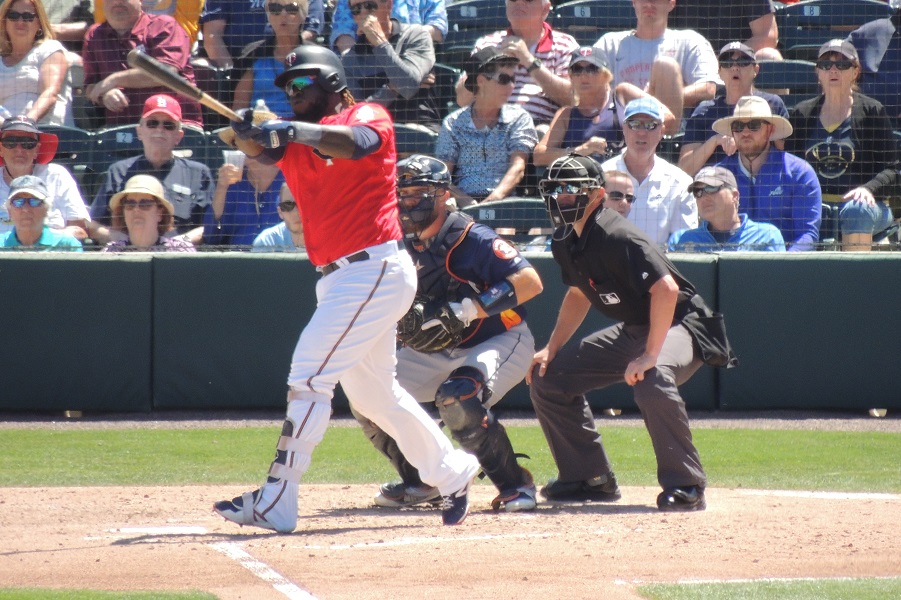
FORT MYERS - On Friday afternoon, MLB announced that Minnesota Twins third baseman Miguel Sano will not be suspended for sexual assault allegations. MLB has been investigating Sano since early January. Image courtesy of Seth Stohs, Twins Daily FORT MYERS - On Friday afternoon, MLB announced that Minnesota Twins third baseman Miguel Sano will not be suspended for sexual assault allegations. MLB has been investigating Sano since early January. The Twins 2017 All Star third baseman will not be suspended after an MLB investigation for sexual assault. In a statement from MLB: "The Office of the Commissioner of Baseball has completed its investigation into an assault allegation made against Minnesota Twins third baseman Miguel Sano. The comprehensive investigation included interviews of more than 20 individuals, including Sano and the complainant, as well as a review of available documents, including communication records. At the conclusion of the investigation, the Office of the Commissioner found that there was insufficient evidence to support a disciplinary determination against Sano, due to conflicting and inconsistent witness accounts and the absence of contemporaneous substantiation. Barring the receipt of any new information or evidence, the Office of the Commissioner will not impose discipline on Sano in connection with the alleged incident." Through the MLB Players Association, Miguel Sano released the following statement. "I want to thank Major League Baseball for conducting a thorough investigation and I'm happy to put this behind me. I look forward to focusing on the upcoming season and playing alongside my teammates. I want to thank my family, friends, the Players Association, the Minnesota Twins and my fans for their continued support. " The Twins issued as statement as well. "The Minnesota Twins fully support the join MLB-MLBPA policy which governs serious matters of this nature. The Twins are pleased that the Commissioner's Office has concluded its investigation with respect to Miguel Sano. Miguel can now return his sole focus to the season ahead. Per team protocol, the Twins will not comment further on this matter." More to come. View full article
-
 The Twins 2017 All Star third baseman will not be suspended after an MLB investigation for sexual assault. In a statement from MLB: "The Office of the Commissioner of Baseball has completed its investigation into an assault allegation made against Minnesota Twins third baseman Miguel Sano. The comprehensive investigation included interviews of more than 20 individuals, including Sano and the complainant, as well as a review of available documents, including communication records. At the conclusion of the investigation, the Office of the Commissioner found that there was insufficient evidence to support a disciplinary determination against Sano, due to conflicting and inconsistent witness accounts and the absence of contemporaneous substantiation. Barring the receipt of any new information or evidence, the Office of the Commissioner will not impose discipline on Sano in connection with the alleged incident." Through the MLB Players Association, Miguel Sano released the following statement. "I want to thank Major League Baseball for conducting a thorough investigation and I'm happy to put this behind me. I look forward to focusing on the upcoming season and playing alongside my teammates. I want to thank my family, friends, the Players Association, the Minnesota Twins and my fans for their continued support. " The Twins issued as statement as well. "The Minnesota Twins fully support the join MLB-MLBPA policy which governs serious matters of this nature. The Twins are pleased that the Commissioner's Office has concluded its investigation with respect to Miguel Sano. Miguel can now return his sole focus to the season ahead. Per team protocol, the Twins will not comment further on this matter." More to come.
 -
 Aybar will likely opt-out today and become a free agent again. If he doesn't, he could go to AAA. That said, his range at SS is definitely in question right now. They also have Taylor Featherston and Gregorio Petit around still in case of a Sano suspension. While they don't have the name Aybar does, they could be better anyway.
- 57 replies
-
- 3
-

-
- jake cave
- erick aybar
- (and 2 more)
-
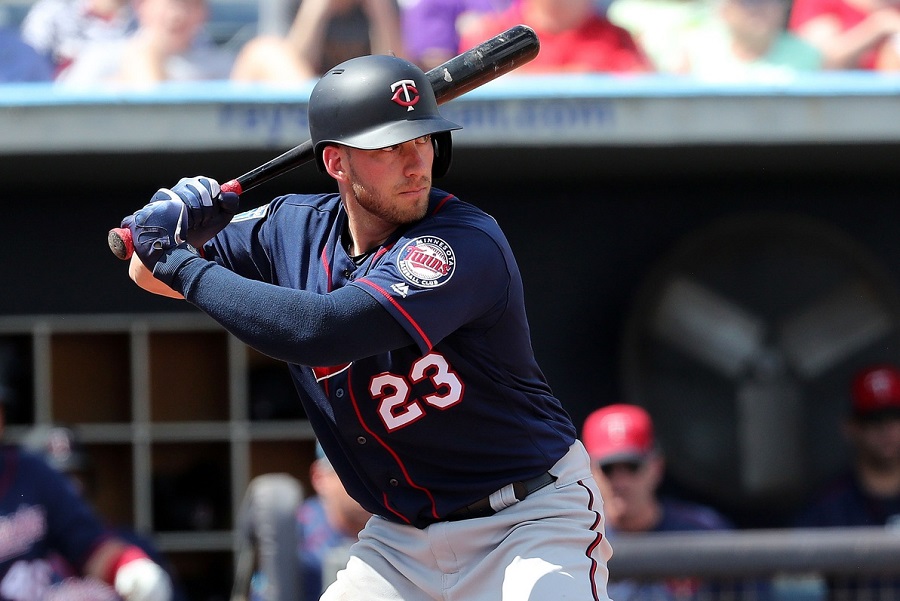
FORT MYERS - On Thursday morning, the Twins announced that right-handed relief pitchers Alan Busenitz and Tyler Duffey were optioned to Rochester. Following the game, outfielder Jake Cave was also optioned to Rochester, and 1B Brock Stassi was sent to minor league camp. Also, the team announced that outfielder Chris Heisey asked for and received his release. In addition, several players, including Erick Aybar, were told they would not make the Opening Day roster. He can opt out of his contract tomorrow. With these roster moves, the Twins Opening Day roster is becoming more clear. Image courtesy of Kim Klement, USA Today FORT MYERS - On Thursday morning, the Twins announced that right-handed relief pitchers Alan Busenitz and Tyler Duffey were optioned to Rochester. Following the game, outfielder Jake Cave was also optioned to Rochester, and 1B Brock Stassi was sent to minor league camp. Also, the team announced that outfielder Chris Heisey asked for and received his release. In addition, several players, including Erick Aybar, were told they would not make the Opening Day roster. He can opt out of his contract tomorrow. With these roster moves, the Twins Opening Day roster is becoming more clear. Here is a quick look at those players remaining in big league camp: Catchers: Jason Castro, Mitch Garver As expected, it appears that Mitch Garver will be Jason Castro's backup behind the plate. Garver can also provide flexibility with his ability to play first base and left field. Infielders: Joe Mauer, Logan Morrison, Brian Dozier, Eduardo Escobar, Miguel Sano, Ehire Adrianza, Jorge Polanco (Restricted List) Joe Mauer will play first base. Brian Dozier will play second base. Absent an MLB suspension, Miguel Sano will play third base. With Jorge Polanco suspended, Eduardo Escobar will be given the first opportunity to start at shortstop. Ehire Adrianza will be the lone utility infielder (if there is not a Sano suspension). Obviously that might create other needs. Taylor Featherston and Gregorio Petit remain on the roster for now. Outfielders: Eddie Rosario, Byron Buxton, Max Kepler, Robbie Grossman, Zack Granite The "Nothing Falls But Raindrops" outfield remains intact. Eddie Rosario, Byron Buxton and Max Kepler will start. Robbie Grossman will play the corners and occasional DH and pinch hit. At this point, it appears that Granite will also make the roster. Ryan LaMarre remains on the Twins spring training roster. Starting Pitchers: Ervin Santana (DL), Jose Berrios, Kyle Gibson, Jake Odorizzi, Lance Lynn, Phil Hughes, Michael Pineda (60 Day DL) With Tyler Duffey being optioned on Thursday, the starting staff appears to be set. After the game, Paul Molitor announced that the team will start the year with a four-man rotation. Jake Odorizzi will be the Opening Day starter. He'll be followed by Kyle Gibson and Jose Berrios. Lance Lynn will make the team's fourth start of the year. Molitor mentioned April 11th as the date that the Twins might need a fifth starter. Relief Pitchers: Fernando Rodney, Addison Reed, Zack Duke, Trevor Hildenberger, Ryan Pressly, Taylor Rogers, Tyler Kinley, Gabriel Moya, Trevor May (60 Day DL), Right now, it appears that one of the only roster decisions needed to be made will be between Rule 5 pick Tyler Kinley and left-hander Gabriel Moya. The team will leave Ft. Myers on Monday and travel to Washington DC to take on the Nationals in an exhibition game. Jose Berrios will start that game. So, to summarize the above, the Opening Day roster is close: Catchers: Jason Castro, Mitch Garver Infielders: Joe Mauer, Logan Morrison, Brian Dozier, Miguel Sano, Eduardo Escobar, Ehire Adrianza Outfielders: Eddie Rosario, Byron Buxton, Max Kepler, Robbie Grossman, Zack Granite Starting Pitchers: Jake Odorizzi, Kyle Gibson, Jose Berrios, Lance Lynn, Phil Hughes (long relief until needed as a starter) Relief Pitchers: Fernando Rodney, Addison Reed, Trevor Hildenberger, Ryan Pressly, Zack Duke, Taylor Rogers (and either Tyler Kinley or Gabriel Moya). Also remaining in camp: Catchers: Bobby Wilson, Willian Astudillo Infielders: Taylor Featherston, Gregorio Petit Outfielders: Ryan LaMarre View full article
-
 Here is a quick look at those players remaining in big league camp: Catchers: Jason Castro, Mitch Garver As expected, it appears that Mitch Garver will be Jason Castro's backup behind the plate. Garver can also provide flexibility with his ability to play first base and left field. Infielders: Joe Mauer, Logan Morrison, Brian Dozier, Eduardo Escobar, Miguel Sano, Ehire Adrianza, Jorge Polanco (Restricted List) Joe Mauer will play first base. Brian Dozier will play second base. Absent an MLB suspension, Miguel Sano will play third base. With Jorge Polanco suspended, Eduardo Escobar will be given the first opportunity to start at shortstop. Ehire Adrianza will be the lone utility infielder (if there is not a Sano suspension). Obviously that might create other needs. Taylor Featherston and Gregorio Petit remain on the roster for now. Outfielders: Eddie Rosario, Byron Buxton, Max Kepler, Robbie Grossman, Zack Granite The "Nothing Falls But Raindrops" outfield remains intact. Eddie Rosario, Byron Buxton and Max Kepler will start. Robbie Grossman will play the corners and occasional DH and pinch hit. At this point, it appears that Granite will also make the roster. Ryan LaMarre remains on the Twins spring training roster. Starting Pitchers: Ervin Santana (DL), Jose Berrios, Kyle Gibson, Jake Odorizzi, Lance Lynn, Phil Hughes, Michael Pineda (60 Day DL) With Tyler Duffey being optioned on Thursday, the starting staff appears to be set. After the game, Paul Molitor announced that the team will start the year with a four-man rotation. Jake Odorizzi will be the Opening Day starter. He'll be followed by Kyle Gibson and Jose Berrios. Lance Lynn will make the team's fourth start of the year. Molitor mentioned April 11th as the date that the Twins might need a fifth starter. Relief Pitchers: Fernando Rodney, Addison Reed, Zack Duke, Trevor Hildenberger, Ryan Pressly, Taylor Rogers, Tyler Kinley, Gabriel Moya, Trevor May (60 Day DL), Right now, it appears that one of the only roster decisions needed to be made will be between Rule 5 pick Tyler Kinley and left-hander Gabriel Moya. The team will leave Ft. Myers on Monday and travel to Washington DC to take on the Nationals in an exhibition game. Jose Berrios will start that game. So, to summarize the above, the Opening Day roster is close: Catchers: Jason Castro, Mitch Garver Infielders: Joe Mauer, Logan Morrison, Brian Dozier, Miguel Sano, Eduardo Escobar, Ehire Adrianza Outfielders: Eddie Rosario, Byron Buxton, Max Kepler, Robbie Grossman, Zack Granite Starting Pitchers: Jake Odorizzi, Kyle Gibson, Jose Berrios, Lance Lynn, Phil Hughes (long relief until needed as a starter) Relief Pitchers: Fernando Rodney, Addison Reed, Trevor Hildenberger, Ryan Pressly, Zack Duke, Taylor Rogers (and either Tyler Kinley or Gabriel Moya). Also remaining in camp: Catchers: Bobby Wilson, Willian Astudillo Infielders: Taylor Featherston, Gregorio Petit Outfielders: Ryan LaMarre
 -
FORT MYERS - The Minnesota Twins are taking on the New York Yankees. ESPN is here. MLB Network is here. It's a fun day at Hammond Stadium. Seth keeps you updated on the shortstop situation and Wednesday in the minor leagues too. You can listen to it here, or better yet, subscribe to it on your smartphone using the directions below. FORT MYERS - The Minnesota Twins are taking on the New York Yankees. ESPN is here. MLB Network is here. It's a fun day at Hammond Stadium. Seth keeps you updated on the shortstop situation and Wednesday in the minor leagues too. You can listen to it here, or better yet, subscribe to it on your smartphone using the directions below. To add this podcast to your iPhone podcast app, do the following: 1. Open up this page in your iphone and copy this link: http://twinsdaily.libsyn.com/rss 2. Go into your iPhone podcast app and click on the "Library" tab at the bottom and then click on "Edit" in the upper right-hand corner: 3. Click on "Add a Podcast by URL..." 4. Paste the link you just copied into the dialog box and click on 'Subscribe'. Now you'll get every episode delivered to your phone to listen to whenever you want View full article
-
 To add this podcast to your iPhone podcast app, do the following: 1. Open up this page in your iphone and copy this link: http://twinsdaily.libsyn.com/rss 2. Go into your iPhone podcast app and click on the "Library" tab at the bottom and then click on "Edit" in the upper right-hand corner: 3. Click on "Add a Podcast by URL..." 4. Paste the link you just copied into the dialog box and click on 'Subscribe'. Now you'll get every episode delivered to your phone to listen to whenever you want
 -
Report From The Fort: Escobar's Opportunity
Seth Stohs posted a topic in Twins Daily Front Page News
FORT MYERS: On Sunday, the news broke that the Minnesota Twins starting shortstop Jorge Polanco had been suspended for the first 80 games of the season. After the initial shock, the questions turned to who would become the team’s primary shortstop. Would Ehire Adrianza get the opportunity? Could Erick Aybar be a factor? Or would manager Paul Molitor turn to old reliable Eduardo Escobar? On Wednesday, we got that answer, or at least we know who is going to be given the first shot. Of course, pending a decision from MLB on the Miguel Sano situation, it is all subject to change again. Image courtesy of Seth Stohs, Twins Daily FORT MYERS: On Sunday, the news broke that the Minnesota Twins starting shortstop Jorge Polanco had been suspended for the first 80 games of the season. After the initial shock, the questions turned to who would become the team’s primary shortstop. Would Ehire Adrianza get the opportunity? Could Erick Aybar be a factor? Or would manager Paul Molitor turn to old reliable Eduardo Escobar? On Wednesday, we got that answer, or at least we know who is going to be given the first shot. Of course, pending a decision from MLB on the Miguel Sano situation, it is all subject to change again. On Wednesday night at Hammond Stadium, the Twins played against the Pittsburgh Pirates. Before the game, manager Paul Molitor talked to the assembled media.Earlier in the day, Polanco had spoken to his teammates and apologized to them for getting suspended. Moliitor said, “I don’t think I should be trying to even try to talk about something that personal would be appropriate.” Polanco can’t play in major league games, but they will be checking to see when he can start playing in minor league games. So the question turned to his shortstop position. Molitor said, “Esco’s going to get the chance to hopefully get. He’s going to get from now on the majority of the time. We don’t have a ton of games left. We’ll mix it up a little bit. He’s not going to be in all the games. We have to get Ehire in there too. Molitor believes in Escobar. He’s been able to come through when needed in the past, and he hopefully will again. “It’s definitely helpful when something like this occurs and you can plug somebody in who is accustomed to playing significant roles in previous go-rounds, including last year where he not only filled in at third base for Miggy, but put him in some big slots in the lineup, and he was productive. He’s one of those guys who always says whenever you need me I’m going to be ready, and I need him. Escobar started at shortstop for the Twins on Wednesday night, and when his outing was complete, he said that it meant a lot to have the manager’s confidence in him. He also feels that he’s earned the opportunities he’s been given because of his work ethic. “I come in every day and work hard. All positions; third base, second base, shortstop. For me, I’ll be ready Any time he puts me in the lineup, I love it. I love to play the game. I love to hit. I just play and Molitor has given me a lot of opportunities. I work hard all the time and when I get the opportunities again, I’ll be ready.” While we know that the advanced defensive metrics don’t grade out well for Escobar at shortstop, mostly due to some lack of range, Escobar has typically been reliable with the plays that he can get to. Molitor noted, “We’ve seen him play it a lot over the last three or four years. He’s a steady defender. He’s an accurate thrower. My confidence is solid. He and Jorge are different in how they move and how they play, but more than one model works, so to speak.” Ehire Adrianza, a very solid defender at shortstop, will fill Escobar’s role as the team’s top utility infielder. Then again, Derek Falvey said that they are still expecting to hear from MLB regarding a possible season-starting suspension for Miguel Sano which may alter this thinking. That decision will again impact that roster and the potential Opening Day roster and lineup. ERICK AYBAR DECISION COMING SOON A decision is also looming later this week on Erick Aybar. If he’s still on the roster after noon on Friday, he will receive a retention bonus of $100,000 because of his status as a XX-B player (basically a player with over six years of MLB service time who signed a minor league contract). He also has an opt-out in his contract, believed to be March 27th (next Tuesday). As noted earlier in the week, Derek Falvey said that he only learned about Polanco’s suspension on Sunday morning so it was coincidental that the team signed Aybar to a minor league contract just less than a month ago. Falvey said that there were several reasons for signing Aybar including potential versatility. “We talked to Torii Hunter at one point around... one thing we’ve said all along is that we’re looking for leadership in guys, guys that can impact our younger guys. That goes back to last year on some of the guys we acquired. That goes to Addison Reed and Zack Duke and other guys. We had heard that Erick Aybar was somebody who could be a great leader around some of our young Latin players.” In his 12 year major league career, Erick Aybar has played a total of 1,337 games at shortstop, 55 games at second base, and 13 games at third base. Aybar has played around the infield throughout spring training including time at third base on Wednesday night. Molitor said, “”When he came into camp, we knew he would have to play around to see where he was at as far as being flexible on defense. He’s been open about it. Obviously he’s played a lot more short than anything else. He’s fine. I thought he made a nice play on a ball he knocked down and recovered tonight.” While Molitor admitted that it’s been tougher to get him playing time of later with starters getting more work, it appears that he and the front office are comfortable with what they’ve learned about Aybar this spring. “We’ve got a good idea, not only what we’ve seen but who he is and what he’s done. We’ll see how it all comes together.” Again, this situation does remain fluid pending an MLB decision on a potential Miguel Sano suspension. If nothing changes, it does appear that Sano would play third base with Escobar getting most of the shortstop innings. The Twins are prepared with contingency plans for the Sano situation. One would have to think that a suspension could move Escobar back over to third base with Ehire Adrianza moving in as the starting shortstop. View full article -
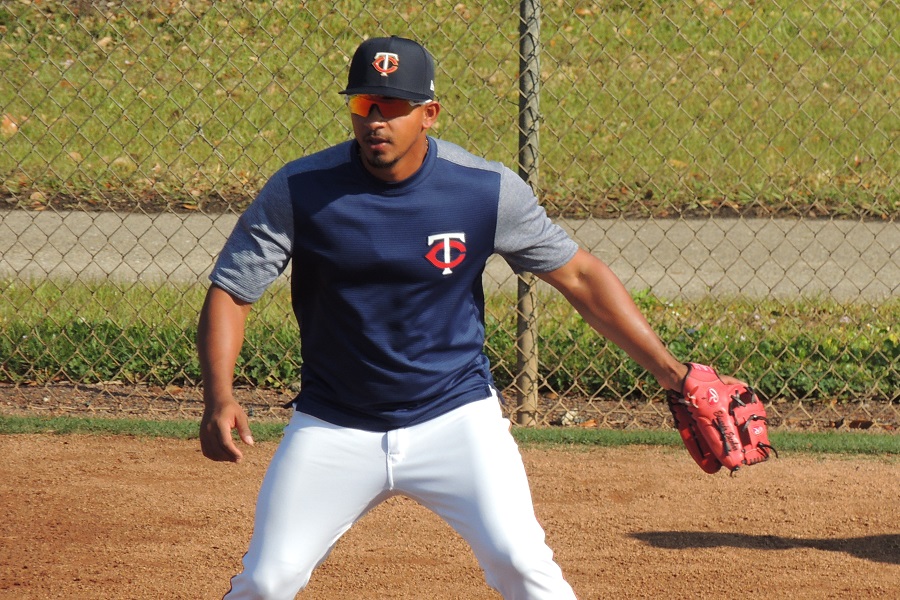 On Wednesday night at Hammond Stadium, the Twins played against the Pittsburgh Pirates. Before the game, manager Paul Molitor talked to the assembled media.Earlier in the day, Polanco had spoken to his teammates and apologized to them for getting suspended. Moliitor said, “I don’t think I should be trying to even try to talk about something that personal would be appropriate.” Polanco can’t play in major league games, but they will be checking to see when he can start playing in minor league games. So the question turned to his shortstop position. Molitor said, “Esco’s going to get the chance to hopefully get. He’s going to get from now on the majority of the time. We don’t have a ton of games left. We’ll mix it up a little bit. He’s not going to be in all the games. We have to get Ehire in there too. Molitor believes in Escobar. He’s been able to come through when needed in the past, and he hopefully will again. “It’s definitely helpful when something like this occurs and you can plug somebody in who is accustomed to playing significant roles in previous go-rounds, including last year where he not only filled in at third base for Miggy, but put him in some big slots in the lineup, and he was productive. He’s one of those guys who always says whenever you need me I’m going to be ready, and I need him. Escobar started at shortstop for the Twins on Wednesday night, and when his outing was complete, he said that it meant a lot to have the manager’s confidence in him. He also feels that he’s earned the opportunities he’s been given because of his work ethic. “I come in every day and work hard. All positions; third base, second base, shortstop. For me, I’ll be ready Any time he puts me in the lineup, I love it. I love to play the game. I love to hit. I just play and Molitor has given me a lot of opportunities. I work hard all the time and when I get the opportunities again, I’ll be ready.” While we know that the advanced defensive metrics don’t grade out well for Escobar at shortstop, mostly due to some lack of range, Escobar has typically been reliable with the plays that he can get to. Molitor noted, “We’ve seen him play it a lot over the last three or four years. He’s a steady defender. He’s an accurate thrower. My confidence is solid. He and Jorge are different in how they move and how they play, but more than one model works, so to speak.” Ehire Adrianza, a very solid defender at shortstop, will fill Escobar’s role as the team’s top utility infielder. Then again, Derek Falvey said that they are still expecting to hear from MLB regarding a possible season-starting suspension for Miguel Sano which may alter this thinking. That decision will again impact that roster and the potential Opening Day roster and lineup. ERICK AYBAR DECISION COMING SOON A decision is also looming later this week on Erick Aybar. If he’s still on the roster after noon on Friday, he will receive a retention bonus of $100,000 because of his status as a XX-B player (basically a player with over six years of MLB service time who signed a minor league contract). He also has an opt-out in his contract, believed to be March 27th (next Tuesday). As noted earlier in the week, Derek Falvey said that he only learned about Polanco’s suspension on Sunday morning so it was coincidental that the team signed Aybar to a minor league contract just less than a month ago. Falvey said that there were several reasons for signing Aybar including potential versatility. “We talked to Torii Hunter at one point around... one thing we’ve said all along is that we’re looking for leadership in guys, guys that can impact our younger guys. That goes back to last year on some of the guys we acquired. That goes to Addison Reed and Zack Duke and other guys. We had heard that Erick Aybar was somebody who could be a great leader around some of our young Latin players.” In his 12 year major league career, Erick Aybar has played a total of 1,337 games at shortstop, 55 games at second base, and 13 games at third base. Aybar has played around the infield throughout spring training including time at third base on Wednesday night. Molitor said, “”When he came into camp, we knew he would have to play around to see where he was at as far as being flexible on defense. He’s been open about it. Obviously he’s played a lot more short than anything else. He’s fine. I thought he made a nice play on a ball he knocked down and recovered tonight.” While Molitor admitted that it’s been tougher to get him playing time of later with starters getting more work, it appears that he and the front office are comfortable with what they’ve learned about Aybar this spring. “We’ve got a good idea, not only what we’ve seen but who he is and what he’s done. We’ll see how it all comes together.” Again, this situation does remain fluid pending an MLB decision on a potential Miguel Sano suspension. If nothing changes, it does appear that Sano would play third base with Escobar getting most of the shortstop innings. The Twins are prepared with contingency plans for the Sano situation. One would have to think that a suspension could move Escobar back over to third base with Ehire Adrianza moving in as the starting shortstop.
 -
The Royce Lewis bobblehead is the weekend of May 20th (can't remember which night)... that might be good.
-
The minor league seasons don't start for a week after the major league season starts, so they haven't made any decisions official on placement. I'm sure they know, pending injuries. Like I wrote the other day, Wander Javier isn't hitting yet, but should in the next few days, so he could start in EST to get more ABs. Luis Arraez hasn't played, but he was taking ground balls yesterday.
-
I won't even disagree... Today he had a couple of really non-good throws too. But it's too early to give up on him getting better out there. He's quite talented and needs to be given that opportunity for a couple of years.
-
FORT MYERS - The highs and the lows of life in sports. Alex Kirilloff is just 20-years-old, and he has experienced both sides of that coin already. In 2016, he became the first-round pick of the Minnesota Twins and his career started out very well in Elizabethton. The season ended with an elbow injury that cost him the entire 2017 season. However, through hard work, strong faith and his support system, Alex Kirilloff is looking forward to what the 2018 season will bring. Image courtesy of Seth Stohs, Twins Daily (photo of Alex Kirilloff) FORT MYERS - The highs and the lows of life in sports. Alex Kirilloff is just 20-years-old, and he has experienced both sides of that coin already. In 2016, he became the first-round pick of the Minnesota Twins and his career started out very well in Elizabethton. The season ended with an elbow injury that cost him the entire 2017 season. However, through hard work, strong faith and his support system, Alex Kirilloff is looking forward to what the 2018 season will bring. Alex Kirilloff grew up near Pittsburgh. He became a known hitting prodigy at a young age, and in 2016, he helped lead Plum High School to the state’s championship game. A week earlier, the Twins made him their first-round draft pick. Upon the completion of his high school career, Kirilloff came to Minnesota and quickly signed with the Twins. He soon reported to Elizabethton where he hit .306/.341/.454 (.794) with nine doubles and seven home runs. However, late in the season, he was removed from a game with elbow pain. They later found that he had a tear in his ulnar collateral ligament. Kirilloff said, “My initial thought was to try to avoid going the surgical route and try to do a PRP (platelet-rich plasma) injection. I rehabbed the 2016 offseason. But unfortunately, come spring training time, when that rolled around my elbow wasn’t feeling like it should so my next option was to get Tommy John surgery. So, it was kind of a no-brainer for me to get the elbow fixed. I had the whole 2017 year and season to get it healthy and ready again.” He had the Tommy John surgery in March. It was a long process of recovery. Kirilloff noted that he did not start throwing a baseball until July. He waited even longer to start swinging a bat. “About five months post-op, I started swinging the bat again which was awesome. That was right around August. There definitely wasn’t any rush knowing I wasn’t rushing back to play. Just kind of take your time as you go, make sure your body is right as you leap over those hurdles. I had to be patient, and hopefully it all pays off.” While Tommy John surgery is generally associated with pitchers, there is a program for hitters as well. “It was just like throwing. I followed the hitting progression. Started with dry swings. Eventually went to a tee. I did soft toss, front toss and then batting practice.” FRUSTRATION AND SUPPORT There’s only so much a player can do when rehabbing Tommy John. It came with a lot of frustrations. “It was definitely tough and frustrating having an injury to cause me to miss significant time like I have, but I took it as a challenge and definitely think I became better from it. My body feels a lot stronger now.” While the physical recovery from a surgery and its lengthy rehab can be difficult, the mental and emotional side of it can be even more trying at times. Kirilloff is blessed with a tremendous support system. “It’s been great. From my wife to my parents. Friends and family, I couldn’t ask for a better support system for sure. They’ve been there for me the whole journey, encouraging me checking in on me. Definitely blessed to have those people in my life. It’s been a great support system.” Along with family, friends and the organization, Kirillloff was also strengthened by a strong faith which helped him through some of the difficult times as well. “It’s really helped me with the disappointment side of it. Staying grounded in my faith in Jesus Christ has been a staple in trying to stay positive and work through any type of injury or situation like that. Words can’t describe how important that is to me, staying grounded every day, doing your devotionals and putting your faith in Jesus Christ definitely encourages you to keep going and stay on the right path. That’s everything, and it’s definitely helped me a lot.” LOOKING AHEAD His Tommy John surgery is now in the rear-view mirror for Kirilloff and he’s looking forward to a full season in 2018. To do so, Kirilloff worked on strengthening the areas of his body that he could, with some limitations. “I definitely wanted to get my total body stronger without putting on bad weight. At the same time, I tried to get more mobile (and get more) flexibility in areas needed. My whole body feels stronger than before. I’m happy about that.” Right before Thanksgiving, Kirilloff was cleared. “I’m full go, no restrictions. I’m ready for 2018. I’m ready to get rolling.” Leading up to the draft, there were many scouts around the league who believed Kirilloff was the best high school hitter in the draft. Others were surprised he got to the Twins with the 15th pick. On the back fields on Tuesday morning, I ran into former Twins scouting directors Mike Radcliff and Deron Johnson. I mentioned the excitement a lot of fans have for the 2017 draft class. He agreed, but he also noted that the organization has a lot of belief in that 2016 draft class. In it, the Twins used their first four picks on high school bats, Kirilloff, Ben Rortvedt, Akil Baddoo and Jose Miranda. Kirilloff knows that is his biggest strength on the field right now. “Hitting would probably be my strongest tool. I just try to pride myself in being as well-rounded as I can. I have to say hitting is my biggest strength right now.” Now that he’s able to work on more things in practices, there are areas that he would like to work on to improve his overall game. “Getting faster. Getting quicker. Strength. It’s important. Defense in the outfield, running routes, tracking down fly balls, reading angles off the bat. I think I’ve come a long way, but hopefully I can continue to improve at that.” What Kirilloff needs is time. Like all young players, he needs to get at-bats, and if healthy, he’s likely to get a lot of at-bats. From brief observations at spring training, it’s clear he has a plan at the plate. He stays down on the pitches well, even against left-handers. He’s got a beautiful swing, and he’s got the swing and the strength to hit for a lot of power in time. Likewise, he needs reps out in right field. It’s clear he is a corner outfielder, so he just needs game action and live fly balls and line drives to continue to work on that craft. He is willing to put in the work. He’s always had a strong work ethic, but he noted Elizabethton manager Ray Smith and hitting coach Jeff Reed and their help in his development. “(There’s) A lot of knowledge dripping off of those guys for sure. They instilled a hard work ethic in all of us, day in and day out. Getting acclimated to professional baseball and being able to play every day. Establishing a routine was one of the big takeaways for me. I was very fortunate to have them as my first manager and coaches. It was great, for sure.” Kirilloff is young, and he missed a year of development time, but that shouldn’t alter anyone’s excitement about the type of player, the type of potentially impactful bat that Alex Kirilloff possesses. Consider the top of Toby Gardenhire’s potential lineup in Cedar Rapids this year. Kirilloff could bat third, after Akil Baddoo and Royce Lewis, and just ahead of the likes of Wander Javier, Jose Miranda and Trey Cabbage. While it may be easy to try to project the type of season and stats that Kirilloff could put up in 2018, he’s got a couple of other goals in mind. “My main focus this year is to stay healthy, stay on the field really. Just happy to be back, playing baseball again. As far as stats go, I just try to control what I can control, day in and day out, not get too high or too low throughout this process. I’m definitely looking forward to this season. I have a passion for the game. Looking forward to getting back to playing the game I love.” View full article
-
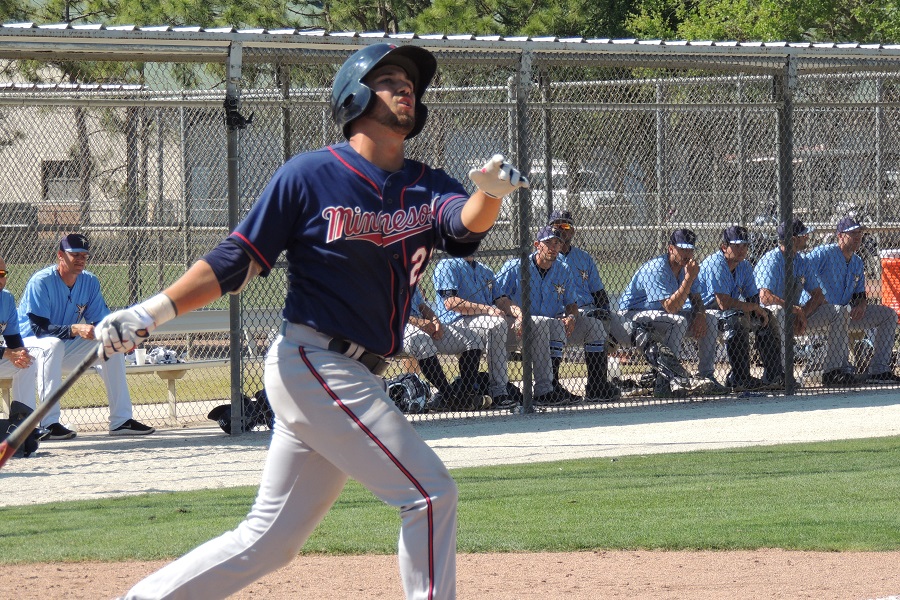 Alex Kirilloff grew up near Pittsburgh. He became a known hitting prodigy at a young age, and in 2016, he helped lead Plum High School to the state’s championship game. A week earlier, the Twins made him their first-round draft pick. Upon the completion of his high school career, Kirilloff came to Minnesota and quickly signed with the Twins. He soon reported to Elizabethton where he hit .306/.341/.454 (.794) with nine doubles and seven home runs. However, late in the season, he was removed from a game with elbow pain. They later found that he had a tear in his ulnar collateral ligament. Kirilloff said, “My initial thought was to try to avoid going the surgical route and try to do a PRP (platelet-rich plasma) injection. I rehabbed the 2016 offseason. But unfortunately, come spring training time, when that rolled around my elbow wasn’t feeling like it should so my next option was to get Tommy John surgery. So, it was kind of a no-brainer for me to get the elbow fixed. I had the whole 2017 year and season to get it healthy and ready again.” He had the Tommy John surgery in March. It was a long process of recovery. Kirilloff noted that he did not start throwing a baseball until July. He waited even longer to start swinging a bat. “About five months post-op, I started swinging the bat again which was awesome. That was right around August. There definitely wasn’t any rush knowing I wasn’t rushing back to play. Just kind of take your time as you go, make sure your body is right as you leap over those hurdles. I had to be patient, and hopefully it all pays off.” While Tommy John surgery is generally associated with pitchers, there is a program for hitters as well. “It was just like throwing. I followed the hitting progression. Started with dry swings. Eventually went to a tee. I did soft toss, front toss and then batting practice.” FRUSTRATION AND SUPPORT There’s only so much a player can do when rehabbing Tommy John. It came with a lot of frustrations. “It was definitely tough and frustrating having an injury to cause me to miss significant time like I have, but I took it as a challenge and definitely think I became better from it. My body feels a lot stronger now.” While the physical recovery from a surgery and its lengthy rehab can be difficult, the mental and emotional side of it can be even more trying at times. Kirilloff is blessed with a tremendous support system. “It’s been great. From my wife to my parents. Friends and family, I couldn’t ask for a better support system for sure. They’ve been there for me the whole journey, encouraging me checking in on me. Definitely blessed to have those people in my life. It’s been a great support system.” Along with family, friends and the organization, Kirillloff was also strengthened by a strong faith which helped him through some of the difficult times as well. “It’s really helped me with the disappointment side of it. Staying grounded in my faith in Jesus Christ has been a staple in trying to stay positive and work through any type of injury or situation like that. Words can’t describe how important that is to me, staying grounded every day, doing your devotionals and putting your faith in Jesus Christ definitely encourages you to keep going and stay on the right path. That’s everything, and it’s definitely helped me a lot.” LOOKING AHEAD His Tommy John surgery is now in the rear-view mirror for Kirilloff and he’s looking forward to a full season in 2018. To do so, Kirilloff worked on strengthening the areas of his body that he could, with some limitations. “I definitely wanted to get my total body stronger without putting on bad weight. At the same time, I tried to get more mobile (and get more) flexibility in areas needed. My whole body feels stronger than before. I’m happy about that.” Right before Thanksgiving, Kirilloff was cleared. “I’m full go, no restrictions. I’m ready for 2018. I’m ready to get rolling.” Leading up to the draft, there were many scouts around the league who believed Kirilloff was the best high school hitter in the draft. Others were surprised he got to the Twins with the 15th pick. On the back fields on Tuesday morning, I ran into former Twins scouting directors Mike Radcliff and Deron Johnson. I mentioned the excitement a lot of fans have for the 2017 draft class. He agreed, but he also noted that the organization has a lot of belief in that 2016 draft class. In it, the Twins used their first four picks on high school bats, Kirilloff, Ben Rortvedt, Akil Baddoo and Jose Miranda. Kirilloff knows that is his biggest strength on the field right now. “Hitting would probably be my strongest tool. I just try to pride myself in being as well-rounded as I can. I have to say hitting is my biggest strength right now.” Now that he’s able to work on more things in practices, there are areas that he would like to work on to improve his overall game. “Getting faster. Getting quicker. Strength. It’s important. Defense in the outfield, running routes, tracking down fly balls, reading angles off the bat. I think I’ve come a long way, but hopefully I can continue to improve at that.” What Kirilloff needs is time. Like all young players, he needs to get at-bats, and if healthy, he’s likely to get a lot of at-bats. From brief observations at spring training, it’s clear he has a plan at the plate. He stays down on the pitches well, even against left-handers. He’s got a beautiful swing, and he’s got the swing and the strength to hit for a lot of power in time. Likewise, he needs reps out in right field. It’s clear he is a corner outfielder, so he just needs game action and live fly balls and line drives to continue to work on that craft. He is willing to put in the work. He’s always had a strong work ethic, but he noted Elizabethton manager Ray Smith and hitting coach Jeff Reed and their help in his development. “(There’s) A lot of knowledge dripping off of those guys for sure. They instilled a hard work ethic in all of us, day in and day out. Getting acclimated to professional baseball and being able to play every day. Establishing a routine was one of the big takeaways for me. I was very fortunate to have them as my first manager and coaches. It was great, for sure.” Kirilloff is young, and he missed a year of development time, but that shouldn’t alter anyone’s excitement about the type of player, the type of potentially impactful bat that Alex Kirilloff possesses. Consider the top of Toby Gardenhire’s potential lineup in Cedar Rapids this year. Kirilloff could bat third, after Akil Baddoo and Royce Lewis, and just ahead of the likes of Wander Javier, Jose Miranda and Trey Cabbage. While it may be easy to try to project the type of season and stats that Kirilloff could put up in 2018, he’s got a couple of other goals in mind. “My main focus this year is to stay healthy, stay on the field really. Just happy to be back, playing baseball again. As far as stats go, I just try to control what I can control, day in and day out, not get too high or too low throughout this process. I’m definitely looking forward to this season. I have a passion for the game. Looking forward to getting back to playing the game I love.”
 -
FORT MYERS - The Minnesota Twins had a full off day on Tuesday. Except Kyle Gibson and Bobby Wilson. Gibson threw six innings in the Twins AAA game against the Rays' AAA squad and looked very good. You can listen to it here, or better yet, subscribe to it on your smartphone using the directions below. Seth discusses Gibson and other goings on from a busy day at Twins minor league spring training. Stephen Gonsalves and Fernando Romero also pitched on Tuesday. FORT MYERS - The Minnesota Twins had a full off day on Tuesday. Except Kyle Gibson and Bobby Wilson. Gibson threw six innings in the Twins AAA game against the Rays' AAA squad and looked very good. You can listen to it here, or better yet, subscribe to it on your smartphone using the directions below. Seth discusses Gibson and other goings on from a busy day at Twins minor league spring training. Stephen Gonsalves and Fernando Romero also pitched on Tuesday. To add this podcast to your iPhone podcast app, do the following: 1. Open up this page in your iphone and copy this link: http://twinsdaily.libsyn.com/rss 2. Go into your iPhone podcast app and click on the "Library" tab at the bottom and then click on "Edit" in the upper right-hand corner: 3. Click on "Add a Podcast by URL..." 4. Paste the link you just copied into the dialog box and click on 'Subscribe'. Now you'll get every episode delivered to your phone to listen to whenever you want View full article
-
 To add this podcast to your iPhone podcast app, do the following: 1. Open up this page in your iphone and copy this link: http://twinsdaily.libsyn.com/rss 2. Go into your iPhone podcast app and click on the "Library" tab at the bottom and then click on "Edit" in the upper right-hand corner: 3. Click on "Add a Podcast by URL..." 4. Paste the link you just copied into the dialog box and click on 'Subscribe'. Now you'll get every episode delivered to your phone to listen to whenever you want
 -
FORT MYERS - 2017 was a fantastic year for Twins prospect Brent Rooker. After being drafted in 2016 by the Twins, he went back to Mississippi State where he won the SEC's Triple Crown, a feat not accomplished in about 30 years. He was drafted again by the Twins, this time 37 rounds higher, and diced to sign. He hit a combined 18 home runs between Elizabethton and Ft. Myers in his professional debut. 2018 could be an even bigger year for Rooker. He is now engaged. He participated in his first Twins Fest in Minneapolis in January. And he is currently participating in his first spring training. Could he be up with the Twins in 2018, maybe 2019? That’s to be determined, but it isn’t out of the realm of possibility. Image courtesy of Seth Stohs, Twins Daily (Brent Rooker, Chris Paul, Justin Morneau) FORT MYERS - 2017 was a fantastic year for Twins prospect Brent Rooker. After being drafted in 2016 by the Twins, he went back to Mississippi State where he won the SEC's Triple Crown, a feat not accomplished in about 30 years. He was drafted again by the Twins, this time 37 rounds higher, and diced to sign. He hit a combined 18 home runs between Elizabethton and Ft. Myers in his professional debut. 2018 could be an even bigger year for Rooker. He is now engaged. He participated in his first Twins Fest in Minneapolis in January. And he is currently participating in his first spring training. Could he be up with the Twins in 2018, maybe 2019? That’s to be determined, but it isn’t out of the realm of possibility. On Monday on the back fields of the Lee County Sports Complex, Brent Rooker played first base for the Chattanooga Lookouts work group against the AA work group of the Boston Red Sox. Long-time big leaguer Chris Heisey came down from big league camp and introduced himself to the Twins 2017 draft pick. As usual in those games, he got a couple of at-bats and played half of the game at first base. He was then replaced by another quality Twins prospect, Lewin Diaz. However, Rooker’s day was not over. After watching an inning of the game, he shifted to the half-field adjacent to the field in which the game was being played. He and fellow prospect Chris Paul went to first base where Joel Lepel hit them ground balls, and they were to throw it to second base. They were working on turning and throwing and other footwork basics. After a while, the were joined by a couple of new Twins instructors. Michael Cuddyer and Justin Morneau found their way over there. Cuddyer mostly observed and later hit fungoes to other infielders. Morneau stood by Paul and Rooker, offering suggestions and even showing the footwork. The opportunity is great for the minor leaguers to learn from such talent. Twins Hall of Famer Torii Hunter has worked with the players. Michael Cuddyer was inducted into the Twins Hall of Fame following the completion of his career. Justin Morneau announced his retirement in January. The former MVP has joined the Twins front office as a special assistant to Baseball Operations. These are guys who have accomplished so much, including All-Star Games in their long MLB careers. To get pointers from them can mean the world. Rooker noted later, “Having guys like Justin and Michael around is awesome because they have so much first hand experience and knowledge that they’re able to share. Just being around them and listening to them talk about the game is a huge help to guys like me who are trying to get where they have already been.” Rooker grew up in a small town, Germantown (TN), just miles from Memphis. His father played baseball at Memphis, and his younger brother is currently on the Memphis team. Rooker headed south a couple of hours and chose Mississippi State for his college baseball. Rooker noted, “I originally thought, in my junior year (of high school), that I was going to play football in college. Then I started getting bigger looks for baseball, from SEC schools. I went on a few visits. The atmosphere. The energy surrounding Mississippi State is what sets it apart.” Rooker is a great athlete and participated in three sports during his high school career at Evangelical Christian Academy. Not only did he participate, but he was a team leader in all three sports. “I did it because I really enjoyed all three of them. I was blessed to have the opportunity to play all three (sports) and compete for a state championship in all three sports. We won in baseball twice, and then lost in football and in basketball my senior year. When people ask what advice I have for younger players, it’s always to play multiple sports as long as you can and as long as they enjoy it and have some success and contribute to a team. I think they should try to compete in multiple sports for as long as possible because it helps develop young athletes both mentally and physically.” The coaches at Mississippi State told him that he would redshirt his freshman season. While it wasn’t ideal and could be frustrating at times, Rooker says it was the best thing for him. “Simply put, I wasn’t ready to compete at the level I needed to to help the team, so the redshirt was the best thing for me. I was told I was going to redshirt. It’s not the most fun thing to do. You have the choice though. I could leave and go to a JuCo and play right away, or I could stick around and try to figure out how to play at this level. I chose to do the latter and it really paid off for me. That year was hard. It was a lot of hard work, and it was tough not to be able to play and compete and practice all the time. At the end of the day, I really needed it and think it was the best decision for me. Following a strong junior year (redshirt sophomore season), the Twins took Rooker in the 38th round. He chose not to sign, betting on himself. “Going into the draft, I was telling teams, Top 5 rounds and I’ll sign. After that, it would be a financial decision that we can discuss. After I got picked, I did have some conversations with the Twins people. At the end of the day, it was a better decision for me from a development standpoint to go back to school and compete in the SEC which is as good as amateur baseball gets.” He continued, “I knew there was more in me.” He spent a lot of time that summer trying to figure out how to take his game to the next level. “My focus was to figure out what that was for me whether it was an approach thing or a physical thing or a swing thing. I knew it was in there. I knew I had more capability than I was showing. I did whatever I could, talked to people to try to figure out what it was that would take me to the next step.” Video has become a big part of Rooker’s preparation and work toward becoming a better player. He notes that while he has had favorite players and favorite teams in the past, he now watches baseball players a little differently and has found a couple of guys whose swings he likes and studies. “I didn’t necessarily model my game after people. I found people that I liked what they did with their swing and watched a lot of video of those guys and tried to learn a lot from those guys. The two guys that I’ve watched the most video on and studied the most over the past two years while I was trying to figure out my swing. Josh Donaldson was one, and Barry Bonds is another guy I’ve watched a lot of video on.I look at how they move and how they made their swings work efficiently.I think those are the two guys I’ve probably learned the most from from an offensive standpoint.” On Sunday, Lance Lynn pitched in a minor league. In that game, Rooker lined a double to left field. The below video was recorded, and it illustrates the results of his work. You can see a nice, efficient swing with little extra movement and a lot of power generated. https://twitter.com/twinsdaily/status/975406420911800320 Later that day, Parker slowed down the video to better illustrate the efficiency. https://twitter.com/ParkerHageman/status/975428645979348992 Rooker noted that the jump from the SEC to the Appalachian League “wasn’t too big, but the jump from E-Town to the Florida State League was a big jump for me in terms of seeing the quality of stuff that guys are throwing every day.” He is working with the Chattanooga group right now, so it makes sense the that organization may plan to have him start the season back in Ft. Myers where he posted a .917 OPS with six doubles and 11 homers in just 40 games in 2017. It’s also possible that he will begin the season with the Lookouts. While we will continue to look at his statistics, Rooker will continue to work on his process. As he said, the numbers will take care of themselves. Could we see Rooker in a Twins uniform, playing games at Target Field by season’s end? The odds probably aren’t high, but the fact that at this time a year ago, he hadn’t even started SEC games yet, it is remarkable to note that it is absolutely possible. If not, maybe 2019. He’s been working hard at first base, trying to learn some of the nuances of the position. Getting help from a guy like Justin Morneau, who made himself into a very solid defensive player over his career, can’t hurt. He’s also spent some time in left field this spring. “My job is not to worry about the assignment. My job is to show up wherever they put me and continue to work my process and get better every day. If I continue to take incremental steps, every game, every week, then I’ll be where I need to be and I think the numbers should take care of themselves. I don’t worry about the end results. I just worry about my own process and what I need to do to be the best player I can.” Twins fans, that player could be really good. View full article
- 17 replies
-
- 3
-
-
- brent rooker
- michael cuddyer
- (and 2 more)
-
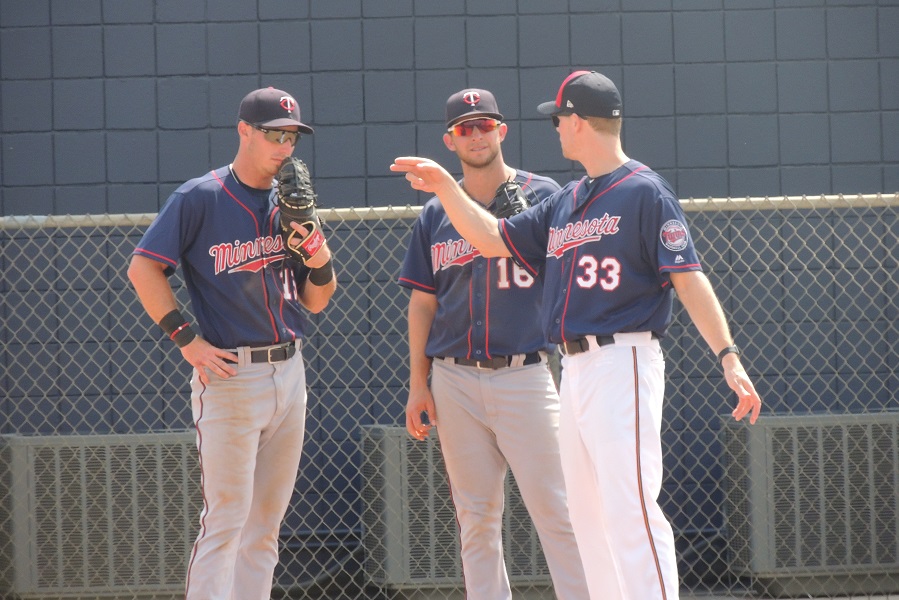 On Monday on the back fields of the Lee County Sports Complex, Brent Rooker played first base for the Chattanooga Lookouts work group against the AA work group of the Boston Red Sox. Long-time big leaguer Chris Heisey came down from big league camp and introduced himself to the Twins 2017 draft pick. As usual in those games, he got a couple of at-bats and played half of the game at first base. He was then replaced by another quality Twins prospect, Lewin Diaz. However, Rooker’s day was not over. After watching an inning of the game, he shifted to the half-field adjacent to the field in which the game was being played. He and fellow prospect Chris Paul went to first base where Joel Lepel hit them ground balls, and they were to throw it to second base. They were working on turning and throwing and other footwork basics. After a while, the were joined by a couple of new Twins instructors. Michael Cuddyer and Justin Morneau found their way over there. Cuddyer mostly observed and later hit fungoes to other infielders. Morneau stood by Paul and Rooker, offering suggestions and even showing the footwork. The opportunity is great for the minor leaguers to learn from such talent. Twins Hall of Famer Torii Hunter has worked with the players. Michael Cuddyer was inducted into the Twins Hall of Fame following the completion of his career. Justin Morneau announced his retirement in January. The former MVP has joined the Twins front office as a special assistant to Baseball Operations. These are guys who have accomplished so much, including All-Star Games in their long MLB careers. To get pointers from them can mean the world. Rooker noted later, “Having guys like Justin and Michael around is awesome because they have so much first hand experience and knowledge that they’re able to share. Just being around them and listening to them talk about the game is a huge help to guys like me who are trying to get where they have already been.” Rooker grew up in a small town, Germantown (TN), just miles from Memphis. His father played baseball at Memphis, and his younger brother is currently on the Memphis team. Rooker headed south a couple of hours and chose Mississippi State for his college baseball. Rooker noted, “I originally thought, in my junior year (of high school), that I was going to play football in college. Then I started getting bigger looks for baseball, from SEC schools. I went on a few visits. The atmosphere. The energy surrounding Mississippi State is what sets it apart.” Rooker is a great athlete and participated in three sports during his high school career at Evangelical Christian Academy. Not only did he participate, but he was a team leader in all three sports. “I did it because I really enjoyed all three of them. I was blessed to have the opportunity to play all three (sports) and compete for a state championship in all three sports. We won in baseball twice, and then lost in football and in basketball my senior year. When people ask what advice I have for younger players, it’s always to play multiple sports as long as you can and as long as they enjoy it and have some success and contribute to a team. I think they should try to compete in multiple sports for as long as possible because it helps develop young athletes both mentally and physically.” The coaches at Mississippi State told him that he would redshirt his freshman season. While it wasn’t ideal and could be frustrating at times, Rooker says it was the best thing for him. “Simply put, I wasn’t ready to compete at the level I needed to to help the team, so the redshirt was the best thing for me. I was told I was going to redshirt. It’s not the most fun thing to do. You have the choice though. I could leave and go to a JuCo and play right away, or I could stick around and try to figure out how to play at this level. I chose to do the latter and it really paid off for me. That year was hard. It was a lot of hard work, and it was tough not to be able to play and compete and practice all the time. At the end of the day, I really needed it and think it was the best decision for me. Following a strong junior year (redshirt sophomore season), the Twins took Rooker in the 38th round. He chose not to sign, betting on himself. “Going into the draft, I was telling teams, Top 5 rounds and I’ll sign. After that, it would be a financial decision that we can discuss. After I got picked, I did have some conversations with the Twins people. At the end of the day, it was a better decision for me from a development standpoint to go back to school and compete in the SEC which is as good as amateur baseball gets.” He continued, “I knew there was more in me.” He spent a lot of time that summer trying to figure out how to take his game to the next level. “My focus was to figure out what that was for me whether it was an approach thing or a physical thing or a swing thing. I knew it was in there. I knew I had more capability than I was showing. I did whatever I could, talked to people to try to figure out what it was that would take me to the next step.” Video has become a big part of Rooker’s preparation and work toward becoming a better player. He notes that while he has had favorite players and favorite teams in the past, he now watches baseball players a little differently and has found a couple of guys whose swings he likes and studies. “I didn’t necessarily model my game after people. I found people that I liked what they did with their swing and watched a lot of video of those guys and tried to learn a lot from those guys. The two guys that I’ve watched the most video on and studied the most over the past two years while I was trying to figure out my swing. Josh Donaldson was one, and Barry Bonds is another guy I’ve watched a lot of video on.I look at how they move and how they made their swings work efficiently.I think those are the two guys I’ve probably learned the most from from an offensive standpoint.” On Sunday, Lance Lynn pitched in a minor league. In that game, Rooker lined a double to left field. The below video was recorded, and it illustrates the results of his work. You can see a nice, efficient swing with little extra movement and a lot of power generated. https://twitter.com/twinsdaily/status/975406420911800320 Later that day, Parker slowed down the video to better illustrate the efficiency. https://twitter.com/ParkerHageman/status/975428645979348992 Rooker noted that the jump from the SEC to the Appalachian League “wasn’t too big, but the jump from E-Town to the Florida State League was a big jump for me in terms of seeing the quality of stuff that guys are throwing every day.” He is working with the Chattanooga group right now, so it makes sense the that organization may plan to have him start the season back in Ft. Myers where he posted a .917 OPS with six doubles and 11 homers in just 40 games in 2017. It’s also possible that he will begin the season with the Lookouts. While we will continue to look at his statistics, Rooker will continue to work on his process. As he said, the numbers will take care of themselves. Could we see Rooker in a Twins uniform, playing games at Target Field by season’s end? The odds probably aren’t high, but the fact that at this time a year ago, he hadn’t even started SEC games yet, it is remarkable to note that it is absolutely possible. If not, maybe 2019. He’s been working hard at first base, trying to learn some of the nuances of the position. Getting help from a guy like Justin Morneau, who made himself into a very solid defensive player over his career, can’t hurt. He’s also spent some time in left field this spring. “My job is not to worry about the assignment. My job is to show up wherever they put me and continue to work my process and get better every day. If I continue to take incremental steps, every game, every week, then I’ll be where I need to be and I think the numbers should take care of themselves. I don’t worry about the end results. I just worry about my own process and what I need to do to be the best player I can.” Twins fans, that player could be really good.
 -
 To add this podcast to your iPhone podcast app, do the following: 1. Open up this page in your iphone and copy this link: http://twinsdaily.libsyn.com/rss 2. Go into your iPhone podcast app and click on the "Library" tab at the bottom and then click on "Edit" in the upper right-hand corner: 3. Click on "Add a Podcast by URL..." 4. Paste the link you just copied into the dialog box and click on 'Subscribe'. Now you'll get every episode delivered to your phone to listen to whenever you want
 -
Jorge Polanco: I'm Really Sorry
Seth Stohs replied to Seth Stohs's topic in Twins Daily Front Page News
I've corrected my wording. According to Polanco's statement, he requested B12 and an iron supplement. But yes, he tested positive for Stanozolol. -
Jorge Polanco: I'm Really Sorry
Seth Stohs replied to Seth Stohs's topic in Twins Daily Front Page News
It shouldn't effect his career at all. When he served his 80 game suspension, he'll be in good standing with the team and the league. They're going to support him in this. -
FORT MYERS - On Monday morning, Twins shortstop Jorge Polanco met with Twins media following news that broke on Sunday night that he had been suspended by Major League Baseball for 80 games for violating the league's performance-enhancing drug policy. Polanco did not address the specifics of his situation, but wanted the focus of his comments to be an apology to the organization, his teammates, fans and his home country of the Dominican Republic. Image courtesy of Seth Stohs, Twins Daily FORT MYERS - On Monday morning, Twins shortstop Jorge Polanco met with Twins media following news that broke on Sunday night that he had been suspended by Major League Baseball for 80 games for violating the league's performance-enhancing drug policy. Polanco did not address the specifics of his situation, but wanted the focus of his comments to be an apology to the organization, his teammates, fans and his home country of the Dominican Republic. Jorge Polanco began his comments by making an apology. "I’m here to say that I’m really sorry to be in this situation. I wanted to apologize to the entire Twins organization, my fans, my family and my country the Dominican Republic." Polanco said that he learned about the failed drug test "a month ago." On Sunday, he reached out to Chief Baseball Officer Derek Falvey and manager Paul Molitor. According to Falvey, it was completely ironic that the Twins signed veteran shortstop Erick Aybar on February 23rd, four days shy of a month ago. "Aybar was something that was in the mix already." Only recently Polanco decided to drop his appeal, a decision that was not easy for him. "It was very difficult to drop the appeal, but out of respect to the organization, I did it. I just want to move forward." Falvey noted that Polanco requested a meeting with him and manager Paul Molitor to own up to the situation. "It's obviously disappointing. We all know Jorge. He's a good kid. He made a mistake. He owned it. He wanted to tell us. He wanted to be the person to break that news to us. He didn't want it to come from his agent or anything else. He asked for that." He will not be able to rejoin the Twins on the field until the end of June, Polanco will stay in Ft. Myers throughout the suspension. Polanco said, "I’m going to stay in Ft. Myers. I’m going to keep preparing for when I can come back this season and help the Minnesota Twins." While he did not want to go into too many details, Polanco noted that he is fully aware of how the Stanozolol got into his system. (according to his statement, he requested a vitamin B12 and an iron supplement.) "Yes, I know how everything happened. I won’t go into details. Today’s not the day to discuss those things. Today’s the day for me to be here in front of you guys and the Twins organization and my fans and just apologize." Polanco was joined by his agent, Ulises Cabrera from Octagon agency. After Polanco spoke, Cabrera discussed his client. "You guys know Jorge really well. I would imagine you would consider Jorge one of the better guys, and one of the more educated guys, and one of the most respectful guys." He continued discussing how Polanco feels about this situation, "It's been difficult for him. He feels a tremendous responsibility to the organization. He loves the Twins organization. They're the team that has believed in him since Day 1, so it’s a very difficult situation to deal with For a 24-year-old to be able to handle himself as he has is impressive. I think it’s consistent with who he is as a person." The specifics of his return are not known, but Cabrera said that Polanco will continue to work to be ready to help the Twins when he gets back. "The immediate plan is for (Jorge) to continue to work out and make sure he’s in baseball shape so when his opportunity comes, he’s ready to go and contribute to the greatest extent possible to the team in the back half of the season." The hope is that when Polanco returns, he can take off right away the way he did over the final two months of the 2017 season. Unfortunately, along with the suspension, he will be ineligible for the Twins if they do make a playoff run. Falvey provided some more detail to what Polanco can do while suspended. "When we break camp, he'll stay here in extended. He can play in those extended spring training games. He can work out, and then as we get closer, he'll go on a normal position player rehab assignment." A "normal" position player rehab assignment is 20 games. Falvey noted that the organization will continue to support him. "You think of a baseball team like a family. Family members make mistakes. Now it's the opportunity to support him going forward, and there's every expectation he'll work his tail of to be ready when that 81st game of the season comes." View full article
-
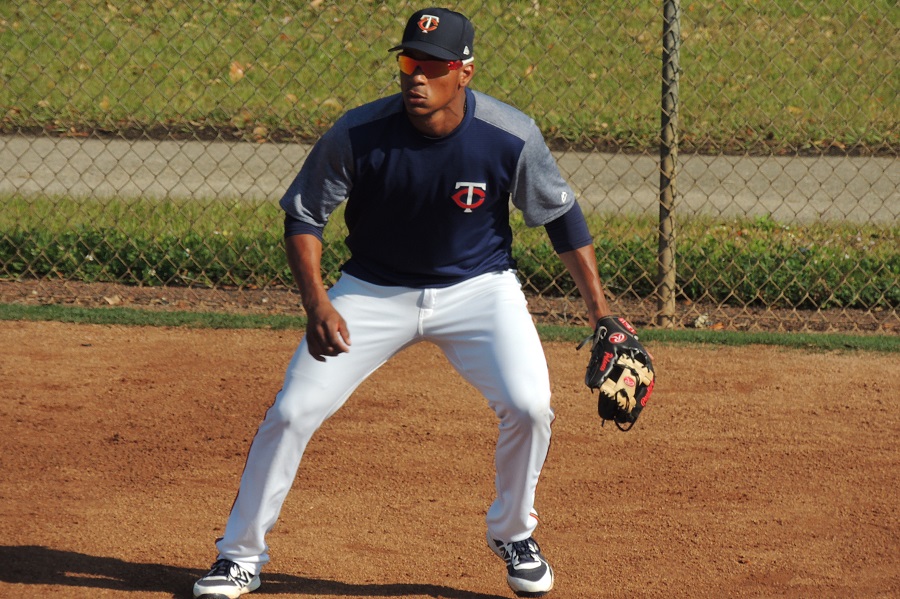 Jorge Polanco began his comments by making an apology. "I’m here to say that I’m really sorry to be in this situation. I wanted to apologize to the entire Twins organization, my fans, my family and my country the Dominican Republic." Polanco said that he learned about the failed drug test "a month ago." On Sunday, he reached out to Chief Baseball Officer Derek Falvey and manager Paul Molitor. According to Falvey, it was completely ironic that the Twins signed veteran shortstop Erick Aybar on February 23rd, four days shy of a month ago. "Aybar was something that was in the mix already." Only recently Polanco decided to drop his appeal, a decision that was not easy for him. "It was very difficult to drop the appeal, but out of respect to the organization, I did it. I just want to move forward." Falvey noted that Polanco requested a meeting with him and manager Paul Molitor to own up to the situation. "It's obviously disappointing. We all know Jorge. He's a good kid. He made a mistake. He owned it. He wanted to tell us. He wanted to be the person to break that news to us. He didn't want it to come from his agent or anything else. He asked for that." He will not be able to rejoin the Twins on the field until the end of June, Polanco will stay in Ft. Myers throughout the suspension. Polanco said, "I’m going to stay in Ft. Myers. I’m going to keep preparing for when I can come back this season and help the Minnesota Twins." While he did not want to go into too many details, Polanco noted that he is fully aware of how the Stanozolol got into his system. (according to his statement, he requested a vitamin B12 and an iron supplement.) "Yes, I know how everything happened. I won’t go into details. Today’s not the day to discuss those things. Today’s the day for me to be here in front of you guys and the Twins organization and my fans and just apologize." Polanco was joined by his agent, Ulises Cabrera from Octagon agency. After Polanco spoke, Cabrera discussed his client. "You guys know Jorge really well. I would imagine you would consider Jorge one of the better guys, and one of the more educated guys, and one of the most respectful guys." He continued discussing how Polanco feels about this situation, "It's been difficult for him. He feels a tremendous responsibility to the organization. He loves the Twins organization. They're the team that has believed in him since Day 1, so it’s a very difficult situation to deal with For a 24-year-old to be able to handle himself as he has is impressive. I think it’s consistent with who he is as a person." The specifics of his return are not known, but Cabrera said that Polanco will continue to work to be ready to help the Twins when he gets back. "The immediate plan is for (Jorge) to continue to work out and make sure he’s in baseball shape so when his opportunity comes, he’s ready to go and contribute to the greatest extent possible to the team in the back half of the season." The hope is that when Polanco returns, he can take off right away the way he did over the final two months of the 2017 season. Unfortunately, along with the suspension, he will be ineligible for the Twins if they do make a playoff run. Falvey provided some more detail to what Polanco can do while suspended. "When we break camp, he'll stay here in extended. He can play in those extended spring training games. He can work out, and then as we get closer, he'll go on a normal position player rehab assignment." A "normal" position player rehab assignment is 20 games. Falvey noted that the organization will continue to support him. "You think of a baseball team like a family. Family members make mistakes. Now it's the opportunity to support him going forward, and there's every expectation he'll work his tail of to be ready when that 81st game of the season comes."
 -
Twins Send Six To Minor League Camp
Seth Stohs replied to Seth Stohs's topic in Twins Daily Front Page News
I think Molitor's quotes on Gordon's defense are probably pretty telling. Just no reason at all to rush him when they have the likes of Escobar, Adrianza and Aybar.- 6 replies
-
- 3
-
-
- nick gordon
- lamonte wade
- (and 2 more)
