



Seth Stohs
-
Posts
25,909 -
Joined
-
Last visited
-
Days Won
109
Content Type
Profiles
News
Minnesota Twins Videos
2026 Minnesota Twins Top Prospects Ranking
2022 Minnesota Twins Draft Picks
Minnesota Twins Free Agent & Trade Rumors, Notes, & Tidbits
Guides & Resources
2023 Minnesota Twins Draft Picks
The Minnesota Twins Players Project
2024 Minnesota Twins Draft Picks
2025 Minnesota Twins Draft Pick Tracker
2026 Minnesota Twins Draft Tracker: Picks & Bonuses
Forums
Blogs
Events
Store
Downloads
Gallery
Everything posted by Seth Stohs
-
 What a night! The Twins won a 2-1 game in Boston in a game with great playoff atmosphere. Two Twins minor league teams are playing in their leagues' playoffs. Alex Kirilloff hit another homer for Pensacola, but was it enough? The Kernels forced a series-deciding Game 3 with a 2-1 win in Quad Cities. Keep reading for more details.Find out everything that happened happened in the Twins system on Thursday, starting with the transactions of the day. TRANSACTIONS The playoff teams are unable to make transactions once the playoff round starts.Not really a transaction, but I’m sure many saw on Wednesday that it was announced that Alex Kirilloff will not be playing in the Arizona Fall League. He is being replaced by Luke Raley.In addition, it was also announced that Ben Rortvedt will be the “Catcher to be Named Later” on the AFL squad.BLUE WAHOOS BITES Pensacola 1, Biloxi 4 Box Score For the second straight night, Alex Kirilloff came through with a ninth-inning home run with the team down by four runs. Unfortunately on this night, the bases weren’t loaded. In fact, they were empty and it accounted for the Blue Wahoo’s lone run in Game 2. In the seventh inning, Webb doubled and then scored on a Jared Akins double to take back the lead, a lead that they would hold onto. Ricky Ramirez worked the final two innings. He struck out three to record the save. The Kernels will send Josh Winder to the mound for Game 3 on Wednesday trying to win the best-of-three series. TWINS DAILY PLAYERS OF THE DAY Twins Daily Minor League Pitcher of the Day - Matt Canterino, Cedar Rapids Kernels Twins Daily Minor League Hitter of the Day – Tyler Webb, Cedar Rapids Kernels PROSPECT SUMMARY Here’s a look at how the Twins Daily Midseason Top 20 Twins Prospects performed: #1 - Royce Lewis (Pensacola) - 0-3, BB #2 - Alex Kirilloff (Pensacola) - 1-4, R, RBI, HR(2), K #4 - Trevor Larnach (Pensacola) - 0-3, HBP #5 - Wander Javier (Cedar Rapids) - 1-4, 3B, R #13 - Ryan Jeffers (Pensacola) - 0-4, K #14 - Luis Arraez (Minnesota) - 1-3, BB #15 - Matt Wallner (Cedar Rapids) - 0-4, 2 K #20 - Travis Blankenhorn (Pensacola) - 0-3, K FRIDAY’S PROBABLE STARTERS Biloxi @ Pensacola (6:35 CT) - RHP Jordan Balazovic Cedar Rapids @ Quad Cities (6:35) - RHP Josh Winder Please feel free to ask any questions and discuss the Thursday games or any other minor league topics you would like. Click here to view the article
- 7 replies
-
- 2
-

-
- matt canterino
- tyler webb
- (and 3 more)
-
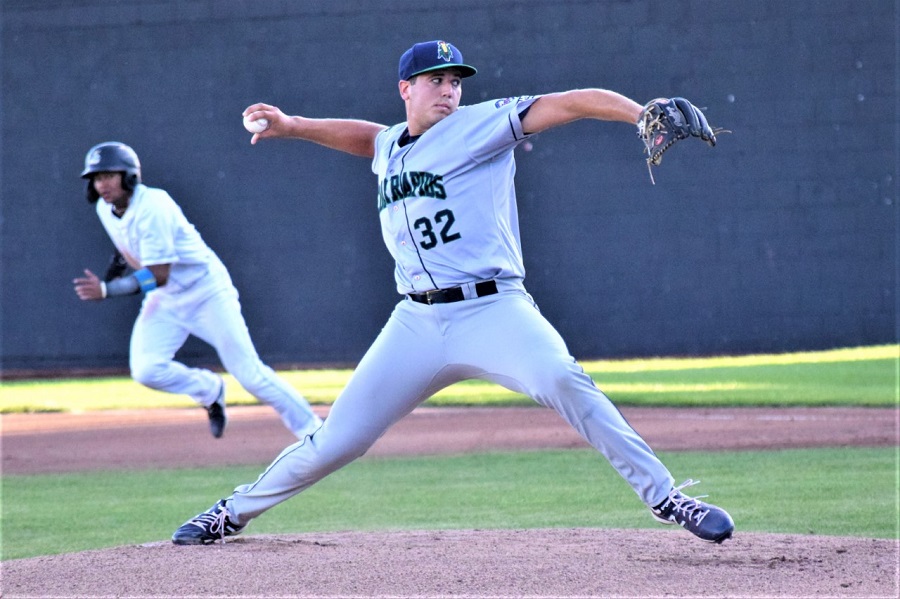 Find out everything that happened happened in the Twins system on Thursday, starting with the transactions of the day. TRANSACTIONS The playoff teams are unable to make transactions once the playoff round starts. Not really a transaction, but I’m sure many saw on Wednesday that it was announced that Alex Kirilloff will not be playing in the Arizona Fall League. He is being replaced by Luke Raley. In addition, it was also announced that Ben Rortvedt will be the “Catcher to be Named Later” on the AFL squad. BLUE WAHOOS BITES Pensacola 1, Biloxi 4 Box Score For the second straight night, Alex Kirilloff came through with a ninth-inning home run with the team down by four runs. Unfortunately on this night, the bases weren’t loaded. In fact, they were empty and it accounted for the Blue Wahoo’s lone run in Game 2. https://twitter.com/MLBPipeline/status/1169802102740344832 Biloxi’s starter Dylan File was fantastic. Before the ninth inning, he gave up just one hit and hit one batter. He gave up the Kirilloff home run, but he earned the win. Jose Miranda had the only other Pensacola hit, a second-inning single. Trevor Larnach reached base early in the game when he was hit by a pitch. Royce Lewis followed Kirilloff’s home run with a walk. But those were the only four base runners of the game. Griffin Jax started and was charged with four runs on five hits and two walks over the first four innings. Two of those hits left the park. Dillon Thomas, who hit the game-winning homer in Game 1, hit a three-run homer in the third inning. Jake Gatewood hit a solo homer in the fourth inning. Edwar Colina came on for the fifth inning. He gave up one hit, hit one and struck out one batter. He left because he was ejected after the benches cleared. Stephen Gonsalves came on and got the final two outs of the sixth inning. He worked two more scoreless innings. He walked three and struck out one. Tom Hackimer got the final out of the eighth inning. The Blue Wahoos will need to win the next three games to advance to the Southern League’s second round. They return home to Pensacola for game 3 on Friday. KERNELS NUGGETS Cedar Rapids 2, Quad Cities 1 Box Score Like the Twins game, the Kernels were able to complete a 2-1 pitcher’s duel to even their series at one game a piece. Matt Canterino certainly set the tone for the game. The right-hander started with 4 2/3 innings before giving up a hit. He gave up two hits which scored the River Bandits’ lone run. He ended the inning with a pick-off. He gave up just those two hits, walked none and struck out eight batters. Dylan Thomas came on and tossed two scoreless innings in relief. For the second straight game, it was Tyler Webb that got the Kernels on the scoreboard. Following a Wander Javier triple, Webb beat a shift and singled in the game’s first run. https://twitter.com/JimCrikket/status/1169776527904530433 In the seventh inning, Webb doubled and then scored on a Jared Akins double to take back the lead, a lead that they would hold onto. Ricky Ramirez worked the final two innings. He struck out three to record the save. The Kernels will send Josh Winder to the mound for Game 3 on Wednesday trying to win the best-of-three series. TWINS DAILY PLAYERS OF THE DAY Twins Daily Minor League Pitcher of the Day - Matt Canterino, Cedar Rapids Kernels Twins Daily Minor League Hitter of the Day – Tyler Webb, Cedar Rapids Kernels PROSPECT SUMMARY Here’s a look at how the Twins Daily Midseason Top 20 Twins Prospects performed: #1 - Royce Lewis (Pensacola) - 0-3, BB #2 - Alex Kirilloff (Pensacola) - 1-4, R, RBI, HR(2), K #4 - Trevor Larnach (Pensacola) - 0-3, HBP #5 - Wander Javier (Cedar Rapids) - 1-4, 3B, R #13 - Ryan Jeffers (Pensacola) - 0-4, K #14 - Luis Arraez (Minnesota) - 1-3, BB #15 - Matt Wallner (Cedar Rapids) - 0-4, 2 K #20 - Travis Blankenhorn (Pensacola) - 0-3, K FRIDAY’S PROBABLE STARTERS Biloxi @ Pensacola (6:35 CT) - RHP Jordan Balazovic Cedar Rapids @ Quad Cities (6:35) - RHP Josh Winder Please feel free to ask any questions and discuss the Thursday games or any other minor league topics you would like.
 -
Kimbrel to the IL... elbow... Elbow inflammation....
-
No update on why Kirilloff isn't playing... But he's been replaced by Luke Raley (who got hurt there last year)... They also announced that Ben Rortvedt will be going there as well (they had previously said that they would also send a catcher. Guessing that they had to sign off on Rortvedt's help.)
-
The votes are in... I can only confirm that Ober is probably in the Top 5, for sure... most likely...
- 13 replies
-
- 6
-
-
- bailey ober
- matt canterino
- (and 3 more)
-
More coming on Ober in the very near future, and we'll get into much more detail on him.
- 13 replies
-
- 4
-
-
- bailey ober
- matt canterino
- (and 3 more)
-
Earlier this week, Twins Daily named Zander Wiel the Hitter of the Month for August. Today, we announce our choice for the Twins Minor League Starting Pitcher of the Month. While the choice was ultimately pretty easy, I was in awe of how much strong pitching there was in the season’s final month. It’s really exciting to see. Next week, we will start handing out our 2019 season awards, but let’s take a quick look back at the Twins Minor League Starting Pitchers of the Month from earlier this season. Previous 2019 Starting Pitchers of the Month: April - Devin Smeltzer - Pensacola Blue Wahoos May - Jordan Balazovic - Ft. Myers Miracle June - Josh Winder - Cedar Rapids Kernels July - Edwar Colina - Pensacola Blue Wahoos August -Before we share our choices for the Twins Minor League Top Six Starters for August, there were some other strong starting performers that just missed the cut. There are two pitchers in the Honorable Mention category who had K:BB ratios of 30:2 and 23:3! You can certainly agree or disagree with the rankings. Let’s discuss the top starting pitchers in the organization in August. HONORABLE MENTION Kohl Stewart - Rochester Red Wings - 6 G, 5 GS, 27.2 IP, 2.93 ERA, 1.05 WHIP, 18 H, 11 BB, 21 KDakota Chalmers - Ft. Myers Miracle - 4 GS, 20.1 IP, 1.77 ERA, 1.13 WHIP, 10 H, 13 BB, 29 KBlayne Enlow - Ft. Myers Miracle - 4 GS, 22.0 IP, 2.45 ERA, 1.18 WHIP, 16 H, 10 BB, 17 KCole Sands - Ft. Myers Miracle/Pensacola Blue Wahoos - 3 GS, 15.0 IP, 2.55 ERA, 0.97 WHIP, 22 H, 2 BB, 23 KAndrew Cabezas - Cedar Rapids Kernels - 5 GS, 27.1 IP, 2.30 ERA, 1.21 WHIP, 21 H, 12 BB, 15 KLuis Rijo - Cedar Rapids Kernels - 5 GS, 29.1 IP, 3.68 ERA, 0.92 WHIP, 12 H, 2 BB, 30 KDonny Breek - GCL Twins - 4 G, 2 GS, 17.1 IP, 0.52 ERA, 0.87 WHIP, 10 H, 5 BB, 21 KNiklas Rimmel - GCL Twins - 3 G, 2 GS, 13.0 IP, 0.69 ERA, 0.69 WHIP, 8 H, 1 BB, 13 KTHE TOP SIX STARTING PITCHERS #6 - RHP Chris Vallimont - Ft. Myers Miracle - 4 GS, 22.1 IP, 3.63 ERA, 0.85 WHIP, 15 H, 4 BB, 28 K Chris Vallimont came to the Twins in the trade deadline deal with the Marlins in which the Twins also received Sergio Romo and Cash in exchange for Lewin Diaz. Vallimont had a strong first month in the Twins organization despite a rough first start in which he gave up six earned runs in just 2 1/3 innings. However, in three starts since, he has been remarkable. His next two starts came against his former teammates, the Jupiter Hammerheads. In both games, he had a no-hitter into the late innings and completed seven in both games. So, while his ERA is a bit high because of the first start, his ability to limit base runners and that strikeout-to-walk ratio are both quite impressive. We caught up with Vallimont for this story shortly after his trade to the Twins. #5 - RHP Josh Winder- Cedar Rapids Kernels - 5 GS, 25.2 IP, 1.40 ERA, 1.01 WHIP, 20 H, 6 BB, 28 K Winder was the Twins Daily Minor League Starting Pitcher of the Month in June, and he’s been really consistent all season with the Kernels. He was the Twins seventh-round pick in 2018 out of Virginia Military Institute. In August, he worked innings, limited runs and base runners. He also missed bats. Opponents hit just .206 with a .528 OPS against him. Overall this season, Winder went 7-2 with a 2.65 ERA and a 0.98 WHIP over 21 starts and 125 2/3 innings. Steve Buhr wrote about Winder earlier this season. #4 - RHP Jordan Balazovic - Ft. Myers Miracle - 4 GS, 19.1 IP, 2.33 ERA, 0.88 WHIP, 12 H, 5 BB, 28 K Balazovic began the month in Lima, Peru, where he helped Team Canada to a silver medal at the Pan Am Games. He returned to the MIracle and was very good. In his first start back, he struck out nine batters in five shutout, two-hit innings. In his final start of the month, he struck out nine batters in five shutout, two-hit innings. Along with the above numbers (which are very impressive), opponents hit just .169 off of him (with a .460 OPS). The lanky right-hander was the Twins fifth-round pick in 2016 out of high school in Ontario. #3 - RHP Cody Laweryson - Elizabethton Twins - 5 GS, 24.0 IP, 1.13 ERA, 0.67 WHIP, 12 H, 4 BB, 34 K We all remember that 15 strikeout game that Laweryson tossed last week for the E-Twins, but the Twins 14th-round pick from the University of Maine in June was good all month. He began with a spot start in Cedar Rapids where he tossed five shutout innings. In his four E-Twins starts, he gave up earned runs in just one of them. Opponents hit just .143 with a .414 OPS against him in the month. Pretty good first impression for the right-hander. #2 - RHP Matt Canterino - Cedar Rapids Kernels - 5 GS, 20.0 IP, 1.35 ERA, 0.65 WHIP, 6 H, 7 BB, 25 K Canterino was the Twins’ second-round pick in 2019 out of Rice University. After tossing 99 1/3 innings this spring for the Owls, the Twins have wisely eased him into pro ball. After some time away from the mound, he went to the GCL where he worked five innings over two games. He moved up to Cedar Rapids at the beginning of the month and they continued to monitor his innings. He averaged just four innings per start and hasn’t thrown more than 72 pitches in any outing. Nevertheless, he has been really impressive. He gave up just three runs, recorded strikeouts and opponents hit just .091 off of him in the month. Learn more about Canterino in this week’s articlefrom Steve Buhr. And the Twins Minor League Starting Pitcher of the Month is: Ft. Myers Miracle/Pensacola Blue Wahoos - RHP Bailey Ober - 4 GS, 27.0 IP, 0.67 ERA, 0.56 HIP, 13 H, 2 BB, 39 K Bailey Ober has put up eye-popping numbers in 2019. Overall, he is 8-0 with a 0.69 ERA and a 0.81 WHIP. In April, he was a very close runner up in our monthly Starting Pitcher of the Month voting. Unfortunately, he ended the month on the Injured List and didn’t return until early July when he made a couple of rehab appearances before rejoining the Ft. Myers Miracle. However, after just four starts there, he earned his promotion to the Pensacola Blue Wahoos in early August. He continued to dominate. In his first start, he gave up two hits and one run over seven innings. In his second Blue Wahoos start, he struck out 12 batters over seven shutout innings. His third start? 11 strikeouts and only an unearned run in seven innings. In his final start of the month, and of the regular season, he gave up one hit over three innings in preparations for the playoffs. For the month, opponents hit just .141 with a .351 OPS against him. Ober was the Twins 13th-round pick in 2017 out of the College of Charleston. In college and as a pro, he has been very good on the mound when healthy. The 6-9 right-hander has a strong four-pitch mix and is certainly one to watch in 2020! Congratulations to our Twins Daily Minor League Starting Pitcher of the Month of August, Pensacola Blue Wahoos right-hander Bailey Ober. Feel free to discuss and ask questions. Click here to view the article
- 13 replies
-
- 1
-
-
- bailey ober
- matt canterino
- (and 3 more)
-
Twins Minor League Starting Pitcher Of The Month - August 2019
Seth Stohs posted an article in Minor Leagues
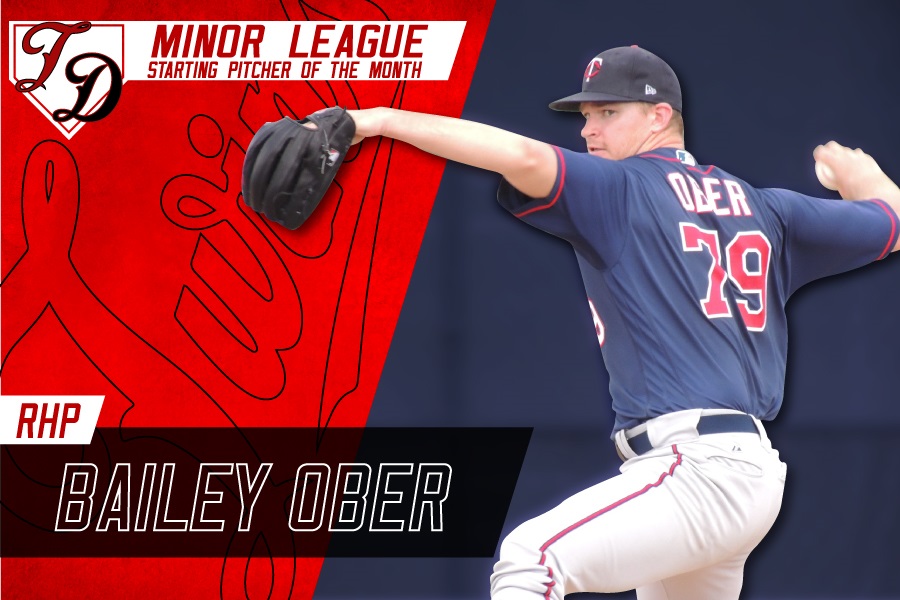 Before we share our choices for the Twins Minor League Top Six Starters for August, there were some other strong starting performers that just missed the cut. There are two pitchers in the Honorable Mention category who had K:BB ratios of 30:2 and 23:3! You can certainly agree or disagree with the rankings. Let’s discuss the top starting pitchers in the organization in August. HONORABLE MENTION Kohl Stewart - Rochester Red Wings - 6 G, 5 GS, 27.2 IP, 2.93 ERA, 1.05 WHIP, 18 H, 11 BB, 21 K Dakota Chalmers - Ft. Myers Miracle - 4 GS, 20.1 IP, 1.77 ERA, 1.13 WHIP, 10 H, 13 BB, 29 K Blayne Enlow - Ft. Myers Miracle - 4 GS, 22.0 IP, 2.45 ERA, 1.18 WHIP, 16 H, 10 BB, 17 K Cole Sands - Ft. Myers Miracle/Pensacola Blue Wahoos - 3 GS, 15.0 IP, 2.55 ERA, 0.97 WHIP, 22 H, 2 BB, 23 K Andrew Cabezas - Cedar Rapids Kernels - 5 GS, 27.1 IP, 2.30 ERA, 1.21 WHIP, 21 H, 12 BB, 15 K Luis Rijo - Cedar Rapids Kernels - 5 GS, 29.1 IP, 3.68 ERA, 0.92 WHIP, 12 H, 2 BB, 30 K Donny Breek - GCL Twins - 4 G, 2 GS, 17.1 IP, 0.52 ERA, 0.87 WHIP, 10 H, 5 BB, 21 K Niklas Rimmel - GCL Twins - 3 G, 2 GS, 13.0 IP, 0.69 ERA, 0.69 WHIP, 8 H, 1 BB, 13 K THE TOP SIX STARTING PITCHERS #6 - RHP Chris Vallimont - Ft. Myers Miracle - 4 GS, 22.1 IP, 3.63 ERA, 0.85 WHIP, 15 H, 4 BB, 28 K Chris Vallimont came to the Twins in the trade deadline deal with the Marlins in which the Twins also received Sergio Romo and Cash in exchange for Lewin Diaz. Vallimont had a strong first month in the Twins organization despite a rough first start in which he gave up six earned runs in just 2 1/3 innings. However, in three starts since, he has been remarkable. His next two starts came against his former teammates, the Jupiter Hammerheads. In both games, he had a no-hitter into the late innings and completed seven in both games. So, while his ERA is a bit high because of the first start, his ability to limit base runners and that strikeout-to-walk ratio are both quite impressive. We caught up with Vallimont for this story shortly after his trade to the Twins. #5 - RHP Josh Winder- Cedar Rapids Kernels - 5 GS, 25.2 IP, 1.40 ERA, 1.01 WHIP, 20 H, 6 BB, 28 K Winder was the Twins Daily Minor League Starting Pitcher of the Month in June, and he’s been really consistent all season with the Kernels. He was the Twins seventh-round pick in 2018 out of Virginia Military Institute. In August, he worked innings, limited runs and base runners. He also missed bats. Opponents hit just .206 with a .528 OPS against him. Overall this season, Winder went 7-2 with a 2.65 ERA and a 0.98 WHIP over 21 starts and 125 2/3 innings. Steve Buhr wrote about Winder earlier this season. #4 - RHP Jordan Balazovic - Ft. Myers Miracle - 4 GS, 19.1 IP, 2.33 ERA, 0.88 WHIP, 12 H, 5 BB, 28 K Balazovic began the month in Lima, Peru, where he helped Team Canada to a silver medal at the Pan Am Games. He returned to the MIracle and was very good. In his first start back, he struck out nine batters in five shutout, two-hit innings. In his final start of the month, he struck out nine batters in five shutout, two-hit innings. Along with the above numbers (which are very impressive), opponents hit just .169 off of him (with a .460 OPS). The lanky right-hander was the Twins fifth-round pick in 2016 out of high school in Ontario. #3 - RHP Cody Laweryson - Elizabethton Twins - 5 GS, 24.0 IP, 1.13 ERA, 0.67 WHIP, 12 H, 4 BB, 34 K We all remember that 15 strikeout game that Laweryson tossed last week for the E-Twins, but the Twins 14th-round pick from the University of Maine in June was good all month. He began with a spot start in Cedar Rapids where he tossed five shutout innings. In his four E-Twins starts, he gave up earned runs in just one of them. Opponents hit just .143 with a .414 OPS against him in the month. Pretty good first impression for the right-hander. #2 - RHP Matt Canterino - Cedar Rapids Kernels - 5 GS, 20.0 IP, 1.35 ERA, 0.65 WHIP, 6 H, 7 BB, 25 K Canterino was the Twins’ second-round pick in 2019 out of Rice University. After tossing 99 1/3 innings this spring for the Owls, the Twins have wisely eased him into pro ball. After some time away from the mound, he went to the GCL where he worked five innings over two games. He moved up to Cedar Rapids at the beginning of the month and they continued to monitor his innings. He averaged just four innings per start and hasn’t thrown more than 72 pitches in any outing. Nevertheless, he has been really impressive. He gave up just three runs, recorded strikeouts and opponents hit just .091 off of him in the month. Learn more about Canterino in this week’s article from Steve Buhr. And the Twins Minor League Starting Pitcher of the Month is: Ft. Myers Miracle/Pensacola Blue Wahoos - RHP Bailey Ober - 4 GS, 27.0 IP, 0.67 ERA, 0.56 HIP, 13 H, 2 BB, 39 K Bailey Ober has put up eye-popping numbers in 2019. Overall, he is 8-0 with a 0.69 ERA and a 0.81 WHIP. In April, he was a very close runner up in our monthly Starting Pitcher of the Month voting. Unfortunately, he ended the month on the Injured List and didn’t return until early July when he made a couple of rehab appearances before rejoining the Ft. Myers Miracle. However, after just four starts there, he earned his promotion to the Pensacola Blue Wahoos in early August. He continued to dominate. In his first start, he gave up two hits and one run over seven innings. In his second Blue Wahoos start, he struck out 12 batters over seven shutout innings. His third start? 11 strikeouts and only an unearned run in seven innings. In his final start of the month, and of the regular season, he gave up one hit over three innings in preparations for the playoffs. For the month, opponents hit just .141 with a .351 OPS against him. Ober was the Twins 13th-round pick in 2017 out of the College of Charleston. In college and as a pro, he has been very good on the mound when healthy. The 6-9 right-hander has a strong four-pitch mix and is certainly one to watch in 2020! Congratulations to our Twins Daily Minor League Starting Pitcher of the Month of August, Pensacola Blue Wahoos right-hander Bailey Ober. Feel free to discuss and ask questions.
 -
Very happy for Jaylin!!
-
No... he only played SS until they clinched. Other guys have been able to play some SS and he has been able to get some exposure at other spots. Never a bad thing.
- 28 replies
-
- 1
-
-
- jose miranda
- bailey ober
- (and 3 more)
-
That all may be true... but I'll give him 2-3 years, maybe even 3-5 years before giving up on him.
-
I edited the Costello section.
-
Hard to believe that the 2019 minor league season is over. Labor Day marks the final day of the minor league regular season. Five months of games have certainly done what we hope. Some prospects have taken big steps forward. There have been injuries. There have been struggles and adjustments. There have been promotions and demotions. There have been major-league debuts. It has been a lot of fun, and we thank you for following the Twins minor league system each day in our minor league reports. We work hard to bring you the best coverage of the Twins farm system available. Join me in thanking Tom Froemming, Cody Christie, Steve Lein, Ted Schwerzler and Matt Braun for their weekly coverage. Over the next week to ten days, we will also be unveiling the Twins Daily Minor League Awards. So check back soon to see who our winners will be. However, you’ll be glad to know that we will keep the minor league reports going for as long as the Twins have an affiliate playing playoff baseball. On Wednesday, the Pensacola Blue Wahoos and Cedar Rapids Kernels begin their playoff seasons. And even throughout the offseason, we will cover the winter leagues and the Arizona Fall League as well.Find out everything that happened happened in the Twins system on Monday, starting with the awards and transactions of the day. AWARDS Rochester announced their 2019 team awards, voted by their fans. Congratulations to all three!Wilin Rosario was named the team’s MVP.Zander Wiel was named the most popular.Jake Reed was named the Most Civic-Minded for the second straight year for his work in the community. He volunteered his time at various events and programs throughout the Rochester area, including heavy involvement with Rochester Challenger Baseball..TRANSACTIONS Rochester announced that infielder Joe Cronin joined them from Pensacola. LHP Denny Bentley was transferred to the Elizabethton roster after pitching on Sunday.Pensacola announced that they have received infielder Jose Miranda from the Miracle for their playoff roster.Darren Wolfson has reported that Trevor Hildenberger will be joining the Twins in Boston on Tuesday. He likely isn’t the last player who will be added to the Twins September roster. (according to Doogie's new The Scoops podcast, the Twins will also recall Ryne Harper and Fernando Romero.)RED WINGS REPORT Rochester 4, Syracuse 8 Box Score The Red Wings end their season with a .500 record, 70-70. With several players already up with the Twins, the Red Wings used several players from lower levels to fill their roster. The game was a bullpen game. Jake Reed made the start. He gave up two runs on four hits over the first two innings. He struck out four batters. Next in was Alex Schick who spent most of the second half of the season in Cedar Rapids. He gave up one run on two hits over three innings of work. Sam Clay came on and gave up five runs on six hits and a walk in just 1 2/3 innings. Trevor Hildenberger allowed two inherited runners to score and then recorded the next four outs, two on strikeouts. Ryne Harper struck out three, and walked one, in the final inning. Drew Maggi led the offense. He went 3-for-4. Ramon Flores was 2-for-4. The Red Wings had a couple of milestone homers. Brandon Barnes hit his 30th International League home run of the year. Wilin Rosario hit his 20th home run of the year. BLUE WAHOOS BITES Pensacola 8, Montgomery 0 Box Score The Blue Wahoos finished their schedule with a strong all-around game. As we like to do, if a team throws a shutout, we’ll start with the pitching update. It is most impressive because they only had their starter, Bailey Ober, go three innings before much of the bullpen got an opportunity. Ober continued his impressive run with three scoreless innings. He gave up just one hit and struck out three batters. Anthony Vizcaya gave up one hit and struck out two batters in his inning. Jovani Moran then struck out four batters over two scoreless innings. Andrew Vazquez and Tom Hackimer each struck out the side in their inning. Marcos Diplan finished it off with a scoreless ninth inning. The bats came out for the final game as well. They also weren’t afraid to take their walks. Trevor Larnach went 1-for-2 and walked three times. Alex Kirilloff and Royce Lewis each had a single and two walks. Jose Miranda made his Double-A debut and went 3-for-5 with a double. Travis Blankenhorn, Ryan Costello, Caleb Hamilton and Taylor Grzelakowski each had two hits. Also of note, after playing centerfield on Sunday, Royce Lewis split Monday’s game between second base and third base. The Blue Wahoos end their regular season with an overall record of 76-63. KERNELS NUGGETS Cedar Rapids 9, Beloit 3 Box Score Gabe Snyder has had a very strong first full season in professional baseball. He ended his regular season strong. The Midwest League’s postseason All Star first baseman went 2-for-5 with his 19th home run and three RBI. Seth Gray and Chris Williams each had two hits in the game. Wander Javier hit his 11th homer of the season. It was a bullpen game for the Kernels as they prepare for their playoff run. Brian Rapp gave up one run on three hits over 3 2/3 innings. He struck out three batters. JT Perez came on and gave up two runs (1 earned) on two hits and a walk over two innings. Nate Hadley got the next four outs. Austin Schulfer struck out the side in the eighth inning. Dylan Thomas gave up two hits and a walk in the ninth inning but did not allow a run. TWINS DAILY PLAYERS OF THE DAY Twins Daily Minor League Pitcher of the Day - Bailey Ober, Pensacola Blue Wahoos Twins Daily Minor League Hitter of the Day – Jose Miranda, Pensacola Blue Wahoos PROSPECT SUMMARY Here’s a look at how the Twins Daily Midseason Top 20 Twins Prospects performed: #1 - Royce Lewis (Pensacola) - 1-4, 2 BB, R, 2 K #2 - Alex Kirilloff (Pensacola) - 1-4, 2 BB, R, RBI #4 - Trevor Larnach (Pensacola) - 1-2, 3 BB, R, 2 RBI #5 - Wander Javier (Cedar Rapids) - 1-5, R, 2 RBI, K #14 - Luis Arraez (Minnesota) - 3-4, 2 R, 2B(13) #15 - Matt Wallner (Cedar Rapids) - 0-3, BB, R, K #20 - Travis Blankenhorn (Pensacola) - 2-6, R TUESDAY’S PROBABLE STARTERS Pensacola vs Biloxi - No game on Tuesday. Their series begins in Biloxi on Wednesday. Cedar Rapids vs Quad Cities - Not game on Tuesday. Their series begins on Wednesday in Quad Cities. Luis Rijo the likely Game 1 starter. Please feel free to ask any questions and discuss the Monday games or any other minor league topics you would like. Click here to view the article
- 28 replies
-
- 1
-
-
- jose miranda
- bailey ober
- (and 3 more)
-
Twins Minor League Report (9/2): Minor League Season's Final Day
Seth Stohs posted an article in Minor Leagues
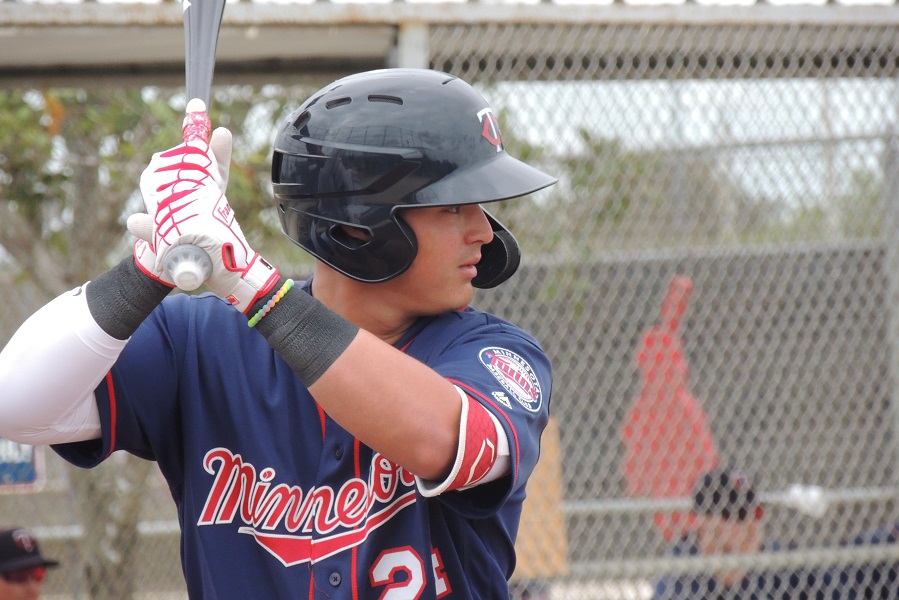 Find out everything that happened happened in the Twins system on Monday, starting with the awards and transactions of the day. AWARDS Rochester announced their 2019 team awards, voted by their fans. Congratulations to all three! Wilin Rosario was named the team’s MVP. Zander Wiel was named the most popular. Jake Reed was named the Most Civic-Minded for the second straight year for his work in the community. He volunteered his time at various events and programs throughout the Rochester area, including heavy involvement with Rochester Challenger Baseball.. TRANSACTIONS Rochester announced that infielder Joe Cronin joined them from Pensacola. LHP Denny Bentley was transferred to the Elizabethton roster after pitching on Sunday. Pensacola announced that they have received infielder Jose Miranda from the Miracle for their playoff roster. Darren Wolfson has reported that Trevor Hildenberger will be joining the Twins in Boston on Tuesday. He likely isn’t the last player who will be added to the Twins September roster. (according to Doogie's new The Scoops podcast, the Twins will also recall Ryne Harper and Fernando Romero.) RED WINGS REPORT Rochester 4, Syracuse 8 Box Score The Red Wings end their season with a .500 record, 70-70. With several players already up with the Twins, the Red Wings used several players from lower levels to fill their roster. The game was a bullpen game. Jake Reed made the start. He gave up two runs on four hits over the first two innings. He struck out four batters. Next in was Alex Schick who spent most of the second half of the season in Cedar Rapids. He gave up one run on two hits over three innings of work. Sam Clay came on and gave up five runs on six hits and a walk in just 1 2/3 innings. Trevor Hildenberger allowed two inherited runners to score and then recorded the next four outs, two on strikeouts. Ryne Harper struck out three, and walked one, in the final inning. Drew Maggi led the offense. He went 3-for-4. Ramon Flores was 2-for-4. The Red Wings had a couple of milestone homers. Brandon Barnes hit his 30th International League home run of the year. Wilin Rosario hit his 20th home run of the year. https://twitter.com/RocRedWings/status/1168646092780658690 BLUE WAHOOS BITES Pensacola 8, Montgomery 0 Box Score The Blue Wahoos finished their schedule with a strong all-around game. As we like to do, if a team throws a shutout, we’ll start with the pitching update. It is most impressive because they only had their starter, Bailey Ober, go three innings before much of the bullpen got an opportunity. Ober continued his impressive run with three scoreless innings. He gave up just one hit and struck out three batters. Anthony Vizcaya gave up one hit and struck out two batters in his inning. Jovani Moran then struck out four batters over two scoreless innings. Andrew Vazquez and Tom Hackimer each struck out the side in their inning. Marcos Diplan finished it off with a scoreless ninth inning. The bats came out for the final game as well. They also weren’t afraid to take their walks. Trevor Larnach went 1-for-2 and walked three times. Alex Kirilloff and Royce Lewis each had a single and two walks. Jose Miranda made his Double-A debut and went 3-for-5 with a double. Travis Blankenhorn, Ryan Costello, Caleb Hamilton and Taylor Grzelakowski each had two hits. Also of note, after playing centerfield on Sunday, Royce Lewis split Monday’s game between second base and third base. The Blue Wahoos end their regular season with an overall record of 76-63. KERNELS NUGGETS Cedar Rapids 9, Beloit 3 Box Score Gabe Snyder has had a very strong first full season in professional baseball. He ended his regular season strong. The Midwest League’s postseason All Star first baseman went 2-for-5 with his 19th home run and three RBI. Seth Gray and Chris Williams each had two hits in the game. Wander Javier hit his 11th homer of the season. It was a bullpen game for the Kernels as they prepare for their playoff run. Brian Rapp gave up one run on three hits over 3 2/3 innings. He struck out three batters. JT Perez came on and gave up two runs (1 earned) on two hits and a walk over two innings. Nate Hadley got the next four outs. Austin Schulfer struck out the side in the eighth inning. Dylan Thomas gave up two hits and a walk in the ninth inning but did not allow a run. TWINS DAILY PLAYERS OF THE DAY Twins Daily Minor League Pitcher of the Day - Bailey Ober, Pensacola Blue Wahoos Twins Daily Minor League Hitter of the Day – Jose Miranda, Pensacola Blue Wahoos PROSPECT SUMMARY Here’s a look at how the Twins Daily Midseason Top 20 Twins Prospects performed: #1 - Royce Lewis (Pensacola) - 1-4, 2 BB, R, 2 K #2 - Alex Kirilloff (Pensacola) - 1-4, 2 BB, R, RBI #4 - Trevor Larnach (Pensacola) - 1-2, 3 BB, R, 2 RBI #5 - Wander Javier (Cedar Rapids) - 1-5, R, 2 RBI, K #14 - Luis Arraez (Minnesota) - 3-4, 2 R, 2B(13) #15 - Matt Wallner (Cedar Rapids) - 0-3, BB, R, K #20 - Travis Blankenhorn (Pensacola) - 2-6, R TUESDAY’S PROBABLE STARTERS Pensacola vs Biloxi - No game on Tuesday. Their series begins in Biloxi on Wednesday. Cedar Rapids vs Quad Cities - Not game on Tuesday. Their series begins on Wednesday in Quad Cities. Luis Rijo the likely Game 1 starter. Please feel free to ask any questions and discuss the Monday games or any other minor league topics you would like.
 -
They could (and will) still add players tomorrow... could still see more transactions. Could even be another that would push Gordon up to the 60-Day... or maybe he could just get called up when he's healthy.
-
I don't think I would think that at all... They're guys who were from teams not going to the playoffs and they're giving them and extra two days...
- 15 replies
-
- 4
-
-
- ryan costello
- kody funderburk
- (and 3 more)
-
Brudsar Graterol called up? (now verified)
Seth Stohs replied to PseudoSABR's topic in Minnesota Twins Talk
A few will come up Sunday (Graterol, Miller, probably Astudillo, maybe a couple others. A few more will come up on Tuesday. Rochester plays its final game on Monday and then more will get promoted. Lewis Thorpe will be added to teh roster in 4-5 days, when his 10 days are up. -
Brudsar Graterol called up? (now verified)
Seth Stohs replied to PseudoSABR's topic in Minnesota Twins Talk
Agreed... start him in in some low leverage innings but certainly don't assume that leverage can't be increased... But again, they have Rogers, Romo, Dyson, Duffey and May who are all really good and can cover the 7th-9th innings... If Graterol or any of these guys are good right away, it's just a bonus. -
Well, we know that Graterol is currently on a flight to Detroit. I wonder who else is on that flight.
- 9 replies
-
- 1
-
-
- spencer steer
- dashawn keirsey jr
- (and 3 more)
-
Brudsar Graterol called up? (now verified)
Seth Stohs replied to PseudoSABR's topic in Minnesota Twins Talk
It was on Graterol's instagram page late last night... Mariana Guzman just tweeted that he is currently on a flight to Detroit. -
On Friday night in Cedar Rapids, the Kernels won on a walk off hit for the third time in the last week. For the second time, infielder Spencer Steer provided that game-winning hit. The 2019 minor league regular season is running down. It’s been a long year for the players including the 2019 college draft picks whose seasons began in early February. Of the 2019 Twins draft picks, Steer has really been impressive. Recently we caught up with the third-round pick and got to know him.Spencer Steer was born and raised in Long Beach, California. He grew up an Angels fan, rooting for some really good, star-laden teams. Steer said, “I always loved Garrett Anderson, watching him play. Obviously I’ve loved watching Mike Trout the last eight years or so. It’s fun to be able to drive 20 minutes and watch him play.” That’s where he grew to love the game of baseball. He played at MIllikan High School where he starred on the baseball team for four seasons. He played in some Perfect Game events as well. “I got some great experience playing in those Perfect Game tournaments against that kind of competition.” In the offseason, Steer will head back to Eugene, take a few classes and enjoy spending time with his friends. Follow Spencer Steer on Twitter at @spenc__er. Click here to view the article
-
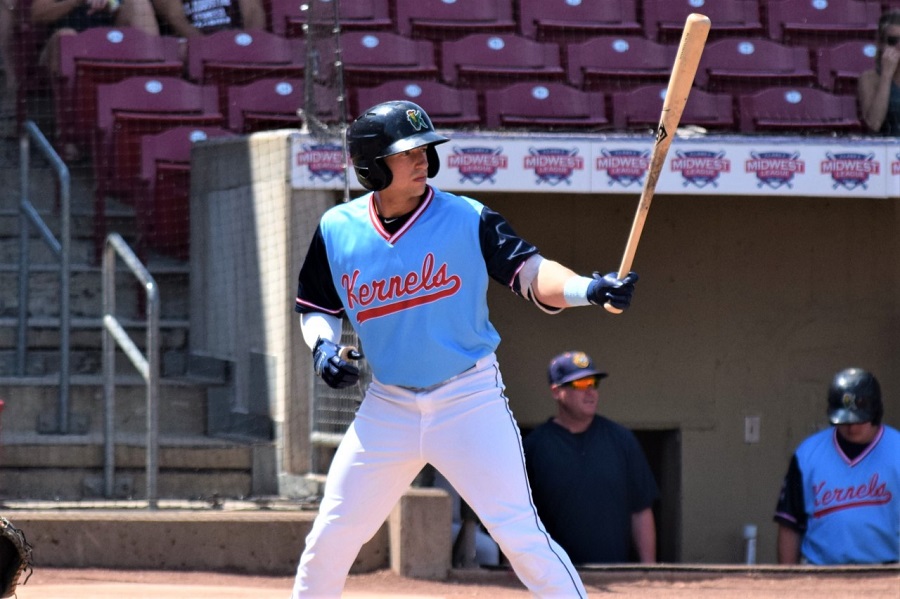 Spencer Steer was born and raised in Long Beach, California. He grew up an Angels fan, rooting for some really good, star-laden teams. Steer said, “I always loved Garrett Anderson, watching him play. Obviously I’ve loved watching Mike Trout the last eight years or so. It’s fun to be able to drive 20 minutes and watch him play.” That’s where he grew to love the game of baseball. He played at MIllikan High School where he starred on the baseball team for four seasons. He played in some Perfect Game events as well. “I got some great experience playing in those Perfect Game tournaments against that kind of competition.” https://twitter.com/JimCrikket/status/1167631572369125376 Steer had been drafted before. He was selected by Cleveland in the 29th round of the 2016 MLB Draft. While he wasn’t against the idea of signing, he had a pretty strong commitment to the University of Oregon. “I was pretty set on going to school. I never took the draft for granted, and I didn’t want to close that door and completely shut it off. I really wanted that college experience. It wasn’t a tough choice given the circumstances.” In his first year with the Ducks, he played well and earned Freshman All-American honors. IT was a good learning season for him, and he took those experiences and when he became the veteran, he returned the favor. “It was a big change. The competition level was much better than what I was seeing in high school. I was playing against guys three or four years older than me. That was definitely a bit of an adjustment. But learning from the older guys when I was a freshman, learning from their experiences and how they’ve grown through their couple of years. Then as a junior, trying to help the freshman out, giving them advice, showing them the ropes, helping them make the adjustment that I had to make as a freshman.” He again played well as a sophomore and was given the opportunity to spend that summer playing in the Cape Cod League. “I played (summer ball) every year. I played three years of summer ball and before my junior year I played in the Cape. It was a great experience. It was a time to work on things, to refine your skills and develop new ones. My experience with summer ball was great.” This spring, he put together a really strong junior season. In 56 games, he hit .349/.456/.502 (.958) with 13 doubles and six homers. He was named first-time All Pac 12 on the field as well as an Academic All Pac 12 performer. It’s not always easy to balance with the schedules of a Division I athlete, but Steer credits the school for helping make it possible. “They gave us a bunch of resources at Oregon, tutors and support staff from the academic side of things. It’s amazing. They make it easier for us. They are able to help us out. The coaches are also good with scheduling, making sure we have enough time to get home after practice and do our academics.” Steer’s major is General Social Science with an emphasis in business. “I’m going back to Oregon this fall and hopefully getting to just a term away from graduating this offseason.” In talking with Steer, it was very clear that his time at Oregon was meaningful to and for him on and off the field. “The University of Oregon. The experience I had there with the coaching staff. Coach (George) Horton is a really great coach. He really prepared me for more than just baseball, but also for life outside of baseball. How to be a man. The culture we have at Oregon has taught me a lot about what it’s like to be a good teammate, to be a man, to love your family, to treat people with respect and all the lessons I’ve learned there.I just think that the experiences at Oregon have helped me to become the professional that I am.” Steer had already been drafted once, but as the 2019 draft approached, it was a different experience for him. This time, he was ready to begin his professional career and knew he had a chance to be drafted much higher. He began hearing from scouts last fall. He was also appreciative that scouts generally spent more time talking to coaches once the season started so that he could focus on just playing. “It started in the fall. They’d come in and see where your head was at. It was a different experience for me because I knew I wanted to take that next step in my career, and I knew I was ready for it.” One team that he did not talk to at all before the draft was the Minnesota Twins. “I didn’t hear anything from the Twins, surprisingly, until after the draft. I never heard anything from them prior to the draft.” Yet, the Twins obviously liked him enough and made him their third-round draft pick in June, the 90th overall draft pick this year. It isn’t unusual for teams to do this, to try to make it look (to other organizations) like they aren’t really all that interested, so that they have a better chance or some additional hope to draft him.) photo by Steve Buhr During the draft, Steer tried not to stress too much and was just hanging out in Eugene with a few friends and teammates. “It was a pretty special moment to hear my name that early in the draft. It didn’t really sink in until a couple of days later.” Soon after the draft, Steer was on a plane to Minneapolis where he met with the Twins front office, watched a game and signed a professional contract to play in the Minnesota Twins organization. He spent a little time in Ft. Myers and then made the trek north to start his career with the Elizabethton Twins. In 20 games, he hit .325/.442/.506 (.948) with 13 doubles and six home runs. He walked 15 times with just five strikeouts. “Elizabethton is a great place to start. It wasn’t too much adjusting. It was just playing baseball every day instead of every weekend. It was just the toll on your body was a little different, but I was able to experience that in summer ball. So it wasn’t too big of an adjustment.” The Twins felt he was ready to move up and sent him to the Cedar Rapids Kernels where, in 40 games, he has hit .265/.372/.406 (.778) with 13 doubles, two triples and two home runs. “You can notice that the pitching gets a little better. Guys have more control of their off-speed, and those pitches are a little better. Learn from the older guys on the team and seeing what their plan at the plate is and how they attack guys. Try to do as much as you can to learn every day and see what works best for you.” At E-Town, he played mostly shortstop. Since joining the Kernels, he’s mostly played third base though he has also been learning and getting time at second base. “For me defensively, the more defensive positions I can play, the better. I think my versatility is a huge advantage. I’m able to play all the positions in the infield. I’d say I’m probably most comfortable at third base because that’s where I’ve played the majority of my innings the last couple of years. But I’m starting to play a lot more second base here at Cedar Rapids .I played a lot of shortstop at Elizabethton. I think I’ve proved that I can play every spot. That’s a huge advantage to me.” For the most part, Steer has hit first or second. He’s had a couple of games in the middle of the order. “At this level, I’m not the most powerful guy, but I think I can be a guy who drives in runs. For that reason you can stick me at the top of the order and I’ll find ways on base and draw a lot of walks. I think at this level, I’m more of a top of the order guy, but that can always change as I get older and put on more weight.” https://twitter.com/JimCrikket/status/1166177637812846597 In the offseason, Steer will head back to Eugene, take a few classes and enjoy spending time with his friends. Follow Spencer Steer on Twitter at @spenc__er.
 -
There are many examples each season that remind us to put baseball games into proper perspective. Occasionally it comes in the form of a hurricane bearing down on Florida, cancelling the remainder of the Gulf Coast League and the Florida State League seasons. Pensacola played a doubleheader on Friday night, allowing their opponent the Montgomery Biscuits, to attend the funeral of their teammate’s wife, baby and mother-in-law. Hopefully we all have baseball in a proper perspective in our lives. These types of stories and events remind us of that too often. With that in mind… The Kernels won in yet another walkoff. Pensacola played two one-run games. Rochester displayed several pitchers we could see as early as tomorrow.Find out everything that happened happened in the Twins system on Friday, starting with the transaction of the day. TRANSACTIONS Seth Gray was promoted from Elizabethton to Cedar Rapids. Albee Weiss was sent from Cedar Rapids to Elizabethton.RED WINGS REPORTRochester 6, Syracuse 1 Box Score The Red Wings utilized a bullpen game on Friday night. Conceivably, it was a bullpen game in which as many as five of the pitchers could be in a Twins uniform on Sunday, or certainly by Tuesday. Devin Smeltzer started and went the first two innings. He gave up just one hit, walked none and struck out three batters. Zack Littell struck out two and walked one in his inning. Brusdar Graterol struck out two in his perfect inning. Sam Clay gave up one run on four hits and a walk over two innings. He struck out five. Trevor Hildenberger faced six batters and got all six of them out. Ryne Harper got the ninth inning. With one out, he gave up two hits and a walk to load the bases. He ended the game with back-to-back strikeouts. Brandon Barnes went 2-for-3 with a walk and two RBIs in the game. Ronald Torreyes went 2-for-3. Zander Wiel knocked his 24th home run. BLUE WAHOOS BITES Game 1 - Pensacola 3, Montgomery 2 Box Score Bryan Sammons put together another good start for the Wahoos. The lefty gave up two runs on three hits and a walk in 5 2/3 innings. He struck out six batters. Anthony Vizcaya got the final four outs, two on strikeouts, to record the win. Royce Lewis got the scoring going with a solo home run in the top of the first inning. It was his second AA homer. In the fifth inning, Joe Cronin tied the game with his fifth Pensacola homer. In the top of the seventh, Travis Blankenhorn singled in Alex Kirilloff with what proved to be the winning run. Larnach and Ryan Jeffers were each 2-for-3 with a walk. Lewis and Blankenhorn were 2-for-4. Game 2- Pensacola 1, Montgomery 2 Box Score Griffin Jax started for the Wahoos. He gave up two runs on three hits over five innings. He walked on and struck out five batters. Jovani Moran struck out one in a perfect inning. Pensacola’s offense didn’t get much going. Travis Blankenhorn went 1-for-2 with a walk and his 18th home run. He also stole his 11th base. The two teams will not play on Saturday so that the Biscuits can attend the funeral of their teammate Blake Biven’s wife, child and mother-in-law. The Kernels got some strong pitching in this game. Andrew Cabezas started and gave up five hits and three walks but no runs over 5 2/3 innings. He struck out three. JT Perez came on and got all four batters he faced out. Nate Hadley gave up a game-tying run, but struck out five batters over the final two innings. DaShawn Keirsey provided the offense early. He had three hits. Gabe Snyder drove in Daniel Ozoria with a triple in the seventh inning to start the scoring. With one out in the bottom of the ninth, Ozoria reached on an error and ended up at second base. Steer followed with the winner. TWINS DAILY PLAYERS OF THE DAY Twins Daily Minor League Pitcher of the Day - Andrew Cabezas, Cedar Rapids Kernels Twins Daily Minor League Hitter of the Day – Travis Blankenhorn, Pensacola Blue Wahoos PROSPECT SUMMARY Here’s a look at how the Twins Daily Midseason Top 20 Twins Prospects performed: #1 - Royce Lewis (Pensacola) - Game 1 (2-4, HR (2), R, RBI), Game 2 (0-2, BB, K, SB (6) #2 - Alex Kirilloff (Pensacola) - Game 1 (1-4, R), Game 2 (Did Not Play) #3 - Brusdar Graterol (Rochester) - 1 IP, 0 H, 0 R, 0 BB, 2 K (13 pitches, 10 strikes) #4 - Trevor Larnach (Pensacola) - Game 1 (2-3, BB, K), Game 2 (0-3, K) #5 - Wander Javier (Cedar Rapids) - Did Not Play #6 - Jordan Balazovic (Ft. Myers) - Did Not Pitch #7 - Keoni Cavaco (GCL Twins) - Season Complete #8 - Brent Rooker (Rochester) - Injured List #9 - Jhoan Duran (Pensacola) - Did Not Pitch #10 - Blayne Enlow (Ft. Myers) - Season Complete #11 - Lewis Thorpe (Rochester) - Did Not Pitch #12 - Nick Gordon (Rochester) - Injured List (lower leg contusion) #13 - Ryan Jeffers (Pensacola) - Game 1 (2-3, BB), Game 2 (1-3, K) #14 - Luis Arraez (Minnesota) - 1-4, BB, 2 R, RBI #15 - Matt Wallner (Cedar Rapids) - 1-3, BB, 2B(2) #16 - Ben Rortvedt (Pensacola) - Injured List #17 - Akil Baddoo (Ft. Myers) - Injured (Tommy John) #18 - Jorge Alcala (Rochester) - Did Not Pitch #19 - Misael Urbina (DSL Twins) - Season Complete #20 - Travis Blankenhorn (Pensacola) - Game 1 (2-4, RBI, K), Game 2 (1-2, BB, HR (18), R, RBI, SB(11) WEDNESDAY’S PROBABLE STARTERS Syracuse @ Rochester (5:05 CST) - TBD Pensacola @ Montgomery - Game moved ahead to a doubleheader on Friday, allowing the Montgomery team to attend the funeral of Blake Biven’s wife, baby and mother-in-law. Cedar Rapids @ Beloit (6:30 CST) - RHP Josh Winder (7-2, 2.68 ERA) Please feel free to ask any questions and discuss the Friday games or any other minor league topics you would like. Click here to view the article
- 9 replies
-
- 1
-
-
- spencer steer
- dashawn keirsey jr
- (and 3 more)
-
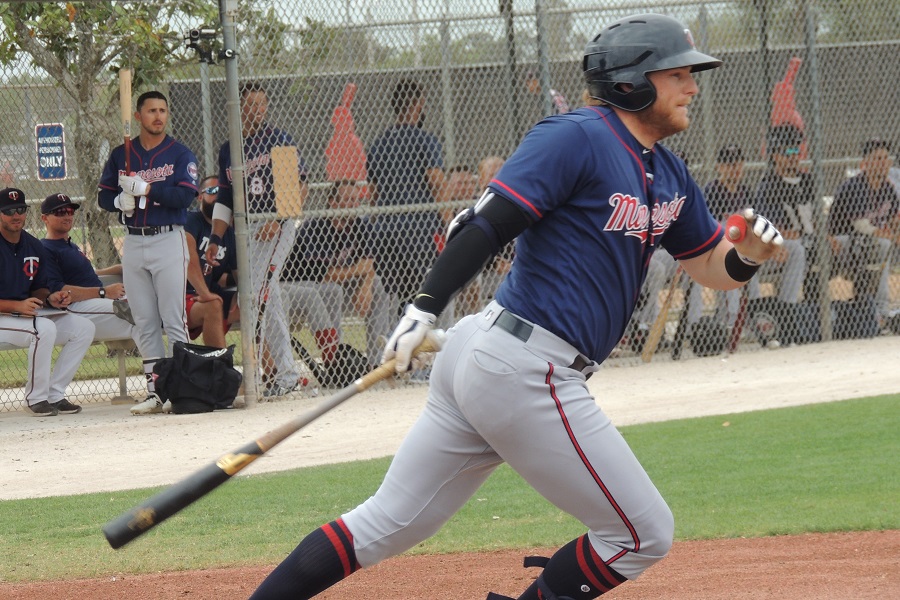 Find out everything that happened happened in the Twins system on Friday, starting with the transaction of the day. TRANSACTIONS Seth Gray was promoted from Elizabethton to Cedar Rapids. Albee Weiss was sent from Cedar Rapids to Elizabethton. RED WINGS REPORT Rochester 6, Syracuse 1 Box Score The Red Wings utilized a bullpen game on Friday night. Conceivably, it was a bullpen game in which as many as five of the pitchers could be in a Twins uniform on Sunday, or certainly by Tuesday. Devin Smeltzer started and went the first two innings. He gave up just one hit, walked none and struck out three batters. Zack Littell struck out two and walked one in his inning. Brusdar Graterol struck out two in his perfect inning. Sam Clay gave up one run on four hits and a walk over two innings. He struck out five. Trevor Hildenberger faced six batters and got all six of them out. Ryne Harper got the ninth inning. With one out, he gave up two hits and a walk to load the bases. He ended the game with back-to-back strikeouts. Brandon Barnes went 2-for-3 with a walk and two RBIs in the game. Ronald Torreyes went 2-for-3. Zander Wiel knocked his 24th home run. BLUE WAHOOS BITES Game 1 - Pensacola 3, Montgomery 2 Box Score Bryan Sammons put together another good start for the Wahoos. The lefty gave up two runs on three hits and a walk in 5 2/3 innings. He struck out six batters. Anthony Vizcaya got the final four outs, two on strikeouts, to record the win. Royce Lewis got the scoring going with a solo home run in the top of the first inning. It was his second AA homer. In the fifth inning, Joe Cronin tied the game with his fifth Pensacola homer. In the top of the seventh, Travis Blankenhorn singled in Alex Kirilloff with what proved to be the winning run. Larnach and Ryan Jeffers were each 2-for-3 with a walk. Lewis and Blankenhorn were 2-for-4. Game 2- Pensacola 1, Montgomery 2 Box Score Griffin Jax started for the Wahoos. He gave up two runs on three hits over five innings. He walked on and struck out five batters. Jovani Moran struck out one in a perfect inning. Pensacola’s offense didn’t get much going. Travis Blankenhorn went 1-for-2 with a walk and his 18th home run. He also stole his 11th base. The two teams will not play on Saturday so that the Biscuits can attend the funeral of their teammate Blake Biven’s wife, child and mother-in-law. https://twitter.com/wsfa12news/status/1167462391396929536 MIRACLE MATTERS Ft. Myers season was complete following their game on Thursday because of Hurricane Dorian. KERNELS NUGGETS Cedar Rapids 2, Quad Cities 1 Box Score For the second time this week, Spencer Steer has provided the Kernels with a walk- off win at home. It’s the third walk-off win this week for the Kernels. https://twitter.com/JimCrikket/status/1167631572369125376 The Kernels got some strong pitching in this game. Andrew Cabezas started and gave up five hits and three walks but no runs over 5 2/3 innings. He struck out three. JT Perez came on and got all four batters he faced out. Nate Hadley gave up a game-tying run, but struck out five batters over the final two innings. DaShawn Keirsey provided the offense early. He had three hits. Gabe Snyder drove in Daniel Ozoria with a triple in the seventh inning to start the scoring. With one out in the bottom of the ninth, Ozoria reached on an error and ended up at second base. Steer followed with the winner. TWINS DAILY PLAYERS OF THE DAY Twins Daily Minor League Pitcher of the Day - Andrew Cabezas, Cedar Rapids Kernels Twins Daily Minor League Hitter of the Day – Travis Blankenhorn, Pensacola Blue Wahoos PROSPECT SUMMARY Here’s a look at how the Twins Daily Midseason Top 20 Twins Prospects performed: #1 - Royce Lewis (Pensacola) - Game 1 (2-4, HR (2), R, RBI), Game 2 (0-2, BB, K, SB (6) #2 - Alex Kirilloff (Pensacola) - Game 1 (1-4, R), Game 2 (Did Not Play) #3 - Brusdar Graterol (Rochester) - 1 IP, 0 H, 0 R, 0 BB, 2 K (13 pitches, 10 strikes) #4 - Trevor Larnach (Pensacola) - Game 1 (2-3, BB, K), Game 2 (0-3, K) #5 - Wander Javier (Cedar Rapids) - Did Not Play #6 - Jordan Balazovic (Ft. Myers) - Did Not Pitch #7 - Keoni Cavaco (GCL Twins) - Season Complete #8 - Brent Rooker (Rochester) - Injured List #9 - Jhoan Duran (Pensacola) - Did Not Pitch #10 - Blayne Enlow (Ft. Myers) - Season Complete #11 - Lewis Thorpe (Rochester) - Did Not Pitch #12 - Nick Gordon (Rochester) - Injured List (lower leg contusion) #13 - Ryan Jeffers (Pensacola) - Game 1 (2-3, BB), Game 2 (1-3, K) #14 - Luis Arraez (Minnesota) - 1-4, BB, 2 R, RBI #15 - Matt Wallner (Cedar Rapids) - 1-3, BB, 2B(2) #16 - Ben Rortvedt (Pensacola) - Injured List #17 - Akil Baddoo (Ft. Myers) - Injured (Tommy John) #18 - Jorge Alcala (Rochester) - Did Not Pitch #19 - Misael Urbina (DSL Twins) - Season Complete #20 - Travis Blankenhorn (Pensacola) - Game 1 (2-4, RBI, K), Game 2 (1-2, BB, HR (18), R, RBI, SB(11) WEDNESDAY’S PROBABLE STARTERS Syracuse @ Rochester (5:05 CST) - TBD Pensacola @ Montgomery - Game moved ahead to a doubleheader on Friday, allowing the Montgomery team to attend the funeral of Blake Biven’s wife, baby and mother-in-law. Cedar Rapids @ Beloit (6:30 CST) - RHP Josh Winder (7-2, 2.68 ERA) Please feel free to ask any questions and discuss the Friday games or any other minor league topics you would like.
 -
The Twins announced their Arizona Fall League assignments this afternoon. SS Royce Lewis 1B/OF Alex Kirilloff LHP Jovani Moran RHP Dakota Chalmers LHP Zach Neff RHP Moises Gomez They also noted that a catcher will be added to that roster. Rortvedt has been on the IL for probably a month, so it may depend on his health.
