



Seth Stohs
-
Posts
25,909 -
Joined
-
Last visited
-
Days Won
109
Content Type
Profiles
News
Minnesota Twins Videos
2026 Minnesota Twins Top Prospects Ranking
2022 Minnesota Twins Draft Picks
Minnesota Twins Free Agent & Trade Rumors, Notes, & Tidbits
Guides & Resources
2023 Minnesota Twins Draft Picks
The Minnesota Twins Players Project
2024 Minnesota Twins Draft Picks
2025 Minnesota Twins Draft Pick Tracker
2026 Minnesota Twins Draft Tracker: Picks & Bonuses
Forums
Blogs
Events
Store
Downloads
Gallery
Everything posted by Seth Stohs
-
 Could be Brusdar. Could be Alcala. They could make more spots too.
- 14 replies
-
- 2
-

-
- devin smeltzer
- calvin faucher
- (and 3 more)
-
I talked to NIck Gordon yesterday (more coming soon)... he said his timetable is "as soon as possible." Hopefully that answers half of your question... Ha!
- 14 replies
-
- 1
-
-
- devin smeltzer
- calvin faucher
- (and 3 more)
-
MLB used Royce Lewis to start getting people talking about the Arizona Fall League as well as confirmed that he'll be playing in it. So, get your guesses in. Who will represent the Twins in Arizona? Here are my guesses: 1.) Alex Kirilloff - seems an easy choice to make up some of the at bats he missed early, also to be able to work more at first base. 2.) Ben Rortvedt - on the IL now, if he''s healthy, might be a good opportunity for him. Also, teams typically carry three catchers. 3.) Brent Rooker - he was supposed to go last year but hurt his ankle and got married. He's missed almost a month with the groin injury, so getting him ABs would be good. Same could be said for Nick Gordon who was in the AFL a couple of years ago. LaMonte Wade could be another option who has been there before. Pitchers are almost impossible to guess. Key prospects, especially starters, don't typically go because of innings limits. But, I'll guess. 1.) Dakota Chalmers - he's pitched well since coming back. But they may want to just give him a regular offseason. 2.) Cody Stashak/Randy Dobnak - lumping these guys together,... my thought being that if some of the younger 40-man roster guys don't get called up for September, maybe they go? 3.) Blayne Enlow/Jordan Balazovic- - Enlow's on the IL now with a non-arm injury (I believe). Balazovic is only at 84 innings on the season (though he threw 3-4 in the Pan Am Games too) It's hard to guess.
-
Sands has pitched well, but I'm guessing that was more of a case where they needed a Game 2 starter for the doubleheader. Maybe not though.
- 9 replies
-
- 1
-
-
- josh winder
- tyler webb
- (and 3 more)
-
I certainly would hope that Lewis Thorpe will get the first opportunity for that. Moya is pretty far down that list.
- 9 replies
-
- 2
-
-
- josh winder
- tyler webb
- (and 3 more)
-
It was a night full of intrigue in the Twins minor leagues on Monday night. First, there were several interesting transactions. Pensacola played a doubleheader, and in one of the games they got a strong pitching performance and in the other, they got some big hits from top prospects. The GCL Twins were actually able to play and won two good games as they received one of the top prospects from the Dominican Summer League.Find out everything that happened happened in the Twins system on Monday, starting with some awards and the transactions of the day. AWARDS RHP Chris Vallimont was named the Florida State League Pitcher of the Week.RHP Luis Rijo was named the Midwest League Pitcher of the WeekRHP Andriu Marin was named the Appalachian League Pitcher of the Week. Alex Kirilloff went 2-for-4 with his 16th double, and Ryan Jeffers went 2-for-3 with a walk and his third double. Cole Sands made his first Double-A start. The right-hander gave up two runs on four hits over four innings. He walked just one and struck out six batters. Gabriel Moya tossed three shutout innings. He gave up two hits, walked one and struck out three batters. MIRACLE MATTERS Ft. Myers Box Score No Game Scheduled. KERNELS NUGGETS Cedar Rapids 6, Quad Cities 2 Box Score The Kernels headed south to Davenport to take on the River Bandits again. Josh Winder got the start and pitched well. He gave up two runs on five hits over six innings. He struck out nine and did not issue a walk. He passed the 100 strikeout mark on the season, becoming the second Kernels pitcher to reach that number this year. The other pitcher on that list is Austin Schulfer who came out of the bullpen in relief. He gave up one hit, walked and and struck out three batters over two scoreless innings. Dylan Thomas worked a perfect ninth which included a strikeout. The Kernels gave Winder some good run support. OF Tyler Webb led the way by going 4-for-5 with two RBI. Trevor Casanova went 3-for-5 with his eighth and ninth doubles. Spencer Steer went 2-for-4 with a walk and his eighth double. LaMonte Wade, continuing his rehab, went 1-for-4 and walked once. Gilberto Celestino walked twice. E-TWINS E-NOTES E-Twins 2, Princeton 8 Box Score As shown above, E-Twins starter Andriu Marin was named the Appy League Pitcher of the Week on Monday. How did he do as a follow up to his fantastic start? Well, the youngster gave up eight runs (seven earned) on 12 hits over just 4 2/3 innings. He walked two and struck out four. Osiris German came in and worked the final 3 1/3 innings. He gave up just one hit, hit a batter and struck out three. Parker Phillips led the offense. He went 2-for-3 with a walk. Ricky De La Torre hit his first E-Twins double of the season. GCL TWINS TAKES Game 1 - GCL Twins 1, GCL Pirates 0 Box Score Right-hander Miguel Rodriguez threw three shutout innings. He gave up two hits, walked two, hit one and struck out three. On the year, he now has a 0.90 ERA over 30 innings and has 34 strikeouts. Junior Navas struck out five batters over the next three innings. He gave up just one hit and hit a batter. Evan Gillespie picked up the save with a scoreless seventh inning. The Twins managed just three hits. Jeferson Morales hit his third triple and later scored the game’s lone run on an error. Alec Craig had a walk and a single. Game 2 - Twins 7, GCL Pirates 2 Box Score German-born Niklas Rimmel improved to 3-1 with a 2.15 ERA. He tossed five shutout innings and gave up just three hits. He struck out seven and walked just one. Petru Balan gave up a run on two hits in the sixth inning. Bradley Hanner gave up a run on two hits in the seventh inning, but he struck out three. Luis Milla went 3-for-3 with his second double. Jake Hirabayashi went 2-for-3 with his second home run. Sergio Toribia went 2-for-3 as well. Also, playing his just his second GCL game since being promoted from the DSL, Luis Baez picked up his first stateside hit and stole a base. TWINS DAILY PLAYERS OF THE DAY Twins Daily Minor League Pitcher of the Day - Josh Winder, Cedar Rapids Kernels Twins Daily Minor League Hitter of the Day – Tyler Webb, Cedar Rapids Kernels PROSPECT SUMMARY Here’s a look at how the Twins Daily Midseason Top 20 Twins Prospects performed: #1 - Royce Lewis (Pensacola) - Game 1 (Did Not Play), Game 2 (0-4, K) #2 - Alex Kirilloff (Pensacola) - Game 1 (1-3), Game 2 (2-4, 2B(16), R, RBI, K) #3 - Brusdar Graterol (Rochester) - Did Not Pitch #4 - Trevor Larnach (Pensacola) - Game 1 (0-3, 3 K), Game 2 (1-2, BB, HR(6), HBP, R, 2 RBI) #5 - Wander Javier (Cedar Rapids) - 0-5, R, 3 K #6 - Jordan Balazovic (Ft. Myers) - No Game Scheduled #7 - Keoni Cavaco (GCL Twins) - Did Not Play (quad) #10 - Blayne Enlow (Ft. Myers) - Injured List (hamstring) #11 - Lewis Thorpe (Minnesota) - 2 IP, 2 H, 1 ER, 1 BB, 3 K #12 - Nick Gordon (Rochester) - Injured List (lower leg contusion) #13 - Ryan Jeffers (Pensacola) - Game 1 (Did Not Play), Game 2 (2-3, BB, 2B(3), R) #14 - Luis Arraez (Minnesota) - 3-5, 2B(8), R #15 - Matt Wallner (Elizabethton) - 0-3, BB #16 - Ben Rortvedt (Pensacola) - Injured List #17 - Akil Baddoo (Ft. Myers) - Injured (Tommy John) #18 - Jorge Alcala (Rochester) - Did Not Pitch #19 - Misael Urbina (DSL Twins) - 0-4, BB #20 - Travis Blankenhorn (Pensacola) - Game 1 (0-3, K), Game 2 (0-4) TUESDAY’S PROBABLE STARTERS Buffalo @ Rochester (6:05 CST) - LHP Devin Smeltzer (1-3, 3.45 ERA) Pensacola @ Mississippi (6:35 CST) - RHP Edwar Colina (4-0, 2.25 ERA) Ft. Myers @ Charlotte (5:30 CST) - TBD Cedar Rapids @ Quad Cities (6;35 CST) - LHP Kody Funderburk (0-2, 4.37 ERA) Elizabethton @ Princeton (5:30 CST) - TBD GCL Red Sox @ GCL Twins (11:00 CST) - TBD Please feel free to ask any questions and discuss the Monday games or any other minor league topics you would like. Click here to view the article
- 9 replies
-
- 1
-
-
- josh winder
- tyler webb
- (and 3 more)
-
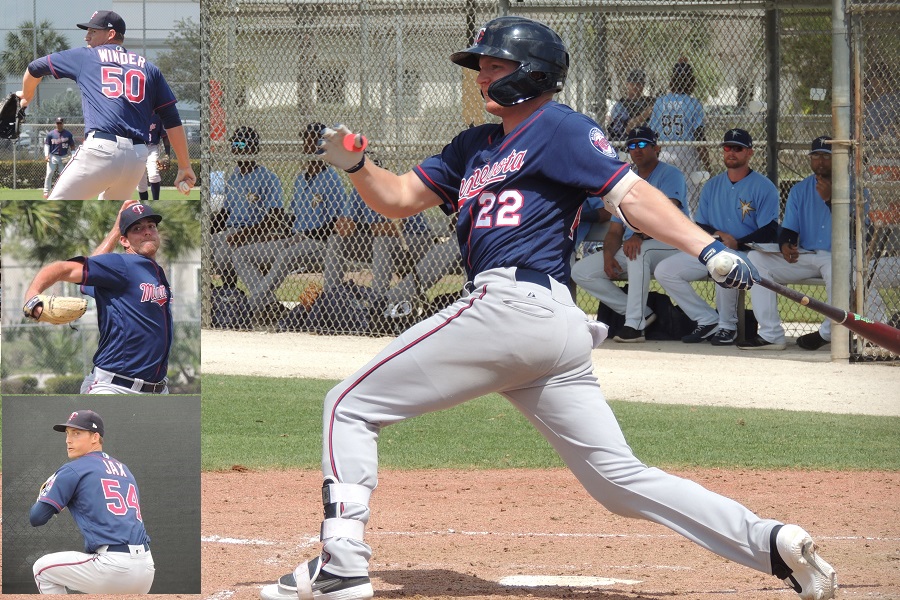 Find out everything that happened happened in the Twins system on Monday, starting with some awards and the transactions of the day. AWARDS RHP Chris Vallimont was named the Florida State League Pitcher of the Week. RHP Luis Rijo was named the Midwest League Pitcher of the Week RHP Andriu Marin was named the Appalachian League Pitcher of the Week. https://twitter.com/AppyLeague/status/1163536494893645830 TRANSACTIONS DH Nelson Cruz was activated from the injured list by the Twins, and they optioned RHP Zack Littell to Rochester. Rochester officially announced that RHPs Brusdar Graterol and Jorge Alcala are now on their roster. To make room for the two new pitchers, RHP Adam Bray was sent down to Pensacola. Also DJ Baxendale was placed on the IL. RHP Cole Sands was promoted to Pensacola and started Game 2 of their doubleheader. C Cole Donaldson and OF Bryson Gandy were placed on the GCL IL. CF Luis Baez was promoted from the Dominican Summer League to the GCL. The Twins also returned to the United Shores Professional Baseball League to sign 3B/C Eric Jones who had played at Davidson University. https://twitter.com/DavidsonBASE/status/1163572156766097408 RED WINGS REPORT Rochester 0, Buffalo 3 Box Score In this game recap, we start with the Red Wings offense… On to the pitching… Griffin Jax was really good for the Red Wings. The righty gave up just one run on four hits over six innings. He walked one, hit two and struck out seven. Sam Clay came on and was charged with two runs on three hits over 1 1/3 innings. Fernando Romero got the final five outs. He walked one and struck out one . Clay and Romero each hit a batter. Back to the Red Wings offense. The story was Buffalo starter who worked all nine innings and did not give up a hit. In fact, only a Mike Miller walk and hitting Zander Wiel with a pitch kept him from a perfect game. https://twitter.com/JoshWhetzel/status/1163628572470382592 BLUE WAHOOS BITES Game 1 - Pensacola 0, Mississippi 1 Box Score Bryan Sammons has quietly put together another really solid season, and he showed that again on Monday night. He tossed a complete game for the Blue Wahoos. The left-hander gave up just one hit. Unfortunately, that one hit came off the bat of Braves prospect Riley Unroe and it left the yard. It was the lone run of the game. Sammons worked six innings and walked two and struck out five. Pensacola managed just two hits in the game, one by Willians Astudillo (who DHd) and one by Alex Kirilloff. Over the past five weeks, Sammons has dropped his ERA from 5.26 down to 4.20. Just once in his past seven starts has he given up more than two earned runs. Game 2 - Pensacola 4, Mississippi 2 Box Score Trevor Larnach had a tough Game 1, striking out in each of his three at-bats. But this was Game 2, a new game, and in his first at-bat, he crushed his sixth Pensacola homer. He went 1-for-2 with a walk, and he was hit by a pitch. Larnach hit six home runs in 320 at-bats in Ft. Myers. His sixth homer with the Blue Wahoos came in just his 109th at-bat. Alex Kirilloff went 2-for-4 with his 16th double, and Ryan Jeffers went 2-for-3 with a walk and his third double. Cole Sands made his first Double-A start. The right-hander gave up two runs on four hits over four innings. He walked just one and struck out six batters. Gabriel Moya tossed three shutout innings. He gave up two hits, walked one and struck out three batters. MIRACLE MATTERS Ft. Myers Box Score No Game Scheduled. KERNELS NUGGETS Cedar Rapids 6, Quad Cities 2 Box Score The Kernels headed south to Davenport to take on the River Bandits again. Josh Winder got the start and pitched well. He gave up two runs on five hits over six innings. He struck out nine and did not issue a walk. He passed the 100 strikeout mark on the season, becoming the second Kernels pitcher to reach that number this year. The other pitcher on that list is Austin Schulfer who came out of the bullpen in relief. He gave up one hit, walked and and struck out three batters over two scoreless innings. Dylan Thomas worked a perfect ninth which included a strikeout. The Kernels gave Winder some good run support. OF Tyler Webb led the way by going 4-for-5 with two RBI. Trevor Casanova went 3-for-5 with his eighth and ninth doubles. Spencer Steer went 2-for-4 with a walk and his eighth double. LaMonte Wade, continuing his rehab, went 1-for-4 and walked once. Gilberto Celestino walked twice. E-TWINS E-NOTES E-Twins 2, Princeton 8 Box Score As shown above, E-Twins starter Andriu Marin was named the Appy League Pitcher of the Week on Monday. How did he do as a follow up to his fantastic start? Well, the youngster gave up eight runs (seven earned) on 12 hits over just 4 2/3 innings. He walked two and struck out four. Osiris German came in and worked the final 3 1/3 innings. He gave up just one hit, hit a batter and struck out three. Parker Phillips led the offense. He went 2-for-3 with a walk. Ricky De La Torre hit his first E-Twins double of the season. GCL TWINS TAKES Game 1 - GCL Twins 1, GCL Pirates 0 Box Score Right-hander Miguel Rodriguez threw three shutout innings. He gave up two hits, walked two, hit one and struck out three. On the year, he now has a 0.90 ERA over 30 innings and has 34 strikeouts. Junior Navas struck out five batters over the next three innings. He gave up just one hit and hit a batter. Evan Gillespie picked up the save with a scoreless seventh inning. The Twins managed just three hits. Jeferson Morales hit his third triple and later scored the game’s lone run on an error. Alec Craig had a walk and a single. Game 2 - Twins 7, GCL Pirates 2 Box Score German-born Niklas Rimmel improved to 3-1 with a 2.15 ERA. He tossed five shutout innings and gave up just three hits. He struck out seven and walked just one. Petru Balan gave up a run on two hits in the sixth inning. Bradley Hanner gave up a run on two hits in the seventh inning, but he struck out three. Luis Milla went 3-for-3 with his second double. Jake Hirabayashi went 2-for-3 with his second home run. Sergio Toribia went 2-for-3 as well. Also, playing his just his second GCL game since being promoted from the DSL, Luis Baez picked up his first stateside hit and stole a base. TWINS DAILY PLAYERS OF THE DAY Twins Daily Minor League Pitcher of the Day - Josh Winder, Cedar Rapids Kernels Twins Daily Minor League Hitter of the Day – Tyler Webb, Cedar Rapids Kernels PROSPECT SUMMARY Here’s a look at how the Twins Daily Midseason Top 20 Twins Prospects performed: #1 - Royce Lewis (Pensacola) - Game 1 (Did Not Play), Game 2 (0-4, K) #2 - Alex Kirilloff (Pensacola) - Game 1 (1-3), Game 2 (2-4, 2B(16), R, RBI, K) #3 - Brusdar Graterol (Rochester) - Did Not Pitch #4 - Trevor Larnach (Pensacola) - Game 1 (0-3, 3 K), Game 2 (1-2, BB, HR(6), HBP, R, 2 RBI) #5 - Wander Javier (Cedar Rapids) - 0-5, R, 3 K #6 - Jordan Balazovic (Ft. Myers) - No Game Scheduled #7 - Keoni Cavaco (GCL Twins) - Did Not Play (quad) #10 - Blayne Enlow (Ft. Myers) - Injured List (hamstring) #11 - Lewis Thorpe (Minnesota) - 2 IP, 2 H, 1 ER, 1 BB, 3 K #12 - Nick Gordon (Rochester) - Injured List (lower leg contusion) #13 - Ryan Jeffers (Pensacola) - Game 1 (Did Not Play), Game 2 (2-3, BB, 2B(3), R) #14 - Luis Arraez (Minnesota) - 3-5, 2B(8), R #15 - Matt Wallner (Elizabethton) - 0-3, BB #16 - Ben Rortvedt (Pensacola) - Injured List #17 - Akil Baddoo (Ft. Myers) - Injured (Tommy John) #18 - Jorge Alcala (Rochester) - Did Not Pitch #19 - Misael Urbina (DSL Twins) - 0-4, BB #20 - Travis Blankenhorn (Pensacola) - Game 1 (0-3, K), Game 2 (0-4) TUESDAY’S PROBABLE STARTERS Buffalo @ Rochester (6:05 CST) - LHP Devin Smeltzer (1-3, 3.45 ERA) Pensacola @ Mississippi (6:35 CST) - RHP Edwar Colina (4-0, 2.25 ERA) Ft. Myers @ Charlotte (5:30 CST) - TBD Cedar Rapids @ Quad Cities (6;35 CST) - LHP Kody Funderburk (0-2, 4.37 ERA) Elizabethton @ Princeton (5:30 CST) - TBD GCL Red Sox @ GCL Twins (11:00 CST) - TBD Please feel free to ask any questions and discuss the Monday games or any other minor league topics you would like.
 -
https://www.cleveland.com/tribe/2019/08/cleveland-indians-corey-kluber-could-be-shutdown-for-two-weeks.html In his rehab start on Sunday, Corey Kluber went just one inning and was removed with an abdominal injury. In the inning he pitched, he never topped 90 mph.
-
The Twins installed the Trackman system in all of their minor league facilities several years ago. That's where they get their velocity (and everything else) readings. I don't know if the scoreboards are necessarily linked to that. That said, the board said 103 and the Blue Wahoos tweet said "Actually 103.8" which is what the trackman system would have told them.
- 22 replies
-
- 4
-
-
- brusdar graterol
- jorge alcala
- (and 3 more)
-
Of course. Over time, the continued development of his secondary pitches will remain important. Yes, he's throwing 99-103 (and 104 last night), but what I like about him from when I've seen him in person or on milb dot tv is that he's got the makings of a good changeup and a good slider. If he's going to remain a starter, and that's certainly still the plan going forward, he'll need both of them. If he is just fastball slider, he can be a dominant reliever. If he's just fastball, he can still be a good reliever. But yes, even an Aroldis Chapman 102-105 mph fastball got hit once in awhile. I do hope people's expectations are somewhat tempered, but I also hope people realize the big picture of what he can be and not base anything on what happens in a month (good or bad). But I would hope that with any pitcher (or hitter).
-
Exactly. I would think by August 31st just to ensure that he can be on the playoff roster. I know there are loopholes, but why mess with that.
- 19 replies
-
- 2
-
-
- jorge alcala
- brusdar graterol
- (and 3 more)
-
When I asked previously, I was told he isn't hurt. Maybe he is now, but it's definitely surprising to see how little he's played. He went on a stretch where he had played in something like 7 straight games and now it's quiet again. Not sure I understand. But he was definitely a guy that flew up draft lists late because of immense talent, but people also admitted he is quite raw. So my guess is a lot of back field work and time in the cage, etc.
-
That's the big story of the night... Graterol and Alcala getting to AAA and getting some time with the MLB ball!!! That's smart.
- 19 replies
-
- 4
-
-
- jorge alcala
- brusdar graterol
- (and 3 more)
-
If he's starting games in the big leagues, they'll monitor his appearances and his innings and hit pitch counts throughout the season so that he isn't limited late in the year. The absolutely still see him as a starter and that's the direction they'll go with him.
- 20 replies
-
- 1
-
-
- willians astudillo
- trevor larnach
- (and 3 more)
-
Thorpe was officially called up. I just don't think they call up Graterol until August 31st. Also, the only reason that Graterol is working out of the bullpen is to pitch for the Twins...and because he was hurt for 3 months. He'lll move back to starting in 2019.
- 20 replies
-
- 2
-
-
- willians astudillo
- trevor larnach
- (and 3 more)
-
They'll announce the pitcher added as soon as he arrives at the ballpark today... assuming he's flying in this morning. Most think it'll be Thorpe. I would like to see Graterol prove his health for another week.
- 20 replies
-
- 4
-
-
- willians astudillo
- trevor larnach
- (and 3 more)
-
Nothing official. I went back and watched it. He got hit in the elbow area, maybe just above. Definitely and clearly hurt. I'm sure they'll have it x-rayed.
- 20 replies
-
- 2
-
-
- willians astudillo
- trevor larnach
- (and 3 more)
-
The big story is that Willians Astudillo (aka, La Tortuga) made his first rehab appearance on Thursday night with the Pensacola Blue Wahoos, and he made an immediate impact on the prospect-laden lineup. There was also a first win in Rochester. There was a first save in Cedar Rapids where a young pitching prospect continued to pitch great. There was a walkoff in the Elizabethton game too.Find out everything that happened happened in the Twins system on Thursday, starting with the transactions of the day. TRANSACTIONS Before Thursday’s game, the Twins activated RHP Michael Pineda and RHP Randy Dobnak was optioned to the Red Wings.Following the Twins win in Texas, Devin Smeltzer was optioned to AAA Rochester. A corresponding move will be made on Friday. Who will it be?Edouard Julien (Elizabethton) and Seth Pinkerton (GCL) were moved to the 60 day injured lists.RED WINGS REPORTRochester 7, Indianapolis 3 Box Score The Red Wings got off to a fast start and used a big fourth inning to help lefty Charlie Barnes to his first Triple-A win. In his second Red Wings start, Charlie Barnes gave up two runs on seven hits over five innings. He struck out five without walking any. Jake Reed came on and pitched a scoreless sixth inning. He gave up one run in the seventh. Sam Clay got the final two outs or that seventh inning and worked two more scoreless innings to record his second Red Wings save. Already up 3-0, the Red Wings scored four runs in the fourth inning. The big blow was a three-run homer off the bat of Ramon Flores. It was his second homer since joining the Red Wings recently. Flores also had a single and a walk. Tomas Telis went 3-for-4. Zander Wiel went 2-for-5 with his 33rd double. Mike Miller went 2-for-4. BLUE WAHOOS BITES Pensacola 13, Chattanooga 0 Box Score Willians Astudillo began his rehab assignment with the Blue Wahoos. He batted second and was the catcher. He helped get things going on the right note right away. In the first inning, he hit a long home run to put the Wahoos on the scoreboard. Soon after, Ryan Jeffers knocked his third Pensacola homer, a two-run shot. Austin Schulfer pitched a scoreless eighth inning. He gave up one run in the ninth inning but stranded a runner to record the save. It was the first save of his professional career. E-TWINS E-NOTES E-Twins 3, Danville 4 Box Score Sawyer Gipson-Long started and gave up three runs (two earned) on six hits and a walk in four innings. He struck out five. Ryan Shreve worked the next four innings and gave up just three hits. He gave up no runs, walked none and struck out three. Osiris German came into a tie game in the bottom of the ninth. He got two outs, but he hit a batter and gave up two hits to take the loss. Ruben Santana led off and led the offense by going 4-for-6 with a stolen base in this game. Max Smith went 3-for-4 with his third stolen base. Anthony Prato went 2-for-3 with a hit batter and his sixth double. Will Holland added his sixth home run. GCL TWINS TAKES GCL Twins, GCL Braves Box Score For the second straight day, the GCL Twins were postponed by rain. The games will not be rescheduled. TWINS DAILY PLAYERS OF THE DAY Twins Daily Minor League Pitcher of the Day - Luis Rijo, Cedar Rapids Kernels Twins Daily Minor League Hitter of the Day – Ryan Costello, Pensacola Blue Wahoos PROSPECT SUMMARY Here’s a look at how the Twins Daily Midseason Top 20 Twins Prospects performed: #1 - Royce Lewis (Pensacola) - 2-4, 3 R, RBI, SF, SB(4) #2 - Alex Kirilloff (Pensacola) - 1-4, BB, R, K #3 - Brusdar Graterol (Pensacola) - Did Not Pitch #4 - Trevor Larnach (Pensacola) - 2-4, BB, 2B(3), 2 R, 2 RBI, K #5 - Wander Javier (Cedar Rapids) - 1-3, BB, HR(9), R, RBI, K #6 - Jordan Balazovic (Ft. Myers) - Rained Out #7 - Keoni Cavaco (GCL Twins) - Rained Out #10 - Blayne Enlow (Ft. Myers) - Injured List (hamstring) #11 - Lewis Thorpe (Rochester) - Did Not Pitch #12 - Nick Gordon (Rochester) - Injured List (lower leg contusion) #13 - Ryan Jeffers (Pensacola) - 1-1, HR(3), HBP, R, 2 RBI #14 - Luis Arraez (Minnesota) - 3-5, 2B(10), HR(3), 2 R, 3 RBI #15 - Matt Wallner (Elizabethton) - 0-3, 2 BB, K #16 - Ben Rortvedt (Pensacola) - Injured List #17 - Akil Baddoo (Ft. Myers) - Injured (Tommy John) #18 - Jorge Alcala (Pensacola) - Did Not Pitch #19 - Misael Urbina (DSL Twins) - 1-3, BB, 2B(13), R #20 - Travis Blankenhorn (Pensacola) - 1-5, 2 RBI, K FRIDAY’S PROBABLE STARTERS Rochester @ Indianapolis (6:05 CST) - RHP Kohl Stewart (6-5, 5.68 ERA) Chattanooga @ Pensacola (6:35 CST) - TBD Ft. Myers @ Jupiter (5:30 CST) - RHP Jordan Balazovic (6-3, 2.76 ERA) Cedar Rapids @ Wisconsin (7:05 CST) - RHP Matt Canterino (0-0, 1.80 ERA) Elizabethton @ Danville (5:30 CST) - LHP Ryley Widell (1-5, 7.30 ERA) GCL Red Sox @ GCL Twins (11:00 CST) - TBD Please feel free to ask any questions and discuss the Thursday games or any other minor league topics you would like. Click here to view the article
- 20 replies
-
- 2
-
-
- willians astudillo
- trevor larnach
- (and 3 more)
-
Twins Minor League Report (8/15): Tortuga (Rehab) Time
Seth Stohs posted an article in Minor Leagues
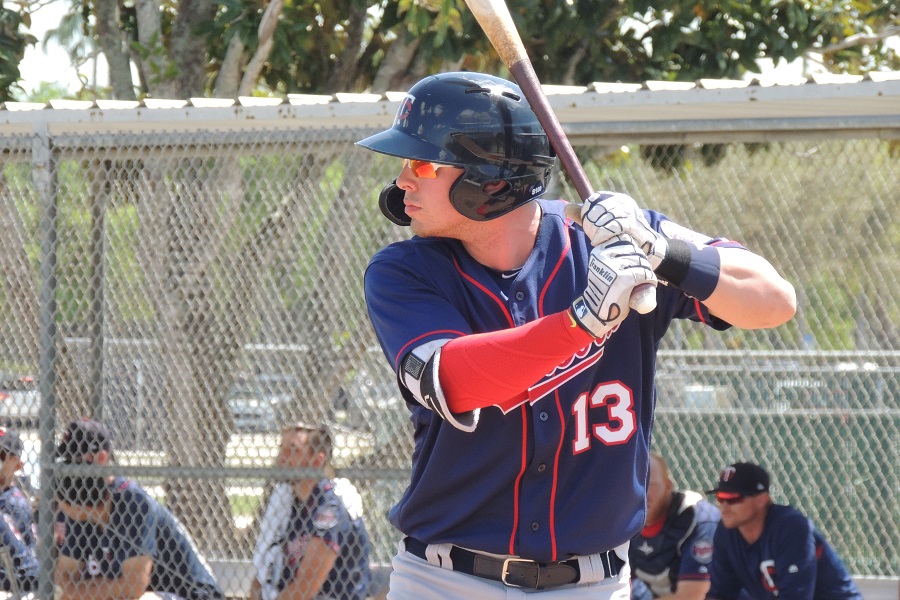 Find out everything that happened happened in the Twins system on Thursday, starting with the transactions of the day. TRANSACTIONS Before Thursday’s game, the Twins activated RHP Michael Pineda and RHP Randy Dobnak was optioned to the Red Wings. Following the Twins win in Texas, Devin Smeltzer was optioned to AAA Rochester. A corresponding move will be made on Friday. Who will it be? Edouard Julien (Elizabethton) and Seth Pinkerton (GCL) were moved to the 60 day injured lists. RED WINGS REPORT Rochester 7, Indianapolis 3 Box Score The Red Wings got off to a fast start and used a big fourth inning to help lefty Charlie Barnes to his first Triple-A win. In his second Red Wings start, Charlie Barnes gave up two runs on seven hits over five innings. He struck out five without walking any. Jake Reed came on and pitched a scoreless sixth inning. He gave up one run in the seventh. Sam Clay got the final two outs or that seventh inning and worked two more scoreless innings to record his second Red Wings save. Already up 3-0, the Red Wings scored four runs in the fourth inning. The big blow was a three-run homer off the bat of Ramon Flores. It was his second homer since joining the Red Wings recently. Flores also had a single and a walk. Tomas Telis went 3-for-4. Zander Wiel went 2-for-5 with his 33rd double. Mike Miller went 2-for-4. BLUE WAHOOS BITES Pensacola 13, Chattanooga 0 Box Score Willians Astudillo began his rehab assignment with the Blue Wahoos. He batted second and was the catcher. He helped get things going on the right note right away. In the first inning, he hit a long home run to put the Wahoos on the scoreboard. Soon after, Ryan Jeffers knocked his third Pensacola homer, a two-run shot. https://twitter.com/BlueWahoosBBall/status/1162200854092402691 After that, the offense just kept putting up runs. Royce Lewis went 2-for-4 and scored three runs. Trevor Larnach went 2-for-4 with a walk and his third double and drove in two runs. Ryan Costello went 2-for-5 with his second double and sixth home run. Mark Contreras added his ninth homer. Astudillo homered in his first plate appearance. His second plate appearance resulted in a walk. He hit into a double play before being replaced by Caleb Hamilton. Marcos Diplan was the opener in this game. He gave up a hit and walked one without giving up a run in the first inning. Edwar Colina came in and struck out four batters over three scoreless innings. Gabriel Moya worked the next three innings and struck out three batters. Anthony Vizcaya completed the shutout with two innings. MIRACLE MATTERS Ft. Myers, St. Lucie (Cancelled) Box Score The final game of the Miracle vs. Mets series was called due to rainy conditions. The game will not be made up. KERNELS NUGGETS Cedar Rapids 2, Wisconsin 1 Box Score The Kernels got a great start, a couple of home runs and then held on for a nice win in Wisconsin. Luis Rijo continues to pitch really well for the Kernels. On this night, he tossed seven shutout innings. He gave up just two hits. He didn’t walk a single batter and he struck out nine. He improved to 5-7 on the season and reduced his season ERA to 2.63. https://twitter.com/matthew_btwins/status/1162212361857454082 Gilberto Celestino has been red hot for nearly two months now. He got the Kernels off to a fast start with a first-inning solo homer. It was his tenth of the season. He went 2-for-2, walked and was hit by a pitch as well. In the fourth inning, Wander Javier hit a long home run, his ninth of the season, to give the Kernels a 2-0 lead. That was about it for the Kernels offense as they had just five hits in the game. https://twitter.com/matthew_btwins/status/1162223554814857218 Austin Schulfer pitched a scoreless eighth inning. He gave up one run in the ninth inning but stranded a runner to record the save. It was the first save of his professional career. E-TWINS E-NOTES E-Twins 3, Danville 4 Box Score Sawyer Gipson-Long started and gave up three runs (two earned) on six hits and a walk in four innings. He struck out five. Ryan Shreve worked the next four innings and gave up just three hits. He gave up no runs, walked none and struck out three. Osiris German came into a tie game in the bottom of the ninth. He got two outs, but he hit a batter and gave up two hits to take the loss. Ruben Santana led off and led the offense by going 4-for-6 with a stolen base in this game. Max Smith went 3-for-4 with his third stolen base. Anthony Prato went 2-for-3 with a hit batter and his sixth double. Will Holland added his sixth home run. GCL TWINS TAKES GCL Twins, GCL Braves Box Score For the second straight day, the GCL Twins were postponed by rain. The games will not be rescheduled. TWINS DAILY PLAYERS OF THE DAY Twins Daily Minor League Pitcher of the Day - Luis Rijo, Cedar Rapids Kernels Twins Daily Minor League Hitter of the Day – Ryan Costello, Pensacola Blue Wahoos PROSPECT SUMMARY Here’s a look at how the Twins Daily Midseason Top 20 Twins Prospects performed: #1 - Royce Lewis (Pensacola) - 2-4, 3 R, RBI, SF, SB(4) #2 - Alex Kirilloff (Pensacola) - 1-4, BB, R, K #3 - Brusdar Graterol (Pensacola) - Did Not Pitch #4 - Trevor Larnach (Pensacola) - 2-4, BB, 2B(3), 2 R, 2 RBI, K #5 - Wander Javier (Cedar Rapids) - 1-3, BB, HR(9), R, RBI, K #6 - Jordan Balazovic (Ft. Myers) - Rained Out #7 - Keoni Cavaco (GCL Twins) - Rained Out #10 - Blayne Enlow (Ft. Myers) - Injured List (hamstring) #11 - Lewis Thorpe (Rochester) - Did Not Pitch #12 - Nick Gordon (Rochester) - Injured List (lower leg contusion) #13 - Ryan Jeffers (Pensacola) - 1-1, HR(3), HBP, R, 2 RBI #14 - Luis Arraez (Minnesota) - 3-5, 2B(10), HR(3), 2 R, 3 RBI #15 - Matt Wallner (Elizabethton) - 0-3, 2 BB, K #16 - Ben Rortvedt (Pensacola) - Injured List #17 - Akil Baddoo (Ft. Myers) - Injured (Tommy John) #18 - Jorge Alcala (Pensacola) - Did Not Pitch #19 - Misael Urbina (DSL Twins) - 1-3, BB, 2B(13), R #20 - Travis Blankenhorn (Pensacola) - 1-5, 2 RBI, K FRIDAY’S PROBABLE STARTERS Rochester @ Indianapolis (6:05 CST) - RHP Kohl Stewart (6-5, 5.68 ERA) Chattanooga @ Pensacola (6:35 CST) - TBD Ft. Myers @ Jupiter (5:30 CST) - RHP Jordan Balazovic (6-3, 2.76 ERA) Cedar Rapids @ Wisconsin (7:05 CST) - RHP Matt Canterino (0-0, 1.80 ERA) Elizabethton @ Danville (5:30 CST) - LHP Ryley Widell (1-5, 7.30 ERA) GCL Red Sox @ GCL Twins (11:00 CST) - TBD Please feel free to ask any questions and discuss the Thursday games or any other minor league topics you would like.
 -
Willians Astudillo is start a rehab assignment tonight with the Pensacola Blue Wahoos.
-
- 1
-
-
Front Page: Series Preview: On the Road Again
Seth Stohs replied to Matt Braun's topic in Twins Daily Front Page News
Update .... Michael Pineda will start on Thursday night. https://twitter.com/morsecode/status/1161995869408911360 -
Pretty sure there is no tie between what was done in July (trade deadline) and Graterol (potentially) coming up. And yes, I want the Twins to have their best pitchers pitching down the stretch, even if this one is 20. I'm not as high on Wes Johnson as seemingly most, but I am completely fine with Graterol working with Johnson and Hefner.
- 17 replies
-
- 4
-
-
- royce lewis
- alex kirilloff
- (and 3 more)
-
Nope. I don't see any need for it. Just needs to get some innings under his belt, throw strikes and stay healthy.
- 17 replies
-
- 1
-
-
- royce lewis
- alex kirilloff
- (and 3 more)
-
It was a good night for the Twins top four prospects, each of who plays for Pensacola. Royce Lewis, Alex Kirilloff and Trevor Larnach combined to go 8-for-14 with four runs and three RBIs, and Brusdar Graterol recorded the first save of his professional career.Find out everything that happened happened in the Twins system on Wednesday, starting with the transactions of the day. TRANSACTIONS RHP Ryan Eades was DFAd by the Twins and claimed by the Baltimore Orioles.RHP DJ Baxendale was activated by the Red Wings, and RHP Cody Stashak returned from the Twins.C Ben Rortvedt was placed on the Pensacola injured list. C/1B Taylor Grzelakowski returned to the Blue Wahoos from Ft. Myers.RHP Jose Martinez was activated from the IL. RHP Alex Schick went on the IL with a hamstring injury.RED WINGS REPORTRochester 3, Indianapolis 5 Box Score Griffin Jax made his second start for the Red Wings. He gave up five runs (three earned) on seven hits in four innings. He gave up runs in three of the four innings he pitched. He did not walk or strike out anyone. Preston Guilmet and Ryan O’Rourke each tossed two scoreless innings. Guilmet gave up two hits, walked one and struck out three. O’Rourke gave up one hit and struck out three. Wynston Sawyer returned and led the offense. He went 4-for-4 in the game. Zander Wiel hit his 21st home run of the season in the ninth inning, but the rally came up short. BLUE WAHOOS BITES Pensacola 9, Chattanooga 7 Box Score Pensacola put up big, crooked numbers in two of the innings and held on when the Lookouts had one big inning. Alex Kirilloff led the way. He went 3-for-5 and hit his eighth home run in the first inning to put the Wahoos on the scoreboard. He also stole his sixth base. Trevor Larnach went 3-for-4. Royce Lewis went 2-for-5 and stole his third base. Jimmy Kerrigan was 2-for-5 and stole his 13th base. Caleb Hamilton was 1-for-2 with two walks. Seth Aside (because I get asked a lot): I have no doubt that Brusdar Graterol will be called up on the last day of August, if not sooner, assuming he remains healthy. MIRACLE MATTERS Ft. Myers 2, St. Lucie 1 Box Score The Miracle put together a well-pitched game, and a couple of Florida State League “Firsts” helped them to the win. Tyler Watson started and gave up just one run on six hits over six innings. He walked two and struck out six. Johan Quezada came in and got out outs. Moises Gomez got the final five outs of the game, four on strikeouts. The Miracle got on the board in the third inning. Jacob Pearson knocked his first home run for the Miracle. He went 3-for-4 in the game and also stole his sixth base. In the seventh inning, Yeltsin Encarnacion crushed his first Miracle home run, and it proved to be the game-winner. KERNELS NUGGETS Cedar Rapids 2, Wisconsin 3 Box Score The Kernels fell behind early, but runs in the eighth and ninth innings tied the score. However, they fell on an infield hit in the bottom of the ninth. In the eighth inning, a Wander Javier single scored Daniel Ozoria. Then in the top of the ninth inning, Trevor Casanova lofted a fly ball deep enough to score Spencer Steer with the tying run. Ozoria led the offense. He went 2-for-2 and was hit by a pitch. He stole his 10th and 11th bases. Kody Funderburk started for the Kernels. The left-hander started with four scoreless innings before giving up two runs in the fifth frame. In his 4 2/3 innings, he gave up the two runs on four hits and three walks. He struck out five. Jose Martinez gave up two hits but no runs over the next 1 1/3 innings. He struck out two. Dylan Thomas tossed two scoreless innings. Nate Hadley came in for the ninth inning, but with two outs, he gave up an infield single that scored the winning run. E-TWINS E-NOTES E-Twins Box Score No Game Scheduled. GCL TWINS TAKES GCL Twins, GCL Braves Box Score The GCL Twins were postponed by rain… again. The two teams are scheduled to play two games on Thursday. TWINS DAILY PLAYERS OF THE DAY Twins Daily Minor League Pitcher of the Day - Tyler Watson, Ft. Myers Miracle Twins Daily Minor League Hitter of the Day – Alex Kirilloff, Pensacola Blue Wahoos PROSPECT SUMMARY Here’s a look at how the Twins Daily Midseason Top 20 Twins Prospects performed: #1 - Royce Lewis (Pensacola) - 2-5, R, K, SB(3) #2 - Alex Kirilloff (Pensacola) - 3-5, HR(8), 2 R, 2 RBI, K, SB(6) #3 - Brusdar Graterol (Pensacola) - 1.1 IP, 0 H, 0 R, 2 BB, 0 K (13 pitches, 5 strikes) #4 - Trevor Larnach (Pensacola) - 3-4, R, RBI, K, SF #5 - Wander Javier (Cedar Rapids) - 1-3, BB, RBI, K #13 - Ryan Jeffers (Pensacola) - 0-4, BB, R, 2 K #18 - Jorge Alcala (Pensacola) - 1.1 IP, 2 H, 1 ER, 1 BB, 1 K (25 pitches, 17 strikes) #19 - Misael Urbina (DSL Twins) - 2-5, 3B(5), R, RBI, K, CS THURSDAY’S PROBABLE STARTERS Rochester @ Indianapolis (6:05 CST) - LHP Charlie Barnes (0-0, 8.31 ERA) Chattanooga @ Pensacola (6:35 CST) - RHP Edwar Colina (3-0, 2.52 ERA) St. Lucie @ Ft. Myers (6:00 CST) - RHP Jordan Balazovic (6-3, 2.76 ERA) Cedar Rapids @ Wisconsin (7:05 CST) - RHP Luis Rijo (4-7, 2.84 ERA) Elizabethton @ Danville (5:30 CST) - RHP Sawyer Gipson-Long (0-1, 5.65 ERA) GCL Twins @ GCL Braves (DH @ 9:00 CST) - TBD, TBD Please feel free to ask any questions and discuss the Wednesday games or any other minor league topics you would like. Click here to view the article
- 17 replies
-
- 1
-
-
- royce lewis
- alex kirilloff
- (and 3 more)
-
Twins Minor League Report (8/14): Prospects in Pensacola
Seth Stohs posted an article in Minor Leagues
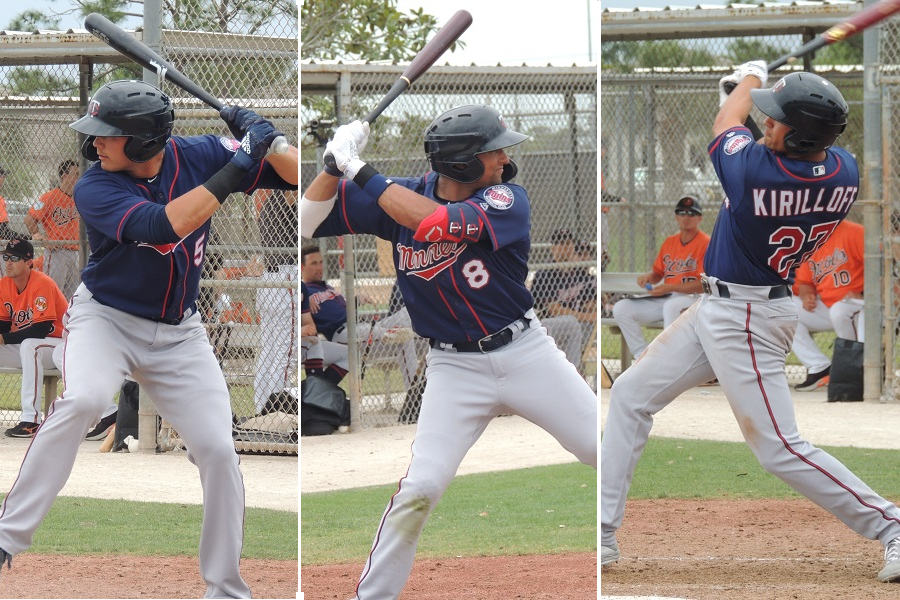 Find out everything that happened happened in the Twins system on Wednesday, starting with the transactions of the day. TRANSACTIONS RHP Ryan Eades was DFAd by the Twins and claimed by the Baltimore Orioles. RHP DJ Baxendale was activated by the Red Wings, and RHP Cody Stashak returned from the Twins. C Ben Rortvedt was placed on the Pensacola injured list. C/1B Taylor Grzelakowski returned to the Blue Wahoos from Ft. Myers. RHP Jose Martinez was activated from the IL. RHP Alex Schick went on the IL with a hamstring injury. RED WINGS REPORT Rochester 3, Indianapolis 5 Box Score Griffin Jax made his second start for the Red Wings. He gave up five runs (three earned) on seven hits in four innings. He gave up runs in three of the four innings he pitched. He did not walk or strike out anyone. Preston Guilmet and Ryan O’Rourke each tossed two scoreless innings. Guilmet gave up two hits, walked one and struck out three. O’Rourke gave up one hit and struck out three. Wynston Sawyer returned and led the offense. He went 4-for-4 in the game. Zander Wiel hit his 21st home run of the season in the ninth inning, but the rally came up short. BLUE WAHOOS BITES Pensacola 9, Chattanooga 7 Box Score Pensacola put up big, crooked numbers in two of the innings and held on when the Lookouts had one big inning. Alex Kirilloff led the way. He went 3-for-5 and hit his eighth home run in the first inning to put the Wahoos on the scoreboard. He also stole his sixth base. Trevor Larnach went 3-for-4. Royce Lewis went 2-for-5 and stole his third base. Jimmy Kerrigan was 2-for-5 and stole his 13th base. Caleb Hamilton was 1-for-2 with two walks. https://twitter.com/matthew_btwins/status/1161813342853292032 Lefty Bryan Sammons started and gave up two runs on six hits over the first six innings. He walked two and struck out five batters. Tom Hackimer started the seventh inning. He recorded just one out and was charged with four runs on two hits and two walks. Jorge Alcala came on and gave up one run on two hits and a walk in 1 1/3 innings. Brusdar Graterol came on and got the final out of the eighth inning. He walked the leadoff batter in the ninth inning, but picked him off. He then walked a second batter before getting the three outs. It was the first save of Graterol’s professional career. https://twitter.com/BlueWahoosBBall/status/1161830777530789888 Seth Aside (because I get asked a lot): I have no doubt that Brusdar Graterol will be called up on the last day of August, if not sooner, assuming he remains healthy. MIRACLE MATTERS Ft. Myers 2, St. Lucie 1 Box Score The Miracle put together a well-pitched game, and a couple of Florida State League “Firsts” helped them to the win. Tyler Watson started and gave up just one run on six hits over six innings. He walked two and struck out six. Johan Quezada came in and got out outs. Moises Gomez got the final five outs of the game, four on strikeouts. The Miracle got on the board in the third inning. Jacob Pearson knocked his first home run for the Miracle. He went 3-for-4 in the game and also stole his sixth base. In the seventh inning, Yeltsin Encarnacion crushed his first Miracle home run, and it proved to be the game-winner. KERNELS NUGGETS Cedar Rapids 2, Wisconsin 3 Box Score The Kernels fell behind early, but runs in the eighth and ninth innings tied the score. However, they fell on an infield hit in the bottom of the ninth. In the eighth inning, a Wander Javier single scored Daniel Ozoria. Then in the top of the ninth inning, Trevor Casanova lofted a fly ball deep enough to score Spencer Steer with the tying run. Ozoria led the offense. He went 2-for-2 and was hit by a pitch. He stole his 10th and 11th bases. Kody Funderburk started for the Kernels. The left-hander started with four scoreless innings before giving up two runs in the fifth frame. In his 4 2/3 innings, he gave up the two runs on four hits and three walks. He struck out five. Jose Martinez gave up two hits but no runs over the next 1 1/3 innings. He struck out two. Dylan Thomas tossed two scoreless innings. Nate Hadley came in for the ninth inning, but with two outs, he gave up an infield single that scored the winning run. E-TWINS E-NOTES E-Twins Box Score No Game Scheduled. GCL TWINS TAKES GCL Twins, GCL Braves Box Score The GCL Twins were postponed by rain… again. The two teams are scheduled to play two games on Thursday. TWINS DAILY PLAYERS OF THE DAY Twins Daily Minor League Pitcher of the Day - Tyler Watson, Ft. Myers Miracle Twins Daily Minor League Hitter of the Day – Alex Kirilloff, Pensacola Blue Wahoos PROSPECT SUMMARY Here’s a look at how the Twins Daily Midseason Top 20 Twins Prospects performed: #1 - Royce Lewis (Pensacola) - 2-5, R, K, SB(3) #2 - Alex Kirilloff (Pensacola) - 3-5, HR(8), 2 R, 2 RBI, K, SB(6) #3 - Brusdar Graterol (Pensacola) - 1.1 IP, 0 H, 0 R, 2 BB, 0 K (13 pitches, 5 strikes) #4 - Trevor Larnach (Pensacola) - 3-4, R, RBI, K, SF #5 - Wander Javier (Cedar Rapids) - 1-3, BB, RBI, K #13 - Ryan Jeffers (Pensacola) - 0-4, BB, R, 2 K #18 - Jorge Alcala (Pensacola) - 1.1 IP, 2 H, 1 ER, 1 BB, 1 K (25 pitches, 17 strikes) #19 - Misael Urbina (DSL Twins) - 2-5, 3B(5), R, RBI, K, CS THURSDAY’S PROBABLE STARTERS Rochester @ Indianapolis (6:05 CST) - LHP Charlie Barnes (0-0, 8.31 ERA) Chattanooga @ Pensacola (6:35 CST) - RHP Edwar Colina (3-0, 2.52 ERA) St. Lucie @ Ft. Myers (6:00 CST) - RHP Jordan Balazovic (6-3, 2.76 ERA) Cedar Rapids @ Wisconsin (7:05 CST) - RHP Luis Rijo (4-7, 2.84 ERA) Elizabethton @ Danville (5:30 CST) - RHP Sawyer Gipson-Long (0-1, 5.65 ERA) GCL Twins @ GCL Braves (DH @ 9:00 CST) - TBD, TBD Please feel free to ask any questions and discuss the Wednesday games or any other minor league topics you would like.
