



Seth Stohs
-
Posts
25,909 -
Joined
-
Last visited
-
Days Won
109
Content Type
Profiles
News
Minnesota Twins Videos
2026 Minnesota Twins Top Prospects Ranking
2022 Minnesota Twins Draft Picks
Minnesota Twins Free Agent & Trade Rumors, Notes, & Tidbits
Guides & Resources
2023 Minnesota Twins Draft Picks
The Minnesota Twins Players Project
2024 Minnesota Twins Draft Picks
2025 Minnesota Twins Draft Pick Tracker
2026 Minnesota Twins Draft Tracker: Picks & Bonuses
Forums
Blogs
Events
Store
Downloads
Gallery
Everything posted by Seth Stohs
-
Glenn Williams signed with the Atlanta Braves in 1993 as arguably the best prospect to come out of Australia. He played 1,260 minor league games. In 2005, he played in (and got a hit in) 13 games for the Minnesota Twins. He remains very active in Australian Baseball to this day. In the history of Major League Baseball, there have been 32 players from Australia. Twelve of those players have spent at least part of their career in the Minnesota Twins organization. Williams looked to infielder Craig Shipley as his role model growing up. Shipley was really the first Australian to play in the big leagues in the modern era. He played for five teams over parts of 11 major-league seasons. Williams said, “I was fortunate that my dad had a baseball store with Craig’s father and brother at the time. I grew up with Craig being my baseball hero. To know him and get to talk to him as an eight, ten, twelve year old was really cool.” Williams was already becoming a star in Australian baseball in his own right. He was on an Australian national team traveling to a tournament in Mexico. They stopped in Los Angeles and went to a Dodgers game. It was the first MLB game he had seen in person. The Mets shortstop got hurt in the first inning. Shipley played the rest of the game. “It was a dream come true, and to see an Aussie run out on the field and play shortstop. I remember it was almost like, ‘Hey, maybe I can do that as well.” In the early ‘90s, players like Graeme Lloyd and David Nilsson were surfacing in the big leagues. There were more minor leaguers from Australia. And scouts were spending more time in Australia trying to find a new hotbed of talent. When he was 13, Williams was a batboy with Sydney in the Australian Baseball League. He got to work out with the team. They had an affiliation with the Blue Jays, so occasionally their coaches would come to Australia. Before he turned 16, Williams and his parents got on a plane and flew to the States to spend time talking to the various teams that had shown interest in him. “They wanted to get a comfort level for their 16-year-old to sign a professional contract and go away to play. Will they feel comfortable with the way I was going to be treated? In hindsight, it was a showcase event in front of a bunch of decision-makers in major-league ballparks. His tour included some time with the Twins. “I worked out at the Metrodome on the field. I took BP before a game. Tom Kelly threw me BP. Kirby Puckett’s out there. It was almost like, as a 16-year-old, I look back at it now, it was amazing. Didn’t realize it at the time, but what a great thing my mom and dad did.” However, he signed soon after with the Atlanta Braves for a signing bonus of $925,000. He split the 1994 season between the Gulf Coast League and the Appalachian League, nearly four years younger than the average player. That became a theme. At 17 in 1995, he was playing in Low-A ball against players as much as seven years older than him. He spent six years in the Braves organization, and he definitely struggled. He reached Double-A, and called the whole thing a big learning experience. “First time lifting weights, coming to the States, being a kind of uber-prospect at the time. Let’s have him in the baserunning group, and the extra hitting group and the extra infield group. It was a large volume of work. Then the way to get players better and develop is to put them out there as much as possible. So mentally, physically and emotionally it was a really difficult transition to come from Australia and not only compete against players who were significantly older, had more experience but were also better than me. Mentally, the Braves got me a lot of money. My expectation was to get off the plane, hit .300 and hit 20 home runs a year.” He continued, “I wish I would have concentrated on just getting better. I worked really, really hard, but it was more about me trying to improve and trying to prove myself. I think the way teams are handling younger players better now with work loads, easing them into it. At the time, it was just pretty rare to have a 16-year-old from a country where baseball isn’t their #1 sport.” He joined the Blue Jays organization and played three years in Triple-A Syracuse (2002-2004). In 2004, he hit .264 with 23 doubles and 23 home runs. Still, no big-league call up. “I really liked my time in Toronto, but I didn’t walk. So, analytically, JP Ricciardi didn’t like that. With the SABRmetrics, I wasn’t fitting what the organization was looking for.” He was again a free agent. This time, he chose the Twins. The first day that they could, the Twins called Williams. “They gave me an opportunity to sign a minor league deal and come to spring training with them. I grabbed it with both hands. It worked out well.” He noted, “Funny enough, when I went on my trip before I turned 16, I had 14 or 15 teams that had interest. The Twins were a team that showed the most interest. The Blue Jays showed a lot of interest, and the Braves had the most interest.” In early June of 2005, Williams was in Rochester, playing well with the Red Wings. There were rumblings that the Twins were planning to make a couple of moves. Williams recalled, “In the clubhouse, people figured that it was between me, Michael Ryan and Brent Abernathy. His girlfriend (now his wife) was visiting for a couple of weeks. Abernathy got called up, and so did Mike Ryan. They were good friends of mine, so I was pumped for them, but at the same time I was thinking ‘Well, that’s it!’” His girlfriend was flying back to Australia. He was at the airport for a flight to Norfolk. He remembers having a conversation with his future wife and saying “This is it. If I don’t get a call up this year, I’m hanging it up.” She got on a plane and flew back to Australia. Williams went to Norfolk. Three days later, Red Wings manager Rich Miller called him into the office. There was a day game the next day. Miller told him that he was going to give him the day game off to rest up. For some reason, he had to play in that game after all. After that day game, Miller called Williams into the office and said, “I know I said you weren’t playing today, but I had to get you in there. You’re definitely not playing for us tomorrow. You’ll be playing in Phoenix.” Williams looked at his manager… “Right. It didn’t click right away. What does that mean? Have I been traded? What’s happened?” The Twins had some inter-league games coming up. They were dealing with some injuries and had a run of National League games. His manager told him that he could play several positions and was a switch-hitter who could get pinch hitting chances. And he reminded him that he had been playing really well and earned it. His fiance (now wife) Laila had just arrived home. He called her first and gave her the news. She wasn’t able to get to Phoenix, but she surprised Glenn by showing up in Los Angeles for the three days before returning to Australia, again. His second call was to his parents and his sister. His parents spent three days in Arizona. Three days in Los Angeles, and then went to Minnesota as well. On June 7th in Phoenix, the Twins were down 5-2 going into the sixth inning. Torii Hunter, hitting fourth for the Twins that game, led off the innings with a double. “Gardy said to me, if Radke’s spot comes up, you’re hitting for him. Get ready. Shawn Estes was pitching and there were two quick outs.” However, Michael Cuddyer walked and Juan Castro singled Cuddyer to second. Radke’s spot came up, and Williams was called on to hit. “They had a pitcher’s meeting. I swung at the first pitch, and hit it hard. It was probably going to go up the middle, but it hit Estes’s hand and rolled to second base. Williams beat the throw to first base for a single to load the bases.” For those curious, Estes was removed from the game. Mike Koplove came in and gave up a two-run, game-tying single to Shannon Stewart. The Twins went on to a 9-8 win. Williams played in 13 games for the Twins between June 7th and June 28th. He had at least one hit in all 13 games. At that point, in 40 at bats, he was hitting .425/.452/.450 (.902) with a double and two walks. Unfortunately, those were his career numbers between Williams got hurt. He dove into first base and his shoulder was hurt. He had shoulder surgery in 1999, so he knew immediately what was wrong. “You hope it’s not bad, but you know right away that it’s not great. It was kind of awkward. The next pitch, Shannon Stewart hit a double down the left field line. I’m trying to run to third base and I couldn’t move my arm. I slid in awkwardly. I was down for a moment. I looked down and there were three or four sets of shoes, including Gardy’s. It must have looked really bad, the way I was running. That was it. I was out of the game.” He continued. “It was really devastating at the time because I had worked so hard to get there. I’m really appreciative of every opportunity that I get. Just by circumstance and by performance, I had worked my way into the lineup, and I was trying to put my stamp on it, and really trying to establish myself. It was all taken away pretty quickly. It was pretty difficult to deal with.” He came back and spent 2006 and 2007 with the Rochester Red Wings, but he didn’t get another shot in the big leagues. “I probably wasn’t the same player after the surgery.” However, 15 years later, Williams is still so thankful for the opportunity he got for a month in the big leagues. “It was really cool. For me, it’s almost like I could have played for another month or six weeks. Then they would have figured me out as big league pitchers do, and you go up and down and maybe I go up and down. It’s unique to be remembered for having a hit in every game I played in. The way that I view it is that I could have had it happen in Rochester on a Friday night two weeks before getting the chance to call up. I worked really really hard to get to the Major Leagues and enjoyed every minute of it. I was appreciative of Terry Ryan and Gardy calling me up, and then Gardy putting me in the lineup and giving me a chance and going with the hot hand like he likes to do. He was putting me out there, and I was really enjoying it. I was feeling like a part of it, feel like you belong a little bit. I was there. I competed.” Asked about his fondest memory or a moment with the Twins that stands out, he paused for a moment. He said that playing third base behind prime Johan Santana was really special. “He’s just carving up hitters like it’s Little League. The next thing, it’s a strikeout. The next thing, it’s a ground ball. It just felt like the tempo that he had; he’s pounding the strike zone. He’s keeping these guys off balance. Playing defense in Metrodome, there’s a big crowd, the Cy Young winner is on the mound, and he’s just carving guys up. Playing defense behind that was incredible. We’re throwing the ball around, and I’m the guy giving it back to him to pitch. He’s got a big smile on his face. That was just him. That’s Johan Santana out there, and he’s absolutely dealing and I’m part of this.” When Australia didn’t qualify for the 2008 Olympics in Beijing, he was ready to hang up the cleats and move forward. His first job in baseball, post-playing career was as a coach at the MLB academy in Australia. In 2009, he was offered a job as baseball manager in his home of South Wales. “I’m a jack of all trades, master of none.” In the role, he says he looks after baseball programs from Little League up to working with players as they sign professional contracts. He’s looking out for state teams in national championships. He’s been a hitting coach for the national teams at times. “It’s a really steep learning curve to be able to learn how to be an administrator and manage programs and budgets and those things. That was my foray into my second career in sports.” He has been working to try to help fund several programs in Australia. He’s been developing partnerships with people in the US to help kids have the opportunities that he did and do it more efficiently. In 2015, he got a job as the General Manager of Team Australia. He worked with the WBC team, the Premier 12 team, an Olympic team, and all the way to a 12-and-under national team. He works on operations and budgets, team and coach selections as well as performance planning. He’s essentially a Minor League Director but for all of baseball in Australia. A lot of his time in the last couple of years has been focused on the Olympics, though that has been postponed to an unknown time. He continues to work on special projects. He has also been a part-time scout for the Detroit Tigers for the past ten years. “My playing career opened the door for a lot of opportunities. I do enjoy it. It has been challenging.” He was part of the most recent Premier 12 tournament in Japan. “The experience of being in the background at the Tokyo Dome when Team Australia, a bunch of guys who are former pros, and we love baseball. School teachers or they drive a forklift or they work in the mines or they’re fire fighters. And these guys go out and beat Team USA in the Premier 12. That’s the kind of stuff that makes it really exciting and really worth it.” While you can see that he remains quite busy in the game of baseball, he still finds time to watch Major League games and highlights during the seasons. While Williams is still just 43 years old, he has had a busy, full baseball life for him. From watching his dad play and playing on youth international teams, to signing with the Atlanta Braves and becoming a huge prospect. He experienced ups and downs throughout a long career. It was only a month, but he got to live his dream of playing in the big leagues, and he had a hit in every game he played in. And since retiring, he has become a coach, a general manager, and a leader in working with the current and next generation of ballplayers in Australia. View full article
-
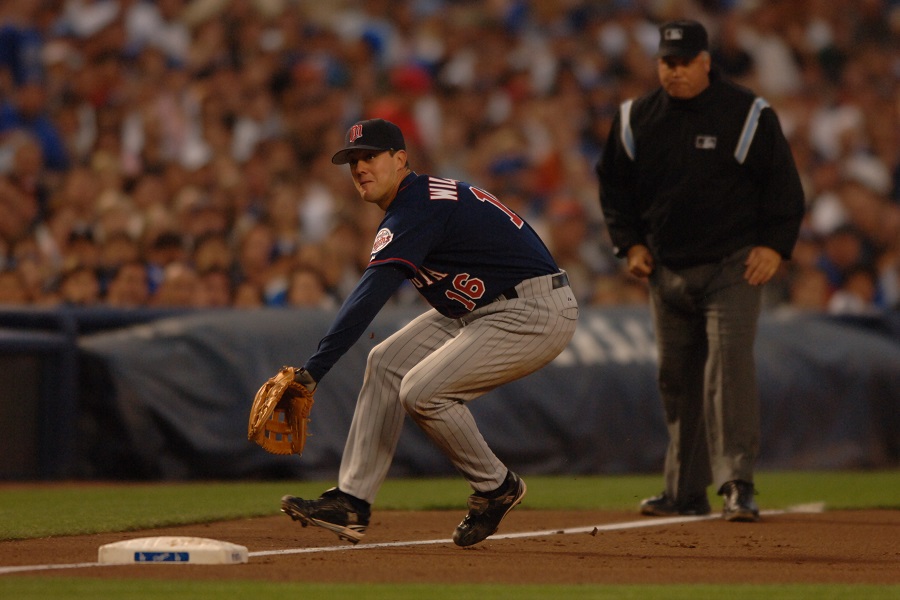 In the history of Major League Baseball, there have been 32 players from Australia. Twelve of those players have spent at least part of their career in the Minnesota Twins organization. Williams looked to infielder Craig Shipley as his role model growing up. Shipley was really the first Australian to play in the big leagues in the modern era. He played for five teams over parts of 11 major-league seasons. Williams said, “I was fortunate that my dad had a baseball store with Craig’s father and brother at the time. I grew up with Craig being my baseball hero. To know him and get to talk to him as an eight, ten, twelve year old was really cool.” Williams was already becoming a star in Australian baseball in his own right. He was on an Australian national team traveling to a tournament in Mexico. They stopped in Los Angeles and went to a Dodgers game. It was the first MLB game he had seen in person. The Mets shortstop got hurt in the first inning. Shipley played the rest of the game. “It was a dream come true, and to see an Aussie run out on the field and play shortstop. I remember it was almost like, ‘Hey, maybe I can do that as well.” In the early ‘90s, players like Graeme Lloyd and David Nilsson were surfacing in the big leagues. There were more minor leaguers from Australia. And scouts were spending more time in Australia trying to find a new hotbed of talent. When he was 13, Williams was a batboy with Sydney in the Australian Baseball League. He got to work out with the team. They had an affiliation with the Blue Jays, so occasionally their coaches would come to Australia. Before he turned 16, Williams and his parents got on a plane and flew to the States to spend time talking to the various teams that had shown interest in him. “They wanted to get a comfort level for their 16-year-old to sign a professional contract and go away to play. Will they feel comfortable with the way I was going to be treated? In hindsight, it was a showcase event in front of a bunch of decision-makers in major-league ballparks. His tour included some time with the Twins. “I worked out at the Metrodome on the field. I took BP before a game. Tom Kelly threw me BP. Kirby Puckett’s out there. It was almost like, as a 16-year-old, I look back at it now, it was amazing. Didn’t realize it at the time, but what a great thing my mom and dad did.” However, he signed soon after with the Atlanta Braves for a signing bonus of $925,000. He split the 1994 season between the Gulf Coast League and the Appalachian League, nearly four years younger than the average player. That became a theme. At 17 in 1995, he was playing in Low-A ball against players as much as seven years older than him. He spent six years in the Braves organization, and he definitely struggled. He reached Double-A, and called the whole thing a big learning experience. “First time lifting weights, coming to the States, being a kind of uber-prospect at the time. Let’s have him in the baserunning group, and the extra hitting group and the extra infield group. It was a large volume of work. Then the way to get players better and develop is to put them out there as much as possible. So mentally, physically and emotionally it was a really difficult transition to come from Australia and not only compete against players who were significantly older, had more experience but were also better than me. Mentally, the Braves got me a lot of money. My expectation was to get off the plane, hit .300 and hit 20 home runs a year.” He continued, “I wish I would have concentrated on just getting better. I worked really, really hard, but it was more about me trying to improve and trying to prove myself. I think the way teams are handling younger players better now with work loads, easing them into it. At the time, it was just pretty rare to have a 16-year-old from a country where baseball isn’t their #1 sport.” He joined the Blue Jays organization and played three years in Triple-A Syracuse (2002-2004). In 2004, he hit .264 with 23 doubles and 23 home runs. Still, no big-league call up. “I really liked my time in Toronto, but I didn’t walk. So, analytically, JP Ricciardi didn’t like that. With the SABRmetrics, I wasn’t fitting what the organization was looking for.” He was again a free agent. This time, he chose the Twins. The first day that they could, the Twins called Williams. “They gave me an opportunity to sign a minor league deal and come to spring training with them. I grabbed it with both hands. It worked out well.” He noted, “Funny enough, when I went on my trip before I turned 16, I had 14 or 15 teams that had interest. The Twins were a team that showed the most interest. The Blue Jays showed a lot of interest, and the Braves had the most interest.” In early June of 2005, Williams was in Rochester, playing well with the Red Wings. There were rumblings that the Twins were planning to make a couple of moves. Williams recalled, “In the clubhouse, people figured that it was between me, Michael Ryan and Brent Abernathy. His girlfriend (now his wife) was visiting for a couple of weeks. Abernathy got called up, and so did Mike Ryan. They were good friends of mine, so I was pumped for them, but at the same time I was thinking ‘Well, that’s it!’” His girlfriend was flying back to Australia. He was at the airport for a flight to Norfolk. He remembers having a conversation with his future wife and saying “This is it. If I don’t get a call up this year, I’m hanging it up.” She got on a plane and flew back to Australia. Williams went to Norfolk. Three days later, Red Wings manager Rich Miller called him into the office. There was a day game the next day. Miller told him that he was going to give him the day game off to rest up. For some reason, he had to play in that game after all. After that day game, Miller called Williams into the office and said, “I know I said you weren’t playing today, but I had to get you in there. You’re definitely not playing for us tomorrow. You’ll be playing in Phoenix.” Williams looked at his manager… “Right. It didn’t click right away. What does that mean? Have I been traded? What’s happened?” The Twins had some inter-league games coming up. They were dealing with some injuries and had a run of National League games. His manager told him that he could play several positions and was a switch-hitter who could get pinch hitting chances. And he reminded him that he had been playing really well and earned it. His fiance (now wife) Laila had just arrived home. He called her first and gave her the news. She wasn’t able to get to Phoenix, but she surprised Glenn by showing up in Los Angeles for the three days before returning to Australia, again. His second call was to his parents and his sister. His parents spent three days in Arizona. Three days in Los Angeles, and then went to Minnesota as well. On June 7th in Phoenix, the Twins were down 5-2 going into the sixth inning. Torii Hunter, hitting fourth for the Twins that game, led off the innings with a double. “Gardy said to me, if Radke’s spot comes up, you’re hitting for him. Get ready. Shawn Estes was pitching and there were two quick outs.” However, Michael Cuddyer walked and Juan Castro singled Cuddyer to second. Radke’s spot came up, and Williams was called on to hit. “They had a pitcher’s meeting. I swung at the first pitch, and hit it hard. It was probably going to go up the middle, but it hit Estes’s hand and rolled to second base. Williams beat the throw to first base for a single to load the bases.” For those curious, Estes was removed from the game. Mike Koplove came in and gave up a two-run, game-tying single to Shannon Stewart. The Twins went on to a 9-8 win. Williams played in 13 games for the Twins between June 7th and June 28th. He had at least one hit in all 13 games. At that point, in 40 at bats, he was hitting .425/.452/.450 (.902) with a double and two walks. Unfortunately, those were his career numbers between Williams got hurt. He dove into first base and his shoulder was hurt. He had shoulder surgery in 1999, so he knew immediately what was wrong. “You hope it’s not bad, but you know right away that it’s not great. It was kind of awkward. The next pitch, Shannon Stewart hit a double down the left field line. I’m trying to run to third base and I couldn’t move my arm. I slid in awkwardly. I was down for a moment. I looked down and there were three or four sets of shoes, including Gardy’s. It must have looked really bad, the way I was running. That was it. I was out of the game.” He continued. “It was really devastating at the time because I had worked so hard to get there. I’m really appreciative of every opportunity that I get. Just by circumstance and by performance, I had worked my way into the lineup, and I was trying to put my stamp on it, and really trying to establish myself. It was all taken away pretty quickly. It was pretty difficult to deal with.” He came back and spent 2006 and 2007 with the Rochester Red Wings, but he didn’t get another shot in the big leagues. “I probably wasn’t the same player after the surgery.” However, 15 years later, Williams is still so thankful for the opportunity he got for a month in the big leagues. “It was really cool. For me, it’s almost like I could have played for another month or six weeks. Then they would have figured me out as big league pitchers do, and you go up and down and maybe I go up and down. It’s unique to be remembered for having a hit in every game I played in. The way that I view it is that I could have had it happen in Rochester on a Friday night two weeks before getting the chance to call up. I worked really really hard to get to the Major Leagues and enjoyed every minute of it. I was appreciative of Terry Ryan and Gardy calling me up, and then Gardy putting me in the lineup and giving me a chance and going with the hot hand like he likes to do. He was putting me out there, and I was really enjoying it. I was feeling like a part of it, feel like you belong a little bit. I was there. I competed.” Asked about his fondest memory or a moment with the Twins that stands out, he paused for a moment. He said that playing third base behind prime Johan Santana was really special. “He’s just carving up hitters like it’s Little League. The next thing, it’s a strikeout. The next thing, it’s a ground ball. It just felt like the tempo that he had; he’s pounding the strike zone. He’s keeping these guys off balance. Playing defense in Metrodome, there’s a big crowd, the Cy Young winner is on the mound, and he’s just carving guys up. Playing defense behind that was incredible. We’re throwing the ball around, and I’m the guy giving it back to him to pitch. He’s got a big smile on his face. That was just him. That’s Johan Santana out there, and he’s absolutely dealing and I’m part of this.” When Australia didn’t qualify for the 2008 Olympics in Beijing, he was ready to hang up the cleats and move forward. His first job in baseball, post-playing career was as a coach at the MLB academy in Australia. In 2009, he was offered a job as baseball manager in his home of South Wales. “I’m a jack of all trades, master of none.” In the role, he says he looks after baseball programs from Little League up to working with players as they sign professional contracts. He’s looking out for state teams in national championships. He’s been a hitting coach for the national teams at times. “It’s a really steep learning curve to be able to learn how to be an administrator and manage programs and budgets and those things. That was my foray into my second career in sports.” He has been working to try to help fund several programs in Australia. He’s been developing partnerships with people in the US to help kids have the opportunities that he did and do it more efficiently. In 2015, he got a job as the General Manager of Team Australia. He worked with the WBC team, the Premier 12 team, an Olympic team, and all the way to a 12-and-under national team. He works on operations and budgets, team and coach selections as well as performance planning. He’s essentially a Minor League Director but for all of baseball in Australia. A lot of his time in the last couple of years has been focused on the Olympics, though that has been postponed to an unknown time. He continues to work on special projects. He has also been a part-time scout for the Detroit Tigers for the past ten years. “My playing career opened the door for a lot of opportunities. I do enjoy it. It has been challenging.” He was part of the most recent Premier 12 tournament in Japan. “The experience of being in the background at the Tokyo Dome when Team Australia, a bunch of guys who are former pros, and we love baseball. School teachers or they drive a forklift or they work in the mines or they’re fire fighters. And these guys go out and beat Team USA in the Premier 12. That’s the kind of stuff that makes it really exciting and really worth it.” While you can see that he remains quite busy in the game of baseball, he still finds time to watch Major League games and highlights during the seasons. While Williams is still just 43 years old, he has had a busy, full baseball life for him. From watching his dad play and playing on youth international teams, to signing with the Atlanta Braves and becoming a huge prospect. He experienced ups and downs throughout a long career. It was only a month, but he got to live his dream of playing in the big leagues, and he had a hit in every game he played in. And since retiring, he has become a coach, a general manager, and a leader in working with the current and next generation of ballplayers in Australia.
-
I typed something about a Spicy Transaction, but yeah, I couldn't do that.
-
While the Twins may be done making high-profile moves this offseason, the front office continues to may tweaks at the edges. On Thursday, the Twins claimed outfielder Kyle Garlick from the Atlanta Braves.The waiver-wire rollercoaster can be awful for players, to be sure. Many have been through it, and that includes the newest member of the Twins organization. After being drafted by the Dodgers in 2015, he reached the big leagues for 30 games in 2019. Last February, he was traded to Philadelphia and played in 12 games for the Phillies. Just three weeks ago, days before his 29th birthday, Garlick was DFAd by the Phillies and claimed by the Atlanta Braves. However, when the Braves signed Marcell Ozuna earlier this week, Garlick was put back on the waiver wire. Today, the Twins claimed him. Garlick spent four years as the University of Oregon. He received a fifth year because of a medical redshirt and played at Cal Poly in Pamona in 2015. The Dodgers drafted him in the 28th round. Already 23, he reached the Midwest League in 2015 and spent most of his 2016 season at Double-A. In 2017, he missed time with an injury and remained in Doube-A where he hit 17 homers in 74 games. In 2018, he started at Double-A but quickly moved up to Triple-A where he hit .253/.287/.478 (.766) with 18 doubles and 17 homers in 97 games. In 2019, in 81 games at Triple-A Oklahoma City, he hit .314/.382/.675 (1.057) with 25 doubles and 23 homers in 81 games. He was called up to the Dodgers and played in 30 games between mid-May and mid-August. In 30 games, he hit .250/.321/.521 (.842) with four doubles and three homers. He played both corner outfield positions. In 2020’s abbreviated season, he played in 12 games for the Phillies. He hit just .136 with a double in 22 at-bats. Garlick can play both corner outfield positions, but he has also played eight games at first base (in 2016) in his career. But clearly, the tool that might excite the front office and fans is his power. He has hit 40 homers in AAA and 30 in AA. Against lefties in 2019, he hit .292/.364/.708 (1.072) with 13 doubles and eight homers in 99 plate appearances. It’s entirely possible that bringing in Kyle Garlick can be considered Brent Rooker insurance. Rooker’s forearm should be at 100% for spring training, but he also didn’t get much playing time in 2020, so he could get every day at bats in St. Paul for a little while at the start of the season. After the LaMonte Wade trade last week, Garlick can compete for the 5th outfielder spot with Rooker and Keon Broxton and others. To make room for Garlick on the roster, the Twins designated LHP Brandon Waddell, putting him back on the waiver carousel. The Twins had claimed Waddell from the Pirates in November. Click here to view the article
-
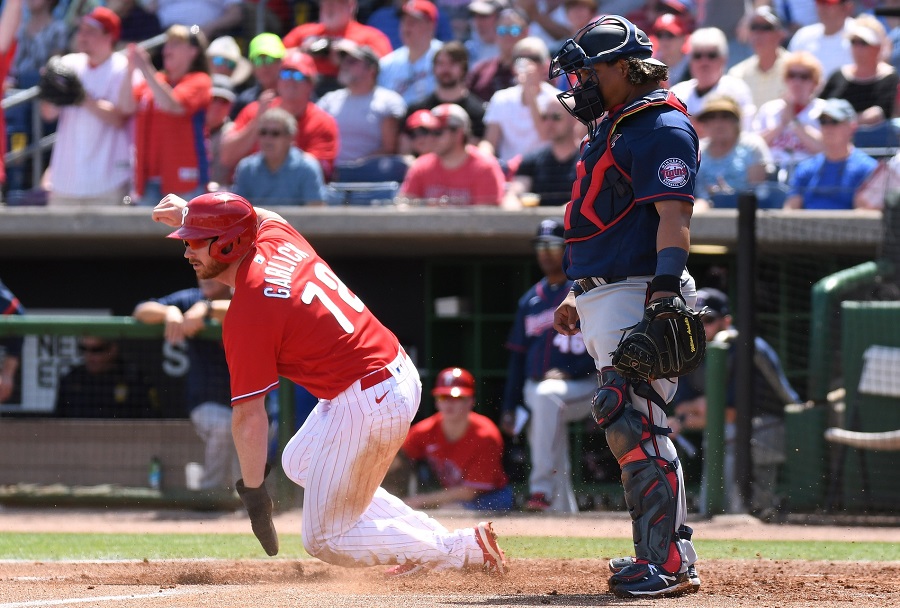 The waiver-wire rollercoaster can be awful for players, to be sure. Many have been through it, and that includes the newest member of the Twins organization. After being drafted by the Dodgers in 2015, he reached the big leagues for 30 games in 2019. Last February, he was traded to Philadelphia and played in 12 games for the Phillies. Just three weeks ago, days before his 29th birthday, Garlick was DFAd by the Phillies and claimed by the Atlanta Braves. However, when the Braves signed Marcell Ozuna earlier this week, Garlick was put back on the waiver wire. Today, the Twins claimed him. Garlick spent four years as the University of Oregon. He received a fifth year because of a medical redshirt and played at Cal Poly in Pamona in 2015. The Dodgers drafted him in the 28th round. Already 23, he reached the Midwest League in 2015 and spent most of his 2016 season at Double-A. In 2017, he missed time with an injury and remained in Doube-A where he hit 17 homers in 74 games. In 2018, he started at Double-A but quickly moved up to Triple-A where he hit .253/.287/.478 (.766) with 18 doubles and 17 homers in 97 games. In 2019, in 81 games at Triple-A Oklahoma City, he hit .314/.382/.675 (1.057) with 25 doubles and 23 homers in 81 games. He was called up to the Dodgers and played in 30 games between mid-May and mid-August. In 30 games, he hit .250/.321/.521 (.842) with four doubles and three homers. He played both corner outfield positions. In 2020’s abbreviated season, he played in 12 games for the Phillies. He hit just .136 with a double in 22 at-bats. Garlick can play both corner outfield positions, but he has also played eight games at first base (in 2016) in his career. But clearly, the tool that might excite the front office and fans is his power. He has hit 40 homers in AAA and 30 in AA. Against lefties in 2019, he hit .292/.364/.708 (1.072) with 13 doubles and eight homers in 99 plate appearances. It’s entirely possible that bringing in Kyle Garlick can be considered Brent Rooker insurance. Rooker’s forearm should be at 100% for spring training, but he also didn’t get much playing time in 2020, so he could get every day at bats in St. Paul for a little while at the start of the season. After the LaMonte Wade trade last week, Garlick can compete for the 5th outfielder spot with Rooker and Keon Broxton and others. To make room for Garlick on the roster, the Twins designated LHP Brandon Waddell, putting him back on the waiver carousel. The Twins had claimed Waddell from the Pirates in November.
-
Twins Daily 2021 Top Prospects: 11-15
Seth Stohs replied to Nick Nelson's topic in Twins Minor League Talk
Our individual rankings: #15 Sands: Seth (14), Nick (15), Tom (15), Cody (16). #14 Urbina: Seth (17), Nick (17), Tom (12), Cody (13) #13 Wallner: Seth (13), Nick (13), Tom (8), Cody (15) #12 Rooker: Seth (12), Nick (11), Tom (10), Cody (12) #11 Celestino: Seth (7), Nick (9), Tom (16), Cody (11) -
Twins Daily 2021 Top Prospects: 11-15
Seth Stohs replied to Nick Nelson's topic in Twins Minor League Talk
I'm not worried about Wallner. Yeah, he struggled late with his introduction to Low A, but like you said, that was after a long year. Pro debut. I'm not any more worried about him than I am about everyone having missed a full year. It'll be interesting to see what they do with Celestino. He could start in High-A since that's where he spent just a little time at the end of 2019. But if he does, it'll be back in Cedar Rapids, rather than in the Florida State League where it makes almost no sense to look at stats. He could also start in AA. He won't be in a time-share with Buxton, but if he gets off to a decent start and Buxton goes on a 10-Day IL (and they think it'll literally only be 10-12 days), Celestino could come up for the short-term. He just needs a ton of at bats.- 17 replies
-
- 5
-

-
- cole sands
- misael urbina
- (and 3 more)
-
Twins Daily 2021 Top Prospects: 16-20
Seth Stohs replied to Tom Froemming's topic in Twins Minor League Talk
Most 22 year olds are just coming into pro ball and playing at Low A, or maybe High A. -
Twins Daily 2021 Top Prospects: 16-20
Seth Stohs replied to Tom Froemming's topic in Twins Minor League Talk
Yet he was drafted on the same day as Kirilloff, Rortvedt and Baddoo... He's 22 in AA, even with the missing season. That's pretty good! -
Twins and REM5 Studios Launch TwinsXR
Seth Stohs replied to Seth Stohs's topic in Twins Daily Front Page News
From Do Hyoung Park's article on this: -
Twins Daily 2021 Top Prospects: 16-20
Seth Stohs replied to Tom Froemming's topic in Twins Minor League Talk
Our votes: #20: Bailey Ober: Seth (21), Nick (16), Tom (20), Cody (30) #19: Jose Miranda: Seth (18), Nick (24), Tom (19), Cody (19) #18: Alerick Soularie: Seth (29), Nick (18), Tom (14), Cody (17) #17: Ben Rortvedt: Seth (28), Nick (14), Tom (11), Cody (21) #16: Edwar Colina: Seth (16), Nick (19), Tom (24), Cody (14) -
On Tuesday, I got to participate in a really cool event showcasing the Twins Virtual Hall of Fame. Minneapolis-based REM5 Studios have been working for months on this fun, interactive site that Twins fans will truly enjoy.I'll be the first to acknowledge that I'm not a video game guy anymore. I have very little experience with virtual reality or interactions. However, when I got to participate in yesterday's VIP/media event showcasing the Twins virtual-reality Hall of Fame experience, I was extremely impressed. In conjunction with the folks at REM5 Studios, the Twins have worked to put together this great opportunity. It launches today (Wednesday, February 10th). To participate, simply register at www.twinsbaseball.com/xr. Twins senior director of brand experience and innovation Chris Iles pointed out to the group that this project has been in the works for six months. He noted that it will likely continue to be updated including a midseason refresh. And, just think of the possibilities of this technology! I truly enjoyed the opportunity to see this site. I don't know if I would have signed up for it on my own. But once I did, I have to admit. I think I will be in there often. I can see us having small Twins Daily events in a TwinsXR room sometime. Again, the possibilities really are endless. Again, head to www.TwinsBaseball.com/xr to register and you'll get an e-mail when it becomes available today. If you have any questions, please feel free to ask in the comments below. Click here to view the article
-
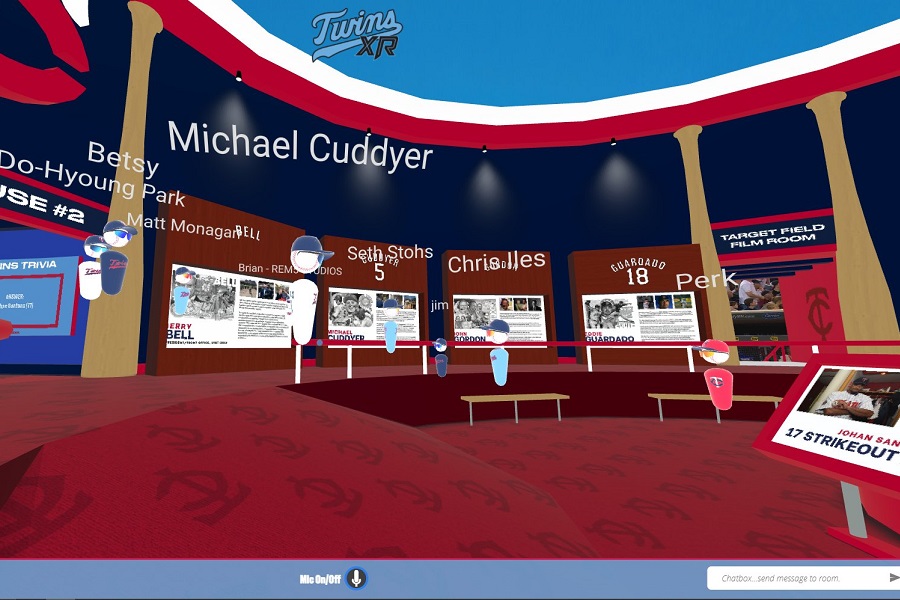 I'll be the first to acknowledge that I'm not a video game guy anymore. I have very little experience with virtual reality or interactions. However, when I got to participate in yesterday's VIP/media event showcasing the Twins virtual-reality Hall of Fame experience, I was extremely impressed. In conjunction with the folks at REM5 Studios, the Twins have worked to put together this great opportunity. It launches today (Wednesday, February 10th). To participate, simply register at www.twinsbaseball.com/xr. Once in, you will find yourself in a virtual lobby. From there, you are able to move about the virtual area. Clubhouse #1 highlights the early years of the Twins history. Clubhouse #2 highlights the two World Series championship teams and players. Clubhouse #3 shows the players and personnel from the Target Field years. In each clubhouse, you will find virtual plaques or lockers highlighting each of the Twins Hall of Famers from that era. It includes pictures and a written biography. There is also a "Film Room" in which you can watch video as if you are in a theatre of that era. There is trivia, some statistics, photos, and much more throughout the experience. Another cool thing is its interactivity. You can go into this virtual reality with up to 19 other Twins fans. And, you can talk to each other. The closer your avatar is to others, the better you will be able to hear and communicate. It's like you are walking through the halls of a museum. This experience is free to fans. You can access the site on mobile devices, desktop, or even with a Virtual Reality headset if you've got one. Twins Hall of Famers Michael Cuddyer and Torii Hunter participated in Tuesday's sneak peak. Michael Cuddyer called this, "really cool. It's innovation, keeping up with the digital age." Hunter said that the pandemic pushed people and organizations to think differently. "You've just got to find some creativity." Twins senior director of brand experience and innovation Chris Iles pointed out to the group that this project has been in the works for six months. He noted that it will likely continue to be updated including a midseason refresh. And, just think of the possibilities of this technology! I truly enjoyed the opportunity to see this site. I don't know if I would have signed up for it on my own. But once I did, I have to admit. I think I will be in there often. I can see us having small Twins Daily events in a TwinsXR room sometime. Again, the possibilities really are endless. Again, head to www.TwinsBaseball.com/xr to register and you'll get an e-mail when it becomes available today. If you have any questions, please feel free to ask in the comments below.
-
Twins Daily 2021 Top Prospects: Honorable Mentions
Seth Stohs replied to Seth Stohs's topic in Twins Minor League Talk
Yeah, been disappointing, and injured, but both are still so young and so talented. No reason to give up on 21 or 22 year olds. -
Twins Daily 2021 Top Prospects: Honorable Mentions
Seth Stohs replied to Seth Stohs's topic in Twins Minor League Talk
In 2019 in Cedar Rapids, he was clocked at 96. His average fastball was obviously less than that, but he's young, and he's a big dude, so yes, it will be interesting to see where he is at in 2021! -
JT Riddle, Tzu-Wei Lin, Rob Refsnyder...
-
Twins Daily 2021 Top Prospects: Honorable Mentions
Seth Stohs replied to Seth Stohs's topic in Twins Minor League Talk
For Winder: Seth - #22 Nick - #29 Tom - #21 Cody - #22 For Rijo: Seth - 25 Nick - 28 Tom - 23 Cody - NR (not in top 30) -
Twins Daily 2021 Top Prospects: Honorable Mentions
Seth Stohs replied to Seth Stohs's topic in Twins Minor League Talk
Prospect rankings have little to do with performance... it's just one small part of a ranking. It's much more about tools and upside and potential... Of course, to move up levels, performance has to be there to some level. -
Blankenhorn is a prospect. He needs to play. He should split most of the season between AA and AAA (mostly AAA, maybe) and play most every day. He shouldn't be playing one or two games a week in MLB. Astudillo can sit on the bench and be depth and rarely play and that's fine.
-
Yeah, I would put Thorpe over Hamilton for now because 1.) they need a long-man, and 2.) he's out of options... not necessarily in that order. 2020 was a lost season for him, but he's got talent.
-
Twins Daily 2021 Top Prospects: Honorable Mentions
Seth Stohs replied to Seth Stohs's topic in Twins Minor League Talk
For sure. It's fun to see 5 Twins minor league pitchers in the Honorable Mentions that hit 95-98 mph is very encouraging. -
Twins Daily 2021 Top Prospects: Honorable Mentions
Seth Stohs replied to Seth Stohs's topic in Twins Minor League Talk
Because Blankenhorn needs to play most every day and can do that in AA or AAA (or likely both) in 2021 rather than sitting on the bench for the Twins and playing once or twice a week. -
Twins Daily 2021 Top Prospects: Honorable Mentions
Seth Stohs replied to Seth Stohs's topic in Twins Minor League Talk
I like these picks... Gotta like a guy who was clocked at 97 at Instructs, has good size, a military work ethic... I think he could be a 2or even 3 level pitcher in 2021. Holland is certainly intriguing. He's not a big guy. With his power numbers, I thought he'd be bigger. He's very athletic and swings hard. It'll be interesting to see how he develops, but he's got a ton of talent and certainly could move up! -
Twins Daily 2021 Top Prospects: Honorable Mentions
Seth Stohs replied to Seth Stohs's topic in Twins Minor League Talk
Midseason rankings tend to look fairly different under normal situations, and now we have to consider a missed season and players working to develop at home... Will be an interesting season to follow, for sure. -
Over the next couple of weeks, Twins Daily will be counting down our Top 20 Minnesota Twins Prospects. We start today by discussing several Honorable Mentions, guys who received votes but finished outside the Top 20. Today’s list of players illustrates the depth that is developing in the organization.Two years ago, our 2019 Honorable Mentions included Luis Arraez who went on to be the team’s top rookie that season. It also included Jordan Balazovic who jumped into the top five the next season. In last year’s Honorable Mentions, you’ll find Jorge Alcala who had just been shifted from starting pitcher to a reliever. We saw his impressive rookie season in 2020. So which players who received votes this year will climb the prospect ladder in 2021 and maybe even contribute to the big league club this year? This year’s prospect rankings are difficult. Because of the pandemic, there wasn’t a 2020 minor league season. Some of the top prospects spent the summer at the Twins alternate site in St. Paul. Some even made their MLB debuts. The minor leaguers did report to spring training, several had been there for weeks before being sent home. Some players went to Instructional League and there were some reports from there. Before we start, the following players are no longer “prospects” according to Baseball-Reference: Jorge Alcala, Randy Dobnak, Lewis Thorpe, Cody Stashak and Devin Smeltzer. HARD-THROWING PITCHERS The Twins’ player development group has done a nice job in recent years developing arms in the minor leagues. The next step will be seeing those pitchers work their way to the big leagues. There are some strong pitchers in the top 20, but there are a few impressive arms in our honorable mentions as well. Josh Winder was the talk of the Twins Instructional League after the missed 2020 season. He is a big, strong kid whose fastball jumped up to 97 mph this past fall. Chris Vallimont throws just as hard. He came to the Twins in the Sergio Romo trade late in 2019. Luis Rijo is the youngest of the group, and he too is reaching into the mid-to-upper 90s with his fastball. When the Twins acquired him from the Yankees in the Lance Lynn deal, he was touted as an advanced pitcher. He still has a good mix, but now with the increased velocity too. Dakota Chalmers came to the Twins in the Fernando Rodney deal with the A’s. He was coming off of Tommy John and completed his rehab in 2019. He was added to the 40 man roster and spent his 2020 summer at the Twins alternate site in St. Paul. ALREADY DEBUTED Travis Blankenhorn made his MLB debut in September with one game played. His role will likely be a versatile utility player with some power. We will likely see him some in 2021, but he will see most of his time in St. Paul. COMEBACK KIDS? Wander Javier was once a top ten, and even a top five prospect for many in the Twins system. Unfortunately, he has missed about three of the past five seasons due to injury and then last year’s lost season. He struggled at Cedar Rapids in 2019. Despite that, he is ultra-talented and just turned 22 years old in late December. Yunior Severino was set to return in 2020 after breaking his thumb early in the 2019 season. He was twice a seven-figure international free agent, and he will be just 21 throughout the 2021 season. He likely is a second baseman, but he has a lot of offensive potential. WE HARDLY KNOW YE Spencer Steer was the Twins 3rd round pick in 2019 out of the University of Oregon. He had an impressive pro debut that summer but didn’t get the opportunity to back that up in 2020. That year, the Twins also selected shortstop Will Holland in the fifth round. In 36 games at E-Town, he hit seven homers and stole eight bases. His college teammate at Auburn was Edouard Julien, an infielder that the Twins took in the 18th round. Unfortunately, he was hurt during the Pan Am Games and had Tommy John surgery and hasn’t yet made his pro debut. Seth Gray is a very talented third baseman that was the Twins fourth round pick in 2019. He’s got a lot of power potential. In the 2020 draft, the Twins took right-handed pitcher Marco Raya in the fourth round. He’s got an impressive pitch mix and can throw hard. He’ll need to gain strength, but he’s certainly got some potential to move up this list. Then in the fifth round, the team took outfielder Kala’i Rosario. The Hawaii native has as much power as any prep player in last year’s draft. Emmanuel Rodriguezsigned a seven-digit bonus with the Twins in 2019. He was set to begin his professional career in the DSL in 2020, but instead we will begin in 2021. It was just last month that the Twins signed 16-year-old shortstop Danny De Andrade for $2.2 million. The Venezuelan was one of this year’s top international prospects. For each of these players, 2021 will be their first opportunity to make a real impression. Some may move up this list next year. Some may find themselves outside of this list. That is a lot of talent, and those are guys who rank outside of the Twins Daily Top 20 prospects. Check back over the next two weeks to see who our 2021 Top 20 Twins Prospects are. Click here to view the article
