



Andrew Thares
-
Posts
653 -
Joined
-
Last visited
Content Type
Profiles
News
Minnesota Twins Videos
2026 Minnesota Twins Top Prospects Ranking
2022 Minnesota Twins Draft Picks
Minnesota Twins Free Agent & Trade Rumors, Notes, & Tidbits
Guides & Resources
2023 Minnesota Twins Draft Picks
The Minnesota Twins Players Project
2024 Minnesota Twins Draft Picks
2025 Minnesota Twins Draft Pick Tracker
2026 Minnesota Twins Draft Tracker: Picks & Bonuses
Forums
Blogs
Events
Store
Downloads
Gallery
Everything posted by Andrew Thares
-
 The Minnesota Twins began the second half of their six-game road trip in Oakland tonight, looking to bounce back from their loss to the Chicago White Sox on Sunday. However, that wasn’t meant to be as the Twins came up short again tonight. In what is becoming an all to common theme of late, the Twins will need to win tomorrow to avoid their first three game losing streak of the season. Image courtesy of © Stan Szeto-USA TODAY Sports The Minnesota Twins began the second half of their six-game road trip in Oakland tonight, looking to bounce back from their loss to the Chicago White Sox on Sunday. However, that wasn’t meant to be as the Twins came up short again tonight. In what is becoming an all to common theme of late, the Twins will need to win tomorrow to avoid their first three game losing streak of the season. Box Score Odorizzi: 3.0+ IP, 4 H, 5 ER, 3 BB, 2 K, 61.2% strikes (46 of 84 pitches) Home Runs: Sano (13), Castro 2(10) Multi-Hit Games: Arraez (2 for 4); Sano (2 for 4, HR); Castro (3 for 4, 2 HR) WPA of +0.1: Sano .226; Castro .164 WPA of -0.1: Odorizzi -.492; Magill -.115; Cruz -.104 (Chart via Fangraphs) A week ago, Miguel Sano couldn’t avoid striking out if his life depended on it. Fast-forward to present day, and Sano is giving us another glimpse of all that power potential we heard about for years, as he belted his fourth home run in four games to give the Twins a 2-to-0 lead in the top of the second. https://twitter.com/Twins/status/1146246055383752704 The Twins tacked on another run in the third inning when Max Kepler led off the inning with his 20th double of the season, followed by a Jorge Polanco infield single, giving the Twins runners on the corners with nobody out. The A’s challenged the play at first, and it appeared that Polanco was out, but the replay official ruled that the play stood as called. Nelson Cruz then came up and grounded into a double-play that scored Max Kepler from third. The A's got on the board in the bottom of the third inning when Matt Olson connected on a two-out, two-run home run to cut the Twins lead down to one. This was already Olson’s 17th home run of the season despite missing the first month of the season after having surgery on his hand. Then things fell apart for Jake Odorizzi in the fourth inning. Mark Canha reached to lead off the inning thanks to a Miguel Sano error. Odorizzi followed that up by walking Ramon Laureano and giving up a single to former Twin Robbie Grossman. It is then when a different former Twin by the name of Chris Herrmann who connected on one of those four-run home run things. Between the Grossman single and the Herrmann home run, Rocco Baldelli and the trainer were out at the mound to check on what was an apparent blister on Odorizzi’s finger. Three pitches later the Twins were down by three and Odorizzi’s night was done. In the fifth the Twins got one of those runs back when Jason Castro crushed a leadoff home run to center field, trimming the Athletics lead down to two. Per Statcast, Castro’s homer had an exit velocity of 106.3 MPH, with a launch angle of 31 degrees, and went a projected distance of 417 feet. https://twitter.com/Twins/status/1146267215462916097 Adalberto Mejia had a strong first game back from the 60-Day IL, going 3 and 1/3 innings, and giving up just one run. It was a little adventure for Mejia in the bottom of the fifth when he issued a one out walk to Mark Canha, before Laureano roped a double down the third base line. Canha appeared as if he was going to score on the play, but Marwin Gonzalez channeled his inner Yoenis Cespedes and gunned out Canha at home. https://twitter.com/fsnorth/status/1146268900096651264 The Athletics were still able to bring a run home in the inning, as Robbie Grossman came through with a two-out RBI base knock, and just like that the Twins were back down 7 to 4. The Twins were able to get single runs back in both the sixth and seventh innings, to trim the lead back to one run. In the fifth Gonzalez scored from first on a two-out double from Luis Arraez, aided in part by a missed diving catch from A’s center fielder Ramon Laureano that allowed the ball to get to the wall. The start of the seventh was almost identical to the fifth, as Jason Castro led off the inning with another home run to straight away center field. https://twitter.com/MLBBarrelAlert/status/1146275808950067201 The A’s were able to extend the lead back up to two in the eighth when Mark Canha took Matt Magill deep, this time not giving Marwin Gonzalez a chance to throw him out at home, as the ball traveled about 50 feet over his head. Next up on our favorite game, Name that Former Twin, was Liam Hendriks who came in to shut the door on any hope of the Twins putting together a ninth inning rally. Hendriks picked up his third save of the season and improved his season ERA down to 1.35 (yes you read that right). Bullpen Usage Here’s a quick look at the number of pitches thrown by the bullpen over the past five days: Next Three Games Wed at OAK, 8:07 pm CT (Gibson-Fiers) Thu at OAK, 3:07 pm CT (Berrios-Anderson) Fri vs TEX, 7:10 pm CT (Simpson-TBD) Last Game CHW 4, MIN 3: Twins Lose Rubber Match to White Sox After Another Long Day of Baseball View full article
- 37 replies
-
- 2
-

-
- minnesota twins
- oakland athletics
- (and 1 more)
-
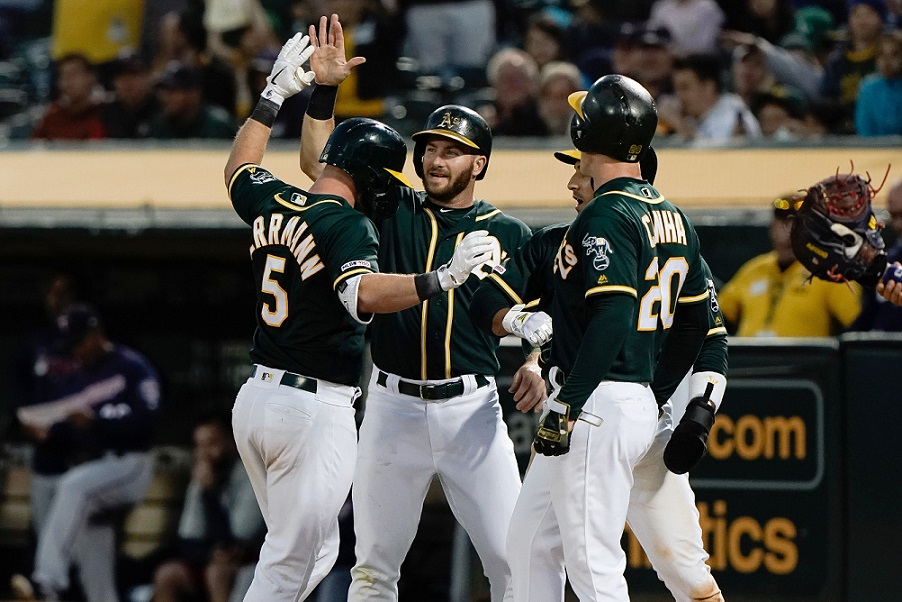 Box Score Odorizzi: 3.0+ IP, 4 H, 5 ER, 3 BB, 2 K, 61.2% strikes (46 of 84 pitches) Home Runs: Sano (13), Castro 2(10) Multi-Hit Games: Arraez (2 for 4); Sano (2 for 4, HR); Castro (3 for 4, 2 HR) WPA of +0.1: Sano .226; Castro .164 WPA of -0.1: Odorizzi -.492; Magill -.115; Cruz -.104 (Chart via Fangraphs) A week ago, Miguel Sano couldn’t avoid striking out if his life depended on it. Fast-forward to present day, and Sano is giving us another glimpse of all that power potential we heard about for years, as he belted his fourth home run in four games to give the Twins a 2-to-0 lead in the top of the second. https://twitter.com/Twins/status/1146246055383752704 The Twins tacked on another run in the third inning when Max Kepler led off the inning with his 20th double of the season, followed by a Jorge Polanco infield single, giving the Twins runners on the corners with nobody out. The A’s challenged the play at first, and it appeared that Polanco was out, but the replay official ruled that the play stood as called. Nelson Cruz then came up and grounded into a double-play that scored Max Kepler from third. The A's got on the board in the bottom of the third inning when Matt Olson connected on a two-out, two-run home run to cut the Twins lead down to one. This was already Olson’s 17th home run of the season despite missing the first month of the season after having surgery on his hand. Then things fell apart for Jake Odorizzi in the fourth inning. Mark Canha reached to lead off the inning thanks to a Miguel Sano error. Odorizzi followed that up by walking Ramon Laureano and giving up a single to former Twin Robbie Grossman. It is then when a different former Twin by the name of Chris Herrmann who connected on one of those four-run home run things. Between the Grossman single and the Herrmann home run, Rocco Baldelli and the trainer were out at the mound to check on what was an apparent blister on Odorizzi’s finger. Three pitches later the Twins were down by three and Odorizzi’s night was done. In the fifth the Twins got one of those runs back when Jason Castro crushed a leadoff home run to center field, trimming the Athletics lead down to two. Per Statcast, Castro’s homer had an exit velocity of 106.3 MPH, with a launch angle of 31 degrees, and went a projected distance of 417 feet. https://twitter.com/Twins/status/1146267215462916097 Adalberto Mejia had a strong first game back from the 60-Day IL, going 3 and 1/3 innings, and giving up just one run. It was a little adventure for Mejia in the bottom of the fifth when he issued a one out walk to Mark Canha, before Laureano roped a double down the third base line. Canha appeared as if he was going to score on the play, but Marwin Gonzalez channeled his inner Yoenis Cespedes and gunned out Canha at home. https://twitter.com/fsnorth/status/1146268900096651264 The Athletics were still able to bring a run home in the inning, as Robbie Grossman came through with a two-out RBI base knock, and just like that the Twins were back down 7 to 4. The Twins were able to get single runs back in both the sixth and seventh innings, to trim the lead back to one run. In the fifth Gonzalez scored from first on a two-out double from Luis Arraez, aided in part by a missed diving catch from A’s center fielder Ramon Laureano that allowed the ball to get to the wall. The start of the seventh was almost identical to the fifth, as Jason Castro led off the inning with another home run to straight away center field. https://twitter.com/MLBBarrelAlert/status/1146275808950067201 The A’s were able to extend the lead back up to two in the eighth when Mark Canha took Matt Magill deep, this time not giving Marwin Gonzalez a chance to throw him out at home, as the ball traveled about 50 feet over his head. Next up on our favorite game, Name that Former Twin, was Liam Hendriks who came in to shut the door on any hope of the Twins putting together a ninth inning rally. Hendriks picked up his third save of the season and improved his season ERA down to 1.35 (yes you read that right). Bullpen Usage Here’s a quick look at the number of pitches thrown by the bullpen over the past five days: Next Three Games Wed at OAK, 8:07 pm CT (Gibson-Fiers) Thu at OAK, 3:07 pm CT (Berrios-Anderson) Fri vs TEX, 7:10 pm CT (Simpson-TBD) Last Game CHW 4, MIN 3: Twins Lose Rubber Match to White Sox After Another Long Day of Baseball
 -
Baseball America and MLB.com are two national sites that do a good job rating prospects. Both sites agree that the Twins have a Top-10 farm system.
-
As we move into July, we are getting closer and closer to the time where the Minnesota Twins need to make a move in order to solidify their bullpen for a postseason run. As we have seen in recent years, it’s of upmost importance for teams to have as many relievers that they can trust to get big outs in the postseason as possible. Fortunately for the Twins, relievers who can help a team in the postseason seem to be in abundance. Here at Twins Daily, we have already posted an article on more than a dozen potential relievers the Twins could target, and today we continue that list with Kansas City Royals closer Ian Kennedy. Image courtesy of © Kevin Jairaj-USA TODAY Sports As we move into July, we are getting closer and closer to the time where the Minnesota Twins need to make a move in order to solidify their bullpen for a postseason run. As we have seen in recent years, it’s of upmost importance for teams to have as many relievers that they can trust to get big outs in the postseason as possible. Fortunately for the Twins, relievers who can help a team in the postseason seem to be in abundance. Here at Twins Daily, we have already posted an article on more than a dozen potential relievers the Twins could target, and today we continue that list with Kansas City Royals closer Ian Kennedy. Ian Kennedy has been an established MLB starting pitcher for more than a decade now. Kennedy was the New York Yankees first-round draft pick back in 2006 out of the University of Southern California. It didn’t take Kennedy long to get to the majors, as he made his MLB debut just a year later in 2007. After not having much success in his first few seasons with the Yankees, they traded Kennedy to the Arizona Diamondbacks as part of the three-team deal that sent Curtis Granderson to the Yankees and Max Scherzer to the Detroit Tigers. After a couple of good seasons as a starter for the Diamondbacks Kennedy started to struggle in 2012 and was eventually traded to the San Diego Padres at the 2013 July trade deadline. After a couple of decent seasons with the Padres, Kennedy signed a five-year $70 million-dollar deal with the defending champion Kansas City Royals in January of 2016. After the 2018 season, it was clear that the 34-year-old pitcher was losing a step, which played a part in the Royals transitioning Ian Kennedy to the bullpen this offseason. This move has paid off big for both Kennedy and the Royals. In 32 innings, across 31 relief appearances, Kennedy has a 3.38 ERA (2.06 FIP), with a 11.25 K/9 and just a 1.41 BB/9. Among the 173 qualified relievers this season, Kennedy’s 8.0 strikeout to walk ratio ranks 4th. This will be very attractive to the Twins front office which has shown an affinity for pitchers with excellent strikeout and walk numbers. We often hear how a move to the bullpen helps a starting pitcher gain some velocity on his fastball, and all of a sudden, he are a new and improved pitcher. In a game with so much complexity it’s hard to believe something as simple as this can make such a big difference, but with Ian Kennedy it has. In 2018, Kennedy averaged 91.9 MPH on his four-seam fastball. This year, that number is up two full ticks to 93.9 MPH. This has helped Kennedy hold opposing hitters to a .189 batting average and a .214 wOBA against his fastball, both marks are easily the best of his career. What amplifies this effect is that Kennedy is throwing his fastball on a career high 65 percent of hit pitches. With such a drastic improvement on a pitch that he throws over 60% of the time, it is no wonder why Kennedy has been so much better this year. One thing the Twins will have to consider when trading for Ian Kennedy is the money left on his contract. Kennedy is currently on year four of that five-year deal I mentioned previously, which would give the Twins control through 2020 if they were to trade for him. While this would be a nice addition, the $16.5 million that Kennedy is due in both 2019 and 2020 will give the Twins some pause. The money for 2019 might not be so intimidating as he will only be owed roughly $5.5 million if the Twins were to trade for him at the July 31st trade deadline. The part that might keep them from wanting to deal for Kennedy is the $16.5 million owed to him in 2020. That is a substantial amount of money, for a reliever, and that could drastically alter their plans for this upcoming offseason. At the same rate, Kennedy’s contract will probably make him available for cheap in terms of prospect capital, so if their focus is on maintaining as many of their prospects as possible, while still adding to the team, Kennedy could be a great target. See Also Sergio Romo, RHP, Marlins Shane Greene, RHP, Tigers Felipe Vázquez, LHP, Pirates Will Smith, LHP, Giants Liam Hendriks, RHP, Athletics Ty Buttrey, RHP, Angels Ken Giles, RHP, Blue Jays Sam Dyson, RHP, Giants Brad Hand, LHP, Indians Oliver Perez, LHP Cleveland Robert Stephenson, RHP, Reds John Gant, RHP, Cardinals Alex Colome, RHP, White Sox Seth Lugo, RHP, Mets Greg Holland, RHP, Diamondbacks Sean Doolittle, LHP, Nationals Kirby Yates, RHP, Padres 10 Relievers Minnesota Could Target View full article
- 13 replies
-
- 1
-
-
- ian kennedy
- minnesota twins
- (and 3 more)
-
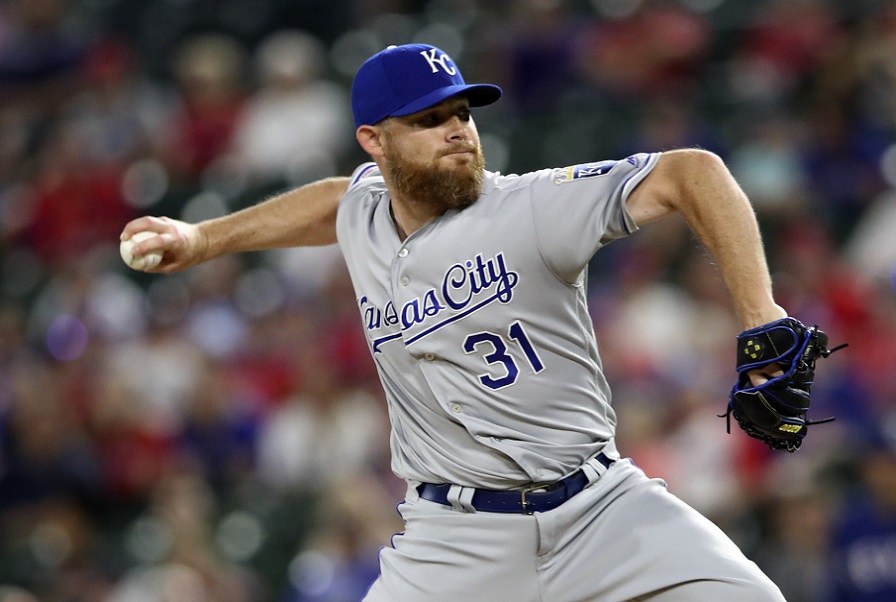 Ian Kennedy has been an established MLB starting pitcher for more than a decade now. Kennedy was the New York Yankees first-round draft pick back in 2006 out of the University of Southern California. It didn’t take Kennedy long to get to the majors, as he made his MLB debut just a year later in 2007. After not having much success in his first few seasons with the Yankees, they traded Kennedy to the Arizona Diamondbacks as part of the three-team deal that sent Curtis Granderson to the Yankees and Max Scherzer to the Detroit Tigers. After a couple of good seasons as a starter for the Diamondbacks Kennedy started to struggle in 2012 and was eventually traded to the San Diego Padres at the 2013 July trade deadline. After a couple of decent seasons with the Padres, Kennedy signed a five-year $70 million-dollar deal with the defending champion Kansas City Royals in January of 2016. After the 2018 season, it was clear that the 34-year-old pitcher was losing a step, which played a part in the Royals transitioning Ian Kennedy to the bullpen this offseason. This move has paid off big for both Kennedy and the Royals. In 32 innings, across 31 relief appearances, Kennedy has a 3.38 ERA (2.06 FIP), with a 11.25 K/9 and just a 1.41 BB/9. Among the 173 qualified relievers this season, Kennedy’s 8.0 strikeout to walk ratio ranks 4th. This will be very attractive to the Twins front office which has shown an affinity for pitchers with excellent strikeout and walk numbers. We often hear how a move to the bullpen helps a starting pitcher gain some velocity on his fastball, and all of a sudden, he are a new and improved pitcher. In a game with so much complexity it’s hard to believe something as simple as this can make such a big difference, but with Ian Kennedy it has. In 2018, Kennedy averaged 91.9 MPH on his four-seam fastball. This year, that number is up two full ticks to 93.9 MPH. This has helped Kennedy hold opposing hitters to a .189 batting average and a .214 wOBA against his fastball, both marks are easily the best of his career. What amplifies this effect is that Kennedy is throwing his fastball on a career high 65 percent of hit pitches. With such a drastic improvement on a pitch that he throws over 60% of the time, it is no wonder why Kennedy has been so much better this year. One thing the Twins will have to consider when trading for Ian Kennedy is the money left on his contract. Kennedy is currently on year four of that five-year deal I mentioned previously, which would give the Twins control through 2020 if they were to trade for him. While this would be a nice addition, the $16.5 million that Kennedy is due in both 2019 and 2020 will give the Twins some pause. The money for 2019 might not be so intimidating as he will only be owed roughly $5.5 million if the Twins were to trade for him at the July 31st trade deadline. The part that might keep them from wanting to deal for Kennedy is the $16.5 million owed to him in 2020. That is a substantial amount of money, for a reliever, and that could drastically alter their plans for this upcoming offseason. At the same rate, Kennedy’s contract will probably make him available for cheap in terms of prospect capital, so if their focus is on maintaining as many of their prospects as possible, while still adding to the team, Kennedy could be a great target. See Also Sergio Romo, RHP, Marlins Shane Greene, RHP, Tigers Felipe Vázquez, LHP, Pirates Will Smith, LHP, Giants Liam Hendriks, RHP, Athletics Ty Buttrey, RHP, Angels Ken Giles, RHP, Blue Jays Sam Dyson, RHP, Giants Brad Hand, LHP, Indians Oliver Perez, LHP Cleveland Robert Stephenson, RHP, Reds John Gant, RHP, Cardinals Alex Colome, RHP, White Sox Seth Lugo, RHP, Mets Greg Holland, RHP, Diamondbacks Sean Doolittle, LHP, Nationals Kirby Yates, RHP, Padres 10 Relievers Minnesota Could Target
 -
I was thinking that too, and I would assume the Mets would start negotiations with that. However, I just don't see the Twins actually trading both players for a pitcher who's not the same guy he was a couple years ago. So I stuck to offers that only included one or the other (on neither for the hell of it), which seems like a more realistic possibility.
- 60 replies
-
- 2
-
-
- noah syndergaard
- minnesota twins
- (and 3 more)
-
Over the past few weeks, we have been spending a lot of time focusing on the multitude of relievers that the Twins could acquire before the July 31st trade deadline, and rightfully so, since that is the biggest need on the team right now. However, that isn’t the only need the Minnesota Twins have, as they could also benefit by adding another arm at the top of the rotation to give them more firepower during a playoff push. One such guy that could be available to fit this role is New York Mets fireballer Noah Syndergaard. Image courtesy of © Greg M. Cooper-USA TODAY Sports Over the past few weeks, we have been spending a lot of time focusing on the multitude of relievers that the Twins could acquire before the July 31st trade deadline, and rightfully so, since that is the biggest need on the team right now. However, that isn’t the only need the Minnesota Twins have, as they could also benefit by adding another arm at the top of the rotation to give them more firepower during a playoff push. One such guy that could be available to fit this role is New York Mets fireballer Noah Syndergaard. Adding an arm like Noah Syndergaard to the likes of Jose Berrios and Jake Odorizzi could give the Twins a formidable top of the rotation that will be scary for opposing teams to face in the postseason. Unfortunately, acquiring a pitcher like Syndergaard won’t be cheap, as the Mets are probably not too eager to move him, on top of the fact that if he does become available, nearly every team in the postseason hunt will be looking to acquire him. So, what would it take to land this stud pitcher? Let’s find out. First, we will start by looking at what the Twins would be acquiring if they were to trade for Noah Syndergaard. At 26 years of age, Syndergaard is just now entering the prime of his career and would make a lot of sense to add in with this young Twins core. Syndergaard is currently making $6,000,000 in his second year of arbitration, but since he entered his first year of arbitration as a Super 2, Syndergaard won’t become a free agent until after the 2021 season, which gives the Twins 2 and 1/2 season of team control. This could factor in huge for the Twins this offseason, as the only two pitchers in the current rotation they have coming back next year are Jose Berrios and Martin Perez (if they pick up Perez’s $7,500,000 team option). After making his MLB debut in 2015, Noah Syndergaard quickly established himself as one of the premier starting pitchers in the game. His 100 MPH fastball electrified fans, and his result were nothing short of stellar. However, Syndergaard suffered a setback in 2017 when he torn his right latissimus muscle just a month into the season, causing him to be out for nearly five months. Syndergaard bounced back well from his injury in 2018, posting a 3.03 ERA (2.80 FIP) in 154 and 1/3 innings. 2019 hasn’t quite been the same story for Syndergaard, as he has a 4.55 ERA (3.62 FIP) in 95 innings. The worrisome part for Syndergaard is his strikeout rate has dipped slightly since the injury. Prior to the injury, Syndergaard had a 28.4% strikeout rate (which ranked sixth among starting pitchers with at least 200 IP over that timeframe). Since the injury, however, Syndergaard has a strikeout rate of 23.9% (which ranks 42nd among starting pitchers with at least 200 IP over that timeframe). Syndergaard’s fastball velocity has dipped a tick too, though it still remains among the fastest in baseball. In 2016 and 2017, Syndergaard averaged 98.6 MPH on his fastball. In the two years since, Syndergaard's fastball has averaged 97.6 MPH. Additionally, Syndergaard has been on the IL since June 15th with a hamstring strain but is expected to be back and in the starting rotation on Sunday. Trade Comparisons A good place to start to figure out what it might cost to acquire Noah Syndergaard is by looking at some other trades for big-name starting pitchers with multiple years of control over recent years. We can start by looking at the Chris Archer trade. As many of you remember, the Twins were looking to trade for Archer before the 2018 season, yet luckily for them they didn’t because the Pittsburgh Pirates gave up an arm and a leg to get him. The headliners they sent back to the Tampa Bay Rays were Tyler Glasnow and Austin Meadows, both of whom were elite prospects who had just graduated to the MLB ranks. They also included right-hander Shane Baz, who at the time was the 95th ranked prospect in baseball, per MLB.com. At the time everyone said the Pirates gave up way too much for Archer, and in the year since looks like it might be one of the most lopsided trades in MLB history. I would be shocked if the Mets get anywhere close to that good of an offer for Syndergaard. Another trade in recent years to compare to is the Jose Quintana trade in 2017. At the time, Quintana was under contract for 3 1/2 more years at a very team friendly rate. To acquire Quintana from the Chicago White Sox, the Chicago Cubs gave up each of their top two prospects: Eloy Jimenez, who at the time was a top-10 prospect in baseball, along with Dylan Cease, who is one now of the top ranked prospects in baseball, and knocking on the MLB door. The Cubs also gave up two lower-tier prospects. At the times of their deals, both Archer and Quintana were similar pitchers in skill level to where Noah Syndergaard is now: not quite dominant aces, but good enough to be the number one starter on a team lacking an ace. Archer and Quintana both also had an additional year of control than Syndergaard would come with, and neither had quite the injury concerns that Syndergaard has. A couple other deals you can look at recently are the trades involving Chris Sale and Gerrit Cole. Though, it’s a little hard to compare a trade for Syndergaard with the Chris Sale trade since Syndergaard isn’t quite the same level pitcher Sale was at the time of that trade. The Gerrit Cole trade is also a little difficult to compare to, as the Astros traded away a bunch of players who were already MLB ready with relatively low upside. As we stand, it is hard to imaging the Twins trading away many MLB ready players with years of team control, unless they look to move someone like Luis Arraez, though I would be surprised if the Twins are at all interested in moving Arraez at this point. Building a Package If the Twins want to build a package to acquire Noah Syndergaard, it will almost certainly have to include either Royce Lewis or Alex Kirilloff. They could potentially try to build a package around Brusdar Graterol, but with him being shelved for over a month now with a shoulder injury, I can’t see the Mets willing to give up their prized pitcher for another pitcher with some shoulder issues. That being said, I’m sure many of you would like to see what a package not involving Lewis or Kirilloff would look like, so I will put one together for argument's sake. Disclaimer: I am not necessarily saying I would be willing to offer these deals for Syndergaard, this is simply an exercise examine what it might take to acquire Syndergaard. Let’s start by looking at a deal around former first overall draft pick Royce Lewis. There was a point earlier this year where Lewis was in the conversation for top prospect in baseball after players like Vlad Guerrero Jr., Fernando Tatis Jr., and the previously mentioned Eloy Jimenez graduated from the prospect rankings. However, a slow start to the season has brought Lewis’s value down a tick. For many Twins fans, a straight up trade Lewis for Syndergaard might be enough (or even too much), but I am here to tell you, that will not be the case. The Mets will most likely require at least one or two mid-to-lower level prospects in addition to Lewis to cover the risk in case he becomes a bust. Offer: Royce Lewis, Jorge Alcala & Chris Williams If the Twins are unwilling to part ways with Royce Lewis, they next place the Mets will turn to is Alex Kirilloff. If a deal were to get done, I see this as the most likely scenario. Kirilloff is without question the best hitting prospect in the Twins system and is arguably the best hitting prospect in the minor leagues right now period. He has had a slow start to 2019, but his bat should still be considered to be plus-plus. Where Kirilloff loses some value is on the defensive side of the ball. It is starting to look more and more that Kiriloff is destined to be either a slightly below-average corner outfielder, or a fulltime first-baseman. If the Twins deal for Syndergaard were to revolve around Kiriloff, they will most likely have to include another top tier prospect in order to get the deal done. Offer: Alex Kirilloff, Jordan Balazovic & Nick Gordon As I mentioned previously, it is unlikely that the Twins get a deal done without trading away either Lewis or Kirilloff, but If the Twins are dead set on not trading away either of those two, but still want to pursue a deal for Syndergaard, it is going to take a large haul of prospects. Fortunately for the Twins, they have a few other top tier prospects in their system, including three players in Brusdar Graterol, Trevor Larnach and Jordan Balazovic who are all currently ranked as Top 100 Prospects by both Baseball America and MLB.com. Asking the Twins to give up all three of these players will be a tall task, but that might be just what it takes if they want to pry Noah Syndergaard away from the Mets, who will without question be receiving offers from other teams that include a prospect or two that are more revered than any of these three. Offer: Brusdar Graterol, Trevor Larnach, Jordan Balazovic & Ben Rortvedt All three of these offers seem like they would be giving up a lot of prospect capital, but that is the nature of trading for All-Star starting pitchers with multiple years of team control. If you want to acquire them, it is going to cost you a lot. Let us know in the comments below what you think. Would you be willing to trade for Noah Syndergaard, and if so, what kind of package would you put together to trade for him? Today on Twins Daily MIN 10, CHW 3: Twins Hit 5 Homers, Kepler Reaches New Career High Potential Twins Bullpen Target: Sergio Romo, RHP, Marlins Adrianza Returns, Hopes To Remain Hot With Bat View full article
- 60 replies
-
- 2
-
-
- noah syndergaard
- minnesota twins
- (and 3 more)
-
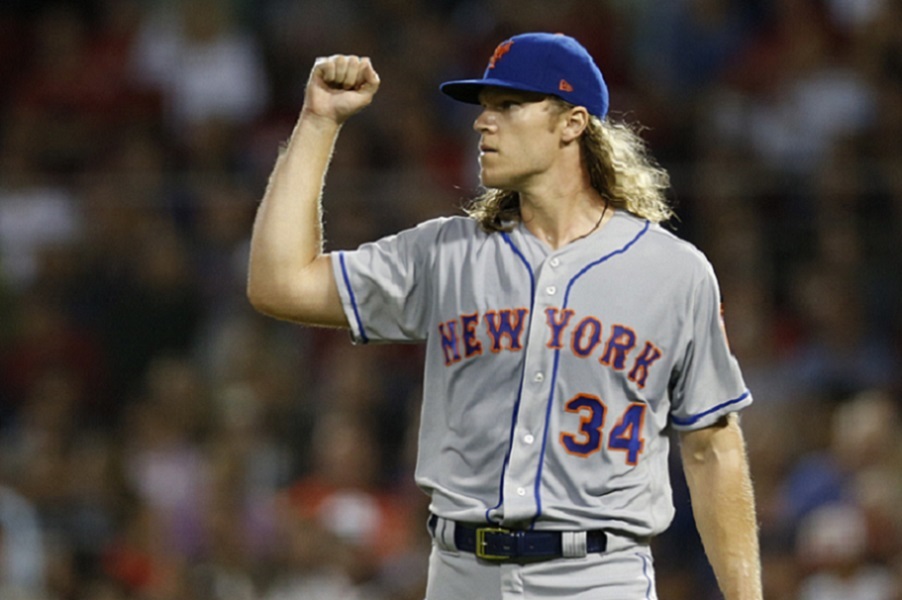 Adding an arm like Noah Syndergaard to the likes of Jose Berrios and Jake Odorizzi could give the Twins a formidable top of the rotation that will be scary for opposing teams to face in the postseason. Unfortunately, acquiring a pitcher like Syndergaard won’t be cheap, as the Mets are probably not too eager to move him, on top of the fact that if he does become available, nearly every team in the postseason hunt will be looking to acquire him. So, what would it take to land this stud pitcher? Let’s find out. First, we will start by looking at what the Twins would be acquiring if they were to trade for Noah Syndergaard. At 26 years of age, Syndergaard is just now entering the prime of his career and would make a lot of sense to add in with this young Twins core. Syndergaard is currently making $6,000,000 in his second year of arbitration, but since he entered his first year of arbitration as a Super 2, Syndergaard won’t become a free agent until after the 2021 season, which gives the Twins 2 and 1/2 season of team control. This could factor in huge for the Twins this offseason, as the only two pitchers in the current rotation they have coming back next year are Jose Berrios and Martin Perez (if they pick up Perez’s $7,500,000 team option). After making his MLB debut in 2015, Noah Syndergaard quickly established himself as one of the premier starting pitchers in the game. His 100 MPH fastball electrified fans, and his result were nothing short of stellar. However, Syndergaard suffered a setback in 2017 when he torn his right latissimus muscle just a month into the season, causing him to be out for nearly five months. Syndergaard bounced back well from his injury in 2018, posting a 3.03 ERA (2.80 FIP) in 154 and 1/3 innings. 2019 hasn’t quite been the same story for Syndergaard, as he has a 4.55 ERA (3.62 FIP) in 95 innings. The worrisome part for Syndergaard is his strikeout rate has dipped slightly since the injury. Prior to the injury, Syndergaard had a 28.4% strikeout rate (which ranked sixth among starting pitchers with at least 200 IP over that timeframe). Since the injury, however, Syndergaard has a strikeout rate of 23.9% (which ranks 42nd among starting pitchers with at least 200 IP over that timeframe). Syndergaard’s fastball velocity has dipped a tick too, though it still remains among the fastest in baseball. In 2016 and 2017, Syndergaard averaged 98.6 MPH on his fastball. In the two years since, Syndergaard's fastball has averaged 97.6 MPH. Additionally, Syndergaard has been on the IL since June 15th with a hamstring strain but is expected to be back and in the starting rotation on Sunday. Trade Comparisons A good place to start to figure out what it might cost to acquire Noah Syndergaard is by looking at some other trades for big-name starting pitchers with multiple years of control over recent years. We can start by looking at the Chris Archer trade. As many of you remember, the Twins were looking to trade for Archer before the 2018 season, yet luckily for them they didn’t because the Pittsburgh Pirates gave up an arm and a leg to get him. The headliners they sent back to the Tampa Bay Rays were Tyler Glasnow and Austin Meadows, both of whom were elite prospects who had just graduated to the MLB ranks. They also included right-hander Shane Baz, who at the time was the 95th ranked prospect in baseball, per MLB.com. At the time everyone said the Pirates gave up way too much for Archer, and in the year since looks like it might be one of the most lopsided trades in MLB history. I would be shocked if the Mets get anywhere close to that good of an offer for Syndergaard. Another trade in recent years to compare to is the Jose Quintana trade in 2017. At the time, Quintana was under contract for 3 1/2 more years at a very team friendly rate. To acquire Quintana from the Chicago White Sox, the Chicago Cubs gave up each of their top two prospects: Eloy Jimenez, who at the time was a top-10 prospect in baseball, along with Dylan Cease, who is one now of the top ranked prospects in baseball, and knocking on the MLB door. The Cubs also gave up two lower-tier prospects. At the times of their deals, both Archer and Quintana were similar pitchers in skill level to where Noah Syndergaard is now: not quite dominant aces, but good enough to be the number one starter on a team lacking an ace. Archer and Quintana both also had an additional year of control than Syndergaard would come with, and neither had quite the injury concerns that Syndergaard has. A couple other deals you can look at recently are the trades involving Chris Sale and Gerrit Cole. Though, it’s a little hard to compare a trade for Syndergaard with the Chris Sale trade since Syndergaard isn’t quite the same level pitcher Sale was at the time of that trade. The Gerrit Cole trade is also a little difficult to compare to, as the Astros traded away a bunch of players who were already MLB ready with relatively low upside. As we stand, it is hard to imaging the Twins trading away many MLB ready players with years of team control, unless they look to move someone like Luis Arraez, though I would be surprised if the Twins are at all interested in moving Arraez at this point. Building a Package If the Twins want to build a package to acquire Noah Syndergaard, it will almost certainly have to include either Royce Lewis or Alex Kirilloff. They could potentially try to build a package around Brusdar Graterol, but with him being shelved for over a month now with a shoulder injury, I can’t see the Mets willing to give up their prized pitcher for another pitcher with some shoulder issues. That being said, I’m sure many of you would like to see what a package not involving Lewis or Kirilloff would look like, so I will put one together for argument's sake. Disclaimer: I am not necessarily saying I would be willing to offer these deals for Syndergaard, this is simply an exercise examine what it might take to acquire Syndergaard. Let’s start by looking at a deal around former first overall draft pick Royce Lewis. There was a point earlier this year where Lewis was in the conversation for top prospect in baseball after players like Vlad Guerrero Jr., Fernando Tatis Jr., and the previously mentioned Eloy Jimenez graduated from the prospect rankings. However, a slow start to the season has brought Lewis’s value down a tick. For many Twins fans, a straight up trade Lewis for Syndergaard might be enough (or even too much), but I am here to tell you, that will not be the case. The Mets will most likely require at least one or two mid-to-lower level prospects in addition to Lewis to cover the risk in case he becomes a bust. Offer: Royce Lewis, Jorge Alcala & Chris Williams If the Twins are unwilling to part ways with Royce Lewis, they next place the Mets will turn to is Alex Kirilloff. If a deal were to get done, I see this as the most likely scenario. Kirilloff is without question the best hitting prospect in the Twins system and is arguably the best hitting prospect in the minor leagues right now period. He has had a slow start to 2019, but his bat should still be considered to be plus-plus. Where Kirilloff loses some value is on the defensive side of the ball. It is starting to look more and more that Kiriloff is destined to be either a slightly below-average corner outfielder, or a fulltime first-baseman. If the Twins deal for Syndergaard were to revolve around Kiriloff, they will most likely have to include another top tier prospect in order to get the deal done. Offer: Alex Kirilloff, Jordan Balazovic & Nick Gordon As I mentioned previously, it is unlikely that the Twins get a deal done without trading away either Lewis or Kirilloff, but If the Twins are dead set on not trading away either of those two, but still want to pursue a deal for Syndergaard, it is going to take a large haul of prospects. Fortunately for the Twins, they have a few other top tier prospects in their system, including three players in Brusdar Graterol, Trevor Larnach and Jordan Balazovic who are all currently ranked as Top 100 Prospects by both Baseball America and MLB.com. Asking the Twins to give up all three of these players will be a tall task, but that might be just what it takes if they want to pry Noah Syndergaard away from the Mets, who will without question be receiving offers from other teams that include a prospect or two that are more revered than any of these three. Offer: Brusdar Graterol, Trevor Larnach, Jordan Balazovic & Ben Rortvedt All three of these offers seem like they would be giving up a lot of prospect capital, but that is the nature of trading for All-Star starting pitchers with multiple years of team control. If you want to acquire them, it is going to cost you a lot. Let us know in the comments below what you think. Would you be willing to trade for Noah Syndergaard, and if so, what kind of package would you put together to trade for him? Today on Twins Daily MIN 10, CHW 3: Twins Hit 5 Homers, Kepler Reaches New Career High Potential Twins Bullpen Target: Sergio Romo, RHP, Marlins Adrianza Returns, Hopes To Remain Hot With Bat
 -
Coming off their first losing week of the season, and the lead in the division down to seven and a half games over the Cleveland Indians, the Minnesota Twins were looking for a big win to start a new week tonight, and that is just what they got. After being held to just one run against Homer Baily and the Kansas City Royals their last time out, the bats bounced back scoring nine runs on fifteen hits against reigning AL Cy Young Award winner Blake Snell. Image courtesy of © Jesse Johnson-USA TODAY Sports Coming off their first losing week of the season, and the lead in the division down to seven and a half games over the Cleveland Indians, the Minnesota Twins were looking for a big win to start a new week tonight, and that is just what they got. After being held to just one run against Homer Baily and the Kansas City Royals their last time out, the bats bounced back scoring nine runs on fifteen hits against reigning AL Cy Young Award winner Blake Snell. Box Score Gibson: 7.0 IP, 7 H, 4 ER, 1 BB, 7 K, 61.2% strikes (60 of 98 pitches) Home Runs: Schoop (13), Garver (12) Multi-Hit Games: Garver (3 for 5, HR); Rosario (4 for 5); Astudillo (3 for 4) WPA of +0.1: Gibson .187, Rosario .117, Astudillo .111 WPA of -0.1: None (Chart via FanGraphs) After a 1-2-3 first inning, Eddie Rosario got the bats going to lead off the second when he pulled a two-strike curveball into right field and hustled his way into second for a double. After a flyout to centerfield by C.J. Cron and a groundout by Max Kepler, it looked like Rosario might get stranded on the bases. That is until La Tortuga stepped up and drove in Rosario on a first pitch infield single. In the top of the third, Willins Astudillo showed off his athleticism in right field, making this spectacular catch. https://twitter.com/fsnorth/status/1143685944479928322 Jonathan Schoop leadoff the bottom of the third with an upper deck blast. Statcast projected the home run to travel 408 feet, with a 104.1 exit velocity and a 27-degree launch angle. https://twitter.com/Twins/status/1143684988099014657 The Twins kept the bats rolling after that Schoop home run, with four of the next five hitters (Jorge Polanco, Mitch Garver, Eddied Rosario and C.J. Cron) all singling to drive in a couple more runs. The inning came to an end on a bad-luck double play, when Max Kepler lined out to Rays first baseman Ji-Man Choi with him practically standing on first, allowing Choi to easily double-off Cron. After putting up three runs in the third inning, the Twins were able to blow the game open in the fourth with three more runs. Astudillo got the inning started with a double off the left-center field wall, and advanced to third on an infield single from Miguel Sano. Then, after a Schoop strikeout and a Polanco walk, both Astudillo and Sano came around to score on another single from Mitch Garver. Nelson Cruz reloaded the bases three pitches later with a single of his own, and that was the end of the night for Blake Snell. The Rays brought in Hunter Wood to try and get out of the inning, but it was more of the same as Rosario greeted him with an RBI single. The inning came to an end the next batter, with yet another inning ending double-play, this time by C.J. Cron. This closed the book on Snell, who gave up seven runs, all earned, on 11 hits in just 3 and 1/3 innings of work. The Twins were able to score for the fourth inning in a row in the bottom of the fifth, but it came at a price, as Max Kepler had to leave the game after being struck on the elbow with a 95 MPH fastball. They are currently calling the injury a right-elbow contusion, so hopefully Kepler can avoid being added to the ever-growing list of Twins players on the injured list. Jake Cave came in to the game to pinch-run for Kepler, and later came around to score on a Jorge Polanco sac fly. In the inning, Astudillo picked up his third hit of the night. Kyle Gibson was rolling along through the first five innings of the ballgame, and was on his way to an excellent bounce-back performances after a terrible start his last time out. Through that point, Gibson hadn’t allowed a run and had only given up one hit, while striking out four. However, Gibson started showing signs of cracking in the sixth when he gave up a leadoff home run to Willy Adames. Gibson was able to get through the inning without giving up any more runs and was looking sharp striking out both Avisail Garcia and Kevin Kiermaier to begin the seventh, before the wheels absolutely fell off the wagon. Gibson proceed to give up three runs on four straight hits, and the once insurmountable eight-run lead was trimmed to four. Gibson was able to finally get out of the inning by striking out Guillermo Heredia, which was Gibson’s seventh strikeout of the game. Ryne Harper came out of the bullpen in the eighth, giving the Twins an easy 1-2-3 inning, which put a lot of people at ease. Mitch Garver was able to tack on an insurance run in the bottom of the inning, when he belted his 12th home run of the season over the left-center field fence. Rocco Baldelli called upon Tyler Duffey to get the final three outs of the game, and just like Harper, he worked a smooth 1-2-3 frame to seal the Twins victory. Postgame with Baldelli https://twitter.com/fsnorth/status/1143726894841397249 Bullpen Usage Here’s a quick look at the number of pitches thrown by the bullpen over the past five days: Next Three Games Wed vs TB, 7:10 pm CT (Morton-Odorizzi) Thu vs TB, 1:10 pm CT (TBD-Perez) Fri at CHW, 7:10 pm CT (TBD-TBD) Last Game KC 6, MIN 1: Bad Inning Spoils Awesome Uniforms View full article
- 28 replies
-
- 1
-
-
- minnesota twins
- twins game recap
- (and 2 more)
-
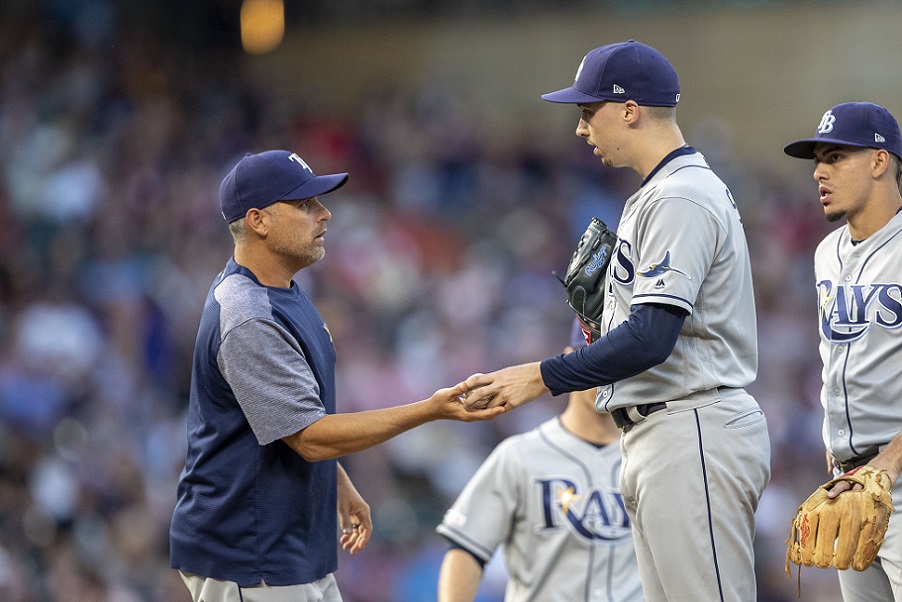 Box Score Gibson: 7.0 IP, 7 H, 4 ER, 1 BB, 7 K, 61.2% strikes (60 of 98 pitches) Home Runs: Schoop (13), Garver (12) Multi-Hit Games: Garver (3 for 5, HR); Rosario (4 for 5); Astudillo (3 for 4) WPA of +0.1: Gibson .187, Rosario .117, Astudillo .111 WPA of -0.1: None (Chart via FanGraphs) After a 1-2-3 first inning, Eddie Rosario got the bats going to lead off the second when he pulled a two-strike curveball into right field and hustled his way into second for a double. After a flyout to centerfield by C.J. Cron and a groundout by Max Kepler, it looked like Rosario might get stranded on the bases. That is until La Tortuga stepped up and drove in Rosario on a first pitch infield single. In the top of the third, Willins Astudillo showed off his athleticism in right field, making this spectacular catch. https://twitter.com/fsnorth/status/1143685944479928322 Jonathan Schoop leadoff the bottom of the third with an upper deck blast. Statcast projected the home run to travel 408 feet, with a 104.1 exit velocity and a 27-degree launch angle. https://twitter.com/Twins/status/1143684988099014657 The Twins kept the bats rolling after that Schoop home run, with four of the next five hitters (Jorge Polanco, Mitch Garver, Eddied Rosario and C.J. Cron) all singling to drive in a couple more runs. The inning came to an end on a bad-luck double play, when Max Kepler lined out to Rays first baseman Ji-Man Choi with him practically standing on first, allowing Choi to easily double-off Cron. After putting up three runs in the third inning, the Twins were able to blow the game open in the fourth with three more runs. Astudillo got the inning started with a double off the left-center field wall, and advanced to third on an infield single from Miguel Sano. Then, after a Schoop strikeout and a Polanco walk, both Astudillo and Sano came around to score on another single from Mitch Garver. Nelson Cruz reloaded the bases three pitches later with a single of his own, and that was the end of the night for Blake Snell. The Rays brought in Hunter Wood to try and get out of the inning, but it was more of the same as Rosario greeted him with an RBI single. The inning came to an end the next batter, with yet another inning ending double-play, this time by C.J. Cron. This closed the book on Snell, who gave up seven runs, all earned, on 11 hits in just 3 and 1/3 innings of work. The Twins were able to score for the fourth inning in a row in the bottom of the fifth, but it came at a price, as Max Kepler had to leave the game after being struck on the elbow with a 95 MPH fastball. They are currently calling the injury a right-elbow contusion, so hopefully Kepler can avoid being added to the ever-growing list of Twins players on the injured list. Jake Cave came in to the game to pinch-run for Kepler, and later came around to score on a Jorge Polanco sac fly. In the inning, Astudillo picked up his third hit of the night. Kyle Gibson was rolling along through the first five innings of the ballgame, and was on his way to an excellent bounce-back performances after a terrible start his last time out. Through that point, Gibson hadn’t allowed a run and had only given up one hit, while striking out four. However, Gibson started showing signs of cracking in the sixth when he gave up a leadoff home run to Willy Adames. Gibson was able to get through the inning without giving up any more runs and was looking sharp striking out both Avisail Garcia and Kevin Kiermaier to begin the seventh, before the wheels absolutely fell off the wagon. Gibson proceed to give up three runs on four straight hits, and the once insurmountable eight-run lead was trimmed to four. Gibson was able to finally get out of the inning by striking out Guillermo Heredia, which was Gibson’s seventh strikeout of the game. Ryne Harper came out of the bullpen in the eighth, giving the Twins an easy 1-2-3 inning, which put a lot of people at ease. Mitch Garver was able to tack on an insurance run in the bottom of the inning, when he belted his 12th home run of the season over the left-center field fence. Rocco Baldelli called upon Tyler Duffey to get the final three outs of the game, and just like Harper, he worked a smooth 1-2-3 frame to seal the Twins victory. Postgame with Baldelli https://twitter.com/fsnorth/status/1143726894841397249 Bullpen Usage Here’s a quick look at the number of pitches thrown by the bullpen over the past five days: Next Three Games Wed vs TB, 7:10 pm CT (Morton-Odorizzi) Thu vs TB, 1:10 pm CT (TBD-Perez) Fri at CHW, 7:10 pm CT (TBD-TBD) Last Game KC 6, MIN 1: Bad Inning Spoils Awesome Uniforms
 -
At this point, it is starting to sound like a broken record. You take a starting pitcher who is struggling to get hitters out, move him to the bullpen, and whala, he becomes a new and improved pitcher out of the pen. Well, that is exactly what has happened with Liam Hendriks, who from 2011 through 2013 was a very poor starting pitcher for the Minnesota Twins. Image courtesy of © John Hefti-USA TODAY Sports At this point, it is starting to sound like a broken record. You take a starting pitcher who is struggling to get hitters out, move him to the bullpen, and whala, he becomes a new and improved pitcher out of the pen. Well, that is exactly what has happened with Liam Hendriks, who from 2011 through 2013 was a very poor starting pitcher for the Minnesota Twins. Liam Hendriks’ time with the Twins came to an end after the 2013 season, when they designated him for assignment to make room for new free agent signee Phil Hughes. Hendriks spent the next year bouncing around among a number of organizations, and wound up making six combined starts at the MLB level as a member of both the Kansas City Royals and Toronto Blue Jays. In 2015, the Blue Jays transitioned Hendriks to the bullpen, and that is where his career took off. From 2011 through 2014, Hendriks made 39 appearances (34 starts) at the MLB level. In that time he had a 5.92 ERA (5.05 FIP), with a 1.55 WHIP, 5.87 K/9, 2.53 BB/9, and 1.57 HR/9 in 188 and 2/3 innings. Since his move to the bullpen in 2015, Hendriks has a 3.33 ERA (2.84 FIP), with a 1.21 WHIP, 10.12 K/9, 2.60 BB/9, and 0.69 HR/9 in 259 and 2/3 innings. In 2019, Hendriks has taken his game to a whole new level, as his 1.49 ERA ranks 13th among all qualified relievers in major league baseball. So how was Hendriks able to make such a drastic improvement from the pitcher we saw in a Twins uniform just a few years prior? The first thing Hendriks did was add velocity to his fastball. Here is a chart showing Hendriks average fastball velocity per season. While it is expected for many pitchers to get a velocity jump when moving to the pen, it is rare to see them add more than 3 MPH, like Hendriks did when he made the move. In 2019, Hendriks' average fastball velocity of 95.6 MPH, is in the 87th percentile among all MLB pitchers who have thrown at least 250 pitches this season. That’s a big improvement from the soft throwing righty that he was as a starter. Another thing that Hedriks has done over the last few seasons is phase out his sinker. While he was a starter, Hendriks’ sinker was his primary pitch, throwing it nearly 40 percent of the time, while his four-seamer was a less commonly used pitch, throwing it a little more than 25 percent of the time. In 2017, the Oakland Athletics told Hendriks to move away from that pitch, and in 2019 it is essentially no longer a part of his pitching arsenal (thrown on just 2.4 percent of pitches this year, compared to 64.9 percent for his four-seamer). One thing that will be monitored over the next month is if the Athletics decide to become sellers at the trade deadline. As of Monday morning, the Athletics are just 1.5 games back of the Cleveland Indians for the second Wild Card spot. However, per Fangraphs, their playoff odds stand at just 8 percent. Hendriks is currently pitching on a 1-year deal worth $2.15 million dollars. This means if the Twins acquire Hendriks, he won’t make much of an impact at all to their pocket book or future plans financially. See Also Ty Buttrey, RHP, Angels Ken Giles, RHP, Blue Jays Sam Dyson, RHP, Giants Brad Hand, LHP, Indians Oliver Perez, LHP Cleveland Robert Stephenson, RHP, Reds John Gant, RHP, Cardinals Alex Colome, RHP, White Sox Seth Lugo, RHP, Mets Greg Holland, RHP, Diamondbacks Sean Doolittle, LHP, Nationals Kirby Yates, RHP, Padres 10 Relievers Minnesota Could Target View full article
- 7 replies
-
- 2
-
-
- liam hendriks
- minnesota twins
- (and 1 more)
-
Potential Twins Bullpen Target: Liam Hendriks, RHP, Athletics
Andrew Thares posted an article in Twins
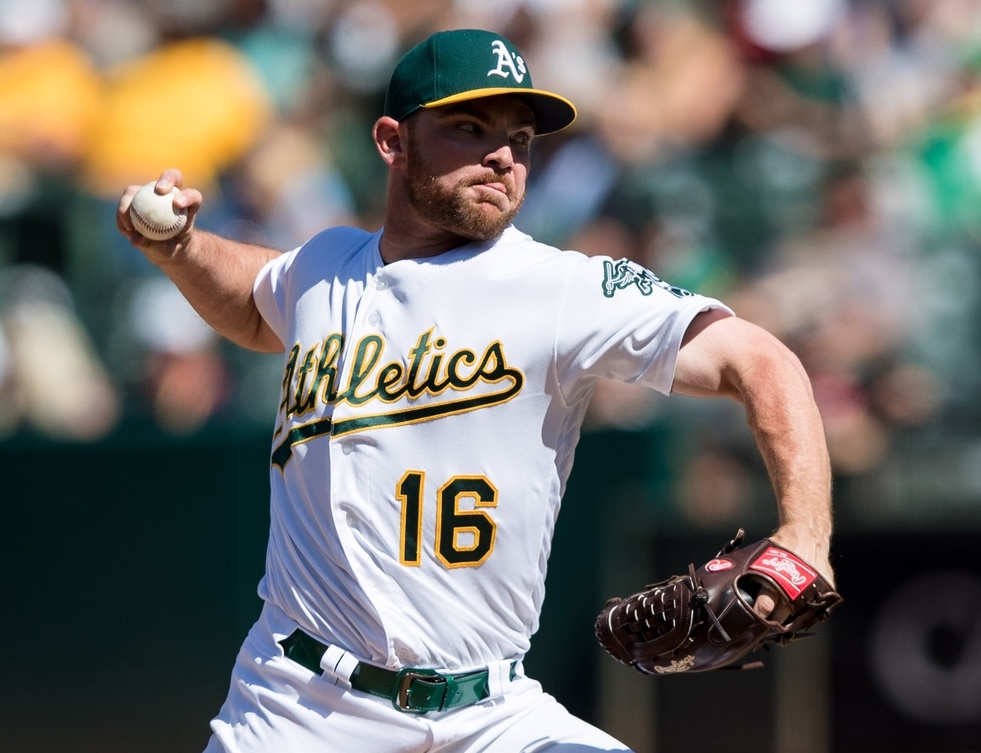 Liam Hendriks’ time with the Twins came to an end after the 2013 season, when they designated him for assignment to make room for new free agent signee Phil Hughes. Hendriks spent the next year bouncing around among a number of organizations, and wound up making six combined starts at the MLB level as a member of both the Kansas City Royals and Toronto Blue Jays. In 2015, the Blue Jays transitioned Hendriks to the bullpen, and that is where his career took off. From 2011 through 2014, Hendriks made 39 appearances (34 starts) at the MLB level. In that time he had a 5.92 ERA (5.05 FIP), with a 1.55 WHIP, 5.87 K/9, 2.53 BB/9, and 1.57 HR/9 in 188 and 2/3 innings. Since his move to the bullpen in 2015, Hendriks has a 3.33 ERA (2.84 FIP), with a 1.21 WHIP, 10.12 K/9, 2.60 BB/9, and 0.69 HR/9 in 259 and 2/3 innings. In 2019, Hendriks has taken his game to a whole new level, as his 1.49 ERA ranks 13th among all qualified relievers in major league baseball. So how was Hendriks able to make such a drastic improvement from the pitcher we saw in a Twins uniform just a few years prior? The first thing Hendriks did was add velocity to his fastball. Here is a chart showing Hendriks average fastball velocity per season. While it is expected for many pitchers to get a velocity jump when moving to the pen, it is rare to see them add more than 3 MPH, like Hendriks did when he made the move. In 2019, Hendriks' average fastball velocity of 95.6 MPH, is in the 87th percentile among all MLB pitchers who have thrown at least 250 pitches this season. That’s a big improvement from the soft throwing righty that he was as a starter. Another thing that Hedriks has done over the last few seasons is phase out his sinker. While he was a starter, Hendriks’ sinker was his primary pitch, throwing it nearly 40 percent of the time, while his four-seamer was a less commonly used pitch, throwing it a little more than 25 percent of the time. In 2017, the Oakland Athletics told Hendriks to move away from that pitch, and in 2019 it is essentially no longer a part of his pitching arsenal (thrown on just 2.4 percent of pitches this year, compared to 64.9 percent for his four-seamer). One thing that will be monitored over the next month is if the Athletics decide to become sellers at the trade deadline. As of Monday morning, the Athletics are just 1.5 games back of the Cleveland Indians for the second Wild Card spot. However, per Fangraphs, their playoff odds stand at just 8 percent. Hendriks is currently pitching on a 1-year deal worth $2.15 million dollars. This means if the Twins acquire Hendriks, he won’t make much of an impact at all to their pocket book or future plans financially. See Also Ty Buttrey, RHP, Angels Ken Giles, RHP, Blue Jays Sam Dyson, RHP, Giants Brad Hand, LHP, Indians Oliver Perez, LHP Cleveland Robert Stephenson, RHP, Reds John Gant, RHP, Cardinals Alex Colome, RHP, White Sox Seth Lugo, RHP, Mets Greg Holland, RHP, Diamondbacks Sean Doolittle, LHP, Nationals Kirby Yates, RHP, Padres 10 Relievers Minnesota Could Target
 -
Has Duffey gotten a few high leverage appearances this month? Yes. But let's break down these appearances real quick. The most recent one was the 17 inning Red Sox game. Literally all 8 of the pitchers in the Twins bullpen pitched in a high leverage situation in this game, and Duffey only got in after Rogers, May and Harper had already been used. Another one was the Mariners game on June 12th, where the Twins had already turned to Morin, May and Parker in important spots before they went to Duffey. Also Rogers was unavailable due to his back issue. The other high leverage spot was on June 7th against Detroit. A game in which both Rogers and May were unavailable due to high pitch counts in the previous two days. So the Twins had to turn to Morin, Harper, Duffey and Parker for high leverage innings in this game. The rest of Duffey's outings have been in very low leverage spots when the Twins were down by a few runs, or had a huge lead. To me it looks like Duffey has only been used in high leverage spots out of necessity, and not because the Twins actually wanted him pitching there.
- 20 replies
-
- 1
-
-
- tyler duffey
- minnesota twins
- (and 1 more)
-
All winter, the biggest area the Twins needed to address was the back end of the bullpen. However, the only reliever that they signed to support the bullpen was Blake Parker, which was a little underwhelming to many Twins fans. Fortunately, there have been a few guys, like Taylor Rogers and Ryne Harper, within the organization that have stepped up in a big way so far this year. Well, as it turns out, there is another reliever within the organization who has pitched very well this year, and it is time to start throwing him in bigger spots. I am talking, of course, about Tyler Duffey. Image courtesy of © Bruce Kluckhohn-USA TODAY Sports All winter, the biggest area the Twins needed to address was the back end of the bullpen. However, the only reliever that they signed to support the bullpen was Blake Parker, which was a little underwhelming to many Twins fans. Fortunately, there have been a few guys, like Taylor Rogers and Ryne Harper, within the organization that have stepped up in a big way so far this year. Well, as it turns out, there is another reliever within the organization who has pitched very well this year, and it is time to start throwing him in bigger spots. I am talking, of course, about Tyler Duffey. When Tyler Duffey was coming up through the minor leagues, he was very much the Terry Ryan era sinker-slider type pitcher who relied heavily on getting groundballs instead of strikeouts. When Duffey was first called up in 2015, he was an effective starting pitcher with a 3.10 ERA in 10 starts. However, 2016 didn’t go so well for Duffey, and he was transitioned to the bullpen for the 2017 season. Over his first two seasons as a reliever, Duffey didn’t see much improvement, pitching primarily in a mop up role. Tyler Duffey started this season in Triple-A Rochester and was lights out for the Red Wings. Before his call-up to the Twins, Duffey made seven relief appearances, throwing 13 and 2/3 innings while giving up just two runs on eight hits and five walks. What was noticeably different with Duffey, was the rate at which he was striking out opposing hitters. In his career, prior to 2019, Duffey was only striking out 7.8 hitters per nine innings, between both the minor and major leagues. In those 13 and 2/3 innings in Rochester, Duffey struck out 22 opposing hitters. After he got called up to the Majors on April 16th, Duffey continued his great start to the season. So far, in 22 and 2/3 innings for the Twins, Duffey has a 1.99 ERA and has struck out 32 hitters with just six walks. Duffey has held opposing hitters to a .220 batting average and just a .280 wOBA. However, according to Statcast, Duffey’s numbers should be even better, as he has an expected batting average of .193 and an expected wOBA of .251. For context, among the 355 pitchers who have faced at least 100 batters this season, Duffey ranks 27th in expected batting average and 19th in expected wOBA, leading all Twins pitchers in both categories. There are a few of factors that have helped Tyler Duffey become an entirely different pitcher in 2019, than he was in prior seasons. The first, and most substantial factor, is his fastball. Previously, Duffey featured an even mix with both his four-seamer and his sinker, having thrown them 29 and 27 percent of the time respectively. In 2019, Duffey has all but ditched his sinker in favor of his four-seamer. Duffey is now throwing his four-seamer 54 percent of the time, compared to his sinker which he throws three percent of time. This goes a long way towards explaining Duffey’s jump in strikeout rate, as he has a 20 percent whiff rate in his career with his four-seamer, compared to just an 11 percent career whiff rate with his sinker. Another thing that has helped Duffey improve with his fastball is his uptick in velocity. The chart below shows Tyler Duffey’s average velocity on his four-seamer throughout his career. (Chart via Baseball Savant) From this chart we see that Tyler Duffey's fastball velocity spiked when the Twins transitioned him to the bullpen in 2017, but even after that move, Duffey has continued to add velocity as he has matured. Now at age 28, Duffey has matured physically to the point where he should be throwing his fastball harder than he ever has before. In addition to his change in repertoire with his fastball, he has also mixed things up with his breaking ball. In the early part of his career, Duffey exclusively threw a curveball when he threw a breaking pitch and threw it on 37 percent of his pitches in total. In 2018, he started experimenting with a slider, which he threw seven percent of the time last year. This year his slider has become a much bigger part of his pitching arsenal as he is throwing it 25 percent of the time, compared to just 18 percent of the time with his curveball. This has been a big improvement as Duffey is allowing opposing hitters to hit a .148 batting average and a .193 wOBA against his slider, compared to the .254 batting average and .283 wOBA he has allowed with his curveball in his career. A big part of that can also be explained by Duffey’s whiff rates with the two pitches. So far this year, opposing hitters have a 55 percent whiff rate against his slider, compared to a career 32 percent whiff rate against his curveball. Another big factor that has played into Tyler Duffey’s success this season is his improved command with his pitches. Looking at Duffey’s walk rate, it might not be as apparent because, at six percent in 2019, Duffey is right in line with his career norms. However, when you look at a heat map of where Duffey is throwing his pitches in 2019, it is telling a different story. The below charts show Duffey’s pitch heat map in each of his five season in the big leagues. (Chart via Baseball Savant) You can see from the first four seasons of Duffey’s career, he was primarily pitching in the heart of the zone, and opposing hitters were teeing off on him. This year, Duffey is locating around the edges of the strike zone with his pitches a lot more often. In the 2019 heat map, we can see a spot starting to form down and away from right-handed hitters because he is locating there with his slider quite a bit. This is the ideal location to throw a slider, as it appears that it will be a strike, and then ends out of the zone, enticing hitters to swing and miss at the pitch at a much higher rate. As we can clearly see, Tyler Duffey is not the same pitcher that he was prior to 2018, and he has developed into one of the most effective relievers, in not only the Twins bullpen, but in all of Major League Baseball in 2019. With the Twins in dire need of some more support at the back end of the bullpen, it is time for Rocco Baldelli to start giving Tyler Duffey more opportunities in high leverage situations. View full article
- 20 replies
-
- 5
-
-
- tyler duffey
- minnesota twins
- (and 1 more)
-
It’s Time to Start Trusting Tyler Duffey in High Leverage Situations
Andrew Thares posted an article in Twins
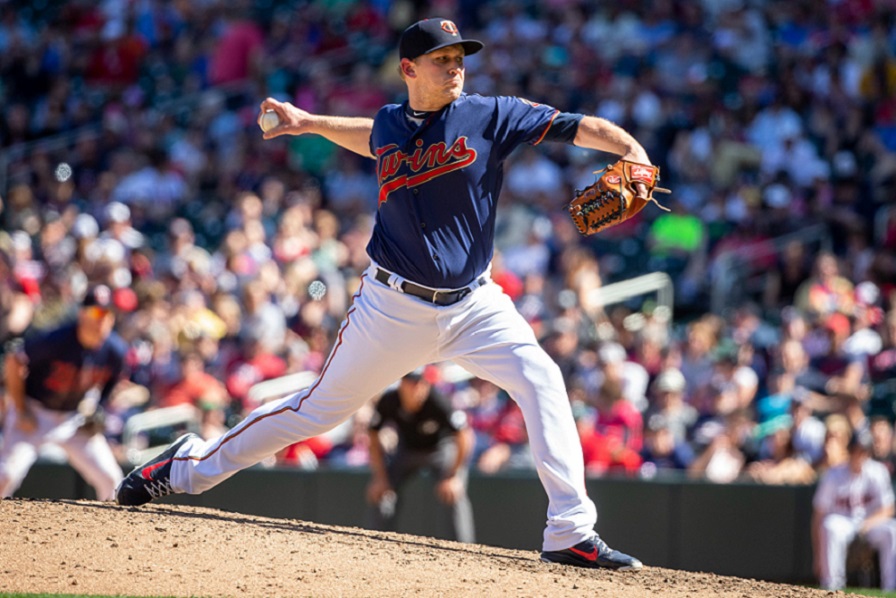 When Tyler Duffey was coming up through the minor leagues, he was very much the Terry Ryan era sinker-slider type pitcher who relied heavily on getting groundballs instead of strikeouts. When Duffey was first called up in 2015, he was an effective starting pitcher with a 3.10 ERA in 10 starts. However, 2016 didn’t go so well for Duffey, and he was transitioned to the bullpen for the 2017 season. Over his first two seasons as a reliever, Duffey didn’t see much improvement, pitching primarily in a mop up role. Tyler Duffey started this season in Triple-A Rochester and was lights out for the Red Wings. Before his call-up to the Twins, Duffey made seven relief appearances, throwing 13 and 2/3 innings while giving up just two runs on eight hits and five walks. What was noticeably different with Duffey, was the rate at which he was striking out opposing hitters. In his career, prior to 2019, Duffey was only striking out 7.8 hitters per nine innings, between both the minor and major leagues. In those 13 and 2/3 innings in Rochester, Duffey struck out 22 opposing hitters. After he got called up to the Majors on April 16th, Duffey continued his great start to the season. So far, in 22 and 2/3 innings for the Twins, Duffey has a 1.99 ERA and has struck out 32 hitters with just six walks. Duffey has held opposing hitters to a .220 batting average and just a .280 wOBA. However, according to Statcast, Duffey’s numbers should be even better, as he has an expected batting average of .193 and an expected wOBA of .251. For context, among the 355 pitchers who have faced at least 100 batters this season, Duffey ranks 27th in expected batting average and 19th in expected wOBA, leading all Twins pitchers in both categories. There are a few of factors that have helped Tyler Duffey become an entirely different pitcher in 2019, than he was in prior seasons. The first, and most substantial factor, is his fastball. Previously, Duffey featured an even mix with both his four-seamer and his sinker, having thrown them 29 and 27 percent of the time respectively. In 2019, Duffey has all but ditched his sinker in favor of his four-seamer. Duffey is now throwing his four-seamer 54 percent of the time, compared to his sinker which he throws three percent of time. This goes a long way towards explaining Duffey’s jump in strikeout rate, as he has a 20 percent whiff rate in his career with his four-seamer, compared to just an 11 percent career whiff rate with his sinker. Another thing that has helped Duffey improve with his fastball is his uptick in velocity. The chart below shows Tyler Duffey’s average velocity on his four-seamer throughout his career. (Chart via Baseball Savant) From this chart we see that Tyler Duffey's fastball velocity spiked when the Twins transitioned him to the bullpen in 2017, but even after that move, Duffey has continued to add velocity as he has matured. Now at age 28, Duffey has matured physically to the point where he should be throwing his fastball harder than he ever has before. In addition to his change in repertoire with his fastball, he has also mixed things up with his breaking ball. In the early part of his career, Duffey exclusively threw a curveball when he threw a breaking pitch and threw it on 37 percent of his pitches in total. In 2018, he started experimenting with a slider, which he threw seven percent of the time last year. This year his slider has become a much bigger part of his pitching arsenal as he is throwing it 25 percent of the time, compared to just 18 percent of the time with his curveball. This has been a big improvement as Duffey is allowing opposing hitters to hit a .148 batting average and a .193 wOBA against his slider, compared to the .254 batting average and .283 wOBA he has allowed with his curveball in his career. A big part of that can also be explained by Duffey’s whiff rates with the two pitches. So far this year, opposing hitters have a 55 percent whiff rate against his slider, compared to a career 32 percent whiff rate against his curveball. Another big factor that has played into Tyler Duffey’s success this season is his improved command with his pitches. Looking at Duffey’s walk rate, it might not be as apparent because, at six percent in 2019, Duffey is right in line with his career norms. However, when you look at a heat map of where Duffey is throwing his pitches in 2019, it is telling a different story. The below charts show Duffey’s pitch heat map in each of his five season in the big leagues. (Chart via Baseball Savant) You can see from the first four seasons of Duffey’s career, he was primarily pitching in the heart of the zone, and opposing hitters were teeing off on him. This year, Duffey is locating around the edges of the strike zone with his pitches a lot more often. In the 2019 heat map, we can see a spot starting to form down and away from right-handed hitters because he is locating there with his slider quite a bit. This is the ideal location to throw a slider, as it appears that it will be a strike, and then ends out of the zone, enticing hitters to swing and miss at the pitch at a much higher rate. As we can clearly see, Tyler Duffey is not the same pitcher that he was prior to 2018, and he has developed into one of the most effective relievers, in not only the Twins bullpen, but in all of Major League Baseball in 2019. With the Twins in dire need of some more support at the back end of the bullpen, it is time for Rocco Baldelli to start giving Tyler Duffey more opportunities in high leverage situations.
 -
From 2014 through 2017, Ken Giles was one of the most dominant relievers in major league baseball, pitching for both the Philadelphia Phillies and the Houston Astros. Now pitching for the Toronto Blue Jays, the 28-year-old right-hander might be the perfect addition to the backend of a Twins bullpen that is in need of a shutdown arm or two. Image courtesy of © Brad Rempel-USA TODAY Sports From 2014 through 2017, Ken Giles was one of the most dominant relievers in major league baseball, pitching for both the Philadelphia Phillies and the Houston Astros. Now pitching for the Toronto Blue Jays, the 28-year-old right-hander might be the perfect addition to the backend of a Twins bullpen that is in need of a shutdown arm or two. Some of you might remember during that great postseason run by the 2017 Astros, one piece that wasn’t firing for them was the backend of their bullpen. A big part of this was due to the fall of Ken Giles, who was rocked for 10 runs on 12 hits and five walks in 7 2/3 innings pitched in the 2017 postseason. Those struggles carried over into 2018, and led to the Astros decision to demote him to AAA before ultimately trading him to the Blue Jays in part of the package that sent Roberto Osuna to the Astros. Giles didn’t have a lot more success with the Blue Jays than he did the Astros, and finished 2018 with a 4.65 ERA. However, it wasn’t all bad in 2018, as Giles did have a much better 3.08 FIP, that was aided in part by his extremely low walk rate of just 3.3 percent. Now in 2019, Ken Giles seems to have regained the form that helped him become the dominant backend of the bullpen reliever that he was during his first four seasons as a big leaguer. Among qualified relievers, only Ryan Pressly, Brad Hand, and Shane Greene have a better ERA this season than Giles’ 1.08. Some of the more in-depth metrics support that this is the real Ken Giles, and that 2018 was more of a fluke/bad luck season. In addition to his 1.08 ERA, Giles sports a 1.17 FIP, which is topped by only Kirby Yates’ 1.14 FIP among qualified relievers. If you look at the Statcast metrics over at Baseball Savant, it backs up the case that Giles is back to his dominant form even more. So far this season, Giles has allowed opposing hitters to hit at a .207 clip, compared to his expected batting average allowed of .188. Giles has also been better from an expected wOBA perspective, as Giles .247 wOBA allowed is actually slightly higher than his .243 xwOBA. A big part of Giles' success has come from regaining his ability to strike people out. During his dominant stretch from 2014 to 2017, Giles struck out 33.7 percent of opposing hitters (which ranked 9th among all relievers with at least 100 IP over that time). In 2018, that number fell to just 25 percent. However, in 2019, Giles has gotten his strikeout rate back up to 42.4 percent, which ranks third among qualified relievers this season. A big part of this can be explained by Giles getting back to using his slider more often. Here is a graph showing Giles' slider usage rate over the past few seasons. (Chart via Baseball Savant) As we can see, Giles threw his slider far less often in 2018 than he had been previously, which could help explain his dip in performance. In 2019, Giles’ slider usage is back up to 49 percent, which is the highest rate of his career. It becomes even more clear that this has had an impact when we look at the next chart that shows us just how much better Giles is with his slider than his fastball. (Chart via Baseball Savant) A big part of what makes Ken Giles slider so effective is how often he gets opposing hitters to swing and miss at the pitch. So far this year, opposing hitters are whiffing at 61 percent of Giles' sliders that they swing at. That is the highest rate of any pitcher who has thrown at least 100 breaking balls this season. It is also apparent that Giles started throwing his sinker again in 2018, but he is still rarely using it (under four percent of the time) so I wouldn’t put much stock in that pitch for now. One concern the Twins could have for Giles is regarding his health, as he was placed on the IL last week with elbow inflammation, but he was reinstated onto the active roster on Thursday, so they will have some time to evaluate if he is truly healthy before they are forced to make a decision on him. Giles is currently making $6.3M in his second year of arbitration and will be under team control through the 2020 season if the Twins were to trade for him. If you are wondering what it would take to pry Giles away from the Blue Jays, I assume they will be demanding a package in return that is similar to what the Twins received in the Ryan Pressly trade with the Astros a year ago. See Also Sam Dyson, RHP, Giants Brad Hand, LHP, Indians Oliver Perez, LHP Cleveland Robert Stephenson, RHP, Reds John Gant, RHP, Cardinals Alex Colome, RHP, White Sox Seth Lugo, RHP, Mets Greg Holland, RHP, Diamondbacks Sean Doolittle, LHP, Nationals Kirby Yates, RHP, Padres 10 Relievers Minnesota Could Target View full article
-
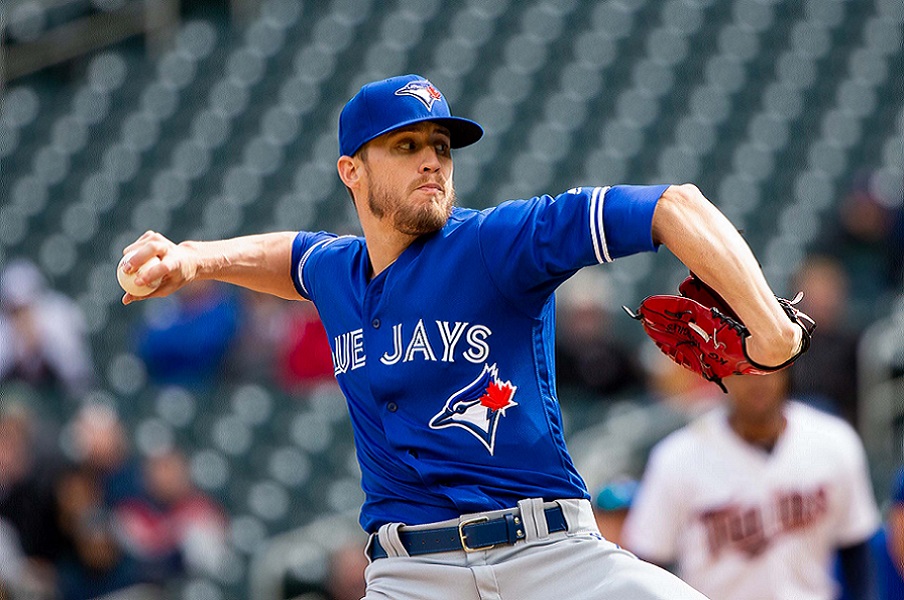 Some of you might remember during that great postseason run by the 2017 Astros, one piece that wasn’t firing for them was the backend of their bullpen. A big part of this was due to the fall of Ken Giles, who was rocked for 10 runs on 12 hits and five walks in 7 2/3 innings pitched in the 2017 postseason. Those struggles carried over into 2018, and led to the Astros decision to demote him to AAA before ultimately trading him to the Blue Jays in part of the package that sent Roberto Osuna to the Astros. Giles didn’t have a lot more success with the Blue Jays than he did the Astros, and finished 2018 with a 4.65 ERA. However, it wasn’t all bad in 2018, as Giles did have a much better 3.08 FIP, that was aided in part by his extremely low walk rate of just 3.3 percent. Now in 2019, Ken Giles seems to have regained the form that helped him become the dominant backend of the bullpen reliever that he was during his first four seasons as a big leaguer. Among qualified relievers, only Ryan Pressly, Brad Hand, and Shane Greene have a better ERA this season than Giles’ 1.08. Some of the more in-depth metrics support that this is the real Ken Giles, and that 2018 was more of a fluke/bad luck season. In addition to his 1.08 ERA, Giles sports a 1.17 FIP, which is topped by only Kirby Yates’ 1.14 FIP among qualified relievers. If you look at the Statcast metrics over at Baseball Savant, it backs up the case that Giles is back to his dominant form even more. So far this season, Giles has allowed opposing hitters to hit at a .207 clip, compared to his expected batting average allowed of .188. Giles has also been better from an expected wOBA perspective, as Giles .247 wOBA allowed is actually slightly higher than his .243 xwOBA. A big part of Giles' success has come from regaining his ability to strike people out. During his dominant stretch from 2014 to 2017, Giles struck out 33.7 percent of opposing hitters (which ranked 9th among all relievers with at least 100 IP over that time). In 2018, that number fell to just 25 percent. However, in 2019, Giles has gotten his strikeout rate back up to 42.4 percent, which ranks third among qualified relievers this season. A big part of this can be explained by Giles getting back to using his slider more often. Here is a graph showing Giles' slider usage rate over the past few seasons. (Chart via Baseball Savant) As we can see, Giles threw his slider far less often in 2018 than he had been previously, which could help explain his dip in performance. In 2019, Giles’ slider usage is back up to 49 percent, which is the highest rate of his career. It becomes even more clear that this has had an impact when we look at the next chart that shows us just how much better Giles is with his slider than his fastball. (Chart via Baseball Savant) A big part of what makes Ken Giles slider so effective is how often he gets opposing hitters to swing and miss at the pitch. So far this year, opposing hitters are whiffing at 61 percent of Giles' sliders that they swing at. That is the highest rate of any pitcher who has thrown at least 100 breaking balls this season. It is also apparent that Giles started throwing his sinker again in 2018, but he is still rarely using it (under four percent of the time) so I wouldn’t put much stock in that pitch for now. One concern the Twins could have for Giles is regarding his health, as he was placed on the IL last week with elbow inflammation, but he was reinstated onto the active roster on Thursday, so they will have some time to evaluate if he is truly healthy before they are forced to make a decision on him. Giles is currently making $6.3M in his second year of arbitration and will be under team control through the 2020 season if the Twins were to trade for him. If you are wondering what it would take to pry Giles away from the Blue Jays, I assume they will be demanding a package in return that is similar to what the Twins received in the Ryan Pressly trade with the Astros a year ago. See Also Sam Dyson, RHP, Giants Brad Hand, LHP, Indians Oliver Perez, LHP Cleveland Robert Stephenson, RHP, Reds John Gant, RHP, Cardinals Alex Colome, RHP, White Sox Seth Lugo, RHP, Mets Greg Holland, RHP, Diamondbacks Sean Doolittle, LHP, Nationals Kirby Yates, RHP, Padres 10 Relievers Minnesota Could Target
 -
I couldn't disagree more with this take. This offense has produced at a level no offense has ever before. Why would we completely change that after a few games where they struggled with RISP? Also as a team, the Twins have a .278 batting average with RISP, which is third best mark in the MLB. Trust me, getting hits with RISP is not the Twins issue, they just had a couple games where they struggled with it, which every team will have at some point in the season.
- 29 replies
-
- 1
-
-
- willians astudillo
- sean poppen
- (and 1 more)
-
After a seventeen inning struggle the night before, the Minnesota Twins were hoping to take the rubber game of this three-game series against the defending World Series champions. However, that was not meant to be as the Red Sox bats went off for 12 hits while drawing 10 walks off Twins pitching. Those 10 walks equals the season high set on April 10 against the New York Mets in the infamous Andrew Vasquez debacle. Image courtesy of © Brad Rempel-USA TODAY Sports After a seventeen inning struggle the night before, the Minnesota Twins were hoping to take the rubber game of this three-game series against the defending World Series champions. However, that was not meant to be as the Red Sox bats went off for 12 hits while drawing 10 walks off Twins pitching. Those 10 walks equals the season high set on April 10 against the New York Mets in the infamous Andrew Vasquez debacle. Box Score Gibson: 4.1 IP, 7 H, 6 ER, 5 BB, 3 K, 52.1% strikes (49 of 94 pitches) Home Runs: Astudillo (3), Kepler (19) Multi-Hit Games: Astudillo (3 for 4, HR), Rosario (2 for 4) WPA of +0.1: Astudillo .141, Arraez .127 WPA of -0.1: Gibson -.495, Cave -.144, Castro -.116 (Chart via FanGraphs) The Twins were able to get on the board with a run in the first inning, but they left you wondering if it could have been a bigger inning. After Max Kepler popped out to start the inning, C.J. Cron flared a single into right field. Then Nelson Cruz followed that up with a towering flyball that hit off the limestone in right field, deflecting the ball back towards the infield, however, Red Sox centerfielder Jackie Bradley Jr. was able to run the ball down and easily throw out Cron who was heading home, even though he should have definitely been held up. On the play, Cruz was able to advance to third, and scored on the next at-bat when Eddie Rosario beat the shift with a two-out RBI base-hit. It didn’t take the Red Sox long to respond, stringing a bunch of singles and walks together in the top of the second, and before you knew it the Twins were in a quick hole, down three to one. This was the first of two bad innings on the night for Kyle Gibson, who did not have his best command. In the fifth, Gibson was touched for three more runs after giving up another string of walks and hits. Gibson’s five walks allowed were his most since his first start of the 2018 season in Baltimore. In the bottom of the third, the Twins got another clutch two-out RBI base-hit, this time off the bat of Luis Arraez. Then it was Bomba time in the bottom of the fourth. Willians Astudillo carried over his hot bat from Triple-A Rochester, leading off the inning with a solo shot as part of a three-hit night. https://twitter.com/Twins/status/1141522147803848705 Max Kepler followed La Tortuga with a home run of his own just a couple of batters later, giving the Twins a four to three lead. This was already Kepler’s 19th home run of the season, just one shy of his previous career high 20 that he hit in 2018. https://twitter.com/Twins/status/1141522725787320320 The Twins made a couple of roster moves earlier this afternoon. The first was placing Marwin Gonzalez on the 10-day IL with a hamstring injury. Which is the reason why La Tortuga was back up with the MLB club tonight. The other move the Twins made was placing Blake Parker on the family medical emergency list, which forced them into bringing up reliever Sean Poppen to make his MLB debut. Poppen has been pitches lights out for the Rochester Red Wings, with a 1.55 ERA. 10.6 K/9 and 3.7 BB/9. Poppen was able to get into the game tonight and gave the Twins bullpen a much-needed night off, throwing four innings to finish the game. Poppen looked pretty sharp for three of the four innings but struggled in the eighth inning allowing three runs on four hits and two walks. It probably wasn’t exactly the debut that Poppen was hoping to have, but he served a big role, and will give the Twins a fresher bullpen heading into a four-game series against the Royals starting on Thursday. Postgame with Baldelli https://twitter.com/fsnorth/status/1141557385422495744 Bullpen Usage Here’s a quick look at the number of pitches thrown by the bullpen over the past five days: Next Three Games Thur at KC, 7:15 pm CT (Odorizzi-TBD) Fri at KC, 7:15 pm CT (Perez-TBD) Sat at KC, 1:15 pm CT (Berrios-TBD) Last Game MIN 4, BOS 3: Twins Win in 17th Inning, Get First Walk-Off View full article
- 29 replies
-
- 1
-
-
- willians astudillo
- sean poppen
- (and 1 more)
-
 Box Score Gibson: 4.1 IP, 7 H, 6 ER, 5 BB, 3 K, 52.1% strikes (49 of 94 pitches) Home Runs: Astudillo (3), Kepler (19) Multi-Hit Games: Astudillo (3 for 4, HR), Rosario (2 for 4) WPA of +0.1: Astudillo .141, Arraez .127 WPA of -0.1: Gibson -.495, Cave -.144, Castro -.116 (Chart via FanGraphs) The Twins were able to get on the board with a run in the first inning, but they left you wondering if it could have been a bigger inning. After Max Kepler popped out to start the inning, C.J. Cron flared a single into right field. Then Nelson Cruz followed that up with a towering flyball that hit off the limestone in right field, deflecting the ball back towards the infield, however, Red Sox centerfielder Jackie Bradley Jr. was able to run the ball down and easily throw out Cron who was heading home, even though he should have definitely been held up. On the play, Cruz was able to advance to third, and scored on the next at-bat when Eddie Rosario beat the shift with a two-out RBI base-hit. It didn’t take the Red Sox long to respond, stringing a bunch of singles and walks together in the top of the second, and before you knew it the Twins were in a quick hole, down three to one. This was the first of two bad innings on the night for Kyle Gibson, who did not have his best command. In the fifth, Gibson was touched for three more runs after giving up another string of walks and hits. Gibson’s five walks allowed were his most since his first start of the 2018 season in Baltimore. In the bottom of the third, the Twins got another clutch two-out RBI base-hit, this time off the bat of Luis Arraez. Then it was Bomba time in the bottom of the fourth. Willians Astudillo carried over his hot bat from Triple-A Rochester, leading off the inning with a solo shot as part of a three-hit night. https://twitter.com/Twins/status/1141522147803848705 Max Kepler followed La Tortuga with a home run of his own just a couple of batters later, giving the Twins a four to three lead. This was already Kepler’s 19th home run of the season, just one shy of his previous career high 20 that he hit in 2018. https://twitter.com/Twins/status/1141522725787320320 The Twins made a couple of roster moves earlier this afternoon. The first was placing Marwin Gonzalez on the 10-day IL with a hamstring injury. Which is the reason why La Tortuga was back up with the MLB club tonight. The other move the Twins made was placing Blake Parker on the family medical emergency list, which forced them into bringing up reliever Sean Poppen to make his MLB debut. Poppen has been pitches lights out for the Rochester Red Wings, with a 1.55 ERA. 10.6 K/9 and 3.7 BB/9. Poppen was able to get into the game tonight and gave the Twins bullpen a much-needed night off, throwing four innings to finish the game. Poppen looked pretty sharp for three of the four innings but struggled in the eighth inning allowing three runs on four hits and two walks. It probably wasn’t exactly the debut that Poppen was hoping to have, but he served a big role, and will give the Twins a fresher bullpen heading into a four-game series against the Royals starting on Thursday. Postgame with Baldelli https://twitter.com/fsnorth/status/1141557385422495744 Bullpen Usage Here’s a quick look at the number of pitches thrown by the bullpen over the past five days: Next Three Games Thur at KC, 7:15 pm CT (Odorizzi-TBD) Fri at KC, 7:15 pm CT (Perez-TBD) Sat at KC, 1:15 pm CT (Berrios-TBD) Last Game MIN 4, BOS 3: Twins Win in 17th Inning, Get First Walk-Off
 -
Minnesota Twins 2019 MLB Draft Signing Tracker
Andrew Thares replied to Andrew Thares's topic in Twins Daily Front Page News
Updated the post to include a bonus pool tracker. Thought this was a useful addition. Let me know if there is anything else you would like us to track in this post, and I will see what we can do.- 89 replies
-
- 1
-
-
- draft signing tracker
- mlb draft
- (and 1 more)
-
This was addressed in the article!! "Another benefit of using the Play Index is it excluded plate appearances by pitchers, which would have skewed the results against National League teams along with all MLB teams prior to 1973."
-
This is a very fair point. I went back to check and the Twins OPS+ is 147. The 1908 Cubs and the 1965 Reds are the only two teams ahead of them, each having a 148 OPS+. However, both lineups had pitchers, which were excluded from this, meaning they had an advantage as they only needed 2 hitters to preform at the bottom of the lineup instead of 3. This plays out in the results, as the only other teams in the Top 15 that had a DH are the 2003 Red Sox (141 OPS+) and the 1977 White Sox (137 OPS+).
- 33 replies
-
- 2
-
-
- bottom of the order
- batting order
- (and 3 more)
-
The other day one of my friends, who is a Yankees fan, asked me how the Twins were such a good team with their roster. This wasn’t some attempt to say the Twins aren’t actually good, he just didn’t realize how many good players the Twins actually have, specifically within their lineup. That same thing is probably going through the minds of many other casual baseball fans of other MLB teams. When you look at the lineup, the only guy most people probably recognize as a star is Nelson Cruz, and he hasn’t really been the biggest of factors so far given that he’s only played in a little over half of the Twins games. This is probably why many national media members didn’t peg the Twins to be this good offensively, and why their preseason over/under win total of 84.5 now seems like it would have been an easy money bet. Image courtesy of © Brad Rempel-USA TODAY Sports The other day one of my friends, who is a Yankees fan, asked me how the Twins were such a good team with their roster. This wasn’t some attempt to say the Twins aren’t actually good, he just didn’t realize how many good players the Twins actually have, specifically within their lineup. That same thing is probably going through the minds of many other casual baseball fans of other MLB teams. When you look at the lineup, the only guy most people probably recognize as a star is Nelson Cruz, and he hasn’t really been the biggest of factors so far given that he’s only played in a little over half of the Twins games. This is probably why many national media members didn’t peg the Twins to be this good offensively, and why their preseason over/under win total of 84.5 now seems like it would have been an easy money bet. So, how does this lineup, with such little star power, lead Major League Baseball in so many important statistical categories like runs scored, home runs, batting average, slugging percentage, OPS, wOBA and wRC+? The answer to that is they can hit at every spot up and down the lineup. The table below shows the Twins OPS from every spot in the order so far in 2019, and how they rank in the MLB after play on Tuesday. The first thing that sticks out to me in this chart is how much worse the Twins have been in the three spot in the order, relative to the rest of the order. A lot of this could be explained by all the games Cruz has missed this year, but now that Cruz is back and healthy, this number will be on the rise. The other thing that strikes me is how well the Twins bottom of the lineup has been doing. I knew they were getting great production from guys like Jonathan Schoop, Jason Castro and Byron Buxton down there, but these numbers are off the charts for the bottom of the lineup. Overall, the bottom of the order (spots seven through nine) have an OPS of .868. The rest of the spots in the Twins lineup combine for an .851 OPS, which itself is the second-best lineup in baseball one through six. To get a little better context on how well the Twins bottom of the lineup has been hitting I decided to compare their bottom of the lineup to how the bottom of the lineup has been performing for every other team in baseball this season. Unsurprisingly, the bottom of the Twins lineup had the best OPS in Major League Baseball. What is surprising is just how far ahead the Twins are above everyone else. The next closest teams are the Houston Astros and New York Yankees, who each have a bottom of the order OPS of .776. Overall, there are just four teams with an OPS above .750 from the bottom of their order, which is roughly the league average OPS. With this big of a gap on everyone else, it got my curiosity going. How long has it been since an MLB team had an OPS above the .868 mark that the Twins have so far. I started by running a search query on the Fangraphs Splits Leaderboard. Unfortunately, their data for this category only goes back to the 2002 season, but since that time the next closest team to the 2019 Twins is the 2003 Boston Red Sox, who had an .838 OPS from the bottom of their order. After that, just two more teams had an OPS above .800, the 2017 Houston Astros and 2008 Texas Rangers, who both had an OPS of .802. It was cool to see that over the past 18 seasons, no team’s bottom of the order was better than the Twins has been so far this year, and only one other team was even remotely close. However, I was not content, I still wanted to see when the last time a team had a better OPS from the bottom of the order than the 2019 Twins. Luckily, I knew just where I could find that answer, the Baseball-Reference Play Index. Using the Play Index, I was able to view results dating back to 1908, and guess what, the 2019 Twins have the best OPS from any bottom of the order in MLB history. Another benefit of using the Play Index is it excluded plate appearances by pitchers, which would have skewed the results against National League teams along with all MLB teams prior to 1973. This also removes seven plate appearances made by Twins pitchers this year, and raises their bottom of the order OPS up to .875. After the Twins, the next closet team on the list is the 1930 St. Louis Cardinals, whose bottom of the order produced an .851 OPS. Overall, there have been just 22 teams with a bottom of the order OPS above .800, which is less than one percent of the time. I also thought it would be fun to compare the bottom of the order of this year’s Twins team to those of Twins teams in years prior. The team that currently holds the Twins record is the 1963 Minnesota Twins, whose bottom of the order had an OPS of .777. After that, six of the next nine (including each of the next three) teams were the Twins teams from 1999 through 2004. All six of those teams had a bottom of the order OPS between .732 and .756. Now that is consistency. Additionally, both the 2017 and 2018 Twins teams did pretty well from the bottom of the order, as they had a .739 and .732 OPS respectively. We still have a long way to go before the 2019 Minnesota Twins can lay claim to being the best bottom of the order ever, but if they continue to hit at the pace they have been, I think they can make a real run at taking down this 89-year-old record. Addition: Another way to look at this is by using OPS+. This is a metric that compares a team’s OPS relative to the league wide OPS in that season. This helps us control for things like the “steroid” and “juiced ball” eras, as it only looks how much better, or worse, you were than everyone else that season. Currently, the Twins bottom of the order has an OPS+ of 147, which means their bottom of the order OPS is 47 percent better than the 2019 league wide OPS as a whole. This is the third best mark all-time, behind only the 1908 Cubs and the 1965 Reds, who both had a 148 OPS+. Another thing that is worth pointing out, is neither of those teams played with a DH. This gives non-DH teams a slight advantage as they only needed two hitters at the bottom of the order to perform as opposed to three hitters. When looking at other teams with a DH, the two closest teams to the 2019 Twins are the 2003 Red Sox (141 OPS+) and the 1977 White Sox (137 OPS+). View full article
- 33 replies
-
- 3
-
-
- bottom of the order
- batting order
- (and 3 more)
-
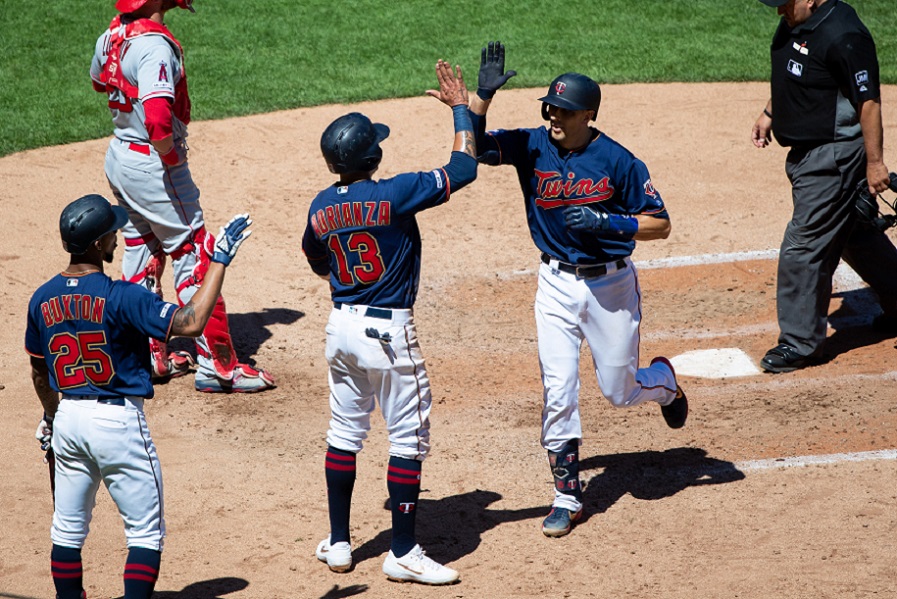 So, how does this lineup, with such little star power, lead Major League Baseball in so many important statistical categories like runs scored, home runs, batting average, slugging percentage, OPS, wOBA and wRC+? The answer to that is they can hit at every spot up and down the lineup. The table below shows the Twins OPS from every spot in the order so far in 2019, and how they rank in the MLB after play on Tuesday. The first thing that sticks out to me in this chart is how much worse the Twins have been in the three spot in the order, relative to the rest of the order. A lot of this could be explained by all the games Cruz has missed this year, but now that Cruz is back and healthy, this number will be on the rise. The other thing that strikes me is how well the Twins bottom of the lineup has been doing. I knew they were getting great production from guys like Jonathan Schoop, Jason Castro and Byron Buxton down there, but these numbers are off the charts for the bottom of the lineup. Overall, the bottom of the order (spots seven through nine) have an OPS of .868. The rest of the spots in the Twins lineup combine for an .851 OPS, which itself is the second-best lineup in baseball one through six. To get a little better context on how well the Twins bottom of the lineup has been hitting I decided to compare their bottom of the lineup to how the bottom of the lineup has been performing for every other team in baseball this season. Unsurprisingly, the bottom of the Twins lineup had the best OPS in Major League Baseball. What is surprising is just how far ahead the Twins are above everyone else. The next closest teams are the Houston Astros and New York Yankees, who each have a bottom of the order OPS of .776. Overall, there are just four teams with an OPS above .750 from the bottom of their order, which is roughly the league average OPS. With this big of a gap on everyone else, it got my curiosity going. How long has it been since an MLB team had an OPS above the .868 mark that the Twins have so far. I started by running a search query on the Fangraphs Splits Leaderboard. Unfortunately, their data for this category only goes back to the 2002 season, but since that time the next closest team to the 2019 Twins is the 2003 Boston Red Sox, who had an .838 OPS from the bottom of their order. After that, just two more teams had an OPS above .800, the 2017 Houston Astros and 2008 Texas Rangers, who both had an OPS of .802. It was cool to see that over the past 18 seasons, no team’s bottom of the order was better than the Twins has been so far this year, and only one other team was even remotely close. However, I was not content, I still wanted to see when the last time a team had a better OPS from the bottom of the order than the 2019 Twins. Luckily, I knew just where I could find that answer, the Baseball-Reference Play Index. Using the Play Index, I was able to view results dating back to 1908, and guess what, the 2019 Twins have the best OPS from any bottom of the order in MLB history. Another benefit of using the Play Index is it excluded plate appearances by pitchers, which would have skewed the results against National League teams along with all MLB teams prior to 1973. This also removes seven plate appearances made by Twins pitchers this year, and raises their bottom of the order OPS up to .875. After the Twins, the next closet team on the list is the 1930 St. Louis Cardinals, whose bottom of the order produced an .851 OPS. Overall, there have been just 22 teams with a bottom of the order OPS above .800, which is less than one percent of the time. I also thought it would be fun to compare the bottom of the order of this year’s Twins team to those of Twins teams in years prior. The team that currently holds the Twins record is the 1963 Minnesota Twins, whose bottom of the order had an OPS of .777. After that, six of the next nine (including each of the next three) teams were the Twins teams from 1999 through 2004. All six of those teams had a bottom of the order OPS between .732 and .756. Now that is consistency. Additionally, both the 2017 and 2018 Twins teams did pretty well from the bottom of the order, as they had a .739 and .732 OPS respectively. We still have a long way to go before the 2019 Minnesota Twins can lay claim to being the best bottom of the order ever, but if they continue to hit at the pace they have been, I think they can make a real run at taking down this 89-year-old record. Addition: Another way to look at this is by using OPS+. This is a metric that compares a team’s OPS relative to the league wide OPS in that season. This helps us control for things like the “steroid” and “juiced ball” eras, as it only looks how much better, or worse, you were than everyone else that season. Currently, the Twins bottom of the order has an OPS+ of 147, which means their bottom of the order OPS is 47 percent better than the 2019 league wide OPS as a whole. This is the third best mark all-time, behind only the 1908 Cubs and the 1965 Reds, who both had a 148 OPS+. Another thing that is worth pointing out, is neither of those teams played with a DH. This gives non-DH teams a slight advantage as they only needed two hitters at the bottom of the order to perform as opposed to three hitters. When looking at other teams with a DH, the two closest teams to the 2019 Twins are the 2003 Red Sox (141 OPS+) and the 1977 White Sox (137 OPS+).

