


Twins Video
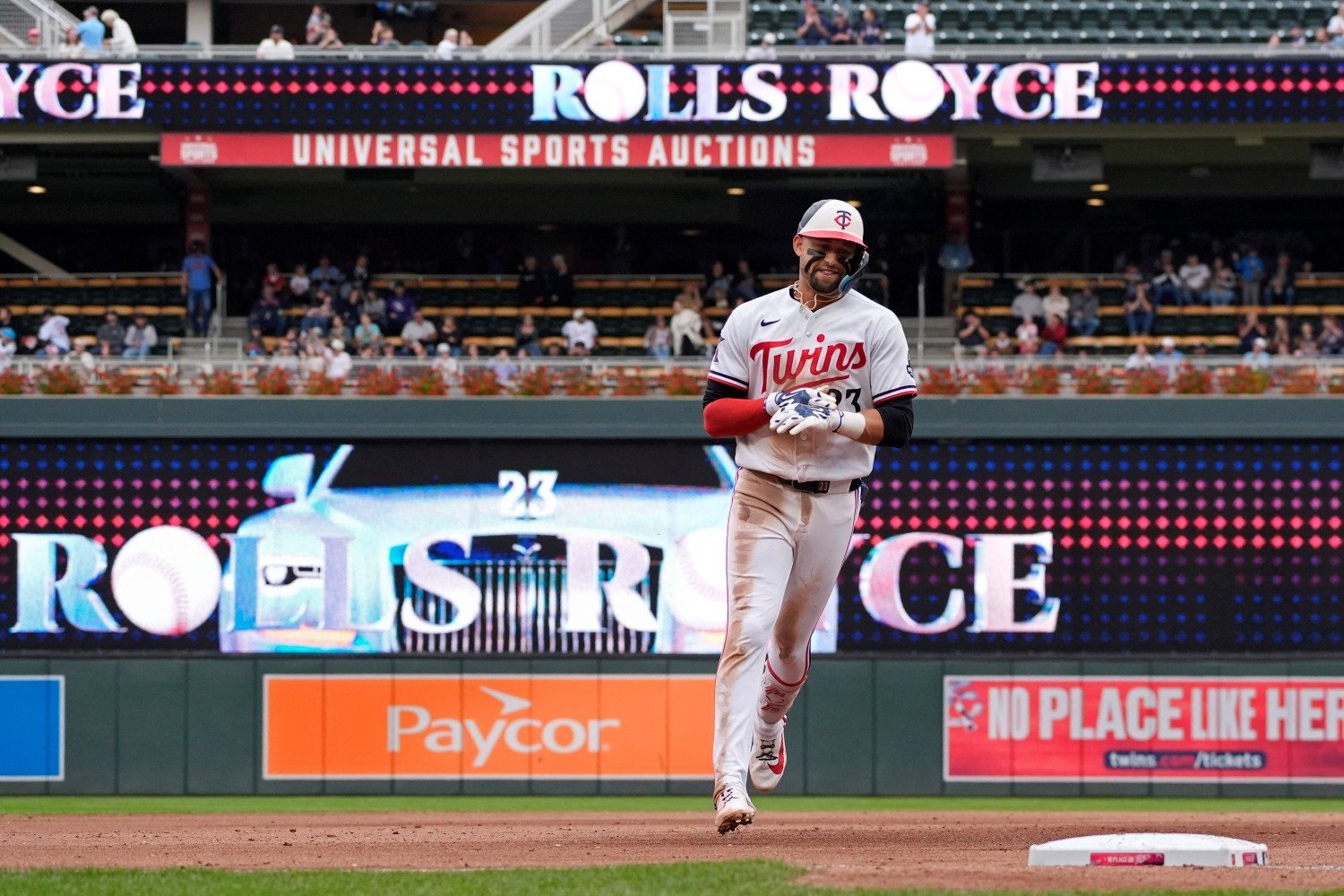
To top off a crazy week, the Minnesota Twins made another significant move Friday, trading former first overall pick Royce Lewis to the Los Angeles Dodgers in exchange for right-handed pitcher Bobby Miller and minor league catcher Francisco Espinoza. The deal ends Lewis's five-year tenure with the organization and represents another major change to Minnesota's roster ahead of the 2027 season.
Lewis once looked like a player who could become the face of the franchise, going from number one pick to top prospect. His postseason performance in 2023 helped create enormous expectations, but injuries and inconsistent production prevented him from establishing himself as a dependable everyday contributor. The Twins ultimately decided it was time for a fresh start.
However, this transaction is about more than one player. Minnesota has now moved on from Lewis, Trevor Larnach, Bailey Ober, and Matt Wallner in a series of decisions that signal a significant shakeup of the team's existing core.
A Change of Scenery for Everyone Involved
Lewis is coming off a disappointing 2026 campaign. He appeared in a career-high 125 games but hit just .227/.287/.380 with 15 home runs and 57 RBIs. His .667 OPS wasn't enough to make him an obvious everyday option, especially after Brooks Lee established himself at third base and Kody Clemens provided additional infield flexibility.
The Twins also faced an arbitration decision with Lewis projected to earn approximately $5.1 million. Rather than commit that money to a player without a clearly established position, Minnesota found a trade partner willing to take a chance on his offensive potential.
The Dodgers are getting a player who is still only 27 years old and has demonstrated the ability to perform at an extremely high level. His 2023 season, when he posted a .921 OPS, remains a reminder of what he could become if he stays healthy and finds consistency, but Lewis hasn’t been close to that player in multiple seasons.
Minnesota's return is built around two different types of upside. Miller was once one of the Dodgers' most promising pitching prospects. He went 11-4 with a 3.76 ERA across 22 starts during his rookie season in 2023. Unfortunately, his performance deteriorated significantly over the next two seasons. He posted an 8.52 ERA in 2024 and made only two major league appearances in 2025.
Shoulder problems limited Miller throughout much of 2026. He returned in September and made three relief appearances, allowing three earned runs across 7 ⅓ innings. His career 5.37 ERA certainly doesn't inspire confidence, but the former first-round selection still gives Minnesota an opportunity to work with a pitcher who previously demonstrated considerable potential.
Miller could compete for a rotation spot or provide bullpen depth. After the organization moved on from ] Ober, adding another arm with starting experience makes sense. The Twins are betting that a different environment and some mechanical adjustments can help him rediscover his earlier success.
Espinoza is a longer-term investment. The 19-year-old catcher reached Single-A Ontario in 2026 and hit .317/.411/.422 with three home runs and 25 RBIs across 46 games. He remains several years away from potentially contributing in Minnesota, but his offensive production gives the organization another young player to develop.
The Twins Are Reshaping Their Core
The Lewis trade becomes more interesting when viewed alongside Minnesota's other roster decisions. Larnach, Wallner, and Ober are also moving on from the organization. Larnach and Ober were non-tendered, while Wallner was let go despite not yet being arbitration eligible.
These are significant roster changes as this quartet was supposed to be at the heart of Minnesota’s next winning window. Larnach was coming off a productive season (120 OPS+) and had established himself as a capable major league hitter. Ober had been one of Minnesota's more reliable starters in previous seasons, even though his declining velocity and 4.47 ERA in 2026 raised questions about his future. Wallner provided considerable power potential, although his .167/.259/.292 performance in 2026 made it difficult to justify keeping him around. Combined with Lewis's departure, Minnesota is saying goodbye to four familiar players who have been part of its major league roster for multiple seasons.
The organization appears increasingly comfortable creating opportunities for younger players while reallocating resources toward positions it believes need improvement. Walker Jenkins and Emmanuel Rodriguez could receive expanded opportunities in the outfield, while the pitching staff has several younger arms competing for roles.
That doesn't mean every decision will work out. Lewis, Larnach, Ober, and Wallner could all find opportunities elsewhere and become productive major league players. There is legitimate risk in moving on from that much established talent.
However, Minnesota isn't simply dismantling its roster. The organization brought back Ryan Jeffers on his $23.15 million qualifying offer and signed Sonny Gray to a two-year, $55 million contract. Those investments suggest the Twins believe they will be in the playoff picture in 2027.
What Comes Next?
The Lewis trade creates another opening for Minnesota to address its offensive needs. First base is now an especially obvious position to upgrade, and the Twins still need additional bullpen help. Miller also provides an interesting pitching option, but he shouldn't be considered a finished product or a guaranteed solution. Espinoza offers developmental upside, although he won't help the major league roster immediately.
Ultimately, this trade is another indication that the Twins are approaching the offseason differently under the reins of GM Jeremy Zoll and owner Tom Pohlad. They are willing to move on from recognizable players, even those who once appeared to be important pieces of the organization's future.
The challenge for general manager Jeremy Zoll is making sure those departures translate into a better overall roster. Minnesota has created opportunities, financial flexibility, and some additional pitching upside. Now it needs to turn those resources into players capable of helping the team win.
The Twins have clearly decided that running back the same group isn't the answer after multiple disappointing seasons in a row. The next several weeks will determine whether this aggressive roster makeover puts them in a better position to compete.
What went wrong with the previous core? What's the next move for the Twins? Leave a comment and start the discussion.
Want to play the role of Twins general manager? Check out our free-to-use "You're The GM" offseason tool and build your own Twins roster!
Build Your 2027 Roster





Recommended Comments
Create an account or sign in to comment
You need to be a member in order to leave a comment
Create an account
Sign up for a new account in our community. It's easy!
Register a new accountSign in
Already have an account? Sign in here.
Sign In Now