



Steven Buhr
-
Posts
1,682 -
Joined
-
Last visited
Content Type
Profiles
Minnesota Twins News, Rumors & Analysis
Minnesota Twins Videos
2026 Minnesota Twins Top Prospect Rankings
2022 Minnesota Twins Draft Picks & Signing Bonuses
Minnesota Twins Trade & Free Agent Rumors
Minnesota Twins Fan Guides & Resources
2023 Minnesota Twins Draft Picks & Signing Bonuses
The Minnesota Twins Players Project
2024 Minnesota Twins Draft Picks & Signing Bonuses
2025 Minnesota Twins Draft Picks & Signing Bonuses
2026 Minnesota Twins Draft Picks & Signing Bonuses
Forums
Blogs
Events
Store
Downloads
Gallery
Everything posted by Steven Buhr
-
Who is your surprise Twins Minor Leaguer?
Steven Buhr replied to DocBauer's topic in Twins Minor League Talk
Doc, Chad played primarily 1B with CR, but spent some time in all 3 OF positions and DH, as well. He did not, that I recall, play 3B for the Kernels. I think he did play quite a bit of 3B for the GCL Twins, however, last year. Since I saw so much of the Kernels and there were so many surprises with them, I'd have to limit my "surprise" nominations to guys who spent time in CR this year. Three names names that come to mind immediately have already been mentioned: Christensen, Hu and Kanzler. One that I don't think has been mentioned, though, is Engelb Vielma. This guy could play SS at the big league level right now. He's the best at the position I recall seeing in CR. I can't begin to express how impressed I was with Vielma this year. He started off struggling at the plate, but came around and was eventually putting the barrel on the ball regularly. The Twins suddenly have a number of legit SS prospects, but I'll be following Vielma's progress with a lot of interest going forward. -
While the current edition of the Cedar Rapids Kernels have been making their way through the Midwest League playoffs this week, a group of 20 Kernels alumni are on the verge of claiming the first Florida State League championship in franchise history for the Fort Myers Miracle. (Click here for David Dorsey's story on the Miracle's pursuit of a championship) While the current edition of the Cedar Rapids Kernels have been making their way through the Midwest League playoffs this week, a group of 20 Kernels alumni are on the verge of claiming the first Florida State League championship in franchise history for the Fort Myers Miracle. (Click here for David Dorsey's story on the Miracle's pursuit of a championship) Since their permanent home, Hammond Stadium, is undergoing major remodeling, the Miracle won the first two games of their best-of-five championship series with Daytona (Cubs) on Thursday and Friday in their temporary home park, JetBlue Stadium. They will need to win one of the next three games, all in Daytona, to claim the championship title. Thirteen active members of the Miracle suited up for the Cedar Rapids Kernels in 2013, when the club put together an 88-50 overall record before getting bounced from the Midwest League playoffs by eventual MWL champion, Quad Cities. Two additional ‘13 Kernels are currently on the Miracle Disabled List. The Kernels can also claim Fort Myers pitching coach Gary Lucas as an alum. Lucas was the Kernels’ pitching coach a year ago. Six current members of the Miracle (and one on their DL) were promoted to Fort Myers this season after spending time with the Kernels. The recent addition of outfielder Jeremias Pineda to the Miracle roster from Elizabethton accounts for the 20th former Kernel on their roster. Pineda spent time on the Cedar Rapids roster in both 2013 and 2014. Here’s a list of the Kernels alumni currently pursuing a FSL championship ring: 2013 (1 coach, 13 active, 2 DL) Gary Lucas - pitching coach Madison Boer P Steven Gruver P David Hurlbut P (DL) Tyler Jones P Zack Jones P Brett Lee P Tim Shibuya P (DL) Matt Tomshaw P Tyler Grimes C/IF Jairo Rodriguez C Niko Goodrum IF Dalton Hicks IF Travis Harrison OF Max Kepler OF Adam Brett Walker II OF 2014 (6 active, 1 DL) Nick Burdi P Ethan Mildren P Alex Muren P (DL) Brandon Peterson P Todd Van Steensel P Bryan Haar IF Jason Kanzler OF BOTH 2013 and 2014: Jeremias Pineda OF View full article
-
Kernels Alums Closing in on FSL Title with the Miracle
Steven Buhr posted an article in Minor Leagues
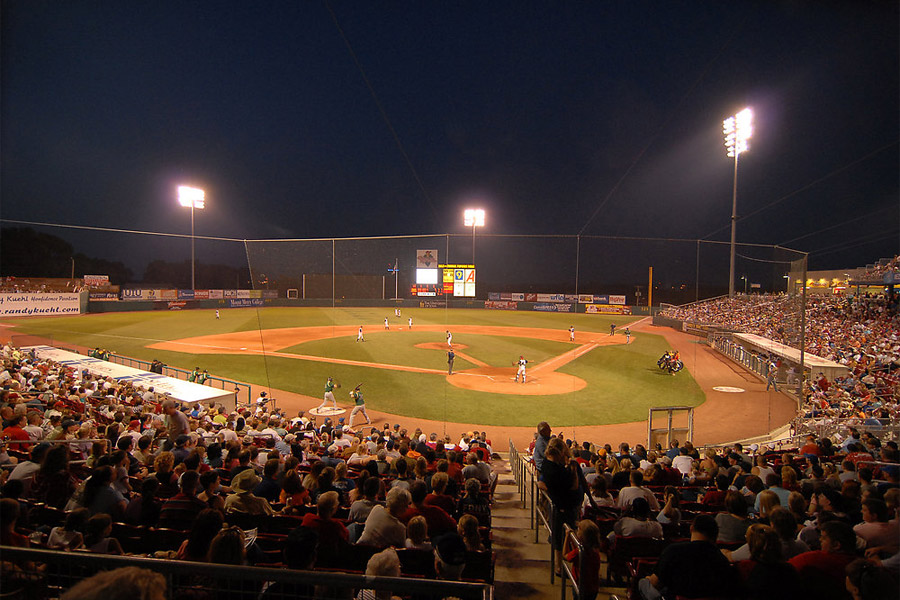 Since their permanent home, Hammond Stadium, is undergoing major remodeling, the Miracle won the first two games of their best-of-five championship series with Daytona (Cubs) on Thursday and Friday in their temporary home park, JetBlue Stadium. They will need to win one of the next three games, all in Daytona, to claim the championship title. Thirteen active members of the Miracle suited up for the Cedar Rapids Kernels in 2013, when the club put together an 88-50 overall record before getting bounced from the Midwest League playoffs by eventual MWL champion, Quad Cities. Two additional ‘13 Kernels are currently on the Miracle Disabled List. The Kernels can also claim Fort Myers pitching coach Gary Lucas as an alum. Lucas was the Kernels’ pitching coach a year ago. Six current members of the Miracle (and one on their DL) were promoted to Fort Myers this season after spending time with the Kernels. The recent addition of outfielder Jeremias Pineda to the Miracle roster from Elizabethton accounts for the 20th former Kernel on their roster. Pineda spent time on the Cedar Rapids roster in both 2013 and 2014. Here’s a list of the Kernels alumni currently pursuing a FSL championship ring: 2013 (1 coach, 13 active, 2 DL) Gary Lucas - pitching coach Madison Boer P Steven Gruver P David Hurlbut P (DL) Tyler Jones P Zack Jones P Brett Lee P Tim Shibuya P (DL) Matt Tomshaw P Tyler Grimes C/IF Jairo Rodriguez C Niko Goodrum IF Dalton Hicks IF Travis Harrison OF Max Kepler OF Adam Brett Walker II OF 2014 (6 active, 1 DL) Nick Burdi P Ethan Mildren P Alex Muren P (DL) Brandon Peterson P Todd Van Steensel P Bryan Haar IF Jason Kanzler OF BOTH 2013 and 2014: Jeremias Pineda OF
-
Kernels Alums Closing in on FSL Title with the Miracle
Steven Buhr posted a blog entry in SD Buhr/Jim Crikket
While the current edition of the Cedar Rapids Kernels have been making their way through the Midwest League playoffs this week, a group of 20 Kernels alumni are on the verge of claiming the first Florida State League championship in franchise history for the Fort Myers Miracle. (Click here for David Dorsey's story on the Miracle's pursuit of a championship) http://knuckleballsblog.com/blog/wp-content/uploads/2013/09/Walker1.jpg Adam Brett Walker lines a home run vs Clinton on September 2, 2013. Walker led the FSL in HR and RBI this season for the Fort Myers Miracle Since their permanent home, Hammond Stadium, is undergoing major remodeling, the Miracle won the first two games of their best-of-five championship series with Daytona (Cubs) on Thursday and Friday in their temporary home park, JetBlue Stadium. They will need to win one of the next three games, all in Daytona, to claim the championship title. Thirteen active members of the Miracle suited up for the Cedar Rapids Kernels in 2013, when the club put together an 88-50 overall record before getting bounced from the Midwest League playoffs by eventual MWL champion, Quad Cities. Two additional ‘13 Kernels are currently on the Miracle Disabled List. The Kernels can also claim Fort Myers pitching coach Gary Lucas as an alum. Lucas was the Kernels’ pitching coach a year ago. Six current members of the Miracle (and one on their DL) were promoted to Fort Myers this season after spending time with the Kernels. The recent addition of outfielder Jeremias Pineda to the Miracle roster from Elizabethton accounts for the 20th former Kernel on their roster. Pineda spent time on the Cedar Rapids roster in both 2013 and 2014. Here’s a list of the Kernels alumni currently pursuing a FSL championship ring: 2013 (1 coach, 13 active, 2 DL) Gary Lucas - pitching coach Madison Boer P Steven Gruver P David Hurlbut P (DL) Tyler Jones P Zack Jones P Brett Lee P Tim Shibuya P (DL) Matt Tomshaw P Tyler Grimes C/IF Jairo Rodriguez C Niko Goodrum IF Dalton Hicks IF Travis Harrison OF Max Kepler OF Adam Brett Walker II OF 2014 (6 active, 1 DL) Nick Burdi P Ethan Mildren P Alex Muren P (DL) Brandon Peterson P Todd Van Steensel P Bryan Haar IF Jason Kanzler OF BOTH 2013 and 2014: Jeremias Pineda OF -
Baseball and Business: The Twins and Timing
Steven Buhr replied to Twins Fan From Afar's topic in Twins Daily Front Page News
Yeah, St. Peter chose to react indignantly, which doesn't surprise me. I get that he wanted to have his marketing staff's back, but showing some semblance of a sense of humor would have been good. The survey thing is what it is. I doubt the survey was drafted by anyone with the Twins. Typically, these things are done by a consultant group. In most cases, I would bet they use the same survey questions every year and they use them for all of their client companies. Only by applying that level of consistency will they be able to both compare their own results from year to year AND compare themselves with other clients of that consultant group, both within their own sports/entertainment industry and outside their industry. So the media essentially picked one question out of perhaps hundreds and used it to poke some fun at the Twins by removing all context. Wow, how unusual, right? Frankly, I don't think the survey question was nearly as reflective of organizational tone deafness as St. Peter's reaction was. The Twins president can repeat, "We get it," over and over if it makes him feel better, but there are just so many examples out there that they really don't "get it." And his reaction is just another example demonstrating that. -
Twins Minor League Report (9/4): Post-Season Fun
Steven Buhr replied to Seth Stohs's topic in Twins Daily Front Page News
Assuming the core does go to AA (wherever the Twins affiliate may be) next year, they'll really just be a phone call away from Target Field. They should be reunited with Polanco and Buxton at AA to start the season anyway (maybe even Sano?). Frankly, that's your next batch of contending Twins position players. -
Twins Minor League Report (9/4): Post-Season Fun
Steven Buhr replied to Seth Stohs's topic in Twins Daily Front Page News
That core group of players is pretty special. They won the Appy title together in '13 and won a ton of games in CR before a disappointing early playoff exit last year. Winning is important to them and I like to see that in minor leaguers.- 12 replies
-
- 1
-

-
- matt tomshaw
- mat batts
- (and 1 more)
-
Twins Minor League Report (9/4): Post-Season Fun
Steven Buhr replied to Seth Stohs's topic in Twins Daily Front Page News
Admittedly biased, but I might have chosen Batts as the POD over Tomshaw. The CR starting pitchers remain on some pretty strict pitch counts and Batts knew he had to attack the zone rather than work for Ks. He was pretty impressive doing so.- 12 replies
-
- 1
-
-
- matt tomshaw
- mat batts
- (and 1 more)
-
It's an interesting question, Doc. NFL uses network-employed broadcasters that are assigned based on level of perceived interest in each game. MLB uses "homer" broadcasters that, frankly, would be out of a job if they became too "honest" about the home team's shortcomings, whether player, coach or front office. Personally, I would love to see more professional and unbiased broadcasting of all games. Then again, those home-town broadcasters (no matter what we may think of their professionalism or talent) are generally VERY popular with the home town team's casual fan base, so moving away from that model could be counterproductive. Football lends itself to use of replays to fill dead time. As has been pointed out, every play has 22 people in motion doing SOMETHING even if the play runs in the opposite direction. Multiple camera angles can show what a great (or poor) job of defending receivers was done away from where the play went. Baseball has a tougher time filling that time between pitches. They can show the "K zone" graphic of where the pitch crossed the plate, but that's about it until a ball is actuall put in play. And a very small number of balls put in play are even interesting enough to delve in to multiple facets of the play. Maybe George Carlin had it right all those years ago. Baseball and football are just very different games and appeal to different fan personalities (or even different personality aspects of the same fan). I go to a lot of baseball games and I also am an Iowa football season ticket holder. I enjoy the college football crowd experience AND I enjoy the more relaxed environment of a minor league baseball game, just about equally. I simply don't expect one to duplicate the intensity or emotion of the other.
-
Hu absolutely should rocket up the prospect lists this year. As much "stuff" as any Kernels starting pitcher (and more variety of pitches). Everything he throws has movement. Excellent composure on the mound. Saw him get a little frustrated exactly once this summer.
-
Florida Instructional League Roster
Steven Buhr replied to Seth Stohs's topic in Twins Minor League Talk
I think if the Kernels had needed Stewart over the last weekend of the regular season, he was healthy enough to pitch. The Twins, understandably, opted to be conservative with him. I'd be shocked if he didn't pitch in instructs. -
The New Top Twins Pitching Prospect?
Steven Buhr replied to Nick Nelson's topic in Twins Daily Front Page News
I'm not sure anyone suggested it's a prayer he'll attain mop-up reliever status. The suggestion that he may eventually be best utilized as a closer or other back-end bullpen arm has been out there since he was acquired. I think Meyer is still the most promising hope for a top-of-the-rotation pitcher with an ETA of 2015 that the Twins have in their system. But I don't feel he lived up to my lofty hopes coming in to the season. Admittedly, my hopes may have been unrealisticly influenced by a few AzFL appearances. -
The New Top Twins Pitching Prospect?
Steven Buhr replied to Nick Nelson's topic in Twins Daily Front Page News
For the little that it's worth, I believe the gap has narrowed a little, because Thorpe has been more impressive than I expected, while Stewart has been about right what I hoped he would be. In November, I put out my personal "Top 15" Twins prospects. I had Stewart at 5 and Thorpe at 11. I haven't really given a lot of thought to this year's list yet, but just eyeballing, I'd guess Stewart will stay about where he was and Thorpe will move up 2-3 spots. Stewart's year might normally warrant a little jump, but that's tough to do when guys like Buxton, Sano and Meyer didn't "graduate" from prospect status ahead of him, as we might have hoped 1 or 2 would have. Just means the top 5-6 guys this coming year are probably even stronger than the top 5-6 were coming in to the current season, and that's pretty encouraging. -
The New Top Twins Pitching Prospect?
Steven Buhr replied to Nick Nelson's topic in Twins Daily Front Page News
As the person who probably started the thread regarding the Kernels' dilema re starting pitchers bumping up against inning limits, I think we need to understand one thing. The approx 70 innings that the 3 lefties involved (Thorpe, Gonsalves and Batts) have thrown is a bit misleading. Batts threw something like 100 innings at UNC-Wilmington this spring, so he's north of 160 IP on the year. The official innings count on Gonsalves and Thorpe didn't start until June when they joined E'town and CR, respectively. They didn't spend April and May playing soccer. They were in Extended Spring Training getting regular work in live situations. They just don't keep public/official stats for those outings, so there's no way for the public to really know how many innings they went before their official seasons started. I think it's probably safe to assume they each threwat least 20 innings per month, putting them both at somewhere around 100 innings on the season right now. That's a fair amount more than what they threw a year ago when they both split time between rookie league rotations and bullpens. It's the additional workload this year over the innings put on their young arms a year ago that the Twins are closely regulating. All of that said, I think you can usually tell when a young pitcher is hitting a wall and should be shut down. (see Berrios, Jose, Aug 2013) and none of these 3 pitchers seems to be laboring all that much at all their last few starts, to my admittedly amateur eyes. Thorpe's pressed a bit with his command and ended up walking a couple more guys than usual in each of his last couple starts, but that's been about the only notable thing I've seen with any of them. Anyway, my point really was simply that you can't just go by official IPs for guys whose seasons didn't start until June. They were pitching somewhere before that. -
Since I was so abbreviated in my prior point (sarcastic cough), let me just add one more point. All of the adjusting of batting gloves and pacing around the mound and other things that batters and pitchers do between pitches is, I believe, for one purpose only... to buy time to think about and prepare for what comes next - the next pitch. Pitchers use the time to regroup, consider what they want to throw, what the baserunners are doing and who knows how many other things that they have gone over with their catchers and coaches while putting together a strategy for facing each hitter in the opposing line up. Some guys process all that infor quickly. Others don't. Hitters similarly are regrouping, calming themselves from the adrenaline rush of the last pitch, pondering what they think the next pitch will be, based on everything they've done to prepare. Essentially, to put aside the last pitch and focus on the next. Some can do that quicker than others. Honestly, I'm not sure whether I would want to do anything that results in either combatant being less prepared to face off with one another. It seems, to me, like hurrying them would be comparable to outlawing all huddles in football and forcing offense and defense to just get in to whatever formations their first instinct might be. Obviously, some boundaries must be applied or a game will never end. But I'd rather trim back replay time, coaches/catchers/infielders visits to the mound, time between innings (and advertising) rather than mess with the two guys who are facing off head-to-head every pitch.
-
I can't believe it took me so long before I decided to click on this thread and read it. What a great discussion (at least until it became about what did or didn't advance the game of baseball/football... that's when ya lost me). A few general (and hopefully quick) observations. Most of us are very interested in the subtleties of the game. Backing up the play, pitch selection, "productive outs," etc. But if you never played the game as a kid, would you be as in tune with those things? I think part of the problem is that fewer kids are playing the game (more options) and so, as they grow up, baseball is just a spectator sport that lacks obvious action. Selig and the owners have intentionally taken the regional sports path, because that allowed a "competitive balance" model that did not require true revenue sharing. As previously pointed out, they also have plenty of financial motive to minimize the "fame" of individual players. But to what end? If (and I might argue, "when") the cable/regional sports network bubble bursts because non-sports fans refuse to subsidize the increased RSN fees being demanded, where will MLB turn to then for revenue? NFL and MLB each have doomsday scenarios on the horizon and I'm not sure which will occur first. For the NFL, it happens when enough parents refuse to let their kids play a game that could cause serious and permanent brain injuries. Kids not participating means lesser levels of talent and less adult fan interest. For MLB, it's also fewer kids participating, but in their case, it means less understanding of what makes the sport "great" to those who do understand it, but also results in less adult interest, to the point where RSNs can't blackmail cable companies in to enormous rights fees because cable companies can't make the money back from the broader customer base. NFL is (and should be) jealous of MLB's (and NBA's) global interest in their game. They will need more international players as domestic supplies diminish. MLB, meanwhile, is allowing the RSNs and cable companies (two dinosaurs who simply don't know they're about to become extinct) to impede the distribution of the MLB product and waste the technological advantages they have developed over rival sports leagues. As for pace of game, you can't just make a simple change without it having unwanted consequences. Sure, calling a strike a strike would speed up play because batters wouldn't take so many pitches. But it would also mean much less successul hitting and result in a lot more 1-0 games. That might make it more interesting to soccer fans, but not many others. Enforcing the pitch clock would do little. The rule, I believe, says the time starts when the batter is ready for the pitch. So the clock wouldn't even start until the batter adjusts his gloves, redigs his foot hole, and adjusts his jock. Games are longer as much because of increased time between innings, to allow more advertising, than anything else. Good luck getting MLB to do anything about that. They essentially slowed the game down to sell more beer and now want the players to make adjustments to compensate for that. I'm as old school as just about anyone and it will bother me to see certain things change. But change must occur and that change must come in some form that (1) makes the game's "stars" more famous to young people, (2) makes more kids want to play the game, in addition to watching it, and (3) makes EVERY GAME involving every team available to every fan to watch via the devices they are most likely to use (smart phones, tablets, etc.). EDIT: so much for being "quick" points, sorry. And I learned you have to use (1) (2) (3) rather than letters (a)..., etc., or you end up with a bunch of emoticons and symbols! Ah technology.
-
The New Top Twins Pitching Prospect?
Steven Buhr replied to Nick Nelson's topic in Twins Daily Front Page News
I'm certainly no expert on the Cards' philosophy, but the question that always comes to my mind when I think about this approach is, "how does that work if you also have a policy of not allowing a young pitcher's innings to exceed their prior season's by more than X%?" If we assume the Twins won't allow a Meyer or a May or a Berrios to exceed, say for example, 130% of the innings pitched the previous year, wouldn't putting that pitcher in a MLB bullpen for a year (or even half a season) lower his innings pitched that season to a level where he would be significantly limited whenever you did determine he should be a starter? How do the Cards deal with this? Do they really have a promising potential starter throw 70-80 innings out of the pen one year and then plug him in to the rotation with no innings limit the next? If we would want to see Meyer in the Twins' pen to open 2015 and, as a result, he throws maybe 100 innings (including some late season or spot starts), would he be limited then in 2016 to 130-140 innings? Is that what we would want? I'm not taking a side on this argument. I genuinely want to know if that would be deemed a good approach. -
A Closer Look at the 2015 Twins
Steven Buhr replied to Nick Nelson's topic in Twins Daily Front Page News
So I guess the question you have to ask yourself is, would an elite FA pitcher be more likely to view the Twins as a possible landing spot with the same Manager/Pitching Coach they've had for years and, most recently, through soon-to-be 4 years of 90+ loss seasons OR with a brand new Manager/Pitching Coach duo? Honestly, I think different pitchers could look at that different ways, but I'm not sure either one lends itself to being a real selling point. But I suspect elite pitchers are less concerned about who the pitching coach is than we might think. They don't view themselves as likely to need much coaching. Also, re: the "no team outside the top 10 in revenue has bought elite pitching" debate. I think that's a pretty bad comp to make. How many of those teams clearly had the payroll space to spend (and even overspend if necessary) in a bidding contest for an elite pitcher? Few, if any. But the Twins find themselves in a unique spot right now in that regard. For the next several years, the only significant salary they are likely to have on the books is Joe Mauer's. Perhaps, depending on your definition of "significant," you might add Glen Perkins. But for years the studs on this team will be cost controlled. The Twins ranking among MLB teams in revenues is dropping every year. There's a reason for that. But they aren't THAT far behind some of the teams that are in the top 10 and they SHOULD be in that range. They WOULD be with a competitive team. I get that it's unlikely an elite FA pitcher would want to pitch for Minnesota right now. I understand that it's equally unlikely that the Twins would pursue such a pitcher anyway. Just saying I believe that not having such a pitcher IS a flaw in the roster that the FO at least could/should be attempting to remedy via trade or free agency. -
I think the lost time in instructionals is primarily and potentially important on the defensive side. Instructionals is where prospects get to focus on learning nuances of their positions and whether that's refining his SS skills or getting some work in at another position, it's unfortunate if Gordon misses that time this fall, even if it is not a major hurdle in his path to the big leagues.
-
Twins Geek Challenges Twins Daily's Writers
Steven Buhr replied to John Bonnes's topic in Twins Daily Front Page News
Completed -
A Closer Look at the 2015 Twins
Steven Buhr replied to Nick Nelson's topic in Twins Daily Front Page News
I do understand that difference. That said, when a team like the Twins is in a situation like they are right now, having failed to develop such a pitcher for over a decade AND with the payroll flexibility to afford to take a chance or two, I still believe it's something they need to do IF the situation presents itself where it's an option. They obviously can't force any elite pitcher to go to Minn. That top of the rotation leader is just about as important to a true contending MLB team as a QB is to a contending NFL team. Maybe even moreso. -
A Closer Look at the 2015 Twins
Steven Buhr replied to Nick Nelson's topic in Twins Daily Front Page News
At the risk of cross-pollenating MinnCentric boards, daanderson20 over at VikingsJournal has a good article posted concerning the QB position that, to some degree, expresses how I feel about the Twins' starting pitching situation. http://vikingsjournal.com/_/minnesota-vikings-news/a-lesson-from-the-ponder-era-r66 I quote: The quarterback position isn't "settled" until you have a top-10 guy that can win playoff games. Don't reach for guys, don't use first round draft picks necessarily, but the Vikings should be drafting or finding a young QB to develop every year or two until they find the Guy. There should be a quarterback competition in every training camp until they have the Guy. That's pretty much how I feel about the importance of the Twins continuing to look for a true ace starting pitcher. Not just a "potential #1," but an elite SP. Hughes has been great. Better than any of us had any right to expect, even those of us who liked the signing. The Twins' SPs for years have been so bad that, by comparison, he certainly LOOKS like an ace at times. And maybe he will be, with improved defensive support around him and a full season of offense along the lines of what we've seen in August. Or maybe Alex Meyer will be a true ace. Or maybe JO Berrios. Or maybe Kohl Stewart some day. Maybe. But, if you're really serious about being an elite baseball team, you can't be satisfied with maybes. I largely agree with much of Nick's premise. There aren't many obvious holes to fill. But I'm going to be honest and say that I will only believe the Twins are serious about competing in 2015 if they make a concerted effort to lure an elite SP to Minnesota. I don't even know what may be available, via FA or trade, but not making that effort will tell me the FO is continuing a "slow build" and will be satisfied with something close to a .500 record in 2015 while they merely hope for the arrival of their ace in 2016 or later. -
I always liked his defense at SS, but he's rarely played the position the past couple of years as more highly regarded prospects held down the spot. I think he can be a MLB utility IF, but it's increasingly unlikely to be in Minnesota.
-
Hughes' chances for a huge payday might have been limited by the fact that the Yankees would not likely have been running up the bidding for him. Even after 1 great season, I'm not sure NY and/or their fans would be ready for a reunion. Still, he certainly would have been well compensated. But for every Hughes, there's also a Nolasco.
-
Twins Geek Challenges Twins Daily's Writers
Steven Buhr replied to John Bonnes's topic in Twins Daily Front Page News
I suppose "resigning" from an unpaid writing gig just to avoid some icewater would be an over-reaction, wouldn't it?
