



Steven Buhr
-
Posts
1,682 -
Joined
-
Last visited
Content Type
Profiles
News
Minnesota Twins Videos
2026 Minnesota Twins Top Prospects Ranking
2022 Minnesota Twins Draft Picks
Minnesota Twins Free Agent & Trade Rumors, Notes, & Tidbits
Guides & Resources
2023 Minnesota Twins Draft Picks
The Minnesota Twins Players Project
2024 Minnesota Twins Draft Picks
2025 Minnesota Twins Draft Pick Tracker
2026 Minnesota Twins Draft Tracker: Picks & Bonuses
Forums
Blogs
Events
Store
Downloads
Gallery
Everything posted by Steven Buhr
-
Video of Batts' 6th and final inning vs Beloit, just FYI
-
For your viewing pleasure: First, 4 spearate videos of Kohl Stewart's 4 innings of work this week vs Beloit in his first start coming off the DL, followed by a video of Mat Batts' 6th inning in Beloit the following night. (Looks like a couple of these successfully imbedded, the others you'll have to just click the link to view)
-
Quesada may have hit the ball as hard as anyone else with the Kernels last night. He hit line shots directly at the SS and the 3B, and added a warning track blast to deep LCF that the CF ran down. All 3 were right on the screws. Just one of those days.
-
I made the 3+ hour trip to Beloit this week for the Kernels' three-game series with the Snappers. Cedar Rapids entered the game tied for second place in the MWL Western Division with the Wisconsin Timber Rattlers, both a single game behind divison leader Kane County Cougars.However, it really doesn't matter where the Kernels finish relative to Kane County because the Cougars won a playoff berth in the first half of the season.What's important, at this point, is how the Kernels measure up to the Rattlers, as well as Quad Cities and Peoria. The latter two teams trailed the Kernels and Rattlers by three games entering Tuesday. Two of those four teams will earn playoff spots. The other two will join Beloit and Clinton on the outside looking in. Ryan Eades drew the start in the series opener for the Kernels and notched the win as the Kernels topped the Snappers 12-5. Eades, the Twins' second round pick in the 2013 draft, has had a challenging first full season of professional ball, but he's been having more success lately. On Tuesday, the first batter he faced, Beloit shortstop Melvin Mercedes, lined a ball to right field that hit the top of the right field wall and bounced over for a leadoff solo home run. In the second inning, he gave up a triple to left fielder Ryan Mathews, who then scored the Snappers' second run. From that point forward, through the remainder of his six innings of work, Eades shut out the Snappers.His final stat line (6 IP, 9H, 2 ER, 3BB, 4K) may not look all that impressive, but I'll say this about Eades: he seems to have a bit of bulldog in him. Twice on Tuesday night, he worked out of bases-loaded jams that had the potential to allow Beloit to break the game open.Instead, he got the outs he needed to escape and buy time until his offense beat up on Beloit pitching. That happened in the fifth and sixth innings, when the Kernels batted around in back-to-back innings and tallied a total of 10 runs, breaking what had been a 2-2 tie and moving to a commanding 12-2 lead. Kane County also won on Tuesday, scoring four runs in the 9th inning to top Quad Cities, 4-3. However, Wisconsin fell to Clinton, 4-2. As a result, the Kernels remain a game behind the Cougars and the Rattlers fell a game behind Cedar Rapids in the standings. After a series of roster changes, Cedar Rapids is operating one player short of the 25 player limit. The Kernels currently have 13 active pitchers and just 11 active position players, which is not ideal. "We're something bad happening away from being in trouble," was how Kernels manager Jake Mauer put it after the game, alluding to the fact that he's playing games with just two offensive players on his bench. Mauer indicated he was not aware of what plans the Twins farm director, Brad Steil, might have with regard to filling the club's 25th spot. Kohl Stewart could be coming off the disabled list at any time, according to Mauer, but both Zack Larson and Zack Granite, two outfielders who started the season with Cedar Rapids before incurring injuries, remain at the Twins training site in Fort Myers nursing those injuries. Chih-Wei Hu gets the ball for the Kernels on Wednesday and Mat Batts is scheduled to go on Thursday. A quick reminder: Thanks to the Twins win against the Houston Astros on Wednesday, it means that on Thursday you can get 50% off a Large of Extra Large pizza when you use the “TWINSWIN” promotion code at PapaJohns.com. Click here to view the article
-
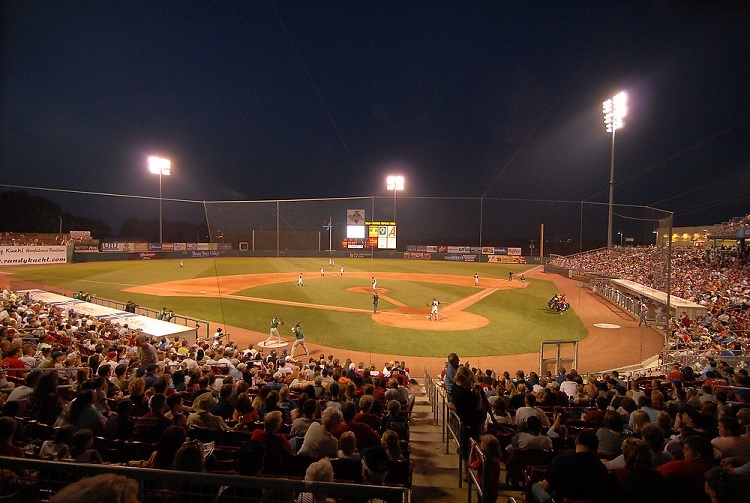 What's important, at this point, is how the Kernels measure up to the Rattlers, as well as Quad Cities and Peoria. The latter two teams trailed the Kernels and Rattlers by three games entering Tuesday. Two of those four teams will earn playoff spots. The other two will join Beloit and Clinton on the outside looking in. Ryan Eades drew the start in the series opener for the Kernels and notched the win as the Kernels topped the Snappers 12-5. Eades, the Twins' second round pick in the 2013 draft, has had a challenging first full season of professional ball, but he's been having more success lately. On Tuesday, the first batter he faced, Beloit shortstop Melvin Mercedes, lined a ball to right field that hit the top of the right field wall and bounced over for a leadoff solo home run. In the second inning, he gave up a triple to left fielder Ryan Mathews, who then scored the Snappers' second run. From that point forward, through the remainder of his six innings of work, Eades shut out the Snappers.His final stat line (6 IP, 9H, 2 ER, 3BB, 4K) may not look all that impressive, but I'll say this about Eades: he seems to have a bit of bulldog in him. Twice on Tuesday night, he worked out of bases-loaded jams that had the potential to allow Beloit to break the game open.Instead, he got the outs he needed to escape and buy time until his offense beat up on Beloit pitching. That happened in the fifth and sixth innings, when the Kernels batted around in back-to-back innings and tallied a total of 10 runs, breaking what had been a 2-2 tie and moving to a commanding 12-2 lead. Kane County also won on Tuesday, scoring four runs in the 9th inning to top Quad Cities, 4-3. However, Wisconsin fell to Clinton, 4-2. As a result, the Kernels remain a game behind the Cougars and the Rattlers fell a game behind Cedar Rapids in the standings. After a series of roster changes, Cedar Rapids is operating one player short of the 25 player limit. The Kernels currently have 13 active pitchers and just 11 active position players, which is not ideal. "We're something bad happening away from being in trouble," was how Kernels manager Jake Mauer put it after the game, alluding to the fact that he's playing games with just two offensive players on his bench. Mauer indicated he was not aware of what plans the Twins farm director, Brad Steil, might have with regard to filling the club's 25th spot. Kohl Stewart could be coming off the disabled list at any time, according to Mauer, but both Zack Larson and Zack Granite, two outfielders who started the season with Cedar Rapids before incurring injuries, remain at the Twins training site in Fort Myers nursing those injuries. Chih-Wei Hu gets the ball for the Kernels on Wednesday and Mat Batts is scheduled to go on Thursday. A quick reminder: Thanks to the Twins win against the Houston Astros on Wednesday, it means that on Thursday you can get 50% off a Large of Extra Large pizza when you use the “TWINSWIN” promotion code at PapaJohns.com.
 -
There’s much about the game of baseball that never changes. Three strikes and you’re out. Bases are 90 feet apart. Then again, some aspects of the game are constantly adjusting to the times. Witness the amount of defensive shifting going on in Major League Baseball this season. You could say that one thing that never changes is that pitchers try to throw fastballs by opposing hitters. But the arsenal of pitches the pitchers use beyond the fastball seems to differ from one era to another.Pitchers in the first part of the 20th century could – and did – legally throw a spitball. Even after the spitter was outlawed, pitchers continued to do whatever they could get away with to gain an advantage over the batter. Roughing up the ball became popular. Now umpires toss baseballs out of the game the moment there’s the slightest scuff noticed on the surface of the sphere. Even legal pitches have come in to, and fallen out of, favor among professional pitchers. Recently, writer Pat Jordan posted an article at SportsOnEarth.com entitled, The Decline of the Curve. Jordan talked to a number of big league pitching coaches about why fewer pitchers are throwing a curveball than was the case in previous eras. Some of the coaches he talked to indicated that their organizations dissuade pitchers from throwing the traditional curve and others indicated that they don’t teach the pitch to their pitchers. Since I’ve observed a number of Cedar Rapids Kernels pitchers throwing curve- balls, I was curious about whether the Twins organization and, in particular, Kernels pitching coach Ivan Arteaga, have any established policy aimed at discouraging use of the curve or any other pitch. Over the past weekend, Arteaga graciously agreed to talk to me about the subject. I started out by asking whether the Twins have any kind of established policy concerning the subject of Jordan’s article, the curveball. “We actually encourage it,” Arteaga said. “We believe in having a complete mix. I believe, this is my opinion, mix creates value. “For example, I’ve got (Ricky) Nolasco this week here. He’s got five different pitches. Throws a slider, he throws a curve, he throws a split, he throws a straight change-up, he’s got a two-seamer. And he throws low-90s. “We were having a conversation and one thing we agreed on was that pitchers in the big leagues actually have to reinvent themselves time and time again. “So that being said, the curve is a pitch that is high-to-low, 12-to-6, you name it. It’ll give you depth. It’ll make your fastball better. It’ll save your arm a little bit. “So we encourage it. If you have the curve, great. If you don’t, we’ll try to teach you one. Hopefully, you can get it." Some of the coaches that talked to Jordan blamed the shrinking strike zone for the demise of the curveball. Sandy Koufax and Nolan Ryan could throw fastballs at the letters and get them called strikes, which set up their devastating curves. Umpires today won’t call that high pitch a strike and Arteaga agrees that the strike zone getting smaller has had an effect on the choices pitchers have made when it comes to their arsenal. “Over time, pitchers started to throw the change-up more, moving back and forth,” Arteaga observed. “I remember in the 80s and 90s, the split-finger fastball was the pitch to learn and then came the slider. That’s the pitch these days being taught. “Those pitches are basically strike zone down, strike zone right or strike zone left. The curve actually starts up away from the strike zone and it gets in to the strike zone at the end with some depth. “So if you have that pitch, the hitters are so used to looking for pitches in the strike zone, that once they see the ball go up, they give up on it. And then once they give up on it, it’s hard for them to actually make an adjustment and hit it. So they give up on it and you get some weak swings. Arteaga has a theory, beyond those that the coaches Jordan interviewed expressed, concerning why you see fewer pitchers throwing a curveball today. “This goes beyond professional baseball. Because in college, you get big programs, the same way you get big programs in Venezuela, Dominican and Puerto Rico, and so forth and so on. What creates value? The fastball. “Thirty-five or forty years ago you had to mix, you learned how to pitch. These days, you get kids that are 17-18 years old, they’re just fastball throwers. If they throw something else, it will be a change-up and it will be a slider, because it’s easier to throw. But at the same time, it creates more stress on the shoulder and in the elbow." Jordan, in his article, claimed that the curveball actually is easier on the pitcher’s arm than other pitches, which goes against some conventional wisdom in the game. Arteaga agrees, however. “It’s less stressful. It’s not as stressful as the slider.” Arteaga explained. “What happens with the slider is, there’s some kids who believe the slider should be lateral – should be either right or left – it’s more sidewise than it is up and down. And for them to create that, they have to actually drag their arms a little bit. “So when they drag their arm a little, they get a lower angle. Once you want to make that ball spin, the elbow suffers a lot. So you get tight. Once you get tight, those muscles start to pull against those tendons. That’s when you get all the injuries.” There has been talk among the fan base about the Twins limiting the number of sliders and similar pitches that some of their youngest pitching prospects throw in a game. The coach’s next comment perhaps sheds some light on that philosophy. “If you ask an 18-19 year old to pitch at a level like this,” Arteaga observed, “where he understands he has to come up with something more than the fastball, then he’ll throw the slider more than he should. He might not be ready to throw it, because he needs to mix.“ Arteaga doesn’t necessarily see the curve as the hardest pitch for his young pitchers to master. “The change-up to me is like the last pitch to come in an arsenal,” Arteaga said. “There are not many guys that have the feel for the change up and the repeatability for the change-up. And so it’s easier to throw fastball-slider-fastball-cutter than become a fastball-slider-change-up guy. So the change-up is like the last pitch to come into the arsenal. “It’s hard to repeat, because there’s a couple of things that come in to play,” he explained. “One is the grip. You have to find the perfect grip. And number two, you have to find a repeatable delivery, the same as the fastball. So you can get that extension out in front and the pronation to actually make the ball fade a little bit or go down as much as you can. “So you need to repeat it a lot. Almost as much as your fastball. You need to repeat it so you can get that same feeling, every time, of extension, pronation and arm speed. “Because if you ask any guy what they fear the most, it is to leave a fastball or change-up or breaking ball up in the zone. They say, ‘I don’t want to do that,’ so what do they do? They develop a sinker, they develop a slider; anything they can do to make it go down.“ Arteaga was asked about that split-fingered fastball that he acknowledged was all the rage 20 or so years ago. Does he, or do the Twins, teach splitter? “No, we don’t,” he answered quickly. “If you have one out of college or whatever and you can throw it, yeah, we’ll let you throw it. Why not? But we don’t encourage that. “We believe the less stress you put on the arm, the better it is. If you see the games on TV, in the big leagues, you don’t get that many guys throw the split finger fastballs any more. Maybe a few, but not what it used to be. “And it really has to be a good one for you to throw it in the big leagues, because they can see the seams. If it looks like a fastball, yes, you’ve got an advantage. Make it look like a fastball, in and out of the strike zone, you’re OK." As Arteaga alluded to earlier, Nolasco spent the better part of a week in Cedar Rapids, getting a pair of rehabilitation starts in with the Kernels. The interview came before Nolasco’s final Kernels appearance Sunday, but the coach liked what he saw of Nolasco leading up to that point. “He threw everything he’s got in the first outing so I expect the same in this one too. He got in to a jam a little bit there, and struck out a couple of guys. He looked like a big leaguer. Throwing his pitches down, making it go right, left, down. “Like Joe (Mauer) was saying, he’ll make it tough on hitters, when he’s right, he’ll make it tough because everything goes different directions and it’s the same motion. “Just seeing him throw in the bullpen, he’s got command, he’s got control. And he’s healthy, so hopefully he’ll be OK.“ And did Arteaga’s young Kernels pitchers watch the way Nolasco went about his business? “Oh yeah. That’s the way it should be. They’re paying attention.“ A quick reminder: Thanks to the Twins win against the Houston Astros on Wednesday, it means that on Thursday you can get 50% off a Large of Extra Large pizza when you use the “TWINSWIN” promotion code at PapaJohns.com. Click here to view the article
-
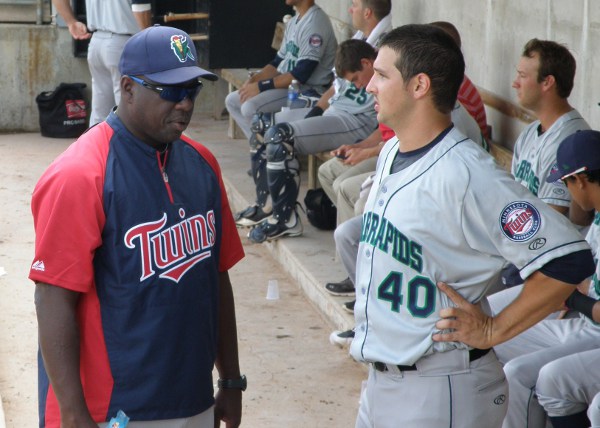 Pitchers in the first part of the 20th century could – and did – legally throw a spitball. Even after the spitter was outlawed, pitchers continued to do whatever they could get away with to gain an advantage over the batter. Roughing up the ball became popular. Now umpires toss baseballs out of the game the moment there’s the slightest scuff noticed on the surface of the sphere. Even legal pitches have come in to, and fallen out of, favor among professional pitchers. Recently, writer Pat Jordan posted an article at SportsOnEarth.com entitled, The Decline of the Curve. Jordan talked to a number of big league pitching coaches about why fewer pitchers are throwing a curveball than was the case in previous eras. Some of the coaches he talked to indicated that their organizations dissuade pitchers from throwing the traditional curve and others indicated that they don’t teach the pitch to their pitchers. Since I’ve observed a number of Cedar Rapids Kernels pitchers throwing curve- balls, I was curious about whether the Twins organization and, in particular, Kernels pitching coach Ivan Arteaga, have any established policy aimed at discouraging use of the curve or any other pitch. Over the past weekend, Arteaga graciously agreed to talk to me about the subject. I started out by asking whether the Twins have any kind of established policy concerning the subject of Jordan’s article, the curveball. “We actually encourage it,” Arteaga said. “We believe in having a complete mix. I believe, this is my opinion, mix creates value. “For example, I’ve got (Ricky) Nolasco this week here. He’s got five different pitches. Throws a slider, he throws a curve, he throws a split, he throws a straight change-up, he’s got a two-seamer. And he throws low-90s. “We were having a conversation and one thing we agreed on was that pitchers in the big leagues actually have to reinvent themselves time and time again. “So that being said, the curve is a pitch that is high-to-low, 12-to-6, you name it. It’ll give you depth. It’ll make your fastball better. It’ll save your arm a little bit. “So we encourage it. If you have the curve, great. If you don’t, we’ll try to teach you one. Hopefully, you can get it." Some of the coaches that talked to Jordan blamed the shrinking strike zone for the demise of the curveball. Sandy Koufax and Nolan Ryan could throw fastballs at the letters and get them called strikes, which set up their devastating curves. Umpires today won’t call that high pitch a strike and Arteaga agrees that the strike zone getting smaller has had an effect on the choices pitchers have made when it comes to their arsenal. “Over time, pitchers started to throw the change-up more, moving back and forth,” Arteaga observed. “I remember in the 80s and 90s, the split-finger fastball was the pitch to learn and then came the slider. That’s the pitch these days being taught. “Those pitches are basically strike zone down, strike zone right or strike zone left. The curve actually starts up away from the strike zone and it gets in to the strike zone at the end with some depth. “So if you have that pitch, the hitters are so used to looking for pitches in the strike zone, that once they see the ball go up, they give up on it. And then once they give up on it, it’s hard for them to actually make an adjustment and hit it. So they give up on it and you get some weak swings. Arteaga has a theory, beyond those that the coaches Jordan interviewed expressed, concerning why you see fewer pitchers throwing a curveball today. “This goes beyond professional baseball. Because in college, you get big programs, the same way you get big programs in Venezuela, Dominican and Puerto Rico, and so forth and so on. What creates value? The fastball. “Thirty-five or forty years ago you had to mix, you learned how to pitch. These days, you get kids that are 17-18 years old, they’re just fastball throwers. If they throw something else, it will be a change-up and it will be a slider, because it’s easier to throw. But at the same time, it creates more stress on the shoulder and in the elbow." Jordan, in his article, claimed that the curveball actually is easier on the pitcher’s arm than other pitches, which goes against some conventional wisdom in the game. Arteaga agrees, however. “It’s less stressful. It’s not as stressful as the slider.” Arteaga explained. “What happens with the slider is, there’s some kids who believe the slider should be lateral – should be either right or left – it’s more sidewise than it is up and down. And for them to create that, they have to actually drag their arms a little bit. “So when they drag their arm a little, they get a lower angle. Once you want to make that ball spin, the elbow suffers a lot. So you get tight. Once you get tight, those muscles start to pull against those tendons. That’s when you get all the injuries.” There has been talk among the fan base about the Twins limiting the number of sliders and similar pitches that some of their youngest pitching prospects throw in a game. The coach’s next comment perhaps sheds some light on that philosophy. “If you ask an 18-19 year old to pitch at a level like this,” Arteaga observed, “where he understands he has to come up with something more than the fastball, then he’ll throw the slider more than he should. He might not be ready to throw it, because he needs to mix.“ Arteaga doesn’t necessarily see the curve as the hardest pitch for his young pitchers to master. “The change-up to me is like the last pitch to come in an arsenal,” Arteaga said. “There are not many guys that have the feel for the change up and the repeatability for the change-up. And so it’s easier to throw fastball-slider-fastball-cutter than become a fastball-slider-change-up guy. So the change-up is like the last pitch to come into the arsenal. “It’s hard to repeat, because there’s a couple of things that come in to play,” he explained. “One is the grip. You have to find the perfect grip. And number two, you have to find a repeatable delivery, the same as the fastball. So you can get that extension out in front and the pronation to actually make the ball fade a little bit or go down as much as you can. “So you need to repeat it a lot. Almost as much as your fastball. You need to repeat it so you can get that same feeling, every time, of extension, pronation and arm speed. “Because if you ask any guy what they fear the most, it is to leave a fastball or change-up or breaking ball up in the zone. They say, ‘I don’t want to do that,’ so what do they do? They develop a sinker, they develop a slider; anything they can do to make it go down.“ Arteaga was asked about that split-fingered fastball that he acknowledged was all the rage 20 or so years ago. Does he, or do the Twins, teach splitter? “No, we don’t,” he answered quickly. “If you have one out of college or whatever and you can throw it, yeah, we’ll let you throw it. Why not? But we don’t encourage that. “We believe the less stress you put on the arm, the better it is. If you see the games on TV, in the big leagues, you don’t get that many guys throw the split finger fastballs any more. Maybe a few, but not what it used to be. “And it really has to be a good one for you to throw it in the big leagues, because they can see the seams. If it looks like a fastball, yes, you’ve got an advantage. Make it look like a fastball, in and out of the strike zone, you’re OK." As Arteaga alluded to earlier, Nolasco spent the better part of a week in Cedar Rapids, getting a pair of rehabilitation starts in with the Kernels. The interview came before Nolasco’s final Kernels appearance Sunday, but the coach liked what he saw of Nolasco leading up to that point. “He threw everything he’s got in the first outing so I expect the same in this one too. He got in to a jam a little bit there, and struck out a couple of guys. He looked like a big leaguer. Throwing his pitches down, making it go right, left, down. “Like Joe (Mauer) was saying, he’ll make it tough on hitters, when he’s right, he’ll make it tough because everything goes different directions and it’s the same motion. “Just seeing him throw in the bullpen, he’s got command, he’s got control. And he’s healthy, so hopefully he’ll be OK.“ And did Arteaga’s young Kernels pitchers watch the way Nolasco went about his business? “Oh yeah. That’s the way it should be. They’re paying attention.“ A quick reminder: Thanks to the Twins win against the Houston Astros on Wednesday, it means that on Thursday you can get 50% off a Large of Extra Large pizza when you use the “TWINSWIN” promotion code at PapaJohns.com.
 -
I made the 3+ hour trip to Beloit this week for the Kernels' three-game series with the Snappers. Cedar Rapids entered the game tied for second place in the MWL Western Division with the Wisconsin Timber Rattlers, both a single game behind Divison leaders Kane County. Outside of how it would be nice to be able to say the Twins' Class A club won their Division in the second half of the season, it really doesn't matter where the Kernels finish relative to Kane County because the Cougars won a playoff berth in the first half of the season. What's important, at this point, is how the Kernels measure up to the Rattlers, as well as Quad Cities and Peoria. The latter two teams trailed the Kernels and Rattlers by 3 games entering Tuesday. Two of those four teams will earn playoff spots. The other two will join Beloit and Clinton on the outside looking in. Ryan Eades drew the start in the series opener for the Kernels and notched the win as the Kernels topped the Snappers 12-5. Eades, the Twins' second round pick in the 2013 draft, has had a challenging first full season of professional ball, but he's been having more success lately. On Tuesday, the first batter he faced, Beloit shortstop Melvin Mercedes lined a ball to right field that hit the top of the right field wall and bounced over for a leadoff solo home run. In the second inning, he gave up a triple to left fielder Ryan Mathews, who then scored the Snappers' second run. From that point forward, through the remainder of his six innings of work, Eades shut out the Snappers. Eades' final stat line may not look all that impressive, but I'll say this about Eades: He seems to have a bit of bulldog in him. Twice on Tuesday night, he worked out of bases-loaded jams that had the potential to allow Beloit to break the game open. Instead, he got the outs he needed to escape and buy time until his offense beat up on Beloit pitching. That happened in the fifth and sixth innings, when the Kernels batted around in back-to-back innings and tallied a total of 10 runs, breaking what had been a 2-2 tie and moving in to a commanding 12-2 lead. Kane County also won on Tuesday, scoring four runs in the 9th inning to top the Quad Cities, 4-3. However, Wisconsin fell to Clinton, 4-2. As a result, the Kernels remain a game behind the Cougars and the Rattlers fell a game behind Cedar Rapids in the standings. After a series of roster changes, Cedar Rapids is operating one player short of the 25 player limit allowed. The Kernels currently have 13 active pitchers and just 11 active position players, which is not ideal. "We're something bad happening away from being in trouble," was how Kernels manager Jake Mauer put it after the game, alluding to the fact that he's playing games with just two offensive players on his bench. Mauer indicated he was not aware of what plans the Twins farm director, Brad Steil, might have with regard to filling the club's 25th spot. Kohl Stewart could be coming off the Disabled List at any time, according to Mauer, but both Zack Larson and Zack Granite, two outfielders that started the season with Cedar Rapids before incurring injuries, remain at the Twins' training site in Fort Myers nursing those injuries. Chih-Wei Hu gets the ball for the Kernels on Wednesday and Matt Batts is scheduled to go on Thursday.
-
Ivan Arteaga on Change ups, Sliders and Curves
Steven Buhr commented on Steven Buhr's blog entry in SD Buhr/Jim Crikket
Thanks guys. Appreciate the kind words. And yes, I do enjoy talking baseball with all 3 of the Kernels' coaches. -
Ivan Arteaga on Change ups, Sliders and Curves
Steven Buhr posted a blog entry in SD Buhr/Jim Crikket
There’s much about the game of baseball that never changes. Three strikes and you’re out. Bases are 90 feet apart. Then again, some aspects of the game are constantly adjusting to the times. Witness the amount of defensive shifting going on in Major League Baseball this season. You could say that one thing that never changes is that pitchers try to throw fastballs by opposing hitters. But the arsenal of pitches the pitchers use beyond the fastball seems to differ from one era to another. Pitchers in the first part of the 20th century could – and did – legally throw a spitball. Even after the spitter was outlawed, pitchers continued to do whatever they could get away with to gain an advantage over the batter. Roughing up the ball became popular. (This article was originally posted at Knuckleballsblog.com.) Now umpires toss baseballs out of the game the moment there’s the slightest scuff noticed on the surface of the sphere. Even legal pitches have come in to, and fallen out of, favor among professional pitchers. Recently, writer Pat Jordan posted an article at SportsOnEarth.com entitled, The Decline of the Curve. Jordan talked to a number of big league pitching coaches about why fewer pitchers are throwing a curveball than was the case in previous eras. Some of the coaches he talked to indicated that their organizations dissuade pitchers from throwing the traditional curve and others indicated that they don’t teach the pitch to their pitchers. Since I’ve observed a number of Cedar Rapids Kernels pitchers throwing curveballs, I was curious about whether the Twins organization and, in particular, Kernels pitching coach Ivan Arteaga, have any established policy aimed at dissuading use of the curve or any other pitch. Over the past weekend, Arteaga graciously agreed to talk to me about the subject. I started out by asking whether the Twins have any kind of established policy concerning the subject of Jordan’s article, the curveball. “We actually encourage it,” Arteaga said. “We believe in having a complete mix. I believe, this is my opinion, mix creates value. “For example, I’ve got (Ricky) Nolasco this week here. He’s got five different pitches. Throws a slider, he throws a curve, he throws a split, he throws a straight change up, he’s got a two-seemer. And he throws low-90s. “We were having a conversation and one thing we agreed on was that pitchers in the big leagues actually have to reinvent themselves time and time again. “So that being said, the curve is a pitch that is high-to-low, 12-to-6, you name it. It’ll give you depth. It’ll make your fastball better. It’ll save your arm a little bit. “So we encourage it. If you have the curve, great. If you don’t, we’ll try to teach you one. Hopefully, you can get it." http://knuckleballsblog.com/blog/wp-content/uploads/2014/05/Arteaga2014a.jpg Ivan Arteaga Some of the coaches that talked to Jordan blamed the shrinking strike zone for the demise of the curveball. Sandy Koufax and Nolan Ryan could throw fastballs at the letters and get them called strikes, which set up their devastating curveballs. Umpires today won’t call that high pitch a strike and Arteaga agrees that the strike zone getting smaller has had an effect on the choices pitchers have made when it comes to their arsenal. “Over time, pitchers started to throw the change up more, moving back and forth,” Arteaga observed. “I remember in the 80s and 90s, the split finger fastball was the pitch to learn and then came the slider. That’s the pitch these days being taught. “Those pitches are basically strike zone down, strike zone right or strike zone left. The curve actually starts up away from the strike zone and it gets in to the strike zone at the end with some depth. “So if you have that pitch, the hitters are so used to looking for pitches in the strike zone, that once they see the ball go up, they give up on it. And then once they give up on it, it’s hard for them to actually make an adjustment and hit it. So they give up on it and you get some weak swings. Arteaga has a theory, beyond those that the coaches Jordan interviewed expressed, concerning why you see fewer pitchers throwing a curveball today. “This goes beyond professional baseball. Because in college, you get big programs, the same way you get big programs in Venezuela, Dominican and Puerto Rico, and so forth and so on. What creates value? The fastball. “Thirty-five or forty years ago you had to mix, you learned how to pitch. These days, you get kids that are 17-18 years old, they’re just fastball throwers. If they throw something else, it will be a change up and it will be a slider, because it’s easier to throw. But at the same time, it creates more stress on the shoulder and in the elbow." Jordan, in his article, claimed that the curveball actually is easier on the pitcher’s arm than other pitches, which goes against some conventional wisdom in the game. Arteaga agrees, however. “It’s less stressful. It’s not as stressful as the slider.” Arteaga explained. “What happens with the slider is, there’s some kids who believe the slider should be lateral – should be either right or left – it’s more sidewise than it is up and down. And for them to create that, they have to actually drag their arms a little bit. “So when they drag their arm a little, they get a lower angle. Once you want to make that ball spin, the elbow suffers a lot. So you get tight. Once you get tight, those muscles start to pull against those tendons. That’s when you get all the injuries.” http://knuckleballsblog.com/blog/wp-content/uploads/2014/06/ArteagaMildren.jpg Kernels pitching coach Ivan Arteaga and then-Kernels pitcher Ethan Mildren There has been talk among the fan base about the Twins limiting the number of sliders and similar pitches that some of their youngest pitching prospects throw in a game. The coach’s next comment perhaps sheds some light on that philosophy. “If you ask an 18-19 year old to pitch at a level like this,” Arteaga observed, “where he understands he has to come up with something more than the fastball, then he’ll throw the slider more than he should. He might not be ready to throw it, because he needs to mix.“ Arteaga doesn’t necessarily see the curveball as the hardest pitch for his young pitchers to master. “The change up to me is like the last pitch to come in an arsenal,” Arteaga said. “There’s not many guys that have the feel for the change up and the repeatability for the change up. And so it’s easier to throw fastball-slider-fastball-cutter than become a fastball-slider-change up guy. So the change up is like the last pitch to come in to the arsenal. “It’s hard to repeat, because there’s a couple of things that come in to play,” he explained. “One is the grip. You have to find the perfect grip. And number two, you have to find a repeatable delivery, the same as the fastball. So you can get that extension out in front and the pronation to actually make the ball fade a little bit or go down as much as you can. “So you need to repeat it a lot. Almost as much as your fastball. You need to repeat it so you can get that same feeling, every time, of extension, pronation and arm speed. “Because if you ask any guy what they fear the most, it is to leave a fastball or change up or breaking ball up in the zone. They say, ‘I don’t want to do that,’ so what do they do? They develop a sinker, they develop a slider; anything they can do to make it go down.“ Arteaga was asked about that split-fingered fastball that he acknowledged was all the rage 20 or so years ago. Does he, or do the Twins, teach splitter? “No, we don’t,” he answered quickly. “If you have one out of college or whatever and you can throw it, yeah, we’ll let you throw it. Why not? But we don’t encourage that. “We believe the less stress you put on the arm, the better it is. If you see the games on TV, in the big leagues, you don’t get that many guys throw the split finger fastballs any more. Maybe a few, but not what it used to be. “And it really has to be a good one for you to throw it in the big leagues, because they can see the seams. If it looks like a fastball, yes, you’ve got an advantage. Make it look like a fastball, in and out of the strike zone, you’re OK." As Arteaga alluded to earlier, Nolasco spent the better part of a week in Cedar Rapids, getting a pair of rehabilitation starts in with the Kernels. The interview came before Nolasco’s final Kernels appearance Sunday, but the coach liked what he saw of Nolasco leading up to that point. “He threw everything he’s got in the first outing so I expect the same in this one too. He got in to a jam a little bit there, and struck out a couple of guys. He looked like a big leaguer. Throwing his pitches down, making it go right, left, down. “Like Joe (Mauer) was saying, he’ll make it tough on hitters, when he’s right, he’ll make it tough because everything goes different directions and it’s the same motion. “Just seeing him throw in the bullpen, he’s got command, he’s got control. And he’s healthy, so hopefully he’ll be OK.“ And did Arteaga’s young Kernels pitchers watch the way Nolasco went about his business? “Oh yeah. That’s the way it should be. They’re paying attention.“ -
Article: Color Me, and Joe Mauer, Impressed
Steven Buhr replied to Steve Lein's topic in Twins Daily Front Page News
And here I was going to offer you my Jake Reed autographed Jimmy Buffet Kernels jersey next time I saw you! -
Article: The Future of Twins' Catchers
Steven Buhr replied to Cody Christie's topic in Twins Daily Front Page News
Good questions. 1a & 1b) I think Suzuki would have to be the guess for #1 both years. I'd guess Herrmann for #2 a year from now and probably 2 years (you didn't list Fryer as someone we can choose from, or I'd say he's the odds-on favorite), but I'd give Turner a chance to get to that level if he turns out to be as good defensively as his potential seems to be. 2a & 2b) I think in the event of a serious injury to your #1 catcher while in contention for postseason, with those as your internal options, you make a trade with someone. I don't think any of the guys you listed should be the starting catcher on a contender within the next 2 years. I haven't seen Turner other than a short look in spring training, but he seems to be the real deal. I'm a believer that Garver can become a MLB starting catcher. My feeling is that one (or both) of them could be starting catchers in the big leagues 3 years from now. Sooner than that seems like a stretch. -
Bruno averaged about 20 HR/yr in his career, did he not?
-
Article: Joe Mauer in Cedar Rapids--Day Two
Steven Buhr replied to Steven Buhr's topic in Twins Daily Front Page News
I shot video of Burdi's inning on Wednesday night. I was going to post a link to it, but when I uploaded it to YouTube, for some reason it loaded sideways. So, rather than make everyone turn their heads 90 degrees to watch it, I figured I would just wait a few days and try again. -
Article: The Future of Twins' Catchers
Steven Buhr replied to Cody Christie's topic in Twins Daily Front Page News
I think that's true, to a degree, in that it seems there's always a couple of low-minors backstops who people get excited about and then never really see develop in to legit big league catchers. I'm not sure it's so much that the Twins lose trust in them as it is that catching at the professional level is just tough damn work. By the time they've survived 3-4 years of minor league catching, some of those bodies are already pretty beat up and that affects their hitting as well as their defense. It's really a war of attrition. (And also why I'm not at all concerned about the Twins appearing to have an abundance of catching prospects across the high-A, low-A and rookie levels.) -
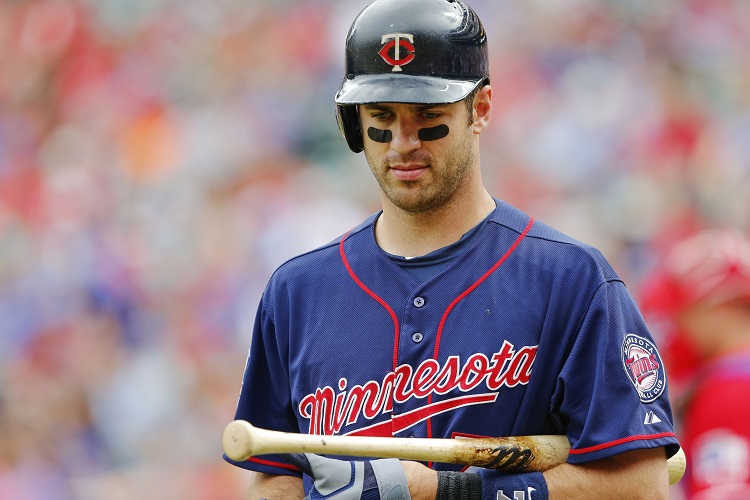 So I missed the filled ballpark and, from what I understand, filled pressbox on Tuesday when Nolasco pitched and Mauer played designated hitter for the Kernels, who beat the Wisconsin Timber Rattlers 9-0 that night. I did make it home from St. Louis Wednesday in time to see Mauer’s rehab debut in the field at first base. I didn’t expect to see another huge crowd, but I certainly didn’t expect to see what was essentially a pretty normal 2,000+ crowd, either. Yet, that’s exactly what I saw. I’m not sure what that says about baseball fans in Eastern Iowa.Maybe it says we aren’t as awe-struck by the presence of big leaguers as some people think we should be. Maybe it just reemphasizes that the Twins organization still has a lot of work to do in the area if they want to truly make a dent in the Cubs’ stranglehold around here and make this area a part of “Twins Territory.” Maybe it reflects the reality that Joe Mauer, himself, does not have the star power that he did when he was winning batting titles and MVP awards, not to mention being the cover-boy of MLB video games for two straight years. Still, while a lot of the Twins fans in Minnesota who have been booing Mauer at Target Field this season might scoff, he’s an almost certain future Hall-of-Famer and he was in uniform playing for the Kernels Wednesday night. If you’re a baseball fan, why the heck would you NOT show up to watch? You can’t say nobody tried to get you out there. The Kernels began marketing the Mauer arrival even before they could officially announce it was happening. When it was still an “unofficial” thing, the Kernels announced via every media outlet they could get access to that they would have special extended ticket office hours Saturday and Sunday. And people did take advantage. They got tickets for Tuesday and they got tickets for this weekend’s games, but there was little demand for Wednesday’s contest. It’s great that there will be big crowds Friday and Saturday, but honestly, there were going to be big crowds Friday and Saturday, anyway. Already-planned promotions and tie-ins with a major local employer or two this weekend guaranteed the Kernels would have a couple pretty full houses those two nights, with or without a big league headliner. That’s good, perhaps, because there’s no assurance that Mauer will play both nights. He’s scheduled for an off-day on Thursday and he indicated after Wednesday’s game that he still has a few things on his “checklist” that he wants to accomplish before returning to the Twins, so I think we can safely assume he’ll be on the field Friday night. If I were a betting man, I’d put money on him also being with the Kernels on Saturday night. I would also be betting he’s en route to Houston to rejoin the Twins before the Kernels take the field on Sunday. Anyway, I just don’t understand the mediocre crowd Wednesday night.At least the fans who did show up didn’t boo Mauer when he walked to the plate. They didn’t rise to their feet with an ovation, either, but the polite applause is better treatment than he gets from his home town fans at Target Field these days. I don’t understand that treatment, either. On Wednesday night, Mauer continued to kick off the rust a bit. He went 0-3 before calling it a night. He grounded in to a force out in the first inning and was stranded at second base. He barreled up on one in his second at-bat and drove the ball to the warning track in left-center field. In his third trip to the plate, he watched two strikes go by and then went down swinging. Defensively, I don’t recall a ball being hit to him at all. He did get one ball thrown to him on a double-play attempt that went in the dirt and he didn’t come up with it. He obviously is not lighting up the Class A pitching he’s seeing, but that’s why you rehab in the minors. Keep in mind, it’s not like he’s been taking batting practice throughout his time on the disabled list. His injured oblique muscle meant he was pretty much on the shelf until taking a few cuts in the few days before coming to Cedar Rapids. Anyone who thinks it’s easy to sit out a month and then step in and immediately hit any level of professional pitching has never tried to do it. If he’s not making consistent solid contact by the time the weekend is over, then I’ll be a bit concerned.The Kernels and Twins PR guy Andrew Heydt have done a good job of getting media access to Mauer without totally disrupting the clubhouse and other aspects of the game day routine for the Kernels. As was the case Tuesday, Mauer met with the media after exiting the ballgame in an auxiliary locker room near the Kernels’ clubhouse. Here’s . I think you can tell he’s not pleased with his results on the field, but he’s also glad to just be back on the field again. His response to a question I posed also gives a little insight into those items on his “checklist” that he still wants to try to do before rejoining the Twins.The Kernels got pretty well drubbed in the game. Chih-Wei Hu had his first rough start as a Kernel, giving up six runs in the fourth inning. Nick Burdi pitched the ninth inning for Cedar Rapids. He maxed at 99 mph on the scoreboard gun, which is known as a “slow gun.” We use a +2 guideline in Cedar Rapids, adding 2 mph to what shows on the board, which means Burdi likely hit about 101 on that pitch. Otherwise he was in the mid-upper 90s with the fastball and around 90 with the slider. I have a few photos from the evening posted over at Knuckleballs if you'd care to go check them out. We’re celebrating my grandson’s first birthday on Friday by having a “Party at the Park,” and I’m looking forward to seeing Mauer donning one of these, “Jimmy Buffet Night” jerseys on Saturday night.(Again. if you want to see an image of the jerseys, you need to go to Knuckleballs.com.) Mauer may well be on his way to Houston to rejoin the Twins by Sunday, but I’ll be at the ballpark that afternoon to watch Ricky Nolasco stretch himself out to 75 pitches in his second rehab start with the Kernels.
 -
Tuesday night was a big deal at Veterans Memorial Stadium in Cedar Rapids. Twins Joe Mauer and Ricky Nolasco were in the Kernels’ line-up together and at least twice the usual Tuesday night crowd squeezed into the ballpark to watch them. I don’t know that from witnessing it first hand, but only from accounts from media and family members that used my season tickets that night. Seems I had foolishly committed to making a business trip to St. Louis Sunday through Wednesday this week.So I missed the filled ballpark and, from what I understand, filled pressbox on Tuesday when Nolasco pitched and Mauer played designated hitter for the Kernels, who beat the Wisconsin Timber Rattlers 9-0 that night. I did make it home from St. Louis Wednesday in time to see Mauer’s rehab debut in the field at first base. I didn’t expect to see another huge crowd, but I certainly didn’t expect to see what was essentially a pretty normal 2,000+ crowd, either. Yet, that’s exactly what I saw. I’m not sure what that says about baseball fans in Eastern Iowa.Maybe it says we aren’t as awe-struck by the presence of big leaguers as some people think we should be. Maybe it just reemphasizes that the Twins organization still has a lot of work to do in the area if they want to truly make a dent in the Cubs’ stranglehold around here and make this area a part of “Twins Territory.” Maybe it reflects the reality that Joe Mauer, himself, does not have the star power that he did when he was winning batting titles and MVP awards, not to mention being the cover-boy of MLB video games for two straight years. Still, while a lot of the Twins fans in Minnesota who have been booing Mauer at Target Field this season might scoff, he’s an almost certain future Hall-of-Famer and he was in uniform playing for the Kernels Wednesday night. If you’re a baseball fan, why the heck would you NOT show up to watch? You can’t say nobody tried to get you out there. The Kernels began marketing the Mauer arrival even before they could officially announce it was happening. When it was still an “unofficial” thing, the Kernels announced via every media outlet they could get access to that they would have special extended ticket office hours Saturday and Sunday. And people did take advantage. They got tickets for Tuesday and they got tickets for this weekend’s games, but there was little demand for Wednesday’s contest. It’s great that there will be big crowds Friday and Saturday, but honestly, there were going to be big crowds Friday and Saturday, anyway. Already-planned promotions and tie-ins with a major local employer or two this weekend guaranteed the Kernels would have a couple pretty full houses those two nights, with or without a big league headliner. That’s good, perhaps, because there’s no assurance that Mauer will play both nights. He’s scheduled for an off-day on Thursday and he indicated after Wednesday’s game that he still has a few things on his “checklist” that he wants to accomplish before returning to the Twins, so I think we can safely assume he’ll be on the field Friday night. If I were a betting man, I’d put money on him also being with the Kernels on Saturday night. I would also be betting he’s en route to Houston to rejoin the Twins before the Kernels take the field on Sunday. Anyway, I just don’t understand the mediocre crowd Wednesday night.At least the fans who did show up didn’t boo Mauer when he walked to the plate. They didn’t rise to their feet with an ovation, either, but the polite applause is better treatment than he gets from his home town fans at Target Field these days. I don’t understand that treatment, either. On Wednesday night, Mauer continued to kick off the rust a bit. He went 0-3 before calling it a night. He grounded in to a force out in the first inning and was stranded at second base. He barreled up on one in his second at-bat and drove the ball to the warning track in left-center field. In his third trip to the plate, he watched two strikes go by and then went down swinging. Defensively, I don’t recall a ball being hit to him at all. He did get one ball thrown to him on a double-play attempt that went in the dirt and he didn’t come up with it. He obviously is not lighting up the Class A pitching he’s seeing, but that’s why you rehab in the minors. Keep in mind, it’s not like he’s been taking batting practice throughout his time on the disabled list. His injured oblique muscle meant he was pretty much on the shelf until taking a few cuts in the few days before coming to Cedar Rapids. Anyone who thinks it’s easy to sit out a month and then step in and immediately hit any level of professional pitching has never tried to do it. If he’s not making consistent solid contact by the time the weekend is over, then I’ll be a bit concerned.The Kernels and Twins PR guy Andrew Heydt have done a good job of getting media access to Mauer without totally disrupting the clubhouse and other aspects of the game day routine for the Kernels. As was the case Tuesday, Mauer met with the media after exiting the ballgame in an auxiliary locker room near the Kernels’ clubhouse. Here’s . I think you can tell he’s not pleased with his results on the field, but he’s also glad to just be back on the field again. His response to a question I posed also gives a little insight into those items on his “checklist” that he still wants to try to do before rejoining the Twins. The Kernels got pretty well drubbed in the game. Chih-Wei Hu had his first rough start as a Kernel, giving up six runs in the fourth inning. Nick Burdi pitched the ninth inning for Cedar Rapids. He maxed at 99 mph on the scoreboard gun, which is known as a “slow gun.” We use a +2 guideline in Cedar Rapids, adding 2 mph to what shows on the board, which means Burdi likely hit about 101 on that pitch. Otherwise he was in the mid-upper 90s with the fastball and around 90 with the slider. I have a few photos from the evening posted over at Knuckleballs if you'd care to go check them out. We’re celebrating my grandson’s first birthday on Friday by having a “Party at the Park,” and I’m looking forward to seeing Mauer donning one of these, “Jimmy Buffet Night” jerseys on Saturday night.(Again. if you want to see an image of the jerseys, you need to go to Knuckleballs.com.) Mauer may well be on his way to Houston to rejoin the Twins by Sunday, but I’ll be at the ballpark that afternoon to watch Ricky Nolasco stretch himself out to 75 pitches in his second rehab start with the Kernels. Click here to view the article
- 2 replies
-
- 1
-

-
- joe mauer
- ricky nolasco
- (and 2 more)
-
I got a bit video crazy Thursday night and if you'd like to see a bit of the result, click here to head over to Knuckleballsblog.com for a look. Video of Jake Reed's work on the mound in the 9th. Mitch Garver's leadoff double in the 11th. Bryan Haar's game winner, driving in pinch runner Jon Murphy to beat Kane County 4-3.
-
Article: What Do You Want Out Of Twins Daily?
Steven Buhr replied to John Bonnes's topic in Twins Daily Front Page News
I appreciate the comments/suggestions concerning the minor league coverage. As one of the many writers who contribute content on specific minor league affiliates (in my case, the Kernels), I'm really interested in what sort of articles readers are interested in. I try to provide a mix of general updates and player/coach interviews and features, but it's not always clear which articles the TD community finds interesting and which draw mostly yawns. To that end, the comments and suggestions are welcomed. -
Tuesday night was a big deal at Veterans Memorial Stadium in Cedar Rapids. Twins Joe Mauer and Ricky Nolasco were in the Kernels’ line up together and at least twice the usual Tuesday night crowd squeezed in to the ballpark to watch them. I don’t know that from witnessing it first hand, but only from accounts from media and family members that used my season tickets that night. Seems I had foolishly committed to making a business trip to St. Louis Sunday through Wednesday this week. So I missed the filled ballpark and, from what I understand, filled pressbox on Tuesday when Nolasco pitched and Mauer DHed for the Kernels, who beat the Wisconsin Timber Rattlers 9-0 that night. I did make it home from St. Louis Wednesday in time to see Mauer’s rehab debut in the field at first base. I didn’t expect to see another huge crowd, but I certainly didn’t expect to see what was essentially a pretty normal 2,000+ crowd, either. Yet, that’s exactly what I saw. I’m not sure what that says about baseball fans in Eastern Iowa. Maybe it says we aren’t as awe-struck by the presence of big leaguers as some people think we should be. Maybe it just reemphasizes that the Twins organization still has a lot of work to do in the area if they want to truly make a dent in the Cubs’ stranglehold around here and make this area a part of “Twins Territory.” Maybe it reflects the reality that Joe Mauer, himself, does not have the star power that he did when he was winning batting titles and MVP awards, not to mention being the cover-boy of MLB video games for two straight years. Still, while a lot of the Twins fans in Minnesota who have been booing Mauer at Target Field this season might scoff, he’s an almost certain future Hall-of-Famer and he was in uniform playing for the Kernels Wednesday night. If you’re a baseball fan, why the heck would you NOT show up to watch? You can’t say nobody tried to get you out there. The Kernels began marketing the Mauer arrival even before they could officially announce it was happening. When it was still an “unofficial” thing, the Kernels announced via every media outlet they could get access to that they would have special extended ticket office hours Saturday and Sunday. And people did take advantage. They got tickets for Tuesday and they got tickets for this weekend’s games, but there was little demand for Wednesday’s contest. It’s great that there will be big crowds Friday and Saturday, but honestly, there were going to be big crowds Friday and Saturday, anyway. Already-planned promotions and tie-ins with a major local employer or two this weekend guaranteed the Kernels would have a couple of pretty full houses those two nights, with or without a big league headliner. That’s good, perhaps, because there’s no assurance that Mauer will play both nights. He’s scheduled for an off day on Thursday and he indicated after Wednesday’s game that he still has a few things on his, “checklist,” that he wants to accomplish before returning to the Twins, so I think we can safely assume he’ll be on the field Friday night. If I were a betting man, I’d put money on him also being with the Kernels on Saturday night. I would also be betting he’s en route to Houston to rejoin the Twins before the Kernels take the field on Sunday. Anyway, I just don’t understand the mediocre crowd Wednesday night. At least the fans who did show up didn’t boo Mauer when he walked to the plate. They didn’t rise to their feet with an ovation, either, but the polite applause is better treatment than he gets from his home town fans at Target Field these days. I don’t understand that treatment, either. On Wednesday night, Mauer continued to kick off the rust a bit. He went 0-3 before calling it a night. He grounded in to a force out in the first inning and was stranded at second base. He barreled up on one in his second at-bat and drove the ball to the warning track in left-center field. In his third trip to the plate, he watched two strikes go by and then went down swinging. Defensively, I don’t recall a ball being hit to him at all. He did get one ball thrown to him on a DP attempt that went in the dirt and he didn’t come up with it. He obviously is not lighting up the Class A pitching he’s seeing, but that’s why you rehab in the minors. Keep in mind, it’s not like he’s been taking BP throughout his time on the Disabled List. His injured oblique muscle meant he was pretty much on the shelf until taking a few cuts in the few days before coming to Cedar Rapids. Anyone who thinks it’s easy to sit out a month and then step in and immediately hit any level of professional pitching has never tried to do it. If he’s not making consistent solid contact by the time the weekend is over, then I’ll be a bit concerned. The Kernels and Twins PR guy Andrew Heydt have done a good job of getting media access to Mauer without totally disrupting the clubhouse and other aspects of the game day routine for the Kernels. As was the case Tuesday, Mauer met with the media after exiting the ballgame in an auxillary locker room near the Kernels’ clubhouse. Here’s some video I shot of that exchange. I think you can tell he’s not pleased with his results on the field, but he’s also glad to just be back on the field again. His response to a question I posed also gives a little insight in to those items on his “checklist” that he still wants to try to do before rejoining the Twins. (Not having much luck posting the video here, so you'll need to go over to Knuckleballsblog.com to check out the video.) The Kernels got pretty well drubbed in the game. Chih-Wei Hu had his first rough start as a Kernel, giving up six runs in the fourth inning. Nick Burdi pitched the ninth inning for Cedar Rapids. He maxed at 99 mph on the scoreboard gun, which is known as a “slow gun.” We use a +2 guideline in Cedar Rapids, adding 2 mph to what shows on the board, which means Burdi likely hit about 101 on that pitch. Otherwise he was in the mid-upper 90s with the fastball and around 90 with the slider. I have a few photos from the evening posted over at Knuckleballs if you'd care to go check them out. As with the video, I have no idea how to get them to show up over here in TD with the new format (I used to simply cut from my blog and paste everything here, but that doesn't work any more). We’re celebrating my grandson’s first birthday on Friday by having a “Party at he Park,” and I’m looking forward to seeing Mauer donning one of these, “Jimmy Buffet Night” jerseys on Saturday night. (again. if you want to see an image of the jerseys, you need to go to Knuckleballs) Mauer may well be on his way to Houston to rejoin the Twins by Sunday, but I’ll be at the ballpark that afternoon to watch Ricky Nolasco stretch himself out to 75 pitches in his second rehab start with the Kernels.
-
Celebrating the affiliation agreement with the Minnesota Twins has been pretty much an “all season long” thing for the Cedar Rapids Kernels and their fans, but this weekend was the official Twins Weekend event in Cedar Rapids. Guests of honor have included all-time Twins great Tony Oliva, Twins organist Sue Nelson and mascot TC Bear. All three made appearances at the Kernels’ game with visiting Peoria on Friday night. Oliva signed autographs for a long line of fans before the game, Nelson treated fans to her talents on an electric organ during the game and TC teamed with Kernels mascot Mr. Shucks to entertain fans throughout the game.[PRBREAK][/PRBREAK] (This article was originally posted on Knuckleballsblog.com) On Saturday morning, all three joined several Kernels players and coaches, along with over 100 fans, for a breakfast event benefiting the Cedar Rapids Convention & Visitors Bureau. As a fan who grew up in Minnesota in the 1960s watching Oliva play ball for the Twins at Metropolitan Stadium, I have to say it was a really big deal to me to have an opportunity to interview Oliva alongside other local media Friday evening during the Kernels game. It was even a bigger deal to find myself alone with Oliva in the press box for several minutes a short while after the formal media interview and having the opportunity to just watch a ballgame and talk about a number of the young Twins prospects with Oliva. On Saturday morning, during his remarks at the breakfast and in a “Q & A” session, Oliva shared a number of observations and anecdotes with the crowd. If you’re interested in reading some of Oliva’s comments to the media from Friday night, click here to read my story for Metro Sports Report, which include Oliva’s thoughts on the current Major Leaguers from his native Cuba. Cedar Rapids Gazette reporter Jeff Johnson also has a story focusing on Oliva’s comments concerning PED usage in baseball. Here are a few photos I took from the weekend’s events. http://knuckleballsblog.com/blog/wp-content/uploads/2013/07/OlivaAuto-600x399.jpg Tony Oliva patiently signed autographs for about an hour before the game http://knuckleballsblog.com/blog/wp-content/uploads/2013/07/SueNelson.jpg Twins organist Sue Nelson http://knuckleballsblog.com/blog/wp-content/uploads/2013/07/TCBear2.jpg TC Bear entertained fans and posed for pictures http://knuckleballsblog.com/blog/wp-content/uploads/2013/07/OlivaMedia.jpg Tony Oliva met with local media on Friday during the Kernels game http://knuckleballsb...reakfastLee.jpg Kernels pitcher and Twins prospect Brett Lee answers a question during the breakfast event Saturday morning as Niko Goodrum, Adam Brett Walker, Kernels broadcaster Morgan Hawk, Tony Oliva, Jake Mauer and Tommy Watkins look on. http://knuckleballsb...vaBreakfast.jpg Tony Oliva speaking to fans at the Breakfast event Saturday http://knuckleballsb...kfastWalker.jpg Kernels outfielder and Twins prospect Adam Brett Walker answers fan questions during Saturday’s breakfast http://knuckleballsb.../Breakfast3.jpg From left to right: Mike Gonzales, Dallas Gallant, Morgan Hawk (standing), Niko Goodrum, Brett Lee, Adam Brett Walker, Tony Oliva, Jake Mauer and Tommy Watkins Click here to view the article
-
Almost exactly six years ago, I sat several rows up from home plate as Scott Baker took a perfect game in to the ninth inning against the Kansas City Royals. While he didn't complete his date with immortality, it was the closest I've ever come to seeing a Major League no-hitter in person. On Wednesday night, I watched Baker continue to try to work his way back to the Big Leagues with the Chicago Cubs with a rehabilitation start for the Kane County Cougars against the future Twins suiting up for the Cedar Rapids Kernels. [PRBREAK][/PRBREAK] http://knuckleballsblog.com/blog/wp-content/uploads/2013/08/Baker1.jpg Scott Baker, Kane County Cougar (This article was originally posted at Knuckleballsblog.com) I never saw Baker get above 86 mph on the scoreboard, so even giving him an extra tick or two due to the Cedar Rapids scoreboard's reputation for being slightly slower than the speed guns of the scouts who perch directly behind home plate most nights, the former Twins pitcher never hit any higher than 88 mph and he didn't mix in more than a couple of off-speed pitches each inning. But on this night, that was good enough to handcuff the Kernels as only a fifth inning infield single by Adam Brett Walker kept Baker from completing five perfect innings. Jorge Polanco and Travis Harrison each reached the warning track off of Baker in their first plate appearances of the night, but that was the closest anyone came to doing any damage to the former Twins star. http://knuckleballsblog.com/blog/wp-content/uploads/2013/08/Berrios2.jpg Jose Berrios Jose Berrios, the 19-year-old that Twins fans hope will be one of the anchors of a future Twins rotation, fared far worse. Berrios has been tabbed as the starting pitcher in the first game of the Kernels' postseason next Wednesday, but tonight he struggled with his control. Berrios walked three hitters and gave up five hits, including two home runs, as the Kernels fell 9-1 to Baker's Kane County Cougars. SD Buhr covers the Cedar Rapids Kernels for MetroSportsReport.com. His alter-ego, Jim Crikket, opines about the Twins and Kernels at Knuckleballsblog.com. Click here to view the article
-
It really is a pretty good group of starters, but what's really impressive right now is the bullpen. Granted, there are reasons for that, such as a few guys who are older and arguably should be pitching at a higher class already, but the velo of some of these guys is pretty amazing. While talking to media after Wednesday's win, where Burdi and Gallant each K'd 5 guys in 2 innings of relief, Jake Mauer mentioned that he and Tommy Watkins were talking about it and recalled that when they were playing together at this level, they had like 1 pitcher who could throw 95. The rest were upper 80s-low 90s. This group of Kernels has 4-5 guys consistently throwing 95+. That kind of bullpen allows the Twins/Kernels to get away with limiting pitches for these 18-20 year old starters without blowing a bunch of games in the last 3- innings.
-
Download attachment: Melotakis_Mason_Standing_Othr_458.jpg Through May 21, the Cedar Rapids Kernels had built up an impressive 30-13 record and held a five game lead over their closest competition in the Western Division of the Midwest League. They then left town for a quick three-game road trip to Beloit after taking three out of four from Kane County. They had no clue at that time that they not only would get swept by the second place Snappers, but would return home and drop all three games of a series against the last place Burlington Bees.[PRBREAK][/PRBREAK] But that's exactly what happened to the Kernels as almost every part of their game seemed to fall apart at the same time over the past week. The defense not only started committing more errors than usual, but those errors seemed to come at precisely the worst possible time. The timely hitting that had almost become a trademark of the team through the first six weeks of the season disappeared as they hit safely just 13 times in 54 opportunities with runners in scoring position during their losing streak and scored just three runs in four of the six games. Perhaps most concerning, the Kernels' starting pitching rotation averaged less than five innings of work per game over the six losses. The rotation arms gave up a whopping 45 hits and 33 runs (28 of them earned) in 29 2/3 innings during that stretch of games. Kernels pitching coach Gary Lucas was asked what had gone wrong with the team's starting pitching. “I don't know. These teams that begin with the letter B, Beloit and Burlington, took it to us,” conceded Lucas, after Tuesday night's 9-4 win over Clinton. “I can't explain it. It's been a little bit of everything here. It's a bump in the road that all teams have, good and bad. Burlington's turning some things around, Beloit's turning some things around. We've got to overcome a losing streak and get back to our winning ways and hopefully this starts that process.” Tuesday's starting pitcher, Mason Melotakis, gave his team seven strong innings of work. That's the first game a Kernels starting pitcher has worked seven innings since Tyler Duffey went 7 2/3 innings in a May 18 extra-inning win over Kane County. Melotakis and Duffey are two of the Twins organization's “conversion projects” this summer. Both were relief pitchers in college, but the Twins want to see if they are capable of playing a starting pitching role in the professional ranks. To be successful, both pitchers will need to refine their secondary pitches – their breaking balls and change ups - rather than just rely on their ability to throw fastballs over 90 miles per hour. Melotakis feels the key for him is not letting hitters dig in against him. “I like to work in and out and make the hitters uncomfortable. I try to keep them uncomfortable and off balance in the box.” Lucas feels that Melotakis is making progress in that area. “He is always going to attack with his fastball and he's learning how to use it on both sides of the plate. The change-up and the breaking ball are still works in progress.” “I think the fact that he's using them over longer stretches, being a starter now and not a reliever, he's got to do different things with those pitches,” Lucas added. “He probably didn't use a change up much as a reliever. In fact, I know when he was with us last year he didn't. I think just staying on top of these kids and just developing touch/feel with their pitches. It's a little inconsistent right now, but hopefully with innings, it'll come. He (Melotakis) shows flashes of really being a consistent competitor with that fastball on both sides of the plate.” In addition to developing other pitches, Duffey and Melotakis will also have to throw a lot more innings over the course of a season than they have in the past. The Kernels are utilizing a six-man rotation that they hope will allow their starting pitchers to get through an entire season of rotation work without putting excessive wear and tear on their arms. It's also hoped that doing so will make the conversion process easier for pitchers like Duffey and Melotakis. But with the Kernels starting pitching struggling of late, could it be that some of these pitchers are tiring a bit as the team nears the half-way point of their season? “It's a good point. We should watch that to see at some point how they react and how their strength and how their stamina and their endurance (hold up).” Lucas said. But Lucas isn't ready to buy in to the theory already. “Both Melotakis and Duffey, the key guys that used to be relievers and now are starters, they've got durability on their side. They're strong. They're hard workers. So I think they'll be fine over the long haul. And they're on a six man rotation so they usually get an extra day. We're hoping that pays dividends as we move along.” The Kernels added Hein Robb, a lefty from South Africa who just turned 21 on May 12, to their rotation this week. Robb replaced Matt Tomshaw, who was promoted to the Fort Myers Miracle. Lucas indicated Robb would be inserted in to the rotation after Duffey, who is scheduled to pitch for the Kernels Wednesday night. That would mean Robb should make his Midwest League debut against Clinton on Thursday in Cedar Rapids. SD Buhr covers the Kernels for MetroSportsReport.com in Cedar Rapids. Click here to view the article
-
Not only did the Kernels win, but that win moved them in to a first place tie with Kane County in the MWL's Western Division standings. Yes, I know the team success (or lack thereof) isn't a big deal to Twins fans who are only concerned about how soon they'll see these guys in a Twins uniform, but for a writer covering the team, it's just a lot more interesting (and fun) to cover a team in a pennant race. The Kernels have now won 7 straight series. Not too shabby.
- 13 replies
-
- 4
-
-
- trevor may
- jason wheeler
- (and 3 more)
