



Ted Schwerzler
-
Posts
5,149 -
Joined
-
Last visited
Content Type
Profiles
News
Minnesota Twins Videos
2026 Minnesota Twins Top Prospects Ranking
2022 Minnesota Twins Draft Picks
Minnesota Twins Free Agent & Trade Rumors, Notes, & Tidbits
Guides & Resources
2023 Minnesota Twins Draft Picks
The Minnesota Twins Players Project
2024 Minnesota Twins Draft Picks
2025 Minnesota Twins Draft Pick Tracker
2026 Minnesota Twins Draft Tracker: Picks & Bonuses
Forums
Blogs
Events
Store
Downloads
Gallery
Everything posted by Ted Schwerzler
-
 Right now, the Twins land somewhere in the middle, and while they are not necessarily buyers at the trade deadline, they can improve from within the organization. The biggest question though, is what they do with their $55 million man. A season ago, the Twins 4.57 team ERA ranked 29th, or second to last, in all of major league baseball. Generally out of games before they started, Minnesota knew that their pitching needed to start giving their offense a chance. They made a splash, signing free agent Ervin Santana to the largest free agent contract in franchise history. After spending a season with the Atlanta Braves in the National League, Santana was ready to return home to the American League. Having pitched in 2003 in the AL Central, the Twins were a relative comfort zone for the free agent. His career 4.48 ERA is indicative of a pitcher who can be a difference maker, but someone who still has some questions to answer. For the Twins though, he's a legitimate number two who should provide plenty of value. Now coming to the end of a 50-game suspension due to performance-enhancing drug use, Santana is nearing the day that he can rejoin the fold. After the Twins jettisoned Jordan Schafer, the club has an open 40-man roster spot for their high dollar pitcher. However, how does the ninth best pitching team in the American League (3.84 team ERA) accommodate him? It's probably safe to consider both Phil Hughes and Kyle Gibson locks to stay in the rotation. Despite Hughes' struggles in 2015, he's still seen as the staff ace. Hughes' (4.79) ERA is inflated by his inability to control the long ball this season. After giving up just 16 home runs all of last season, he's allowed 15 through June 19. Gibson has been one of the early season bright spots. Despite a tough outing his last time out, the Twins former first-rounder owns a 3.33 ERA and has been one of the American League's best pitchers in the early going. His strikeout and walk numbers virtually match his career lines, and despite his 4.41 FIP (fielding independent pitching), he should be counted on to keep his roll going. Owning the middle ground is rookie Trevor May. A 4.26 ERA probably doesn't do justice to just how good May has looked at times. Despite a few tougher starts, he's looked every bit a top of the rotation type. His 7.7 K/9 and 1.7 BB/9 are both great, and his 3.16 FIP suggests he should only continue to improve. The Twins should see him as a lock. Arguably the toughest to dissect of the group is Mike Pelfrey. Going from a rotation snub, to the bullpen, and back into the rotation, Pelfrey has been the club's best pitcher this season. It's hard to include him as a lock because he seems to make us continually hold our breath; yet suggesting he's middle of the road with his current numbers is also not doing him justice. A 2.97 ERA is going to be tough to sustain while striking out right around four batters a game, but the Twins absolutely have to ride the wave until it crashes. That leaves recently reinstated starter Tommy Milone. Of the group, Milone is probably the least likely to have success in the bullpen. A soft-tossing lefty, Milone absolutely dominated Triple-A after being sent down earlier this year. In his three starts since rejoining the big league club, Milone owns a 2.37 ERA and has allowed opposing hitters just a .236 batting average against him. In short, the question becomes, where does Ervin Santana fit? There's absolutely no doubt that the Twins need to find a place for him in their rotation. It's also a great to need to ask this question, rather than be able to point to three different pitchers that don't belong. Santana is making the first of what will be three starts for Triple-A Rochester on Saturday. Over the course of the next week and a half, Minnesota will be evaluating their staff as a whole, and trying to answer the big question. While I don't envy the decision-makers in this situation, the reality is that as a whole, the Twins staff still is a bit more quantity than quality. Santana should boost the quality aspect, and the Twins will know they have depth when they need it. I'd look at inserting Santana in the place of Milone, knowing that if and when Pelfrey blows up, you have an option you can immediately turn to. Regardless of what happens, this is a position the Twins have not found themselves in for at least the past four seasons. Quality pitching had become a thing of the past, but this club, under Paul Molitor and Neil Allen, it turning over a welcomed new leaf. For more from Off The Baggy, click here. Follow @tlschwerz
 -
The Twins $55 Million Dollar Question
Ted Schwerzler commented on Ted Schwerzler 's blog entry in Off The Baggy
Prior to his ankle injury, he was actually pitching well. -
The Twins $55 Million Dollar Question
Ted Schwerzler commented on Ted Schwerzler 's blog entry in Off The Baggy
Right, but that defense is in a better place now than it was even a few weeks ago -
The Twins $55 Million Dollar Question
Ted Schwerzler commented on Ted Schwerzler 's blog entry in Off The Baggy
Agree with that wholeheartedly! -
The Twins $55 Million Dollar Question
Ted Schwerzler commented on Ted Schwerzler 's blog entry in Off The Baggy
Because the defense behind him has only gotten better. His ERA is where it is DESPITE the defense the Twins had behind him early on. Remove Santana, insert Rosario, Hicks, and Buxton, the defense as a whole should help him even more so. -
The Twins $55 Million Dollar Question
Ted Schwerzler commented on Ted Schwerzler 's blog entry in Off The Baggy
I'd argue that him being out of the rotation as a positive is extrapolating a bit far. It has however aides the Twins development of depth. I too have the same questions however. Click the link where I talk about questions to answer. Santana can be an asset, but expecting him to be a workhorse/ace type seems lofty. -
The Twins $55 Million Dollar Question
Ted Schwerzler commented on Ted Schwerzler 's blog entry in Off The Baggy
Hopefully this was a joke... -
The calendar has already passed halfway through June and the 2015 Major League Baseball season is starting to take shape. Nearing the halfway point of the season, teams are starting to categorize themselves as contenders or pretenders. Right now, the Twins land somewhere in the middle, and while they may not be buyers at the trade deadline, they can improve from within. The biggest question though, is what they do with their $55 million dollar man. Over the winter, the Twins sought to address their lackluster starting pitching. A season ago, the Twins 4.57 team ERA ranked 29, or second to last, in all of Major League Baseball. Generally out of games before they started, Minnesota knew that pitching needed to start giving their offense a chance. In making a splash, the club signed free agent Ervin Santana. After spending a season with the Atlanta Braves in the National League, Santana was ready to return home to the American League. Having pitched the season before in the AL Central, the Twins were a relative comfort zone for the free agent. His career 4.48 ERA is indicative of a pitcher that can be a difference maker, but someone who still has some questions to answer. For the Twins though, he's a legitimate number two that should provide plenty of value. Now coming to the end of a 50 game suspension due to performance-enhancing drug use, Santana is nearing the day that he can rejoin the fold. After the Twins jettisoned Jordan Schafer, the club has an open 40 man roster spot for their high dollar pitcher. However, how does the ninth best pitching team in the American League (3.84 team ERA) accommodate him? It's probably safe to consider both Phil Hughes and Kyle Gibson locks to stay in the rotation. Despite Hughes' struggles in 2015, he's still seen as the staff ace. Hughes 4.79 ERA is dented by his inability to control the longball this season. After giving up just 16 home runs all of last season, he's allowed 15 through June 19. Gibson has been one of the early season bright spots. Despite a tough outing his last time out, the Twins former first rounder owns a 3.33 ERA and has been one of the American League's best pitchers in the early going. His strikeout and walk numbers virtually match his career lines, and despite his 4.41 FIP (fielding independent pitching), he should be counted on to keep his roll going. Owning the middle ground is rookie Trevor May. A 4.26 ERA probably doesn't do justice to just how good May has looked at times. Despite a few tougher starts, he's looked every bit a top of the rotation type. His 7.7 K/9 and 1.7 BB/9 are both great, and his 3.16 FIP suggests he should only continue to improve. Whether or not the Twins see him as locked in, the reality is that he should be. Arguably the toughest to dissect of the group is Mike Pelfrey. Going from a rotation snub, to the bullpen, and back into the rotation, Pelfrey has been the club's best pitcher this season. It's hard to include him as a lock because he seems to make us continually hold our breath, yet suggesting he's middle of the road with his current numbers is also not doing him justice. A 2.97 ERA is going to be tough to sustain while striking out right around four batters a game, but the Twins absolutely have to ride the wave until it crashes. That leaves recently reinstated starter Tommy Milone. Of the group, Milone is probably the least likely to have success in the bullpen. A soft tossing lefty, Milone absolutely dominated Triple-A after being sent down earlier this year. In his three starts since rejoining the big league club, Milone owns a 2.37 ERA and has allowed opposing hitters just a .236 batting average against him. In short, the question becomes, where does Ervin Santana fit? There's absolutely no doubt that the Twins need to find a place for him in their rotation. It's also a great thing that we are having to ask this question, rather than be able to point to three different pitchers that don't belong. Santana is making the first of what will be three starts for Triple-A Rochester on Saturday. Over the course of the next week and a half, Minnesota will be evaluating their staff as a whole, and trying to answer the big question. While I don't envy the decision makers in this situation, the reality is that as a whole, the Twins staff still is a bit more quantity than quality. Santana should boost the quality aspect, and the Twins will know the have depth when they need it. I'd look at inserting Santana in the place of Milone, knowing that if and when Pelfrey blows up, you have an option you can immediately turn to. Regardless of what happens, this is a position the Twins have not found themselves in for at least the past four seasons. Quality pitching had become a thing of the past, but this club, under Paul Molitor and Neil Allen, it turning over a welcomed new leaf. For more from Off The Baggy, click here. Follow @tlschwerz
-
The Minnesota Twins are in the midst of interleague play for the second time this season. Instead of cramming all of the fun into a designated week or two over the summer, Major League Baseball reconstructed the scheduled to allow American and National League teams to clash throughout the season. As Minnesota has now traveled to and hosted National League teams, we have seen both the beauty and brokenness of the tradition.As the Twins traveled to Pittsburgh in May, both Ricky Nolasco and Mike Pelfrey were subjected to the silliness that is a league without a DH. Nolasco fared worse flailing through three different at-bats on route to a three-strikeout game, while Pelfrey totaled two base hits raising his career average to a paltry .105. After hosting the Brewers at Target Field, it was again in St. Louis that Twins pitchers would be forced to brandish a bat. This time it was Trevor May and Kyle Gibson at the plate. The pair combined to go 1-3 (the hit being Gibson's) with a strikeout (being May's). While first year manager Paul Molitor got creative and batted his pitchers eighth this time around, the offensive production from the position remained a black hole. On the flip side, fans at Target Field have and will get to see the beauty of a National League team playing with the designated hitter. The Cardinals were able to use slugger and everyday shortstop Jhonny Peralta as their designated hitter for the day. The bigger prize for both National League lovers and Twins fans is yet to come however. Over the weekend, the Twins will play host to the Chicago Cubs. Never mind the parallels that connect the Twins and Cubs as two franchises trending in very similar directions, but the Cubs bring plenty of intrigue on their own. Already promoted this season, top prospects Kris Bryant and Addison Russell will be on full display in front of Target Field. On top of that, and because of the DH, Twins fans will get an early glimpse of another phenom, Kyle Schwarber. During the same week that Byron Buxton was promoted by the Twins, Chicago decided to bring Schwarber up from Double-A Tennessee in order to serve as their designated bat through interleague play. Schwarber trails Twins prospect Adam Brett Walker in minor league home runs with 13, but he brings a .320/.438/.579 power stick to the show. Although Theo Epstein has insisted that the Cubs will send him packing after the tour is over, it is the DH that makes it all possible. Rather than digress too far into why the DH should be universally accepted (and it should) I will instead point you to this article. Whether for or against the designated hitter, the argument seems clear. A flailing pitcher who may provide a manager with some tougher decisions is still less beneficial for the sport than a player who can accomplish the set goal at the plate, to hit. Minnesota will welcome the Cubs over the weekend, and then head to Milwaukee and Cincinnati the following week before wrapping up interleague action. When the dust settles though, it will be hard to argue that the clash with the NL Central in 2015 wasn't for the betterment of the season, and that interleague play didn't provide some fun. For more from Off The Baggy, click here. Follow @tlschwerz Click here to view the article
-
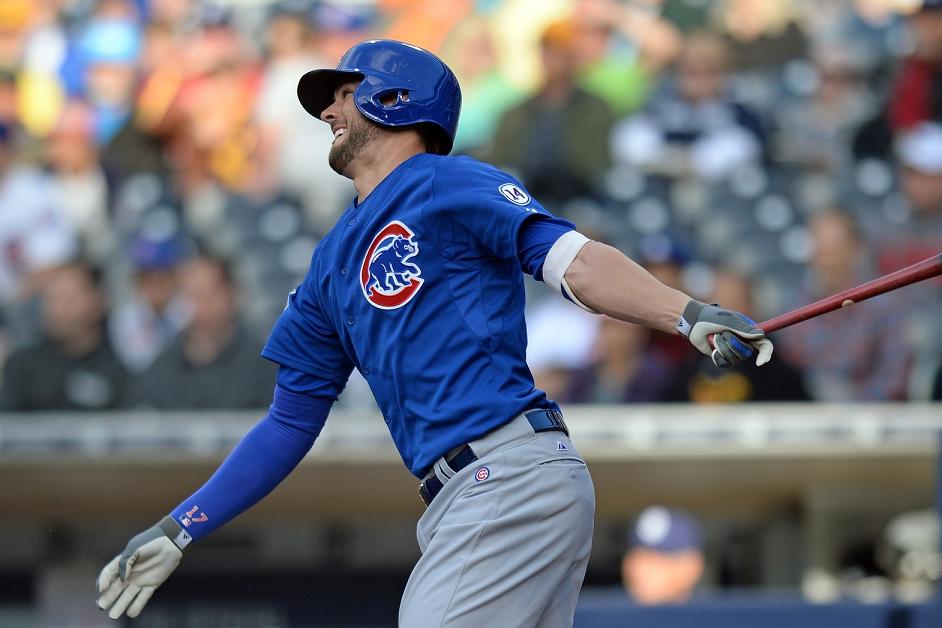 As the Twins traveled to Pittsburgh in May, both Ricky Nolasco and Mike Pelfrey were subjected to the silliness that is a league without a DH. Nolasco fared worse flailing through three different at-bats on route to a three-strikeout game, while Pelfrey totaled two base hits raising his career average to a paltry .105. After hosting the Brewers at Target Field, it was again in St. Louis that Twins pitchers would be forced to brandish a bat. This time it was Trevor May and Kyle Gibson at the plate. The pair combined to go 1-3 (the hit being Gibson's) with a strikeout (being May's). While first year manager Paul Molitor got creative and batted his pitchers eighth this time around, the offensive production from the position remained a black hole. On the flip side, fans at Target Field have and will get to see the beauty of a National League team playing with the designated hitter. The Cardinals were able to use slugger and everyday shortstop Jhonny Peralta as their designated hitter for the day. The bigger prize for both National League lovers and Twins fans is yet to come however. Over the weekend, the Twins will play host to the Chicago Cubs. Never mind the parallels that connect the Twins and Cubs as two franchises trending in very similar directions, but the Cubs bring plenty of intrigue on their own. Already promoted this season, top prospects Kris Bryant and Addison Russell will be on full display in front of Target Field. On top of that, and because of the DH, Twins fans will get an early glimpse of another phenom, Kyle Schwarber. During the same week that Byron Buxton was promoted by the Twins, Chicago decided to bring Schwarber up from Double-A Tennessee in order to serve as their designated bat through interleague play. Schwarber trails Twins prospect Adam Brett Walker in minor league home runs with 13, but he brings a .320/.438/.579 power stick to the show. Although Theo Epstein has insisted that the Cubs will send him packing after the tour is over, it is the DH that makes it all possible. Rather than digress too far into why the DH should be universally accepted (and it should) I will instead point you to this article. Whether for or against the designated hitter, the argument seems clear. A flailing pitcher who may provide a manager with some tougher decisions is still less beneficial for the sport than a player who can accomplish the set goal at the plate, to hit. Minnesota will welcome the Cubs over the weekend, and then head to Milwaukee and Cincinnati the following week before wrapping up interleague action. When the dust settles though, it will be hard to argue that the clash with the NL Central in 2015 wasn't for the betterment of the season, and that interleague play didn't provide some fun. For more from Off The Baggy, click here. Follow @tlschwerz
 -
The Minnesota Twins are in the midst of interleague play for the second time this season. Instead of cramming all of the fun into a designated week or two over the summer, Major League Baseball reconstructed the scheduled to allow American and National League teams to clash throughout the season. As Minnesota has now traveled and hosted National League teams, we have seen both the beauty and brokenness of the tradition. As the Twins traveled to Pittsburgh in May, both Ricky Nolasco and Mike Pelfrey were subjected to the silliness that is a league without a DH. Nolasco faired worse flailing through three different at bats on route to a three strikeout game, while Pelfrey totaled two base hits raising his career average to a paltry .105. After welcoming the Brewers to Target Field, it was again in St. Louis that Twins pitchers would be forced to brandish a bat. This time it was Trevor May and Kyle Gibson at the plate. The pair combined to go 1-3 (the hit being Gibson's) with a strikeout (being May's). While first year manager Paul Molitor got creative and batted his pitchers 8th this time around, the offensive production from the position remained a black hole. On the flip side, fans at Target Field have and will get to see the beauty of a National League team playing with the designated hitter. The Cardinals were able to use slugger and everyday shortstop Jhonny Peralta as their designated hitter for the day. The bigger prize for both National League lovers and Twins fans is yet to come however. Over the weekend, the Twins will play host to the Chicago Cubs. Never mind the parallels that connect the Twins and Cubs as two franchises trending in very similar directions, but the Cubs bring plenty of intrigue on their own. Already promoted this season, top prospects Kris Bryant and Addison Russell will be on full display in front of Target Field. On top of that, and because of the DH, Twins fans will get an early glimpse at another phenom, Kyle Schwarber. During the same week that Byron Buxton was promoted by the Twins, Chicago decided to bring Schwarber up from Double-A Tennessee in order to serve as their designated bat through interleague play. Schwarber trails Twins prospect Adam Brett Walker in minor league home runs with 13, but he brings a .320/.438/.579 power stick to the show. Although Theo Epstein has insisted that the Cubs will send him packing after the tour is over, it is the DH that makes it all possible. Rather than digress to far into why the DH should be universally accepted (and it should) I will instead point you to this article. Whether for or against the designated hitter, the argument seems clear. A flailing pitcher who may provide a manager with some tougher decisions is still less beneficial for the sport than a player who can accomplish the set goal at the plate, to hit. Minnesota will welcome the Cubs over the weekend, and then head to Milwaukee and Cincinnati the following week before wrapping up interleague action. When the dust settles though, it will be hard to argue that the clash with the NL Central in 2015 wasn't for the betterment of the season, and that interleague play didn't provide some fun. For more from Off The Baggy, click here. Follow @tlschwerz
-
Time For Twins To Let It Sano
Ted Schwerzler commented on Ted Schwerzler 's blog entry in Off The Baggy
Exactly right, it's about getting his bag to play. -
Time For Twins To Let It Sano
Ted Schwerzler commented on Ted Schwerzler 's blog entry in Off The Baggy
For me it's not so much about Plouffe blocking Sano, as it is what Sano should be expected to do. Plouffe is an above-avg defender and has been for the past two seasons. He is a low average, respectable power guy, and that has a place on this team even going forward. Sano is going to be a low average high power guy as well, and whether he plays 3rd, a corner outfield spot, 1st, or DH, it really doesn't matter. The Twins offense needs a boost, and he can provide that. It's a matter of where and how the Twins would like him to do so. -
Article: Brian Dozier Is Entering Elite Territory
Ted Schwerzler replied to Ted Schwerzler 's topic in Twins Daily Front Page News
This is assuming that average is the sole purpose of the discussion, when in fact, it's probably the least important considering the collective whole. -
The Minnesota Twins have played through their first third of the 2015 Major League Baseball season. As they came out of the gates slow, surprises started to take place throughout the month of May. After sitting alone atop the American League and AL Central, the calendar then turned to June. Since then, the summer has been anything but pleasant for the Twins. In June (as of this writing), the Twins are 4-11. In those 11 losses, the Twins have scored more than two runs just three times (with one of those times being a total of three runs). Two of their four wins have come scoring just two runs. Also in that span, the Twins have lost to run totals of one, two, and three (three times) runs. At this point, it's pretty safe to say the offense is struggling and needs a boost. Enter Miguel Sano. Earlier this month, Byron Buxton was promoted by the Twins. While Buxton was the organization's (and baseball's) top prospect, it was Sano who was expected to reach the big leagues first. After missing last season due to Tommy John surgery, there was no doubt Sano would need to shake off some rust. Now into June, Sano appears like he could immediately provide a boost to a struggling Twins lineup. Since May 20, Sano has hit .324/.410/.592 over the course of 19 games for Double-A Chattanooga. In that time span, he's launched four home runs and driven in 17. His 16/10 strikeout to walk ratio is in a good place, and it would appear that Sano is more than clicking at the plate. His power has been talked about since the day he was signed by the Twins. On the season Sano has 12 home runs, and he's compiled 102 longballs in his 435 minor league games. So far in 2015, the Twins have started both Kennys Vargas and Kurt Suzuki in the 5 hole 18 times. While Vargas may profile capable of that role, he's hit .150/.150/.150 with nine strikeouts, zero walks, and no extra base hits since being recalled from Triple-A Rochester. Suzuki has regressed from his career year in 2014 as expected, but even at his best (15 HR in 2009), he isn't a power threat. What's worse than Vargas and Suzuki getting at bats in the heart of the order, the Twins have started Eduardo Nunez and Eduardo Escobar in the 5 hole a combined 12 times on the season. The two utility men have combined for four home runs over the course of 234 at bats. Looking for power in the middle of the lineup, Escobar's .624 OPS simply isn't going to get it done. Now, although Sano has tormented Double-A pitching, expectations for his major league contributions should no doubt be muted. As with Buxton before him, Sano will be making the leap from Double-A when his time comes. This is definitely the right move, but the success may not immediately translate. The one thing that should however, is his power. Where Buxton's hit tool is one that is still developing, Sano commands the strike zone well (he's striking out a career low $24.6%), and has an elite level of power. Currently graded 80/80 Raw Power by Fangraphs, Sano possesses the ability to destroy plenty a baseball. His Double-A career .292 ISO (isolated power, or slugging minus average) should be more than welcomed at Target Field. Paul Molitor hinted that they have been keeping an eye on Sano, and his promotion could come sooner rather than later. The argument probably should be that it needs to be sooner rather than later. Sure, Sano may not hit .300 or even .280 in his first go-round at the big league level, but give him three months and you can bet on him launching 15-20 home runs. The Twins offense needs a boost, it's time to let it Sano. For more from Off The Baggy, click here. Follow @tlschwerz
-
The year is 2015, Torii Hunter is 39 years old, and the Minnesota Twins are going to be looking at what's next for their heralded fan-favorite. Signed to a one-year, $10.5 million contract, Hunter stated that the Twins were the last team he would play for prior to returning to the fold this season. Now with 55 games under his belt, and a respectable season underway, the Twins are forced to start considering options.Through just over the first third of the 2015 season, Hunter has posted a .268/.325/.427 slash line. He's added eight long balls and is the team leader in RBI. Through 55 games of action, Hunter is worth a 1.0 fWAR and has virtually continued along his career trends (.279/.334/.464). At the plate, there is little doubt that Hunter has given the Twins everything they could have asked for and then some. In the field, Hunter was expected to be more liability than asset, and that too has played out. He's been worth -6 DRS (defensive runs saved) and has a UZR (ultimate zone rating) of just 1.4. Having posted a career worst -18 DRS last season for the Tigers in 1114 innings, he is on pace to be right around that mark once again. He has also committed three errors in just 44 games, putting him on pace for what would be a career high, eight. Finally, his lone outfield assist has him on pace for just under three on the season, which would be the lowest mark for Hunter since 2009. Obviously the least quantifiable measurement of Hunter's value to the 2015 Twins is what he has done off of the field in the form of veteran leadership. Between dance parties in the clubhouse, and a sense of early season accountability, Hunter has transformed what has been a culture of losing in recent seasons. Helping to push young players to new heights while allowing veterans to latch on to a vocal leader, Hunter has proved invaluable in that regard. It may be his leadership however that causes the most questions for the Twins going forward. In 2016, the Twins should be full throttle into their youth movement. With star prospect Byron Buxton now called up, and youth in the form of Eddie Rosario and Kennys Vargas seeing regular playing time, the roster turnover has begun. Despite being surprisingly competitive in 2015, the Twins push toward relevance should have always been expected to really kick off with the 2016 season and beyond. Looking at what Hunter brings to the table, there's no doubt a question of where, and maybe even if, he fits in. On one hand, it's quite apparent that Hunter's bat can still play. Despite looking at 40 years old in the 2016 season, Hunter could prove to once again be a valuable asset in the middle of the lineup. While that bat will no doubt be taking away opportunities from young, developing hitters, the Twins could choose to go that direction. On the other hand, the defensive liability Hunter has become should really not have a place in the big leagues going forward. With Buxton and Rosario holding down two spots, Aaron Hicks could be used to round out the outfield and provide an elite level of defense. Minnesota factoring in Hunter for next season and beyond will no doubt be a topic of conversation in the coming months. If Torii is willing to be looked upon as solely a designated hitter, and in a rotation with other players at that, then the Twins would no doubt have to listen. Should Hunter want to remain a regular in the field as well however, the Twins may be better off asking him to lend his leadership capabilities in a coaching or consulting capacity. Torii Hunter has given the Twins so much over his 19 year career, and the organization is all the better for it. In 2015, he continues to be more asset than liability and making sure that remains the scenario into the future is something both parties will have to discuss. For more from Off The Baggy, click here. Follow @tlschwerz Click here to view the article
-
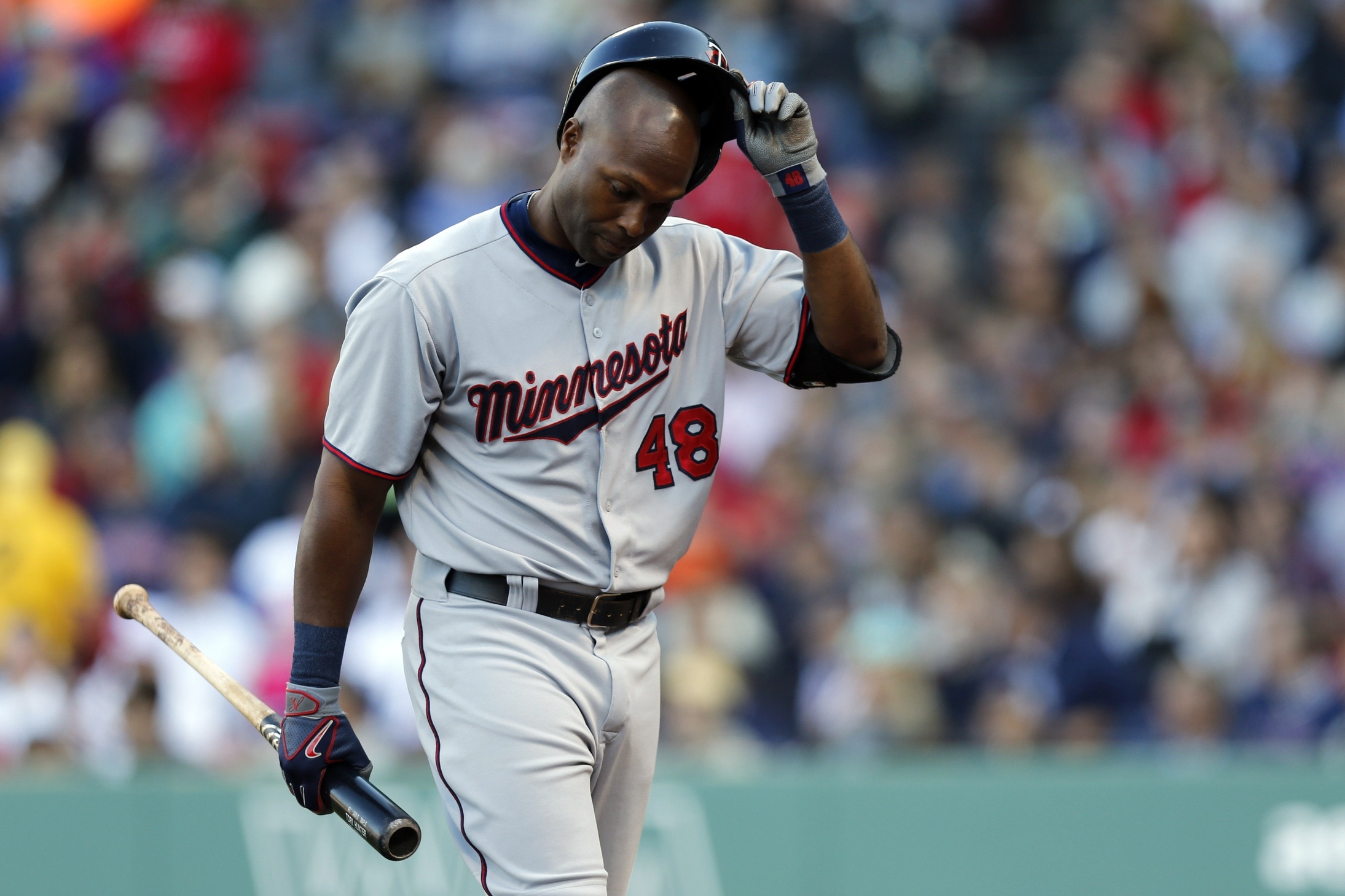 Through just over the first third of the 2015 season, Hunter has posted a .268/.325/.427 slash line. He's added eight long balls and is the team leader in RBI. Through 55 games of action, Hunter is worth a 1.0 fWAR and has virtually continued along his career trends (.279/.334/.464). At the plate, there is little doubt that Hunter has given the Twins everything they could have asked for and then some. In the field, Hunter was expected to be more liability than asset, and that too has played out. He's been worth -6 DRS (defensive runs saved) and has a UZR (ultimate zone rating) of just 1.4. Having posted a career worst -18 DRS last season for the Tigers in 1114 innings, he is on pace to be right around that mark once again. He has also committed three errors in just 44 games, putting him on pace for what would be a career high, eight. Finally, his lone outfield assist has him on pace for just under three on the season, which would be the lowest mark for Hunter since 2009. Obviously the least quantifiable measurement of Hunter's value to the 2015 Twins is what he has done off of the field in the form of veteran leadership. Between dance parties in the clubhouse, and a sense of early season accountability, Hunter has transformed what has been a culture of losing in recent seasons. Helping to push young players to new heights while allowing veterans to latch on to a vocal leader, Hunter has proved invaluable in that regard. It may be his leadership however that causes the most questions for the Twins going forward. In 2016, the Twins should be full throttle into their youth movement. With star prospect Byron Buxton now called up, and youth in the form of Eddie Rosario and Kennys Vargas seeing regular playing time, the roster turnover has begun. Despite being surprisingly competitive in 2015, the Twins push toward relevance should have always been expected to really kick off with the 2016 season and beyond. Looking at what Hunter brings to the table, there's no doubt a question of where, and maybe even if, he fits in. On one hand, it's quite apparent that Hunter's bat can still play. Despite looking at 40 years old in the 2016 season, Hunter could prove to once again be a valuable asset in the middle of the lineup. While that bat will no doubt be taking away opportunities from young, developing hitters, the Twins could choose to go that direction. On the other hand, the defensive liability Hunter has become should really not have a place in the big leagues going forward. With Buxton and Rosario holding down two spots, Aaron Hicks could be used to round out the outfield and provide an elite level of defense. Minnesota factoring in Hunter for next season and beyond will no doubt be a topic of conversation in the coming months. If Torii is willing to be looked upon as solely a designated hitter, and in a rotation with other players at that, then the Twins would no doubt have to listen. Should Hunter want to remain a regular in the field as well however, the Twins may be better off asking him to lend his leadership capabilities in a coaching or consulting capacity. Torii Hunter has given the Twins so much over his 19 year career, and the organization is all the better for it. In 2015, he continues to be more asset than liability and making sure that remains the scenario into the future is something both parties will have to discuss. For more from Off The Baggy, click here. Follow @tlschwerz
 -
Byron Buxton has now played his first major league game, he's recorded his first major league hit, and he's all but delivered on the enormous amount of hype that has followed him since being selected in the 2012 Major League Baseball Draft. Needing seven at bats over the course of two games to record his first hit, we can now begin to wonder what the first tour of duty may look like for the Twins phenom. The expectations are high, but where does reality lie? As a minor league hitter, Buxton owns a career .296/.380/.486 line over the course of four seasons, 263 games, and 1,014 at bats. In that time, Buxton hit 40 doubles, 36 (!) triples, 27 home runs, drove in 150 runs, and stole 92 bases. He batted .248 in his first professional season, following that up with a .334 average through two levels of A ball. 2014 was cut short by injury and saw Buxton post just a .234 average in 31 games, and that was followed up by a .283 avg at Double-A Chattanooga this season. Nearly any way you cut it, Byron Buxton was a very good minor league player. If not elite, he was very, very good. To suggest the expectation of the second overall pick is anything but very good would seem silly, but Buxton more than did his part. Having now made the leap to the big leagues, the expectations once again need to shift. Buxton is in the same prospect realm as Kris Bryant or Mike Trout before them. Looking at both of those players however, Buxton shines elsewhere. As a minor league, Trout owned a career .342/.425/.516 slash line across 286 games. Bryant spent less time on the farm having come out of college, but he compiled a .327/.426/.667 slash line across 181 games. Obviously Bryant has yet to complete his first big league season, but he's off to an impressive start slashing .294/.403/.482 through his first 53 games. Trout had bigger struggles in his first season at the big league level. In 40 games in 2011, Trout batted just .220/.281/.390 for the Angels. Looking at what some similar Twins players have done, maybe only Joe Mauer can hold a candle to the kind of hype Byron Buxton brings with him. As a hometown kid, and the first overall pick, Mauer went on to hit .308/.369/.570 in his first 35 games with Minnesota. A .330+ minor league hitter, Mauer's early success was not all that surprising. Both Torii Hunter (20th pick 1993) and Justin Morneau (3rd round 1999) were prospects with a lesser degree of hype. Hunter hit .255/.309/.380 in his first big league season (135 games in 1999). Morneau, who has always hit more for power than average, batted .226/.287/.377 in 40 games during the 2003 season for the Twins. Looking at what's been done by those before him, it's understandable to suggest dulling offensive expectations for the Twins new centerfielder. Always regarded as a speed threat (as already witnessed at the MLB level), Buxton's bat was the tool noted as needing the most time to develop. Despite success on the farm, it is going to take time to get acclimated to the pro game. Sp when the dust settles, what does 2015 look like for Buxton? Across the minors, Buxton struck out at roughly a 19% clip, that number should rise a little bit in the big leagues. He is still adjusting to offspeed pitches, and doing so against MLB caliber players on a nightly basis will prove more challenging. His biggest asset is no doubt going to be his speed. Not a big bunter, as witnessed by the ugly attempt in his first game against the Rangers (and Buxton himself noting that was his first sacrifice bunt in years), his speed will play in stretching bases. Infield hits should be something Buxton can make a habit of, and his standup triple in his first major league hit was a sign of things to come. With 12 triples across 59 Double-A games in 2015, he's got a real shot to lead the bigs at years' end. Although I'd argue that Buxton's ceiling is significantly higher, I think 2015 looks a lot like Billy Hamilton's first major league season. The Reds speedy centerfielder put up a .250/.292/.355 slash line in his first season with Cincinnati. Somewhere around five home runs would seem realistic for Buxton, and he should steal plenty of bases. It's going to take him some time to adjust, and with that, there will be growing pains. No matter how 2015 shakes out however, Buxton is going to benefit greatly from the experience as the Twins will need to lean on him in 2016. As he morphs into the superstar he should become, it will be the next four months that help to springboard that journey. Patience is going to need to be practiced with Buxton, but it should be well worth the wait. For more from Off The Baggy, click here. Follow @tlschwerz
-
Earlier this season, the Minnesota Twins signed second basemen Brian Dozier to a four-year, $20 million extension. In doing so, the Twins locked down their star second basemen into the foreseeable future, and bought out some of his arbitration years in the process.Now, over a third of the way into the 2015 season, the contract that seemed to some to be a slam dunk has turned out to be exactly that in the early going. Despite Dozier being a fan favorite, and one of the Twins' best players, there was some initial criticism of the Twins decision. While the contract did buy out arbitration years, the Twins failed to eat away at any free agency time Dozier would have. In doing the deal this way, Minnesota was locked into a $5 million average annual value until 2018, but Dozier would then be able to be immediately eligible for free agency. Minnesota was seemingly banking on Dozier being a highly productive player over the course of the next four seasons, while hoping that the loyalty paid early on might offer them a hometown discount when and if that was needed in the long term. So far, both sides are putting their best foot forward. Obviously it's still extremely early in the life of the contract, but Dozier has broken out even bigger in 2015 than in 2014. After looking the part of an All-Star in 2014, the Twins second basemen owns a .265/.346/.538 slash line this season, all career highs. He leads the team in HR (13), runs scored (51), on base percentage (.346), slugging (.538), on base plus slugging (.883), hits (63), doubles (20 which also leads the American League), triples (3), and walks (27). It's easy to suggest that Dozier is off to a good start, but to put it into further context, where he may be going is all the more impressive. As Twins Daily's Nick Nelson notes, Dozier is on pace for 53 doubles, 34 HR, 133 runs scored. Those are marks no major league baseball second basemen has topped since 2011. Through just 61 games in 2015, Dozier has been worth 2.6 fWAR and is on pace for a 6.4 fWAR (previous career high is 4.8 in 2014). Heading into the season, one of the biggest worries for Dozier was his tendency to pull the ball. Tony Blengino looked at Dozier's pull tendencies for Fangraphs and suggested he may be about to quickly decline from the ceiling he had reached. So far, the Twins second basemen has stuck with the same process, and the results have followed suit. In 2015, Dozier has pulled a career high 62.6% of the balls he has put in play. However, Dozier has also recorded a 30.5% hard hit percentage, which is also a career high. While Dozier is hitting just 14.4% of his balls in play to the opposite field (a career low), he's supplemented it by hitting a career high 26.3% of balls in play as line drives. On top of being great across the board in 2015, Dozier has actually silenced critics in regards to one of his most common knocks. Discredited for having an often low average (which matters very little), Dozier has actually struck out a career high 19.9% this season while batting .021 points above his career mark of .244 At this point, it's apparent Brian Dozier has been nothing short of spectacular at the plate for the Twins. He's been the power hitter they didn't know they had, and he's gotten it done in multiple facets of the offensive side.. On the defensive side of things, Dozier isn't too shabby either. Errors haven't been an issue for Dozier since moving from shortstop to second base following the 2012 season. This season, he has just one in 61 games, putting him on pace for about 2.5 on the season (would be a career low). He currently has been worth one DRS (defensive run saved) while being on pace for a career best 1.9 UZR/150 (Ultimate Zone Rating runs above average per 150 games). Looking at what Dozier has been compared to the rest of the major league second basemen, he ranks behind only Jason Kipnis (3.7 fWAR) and Dee Gordon (2.8 fWAR). He is out-slugging both players by at least .034 points and leads all second basemen in home runs (next closest is Dustin Pedroia with 9). Taking a top down view and assessing everything as a whole, Fangraphs puts Brian Dozier's current value in dollars at $21.2 million, or roughly $1 million more than the entirety of his four year contract. Whether you adhere to advanced analytics or not, the eye test has corroborated the numbers this season, Brian Dozier is very good. At this point, it looks like the Twins got a steal, and if this continues for even half of the contract, both parties are in a place to benefit greatly from one another. For more from Off The Baggy, click here. Follow @tlschwerz Click here to view the article
-
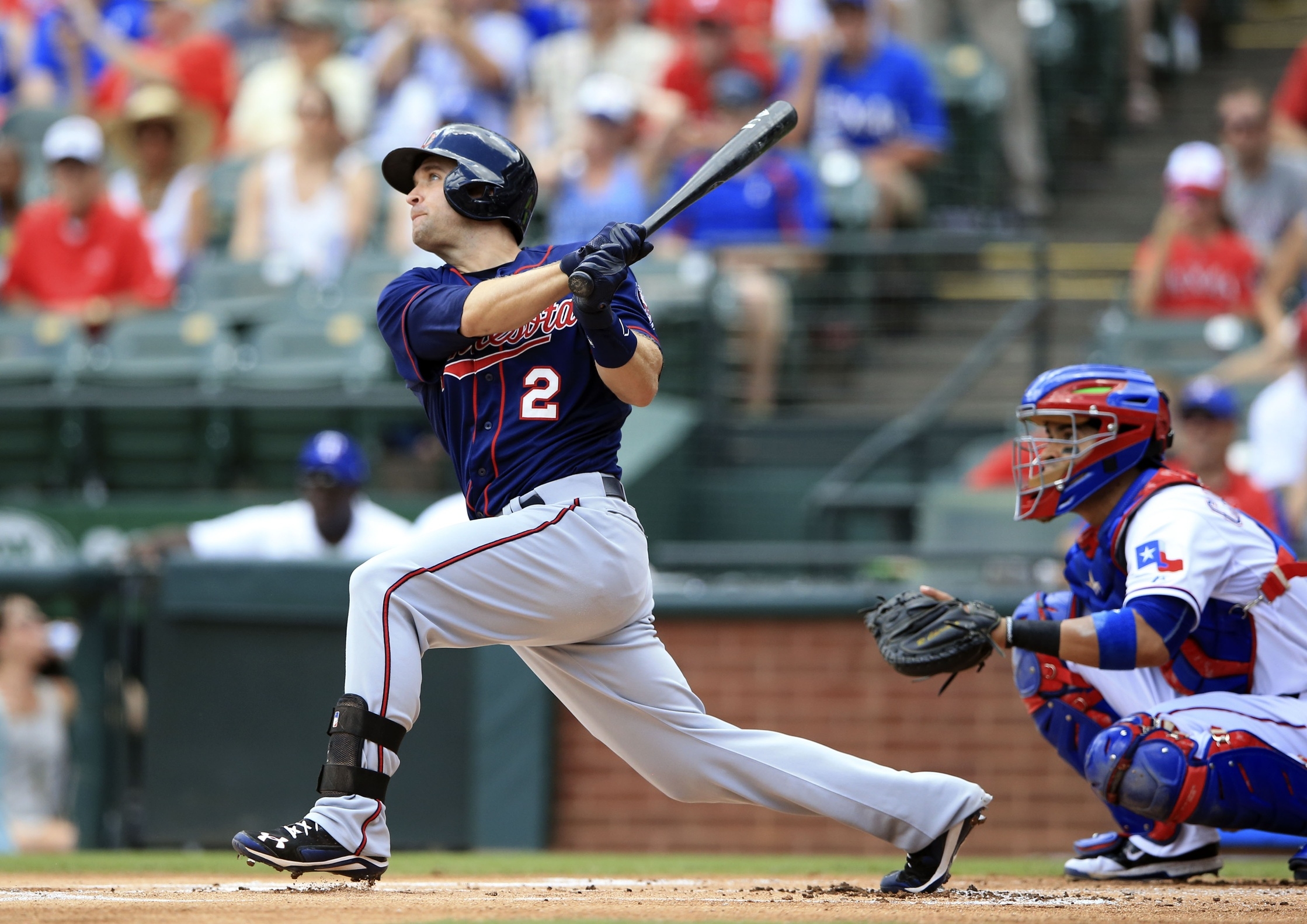 Now, over a third of the way into the 2015 season, the contract that seemed to some to be a slam dunk has turned out to be exactly that in the early going. Despite Dozier being a fan favorite, and one of the Twins' best players, there was some initial criticism of the Twins decision. While the contract did buy out arbitration years, the Twins failed to eat away at any free agency time Dozier would have. In doing the deal this way, Minnesota was locked into a $5 million average annual value until 2018, but Dozier would then be able to be immediately eligible for free agency. Minnesota was seemingly banking on Dozier being a highly productive player over the course of the next four seasons, while hoping that the loyalty paid early on might offer them a hometown discount when and if that was needed in the long term. So far, both sides are putting their best foot forward. Obviously it's still extremely early in the life of the contract, but Dozier has broken out even bigger in 2015 than in 2014. After looking the part of an All-Star in 2014, the Twins second basemen owns a .265/.346/.538 slash line this season, all career highs. He leads the team in HR (13), runs scored (51), on base percentage (.346), slugging (.538), on base plus slugging (.883), hits (63), doubles (20 which also leads the American League), triples (3), and walks (27). It's easy to suggest that Dozier is off to a good start, but to put it into further context, where he may be going is all the more impressive. As Twins Daily's Nick Nelson notes, Dozier is on pace for 53 doubles, 34 HR, 133 runs scored. Those are marks no major league baseball second basemen has topped since 2011. Through just 61 games in 2015, Dozier has been worth 2.6 fWAR and is on pace for a 6.4 fWAR (previous career high is 4.8 in 2014). Heading into the season, one of the biggest worries for Dozier was his tendency to pull the ball. Tony Blengino looked at Dozier's pull tendencies for Fangraphs and suggested he may be about to quickly decline from the ceiling he had reached. So far, the Twins second basemen has stuck with the same process, and the results have followed suit. In 2015, Dozier has pulled a career high 62.6% of the balls he has put in play. However, Dozier has also recorded a 30.5% hard hit percentage, which is also a career high. While Dozier is hitting just 14.4% of his balls in play to the opposite field (a career low), he's supplemented it by hitting a career high 26.3% of balls in play as line drives. On top of being great across the board in 2015, Dozier has actually silenced critics in regards to one of his most common knocks. Discredited for having an often low average (which matters very little), Dozier has actually struck out a career high 19.9% this season while batting .021 points above his career mark of .244 At this point, it's apparent Brian Dozier has been nothing short of spectacular at the plate for the Twins. He's been the power hitter they didn't know they had, and he's gotten it done in multiple facets of the offensive side.. On the defensive side of things, Dozier isn't too shabby either. Errors haven't been an issue for Dozier since moving from shortstop to second base following the 2012 season. This season, he has just one in 61 games, putting him on pace for about 2.5 on the season (would be a career low). He currently has been worth one DRS (defensive run saved) while being on pace for a career best 1.9 UZR/150 (Ultimate Zone Rating runs above average per 150 games). Looking at what Dozier has been compared to the rest of the major league second basemen, he ranks behind only Jason Kipnis (3.7 fWAR) and Dee Gordon (2.8 fWAR). He is out-slugging both players by at least .034 points and leads all second basemen in home runs (next closest is Dustin Pedroia with 9). Taking a top down view and assessing everything as a whole, Fangraphs puts Brian Dozier's current value in dollars at $21.2 million, or roughly $1 million more than the entirety of his four year contract. Whether you adhere to advanced analytics or not, the eye test has corroborated the numbers this season, Brian Dozier is very good. At this point, it looks like the Twins got a steal, and if this continues for even half of the contract, both parties are in a place to benefit greatly from one another. For more from Off The Baggy, click here. Follow @tlschwerz
 -
Earlier this season, the Minnesota Twins signed second basemen Brian Dozier to a four-year, $20 million extension. In doing so, the Twins locked down their star second basemen into the foreseeable future, and bought out some of his arbitration years in the process. Now over a third of the way into the 2015 season, the contract that seemed to be a slam dunk, has turned out to be exactly that in the early going. Despite Dozier being a fan favorite, and one of the Twins best players, there was some initial criticism of the Twins decision. While the contract did buy out arbitration years, the Twins failed to eat away at any free agency time Dozier would have. In doing the deal this way, Minnesota was locked into a $5 million average annual value until 2018, but Dozier would then be able to be immediately eligible for free agency. Minnesota was seemingly banking on Dozier being a highly productive player over the course of the next four seasons, while hoping that the loyalty paid early on may offer them a hometown discount when and if that was needed in the long term. So far, both sides are putting their best foot forward. Obviously it's still extremely early in the life of the contract, but Dozier has broken out even bigger in 2015. After looking the part of an All-Star in 2014, the Twins second basemen owns a .265/.346/.538 slash line this season, all career highs. He leads the team in HR (13), runs scored (51), on base percentage (.346), slugging (.538), on base plus slugging (.883), hits (63), doubles (20 which also leads the American League), triples (3), and walks (27). It's pretty easy to suggest that Dozier is off to a good start, but to put it into even further context, where he may be going is all the more impressive. As Twins Daily's Nick Nelson notes, Dozier is on pace for 53 doubles, 34 HR, 133 runs scored. Those are marks no Major League Baseball second basemen has topped since 2011. Through just 61 games in 2015, Dozier has been worth 2.6 fWAR and is on pace for a 6.4 fWAR (previous career high is 4.8 in 2014). Heading into the season, one of the biggest worries for Dozier was his tendency to sell out and pull the ball. Tony Blengino looked at Dozier's pull tendencies for Fangraphs and suggested he may be about to quickly decline from a ceiling he had reached. So far, the Twins second basemen has stuck with the same process, and the results have followed suit. In 2015, Dozier has pulled a career high 62.6% of the balls he has put in play. However, Dozier has also recorded a 30.5% hard hit percentage, which is also a career high. While Dozier is hitting just 14.4% of his balls in play to the opposite field (a career low), he's supplemented it by hitting a career high 26.3% of balls in play as line drives. On top of being great across the board in 2015, Dozier has actually silenced critics in regards to one of his most common knocks. Discredited for having an often low average (which matters very little), Dozier has actually struck out a career high 19.9% this season while batting .21 points above his career mark. At this point, it's pretty apparent Brian Dozier has been nothing short of spectacular at the plate for the Twins. He's been the power hitter they didn't know they had, and he's gotten it done in multiple facets of his plate appearances. On the defensive side of things, Dozier isn't too shabby either. Errors haven't been an issue for Dozier since moving from shortstop to second base following the 2012 season. This season, he has just one in 61 games, putting him on pace for 2.5 on the season (would be a career low). He currently has been worth one DRS (defensive run saved) while being on pace for a career best 1.9 UZR/150 (Ultimate Zone Rating runs above average per 150 games). Looking at what Dozier has been compared to the rest of the major league second basemen, he ranks behind only Jason Kipnis (3.7 fWAR) and Dee Gordon (2.8 fWAR). He is out-slugging both players by at least .034 points and leads all second basemen in home runs (next closest is Dustin Pedroia with 9). Taking a top down view and assessing everything as a whole, Fangraphs puts Brian Dozier's current value in dollars at $21.2 million, or roughly $1 million more than the entirety of his four year contract. Whether you adhere to advanced analytics or not, the eye test has corroborated the numbers this season, Brian Dozier is very good. At this point, it looks like the Twins got a steal, and if this continues for even half of the contract, both parties are in a place to benefit greatly from one another. For more from Off The Baggy, click here. Follow @tlschwerz
-
It's 2015, Torii Hunter is 39 years old, and the Minnesota Twins are going to soon be looking at the question of what's next for their heralded fan-favorite. Signed to a one-year, $10.5 million contract, Hunter stated that the Twins were the last team he would play for prior to returning to the fold this season. Now with 55 games under his belt, and a respectable season underway, the Twins are forced to start considering options. Through just over the first third of the 2015 season, Hunter has posted a .268/.325/.427 slash line. He's added eight long balls and is the team leader in runs batted in. Through 55 games of action, Hunter is worth 1.0 fWAR and has virtually continued along his career trends (.279/.334/.464). At the plate, there is little doubt that Hunter has given the Twins everything they could have asked for and then some. In the field, Hunter was expected to be more liability than asset, and that too has played out. He's been worth -6 DRS (defensive runs saved) and has a UZR (ultimate zone rating) of just 1.4. Having posted a career worst -18 DRS last season for the Tigers in 1114 innings, he is on pace to be right around that mark once again in 2015. He has also committed three errors in just 44 games, putting him on pace for what would be a career high, eight. Finally, his lone outfield assist has him on pace for just under three on the season, which would be the lowest mark for Hunter since 2009. Obviously the least quantifiable measurement of Hunter's value to the 2015 Twins is what he has done off of the field in the form of veteran leadership. Between dance parties in the clubhouse, and a sense of early season accountability, Hunter has transformed what has been a culture of losing in recent seasons. Helping to push young players to new heights while allowing veterans to latch on to a vocal leader, Hunter has proved invaluable in that regard. It may be in his leadership however that causes the most questions for the Twins going forward. In 2016, the Twins should be full throttle into their youth movement. With star prospect Byron Buxton now called up, and youth in the form of Eddie Rosario and Kennys Vargas seeing regular playing time, the roster turnover has begun. Despite being surprisingly competitive in 2015, the Twins push towards relevance should have always been expected to really kick off with the 2016 season and beyond. Looking at what Hunter brings to the table, there's no doubt a question of where, and maybe even if, he fits in. On one hand, it's quite apparent that Hunter's bat can still play. Despite looking at 40 years old in the 2016 season, Hunter could prove to once again be a valuable asset in the middle of the lineup. While that bat will no doubt be taking away opportunities from young, developing hitters, the Twins could choose to go that direction. On the other hand, the defensive liability Hunter has become should really not have a place in the big leagues going forward. With Buxton and Rosario holding down two spots, Aaron Hicks could be paired to round out the outfield and provide an elite level of defense. Minnesota factoring in Hunter for next season and beyond will no doubt be a topic of conversation in the coming months. If Torii is willing to be looked upon as solely a designated hitter, and in a rotation with other players at that, then the Twins would no doubt have to listen. Should Hunter want to remain a regular in the field as well however, the Twins may be better off asking him to lend his leadership capabilities in a coaching or consulting capacity. Torii Hunter has given the Twins so much over his 19 year career, and the organization is all the better for it. In 2015, he continues to be more asset than liability, making sure that remains the scenario into the future is something both parties will have to discuss. For more from Off The Baggy, click here. Follow @tlschwerz
-
It's 2015, Joe Mauer is 32 years old, and maybe for the first time in his career, the red flags should be popping up all over the place. Not only is he having arguably the worst season of his career, but it also appears that there may be no end in sight.Whether it's the lingering effects from a concussion, or the wrong side of 30 catching up to him, Twins fans are left wondering what happened to the hometown kid? With Vargas playing first base today, it will be interesting to see what the Twins do with their veteran player. Through the first 58 games in 2015, Mauer has remained healthy, which is a good sign considering the injuries of recent seasons. However, in that time he has batted just .260/.321/.356 (all ranking as significant career worsts). On top of the poor batting line, any semblance of power has left him as he has put just two balls over the fence (and six in the last two seasons). If it were not for what he was doing with men in scoring position (.397/.486/.517 30 RBI) you'd be hard pressed to find a value at all. So when the unquantifiable value that is "clutch" hitting evens out, what is next for Mauer and the Twins? I'd argue that depth at catcher may be one of the most problematic issues for the Twins looking through the farm system. Of course, having a sure-fire Hall of Famer move on from the position early didn't help, but there hasn't been much development in the role either. Not far behind however, is the question of who can play first base. As it stands currently, Mauer is holding onto the position in large part because the hope is that things will get better. Whether they do or not, what stands waiting in the wings holds little promise as well. On the major league roster, Kennys Vargas is the only true first basemen. Although he possesses the power bat that profiles for the position, in limited action last season (107 innings) he owned a -1 DRS (defensive runs saved) rating and a -2.1 UZR (ultimate zone rating). Vargas lacks ideal reactions and just doesn't look like a long term fit in the field. Looking past the top tier of the organization, there may be more questions than answers. Reynaldo Rodriguez has played first base for Triple-A Rochester of late, and he profiles as little more than a career minor leaguer or replacement level player. The Lookouts probably have the most respectable organizational fit in Max Kepler, but there're no doubt questions there as well. Kepler has dealt with his fair share of injuries and has never played more than 102 games in a season (2014). On the flip side, his 2015 at Chattanooga has provided some serious weight to the promise he has carried through the system since signing as a 16-year-old. Batting .299/.352/.488 with two home runs and 21 runs batted in, Kepler has put himself front and center as a consideration for the Twins immediate future. A converted outfielder, Kepler is no doubt going to take some time to settle into the role at the big league level. Looking through an organization void of many options however, he is a bright spot. The Twins could turn either Trevor Plouffe of Miguel Sano into a first basemen, despite neither of them being there currently. In either case, a learning curve would come into effect as well. Most importantly for the Twins, what they expected from Joe Mauer has not come to pass. Looking at what he was as a catcher, and what he has become as a first basemen, we have watched a near-Hall of Famer decline precipitously. Whether concussion-induced, or a result of a multitude of factors, how the Twins handle who is on first is becoming something needing consideration sooner rather than later. For more from Off The Baggy, click here. Follow @tlschwerz Click here to view the article
-
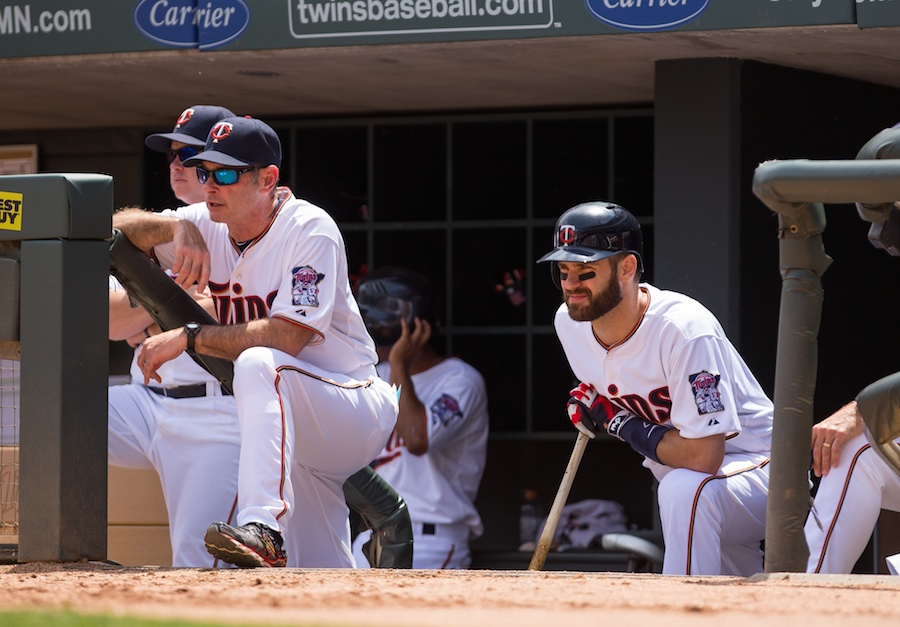 Whether it's the lingering effects from a concussion, or the wrong side of 30 catching up to him, Twins fans are left wondering what happened to the hometown kid? With Vargas playing first base today, it will be interesting to see what the Twins do with their veteran player. Through the first 58 games in 2015, Mauer has remained healthy, which is a good sign considering the injuries of recent seasons. However, in that time he has batted just .260/.321/.356 (all ranking as significant career worsts). On top of the poor batting line, any semblance of power has left him as he has put just two balls over the fence (and six in the last two seasons). If it were not for what he was doing with men in scoring position (.397/.486/.517 30 RBI) you'd be hard pressed to find a value at all. So when the unquantifiable value that is "clutch" hitting evens out, what is next for Mauer and the Twins? I'd argue that depth at catcher may be one of the most problematic issues for the Twins looking through the farm system. Of course, having a sure-fire Hall of Famer move on from the position early didn't help, but there hasn't been much development in the role either. Not far behind however, is the question of who can play first base. As it stands currently, Mauer is holding onto the position in large part because the hope is that things will get better. Whether they do or not, what stands waiting in the wings holds little promise as well. On the major league roster, Kennys Vargas is the only true first basemen. Although he possesses the power bat that profiles for the position, in limited action last season (107 innings) he owned a -1 DRS (defensive runs saved) rating and a -2.1 UZR (ultimate zone rating). Vargas lacks ideal reactions and just doesn't look like a long term fit in the field. Looking past the top tier of the organization, there may be more questions than answers. Reynaldo Rodriguez has played first base for Triple-A Rochester of late, and he profiles as little more than a career minor leaguer or replacement level player. The Lookouts probably have the most respectable organizational fit in Max Kepler, but there're no doubt questions there as well. Kepler has dealt with his fair share of injuries and has never played more than 102 games in a season (2014). On the flip side, his 2015 at Chattanooga has provided some serious weight to the promise he has carried through the system since signing as a 16-year-old. Batting .299/.352/.488 with two home runs and 21 runs batted in, Kepler has put himself front and center as a consideration for the Twins immediate future. A converted outfielder, Kepler is no doubt going to take some time to settle into the role at the big league level. Looking through an organization void of many options however, he is a bright spot. The Twins could turn either Trevor Plouffe of Miguel Sano into a first basemen, despite neither of them being there currently. In either case, a learning curve would come into effect as well. Most importantly for the Twins, what they expected from Joe Mauer has not come to pass. Looking at what he was as a catcher, and what he has become as a first basemen, we have watched a near-Hall of Famer decline precipitously. Whether concussion-induced, or a result of a multitude of factors, how the Twins handle who is on first is becoming something needing consideration sooner rather than later. For more from Off The Baggy, click here. Follow @tlschwerz
 -
It's 2015, Joe Mauer is 32 years old, and maybe for the first time in his career, the red flags should be popping up all over the place. Not only is he having arguably the worst season of his career, but it also appears that there may be no end in sight. Whether it's the lingering effects from a concussion, or the wrong side of 30 catching up to him, Twins fans are left wondering what happened to the hometown kid. With that wonderment, the a stark reality presents itself, what happens next? Through the first 58 games in 2015, Mauer has remained healthy, which is a good sign considering ailments of recent seasons. However, in that time, he has batted just .260/.321/.356 (all significantly ranking as career worsts). On top of the poor batting line, any semblance of power has left him as he has put just two balls over the fence (and six in the last two seasons). If it were not for what he was doing with men in scoring position (.397/.486/.517 30 RBI) you'd be hard pressed to find a value at all. So when the un-quantifiable value that is "clutch" hitting evens out, what is next for Mauer and the Twins? I'd argue that depth at catcher may be one of the most problematic positions for the Twins looking through the farm system. Of course, having a sure-fire Hall of Famer move on from the position early didn't help, but there hasn't been much development in the role either. Not far behind however, is the question as to who can play first base. As it stands currently, Mauer is holding onto the position in large part, because the hope is things will get better. Whether they do or not, what stands waiting in the wings holds little promise as well. On the major league roster, Kennys Vargas is the only true first basemen. Although he possesses the power bat that profiles for the position, in limited action last season (107 innings) he owned a -1 DRS (defensive runs saved) rating and a -2.1 UZR (ultimate zone rating). Vargas lacks ideal reactions and just doesn't look like a long term fit in the field. Looking past the top tier of the organization, there may be more questions than answers. Reynaldo Rodriguez has played first base for Triple-A Rochester of late, and he profiles as little more than a career minor leaguer or replacement level player. The Lookouts probably have the most respectable organizational fit in Max Kepler, but there's no doubt questions there as well. Kepler has dealt with his fair share of injuries and has never played more than 102 games in a season (2014). On the flip side, his 2015 at Chattanooga has provided some serious weight to the promise he has carried through the system since signing as a 17 year old. Batting .299/.352/.488 with two home runs and 21 runs batted in, Kepler has put himself front an center as a consideration for the Twins immediate future. A converted outfielder, Kepler is no doubt going to take some time to settle into the role at the big league level. Looking through an organization void of many options however, he is a bright spot. The Twins could turn either Trevor Plouffe of Miguel Sano into a first basemen, despite neither of them being there currently. In either case, a learning curve would come into effect as well. Most importantly, the Twins and what they expected for Joe Mauer has panned out. Looking at what he was as a catcher, and what he has become as a first basemen, we have watched a worst-case scenario unfold. Whether concussion induced, or a multitude of other factors, how the Twins handle who is on first is becoming something needing consideration sooner rather than later. For more from Off The Baggy, click here. Follow @tlschwerz

