



Jeremy Nygaard
-
Posts
4,552 -
Joined
-
Last visited
Content Type
Profiles
News
Minnesota Twins Videos
2026 Minnesota Twins Top Prospects Ranking
2022 Minnesota Twins Draft Picks
Minnesota Twins Free Agent & Trade Rumors, Notes, & Tidbits
Guides & Resources
2023 Minnesota Twins Draft Picks
The Minnesota Twins Players Project
2024 Minnesota Twins Draft Picks
2025 Minnesota Twins Draft Pick Tracker
2026 Minnesota Twins Draft Tracker: Picks & Bonuses
Forums
Blogs
Events
Store
Downloads
Gallery
Everything posted by Jeremy Nygaard
-

Article: Let's Make A Deal, Part I: 2020
Jeremy Nygaard replied to Jeremy Nygaard's topic in Twins Daily Front Page News
These aren't predictions as much as they are taking away the free agents and moving everyone else up a rung. When you have 3/5 of your rotation expire at the same time, you're going to have to do something to fill the gaps. It might be as easy as bringing guys back, but you're paying market price now. So while the bullpen remains the greatest need between now and 7/31, the rotation is the greatest need between now and next March. -
This is a fun time of the season for all 30 teams. This year, we as fans get to speculate about how the Twins are going to acquire other teams’ best players without giving up the top-of-the-line prospects. Last year, we got to speculate how the Twins were going to acquire other teams’ best prospects by giving up players who were underachieving and had only months left before free agency. Funny how things work.The reality, though, is that we all know things are going to fall somewhere in the middle for both buyers and sellers. We know the Twins need help - definitely in the bullpen and possibly in the rotation - and the next couple of weeks are going to be full of rumors and speculation. Over the next two weeks, I’m going to present a series to you that hopefully takes a different look at things. Today’s part - Part 1 - will start by focusing on next year, but we’ll get more into that soon. Part 2 will be a continuation of today’s article, but will look at the financial side of things. Especially who this regime has invested in. Part 3 will update an article I posted seven weeks ago looking at who might the Twins be most motivated to move? Part 4 (the teams) and Part 5 (the players) will narrow the focus as the deadline approaches. And, finally, Part 6 will be me revisiting something I’ve done in the past, playing GM for a Day. ---- The Twins leadership has banged the same drum repeatedly over time. They aren’t interested in committing future dollars, but they value control. Beyond Jorge Polanco's and Max Kepler's contract extensions, only Marwin Gonzalez is on the books for a guaranteed dollar amount next year. Nelson Cruz and Martin Perez have buyouts on team options. Which is really just a fancy way of maybe telling us they overvalue prospects and pre-arbitration-eligible player. You could assume they value guys in arbitration too, but as price increases and control decreases, the value decreases quickly. And then they hit free agency. The Twins will have five guys hitting the ranks of free agency after the season: Jake Odorizzi, Kyle Gibson, Michael Pineda, Jason Castro and Jonathan Schoop. Knowing how the organization values control, we need to look at next year before we can look at the moves for the next few weeks. (Seems backwards though.) Assuming the free agent leave and the Twins add no other players, here’s a guess at how things could look on the 25-man and 40-man roster: C: Mitch Garver 1B: C.J. Cron 2B: Luis Arraez 3B: Miguel Sano SS: Jorge Polanco LF: Eddie Rosario CF: Byron Buxton RF: Max Kepler DH: Nelson Cruz Bench: Marwin Gonzalez (UTIL) Bench: Jake Cave (OF) Bench: Willians Astudillo (C/3B) Bench: Ehire Adrianza (SS) SP: Jose Berrios SP: Martin Perez SP: Devin Smeltzer SP: Lewis Thorpe SP: Sean Poppen RP: Taylor Rogers RP: Ryne Harper RP: Trevor May RP: Blake Parker RP: Fernando Romero RP: Matt Magill RP: Tyler Duffey On assignment: LaMonte Wade On assignment: Nick Gordon On assignment: Kohl Stewart (P) On assignment: Stephen Gonsalves (P) On assignment: Zack Littell (P) On assignment: Trevor Hildenberger (P) On assignment: Ryan Eades (P) To be added: Brusdar Graterol (P) To be added: Jhoan Duran (P) To be added: Wander Javier (SS) To be added: Jorge Alcala (P) To be added: Luis Rijo (P) To be added: Griffin Jax (P) To be added: Lewin Diaz (1B) To be added: Travis Blankenhorn (2B/3B) Not adding: Luke Raley (OF), Gilberto Celestino (OF), Jovani Moran (P) No room: Mike Morin (P) (Edit: Morin was DFA'd yesterday before the game.) Other top prospects: Royce Lewis (SS), Alex Kirilloff (OF), Trevor Larnach (OF), Jordan Balazovic (P), Brent Rooker (OF), Yunier Severino (2B), Blayne Enlow (P), Ben Rortvedt ©, Jose Miranda (3B), Edwar Colina (P), Akil Baddoo (OF), Ryan Jeffers © First thing, I’ve not actually adding eight guys to the roster, but for this exercise, I wanted to have a full 40-man just so that we can work backwards. Let’s take a closer look. Mitch Garver, C.J. Cron, Luis Arraez, Miguel Sano, Jorge Polanco, Eddie Rosario, Byron Buxton, Max Kepler, Nelson Cruz, Marwin Gonzalez seem to fill out the top 10 position players pretty well. Garver has split duties with Castro, but has become the more regular catcher. Schoop departs and Arraez slides in nicely. This leaves spots for a backup catcher (Willians Astudillo), a backup shortstop (Ehire Adrianza) and a fourth outfielder (Jake Cave). Astudillo and Cave both have options left, if needed. Gonzalez could serve as the fourth outfielder and backup infielder too. Adrianza is a smooth fielder. But when your only concern is whether or not to upgrade your bench next year… that seems like a winter question, not the trade deadline. The rotation - with 60% on expiring deals - is much more interesting. Jose Berrios will be the Opening Day starter in 2020 and beyond. Martin Perez is very likely to slot into one of the other four spots. The Twins will not go into next season slotting three rookies - Devin Smeltzer, Lewis Thorpe and Sean Poppen - in those spots. Could one break the rotation? Maybe. But that’s two starters, minimum, that need to be acquired between now and March. If the rotation is interesting, the bullpen is downright messy. Taylor Rogers is the Ace. Ryne Harper has been fantastic and, at this point, probably is at least written in dark pencil for next year. Trevor May has the ability but hasn’t been consistent. There’s no doubt that he can be a part of a very good major league bullpen though. And then… questions. Blake Parker and Matt Magill are controllable, but replaceable. Fernando Romero has upside, but has been a disaster and out of options after his year. Tyler Duffey has been OK at times, but is also out of options. Zack Littell and Trevor Hildenberger could be solutions, but both can start the year in the minors. I also had to get rid of Mike Morin, who is out of options. There are other options, like Kohl Stewart, if the Twins wanted to try him out in the bullpen. But as much depth as there is in the system, there are no great answers for next year to the bullpen question either. What we have above is the sketchings of the 2020 team. Print it out, make changes, run your own projections. Because there is a 100% chance that it changes before the spring… and a lot of fans that hope it changes before August 1. Click here to view the article
-
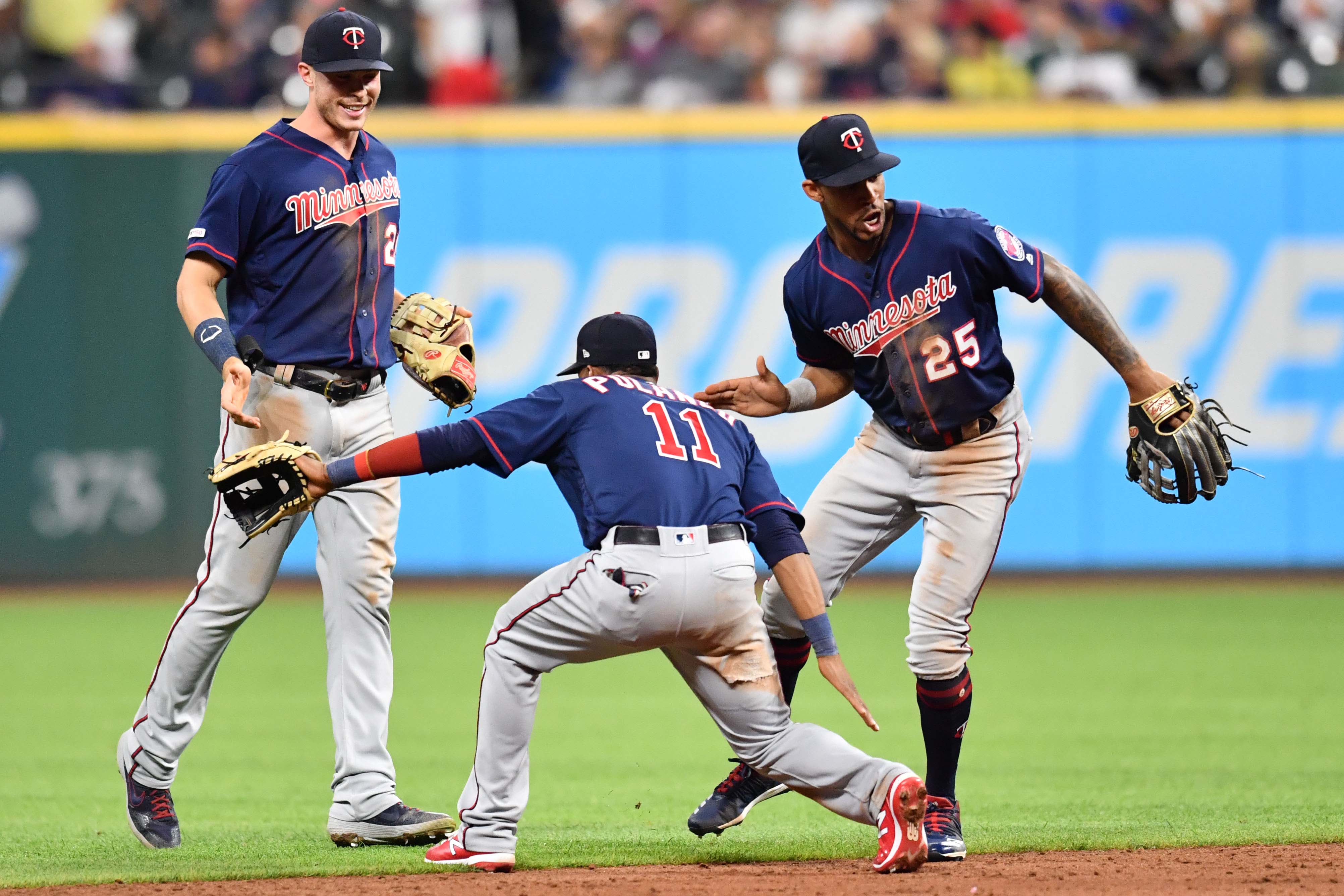 The reality, though, is that we all know things are going to fall somewhere in the middle for both buyers and sellers. We know the Twins need help - definitely in the bullpen and possibly in the rotation - and the next couple of weeks are going to be full of rumors and speculation. Over the next two weeks, I’m going to present a series to you that hopefully takes a different look at things. Today’s part - Part 1 - will start by focusing on next year, but we’ll get more into that soon. Part 2 will be a continuation of today’s article, but will look at the financial side of things. Especially who this regime has invested in. Part 3 will update an article I posted seven weeks ago looking at who might the Twins be most motivated to move? Part 4 (the teams) and Part 5 (the players) will narrow the focus as the deadline approaches. And, finally, Part 6 will be me revisiting something I’ve done in the past, playing GM for a Day. ---- The Twins leadership has banged the same drum repeatedly over time. They aren’t interested in committing future dollars, but they value control. Beyond Jorge Polanco's and Max Kepler's contract extensions, only Marwin Gonzalez is on the books for a guaranteed dollar amount next year. Nelson Cruz and Martin Perez have buyouts on team options. Which is really just a fancy way of maybe telling us they overvalue prospects and pre-arbitration-eligible player. You could assume they value guys in arbitration too, but as price increases and control decreases, the value decreases quickly. And then they hit free agency. The Twins will have five guys hitting the ranks of free agency after the season: Jake Odorizzi, Kyle Gibson, Michael Pineda, Jason Castro and Jonathan Schoop. Knowing how the organization values control, we need to look at next year before we can look at the moves for the next few weeks. (Seems backwards though.) Assuming the free agent leave and the Twins add no other players, here’s a guess at how things could look on the 25-man and 40-man roster: C: Mitch Garver 1B: C.J. Cron 2B: Luis Arraez 3B: Miguel Sano SS: Jorge Polanco LF: Eddie Rosario CF: Byron Buxton RF: Max Kepler DH: Nelson Cruz Bench: Marwin Gonzalez (UTIL) Bench: Jake Cave (OF) Bench: Willians Astudillo (C/3B) Bench: Ehire Adrianza (SS) SP: Jose Berrios SP: Martin Perez SP: Devin Smeltzer SP: Lewis Thorpe SP: Sean Poppen RP: Taylor Rogers RP: Ryne Harper RP: Trevor May RP: Blake Parker RP: Fernando Romero RP: Matt Magill RP: Tyler Duffey On assignment: LaMonte Wade On assignment: Nick Gordon On assignment: Kohl Stewart (P) On assignment: Stephen Gonsalves (P) On assignment: Zack Littell (P) On assignment: Trevor Hildenberger (P) On assignment: Ryan Eades (P) To be added: Brusdar Graterol (P) To be added: Jhoan Duran (P) To be added: Wander Javier (SS) To be added: Jorge Alcala (P) To be added: Luis Rijo (P) To be added: Griffin Jax (P) To be added: Lewin Diaz (1B) To be added: Travis Blankenhorn (2B/3B) Not adding: Luke Raley (OF), Gilberto Celestino (OF), Jovani Moran (P) No room: Mike Morin (P) (Edit: Morin was DFA'd yesterday before the game.) Other top prospects: Royce Lewis (SS), Alex Kirilloff (OF), Trevor Larnach (OF), Jordan Balazovic (P), Brent Rooker (OF), Yunier Severino (2B), Blayne Enlow (P), Ben Rortvedt ©, Jose Miranda (3B), Edwar Colina (P), Akil Baddoo (OF), Ryan Jeffers © First thing, I’ve not actually adding eight guys to the roster, but for this exercise, I wanted to have a full 40-man just so that we can work backwards. Let’s take a closer look. Mitch Garver, C.J. Cron, Luis Arraez, Miguel Sano, Jorge Polanco, Eddie Rosario, Byron Buxton, Max Kepler, Nelson Cruz, Marwin Gonzalez seem to fill out the top 10 position players pretty well. Garver has split duties with Castro, but has become the more regular catcher. Schoop departs and Arraez slides in nicely. This leaves spots for a backup catcher (Willians Astudillo), a backup shortstop (Ehire Adrianza) and a fourth outfielder (Jake Cave). Astudillo and Cave both have options left, if needed. Gonzalez could serve as the fourth outfielder and backup infielder too. Adrianza is a smooth fielder. But when your only concern is whether or not to upgrade your bench next year… that seems like a winter question, not the trade deadline. The rotation - with 60% on expiring deals - is much more interesting. Jose Berrios will be the Opening Day starter in 2020 and beyond. Martin Perez is very likely to slot into one of the other four spots. The Twins will not go into next season slotting three rookies - Devin Smeltzer, Lewis Thorpe and Sean Poppen - in those spots. Could one break the rotation? Maybe. But that’s two starters, minimum, that need to be acquired between now and March. If the rotation is interesting, the bullpen is downright messy. Taylor Rogers is the Ace. Ryne Harper has been fantastic and, at this point, probably is at least written in dark pencil for next year. Trevor May has the ability but hasn’t been consistent. There’s no doubt that he can be a part of a very good major league bullpen though. And then… questions. Blake Parker and Matt Magill are controllable, but replaceable. Fernando Romero has upside, but has been a disaster and out of options after his year. Tyler Duffey has been OK at times, but is also out of options. Zack Littell and Trevor Hildenberger could be solutions, but both can start the year in the minors. I also had to get rid of Mike Morin, who is out of options. There are other options, like Kohl Stewart, if the Twins wanted to try him out in the bullpen. But as much depth as there is in the system, there are no great answers for next year to the bullpen question either. What we have above is the sketchings of the 2020 team. Print it out, make changes, run your own projections. Because there is a 100% chance that it changes before the spring… and a lot of fans that hope it changes before August 1.
 -
While the Twins continue their All-Star break, there is still much to discuss. The Twins have seen their lead shrink to 5.5 games and are sure to be active later this month before the trade deadline. We discuss how that could - and maybe should - look.We also review the first half award winners, put a bow on the 2019 draft class and much, much more. An action-packed 100 minutes in probably our best episode yet. As always, all of our podcasts are available here or you can download directly from iTunes here. Click here to view the article
-
 We also review the first half award winners, put a bow on the 2019 draft class and much, much more. An action-packed 100 minutes in probably our best episode yet. As always, all of our podcasts are available here or you can download directly from iTunes here.
 -
I exchanged some messages with Sean Johnson after this happened. He said it's not a coincidence, but too much to explain through a text. They know the price tag on guys and with the way things are with the bonus pools, players know what teams are interested in them. My belief is that there was another team willing to pay Gipson $215k and was going to take him between the Twins 6th and 7th round picks. The Twins were the only team willing to meet Prato's asking price at that point in the draft. They took Gipson first because otherwise they weren't going to get him, but knew they could get Prato.
- 89 replies
-
- 6
-

-
- draft signing tracker
- mlb draft
- (and 1 more)
-
Article: Across the Meadow: Draft Recaps
Jeremy Nygaard replied to Jeremy Nygaard's topic in Twins Daily Front Page News
If they had any inkling they could save over $1m, they would have drafted differently from Rounds 11 on... to save a significant amount of their draft pool for two of their really late picks... it wouldn't happen. They have Plan A, B, C and contingencies for those plans. Signing those two would be like Plan C's third contingency. They get to have some dialogue with them and their reps and that's the value they are getting out of those picks. But, yeah, we are saying the same thing... it's not happening. I'm just saying 100-1 is closer than 20-1 or 33-1. -
Is it possible you haven't had quite enough of the draft yet? Did you watch and listen to the whole thing? Did you read every single word of coverage here at Twins Daily? If you're yearning for a bit more, you're in luck. We have it for you.We covered the first night with pretty quick recaps on Cavaco, Wallner and Canterino. We came back on Thursday morning (an AM podcast!) to discuss the second and third day of the draft. Who do we like? Who might not sign? And deeper dives on many of the players who heard their names called by the Minnesota Twins. Our goal was to keep it 60 minutes - and we did it as far as draft coverage goes (about 55). But we did spend the last 10 minutes talking about what the next steps could be now that Craig Kimbrel is no longer an option. As always, all of our podcasts are available here or you can download directly from iTunes here. Click here to view the article
-
 We covered the first night with pretty quick recaps on Cavaco, Wallner and Canterino. We came back on Thursday morning (an AM podcast!) to discuss the second and third day of the draft. Who do we like? Who might not sign? And deeper dives on many of the players who heard their names called by the Minnesota Twins. Our goal was to keep it 60 minutes - and we did it as far as draft coverage goes (about 55). But we did spend the last 10 minutes talking about what the next steps could be now that Craig Kimbrel is no longer an option. As always, all of our podcasts are available here or you can download directly from iTunes here.
 -
Article: Finer Points: Draft Bonus Pools
Jeremy Nygaard replied to Jeremy Nygaard's topic in Twins Daily Front Page News
Yep, I know they added $750,000, but don't have any idea what happened after that. There's also a lot of gray area because there is some time between agreeing and signing - even much longer than the draft in some cases - so teams could go well over their pool and then trade to make sure they have enough by June 15. Having an international draft would be a mess for teams, but would be much easier to follow from a fan's perspective. And holding it sometime during the offseason would be better as well. -
The Twins have been hot since the last time we recorded. Though they weren't especially hot while recording last night. We still found plenty to talk about. From Arraez to Smeltzer, the rotation, some big name free agents and the draft, there's 75 minutes of Twins talk you won't want to miss.0:02- Perez and Pineda 0:03- Devin Smeltzer 0:08- Luis Arraez 0:23- Keuchel/Kimbrel 0:31- Prospect update 0:40- Draft You can listen directly here or download directly from iTunes here. Additionally, you can access all the previous episodes as well. Let us know what you think and thanks for listening! Click here to view the article
-
 0:02- Perez and Pineda 0:03- Devin Smeltzer 0:08- Luis Arraez 0:23- Keuchel/Kimbrel 0:31- Prospect update 0:40- Draft You can listen directly here or download directly from iTunes here. Additionally, you can access all the previous episodes as well. Let us know what you think and thanks for listening!
 -
Article: Finer Points: Draft Bonus Pools
Jeremy Nygaard replied to Jeremy Nygaard's topic in Twins Daily Front Page News
Helman was the only pick outside of the Top 10 that counted against the pool. I haven't heard much about the July '18-June '19 IFA period. The Twins usually include those who signed from July-December in their media guide and it didn't show anyone this year. I'd assume they spent some of... but when they signed Severino, I believe there was a provision that they could dip from more than just last year's pool, so who knows how it's all been divied up. -
Article: Finer Points: Draft Bonus Pools
Jeremy Nygaard replied to Jeremy Nygaard's topic in Twins Daily Front Page News
Nothing is official until the contract is signed. And the contract isn't signed until everything is in place... and that includes in place with others too. In 2015, I did the Twins Draftbook (which was cool, but a ton of work), I worked the phone pretty heavily. Basically, my goal was to be Jim Callis of the Twins and break the news on signings and bonuses. I learned there was a lot of cat and mouse. Chris Paul, drafted in the sixth round, had a pick value of $290,300. He was in agreement for $50K soon after the draft, it was one of the first deals that I had documented... the problem was the reps for all the players would want a piece of that extra $240,300 the moment it became official. So, of course, there was nothing official for quite a while. The for-slot deals, like Tyler Jay, could be announced right away. I reported the Cody deal, which was pending physical. Well, we know that didn't go well. I then got a phone call from Cody's agency, Frontline Athletic Management, asking (or demanding) that "retract" my story cause it could impact his eligibility. My goal of sharing information turned into much more of a mess than it was worth. But long story short, the whole process is full of shenanigans... and nothing is officially official until EVERYONE agrees, and that takes time.- 19 replies
-
- 4
-
-
- mlb draft
- bonus pools
- (and 3 more)
-
The new draft rules have been in place since 2012 (much longer than I realized) and people are still trying to wrap their brain around the changes. Below is a primer to help understand the complexity of draft spending.MLB DRAFT BONUS POOLS Long gone are the days of signing players to MLB contracts (immediately putting them on the 40-man roster) and uncontrollable signing bonuses. In are the days of assigned slot values and team bonus pools. Once the draft order is set, each pick in the first 10 rounds is assigned a value. Though it’s not a “hard-slotted bonus” for the player selected with the pick, the value of that pick is part of the team’s overall bonus pool. The Twins own picks in each round of the draft and one extra “Competitive Balance” pick this year. There values are as follows: Round 1, pick 13 overall: $4,197,300 Comp Round A, pick 39 overall: $1,906,800 Round 2, pick 54 overall: $1,338,500 Round 3, pick 90 overall: $657,600 Round 4, pick 119 overall: $483,000 Round 5, pick 149 overall: $360,800 Round 6, pick 179 overall: $274,800 Round 7, pick 209 overall: $214,900 Round 8, pick 239 overall: $173,000 Round 9, pick 269 overall: $154,100 Round 10, pick 299 overall: $145,000 TOTAL BONUS POOL: $9,905,800 If only it was that simple, right? So the Twins are allowed to spend nearly $10 million on their draft picks, but there are a few additional rules to know. If the Twins fail to sign a pick that has value attached to it, their pool is reduced by the value of the unsigned pick. This happened with Kyle Cody in 2015. The 73rd pick did not sign and the Twins draft pool was reduced by $839,700. Because he was unsigned in the top three rounds, the Twins received the 74th pick in the 2016 draft. (Jeremy’s note: At some point during the “will he/won’t he sign” debacle, I broke the news that it had to do with a concern over Cody’s elbow. The Twins reduced their offer to Cody - which would have allowed them to spend additional money elsewhere. Ultimately, Cody didn’t sign, went back to Kentucky and was drafted by the Rangers the following year. Cody had Tommy John surgery and is currently on the shelf. Guess the Twins weren’t crazy…) (But wait there’s more! Up until this point, I never revealed what the plan was with their additional money. And this seems like as good of time as any. Had the Twins signed Cody, they would have also signed two other prospects as well: Kyle Wilson, a pitcher drafted in the 19th round, and Jonathan Engelmann, an outfielder drafted in the 28th round. Wilson and Engelmann went on to play collegiately at Crowder College and Michigan, respectively, and were both re-drafted later. Wilson is pitching in the Mets system, currently at high-A. Engelmann had a very good pro debut in the Cleveland system last year and has yet to break a lineup in 2019. You’re welcome!) The other thing to know is that every team can spend up to $125,000 to sign picks outside of the Top 10 rounds. If they spend more, that money is counted towards their pool. So, in theory, the Twins could sign their Top 10 round picks for $8,905,800 collectively (one million less dollars than their pool) and then sign their 11th round pick for $1,125,000. A strategy used often is teams will draft seniors in the back half of the first ten rounds and then sign them for significantly less than their assigned value. They’ll use that savings to spend more on a player than their assigned value or to be able to sign a non-top 10 round player. It’s become very important for area scouts to know before the draft exactly what players’ demands are. It should also be noted that there are penalties for teams exceeding their bonus pools. The Twins haven’t - and won’t - ever exceed their pool, so I’m not even going to tell you about the penalties. We’ll visit the rules surrounding International Spending Pools before International Free Agency opens in early July. ~Articles in the Finer Points series~ Options The Fourth Option DFA/Waivers Rule 5 Click here to view the article
- 19 replies
-
- 1
-
-
- mlb draft
- bonus pools
- (and 3 more)
-
 MLB DRAFT BONUS POOLS Long gone are the days of signing players to MLB contracts (immediately putting them on the 40-man roster) and uncontrollable signing bonuses. In are the days of assigned slot values and team bonus pools. Once the draft order is set, each pick in the first 10 rounds is assigned a value. Though it’s not a “hard-slotted bonus” for the player selected with the pick, the value of that pick is part of the team’s overall bonus pool. The Twins own picks in each round of the draft and one extra “Competitive Balance” pick this year. There values are as follows: Round 1, pick 13 overall: $4,197,300 Comp Round A, pick 39 overall: $1,906,800 Round 2, pick 54 overall: $1,338,500 Round 3, pick 90 overall: $657,600 Round 4, pick 119 overall: $483,000 Round 5, pick 149 overall: $360,800 Round 6, pick 179 overall: $274,800 Round 7, pick 209 overall: $214,900 Round 8, pick 239 overall: $173,000 Round 9, pick 269 overall: $154,100 Round 10, pick 299 overall: $145,000 TOTAL BONUS POOL: $9,905,800 If only it was that simple, right? So the Twins are allowed to spend nearly $10 million on their draft picks, but there are a few additional rules to know. If the Twins fail to sign a pick that has value attached to it, their pool is reduced by the value of the unsigned pick. This happened with Kyle Cody in 2015. The 73rd pick did not sign and the Twins draft pool was reduced by $839,700. Because he was unsigned in the top three rounds, the Twins received the 74th pick in the 2016 draft. (Jeremy’s note: At some point during the “will he/won’t he sign” debacle, I broke the news that it had to do with a concern over Cody’s elbow. The Twins reduced their offer to Cody - which would have allowed them to spend additional money elsewhere. Ultimately, Cody didn’t sign, went back to Kentucky and was drafted by the Rangers the following year. Cody had Tommy John surgery and is currently on the shelf. Guess the Twins weren’t crazy…) (But wait there’s more! Up until this point, I never revealed what the plan was with their additional money. And this seems like as good of time as any. Had the Twins signed Cody, they would have also signed two other prospects as well: Kyle Wilson, a pitcher drafted in the 19th round, and Jonathan Engelmann, an outfielder drafted in the 28th round. Wilson and Engelmann went on to play collegiately at Crowder College and Michigan, respectively, and were both re-drafted later. Wilson is pitching in the Mets system, currently at high-A. Engelmann had a very good pro debut in the Cleveland system last year and has yet to break a lineup in 2019. You’re welcome!) The other thing to know is that every team can spend up to $125,000 to sign picks outside of the Top 10 rounds. If they spend more, that money is counted towards their pool. So, in theory, the Twins could sign their Top 10 round picks for $8,905,800 collectively (one million less dollars than their pool) and then sign their 11th round pick for $1,125,000. A strategy used often is teams will draft seniors in the back half of the first ten rounds and then sign them for significantly less than their assigned value. They’ll use that savings to spend more on a player than their assigned value or to be able to sign a non-top 10 round player. It’s become very important for area scouts to know before the draft exactly what players’ demands are. It should also be noted that there are penalties for teams exceeding their bonus pools. The Twins haven’t - and won’t - ever exceed their pool, so I’m not even going to tell you about the penalties. We’ll visit the rules surrounding International Spending Pools before International Free Agency opens in early July. ~Articles in the Finer Points series~ Options The Fourth Option DFA/Waivers Rule 5
 -
I figured for 2 2/3 years, the Twins should pay for 2 2/3 of the 7 years contract, which would be about $80m. Take on the $7.5 payment this year, the $15m the next two and $6m in each year from '22-'28. The cost would likely be the pitcher the Nationals want, the hitter the Nationals want and the another top 10 prospect...maybe the Twins get one veto. Kirilloff, Graterol/Balazovic, Javier... seems... maybe a little light?
-
You want them to add a #1 pitcher and/or a closer... but don't want a "significant piece"? I'd say those are the most significant pieces they'd be looking to add... and the most costly.
-
I would definitely trade that for Scherzer. Not sure Washington would accept. His contract is a mess too. Most of that money is deferred. I'm not sure the Twins (or many other teams) would want to take on deferred money... and there's $105m of his contract that is deferred. It would be a fun thought exercise though.
-
I think that Lewis, Kirilloff and Graterol would be the first three players teams ask about. If the Reds call offering Luis Castillo, then yeah, these names have to be in play. But I'd be shocked if Lewis gets moved in any deal. -AND- I think the Twins can add a significant piece(s) without moving their top prospects.
- 171 replies
-
- 11
-
-
- trevor larnach
- wander javier
- (and 3 more)
-
As we approach the trade deadline - What? It’s only a little over two months away - there are a number of moves the Twins could and possibly should consider to help enhance their ability to make a deep run into the playoffs. But before we jump into those names, let’s examine who (or what?) other teams will be asking about. Let’s assume, too, that the Twins will make top-5 prospect Royce Lewis, top-15 prospect Alex Kirilloff and top pitching prospect Brusdar Graterol off limits.Some other things to consider, in all the moves the Twins made last year - Eduardo Escobar, Ryan Pressly, Zach Duke, Lance Lynn, Brian Dozier and Fernando Rodney - they only took back three players (of 13) that were already on the 40-man. None of those three players remain on the 40-man and only one, Chase DeJong, who has been removed from the 40-man twice since being acquired, is still in the organization. Acting in such a way gives the sellers more opportunities to both evaluate their current roster and be active on the waiver wire. It would be fair to believe sellers in the current market would look at doing the same type of thing. As I mentioned in a Finer Points article, many of the Twins acquisitions came with one more year before needing to be added to the 40-man roster. The Twins could face a roster crunch in getting these players onto their 40-man in November. Could that lead to some of those players who were acquired last year being flipped? Or could it lead to more aggressively pursuing players as rentals, knowing that they can replace them with some of their better prospects? Those are questions we don’t have answers to, but when the Twins call or take a call, what names are they going to be hearing on the other end? SS Wander Javier Born: 12/29/1998 (20 years old) Current level: Extended Spring Training Why would he be targeted? Javier was a top prospect in the 2015 international class and, despite spending a significant amount of time injured, has enhanced his prospect status with his performance in the Appy League in 2017. Javier is expected to join the Kernels as soon as his body is ready. Why should the Twins consider moving him? With Jorge Polanco’s entrenched at shortstop and possessing a long-term deal, the Twins are good at one of the middle infield spots (whether you believe he can stick at shortstop or needs to move to second). Royce Lewis is higher up the organizational ladder and Luis Arraez is showing his bat plays at the major league level. Moving Javier would be dealing from depth. Javier is a player that would need to be added to the 40-man in November. Other thoughts: How much value does Nick Gordon have? He’s currently taking up a 40-man spot and hasn’t spent a lot of time on the field in 2019. Will Luis Arraez’s value ever be higher? Moving any of these three middle infielders doesn’t deliver a huge blow to the team’s depth. C Ben Rortvedt Born: 9/25/1997 (21 years old) Current level: Pensacola (AA) Why would he be targeted? Rortvedt is the highest-ceiling catching prospect in the system and he’s only two promotions from the big leagues. An outstanding defensive catcher, Rortvedt, at a minimum, is a future bench piece on a major league team. He’s progressing offensively, with a keen eye at the plate and a chance to have an average or better hit tool. Additionally, Rortvedt would not need to be added to the 40-man roster until November of 2020, when he should definitely be ready to compete for a big-league job. Why should the Twins consider moving him? Though Jason Castro is a free agent at year’s end, we have realized that Mitch Garver is the real deal. Garver also entered the year with just over a year of service time, so he can be the primary catcher for the next five years. There should be little worry about the position in the short-term, despite the overall lack of depth in the system currently. OF Trevor Larnach Born: 2/26/1997 (22 years old) Current level: Fort Myers (high-A) Why would he be targeted? Any team can look at the Twins outfield and know it’s going to be tough to break into the lineup there. Top outfield prospect, Alex Kirilloff, is getting work at first base. So where does that leave this outfield prospect? As an asset who doesn’t need to be added to the 40-man until after the 2021 season. Why should the Twins consider moving him? Mainly for the same reasons other teams would ask about him. He’s a luxury. Other thoughts: Luke Raley and Brent Rooker fit in the same category, for the most part. Both are currently on the injured list and Rooker has not had a good start to the his 2019 campaign. Raley would require a more immediate decision (2019 eligible) than Rooker (2020), but neither player has a clear path to the majors. Could Jake Cave be a trade chip? I think he proved last year that he is certainly capable of being an everyday centerfielder. P Jordan Balazovic Born: 9/17/1988 (20 years old) Current level: Fort Myers (high-A) Why would he be targeted? The prospect that would hurt the most to deal is going to be the one most coveted. That’s how this works. Balazovic went from “barely on the radar” to “whoa!” over the course of seven A-ball starts this season. It would be hard to leave him out of the organization's Top 6 or 7 prospects right now and he’s probably becoming a Top 70 prospect league-wide. That is, if he continues on this torrid streak. Why should the Twins consider moving him? The Twins know him better than anyone and if they feel this isn’t close to sustainable, they could sell high. In between Balazovic and a big-league rotation spot, there are a number of other starters, albeit with less ceiling. Other thoughts: Balazovic (2020 eligible) isn’t the only high ceiling pitching prospect in the stable. Pensacola pitcher Jorge Alcala (2019), Fort Myers’ pitcher Jhoan Duran (2019) and Kernels pitcher Blayne Enlow (2021) could all tickle someone’s fancy. Obviously, there are others that could be included as well. But the Twins have another pretty enormous trade chip too. Competitive Balance Round A Draft Pick #39 Pool allotment: $1,906,800 Part of the reason that I wanted to push this out well before the trade deadline is because the Twins only have a handful of days to use this asset in a trade. Competitive Balance picks are the only ones that can be traded and obviously have to be moved before the draft. Five of the 12 awarded picks for the 2019 draft have already been moved. The Yankees traded Sonny Gray and a prospect for pick #38 and a prospect. The #40 pick moved from the A’s to the Rays in the deal that netted the A’s Jurickson Profar. The Rangers traded bullpen piece Alex Claudio to the Brewers for pick #41. The Diamondbacks acquired a Comp Round B pick from the Cardinals in the Paul Goldschmidt trade. The Marines also acquired a Comp Round B pick from the Indians in the their Edwin Encarnacion/Carlos Santana/Tampa Bay trade. As you can see, there is plenty of value in a Comp Round A pick. But it’s more than just the pick itself, it’s the money that’s attached to it. Giving yourself an extra nearly $2 million can benefit teams in a number of ways. Want another really good prospect? You got it. Want to get more creative and push a guy down the board ala Sean Manaea or Dax Cameron? You got that too. (Yeah, I know, the Diamondbacks are kings of this draft and draft four times before pick #39… but maybe they want in on this action?) The Twins might not be able to get Will Smith straight up for this pick, but it would go a long way. The Reds definitely wouldn’t give up Rasiel Iglesias for just the pick, but again… it would be a nice piece. The Nationals and Sean Doolittle, now that’s reasonable. Or maybe they aim higher. What do you think? Click here to view the article
- 171 replies
-
- 4
-
-
- trevor larnach
- wander javier
- (and 3 more)
-
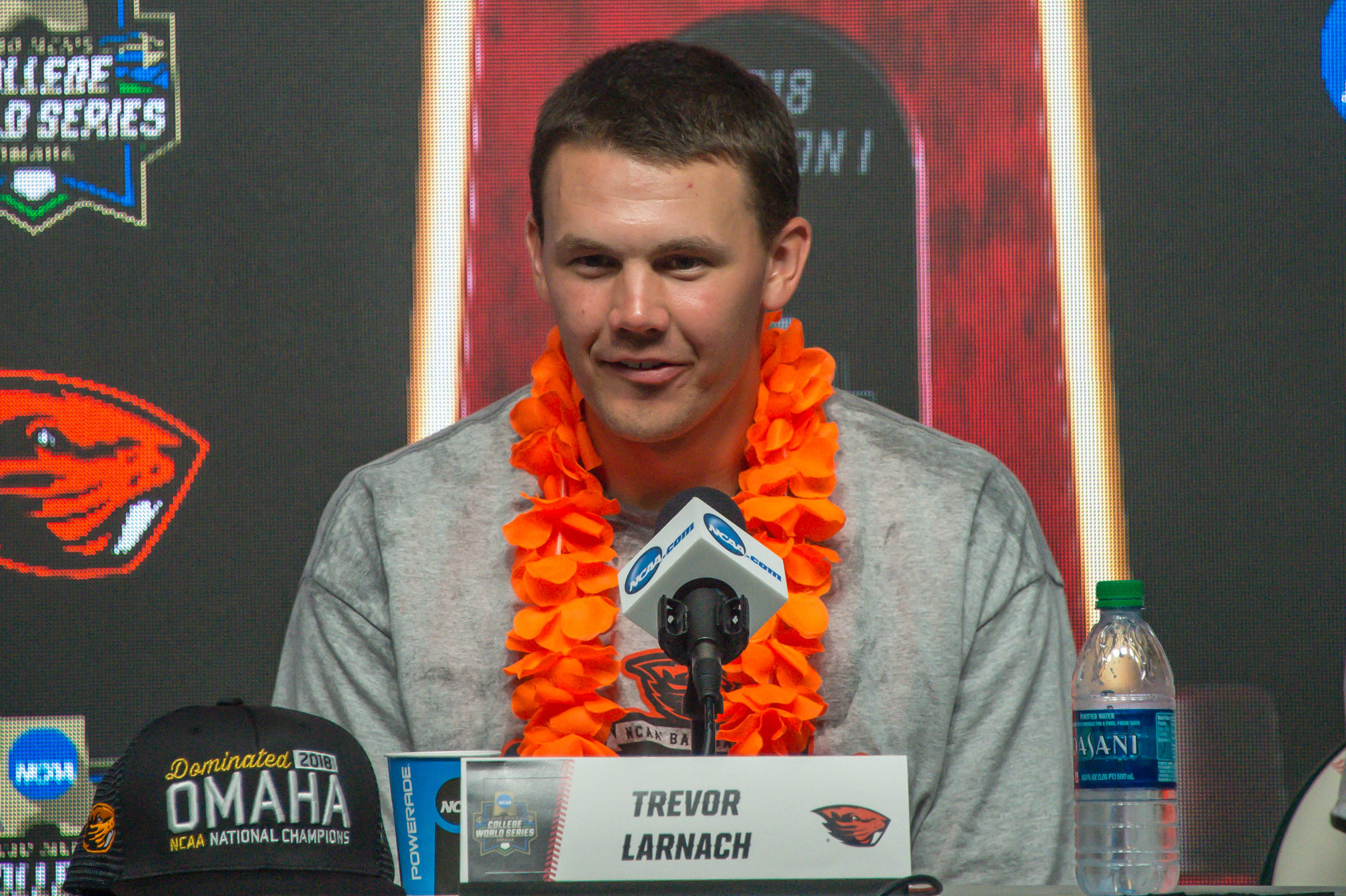 Some other things to consider, in all the moves the Twins made last year - Eduardo Escobar, Ryan Pressly, Zach Duke, Lance Lynn, Brian Dozier and Fernando Rodney - they only took back three players (of 13) that were already on the 40-man. None of those three players remain on the 40-man and only one, Chase DeJong, who has been removed from the 40-man twice since being acquired, is still in the organization. Acting in such a way gives the sellers more opportunities to both evaluate their current roster and be active on the waiver wire. It would be fair to believe sellers in the current market would look at doing the same type of thing. As I mentioned in a Finer Points article, many of the Twins acquisitions came with one more year before needing to be added to the 40-man roster. The Twins could face a roster crunch in getting these players onto their 40-man in November. Could that lead to some of those players who were acquired last year being flipped? Or could it lead to more aggressively pursuing players as rentals, knowing that they can replace them with some of their better prospects? Those are questions we don’t have answers to, but when the Twins call or take a call, what names are they going to be hearing on the other end? SS Wander Javier Born: 12/29/1998 (20 years old) Current level: Extended Spring Training Why would he be targeted? Javier was a top prospect in the 2015 international class and, despite spending a significant amount of time injured, has enhanced his prospect status with his performance in the Appy League in 2017. Javier is expected to join the Kernels as soon as his body is ready. Why should the Twins consider moving him? With Jorge Polanco’s entrenched at shortstop and possessing a long-term deal, the Twins are good at one of the middle infield spots (whether you believe he can stick at shortstop or needs to move to second). Royce Lewis is higher up the organizational ladder and Luis Arraez is showing his bat plays at the major league level. Moving Javier would be dealing from depth. Javier is a player that would need to be added to the 40-man in November. Other thoughts: How much value does Nick Gordon have? He’s currently taking up a 40-man spot and hasn’t spent a lot of time on the field in 2019. Will Luis Arraez’s value ever be higher? Moving any of these three middle infielders doesn’t deliver a huge blow to the team’s depth. C Ben Rortvedt Born: 9/25/1997 (21 years old) Current level: Pensacola (AA) Why would he be targeted? Rortvedt is the highest-ceiling catching prospect in the system and he’s only two promotions from the big leagues. An outstanding defensive catcher, Rortvedt, at a minimum, is a future bench piece on a major league team. He’s progressing offensively, with a keen eye at the plate and a chance to have an average or better hit tool. Additionally, Rortvedt would not need to be added to the 40-man roster until November of 2020, when he should definitely be ready to compete for a big-league job. Why should the Twins consider moving him? Though Jason Castro is a free agent at year’s end, we have realized that Mitch Garver is the real deal. Garver also entered the year with just over a year of service time, so he can be the primary catcher for the next five years. There should be little worry about the position in the short-term, despite the overall lack of depth in the system currently. OF Trevor Larnach Born: 2/26/1997 (22 years old) Current level: Fort Myers (high-A) Why would he be targeted? Any team can look at the Twins outfield and know it’s going to be tough to break into the lineup there. Top outfield prospect, Alex Kirilloff, is getting work at first base. So where does that leave this outfield prospect? As an asset who doesn’t need to be added to the 40-man until after the 2021 season. Why should the Twins consider moving him? Mainly for the same reasons other teams would ask about him. He’s a luxury. Other thoughts: Luke Raley and Brent Rooker fit in the same category, for the most part. Both are currently on the injured list and Rooker has not had a good start to the his 2019 campaign. Raley would require a more immediate decision (2019 eligible) than Rooker (2020), but neither player has a clear path to the majors. Could Jake Cave be a trade chip? I think he proved last year that he is certainly capable of being an everyday centerfielder. P Jordan Balazovic Born: 9/17/1988 (20 years old) Current level: Fort Myers (high-A) Why would he be targeted? The prospect that would hurt the most to deal is going to be the one most coveted. That’s how this works. Balazovic went from “barely on the radar” to “whoa!” over the course of seven A-ball starts this season. It would be hard to leave him out of the organization's Top 6 or 7 prospects right now and he’s probably becoming a Top 70 prospect league-wide. That is, if he continues on this torrid streak. Why should the Twins consider moving him? The Twins know him better than anyone and if they feel this isn’t close to sustainable, they could sell high. In between Balazovic and a big-league rotation spot, there are a number of other starters, albeit with less ceiling. Other thoughts: Balazovic (2020 eligible) isn’t the only high ceiling pitching prospect in the stable. Pensacola pitcher Jorge Alcala (2019), Fort Myers’ pitcher Jhoan Duran (2019) and Kernels pitcher Blayne Enlow (2021) could all tickle someone’s fancy. Obviously, there are others that could be included as well. But the Twins have another pretty enormous trade chip too. Competitive Balance Round A Draft Pick #39 Pool allotment: $1,906,800 Part of the reason that I wanted to push this out well before the trade deadline is because the Twins only have a handful of days to use this asset in a trade. Competitive Balance picks are the only ones that can be traded and obviously have to be moved before the draft. Five of the 12 awarded picks for the 2019 draft have already been moved. The Yankees traded Sonny Gray and a prospect for pick #38 and a prospect. The #40 pick moved from the A’s to the Rays in the deal that netted the A’s Jurickson Profar. The Rangers traded bullpen piece Alex Claudio to the Brewers for pick #41. The Diamondbacks acquired a Comp Round B pick from the Cardinals in the Paul Goldschmidt trade. The Marines also acquired a Comp Round B pick from the Indians in the their Edwin Encarnacion/Carlos Santana/Tampa Bay trade. As you can see, there is plenty of value in a Comp Round A pick. But it’s more than just the pick itself, it’s the money that’s attached to it. Giving yourself an extra nearly $2 million can benefit teams in a number of ways. Want another really good prospect? You got it. Want to get more creative and push a guy down the board ala Sean Manaea or Dax Cameron? You got that too. (Yeah, I know, the Diamondbacks are kings of this draft and draft four times before pick #39… but maybe they want in on this action?) The Twins might not be able to get Will Smith straight up for this pick, but it would go a long way. The Reds definitely wouldn’t give up Rasiel Iglesias for just the pick, but again… it would be a nice piece. The Nationals and Sean Doolittle, now that’s reasonable. Or maybe they aim higher. What do you think?
 -
Article: Finer Points: Rule 5
Jeremy Nygaard replied to Jeremy Nygaard's topic in Twins Daily Front Page News
No one seems to know why Ronald Torreyes is on the "inactive list" (and has been for over two weeks). Hoping it's not related to anything going on in his home country (or anything else super serious either). The Twins Media Guide didn't list their international signings this year, so who knows how many guys are coming from Venezuela besides Urbina. From what I could tell, Urbina was not in Fort Myers when I was there in early March. (Seth and I were not able to spot him anyway.) -
Article: Finer Points: Rule 5
Jeremy Nygaard replied to Jeremy Nygaard's topic in Twins Daily Front Page News
YES! Javier is eligible. I clicked through the rosters and didn't think to look at the guys still at Extended. As far as the 19-year-old high schooler, yes, that's how the rule states... though I don't recall any prospects in the Twins system where this came into play. (They are probably out there, but not guys that have been definite adds.)- 30 replies
-
- 2
-
-
- rule 5
- nick burdi
- (and 1 more)
-
Article: Finer Points: Rule 5
Jeremy Nygaard replied to Jeremy Nygaard's topic in Twins Daily Front Page News
The Yankees had this issue last year. They made 7 trades in July and August, many involving guys that would need to be added (or fringe guys that they'd have to expose and possibly lose for nothing). I would look at it less like you do and more like, "It's a chance to get a guy without Rule 5 restrictions and keep them in the system." Three of the seven deals involved the Yankees moving players and getting international bonus money in return.
