



Steve Lein
-
Posts
3,396 -
Joined
-
Last visited
-
Days Won
1
Content Type
Profiles
News
Minnesota Twins Videos
2026 Minnesota Twins Top Prospects Ranking
2022 Minnesota Twins Draft Picks
Minnesota Twins Free Agent & Trade Rumors, Notes, & Tidbits
Guides & Resources
2023 Minnesota Twins Draft Picks
The Minnesota Twins Players Project
2024 Minnesota Twins Draft Picks
2025 Minnesota Twins Draft Pick Tracker
2026 Minnesota Twins Draft Tracker: Picks & Bonuses
Forums
Blogs
Events
Store
Downloads
Gallery
Everything posted by Steve Lein
-

Article: What's The Best Plan For Tyler Jay?
Steve Lein replied to Nick Nelson's topic in Twins Daily Front Page News
It looks a lot like this year will go exactly like Burdi's did after being drafted last year. Start him at Cedar Rapids, and if he excels get him to Fort Myers or Chattanooga. If Twins are still in it in August and they think he can help at that point, I would love to see him get called up to help out. Then next year, you stretch him out into a starter. I have no problem with having him pitch in relief for the rest of this season after he signs. -
Yeah, Gonsalves was doing very well up until that home run. It "wasn't as good" only in comparison to all of his starts in the MWL this year! After all, leading up to this he hadn't given up a run in his last three starts and 19 innings, where he won each game, allowed just six hits, and struck out 30... Hard to match that type of dominance in your first game at a new level!
-
The big news of the day was obviously the 2015 MLB draft and the Twins selection of Illinois pitcher Tyler Jay (whose pre-draft profile you can read here, and talk about the pick here). Instant and meaningless analysis: I love the pick! But like every other day during the summer, there also was plenty of action for the Twins affiliates, where Jay will (hopefully) soon be playing. There was one top prospect making his first start in a new league, a rain postponement that pushed out the start of another, and a standout individual performance and football game score from our friends in the Dominican Republic worthy of mention.Read on to find out about all the action on Monday night! TRANSACTIONS It was known yesterday, but became official today that the Twins have sent shortstop Danny Santana down to AAA, and recalled Kennys Vargas in his place. Some of the league All-Star rosters have also been released, with pitchers Chih-Wei Hu, Brandon Peterson and J.T. Chargois, along with catcher Alex Swim, representing the Fort Myers Miracle in the Florida State League game to be played on June 20th. In the Midwest League, pitchers Felix Jorge, Cameron Booser, and Trevor Hildenberger, along with first baseman Trey Vavra, will represent the West Division squad and the Cedar Rapids Kernels in their game on June 23rd. RED WINGS REPORT Indianapolis 6, Rochester 3 Box Score It was International League division leaders squaring off as the Red Wings lead the North Division, and the Indians the West Division. It did not start out well for Rochester, as Indianapolis jumped out to 3-0 lead after the second inning, and made it 4-0 after four. All four of those runs were charged to starter Jason Wheeler, who went on to finish the fifth inning. He allowed those runs on eight hits and two walks, while striking out two. The Red Wings lineup struggled to get anything going against Indians starter Clayton Richard, who has been a MLB starter for several seasons with the Chicago White Sox and San Diego Padres. He came to the Pittsburgh Pirates organization this year after shoulder surgery limited him to just four starts in the minors in 2014. He appears to be back on his way to the majors as he now sports a 1.69 ERA for Indianapolis. Over Richard’s seven innings, the Wings managed just five hits and two walks. The lone unearned run came in his final inning, when Richard committed a throwing error to move Jose Martinez to third base and in position to score on a sac fly from Wilkin Ramirez. In the ninth inning, doubles from Oswaldo Arcia, Eric Fryer and Wilkin Ramirez made the score 6-3, but they weren’t able to do any more damage. Reynaldo Rodriguez was 2-4 on the night to lead the offense, and Ramirez had two RBIs. In relief for the Red Wings, Logan Darnell allowed two runs on two hits and a walk in two innings. He struck out three. Mark Hamburger and Ryan O’Rourke each pitched a scoreless inning, with Hamburger picking up two K’s. CHATTANOOGA CHATTER Chattanooga @ Jackson, Postponed (Rain) Starter Jose Berrios was looking for a bounce back start after he suffered his worst outing of the year (relatively speaking) in his last one, but he was forced to wait another day due to rain in Jackson, Tennessee. The game will be made up tomorrow as part of a double-header, with both games going seven innings. The first game will start at 5:05 PM CST. MIRACLE MATTERS Fort Myers 5, Lakeland 3 Box Score Stephen Gonsalves was on the mound for the Miracle, making his Florida State League debut. H picked up his first FSL win. Overall, the start wasn’t as good as his starts in the Midwest League were, but that’s not unexpected with a guy making his first start at a new level. Gonsalves finished 5.1 innings, allowing three runs on five hits and three walks while striking out two, as reported by MiLB.com (or five, if the game report from Miracle play-by-play man Bryce Zimmerman is to be believed). In his final inning, a walk and a two-run home run got the bullpen active, and he left the game with runners on the corners. Alex Muren came on and got the final two outs to keep Gonsalves in line for the win. The Miracle took a 2-0 lead in the second inning with two-out rally started by Bryan Haar with a single. Marcus Knecht followed with a single of his own and they moved into scoring position on a wild pitch. Chad Christensen brought them home with a single to center field. Fort Myers added three runs in the top of the sixth inning which was begun with a single from Ryan Walker. FSL All-Star Alex Swim brought him home with his first triple of the season to chase Lakeland’s starter from the game. Mitch Garver greeted his replacement with a single to bring Swim in. Niko Goodrum followed with a single to put Garver on third, and he raced home on Haar's groundout to make it 5-1. Muren finished the seventh inning before relinquishing duty to Todd Van Steensel, who picked up his sixth save with two innings of scoreless ball. He struck out three according to MiLB.com. Walker, Goodrum, Haar, and Christensen each collected two hits on the night, and Christensen’s two RBI’s led the team in the victory. KERNELS NUGGETS Cedar Rapids 4, West Michigan 2 Box Score The Kernels completed a come-back victory with a single run in the sixth inning to narrow their deficit to 2-1, and added three in the seventh to take the lead for good. West Michigan got out to the 2-0 lead in the fourth inning when starter Jared Wilson ran into his first trouble of the night. Up to that point, the only runner for the Whitecaps had reached on an error by Kernels third baseman T.J. White. It was a triple with one out that got the first runner of the game in scoring position. A single brought that runner in for a 1-0 lead, then a single and walk loaded the bases and the second run scored on a wild pitch. Wilson recovered to pitch scoreless fifth and sixth innings, ending the game with six innings pitched, allowing the two runs on three hits and two walks, while striking out four. The win brought Wilson’s record to 5-1 on the season, and lowered his ERA to 3.10. When Wilson exited, the game was left up to the unhittable, long-named, and University of California alumni duo of Michael Theofanopoulos and Trevor Hildenberger. Theo went two perfect innings, striking out one to pick up his fourth hold of the season, while Hil pitched a scoreless ninth, walking one and striking out two to pick up his sixth save. The Cedar Rapids scoring was started in the sixth inning by Nick Gordon, who brought home newly minted lead-off man Edgar Corcina with a single. Corcina had singled and stolen second base to put himself in scoring position. In the seventh, a two-out, three-run rally was started when Brett Doe was hit by a pitch. This was followed by a White single, a Blake Schmit two-RBI double, and a Brian Navaretto RBI single to make the final score of 4-2. Gordon, White, and Schmit were all 2-4, with Schmit’s two-run double being the Kernels only extra-base hit of the evening. DSL TWINS SPECIAL REPORT DSL Twins 21, DSL Yankees (team 1) 14 Box Score It’s really hard to make anything out of the young players who make up the roster of the Minnesota Twins Dominican Academy team, but it’s hard not to notice a baseball game score with an NFL-like final of 21-14. The DSL Twins took advantage of sixteen hits and twelve walks to come away with the victory. As a team they were 8-15 with runners in scoring position and four hitters in the lineup racked up multiple hits. There was also just one hitter in the lineup who did not score multiple runs. Even more notable was the batting line of first baseman and clean-up hitter Jorge Parra, as he hit for the cycle and tallied six RBIs. He was 4-6 on the night as a whole and also scored three runs. Quite a performance no matter the level or competition! TWINS DAILY MINOR LEAGUE PLAYERS OF THE DAY Pitcher of the Day – Todd Van Steensel, Fort Myers Miracle (W, 2.0 IP, 1 H, 0 R’s, 3 K’s) Hitter of the Day – Jorge Parra, DSL Twins (4-6, 3 R’s, 2B, 3B, HR, 6 RBI) TUESDAY’S PROBABLE STARTERS Indianapolis @ Rochester (6:05 PM CST) – LHP Taylor Rogers (5-3, 3.09 ERA) Chattanooga @ Jackson, Double-Header (Game 1: 5:05 PM CST, Game 2: 30-45 min after end of Game 1) – RHP Jose Berrios (6-3, 3.25 ERA) and TBD Fort Myers @ Lakeland (5:30 PM CST) – LHP Mat Batts (0-1, 2.13 ERA) Cedar Rapids – Scheduled day off. Please feel free to ask any questions and discuss Monday’s games. Click here to view the article
- 10 replies
-
- 1
-

-
- todd van steensel
- jorge parra
- (and 1 more)
-
Twins Minor League Report (6/8): Gonsalves Debuts in Florida State League
Steve Lein posted a blog entry in The Hanging SL
The big news of the day was obviously the 2015 MLB draft and the Twins selection of Illinois pitcher Tyler Jay (whose pre-draft profile you can read here, and talk about the pick here). Instant and meaningless analysis: I love the pick! But like every other day during the summer, there also was plenty of action in the Minors for the Twins affiliates as well, where Jay will (hopefully) soon be playing. There was one top prospect making his first start in a new league, a rain postponement that pushed out the start of another, and a standout individual performance and football game score from our friends in the Dominican Republic worthy of mention. Read on to find out about all the action on Monday night! TRANSACTIONS It was known yesterday, but became official today that the Twins have sent shortstop Danny Santana down to AAA, and recalled Kennys Vargas in his place. Some of the League All-Star rosters have also recently been released, with pitchers Chih-Wei Hu, Brandon Peterson, and J.T. Chargois along with catcher Alex Swim representing the Fort Myers Miracle in the Florida State League game to be played on June 20th. In the Midwest League, pitchers Felix Jorge, Cameron Booser, and Trevor Hildenberger along with first baseman Trey Vavra will represent the West Division squad and the Cedar Rapids Kernels in their game on June 23rd. RED WINGS REPORT Indianapolis 6, Rochester 3 Box Score It was International League division leaders squaring off as the Red Wings lead the North Division, and the Indians the West Division. It did not start out well for Rochester, as Indianapolis jumped out to 3-0 lead after the second inning, and made it 4-0 after four. All four of those runs were charged to starter Jason Wheeler, who would go on to finish the fifth inning. He allowed those runs on eight hits and two walks, while striking out two. The Red Wings lineup struggled to get anything going against Indians starter Clayton Richard, who has been a MLB starter for several seasons with the Chicago White Sox and San Diego Padres. He came to the Pittsburgh Pirates organization this year after a shoulder surgery limited him to just four starts in the minors in 2015. He appears to be back on his way to the majors as he now sports a 1.69 ERA for Indianapolis. Over Richard’s seven innings, the Wings managed just five hits and two walks, and the lone unearned run came in his final inning, when Richard committed a throwing error to move Jose Martinez to third base and in position to score on a sac fly from Wilkin Ramirez. In the ninth inning, doubles from Oswaldo Arcia, Eric Fryer, and Wilkin Ramirez made the score 6-3, but they weren’t able to do any more damage. Reynaldo Rodriguez was 2-4 on the night to lead the offense, and Ramirez had two RBI. In relief for the Red Wings, Logan Darnell allowed two runs on two hits and a walk in two innings. He struck out three. Mark Hamburger and Ryan O’Rourke each pitched a scoreless inning, with Hamburger picking up two K’s. CHATTANOOGA CHATTER Chattanooga @ Jackson, Postponed (Rain) Starter Jose Berrios was looking for a bounceback start after he suffered his worst outing of the year (relatively speaking) in his last one, but he was forced to wait another day due to the rain in Jackson, Tennessee. The game will be made up tomorrow as part of a double-header, with both games going seven innings. The first game will start at 5:05 PM CST. MIRACLE MATTERS Fort Myers 5, Lakeland 3 Box Score Stephen Gonsalves was on the mound for the Miracle, making his Florida State League debut, and he also picked up his first FSL win. Overall, the start wasn’t as good as all of his had been in the Midwest League, but that’s not unexpected with a guy making his first start at a new level. Gonsalves finished 5.1 innings, allowing three runs on five hits and three walks, while striking out two (or five, if the game report from Miracle play-by-play man Bryce Zimmerman is to be believed). In his final inning, a walk and two-run home run got the bullpen active, and he left the game with runners on the corners. Alex Muren came on and got the final two outs to keep Gonsalves in line for the win. The Miracle took a 2-0 lead in the second inning with two-out rally started by Bryan Haar with a single. Marcus Knecht followed with a single of his own and they moved into scoring position on a wild pitch. Chad Christensen would bring them home on a single to center field. Fort Myers added three runs in the top of the sixth inning that was led off with a single from Ryan Walker. FSL All-Star Alex Swim brought him home with his first triple of the season to right field to chase Lakeland’s starter from the game, and Mitch Garver greeted his replacement with a single to bring him in. Niko Goodrum would follow with a single to put Garver on third, and he raced home on Haar ground out to make it 5-1 at that point. Muren would finish seventh inning before relinquishing duty to Todd Van Steensel, who picked up his sixth save with two innings of scoreless ball. He struck out three (or four if the same report is instead accurate). Walker, Goodrum, Haar, and Christensen each collected two hits on the night, and Christensen’s two RBI’s led the team in the victory. KERNELS NUGGETS Cedar Rapids 4, West Michigan 2 Box Score The Kernels completed a come-back victory with a single run in the sixth inning to close the game to 2-1, and added three in the seventh to take the lead for good. West Michigan got out to the 2-0 lead in the fourth inning, when starter Jared Wilson ran into his first trouble of the night. Up to that point, the only runner for the Whitecaps had reached on an error by Kernels third baseman T.J. White. It was a triple with one out that got the first run of the game in scoring position. A single would bring that runner in for a 1-0 lead, then a single and walk loaded the bases and the second run scored on a wild pitch. Wilson would recover to pitch scoreless fifth and sixth innings, ending the game with six innings pitched, and allowing the two runs on three hits and two walks, while striking out four. The win brought Wilson’s record to 5-1 on the season, and lowered his ERA to 3.10. When Wilson exited, the game was left up to the unhittable, long named, and University of California alumni duo of Michael Theofanopoulos and Trevor Hildenberger. Theo went two perfect innings, striking out one to pick up his fourth hold of the season, while Hil pitched a scoreless ninth, walking one and striking out two to pick up his sixth save. The Cedar Rapids scoring was started in the sixth inning by Nick Gordon, who brought home newly minted lead-off man Edgar Corcina with a single. Corcina had singled and stole second base to put himself in scoring position. In the seventh, a two-out three-run rally was started when Brett Doe was hit by a pitch. This was followed by a White single, Blake Schmit 2-RBI double, and a Brian Navaretto RBI single to make the final score of 4-2. Gordon, White, and Schmit were all 2-4, with Schmit’s 2-run double being the Kernels only extra-base hit of the evening. DSL TWINS SPECIAL REPORT DSL Twins 21, DSL Yankees (team 1) 14 Box Score It’s really hard to make anything out of the young players who make up the roster of the Minnesota Twins Dominican Academy team, but it’s hard not to notice a baseball game score with an NFL-like final of 21-14. The DSL Twins took advantage of sixteen hits and twelve walks to come away with the victory. As a team they we’re 8-15 with runners in scoring position and four hitters in the lineup racked up multiple hits. There was also just one hitter in the lineup who did not score multiple runs. Even more notable, was the batting line of first baseman and clean-up hitter Jorge Parra, as he hit for the cycle and tallied six RBI’s. He was 4-6 on the night as a whole and also scored three runs. Quite a performance no matter the level or competition! TWINS DAILY MINOR LEAGUE PLAYERS OF THE DAY Pitcher of the Day – Todd Van Steensel, Fort Myers Miracle (W, 2.0 IP, 1 H, 0 R’s, 3 K’s) Hitter of the Day – Jorge Parra, DSL Twins (4-6, 3 R’s, 2B, 3B, HR, 6 RBI) TUESDAY’S PROBABLE STARTERS Indianapolis @ Rochester (6:05 PM CST) – LHP Taylor Rogers (5-3, 3.09 ERA) Chattanooga @ Jackson, Double-Header (Game 1: 5:05 PM CST, Game 2: 30-45 min after end of Game 1) – RHP Jose Berrios (6-3, 3.25 ERA) and TBD Fort Myers @ Lakeland (5:30 PM CST) – LHP Mat Batts (0-1, 2.13 ERA) Cedar Rapids – Scheduled day off. Please feel free to ask any questions and discuss Monday’s games. -
Twins Minor League Report (6/8): Gonsalves Debuts In FSL
Steve Lein posted an article in Minor Leagues
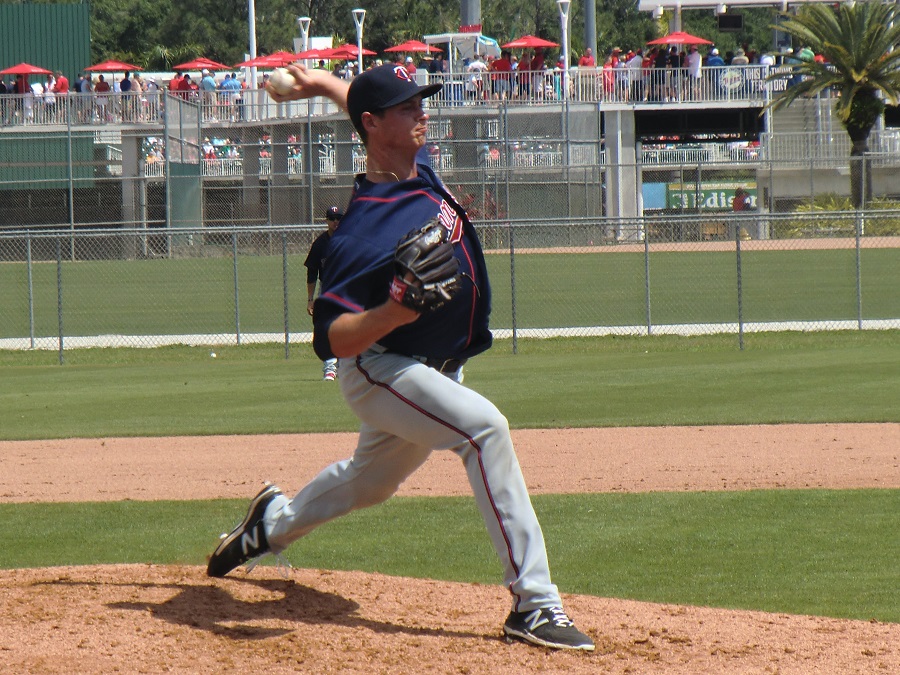 Read on to find out about all the action on Monday night! TRANSACTIONS It was known yesterday, but became official today that the Twins have sent shortstop Danny Santana down to AAA, and recalled Kennys Vargas in his place. Some of the league All-Star rosters have also been released, with pitchers Chih-Wei Hu, Brandon Peterson and J.T. Chargois, along with catcher Alex Swim, representing the Fort Myers Miracle in the Florida State League game to be played on June 20th. In the Midwest League, pitchers Felix Jorge, Cameron Booser, and Trevor Hildenberger, along with first baseman Trey Vavra, will represent the West Division squad and the Cedar Rapids Kernels in their game on June 23rd. RED WINGS REPORT Indianapolis 6, Rochester 3 Box Score It was International League division leaders squaring off as the Red Wings lead the North Division, and the Indians the West Division. It did not start out well for Rochester, as Indianapolis jumped out to 3-0 lead after the second inning, and made it 4-0 after four. All four of those runs were charged to starter Jason Wheeler, who went on to finish the fifth inning. He allowed those runs on eight hits and two walks, while striking out two. The Red Wings lineup struggled to get anything going against Indians starter Clayton Richard, who has been a MLB starter for several seasons with the Chicago White Sox and San Diego Padres. He came to the Pittsburgh Pirates organization this year after shoulder surgery limited him to just four starts in the minors in 2014. He appears to be back on his way to the majors as he now sports a 1.69 ERA for Indianapolis. Over Richard’s seven innings, the Wings managed just five hits and two walks. The lone unearned run came in his final inning, when Richard committed a throwing error to move Jose Martinez to third base and in position to score on a sac fly from Wilkin Ramirez. In the ninth inning, doubles from Oswaldo Arcia, Eric Fryer and Wilkin Ramirez made the score 6-3, but they weren’t able to do any more damage. Reynaldo Rodriguez was 2-4 on the night to lead the offense, and Ramirez had two RBIs. In relief for the Red Wings, Logan Darnell allowed two runs on two hits and a walk in two innings. He struck out three. Mark Hamburger and Ryan O’Rourke each pitched a scoreless inning, with Hamburger picking up two K’s. CHATTANOOGA CHATTER Chattanooga @ Jackson, Postponed (Rain) Starter Jose Berrios was looking for a bounce back start after he suffered his worst outing of the year (relatively speaking) in his last one, but he was forced to wait another day due to rain in Jackson, Tennessee. The game will be made up tomorrow as part of a double-header, with both games going seven innings. The first game will start at 5:05 PM CST. MIRACLE MATTERS Fort Myers 5, Lakeland 3 Box Score Stephen Gonsalves was on the mound for the Miracle, making his Florida State League debut. H picked up his first FSL win. Overall, the start wasn’t as good as his starts in the Midwest League were, but that’s not unexpected with a guy making his first start at a new level. Gonsalves finished 5.1 innings, allowing three runs on five hits and three walks while striking out two, as reported by MiLB.com (or five, if the game report from Miracle play-by-play man Bryce Zimmerman is to be believed). In his final inning, a walk and a two-run home run got the bullpen active, and he left the game with runners on the corners. Alex Muren came on and got the final two outs to keep Gonsalves in line for the win. The Miracle took a 2-0 lead in the second inning with two-out rally started by Bryan Haar with a single. Marcus Knecht followed with a single of his own and they moved into scoring position on a wild pitch. Chad Christensen brought them home with a single to center field. Fort Myers added three runs in the top of the sixth inning which was begun with a single from Ryan Walker. FSL All-Star Alex Swim brought him home with his first triple of the season to chase Lakeland’s starter from the game. Mitch Garver greeted his replacement with a single to bring Swim in. Niko Goodrum followed with a single to put Garver on third, and he raced home on Haar's groundout to make it 5-1. Muren finished the seventh inning before relinquishing duty to Todd Van Steensel, who picked up his sixth save with two innings of scoreless ball. He struck out three according to MiLB.com. Walker, Goodrum, Haar, and Christensen each collected two hits on the night, and Christensen’s two RBI’s led the team in the victory. KERNELS NUGGETS Cedar Rapids 4, West Michigan 2 Box Score The Kernels completed a come-back victory with a single run in the sixth inning to narrow their deficit to 2-1, and added three in the seventh to take the lead for good. West Michigan got out to the 2-0 lead in the fourth inning when starter Jared Wilson ran into his first trouble of the night. Up to that point, the only runner for the Whitecaps had reached on an error by Kernels third baseman T.J. White. It was a triple with one out that got the first runner of the game in scoring position. A single brought that runner in for a 1-0 lead, then a single and walk loaded the bases and the second run scored on a wild pitch. Wilson recovered to pitch scoreless fifth and sixth innings, ending the game with six innings pitched, allowing the two runs on three hits and two walks, while striking out four. The win brought Wilson’s record to 5-1 on the season, and lowered his ERA to 3.10. When Wilson exited, the game was left up to the unhittable, long-named, and University of California alumni duo of Michael Theofanopoulos and Trevor Hildenberger. Theo went two perfect innings, striking out one to pick up his fourth hold of the season, while Hil pitched a scoreless ninth, walking one and striking out two to pick up his sixth save. The Cedar Rapids scoring was started in the sixth inning by Nick Gordon, who brought home newly minted lead-off man Edgar Corcina with a single. Corcina had singled and stolen second base to put himself in scoring position. In the seventh, a two-out, three-run rally was started when Brett Doe was hit by a pitch. This was followed by a White single, a Blake Schmit two-RBI double, and a Brian Navaretto RBI single to make the final score of 4-2. Gordon, White, and Schmit were all 2-4, with Schmit’s two-run double being the Kernels only extra-base hit of the evening. DSL TWINS SPECIAL REPORT DSL Twins 21, DSL Yankees (team 1) 14 Box Score It’s really hard to make anything out of the young players who make up the roster of the Minnesota Twins Dominican Academy team, but it’s hard not to notice a baseball game score with an NFL-like final of 21-14. The DSL Twins took advantage of sixteen hits and twelve walks to come away with the victory. As a team they were 8-15 with runners in scoring position and four hitters in the lineup racked up multiple hits. There was also just one hitter in the lineup who did not score multiple runs. Even more notable was the batting line of first baseman and clean-up hitter Jorge Parra, as he hit for the cycle and tallied six RBIs. He was 4-6 on the night as a whole and also scored three runs. Quite a performance no matter the level or competition! TWINS DAILY MINOR LEAGUE PLAYERS OF THE DAY Pitcher of the Day – Todd Van Steensel, Fort Myers Miracle (W, 2.0 IP, 1 H, 0 R’s, 3 K’s) Hitter of the Day – Jorge Parra, DSL Twins (4-6, 3 R’s, 2B, 3B, HR, 6 RBI) TUESDAY’S PROBABLE STARTERS Indianapolis @ Rochester (6:05 PM CST) – LHP Taylor Rogers (5-3, 3.09 ERA) Chattanooga @ Jackson, Double-Header (Game 1: 5:05 PM CST, Game 2: 30-45 min after end of Game 1) – RHP Jose Berrios (6-3, 3.25 ERA) and TBD Fort Myers @ Lakeland (5:30 PM CST) – LHP Mat Batts (0-1, 2.13 ERA) Cedar Rapids – Scheduled day off. Please feel free to ask any questions and discuss Monday’s games.
 -
Article: Twins Draft Preview: Jon Harris
Steve Lein replied to Jeremy Nygaard's topic in Twins Daily Front Page News
Hey now, I'm part of this profile writing contingent here! Haha. -
Article: Twins Draft Preview: Jon Harris
Steve Lein replied to Jeremy Nygaard's topic in Twins Daily Front Page News
I'd have to think Harris is a massive reach at number 6. Anything specific that makes you say "Harris is likely to be the best of the lot when the Twins step up to the podium."? Or is that just more of a remark on his projection to stick in a starting profile compared to the others like Jay, Fulmer, Tate, etc... who have the stuff, but get more bullpen comments? -
As Seth mentioned, he's not an MLB center fielder, though he could probably fill in there fine. Pretty good athlete in a corner though. He didn't much play outfield until he came to the Twins as a pro, he was a first baseman before that. I'd actually call that his "natural position."
-
Article: Twins Draft Preview: Tyler Jay
Steve Lein replied to Seth Stohs's topic in Twins Daily Front Page News
I've also read elsewhere, that the Illini coaches think his mentality is built better for the closer role, than the other guys they have starting (who are also quite good, mind you). So that could be your answer to that question. -
Article: Twins Draft Preview: Tyler Jay
Steve Lein replied to Seth Stohs's topic in Twins Daily Front Page News
I think Aiken's medicals are far more problematic than Giolito's were. There's a lot more going on with his arm than just Tommy John surgery from what I've gathered. I think all Law was saying with this, as echoed elsewhere in the article, is there hasn't really been any good reason demonstrated why Jay was not starting. But Jeremy is right as well, and I didn't really mention this in the article, that Jay has been used for more than just a single inning most of the time. And in the game he did start this season, he went 5 innings, allowed no runs on two hits, and struck out six. This is the idea they are talking about. He had shown he can maintain starter-like effectiveness, so why not use him as one? -
Good catch, should be Nick Gordon for Cedar Rapids!
-
Twins Minor League Report (5/31): Everybody's In First Place (Almost)
Steve Lein posted an article in Minor Leagues
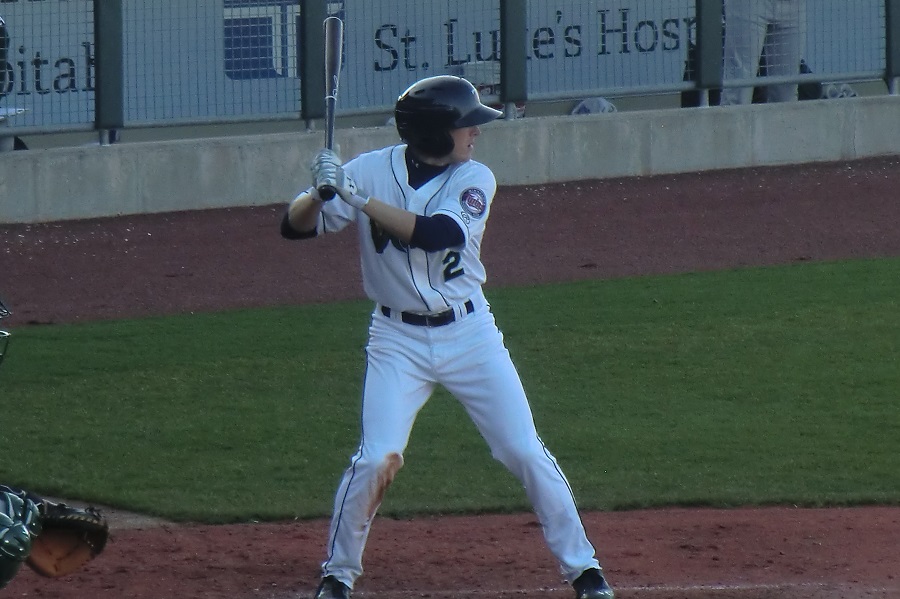 Like their parent club, many of the teams in the minor leagues are having great seasons as well, as both Rochester and Chattanooga lead their divisions while Cedar Rapids is 33-18 and in second place. Fort Myers is the only affiliate with a losing record at 24-26, but are just a game behind second place in the Florida State League South Division. In the games on Sunday, there were two rainouts, but Fort Myers and Cedar Rapids were in action so read on to find out what happened and where! TRANSACTIONS Before we get to the games, there were a few transactions in the lower levels of the system late Saturday night. We reported yesterday that Tyler Kuresa was sent back to extended spring training, and Alex Real was removed from the Eizabethton restricted list and assigned to Kuresa's place. Today, we learned that Hudson Boyd came off of his suspension and was also placed on the 7-day disabled list with a separated left shoulder. RED WINGS REPORT Rochester @ Buffalo, Postponed (Rain) Rochester’s game against the Buffalo Bisons was postponed due to rain. The game will be made up the next time the Red Wings head to Buffalo, August 10th to the 13th. CHATTANOOGA CHATTER Biloxi @ Chattanooga, Postponed (Rain) Southern League South division leaders, the Biloxi Shuckers, were in town to take on the Southern League North-leading Lookouts over the weekend, but Sundays tilt was postponed due to wet field conditions. The game will not be made up as the teams are not in the same division, and will not play again in the first half. MIRACLE MATTERS Fort Myers 4, St. Lucie 10 Box Score The St. Lucie Mets moved a game in front of the Miracle for second place in the South division with their victory on Sunday. Both teams trail the division-leading Charlotte Stone Crabs by a significant margin, so they have a lot of work to in the first half of the season to clinch a playoff spot. Fort Myers starter Aaron Slegers was coming of one of his best games as a pro, where he pitched a complete game shutout, allowing just three hits and striking out nine in the process. Unfortunately in this one, St. Lucie got to him early and often. They scored four runs in the first, four runs in the second, and two in the third before Slegers was finally removed from the game. Two of the runs were unearned after a Niko Goodrum error in the first, but Slegers' final line ended up as 3.0 IP, with ten runs on twelve hits and two walks. He struck out three. Though he didn’t give up a home run, six of those hits went for extra bases. After he left the game, the Miracle bullpen of Luck Westphal, Matt Summers, and Dallas Gallant threw five shutout innings. They combined to allow just three more hits and three walks, and struck out two. Westphal went the first three innings, and Summers and Gallant pitched one apiece. On the offensive side, the Fort Myers lineup managed just four hits, but did produce four runs, helped out by seven walks from Mets’ pitchers. Niko Goodrum went 2-3 with his tenth double and scored two runs, Bryan Haar knocked in two runners and added a double, and Marcus Knecht also picked up an RBI with a double in the second inning. As a team, they went 2-10 with runners in scoring position and left eight men on base. KERNELS NUGGETS Clinton 5, Cedar Rapids 6 (11 innings) Box Score Cedar Rapids got the walk-off victory in extra innings on Sunday, coming back from a 5-0 deficit in the sixth inning. The Kernels sent Sam Gibbons to mound to make his first appearance of the 2015 season, and he cruised through the first four innings. He struck out the side in the second inning and retired seven in a row at one point. He finally ran into trouble in the fifth inning, as consecutive singles put a runner in scoring position with two outs. Another single brought in the game’s first run, then a triple added two more. Gibbons got a groundout to finish the inning and his day with 5.0 innings pitched and three earned runs on six hits and a walk, while striking out six. Michael Cederoth entered the game for the top of the sixth, and began the frame by committing an error on a throw to first that moved the batter to second base. Two outs later, shortstop Niko Goodrum committed his seventh error of the season allowing the first run of the inning to score. A stolen base, walk, and single brought in the second run before Cederoth escaped with his team down 5-0. Edgar Corcina got the scoring started for the Kernels with a double to left field leading off the bottom of the inning. He would score after consecutive errors put Gordon and Zack Larson on first and second. T.J. White then brought them in with his fourth triple of the season, cutting the lead to 5-3. In the eighth inning, the LumberKings defense again failed them. Larson again reached base due to an error, and would score after singles from Jorge Fernandez and White. Fernandez would score to tie the game at five on a Pat Kelly groundout to second base. From the seventh inning on, the long-named and untouchable duo of Michael Theofanopoulos and Trevor Hildenberger held Clinton scoreless. Theofanopoulos went three innings, allowing zero hits and two walks, while striking out three. Hildenberger picked up the win by pitching the extra innings. He allowed just one hit and struck out three. He lowered his ERA to 0.31 on the season. In the bottom of the eleventh, Kelly started the inning with a single, and was moved into scoring position on a sacrifice bunt from Brett Doe. After a pop out and intentional walk, Tanner English stepped in the box with two outs. He sent a single into center field, bringing Kelly home for the walk-off win. T.J. White (2-5) and Brett Doe (2-4) each collected multiple hits for the Kernels, and Brian Navarreto was the only hitter in the lineup without a base knock on the game. TWINS DAILY MINOR LEAGUE PLAYERS OF THE DAY Pitcher of the Day – Trevor Hildenberger, Cedar Rapids Kernels (W, 2.0 IP, 1 H, 0 R’s, 0 BB’s, 3 K’s) Hitter of the Day – T.J. White, Cedar Rapids Kernels (2-5, 3B, 3 RBI) MONDAY’S PROBABLE STARTERS Rochester – Scheduled Day Off. Tennessee @ Chattanooga (6:15 PM CST) – LHP David Hurlbut (0-1, 21.00 ERA) Fort Myers @ St. Lucie (5:30 PM CST) – LHP Mat Batts (0-0, 1.29 ERA) Cedar Rapids @ Beloit (2:00 PM CST) – LHP Stephen Gonsalves (5-1, 1.31 ERA) The Twins Dominican Summer League team also began play with their first game on Saturday. They continue Monday morning, as they host the DSL Giants at 10:30. Please feel free to ask any questions and discuss the Sunday games.
 -
Twins Minor League Report (5/31): Everybody's In First Place! (almost)
Steve Lein posted a blog entry in The Hanging SL
The calendar of the year 2015 is turning to June, and the Minnesota Twins have the best record in the American League. Wait…what?! There were few who believed that might be case this season, except maybe Terry Ryan, but it’s true and this team has certainly been fun to watch again! Like their parent club, many of the teams in the Minor Leagues are having great seasons as well as both Rochester and Chattanooga lead their divisions while Cedar Rapids is 33-18 and in second place. Fort Myers is the only affiliate with a losing record at 24-26, but are just a game behind second place in the Florida State League South Division. In the games on Sunday, there were two rainouts, but Fort Myers and Cedar Rapids were in action so read on to find out what happened and where! TRANSACTIONS Before we get to the games, there were a few transactions in the lower levels of the system on Sunday. In Cedar Rapids, Tyler Kuresa was sent back to Extended Spring Training, and Alex Real was assigned in his place from Elizabethton. Hudson Boyd was also placed on the 7-day disabled list with a separated left shoulder. RED WINGS REPORT Rochester @ Buffalo, Postponed (Rain) Rochester’s game against the Buffalo Bisons was postponed due to rain. The game will be made up the next time the Red Wings head to Buffalo, over August 10th to the 13th. CHATTANOOGA CHATTER Biloxi @ Chattanooga, Postponed (Rain) Southern League South division leaders, the Biloxi Shuckers, were in town to take on the Southern League North leading Lookouts over the weekend, but Sundays tilt was postponed due to wet field conditions. The game will not be made up as the teams are not in the same division, and will not play again in the first half. MIRACLE MATTERS Fort Myers 4, St. Lucie 10 Box Score The St. Lucie Mets moved a game in front of the Miracle for second place in the South division with their victory on Sunday. Both teams trail the division leading Charlotte Stone Crabs by a significant margin, so they have a lot of work to in the first half of the season to clinch a playoff spot. Fort Myers starter Aaron Slegers was coming of one of his best games as a pro, where he pitched a complete game shutout, allowing just three hits and striking out nine in the process. Unfortunately in this one, St. Lucie got to him early and often. They scored four runs in the first, four runs in the second, and two in the third before Slegers was finally removed from the game. Two of the runs we’re unearned after a Niko Goodrum error in the first, but Slegers final line ended up as 3.0 IP, with ten runs on twelve hits and two walks. He struck out three. Though he didn’t give up a home run, six of those hits went for extra bases. After he left the game, the Miracle bullpen of Luck Westphal, Matt Summers, and Dallas Gallant threw five shutout innings. They combined to allow just three more hits and three walks, and struck out two. Westphal went the first three innings, and Summers and Gallant pitched one apiece. On the offensive side, the Fort Myers lineup managed just four hits, but did produce four runs helped out by seven walks from Mets’ pitchers. Niko Goodrum went 2-3 with his tenth double and scored two runs, Bryan Haar knocked in two runners and added a double, and Marcus Knecht also picked up an RBI with a double in the second inning. As a team, they went 2-10 with runners in scoring position and left eight men on base. KERNELS NUGGETS Clinton 5, Cedar Rapids 6 (11 innings) Box Score Cedar Rapids got the walk-off victory in extra innings on Sunday, coming back from a 5-0 deficit in the sixth inning. The Kernels sent Sam Gibbons to mound to make his first appearance and start of the 2015 season, and he cruised through the first four innings. He struck out the side in the second inning, and retired seven in a row at one point. He finally ran into trouble in the fifth inning, as consecutive singles put a runner in scoring position with two outs. Another single brought in the game’s first run, then a triple added two more. Gibbons got a groundout to finish the inning and his day with 5.0 innings pitched and three earned runs on six hits and walk, while striking out six. Michael Cederoth entered the game for the top of the sixth, and began the frame by committing an error on a throw to first that moved the runner to second base. Two outs later, shorstop Niko Goodrum committed his seventh error of the season allowing the first run of the inning to score. A stolen base, walk, and single brought in the second run before Cederoth escaped with his team down 5-0. Edgar Corcina got the scoring started for the Kernels with a double to left field leading off the bottom of the inning. He would score after consecutive errors put Gordon and Zack Larson on first and second. T.J. White then brought them in with his fourth triple of the season, cutting the lead to 5-3. In the eighth inning, the LumberKings defense again failed them. Larson again reached base due to an error, and would score after singles from Jorge Fernandez and White. Fernandez would score to tie the game at five on a Pat Kelly ground out to second base. From the seventh inning on, the long-named and untouchable duo of Michael Theofanopoulos and Trevor Hildenberger held Clinton scoreless. Theofanopoulos went three innings, allowing zero hits and two walks, while striking out three. Hildenberger picked up the win by pitching the extra innings. He allowed just one hit and struck out three. He lowered his ERA to 0.31 on the season. In the bottom of the eleventh, Kelly started the inning with a single, and was moved into scoring position on a sacrifice bunt from Brett Doe. After a pop out and intentional walk, Tanner English stepped in the box with two outs. He sent a single into centerfield, bringing Kelly home for the walk-off win. T.J. White (2-5) and Brett Doe (2-4) each collected multiple hits for the Kernels, and Brian Navarreto was the only hitter in the lineup without a base knock on the game. TWINS DAILY MINOR LEAGUE PLAYERS OF THE DAY Pitcher of the Day – Trevor Hildenberger, Cedar Rapids Kernels (W, 2.0 IP, 1 H, 0 R’s, 0 BB’s, 3 K’s) Hitter of the Day – T.J. White, Cedar Rapids Kernels (2-5, 3B, 3 RBI) MONDAY’S PROBABLE STARTERS Rochester – Scheduled Day Off. Tennessee @ Chattanooga (6:15 PM CST) – LHP David Hurlbut (0-1, 21.00 ERA) Fort Myers @ St. Lucie (5:30 PM CST) – LHP Mat Batts (0-0, 1.29 ERA) Cedar Rapids @ Beloit (2:00 PM CST) – LHP Stephen Gonsalves (5-1, 1.31 ERA) The Twins Dominican Summer League team also begins play tomorrow morning, as they host the DSL Giants at 10:30. Please feel free to ask any questions and discuss the Sunday games. -
 Will the allure of a power left-handed arm be too much for the Twins to pass up? Who is this guy? At 6’1”, 175 lbs, Jay doesn’t have the prototypical front-line pitcher’s build, but we’re all familiar with how this can idea can be misrepresented (e.g.: Jose Berrios). This hasn’t prevented him from obliterating the Big 10 since he stepped on campus, and Jay has improved his numbers substantially in every season. As a freshman, he pitched in eighteen games and amassed 20.1 innings out of the pen with a 3.10 ERA. As a sophomore, Jay assumed the closer role and appeared in twenty-three games, totaling 41.2 innings. He racked up ten saves, and lowered his season ERA to 1.94. This season as a junior, he put a large stamp on his amateur career. He reduced his ERA even further to a ridiculous 0.64, and racked up thirteen saves in twenty-eight appearances over 56.1 innings. He allowed just twenty-nine hits (only four for extra bases, and zero home runs) and just six walks, while striking out sixty-five. He also pitched with Team USA last summer, and didn’t surrender a run in 16.2 innings while striking out twenty-one. For his collegiate career, he amassed a 10-5 record with twenty-three saves, 132 K’s over 118.1 innings, allowed just sixty-eight hits and twenty-nine walks, and held hitters to a .168 batting average. Touted as an excellent athlete with smooth mechanics, there is little question that whatever MLB team drafts him will push him into a starting role, and this is before even mentioning his pitching repertoire. He will hit mid-to-high 90s with his fastball, which has also has big arm-side run as a left-hander. This alone would get him noticed, but his changeup, slider, and curveball all rate as above-average and flash plus at times as well (here’s a Fangraph’s post showing a “plus”-flashing change). This potential four-pitch mix combined with advanced control makes it easy to see why he has been a riser on draft boards through the year. Why the Twins will pick him In the past two MLB drafts, the Twins front office has taken a bit of an unorthodox approach by targeting big time arms early in the draft, most of who pitched out of bullpens in college, with the intent to see if they could handle starting games instead of finishing them. I’ve already mentioned the parallels Jay holds with the Twins in that regard. Since Brad Radke fronted starting rotations for Twins, they've also fallen in love with pitchers with advanced command and control, allowing them to limit walks. Jay is considered to have some of the best control in this draft, if not the best, with Keith Law of ESPN rating it as “plus-plus.” (Insider required) Add the fact that he is left-handed, andarea where some might say the Twins are lacking high-upside pitching prospects, and Jay’s appeal to the Twins is even greater. Why the Twins will not pick him As mentioned, many evaluators believe Jay has been miscast in his role as a reliever with the Illini. In the same column above, Law goes so far as to opine “He would have been a top-five pick had he been used as a starter all year and he continued to show the kind of stuff he has in his longest relief outings this spring.” This usage as a reliever has made him hard to consistently scout, so a team like the Twins picking at number six, might not be confident enough in their evaluations to pull the trigger on him that high. He also gets nailed for being undersized, would likely lose a few ticks on his fastball as a starter, and there would be questions about his endurance to pitch more innings until he does so. Most problematic of all could be his recent movement into the top five on draft boards, with Kiley McDaniel of Fangraph's latest mock sending him to Colorado at number three. As amazing as it sounds compared to just a few weeks ago, he might not be available. Even if he were to falter as a starter, Jay’s current profile reads a lot like a certain All-Star lefty locking down the Twins major league bullpen right now. Whether a future looking something like Glen Perkins is enough for Minnesota to pick at number six may be the question when it comes to selecting, or not, Tyler Jay on June 8th.
 -
Article: Twins Draft Preview: Carson Fulmer
Steve Lein replied to Seth Stohs's topic in Twins Daily Front Page News
The more I've researched on all these guys, the more I've soured on Fulmer. Tate has remained static for me, while another one of the top pitchers (who you'll read about here soon!) has continued to move up for me and is now my preferred choice from the Twins perspective. All these guys have the same thing in common though, where they are all transitory in different ways from relief to starting in the pros. -
I think he meant to say "Groundball-to-fly-ball" ratio, from looking at the box score.
-
I agree with this 100%. Whether coaches tell the players to ignore it or not, it's natural for them do what is making them successful. If it's just a good fastball or whatever that is allowing you to strike out over a batter per inning and nobody is hitting it, why would you do something different that could change the success you are having? It's a biological, sociological, and subconscious aspect of the human psyche. If you think about it situationally in a game for example, if it's the fifth inning and your team is up 1-0 or by a run or two, you really think that guy is going ignore what he's done well, and increase the risk of blowing his team's lead by doing something different than what got him there? I don't. These guys still want to win, even as they 'develop.' I agree that to adapt and grow as best as possible, there needs to be that challenge or greater reason to do so. If the challenge is gone or has been met, as it appears it has for Gonsalves in the MWL, it's time to introduce a new challenge.
- 26 replies
-
- 1
-
-
- stephen gonsalves
- tanner english
- (and 2 more)
-
All four of the Minnesota Twins affiliates were in action on Sunday afternoon, and along with major league team, the organization had an undefeated day. In Rochester, a certain starting pitcher continued his run of AAA dominance, top prospects began and ended the scoring for Chattanooga,Fort Myers got a complete game shutout effort on the hill, and the Cedar Rapids lineup knocked the Twins’ former affiliate around their old ball park. Read on to find out who did what and where in Sunday’s MiLB action! RED WINGS REPORT Rochester 3, Norfolk 1 Box Score Rochester scored single runs in the third, fourth, and seventh innings to provide plenty of run support for the continued AAA dominance of Tommy Milone. He pounded the strike zone all day and scattered six hits over 8.1 innings. Eighty-five of his one-hundred-and-eight pitches went for strikes and he had retired eleven men in a row when he was finally struck for his first earned run since being optioned to AAA in the bottom of the ninth. Norfolk’s Christian Walker homered to make the score 3-1. With the shutout no longer in place, Milone was lifted for A.J. Achter, who quickly got the final two outs for his sixth save of the year. Milone finished the game with eight strikeouts and no walks. Jose Martinez got the scoring started for the Red Wings when he led off the top of third inning with his second home run of the year. He added a sacrifice fly to score Josmil Pinto in the fourth. Danny Ortiz added the final insurance run when he led off the seventh inning with his seventh home run of the season and the 3-0 lead for Rochester. Martinez and Ortiz both finished the game with two hits and a home run. Kennys Vargas was 1-4, and Argenis Diaz and Eric Fryer collected the other two hits for the Red Wings. The win improved Rochester to 25-19 on the season, leading the International League North Division. CHATTANOOGA CHATTER Chattanooga 7, Mobile 6 Box Score The Lookouts jumped out to an early lead in the top of the first inning, and the scoring was started by the bat of Miguel Sano. With Jorge Polanco on first base after a single, Sano launched his ninth home run of the season to center field and a 2-0 lead. Max Kepler and Adam Brett Walker followed with back-to-back doubles to score a third run, and Mike Gonzalez brought home Walker with a single to make it 4-0. Mobile got one run back in the bottom of the inning after a leadoff home run against starter Greg Peavey, but Chattanooga scored two more in the second to make it 6-1. Stephen Wickens reached base on an error, moved to second on a Byron Buxton groundout, and scored on a Polanco single. Travis Harrison then brought Polanco around to score with his first triple of the season to right field. Peavey then kept the BayBears lineup silent until the sixth inning when they plated two runs to close the score to 6-3 and chase him from the game. D.J. Johnson escaped the jam in the sixth, and worked a scoreless seventh before running into trouble in the eighth. A walk, hit batter, and a double scored one before Zack Jones was summoned. He walked two batters to plate the first inherited runner, and then a sacrifice fly scored a second to tie the game at six. In the top of the ninth however, the bat and legs of Buxton put Chattanooga back on top for good, as he beat out a ground ball to third base for a single, and the rushed throw to first turned into a throwing error that allowed Carlos Paulino to race home and make the score 7-6. Jones got a one-two-three bottom of the ninth to pick up his third win on the season. Polanco, Harrison, and Paulino each collected two hits, and Polanco stole his ninth base. Buxton finished 1-4 with a walk. MIRACLE MATTERS Brevard County 0, Fort Myers 4 Box Score The Brevard County Manatees had no answer for the efficiency of starter Aaron Slegers on this day. His quick work and complete game shutout performance allowed this game to finish in just under two hours. He didn’t go to a single three-ball count with any hitter, and threw twenty-one first-pitch strikes. The Manatees managed just three hits, all singles, and Slegers struck out a season-high nine batters. It was the first complete game shutout for the Miracle this season, and was one of two shutouts in the series. The Miracle lineup got all the offense they would need in the second and third innings to jump out to 3-0 lead. Niko Goodrum drew his Florida State League leading twenty-seventh walk, stole his tenth base, and scored on a Marcus Knecht single in the second, and Tanner Vavra and Zach Granite scored on an Alex Swim single in the third. Fort Myers added a run in the eighth inning on a throwing error from the catcher that allowed Swim to scamper home. Knecht was 2-3 on the night with an RBI and stolen base, and Swim 2-4 with two RBI and a stolen base. KERNELS NUGGETS Cedar Rapids 11, Beloit 1 Box Score Cedar Rapids pounded out thirteen hits on the day to dismantle the Beloit Snappers in the organization's old stomping grounds. They went ahead 2-0 in the second inning, when Blake Schmit drove in Max Murphy with a single, and Zack Larson scored on a wild-pitch strike three to Rainis Silva that would have ended the inning. Their big inning was the top of the third, as they batted around and added six runs to their total. Nick Gordon was the victim of the first and last outs of the inning, but in between Trey Vavra singled, Murphy brought him home with a triple, Larson and Pat Kelly hit back-to-back doubles to score two more, Tyler Kuresa singled in Kelly, and Tanner English added a triple that scored Kuresa and Silva who had reached base on an error. In the fourth inning they scored three more to go ahead 11-0 when two consecutive errors began the frame. A single from Larson, sac fly from Kelly, and double from Kuresa brought in the Kernels' final runs of the day. It was more than enough for the Cedar Rapids pitching staff, who went with a bullpen game started by Zach Tillery. He pitched the first two innings, allowing just two hits. Luke Bard then made his second appearance of the season, pitching two hitless innings of his own. Cameron Booser pitched the fifth and sixth innings, allowing Beloit’s only run of the game, an unearned one, while walking three and striking out one. Trevor Hildenberger finished the final three innings for his fifth save. He allowed two hits and struck out one. Hildenberger’s ERA now sits at 0.35 on the season, his last ten appearances and 21.2 innings pitched being of the scoreless variety. Over that time frame, he’s allowed just six hits and two walks, while striking out twenty-five. TWINS DAILY MINOR LEAGUE PLAYERS OF THE DAY Pitcher of the Day – Aaron Slegers, Fort Myers Miracle (CG SO, 9 IP, 3 H’s, 0 BB’s, 9 K’s) Hitter of the Day – Max Murphy, Cedar Rapids Kernels (3-5, 3 R’s, 3B, RBI) MONDAY’S PROBABLE STARTERS Rochester @ Durhan (4:05 PM CST) – LHP Jason Wheeler (1-2, 5.70 ERA) Chattanooga @ Mobile (4:05 PM CST) – RHP D.J. Baxendale (3-0, 2.47 ERA) Fort Myers – Scheduled Day Off. Cedar Rapids @ Beloit (2:00 PM CST) – RHP John Curtiss (2-3, 5.79 ERA) Please feel free to ask any questions and discuss the Sunday games. Click here to view the article
-
Twins minor League Report (5/24): Milone and Slegers Dominate
Steve Lein posted an article in Minor Leagues
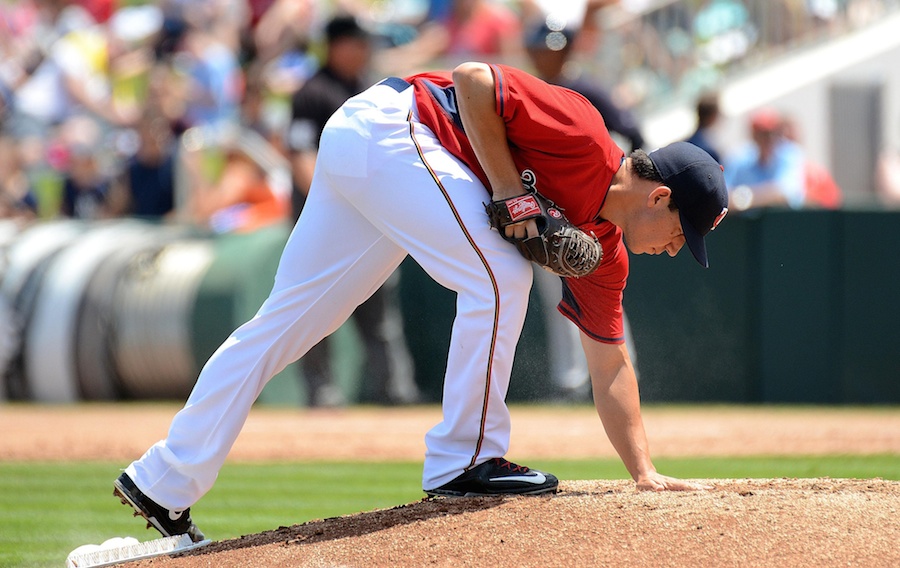 Fort Myers got a complete game shutout effort on the hill, and the Cedar Rapids lineup knocked the Twins’ former affiliate around their old ball park. Read on to find out who did what and where in Sunday’s MiLB action! RED WINGS REPORT Rochester 3, Norfolk 1 Box Score Rochester scored single runs in the third, fourth, and seventh innings to provide plenty of run support for the continued AAA dominance of Tommy Milone. He pounded the strike zone all day and scattered six hits over 8.1 innings. Eighty-five of his one-hundred-and-eight pitches went for strikes and he had retired eleven men in a row when he was finally struck for his first earned run since being optioned to AAA in the bottom of the ninth. Norfolk’s Christian Walker homered to make the score 3-1. With the shutout no longer in place, Milone was lifted for A.J. Achter, who quickly got the final two outs for his sixth save of the year. Milone finished the game with eight strikeouts and no walks. Jose Martinez got the scoring started for the Red Wings when he led off the top of third inning with his second home run of the year. He added a sacrifice fly to score Josmil Pinto in the fourth. Danny Ortiz added the final insurance run when he led off the seventh inning with his seventh home run of the season and the 3-0 lead for Rochester. Martinez and Ortiz both finished the game with two hits and a home run. Kennys Vargas was 1-4, and Argenis Diaz and Eric Fryer collected the other two hits for the Red Wings. The win improved Rochester to 25-19 on the season, leading the International League North Division. CHATTANOOGA CHATTER Chattanooga 7, Mobile 6 Box Score The Lookouts jumped out to an early lead in the top of the first inning, and the scoring was started by the bat of Miguel Sano. With Jorge Polanco on first base after a single, Sano launched his ninth home run of the season to center field and a 2-0 lead. Max Kepler and Adam Brett Walker followed with back-to-back doubles to score a third run, and Mike Gonzalez brought home Walker with a single to make it 4-0. Mobile got one run back in the bottom of the inning after a leadoff home run against starter Greg Peavey, but Chattanooga scored two more in the second to make it 6-1. Stephen Wickens reached base on an error, moved to second on a Byron Buxton groundout, and scored on a Polanco single. Travis Harrison then brought Polanco around to score with his first triple of the season to right field. Peavey then kept the BayBears lineup silent until the sixth inning when they plated two runs to close the score to 6-3 and chase him from the game. D.J. Johnson escaped the jam in the sixth, and worked a scoreless seventh before running into trouble in the eighth. A walk, hit batter, and a double scored one before Zack Jones was summoned. He walked two batters to plate the first inherited runner, and then a sacrifice fly scored a second to tie the game at six. In the top of the ninth however, the bat and legs of Buxton put Chattanooga back on top for good, as he beat out a ground ball to third base for a single, and the rushed throw to first turned into a throwing error that allowed Carlos Paulino to race home and make the score 7-6. Jones got a one-two-three bottom of the ninth to pick up his third win on the season. Polanco, Harrison, and Paulino each collected two hits, and Polanco stole his ninth base. Buxton finished 1-4 with a walk. MIRACLE MATTERS Brevard County 0, Fort Myers 4 Box Score The Brevard County Manatees had no answer for the efficiency of starter Aaron Slegers on this day. His quick work and complete game shutout performance allowed this game to finish in just under two hours. He didn’t go to a single three-ball count with any hitter, and threw twenty-one first-pitch strikes. The Manatees managed just three hits, all singles, and Slegers struck out a season-high nine batters. It was the first complete game shutout for the Miracle this season, and was one of two shutouts in the series. The Miracle lineup got all the offense they would need in the second and third innings to jump out to 3-0 lead. Niko Goodrum drew his Florida State League leading twenty-seventh walk, stole his tenth base, and scored on a Marcus Knecht single in the second, and Tanner Vavra and Zach Granite scored on an Alex Swim single in the third. Fort Myers added a run in the eighth inning on a throwing error from the catcher that allowed Swim to scamper home. Knecht was 2-3 on the night with an RBI and stolen base, and Swim 2-4 with two RBI and a stolen base. KERNELS NUGGETS Cedar Rapids 11, Beloit 1 Box Score Cedar Rapids pounded out thirteen hits on the day to dismantle the Beloit Snappers in the organization's old stomping grounds. They went ahead 2-0 in the second inning, when Blake Schmit drove in Max Murphy with a single, and Zack Larson scored on a wild-pitch strike three to Rainis Silva that would have ended the inning. Their big inning was the top of the third, as they batted around and added six runs to their total. Nick Gordon was the victim of the first and last outs of the inning, but in between Trey Vavra singled, Murphy brought him home with a triple, Larson and Pat Kelly hit back-to-back doubles to score two more, Tyler Kuresa singled in Kelly, and Tanner English added a triple that scored Kuresa and Silva who had reached base on an error. In the fourth inning they scored three more to go ahead 11-0 when two consecutive errors began the frame. A single from Larson, sac fly from Kelly, and double from Kuresa brought in the Kernels' final runs of the day. It was more than enough for the Cedar Rapids pitching staff, who went with a bullpen game started by Zach Tillery. He pitched the first two innings, allowing just two hits. Luke Bard then made his second appearance of the season, pitching two hitless innings of his own. Cameron Booser pitched the fifth and sixth innings, allowing Beloit’s only run of the game, an unearned one, while walking three and striking out one. Trevor Hildenberger finished the final three innings for his fifth save. He allowed two hits and struck out one. Hildenberger’s ERA now sits at 0.35 on the season, his last ten appearances and 21.2 innings pitched being of the scoreless variety. Over that time frame, he’s allowed just six hits and two walks, while striking out twenty-five. TWINS DAILY MINOR LEAGUE PLAYERS OF THE DAY Pitcher of the Day – Aaron Slegers, Fort Myers Miracle (CG SO, 9 IP, 3 H’s, 0 BB’s, 9 K’s) Hitter of the Day – Max Murphy, Cedar Rapids Kernels (3-5, 3 R’s, 3B, RBI) MONDAY’S PROBABLE STARTERS Rochester @ Durhan (4:05 PM CST) – LHP Jason Wheeler (1-2, 5.70 ERA) Chattanooga @ Mobile (4:05 PM CST) – RHP D.J. Baxendale (3-0, 2.47 ERA) Fort Myers – Scheduled Day Off. Cedar Rapids @ Beloit (2:00 PM CST) – RHP John Curtiss (2-3, 5.79 ERA) Please feel free to ask any questions and discuss the Sunday games.
 -
Twins Minor League Report (5/24): Milone and Slegers Dominate
Steve Lein posted a blog entry in The Hanging SL
All four of the Minnesota Twins affiliates were in action on Sunday afternoon, and along with Major League team, the organization had an undefeated day. In Rochester, a certain starting pitcher continued his run of AAA dominance, top prospects began and ended the scoring for Chattanooga, Fort Myers got a complete game shutout effort on the hill, and the Cedar Rapids lineup knocked the Twins’ former affiliate around their old ball park. Read on to find out who did what and where in Sunday’s MiLB action! RED WINGS REPORT Rochester 3, Norfolk 1 Box Score Rochester scored single runs in the third, fourth, and seventh innings to provide plenty of run support for the continued AAA dominance of Tommy Milone. He pounded the strike zone all day and scattered six hits over 8.1 innings. Eighty-five of his one-hundred-and-eight pitches went for strikes and had retired eleven men in a row when he was finally struck for his first earned run since being optioned to AAA in the bottom of the ninth. Norfolk’s Christian Walker homered to make the score 3-1. With the shutout no longer in place, Milone was lifted for A.J. Achter, who quickly got the final two outs for his sixth save of the year. Milone finished the game with eight strikeouts and no walks. Jose Martinez got the scoring started for the Red Wings when he led off the top of third inning with his second home run of the year. He added a sacrifice fly to score Josmil Pinto in the fourth. Danny Ortiz would add the final insurance run in the when he led off the seventh inning with his 7th home run of the season and the 3-0 lead for Rochester. Martinez and Ortiz would both finish the game with two hits and a home run. Kennys Vargas was 1-4, and Argenis Diaz and Eric Fryer collected the other two hits for the Red Wings. The win improved Rochester to 25-19 on the season, leading the International League North Division. CHATTANOOGA CHATTER Chattanooga 7, Mobile 6 Box Score The Lookouts jumped out to an early lead in the top of the first inning, and the scoring got started by the bat of Miguel Sano. With Jorge Polanco on first base after a single, Sano launched his ninth home run of the season to center field and a 2-0 lead. Max Kepler and Adam Brett Walker followed with back-to-back doubles to score a third run, and Mike Gonzalez brought home Walker with a single to make it 4-0. Mobile got one run back in the bottom of the inning after a leadoff home run against starter Greg Peavey, but Chattanooga would score two more in the second to make it 6-1. Stephen Wickens reached base on an error, moved to second on a Byron Buxton groundout, and scored on a Polanco single. Travis Harrison would then bring Polanco around to score with his first triple of the season to right field. Peavey then kept the BayBears lineup silent until the sixth inning when they plated two runs to close the score to 6-3 and chase him from the game. D.J. Johnson escaped the jam in the sixth, and worked a scoreless seventh before running into trouble in the eighth. A walk, hit batter, and a double would score one before Zack Jones was summoned. He walked two batters to score the first inherited runner, and then a sacrifice fly scored a second to tie the game at six. In the top of the ninth however, the bat and legs of Buxton would put Chattanooga back on top for good, as he beat out a groundball to third base for a single, and the rushed throw to first turned into a throwing error that allowed Carlos Paulino to race home and make the score 7-6. Jones got a one-two-three bottom of the ninth to pick up his third win on the season. Polanco, Harrison, and Paulino each collected two hits, and Polanco stole his ninth base. Buxton finished 1-4 with a walk. MIRACLE MATTERS Brevard County 0, Fort Myers 4 Box Score The Brevard County Manatees had no answer for the efficiency of starter Aaron Slegers on this day. His quick work and complete-game-shutout performance allowed this game to finish in just under two hours. He didn’t go to a single three-ball count with any hitter, and threw twenty-one first pitch strikes. The Manatees manages just three hits, all singles, and Slegers struck out a season-high nine batters. It was the first complete-game shutout for the Miracle this season, and was one of two shutouts in the series. The Miracle lineup got all the offense they would need in the second and third innings to jump out to 3-0 lead. Niko Goodrum drew his Florida State League leading twenty-seventh walk, stole his tenth base, and scored on a Marcus Knecht single in the second, and Tanner Vavra and Zach Granite scored on an Alex Swim single in the third. Fort Myers added a run in the eighth inning on a throwing error from the catcher that allowed Swim to scamper home. Knecht was 2-3 on the night with an RBI and stolen base, and Swim 2-4 with two RBI and a stolen base. KERNELS NUGGETS Cedar Rapids 11, Beloit 1 Box Score Cedar Rapids pounded out thirteen hits on the day to dismantle the Beloit Snappers in the organizations old stomping grounds. They went ahead 2-0 in the second inning, when Blake Schmit drove in Max Murphy with a single, and Zack Larson scored on a wild-pitch strike three to Rainis Silva that would have ended the inning. Their big inning was the top of the third, as they batted around and added six runs to their total. Nick Gordon was the victim of the first and last outs of the inning, but in between Trey Vavra singled, Murphy brought him home with a triple, Larson and Pat Kelly hit back-to-back doubles to score two more, Tyler Kuresa singled in Kelly, and Tanner English added a triple that scored Kuresa and Silva who had reached base on an error. In the fourth inning they would score three more to go ahead 11-0 when two consecutive errors began the frame. A single from Larson, sac fly from Kelly, and double from Kuresa would bring in the Kernels final runs of the day. It was more than enough for the Cedar Rapids pitching staff, who went with a bullpen game started by Zach Tillery. He pitched the first two innings, allowing just two hits. Luke Bard then made his second appearance of the season, pitching two hitless innings of his own. Cameron Booser pitched the fifth and sixth innings, allowing Beloit’s only run of the game, an unearned one, while walking three and striking out one. Trevor Hildenberger finished the final three innings for his fifth save. He allowed two hits and struck out one. Hildenberger’s ERA now sits at 0.35 on the season, his last ten appearances and 21.2 innings pitched being of the scoreless variety. Over that timeframe, he’s allowed just six hits and two walks, while striking out twenty-five. TWINS DAILY MINOR LEAGUE PLAYERS OF THE DAY Pitcher of the Day – Aaron Slegers, Fort Myers Miracle (CG SO, 9 IP, 3 H’s, 0 BB’s, 9 K’s) Hitter of the Day – Max Murphy, Cedar Rapids Kernels (3-5, 3 R’s, 3B, RBI) MONDAY’S PROBABLE STARTERS Rochester @ Durhan (4:05 PM CST) – TBD Chattanooga @ Mobile (4:05 PM CST) – RHP D.J. Baxendale (3-0, 2.47 ERA) Fort Myers – Scheduled Day Off. Cedar Rapids @ Beloit (2:00 PM CST) – RHP John Curtiss (2-3, 5.79 ERA Please feel free to ask any questions and discuss the Sunday games. -
Buxton is going to 20-20-20-20 several times I think. Only 4 players in MLB history have done that!
- 31 replies
-
- 1
-
-
- trey vavra
- byron buxton
- (and 3 more)
-
Article: Clutch Joe Mauer Is Suddenly An RBI Machine
Steve Lein replied to Ted Schwerzler 's topic in Twins Daily Front Page News
Yup. That's exactly my point. Be more "aggressive," which I think he's doing. -
Article: Clutch Joe Mauer Is Suddenly An RBI Machine
Steve Lein replied to Ted Schwerzler 's topic in Twins Daily Front Page News
And I understand the balls/strikes stuff there too. But Mauer is/has been one of the leagues best hitters, yes? Elite at times even, yes? It seems logical to me that you could expect him to do more than most guys with the pitches that "nibble" if he wanted too. That's why I word it as being "more aggressive." After all, he is still seeing "strikes," yes? -
Article: Clutch Joe Mauer Is Suddenly An RBI Machine
Steve Lein replied to Ted Schwerzler 's topic in Twins Daily Front Page News
It's a great batting line with RISP for sure. What gets missed however, is the fact that despite the great batting line, he's actually driven in a very modest percentage of those runners, at least for where he resides in the batting order (trust me on this, but I'm not going to show the data because people take it the wrong way, haha). It's largely because of his .124 ISO, which means he takes a lot of walks in those situations. I would absolutely 100% of the time take a drop in batting average and OBP in those situations if it means along the way he's being more aggressive to rack up more total hits, which can actually bring in runners. That seems to be what he's doing this year, and that drop in BA and OBP isn't happening along with it. I like this version of Joe, as it works in the lineup they are using right now despite the absence of power.
