



Jason Wang
-
Posts
9 -
Joined
-
Last visited
Content Type
Profiles
News
Minnesota Twins Videos
2026 Minnesota Twins Top Prospects Ranking
2022 Minnesota Twins Draft Picks
Minnesota Twins Free Agent & Trade Rumors, Notes, & Tidbits
Guides & Resources
2023 Minnesota Twins Draft Picks
The Minnesota Twins Players Project
2024 Minnesota Twins Draft Picks
2025 Minnesota Twins Draft Pick Tracker
2026 Minnesota Twins Draft Tracker: Picks & Bonuses
Forums
Blogs
Events
Store
Downloads
Gallery
Everything posted by Jason Wang
-

 Changes To Twins Television & Streaming In 2026 In 2025, the Twins were one of three teams to have their broadcast rights acquired by MLB Local Media, the other two being the Cleveland Guardians and the Seattle Mariners. This allowed the Twins to roll out their own exclusive streaming package known as Twins.TV, which will continue to operate in 2026. What is Twins.TV? Twins.TV is still the simplest way for in-market fans to stream Twins games during the regular season. At the cost of $99.99 for the entire season, you’ll no longer need to deal with all of the complexities of blackouts, a cable subscription, or a regional sports network. For out-of-market fans, the standard option is an MLB.TV subscription remains the same. If you’re a first-time subscriber, it’s important to note that MLB.TV will include a free trial of ESPN+ that will automatically renew unless canceled. The subscription is currently priced at $29.99 per month or $149.99 for the whole season. For additional questions, feel free to visit the Twins Broadcast FAQ page here. Despite it now being much simpler for fans to watch Twins baseball from the comfort of their own homes, this will undoubtedly have a drastic impact on the team’s revenue. Tom Pohlad announced that they sold roughly 50,000 subscriptions to Twins.TV last year, representing just $50 million in broadcast revenue. Without significant growth of this streaming offering, the front office will have to account for this meaningful decline in broadcast revenue when setting its budget for each season. The Difference Between MLB.TV & Twins.TV An MLB.TV subscription will work for anyone outside the Twins' blackout region. The blackout region is all of North Dakota, South Dakota, Minnesota, Iowa, and a small part of western Wisconsin. To check whether your region is blacked out, you can use this MLB blackout tool. Over-The-Air Twins Games The Twins will be partnering with KMSP FOX 9 and Gray Media to broadcast 10 simulcast games throughout the season. The schedule for these games is as follows: Friday, April 3rd (Home Opener) vs. Tampa Bay Rays, 3:10 PM CT Tuesday, April 28th vs. Seattle Mariners, 3:10 PM CT Tuesday, May 12th vs. Miami Marlins, 6:40 PM CT Tuesday, May 19th vs. Houston Astros, 6:40 PM CT Tuesday, June 2nd vs. Chicago White Sox, 6:40 PM CT Tuesday, July 8th vs. Cleveland Guardians, 6:40 PM CT Tuesday, July 29th vs. Kansas City Royals, 6:40 PM CT Tuesday, August 11th vs. Baltimore Orioles, 6:40 PM CT Tuesday, August 18th vs. Atlanta Braves, 6:40 PM CT Tuesday, September 1st vs. Detroit Tigers, 6:40 PM CT These games will be carried by the following Gray Media Stations: Rochester, MN – KXLT (FOX), KTTC (NBC and CW) Duluth, MN – KDLH (CW), KBJR (NBC) Mankato, MN – KEYC (Fox), KMNF (MyNet) Fargo, ND – KXJB (CW), KVLY (MeTV) Minot/Bismarck, ND – KFYR (Fox) Rapid City, SD – KEVN (Fox) Sioux Falls, SD – KDLT (Fox) Cedar Rapids, IA – KCRG (ABC and CW) Davenport, IA – KWQC (Cozi) Ottumwa, IA – KYOU (Fox) Sioux City, IA - KTIV (NBC) Twins Television Cable/Satellite Providers Twins.TV will be available on the same channels through the same cable and satellite providers as 2025. You can find the channel based on your relevant cable/satellite provider in the channel finder section of the Twins broadcast FAQ.
 -
The Twins have quite a bit of work to do this offseason. Among the laundry list of gaping holes on the current team is first base, where they struggled to generate any meaningful offensive production last year. Minnesota’s first basemen combined for a .678 OPS in 2025, placing them 25th in MLB. With Ty France now gone, Kody Clemens sits atop the depth chart but doesn’t have nearly enough upside to get fans excited about the position heading into next season. Naturally, this means that the Twins could pursue a player in free agency and, given their frugal ways, are likely out of the running for Pete Alonso and even Ryan O’Hearn. However, Rhys Hoskins could be just affordable enough for Minnesota to be interested. Unfortunately, his sticker price is one of the only things he has going for him for 2026. He most recently completed a two-year stint with the Brewers, which, despite being a highly anticipated signing at the time, was immensely underwhelming on all fronts. For a total of $30 million ($34 million if you count the $4 million buyout of his mutual option), Milwaukee received a first baseman with a 102 OPS+ and 0.7 rWAR, hardly a strong return on investment. There was inherent risk following a long injury layoff in 2023, but even with 221 games under his belt, he never seemed to return to the hitter he was with the Phillies. The most drastic drop was undoubtedly in his ability to hit for power. Across six seasons in Philadelphia, he had a slugging percentage of .492, while he managed a slugging percentage of just .418 while with Milwaukee. Although this is a steep decline, by 2025, both his average and maximum exit velocities were back in the same ballpark (teehee) as his best years in Philadelphia. This means that he hadn’t really lost the raw power he's had his whole career, but it points to something more insidious. Instead, it seems the reason for this apparent discrepancy is that his quality of contact varied depending on the pitches he was seeing. In 2025, he pummeled fastballs but struggled immensely against breaking balls. Here are some of his batted ball metrics when separated by pitch type. # of pitches Average Exit Velocity BA SLG wOBA Fastball 715 92.7 mph 0.281 0.556 0.402 Breaking 545 85.5 mph 0.179 0.253 0.209 Offspeed 169 88.5 mph 0.194 0.226 0.254 As you can see, there’s a huge spread between the average exit velocity on fastballs and breaking balls. An average exit velocity of 92.7 mph is on par with Corey Seager’s season numbers, whereas an average exit velocity of 85.5 mph would be on par with Sal Frelick’s season numbers. This crucial vulnerability, along with returning injury issues, is what caused his OPS to decline from .877 in May to just .532 in June as opposing pitchers began to exploit his shortcomings. Unless he makes major adjustments, expect this steady diet of breaking balls and offensive slump to continue, especially as a more varied pitch mix is becoming vogue. Another symptom to check is his bat speed. Unfortunately, we only have bat-tracking data starting in 2024, which doesn’t provide enough data to definitively say whether he’s in the midst of a gradual decline. At 32 years old, his bat speed isn’t going to get any faster. In the two seasons for which we do have data, he was around the 40th percentile. It isn’t the reason for his diminished production at the plate, but it sure isn’t helping either. Offensively, he still does some things well. His plate discipline is as good as ever, and he has yet to post a walk rate below 10% for any season in his career. He still makes excellent swing decisions, posting an elite chase rate of just 19.9% last year. Finally, his batted-ball profile was still elite last season, with 34.5% of his batted balls pulled in the air, more than double the MLB average of 16.7%. But again, these positive batted ball results come almost exclusively against fastballs. Of the 25 total extra base hits he had, 19 of them came against fastballs, including all but one of his home runs. Based on the way that things have been going for him recently, Rhys Hoskins should be seen as more of a depth piece or placeholder than a starting option capable of moving the needle. Sure, the Twins don’t exactly have the most appealing options at either position, but does it really make sense to spend additional money on a player who could be at most a side-grade? If anyone knows not to throw good money after bad (or throw good money at all), it’s Minnesota’s front office. It remains to be seen whether the Twins will spend 2026 in rebuild mode, but even if they were focused on competing, it would make more sense to prioritize reloading the bullpen that was torn down at last year’s trade deadline over getting a first baseman in decline. At this point, signing anyone may be enough to cause excitement, but recent data suggests that a Rhys Hoskins contract could be more of a bearish signal than a bullish one. View full article
-
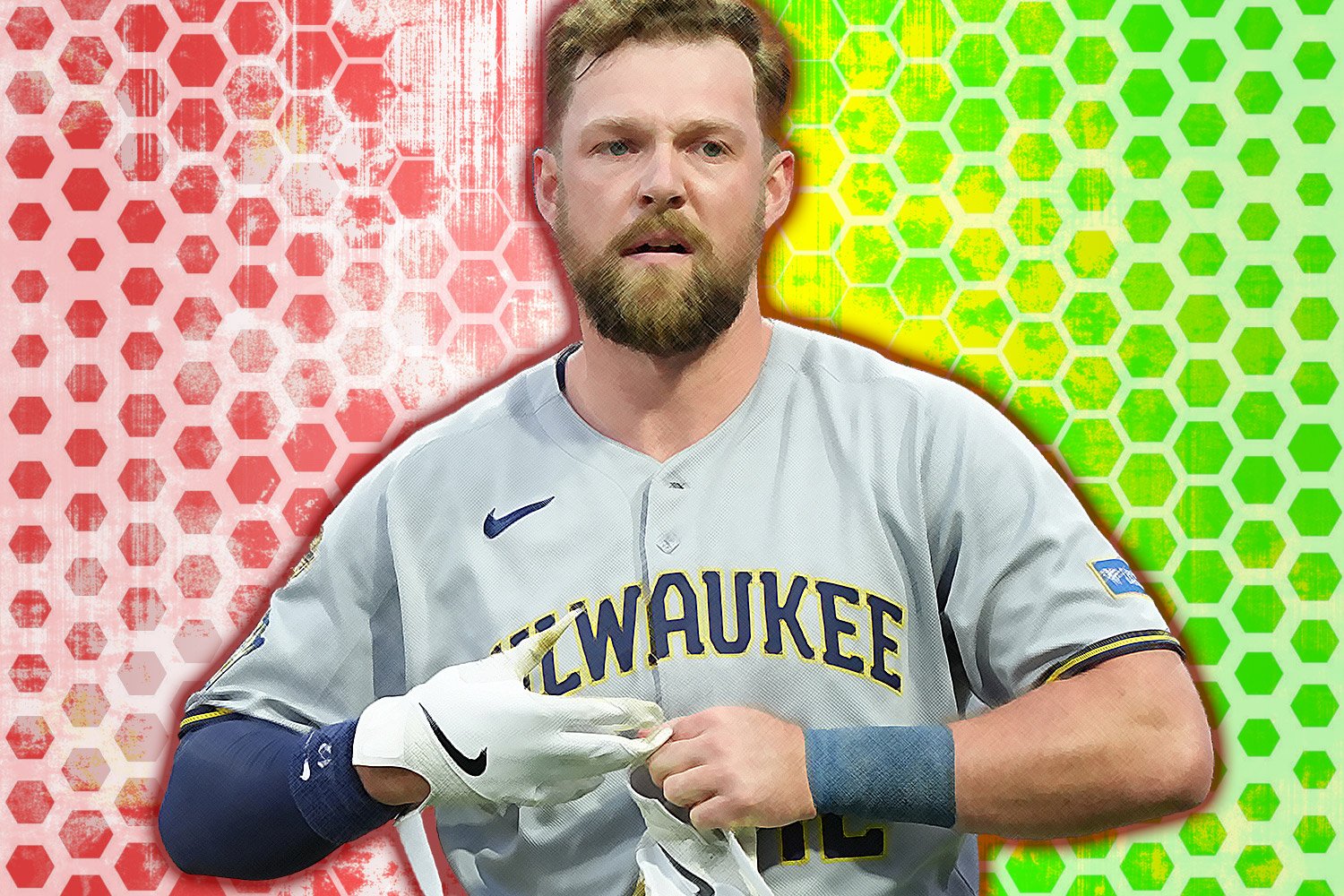 The Twins have quite a bit of work to do this offseason. Among the laundry list of gaping holes on the current team is first base, where they struggled to generate any meaningful offensive production last year. Minnesota’s first basemen combined for a .678 OPS in 2025, placing them 25th in MLB. With Ty France now gone, Kody Clemens sits atop the depth chart but doesn’t have nearly enough upside to get fans excited about the position heading into next season. Naturally, this means that the Twins could pursue a player in free agency and, given their frugal ways, are likely out of the running for Pete Alonso and even Ryan O’Hearn. However, Rhys Hoskins could be just affordable enough for Minnesota to be interested. Unfortunately, his sticker price is one of the only things he has going for him for 2026. He most recently completed a two-year stint with the Brewers, which, despite being a highly anticipated signing at the time, was immensely underwhelming on all fronts. For a total of $30 million ($34 million if you count the $4 million buyout of his mutual option), Milwaukee received a first baseman with a 102 OPS+ and 0.7 rWAR, hardly a strong return on investment. There was inherent risk following a long injury layoff in 2023, but even with 221 games under his belt, he never seemed to return to the hitter he was with the Phillies. The most drastic drop was undoubtedly in his ability to hit for power. Across six seasons in Philadelphia, he had a slugging percentage of .492, while he managed a slugging percentage of just .418 while with Milwaukee. Although this is a steep decline, by 2025, both his average and maximum exit velocities were back in the same ballpark (teehee) as his best years in Philadelphia. This means that he hadn’t really lost the raw power he's had his whole career, but it points to something more insidious. Instead, it seems the reason for this apparent discrepancy is that his quality of contact varied depending on the pitches he was seeing. In 2025, he pummeled fastballs but struggled immensely against breaking balls. Here are some of his batted ball metrics when separated by pitch type. # of pitches Average Exit Velocity BA SLG wOBA Fastball 715 92.7 mph 0.281 0.556 0.402 Breaking 545 85.5 mph 0.179 0.253 0.209 Offspeed 169 88.5 mph 0.194 0.226 0.254 As you can see, there’s a huge spread between the average exit velocity on fastballs and breaking balls. An average exit velocity of 92.7 mph is on par with Corey Seager’s season numbers, whereas an average exit velocity of 85.5 mph would be on par with Sal Frelick’s season numbers. This crucial vulnerability, along with returning injury issues, is what caused his OPS to decline from .877 in May to just .532 in June as opposing pitchers began to exploit his shortcomings. Unless he makes major adjustments, expect this steady diet of breaking balls and offensive slump to continue, especially as a more varied pitch mix is becoming vogue. Another symptom to check is his bat speed. Unfortunately, we only have bat-tracking data starting in 2024, which doesn’t provide enough data to definitively say whether he’s in the midst of a gradual decline. At 32 years old, his bat speed isn’t going to get any faster. In the two seasons for which we do have data, he was around the 40th percentile. It isn’t the reason for his diminished production at the plate, but it sure isn’t helping either. Offensively, he still does some things well. His plate discipline is as good as ever, and he has yet to post a walk rate below 10% for any season in his career. He still makes excellent swing decisions, posting an elite chase rate of just 19.9% last year. Finally, his batted-ball profile was still elite last season, with 34.5% of his batted balls pulled in the air, more than double the MLB average of 16.7%. But again, these positive batted ball results come almost exclusively against fastballs. Of the 25 total extra base hits he had, 19 of them came against fastballs, including all but one of his home runs. Based on the way that things have been going for him recently, Rhys Hoskins should be seen as more of a depth piece or placeholder than a starting option capable of moving the needle. Sure, the Twins don’t exactly have the most appealing options at either position, but does it really make sense to spend additional money on a player who could be at most a side-grade? If anyone knows not to throw good money after bad (or throw good money at all), it’s Minnesota’s front office. It remains to be seen whether the Twins will spend 2026 in rebuild mode, but even if they were focused on competing, it would make more sense to prioritize reloading the bullpen that was torn down at last year’s trade deadline over getting a first baseman in decline. At this point, signing anyone may be enough to cause excitement, but recent data suggests that a Rhys Hoskins contract could be more of a bearish signal than a bullish one.
 -
This year’s hottest pitching free agent has been earmarked for a big-market team, but could Minnesota be a dark horse candidate to sign him? Image courtesy of © Sam Navarro-Imagn Images This year’s hottest pitching free agent has been earmarked for a big-market team, but could Minnesota be a dark horse candidate to sign him? For the second year in a row, the most sought-after pitching talent of the offseason is coming from Japan. One year after Yoshinobu Yamamoto signed the most lucrative contract for a pitcher in MLB history, a younger but equally exciting Japanese talent has captured the attention of baseball fans. Roki Sasaki’s talents justify the hype that follows him. His numbers in NPB have been unreal, posting a cumulative 2.10 ERA, 0.89 WHIP, 11.5 K/9, and 5.74 K/BB over 394 ⅓ career innings at just 23 years old. He tossed 17 consecutive perfect innings along the way, an unthinkable feat in today’s game. To make him even more appealing, he’ll follow in Shohei Ohtani's footsteps by choosing the path of a typical international amateur free agent prospect rather than an established superstar. Because he’s being posted before turning 25, the team that signs him will pay him a modest signing bonus from the team’s international bonus pool, followed by league minimum before he hits arbitration and follows the traditional free agent service time restrictions. In other words, for the price of an average MLB contract, one lucky team will get a 6’2” power pitcher with a triple-digit fastball, physics-defying splitter, wicked slider, and full team control. This naturally led many to believe he would end up at a big market team, preferably one with a competitive roster and World Series aspirations. To many, he’ll inevitably find himself beside his Samurai Japan teammates Yamamoto and Shohei Ohtani on the Dodgers. Still, new information has suggested that he might actually prefer playing in a sleepier, cozier place like Minnesota. First of all, the most common reason to sign with a big market team is that they tend to have bigger pockets, but with all of the financial restrictions on his contract, every team will pretty much be limited to the same price. Second, sources stated that Sasaki has strongly disliked the pressure of major media markets, namely the Japanese tabloids that have treated him unfairly for the past two years of his stardom. Third, he has emphasized the importance of joining a competitive roster and being part of a strong developmental program. Thus, any small market team with a knack for getting the best out of their arm talent seems to be a strong fit for his preferences. Sound familiar? Minnesota is a small market, especially with the falling attendance they’ve seen over the past few years. In 2024, their total attendance was less than two million, which placed them 23rd in MLB, just above the Tigers and Pirates. Naturally, this means that the press is rarely as involved or critical as it is in New York or Boston, meeting Sasaki’s first request. Second, the Twins have done a good job churning out homegrown arm talent. Over the past two years, the Twins have a combined starter FIP of 3.86, fourth in MLB. The trio of Joe Ryan, Bailey Ober, and Simeon Woods Richardson have made major improvements since joining the organization, while bullpen arms like Griffin Jax and Jhoan Durán have shown great promise. Finally, although money won’t be a major factor in his decision, the Twins have $7.5 million in international bonus pool money for 2025, giving them additional financial flexibility during negotiations. The Twins are far from perfect, and the rest of their roster will need to undergo some solid improvements if they want to have a serious chance of wooing Sasaki and his talents; there’s an outside chance they have exactly what he’s looking for in his first MLB home. View full article
-
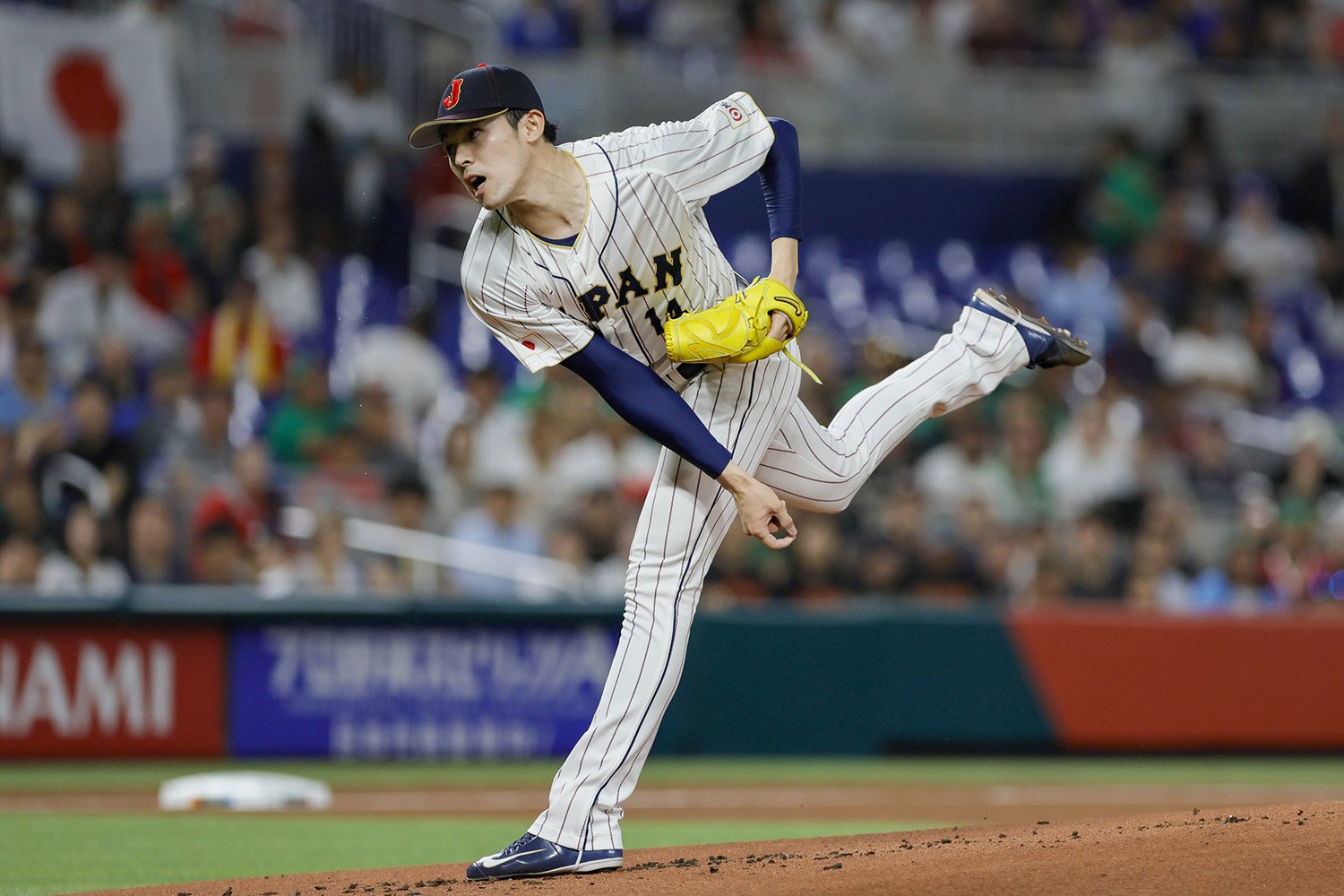 For the second year in a row, the most sought-after pitching talent of the offseason is coming from Japan. One year after Yoshinobu Yamamoto signed the most lucrative contract for a pitcher in MLB history, a younger but equally exciting Japanese talent has captured the attention of baseball fans. Roki Sasaki’s talents justify the hype that follows him. His numbers in NPB have been unreal, posting a cumulative 2.10 ERA, 0.89 WHIP, 11.5 K/9, and 5.74 K/BB over 394 ⅓ career innings at just 23 years old. He tossed 17 consecutive perfect innings along the way, an unthinkable feat in today’s game. To make him even more appealing, he’ll follow in Shohei Ohtani's footsteps by choosing the path of a typical international amateur free agent prospect rather than an established superstar. Because he’s being posted before turning 25, the team that signs him will pay him a modest signing bonus from the team’s international bonus pool, followed by league minimum before he hits arbitration and follows the traditional free agent service time restrictions. In other words, for the price of an average MLB contract, one lucky team will get a 6’2” power pitcher with a triple-digit fastball, physics-defying splitter, wicked slider, and full team control. This naturally led many to believe he would end up at a big market team, preferably one with a competitive roster and World Series aspirations. To many, he’ll inevitably find himself beside his Samurai Japan teammates Yamamoto and Shohei Ohtani on the Dodgers. Still, new information has suggested that he might actually prefer playing in a sleepier, cozier place like Minnesota. First of all, the most common reason to sign with a big market team is that they tend to have bigger pockets, but with all of the financial restrictions on his contract, every team will pretty much be limited to the same price. Second, sources stated that Sasaki has strongly disliked the pressure of major media markets, namely the Japanese tabloids that have treated him unfairly for the past two years of his stardom. Third, he has emphasized the importance of joining a competitive roster and being part of a strong developmental program. Thus, any small market team with a knack for getting the best out of their arm talent seems to be a strong fit for his preferences. Sound familiar? Minnesota is a small market, especially with the falling attendance they’ve seen over the past few years. In 2024, their total attendance was less than two million, which placed them 23rd in MLB, just above the Tigers and Pirates. Naturally, this means that the press is rarely as involved or critical as it is in New York or Boston, meeting Sasaki’s first request. Second, the Twins have done a good job churning out homegrown arm talent. Over the past two years, the Twins have a combined starter FIP of 3.86, fourth in MLB. The trio of Joe Ryan, Bailey Ober, and Simeon Woods Richardson have made major improvements since joining the organization, while bullpen arms like Griffin Jax and Jhoan Durán have shown great promise. Finally, although money won’t be a major factor in his decision, the Twins have $7.5 million in international bonus pool money for 2025, giving them additional financial flexibility during negotiations. The Twins are far from perfect, and the rest of their roster will need to undergo some solid improvements if they want to have a serious chance of wooing Sasaki and his talents; there’s an outside chance they have exactly what he’s looking for in his first MLB home.
 -
3 Keys to Stopping the Brewers (From A Brewers Fan)
Jason Wang replied to Jason Wang's topic in Twins Daily Front Page News
pretty much i do whatever brock tells me to To add on to what Brock said, Yelich has always hit the ball really hard and his exit velocity/quality of contact numbers have been consistently good, but the biggest hindrance since 2019 has been his low launch angle. From 2021 to 2023, he averaged a launch angle <4 degrees which gave him ground-ball rates of 55%+ for each of those years. This year, he's sitting at an average launch angle of 5.5 degrees and hitting the Statcast sweet spot more often. He's also striking out less. his 18.5% strikeout rate is lower than any season mark he's ever had. There's probably more nitty-gritty stuff that's feeding into it but that's the high level gist, at least to a lowly Brewer Fanatic Contributor such as myself. -
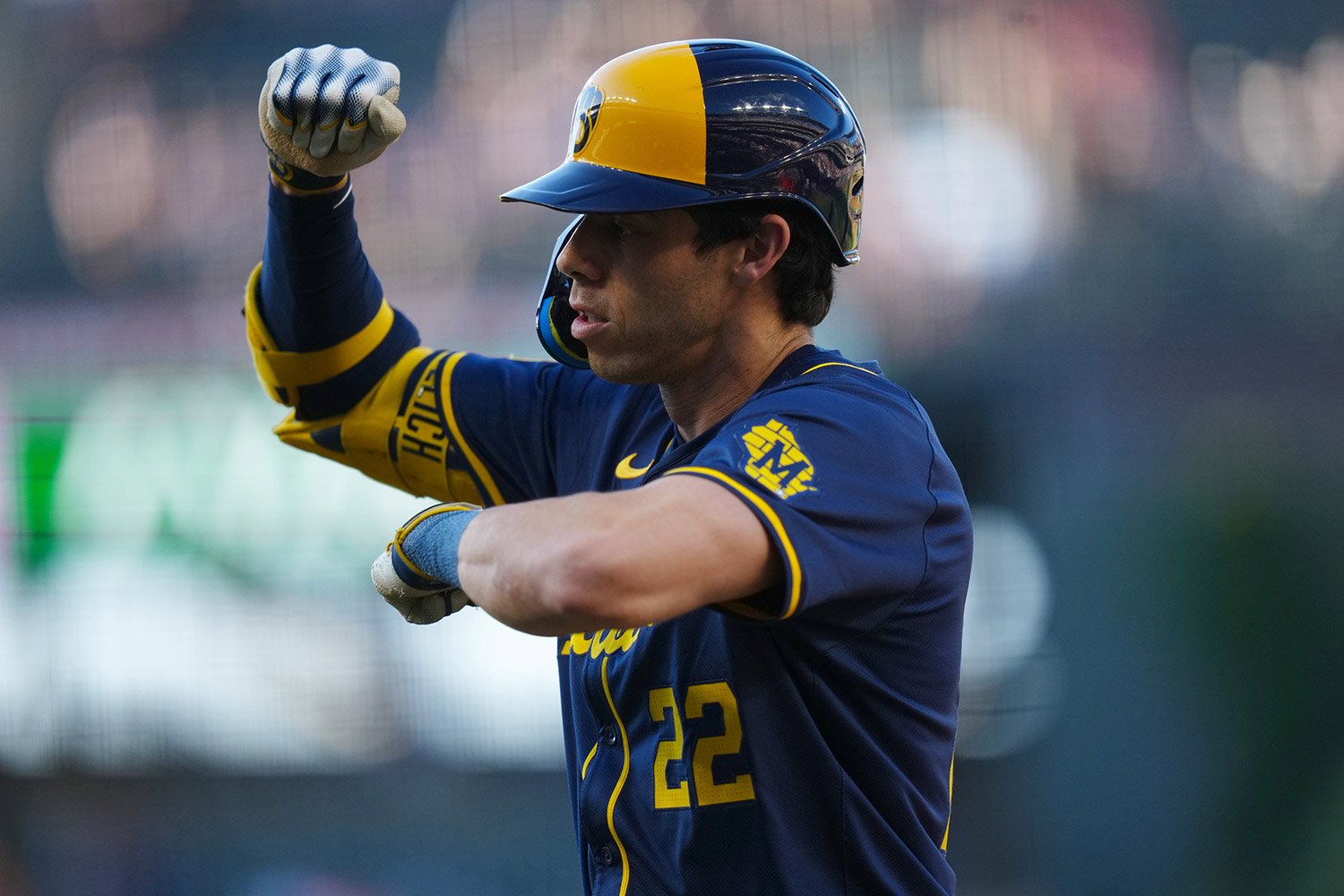 Despite the Brewers being in a more comfortable divisional spot, they’re a pretty even match for the Baldelli Brigade. Both teams are within one win of each other, and although the Brewers have a slightly better run differential (+79 vs. +47), the Twins have a slightly better team OPS (.751 vs. .733). A series sweep could put them within striking distance of the dastardly Guardians, so what are some weak spots Minnesota can exploit? The Rotation is as Weak as It Has Ever Been It must be nice over there in Minneapolis, with a healthy rotation full of players with two functioning arms. Is it the best rotation in baseball? Surely you know the answer to that but don’t fret. The Twins will be at the top of their rotation in these two games, trotting out Pablo López (5.11 ERA) and Joe Ryan (3.53 ERA). Meanwhile, the Brewers will use Freddy Peralta (4.11) and Aaron Civale (4.94 ERA). Depending on your belief in Pablo and whether he’s been scammed by the stats so far, Minnesota arguably has a leg up in terms of starting pitching in this series. To make matters worse for the Brewers, the Twins lineup has been swinging lately, posting a .819 team OPS since June 1st, second only to the Mets. Furthermore, their offense will work especially well against Peralta and Civale. Peralta predominantly throws a four-seam fastball and a slider. In 2024, the Twins have a combined .784 OPS against those pitches, the best in MLB. They may struggle a little more with Civale’s cutter/sinker/sweeper combination, but honestly, the person who has struggled the most with his arsenal this year has been Civale himself. Since arriving in Milwaukee, he has a 5.46 FIP and 1.41 WHIP over two starts. Over 17 starts with the Rays. He had a 5.07 ERA and 1.38 WHIP, so it’s safe to say that it might not be his year. Don’t Let Them Steal Like a refrigerator, the Brewers are most effective when they’re running. They’re second in MLB in stolen bases with a whopping 133, 87 more than the Twins’ figure of 46. The main suspects will be known as speedsters Brice Turang and Christian Yelich, who have stolen a combined 51 bags. While lacking the same on-base skills, Blake Perkins and Sal Frelick have top-decile sprint speed and have been known to snag bases when given the chance to do so, combining for 28 between them. Unfortunately, neither Ryan Jeffers nor Christian Vázquez are particularly adept at preventing the run game. Luckily, there are other ways to prevent the opposing team from making a break from it. More diligent pickoff attempts and intentional infielder positioning are just a few ways to stop Milwaukee in its tracks. If you want to be less ethical about it, you can always send Justin Topa to pull a Nancy Kerrigan job since he isn’t doing much these days. Pitch To Them - It Won’t Hurt Like an empty soda fountain, the Brewers ain’t got no pop, at least not since June 1st. They’re slugging just .371, 26th in MLB, and their .123 ISO is the worst in MLB since then. Their 33 home runs are 29th in MLB, just one more than the last-place Marlins. What has been limiting their power? They’re hitting ground balls at a 47.1% clip, the highest in MLB over this span. This poor quality of contact has drastically limited their ability to put runs on the board. López and Ryan both have strikeout rates >27.0%. Even if they’re not fanning hitters, they could still collect some outs through soft contact. Even if the Crew logs hits, they may be limited to singles with few extra-base hits. Without a real power/RBI threat other than maybe Willy Adames, the Twins shouldn’t be too worried about unloading their heat onto the Milwaukee men. It’ll be a great pair of games, and with this year’s head-to-head results currently at 1-1, hopefully, we’ll get a definitive ending to this DiamondCentric derby.
 -
How can the Twins emerge victorious in the latest episode of this classic midwestern matchup? Image courtesy of © Ron Chenoy-USA TODAY Sports How can the Twins emerge victorious in the latest episode of this classic midwestern matchup? Despite the Brewers being in a more comfortable divisional spot, they’re a pretty even match for the Baldelli Brigade. Both teams are within one win of each other, and although the Brewers have a slightly better run differential (+79 vs. +47), the Twins have a slightly better team OPS (.751 vs. .733). A series sweep could put them within striking distance of the dastardly Guardians, so what are some weak spots Minnesota can exploit? The Rotation is as Weak as It Has Ever Been It must be nice over there in Minneapolis, with a healthy rotation full of players with two functioning arms. Is it the best rotation in baseball? Surely you know the answer to that but don’t fret. The Twins will be at the top of their rotation in these two games, trotting out Pablo López (5.11 ERA) and Joe Ryan (3.53 ERA). Meanwhile, the Brewers will use Freddy Peralta (4.11) and Aaron Civale (4.94 ERA). Depending on your belief in Pablo and whether he’s been scammed by the stats so far, Minnesota arguably has a leg up in terms of starting pitching in this series. To make matters worse for the Brewers, the Twins lineup has been swinging lately, posting a .819 team OPS since June 1st, second only to the Mets. Furthermore, their offense will work especially well against Peralta and Civale. Peralta predominantly throws a four-seam fastball and a slider. In 2024, the Twins have a combined .784 OPS against those pitches, the best in MLB. They may struggle a little more with Civale’s cutter/sinker/sweeper combination, but honestly, the person who has struggled the most with his arsenal this year has been Civale himself. Since arriving in Milwaukee, he has a 5.46 FIP and 1.41 WHIP over two starts. Over 17 starts with the Rays. He had a 5.07 ERA and 1.38 WHIP, so it’s safe to say that it might not be his year. Don’t Let Them Steal Like a refrigerator, the Brewers are most effective when they’re running. They’re second in MLB in stolen bases with a whopping 133, 87 more than the Twins’ figure of 46. The main suspects will be known as speedsters Brice Turang and Christian Yelich, who have stolen a combined 51 bags. While lacking the same on-base skills, Blake Perkins and Sal Frelick have top-decile sprint speed and have been known to snag bases when given the chance to do so, combining for 28 between them. Unfortunately, neither Ryan Jeffers nor Christian Vázquez are particularly adept at preventing the run game. Luckily, there are other ways to prevent the opposing team from making a break from it. More diligent pickoff attempts and intentional infielder positioning are just a few ways to stop Milwaukee in its tracks. If you want to be less ethical about it, you can always send Justin Topa to pull a Nancy Kerrigan job since he isn’t doing much these days. Pitch To Them - It Won’t Hurt Like an empty soda fountain, the Brewers ain’t got no pop, at least not since June 1st. They’re slugging just .371, 26th in MLB, and their .123 ISO is the worst in MLB since then. Their 33 home runs are 29th in MLB, just one more than the last-place Marlins. What has been limiting their power? They’re hitting ground balls at a 47.1% clip, the highest in MLB over this span. This poor quality of contact has drastically limited their ability to put runs on the board. López and Ryan both have strikeout rates >27.0%. Even if they’re not fanning hitters, they could still collect some outs through soft contact. Even if the Crew logs hits, they may be limited to singles with few extra-base hits. Without a real power/RBI threat other than maybe Willy Adames, the Twins shouldn’t be too worried about unloading their heat onto the Milwaukee men. It’ll be a great pair of games, and with this year’s head-to-head results currently at 1-1, hopefully, we’ll get a definitive ending to this DiamondCentric derby. View full article


