Brandon Glick
-
Posts
49 -
Joined
-
Last visited
Content Type
Profiles
News
Minnesota Twins Videos
2026 Minnesota Twins Top Prospects Ranking
2022 Minnesota Twins Draft Picks
Minnesota Twins Free Agent & Trade Rumors, Notes, & Tidbits
Guides & Resources
2023 Minnesota Twins Draft Picks
The Minnesota Twins Players Project
2024 Minnesota Twins Draft Picks
2025 Minnesota Twins Draft Pick Tracker
2026 Minnesota Twins Draft Tracker: Picks & Bonuses
Forums
Blogs
Events
Store
Downloads
Gallery
Everything posted by Brandon Glick
-
This is the game where the Twins turn it around. This is the game where the Twins turn it around. This is the game where the Twins turn it around. This is the game...

-
A discussion on the Twins' slow start to the 2025 MLB season from Take Me Out To the Podcast. View full video
-
A discussion on the Twins' slow start to the 2025 MLB season from Take Me Out To the Podcast.
-
A discussion about the Twins' potential in 2025 if they can keep their core on the field, from Take Me Out To The Podcast. View full video
-
A discussion about the Twins' potential in 2025 if they can keep their core on the field, from Take Me Out To The Podcast.
-
A huge new influx of players have been added to the Twins Players Project in recent weeks. Let's review some of the more notable entries. What is the Players Project? It's a community-driven, wiki-style project that focuses on Twins players of all stripes. It's open to all Twins Daily users and we've had contributions for current players, past players, and players who never even made the major leagues but played in the Twins farm system. Create your favorite player today! In this update, we'll be focusing on a group of players with vastly different legacies in Minnesota. All of the players here were written up by @William Malone and edited by @Brock Beauchamp, but it's important to note the incredible contributions from the entire community. The Twins Players Project is now up to nearly 170 entries thanks to everyone's hard work! Be sure to take a peek using the link above or the button below and feel free to add your favorite player! Torii Hunter is one of the best players in modern Twins history, with a long list of accolades that includes numerous team MVP and community awards, nine Gold Gloves, and five All-Star selections. He had multiple top-15 AL MVP finishes with the Twins, including a sixth-place finish in 2002. That year was the first of three consecutive AL Central titles for Hunter and the Twins, and the outfielder led the team in RBIs in both of the latter seasons, including his first career 100 RBI season in 2003. Mike Pelfrey was a risky free agent signing in 2013 following a Tommy John surgery that knocked him out for nearly all of the previous season, and injury troubles found him again in 2014, However, that year was sandwiched between two solid seasons as an innings-eater in the Twins' rotation, including a dominant ten-game stretch in 2015 when he stepped into the rotation for a suspended Ervin Santana and authored an 8-2 record and 1.89 ERA. In the three-year stretch from 2016-18, the Twins' OPS leaders were Brian Dozier, Eddie Rosario, Miguel Sanó, and Jake Cave. Do you know who ranked fifth on that list? Robbie Grossman (.771 OPS) was a bright spot on one of the worst teams in modern franchise history in 2016, eventually becoming a middle-of-the-order staple on the rapid turnaround squad in 2017. He is the only player here that is still active. Thanks again to all who have been contributing to the project — please stop by the Players Project by hitting the button below! The Minnesota Twins Players Project is open to all Twins Daily users. If you're a Twins history buff or just want to dive into the background of your favorite player, come on board! View full article
-
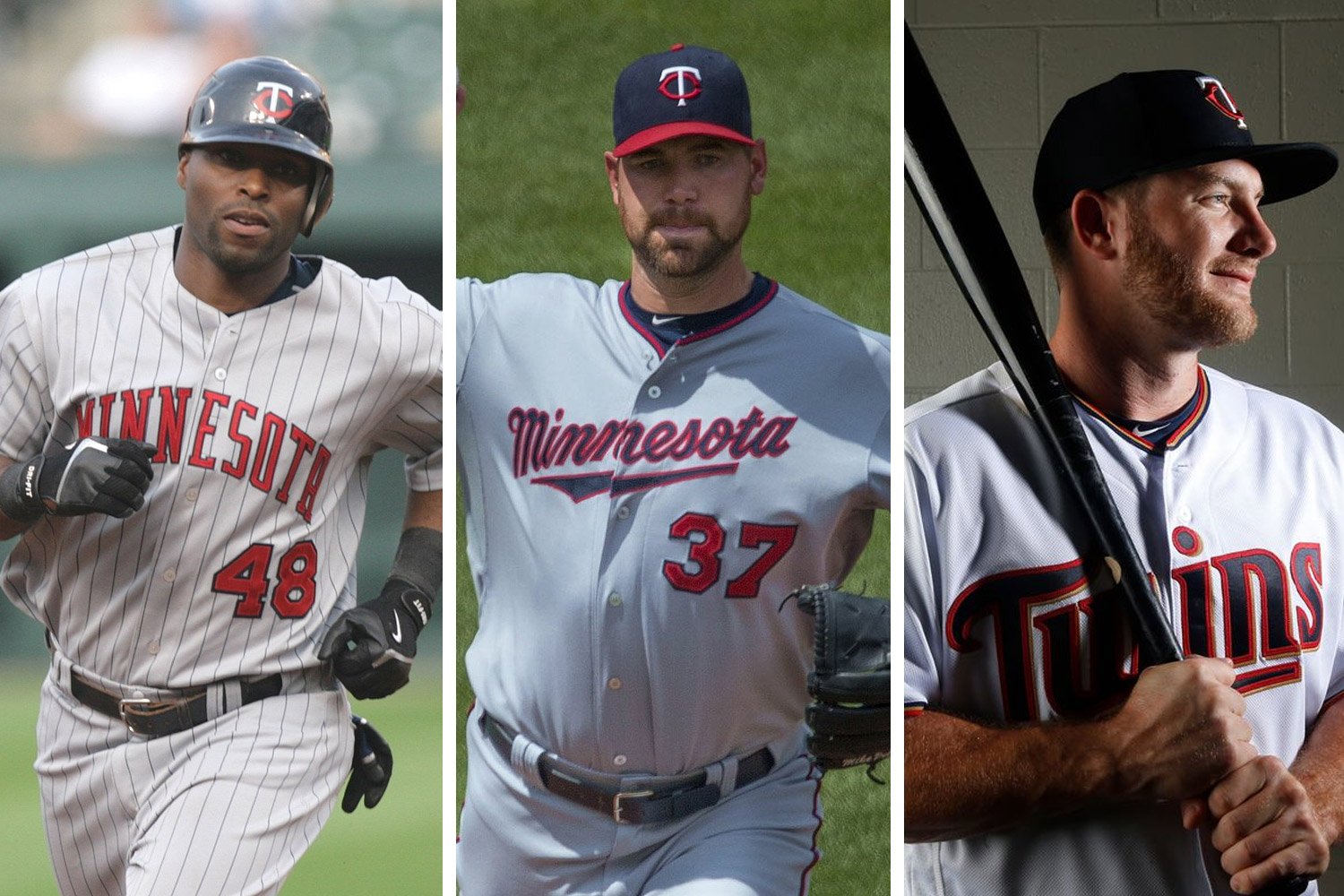 What is the Players Project? It's a community-driven, wiki-style project that focuses on Twins players of all stripes. It's open to all Twins Daily users and we've had contributions for current players, past players, and players who never even made the major leagues but played in the Twins farm system. Create your favorite player today! In this update, we'll be focusing on a group of players with vastly different legacies in Minnesota. All of the players here were written up by @William Malone and edited by @Brock Beauchamp, but it's important to note the incredible contributions from the entire community. The Twins Players Project is now up to nearly 170 entries thanks to everyone's hard work! Be sure to take a peek using the link above or the button below and feel free to add your favorite player! Torii Hunter is one of the best players in modern Twins history, with a long list of accolades that includes numerous team MVP and community awards, nine Gold Gloves, and five All-Star selections. He had multiple top-15 AL MVP finishes with the Twins, including a sixth-place finish in 2002. That year was the first of three consecutive AL Central titles for Hunter and the Twins, and the outfielder led the team in RBIs in both of the latter seasons, including his first career 100 RBI season in 2003. Mike Pelfrey was a risky free agent signing in 2013 following a Tommy John surgery that knocked him out for nearly all of the previous season, and injury troubles found him again in 2014, However, that year was sandwiched between two solid seasons as an innings-eater in the Twins' rotation, including a dominant ten-game stretch in 2015 when he stepped into the rotation for a suspended Ervin Santana and authored an 8-2 record and 1.89 ERA. In the three-year stretch from 2016-18, the Twins' OPS leaders were Brian Dozier, Eddie Rosario, Miguel Sanó, and Jake Cave. Do you know who ranked fifth on that list? Robbie Grossman (.771 OPS) was a bright spot on one of the worst teams in modern franchise history in 2016, eventually becoming a middle-of-the-order staple on the rapid turnaround squad in 2017. He is the only player here that is still active. Thanks again to all who have been contributing to the project — please stop by the Players Project by hitting the button below! The Minnesota Twins Players Project is open to all Twins Daily users. If you're a Twins history buff or just want to dive into the background of your favorite player, come on board!
 -
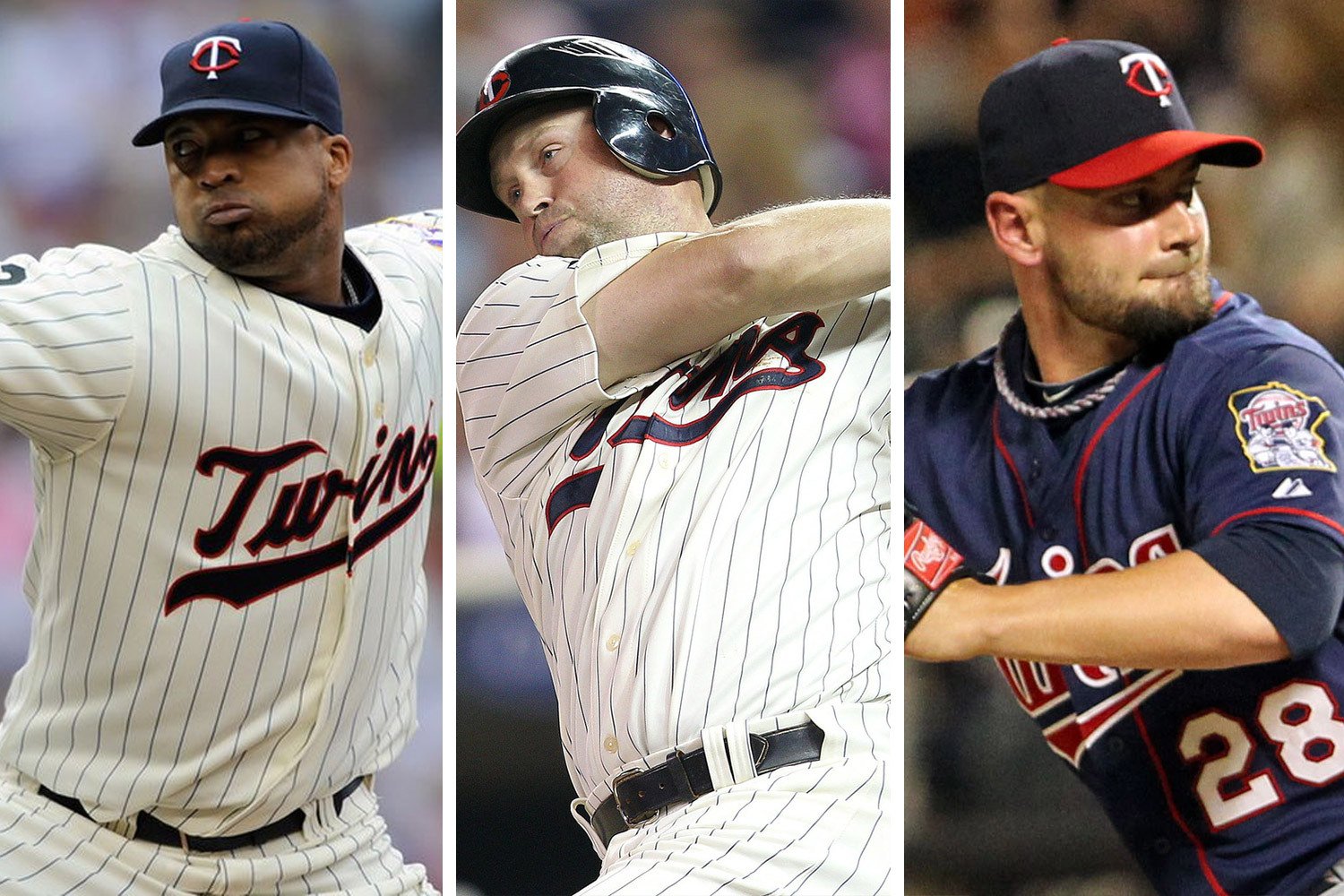 What is the Players Project? It's a community-driven, wiki-style project that focuses on Twins players of all stripes. It's open to all Twins Daily users and we've had contributions for current players, past players, and players who never even made the major leagues but played in the Twins farm system. Create your favorite player today! In this update, we'll be focusing on a triumvirate of players who dominated for the Twins in the late 2000's. All of the players here were written up by @William Malone and edited by @Brock Beauchamp, but it's important to note the incredible contributions from the entire community. The Twins Players Project is now up to 129 entries thanks to everyone's hard work! Be sure to take a peek using the link above or the button below and feel free to add your favorite player! Michael Cuddyer is among the most iconic and recognizable Twins from the first decade of the 21st century, having played 11 seasons (2001-2011) with the franchise. 2006 was the first time Cuddyer had a full time role with the Twins. He started 137 games in right field for them that season, also providing a breakout season at the plate, as his 41 doubles and 109 RBI were career highs. The outfielder is one of just four players in Twins history with 100 home runs, 200 doubles, and 30 triples (Joe Mauer, Tony Oliva, Kirby Puckett). He was inducted to the Twins Hall of Fame in 2017. Francisco Liriano had a wild 14-year career, with the first half of it coming in Minnesota. Though he's known well as the recipient of the largest free agent contract in Pittsburgh Pirates history — which, laughably, came in at just $39 million over three years — he earned Cy Young votes in 2010 as the Twins' staff ace and finished third in AL Rookie of the Year voting in 2006. He also threw a no-hitter against the Chicago White Sox in 2011 in which he threw barely half of his pitches for strikes (66 of 123). Another top-10 Rookie of the Year finisher, Jesse Crain finished eight in the voting in 2005 as a dominant reliever who served as the primary set-up man to Joe Nathan. His best season with the Twins came in 2007, when he went 12-5 with a 2.71 ERA over 75 relief appearances. Despite not making a start, his 12 wins were second on the team behind Johan Santana. Thanks again to all who have been contributing to the project — please stop by the Players Project by hitting the button below! The Minnesota Twins Players Project is open to all Twins Daily users. If you're a Twins history buff or just want to dive into the background of your favorite player, come on board!
 -
A huge new influx of players have been added to the Twins Players Project in recent weeks. These are some of the highlights. What is the Players Project? It's a community-driven, wiki-style project that focuses on Twins players of all stripes. It's open to all Twins Daily users and we've had contributions for current players, past players, and players who never even made the major leagues but played in the Twins farm system. Create your favorite player today! In this update, we'll be focusing on a triumvirate of players who dominated for the Twins in the late 2000's. All of the players here were written up by @William Malone and edited by @Brock Beauchamp, but it's important to note the incredible contributions from the entire community. The Twins Players Project is now up to 129 entries thanks to everyone's hard work! Be sure to take a peek using the link above or the button below and feel free to add your favorite player! Michael Cuddyer is among the most iconic and recognizable Twins from the first decade of the 21st century, having played 11 seasons (2001-2011) with the franchise. 2006 was the first time Cuddyer had a full time role with the Twins. He started 137 games in right field for them that season, also providing a breakout season at the plate, as his 41 doubles and 109 RBI were career highs. The outfielder is one of just four players in Twins history with 100 home runs, 200 doubles, and 30 triples (Joe Mauer, Tony Oliva, Kirby Puckett). He was inducted to the Twins Hall of Fame in 2017. Francisco Liriano had a wild 14-year career, with the first half of it coming in Minnesota. Though he's known well as the recipient of the largest free agent contract in Pittsburgh Pirates history — which, laughably, came in at just $39 million over three years — he earned Cy Young votes in 2010 as the Twins' staff ace and finished third in AL Rookie of the Year voting in 2006. He also threw a no-hitter against the Chicago White Sox in 2011 in which he threw barely half of his pitches for strikes (66 of 123). Another top-10 Rookie of the Year finisher, Jesse Crain finished eight in the voting in 2005 as a dominant reliever who served as the primary set-up man to Joe Nathan. His best season with the Twins came in 2007, when he went 12-5 with a 2.71 ERA over 75 relief appearances. Despite not making a start, his 12 wins were second on the team behind Johan Santana. Thanks again to all who have been contributing to the project — please stop by the Players Project by hitting the button below! The Minnesota Twins Players Project is open to all Twins Daily users. If you're a Twins history buff or just want to dive into the background of your favorite player, come on board! View full article
-
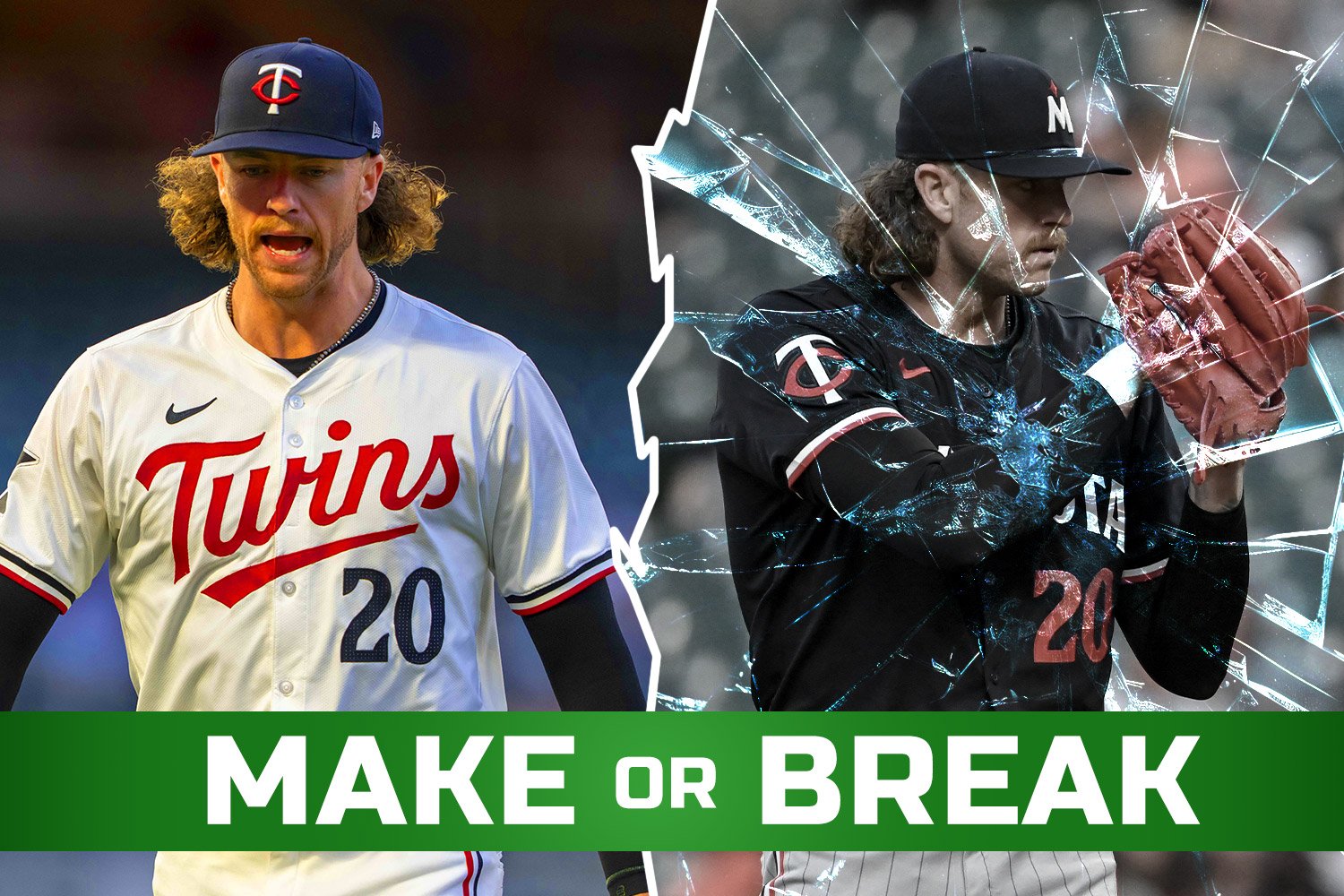 Chris Paddack, who is still on the Minnesota Twins — a fact you can check using our handy-dandy Chris Paddack tool — is in the final year of his contract and making $7.5 million this year ($4.175 million for luxury tax purposes). Earlier in the offseason, when it appeared the Twins wanted to do nothing but slash payroll, he was a lock to be traded. Then, the team (slightly) reversed course, signing Danny Coloumbe, Harrison Bader, and Ty France to (cheap) major league deals for the 2025 season. Even with a prospective sale of the franchise looming over every transaction and player, it’s clear that Minnesota isn’t totally punting on the idea of putting out a competitive team this year. Which brings us to Paddack. Can he actually contribute to a competitive team? He’s been very effective in the big leagues before, but his performance has leveled off since an impressive rookie season with the San Diego Padres in 2019. Do the Twins actually need Paddack to be his best self in order to have a chance in a loaded AL Central, or can they treat him as nothing more than expensive filler? What Went Wrong In 2024? Like most pitchers, the Sheriff’s struggles last season can be traced back to his injury issues. He was returning from his second Tommy John surgery in 2023, only to deal with constant forearm issues throughout the summer. When healthy, he maintained his usually-excellent level of control, which is promising considering that’s often one of the last things to return for pitchers trying to come back from elbow surgery. However, his fastball velocity (93.3 mph) was more than two ticks below his average speed in 2023 (95.5 mph), though the former number is subject to small-sample size caveats (just 34 fastballs thrown in 2023). The reason that dip in velocity matters is because it became harder for Paddack to fool hitters with his offspeed offerings without the threat of blowing something hard by them. From 2021 (his last healthy season) to 2024, only his fastball improved in terms of xwOBA allowed to opposing hitters. His changeup was smacked around to the tune of a .385 xwOBA in 2024, and it was downright catastrophic against right-handed hitters (.463 wOBA; for reference, Shohei Ohtani had a .431 wOBA last season). Neither his slider (.314 xwOBA allowed) nor his curveball (.396 xwOBA) were all that good either, with both getting crushed by left-handed hitters (.434 wOBA on his slider to lefty batters; .356 wOBA on his curveball). His fastball remains one of the better for-strike four-seamers in the league, but if he can’t differentiate between his breaking pitches, he’s not going to make a lot of headway as a starter. What Can Go Right In 2025? For starters, as laid out by Cody Pirkl, better health. Paddack has had elbow, oblique, or arm injuries in every single season since 2021. He’s thrown a total of 224.0 innings in the last four seasons combined, and nearly half of that workload came four years ago. Ever since arriving in Minnesota, he simply has not been able to stay on the mound. Likewise, when Paddack first began working with the Twins’ coaching staff, they implored him to add a slider to his arsenal, reworking a discarded cutter that got bashed around like silly in 2020. He tinkered with a sinker, too, though that doesn’t look likely to return in the wake of his second Tommy John procedure. Instead, all eyes should be on his firm slider, which, despite being crushed by lefties, was actually pretty dominant against right-handed hitters. Throwing it 177 times to same-side hitters in 2024 (23.6% of all his offerings to righties), Paddack’s slider generated a .208 expected batting average and .258 xwOBA. He induced soft contact with it and got batters to whiff on the pitch 29.3% of the time — not quite the elite figure his changeup used to average during his Padres days, but some of his best stuff with the Twins. At worst, the upside of this new breaking pitch gives Paddack a credible reliever profile, where his old velocity would also be more likely to show up in shorter bursts out of the bullpen. If he can hone the pitch (and stop throwing it to opposite-handed hitters) while finding a variation of his changeup or curveball that messes with lefty batters’ timing, Paddack could be a back-end rotation surprise for the Twins in 2025. How Will This Impact The Twins in 2025? Should the Twins have done more this offseason to add rotation depth and ensure Paddack wasn’t being relied on to throw 120+ innings this season? Probably, but you could say they should have done more at nearly every position on the roster. With Pablo López, Joe Ryan, and Bailey Ober entrenched as the top three starters, Simeon Woods Richardson looks to have the inside track on the No. 4 job heading into spring training. That leaves Paddack, David Festa, Zebby Matthews, and Louie Varland fighting it out for the final spot in the Opening Day rotation. Top prospect Marco Raya is also on the 40-man roster. By all accounts, Paddack should be the favorite for the job, at least as long as he’s on the roster. If his body just can’t handle a starters workload anymore, he could theoretically become a valuable long-man/opener in the bullpen, though that group is probably even more crowded than the rotation right now. Either way, with free agency looming for the 6’5” right-hander, Paddack will need to put together his best season in a half-decade in order to remain relevant within the organization.
 -
Will Chris Paddack win the No. 5 starter job for the Twins out of spring training this year? Will he even be on the roster come Opening Day? Image courtesy of © Jesse Johnson-Imagn Images / © Tommy Gilligan-Imagn Images Chris Paddack, who is still on the Minnesota Twins — a fact you can check using our handy-dandy Chris Paddack tool — is in the final year of his contract and making $7.5 million this year ($4.175 million for luxury tax purposes). Earlier in the offseason, when it appeared the Twins wanted to do nothing but slash payroll, he was a lock to be traded. Then, the team (slightly) reversed course, signing Danny Coloumbe, Harrison Bader, and Ty France to (cheap) major league deals for the 2025 season. Even with a prospective sale of the franchise looming over every transaction and player, it’s clear that Minnesota isn’t totally punting on the idea of putting out a competitive team this year. Which brings us to Paddack. Can he actually contribute to a competitive team? He’s been very effective in the big leagues before, but his performance has leveled off since an impressive rookie season with the San Diego Padres in 2019. Do the Twins actually need Paddack to be his best self in order to have a chance in a loaded AL Central, or can they treat him as nothing more than expensive filler? What Went Wrong In 2024? Like most pitchers, the Sheriff’s struggles last season can be traced back to his injury issues. He was returning from his second Tommy John surgery in 2023, only to deal with constant forearm issues throughout the summer. When healthy, he maintained his usually-excellent level of control, which is promising considering that’s often one of the last things to return for pitchers trying to come back from elbow surgery. However, his fastball velocity (93.3 mph) was more than two ticks below his average speed in 2023 (95.5 mph), though the former number is subject to small-sample size caveats (just 34 fastballs thrown in 2023). The reason that dip in velocity matters is because it became harder for Paddack to fool hitters with his offspeed offerings without the threat of blowing something hard by them. From 2021 (his last healthy season) to 2024, only his fastball improved in terms of xwOBA allowed to opposing hitters. His changeup was smacked around to the tune of a .385 xwOBA in 2024, and it was downright catastrophic against right-handed hitters (.463 wOBA; for reference, Shohei Ohtani had a .431 wOBA last season). Neither his slider (.314 xwOBA allowed) nor his curveball (.396 xwOBA) were all that good either, with both getting crushed by left-handed hitters (.434 wOBA on his slider to lefty batters; .356 wOBA on his curveball). His fastball remains one of the better for-strike four-seamers in the league, but if he can’t differentiate between his breaking pitches, he’s not going to make a lot of headway as a starter. What Can Go Right In 2025? For starters, as laid out by Cody Pirkl, better health. Paddack has had elbow, oblique, or arm injuries in every single season since 2021. He’s thrown a total of 224.0 innings in the last four seasons combined, and nearly half of that workload came four years ago. Ever since arriving in Minnesota, he simply has not been able to stay on the mound. Likewise, when Paddack first began working with the Twins’ coaching staff, they implored him to add a slider to his arsenal, reworking a discarded cutter that got bashed around like silly in 2020. He tinkered with a sinker, too, though that doesn’t look likely to return in the wake of his second Tommy John procedure. Instead, all eyes should be on his firm slider, which, despite being crushed by lefties, was actually pretty dominant against right-handed hitters. Throwing it 177 times to same-side hitters in 2024 (23.6% of all his offerings to righties), Paddack’s slider generated a .208 expected batting average and .258 xwOBA. He induced soft contact with it and got batters to whiff on the pitch 29.3% of the time — not quite the elite figure his changeup used to average during his Padres days, but some of his best stuff with the Twins. At worst, the upside of this new breaking pitch gives Paddack a credible reliever profile, where his old velocity would also be more likely to show up in shorter bursts out of the bullpen. If he can hone the pitch (and stop throwing it to opposite-handed hitters) while finding a variation of his changeup or curveball that messes with lefty batters’ timing, Paddack could be a back-end rotation surprise for the Twins in 2025. How Will This Impact The Twins in 2025? Should the Twins have done more this offseason to add rotation depth and ensure Paddack wasn’t being relied on to throw 120+ innings this season? Probably, but you could say they should have done more at nearly every position on the roster. With Pablo López, Joe Ryan, and Bailey Ober entrenched as the top three starters, Simeon Woods Richardson looks to have the inside track on the No. 4 job heading into spring training. That leaves Paddack, David Festa, Zebby Matthews, and Louie Varland fighting it out for the final spot in the Opening Day rotation. Top prospect Marco Raya is also on the 40-man roster. By all accounts, Paddack should be the favorite for the job, at least as long as he’s on the roster. If his body just can’t handle a starters workload anymore, he could theoretically become a valuable long-man/opener in the bullpen, though that group is probably even more crowded than the rotation right now. Either way, with free agency looming for the 6’5” right-hander, Paddack will need to put together his best season in a half-decade in order to remain relevant within the organization. View full article
-
It's a good thing the Twins went all out this offseason by signing Bader, France, and Coulombe. Would be hard to see them as WS contenders without their new "Big 3".
-
Twins Land Former Top Prospect Diego Cartaya in Trade With Dodgers
Brandon Glick posted an article in Twins
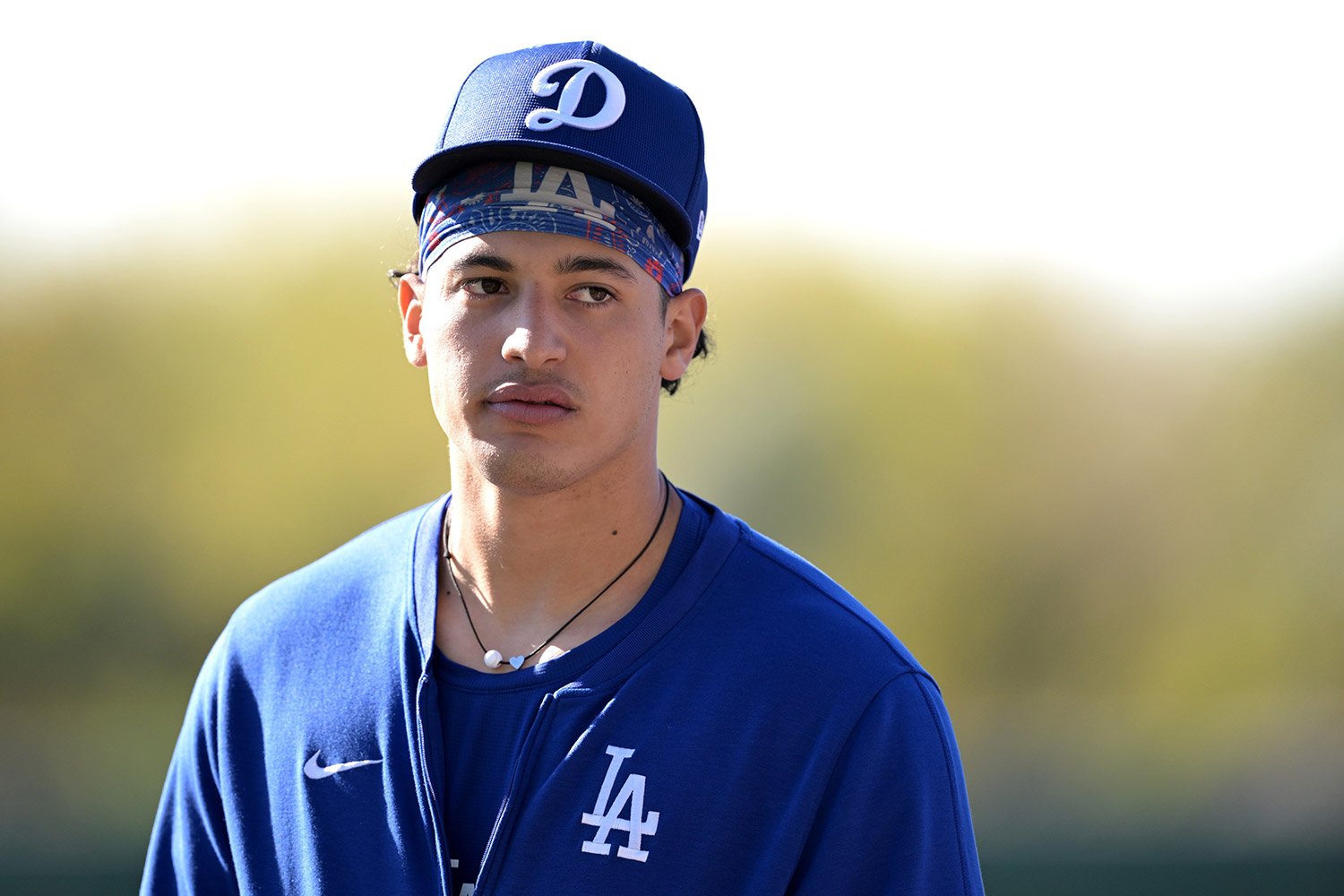 In the midst of a potential ownership change that may be coming as soon as Opening Day and an apparent mandate from the incumbent ownership group to keep payroll at 2024 levels (if not lower), it isn't surprising that the Twins have been relatively inactive this offseason. It's sort of been a theme in the Al Central, though that doesn't excuse Minnesota's sloth-like performance in a key offseason after they collapsed down the stretch in 2024. Now, they've finally made a notable move, even if it isn't going to fundamentally change the course of the team or the 2025 season. Per the team, the Twins have acquired Diego Cartaya in exchange for minor-league pitcher Jose Vasquez. Cartaya, 23, split the 2024 season between Triple-A Oklahoma City and Double-A Tulsa in the Dodgers' farm system, combining to slash .221/.323/.363 with 11 home runs in 95 games. The Venezuelan native signed for a $2.5 million bonus as a 17-year-old in 2018 and was Los Angeles' top prospect over the past few seasons before falling down lists in 2024. Cartaya was at his best in 2021-22, posting an OPS over .900 across both Single-A and High-A. He hit 41 home runs between the 2022-23 seasons and is renowned for his advanced plate approach and above-average power (especially for a catcher). His defense has never been his calling card, though he has improved with his pitch-calling and framing in recent seasons, and his arm has always been regarded as above-average. MLB.com now ranks Cartaya as the Twins' 23rd-best prospect. Vasquez, 20, has played two minor league seasons for the Dominican Summer League Twins, going 5-2 with an 8.05 ERA in 57.0 innings, producing a 71-47 strikeout-to-walk ratio in 22 games (9 starts). He has not appeared on any top prospect lists and appears to be a pure-upside play by the Dodgers, who were going to lose Cartaya for nothing after DFA'ing him to make room for free agent signing Hye-Seong Kim. Notably, the Twins' 40-man roster is full and features four catchers (Cartaya, Ryan Jeffers, Jair Camargo, and Christian Vázquez). The team cannot bank on their latest addition to be their catcher of the future after a down season in 2024, though he does make Vazquez or Jeffers even more expendable than they already were. Unless the team plans to carry three catchers on their major league roster in 2025, a follow-up move shouldn't be far behind. If you want to understand why the Dodgers unceremoniously dumped Cartaya, it's not due to a waning belief in his talents (though a persistent back injury has limited his effectiveness in recent seasons). Los Angeles already has Will Smith locked down on a long-term contract as their starting backstop, while Dalton Rushing's recent emergence (now the Dodgers' top prospect) rendered Cartaya superfluous. When the team signed Kim, they had yet to offload Gavin Lux onto the Reds, making the Venezuelan catcher an unfortunate-but-necessary casualty for their 2025 operation. Looking into Cartaya's profile, there are some obvious places the Twins can focus their efforts on helping to restore him to his former status. You might be surprised to learn that Cartaya has always been more effective against opposing righties, crushing them to the tune of a .943 OPS in 2022 (compared to .722 mark against southpaws). Even in 2023, when his overall offensive numbers were down, he simply performed better against same-sided pitchers, with a .671 OPS against righties and .604 OPS against lefties. In 2024, however, that trend finally reversed, as his OPS was 79 points better against left-handers compared to right-handers. Some of that can be traced back to the fact that pitching simply improves at the highest level of the minors, as well as Cartaya's back problems. However, it's Cartaya's weakest link that appears to be holding him back the most. In 2024, Cartaya posted a 28.3% strikeout rate (21.7% vs. lefties, 30.2% vs. righties); in 2023, his strikeout rate was 29.0% (29.8% vs. lefties, 28.8% vs righties) and in 2022, his strikeout rate was 26.7% (27.7% vs. lefties, 26.5% vs. righties). Those overall strikeout numbers are pretty consistent, but his splits have been tilting in favor of his work against southpaws for years. Unless he can refine his plate approach versus same-sided pitchers, he'll continue to struggle, especially against the strikeout artists in the big leagues. Even anecdotally, Cartaya's bat-to-ball skills have been in question as he's risen through the minor league ranks, with MLB.com dropping his "hit" tool from a rating of 50 (average) prior to 2022 to a rating of 40 (below-average) in 2024. If the Twins can help Cartaya improve his contact numbers without sacrificing the quality of contact that makes him such an intriguing power threat, they may be cooking with gas. Fans should keep their expectations in check for now, but it's rare that a player of this pedigree becomes available at such a cheap price. It may not be the move that changes the balance of power in the AL Central, but, at the very least, it's a smart one.
 -
It's been a quiet offseason on the Twins' front, though they may finally be awaking from their slumber after acquiring a former Top-25 prospect from the Dodgers. Image courtesy of © Jayne Kamin-Oncea-Imagn Images In the midst of a potential ownership change that may be coming as soon as Opening Day and an apparent mandate from the incumbent ownership group to keep payroll at 2024 levels (if not lower), it isn't surprising that the Twins have been relatively inactive this offseason. It's sort of been a theme in the Al Central, though that doesn't excuse Minnesota's sloth-like performance in a key offseason after they collapsed down the stretch in 2024. Now, they've finally made a notable move, even if it isn't going to fundamentally change the course of the team or the 2025 season. Per the team, the Twins have acquired Diego Cartaya in exchange for minor-league pitcher Jose Vasquez. Cartaya, 23, split the 2024 season between Triple-A Oklahoma City and Double-A Tulsa in the Dodgers' farm system, combining to slash .221/.323/.363 with 11 home runs in 95 games. The Venezuelan native signed for a $2.5 million bonus as a 17-year-old in 2018 and was Los Angeles' top prospect over the past few seasons before falling down lists in 2024. Cartaya was at his best in 2021-22, posting an OPS over .900 across both Single-A and High-A. He hit 41 home runs between the 2022-23 seasons and is renowned for his advanced plate approach and above-average power (especially for a catcher). His defense has never been his calling card, though he has improved with his pitch-calling and framing in recent seasons, and his arm has always been regarded as above-average. MLB.com now ranks Cartaya as the Twins' 23rd-best prospect. Vasquez, 20, has played two minor league seasons for the Dominican Summer League Twins, going 5-2 with an 8.05 ERA in 57.0 innings, producing a 71-47 strikeout-to-walk ratio in 22 games (9 starts). He has not appeared on any top prospect lists and appears to be a pure-upside play by the Dodgers, who were going to lose Cartaya for nothing after DFA'ing him to make room for free agent signing Hye-Seong Kim. Notably, the Twins' 40-man roster is full and features four catchers (Cartaya, Ryan Jeffers, Jair Camargo, and Christian Vázquez). The team cannot bank on their latest addition to be their catcher of the future after a down season in 2024, though he does make Vazquez or Jeffers even more expendable than they already were. Unless the team plans to carry three catchers on their major league roster in 2025, a follow-up move shouldn't be far behind. If you want to understand why the Dodgers unceremoniously dumped Cartaya, it's not due to a waning belief in his talents (though a persistent back injury has limited his effectiveness in recent seasons). Los Angeles already has Will Smith locked down on a long-term contract as their starting backstop, while Dalton Rushing's recent emergence (now the Dodgers' top prospect) rendered Cartaya superfluous. When the team signed Kim, they had yet to offload Gavin Lux onto the Reds, making the Venezuelan catcher an unfortunate-but-necessary casualty for their 2025 operation. Looking into Cartaya's profile, there are some obvious places the Twins can focus their efforts on helping to restore him to his former status. You might be surprised to learn that Cartaya has always been more effective against opposing righties, crushing them to the tune of a .943 OPS in 2022 (compared to .722 mark against southpaws). Even in 2023, when his overall offensive numbers were down, he simply performed better against same-sided pitchers, with a .671 OPS against righties and .604 OPS against lefties. In 2024, however, that trend finally reversed, as his OPS was 79 points better against left-handers compared to right-handers. Some of that can be traced back to the fact that pitching simply improves at the highest level of the minors, as well as Cartaya's back problems. However, it's Cartaya's weakest link that appears to be holding him back the most. In 2024, Cartaya posted a 28.3% strikeout rate (21.7% vs. lefties, 30.2% vs. righties); in 2023, his strikeout rate was 29.0% (29.8% vs. lefties, 28.8% vs righties) and in 2022, his strikeout rate was 26.7% (27.7% vs. lefties, 26.5% vs. righties). Those overall strikeout numbers are pretty consistent, but his splits have been tilting in favor of his work against southpaws for years. Unless he can refine his plate approach versus same-sided pitchers, he'll continue to struggle, especially against the strikeout artists in the big leagues. Even anecdotally, Cartaya's bat-to-ball skills have been in question as he's risen through the minor league ranks, with MLB.com dropping his "hit" tool from a rating of 50 (average) prior to 2022 to a rating of 40 (below-average) in 2024. If the Twins can help Cartaya improve his contact numbers without sacrificing the quality of contact that makes him such an intriguing power threat, they may be cooking with gas. Fans should keep their expectations in check for now, but it's rare that a player of this pedigree becomes available at such a cheap price. It may not be the move that changes the balance of power in the AL Central, but, at the very least, it's a smart one. View full article
-
Bargain Shopping: Twins Should Pursue a Former AL Central Foil
Brandon Glick posted an article in Twins
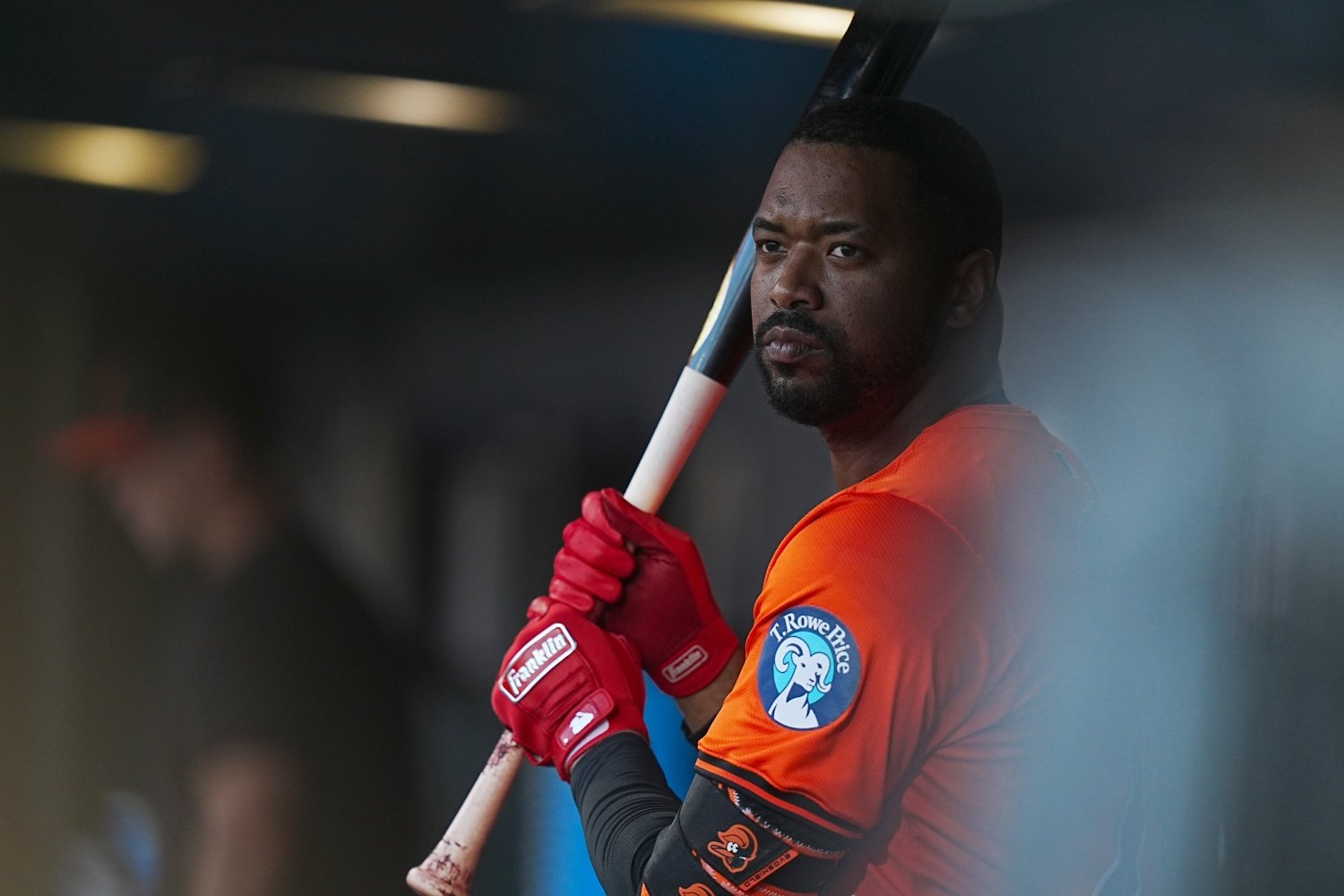 Let’s begin up top with a quick disclaimer: the offseason is young, and there’s a lot of uncertainty surrounding this team. Will fans be able to watch the team’s games next season? Will the Ishbia brothers buy the team from the Pohlads, possibly rescuing the franchise from its own self-imposed financial limitations? It’s hard to operate a team under circumstances in which the answer to those questions is a giant “maybe”. Still, the only thing the Twins have done this offseason to reshape their major-league roster is selecting Eiberson Castellano in the Rule 5 Draft. Seriously, that’s it. As a team that completely collapsed down the stretch in 2024 and is playing in one of baseball’s most loaded divisions (so long as you ignore the White Sox), Minnesota has to do something if it even wants to pretend like it’s going to compete with the upstarts in Kansas City, Detroit, and Cleveland. Having lost Max Kepler, Alex Kirilloff, and Carlos Santana (among others) already, there’s work to be done. Barring a sale to the Ishbias that gets processed in record time, the Twins aren’t going to be shopping in the upper echelon of free agency this winter. Most truly elite players are already off the board, and players like Pete Alonso and Alex Bregman figure to have suitors with much larger piggy banks vying for their services. Thus, this team will have to do some thrift shopping, though that doesn’t mean they have to resort to dumpster diving. Let’s hone our sights on a former top prospect who never quite panned out on the South Side of Chicago. Eloy Jiménez was with the White Sox for five-and-a-half seasons before getting dumped at the 2024 trade deadline in a trade with the Baltimore Orioles. He had a strong first month in his new home (.724 OPS in August), though he went 1-for-24 in 10 games in September and was optioned to Baltimore’s Triple-A affiliate at the end of the season. He didn’t make their Wild Card round roster, and the Orioles naturally declined his $16.5-million team option ahead of free agency. At this point in his career, Jiménez is a designated hitter. He’s been worth a comically bad -18 Outs Above Average (OAA) in his career, earning distinctly negative marks for both his arm and range in the outfield. He played all of eight innings in the field in 2024, and none after being traded to the Orioles. Luckily, the Twins need a full-time DH after giving 10 different players a start at the position in 2024. That rotating cast of characters contributed to a middling 18th-place finish in fWAR at the position. While WAR doesn’t tell the full story, it does a pretty good job of adjudicating how productive designated hitters are, since the position is generally void of speed (unless you’re Shohei Ohtani) and defensive contributions are literally nonexistent. Of course, being a full-time DH means that you better be productive at the plate, and that’s where Jiménez’s profile presents some intriguing upside. This was a down year all around for the 28-year-old—career-worst totals in wRC+ (78), ISO (.099), and BABIP (.285)—though he maintained a 90th-percentile exit velocity and hard-hit rate. His bat speed remains well above average, and that figures to remain true for the foreseeable future as he plays out the rest of his athletic prime. Before last season, Jiménez had always produced above-average offensive numbers by wRC+ (the same being true for OPS+, excluding the 2021 season when he finished one percent below the average hitter). The biggest question surrounding the Dominican slugger is his durability. He’s only played in 100 games in a season twice in his career, and has yet to exceed the 122 games he starred in as a rookie back in 2019. His injury history is a never-ending laundry list of lower body maladies. If a team fully dedicates itself to keeping him at DH permanently, he should prove to be sturdier than he’s shown in the past, but that’s a dangerous bet to make on a guy who might as well be the poster child for the “injury-prone” label. Those factors—coming off a career-worst season and a lengthy injury history—have pushed Jiménez to the discount bin of free agency. Make no mistake, though: this guy can still hit. He’s never fluctuated much from his solid career strikeout (22.7%) and walk rates (6.5%). His batted-ball data also portends a positive future, as his 2024 ground-ball rate (48.6%), fly-ball rate (20.8%), and line-drive rate (25.0%) were all better than his career norms. Likewise, he began to use the whole field better than ever in 2024, posting a career-best opposite-field hit rate (23.6%). A team could encourage him to expand on that all-fields approach, or they could retool his swing to focus more on pulling the ball to help him generate more power again (before last year, he hit home runs in 5.4% of his at-bats). And, for what it’s worth, he’s also got a .262 batting average with 13 home runs in just 59 games against the Twins, with much of that production coming at Target Field. He’s far from the sexiest option on the market—Alex Bregman isn’t coming to Minnesota, unless Carlos Correa has some blackmail on his former teammate—but in an offseason where the Twins are going to have to get a lot of bang for their buck, Jiménez presents an intriguing option with potential for production beyond just 2025.
 -
The Twins have been inactive this offseason. They need reinforcements. Time to go bargain bin shopping. Image courtesy of © Ron Chenoy-Imagn Images Let’s begin up top with a quick disclaimer: the offseason is young, and there’s a lot of uncertainty surrounding this team. Will fans be able to watch the team’s games next season? Will the Ishbia brothers buy the team from the Pohlads, possibly rescuing the franchise from its own self-imposed financial limitations? It’s hard to operate a team under circumstances in which the answer to those questions is a giant “maybe”. Still, the only thing the Twins have done this offseason to reshape their major-league roster is selecting Eiberson Castellano in the Rule 5 Draft. Seriously, that’s it. As a team that completely collapsed down the stretch in 2024 and is playing in one of baseball’s most loaded divisions (so long as you ignore the White Sox), Minnesota has to do something if it even wants to pretend like it’s going to compete with the upstarts in Kansas City, Detroit, and Cleveland. Having lost Max Kepler, Alex Kirilloff, and Carlos Santana (among others) already, there’s work to be done. Barring a sale to the Ishbias that gets processed in record time, the Twins aren’t going to be shopping in the upper echelon of free agency this winter. Most truly elite players are already off the board, and players like Pete Alonso and Alex Bregman figure to have suitors with much larger piggy banks vying for their services. Thus, this team will have to do some thrift shopping, though that doesn’t mean they have to resort to dumpster diving. Let’s hone our sights on a former top prospect who never quite panned out on the South Side of Chicago. Eloy Jiménez was with the White Sox for five-and-a-half seasons before getting dumped at the 2024 trade deadline in a trade with the Baltimore Orioles. He had a strong first month in his new home (.724 OPS in August), though he went 1-for-24 in 10 games in September and was optioned to Baltimore’s Triple-A affiliate at the end of the season. He didn’t make their Wild Card round roster, and the Orioles naturally declined his $16.5-million team option ahead of free agency. At this point in his career, Jiménez is a designated hitter. He’s been worth a comically bad -18 Outs Above Average (OAA) in his career, earning distinctly negative marks for both his arm and range in the outfield. He played all of eight innings in the field in 2024, and none after being traded to the Orioles. Luckily, the Twins need a full-time DH after giving 10 different players a start at the position in 2024. That rotating cast of characters contributed to a middling 18th-place finish in fWAR at the position. While WAR doesn’t tell the full story, it does a pretty good job of adjudicating how productive designated hitters are, since the position is generally void of speed (unless you’re Shohei Ohtani) and defensive contributions are literally nonexistent. Of course, being a full-time DH means that you better be productive at the plate, and that’s where Jiménez’s profile presents some intriguing upside. This was a down year all around for the 28-year-old—career-worst totals in wRC+ (78), ISO (.099), and BABIP (.285)—though he maintained a 90th-percentile exit velocity and hard-hit rate. His bat speed remains well above average, and that figures to remain true for the foreseeable future as he plays out the rest of his athletic prime. Before last season, Jiménez had always produced above-average offensive numbers by wRC+ (the same being true for OPS+, excluding the 2021 season when he finished one percent below the average hitter). The biggest question surrounding the Dominican slugger is his durability. He’s only played in 100 games in a season twice in his career, and has yet to exceed the 122 games he starred in as a rookie back in 2019. His injury history is a never-ending laundry list of lower body maladies. If a team fully dedicates itself to keeping him at DH permanently, he should prove to be sturdier than he’s shown in the past, but that’s a dangerous bet to make on a guy who might as well be the poster child for the “injury-prone” label. Those factors—coming off a career-worst season and a lengthy injury history—have pushed Jiménez to the discount bin of free agency. Make no mistake, though: this guy can still hit. He’s never fluctuated much from his solid career strikeout (22.7%) and walk rates (6.5%). His batted-ball data also portends a positive future, as his 2024 ground-ball rate (48.6%), fly-ball rate (20.8%), and line-drive rate (25.0%) were all better than his career norms. Likewise, he began to use the whole field better than ever in 2024, posting a career-best opposite-field hit rate (23.6%). A team could encourage him to expand on that all-fields approach, or they could retool his swing to focus more on pulling the ball to help him generate more power again (before last year, he hit home runs in 5.4% of his at-bats). And, for what it’s worth, he’s also got a .262 batting average with 13 home runs in just 59 games against the Twins, with much of that production coming at Target Field. He’s far from the sexiest option on the market—Alex Bregman isn’t coming to Minnesota, unless Carlos Correa has some blackmail on his former teammate—but in an offseason where the Twins are going to have to get a lot of bang for their buck, Jiménez presents an intriguing option with potential for production beyond just 2025. View full article
-
You ever just enter something in that box during checkout, in case something obvious is a hugely valuable and valid thing? Well, Andrew Friedman did. Image courtesy of © Jayne Kamin-Oncea-Imagn Images Happy Cyber Monday to my fellow bargain-hunting consumers. I'm fresh off my annual marathon viewing of the entire Paul Blart: Mall Cop series—the best Black Friday movies of all time, no contest—and to my surprise, MLB free agency is actually chugging along this year. Last week, the Los Angeles Dodgers signed ace Blake Snell to a five-year contract, using their wily charm and the opportunity to rub shoulders with Max Muncy, while deferring millions of dollars well into the future. Now, from the same source that said Arson Judge was going to sign with the San Francisco Giants: every notable free agent in baseball is signing with the Dodgers at a discounted price. That means Juan Soto, Roki Sasaki, Max Fried, Willy Adames, Corbin Burnes, and "about 15 other players" are all heading to L.A for a cumulative sum worth less than the $700 million contract Shohei Ohtani signed last offseason, according to #sources. Andrew Friedman, the team's President of Baseball Operations, told the media at his press conference announcing the deals that he wasn't happy about spending so much, but that he still kept the team under budget this offseason: "I think these guys are going to be good additions to our ballclub. I'm not sure we'll have space for everyone since we just won the World Series, but I'm sure guys like Soto and Alex Bregman could use some extra seasoning at Triple-A. Spending $650 million was a little beyond what we hoped, but that 50% off coupon made this all possible. Well, that and the fact that we don't have to start paying any of these guys until 2072." Per Friedman himself, every player will be getting the league's minimum salary for the duration of their contract, with $600 million of the team's expenditures this offseason being deferred for the next half-century. Unsurprisingly, their 92% deferral figure is the highest in league history, giving this Dodgers team yet another record that seems impossible to beat. World Series MVP Freddie Freeman also had comments on the matter, having gone through his own free agency saga a few years back: "This is why everyone comes to the Dodgers, even if we don't get paid until the sun burns out. Back in 2021, the Braves tried to sign me with a 75% off coupon. I was frankly appalled that they would cheap out on me like that. I came to L.A. purely out of spite. The code they entered was invalid anyway." Rumors have spread that other teams plan to contest the Dodgers' use of the Cyber Monday discount coupon, claiming that the team had agreed to most of the contracts prior to midnight on the Pacific Coast. In response, MLB Commissioner Rob Manfred told reporters that the many-time All-Stars were just "pieces of human tissue," but confirmed that MLB has now invalidated the promo code for all future transactions. View full article
-
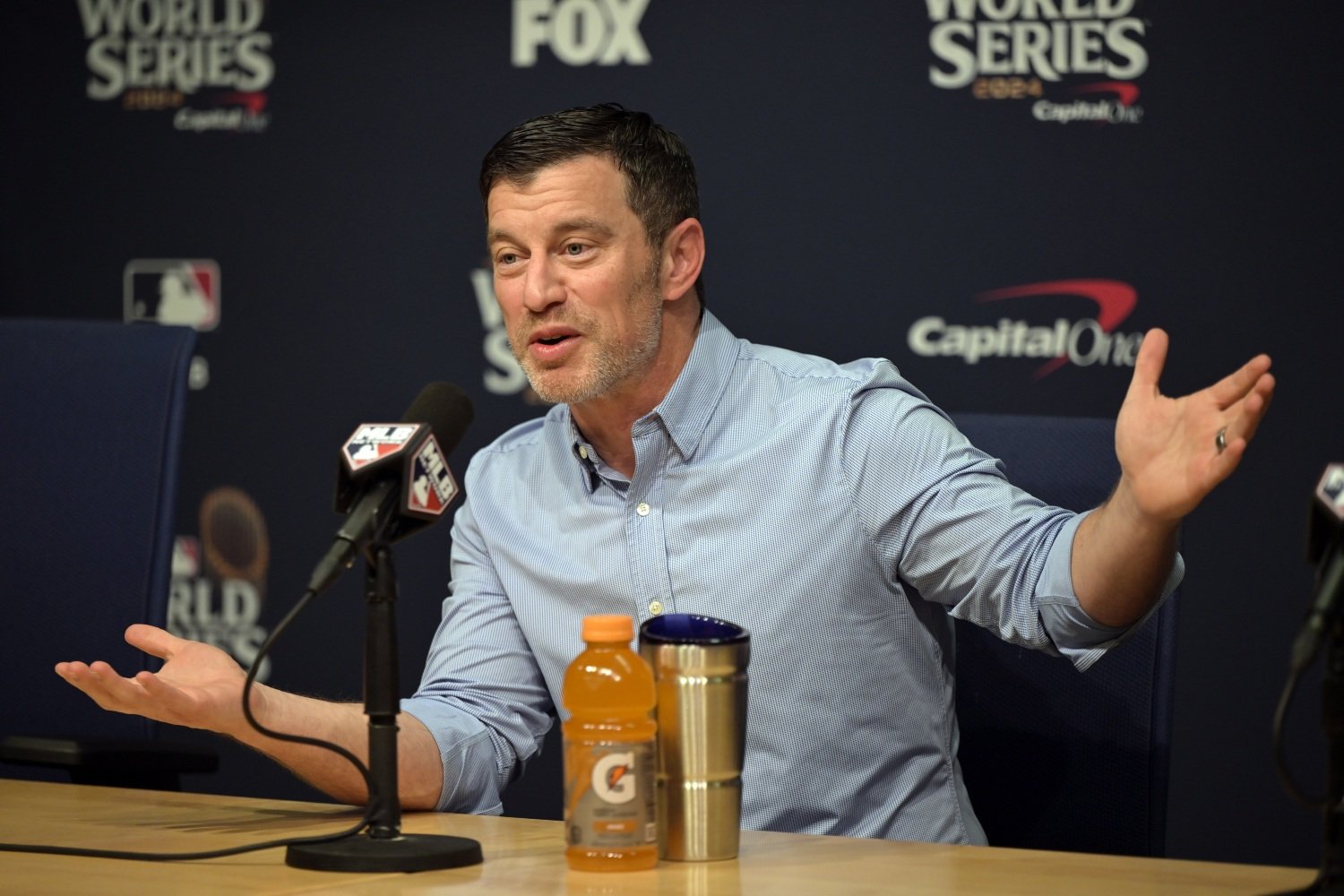 Happy Cyber Monday to my fellow bargain-hunting consumers. I'm fresh off my annual marathon viewing of the entire Paul Blart: Mall Cop series—the best Black Friday movies of all time, no contest—and to my surprise, MLB free agency is actually chugging along this year. Last week, the Los Angeles Dodgers signed ace Blake Snell to a five-year contract, using their wily charm and the opportunity to rub shoulders with Max Muncy, while deferring millions of dollars well into the future. Now, from the same source that said Arson Judge was going to sign with the San Francisco Giants: every notable free agent in baseball is signing with the Dodgers at a discounted price. That means Juan Soto, Roki Sasaki, Max Fried, Willy Adames, Corbin Burnes, and "about 15 other players" are all heading to L.A for a cumulative sum worth less than the $700 million contract Shohei Ohtani signed last offseason, according to #sources. Andrew Friedman, the team's President of Baseball Operations, told the media at his press conference announcing the deals that he wasn't happy about spending so much, but that he still kept the team under budget this offseason: "I think these guys are going to be good additions to our ballclub. I'm not sure we'll have space for everyone since we just won the World Series, but I'm sure guys like Soto and Alex Bregman could use some extra seasoning at Triple-A. Spending $650 million was a little beyond what we hoped, but that 50% off coupon made this all possible. Well, that and the fact that we don't have to start paying any of these guys until 2072." Per Friedman himself, every player will be getting the league's minimum salary for the duration of their contract, with $600 million of the team's expenditures this offseason being deferred for the next half-century. Unsurprisingly, their 92% deferral figure is the highest in league history, giving this Dodgers team yet another record that seems impossible to beat. World Series MVP Freddie Freeman also had comments on the matter, having gone through his own free agency saga a few years back: "This is why everyone comes to the Dodgers, even if we don't get paid until the sun burns out. Back in 2021, the Braves tried to sign me with a 75% off coupon. I was frankly appalled that they would cheap out on me like that. I came to L.A. purely out of spite. The code they entered was invalid anyway." Rumors have spread that other teams plan to contest the Dodgers' use of the Cyber Monday discount coupon, claiming that the team had agreed to most of the contracts prior to midnight on the Pacific Coast. In response, MLB Commissioner Rob Manfred told reporters that the many-time All-Stars were just "pieces of human tissue," but confirmed that MLB has now invalidated the promo code for all future transactions.
 -
In what could yet be the most important Twins trade all offseason, the team announced they’re swapping more than just players with the Rays. Image courtesy of © Nathan Ray Seebeck-Imagn Images There’s a new-school adage in baseball: don’t trade with the Tampa Bay Rays. They routinely fleece teams and, as a developmental powerhouse, make a living out of turning other teams' trash into their own treasure trove. Thus, it’s fair if you recoiled when first hearing that the outwardly frugal Twins completed a trade with their American League rivals on Monday. However, this deal isn’t exactly a classic player-for-player swap. In fact, it looks like more than just a fair deal—it’s almost certainly a bona fide win-win. For those who are out of the loop with what’s been going on in Florida over the last month: the state was ravaged by Hurricane Milton. The Greater Tampa Bay area was one of the places hit the hardest by the tropical storm, and the damage caused to Tropicana Field, the home of the Rays (located in St. Petersburg), meant that the viability of the stadium for the 2025 season was up in the air. Recently, the team officially decided that “The Trop" will be unplayable next year, unveiling a repair plan that should restore the park by 2026. However, that means the Rays will need a home for next season, and a home they have found. The Rays will actually play in Tampa next season, as they reached an agreement with the New York Yankees to play at George M. Steinbrenner Field, which is the spring training venue of the Bronx Bombers. Beyond the fact that they’re downgrading to a literal spring training stadium, though, this temporary home poses another problem for the Rays, who play an outdoor summer sport in Central Florida: Steinbrenner Field isn’t a domed structure. Without a roof, they’ll be subject to the elements of nature all season. Average Hourly Temperature in Tampa (by Month) Probability of Precipitation in Tampa (by Month) Note: All weather data courtesy of WeatherSpark.com As the year progresses deeper into the summer months, the chances of unbearable heat or baseball-delaying rain storms increase in Tampa. As such, the league is making numerous efforts to move the team’s home games to different parts of the MLB calendar. So, to recap, the Twins are “trading” the right to host the Rays on Memorial Day (Monday, May 26) and the ensuing two games of the series, but in return, they get to be home for July 4. That series will start on a Friday and conclude on Sunday, giving the team the entire holiday weekend to celebrate. In addition, the team will remain in Minnesota for Memorial Day Weekend, as they’ll be hosting the Kansas City Royals for a four-game series from May 23-26. The official team calendar has already been updated to reflect this change. This is all a bizarre set of events, but the damage caused by Hurricane Milton made it necessary. The rest of the Twins’ 2025 schedule should be otherwise unaffected by any logistical hurdles. They win pretty big in this trade, even if the hope is more that it will benefit all involved. View full article
-
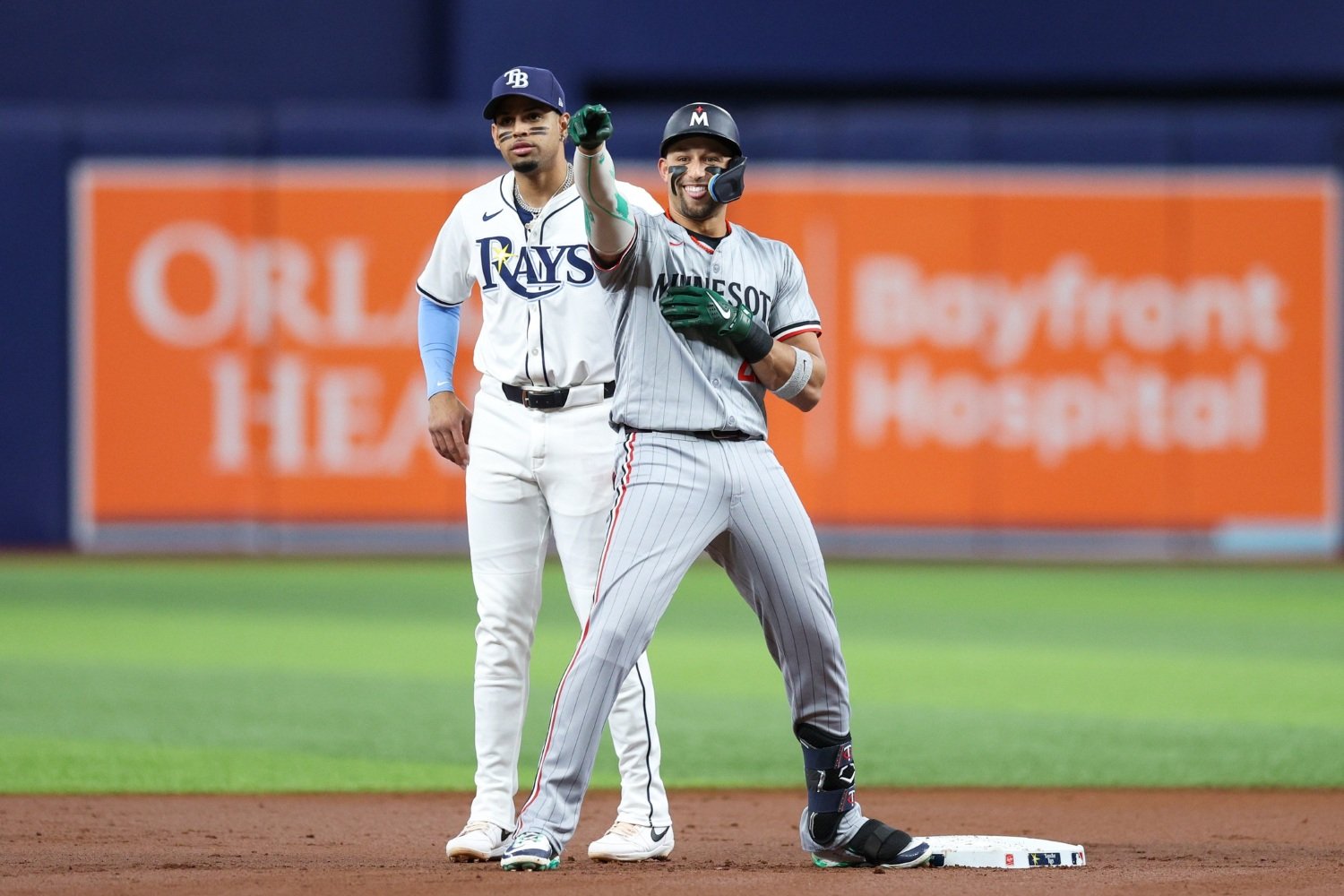 There’s a new-school adage in baseball: don’t trade with the Tampa Bay Rays. They routinely fleece teams and, as a developmental powerhouse, make a living out of turning other teams' trash into their own treasure trove. Thus, it’s fair if you recoiled when first hearing that the outwardly frugal Twins completed a trade with their American League rivals on Monday. However, this deal isn’t exactly a classic player-for-player swap. In fact, it looks like more than just a fair deal—it’s almost certainly a bona fide win-win. For those who are out of the loop with what’s been going on in Florida over the last month: the state was ravaged by Hurricane Milton. The Greater Tampa Bay area was one of the places hit the hardest by the tropical storm, and the damage caused to Tropicana Field, the home of the Rays (located in St. Petersburg), meant that the viability of the stadium for the 2025 season was up in the air. Recently, the team officially decided that “The Trop" will be unplayable next year, unveiling a repair plan that should restore the park by 2026. However, that means the Rays will need a home for next season, and a home they have found. The Rays will actually play in Tampa next season, as they reached an agreement with the New York Yankees to play at George M. Steinbrenner Field, which is the spring training venue of the Bronx Bombers. Beyond the fact that they’re downgrading to a literal spring training stadium, though, this temporary home poses another problem for the Rays, who play an outdoor summer sport in Central Florida: Steinbrenner Field isn’t a domed structure. Without a roof, they’ll be subject to the elements of nature all season. Average Hourly Temperature in Tampa (by Month) Probability of Precipitation in Tampa (by Month) Note: All weather data courtesy of WeatherSpark.com As the year progresses deeper into the summer months, the chances of unbearable heat or baseball-delaying rain storms increase in Tampa. As such, the league is making numerous efforts to move the team’s home games to different parts of the MLB calendar. So, to recap, the Twins are “trading” the right to host the Rays on Memorial Day (Monday, May 26) and the ensuing two games of the series, but in return, they get to be home for July 4. That series will start on a Friday and conclude on Sunday, giving the team the entire holiday weekend to celebrate. In addition, the team will remain in Minnesota for Memorial Day Weekend, as they’ll be hosting the Kansas City Royals for a four-game series from May 23-26. The official team calendar has already been updated to reflect this change. This is all a bizarre set of events, but the damage caused by Hurricane Milton made it necessary. The rest of the Twins’ 2025 schedule should be otherwise unaffected by any logistical hurdles. They win pretty big in this trade, even if the hope is more that it will benefit all involved.
- 6 comments
-
- 1
-

-
- tampa bay rays
- twins
- (and 1 more)
-
The veteran catcher and his $10-million salary could be headed out the door this offseason. What does that mean for him and the Twins? Christian Vázquez was signed during the 2022-23 offseason to a three-year, $30-million contract, which looked like a solid value for a backstop coming off a season in which he hit .274/.315/.399 and was worth 2.1 WAR. Notably, he was brilliant with the Red Sox in the first half of the season (.759 OPS, elite defensive metrics) before falling off after being dealt to Houston at the trade deadline (.585 OPS, middling performance behind the plate). Nevertheless, he was one of the best catchers on the market, and the Twins made a bet that his sluggish second half in 2022 was an aberration, rather than an omen for what was to come. They gave him one of just three multi-year deals handed out to catchers that winter (Willson Contreras and Yan Gomes being the others), and handed him the starting job out of spring training in 2023. From there, Vázquez has done the opposite of “running away with” the starting gig, splitting playing time perfectly evenly with Ryan Jeffers in the latter half of 2023 and throughout this year. After posting a -0.5 WAR combined over the past two seasons, he finds himself on the trade block once again. The Case For Trading Christian Vázquez Unlike some of the other, more productive players in this series, there aren’t a whole lot of reasons as to why the Twins should want to keep Vázquez. Jeffers, despite some calls to trade him, too, is younger, more productive, and has two years of team control remaining. Vázquez can be a valuable defensive catcher, which is an all-important skill for a backup backstop, but at his $10 million price tag, he just isn’t worth the cheddar for the penny-pinching Twins. It’s true that Minnesota simply won’t get a lot for Vázquez—this may just end up being a pure salary dump. Nevertheless, the catching market is drier than the Sahara this winter, and Vázquez was well-regarded around the game just a few years ago. With Travis d’Arnaud and Austin Hedges already off the free-agent board, that leaves Kyle Higashioka, who will be 35 years old on Opening Day, and Danny Jansen (.658 OPS in 2024) as the options on the market. Behind them is… Gary Sánchez? Yasmani Grandal (he still plays baseball?)? Suffice to say, it’s a seller's market for catchers, even if that catcher is Christian Vázquez. Of course, any prospective partner would need to have two things to complete this swap with Minnesota: money and a need for a defensive-minded catcher. Vázquez is both expensive and still solid with the glove, mostly thanks to his 84th percentile skill as a framer. He also possesses above-average pop times and blocked ball rates, giving him the kind of profile that most young catchers don’t have. Looking at similar trades from the past, it’s easy to see that the Twins won’t make out like bandits in any potential Vázquez deal. Six years ago, the Cleveland Guardians traded a 31-year-old Gomes to the Washington Nationals for Jefry Rodriguez, Daniel Johnson, and a player to be named later (Andruw Monasterio). There’s a reason you haven’t heard those names since. If you’re willing to go further back, in 2010, the San Francisco Giants traded multi-time Gold Glove winner Bengie Molina (at the trade deadline) for Michael Main and Chris Ray. His brother, José Molina, was traded from the Angels to the Yankees in 2007 for Jeff Kennard. More recently, in 2022, Christian Bethancourt was dealt to the Tampa Bay Rays (from the Athletics) for Christian Fernandez and Cal Stevenson. Are you starting to get the picture? Even if the Twins do convince a trade partner to part with a prospect or two, they’re going to be nothing more than blind dart throws. Still, the salary relief that will come from offloading Vázquez—as well as any potential developmental benefits with Jeffers taking over full-time behind the plate—will be worth it. Potential Trade Partners The Chicago Cubs stand as perhaps the most obvious suitor for Vázquez, what with their need for a veteran partner for Miguel Amaya and the fact they were very likely the runner-up for Vázquez back in ‘22. They have plenty of payroll space to accommodate him, though the Twins could swallow some extra salary to get at a high-upside flier in the Cubbies’ loaded farm system. The San Diego Padres, who could lose Higashioka in free agency as they focus on retaining players like Jurickson Profar and Ha-Seong Kim, would also make sense as a destination for a veteran receiver on a one-year deal. Their pitching staff is loaded with experienced pitchers, including Yu Darvish and Dylan Cease, each of whom would probably prefer to work with an established catcher with proven defensive bona fides. Unlike the Cubs, the Padres don’t have ample room to take on Vázquez, so the Twins would have to be comfortable eating a large portion of his contract. Elsewhere, the Tampa Bay Rays (looking for an upgrade over Ben Rortvedt), Boston Red Sox (in need of a backup for Connor Wong, drafted Vázquez in 2008), and Chicago White Sox (in need of literally everything) all could call Derek Falvey with an offer. However, each of those teams is facing some fundamental issue—be it payroll concerns, bigger roster needs, or general competitive spirit—that could hamper their interest. Of course, a mystery team could always enter the mix, but unless Minnesota is really willing to eat a majority chunk of Vázquez’s salary in 2025, the list of suitors will remain limited. Conclusion Christian Vázquez has failed to live up to the size and scope of the contract he signed a few years back, and the emergence of Jeffers gives the Twins another option as they shop around the veteran in an attempt to slash payroll this offseason. Vázquez remains a solidly above-average defensive catcher, which will matter to teams who invest heavily in their run-prevention units like the Cubs, though his miserable, declining bat will keep the Twins from acquiring anything other than a low-level flier in a trade. The best-case scenario for Minnesota is probably having to only eat $1-2 million of Vázquez’s salary next year. Still, enough teams are in need of a catcher that someone should present a fair offer, once they strike out on signing Higashioka or Jansen in free agency. It won’t do much to help the roster, but a trade of Vázquez should help the Twins free up some valuable space on the payroll. View full article
-
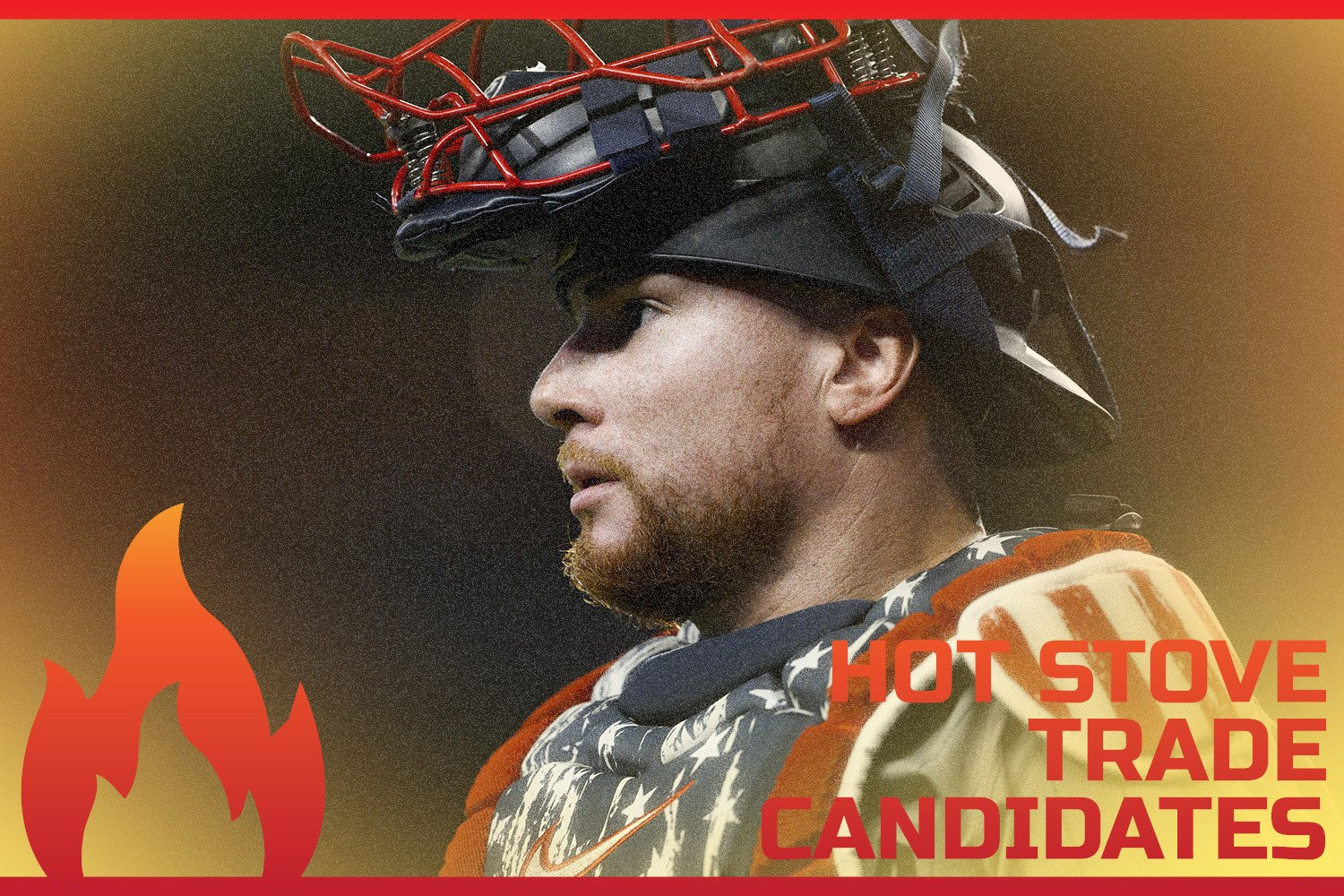 Christian Vázquez was signed during the 2022-23 offseason to a three-year, $30-million contract, which looked like a solid value for a backstop coming off a season in which he hit .274/.315/.399 and was worth 2.1 WAR. Notably, he was brilliant with the Red Sox in the first half of the season (.759 OPS, elite defensive metrics) before falling off after being dealt to Houston at the trade deadline (.585 OPS, middling performance behind the plate). Nevertheless, he was one of the best catchers on the market, and the Twins made a bet that his sluggish second half in 2022 was an aberration, rather than an omen for what was to come. They gave him one of just three multi-year deals handed out to catchers that winter (Willson Contreras and Yan Gomes being the others), and handed him the starting job out of spring training in 2023. From there, Vázquez has done the opposite of “running away with” the starting gig, splitting playing time perfectly evenly with Ryan Jeffers in the latter half of 2023 and throughout this year. After posting a -0.5 WAR combined over the past two seasons, he finds himself on the trade block once again. The Case For Trading Christian Vázquez Unlike some of the other, more productive players in this series, there aren’t a whole lot of reasons as to why the Twins should want to keep Vázquez. Jeffers, despite some calls to trade him, too, is younger, more productive, and has two years of team control remaining. Vázquez can be a valuable defensive catcher, which is an all-important skill for a backup backstop, but at his $10 million price tag, he just isn’t worth the cheddar for the penny-pinching Twins. It’s true that Minnesota simply won’t get a lot for Vázquez—this may just end up being a pure salary dump. Nevertheless, the catching market is drier than the Sahara this winter, and Vázquez was well-regarded around the game just a few years ago. With Travis d’Arnaud and Austin Hedges already off the free-agent board, that leaves Kyle Higashioka, who will be 35 years old on Opening Day, and Danny Jansen (.658 OPS in 2024) as the options on the market. Behind them is… Gary Sánchez? Yasmani Grandal (he still plays baseball?)? Suffice to say, it’s a seller's market for catchers, even if that catcher is Christian Vázquez. Of course, any prospective partner would need to have two things to complete this swap with Minnesota: money and a need for a defensive-minded catcher. Vázquez is both expensive and still solid with the glove, mostly thanks to his 84th percentile skill as a framer. He also possesses above-average pop times and blocked ball rates, giving him the kind of profile that most young catchers don’t have. Looking at similar trades from the past, it’s easy to see that the Twins won’t make out like bandits in any potential Vázquez deal. Six years ago, the Cleveland Guardians traded a 31-year-old Gomes to the Washington Nationals for Jefry Rodriguez, Daniel Johnson, and a player to be named later (Andruw Monasterio). There’s a reason you haven’t heard those names since. If you’re willing to go further back, in 2010, the San Francisco Giants traded multi-time Gold Glove winner Bengie Molina (at the trade deadline) for Michael Main and Chris Ray. His brother, José Molina, was traded from the Angels to the Yankees in 2007 for Jeff Kennard. More recently, in 2022, Christian Bethancourt was dealt to the Tampa Bay Rays (from the Athletics) for Christian Fernandez and Cal Stevenson. Are you starting to get the picture? Even if the Twins do convince a trade partner to part with a prospect or two, they’re going to be nothing more than blind dart throws. Still, the salary relief that will come from offloading Vázquez—as well as any potential developmental benefits with Jeffers taking over full-time behind the plate—will be worth it. Potential Trade Partners The Chicago Cubs stand as perhaps the most obvious suitor for Vázquez, what with their need for a veteran partner for Miguel Amaya and the fact they were very likely the runner-up for Vázquez back in ‘22. They have plenty of payroll space to accommodate him, though the Twins could swallow some extra salary to get at a high-upside flier in the Cubbies’ loaded farm system. The San Diego Padres, who could lose Higashioka in free agency as they focus on retaining players like Jurickson Profar and Ha-Seong Kim, would also make sense as a destination for a veteran receiver on a one-year deal. Their pitching staff is loaded with experienced pitchers, including Yu Darvish and Dylan Cease, each of whom would probably prefer to work with an established catcher with proven defensive bona fides. Unlike the Cubs, the Padres don’t have ample room to take on Vázquez, so the Twins would have to be comfortable eating a large portion of his contract. Elsewhere, the Tampa Bay Rays (looking for an upgrade over Ben Rortvedt), Boston Red Sox (in need of a backup for Connor Wong, drafted Vázquez in 2008), and Chicago White Sox (in need of literally everything) all could call Derek Falvey with an offer. However, each of those teams is facing some fundamental issue—be it payroll concerns, bigger roster needs, or general competitive spirit—that could hamper their interest. Of course, a mystery team could always enter the mix, but unless Minnesota is really willing to eat a majority chunk of Vázquez’s salary in 2025, the list of suitors will remain limited. Conclusion Christian Vázquez has failed to live up to the size and scope of the contract he signed a few years back, and the emergence of Jeffers gives the Twins another option as they shop around the veteran in an attempt to slash payroll this offseason. Vázquez remains a solidly above-average defensive catcher, which will matter to teams who invest heavily in their run-prevention units like the Cubs, though his miserable, declining bat will keep the Twins from acquiring anything other than a low-level flier in a trade. The best-case scenario for Minnesota is probably having to only eat $1-2 million of Vázquez’s salary next year. Still, enough teams are in need of a catcher that someone should present a fair offer, once they strike out on signing Higashioka or Jansen in free agency. It won’t do much to help the roster, but a trade of Vázquez should help the Twins free up some valuable space on the payroll.
 -
Funny