



Cody Christie
-
Posts
7,515 -
Joined
-
Last visited
-
Days Won
5
Content Type
Profiles
News
Minnesota Twins Videos
2026 Minnesota Twins Top Prospects Ranking
2022 Minnesota Twins Draft Picks
Minnesota Twins Free Agent & Trade Rumors, Notes, & Tidbits
Guides & Resources
2023 Minnesota Twins Draft Picks
The Minnesota Twins Players Project
2024 Minnesota Twins Draft Picks
2025 Minnesota Twins Draft Pick Tracker
2026 Minnesota Twins Draft Tracker: Picks & Bonuses
Forums
Blogs
Events
Store
Downloads
Gallery
Everything posted by Cody Christie
-
 The off-season can be filled with hot stove rumors, prospect lists being released, and free agent signings. Minnesota has seen a fair share of rumors swirling around so far this winter. Could the Twins look to sign any of their current players to extensions? What will the club’s 2020 Opening Day roster look like? What’s the timeline for the organization’s recent top picks? What will it take to land Gerrit Cole or Jake Odorizzi? Could the Twins land both Otani and Darvish? All of those questions and more in today’s edition of the Twins Daily Mailbag.Question 1 Here at Twins Daily, some of the writers ran through the gamut of extension options. Young players like Byron Buxton, Miguel Sano or Jose Berrios could be offered deals that buy out some of their free agent years. Veteran players like Joe Mauer and Brian Dozier will see their contracts expire at the end of 2018. This puts the Twins in an interesting spot. Dozier has clearly become the heart and soul of the team over the last couple of seasons. I think the new front office values his veteran leadership. For the Twins to find success, there needs to be the right combination of young and veteran players. This is similar to the model followed by Houston this year. If I were the Twins front office, I start with a Dozier deal. Much like Seth discussed, I would shoot for a four-year, $65 million deal with an option that could make it a five-year, $73 million deal. Buxton is the other player with whom I would try and start extension talks. I think his value is going to boom over the next couple of seasons. Getting out in front of that could be a wise decision even with his wall-crashing antics. Question 2 Nick Gordon seems to be well on his way to making his big league debut. He spent all of 2017 at Double-A and helped the Lookouts claim a share of the Southern League Championship. Gordon has to be added to the 40-man roster before the 2018 Rule 5 Draft. If he plays like he did this season, he will be a September call-up in 2018. Tyler Jay is a more interesting case. After being drafted with the intention of turning him into a starter, Jay is focusing on being a relief pitcher. He made only eight appearances in 2017 after being evaluated for, but not officially diagnosed with, thoracic outlet syndrome. This is the same type of condition that plagued Phil Hughes in 2017. If Jay is healthy, I would expect to see him at the big league level in 2018. Alex Kirilloff missed all of 2017 following Tommy John surgery. This put a little damper on his path to the big leagues. In last year’s prospect handbook, we pegged him for a mid-season 2019 debut. Following a missed season, I will push that back and look for an early 2020 debut. Royce Lewis is good and I think he will take the fast track to the big leagues. It wouldn’t surprise me if he beat Kirilloff to Target Field. With free agency and other factors, it’s hard to project out to 2020. If I’m using internal options, here are my projected 2020 Twins Opening Day starters: C: Mitch Garver, 1B: Miguel Sano, 2B: Nick Gordon, SS: Royce Lewis, OF: Byron Buxton, Max Kepler, Alex Kirilloff, DH: Brian Dozier Question 3 If you look at my answer above, I would sign a deal with Dozier to keep him in Minnesota through at least 2022. There would be an option for 2023 when he would be entering his age-36 season. If he stays healthy this entire season and hits free agency, he might be able to get more money on the open market. I think he likes Minnesota and he has quickly become a fan favorite. He will be entering free agency as a 32-year old so he isn’t likely to get more than a four year contract offer. Minnesota doesn’t have much money committed beyond the 2019 season and a lot of the team’s young core will be due raises in the coming years. I like Dozier to be the veteran presence in a developing line-up. He should start and finish his career in a Minnesota Twins uniform. Question 4 Now this is a loaded question. Right-handed pitchers Gerrit Cole and Jake Odorizzi both come with two years of team control remaining. Both pitchers are coming off down years which could be good from the Twins perspective. The Pirates might not be openly shopping Cole but there’s nothing to say they wouldn’t listen to a good offer. The Rays might be pushed up against their payroll and they could be looking for some flexibility. This could make Tampa more willing to deal. I feel like there are few untouchable prospects in the Twins farm system. Royce Lewis might be the lone player I would categorize as untouchable. That being said, I think Nick Gordon would have to be at the center of a package for these pitchers. A top level pitcher would also likely be needed to add to the mix. Some names could be Fernando Romero or Lewis Thorpe. Eddie Rosario is another name I would throw into a potential deal. It's going to take more prospects than fans will be happy about but the Twins front office has an opportunity in front of them. With last year’s playoff appearance, the team’s timeline was pushed up. Sano, Buxton and Berrios have a small window of team control and it could be time to pounce. Question 5 Minnesota’s front office has made it clear that they will be aggressive this off-season. Yu Darvish is at the top of their free agent list. It’s no secret that he is going to command quite the contract. The Twins need pitching but I don’t know if Darvish will be worth the total he is going to command. It might be in the Twins best interest to find more cost-effective options with some upside. That being said, I think the front office wants to make a splash and that could mean spending big on Darvish. Shohei Otani is another intriguing name. The Twins also have more money in their international spending pool after voiding the contract of Jelfrey Marte. However, Otani doesn’t seem to care exclusively about money. He could wait until next off-season and be a free agent which would mean a lot more money in his pocket. My guess is that he ends up on the West Coast or in a bigger market on the East Coast. I think the Twins will attempt to go after both Darvish and Otani. I think the chances are better of landing Darvish because of his connections to Thad Levine’s time in Texas. Some think a team could find a way to land both players as a package deal. However, I don’t think the likelihood of landing either is very high. Thanks to all those that submitted questions. Leave a COMMENT and start the discussion on any of the topics mentioned above. Click here to view the article
 -
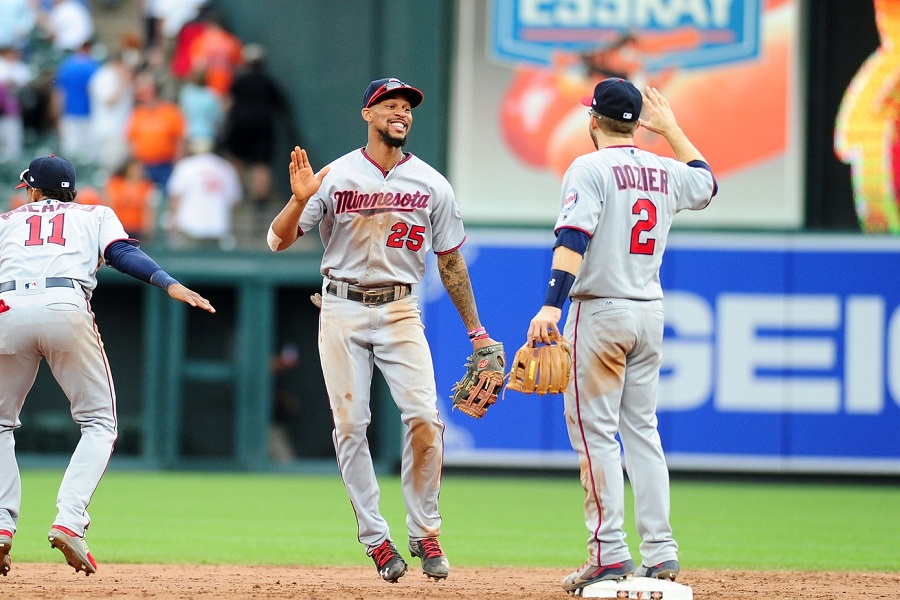 Question 1 https://twitter.com/enge0280/status/934858994518241285 Here at Twins Daily, some of the writers ran through the gamut of extension options. Young players like Byron Buxton, Miguel Sano or Jose Berrios could be offered deals that buy out some of their free agent years. Veteran players like Joe Mauer and Brian Dozier will see their contracts expire at the end of 2018. This puts the Twins in an interesting spot. Dozier has clearly become the heart and soul of the team over the last couple of seasons. I think the new front office values his veteran leadership. For the Twins to find success, there needs to be the right combination of young and veteran players. This is similar to the model followed by Houston this year. If I were the Twins front office, I start with a Dozier deal. Much like Seth discussed, I would shoot for a four-year, $65 million deal with an option that could make it a five-year, $73 million deal. Buxton is the other player with whom I would try and start extension talks. I think his value is going to boom over the next couple of seasons. Getting out in front of that could be a wise decision even with his wall-crashing antics. Question 2 https://twitter.com/StevoFromSD/status/934863200503455744 Nick Gordon seems to be well on his way to making his big league debut. He spent all of 2017 at Double-A and helped the Lookouts claim a share of the Southern League Championship. Gordon has to be added to the 40-man roster before the 2018 Rule 5 Draft. If he plays like he did this season, he will be a September call-up in 2018. Tyler Jay is a more interesting case. After being drafted with the intention of turning him into a starter, Jay is focusing on being a relief pitcher. He made only eight appearances in 2017 after being evaluated for, but not officially diagnosed with, thoracic outlet syndrome. This is the same type of condition that plagued Phil Hughes in 2017. If Jay is healthy, I would expect to see him at the big league level in 2018. Alex Kirilloff missed all of 2017 following Tommy John surgery. This put a little damper on his path to the big leagues. In last year’s prospect handbook, we pegged him for a mid-season 2019 debut. Following a missed season, I will push that back and look for an early 2020 debut. Royce Lewis is good and I think he will take the fast track to the big leagues. It wouldn’t surprise me if he beat Kirilloff to Target Field. With free agency and other factors, it’s hard to project out to 2020. If I’m using internal options, here are my projected 2020 Twins Opening Day starters: C: Mitch Garver, 1B: Miguel Sano, 2B: Nick Gordon, SS: Royce Lewis, OF: Byron Buxton, Max Kepler, Alex Kirilloff, DH: Brian Dozier Question 3 https://twitter.com/m_stathnyr/status/934872636961812480 If you look at my answer above, I would sign a deal with Dozier to keep him in Minnesota through at least 2022. There would be an option for 2023 when he would be entering his age-36 season. If he stays healthy this entire season and hits free agency, he might be able to get more money on the open market. I think he likes Minnesota and he has quickly become a fan favorite. He will be entering free agency as a 32-year old so he isn’t likely to get more than a four year contract offer. Minnesota doesn’t have much money committed beyond the 2019 season and a lot of the team’s young core will be due raises in the coming years. I like Dozier to be the veteran presence in a developing line-up. He should start and finish his career in a Minnesota Twins uniform. Question 4 https://twitter.com/RealKevYrock/status/934881601841975296 Now this is a loaded question. Right-handed pitchers Gerrit Cole and Jake Odorizzi both come with two years of team control remaining. Both pitchers are coming off down years which could be good from the Twins perspective. The Pirates might not be openly shopping Cole but there’s nothing to say they wouldn’t listen to a good offer. The Rays might be pushed up against their payroll and they could be looking for some flexibility. This could make Tampa more willing to deal. I feel like there are few untouchable prospects in the Twins farm system. Royce Lewis might be the lone player I would categorize as untouchable. That being said, I think Nick Gordon would have to be at the center of a package for these pitchers. A top level pitcher would also likely be needed to add to the mix. Some names could be Fernando Romero or Lewis Thorpe. Eddie Rosario is another name I would throw into a potential deal. It's going to take more prospects than fans will be happy about but the Twins front office has an opportunity in front of them. With last year’s playoff appearance, the team’s timeline was pushed up. Sano, Buxton and Berrios have a small window of team control and it could be time to pounce. Question 5 https://twitter.com/jzenk42/status/934891176951472131 Minnesota’s front office has made it clear that they will be aggressive this off-season. Yu Darvish is at the top of their free agent list. It’s no secret that he is going to command quite the contract. The Twins need pitching but I don’t know if Darvish will be worth the total he is going to command. It might be in the Twins best interest to find more cost-effective options with some upside. That being said, I think the front office wants to make a splash and that could mean spending big on Darvish. Shohei Otani is another intriguing name. The Twins also have more money in their international spending pool after voiding the contract of Jelfrey Marte. However, Otani doesn’t seem to care exclusively about money. He could wait until next off-season and be a free agent which would mean a lot more money in his pocket. My guess is that he ends up on the West Coast or in a bigger market on the East Coast. I think the Twins will attempt to go after both Darvish and Otani. I think the chances are better of landing Darvish because of his connections to Thad Levine’s time in Texas. Some think a team could find a way to land both players as a package deal. However, I don’t think the likelihood of landing either is very high. Thanks to all those that submitted questions. Leave a COMMENT and start the discussion on any of the topics mentioned above.
 -
On a late summer day under the Metrodome’s Teflon covering, fans watched a master at work. Johan Santana dominated the Texas Rangers over eight shutout innings. He set a Twins team record with 17 strikeouts and allowed only two hits. For the over 36,000 fans in attendance, it was Mozart’s greatest symphony or Michelangelo’s Sistine Chapel. It was the music of a man on his way to the Hall of Fame. In a perfect world, Santana would have pitched into his late 30’s or early 40’s while continuing to be one of the best in the game. That ideal world didn’t play out and he never pitched a big league game after the age of 33. At the height of his career, there is no doubt that he was the best pitcher on the planet. This year will mark his first chance at being elected to the National Baseball Hall of Fame. In this series, I will build up Santana’s case for enshrinement. The following is a paean to the career of the southpaw from Venezuela. A man who should and can be elected into the hallowed grounds of Cooperstown.The Puckett Clause Twins fans are well aware of the legend of Kirby Puckett. His career tragically ended too soon at the young age of 35 after 12 seasons. Puckett was a dominant player during the late 1980’s and early 1990’s as the Twins won two championships in a five year span. For 10 straight seasons, he was named an American League All-Star and he won six Gold Gloves for his defensive prowess. Some would argue he willed the Twins to a Game 7 of the 1991 World Series with his heroic actions in Game 6. Puckett was on a path for the Hall of Fame before his career was cut short. He wasn’t able to compile the same type of careers numbers that would scream Hall of Fame player. He only had two seasons in the top 10 for WAR and his career WAR only places him as the 184th all-time position player. That ties him with Brian Giles. Heck, even Joe Mauer ranks higher. There are plenty of people who believe he shouldn’t be part of Cooperstown’s elite group. The members of the BBWAA thought differently about Puckett. He was elected on his first ballot with 82.1% of the vote which easily cleared the 75% needed for induction. By receiving 36 more votes than were needed, he joined Dave Winfield in the Class of 2001. Puckett was able to pack enough into 12 seasons and the writers honored him for being one of baseball’s best for the better part of a decade. Applying the Puckett Clause Much like Puckett, Santana saw his career ended too early because of injury. Santana wasn’t hit in the head with a Dennis Martinez fastball. Instead, his golden left arm was betrayed by an ailing left shoulder. Some Santana supporters will point to his no-hitter on June 1, 2012 as his Puckett-Martinez moment. On the way to the first no-hitter in Mets’ franchise history, Santana tossed 134 pitches. At the conclusion of that contest, his season ERA dropped to 2.38 but he posted an 8.27 mark over his final ten appearances. He would never pitch in another MLB game. With writers limited to 10 names per ballot, it could be easy for some to ignore what Santana was able to accomplish. From 2003 through 2008, he pitched at much more than a Hall of Fame level. In over 1400 innings, he posted a 2.86 ERA (156 ERA+) while striking out four times as many batters as he walked. Throw in two Cy Young Awards and a third award that was stolen from him and it looks like he has a solid case for Cooperstown. As with Puckett, Santana didn’t have the longevity to accumulate many of the numbers needed to be deemed Hall of Fame worthy. He couldn’t pitch 3,000 innings. He couldn’t strike out 2,500 batters. He couldn’t accumulate a large career WAR total. If he had been able to pitch four or five more seasons in the back-end of a rotation, he’d be a lock for the Hall. His ailing shoulder took those seasons away. The greatness of careers shortened by injury should be given the benefit of the doubt. When Twins fans examine Kirby Puckett, it is clear that he was a Hall of Fame player. One high and tight fastball from Dennis Martinez deprived Twins Territory of the end of his career. Santana fits the same mold as he dominated the game before an injury forced him off the mound. The Puckett Clause applies and only strengthens Santana’s case for Cooperstown. Should the Puckett Clause be applied to Santana? Leave a COMMENT and start the discussion. Don’t forget to stop back in the coming weeks as I continue to make the Cooperstown Case for Johan Santana. Click here to view the article
- 61 replies
-
- 1
-

-
- johan santana
- kirby puckett
- (and 3 more)
-
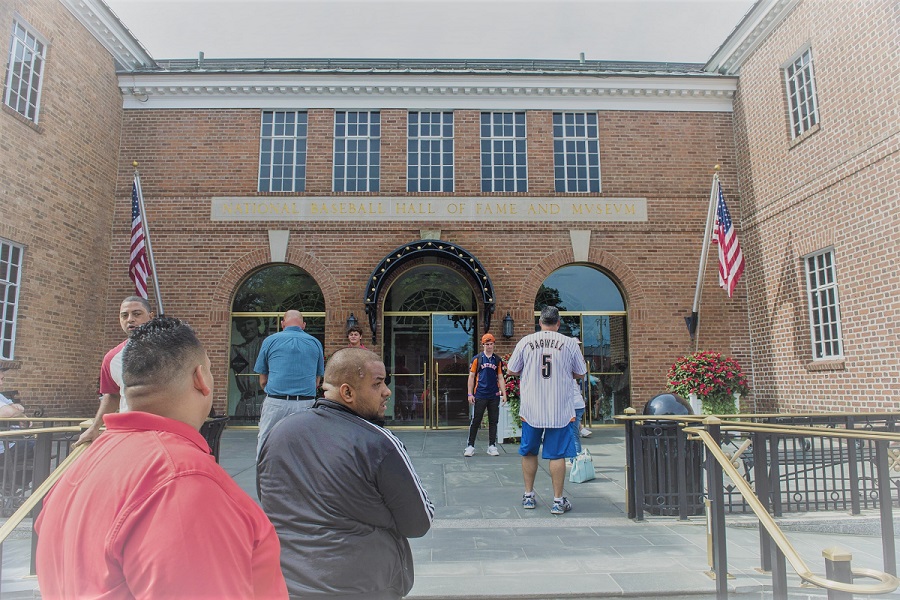 The Puckett Clause Twins fans are well aware of the legend of Kirby Puckett. His career tragically ended too soon at the young age of 35 after 12 seasons. Puckett was a dominant player during the late 1980’s and early 1990’s as the Twins won two championships in a five year span. For 10 straight seasons, he was named an American League All-Star and he won six Gold Gloves for his defensive prowess. Some would argue he willed the Twins to a Game 7 of the 1991 World Series with his heroic actions in Game 6. Puckett was on a path for the Hall of Fame before his career was cut short. He wasn’t able to compile the same type of careers numbers that would scream Hall of Fame player. He only had two seasons in the top 10 for WAR and his career WAR only places him as the 184th all-time position player. That ties him with Brian Giles. Heck, even Joe Mauer ranks higher. There are plenty of people who believe he shouldn’t be part of Cooperstown’s elite group. The members of the BBWAA thought differently about Puckett. He was elected on his first ballot with 82.1% of the vote which easily cleared the 75% needed for induction. By receiving 36 more votes than were needed, he joined Dave Winfield in the Class of 2001. Puckett was able to pack enough into 12 seasons and the writers honored him for being one of baseball’s best for the better part of a decade. Applying the Puckett Clause Much like Puckett, Santana saw his career ended too early because of injury. Santana wasn’t hit in the head with a Dennis Martinez fastball. Instead, his golden left arm was betrayed by an ailing left shoulder. Some Santana supporters will point to his no-hitter on June 1, 2012 as his Puckett-Martinez moment. On the way to the first no-hitter in Mets’ franchise history, Santana tossed 134 pitches. At the conclusion of that contest, his season ERA dropped to 2.38 but he posted an 8.27 mark over his final ten appearances. He would never pitch in another MLB game. With writers limited to 10 names per ballot, it could be easy for some to ignore what Santana was able to accomplish. From 2003 through 2008, he pitched at much more than a Hall of Fame level. In over 1400 innings, he posted a 2.86 ERA (156 ERA+) while striking out four times as many batters as he walked. Throw in two Cy Young Awards and a third award that was stolen from him and it looks like he has a solid case for Cooperstown. As with Puckett, Santana didn’t have the longevity to accumulate many of the numbers needed to be deemed Hall of Fame worthy. He couldn’t pitch 3,000 innings. He couldn’t strike out 2,500 batters. He couldn’t accumulate a large career WAR total. If he had been able to pitch four or five more seasons in the back-end of a rotation, he’d be a lock for the Hall. His ailing shoulder took those seasons away. The greatness of careers shortened by injury should be given the benefit of the doubt. When Twins fans examine Kirby Puckett, it is clear that he was a Hall of Fame player. One high and tight fastball from Dennis Martinez deprived Twins Territory of the end of his career. Santana fits the same mold as he dominated the game before an injury forced him off the mound. The Puckett Clause applies and only strengthens Santana’s case for Cooperstown. Should the Puckett Clause be applied to Santana? Leave a COMMENT and start the discussion. Don’t forget to stop back in the coming weeks as I continue to make the Cooperstown Case for Johan Santana.
 -
The Byungho Park Era is officially over in Minnesota while some would argue it was over even before last season. Park is headed back to the KBO to play for his former team the Nexen Heroes. As part of his new deal, Park will earn $1.4 million or 1.5 billion South Korean won.Yonhap News reporter Jeejo Yoo was the first to report Park’s return to Korea. Park struggled with the transition to major league baseball. In 62 big league games, he hit .191/.275/.412 with 12 home runs and nine doubles. His 80 to 21 strikeout to walk ratio was a little tough to swallow. He fought through some injuries in his first season and he was never able to fully put it together. Park was removed from the Twins 40-man roster last off-season and played in 111 Triple-A games in 2017 while continuing to battle through injuries. He finished 2017 hitting .253/.308/.415 with 130 strikeouts in 111 games. Park added 14 home runs and 22 doubles but it still wasn’t enough to make it back to the big leagues. Park had two years and $6.5 million remaining on his initial contract with the Twins. He will turn 32 next season and it was probably in the best interests of both parties to go their separate ways. What was your favorite Byungho Park moment? Should the Twins have given him another shot? Leave a COMMENT and start the discussion. Click here to view the article
-
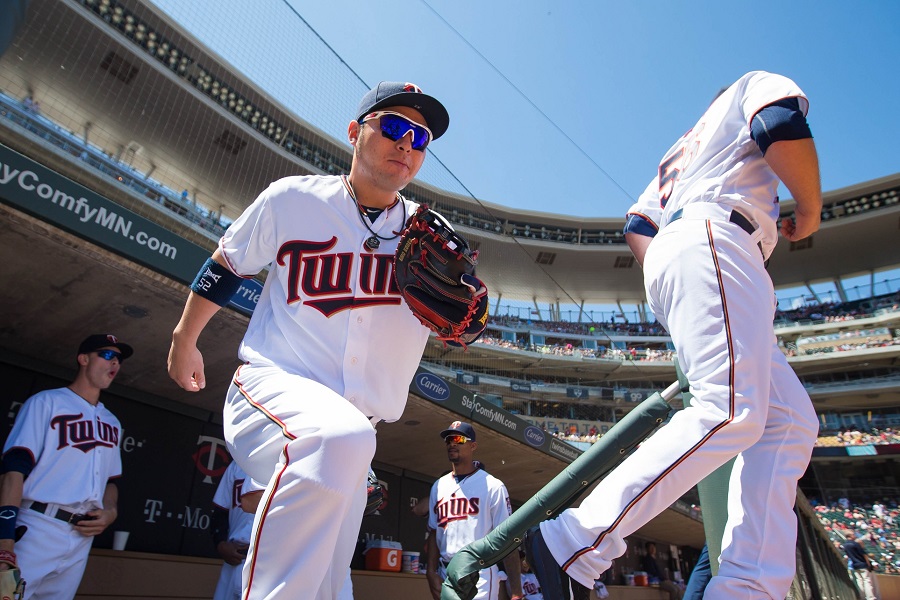 Yonhap News reporter Jeejo Yoo was the first to report Park’s return to Korea. https://twitter.com/Jeeho_1/status/934976475744239617 Park struggled with the transition to major league baseball. In 62 big league games, he hit .191/.275/.412 with 12 home runs and nine doubles. His 80 to 21 strikeout to walk ratio was a little tough to swallow. He fought through some injuries in his first season and he was never able to fully put it together. Park was removed from the Twins 40-man roster last off-season and played in 111 Triple-A games in 2017 while continuing to battle through injuries. He finished 2017 hitting .253/.308/.415 with 130 strikeouts in 111 games. Park added 14 home runs and 22 doubles but it still wasn’t enough to make it back to the big leagues. Park had two years and $6.5 million remaining on his initial contract with the Twins. He will turn 32 next season and it was probably in the best interests of both parties to go their separate ways. What was your favorite Byungho Park moment? Should the Twins have given him another shot? Leave a COMMENT and start the discussion.
 -
As the holiday season begins, let’s take a minute to appreciate some of the things that have gone well in Twins Territory over the last year. Things were a little gloomy at this point last year. The club was coming off a 103-loss season and Minnesota’s young core was struggling to find itself at the big league level. One year later and the script has switched. A new baseball operations department helped to lead baseball in Minnesota back to the playoffs for the first time since 2010. So what other things should fans be thankful for in 2017?1. Surprise 2017 Season Twins Territory has suffered through a lot of losing for the greater part of the last decade. Besides a surprising 2015 season, there were 92 losses or more from 2011-2016 including a franchise worst 103 losses in 2017. Minnesota qualified for the second AL Wild Card before losing to the New York Yankees. Paul Molitor would be honored as the American League’s Manager of the Year. He was rewarded with a three-year contract extension following the season. The Twins surprised most of the baseball world and it made for a very enjoyable summer of watching baseball. 2. Byron Buxton’s Golden Glove It didn’t take long for Byron Buxton to make his presence felt in 2017. On Opening Day, he made baseball’s first 5-star catch of the season. It was just the beginning of what turned out to be one of the best defensive seasons in Twins history. “Us outfielders have this thing where nothing falls but raindrops,” Buxton said after the game and that mantra prove to be true. His bat also turned into a weapon after a slow start at the plate. Almost every defensive honor was heaped on Buxton following the season. He’s a player whose play is worth the price of admission. 3. Other Young Core Players Buxton wasn’t the only player to shine in 2017. Miguel Sano was selected to his first All-Star Game and finished runner-up to Aaron Judge in the Home Run Derby. Sano’s season was cut short by a nagging leg injury but he carried a large portion of the offensive load in the first half. Max Kepler and Eddie Rosario helped form a solid outfield core with Buxton. Jose Berrios also showed signs of being a dominant starter. Everything didn’t go perfectly with this group but there is hope that they can all take another step forward in 2018. 4. The Dynamic Duo: Falvey and Levine Did the dynamic duo push all of the right buttons in 2017? Probably not, but it is going to take time to see what they mean to this organization. Players and fans were upset when the team turned from buyers into sellers at the trade deadline. However, this might have lit a fire under the squad to make a playoff push. Their first draft class of Royce Lewis, Brent Rooker, and Blayne Enlow all look like they could make a major impact at the big league level in the future. With a new analytic-minded focus and a young core, it is going to be exciting to see how they can mold the current roster. 5. Mauer’s Expiring Contract At the end of the 2018 campaign, Joe Mauer’s long-term contract will be off the books. This might sound like a jab at Mauer but it’s more about the future of this franchise. When Mauer signed the deal, he looked like a once in a generation player behind the plate with the potential to make the Hall of Fame. With his money off the books, the Twins will have more flexibility to make some long-term deals. In fact, the organization has already be rumored to be in the mix for top free agents Yu Darvish and Jake Arrieta. Mauer will go down as one of the best players in franchise history but his contract might have been limiting to the front office. More money will allow the new regime to target the players they want and help to build Minnesota into a regular contender. What are you thankful for this year? Leave a COMMENT and start the discussion. Click here to view the article
-
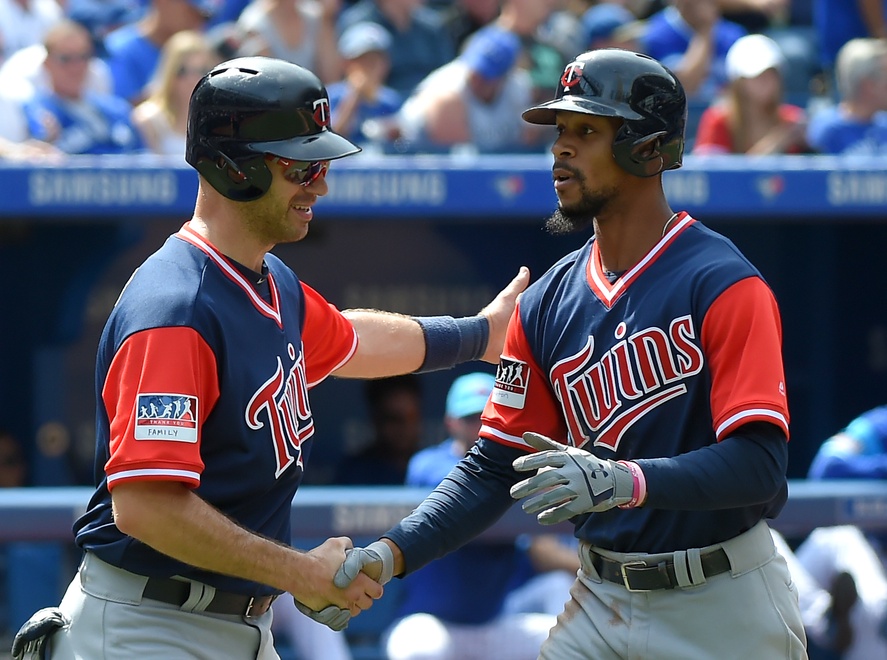 1. Surprise 2017 Season Twins Territory has suffered through a lot of losing for the greater part of the last decade. Besides a surprising 2015 season, there were 92 losses or more from 2011-2016 including a franchise worst 103 losses in 2017. Minnesota qualified for the second AL Wild Card before losing to the New York Yankees. Paul Molitor would be honored as the American League’s Manager of the Year. He was rewarded with a three-year contract extension following the season. The Twins surprised most of the baseball world and it made for a very enjoyable summer of watching baseball. 2. Byron Buxton’s Golden Glove It didn’t take long for Byron Buxton to make his presence felt in 2017. On Opening Day, he made baseball’s first 5-star catch of the season. It was just the beginning of what turned out to be one of the best defensive seasons in Twins history. “Us outfielders have this thing where nothing falls but raindrops,” Buxton said after the game and that mantra prove to be true. His bat also turned into a weapon after a slow start at the plate. Almost every defensive honor was heaped on Buxton following the season. He’s a player whose play is worth the price of admission. 3. Other Young Core Players Buxton wasn’t the only player to shine in 2017. Miguel Sano was selected to his first All-Star Game and finished runner-up to Aaron Judge in the Home Run Derby. Sano’s season was cut short by a nagging leg injury but he carried a large portion of the offensive load in the first half. Max Kepler and Eddie Rosario helped form a solid outfield core with Buxton. Jose Berrios also showed signs of being a dominant starter. Everything didn’t go perfectly with this group but there is hope that they can all take another step forward in 2018. 4. The Dynamic Duo: Falvey and Levine Did the dynamic duo push all of the right buttons in 2017? Probably not, but it is going to take time to see what they mean to this organization. Players and fans were upset when the team turned from buyers into sellers at the trade deadline. However, this might have lit a fire under the squad to make a playoff push. Their first draft class of Royce Lewis, Brent Rooker, and Blayne Enlow all look like they could make a major impact at the big league level in the future. With a new analytic-minded focus and a young core, it is going to be exciting to see how they can mold the current roster. 5. Mauer’s Expiring Contract At the end of the 2018 campaign, Joe Mauer’s long-term contract will be off the books. This might sound like a jab at Mauer but it’s more about the future of this franchise. When Mauer signed the deal, he looked like a once in a generation player behind the plate with the potential to make the Hall of Fame. With his money off the books, the Twins will have more flexibility to make some long-term deals. In fact, the organization has already be rumored to be in the mix for top free agents Yu Darvish and Jake Arrieta. Mauer will go down as one of the best players in franchise history but his contract might have been limiting to the front office. More money will allow the new regime to target the players they want and help to build Minnesota into a regular contender. What are you thankful for this year? Leave a COMMENT and start the discussion.
 -
Pitching was the theme of players added to the Twins 40-man roster earlier this week. Stephen Gonsalves, Zack Littell, and Lewis Thorpe were all added as the new front office looks to lock-in young pitching. Even with a focus on pitching, one name was left off the list. Former first round pick Kohl Stewart was not added to the team’s 40-man roster. This means he will be available in next month’s Rule 5 Draft. It’s been a tumultuous Twins tenure for Stewart and now his future is in doubt. So, what’s next for Kohl Stewart?Background The Twins took Stewart with the fourth pick of the 2013 MLB Draft and signed him for $4.5 million. He had the chance to play quarterback on Division I scholarship but he turned it down to pitch professionally. Even the major prospect gurus, took notice of Stewart and his high ceiling. All three major prospect rankings had him as a top-55 prospect before the 2014 season. Leading into 2015, MLB had him at 36 and Baseball Prospectus had him at 28. Things were looking good for the young Texas hurler. Roller Coaster Ride Stewart spent all of 2015 in Fort Myers where he was almost three years younger than the competition. He didn’t take the next step like most people had hoped. He allowed multiple runs in 16 of his 22 appearances and compiled a 3.20 ERA with a 1.38 WHIP. Prospect writers had hoped Stewart would start striking out more batters. He only struck out 71 in 129.1 innings. The 2016 season saw some minor improvements for Stewart. His ERA dropped to 2.61 during a return trip through the Florida State League. After he was bumped up to Double-A, his ERA rose to 3.03 but he posted a 1.47 WHIP. His strikeouts per nine improved from 4.9 to 5.7 but it still wasn’t nearly what experts had hoped he would be able to reach. Stewart has missed time throughout his career with minor shoulder issues. Since he split time as an amateur between football and baseball, he needed to spend time learning how to pitch. Any time he was missing due to injury was taking away from learning the art of pitching. During the 2017 season, Stewart spent almost the entire season at Double-A. As a 22-year old, he struggled to the tune of a 4.09 ERA and a 1.52 WHIP. His strikeouts per nine went up to 6.3 but his walks per nine also rose to 5.0. All of his appearances came as a starter but he was limited to 17 starts, the fewest since he started pitching in full season leagues. He missed almost two whole months due to tendinitis in his knee. What’s Next? Overall, he has shown the ability to coax a lot of ground balls. His strikeout promise from when the Twins drafted him has never come to fruition. He also continues to be very young for the levels where he has pitched. Stewart was the youngest player to make an appearance with Rochester this season. However, the strikeout numbers many thought he would grow into have never shown up. A team could take him in the Rule 5 Draft and try and hide him in their bullpen for the entire season. Even the Twins might decide to move him to the bullpen in the future. A once promising future has gotten a little cloudy over the last couple of seasons. What do you think should be expected of Stewart? Will a team take him in the Rule 5 Draft? Leave a COMMENT and start the discussion. Click here to view the article
-
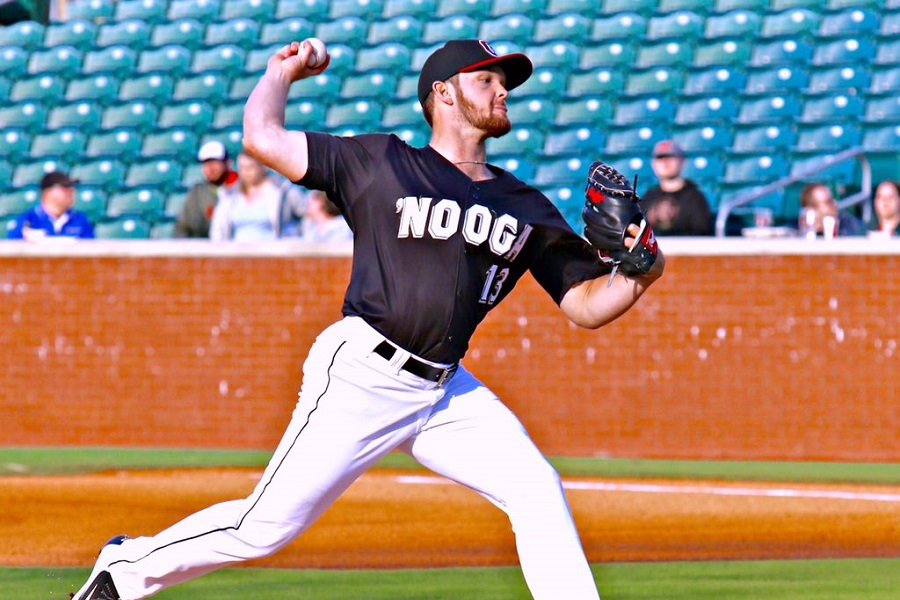 Background The Twins took Stewart with the fourth pick of the 2013 MLB Draft and signed him for $4.5 million. He had the chance to play quarterback on a Division I scholarship but he turned it down to pitch professionally. Even the major prospect gurus took notice of Stewart and his high ceiling. All three major prospect rankings had him as a top-55 prospect before the 2014 season. Leading into 2015, MLB had him at 36 and Baseball Prospectus had him at 28. Things were looking good for the young Texas hurler. Roller Coaster Ride Stewart spent all of 2015 in Fort Myers where he was almost three years younger than the competition. He didn’t take the next step like most people had hoped. He allowed multiple runs in 16 of his 22 appearances and compiled a 3.20 ERA with a 1.38 WHIP. Prospect writers had hoped Stewart would start striking out more batters. He only struck out 71 in 129.1 innings. The 2016 season saw some minor improvements for Stewart. His ERA dropped to 2.61 during a return trip through the Florida State League. After he was bumped up to Double-A, his ERA rose to 3.03 but he posted a 1.47 WHIP. His strikeouts per nine improved from 4.9 to 5.7 but it still wasn’t nearly what experts had hoped he would be able to reach. Stewart has missed time throughout his career with minor shoulder issues. Since he split time as an amateur between football and baseball, he needed to spend time learning how to pitch. Any time he was missing due to injury was taking away from learning the art of pitching. During the 2017 season, Stewart spent almost the entire season at Double-A. As a 22-year old, he struggled to the tune of a 4.09 ERA and a 1.52 WHIP. His strikeouts per nine went up to 6.3 but his walks per nine also rose to 5.0. All of his appearances came as a starter but he was limited to 17 starts, the fewest since he started pitching in full-season leagues. He missed almost two months due to tendinitis in a knee. What’s Next? Overall, he has shown the ability to coax a lot of ground balls. His strikeout promise from when the Twins drafted him has never come to fruition. He also continues to be very young for the levels where he has pitched. Stewart was the youngest player to make an appearance with Rochester this season. However, the strikeout numbers many thought he would grow into have never shown up. A team could take him in the Rule 5 Draft and try and hide him in their bullpen for the entire season. If he remains in the organization, even the Twins might decide to move him to the bullpen. A once promising future has gotten a little cloudy over the last couple of seasons. What do you think should be expected of Stewart? Will a team take him in the Rule 5 Draft? Leave a COMMENT and start the discussion.
 -
The 2018 Baseball Writers’ Association of America released their Hall of Fame ballot on Monday. Returning names like relief pitcher Trevor Hoffman and outfielder Vladimir Guerrero are almost assured of election. Hoffman fell five votes short in 2017 and Guerrero was 15 votes shy of induction. There is a strong crop of first time nominees as well. Third baseman Chipper Jones and shortstop Omar Vizuel each have strong resumes. Two former Twins, Jim Thome and Johan Santana, will also be on the ballot for the first time. Could Thome or Santana be inducted next summer?Thome’s Resume Thome’s numbers speak for themselves. Only nine players have surpassed the 600 home run plateau and Thome is one of them. He also compiled 1,699 RBIs, 1,583 runs scored, a .402 OBP and 2,328 hits. According to Baseball Reference’s Offensive WAR, he has the 44th highest total in baseball history and his WAR for position players is in the top 55. His career slugging (.544) and OPS (.956) both rank in the top 25 all-time. He also ranks seventh in base on balls (1,747). His demeanor on and off the field also separated him from the pack. Former teammate Joe Crede said, “He’s the epitome of a baseball player.” That kind of resume will be tough for the writers to ignore. Santana’s Resume Santana provides a more interesting case for the Hall of Fame. He was the most dominant pitcher in the game for a five-year stretch but his career was eventually derailed by injuries. Earlier this year, Seth compared Santana’s career to the great Sandy Koufax. There are similar career paths for both players. Baseball Reference’s Cy Young Career Shares (2.72) has him 12th all-time. Of the players in front of him, eight are in the Hall of Fame. The four not in the Hall are Roger Clemens, Clayton Kershaw, Roy Halladay, and Max Scherzer. Clemens may never get in but the other three all have a very strong chance. He ranks in the top 20 all-time in strikeouts per nine and adjusted ERA+. Predictions Other sluggers from Thome’s era have struggled to make it on the first ballot. A steroid era cloud has hung over some players like last year’s inductee Jeff Bagwell. Thome’s numbers are some of the best all-time and his overall contributions to the game will make it tough to keep him out of Cooperstown. This year’s ballot is stacked so he could fall victim to too many people passing him over to keep other players on the ballot. That being said, I still think he gets in. Santana is going to be a tough player for the writers to consider. I think it would take multiple years of him being on the ballot to start building up a case in his favor. He would need writers talking about how dominant he was before the injury. Twins fans saw a player like Kirby Puckett get inducted even though his career was cut short by an injury. Could the baseball writers do the same thing with Santana? It doesn’t seem likely for him to make it in 2018. Do you think either player makes the cut? Should Santana make it for his dominant stretch? Who else on the ballot will be elected? Leave a COMMENT and start the discussion. Click here to view the article
-
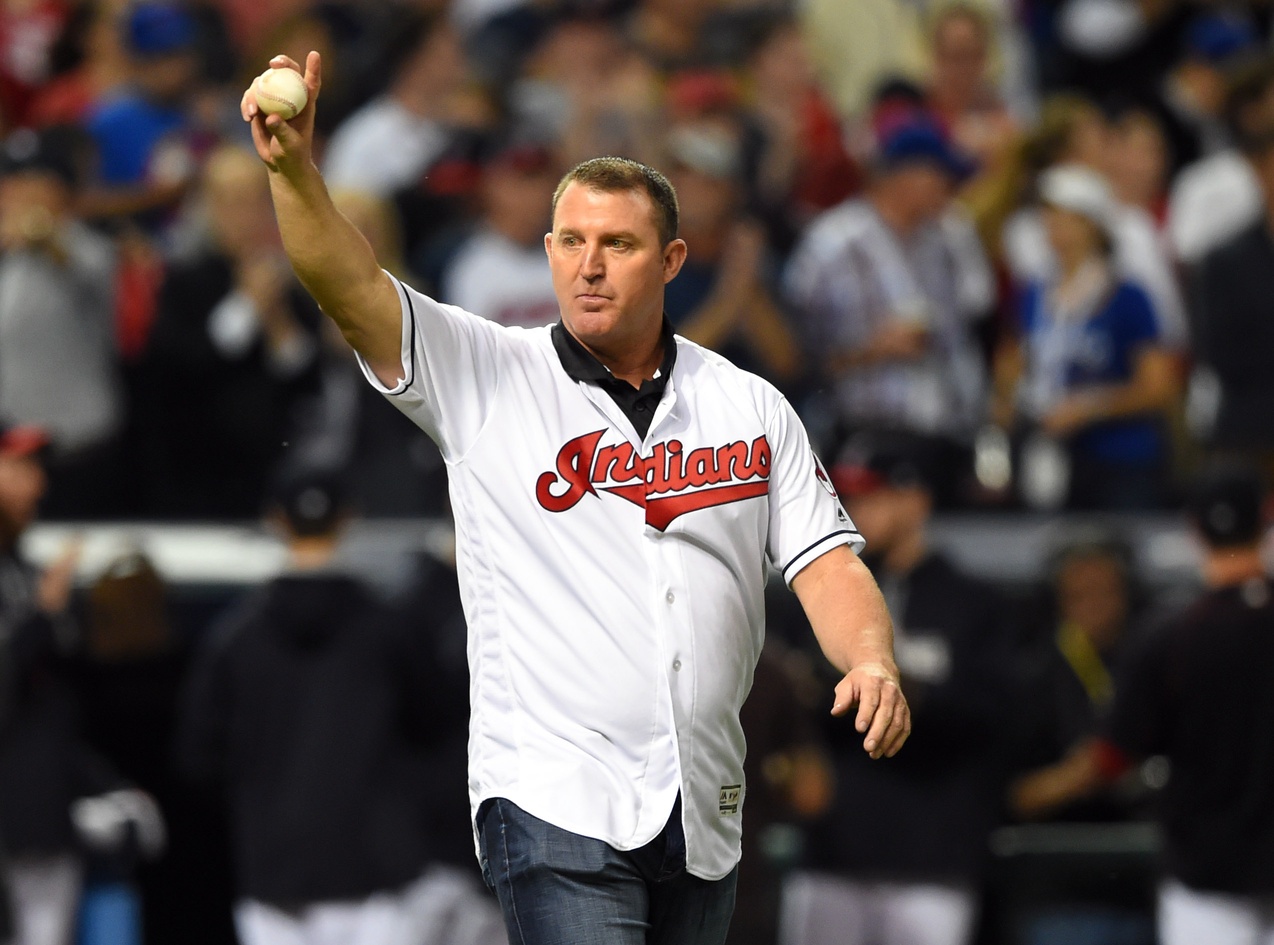 Thome’s Resume Thome’s numbers speak for themselves. Only nine players have surpassed the 600 home run plateau and Thome is one of them. He also compiled 1,699 RBIs, 1,583 runs scored, a .402 OBP and 2,328 hits. According to Baseball Reference’s Offensive WAR, he has the 44th highest total in baseball history and his WAR for position players is in the top 55. His career slugging (.544) and OPS (.956) both rank in the top 25 all-time. He also ranks seventh in base on balls (1,747). His demeanor on and off the field also separated him from the pack. Former teammate Joe Crede said, “He’s the epitome of a baseball player.” That kind of resume will be tough for the writers to ignore. Santana’s Resume Santana provides a more interesting case for the Hall of Fame. He was the most dominant pitcher in the game for a five-year stretch but his career was eventually derailed by injuries. Earlier this year, Seth compared Santana’s career to the great Sandy Koufax. There are similar career paths for both players. Baseball Reference’s Cy Young Career Shares (2.72) has him 12th all-time. Of the players in front of him, eight are in the Hall of Fame. The four not in the Hall are Roger Clemens, Clayton Kershaw, Roy Halladay, and Max Scherzer. Clemens may never get in but the other three all have a very strong chance. He ranks in the top 20 all-time in strikeouts per nine and adjusted ERA+. Predictions Other sluggers from Thome’s era have struggled to make it on the first ballot. A steroid era cloud has hung over some players like last year’s inductee Jeff Bagwell. Thome’s numbers are some of the best all-time and his overall contributions to the game will make it tough to keep him out of Cooperstown. This year’s ballot is stacked so he could fall victim to too many people passing him over to keep other players on the ballot. That being said, I still think he gets in. Santana is going to be a tough player for the writers to consider. I think it would take multiple years of him being on the ballot to start building up a case in his favor. He would need writers talking about how dominant he was before the injury. Twins fans saw a player like Kirby Puckett get inducted even though his career was cut short by an injury. Could the baseball writers do the same thing with Santana? It doesn’t seem likely for him to make it in 2018. Do you think either player makes the cut? Should Santana make it for his dominant stretch? Who else on the ballot will be elected? Leave a COMMENT and start the discussion.
 -
Even though it is the offseason, the Twins have been making news. Last week, Byron Buxton and Brian Dozier were honored for their outstanding defense. Paul Molitor was named the American League Manager of the Year after the Twins tremendous turnaround in 2017. Here are three other stories that have ties to the Twins. Could the Twins sign one of baseball’s biggest free agent pitchers? What happened with Jelfry Marte? Would Minnesota consider signing one of Japan’s biggest baseball stars?Hunting For An Ace Things a running a little ahead of schedule in Minnesota after the team qualified for the playoffs for the first time since 2010. Thad Levine and Derek Falvey intend to be buyers this offseason in hopes of making a longer playoff run. There are a number of big name free agents on their list but MLB insider Joy Heyman reports that Yu Darvish is at the top. Levine helped to bring Darvish to Texas, so there is already a relationship between the Twins’ GM and the star pitcher. Darvish posted a 10-12 record with a 3.86 ERA and 209 strikeouts. Jake Arrieta and Lance Lynn are also options for the Twins but the club will be pushing for Darvish to start the off-season. Marte’s Contract Voided Minnesota made a splash on the International market this summer by signing 16-year old Dominican shortstop Jelfry Marte. This week the Twins voided his $3 million contract due to an issue the team discovered during his physical. Sources say the issue was related to his vision. Marte is now a free agent and has been working out for clubs in Florida. With Marte’s contract off the books, the Twins have an extra $3 million available in their bonus pool to spend on other players. The deadline to use that money is June 15, 2018. Looking To Japan The Twins could be looking to spend the money saved from Marte on Japanese star Shohei Otani. Under the new posting system, the release fee was capped at $20 million. To put that in perspective, the Rangers paid a $51 million posting fee to sign Yu Darvish. The lower posting fee will have almost every team interested, including the Twins. MLB’s newest Collective Bargaining Agreement changed the type of deal Otani can sign. He will be subject to international bonus pools. Under the new CBA, players must now be 25 and have played six seasons in a foreign professional league to be exempt from bonus pools. If he waited until next season, he would qualify as a free agent which would mean a lot more money in his pocket. However, he wants to come to MLB now. What are your thoughts on the Twins news from this week? Leave a COMMENT and start the discussion. Click here to view the article
-
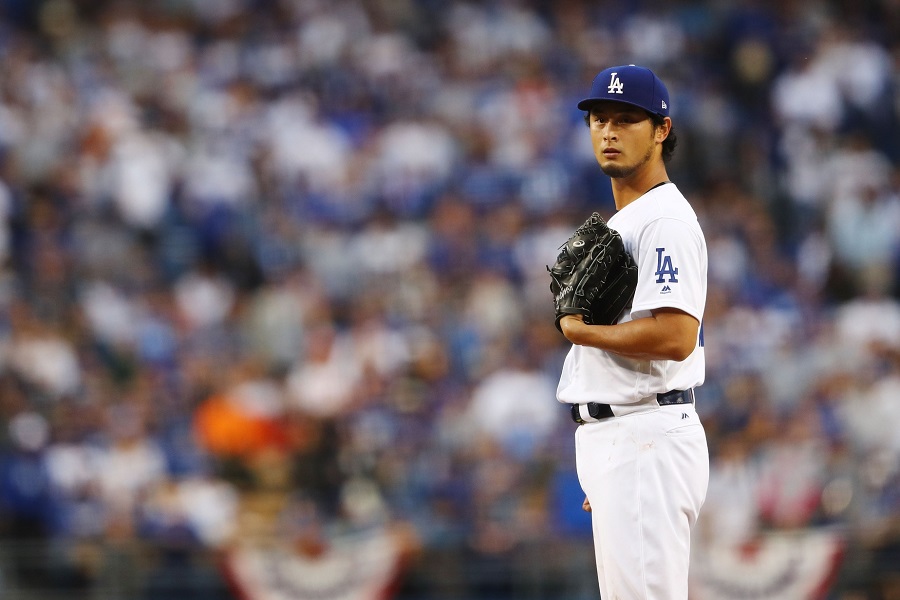 Hunting For An Ace Things a running a little ahead of schedule in Minnesota after the team qualified for the playoffs for the first time since 2010. Thad Levine and Derek Falvey intend to be buyers this offseason in hopes of making a longer playoff run. There are a number of big name free agents on their list but MLB insider Joy Heyman reports that Yu Darvish is at the top. Levine helped to bring Darvish to Texas, so there is already a relationship between the Twins’ GM and the star pitcher. Darvish posted a 10-12 record with a 3.86 ERA and 209 strikeouts. Jake Arrieta and Lance Lynn are also options for the Twins but the club will be pushing for Darvish to start the off-season. Marte’s Contract Voided Minnesota made a splash on the International market this summer by signing 16-year old Dominican shortstop Jelfry Marte. This week the Twins voided his $3 million contract due to an issue the team discovered during his physical. Sources say the issue was related to his vision. Marte is now a free agent and has been working out for clubs in Florida. With Marte’s contract off the books, the Twins have an extra $3 million available in their bonus pool to spend on other players. The deadline to use that money is June 15, 2018. https://twitter.com/jjcoop36/status/930829687231860739 Looking To Japan The Twins could be looking to spend the money saved from Marte on Japanese star Shohei Otani. Under the new posting system, the release fee was capped at $20 million. To put that in perspective, the Rangers paid a $51 million posting fee to sign Yu Darvish. The lower posting fee will have almost every team interested, including the Twins. MLB’s newest Collective Bargaining Agreement changed the type of deal Otani can sign. He will be subject to international bonus pools. Under the new CBA, players must now be 25 and have played six seasons in a foreign professional league to be exempt from bonus pools. If he waited until next season, he would qualify as a free agent which would mean a lot more money in his pocket. However, he wants to come to MLB now. What are your thoughts on the Twins news from this week? Leave a COMMENT and start the discussion.
 -
Byron Buxton has been bringing home quite the hardware collection over the last week. After taking the American League Gold Glove, he was named the Platinum Glove Winner and Wilson’s award for the best defensive player in baseball. It might be time to expand his trophy room at home. His diving catches and crashes against the wall helped him fill up highlight reels. Buxton joins the ranks of Torii Hunter and Kirby Puckett as the team’s only center fielders to win a Gold Glove. With that in mind, how does Buxton’s season rank in Twins history? Did fans just witness the team’s best defensive season?Corey Koskie, 3B (2002) The 2002 season saw some of the best individual defensive seasons in team history. Corey Koskie manned the hot corner for the Twins that season and he compiled a 21.9 Fangraphs DEF total, the highest DEF ranking in club history. His 19.9 UZR ranking is also the top total in the club’s record books. If you extrapolate that total out to 150 games, his 22.4 UZR/150 would be more than four runs higher than his next closest competitor. Jacque Jones, LF (2002) While Koskie was dominating at third base, Jacque Jones was also performing very well in left field. His 11.5 DEF score is the seventh best in team history but his 17.6 UZR is the third best overall. He is the lone corner outfielder to rank in the top 20 for UZR and DEF. As a younger player, he spent time playing center field and those instincts clearly translated to his corner outfield spot. His season in left field was the best corner outfield season by any player in team history. Carlos Gomez, CF (2008) While Hunter and Puckett are legendary in center field, Gomez compiled arguably the best center field season in team history. His 20.1 DEF and 17.9 UZR totals only trail Koskie’s 2002 season at third base. When it comes range runs (RngR), Gomez tracked down more balls in his vicinity than any player in team history. His 18.9 RngR total was 4.5 runs higher than Koskie’s 2002 total. He lost out on the Gold Glove to Grady Sizemore but he scored much better than him according to defensive metrics. Torii Hunter, CF (2003) Seeing Hunter run hard into the Metrodome “baggie” was a common sight during the Twins renaissance in the early 2000s. Hunter won nine Gold Gloves but his best defensive season came in 2003. His 18.4 DEF is third in team history and his 16.2 UZR is one of the team’s four seasons of over 15.0 UZR. When it comes to RngR, only Gomez and Koskie rank higher with their seasons mentioned above. Hunter might be the team’s best defensive player all-time and the 2003 campaign was his crowning achievement. Byron Buxton, CF (2017) Buxton became the first Twins player to sweep the Gold Glove, Platinum Glove and Wilson Best Defensive Player. Some of these awards are new editions to the postseason awards circuit but it is an accomplishment to earn multiple honors naming a player as the top defender in the league. When it comes to the defensive metrics, Buxton’s totals are below Gomez (2008) and Hunter (2003). Buxton’s window as the league’s best defender might be small but he still compiled one of the team’s best defensive campaigns. Who gets your vote for the best defensive season in team history? Koskie? Hunter? Leave a COMMENT and start the discussion. Click here to view the article
-
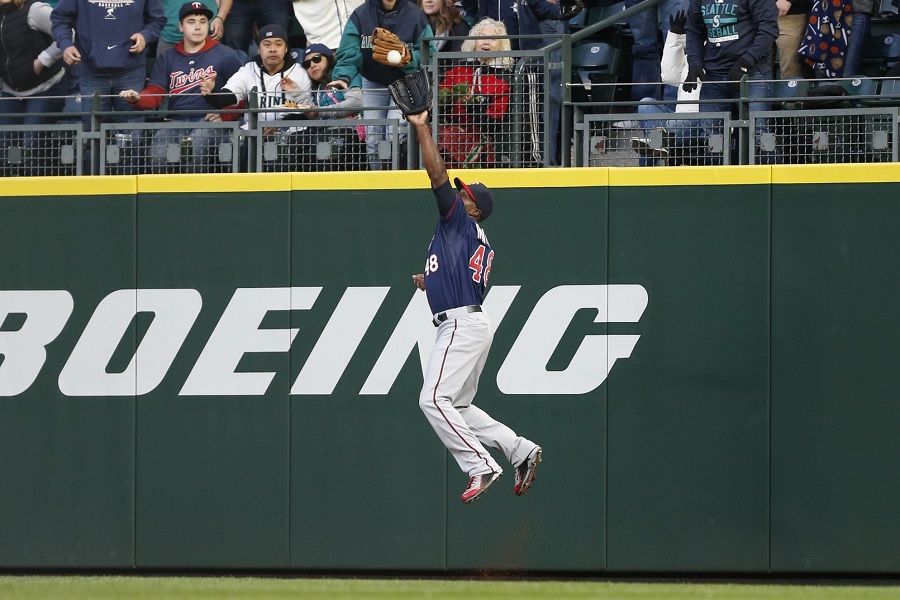 Corey Koskie, 3B (2002) The 2002 season saw some of the best individual defensive seasons in team history. Corey Koskie manned the hot corner for the Twins that season and he compiled a 21.9 Fangraphs DEF total, the highest DEF ranking in club history. His 19.9 UZR ranking is also the top total in the club’s record books. If you extrapolate that total out to 150 games, his 22.4 UZR/150 would be more than four runs higher than his next closest competitor. Jacque Jones, LF (2002) While Koskie was dominating at third base, Jacque Jones was also performing very well in left field. His 11.5 DEF score is the seventh best in team history but his 17.6 UZR is the third best overall. He is the lone corner outfielder to rank in the top 20 for UZR and DEF. As a younger player, he spent time playing center field and those instincts clearly translated to his corner outfield spot. His season in left field was the best corner outfield season by any player in team history. Carlos Gomez, CF (2008) While Hunter and Puckett are legendary in center field, Gomez compiled arguably the best center field season in team history. His 20.1 DEF and 17.9 UZR totals only trail Koskie’s 2002 season at third base. When it comes range runs (RngR), Gomez tracked down more balls in his vicinity than any player in team history. His 18.9 RngR total was 4.5 runs higher than Koskie’s 2002 total. He lost out on the Gold Glove to Grady Sizemore but he scored much better than him according to defensive metrics. Torii Hunter, CF (2003) Seeing Hunter run hard into the Metrodome “baggie” was a common sight during the Twins renaissance in the early 2000s. Hunter won nine Gold Gloves but his best defensive season came in 2003. His 18.4 DEF is third in team history and his 16.2 UZR is one of the team’s four seasons of over 15.0 UZR. When it comes to RngR, only Gomez and Koskie rank higher with their seasons mentioned above. Hunter might be the team’s best defensive player all-time and the 2003 campaign was his crowning achievement. Byron Buxton, CF (2017) Buxton became the first Twins player to sweep the Gold Glove, Platinum Glove and Wilson Best Defensive Player. Some of these awards are new editions to the postseason awards circuit but it is an accomplishment to earn multiple honors naming a player as the top defender in the league. When it comes to the defensive metrics, Buxton’s totals are below Gomez (2008) and Hunter (2003). Buxton’s window as the league’s best defender might be small but he still compiled one of the team’s best defensive campaigns. Who gets your vote for the best defensive season in team history? Koskie? Hunter? Leave a COMMENT and start the discussion.
 -
It’s no secret that the Twins bullpen was a weakness in 2017. With a largely unproven group of arms, Minnesota fans were left pulling their hair out in late-inning situations. There is no doubt the Twins will be looking for some upgrades this offseason as the club looks to build off of their 2017 success. Could the Reds have a piece the Twins are interested in acquiring? Do the Twins have what it would take to bring in one of baseball’s best relief arms?MLB Networks’ Jon Morosi reports that the Twins have checked in with the Reds about a potential deal for closer Raisel Iglesias. In his first full season as a relief pitcher, Iglesias posted a 2.49 ERA with a 10.89 K/9 and a 3.41 K/BB. His fastball hits in the mid-90s and his slider helped to generate a 13.9% swinging strike rate. One of the benefits of Iglesias is that he is not a rental part. He is under control through 2021 so the Reds can demand a high price. His seven-year, $27 million deal gives him the right to opt out at any point when he qualifies for arbitration. This could mean a larger pay-day if he continues to pile up strong numbers. He would be a Super Two player following the 2020 season. Iglesias isn’t the only option for the Twins. According to KSTP’s Darren Wolfson, the Twins are calling on a number of guys. Minnesota’s farm system ranks in the middle of the pack since so many top tier prospects have made their debuts in recent years. This could make it hard to package a deal for Iglesias. Last summer, the Reds listened to offers for Iglesias but they were looking for a package that would “blow them away.” Minnesota has also expressed interest in bringing back former closer Brandon Kintzler. Over the past two seasons, Kintzler recorded 45 saves on the way to being named a 2017 AL All-Star. Kintzler was traded to the Nationals last season and they have also expressed interest in re-signing him. Do the Twins want to send multiple top prospects to the Reds for one of baseball’s best relief pitchers? Should the club look to the free agent market for players like Kintzler? Leave a COMMENT and start the discussion. Click here to view the article
-
 MLB Networks’ Jon Morosi reports that the Twins have checked in with the Reds about a potential deal for closer Raisel Iglesias. In his first full season as a relief pitcher, Iglesias posted a 2.49 ERA with a 10.89 K/9 and a 3.41 K/BB. His fastball hits in the mid-90s and his slider helped to generate a 13.9% swinging strike rate. https://twitter.com/jonmorosi/status/929840824761937927 One of the benefits of Iglesias is that he is not a rental part. He is under control through 2021 so the Reds can demand a high price. His seven-year, $27 million deal gives him the right to opt out at any point when he qualifies for arbitration. This could mean a larger pay-day if he continues to pile up strong numbers. He would be a Super Two player following the 2020 season. Iglesias isn’t the only option for the Twins. According to KSTP’s Darren Wolfson, the Twins are calling on a number of guys. Minnesota’s farm system ranks in the middle of the pack since so many top tier prospects have made their debuts in recent years. This could make it hard to package a deal for Iglesias. Last summer, the Reds listened to offers for Iglesias but they were looking for a package that would “blow them away.” Minnesota has also expressed interest in bringing back former closer Brandon Kintzler. Over the past two seasons, Kintzler recorded 45 saves on the way to being named a 2017 AL All-Star. Kintzler was traded to the Nationals last season and they have also expressed interest in re-signing him. Do the Twins want to send multiple top prospects to the Reds for one of baseball’s best relief pitchers? Should the club look to the free agent market for players like Kintzler? Leave a COMMENT and start the discussion.
 -
Article: Modern Era Ballot Full Of Flaws
Cody Christie posted a topic in Twins Daily Front Page News
Baseball’s election process for the Hall of Fame isn’t perfect. Strong candidates get skipped over. Top level players are left off ballots because of the 10 vote limit per ballot. Twins fans are well aware of the flawed process with players like Bert Blyleven, who eventually got in, and Tony Oliva, who is still waiting for the call. In order to address some of these flaws, MLB has created what some call a “back door” into the Hall of Fame. The 16-member Eras Committee (formerly known as the Veterans Committee) considers players from baseball’s different eras. This year’s ballot includes 10 names from the Modern Era (1970-1987).Candidates must receive 12 of the 16 votes in order to get elected. Each member of the committee can vote for a maximum of five candidates. Since 2009, only two players have been elected through this process, Ron Santo and Deacon White. Will Morris Get His Call? Some fans who grew up watching the Modern Era are surprised that Jack Morris isn’t already in the Hall. Morris topped out at 67% of the vote on his 14th time on the BBWAA ballot. Morris left his mark on the Twins organization with his 10 inning shutout in Game 7 of the 1991 World Series. Other than that, his resume is lacking. He has a career 3.90 ERA and his career WAR of 43.8 doesn’t exactly scream Hall of Fame. Morris was part of three World Series winners and he had the most wins in the 1980’s (for what that’s worth). There are worse players in the Hall and I think other players feel like he should be part of their elite group. Are There Other Deserving Names? Alan Trammell and Marvin Miller also have a chance at being elected. Trammell has similar stats to Barry Larkin who was elected on his third BBWAA ballot. He has the eight-best WAR among shortstops which is the highest WAR total for an eligible shortstop candidate who hasn’t been elected. Miller, the former head of the MLB Players Association, missed being elected by one vote in 2010. With Bud Selig’s election last year, it should pave the way for Miller to be enshrined. Unfortunately, he has passed on since his last time on the ballot. Who Was Missed? With nine players and Miller on the ballot, there wasn’t much room for other non-players. In previous years, George Steinbrenner and Billy Martin were on the ballot. Don Mattingly made the ballot while Keith Hernandez was left off. Even though Hernandez accumulated a WAR total that is 18 points higher than Mattingly. Other names that were missed were players like Dwight Evans, Bobby Grich, Willie Randolph, and Lou Whitaker. All of these players accumulated a WAR of over 65. Some of the other names on the ballot just don’t stack up when compared to those left off the ballot. What are your thoughts? Will Morris finally get the call? Who was the biggest snub? Leave a COMMENT and start the discussion. Click here to view the article -
 Candidates must receive 12 of the 16 votes in order to get elected. Each member of the committee can vote for a maximum of five candidates. Since 2009, only two players have been elected through this process, Ron Santo and Deacon White. Will Morris Get His Call? Some fans who grew up watching the Modern Era are surprised that Jack Morris isn’t already in the Hall. Morris topped out at 67% of the vote on his 14th time on the BBWAA ballot. Morris left his mark on the Twins organization with his 10 inning shutout in Game 7 of the 1991 World Series. Other than that, his resume is lacking. He has a career 3.90 ERA and his career WAR of 43.8 doesn’t exactly scream Hall of Fame. Morris was part of three World Series winners and he had the most wins in the 1980’s (for what that’s worth). There are worse players in the Hall and I think other players feel like he should be part of their elite group. Are There Other Deserving Names? Alan Trammell and Marvin Miller also have a chance at being elected. Trammell has similar stats to Barry Larkin who was elected on his third BBWAA ballot. He has the eight-best WAR among shortstops which is the highest WAR total for an eligible shortstop candidate who hasn’t been elected. Miller, the former head of the MLB Players Association, missed being elected by one vote in 2010. With Bud Selig’s election last year, it should pave the way for Miller to be enshrined. Unfortunately, he has passed on since his last time on the ballot. Who Was Missed? With nine players and Miller on the ballot, there wasn’t much room for other non-players. In previous years, George Steinbrenner and Billy Martin were on the ballot. Don Mattingly made the ballot while Keith Hernandez was left off. Even though Hernandez accumulated a WAR total that is 18 points higher than Mattingly. Other names that were missed were players like Dwight Evans, Bobby Grich, Willie Randolph, and Lou Whitaker. All of these players accumulated a WAR of over 65. Some of the other names on the ballot just don’t stack up when compared to those left off the ballot. What are your thoughts? Will Morris finally get the call? Who was the biggest snub? Leave a COMMENT and start the discussion.
 -
On Monday, Paul Molitor was announced as one of three finalists for the American League Manager of the Year. In the midst of a big turnaround in Minnesota, Molitor led the Twins to the playoffs for the first time since 2010. Entering the season, there were questions about whether or not the new front office regime would keep Molitor around. He made it tough to show him the door. How does Molitor stack up against the other finalists? Could he bring home the hardware?Terry Francona, Cleveland Indians AL Central Champions (102-60 Record) Resume: The defending AL Champs had high hopes for 2017. Many considered them the favorites to repeat at the top of the league. Francona had to navigate his team through a potential World Series “hangover.” A slow start at the beginning of the year was quickly forgotten as the Indians compiled a record 22-game winning streak. Cleveland won the AL Central by 17 games. AJ Hinch, Houston Astros AL West Champions (101-61 Record) Resume: Everyone knows what the Astros were able to do in the postseason but only the regular season figures into MLB’s award season. Houston has had high expectations the last couple of seasons, but Hinch was able to push all the right buttons as his club crossed the 100-win mark. He was able to use the right mix of young talent and veteran players to be a dominant regular season squad that went on to quite the postseason run. Houston won the AL West by 21 games. Paul Molitor, Minnesota Twins AL Wild Card (85-77 Record) Resume: While the Indians and the Astros were expected to be strong clubs, no one expected Minnesota to make the playoffs. On the heels of the worst season in franchise history, Molitor was able to bring playoff baseball back to Minnesota (even if it was only for one game). Young players like Miguel Sano and Byron Buxton were able to take huge strides under Molitor’s guidance. Sometimes the voters can give the Manager of the Year to the team that improved the most and Minnesota definitely fits into this category. Who do you think will take home the award? Leave a COMMENT and join the discussion. Click here to view the article
-
 Terry Francona, Cleveland Indians AL Central Champions (102-60 Record) Resume: The defending AL Champs had high hopes for 2017. Many considered them the favorites to repeat at the top of the league. Francona had to navigate his team through a potential World Series “hangover.” A slow start at the beginning of the year was quickly forgotten as the Indians compiled a record 22-game winning streak. Cleveland won the AL Central by 17 games. AJ Hinch, Houston Astros AL West Champions (101-61 Record) Resume: Everyone knows what the Astros were able to do in the postseason but only the regular season figures into MLB’s award season. Houston has had high expectations the last couple of seasons, but Hinch was able to push all the right buttons as his club crossed the 100-win mark. He was able to use the right mix of young talent and veteran players to be a dominant regular season squad that went on to quite the postseason run. Houston won the AL West by 21 games. Paul Molitor, Minnesota Twins AL Wild Card (85-77 Record) Resume: While the Indians and the Astros were expected to be strong clubs, no one expected Minnesota to make the playoffs. On the heels of the worst season in franchise history, Molitor was able to bring playoff baseball back to Minnesota (even if it was only for one game). Young players like Miguel Sano and Byron Buxton were able to take huge strides under Molitor’s guidance. Sometimes the voters can give the Manager of the Year to the team that improved the most and Minnesota definitely fits into this category. Who do you think will take home the award? Leave a COMMENT and join the discussion.
 -
Baseball’s season is quickly coming to an end. One of the off-season highlights for many fans is reevaluating an organization’s prospects. Players like Byron Buxton, Miguel Sano, and Jose Berrios populated Minnesota’s prospect lists over the last handful of seasons. Now these players have been making an impact at the big league level. Which prospect will come out on top in this year’s prospect rankings? Here are the candidates…Seth, Tom, Jeremy, and I are jumping into work on the 10th Anniversary Edition of the Minnesota Twins Prospect Handbook. In the weeks ahead, look for more stories about the team’s top prospects as we dive into researching the next crop to come off of the farm. Nick Gordon, SS One knock on Gordon after his 2016 season was his lack of power. He made a switch this year as his OPS increased by 28 points but his batting average dropped by 21 points. For the season, he hit .270/.341/.408 with 46 extra-base hits and 13 steals in 519 at-bats. Gordon was three years younger than the competition in the Southern League. The majority of his playing time has continued to be at shortstop but he might end up at second base in the big leagues. Some will rank Royce Lewis ahead of Gordon but it’s tough to do that when Gordon has been performing well at Double-A. Royce Lewis, SS Minnesota’s number one pick this past June made his mark quickly in his professional debut. He hit .279/.381/.407 with 18 steals in over 200 at-bats. He finished the year with Cedar Rapids in the Midwest League where he was over three years younger than the competition. There is still an opportunity for him to add more power as he grows into his body and that has to be a scary proposition for pitchers in the Midwest and Florida State Leagues. Many believe he will be able to stay at shortstop. Out of the hitters on this list, he has the highest ceiling. Stephen Gonsalves, LHP Gonsalves has dominated Double-A over the last two seasons. In 161.2 innings (28 starts), he has posted a 2.51 ERA with a 1.05 WHIP and a 185 to 60 strikeout to walk ratio. His time at Triple-A wasn’t as clean but he was limited to five appearances (four starts) at season’s end. Gonsalves did not make a start after August 25 and his final appearance came on August 30th. He missed time at the beginning of the season with a shoulder issue. There was no structural damage and he went on to pitch well. There was talk of him making a spot start at the big league level but that never happened. He will head back to Triple-A to prove he can dominate that level like he has in Double-A. Wild Cards: Brent Rooker, Fernando Romero Rooker dominated at the plate during his professional debut. Coming from the college ranks, Rooker started in Elizabethton to get acquainted with a wood bat and to start playing in the outfield. After less than 100 plate appearances, he moved to Fort Myers and continued to hit. For the season, he batted .281/.364/.566 with 18 home runs and 11 doubles. He’s still adjusting to the outfield so that will be a focus for him in 2018. Romero was a legitimate candidate to be the Twins top prospect one year ago. There were flashes of greatness with Chattanooga but the consistency wasn’t always there. In 125 innings, he posted a 3.53 ERA with a 1.35 WHIP and 120 strikeouts compared to 45 walks. Like Gonsalves, he missed time with a shoulder issue which is never a good thing for a power pitcher. All things considered, he might still have the highest ceiling of any pitcher in the Twins organization. Who would you consider the Twins top prospect? Leave a COMMENT and start the discussion. Click here to view the article
-
 Seth, Tom, Jeremy, and I are jumping into work on the 10th Anniversary Edition of the Minnesota Twins Prospect Handbook. In the weeks ahead, look for more stories about the team’s top prospects as we dive into researching the next crop to come off of the farm. Nick Gordon, SS One knock on Gordon after his 2016 season was his lack of power. He made a switch this year as his OPS increased by 28 points but his batting average dropped by 21 points. For the season, he hit .270/.341/.408 with 46 extra-base hits and 13 steals in 519 at-bats. Gordon was three years younger than the competition in the Southern League. The majority of his playing time has continued to be at shortstop but he might end up at second base in the big leagues. Some will rank Royce Lewis ahead of Gordon but it’s tough to do that when Gordon has been performing well at Double-A. Royce Lewis, SS Minnesota’s number one pick this past June made his mark quickly in his professional debut. He hit .279/.381/.407 with 18 steals in over 200 at-bats. He finished the year with Cedar Rapids in the Midwest League where he was over three years younger than the competition. There is still an opportunity for him to add more power as he grows into his body and that has to be a scary proposition for pitchers in the Midwest and Florida State Leagues. Many believe he will be able to stay at shortstop. Out of the hitters on this list, he has the highest ceiling. Stephen Gonsalves, LHP Gonsalves has dominated Double-A over the last two seasons. In 161.2 innings (28 starts), he has posted a 2.51 ERA with a 1.05 WHIP and a 185 to 60 strikeout to walk ratio. His time at Triple-A wasn’t as clean but he was limited to five appearances (four starts) at season’s end. Gonsalves did not make a start after August 25 and his final appearance came on August 30th. He missed time at the beginning of the season with a shoulder issue. There was no structural damage and he went on to pitch well. There was talk of him making a spot start at the big league level but that never happened. He will head back to Triple-A to prove he can dominate that level like he has in Double-A. Wild Cards: Brent Rooker, Fernando Romero Rooker dominated at the plate during his professional debut. Coming from the college ranks, Rooker started in Elizabethton to get acquainted with a wood bat and to start playing in the outfield. After less than 100 plate appearances, he moved to Fort Myers and continued to hit. For the season, he batted .281/.364/.566 with 18 home runs and 11 doubles. He’s still adjusting to the outfield so that will be a focus for him in 2018. Romero was a legitimate candidate to be the Twins top prospect one year ago. There were flashes of greatness with Chattanooga but the consistency wasn’t always there. In 125 innings, he posted a 3.53 ERA with a 1.35 WHIP and 120 strikeouts compared to 45 walks. Like Gonsalves, he missed time with a shoulder issue which is never a good thing for a power pitcher. All things considered, he might still have the highest ceiling of any pitcher in the Twins organization. Who would you consider the Twins top prospect? Leave a COMMENT and start the discussion.
 -
There were plenty of better known names on the market. Coaches like Jim Hickey, Chris Bosio, and Mike Maddux were all in the rumor mill but the Twins decided to go in a different direction. Garvin Alston will replace Neil Allen on manager Paul Molitor’s staff. Here’s what you need to know about Alston:Background Alston’s big league pitching career was limited to six innings with the 1996 Colorado Rockies. From 1992 through 2003 he played professional and independent baseball. For the last 13 years he has coached professionally. Within a couple years of retiring, he had joined the Athletics organization as a coach. He spent the next decade as a minor league pitching coach, minor league pitching coordinator, and a minor league rehab coordinator. His time as a major league coach has been spent in the Diamondback and the Athletics organizations. During the 2016 season, he served as the major league bullpen coach in Arizona. Last season, he returned to the A’s organization and served as the major league bullpen coach. Expectations With many other big names on the market, Twins fans are wondering what to expect from a relative unknown. Alston doesn’t have one magical pitching philosophy but he wants every pitcher to identify his strength and execute it. “Not one philosophy,” he said. “It is the ability to adjust to the actual pitcher and knowing what their strengths are.” Pitch development has been a forte for Alston in his previous organizations but there’s a bigger key to his success. “First,” he said, “one of the biggest things I teach is commanding the zone with the fastball.”Since Derek Falvey and Thad Levine have joined the front office, they have preached fastball location and getting ahead of hitters. It sounds like Alston fits right in with the organizations direction. What are your thoughts on the new hire? Should the Twins have gone with a more experienced coach? Leave a COMMENT and start the discussion. Click here to view the article
