


.png.7846f23ff7308bd0a60773982c8c4137.png)
William Malone
-
Posts
786 -
Joined
-
Last visited
Content Type
Profiles
News
Minnesota Twins Videos
2026 Minnesota Twins Top Prospects Ranking
2022 Minnesota Twins Draft Picks
Minnesota Twins Free Agent & Trade Rumors, Notes, & Tidbits
Guides & Resources
2023 Minnesota Twins Draft Picks
The Minnesota Twins Players Project
2024 Minnesota Twins Draft Picks
2025 Minnesota Twins Draft Pick Tracker
2026 Minnesota Twins Draft Tracker: Picks & Bonuses
Forums
Blogs
Events
Store
Downloads
Gallery
Everything posted by William Malone
-
.thumb.png.131fdf97b843dfc7f73f4f987002a0f8.png) Nobody wanted to pay Ortiz. Not even the Red Sox. He was a minor league deal with invite to camp guy, and he made the team. Rest is history. Like Willi Castro last year...except he became a Hall of Famer and not a solid bench guy.
Nobody wanted to pay Ortiz. Not even the Red Sox. He was a minor league deal with invite to camp guy, and he made the team. Rest is history. Like Willi Castro last year...except he became a Hall of Famer and not a solid bench guy. -
Fans often remember Matthew LeCroy as the designated hitter Minnesota chose to keep over David Ortiz. While everyone would agree that was a massive mistake, LeCroy still had some good moments in a Twins uniform. Image courtesy of Twins Daily & Brock Beauchamp Fans often remember Matthew LeCroy as the designated hitter Minnesota chose to keep over David Ortiz. While everyone would agree that was a massive mistake, LeCroy still had some good moments in a Twins uniform. Matt LeCroy was a first-round pick out of Clemson in 1997 who mashed his way through the minors. LeCroy hit 30 minor league homers in 1999, including ten bombs with a .936 OPS in 29 games at the Triple-A level. Baseball America ranked him as the 44th-best prospect in baseball entering the 2000 season. Other Twins on their pre-season list were Michael Cuddyer (18th), Michael Restovich (26th), B.J. Garbe (79th), and Luis Rivas (86th). LeCroy was the Twins starting catcher on Opening Day in 2000. He hit a double in his first big league plate appearance off veteran righty Steve Trachsel but then fell into a slump. Minnesota sent him back to the minors in mid-June, and he wasn’t called up again until the rosters expanded in September. The emergence of A.J. Pierzynski kept LeCroy in the minors for most of 2001, and his big league action that season was limited to just 15 games. The Twins finally found a regular role for LeCroy in 2002, as he began platooning at DH with David Ortiz. It worked pretty well. Ortiz had a .919 OPS against right-handed pitching that season, and LeCroy had an .869 OPS against lefties. They each had a sub-.650 OPS against the opposite side. This mixing and matching kept working in the playoffs, too. LeCroy hit .417 in the 2002 postseason. Ortiz mostly struggled against a dominant Oakland pitching core, but he did go 5-for-16 (.313) in the ALCS against Anaheim. Everyone knows what happened after that. It was a mistake, a horrible one. Nothing you can say could even begin to justify how badly the Twins messed up by releasing David Ortiz. But it doesn’t change the fact that LeCroy was pretty good in 2003. He hit .287 with 17 home runs and 64 RBI in 104 games. It’s not Big Papi, but it’s respectable. LeCroy also started to hit right-handed pitching, posting an OPS over .800 against pitchers of both handedness in 2003. And then, in 2004, LeCroy unleashed one of the most magical pinch-hitting seasons of all time. His four pinch-hit home runs that season are tied for the American League record since 1973, when the designated hitter was first adopted. One of those pinch-hit dingers was a ninth-inning grand slam with the Twins down three runs. It’s one of just 49 ninth-inning grand slams with the hitter’s team trailing by three in major league history. Only 15 of those were hit by pinch hitters. 2005 was another decent season. LeCroy hit .260 with 17 home runs and a .798 OPS in 101 games. After the season, the Twins decided to part ways with LeCroy, and he signed with the Nationals. He played just 39 games with Washington before being designated for assignment. An infamous moment from his brief Nationals tenure came during a game on May 25, 2006. LeCroy, who had bone spurs in his knees and was doing anything he could to stay on the field, was pulled by manager Frank Robinson in the middle of an inning because his defense was so bad. Robinson was very emotional after the game, knowing how embarrassing it can be for a player to get pulled in the middle of an inning. He appreciated LeCroy’s effort to get himself out on the field with his knee injuries, but he also felt like he couldn’t let it go on any longer. Believing he was done as a player but respecting his dedication to the game, Washington offered LeCroy a coaching role after he was designated for assignment. LeCroy turned down the offer and returned to the Twins organization on a minor-league contract. He played just seven games with Minnesota in 2007, his final big league action. LeCroy spent spring training with the Athletics in 2008 but was released at the end of camp. He hit .326 with 22 home runs and 83 RBI for the Lancaster Barnstormers of the Atlantic League that season and then chose to retire. That previous coaching offer from the Nationals still stood, and he managed their Class-A affiliate in 2009. He has been a coach or manager in the Nationals organization ever since, including a two-year stint as the bullpen coach on the big league staff. He has been their Triple-A manager since 2020. NOTES: All statistics in this article were taken from Baseball Reference and Stathead. Prospect rankings were from Baseball America. Other information was provided by The Athletic and the official MiLB website. View full article
-
Matthew LeCroy, A Good Player Eternally Linked To A Horrible Trade
William Malone posted an article in Twins
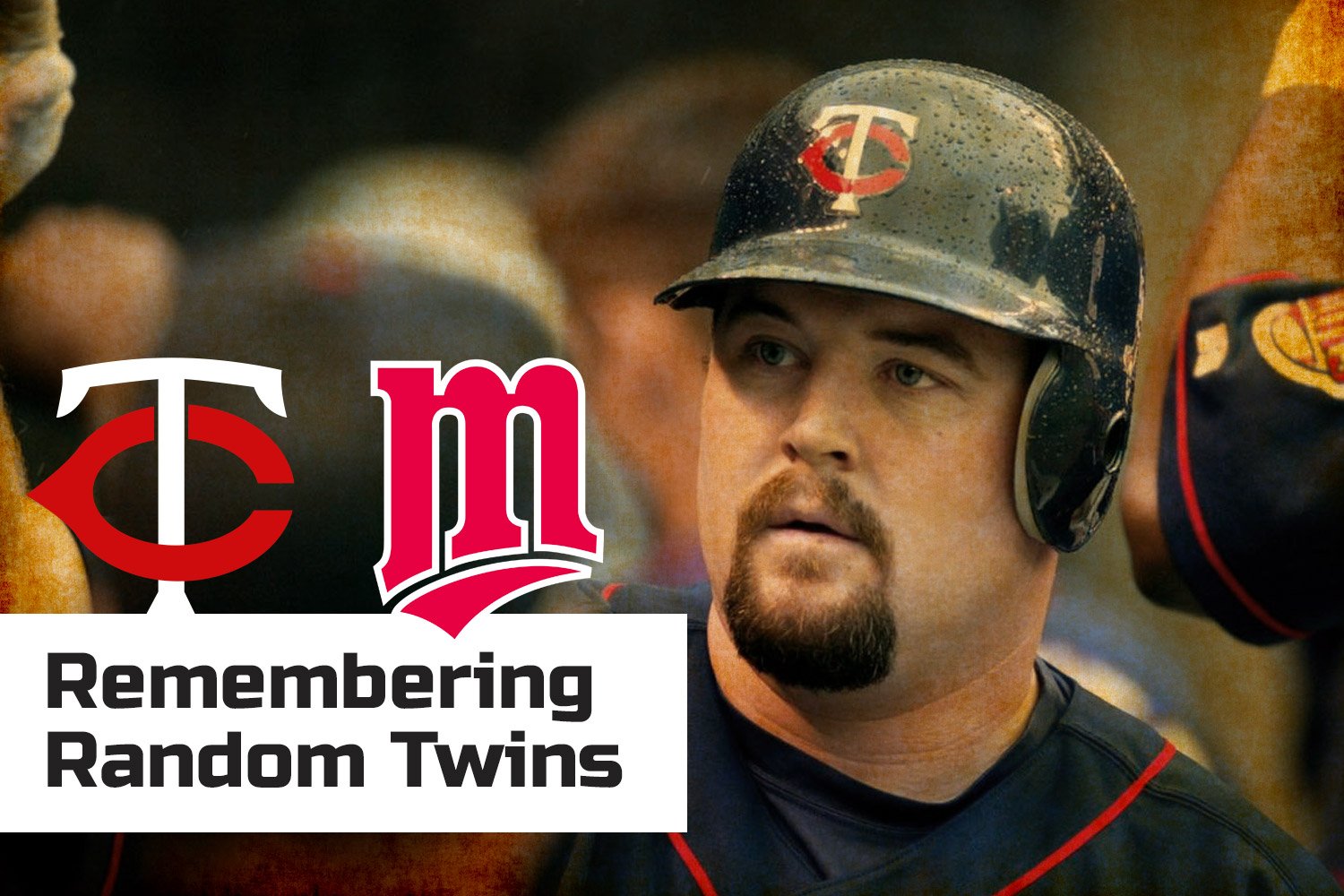 Matt LeCroy was a first-round pick out of Clemson in 1997 who mashed his way through the minors. LeCroy hit 30 minor league homers in 1999, including ten bombs with a .936 OPS in 29 games at the Triple-A level. Baseball America ranked him as the 44th-best prospect in baseball entering the 2000 season. Other Twins on their pre-season list were Michael Cuddyer (18th), Michael Restovich (26th), B.J. Garbe (79th), and Luis Rivas (86th). LeCroy was the Twins starting catcher on Opening Day in 2000. He hit a double in his first big league plate appearance off veteran righty Steve Trachsel but then fell into a slump. Minnesota sent him back to the minors in mid-June, and he wasn’t called up again until the rosters expanded in September. The emergence of A.J. Pierzynski kept LeCroy in the minors for most of 2001, and his big league action that season was limited to just 15 games. The Twins finally found a regular role for LeCroy in 2002, as he began platooning at DH with David Ortiz. It worked pretty well. Ortiz had a .919 OPS against right-handed pitching that season, and LeCroy had an .869 OPS against lefties. They each had a sub-.650 OPS against the opposite side. This mixing and matching kept working in the playoffs, too. LeCroy hit .417 in the 2002 postseason. Ortiz mostly struggled against a dominant Oakland pitching core, but he did go 5-for-16 (.313) in the ALCS against Anaheim. Everyone knows what happened after that. It was a mistake, a horrible one. Nothing you can say could even begin to justify how badly the Twins messed up by releasing David Ortiz. But it doesn’t change the fact that LeCroy was pretty good in 2003. He hit .287 with 17 home runs and 64 RBI in 104 games. It’s not Big Papi, but it’s respectable. LeCroy also started to hit right-handed pitching, posting an OPS over .800 against pitchers of both handedness in 2003. And then, in 2004, LeCroy unleashed one of the most magical pinch-hitting seasons of all time. His four pinch-hit home runs that season are tied for the American League record since 1973, when the designated hitter was first adopted. One of those pinch-hit dingers was a ninth-inning grand slam with the Twins down three runs. It’s one of just 49 ninth-inning grand slams with the hitter’s team trailing by three in major league history. Only 15 of those were hit by pinch hitters. 2005 was another decent season. LeCroy hit .260 with 17 home runs and a .798 OPS in 101 games. After the season, the Twins decided to part ways with LeCroy, and he signed with the Nationals. He played just 39 games with Washington before being designated for assignment. An infamous moment from his brief Nationals tenure came during a game on May 25, 2006. LeCroy, who had bone spurs in his knees and was doing anything he could to stay on the field, was pulled by manager Frank Robinson in the middle of an inning because his defense was so bad. Robinson was very emotional after the game, knowing how embarrassing it can be for a player to get pulled in the middle of an inning. He appreciated LeCroy’s effort to get himself out on the field with his knee injuries, but he also felt like he couldn’t let it go on any longer. Believing he was done as a player but respecting his dedication to the game, Washington offered LeCroy a coaching role after he was designated for assignment. LeCroy turned down the offer and returned to the Twins organization on a minor-league contract. He played just seven games with Minnesota in 2007, his final big league action. LeCroy spent spring training with the Athletics in 2008 but was released at the end of camp. He hit .326 with 22 home runs and 83 RBI for the Lancaster Barnstormers of the Atlantic League that season and then chose to retire. That previous coaching offer from the Nationals still stood, and he managed their Class-A affiliate in 2009. He has been a coach or manager in the Nationals organization ever since, including a two-year stint as the bullpen coach on the big league staff. He has been their Triple-A manager since 2020. NOTES: All statistics in this article were taken from Baseball Reference and Stathead. Prospect rankings were from Baseball America. Other information was provided by The Athletic and the official MiLB website.
 -
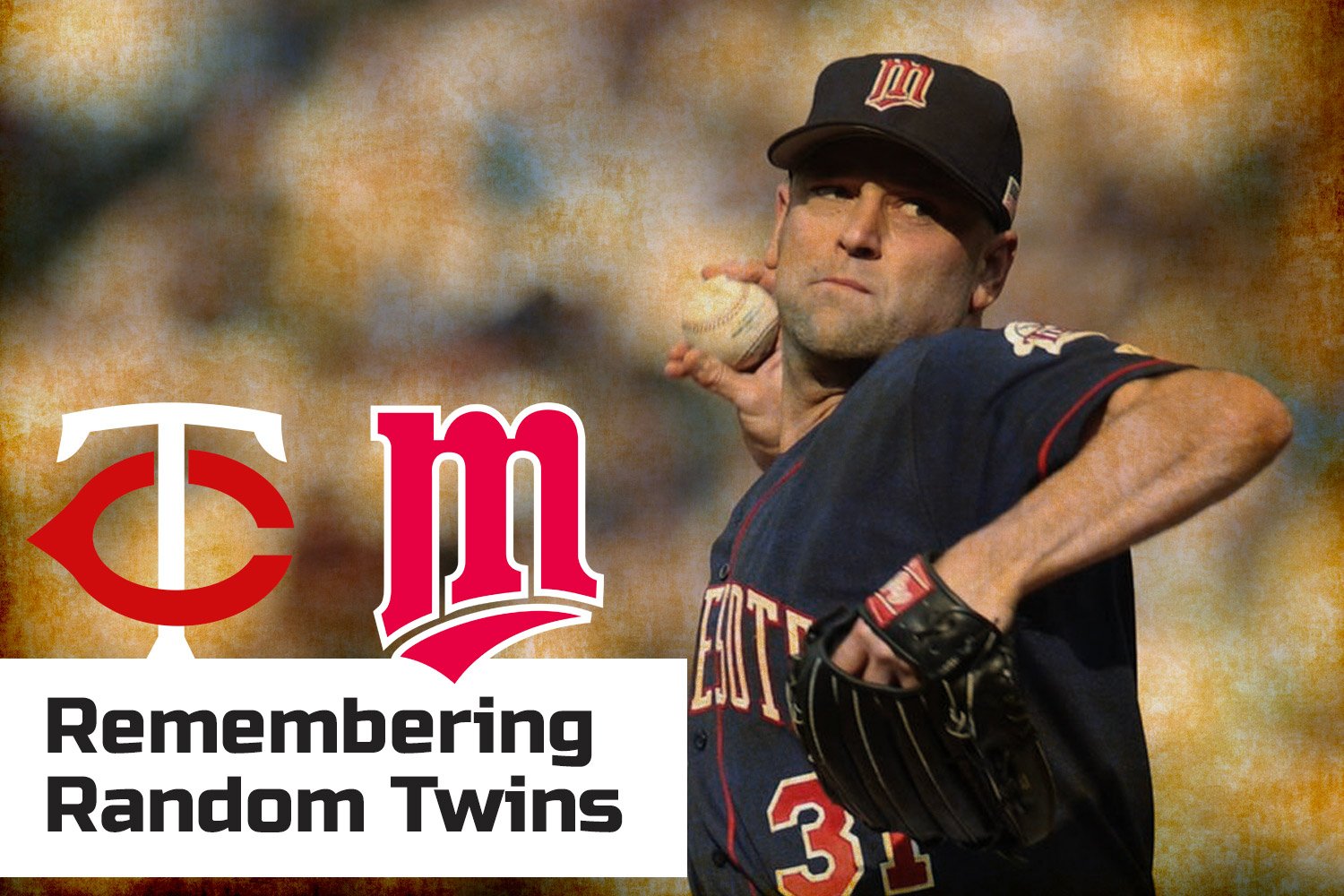 After growing up poor and needing to help his financially struggling parents, Rick Reed made the controversial decision to serve as a replacement player during the 1994-95 player’s strike. He was seemingly blackballed after the strike ended and spent the entire 1996 season with the Norfolk Tide (Triple A, New York Mets). Reed developed a good relationship with Tide manager Bobby Valentine, who was promoted to manage the Mets in 1997. Valentine helped ease Reed back into a clubhouse culture that was slow to accept a "scab", and then his career took off. His 2.89 ERA in 1997 was sixth in the National League. Reed was named an All-Star for the first time in 1998 at age 33, and he would make a second All-Star team in 2001. Between those seasons, he was a reliable control artist for a Mets team that reached the NLCS in 1999 and the World Series in 2000. The biggest moment of his Mets tenure was arguably game 161 of the 1999 season when Reed tossed a three-hit shutout to help New York keep pace with Cincinnati in the National League wild-card race. The two teams would finish tied, and the Mets were able to pull out a game 163 tiebreaker win on the road. Reed also started the Mets' only win of the 2000 World Series, allowing two runs over six innings against the Yankees. Reed posted a 59-36 record during his five seasons in Queens. Dwight Gooden is the only pitcher in Mets history with a higher winning percentage. He also has the third-lowest walks per nine innings in Mets history, trailing Bartolo Colón and Bret Saberhagen. The Twins acquired Reed in the middle of his 2001 All-Star season, sending veteran outfielder Matt Lawton to New York. Minnesota was in a playoff race for the first time in almost a decade, but things fell apart down the stretch. Their five-game AL Central lead at the All-Star break was gone by the end of July, and they finished six games out of first place. It didn’t help that Reed became a deadline dud, posting a 5.19 ERA with the Twins after the deadline. But the Twins playoff drought finally ended in 2002, and Reed was arguably their best pitcher that season. He led the team with 15 wins and 188 innings. His 3.78 ERA was second among those who pitched at least 100 innings, trailing 23-year-old Johan Santana (2.99 ERA in 108.1 IP). Reed led the American League by walking just 1.2 hitters per nine innings and was also eighth in WHIP. He tossed two complete games and completed seven innings in at least 12 of his 32 starts. Reed was especially strong after the All-Star break, posting a 2.88 ERA in 14 second-half starts. Reed got off to a pretty nice start in 2003. His numbers don’t look all that impressive, but an 11-run disaster against the Yankees in April ballooned them. If you remove that start, he would’ve had a 2.93 ERA through the end of May. This sample included a complete-game shutout against the Royals, who had gotten off to a fast start and were in first place when that game took place on May 14. Then, though, Reed was placed on the disabled list with a back injury, and he was never quite the same after returning in late June. He posted a 5.76 ERA from June through August. Ron Gardenhire moved the 38-year-old veteran to the bullpen in September, and he faced just three batters during the ALDS that fall. This ended Reed’s big-league career. He went to spring training on a minor-league deal with the Pirates in 2004, but chose to retire after his back issues from 2003 began to bother him again. Since retiring, Reed has been very involved at Marshall University. This includes a short stint as their pitching coach and a $1-million donation towards a new baseball field in 2019. Years after his career ended, Reed would say that getting traded to the Twins was the day “baseball kinda died” for him and his wife. Reed added, “I wish I could’ve ended my career in New York. When I was traded, I was torn up. I can say it now that I’m not playing. That’s how much we loved New York. Did I compete when I went to Minnesota? Absolutely. But there’s no place like New York.” Reed had been a free agent following the 2000 season and agreed to a three-year deal to stay with the Mets. He was three months into that contract when New York shipped him off to the Twins. NOTES: All statistics from Baseball Reference and Stathead. Most personal information on Rick Reed was taken from the Society for American Baseball Research. The quotes on baseball dying were from a New York Daily News article in 2010.
 -
Rick Reed seemed like a Quadruple-A player for all of his 20s. He pitched just 266 innings from 1988-95, never appearing in more than 19 games in a single season. Then his career took off. Image courtesy of Twins Daily & Brock Beauchamp Rick Reed seemed like a Quadruple-A player for all of his 20s. He pitched just 266 innings from 1988-95, never appearing in more than 19 games in a single season. Then his career took off. After growing up poor and needing to help his financially struggling parents, Rick Reed made the controversial decision to serve as a replacement player during the 1994-95 player’s strike. He was seemingly blackballed after the strike ended and spent the entire 1996 season with the Norfolk Tide (Triple A, New York Mets). Reed developed a good relationship with Tide manager Bobby Valentine, who was promoted to manage the Mets in 1997. Valentine helped ease Reed back into a clubhouse culture that was slow to accept a "scab", and then his career took off. His 2.89 ERA in 1997 was sixth in the National League. Reed was named an All-Star for the first time in 1998 at age 33, and he would make a second All-Star team in 2001. Between those seasons, he was a reliable control artist for a Mets team that reached the NLCS in 1999 and the World Series in 2000. The biggest moment of his Mets tenure was arguably game 161 of the 1999 season when Reed tossed a three-hit shutout to help New York keep pace with Cincinnati in the National League wild-card race. The two teams would finish tied, and the Mets were able to pull out a game 163 tiebreaker win on the road. Reed also started the Mets' only win of the 2000 World Series, allowing two runs over six innings against the Yankees. Reed posted a 59-36 record during his five seasons in Queens. Dwight Gooden is the only pitcher in Mets history with a higher winning percentage. He also has the third-lowest walks per nine innings in Mets history, trailing Bartolo Colón and Bret Saberhagen. The Twins acquired Reed in the middle of his 2001 All-Star season, sending veteran outfielder Matt Lawton to New York. Minnesota was in a playoff race for the first time in almost a decade, but things fell apart down the stretch. Their five-game AL Central lead at the All-Star break was gone by the end of July, and they finished six games out of first place. It didn’t help that Reed became a deadline dud, posting a 5.19 ERA with the Twins after the deadline. But the Twins playoff drought finally ended in 2002, and Reed was arguably their best pitcher that season. He led the team with 15 wins and 188 innings. His 3.78 ERA was second among those who pitched at least 100 innings, trailing 23-year-old Johan Santana (2.99 ERA in 108.1 IP). Reed led the American League by walking just 1.2 hitters per nine innings and was also eighth in WHIP. He tossed two complete games and completed seven innings in at least 12 of his 32 starts. Reed was especially strong after the All-Star break, posting a 2.88 ERA in 14 second-half starts. Reed got off to a pretty nice start in 2003. His numbers don’t look all that impressive, but an 11-run disaster against the Yankees in April ballooned them. If you remove that start, he would’ve had a 2.93 ERA through the end of May. This sample included a complete-game shutout against the Royals, who had gotten off to a fast start and were in first place when that game took place on May 14. Then, though, Reed was placed on the disabled list with a back injury, and he was never quite the same after returning in late June. He posted a 5.76 ERA from June through August. Ron Gardenhire moved the 38-year-old veteran to the bullpen in September, and he faced just three batters during the ALDS that fall. This ended Reed’s big-league career. He went to spring training on a minor-league deal with the Pirates in 2004, but chose to retire after his back issues from 2003 began to bother him again. Since retiring, Reed has been very involved at Marshall University. This includes a short stint as their pitching coach and a $1-million donation towards a new baseball field in 2019. Years after his career ended, Reed would say that getting traded to the Twins was the day “baseball kinda died” for him and his wife. Reed added, “I wish I could’ve ended my career in New York. When I was traded, I was torn up. I can say it now that I’m not playing. That’s how much we loved New York. Did I compete when I went to Minnesota? Absolutely. But there’s no place like New York.” Reed had been a free agent following the 2000 season and agreed to a three-year deal to stay with the Mets. He was three months into that contract when New York shipped him off to the Twins. NOTES: All statistics from Baseball Reference and Stathead. Most personal information on Rick Reed was taken from the Society for American Baseball Research. The quotes on baseball dying were from a New York Daily News article in 2010. View full article
-
Remembering Random Twins - Wilkin Ramírez
William Malone posted a blog entry in William Malone IV blogs about Twins
Career minor leaguer Wilkin Ramírez had three cups of coffee in the bigs. He played 15 games for the Tigers in 2009, 20 with the Braves in 2011, and 35 with the Minnesota Twins in 2013. Ramírez came to the Twins organization ahead of the 2012 season, batting .288 with 19 home runs and 61 RBI over 113 minor league games. He hit .404 with ten doubles in 57 at-bats during spring training in 2013, which earned him an Opening Day roster spot. This was the best opportunity a team had ever given Ramírez at the Major League level, and things got off to a great start. His red hot spring carried over into the regular season. In a fourth outfielder role, he hit .381 with four RBI during April. But then health became an issue. Ramírez cooled off a bit in May, then had to miss 71 games due to concussion-like symptoms. He returned to the diamond from his concussion in mid-August, and began to re-capture some of his April magic. Ramírez recorded a hit in nine of his first 12 games back, including two multi-hit games. But a fractured fibula on August 29th ended his season, and effectively his big league career. The Twins removed Ramírez from the 40-man roster during the offseason. He re-signed with the club on a minor league deal, and spent the entire 2014 and 2015 seasons with Triple-A Rochester. Ramírez spent 2016 with the Bridgeport Bluefish of the Atlantic League, and then retired from professional baseball. -
Remembering Random Twins - Henry Blanco
William Malone posted a blog entry in William Malone IV blogs about Twins
Henry Blanco was your classic journeyman backup catcher. Known for his glove, he hit just .223 over a 16 year career that was spent with 11 different teams. Minnesota signed Blanco to a one year deal in December 2003. The expectation was that he would be the number two catcher behind top prospect Joe Mauer, who made his Major League debut on Opening Day in 2004. But a knee injury limited Mauer to just 35 games that season, and Blanco wound up playing a career high 114 games that season. As expected, Blanco did very little with the bat. He slashed just .206/.260/.368 (.628). This came with a career high ten home runs and 37 RBI, but that was partly due to the fact that 2004 was the only season where he appeared in at least 100 games. His defense provided a lot of value though, as Blanco threw out an American League best 49.1% of base stealers. Blanco drove in two runs during the 2004 ALDS against the Yankees. He had a sacrifice fly in game two off Jon Lieber, and launched a solo homer off Javier Vazquez in game four. They’re the only two RBI of his postseason career. His teams did reach October a handful of times, but this was the only instance where he was getting regular playing time. The only other playoff start he had came in game three of the 2002 NLDS when the Braves had to scratch Javy Lopez late. He is now a member of the coaching ranks. Blanco currently the role of “catching and strategy coach” with the Nationals. Blanco has also been a coach with the Cubs and Diamondbacks, with various roles and titles with each club. He has two World Series rings as a coach, winning it all with the Cubs in 2016 and the Nationals in 2019. -
Remembering Random Twins - Héctor Carrasco
William Malone posted a blog entry in William Malone IV blogs about Twins
Journeyman reliever Héctor Carrasco pitched for 12 seasons in the Major Leagues, which included two stints with the Minnesota Twins. He also played for the Reds, Angels, Royals, Red Sox, Nationals, and Orioles. Carrasco first came to Minnesota through waivers just before the 1998 season. The Diamondbacks had selected him from Kansas City in the expansion draft that winter, but he waived right before Opening Day and the Twins picked him up. He went 4-2 with a 4.38 ERA and a save over 63 relief appearances in 1998. His 1.719 WHIP was the worst among any big league pitcher with at least 60 appearances that season. 1999 and 2000 weren’t that much better for Carrasco. His biggest highlight in a Twins uniform might be surrendering Cal Ripkin’s 3,000th hit early in the 2000 season. Minnesota was able to trade Carrasco to Boston late in 2000. The return was a lottery ticket Single-A outfield prospect who had been a 12th round pick. Nobody really expects much from a trade like this. There are zero expectations for these moves to wind up producing a big league player. But this one did. The lottery ticket prospect was Metrodome fan favorite Lew Ford. After pitching just eight games with the Red Sox, Carrasco returned to the Twins as a free agent that next offseason. He posted a 4.64 ERA over 56 appearances with the Twins in 2001. Over four seasons in Minnesota, Carrasco had a 4.53 ERA with four saves across 219 games. He would keep pitching in the Majors through 2007. His career year came in 2005, when he had a 2.05 ERA over 64 games with the Nationals. Carrasco continued to pitch professionally until 2012, spending time in the Atlantic League and the Mexican League. -
Remembering Random Twins - Justin Huber
William Malone posted a blog entry in William Malone IV blogs about Twins
Justin Huber was a highly regarded prospect who never panned out. He peaked as the 66th ranked prospect, according to Baseball America, and the Australian native played on “Team World” in the Futures Game three times. Some of his prospect value deteriorated after a string of minor league knee injuries forced him to move from catcher to first base, but Huber was still able to break into the Majors with Kansas City in 2005. Things never clicked for him in the bigs, and he began to bounce around a bit. He wound up in the Twins system on a minor league contract in 2009, and he led Triple-A Rochester with 22 home runs and 76 RBI that season. Minnesota rewarded him with a 40-man spot and a September call-up opportunity late in the year, and he went 1-for-2 coming off the bench late in one blowout loss. It was his only game with the Twins, and the final appearance of his Major League career. Minnesota brought him back for spring training in 2010, but DFA’d him to clear up 40-man space for other players as part of their final roster decisions. Huber played the 2010 season in Japan, spent 2011 in the Atlantic League, then continued to play professionally in his native Australia through 2015. -
Remembering Random Twins - Sam Fuld
William Malone commented on William Malone's blog entry in William Malone IV blogs about Twins
I’ve heard that Terry Ryan (who works for Phillies and was still running Twins when Fuld played for them) played a part in bringing Fuld on board. Just couldn’t find anything overly reliable e ouch to put it in article. It was just rumors. No hard quotes or anything of one of them talking about the other. -
Remembering Random Twins - Darnell McDonald
William Malone posted a blog entry in William Malone IV blogs about Twins
The Baltimore Orioles took Darnell McDonald with the 26th overall pick in 1997, but he never really found his footing in the Majors until 2009 at age 30 with Cincinnati. This long path included a four game cup of coffee with the Twins in 2007. He did debut with the Orioles in 2004, but played just 17 games for them. McDonald spent time in the Guardians, Devil Rays, and Nationals systems on minor league deals after being released by Baltimore. Washington traded him to the Twins in June 2007 for the right to keep Rule-5 Draft pick Levale Speigner after taking him off the 25-man roster. McDonald went 1-for-10 with a walk in four appearances with Minnesota over four games in July 2007. He became a free agent after the season. 2008 was another year of exclusive minor league action for McDonald, but he got his first extended Major League look with the Reds in 2009. McDonald appeared in 47 games for Cincinnati, batting .267 and hitting his first big league homer off a 21-year old Clayton Kershaw. This was followed up by a career year with the Red Sox in 2010. McDonald played in 117 games for Boston that season, getting to start in centerfield for an extended period of time after Jacoby Ellsbury was injured. He stuck around with the Red Sox as a fourth outfielder until getting waived in July 2012. McDonald had brief stints with the Yankees and Cubs, retiring after the 2013 season. McDonald coached in the Cubs minor league system for a little bit, but he has since moved to broadcasting. NESN, the Red Sox television partner, hired him as a studio analyst ahead of the 2023 season. -
Why Kepler is not likely to get traded
William Malone replied to Hawkeye Bean Counter's topic in Minnesota Twins Talk
Only one first baseman has led Majors in WAR over last 50 years (2008 Pujols). Are they just all bad defenders? Because offensively, it consistently has some of the best hitters in the sport. -
Why Kepler is not likely to get traded
William Malone replied to Hawkeye Bean Counter's topic in Minnesota Twins Talk
Only one first baseman has led Majors in WAR over last 50 years (2008 Pujols). Are they just all bad defenders? Because offensively, it consistently has some of the best hitters in the sport. -
Why Kepler is not likely to get traded
William Malone replied to Hawkeye Bean Counter's topic in Minnesota Twins Talk
Why does Andrelton Simmons have a higher WAR than Justin Morneau in fewer career games? explain it without mentioning the positions they play. If you’re claiming it’s not positional, you should be able to explain it without using the position they play. -
Why Kepler is not likely to get traded
William Malone replied to Hawkeye Bean Counter's topic in Minnesota Twins Talk
WAR is not a great comparison tool when using players at different positions. It is a very positional stat. -
Why Kepler is not likely to get traded
William Malone replied to Hawkeye Bean Counter's topic in Minnesota Twins Talk
The qualifying offer is often about knowing the player. Matt Chapman got one, and declined it this year. He has a 108 OPS+ over last three seasons. And it was also 108 for the 2023 season as well. Toronto probably knew he personally preferred taking some 3/$40m(ish) deal, instead of some one year deal where a bad year in your 30’s tanks all value. Kepler would probably get some 3/$40m deal if he was a free agent too. But maybe he and his agent would rather take the big money for one year and bet on themselves. Everyone is different. And you need to have a feel for what everyone is looking for, before extending a qualifying offer to a Kepler or Matt Chapman level player -
Why Kepler is not likely to get traded
William Malone replied to Hawkeye Bean Counter's topic in Minnesota Twins Talk
Max Kepler also isn't worth that much in a trade. Non-star rental bats at non-premium positions don't net you more than a Single-A player with upside, but no guarantees to ever reach MLB. Think of Gio Urshela last year. Good player, but didn't get Twins much of a return. All it does is open up a roster spot and a few million bucks, which isn't enough to buy a high impact player. I think some fans are trapped in this idea he can get Twins a big league reliever. But the truth is, he only gets you a Single-A guy, then you're putting many eggs in a Larcnach basket. -
Remembering Random Twins - Sam Fuld
William Malone posted a blog entry in William Malone IV blogs about Twins
Minnesota acquired veteran outfielder Sam Fuld off of waivers from the Athletics very early in the 2014 season. The 32-year old was hitting just .200 through seven games with Oakland, and carried a career OPS+ of 79. Fuld then began to play some of his best baseball during his time with the Twins. He collected two hits in his Twins debut, including an RBI single against Rays reliever Brandon Gomes. That was followed up by two more multi-hit games, and a five game hitting streak to begin his Twins tenure. Fuld quickly became the team’s regular centerfielder, replacing a struggling Aaron Hicks. He never hit for much power, but Fuld played good defense and had a .370 on-base percentage over 53 games in Minnesota. This is compared to the .307 OBP that Fuld sports for his eight year Major League career. His performance made him good enough to flip at the deadline. Ironically, the team who traded for him was the same team who had waived him in April. Oakland sent Tommy Milone back to the Twins for a guy they let leave for nothing just three months earlier. Fuld would remain in Oakland during the 2015 season, batting .197 over 120 games. That would be the end of his big league playing career. He slashed .227/.307/.325 (.632) over 598 games with the Cubs, Rays, Athletics, and Twins. Fuld was also worth 30 defensive runs saved in the outfield. The end of his playing career was not his final chapter in the Majors though. He was hired as the Phillies player information coordinator in 2017, and the industry immediately identified him as a rising front office star. The Blue Jays interviewed Fuld for their managerial job after the 2018 season, and he was seen as a strong candidate until withdrawing his name from consideration. Pittsburgh also showed interest in hiring Fuld as their general manager in 2019, but the job went to Ben Cherington instead. Philadelphia eventually did promote Fuld to general manager in December 2020, making him the number two man for President of Baseball Operations Dave Dombrowski. -
Remembering Random Twins - Dillon Gee
William Malone posted a blog entry in William Malone IV blogs about Twins
Dillon Gee was the 2017 version of what Dallas Keuchel did for the Twins in 2023. In fact, he was probably a little bit better. While he didn’t have quite the same name value, Gee was still a veteran in his 30’s who provided value as an innings eater late in the season after impressing at Triple-A on a minor league deal. Gee had a solid 3.91 ERA over 103 starts with the Mets from 2010-14, but he struggled out of the gate in 2015 before getting buried by a crop of young Mets starters. He sat there and watched as New York reached the World Series in 2015, and then he began to bounce around the league a bit. Minnesota signed him to a minor league deal on June 22, 2017. Triple-A Rochester seemed almost too easy for Gee. He made five starts there, allowing zero runs in three of them. The Twins called him up in early August, and he jumped into a hybrid pitching role. Whatever they needed that day, Gee would take on that challenge. Starting pitcher, close games, blowouts, short relief, long relief, save situations, entering a clean inning or with runners on base. Gee did it all for the Twins. Gee made three starts and was called on for 11 relief appearances during his two months in Minnesota, posting a 3.22 ERA over 36.1 innings. He went 3-2 with a save and a hold. This helped Minnesota earn the second AL wild card spot, getting them to the postseason for the first time since 2010. He signed with the Chunichi Dragons of the NBP in the off-season, posting a 4.00 ERA during his one season in Japan. Gee then retired after the 2018 season. -
Joe Mauer Should Be a First Ballot Hall of Famer
William Malone replied to Ted Schwerzler 's topic in Twins Daily Front Page News
It's hard for catchers to get in on the first ballot. It's only Bench and Pudge. Fair or unfair, the voting base loves counting stats more than anything else. There's just not many catchers who rack up big counting stats. None of them have 3.000 hits or 500 homers. Yogi Berra was a three time MVP who won the damn World Series ten times, and he wasn't even a first ballot guy. The voters were turned off by 2,150 career hits. It might take Mauer three or four cycles. That's just how these voters behave. But at the end of the day, he'll be in the same Hall of Fame as Babe Ruth and Ted Williams and Hank Aaron. -
Remembering Random Twins - Randy Flores
William Malone posted a blog entry in William Malone IV blogs about Twins
Randy Flores was a late August waiver claim by the Twins in 2010, and that began the final chapter of his Major League career. He was a ninth round pick by the Yankees in 1997, and debuted with the Rangers on April 23, 2002. Flores spent most of his big league career with the Cardinals, and also had two stints with the Rockies. As a lefty specialist, he threw under ten pitches in 162 of his 350 appearances (46.2%). This includes 12 occasions where Flores threw just one pitch. Despite posting a 5.62 ERA during 65 regular season appearances for the Cardinals in 2006, he came up big during their World Series run. Flores didn’t allow a run over 5.2 innings that fall, appearing in seven games. His biggest moment came in game seven of the 2006 NLCS against the Mets. He retired Carlos Delgado, David Wright, and Shawn Green in order with the score tied at one in the eighth inning. Flores had entered with a runner on first base, after Jeff Suppan walked Carlos Beltran to open the inning. Flores covered just 3.2 innings over his 11 appearances with the Twins, not even recording an out on three occasions. He had three holds, and allowed a walk-off single against the Tigers on September 25th after inheriting a bases loaded jam that Pat Neshek left for him. The Twins left Flores off their playoff roster, and signed a minor league contract with San Diego during the off-season. He pitched 58 games in Triple-A for three different organizations during the 2011 season, then retired from professional baseball. Flores began a broadcasting career after retiring, doing radio broadcasts at USC while pursuing a master’s degree. ESPN also used him on-air during NCAA tournament broadcasts. He launched a startup company called OnDeckDigital in 2015, which helps scouts evaluate players through video capture technology. The Cardinals hired him to be their Director of Scouting in August 2015. He is currently the team’s assistant general manager. -
Remembering Random Twins - Randy Flores
William Malone replied to William Malone's topic in Minnesota Twins Talk
Oh damn that's where I meant to post it. Just got a little lost. My bad. Want me to move it over? -
Randy Flores was a late August waiver claim by the Twins in 2010, and that began the final chapter of his Major League career. He was a ninth round pick by the Yankees in 1997, and debuted with the Rangers on April 23, 2002. Flores spent most of his big league career with the Cardinals, and also had two stints with the Rockies. As a lefty specialist, he threw under ten pitches in 162 of his 350 appearances (46.2%). This includes 12 occasions where Flores threw just one pitch. Despite posting a 5.62 ERA during 65 regular season appearances for the Cardinals in 2006, he came up big during their World Series run. Flores didn’t allow a run over 5.2 innings that fall, appearing in seven games. His biggest moment came in game seven of the 2006 NLCS against the Mets. He retired Carlos Delgado, David Wright, and Shawn Green in order with the score tied at one in the eighth inning. Flores had entered with a runner on first base, after Jeff Suppan walked Carlos Beltran to open the inning. Flores covered just 3.2 innings over his 11 appearances with the Twins, not even recording an out on three occasions. He had three holds, and allowed a walk-off single against the Tigers on September 25th after inheriting a bases loaded jam that Pat Neshek left for him. The Twins left Flores off their playoff roster, and signed a minor league contract with San Diego during the off-season. He pitched 58 games in Triple-A for three different organizations during the 2011 season, then retired from professional baseball. Flores began a broadcasting career after retiring, doing radio broadcasts at USC while pursuing a master’s degree. ESPN also used him on-air during NCAA tournament broadcasts. He launched a startup company called OnDeckDigital in 2015, which helps scouts evaluate players through video capture technology. The Cardinals hired him to be their Director of Scouting in August 2015. He is currently the team’s assistant general manager
.thumb.png.131fdf97b843dfc7f73f4f987002a0f8.png)


