Cody Schoenmann
-
Posts
768 -
Joined
-
Last visited
-
Days Won
1
Content Type
Profiles
News
Minnesota Twins Videos
2026 Minnesota Twins Top Prospects Ranking
2022 Minnesota Twins Draft Picks
Minnesota Twins Free Agent & Trade Rumors, Notes, & Tidbits
Guides & Resources
2023 Minnesota Twins Draft Picks
The Minnesota Twins Players Project
2024 Minnesota Twins Draft Picks
2025 Minnesota Twins Draft Pick Tracker
2026 Minnesota Twins Draft Tracker: Picks & Bonuses
Forums
Blogs
Events
Store
Downloads
Gallery
Everything posted by Cody Schoenmann
-
Walker JenkinsEmmanuel RodriguezKaelen CulpepperConnor PrielippGabriel GonzalezRiley QuickEduardo TaitMarek HoustonKendry RojasDasan HillHendry MendezAndrew MorrisQuentin YoungCharlee SotoRyan GallagherBilly AmickCJ CulpepperKyle DeBargeJames EllwangerKhadim Diaw
-
Walker JenkinsEmmanuel RodriguezKaelen CulpepperConnor PrielippGabriel GonzalezRiley QuickEduardo TaitMarek HoustonKendry RojasDasan HillHendry MendezAndrew MorrisQuentin YoungCharlee SotoRyan GallagherBilly AmickCJ CulpepperKyle DeBargeJames EllwangerKhadim Diaw
-

Is Billy Amick Entering the Minnesota Twins' Long-Term Plans?
Cody Schoenmann posted an article in Minor Leagues
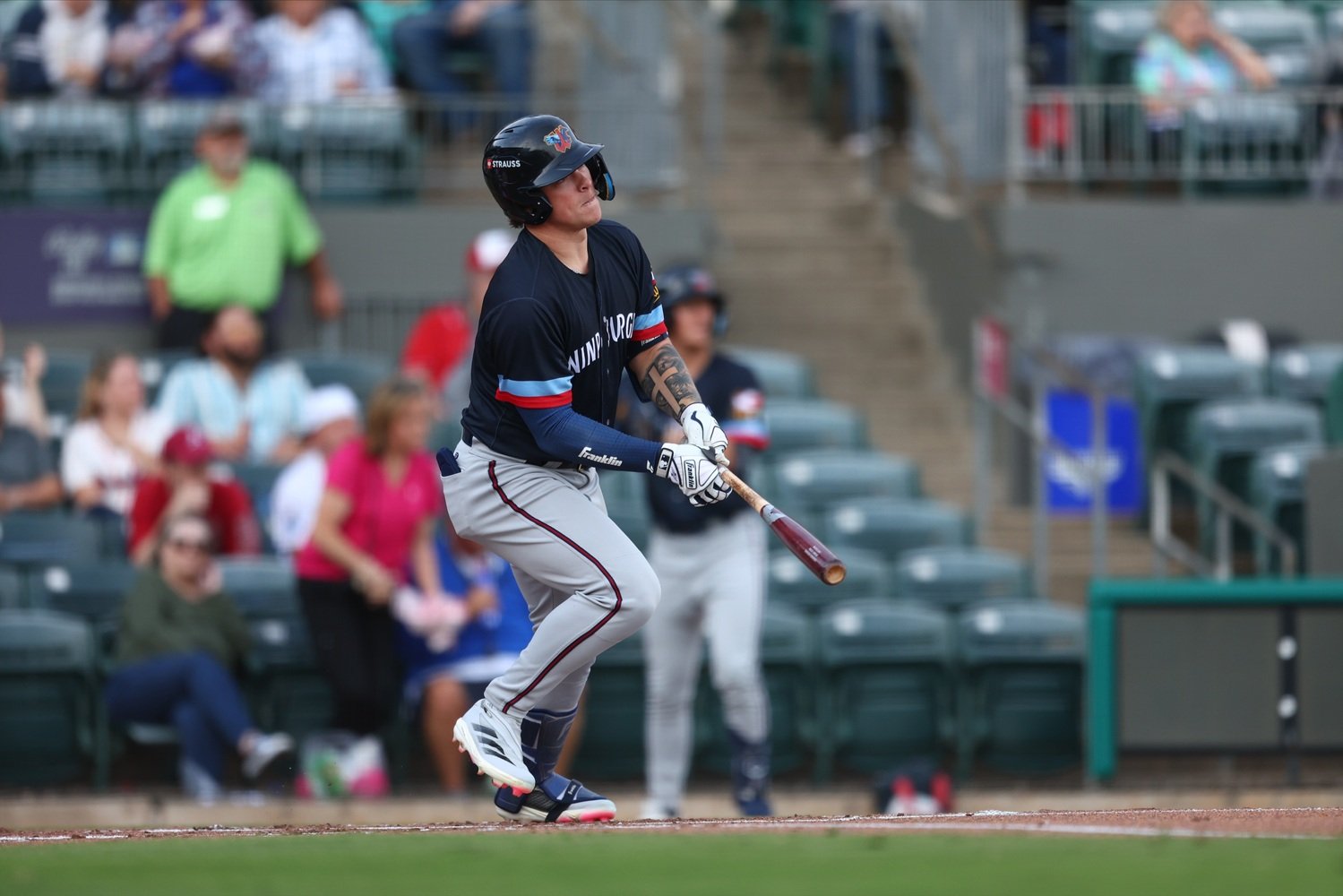 Upon arriving at Clemson University in 2021, Billy Amick quickly became one of college baseball’s best hitters. He batted .414/.464/.772 with 13 home runs over 192 plate appearances in 2022. The right-handed-hitting corner infielder transferred to the University of Tennessee for the 2023 season, where he hit a less-impressive (but still excellent) .306/.387/.639 with 23 home runs over 292 plate appearances, playing a role in Tony Vitello’s club winning the College World Series. Sporting a keen approach and plus power during his college career, Amick was projected to be selected in the back half of the first round in the 2024 MLB Draft. Instead, he slipped to the second round, where he was selected 60th overall by the Minnesota Twins. Since joining the organization, Amick has become an afterthought for those who monitor Twins prospects—understandably so. Recent draft selections Walker Jenkins, Kaelen Culpepper, Connor Prielipp, Marek Houston, and Riley Quick have excelled in the organization’s minor-league system, entering Top 100 prospects lists and operating as engines for optimism surrounding the club’s long-term success. International free agent signees Emmanuel Rodriguez, Kendry Rojas, Eduardo Tait, and Hendry Mendez have also demonstrated flashes of becoming plus major-league contributors, effectively clogging the available headspace of Twins Territory prospect perverts. The tools for some sort of breakout remain, however, and Amick is beginning to piece them together. Appearing in 18 games with Single-A Fort Myers after being selected in 2024, he hit .222/.351/.413 with three home runs over 77 plate appearances. He then generated a 101 wRC+ with Fort Myers before being promoted to High-A Cedar Rapids in late March 2025. Amick excelled with Cedar Rapids, hitting .310/.418/.455 with four home runs and a 152 wRC+ over 244 plate appearances. The now-23-year-old is again performing well at a higher level this season, hitting .235/.309/.482 with six home runs and a 100 wRC+ over 97 plate appearances with Double-A Wichita. Amick’s impressive Double-A numbers have largely been accumulated since Apr. 18, with four home runs and a 128 wRC+ over 41 plate appearances during that stretch. As he did during his college career, Amick has hit the ball hard and in the air the past couple of weeks, which is always key to unlocking latent power. The 23-year-old's success in Double-A is especially encouraging, given that he is over a year younger than the average position player at the level. High whiff and strikeout rates have been and always will be a concern. He has whiffed 40.5% of the time and struck out 28.9% of the time at Double-A. Still, his swing-and-miss concerns can be forgiven if he hits the ball hard on contact, a trend he has continued during his first month-plus in the high minors. He's not ready to play in the majors right now, by any means. If he makes it, it will be as a late bloomer who turns a corner with regard to contact skills. The risk that he's a poor man's Matt Wallner is real. He plays third base well enough to be more valuable than Wallner defensively, though. Given the club’s long-term uncertainty at both corner infield spots; lack of right-handed-hitting position-player prospects; and Amick’s sustained success between Low-A, High-A, and Double-A the past three seasons, the 23-year-old could climb up the Twins’ top prospects lists, inserting himself into the club’s long-term plans after all.
 -
Committing to Clemson University in 2021, Amick quickly became one of college baseball’s best hitters, hitting .414/.464/.772 with 13 home runs over 192 plate appearances in 2022. The right-handed-hitting corner infielder transferred to the University of Tennessee for the 2023 season, where he hit a less-impressive yet still elite .306/.387/.639 with 23 home runs over 292 plate appearances, playing a role in Tony Vitello’s club winning the College World Series. Sporting a keen approach and plus power during his college career, Amick was projected to be selected in the back half of the first round in the 2024 MLB Amateur Draft. Surprisingly, however, he slipped to the second round, where he was selected 60th overall by the Minnesota Twins. Since joining the organization, Amick has somewhat surprisingly become an afterthought for those who monitor Minnesota Twins prospects—understandably so. Recent draft selections Walker Jenkins, Kaelen Culpepper, Connor Prielipp, Marek Houston, and Riley Quick have excelled through the organization’s minor league system, entering Top-100 prospects lists and operating as primary reasons for optimism surrounding the club’s long-term success. International free agent signees Emmanuel Rodriguez, Kendry Rojas, Eduardo Tait, and Hendry Mendez have also demonstrated flashes of becoming plus major league contributors, effectively clogging the available headspace of Twins Territory prospect perverts. Still, there are understated possible future contributors to be unearthed amidst the amalgamation of young talent, with Amick potentially being the least-discussed. Appearing in 18 games with Single-A Fort Myers after being selected out of Tennessee in 2024, the right-handed hitting corner outfielder hit .222/.351/.413 with three home runs over 77 plate appearances. The former volunteer continued his hot start, generating a 101 wRC+ with Fort Myers before being promoted to High-A Cedar Rapids in late-March, 2025. Amick excelled with Cedar Rapids, hitting .310/.418/.455 with four home runs and a 152 wRC+ over 244 plate appearances. The now-23-year-old is again performing well at a higher level this season, hitting .235/.309/.482 with six home runs and a 100 wRC+ over 97 plate appearances with Double-A Wichita. Amick’s impressive Double-A numbers have largely been accumulated since Apr. 18, with him hitting four home runs and netting a 128 wRC+ over 41 plate appearances during that stretch. As he did during his three-season college career between Clemson and Tennessee, Amick has hit the ball hard and in the air the past couple of weeks, evidenced by him netting a well-above-average 17% pull-rate during that stretch. The 23-year-old's success in Double-A is especially encouraging, given that he is over a year younger than the average position player at the level. High whiff and strikeout rates have been and always will be a concern with the former college star. He has whiffed 40.5% of the time and struck out 28.9 of the time at Double-A. Still, his swing and miss concerns can be forgiven if he hits the ball hard upon contact, a trend he has continued during his first cup of coffee in the high-minors. The concern with Amick, of course, is him becoming a three true outcomes, Matt Wallner-esque hitter in the majors, hitting for power while striking out roughly 40% of the time and walking at an 8-10% clip. Twins Territory understandably has a negative view of that player archetype, given Wallner’s abysmal start to his 2026 campaign. Still, given Wallner’s success from 2023 through 2025, there is precedent for players of that archetype succeeding over multi-season stretches. Amick also plays positions higher on the defensive spectrum, playing mostly third base and first base at Double-A this season. Given the club’s long-term uncertainty at both corner infield spots, lack of right-handed hitting position player prospects, and Amick’s sustained success between Low-A, High-A, and Double-A the past three seasons, the 23-year-old could climb up Twins’ top prospects lists, inserting himself into the club’s long-term corner infield plans. View full article
-
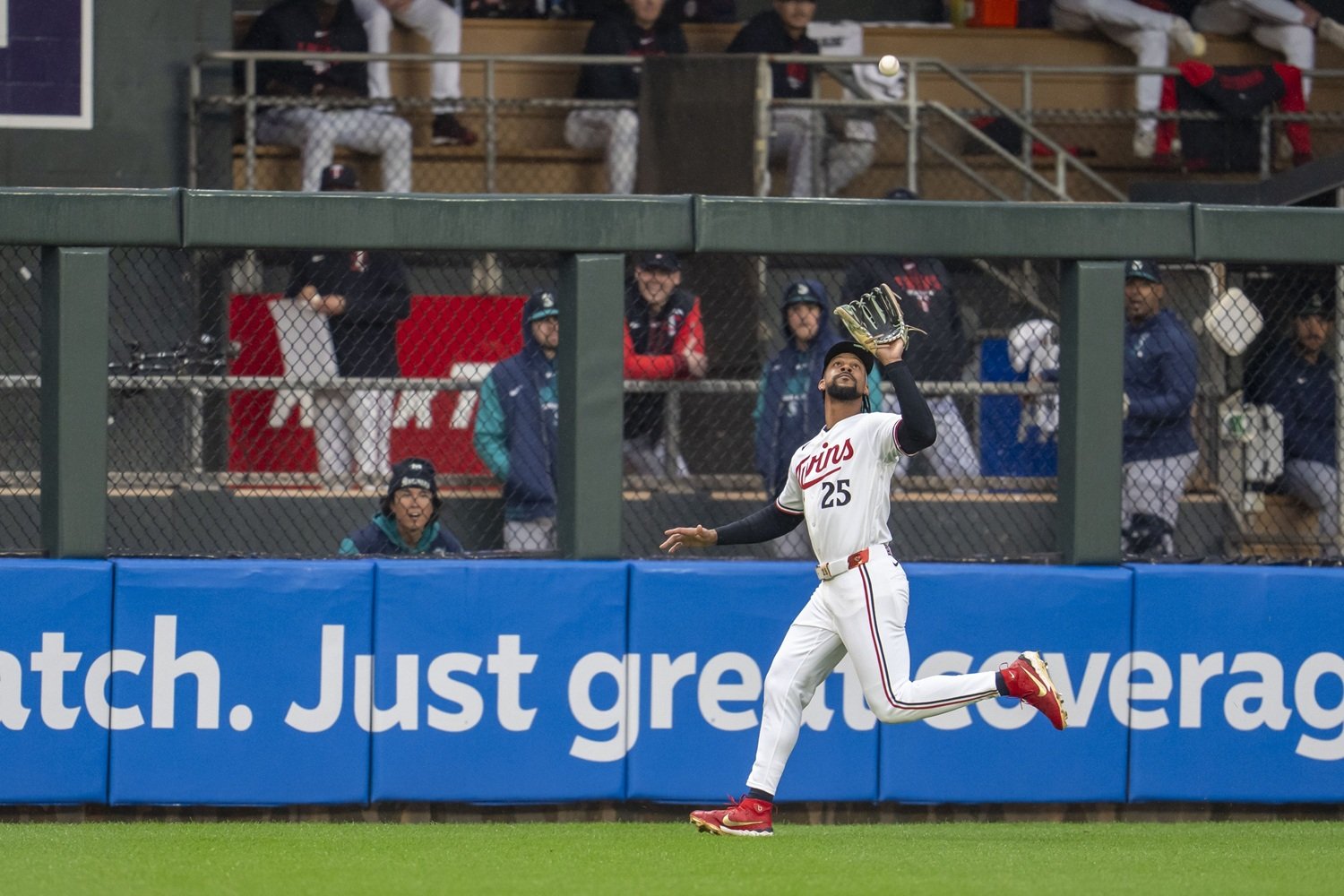 A little over a week ago, North Side Baseball’s Matthew Trueblood wrote a piece illustrating how Pete Crow-Armstrong is the best centerfielder in baseball, and potentially the rangiest centerfielder ever. Advanced metrics support this claim, with Crow-Armstrong sitting atop the position in FanGraphs’s Defensive Runs Above Average (7.2 DEF) and Baseball Savant’s Outs Above Average (7 OAA). Arizona Diamondbacks centerfielder Alek Thomas sits in second at both metrics, generating 3.2 DEF and 3 OAA over 183 innings at the position this season. Andy Pages (Los Angeles Dodgers) and Michael Harris II (Atlanta) reside in the third and fourth slots in DEF, generating 2.4 and 2.3, respectively. Interestingly, however, Byron Buxton has generated the fifth-most DEF (1.7) in the third-highest OAA (2) at the position this season, slotting him alongside Thomas, Pages, and Harris II as the second tier of elite defensive centerfielders behind Crow-Armstrong. This may surprise some, as Trueblood also gave an excellent breakdown of how Buxton's defense has started to slide while retaining some key strengths. A look at the numbers suggest he's still playing at a high level, and is arguably still the best centerfielder in the American League. Thomas, Pages, Harris II, and Buxton are all fast, rangy centerfielders with plus arms and route-taking skills, but they all play for National League clubs. Buxton is tied with Evan Carter, Denzel Clarke, Steven Kwan, and Tristan Peters for first in OAA and tied for first in DEF once again alongside Kwan. Buxton, however, has generated 184 innings at the position compared to Kwan’s 189, meaning he made more of an impact at the position in fewer innings played (albeit only five). Buxton is neck-and-neck with Carter, Clarke, Kwan, and Peters in OAA and Kwan in DEF. Still, if one were to look even further below the hood, they would notice the 32-year-old Twins outfielder is leading the four other plus AL centerfielders in other important metrics. Buxton is the best among the quartet in making plays running in, sporting 1 OAA in those scenarios. Buxton is tied with Clarke and Kwan with 1 OAA on making plays to his right and trailing only Peters, Kwan, and Carter on plays to his left. Again, there is very little wiggle room between Buxton and Kwan; Carter is not far behind them, either. Still, there is one metric Buxton truly separates himself from the pack in: sprint speed. According to Baseball Savant’s sprint speed metric, Buxton is the 12th-fastest player in baseball, and the third-fastest player in the AL behind only Bobby Witt Jr. and Chandler Simpson. That being the case, Buxton is the AL’s quickest centerfielder, sprinting 29.5 feet per second. Peters is close behind him, running 28.6 feet per second. Still, he is far behind Buxton in DEF, sporting only 0.4 over 96 innings at the position. Carter sprints 27.8 per second. Like Peters, he trails Buxton in DEF, netting only 1.5 over 222 2/3 innings in center. Most notably, Kwan is one of the slowest centerfielders in baseball, sprinting 26.7 feet per second (ranking him 34th out of 38 centerfielders). Buxton is not leaps and bounds ahead of fellow AL centerfielders like Crow-Armstrong is compared to the rest of the sport. Heck, he is barely even a top-five centerfielder in the sport, with Thomas, Pages, and Harris II firmly planted ahead of him. Still, given Buxton’s competition in the AL, and him resembling the elite defender who won the Platinum Glove in 2017, the long-time Twin could again be the AL’s best defensive centerfielder, a remarkable feat for a player who recently reached ten years of service time.
 -
A little over a week ago, North Side Baseball’s Matthew Trueblood wrote a piece illustrating how Pete Crow-Armstrong is the best centerfielder in baseball, and potentially the rangiest centerfielder ever. Advanced metrics support this claim, with Crow-Armstrong sitting atop the position in FanGraphs’s Defensive Runs Above Average (7.2 DEF) and Baseball Savant’s Outs Above Average (7 OAA). Arizona Diamondbacks centerfielder Alek Thomas sits in second at both metrics, generating 3.2 DEF and 3 OAA over 183 innings at the position this season. Andy Pages (Los Angeles Dodgers) and Michael Harris II (Atlanta) reside in the third and fourth slots in DEF, generating 2.4 and 2.3, respectively. Interestingly, however, Byron Buxton has generated the fifth-most DEF (1.7) in the third-highest OAA (2) at the position this season, slotting him alongside Thomas, Pages, and Harris II as the second tier of elite defensive centerfielders behind Crow-Armstrong. Thomas, Pages, Harris II, and Buxton are all fast, rangy centerfielders with plus arms and route-taking skills. Yet, what separates the trio of Thomas, Pages, Harris II (and Crow-Armstrong) from Buxton is that they all play for National League clubs. Buxton is tied with Evan Carter, Denzel Clarke, Steven Kwan, and Tristan Peters for first in OAA and tied for first in DEF once again alongside Kwan. Buxton, however, has generated 184 innings at the position compared to Kwan’s 189, meaning he made more of an impact at the position in fewer innings played (albeit only five). Buxton is neck-and-neck with Carter, Clarke, Kwan, and Peters in OAA and Kwan in DEF. Still, if one were to look even further below the hood, they would notice the 32-year-old Twins outfielder is leading the four other plus AL centerfielders in other important metrics. Buxton is the best among the quartet in making plays running in, sporting 1 OAA in those scenarios. Buxton is tied with Clarke and Kwan with 1 OAA on making plays to his right and trailing only Peters, Kwan, and Carter on plays to his left. Again, there is very little wiggle room between Buxton and Kwan; Carter is not far behind them, either. Still, there is one metric Buxton truly separates himself from the pack in: sprint speed. According to Baseball Savant’s sprint speed metric, Buxton is the 12th-fastest player in baseball, and the third-fastest player in the AL behind only Bobby Witt Jr. and Chandler Simpson. That being the case, Buxton is the AL’s quickest centerfielder, sprinting 29.5 feet per second. Peters is close behind him, running 28.6 feet per second. Still, he is far behind Buxton in DEF, sporting only 0.4 over 96 innings at the position. Carter sprints 27.8 per second. Like Peters, he trails Buxton in DEF, netting only 1.5 over 222 2/3 innings in center. Most notably, Kwan is one of the slowest centerfielders in baseball, sprinting 26.7 feet per second (ranking him 34th out of 38 centerfielders). Buxton is not leaps and bounds ahead of fellow AL centerfielders like Crow-Armstrong is compared to the rest of the sport. Heck, he is barely even a top-five centerfielder in the sport, with Thomas, Pages, and Harris II firmly planted ahead of him. Still, given Buxton’s competition in the AL, and him resembling the elite defender who won the Platinum Glove in 2017, the long-time Twin could again be the AL’s best defensive centerfielder, a remarkable feat for a player who recently reached ten years of service time. View full article
-
Finishing the 2025 MLB regular season with a 70-92 record (and fourth-place finish in the AL Central) after tearing down the 26-man roster at the July 31 Trade Deadline, the Minnesota Twins and new Chief Executive Tom Pohlad are looking for creative solutions to get fans back to Target Field, despite excitement around the team at an all-time low. The organization has introduced various intriguing options, including $2 pregame beers on every Friday and Saturday home game, free ice cream for children 12 and under on Sundays, and exciting theme nights like Star Wars Night on May 16 and Hello Kitty Night on July 26. Yet animosity persists within the fanbase, with the organization expected to attract fewer than 2 million paid ballpark visitors this season. Pohlad and the club’s marketing team have continued working on special theme nights and park deals to attract even the most fringe member of Twins Territory. With that, the Twins are excited to announce that they will be opening MLB’s first Ketamine Therapy Clinic at Target Field. The facility, aptly named ꓘ-Hole, will begin serving customers on May 1 as the club faces the last season’s AL Pennant-winning Toronto Blue Jays. “We’re really excited about this new, innovative endeavor we will be taking on as an organization.” Said Pohlad. “We understand that fans are reluctant to engage with the on-field product. Still, I really want this organization to become trailblazers in the baseball viewing experience, and I think this is just the start.” Fans will have the option of entering a three-inning, six-inning, or full-game treatment, with prices varying by length. According to Pohlad, three innings will cost $250, six will cost $500, and a full-game K-Hole will hover between $1,000-$1,200. ꓘ-Hole will reside in center field directly below the Delta Sky360 Suite and above the batter’s eye. Customers will have the opportunity to be propped up vertically to view the game through a glass window while receiving ketamine. Yet, Twins Radio’s Dan Gladden, who received the first ketamine treatment this weekend, said fans won’t need to worry about watching the game. “Yeah, I had no idea what the hell was going on.” Said Gladden. “One second, I’m there alongside Kris (Attebery) talking about my daughter, then the next I’m floating through the Spirit World speaking fluent Esperanto.” He Professed. “It was an experience, but I loved it. I think fans are going to love it, too.” Gladden was correct as fans shared a similar sentiment to the World Series-winning outfielder. “The Twins are offering ketamine!?” Asked Matthew Eversole, a 26-year-old lifelong Twins fan from Lanesboro. “Like actually?” He stunningly stammered. “I mean, I have a hard time rationalizing $12 for a Kramarczuk’s sausage, but I’d for sure shell out $200 to be in a three-inning k-hole.” Other fans shared a similar sentiment. “I haven’t really wanted to go to the stadium this season.” Stated Michelle Lindell, a small business owner from Mankato. “The team has been bad the past two seasons and the continued payroll cuts are really kicking the fanbase while they’re down. I don't want to watch the actual game on the field.” They continued. “But I’d definitely pay $1,000 for a nine-inning-long ketamine experience. That’s probably the best deal in Hennepin County. Wait, do we get to stay in the k-hole if the game goes to extras?” Pohlad declined to comment. The new Twins Chief Executive finished, “We want fans to enjoy their experience at Target Field, even if they aren’t aware that they are at a Twins game. Luckily, our state-of-the-art ketamine therapy center can provide that.” Stay tuned to Twins Daily for developments on Pohlad and the Twins' innovative approach toward changing the ballpark experience at Target Field. Until then, inform us of your experience at ꓘ-Hole and if you think it’s a worthwhile deal! View full article
-
Nothing has been intentionally skewed. It’s possible that I missed a LHH position player who LF or RF on a team or two. I looked over each team three times to confirm, though. Again, human error is possible on my end, but if there are any mistakes it’s within a 1-2 player margin and accidental.
-
The only alternative is Roden and he probably deserves to start more than twice a week.
-
when did you become a silver caretaker?
-
There's really only like 10 LHH cOFs who hit LHP well and most of those players are stars like Cody Bellinger, Corbin Carroll, Kyle Tucker, and James Wood. Wallner actually fares well against LHP. He has a 102 wRC+ over 130 plate appearances against them since last year. Still, though, LHH cOFS who hit LHP well are few and far between. The Twins are lucky to have one in Wallner.
- 39 replies
-
- 2
-

-
- trevor larnach
- matt wallner
- (and 3 more)
-
I included every left-handed hitting position player who is listed as a LF or RF on FanGraphs or has appeared at either corner outfield position this season. I'm not trying to push a narrative by including Clemens. My main point with the Twins is that Outman is really the only redundancy; still, him being redundant has yet to negatively affect the team in any real manner, making the redundancy largely inconsequential.
- 39 replies
-
- 5
-
-
- trevor larnach
- matt wallner
- (and 3 more)
-
Twins: Wallner, Larnach, Outman, Clemens Saints: Roden, Rodriguez, Jenkins
- 39 replies
-
- 2
-
-
- trevor larnach
- matt wallner
- (and 3 more)
-
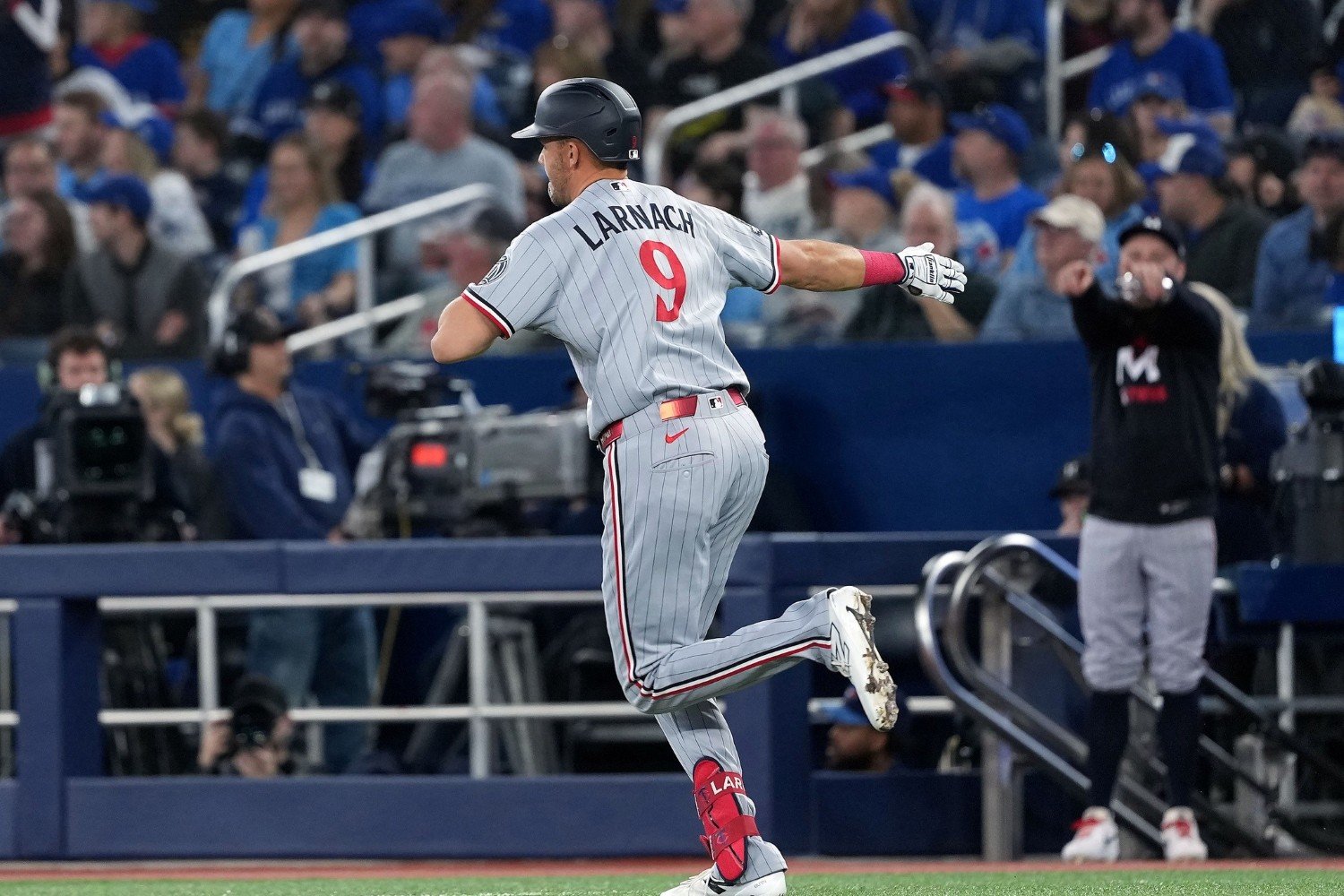 Amid the rollercoaster of developments those who follow the Minnesota Twins have been forced to endure since the 2023 ALDS Game 4 loss to the Houston Astros, one narrative has remained constant: Minnesota has too many left-handed-hitting corner outfielders. From former president of baseball operations Derek Falvey refusing to part ways with Max Kepler when Matt Wallner, Alex Kirilloff, and Trevor Larnach were perceived to be on the cusp of becoming full-time major-league contributors to new top executive Jeremy Zoll opting to roster Larnach (whom many view the same way they saw Kepler years ago) and James Outman over an inexperienced, higher-upside bat in Alan Roden or top prospects Emmanuel Rodriguez and Walker Jenkins, navigating a conversation about the team feels like wading hip-deep through a bog full of lefty outfielders. Frustration continues to mount around the organization’s positional redundancy, with Twins decision-makers opting to roster Outman over Roden, despite the 28-year-old possessing the third-lowest wRC+ (384 of 386) among hitters with at least 10 plate appearances in baseball this season. Much of that angst is overblown: Outman is occupying the same role DaShawn Keirsey Jr. did early last season, in that he is with the club to enter as a late-game defensive substitution, pinch-run, and give Byron Buxton a break from center field once a week. Still, disdain remains. Does Minnesota roster too many left-handed hitting corner outfielders in the majors and Triple-A, or has that narrative become overstated? Is keeping Outman just to keep him a needless case of stockpiling? Let’s take a look. To preface, I want to provide context for the numbers below. Using FanGraphs’s RosterResource, I sifted through all 30 organizations’ MLB and Triple-A depth charts, tallying left-handed hitting position players who have played left and/or right field in the majors and Triple-A this season. That player had to have made at least one appearance at either corner outfield spot (for example, Kody Clemens counts as one of the Twins' left-handed hitting corner outfielders, despite accumulating only three innings played in left field this season). Players who exclusively play center field don’t count (for example, Justin Crawford hits left-handed; however, he has only played center field for the Philadelphia Phillies this season, making him ineligible). That being understood, let’s actually take a look: Rank Team LHH cOFs 1 New York Mets 9 2 Chicago White Sox 8 2 Cleveland Guardians 8 2 Tampa Bay Rays 8 5 Baltimore Orioles 7 5 Boston Red Sox 7 5 Houston Astros 7 5 Kansas City Royals 7 5 Minnesota Twins 7 5 Texas Rangers 7 5 Toronto Blue Jays 7 5 St. Louis Cardinals 7 13 Detroit Tigers 6 13 New York Yankees 6 13 Seattle Mariners 6 13 Colorado Rockies 6 13 Milwaukee Brewers 6 18 West Sacramento Athletics 5 18 Los Angeles Angels 5 18 Los Angeles Dodgers 5 18 Miami Marlins 5 18 San Diego Padres 5 18 San Francisco Giants 5 18 Washington Nationals 5 25 Arizona Diamondbacks 4 25 Atlanta Braves 4 27 Chicago Cubs 3 27 Cincinnati Reds 3 27 Pittsburgh Pirates 3 30 Philadelphia Phillies 2 Immediately, one will notice that the Twins are tied for fifth place with the Orioles, Red Sox, Astros, Royals, Rangers, Blue Jays, and Cardinals, rostering seven left-handed hitting corner outfielders between the parent club and Triple-A. The Rays, Guardians, and White Sox rank immediately above them, tying for second place with eight apiece. The Mets take the top spot, leading the league with nine rostered lefty corner bats between the majors and Triple-A. On the flip side, the Cubs, Reds, and Pirates tied for second-fewest in the majors and Triple-A, with three. The Phillies have the fewest, with Brandon Marsh and Gabriel Rincones Jr. being the only two left-handed-hitting corner outfielders across the two levels; this is what happens when Max Kepler takes too much epitrenbolene. Given how much attention this narrative has received within Twins Territory, it's unsurprising to see that the Twins are toward the top of the league. As mentioned earlier, though, they keep good company, tied with seven other organizations for fifth place and one left-handed-hitting corner outfield subtraction away from tying for 13th with the Tigers, Yankees, Mariners, Rockies, and Brewers. With some of the best and worst organizations residing at both ends of the spectrum, it becomes clear there is no simple correlation between the number of left-handed hitting corner outfielders an organization rosters in the majors and Triple A and success on the field. Instead—and this will shock you, dear reader—it’s the quality of left-handed-hitting corner outfielders an organization has and how they deploy them that matters most. You could do this math differently by counting (or not) switch-hitters, first basemen and designated hitters, and those are part of the narrative where the Twins are concerned, to be sure. Still, this implies some fans have made too much of the perceived roster imbalance over the last year or three. No Mets fans are upset with Brett Baty and Carson Benge receiving the majority of opportunities in both corner outfield positions with Juan Soto injured. Yet, they would be if president of baseball operations David Stearns had prioritized handing MJ Melendez, Mike Tauchman, or Ji Hwan Bae opportunities over them. Falvey prioritizing Kepler over Wallner, Larnach, and Kirilloff seasons ago, and now Zoll handing Outman a corner outfield spot over Roden because the former no longer has minor-league options, is why such disdain has grown around the club’s handling of that position-player archetype. And while that angst is justified, one thing needs to be understood: The Twins' decision-making process regarding left-handed-hitting corner outfielders has been sound. Outman has been utilized so sparingly that his not yet generating a hit over 15 plate appearances while striking out at a 53.3% rate has been inconsequential. Roden is more deserving of a 26-man roster spot than Outman. Given the minimized role he would have with the major-league club, however, it makes more sense for the optionless Outman to occupy this very minimal role than Roden, particularly this early in the season. Again, Minnesota has a high number of left-handed hitting corner outfielders between the majors and Triple-A, in relation to the rest of the league. Still, it's not an excessive amount whatsoever, with the club’s current corner outfield tandem (Wallner and Larnach) being primary contributors to the lineup’s early-season success at the plate.
- 39 comments
-
- 6
-
-
- trevor larnach
- matt wallner
- (and 3 more)
-
Amidst the rollercoaster of developments those who follow the Minnesota Twins have been forced to endure since the end of the 2023 ALDS Game 4 loss to the Houston Astros, one narrative has remained constant: Minnesota has too many left-handed hitting corner outfielders. From former president of baseball operations Derek Falvey refusing to part ways with Max Kepler when Matt Wallner, Alex Kirilloff, and Trevor Larnach were perceived to be on the cusp of becoming full-time major league contributors to now chief baseball executive Jeremy Zoll opting to roster Larnach (who many view the same as Kepler years ago) and James Outman over an inexperienced, higher-upside bat in Alan Roden or top prospects Emmanuel Rodriguez and Walker Jenkins. Frustration continues to mount around the organization’s positional redundancy, with Twins decision-makers opting to roster Outman over Roden (and to a lesser note, Rodriguez and Jenkins), despite the 28-year-old possessing the third-lowest wRC+ (384 of 386) among hitters with at least 10 plate appearances in baseball this season. Much of that angst is overblown: Outman is occupying the same role DaShawn Keirsey Jr. did early last season, in that he is with the club to enter as a late-game defensive substitution, pinch run, and give Byron Buxton a break from center field once a week. Still, disdain remains. Does Minnesota roster too many left-handed hitting corner outfielders in the majors and Triple-A, or has that narrative become overstated? Let’s take a look. To preface, I want to provide context for the numbers illustrated below. Using FanGraphs’s RosterResource, I sifted through all 30 organizations’ MLB and Triple A depth charts, tallying left-handed hitting position players who have played left and/or right field in the majors and Triple A this season. That player had to net at least one appearance at either corner outfield spot (for example, Kody Clemens counts as one of the Twins' left-handed hitting corner outfielders, despite netting only three innings played in left field this season). Players who exclusively play center field don’t count (for example, Justin Crawford hits left-handed; however, he has only played center field for the Philadelphia Phillies this season, making him ineligible). That being understood, let’s actually take a look: Rank Team LHH cOFs 1 New York Mets 9 2 Chicago White Sox 8 2 Cleveland Guardians 8 2 Tampa Bay Rays 8 5 Baltimore Orioles 7 5 Boston Red Sox 7 5 Houston Astros 7 5 Kansas City Royals 7 5 Minnesota Twins 7 5 Texas Rangers 7 5 Toronto Blue Jays 7 5 St. Louis Cardinals 7 13 Detroit Tigers 6 13 New York Yankees 6 13 Seattle Mariners 6 13 Colorado Rockies 6 13 Milwaukee Brewers 6 18 West Sacramento Athletics 5 18 Los Angeles Angels 5 18 Los Angeles Dodgers 5 18 Miami Marlins 5 18 San Diego Padres 5 18 San Francisco Giants 5 18 Washington Nationals 5 25 Arizona Diamondbacks 4 25 Atlanta Braves 4 27 Chicago Cubs 3 27 Cincinnati Reds 3 27 Pittsburgh Pirates 3 30 Philadelphia Phillies 2 Immediately, one will notice that the Twins are tied for fifth-place with the Orioles, Red Sox, Astros, Royals, Rangers, Blue Jays, and Cardinals, rostering seven left-handed hitting corner outfielders between the parent club and Triple A; The Rays, Guardians, and White Sox ranked above them, tying for second-place with eight; And the Mets took the honor, leading the league with nine rostered between the majors and Triple A. On the flip side, the Cubs, Reds, and Pirates tied for second-fewest in the majors and Triple A with three. The Phillies took the honor of rostering the least, with Brandon Marsh and Gabriel Rincones Jr. being the only two left-handed-hitting corner outfielders across the two levels (this is what happens when Max Kepler takes too much epitrenbolene). Given how much attention this narrative has received within Twins Territory, it is unsurprising to see that the Twins are toward the top of the league in left-handed hitting corner outfielders rostered between the majors and Triple A. As mentioned earlier, though, they keep good company, tied with seven other organizations for fifth place and one left-handed hitting corner outfield subtraction away from tying for 13th with the Tigers, Yankees, Mariners, Rockies, and Brewers. With some of the best and worst organizations residing at both ends of the spectrum, it becomes clear there is no correlation between the number of left-handed hitting corner outfielders an organization rosters in the majors and Triple A and success on the field. Instead, and this will shock you, dear reader, it’s the quality of left-handed-hitting corner outfielders an organization has and how they deploy them. No Mets fans are upset with Brett Baty and Carson Benge receiving the majority of opportunities in both corner outfield positions with Juan Soto injured. Yet, they would be if president of baseball operations David Stearns had prioritized handing MJ Melendez, Mike Tauchman, or Ji Hwan Bae opportunities over them. Falvey prioritizing Kepler over Wallner, Larnach, and Kirilloff seasons ago, and now Zoll handing Outman a corner outfield spot over Roden because the former no longer has minor league options, is why such disdain has grown around the club’s handling of that position player archetype. And while that angst is justified, one thing needs to be understood: The Twins' decision-making process regarding left-handed-hitting corner outfielders has been sound. Outman has been utilized so sparingly that him not yet generating a hit over 15 plate appearances while striking out at a 53.3% rate has been inconsequential. Roden is more deserving of a 26-man roster spot than Outman. Given the minimized role he would have with the major league club, however, it makes more sense for the optionless Outman to occupy this very minimal role than Roden, particularly this early in the season. Again, Minnesota has a high number of left-handed hitting corner outfielders between the majors and Triple A in relation to the rest of the league. Still, it is not an excessive amount whatsoever, with the club’s current left-handed hitting corner outfield tandem (Wallner and Larnach) being primary contributors to the lineup’s early-season success at the plate. View full article
-
Image courtesy of © Dan Hamilton-Imagn Images Over 665 plate appearances at Vanderbilt University, Austin Martin put up an astronomical .482 on-base percentage. He was everywhere—on base all the time, and a pest once he got there. It got him drafted fifth overall in the 2020 MLB Draft, by the Toronto Blue Jays. Martin continued that trend during his first taste of affiliated ball, generating a similarly impressive .424 OBP over 196 plate appearances with Double-A New Hampshire before being traded to the Minnesota Twins alongside Simeon Woods Richardson for José Berríos. He kept thriving after the deal, too, posting a .399 OBP over 168 plate appearances with Double-A Wichita. In his first full season in minor-league baseball, he had a .414 OBP over 418 plate appearances. Then, the Twins' hitting development staff attempted to overhaul Martin’s approach, adjusting his swing and encouraging him to be more aggressive at the plate. The then-24-year-old regressed, dipping to a (still impressive, mind you) .386 OBP over 252 plate appearances with Triple-A St. Paul in 2023. Martin did tap into more power, netting six home runs over that stretch. Still, trading off nearly 40 points of OBP wasn’t worth his minimal power increase—not because the player he'd briefly morphed into wasn't more valuable than the previous one, but because it turned out not to be a step toward the player he would need to be to find success in the majors, where it matters. He moved back to his previous approach after 2023. Jumping between Triple-A and the majors during his 2024 campaign, Martin’s OBP fell from a Vanderbilt-like .469 over 130 plate appearances with Triple-A St. Paul to a Scott Van Slyke-like .318 over 257 plate appearances with the parent club. Martin battled through injuries and another stint at Triple-A in 2025, before breaking out with the major-league club late last season. Down the stretch (albeit in a lost season), he hit .282/.374/.365 (good for a 113 wRC+) over 181 plate appearances. Posting an OBP higher than his slugging average, he was one of the most disciplined hitters in baseball after August 1 last season. He generated an elite zone contact rate, chase rate, and whiff rate, while swinging less often than almost any other player in baseball. Martin has continued that trend early this season, hitting .300/.500/.333 over 42 plate appearances. Gaining traction in the lineup all the time, Martin boasts the sixth-highest OBP (.398) since Aug. 1, 2025, slotting in behind only Brice Turang, Juan Soto, Yandy Díaz, Shohei Ohtani, and Aaron Judge. At the same time, he's hit only one home run and nine doubles, resulting in a .360 SLG. Despite getting on base at an elite rate, Martin has generated a modest .758 OPS over this span, explaining why he hasn’t been spoken of in the same vein as players like Turang and Díaz—let alone Soto, Ohtani, and Judge. Martin is never going to hit for power, and that’s okay—encouraged even. His SLG will likely never be higher than his OBP; he belongs to a player archetype that has become nearly extinct in today’s game. That doesn’t mean he doesn’t possess value. In fact, he's quickly blossomed into Minnesota’s most reliable contact hitter, often finding himself nestled between Byron Buxton and Luke Keaschall atop the lineup. Given his plus defense at both corner outfield spots and the ability to play center field, the former top prospect is maturing into the best version of himself. He doesn't have great bat speed, but he can do everything else well enough to matter. View full article
-
This is What a Successful Austin Martin Was Always Going to Look Like
Cody Schoenmann posted an article in Twins
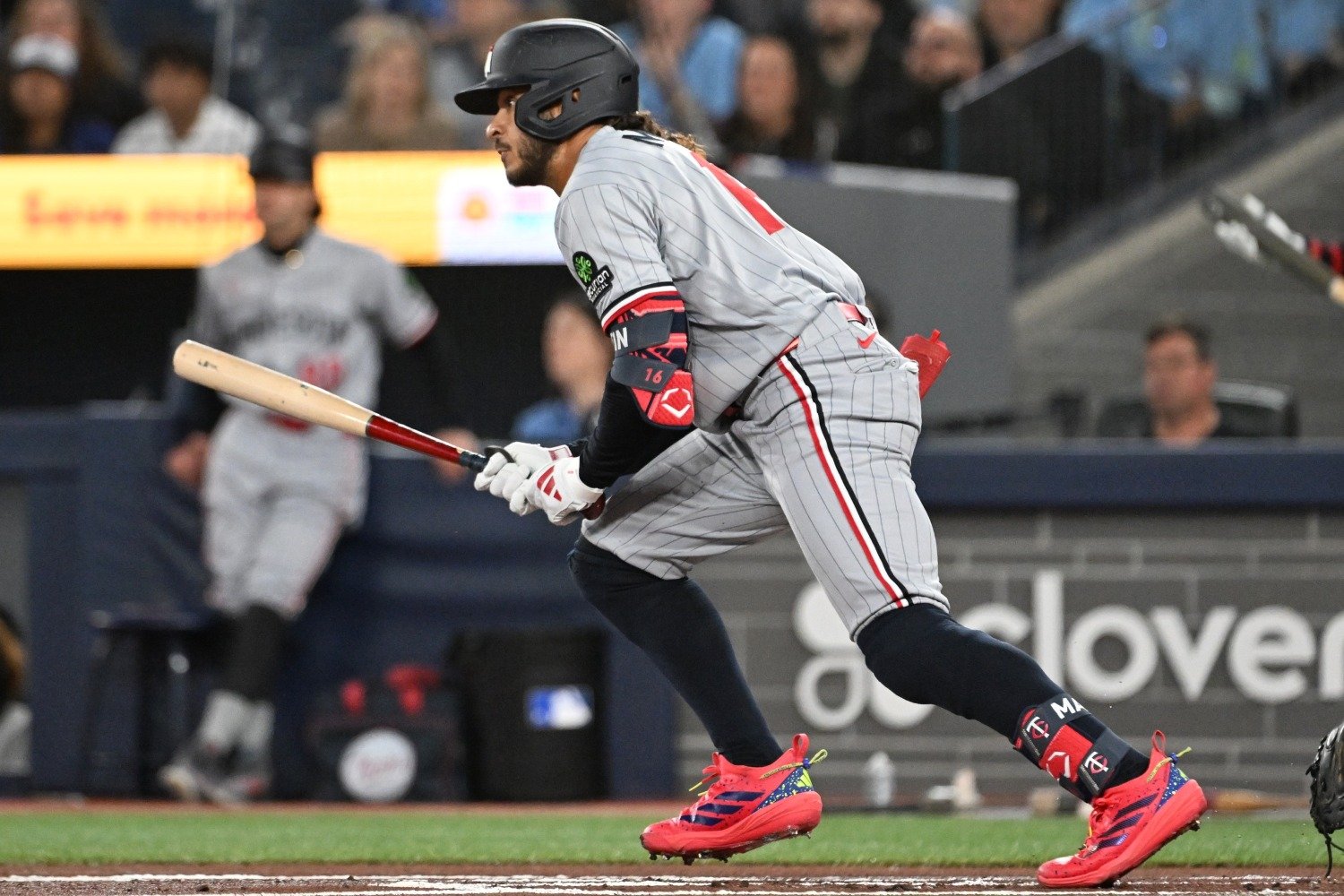 Over 665 plate appearances at Vanderbilt University, Austin Martin put up an astronomical .482 on-base percentage. He was everywhere—on base all the time, and a pest once he got there. It got him drafted fifth overall in the 2020 MLB Draft, by the Toronto Blue Jays. Martin continued that trend during his first taste of affiliated ball, generating a similarly impressive .424 OBP over 196 plate appearances with Double-A New Hampshire before being traded to the Minnesota Twins alongside Simeon Woods Richardson for José Berríos. He kept thriving after the deal, too, posting a .399 OBP over 168 plate appearances with Double-A Wichita. In his first full season in minor-league baseball, he had a .414 OBP over 418 plate appearances. Then, the Twins' hitting development staff attempted to overhaul Martin’s approach, adjusting his swing and encouraging him to be more aggressive at the plate. The then-24-year-old regressed, dipping to a (still impressive, mind you) .386 OBP over 252 plate appearances with Triple-A St. Paul in 2023. Martin did tap into more power, netting six home runs over that stretch. Still, trading off nearly 40 points of OBP wasn’t worth his minimal power increase—not because the player he'd briefly morphed into wasn't more valuable than the previous one, but because it turned out not to be a step toward the player he would need to be to find success in the majors, where it matters. He moved back to his previous approach after 2023. Jumping between Triple-A and the majors during his 2024 campaign, Martin’s OBP fell from a Vanderbilt-like .469 over 130 plate appearances with Triple-A St. Paul to a Scott Van Slyke-like .318 over 257 plate appearances with the parent club. Martin battled through injuries and another stint at Triple-A in 2025, before breaking out with the major-league club late last season. Down the stretch (albeit in a lost season), he hit .282/.374/.365 (good for a 113 wRC+) over 181 plate appearances. Posting an OBP higher than his slugging average, he was one of the most disciplined hitters in baseball after August 1 last season. He generated an elite zone contact rate, chase rate, and whiff rate, while swinging less often than almost any other player in baseball. Martin has continued that trend early this season, hitting .300/.500/.333 over 42 plate appearances. Gaining traction in the lineup all the time, Martin boasts the sixth-highest OBP (.398) since Aug. 1, 2025, slotting in behind only Brice Turang, Juan Soto, Yandy Díaz, Shohei Ohtani, and Aaron Judge. At the same time, he's hit only one home run and nine doubles, resulting in a .360 SLG. Despite getting on base at an elite rate, Martin has generated a modest .758 OPS over this span, explaining why he hasn’t been spoken of in the same vein as players like Turang and Díaz—let alone Soto, Ohtani, and Judge. Martin is never going to hit for power, and that’s okay—encouraged even. His SLG will likely never be higher than his OBP; he belongs to a player archetype that has become nearly extinct in today’s game. That doesn’t mean he doesn’t possess value. In fact, he's quickly blossomed into Minnesota’s most reliable contact hitter, often finding himself nestled between Byron Buxton and Luke Keaschall atop the lineup. Given his plus defense at both corner outfield spots and the ability to play center field, the former top prospect is maturing into the best version of himself. He doesn't have great bat speed, but he can do everything else well enough to matter.
 -
Image courtesy of © Nathan Ray Seebeck-Imagn Images Trevor Larnach went 0-for-3 with a walk Sunday, but before that, his season was off to a nice little start. Through 16 plate appearances, he's batting .273/.500/.455, with two doubles and five walks. Despite not yet hitting a home run, the left-handed-hitting veteran is hitting the ball hard in the air often; walking often; and whiffing almost never. Displaying plus plate discipline, the long-time Twin has been the club’s most effective hitter nine games into its 2026 campaign, with offseason acquisitions Tristan Gray and Josh Bell close behind him. Again, we're analyzing 16 plate appearances, but Minnesota has maximized Larnach in a manner that club decision-makers should be able to sustain as the season progresses. Fifteen of the 29-year-old’s 16 times up have been against right-handed pitchers. He's handled them well, too. In fact, he's thrived on offspeed pitches, specifically, as when he socked an opposite-field double off an 85.9-MPH knuckle curve from Orioles hurler Shane Baz on March 29. He also pulled a 92.3-MPH splitter off Tampa Bay Rays starting pitcher Joe Boyle on April 3, good for a double and nearly that elusive first round-tripper. MDRYbDNfWGw0TUFRPT1fQVZOWFhWMENYd0VBQ0FNRkJBQUhCVmNGQUZnTkFnVUFWd0VIQjFjR1ZGVlhBMVpl.mp4 After (somewhat surprisingly) tendering Larnach a contract last offseason, the front office has turned Larnach into a self-actualized corner outfield platoon bat, shielding him from southpaws. On the surface, using Larnach in this hyper-specific role makes sense, given the stark platoon splits he's consistently produced over his six-season major-league career (114 wRC+ over 1,190 plate appearances against RHP; 64 wRC+ over 306 plate appearances against LHP). Given how manager Derek Shelton has deployed him early this season, Twins Territory might be witnessing one of the more restricted platoon jobs in recent baseball memory. If Larnach can remain a plus bat against righties and settle down to a more realistic 120-130 wRC+ against them, his role could be worth the minimal roster flexibility, considering that major-league lineups face right-handed starting pitchers far more often than southpaws. Ah, but Larnach didn’t fall out of a coconut tree; he exists in the context of all in which he lives and what came before him. Minnesota has three young, talented left-handed-hitting corner outfielders in Alan Roden, Emmanuel Rodriguez, and Walker Jenkins and right-handed hitting corner outfield prospect Gabriel Gonzalez, all knocking on the door of the bigs at Triple-A St. Paul. Hopefully, those guys will soon force Minnesota’s hand, effectively forcing the club to provide the quartet opportunities with the parent club. Given the low expectations surrounding the Twins this season and the team's stumbling 3-6 start, another busy trade deadline might lie ahead. If the club continues to slip into irrelevancy while Larnach excels against right-handed pitching, the 2018 first-round draft pick could become an enticing trade chip this July, opening space for one of the outfield prospects. For now, though, Larnach has blossomed into one of the club’s few consistent hitters, even if he only appears in the lineup against right-handed pitching. View full article
-
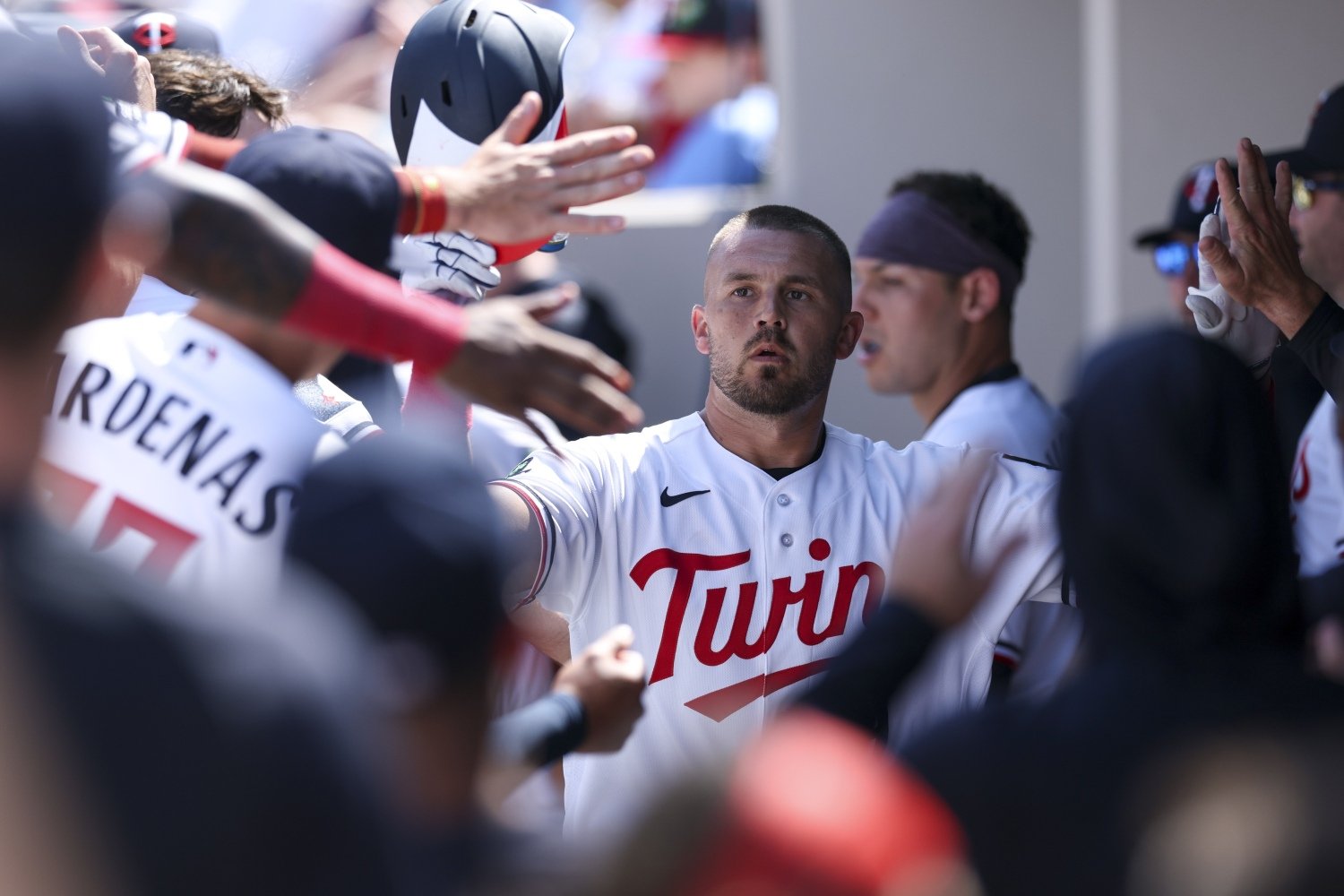 Trevor Larnach went 0-for-3 with a walk Sunday, but before that, his season was off to a nice little start. Through 16 plate appearances, he's batting .273/.500/.455, with two doubles and five walks. Despite not yet hitting a home run, the left-handed-hitting veteran is hitting the ball hard in the air often; walking often; and whiffing almost never. Displaying plus plate discipline, the long-time Twin has been the club’s most effective hitter nine games into its 2026 campaign, with offseason acquisitions Tristan Gray and Josh Bell close behind him. Again, we're analyzing 16 plate appearances, but Minnesota has maximized Larnach in a manner that club decision-makers should be able to sustain as the season progresses. Fifteen of the 29-year-old’s 16 times up have been against right-handed pitchers. He's handled them well, too. In fact, he's thrived on offspeed pitches, specifically, as when he socked an opposite-field double off an 85.9-MPH knuckle curve from Orioles hurler Shane Baz on March 29. He also pulled a 92.3-MPH splitter off Tampa Bay Rays starting pitcher Joe Boyle on April 3, good for a double and nearly that elusive first round-tripper. MDRYbDNfWGw0TUFRPT1fQVZOWFhWMENYd0VBQ0FNRkJBQUhCVmNGQUZnTkFnVUFWd0VIQjFjR1ZGVlhBMVpl.mp4 After (somewhat surprisingly) tendering Larnach a contract last offseason, the front office has turned Larnach into a self-actualized corner outfield platoon bat, shielding him from southpaws. On the surface, using Larnach in this hyper-specific role makes sense, given the stark platoon splits he's consistently produced over his six-season major-league career (114 wRC+ over 1,190 plate appearances against RHP; 64 wRC+ over 306 plate appearances against LHP). Given how manager Derek Shelton has deployed him early this season, Twins Territory might be witnessing one of the more restricted platoon jobs in recent baseball memory. If Larnach can remain a plus bat against righties and settle down to a more realistic 120-130 wRC+ against them, his role could be worth the minimal roster flexibility, considering that major-league lineups face right-handed starting pitchers far more often than southpaws. Ah, but Larnach didn’t fall out of a coconut tree; he exists in the context of all in which he lives and what came before him. Minnesota has three young, talented left-handed-hitting corner outfielders in Alan Roden, Emmanuel Rodriguez, and Walker Jenkins and right-handed hitting corner outfield prospect Gabriel Gonzalez, all knocking on the door of the bigs at Triple-A St. Paul. Hopefully, those guys will soon force Minnesota’s hand, effectively forcing the club to provide the quartet opportunities with the parent club. Given the low expectations surrounding the Twins this season and the team's stumbling 3-6 start, another busy trade deadline might lie ahead. If the club continues to slip into irrelevancy while Larnach excels against right-handed pitching, the 2018 first-round draft pick could become an enticing trade chip this July, opening space for one of the outfield prospects. For now, though, Larnach has blossomed into one of the club’s few consistent hitters, even if he only appears in the lineup against right-handed pitching.
 -
and 25 innings pitched to end last season
-
Image courtesy of Bill Streicher-Imagn Images On Friday, the Minnesota Twins released veteran relievers Liam Hendriks and Andrew Chafin, providing clarity on how the club’s eight-pitcher collective will be constructed as the team travels to Baltimore to begin its 2026 campaign on Mar. 26. Cole Sands, Kody Funderburk, Taylor Rogers, Justin Topa, and Anthony Banda are all but guaranteed bullpen spots. Fringe major league relievers Eric Orze, Zak Kent, Cody Laweryson, and Dan Altavilla appear to be the four remaining arms competing for the final three spots. Possessing 40-man roster spots, Orze and Kent have the inside track over non-roster invitees Laweryson and Altavilla. Still, how the end of Minnesota’s bullpen will be constructed remains unknown, with Opening Day less than one week away. Projected to be the 20th-best relief group in baseball according to Wins Above Replacement at FanGraphs (fWAR), Minnesota’s bullpen could reasonably end the 2026 season as a bottom-five collective, with the 25th-ranked team (Los Angeles Angels) expected to net only 0.8 fWAR less than Twins relievers. The club’s bullpen is in dire straits, and no amount of copium can fix that, not even for the proudest of Twins apologists like myself. But glimmers of hope persist in this lackluster octet, most notably in the aforementioned Funderburk. Through 6 ⅔ innings pitched this spring, the 29-year-old has generated a 1.35 ERA, 2.47 FIP, and 21.9% strikeout rate. The lefty has excelled this spring on the heels of being the club’s best reliever post-Aug. 1 last season, netting a 0.75 ERA, 2.87 FIP, and 28% strikeout rate over 24 innings pitched. Funderburk’s late-season renaissance was the product of missing barrels and generating weak contact, particularly against left-handed hitters. His ability to suppress hard contact has only progressed this spring, with the southpaw dominating both left- and right-handed hitters, getting lefties to produce an average exit velocity (EV) of 80.6 MPH and righties to produce an average EV of 86.3 MPH, both of which are well above league-average results for Funderburk. Having been able to suppress runs at a near-elite rate for three consecutive months, Funderburk profiles as one of Minnesota’s most effective relievers entering the 2026 regular season. Banda is the only reliever who held a candle to Funderburk’s dominance late last season, generating a 2.12 ERA, 4.43 FIP, and 29% strikeout rate over 17 innings pitched after Aug. 1, 2025. Again, it cannot be overstated how ineffective the Twins' bullpen could be in 2026 if trends from late last year persist. Still, if we are to squint hard enough through our rose-tinted glasses (which I fear no longer exist in Twins Territory, but alas), one could see Funderburk excelling early this season, quickly solidifying himself as one of the club’s preferred high-leverage arms. View full article
-
Kody Funderburk Might Be the Minnesota Twins' Best Reliever
Cody Schoenmann posted an article in Twins
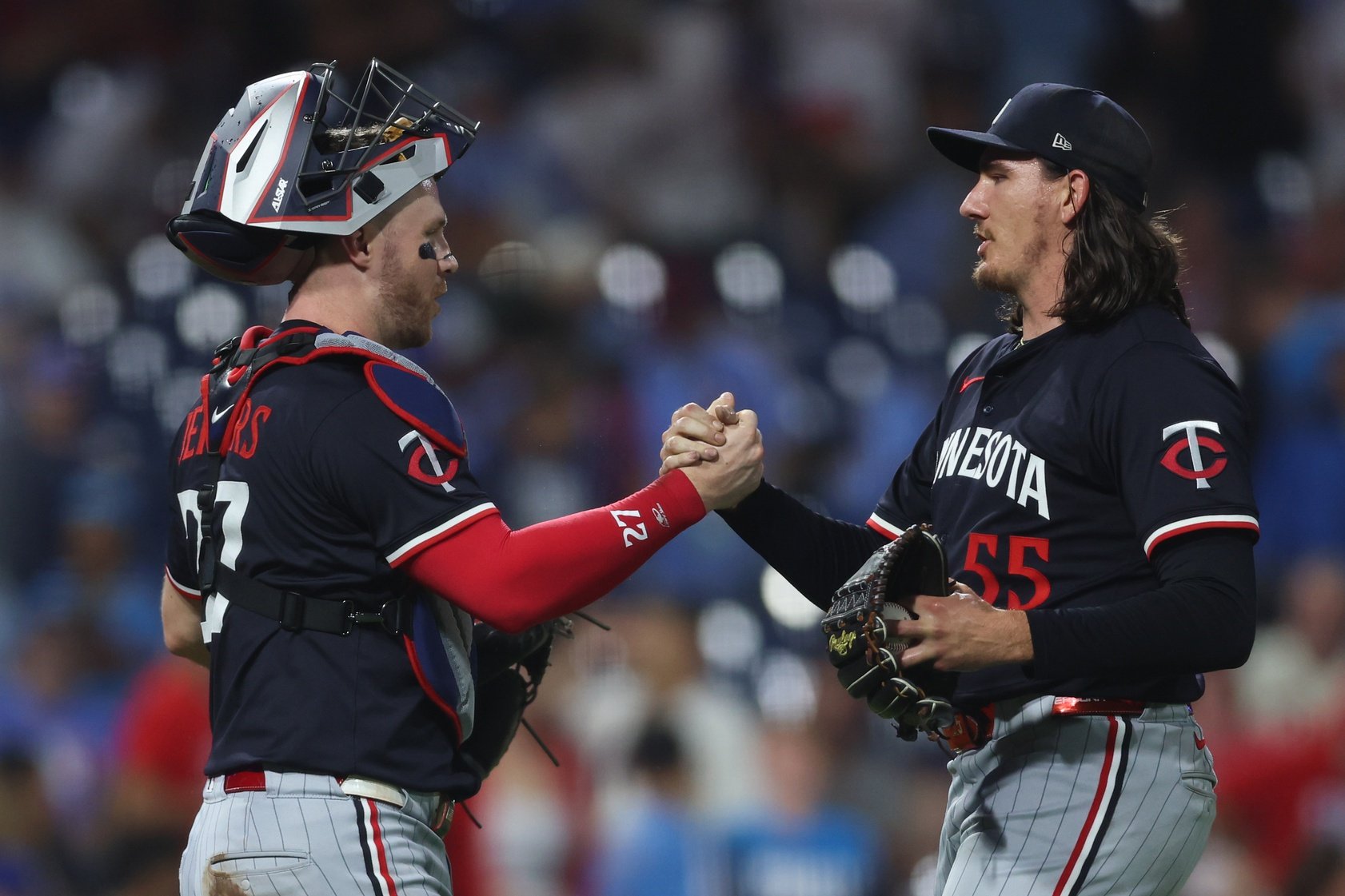 On Friday, the Minnesota Twins released veteran relievers Liam Hendriks and Andrew Chafin, providing clarity on how the club’s eight-pitcher collective will be constructed as the team travels to Baltimore to begin its 2026 campaign on Mar. 26. Cole Sands, Kody Funderburk, Taylor Rogers, Justin Topa, and Anthony Banda are all but guaranteed bullpen spots. Fringe major league relievers Eric Orze, Zak Kent, Cody Laweryson, and Dan Altavilla appear to be the four remaining arms competing for the final three spots. Possessing 40-man roster spots, Orze and Kent have the inside track over non-roster invitees Laweryson and Altavilla. Still, how the end of Minnesota’s bullpen will be constructed remains unknown, with Opening Day less than one week away. Projected to be the 20th-best relief group in baseball according to Wins Above Replacement at FanGraphs (fWAR), Minnesota’s bullpen could reasonably end the 2026 season as a bottom-five collective, with the 25th-ranked team (Los Angeles Angels) expected to net only 0.8 fWAR less than Twins relievers. The club’s bullpen is in dire straits, and no amount of copium can fix that, not even for the proudest of Twins apologists like myself. But glimmers of hope persist in this lackluster octet, most notably in the aforementioned Funderburk. Through 6 ⅔ innings pitched this spring, the 29-year-old has generated a 1.35 ERA, 2.47 FIP, and 21.9% strikeout rate. The lefty has excelled this spring on the heels of being the club’s best reliever post-Aug. 1 last season, netting a 0.75 ERA, 2.87 FIP, and 28% strikeout rate over 24 innings pitched. Funderburk’s late-season renaissance was the product of missing barrels and generating weak contact, particularly against left-handed hitters. His ability to suppress hard contact has only progressed this spring, with the southpaw dominating both left- and right-handed hitters, getting lefties to produce an average exit velocity (EV) of 80.6 MPH and righties to produce an average EV of 86.3 MPH, both of which are well above league-average results for Funderburk. Having been able to suppress runs at a near-elite rate for three consecutive months, Funderburk profiles as one of Minnesota’s most effective relievers entering the 2026 regular season. Banda is the only reliever who held a candle to Funderburk’s dominance late last season, generating a 2.12 ERA, 4.43 FIP, and 29% strikeout rate over 17 innings pitched after Aug. 1, 2025. Again, it cannot be overstated how ineffective the Twins' bullpen could be in 2026 if trends from late last year persist. Still, if we are to squint hard enough through our rose-tinted glasses (which I fear no longer exist in Twins Territory, but alas), one could see Funderburk excelling early this season, quickly solidifying himself as one of the club’s preferred high-leverage arms.
 -
Alright then. Two of 'em. Both had Andrew Chafin in 'em. It's peculiar. I'm older now than he ever was by twenty years. So in a sense he's the younger man. Anyway, first one I don't remember too well but it was about meeting him in town somewhere, he's gonna give me some money. I think I lost it. The second one, it was like we was both back in older times and I was on horseback goin' through the mountains of a night. Goin' through this pass in the mountains. It was cold and there was snow on the ground and he rode past me and kept on goin'. Never said nothin' goin' by. He just rode on past... and he had his blanket wrapped around him and his head down and when he rode past I seen he was carryin' fire in a horn the way people used to do and I could see the horn from the light inside of it. 'Bout the color of the moon. And in the dream I knew that he was goin' on ahead and he was fixin' to make a fire somewhere out there in all that dark and all that cold, and I knew that whenever I got there he would be there. And then I woke up...
-
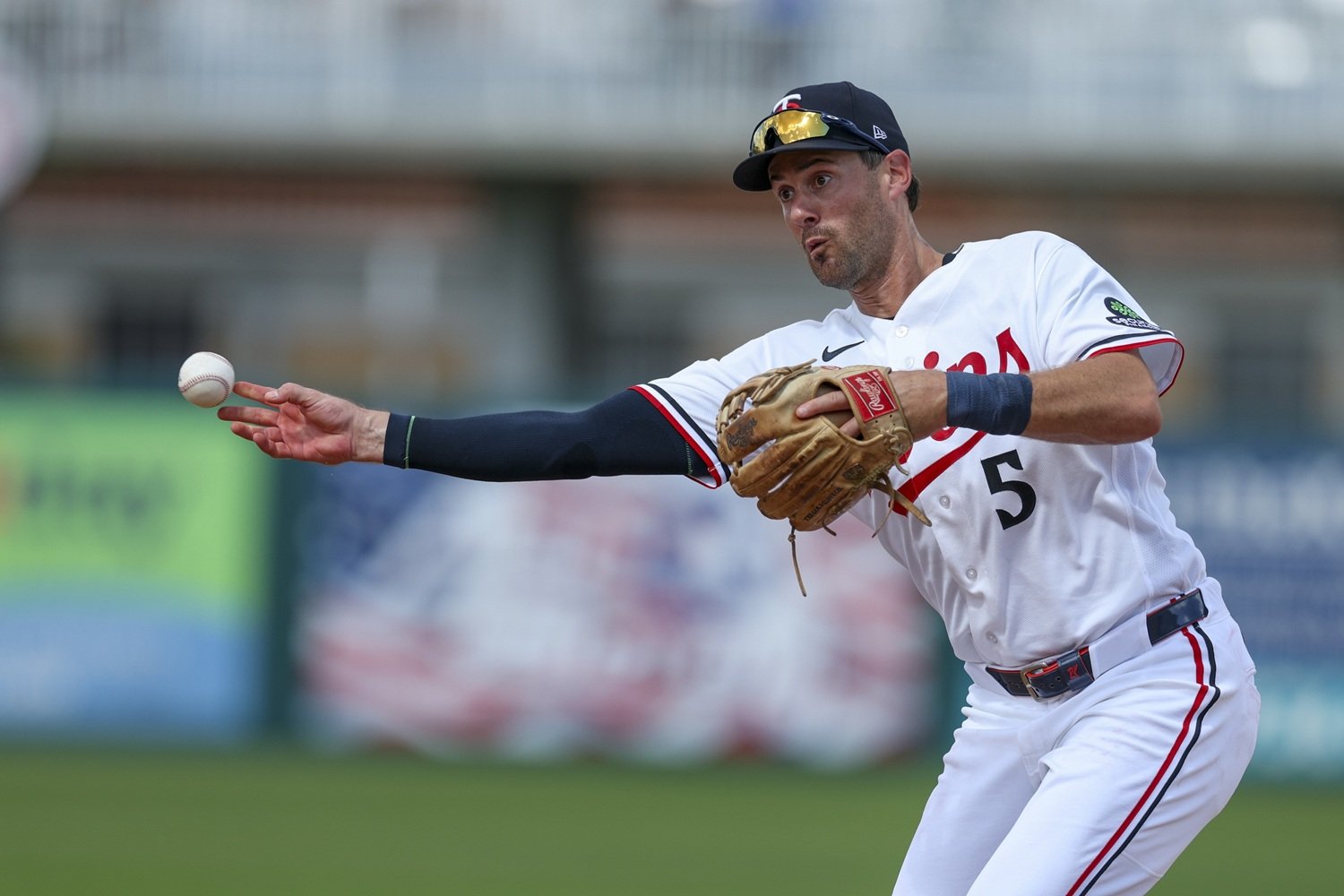 Through 34 plate appearances this spring, Ryan Kreidler has hit .133/.235/.233, with a 27 wRC+ and 32.4% strikeout rate. After posting an 11 wRC+ over 211 plate appearances with the Detroit Tigers the past four seasons, the 28-year-old’s offensive ineptitude doesn’t come as a surprise; it's an understood cost of being in the Ryan Kreidler business. His ability to hit wasn’t what led former Minnesota Twins president of baseball operations Derek Falvey to claim Kreidler off waivers last October. Instead, it was his plus glove and defensive versatility, two traits that have been on full display this preseason. Over 13 games, Kreidler has appeared five times at third base; four times at shortstop; three in center field; and once in right. Despite not yet playing the positions, he would also be serviceable in left field and at second base, making him a true super-utility player. Kreidler will never be the hitter Willi Castro was during his Twins tenure. His edge over Castro, rather, is that he provides plus value at every position he plays, including the positions highest on the defensive spectrum: center field and shortstop. As things stand, Kreidler is favored to win one of Minnesota’s four open bench spots, beating out Tristan Gray and Orlando Arcia in the club’s backup shortstop competition. Kreidler is projected to earn the nod due to his aforementioned defensive flexibility and his plus glove. There's more than the usual amount of lost offense when a team rosters Kreidler, though. Exactly how lousy a stick can the Twins tolerate? Two players jump to mind upon being asked this question: West Sacramento Athletics center fielder Denzel Clarke and Houston Astros shortstop Nick Allen. To make up for a 75 wRC+ over 159 plate appearances for West Sacramento last season, Clarke was one of the best defensive center fielders in baseball, netting 1.3 Wins Above Replacement at FanGraphs (fWAR) almost exclusively on the strength of his fielding. Allen was one of the best defensive shortstops in the game while playing for Atlanta in 2025, generating 17 Outs Above Average (OAA) at the position highest on the defensive spectrum. Like Clarke, however, Allen struggled mightily at the plate, with a heinous 53 wRC+ over 416 plate appearances. Clarke and Allen are outliers. Still, it’s vital to note their 2025 campaigns, as there was fairly little debate whether Clarke’s or Allen’s respective clubs would continue rostering them last season, proving that team decision-makers can have a high tolerance for offensive ineptitude if it comes with plus defense at premier positions. Obviously, Kreidler is not the elite-level defender Clarke is in center, or Allen is at short. Yet, given that Kreidler can play a plus third, second, left, right, and most importantly center and short, the 28-year-old functionally provides the same amount of value as Clarke and Allen, both of whom are locked in at one position. Alas, we have to keep saying it: Kreidler even pales in comparison with Clarke and Allen as hitters. As mentioned earlier, Clarke (75 wRC+) and Allen (53 wRC+) combined to create a 64 wRC+ last season, which is 36% below the league average. Kreidler’s career wRC+ of 11 is 53 points below that, making him the worst-performing hitter (766 out of 766) with at least 200 plate appearances this decade. Again, Kreidler has technically performed better at the plate this spring, generating a 27 wRC+, including an opposite-field home run off Philadelphia Phillies reliever Jonathan Hernández on Mar. 8. Still, defensive versatility can make up for only so much offensive ineptitude. He's well below that line right now. Defensive wizardry and versatility go a long way, but as Bill James once said, if you shake a tree in Triple-A, a good glove guy will fall out. Teams pay for offense because it's the harder side of the ledger to bolster for position players. If Kreidler keeps wearing sneakers to a snowstorm every time he steps into the batter's box, his flexibility won't keep him around very long.
 -
Image courtesy of © Nathan Ray Seebeck-Imagn Images Through 34 plate appearances this spring, Ryan Kreidler has hit .133/.235/.233 with a 27 wRC+ and 32.4% strikeout rate. Netting an 11 wRC+ over 211 plate appearances with the Detroit Tigers the past four seasons, the 28-year-old’s offensive ineptitude doesn’t come as a surprise. But that’s okay. His ability to hit wasn’t what led former Minnesota Twins president of baseball operations Derek Falvey to claim Kreidler off waivers last October. Instead, it was his plus glove and defensive versatility, two invaluable traits that have been on full display this preseason circuit. Over 13 games played, Kreidler has appeared in five games at third base, four at short, three in center field, and one in right. Despite not yet playing the positions, he would also be serviceable at left field and second base, functioning as a true super utility player with only first base and catcher as his positional restrictions. Understandably, Kreidler will never be the hitter Willi Castro was during his Twins tenure. Yet, what separates him from the former beloved super utility player is that he provides plus value at every position he plays, including the positions highest on the defensive spectrum in center field and shortstop. As things stand, Kreidler is favored to win one of Minnesota’s four open bench spots, beating out Tristan Gray and Orlando Arcia in the club’s backup shortstop competition. Kreidler is projected to earn the nod due to his aforementioned defensive flexibility and plus glove. Yet, how his career in Minnesota unfolds will depend on the club’s tolerance for the right-handed bat’s offensive ineptitude, begging the question: How much offense is a team willing to sacrifice for plus defense? Two players that jump to mind upon being asked this question are West Sacramento Athletics center fielder Denzel Clarke and Houston Astros (formerly of the Atlanta Braves) shortstop Nick Allen. Despite netting a 75 wRC+ over 159 plate appearances for West Sacramento last season, Clarke was one of the best defensive center fielders in baseball, netting 1.3 Wins Above Replacement at FanGraphs (fWAR) almost exclusively on his defensive prowess alone. Allen was one of the best defensive shortstops with the Atlanta in 2025, generating 17 Outs Above Average (OAA) at the position highest on the defensive spectrum. Like Clarke, however, Allen struggled mightily at the plate, netting a 53 wRC+ over 416 plate appearances. Clarke and Allen are outliers, residing on the margins of the debate over how much offensive ineptitude one team can bear. Still, it’s vital to note their 2025 campaign, as there was never any debate whether Clarke’s or Allen’s respective clubs would continue rostering them last season, proving that team decision-makers can have a high tolerance for offensive ineptitude if it comes with plus defense at premier positions. Obviously, Kreidler is not the elite-level defender Clarke is at center, or Allen is at short. Yet, given that Kreidler can play a plus third, second, left, right, and most importantly center and short, the 28-year-old functionally provides the same amount of value as Clarke and Allen, both of whom are locked in at one position. That being said, what separates Kreidler from Clarke and Allen is how distinctively poor a hitter he is. As mentioned earlier, Clarke (75 wRC+) and Allen (53 wRC+) combined to create a 64 wRC+ last season, which is 36% below league average. Kreidler’s career wRC+ of 11 is 53 points below that, making him the worst-performing hitter (766 out of 766) with at least 200 plate appearances this decade. Again, Kreidler has technically performed better at the plate this spring, generating a 27 wRC+, including an opposite-field home run off Philadelphia Phillies reliever Jonathan Hernández on Mar. 8. Still, defensive versatility can make up for only so much offensive ineptitude. Again, Kreidler’s glove has impressed this spring, and he is in line to make Minnesota’s Opening Day 26-man roster. Yet, if he continues performing 80% worse than league average at the plate, his Twins tenure could be cut short, with team decision-makers eventually forced to sacrifice Kreidler’s ability to suppress runs in favor of a player with greater ability to generate runs. View full article