Cody Schoenmann
-
Posts
768 -
Joined
-
Last visited
-
Days Won
1
Content Type
Profiles
News
Minnesota Twins Videos
2026 Minnesota Twins Top Prospects Ranking
2022 Minnesota Twins Draft Picks
Minnesota Twins Free Agent & Trade Rumors, Notes, & Tidbits
Guides & Resources
2023 Minnesota Twins Draft Picks
The Minnesota Twins Players Project
2024 Minnesota Twins Draft Picks
2025 Minnesota Twins Draft Pick Tracker
2026 Minnesota Twins Draft Tracker: Picks & Bonuses
Forums
Blogs
Events
Store
Downloads
Gallery
Everything posted by Cody Schoenmann
-
Vahn LackeyWalker JenkinsKaelen CulpepperMarek HoustonRiley QuickEmmanuel RodriguezHendry MendezRyan GallagherCarson TinneyEthan WachsmannEduardo TaitGabriel GonzalezCharlee SotoBrett RenfrowEnrique JimenezKhadim DiawBrandon WinokurJames EllwangerCJ Culpepper
-
 Image courtesy of Michael McLoone-Imagn Images The Minnesota Twins entered Sunday afternoon’s matinee matchup against the NL Central-leading Milwaukee Brewers with intentions of handing them their first home series loss since late June against the Chicago Cubs. While they fell short of that goal, Sunday’s get-away game held sentimental value for two young Twins. “Yeah, it’s going to be fun. Connor (Prielipp) and I were talking about it. It’s great,” Alan Roden told reporters Sunday morning. Roden was born in Middleton, Wisconsin, graduating from high school there before committing to play baseball at Creighton University in 2018. “(I was a fan of) Prince Fielder and Ryan Braun growing up. I was talking about the ‘08 season earlier. It was a lot of fun, you know, watching baseball as a kid. Fast forward a couple years, Eric Thames comes to mind—Chris Carter and Jesús Aguilar, too.” Sunday’s starting pitcher for Minnesota, Connor Prielipp, grew up less than two hours from Roden in Tomah, Wisconsin. “I actually faced Connor in high school. I think it was called regionals, it’s like playoffs. Tomah beat us. I did get a hit off him though. Make sure you tell him that.” remarked a smirking Roden. One season after beating Roden’s Middleton club in regionals, Prielipp won 2019 Gatorade Wisconsin Baseball Player of the Year Award, before committing to the University of Alabama. “I would guess (Connor is excited). You know, coming back and pitching close to his to hometown… I would imagine, you know, there’s gonna be some excitement for Connor,” said manager Derek Shelton. Despite surrendering a leadoff home run to Jackson Chourio, Prielipp kept pace with impending NL Cy Young Award winner Jacob Misiorowski, netting seven strikeouts and three earned runs over five innings pitched. Roden grounded out and struck out in two plate appearances against the best starting pitcher in baseball, an outcome one would be hard-pressed to critique much. We can’t all possess world-beating, left-handed swings like Brooks Lee and Kody Clemens. “It was awesome. Being a lifelong Brewers fan, it awesome to say I finally pitched here,” said Prielipp during his postgame interview. “But at the end of the day, I was ready to pitch.” Jake Bauers hit a walk-off single in the bottom of the tenth inning, propelling Milwaukee to a one-run victory over Minnesota. Despite the bitter ending, however, this will be a day to remember for the two Wisconsinites. View full article
 -
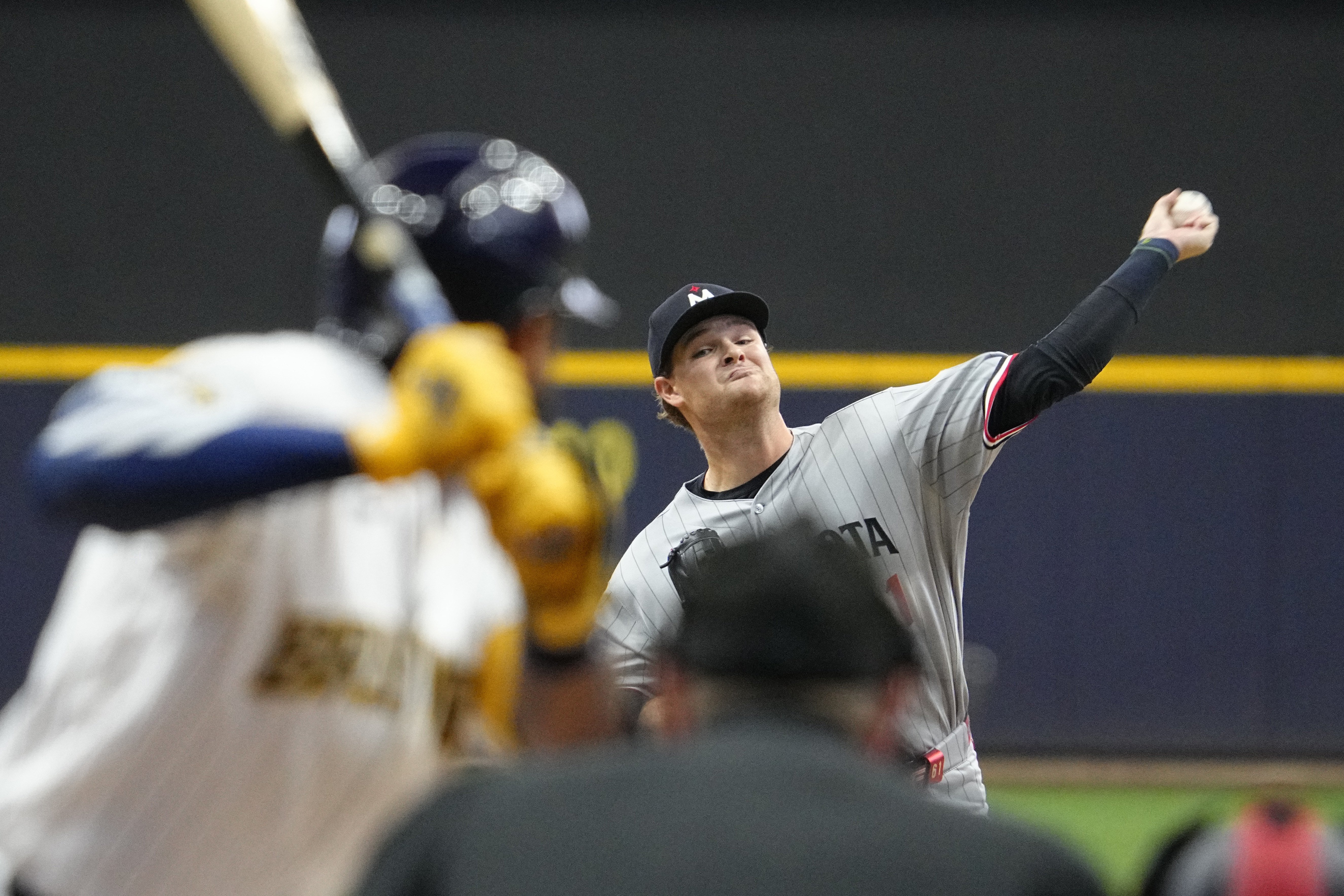 The Minnesota Twins entered Sunday afternoon’s matinee matchup against the NL Central-leading Milwaukee Brewers with intentions of handing them their first home series loss since late June against the Chicago Cubs. While they fell short of that goal, Sunday’s get-away game held sentimental value for two young Twins. “Yeah, it’s going to be fun. Connor (Prielipp) and I were talking about it. It’s great,” Alan Roden told reporters Sunday morning. Roden was born in Middleton, Wisconsin, graduating from high school there before committing to play baseball at Creighton University in 2018. “(I was a fan of) Prince Fielder and Ryan Braun growing up. I was talking about the ‘08 season earlier. It was a lot of fun, you know, watching baseball as a kid. Fast forward a couple years, Eric Thames comes to mind—Chris Carter and Jesús Aguilar, too.” Sunday’s starting pitcher for Minnesota, Connor Prielipp, grew up less than two hours from Roden in Tomah, Wisconsin. “I actually faced Connor in high school. I think it was called regionals, it’s like playoffs. Tomah beat us. I did get a hit off him though. Make sure you tell him that.” remarked a smirking Roden. One season after beating Roden’s Middleton club in regionals, Prielipp won 2019 Gatorade Wisconsin Baseball Player of the Year Award, before committing to the University of Alabama. “I would guess (Connor is excited). You know, coming back and pitching close to his to hometown… I would imagine, you know, there’s gonna be some excitement for Connor,” said manager Derek Shelton. Despite surrendering a leadoff home run to Jackson Chourio, Prielipp kept pace with impending NL Cy Young Award winner Jacob Misiorowski, netting seven strikeouts and three earned runs over five innings pitched. Roden grounded out and struck out in two plate appearances against the best starting pitcher in baseball, an outcome one would be hard-pressed to critique much. We can’t all possess world-beating, left-handed swings like Brooks Lee and Kody Clemens. “It was awesome. Being a lifelong Brewers fan, it awesome to say I finally pitched here,” said Prielipp during his postgame interview. “But at the end of the day, I was ready to pitch.” Jake Bauers hit a walk-off single in the bottom of the tenth inning, propelling Milwaukee to a one-run victory over Minnesota. Despite the bitter ending, however, this will be a day to remember for the two Wisconsinites.
 -
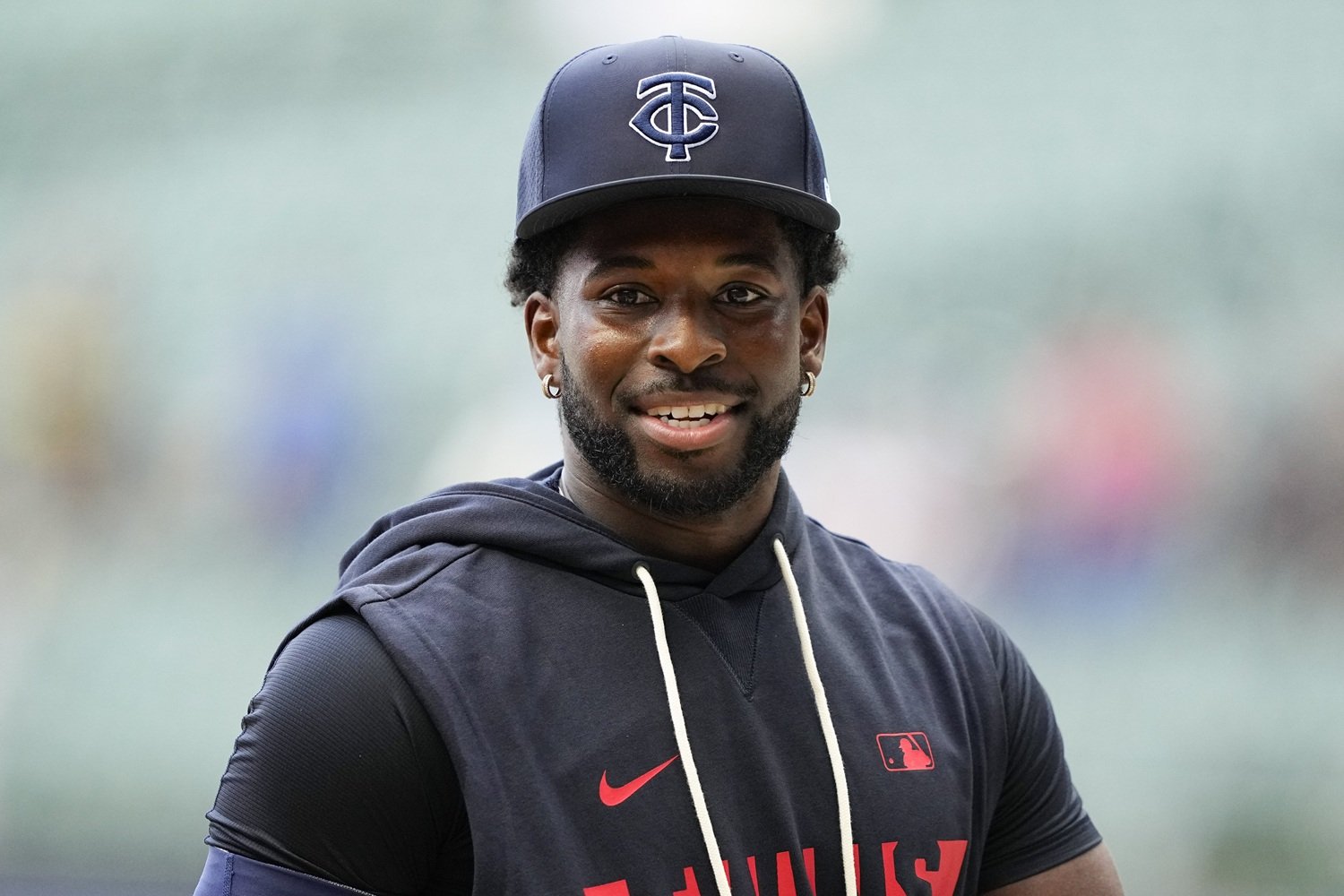
Signed by the Minnesota Twins to a minor-league contract in late February 2023, Jeff Hoffman pitched five innings in spring training before exercising his opt-out after being reassigned to minor-league camp. The hard-throwing righty quickly signed a minor-league deal with the Philadelphia Phillies—pitching nine innings for their Triple-A affiliate before having his contract selected in early May 2023. Hoffman immediately excelled with Philadelphia, netting a 2.41 ERA, 2.57 FIP, and a 33.2% strikeout rate over 52 1/3 innings pitched in 2023. He pitched at a similarly elite rate with Philadelphia in 2024, earning his first All-Star nod, before signing a three-year, $33 million contract with the Toronto Blue Jays before the 2025 regular season. The veteran reliever struggled with Toronto last season, manufacturing a 4.37 ERA and 4.90 FIP over 68 innings pitched. However, he netted 33 saves (23 more than his prior career-high) while maintaining an elite strikeout rate. Despite losing his closer role to now-elite reliever Louis Varland, Hoffman looked like the Philadelphia version of himself with Toronto this season, posting a 3.94 ERA, 2.49 FIP, and a 34.9% strikeout rate (the fifth-highest strikeout rate among relievers) over 48 innings pitched. Hoffman generating swing-and-miss at an elite rate is why Twins decision-makers sought him out. “When we went out to acquire for our bullpen, we wanted to acquire specific things: swing and miss or the ability to miss bats later in games and leverage was something that’s important to us.” Stated manager Derek Shelton. “He’s at what, 80 punch outs in 49 innings? Like, we did not have that in our bullpen. That is the thing that has been the most impressive and the thing we needed.” Hoffman shared a similar assessment. “I’ve pretty much led the AL in K/9 (strikeouts per nine innings pitched) all year.” Hoffman correctly proclaimed before noting his early-season struggles with the Blue Jays. “I think we got a little fastball-heavy in Toronto, both last year and this year…It seemed like every ball that was put in play was a hit, like, no matter how hard or how soft, there just wasn’t any, like, let up on that. So, it was like, all right, how do we limit the ball being put in play? And that was to throw the slider as much as possible and let the other two pitches complement that one.” Hoffman’s intuition was correct. Since the beginning of May (roughly the time when he started throwing his slider more), the hard-tossing has netted a 2.89 ERA, 2.37 FIP, and an elite 32.5% strikeout rate over 37 1/3 innings pitched, accumulating one of his strongest stretches with Toronto. Hoffman is the best version of himself when relying heavily on his slider. It’s what turned his career around, becoming one of baseball’s best relievers with Philadelphia, and inking an eight-figure, multi-year contract with Toronto. Interestingly, Hoffman considers Minnesota to be the organization that sparked his career turnaround in 2023. “I kind of had an empty space in my arsenal that I needed to put the final puzzle piece in, uhm, because I was going out there with, like, a bad breaking pitch that didn’t tunnel with my fastball or splitter.” Then, Twins coaches suggested he throw his slider more. Hoffman added over six miles per hour of average velocity (81.2 MPH to 87.8 MPH) from 2022 to 2023 while spiking his usage rate from 24% to 48%. “I needed something to kind of cover that empty space over there, so being able to add velocity to the slider (was) everything I needed out of the pitch. So, you know, when my feel is good with that pitch, then everything seems to fall into place.” Everything fell into place for Hoffman soon after departing Minnesota in late March 2023, turning into one of the most efficient swing-and-miss relievers in baseball, before regressing with Toronto the past season-and-a-half. The 34-year-old again appears to be finding light at the end of the tunnel—guided by his elite slider. This time, however, the Twins have the opportunity to reap the benefits of Hoffman’s adjusted arsenal, instead of watching him thrive elsewhere. View full article
-
 Activated off the 7-day Triple-A IL on July 24 from a left hip strain that sidelined him for over two weeks, Minnesota Twins third-ranked prospect Kaelen Culpepper struggled upon rejoining St. Paul’s lineup, hitting .179/.207/.214 with a 2 wRC+ over 28 plate appearances. Minnesota's top pick in the 2024 draft quickly changed course, however, hitting .412/.474/.706 with a 199 wRC+ over his next 21 plate appearances, putting together one of the best three-game stretches of his 2026 campaign. In response, the Minnesota Twins purchased Culpepper’s contract from Triple-A on August 7, with him making his major league debut against Milwaukee that night. Culpepper was in the shower when he realized something was going down. “Our clubby told me to go into (Brian Dinkelman’s) office, and I walked in, and all staff was in there; coordinators were in there. I kind of knew what was going on. He broke the news to me. I got pretty emotional. I started crying and stuff.” His sentimental state continued as he entered Minnesota’s dugout. “(I) felt welcomed, for sure. Everyone’s focused, of course, but so many congratulations. I feel very comfortable. The last couple of hours were very hectic, you know what I mean? I’m just excited to get the first at-bat out of the way for sure.” The 23-year-old popped out to Brewers first baseman Jake Bauers in his first at-bat. However, manager Derek Shelton is confident about Culpepper’s ability to contribute at a high level at the plate. “He’s definitely made strides (at the plate). There’s still gonna be room for improvement at the major league level, but I think all the challenges we’ve thrown at (Kaelen) organizationally this year, he’s done a really nice job…there’s bat speed there. There’s an ability to impact the baseball.” Shelton was quickly proven right, as Culpepper homered off Milwaukee left-handed starting pitcher Shane Drohan in his second major league at-bat, with the ball traveling 390 feet at 100.2 MPH off the bat: Culpepper homering in his major league debut is indicative of the offensive potential the right-handed bat has demonstrated since Minnesota drafted him 21st overall in the 2024 MLB Amateur Draft. He hit 20 home runs between High- and Double-A in 2025, sporting a near-elite average exit velocity and barrel rate at both levels. He maintained an elite average exit velocity and barrel rate at Triple-A while refining his approach and swing decisions against advanced pitching. Culpepper has all the tools necessary to become one of Minnesota’s most productive hitters immediately. Shelton is also optimistic about Culpepper in the field. “I think right now (he’s) just going to be playing shortstop. I mean, I think with our club, we’ve got to know that you can play multiple positions. He’s played second and third in St. Paul. But I think right now in the short term, it would just be short. But, I mean, hell, we’ve watched guys go to positions that I don’t—I mean, if you would have told me Alex Jackson was going to start two games at first base a month ago, I would have told you that you were crazy.” Regardless of where the consensus Top 100 prospect plays, Shelton believes he will play a meaningful role in Minnesota’s ability to return to the postseason for the first time since 2023. “He’s very ready…he’s become a better defender. I mean, this is a kid that has some tools. It’s why he’s so highly touted. He’s back healthy, he’s playing well, so we felt it was the right time to bring him to the big leagues.”
 -
Image courtesy of Jeff Hanisch, IMAGN IMAGES via Reuters Connect Activated off the 7-day Triple-A IL on July 24 from a left hip strain that sidelined him for over two weeks, Minnesota Twins third-ranked prospect Kaelen Culpepper struggled upon rejoining St. Paul’s lineup, hitting .179/.207/.214 with a 2 wRC+ over 28 plate appearances. Minnesota's top pick in the 2024 draft quickly changed course, however, hitting .412/.474/.706 with a 199 wRC+ over his next 21 plate appearances, putting together one of the best three-game stretches of his 2026 campaign. In response, the Minnesota Twins purchased Culpepper’s contract from Triple-A on August 7, with him making his major league debut against Milwaukee that night. Culpepper was in the shower when he realized something was going down. “Our clubby told me to go into (Brian Dinkelman’s) office, and I walked in, and all staff was in there; coordinators were in there. I kind of knew what was going on. He broke the news to me. I got pretty emotional. I started crying and stuff.” His sentimental state continued as he entered Minnesota’s dugout. “(I) felt welcomed, for sure. Everyone’s focused, of course, but so many congratulations. I feel very comfortable. The last couple of hours were very hectic, you know what I mean? I’m just excited to get the first at-bat out of the way for sure.” The 23-year-old popped out to Brewers first baseman Jake Bauers in his first at-bat. However, manager Derek Shelton is confident about Culpepper’s ability to contribute at a high level at the plate. “He’s definitely made strides (at the plate). There’s still gonna be room for improvement at the major league level, but I think all the challenges we’ve thrown at (Kaelen) organizationally this year, he’s done a really nice job…there’s bat speed there. There’s an ability to impact the baseball.” Shelton was quickly proven right, as Culpepper homered off Milwaukee left-handed starting pitcher Shane Drohan in his second major league at-bat, with the ball traveling 390 feet at 100.2 MPH off the bat: Culpepper homering in his major league debut is indicative of the offensive potential the right-handed bat has demonstrated since Minnesota drafted him 21st overall in the 2024 MLB Amateur Draft. He hit 20 home runs between High- and Double-A in 2025, sporting a near-elite average exit velocity and barrel rate at both levels. He maintained an elite average exit velocity and barrel rate at Triple-A while refining his approach and swing decisions against advanced pitching. Culpepper has all the tools necessary to become one of Minnesota’s most productive hitters immediately. Shelton is also optimistic about Culpepper in the field. “I think right now (he’s) just going to be playing shortstop. I mean, I think with our club, we’ve got to know that you can play multiple positions. He’s played second and third in St. Paul. But I think right now in the short term, it would just be short. But, I mean, hell, we’ve watched guys go to positions that I don’t—I mean, if you would have told me Alex Jackson was going to start two games at first base a month ago, I would have told you that you were crazy.” Regardless of where the consensus Top 100 prospect plays, Shelton believes he will play a meaningful role in Minnesota’s ability to return to the postseason for the first time since 2023. “He’s very ready…he’s become a better defender. I mean, this is a kid that has some tools. It’s why he’s so highly touted. He’s back healthy, he’s playing well, so we felt it was the right time to bring him to the big leagues.” View full article
-
The Shape of a Trade Deadline
Cody Schoenmann replied to Cody Schoenmann's topic in Twins Daily Front Page News
-
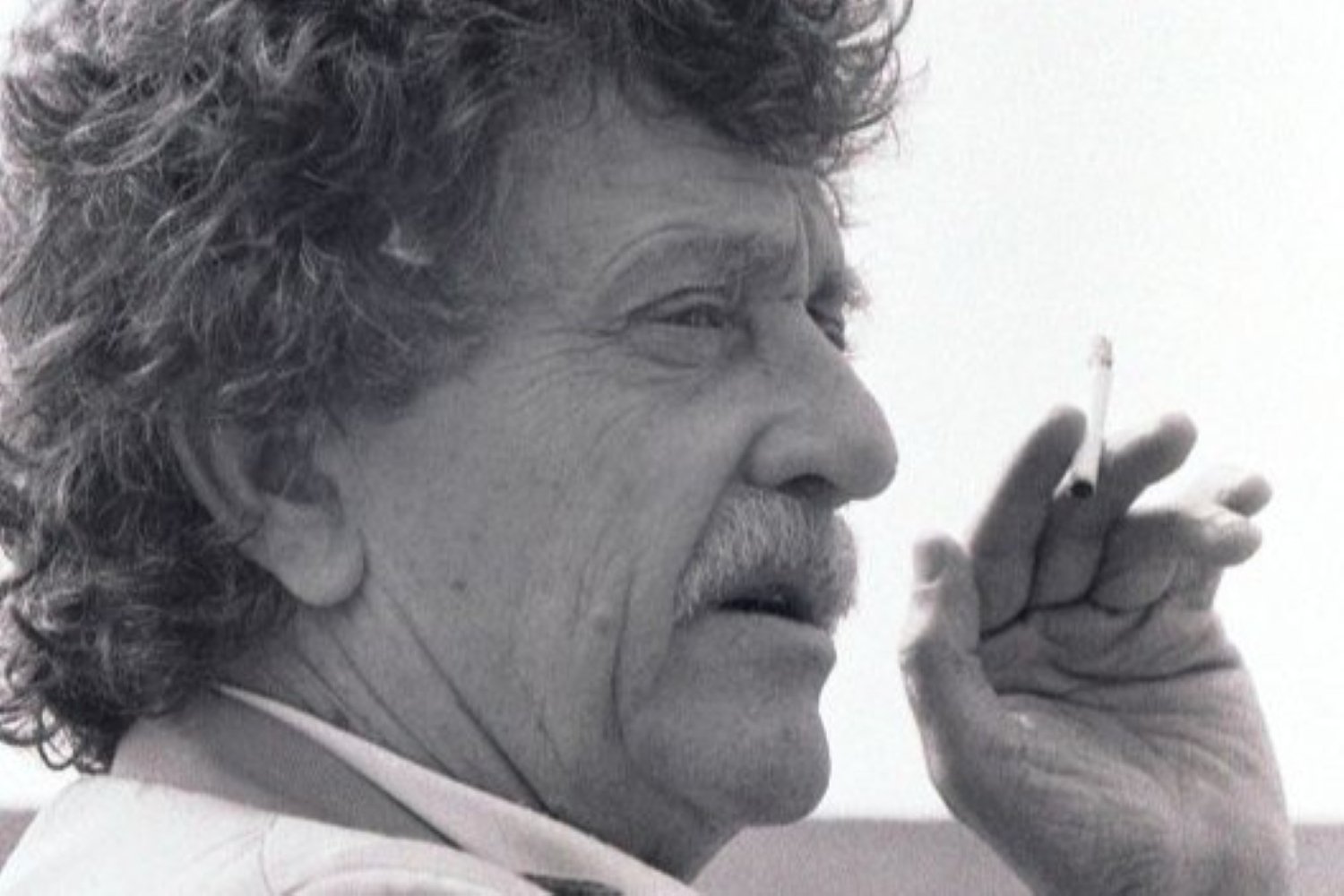 Long ago, pacing in front of a green, rectangular chalkboard, author Kurt Vonnegut traveled around the country, lecturing audiences on the shape of a story. In his lectures, Vonnegut would profess that stories have “very simple shapes; ones that computers can understand.” He would draw out a “GI axis” (”G” meaning good fortune; I meaning “Ill fortune”). He would then draw out the “BE axis.” Naturally, “B” stood for beginning and “E” for end. The first type of story is titled “Man in a Hole.” It needn’t be about a man nor a hole, but somebody gets into trouble and then gets out of it. Another popular story shape was “Boy Meets Girl.” Mind you, it needn’t be about a boy or a girl. Somebody, on a day like any other day, comes across something wonderful. It is their lucky day! Then **** hits the fan. But somehow, someway, they get their life together again. Finally, the most popular story begins closer to the “I” on the GI axis: Vonnegut talks about a young girl whose mother dies. Her father then immediately remarries to a terrible battleaxe with two mean daughters. There’s a party at the palace one night. She doesn’t get to go. Instead, she is forced to help her sisters get ready for it. But she does not let that bother her. She is a stout-hearted little girl with maximum grief due to the death of her mother. Suddenly, a fairy godmother gets her dressed; she goes to the party; and a prince falls in love with her. The clock strikes 12; she loses everything; the shoe fits, and she becomes off-scale happy for eternity. Rags to riches—a soaring (though undulating) climb from "I" to "G" as we progress from "B" to "E". Vonnegut notes the infinite despair of Franz Kafka’s “The Metamorphosis,” before noting that the rise and fall of these stories is artificial—pretending we know more about life than we do. Delving into “Hamlet.” Vonnegut describes the William Shakespeare classic, continually remarking that the events that occur in the story are neither good nor bad—they happen. We are so seldom told the truth in stories, but in “Hamlet,” Shakespeare tells us: we don’t know enough about life to know what the good news is and what the bad news is, and we respond to that. We pretend to know what the good news is and what the bad news is all the time. All we really do is echo the feelings of those around us. This sentiment is especially true when it comes to MLB’s trade deadline. Remember when the Twins front office traded for Tyler Mahle, Jorge López, and Michael Fulmer before the 2022 deadline? Immediately, those who followed the club deemed them deadline winners, acquiring a frontline starting pitcher and two high-leverage relievers. Less than two months later, they were deadline losers, with Mahle on the IL with a shoulder injury, Lòpez imploding in nearly every appearance, and Fulmer’s addition quickly becoming irrelevant as the club fell out of playoff contention. Spencer Steer and Christian Encarnacion-Strand were set to become stars with the Cincinnati Reds, making that deadline even more excruciating a misstep. Then, they didn’t. Yennier Cano was going to be one of the best late-innings relievers, with Cade Povich looking like a soon-to-be number two starter in Baltimore’s formidable starting rotation. Then, they didn’t. The Twins also should have just kept Sawyer Gipson-Long, who was bound to become a young, cost-controlled fixture in Detroit’s rotation for seasons to come—until he didn’t. We were but echoing the feelings of those around us. In 2023, the Twins' inactivity at the deadline was the nail in the coffin of their playoff aspirations—until it wasn’t. Despite not adding a single player at the deadline, Minnesota won the AL Central, ending its 18-game postseason losing streak and winning its first series in 19 years. We pretend to know what the good and bad news is, and we respond to that. The organization buying during this season’s deadline appears to be a good thing. It is a clear, welcome shift from the bleak passivity Minnesota’s ownership and front office has demonstrated since the end of the 2023 postseason. Still, we don’t know enough about the Twins to know what the good news is and what the bad news is, but we respond to that. The acquisitions of A.J. Minter and Dean Kremer were nice, floor-raising moves. The club could still add what is perceived to be a dramatic, tide-shifting starting pitcher like Reid Detmers or Casey Mize, or a reliever like Luke Weaver or Adrián Morejón. No matter what Minnesota does, it won’t be in the shape of a “Man in the Hole”, a “Boy Meets Girl” story, “Cinderella,” or “The Metamorphosis.” Instead, it will be a flat line like “Hamlet”: a series of transactions in which we don’t know if they will be good or bad. So, this deadline, I beg you not to echo the feelings of those around you, pretending to know what the good news is and what the bad news is. Instead, I ask you to acknowledge that we don’t know enough about trades to know what the good news is and what the bad news is, and respond to that appropriately. Imagine yourself moving along Vonnegut's chalkboard, and remember that while you're going from "B" to "E" inexorably, whether you're moving toward "G" or "I" at any given time is essentially impossible to know. Later, you can step back and see the whole chalkboard, and then we can all see the shape of the story. For now, we're just flecks of chalk.
- 15 comments
-
- 13
-

-

-
Long ago, pacing in front of a green, rectangular chalkboard, author Kurt Vonnegut traveled around the country, lecturing audiences on the shape of a story. In his lectures, Vonnegut would profess that stories have “very simple shapes; ones that computers can understand.” He would draw out a “GI axis” (”G” meaning good fortune; I meaning “Ill fortune”). He would then draw out the “BE axis.” Naturally, “B” stood for beginning and “E” for end. The first type of story is titled “Man in a Hole.” It needn’t be about a man nor a hole, but somebody gets into trouble and then gets out of it. Another popular story shape was “Boy Meets Girl.” Mind you, it needn’t be about a boy or a girl. Somebody, on a day like any other day, comes across something wonderful. It is their lucky day! Then **** hits the fan. But somehow, someway, they get their life together again. Finally, the most popular story begins closer to the “I” on the GI axis: Vonnegut talks about a young girl whose mother dies. Her father then immediately remarries to a terrible battleaxe with two mean daughters. There’s a party at the palace one night. Yet, she doesn’t get to go. Instead, she is forced to help her sisters get ready for it. But she does not let that bother her. She is a stout-hearted little girl with maximum grief due to the death of her mother. Suddenly, a fairy godmother gets her dressed; she goes to the party, and a prince falls in love with her. The clock strikes 12; she loses everything; the shoe fits, and she becomes off-scale happy for eternity. Vonnegut notes the infinite despair of Franz Kafka’s “The Metamorphosis” before noting that the rise and fall of these stories is artificial—pretending we know more about life than we do, before delving into “Hamlet.” Vonnegut describes the William Shakespeare classic, continually remarking that the events that occur in the story are neither good nor bad—they happen. We are so seldom told the truth in stories, but in “Hamlet,” Shakespeare tells us: we don’t know enough about life to know what the good news is and what the bad news is, and we respond to that. We pretend to know what the good news is and what the bad news is—All we do is echo the feelings of those around us. This sentiment is especially true when it comes to MLB’s Trade Deadline. Remember when the Twins front office traded for Tyler Mahle, Jorge López, and Michael Fulmer during the 2022 deadline? Immediately, those who followed the club deemed them deadline winners, acquiring a frontline starting pitcher and two high-leverage relievers. Less than two months later, they were deadline losers, with Mahle on the IL with a shoulder injury, Lòpez imploding in nearly every appearance, and Fulmer’s addition quickly becoming irrelevant as the club fell out of playoff contention. Spencer Steer and Christian Encarnacion-Strand were set to become stars with the Cincinnati Reds—Until they didn’t; Yennier Cano was going to be one of the best late-innings relievers, with Cade Povich looking like a soon-to-be number two starter in Baltimore’s formidable starting rotation—Until they didn’t; The Twins also should have just kept Sawyer Gipson-Long, who was bound to become a young, cost-controlled fixture in Detroit’s rotation for seasons to come—until he didn’t. We were but echoing the feelings of those around us. In 2023, the Twins' inactivity at the deadline was the nail in the coffin of their playoff aspirations—Until it wasn’t. Despite not adding a single player at the deadline, Minnesota won the AL Central, ending its 18-game postseason losing streak and winning its first series in 19 years. We pretend to know what the good and bad news is, and we respond to that. The organization buying during this season’s deadline appears to be a good thing. It is a clear, welcomed shift from the bleak passivity Minnesota’s ownership and front office has demonstrated since the end of the 2023 postseason. Still, we don’t know enough about the Twins to know what the good news is and what the bad news is, and we respond to that. The acquisitions of AJ Minter and Dean Kremer were nice, floor-raising moves. The club could still add what is perceived to be a dramatic, tide-shifting starting pitcher like Reid Detmers or Casey Mize or a reliever like Luke Weaver or Adrián Morejón. No matter what Minnesota does, it won’t be in the shape of a “Man in the Hole”, a “Boy Meets Girl” story, “Cinderella,” or “The Metamorphosis.” Instead, it will be a flat line like “Hamlet”: a series of transactions in which we don’t know if they will be good or bad. So, this deadline, I beg you not to echo the feelings of those around you, pretending to know what the good news is and what the bad news is. Instead, I ask you to acknowledge that we don’t know enough about trades to know what the good news is and what the bad news is, and respond to that appropriately. View full article
-
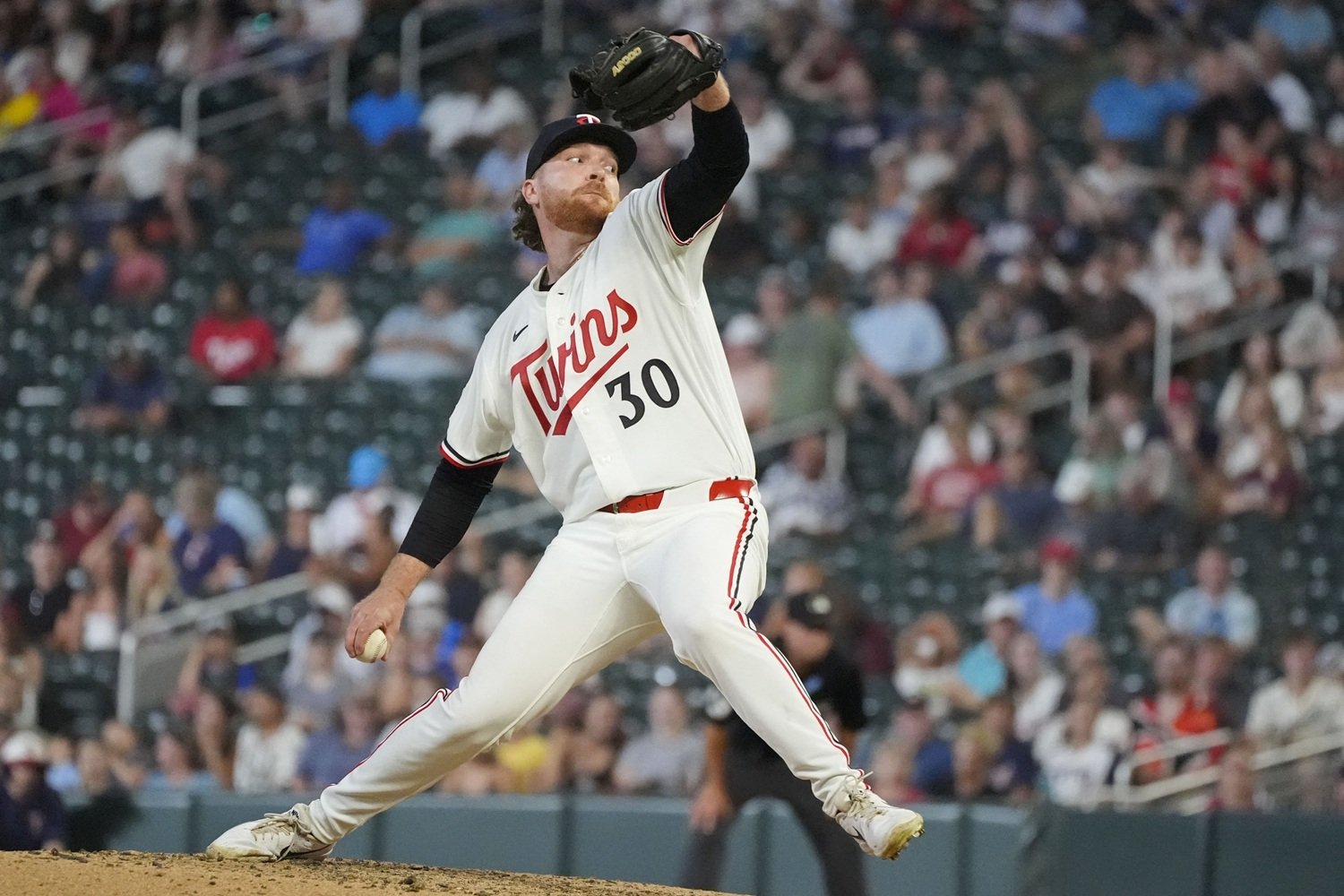 The Twins got their read on reliever Jack Anderson the hard way. On April 14 he worked three innings against them, struck out four, and gave up a run over 11 batters. On July 11, five days after Boston cut him loose, they claimed him. Twelve days after that, he had his first career save. They're hoping that upward trend continues. The Twins bullpen has been better than average in July, with solid performances from Kody Funderburk (0.2 fWAR), Taylor Rogers (0.2), Yoendrys Gómez (0.2), Travis Adams (0.2), Andrew Morris (0.2), and Tommy Nance (0.1). These six relievers have done solid work suppressing runs, tying New York (AL) and Baltimore for the seventh-best relief unit this month. However, these six relievers aren’t the sole contributors to the unit’s successful month. Newcomer Jack Anderson has also contributed toward the club’s favorable ranking this month, netting 0.2 fWAR over 4 1/3 innings pitched. Bouncing between Detroit’s, Boston’s, and Minnesota’s Triple-A affiliates since 2024, Anderson received his first major league opportunity with the Red Sox in mid-April, posting a 3.38 ERA and 3.99 FIP over eight innings pitched, including the aforementioned three-inning relief appearance against the Twins. Designated for assignment by Boston on July 6, the right-handed reliever joined the organization he excelled against. The 26-year-old joined Minnesota’s bullpen two weeks later, earning his first career save in only his second appearance with the club. Five days later, Twins decision-makers optioned him to Triple-A St. Paul before promoting him two days later when Cole Sands was placed on the 15-day IL with a right elbow strain. Despite jumping between Triple-A and the parent club, Anderson has excelled with the Twins, netting a 0.00 ERA, 1.04 FIP, and 37.5% strikeout rate over 16 batters faced. The right-hander has heavily relied on his offspeed and breaking pitches since joining Minnesota, throwing his splitter and slider a combined 50% of the time, while throwing his sweeper 23.2%. The reason for this is that his splitter, slider, and sweeper are all firmly plus pitches, generating high whiff and chase rates. He hasn’t abandoned his four-seamer by any means, throwing it at a 26.8% rate. Still, with it sitting at 92.1 MPH while sporting a below-average movement profile, he has been wise to use his fastball far less than most right-handed relievers. Functionally, Anderson has been what Twins decision-makers hoped Eric Orze would be: a soft-tossing righty who dominates hitters of either handedness with his splitter, while attacking righties with his slider and sweeper. Again, Anderson could be back in Triple-A by the end of the week or if/when Minnesota acquires a reliever. (Or relievers? Plz, Jeremy Zoll?). Yet, given his dominant performance since joining Minnesota and the still unstable nature of Minnesota’s bullpen after Gómez, Morris, and Nance, Anderson could continue to earn high-leverage appearances, joining Gómez as a diamond-in-the-rough reliever acquired on the margins.
 -
According to Wins Above Replacement at FanGraphs (fWAR), the best-performing qualified Minnesota Twins reliever in July are Kody Funderburk (0.2 fWAR), Taylor Rogers (0.2), Yoendrys Gómez (0.2), Travis Adams (0.2), Andrew Morris (0.2), and Tommy Nance (0.1). These six relievers have done an incredible job suppressing runs, tying New York (AL) and Baltimore for the seventh-best relief unit this month. However, these six relievers aren’t the sole contributors to the unit’s successful month. If one were to remove the qualified filter on the FanGraphs leaderboards page and change the minimum to one inning pitched (I know; just bear with me here, please), however, they would notice that Jack Anderson has contributed toward the club’s favorable ranking this month, netting 0.2 fWAR over 4 1/3 innings pitched. Bouncing between Detroit’s, Boston’s, and Minnesota’s Triple-A affiliates since 2024, Anderson received his first major league opportunity with the Red Sox in mid-April, earning a 3.38 ERA and 3.99 FIP over eight innings pitched, including a three-inning relief appearance against the Twins on April 14, wherein he struck out four and gave up one run over 11 batters faced. Designated for assignment by Boston on July 6, the club joined the right-handed reliever he excelled against less than three months ago on July 11. On July 21, the 26-year-old joined Minnesota’s bullpen a little over a week later, earning a one-inning save in only his second appearance with the club. Five days after earning his first career save, Twins decision-makers optioned him to Triple-A St. Paul before promoting him two days later when Cole Sands was placed on the 15-day IL with a right elbow strain. Despite jumping between Triple-A and the parent club, Anderson has excelled with the Twins, netting a 0.00 ERA, 1.04 FIP, and 37.5% strikeout rate over 16 batters faced. The former Red Sock has heavily relied on his offspeed and breaking pitches since joining Minnesota, throwing his splitter and slider a combined 50% of the time, while throwing his sweeper 23.2%. The reason for this is that his splitter, slider, and sweeper are all firmly plus pitches, generating high whiff and chase rates. He hasn’t abandoned his four-seamer by any means, throwing it at a 26.8% rate. Still, with it sitting at 92.1 MPH while sporting a below-average movement profile, he has been wise to use his fastball far less than most right-handed relievers. Functionally, Anderson has been what Twins decision-makers hoped Eric Orze would be. A soft-tossing righty who dominates hitters of either handedness with his splitter, while attacking righties with his slider and sweeper. Again, Anderson could be back in Triple-A by the end of the week or if/when Minnesota acquires a reliever (or relievers; plz jeremy zoll) during the August 3 trade deadline. Yet, given his dominant performance since joining Minnesota and the still unstable nature of Minnesota’s bullpen after Gómez, Morris, and Nance, Anderson could continue to find himself earning high-leverage appearances, joining Gómez as a diamond-in-the-rough reliever acquired on the margins. View full article
-
forgive me father kreidler for i have doubts
-
Ryan Kreidler is Turning Back into a Pumpkin at the Plate
Cody Schoenmann posted an article in Twins
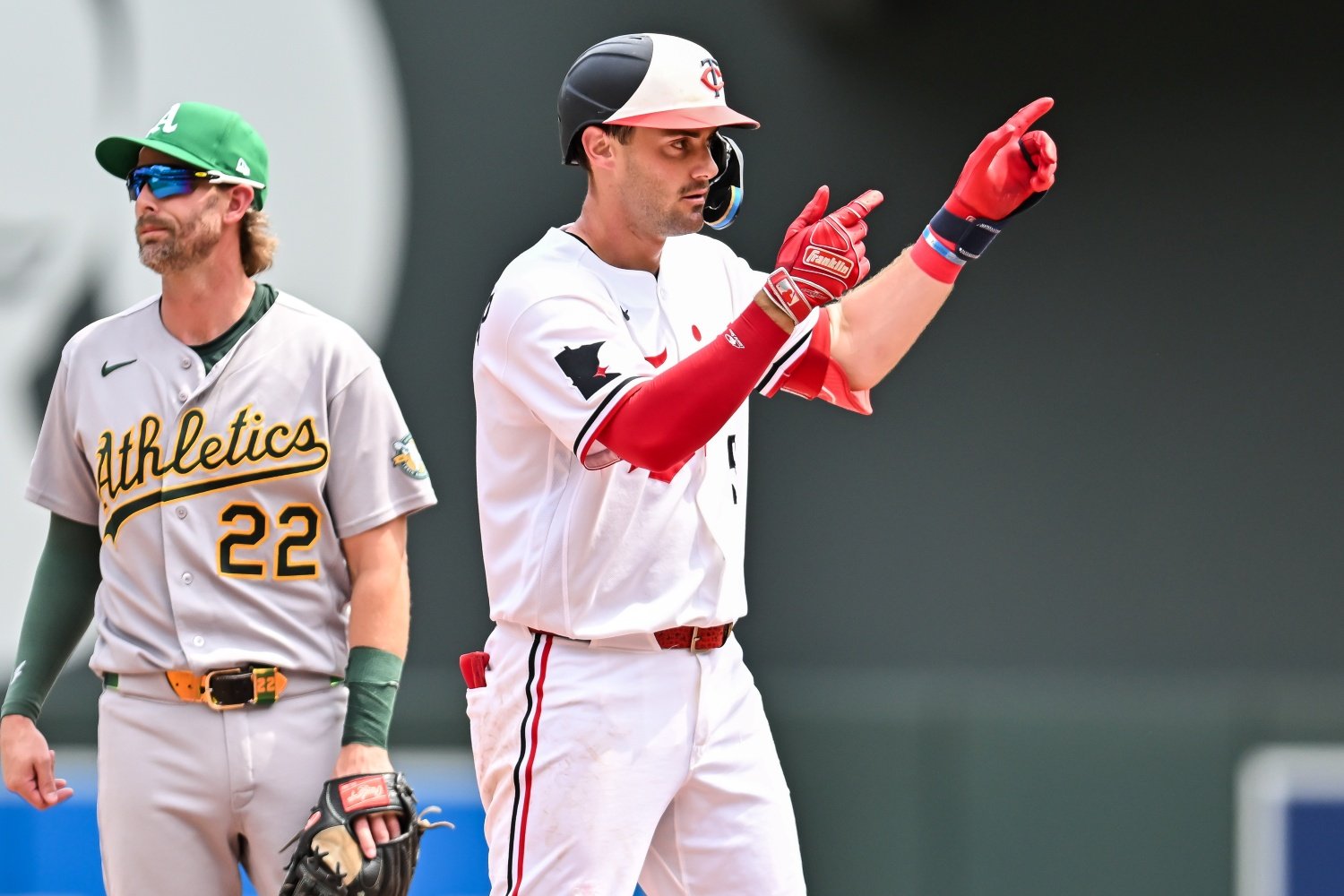 Weeks before spring training concluded and the Minnesota Twins flew from sunny Fort Myers to Baltimore to begin their 162-game regular season campaign, I published an article on utility player Ryan Kreidler, stating the 28-year-old had been MLB’s worst hitter over the past six seasons. Though harsh, the claim was valid—Kreidler’s career wRC+ of 11 made him the worst-performing hitter (766 out of 766) with at least 200 plate appearances from 2020 through 2025. Still, optimism remained that the former Detroit Tiger could contribute for Minnesota this season, particularly given his defensive flexibility. Luckily, that has been the outcome so far. Kreidler has hit .244/.301/.419 with five home runs and a 99 wRC+ over 173 plate appearances, meaning that he's been essentially average. Nobody in Twins Territory is complaining about an 88-point improvement from his career average, especially given his plus glove and arm at one of the position’s highest on the defensive spectrum: shortstop. What is concerning about Kreidler's performance, however, is how stark a decline he has undergone in recent weeks, lending credence to the idea that he might be reverting to one of the league’s most ineffective hitters. From April 11 to June 30, the right-handed bat hit .287/.357/.505 with a 140 wRC+ over 112 plate appearances. Hitting the ball hard and rarely striking out, Kreidler had underlying metrics that supported his offensive breakout, sporting a .334 xwOBA during that stretch. Since July 1, however, the first-time Twin has plummeted down to earth. Before a major breakthrough (or was it a burp?) on Sunday in which he collected three extra-base hits, he was hitting an atrocious .127/.158/.164 with a -17 wRC+ over 57 plate appearances this month. His ability to drive the ball evaporated in the heat of the summer; yesterday's outburst more than doubled his total of extra-base hits this month. His underlying metrics match his struggles, too. He did nothing but hit the ball hard and in the air on Sunday, but in the 50 plate appearances before that game, his xwOBA was a paltry .208. No one who follows the Twins expected Kreidler to continue hitting like a star. Still, how quickly he descended into being the Tigers' version of himself is alarming, illustrating how unsustainable success is for fringe major-leaguers. Kreidler is still a serviceable rotational piece, considering he’s Minnesota’s best defensive option at shortstop while also possessing the ability to play all three outfield positions, third base, and second. But the Twins would be wise to move quickly to minimize his plate appearances. Luckily, one of their top prospects is the closest he’s ever been to making his major-league debut. On Friday, St. Paul activated Kaelen Culpepper from the reserve list, with the organization’s third-ranked prospect returning to the Triple-A lineup. The 23-year-old shortstop had knocked on the parent club’s door earlier this season, sporting a 117 wRC+ over 303 plate appearances with the Saints. Unfortunately, however, injuries have delayed the top prospect’s major league debut. Yet, with Kreidler’s struggles, Tristan Gray’s recent demotion to Triple-A, and Brooks Lee’s full-time transition to third base, nothing stands in the way of Culpepper taking over as the Twins' primary starting shortstop as the club seeks its first postseason appearance since 2023. Kreidler can still stake his claim anew, while Culpepper gets up to speed. His bat speed had sagged and his swing had flattened out this month, but he's still a fundamentally different hitter than he was before. Maybe he's survived a round of adjustments and a bout of understandable fatigue, as he navigates the first thing anywhere close to a full big-league season he's ever experienced. He has a bit of time to show that Sunday was more than a blip. Failing that, though, the countdown to Culpepper's arrival is on. The team even has one more week to entertain and pursue possible upgrades at shortstop in the trade market. In that way, the timing of this regression is fortuitous, even beyond Culpepper's convalescence. If Kreidler is back after that great game, the Twins are in business. If his warts are showing and his time is up, they've gotten the red flags early enough to scour the market for a low-cost boost at his position. Either way, a top prospect looms as an internal solution. Things could be much worse.
 -
Weeks before spring training concluded and the Minnesota Twins flew from sunny Fort Myers to Baltimore to begin their 162-game regular season campaign, I published an article on utility player Ryan Kreidler, stating the 28-year-old had likely been MLB’s worst hitter over the past six seasons. Though harsh, the claim was valid—Kreidler’s career wRC+ of 11 made him the worst-performing hitter (766 out of 766) with at least 200 plate appearances from 2020 through 2025. Still, optimism remained that the former Detroit Tiger could contribute for Minnesota this season, particularly given his defensive flexibility. Luckily, that has been the outcome so far. Kreidler has hit .231/.290/.385 with five home runs and an 87 wRC+ over 169 plate appearances. An 87 wRC+ is 13 points below league average. Nobody in Twins Territory is complaining about a 76-point improvement from his career average, especially given his plus glove and arm at one of the position’s highest on the defensive in shortstop. What is concerning about Kreidler's performance, however, is how stark a decline he has undergone in recent weeks, lending credence to the idea that he might be reverting to one of the league’s most ineffective hitters. From April 11 to June 30, the right-handed bat hit .287/.357/.505 with a 140 wRC+ over 112 plate appearances. Hitting the ball hard and rarely striking out, Kreidler’s underlying metrics supported his offensive breakout, sporting a .334 wwOBA during that stretch. Since July 1, however, the first-time Twin has plummeted down to earth, hitting .127/.158/.164 with a -17 wRC+ over 57 plate appearances. His ability to drive the ball has ceased to exist, with him netting only two doubles and zero home runs over that stretch. His underlying metrics match his struggles, too, with him yielding a .200 xwOBA, 134 points lower than when he was excelling at the plate. No one who follows the Twins expected Kreidler to continue hitting 40 points above league average. Still, how quickly he descended into being the Tigers' version of himself is alarming, illustrating how unsustainable success is for fringe major leaguers. Kreidler is still a serviceable rotational piece, considering he’s Minnesota’s best defensive option at shortstop while also possessing the ability to play all three outfield positions, third base, and second. Still, the Twins would be wise to move quickly to minimize his plate appearances—luckily, one of their top prospects is the closest he’s ever been to making his major league debut. On Friday, St. Paul activated Kaelen Culpepper from the reserve list, with the organization’s third-ranked prospect returning to the Triple-A lineup. The 23-year-old shortstop had knocked on the parent club’s door earlier this season, sporting a 117 wRC+ over 303 plate appearances with the Saints. Unfortunately, however, injuries have delayed the top prospect’s major league debut. Yet, with Kreidler’s struggles, Tristan Gray’s recent demotion to Triple-A, and Brooks Lee’s full-time transition to third base, nothing stands in the way of Culpepper taking over as the Twins' primary starting shortstop as the club seeks its first postseason appearance since 2023. View full article
-
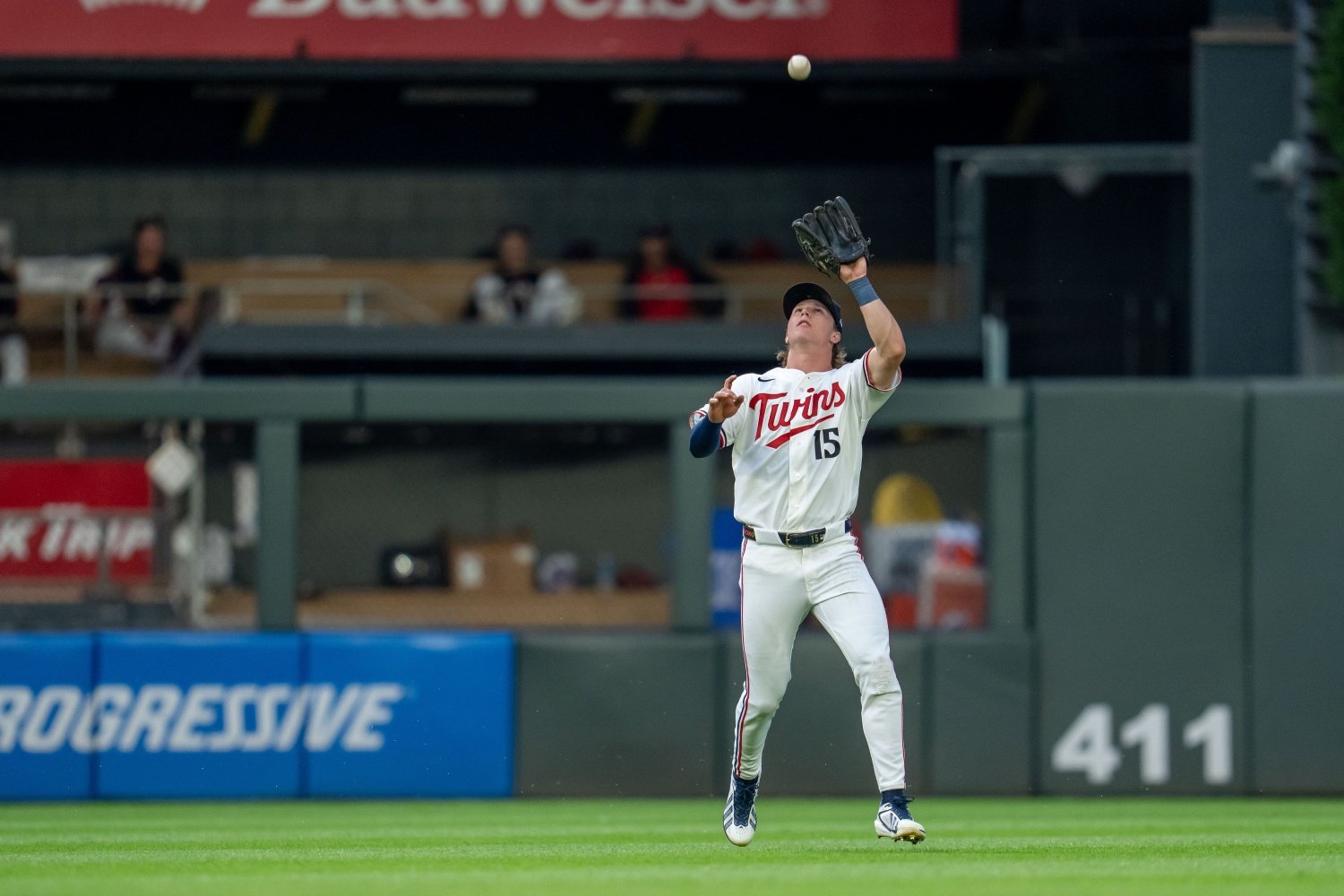 After not appearing at any of the three outfield positions in a major-league game until June 20, Luke Keaschall took his place in right field against the Arizona Diamondbacks that day, signaling Minnesota Twins decision-makers were preparing to move the poor-fielding former infielder off second base. Keaschall then made his first start in right against the Colorado Rockies on June 26, and has almost exclusively been an outfielder since. The 23-year-old started nine games at the position before transitioning over to center field on July 8, one day after primary center fielder Byron Buxton was placed on the 10-day IL with a right hip strain. Since then, Keaschall has started eight games in center field, functioning as the club’s primary center fielder during Buxton’s absence. Buxton will return to patrolling the position at a near full-time rate now that he's returned from the IL, and Keaschall is back in right field. He filled in admirably, however, netting 21 putouts over 70 innings played at the position, including the fantastic one below: TUFYcXdfWGw0TUFRPT1fQXdOWEFnQU1YZ1lBREZzS0FBQUhDQUZWQUZoVEJ3QUFBUVpXQVZKVEFRRlJCVkFF.mp4 Admittedly, this ball did have a 65% catch probability. Any worthwhile center fielder would have caught it. Still, it was an exceptional catch for a player making their sixth start at one of the most demanding positions. He will then show how green a center fielder he is, missing balls that had a 99% catch probability, like the one below: akR3ckFfWGw0TUFRPT1fVTFKWlhGRU1VMVFBWGxNQVVBQUhCUU1DQUZoUkFGY0FBUVJXQ1FCV0J3TldVbFpS.mp4 As he seeks a better balance between those extremes, one interesting thing to track (both in right field and in center) is how deep he's played since his move to the grass. He's tied with Matt McLain for the fifth-deepest starting position of all center fielders in baseball, typically positioned at 332 feet from home plate. For reference, Jose Caballero leads the league, positioning himself at 338 feet—and it's no coincidence that he, too, is a converted infielder. To the extent that this is the team's plan, Minnesota is surely positioning Keaschall that deep because it is usually easier for center fielders to come in on balls than it is to run back. Due to him having so little playing time at the position, the Twins and Keaschall could be in agreement that giving him the opportunity to use his athleticism to run in on balls and avoid challenging angles is in the best interest of both club and player. Still, playing so deep is putting the club at a disadvantage, letting balls drop in front of him that result in bloop singles and/or hustle doubles—or something worse, like the catastrophic play that happened against Chicago this weekend: SzRCWmxfWGw0TUFRPT1fRGdBSFZBWU1CVlFBWFZSVEFnQUhBUUJmQUFBRlZWRUFWMUFIQWdGV0NRb0RBZ1pV.mp4 Keaschall is a horrendous fielder. That’s why Minnesota was wise to finally move him off second base. Still, he should have been playing shallow enough to catch that ball, with Nico Hoerner’s batted ball resulting in the second out of the inning instead of a bases-clearing triple. On average, Byron Buxton starts at 320 feet, which is one of the shallowest starting points of all center fielders in the game. The Twins and Buxton trust his ability to get back on balls, allowing the veteran to often play shallow and to catch balls that Keaschall couldn’t get to. Ryan Kreidler, Austin Martin, Kody Clemens, James Outman (when he was a Twin), and even Kyler Fedko played noticeably shallower than Keaschall, too, proving Minnesota is making a concerted effort to start the 23-year-old that much closer to the center field wall. Again, Keaschall is very athletic and has the range necessary to be an adequate backup center fielder, let alone a viable corner outfielder. The former second baseman has shown flashes of being an adequate outfielder who could play all three positions and serve as Buxton’s primary center field backup in the short-to-mid-term future. That said, Minnesota needs to take the training wheels off, as playing him so deep in center has been detrimental to him and the club. In right field, it''s the same story. He'll have to get comfortable a step shallower and be a step more aggressive in charging after balls if he wants to be less of a liability out there than he was on the dirt.
 -
Not appearing at any of the three outfield positions in a major league game until June 20, Luke Keaschall appeared in right field against the Arizona Diamondbacks, signaling Minnesota Twins decision-makers were preparing to move the poor-fielding former infielder off second base. Keaschall then made his first start in right against the Colorado Rockies on June 26 and has almost exclusively been an outfielder since. The 23-year-old started nine games at the position before transitioning over to center field on July 8, one day after primary center fielder Byron Buxton was placed on the 10-day IL with a right hip strain. Since then, Keaschall has started eight games in center field, functioning as the club’s primary center fielder during Buxton’s absence. Buxton will return to patrolling the position at a near full-time rate now that he's returned from the IL. Keaschall filled in admirably, however, netting 21 putouts over 70 innings played at the position, including the fantastic one below: TUFYcXdfWGw0TUFRPT1fQXdOWEFnQU1YZ1lBREZzS0FBQUhDQUZWQUZoVEJ3QUFBUVpXQVZKVEFRRlJCVkFF.mp4 Admittedly, this ball did have a 65% catch probability. Any worthwhile center fielder would have caught it—Still, it was an exceptional catch for a player making their sixth start at one of the most demanding positions. He will then show how green a center fielder he is, missing balls that had a 99% catch probability, like the one below: akR3ckFfWGw0TUFRPT1fVTFKWlhGRU1VMVFBWGxNQVVBQUhCUU1DQUZoUkFGY0FBUVJXQ1FCV0J3TldVbFpS.mp4 One of the more interesting developments of Keaschall’s move to center fielder is how deep Twins decision-makers position him. He is tied with Matt McLain for the fifth-deepest starting position of all center fielders in baseball, typically positioned at 332 feet. For reference, Jose Caballero leads the league, positioning himself at 338 feet. Minnesota is likely positioning Keaschall that deep because it is usually easier for center fielders to come in on balls than it is to run back. Due to him having so little playing time at the position, the Twins and Keaschall could be in agreement that giving him the opportunity to use his athleticism to run in on balls and avoid challenging angles is in the best interest of both club and player. Still, him playing so deep is putting the club at a disadvantage, letting balls drop in front of him that result in bloop singles and/or hustle doubles, like the catastrophic play that happened against Chicago this past weekend: SzRCWmxfWGw0TUFRPT1fRGdBSFZBWU1CVlFBWFZSVEFnQUhBUUJmQUFBRlZWRUFWMUFIQWdGV0NRb0RBZ1pV.mp4 Keaschall is a horrendous fielder—That’s why Minnesota was wise to finally move him off second base. Still, he should have been playing shallow enough to catch that ball, with Nico Hoerner’s batted ball resulting in the second out of the inning instead of a bases-clearing triple. On average, Byron Buxton starts at 320 feet, which is one of the shallowest starting points of all center fielders in the game. The Twins and Buxton trust his ability to get back on balls, allowing the veteran to often play shallow, often catching balls that Keaschall couldn’t get to. Ryan Kreidler, Austin Martin, Kody Clemens, James Outman (when he was a Twin), and even Kyler Fedko played exponentially shallower than Keaschall, too, proving Minnesota is making a concerted effort to start the 23-year-old that much closer to the center field wall. Again, Keaschall is very athletic and has the range necessary to be an adequate backup center fielder, let alone a viable corner outfielder. The former second baseman has shown flashes of being an adequate outfielder who could play all three positions and serve as Buxton’s primary center field backup in the short-to-mid-term future. That said, Minnesota needs to take the training wheels off, as playing him so deep in center has been detrimental to him and the club. View full article
-
Vahn LackeyWalker JenkinsKaelen CulpepperRiley QuickMarek HoustonEmmanuel RodriguezDasan HillKendry RojasHendry MendezCarson TinneyGabriel GonzalezRyan GallagherCharlee SotoBrett RenfrowEduardo TaitJhomnardo ReyesKhadim DiawJames EllwangerEnrique JimenezCJ Culpepper
-
Image courtesy of © Steven Branscombe-Imagn Images With their first two selections in the 2026 MLB Draft, the Minnesota Twins (led by assistant GM Sean Johnson) selected catchers Vahn Lackey (3rd overall) and Carson Tinney (43rd), fortifying the minor-league depth of a position group that had been the organization’s greatest area of future insecurity. The primary reason for team decision-makers' uncertainty about the position’s medium- and long-term health was that All-Star-caliber backstop Ryan Jeffers is almost guaranteed to depart the organization as a free agent this offseason. Veterans Victor Caratini and Alex Jackson are under team control for 2027 and could serve as a serviceable short-term tandem at the position, assuming Jeffers leaves. Still, Caratini and Jackson aren’t long-term candidates to anchor the position as Minnesota enters its next World Series-contending window. Until the selection of Lackey and (to a much lesser extent) Tinney, the prospect much of Twins Territory was projecting to be Jeffers’s long-term successor at the position was Eduardo Tait, acquired alongside Mick Abel in the 2025 MLB trade deadline swap that sent Jhoan Duran to Philadelphia. Still appearing on many top-100 prospect lists, Tait boasts plus power and a strong arm behind the dish. However, he swings at almost everything, sporting a 40.8% out-of-zone swing rate. His extreme lack of plate discipline has resulted in a .216/.280/.420 (73 wRC+) line over 339 plate appearances. Tait is 19, and he does have exciting in-game power, with 15 home runs this season. Still, a sub-300 on-base percentage (OBP) at High-A is catastrophic, and he will need to make drastic, sustained changes to his plate discipline to advance to the high minors. More than three years younger than the average High-A player, Tait will have plenty of time to make those developments, and Twins fans should remain optimistic about the 19-year-old’s long-term prospects. Still, it feels more likely that he'll reach the majors in 2029 than that it could happen by 2027. That being the case, the organization was in dire need of more developed, easier-to-project catching talent in the minors. Enter Lackey and (again, to a lesser extent) Tinney. Selected third overall, Lackey instantly slots in as Minnesota’s catcher of the future, with a chance to make his major-league debut early next season. He was arguably the most refined prospect in the 2026 draft, and he could soon slot in above Walker Jenkins on Twins top prospect rankings. There arguably wasn’t a better fit between player and team in the draft than Lackey and Minnesota, and Twins Territory should reap the benefits of the pairing for seasons to come. Lackey immediately usurps Tait, though the way the Twins prefer to deploy their catchers, there's plenty of room for both to contribute. Khadim Diaw and Enrique Jimenez were the organization's other top catching prospects alongside Tait before Lackey and Tinney were selected. Diaw’s bat will likely be what guides him to the majors, as the 22-year-old struggles to suppress base stealers, throwing out only six of the 109 runners who attempted to steal a base on him between High-A and Double-A. He's spent significant time in center field in Wichita, and projects to be an outfielder if he does reach the majors. Jimenez is a better defensive catcher than Diaw. However, given that he is only 20 and hitting .232/.400/.402 at High-A, it's nearly impossible to project his long-term viability as a major leaguer. Right now, Tait is a better prospect than Tinney. However, Tinney sneaks in above Diaw and Jimenez on the organization’s depth chart at the position. Unlike Lackey, Tinney is a raw prospect, with a lot of swing-and-miss in his offensive profile and uncertainty about his ability to remain behind the plate as he progresses through the minors. Still, after sporting elite exit velocity and raw power at the University of Texas, the 21-year-old has a clearer path to the majors than Tait’s, Diaw’s, and Jimenez’s, even if he’s spending more time at designated hitter, first base, and the corner outfield than behind the plate. Lackey is arguably the best catching prospect drafted in the 2020s, and Tinney could serve as the other half of the tandem. Minnesota has dramatically changed its long-term outlook at the position, making Tait’s, Diaw’s, and Jimenez’s shaky development feel less enormous. View full article
-
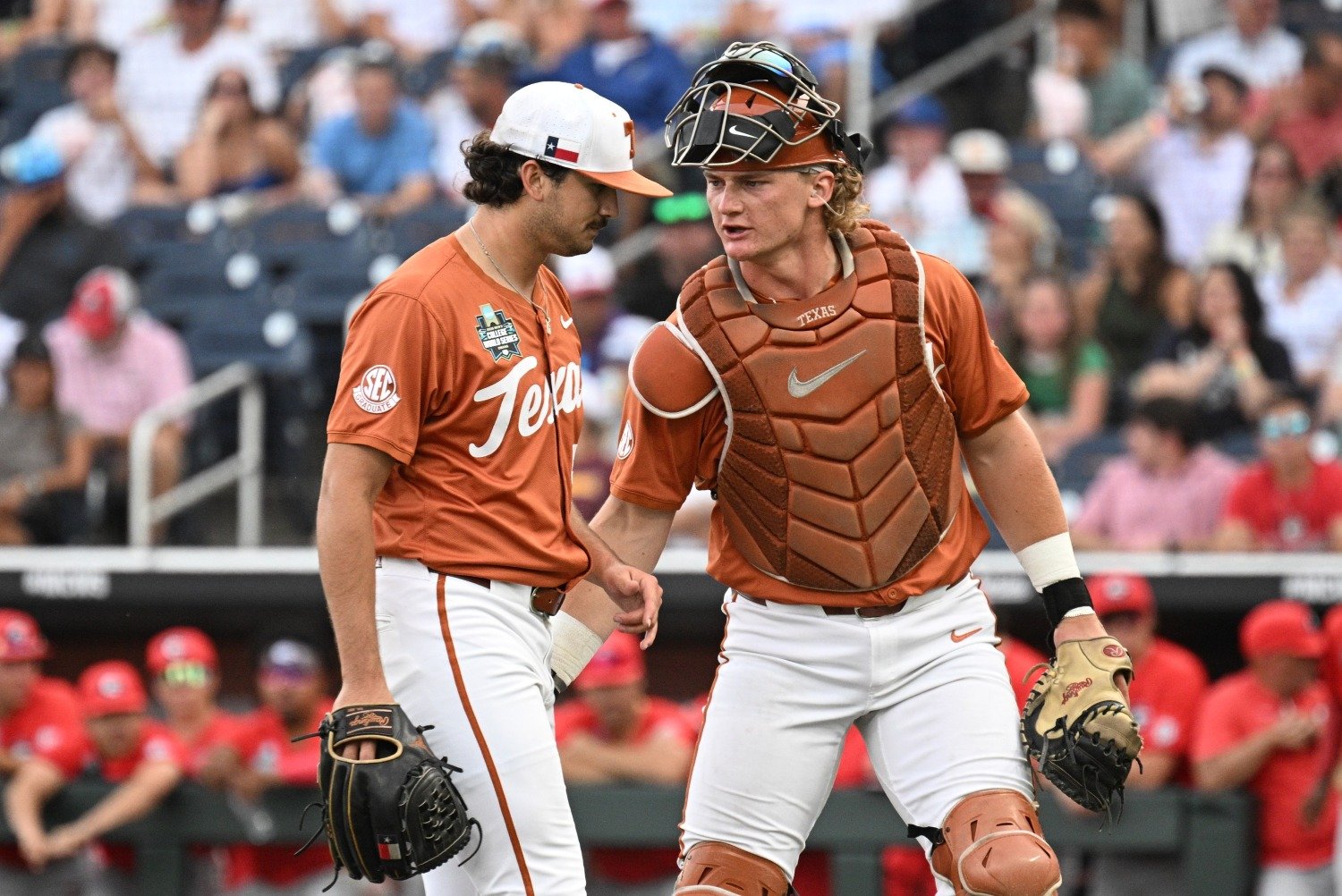 With their first two selections in the 2026 MLB Draft, the Minnesota Twins (led by assistant GM Sean Johnson) selected catchers Vahn Lackey (3rd overall) and Carson Tinney (43rd), fortifying the minor-league depth of a position group that had been the organization’s greatest area of future insecurity. The primary reason for team decision-makers' uncertainty about the position’s medium- and long-term health was that All-Star-caliber backstop Ryan Jeffers is almost guaranteed to depart the organization as a free agent this offseason. Veterans Victor Caratini and Alex Jackson are under team control for 2027 and could serve as a serviceable short-term tandem at the position, assuming Jeffers leaves. Still, Caratini and Jackson aren’t long-term candidates to anchor the position as Minnesota enters its next World Series-contending window. Until the selection of Lackey and (to a much lesser extent) Tinney, the prospect much of Twins Territory was projecting to be Jeffers’s long-term successor at the position was Eduardo Tait, acquired alongside Mick Abel in the 2025 MLB trade deadline swap that sent Jhoan Duran to Philadelphia. Still appearing on many top-100 prospect lists, Tait boasts plus power and a strong arm behind the dish. However, he swings at almost everything, sporting a 40.8% out-of-zone swing rate. His extreme lack of plate discipline has resulted in a .216/.280/.420 (73 wRC+) line over 339 plate appearances. Tait is 19, and he does have exciting in-game power, with 15 home runs this season. Still, a sub-300 on-base percentage (OBP) at High-A is catastrophic, and he will need to make drastic, sustained changes to his plate discipline to advance to the high minors. More than three years younger than the average High-A player, Tait will have plenty of time to make those developments, and Twins fans should remain optimistic about the 19-year-old’s long-term prospects. Still, it feels more likely that he'll reach the majors in 2029 than that it could happen by 2027. That being the case, the organization was in dire need of more developed, easier-to-project catching talent in the minors. Enter Lackey and (again, to a lesser extent) Tinney. Selected third overall, Lackey instantly slots in as Minnesota’s catcher of the future, with a chance to make his major-league debut early next season. He was arguably the most refined prospect in the 2026 draft, and he could soon slot in above Walker Jenkins on Twins top prospect rankings. There arguably wasn’t a better fit between player and team in the draft than Lackey and Minnesota, and Twins Territory should reap the benefits of the pairing for seasons to come. Lackey immediately usurps Tait, though the way the Twins prefer to deploy their catchers, there's plenty of room for both to contribute. Khadim Diaw and Enrique Jimenez were the organization's other top catching prospects alongside Tait before Lackey and Tinney were selected. Diaw’s bat will likely be what guides him to the majors, as the 22-year-old struggles to suppress base stealers, throwing out only six of the 109 runners who attempted to steal a base on him between High-A and Double-A. He's spent significant time in center field in Wichita, and projects to be an outfielder if he does reach the majors. Jimenez is a better defensive catcher than Diaw. However, given that he is only 20 and hitting .232/.400/.402 at High-A, it's nearly impossible to project his long-term viability as a major leaguer. Right now, Tait is a better prospect than Tinney. However, Tinney sneaks in above Diaw and Jimenez on the organization’s depth chart at the position. Unlike Lackey, Tinney is a raw prospect, with a lot of swing-and-miss in his offensive profile and uncertainty about his ability to remain behind the plate as he progresses through the minors. Still, after sporting elite exit velocity and raw power at the University of Texas, the 21-year-old has a clearer path to the majors than Tait’s, Diaw’s, and Jimenez’s, even if he’s spending more time at designated hitter, first base, and the corner outfield than behind the plate. Lackey is arguably the best catching prospect drafted in the 2020s, and Tinney could serve as the other half of the tandem. Minnesota has dramatically changed its long-term outlook at the position, making Tait’s, Diaw’s, and Jimenez’s shaky development feel less enormous.
- 31 comments
-
- 6
-
-
- vahn lackey
- carson tinney
- (and 3 more)
-
 Right-handed pitching prospect Paulshawn Pasqualotto began his 2026 campaign with High-A Cedar Rapids, operating as the Kernels' primary closer. Through 18 innings pitched, the 25-year-old generated a 1.50 ERA, 1.96 FIP, and 44.1% strikeout rate, while netting four saves. He was promoted to Double-A Wichita, where he took on a setup role, netting a 3.94 ERA, 3.57 FIP, and a 24.3% strikeout rate over 16 innings pitched before being promoted to Triple-A St. Paul on July 2. It took Pasqualotto only 34 innings pitched to make the substantial jump from High-A to Triple-A. Minnesota Twins decision-makers are rushing the 12th-round pick through the high minors, seemingly with the intention of converting the former starting pitching prospect into a viable major-league relief option. The young righty made his Triple-A debut against the Buffalo Bisons on July 3, striking out three in a scoreless inning and earning his first save as a Saint. Pasqualotto’s ascension isn’t unique, as fellow former starting prospects Mike Paredes, Alejandro Hidalgo, and CJ Culpepper have been promoted aggressively this season, with eyes on them impacting the major-league pitching staff in some capacity. Obviously, Paredes already has done so. Yet, Pasqualotto has been promoted the most aggressively, signaling that the Twins might view him as an arm that could soon become a member of the parent club’s pen. Right now, Minnesota has the fifth-worst bullpen in baseball, according to Wins Above Replacement at FanGraphs (fWAR). Yoendrys Gómez and Andrew Morris have developed into viable late-inning arms. None of Taylor Rogers, Travis Adams, Eric Orze, Kody Funderburk, Marco Raya, or Woo-Suk Go can be trusted in high-leverage roles, at least right now. That being the case, Derek Shelton is often forced to use inconsistent arms in high-leverage situations, which has led to multiple late-game collapses. It would be silly to suggest Pasqualotto would immediately become a reliable late-inning arm. He has less experience and is of a lower prospect stature than the young arms that presently populate the bottom of Minnesota’s bullpen, in Raya and Go. Given how dire a state Minnesota’s bullpen is in, however, Pasqualotto could soon earn a 40-man roster spot and join the club’s eight-pitcher relief unit, especially if he can build off his impressive Triple-A debut. Pasqualotto has excelled at pounding the zone between Double-A and Triple-A, sporting a near-elite called plus swinging strike rate (CSW%), zone contact rate, and whiff rate between the two levels. The right-handed arm’s stuff isn’t particularly eye-popping, with his four-seam, slider, and cutter grading out as slightly below average. As noted earlier, however, he locates his pitches incredibly well, mixing his two fastball variants and slider with his change, which operates as his out pitch against left-handed hitters. His slider functions as his out pitch against righties. Sitting around 96 MPH, Pasqualotto’s four-seamer is his foundational pitch, which he throws against hitters of either handedness. The young righty has utilized his four-pitch mix to produce an impressive 34.7% strikeout rate between Double- and Triple-A this season, proving that he has the potential to miss bats in the majors. He does struggle with control, as evidenced by a 14.8% walk rate. Still, Pasqualotto has impressed while being promoted aggressively, missing bats at each stop. Minnesota’s bullpen is in dire straits and in need of young, high-upside internal options to fill out the bottom half of the unit. Pasqualotto is already a twin. He has a twin sister named Brooklyn, and frankly, his first name suggests that his parents were anticipating twin boys or triplets, and so he ended up being named like an entire set of twins. It's nearly time to capitalize that 't' and see how it suits Pasqualotto.
 -
Right-handed pitching prospect Paulshawn Pasqualotto began his 2026 campaign with High-A Cedar Rapids, operating as the Kernels' primary closer. Through 18 innings pitched, the 25-year-old generated a 1.50 ERA, 1.96 FIP, and 44.1% strikeout rate, while netting four saves. He was promoted to Double-A Wichita, where he took on a setup role, netting a 3.94 ERA, 3.57 FIP, and a 24.3% strikeout rate over 16 innings pitched before being promoted to Triple-A St. Paul on July 2. It took Pasqualotto only 34 innings pitched before he took the substantial jump from High-A to Triple-A, signaling Minnesota Twins decision-makers are rushing the 12th-round pick through the high-minors, seemingly with intentions to convert the former starting pitching prospect into a viable major league relief option. The young righty made his Triple-A debut against the Buffalo Bisons on July 3, striking out three in a scoreless inning, earning his first save as a Saint. Pasqualotto’s ascension isn’t unique, as fellow former starting pitching prospects Mike Paredes, Alejandro Hidalgo, and CJ Culpepper have been promoted aggressively this season, with eyes on them impacting the major league pitching staff in some capacity (obviously, Paredes already has). Yet, Pasqualotto has been promoted the most aggressively, potentially signaling that Twins decision-makers might view him as an arm that could soon become a member of the scuffling parent club’s eight-pitcher relief collective. Right now, Minnesota has the fifth-worst bullpen in baseball, according to Wins Above Replacement at FanGraphs (fWAR). Yoendrys Gomez and Andrew Morris have developed into viable late-inning arms. None of Taylor Rogers, Travis Adams, Eric Orze, Kody Funderburk, Marco Raya, or Woo-Suk Go can be trusted in high-leverage roles, however. That being the case, Derek Shelton is often forced to use inconsistent arms in high-leverage situations, which has led to multiple late-game collapses for the Twins. Obviously, it would be malpractice to suggest Pasqualotto would immediately become a reliable late-inning arm. He has less experience and is of a lower prospect stature than the young arms that presently populate the bottom of Minnesota’s bullpen in Raya and Go. Given how dire a state Minnesota’s bullpen is in, however, Pasqualotto could soon earn a 40-man roster spot and join the club’s eight-pitcher relief unit, especially if he can build off his impressive Triple-A debut. Pasqualotto has excelled at pounding the zone between Double-A and Triple-A, sporting a near-elite called plus swinging strike rate (CSW%), zone contact rate, and whiff rate between the two levels. The right-handed arm’s stuff isn’t particularly eye-popping, with his four-seam, slider, and cutter grading out as slightly below average. As noted earlier, however, he locates his pitches incredibly well, mixing his two fastball variants and slider with his change, which operates as his out-pitch against left-handed hitters. His slider functions as his out-pitch against righties. Sitting around 96 MPH, Pasqualotto’s four-seam functions as his foundational pitch, which he throws against hitters of either-handedness. The young righty has utilized his four-pitch mix to produce an impressive 34.7% strikeout rate between Double- and Triple-A this season, signaling he has the potential to miss bats in the majors. He does struggle with walks, evidenced by him netting a 14.8% walk rate this season. Still, Pasqualotto has impressed while being promoted aggressively this season, missing bats with his four-pitch mix in short relief spurts at three different levels. Minnesota’s bullpen is in dire straits and in need of young, high-upside internal options to fill out the bottom half of the unit. That being the case, Pasqualotto could soon be handed an opportunity. View full article
-
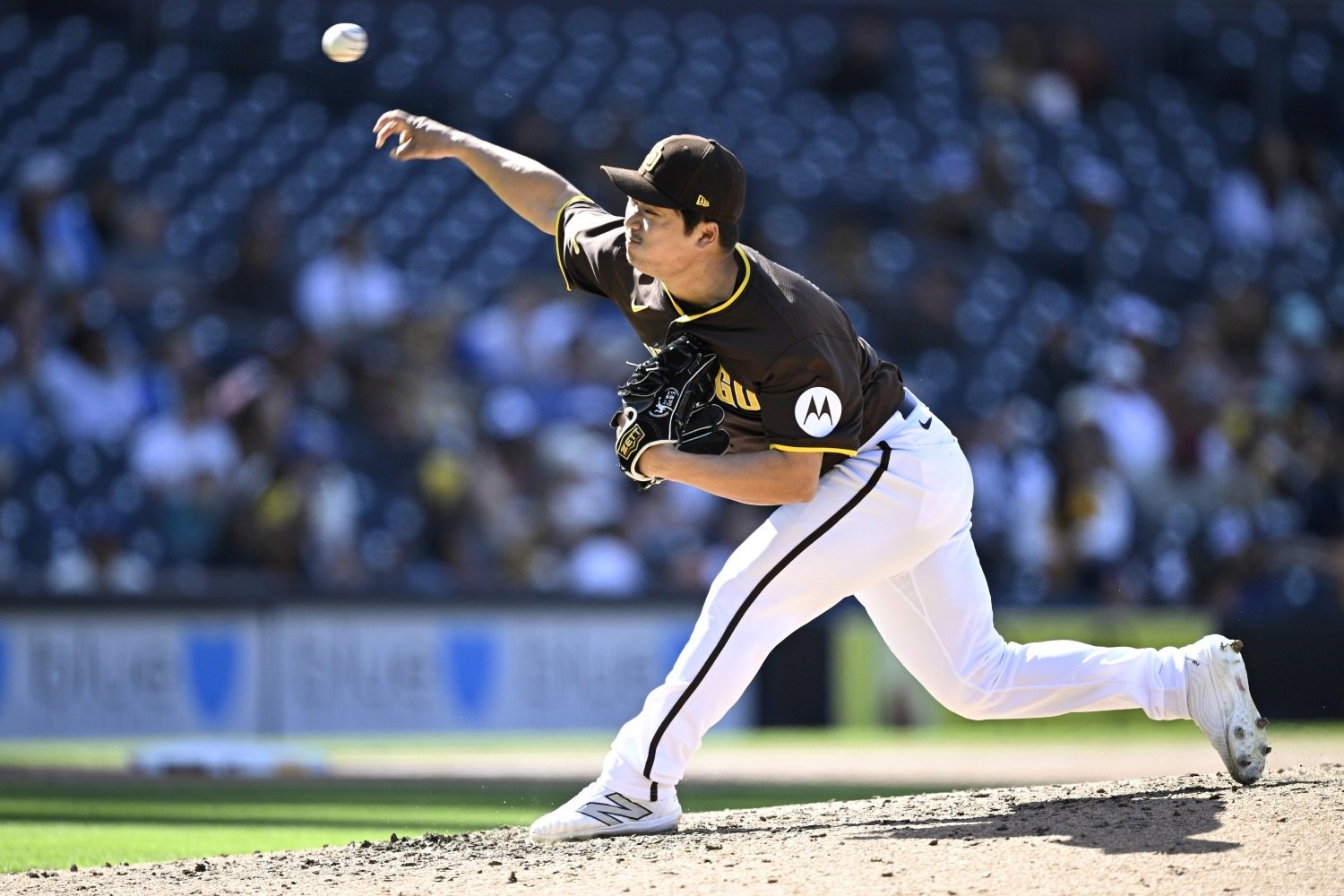 Signed to a two-year, $4.5-million contract by the San Diego Padres in early January 2024 as an international free agent coming from the Korean Baseball Organization (KBO), Woo-Suk Go has come nowhere near sticking in any one place for two years. He didn't make the Padres' roster that spring. After only 12 1/3 innings for San Diego’s Double-A affiliate, Go was thrown into the deal that sent Luis Arraez to the Padres—making the Korean righty a new member of the Marlins. Unsurprisingly, Go struggled to adjust to life in the minors and to a rapid change in employer. He posted a 10.42 ERA, a 5.52 FIP, and a 23-to-11 strikeout-to-walk ratio over 19 innings pitched for Miami’s Double-A affiliate. Yet, given Go’s unique contractual circumstance, Miami elected to promote him to Triple-A, where things actually did get (a little) better. For Jacksonville, he generated a 4.29 ERA, a 6.00 FIP, and a 14-to-7 strikeout-to-walk ratio. But he didn't find real traction. The following spring, Go bounced between Miami’s complex league, Low-A, High-A, and Triple-A affiliates before getting designated for assignment in June and subsequently released. The right-handed reliever signed a minor-league contract with the Detroit Tigers, and he threw a combined 27 innings between the organization’s High-A and Triple-A clubs down the stretch in 2025. He and the Tigers saw enough in one another to rendezvous on a minor-league deal this winter, though, and now, he might have really turned a corner. Go began his 2026 campaign dominating over 13 2/3 innings pitched (0.66 ERA, 1.98 FIP, 44.9% strikeout rate) for Detroit’s Double-A affiliate, before earning a promotion to Triple-A Toledo in early May. The former KBO star has continued his dominance at the highest minor-league level, posting a 1.96 ERA, 2.28 FIP, and a 29.1% strikeout rate over 27 2/3 innings. That minor-league deal included an upward mobility clause, whereby at certain points in the season, Go had the right to seek a change of scenery if the Tigers were unwilling to promote him to the majors. At the latest of those checkpoints, he exercised that right, and the Twins snapped him up. Though this will be the first time Go actually pitches in the major leagues, he's likely to land in a pretty secure role with the Minnesota pen. In fact, Go has a chance to quickly insert himself as a high-leverage reliever for the Twins, who currently have the fifth-worst bullpen in baseball, according to Wins Above Replacement at FanGraphs (fWAR). Despite having one of the worst relief units in the sport, Minnesota has produced two developmental success stories, highlighted by Yoendrys Gómez’s and Andrew Morris’s ascent to reliable, high-leverage arms. Unfortunately, the sextet of Taylor Rogers, Travis Adams, Eric Orze, Kody Funderburk, Cody Laweryson, and Marco Raya has barely performed above replacement level, as a group. Having one of the least effective relief corps in baseball, Minnesota is aggressively looking for late-inning arms to slot in alongside Morris and Gomez. Go’s aggressiveness on the mound could be a driving factor in him earning a high-leverage relief role with the Twins. Primarily relying on his four-seam fastball and cutter, the former LG Twin has attacked hitters in the strike zone with his fastball variants. More importantly, he's getting hitters to swing and miss on pitches in the zone, as evidenced by an above-average 30.2% whiff rate. He doesn't throw very hard, especially for a reliever, sitting 92-93 with his four-seamer most of the time. However, he commands the hard stuff well, and his splitter and curveball have become bat-missing weapons. Go has also relied on curve more often in 2026, raising his usage rate from 5.8% in 2025 to 19.3% this season. Despite hovering around 80 MPH, it has become a real out pitch, evidenced by opposing batters generating a measly .163 wOBA against it. Again, Go’s lack of fastball velocity is a concern. Yet, if he can continue locating his four-seam and cutter up in the zone while utilizing his curve as a true out pitch, Go’s three-pitch mix could guide him toward sustained success in the majors. He also leans on his splitter 7.9% of the time. The righty could ramp up his splitter usage with Minnesota, considering it has generated plus results similar to his curve. Go could struggle during his first cup of coffee in the majors, quickly working his way out of the Twins bullpen. Yet, given his history of being one of the best relievers in the KBO for multiple seasons; his plus performance and improved stuff in the high minors this season; and Minnesota’s glaring need for plus bullpen arms, Go could quickly earn a high-leverage role in the club’s shaky bullpen if the improvements he's made this year translate to the bigs.
 -
Signed to a two-year, $4.5 million contract by the San Diego Padres in early January 2024 as an international free agent emigrating from the Korean Baseball Organization (KBO), Woo-Suk Go was traded alongside Jakob Marsee, Dillon Head, and Nathan Martorella to the Miami Marlins for Luis Arraez on May 4, 2024. Throwing only 12 1/3 innings for San Diego’s Double-A affiliate, Go was almost immediately uprooted from the organization he chose ot begin his affiliated ball career with, joining a new organization on the opposite side of the country, Unsurprisingly, the then-25-year-old struggled after undergoing multiple life-altering moves in a four-month span, posting a 10.42 ERA, 5.52 FIP, and a 23-to-11 strikeout to walk ratio over 19 innings pitched for Miami’s Double-A affiliate. Yet, given Go’s unique contractual circumstance, Miami elected to promote him to Triple-A, wherein he generated a 4.29 ERA, 6.00 FIP, and a 14-to-7 strikeout ratio. Go bounced between Miami’s complex league, Low-A, High-A, and Triple-A affiliates before getting designated for assignment in June 2025 and subsequently released. The right-handed reliever signed a minor league contract with the Detroit Tigers, throwing a combined 27 innings pitched between the organization’s High-A and Triple-A clubs, before re-signing with the organization after the 2025 season. The now-26-year-old began his 2026 campaign dominating over 13 2/3 innings pitched (0.66 ERA, 1.98 FIP, 44.9% strikeout rate) for Detroit’s Double-A affiliate, before earning a promotion to Triple-A Toledo in early May. The former KBO star has continued his dominance at the highest minor league level, posting a 1.96 ERA, 2.28 FIP, and a 29.1% strikeout rate over 27 2/3 innings. Exercising his escalation clause, Detroit elected not to add Go to its 40-man roster, trading the former KBO star to Minnesota this past Sunday. In turn, he will join Minnesota’s eight-pitcher bullpen as the club begins a three-game series against Cleveland on Tuesday, expected to make his major league debut this week. Again, Go has struggled mightily since emigrating from South Korea and beginning his affiliated ball career stateside in 2024. However, the former KBO star appears to have found his footing in the high minors this season, signaling he could still become a viable major league reliever despite his early-career shortcomings. In fact, Go has a chance to quickly insert himself as a high-leverage reliever for the Twins, which currently possesses the fifth-worst bullpen in baseball, according to Wins Above Replacement at Fangraphs (fWAR). Despite having one of the worst relief collectives in the sport, Minnesota has produced two developmental success stories in the unit, highlighted by Yoendrys Gomez’s and Andrew Morris’s ascent to reliable, high-leverage arms. Unfortunately, the sextet of Taylor Rogers, Travis Adams, Eric Orze, Kody Funderburk, Cody Laweryson, and Marco Raya has barely performed above replacement level, combining for 0.2 fWAR. Having one of the least effective relief corps in baseball, Minnesota is aggressively looking for late-inning arms to pair alongside Morris and Gomez. Interestingly, Go’s aggressiveness on the mound could be a driving factor in him earning a high-leverage relief role with the Twins. Primarily relying on his four-seam fastball and cutter, the former LG Twin has attacked hitters in the strike zone with his fastball variants, evidenced by a 45.6% zone rate. More importantly, he is getting hitters to swing and miss on pitches in the zone, as evidenced by an above-average 30.2% whiff rate. His fastball variants are velocity-deficient, sitting around 92-94 MPH. However, his fastball variants have plus ride and command, allowing him to attack hitters with pitches high in the zone early and often. Go has also relied on curve more often in 2026, raising his usage rate from 5.8% in 2025 to 19.3% this season. Operating as his primary breaking pitch, he attacks hitters low in the zone, generating a ton of swing and miss. Despite the pitch hovering around 80 MPH, it has become a real out pitch, evidenced by opposing batters generating a measly .163 wOBA against it. Again, Go’s lack of fastball velocity is a concern. Yet, if he can continue locating his four-seam and cutter up in the zone while utilizing his curve as a true out pitch, Go’s three-pitch mix could guide him toward sustained success in the majors. He also leans on his splitter 7.9% of the time. Despite his minimal usage rate, the righty could ramp up his splitter usage with Minnesota, considering it has generated plus results similar to his curve. Go could struggle during his first cup of coffee in the majors, quickly working his way out of the Twins bullpen. Yet, given his history of being one of the best relievers in the KBO for multiple seasons, his plus performance and improved stuff in the high minors this season, and Minnesota’s glaring need for plus bullpen arms, Go could quickly earn a high-leverage role in the club’s shaky bullpen. View full article
-
zero intellectual curiosity
-
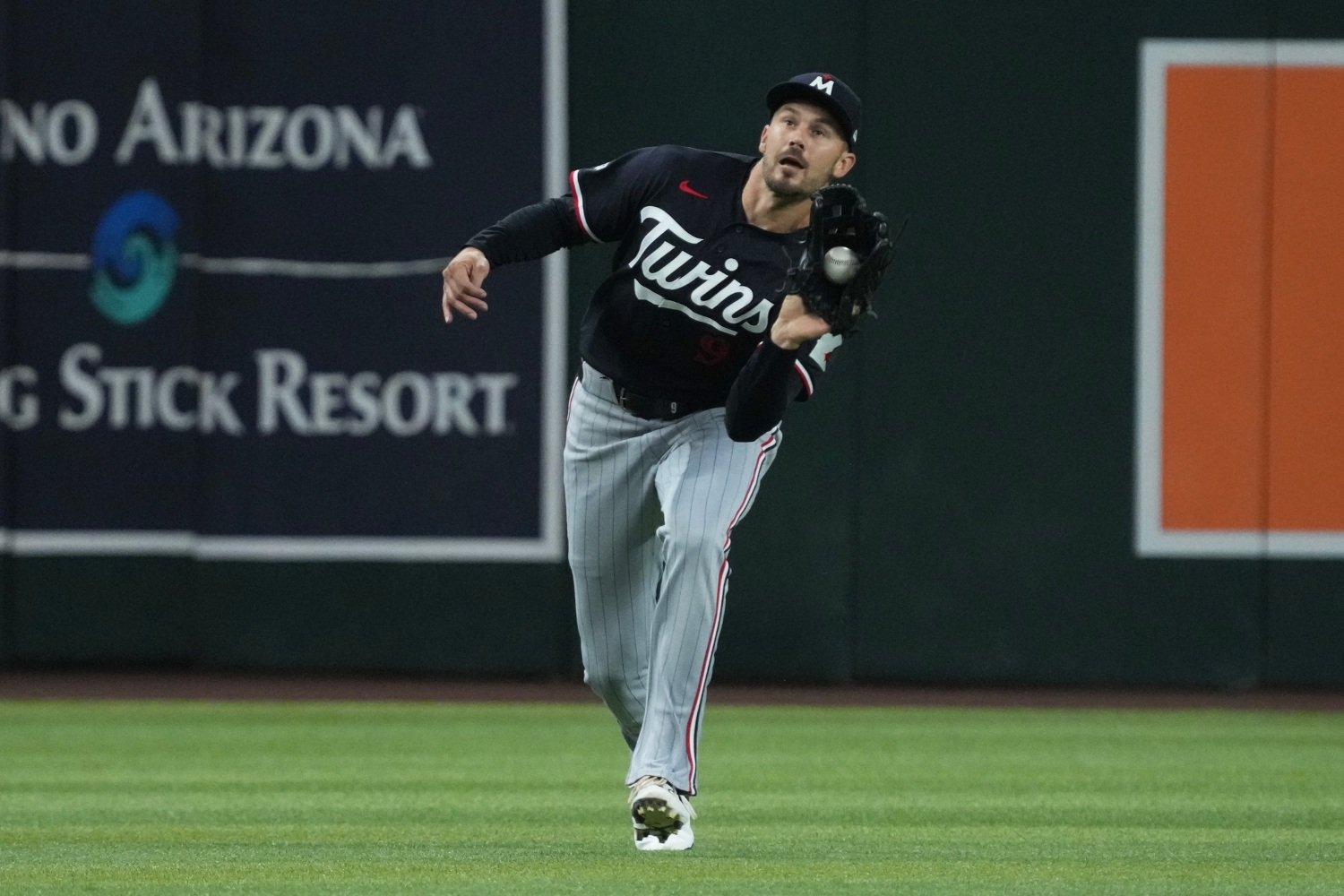 Eighty-six games into the 2026 MLB regular season, Trevor Larnach has started 58 games in left field for the Minnesota Twins, accounting for roughly 68% of starts at the position. At first glance, this development comes as a moderate surprise. Entering the season, Larnach wasn’t expected to occupy a full-time role at either corner outfield spot, evidenced by him splitting time in left with platoon partner Austin Martin and Matt Wallner being the full-time right fielder early this spring. Yet, given Wallner’s demotion to Triple-A, Martin’s subsequent move to right field (and eventual demotion back to a bench bat), and the organization’s younger, inexperienced corner outfield options (Alan Roden, Gabriel Gonzalez, Emmanuel Rodriguez, Walker Jenkins, and Hendry Mendez) not yet receiving extended opportunities in the majors, Larnach has become the club’s full-time left fielder. Circumstance isn’t the only reason for Larnach’s unexpected full-time role. Hitting .288/.381/.437 (good for a 131 wRC+), the 29-year-old has become a meritorious mainstay, often hitting in the upper third of the club’s lineup. He's become an irreplaceable part of Minnesota’s ability to succeed this season offensively. That being the case, he's received extended opportunities in the field. Unlike his sustained success at the plate, however, Larnach hasn’t improved defensively, despite how hard those in the Twins.TV broadcast booth try to persuade you otherwise. Over 139 attempts in left field, Larnach has -4 Outs Above Average (OAA), tying him for the second-lowest rating at the position alongside Isaac Collins and Yohendrick Piñango. Larnach’s downfall, in particular, is that he struggles getting to balls hit both to his left and right. He’s serviceable on balls hit in front of and behind him. However, the quality of a corner outfielder comes in their ability to chase down balls in the gaps and corners. Larnach struggles at both. Let’s take a look at some examples. QndSUDlfWGw0TUFRPT1fVkZOWkFWUUZWZ0FBQ1FBQ1hnQUhDRkJVQUFOV1VWa0FDbFpVQ1FjQVZRUlRBUUFI.mp4 What do you think the catch probability was of this ball? Close your eyes and think about it for a second before continuing to read this piece. Okay—are you ready? Have you regrouped? Okay, it was 99%. Larnach had 4.1 seconds to travel the 48 feet necessary to catch that ball. Instead, he stood flat-footed for multiple seconds as the bloop off Max Muncy’s bat traveled through the air before landing for a single. That’s not what a plus fielder does, Cory Provus! Let’s take a look at a more challenging ball put into play. eUx3M2VfWGw0TUFRPT1fVlFoWkJnRU5Wd0FBQ1Z0VFZRQUhWUUVIQUZrRVZWVUFCUUFHQUFJRlUxSlRWQXNB.mp4 Let’s play the same game. Close your ey—It had a 95% catch probability. Larnach had 5.4 seconds to travel the 68 feet necessary to catch the ball hit off rookie icon Kevin McGonigle’s bat. Instead, he took a poor route and misplayed, allowing McGonigle to cruise into second with a double. That's not what an improved left fielder does, Justin Morneau! Finally, let’s take a look at a play that appears incredible, but should have been much less dramatic. WU9WbERfWGw0TUFRPT1fVWdOVFZWUlFWUUVBQUFFQkF3QUhDQVplQUZrQ0FWTUFWbFFFQXdSV0JRTUhCZ05R.mp4 The ball hit by Sam Antonacci had a 55% catch probability, with Larnach trekking 82 feet in 4.9 seconds to make the catch. Again, this was a nice play by the long-time Twin, and he deserves credit for making the tough catch. That being said, more instinctive and faster left fielders would have gotten under that ball, removing the theatrics entirely. Larnach is slightly faster this season, improving from a 26.1 ft/sec sprint speed in 2025 to 26.9 ft/sec. It is also true that his arm value and strength have improved mightily in 2026. Still, he’s clunky, often getting poor jumps and failing to reach balls hit to his left and right that average left fielders catch with ease. Again, Larnach has been a nice surprise at the plate for the Twins this season, but we need to stay measured. He isn’t a good defensive left fielder. In fact, he’s one of the worst in the league. That's not ragging on a player trying to forge a lasting role and reach paydirt in free agency; it's just the reality we have to reckon with.